• Skip to main content
  • Skip to footer

Stepping Out Of Babylon

Travel & Photography

  • About me
    • Contact
  • Destinations
    • Africa and Middle East
      • Iran
      • Lebanon
      • Morocco
      • Turkey
    • East Asia
      • China
      • Japan
      • Taiwan (ROC)
    • South Asia
      • Bangladesh
      • India
      • Nepal
      • Sri Lanka
    • Southeast Asia
      • Cambodia
      • Indonesia
      • Lao
      • Malaysia
      • Myanmar
      • Singapore
      • Thailand
      • Vietnam
  • Itineraries
  • Travel tips
    • Border crossing
    • Hiking and Natural parks
    • Food Journey
    • Visa
  • Photography

Japan

Koyasan… the holy mountain

Kobo-Daishi (also called as Kukai) it’s a name to definitively you will hear (and read) if you come to visit Koyasan. He was the one that created Koyasan (that means mount Koya) after traveling through China to learn more about Buddhism. Located around in the mountains about 900m of altitude, Koyasan was chosen for being surrounded by eight peaks, that represent the eight petals of the lotus flowers on the top of what Buddha is represented.

In Koyasan we can find the Shingon-shu Buddhism, that more or less means “Esoteric Mantra Buddhism”, that is one sect from the Shingon Buddhism, whose mentor was Kobo-Daishi, that dedicates his life not only to religion but was also with credits as poet, artist, calligrapher and was responsible for the construction of may temples.

In the center of Koyasan, it’s the Danjo Garan, a complex that includes 20 temples. One of them is the Fudo-du Hall, which is not the most impressive but it’s the oldest, and the only one that survived to multiple fires and catastrophes that during centuries destroyed the original constructions. Some of the present buildings are already the fifth reconstruction!!!…
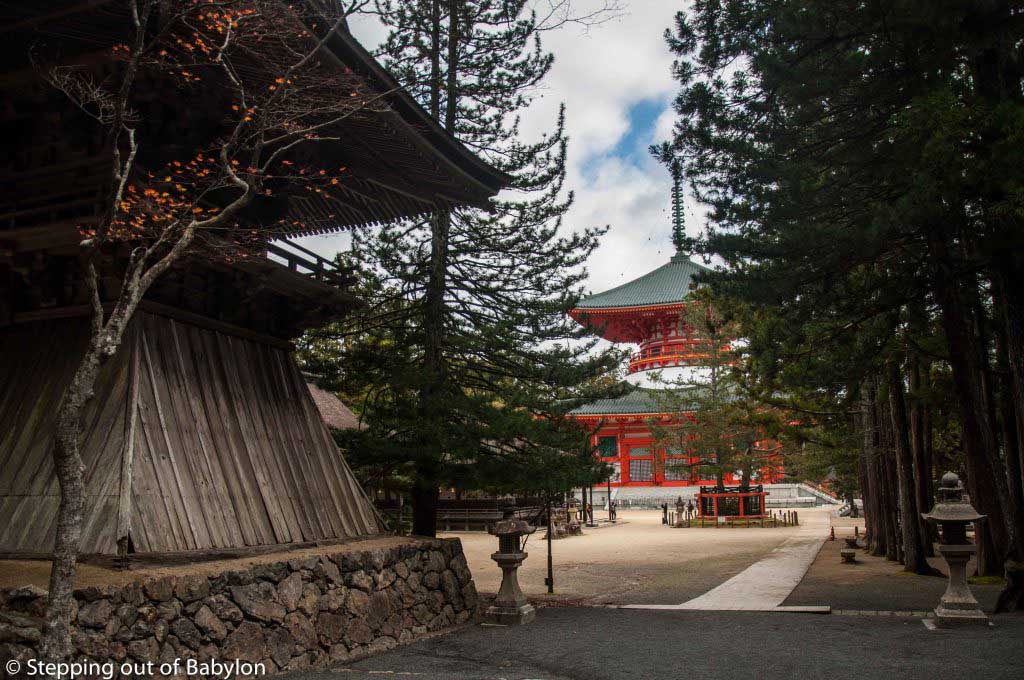
Daito Pagoda
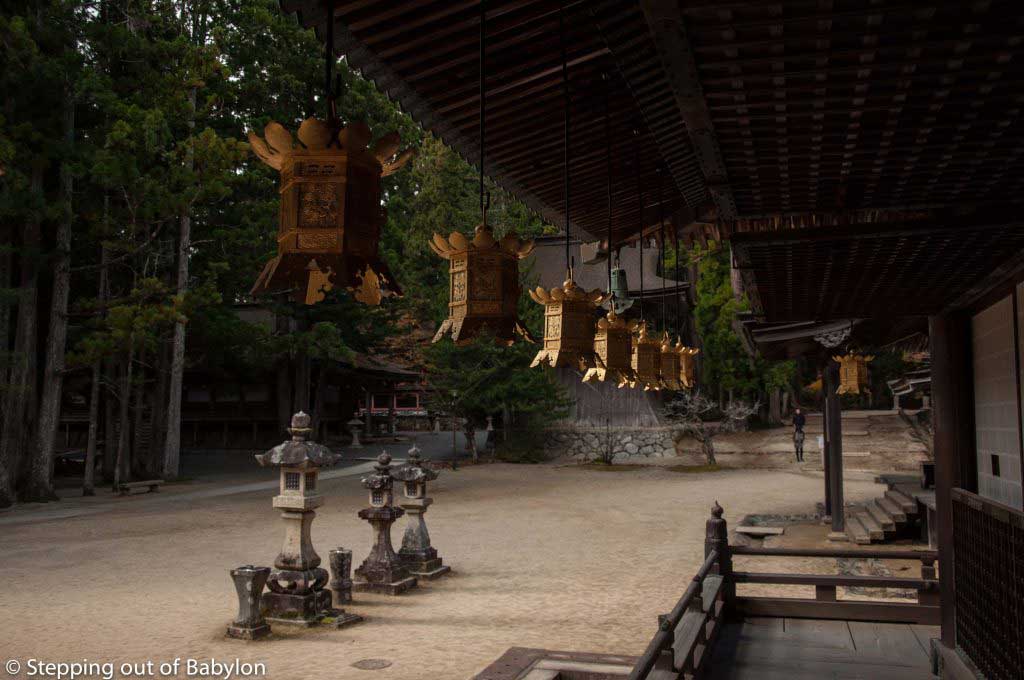
Danjo Garan
Danjo Garan
Danjo Garan

But inside the Danjo Garam, what stands up is the Daito Pagoda (the great Pagoda design by Kobo-Daishi), with its original pagoda shape and the Mie-do Hall with the impressive Buddha statues. But the place itself, with many other temples and buildings all made in wood, surrounded by big cedar trees and umbrella-pine tree offer a pleasant walk.
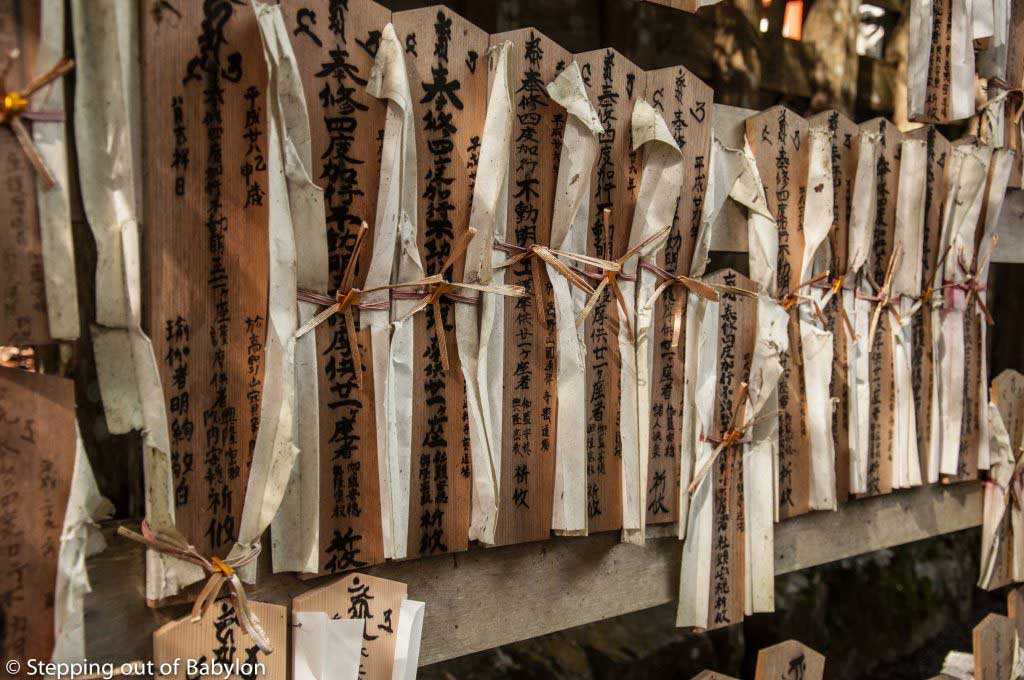
The massive but mot so elegant Daimon Gate, is the official entrance of the Koyasan temple area, located in the extreme West side of the village. If you walk along the Women Pilgrimage course (Nyonin-michi), which corresponds to the way that the women used to reach Kobo-Daishi Mausoleum, as during many years Koyasan was a place exclusive for monks and access was forbidden to women, you’ll find Daimon Gate along the way. This hiking course can easily be done in 3 hours, and offer a pleasant stroll in the forest, taking ridge of some of the mountains that surround the sacred place of Koyasan.

Women Pilgrimage course (Nyonin-michi)

The Kongobu-ji, the headquarters of all the monasteries in Koyasan, isn’t used anymore by monks but only for special ceremonies. Although you can visit the interior, including the kitchen area, as well the different rooms where the walls are decorated with delicate paintings related to Kobo-Daishi’s life and also nature scenes. But the most impressive is the rock garden (Banryutei), where blocks of granite that mimic a dragon coming out from the water waves.
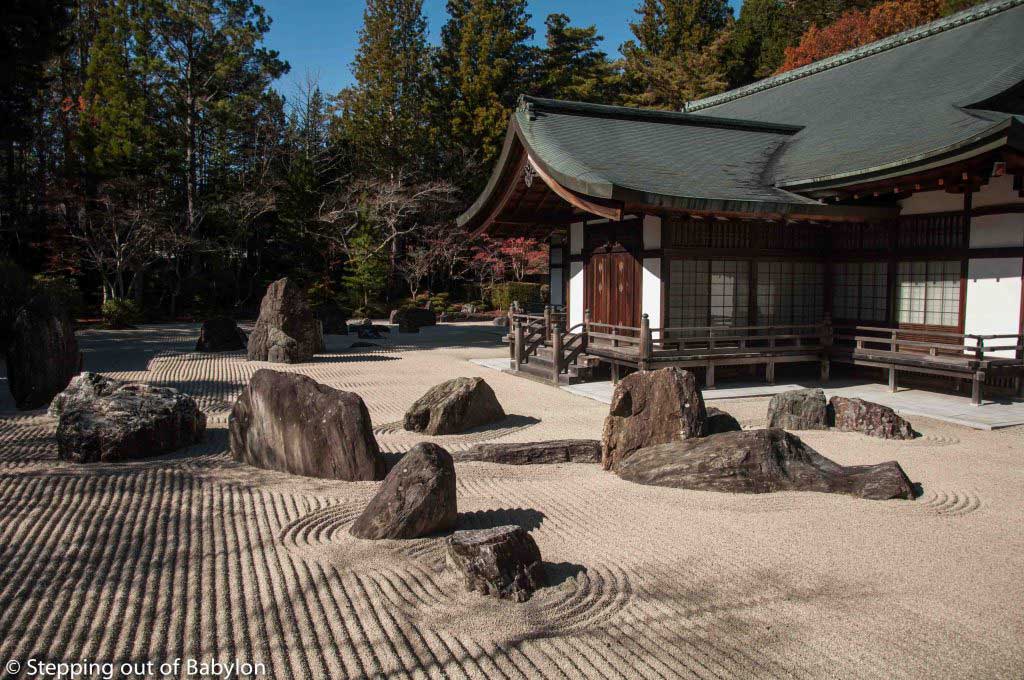
rock garden (Banryutei) at Kongobu-ji

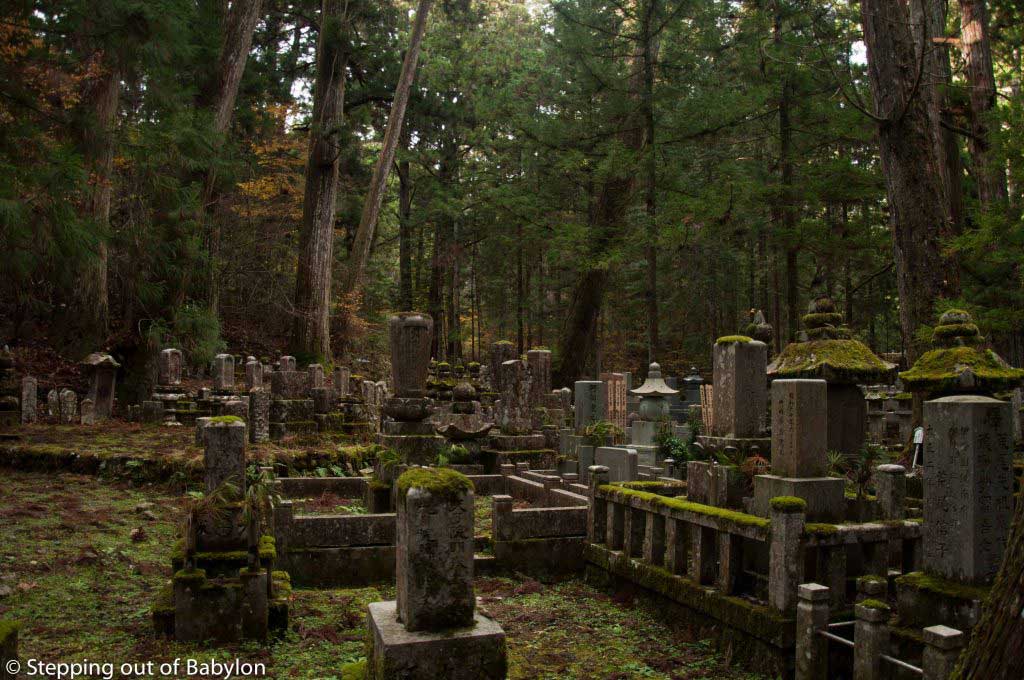
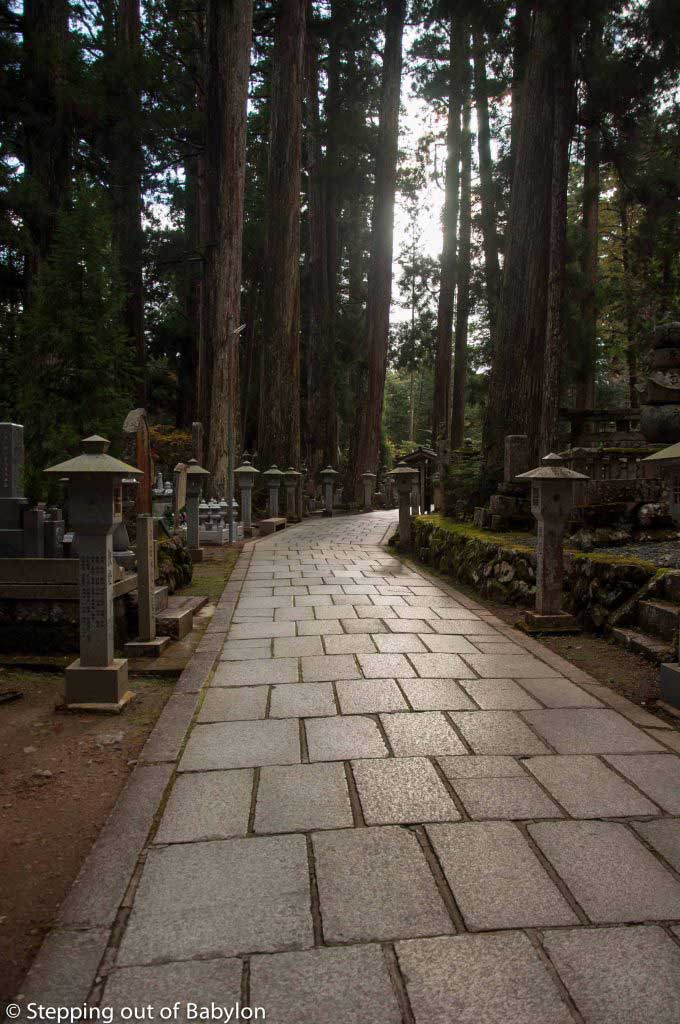
But from all that Koyasan as to offer, for a visitor, the place that I visit more times was surprisingly the Okuno-in cemetery. Apart from being a nice place to walk, in the middle of the cedar and pine forest, where the stones that mark the graves are covered with moss it’s also the only way to reach the Kodo-Daishi Mausoleum. It’s a kind of magic place, where you easily can spend one hour, exploring the different stone paths, crossing bridges, going up and down gentle steps, observing the thin rays if sun crosses the dense canopy.

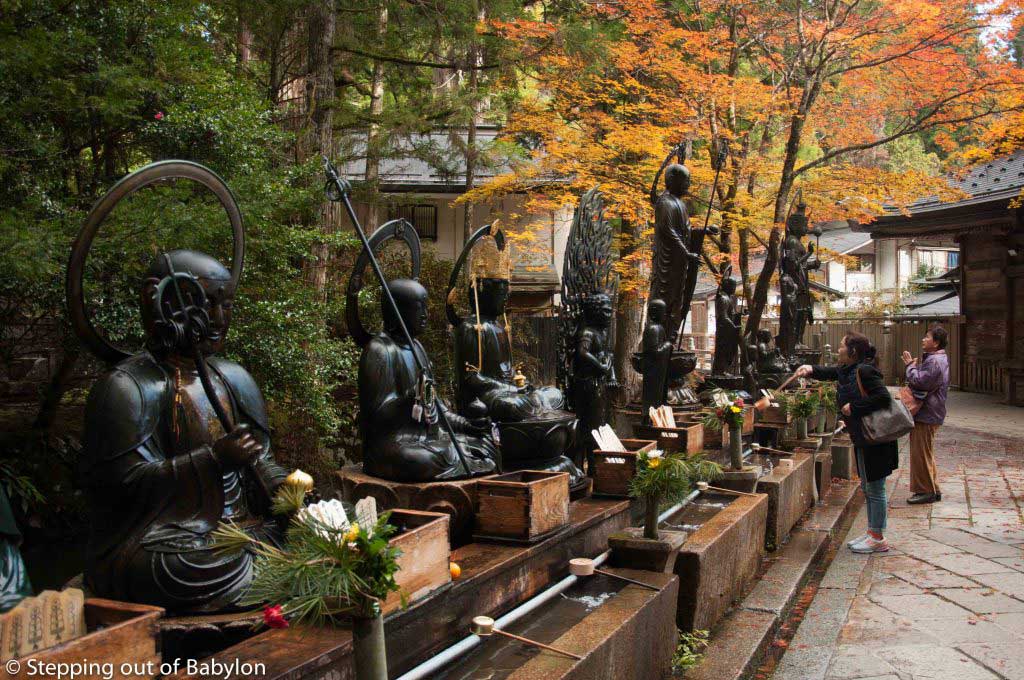
After cross the Gobyo-no-hashi Bridge you enter the sacred place, as according to the followers of the Shingon-shu Buddhism, Kobo-Daishi, born in the year 774, is still seated in deep meditation since the retired from the world with the of 62. This makes Koyasan a mandatory point for Buddhist pilgrims, which come here all year round, making this place part of the Kumano Kodo Pilgrimage route.
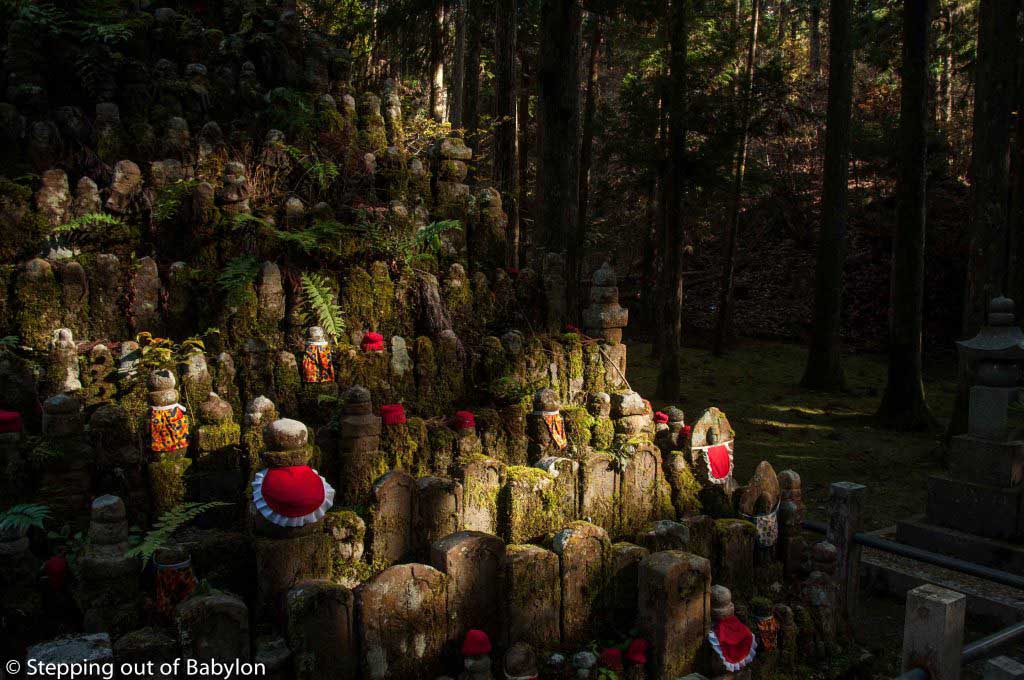
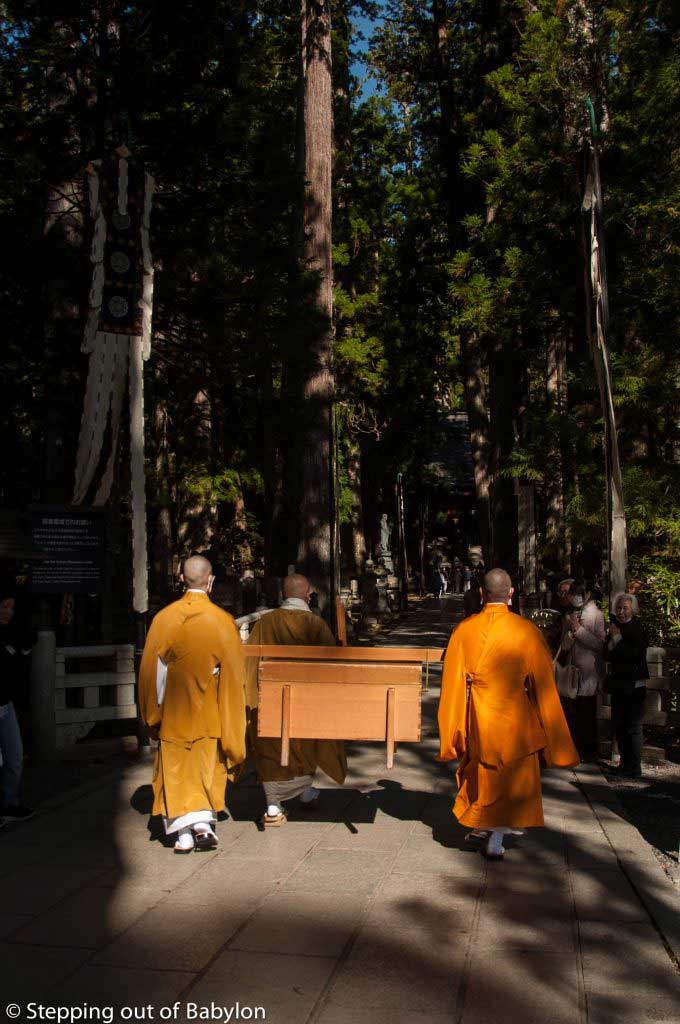
Okuno-in cemetery
Entrance of the Kodo-Daishi Mausoleum, where the monks repeat every morning the ritual of bring food for Kobo-Daishi
Okuno-in cemetery
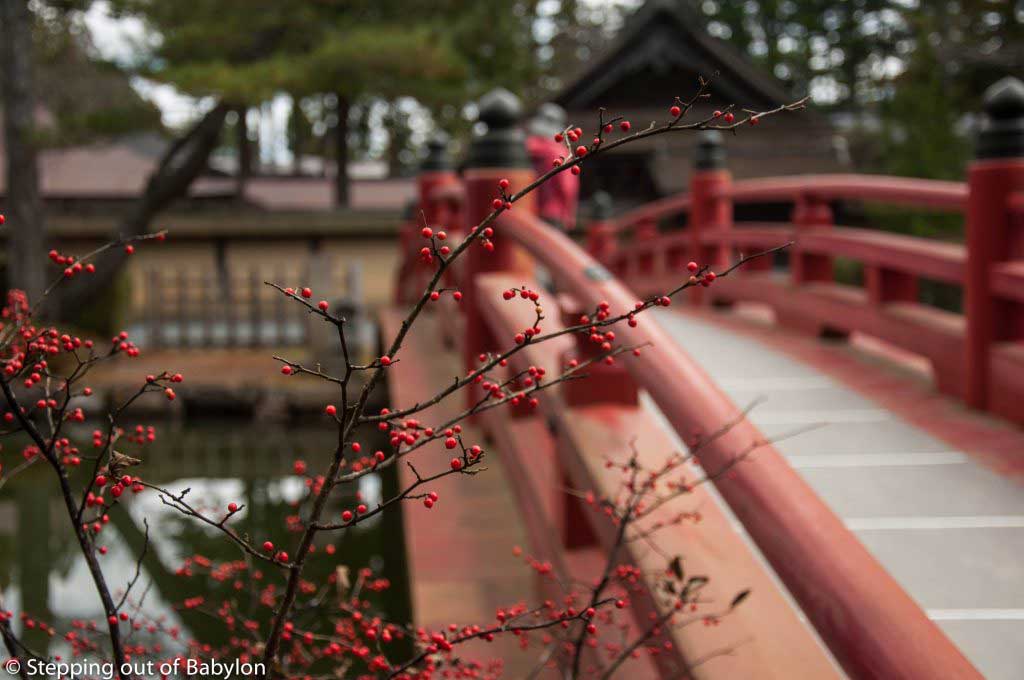
Buddha statues at the entrance located before the Gobyo-no-hashi Bridge, where the visitors sprinkle the statues with water symbolising the river crossing that was necessary to do before the construction of the bridge
Okuno-in cemetery

Koyasan has enough to see and to do if you have curiosity or if you feel the connection with Buddhism, and it’s a nice place to stay for three days or more, enjoying the nice vegetarian food, the temple ceremonies, and hikes in nature.

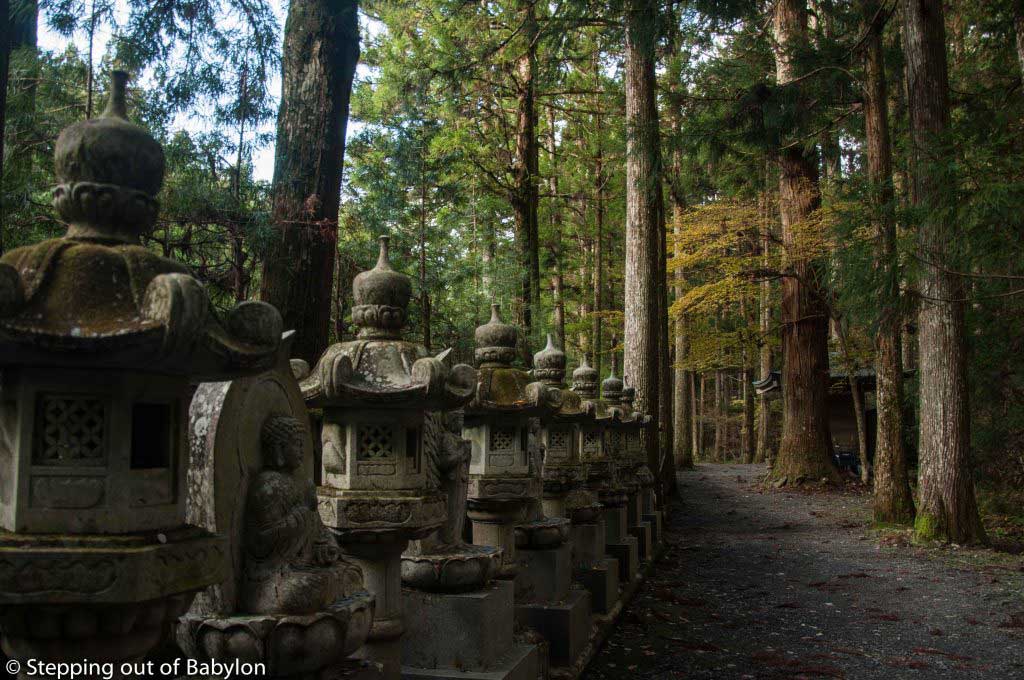
Okuno-in cemetery
Okuno-in cemetery

And Koyasan is also the starting point for the one of the Kumano Kodo Kohechi, one of the routes that crosses the Kii Peninsula, in the southern Kansai region, to reach Kumano Hongu Taisha. Kumano Kodo, an ancient pilgrimage route is now a World Heritage site classified as “Sacred Sites and Pilgrimage Routes” in parallel with Camino de Santiago.
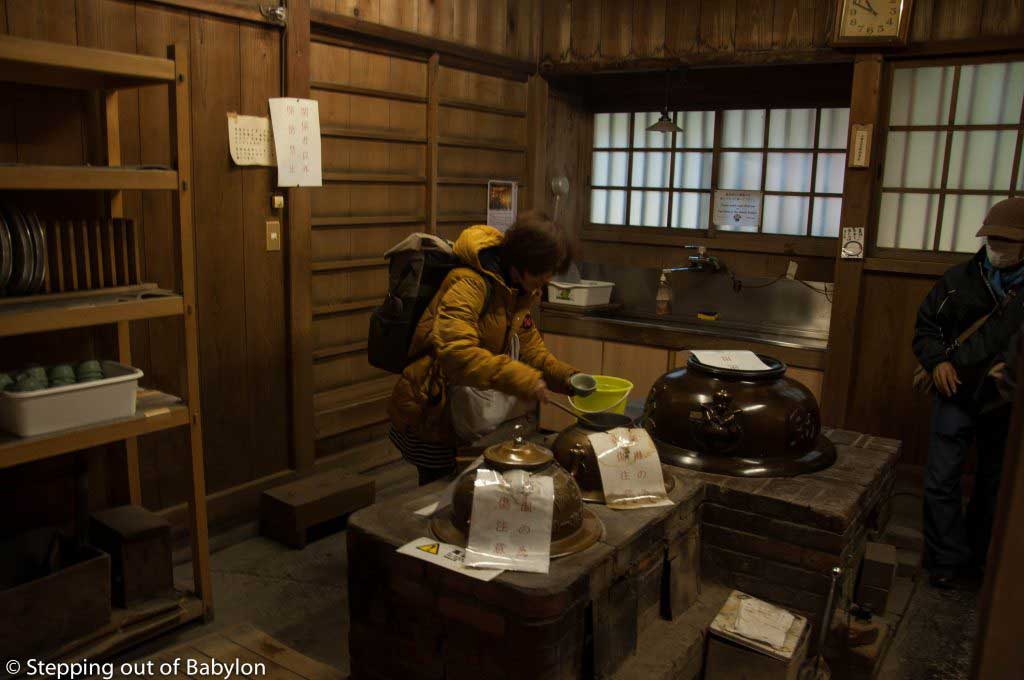
Koyasan visitors ticket pass:

It costs 1500 ¥ that can be used in several days… it worth it if you want to see all the temples as also join the Jukai Ceremony (accepting the 10 Buddhist precepts that cost 500 ¥, ask at the Daish Kyokai).

  • Kobo-Daishi Mausoleum, Okuno-in cemetery and Lantern Hall: free
  • Danjo Garan: free, but to get inside the Daito
    Pagoda or Mie-do Hall is 200 ¥ each.
  • Kongobu-ji: 500 ¥

Everyday you can hear the morning chants in the shukubo, but you can also experience this magic and hypnotic moment in Kododaisho Mausoleum, everyday from 6 until 7 in the morning, for free.

In the evenings, there a Cemetery Walking Tour (2000 ¥) guides by monks that can tell you the myths and superstitions of the cemetery as well to understand a bit more about Kodo-Daishi and the Shingon-shu Buddhism. This tour is organized by Eko-in, and departure from there.

Each 21st day of each month, it’s considered a special day as it’s the day of the
anniversary of the death of Kobo-Daishi, and Koyasan receives more visitors to assist to the special changings that include particular rituals way more rich and complex that the usual morning chants. So if you can manage to be in Koyasan in this day you can attend the
chants that start at 9 o’clock in the morning. In the evening before (20th) there is also a special ceremony at Kododaisho
Mausoleum
around 7:30/8:00.

Koyasan Bus pass:

The trip from the cable car until Okuninmae (basically until the end of the village) costs 420 ¥ (one way).

There are passes (3 days = 3000 ¥) but the Kaoyasan as about 3 km from the Dai-mon Gate to Okuninmae, where is the entrance Okuno-in cemetery, and that can be made easily on foot.

Where to sleep in Koyasan:

But most of the visitors stay in Koyasan only one night and choose to stay in the traditional pilgrim accommodation, the shukubo. It’s for sure a remarkable option but a bit pricy, so I choose to stay in a guesthouse, that in fact is very rare in Koyasan.

Koyasan Guesthouse Kokuu, it’s located in Okuninmae (very close by the Okunomi cemetery and from a bus stop), 200 meters from the bus stop, and offer rooms and dorms in capsule style. The building is super cool, design by the Japanese Alphaville Architects. They offer also an amount of detail infromation about Koyasan, religious activities, mediation, hiking trails, etc…

Where to eat in Koyasan:

As many people (almost everyone) stay in one of the 52 shukubo (temples lodging) that include breakfast and dinner, there are not many options for dinner in town. But the convenience stores (there are at least 3) provide quite good options for food.

But for lunch, if you want to try the monasteries food, shojin-ryori, a totally vegan meal compost by several small dishes matching the five cooking methods (raw, stewed, boiled, roasted, and pickling) five flavors (sweet, sour, salty, bitter, and umami), and five colors (green, yellow, red, black, and white). A work of art!!

The Sanbou Restaurant offers delicious shojin-ryori meals. At first glance, the meal set available look a bit small but it a perfect portion and provides the chance to taste a wide variety of flavors as well the different kinds of tofu. The prices range between 1250 ¥ to 4000 ¥. The Sanbou Restaurant doesn’t have a sign in Latin characters but is located very close by the Ichijo-in Shukubo (check the image below). It’s only open for lunch (from 11:00 until 14:00). Try the famous goma-tofu, very silky tofu made from ground sesame paste!!! Something new!
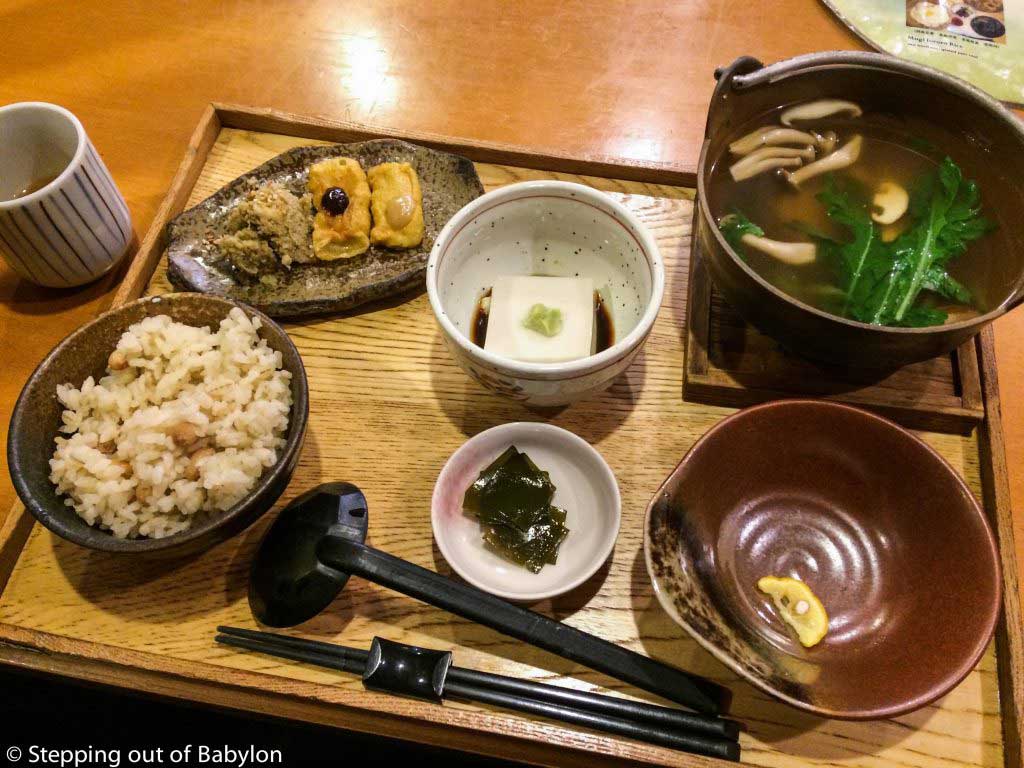
shojin-ryori meal at Sanbou Restaurant
Sanbou Restaurant

Koyasan for the sweet tooth:

There aren’t many shops in Koyasan but the ones that exist, apart from restaurants are dedicated mostly to sell religious souvenirs (some of them a bit cheesy) as well as sweets, that apparently are the most popular souvenirs from Koyasan. There are several options, but my favorites were the yaki-imo made from sweet potato and cinnamon and the amazake manjyu, filled with sweet bean paste.

Some of these sweet shops are also factories, so try to find one of them (you can see people work inside, as here everything is fresh. Try Mirokuishi, a traditional Japanese confectionary, located on the main road, more to the East part of Koyasan…. and there you can also get a tea if you chose to eat the sweets inside!!
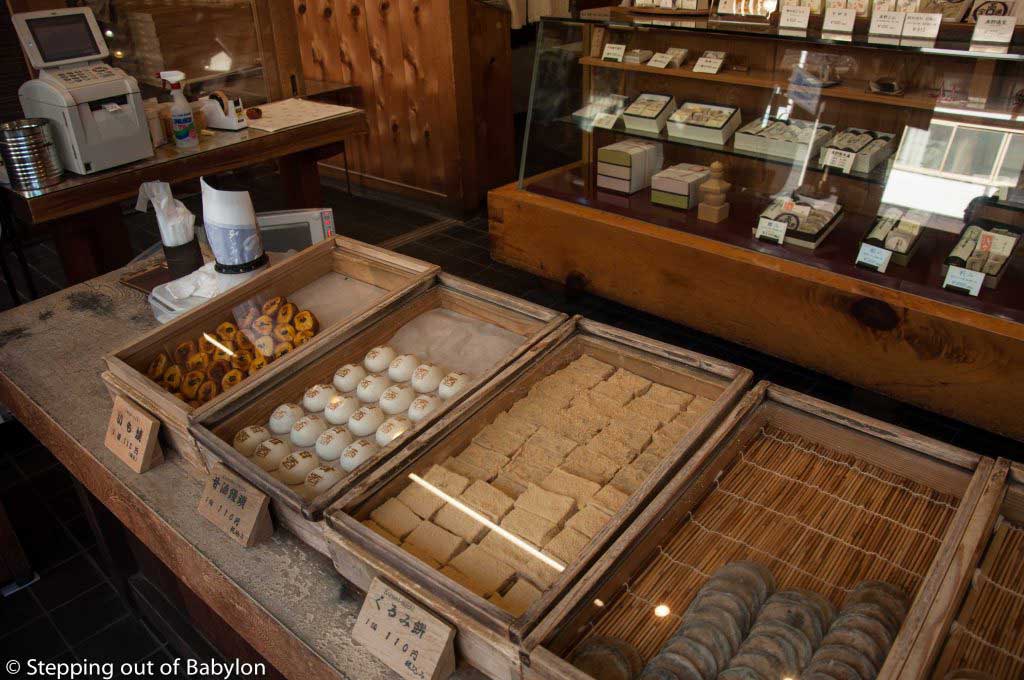
yaki-imo on the left andamazake manjyu in the center where my favourite sweet from this confectionary, where you can drink tea for free while taste the sweets

Mirokuishi, a traditional Japanese confectionary
Koyasan Curry… a vegetarian version of the traditional Japanese curry, that is sold packaged and just needs to be heated and accompanied with rice. A good souvenir form Koyasan!!

How to go from reach to Koyasan:

There are two options to arrive to Koyasan by public transportation:

  • Taking the Nakai Line, direct from Namba to Koyasan… this is the best option if you want to stay more than one night in Koyasan, or if you plan to move forward,
    instead of getting back to Osaka. It cost 1390 ¥ and includes the cable-car to
    Koyasan. The trip takes in total 2h.

At Koyasan station you need to take a bus to your accommodation… it’s a 2.5 km distance to reach the center of Koyasan, and 5 km to reach the easternmost point of Koyasan.

The bus from Koyasan station (the terminus of the cable car) to Okunoin (cemetery) cost 420 ¥, one way.

  • Buy the Koyasan World Heritage Ticket, which is the best option if you just want to stay one night is Koyasan. 2900 ¥ and includes the return train trip, the cable car
    and the bus pass to move around Koyasan for two days.

Note: The Nakai Line trains to Koyasan departure from Namba Station, but don’t mistake with JR Namba. Nakai is a private company and has it’s own station (the JP rail pass ins not valid here) that is linked with JR Namba by the Namba Walk, a long-long tunnel that takes around 15 minutes to walk, where you can find shops and restaurants along the way.

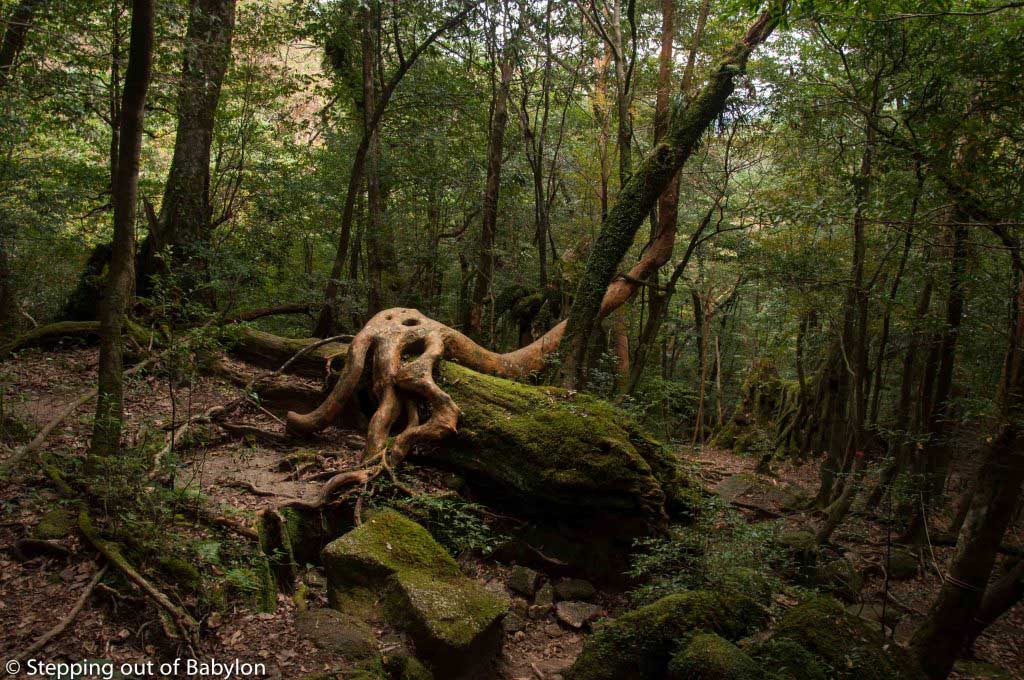
Yakushima… like a dream!

Looking for a magic place?!?! Japan has a lot of beautiful landscapes, but Yakushima Island exceeded expectations. It’s like a dream, a fairytale…

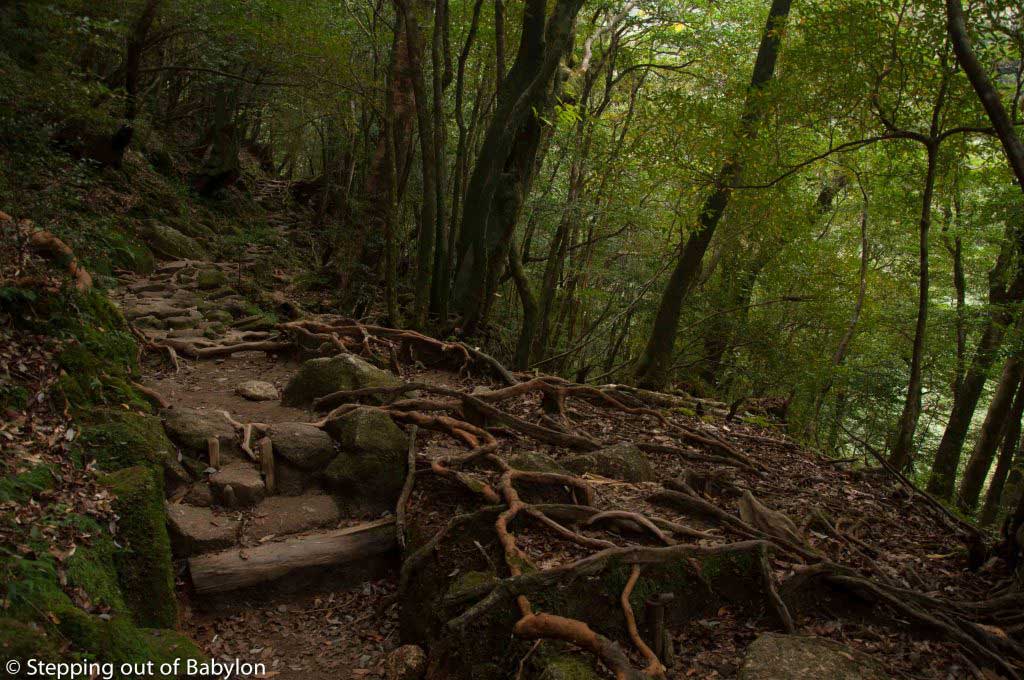
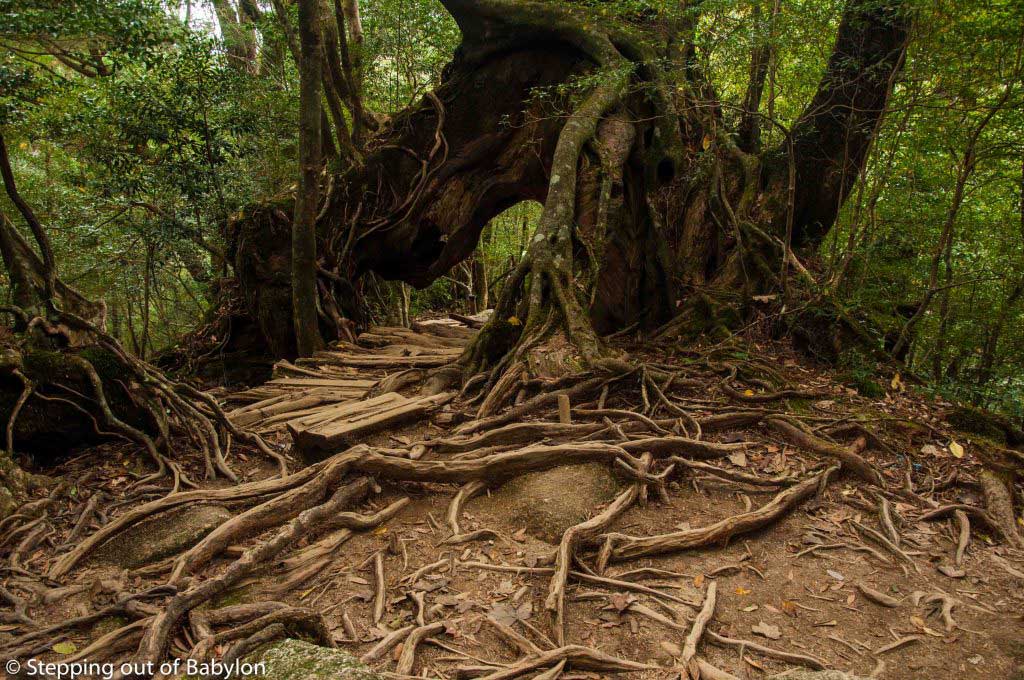
Shiratani trail

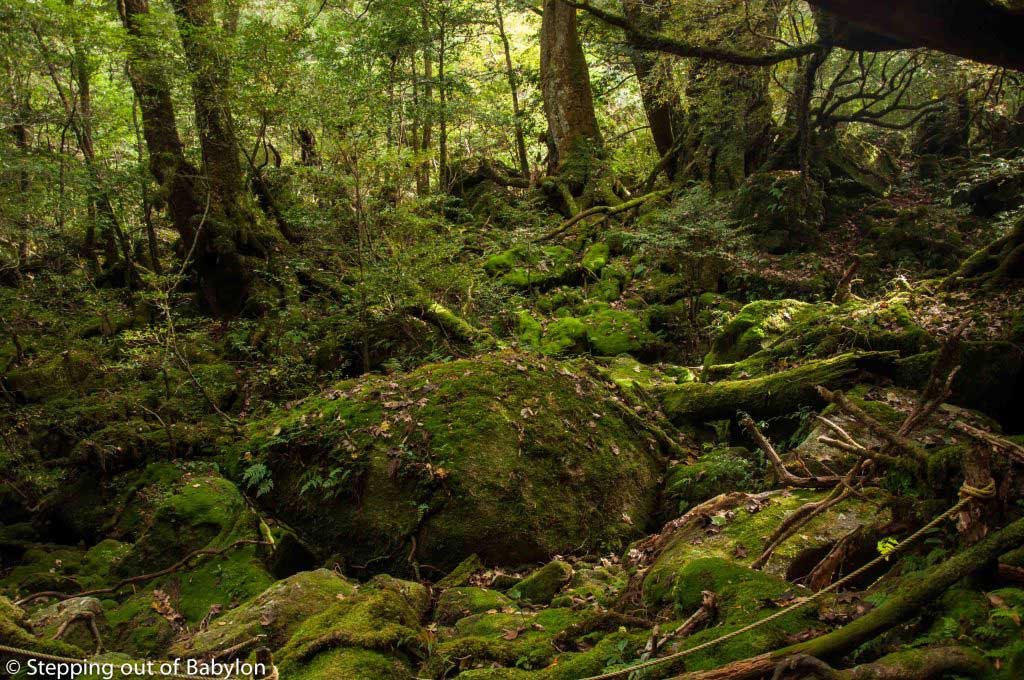
By some mysterious reasons, there are places, located a thousand kilometers away at different latitudes, that look that are connected by a strange bound, sharing the almost the same scenery and offering similar experiences… like the Living Root bridges of Nongriat, in India and the Mossy Forest of Gunung Brinchang, in Malaysia.

Shiratani trail

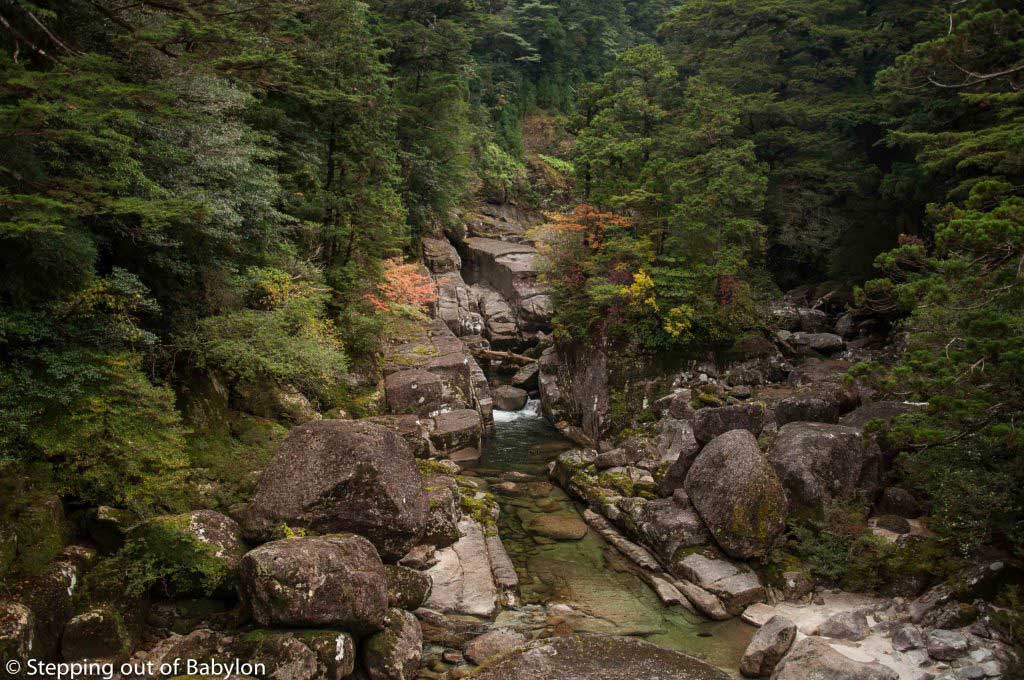
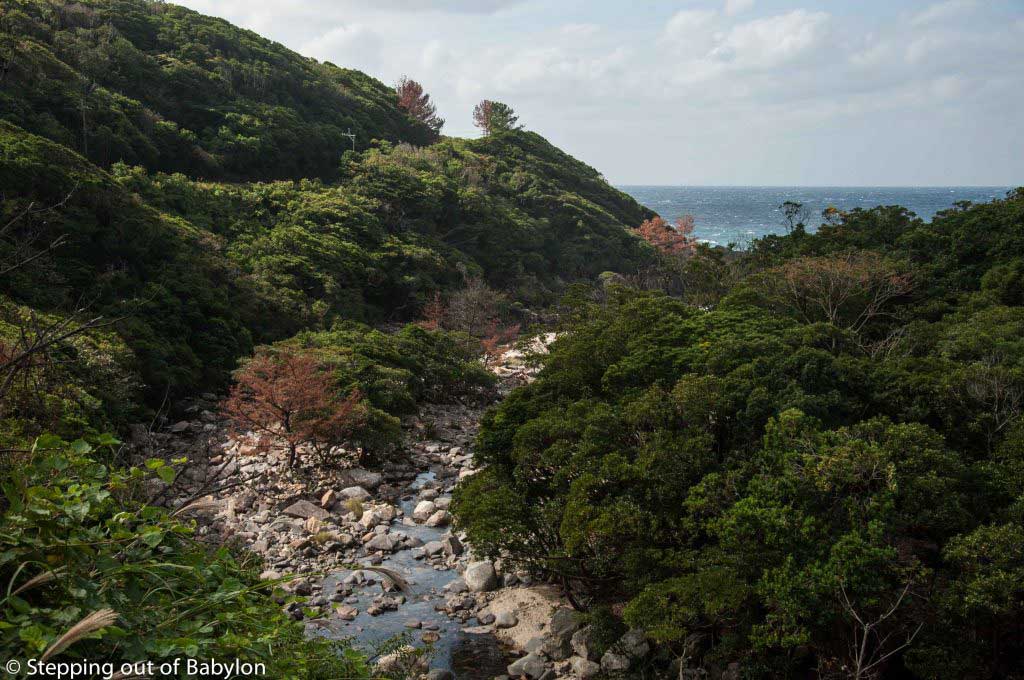
Yakushima, an island located south from Kagoshima Prefecture don’t have more than 100 km perimeter if you go along the road that goes all around the island, and its basically mountains, covered by a dense green forest, where the populations only occupy some small places along the coast. All the interior of the island remains almost untouched.

Basically there only two roads that go inside the island: one to Shiratani Unsuikyo Ravine and the other one to Yakusugi Land, that also gives access to Arakawa trail, to reach the famous Jomon Sugi (the oldest tree in the island, and one of the oldest in the world) that is also the highest peak on Yakushima, at an elevation of 1,934 m.

Shiratani trail
Shiratani trail

This island is basically all covered with cedars trees and here you can find specimens with more than 1000 years, and the oldest are sign along the trails. One of the most famous, apart from Jomo Sugi, is the Kigensugi Cedar that has an estimated age of 3000 years, or the Buddha Cedar with 1800 years.

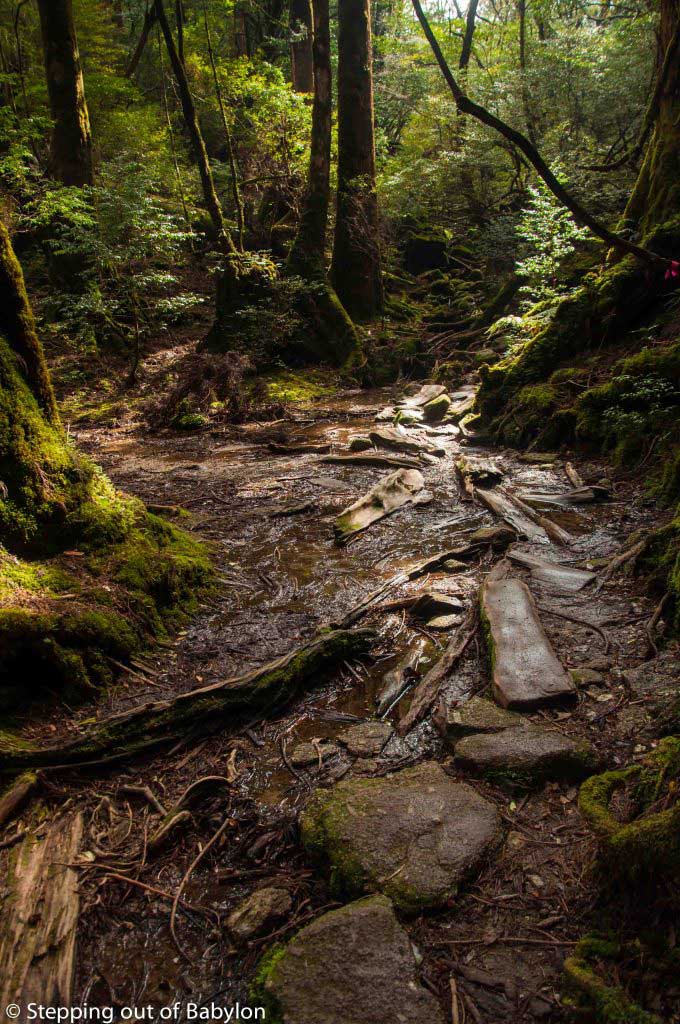
The Shiratani is famous for the moss covered forest, an area with more humidity (even more than the rest of Yakushima), but walking further you can reach a high point the Taikoiwa Rock from where you can have a wide view… and see finally the sunlight (in a clear day) as the forest here is so dense that is hard to see the sun!

Shiratani trail
Shiratani trail

The main village in Yakushima is Miyanoura and is where you’ll arrive if you choose to come by ferry (the Yakushima 2 or the Hibiscus). Here is also where you can find a bigger concentration of restaurants and supermarkets, as well the tourist information (there also one Tourist office at the exit of the airport as also close by Anbo harbor).

To visit Ohkono-taki waterfall, you only have one bus that goes there. Its departure from Miyanoura at 8:41, arrives at 10:22 and returns from the waterfall at 11:00. So this is the only schedule possible, otherwise, you need to walk from the previous stop Kuriobashi. Is time enough to visit the waterfall.

On the way back I stop at Nakama beach and also check the Nakama Gajumaru Banyan, a group of ficus trees whose roots are connected, forming an arch. It’s nothing impressive especially after you walk along the Yakushima trails, and force you to break the bus trip from Ohkono-taki waterfall, forcing two hours waiting for the next bus.

Shiratani Unsuikyo Ravine trail

  • One way: departure at 8:10 and arrives at Shiratani at 8:45… but you don’t need to start so early and there’s a more convenient bus at 10:45, that allow you to hick all the courses and finish on
    time of the last bus.
  • Return: the bus’s last departure from Shiratani at 16:10 and take about 30, to arrive at Miyanoura.
  • There are 3 trails in Shiratani. The longest takes you to the Taikoiwa Rock, passing by the moss covered forest and is the most interesting of all. The other
    long trail, takes you to the Sanbon-yarisugi cedar, passing by several of very old
    cedar trees. The short course it’s very easy as most of it is steps and paved
    trail to reach the Yayoisugi Cedar.
  • This is a good option if you arrive at Yakushima early in the morning in the Hibiscus ferry, as it gives time to reach the guesthouse, get information in the tourist office (open at 9am) as well the bus pass and still have time to go to the supermarket (also open at 9am, and it’s close from the tourist information building) to buy some food for the hick.
  • Fee for Shiratani Unsuikyo Ravine: 500 ¥
Yakusugi Land

Yakusugi Land trail plus the visit to Kigensugi Cedar, 6 km further

In fact, Yakusugi means trees with more than 1000 years old and in this area there a big concentration of these old cedar trees.

Inside Yakusugi Land you have five different trails, a couple of them with about 1km, that are paved and easy to walk; the longest one as 4.4km, basically going up and down the hills using the tree roots as steps. The longest trail includes almost all the length of the shorter ones. It’s an easy walk that took me 4 hours with several stops for photos and to enjoy the views.

But after doing the long trail I realize that I wouldn’t have time to reach Kigensugi Cedar on time to catch the last bus to return. So hitchhiking and was lucky with one of the few cars that do that road.

If you are in Miyanoura, these are the possible bus schedules to visit Yakusugi:

  • One way: departure at 8:41, and change at Gochome at 9:20 to another bus that reachs at Yakusugi at 10:07.
  • Return: departure at 15:15, arrive at Gochome at 15:58, and then you need to wait until 16:32 for the bus to Miyanoura.
  • This schedule allows you to walk along all the trails without a rush. You can also start later (12:51) or leave from Yakusugi earlier (11:05).
  • Fee for Yakusugi Land: 500 ¥

But the most famous trail is Jomo Sugi, an 11.5 km trail that reaches the 1300m, starting in Arakawa. It takes all day, and in the wintertime the days are short… so I didn’t’ even try… maybe next time. You need to departure from Miyanoura (this bus starts at Sea Side Hotel, stop number 19) around 4:45 to catch the fist bus to Shinenkan, and there change bus at 6:00 to Arakawa Tozanguichi that takes just 35 minutes. To return you must be at the bus stop at Arakawa at 15:30… maybe too short to hike 11 km!??!?

Yakusugi Land
Yakusugi Land

Onoaida Onsen:

There is about 8 onsen (natural hot springs) in Yakushima, most of them are in the sea… as it was November, thes options didn’t show up much pleasant, despite the winter in Yakuhima being more gentle that in other parts of Japan.

But couldn’t resist to visiting twice the Onoaida onsen, located on the south coast of Yakushima, being the most famous of all the onsen between the local population. The poll isn’t that big, but the water is so warm that no one can stay there for more than a couple of minutes. You can see the bubbles from the sulfur hot spring coming from the bottom of the poll between the basalt pebbles.

Here people use more the water from the hot spring to wash rather than using the shower, pouring buckets of water over the body from the pool.

Onoaida onsen is located a bit away from the main road, close by the forest, but doesn’t have any exterior pool. The building, all made in wood with a high ceiling, where the floor and wall are covers by the black volcanic rock, offers a cozy ambiance, where you can try to interact with the local population, and relax from a hiking day!!

I also try the Kusugawa onsen but doesn’t recommend, is it’s more like a public bath with warm tap water, in a dodgy building.

After a hike, there’s nothing better than a very hot bath, and the onsen provides that treat!!!! You end up almost melting on the way back to your guesthouse.

Fee: 200¥ but you need to bring a towel and soap.

Nakama beach

How to move around Yakushima by bus:

In fact, the main issue that I face in Yakushima was transportation. Some buses go around the island, from Nagata to Ohkono-taki waterfall, but they are not very frequent with sometimes gaps of 2 hours and finish very early.

So this can really be an obstacle to explore the island, making short hikes of 4 hours, like Yakusugi Land and Shiratani-trail, take you all day, as you probably need to wait more than one hour for the bus back. So basically you need one day for each of the trails… and depending on your location, and one extra day more to the visit the Ohkono-taki waterfall.

Here is some info about buses in Yakushima:

  • Kotsu Bus
    Pass
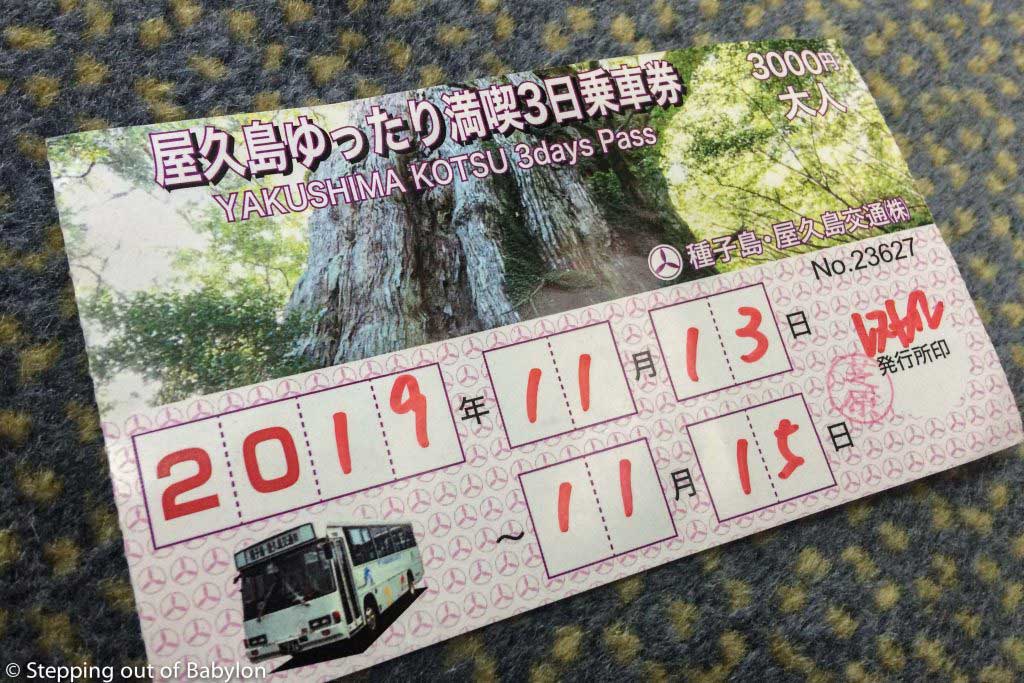
    : the bus is the only way to move around Yakushima, but this service is scarce, with several places having only two buses a day. Apart from that, the bus is expensive, as a trip around the island (from Okonotaki waterfall to Miyanoura) costs 1900 ¥. So it’s better to get the bus Kotsu Pass, that allows an unlimited number of trip, with several options:
    • 1 day: 2000 ¥
    • 3 day: 3000 ¥
    • 4 day: 4000 ¥
  • You can get the Kotsu Bus Pass at the Information office of Miyanoura, Ambo Port and the Airport; at Miyanoura, the Yakushima Visitor Center (a kind of souvenir shop located on the left side of the main road, about 100m further from the Information Center, but this shop opens earlier, at 8 am) and also at the Youth Hostel.
  • It’s easy to navigate by bus as all the stops have a number that is also in the bus schedule.

More information about the bus schedule at: http://yakukan.jp/doc/pdf/2019gw_yakuko_en.pdf

Where to sleep in Yakushima:

I choose to stay at Miyanoura. It’s not a charming place but it very close to the harbor, which reveals convenient when arriving and departures as you don’t need to de dependent on the buses. Miyanoura, wherever you stay, it’s a walking distance from the harbor.

I stayed at Sudomari Minshuku Friend, It’s a local guesthouse, with traditional Japanese shared rooms, some with beds others with tatamis. A quiet place where I felt at home. Laundry is for free and you can use the kitchen. The manager is very friendly but doesn’t speak much English, so you can’t count much on him to get help with how to move around. It’s continentally located just in front of one Kotsu bus stops and it’s about 1.2km from the Hibiscus Ferry port. 3300 ¥ a night.

Where to eat in Yakushima:

As an Island, Yakushima speciality is the fish, and there are several restaurants in Miyanoura, but some of them only open for lunch.

The supermarket (there are two) are a good option if you need to buy food for the hiking. Some places offer bento box but the price is a bit high.

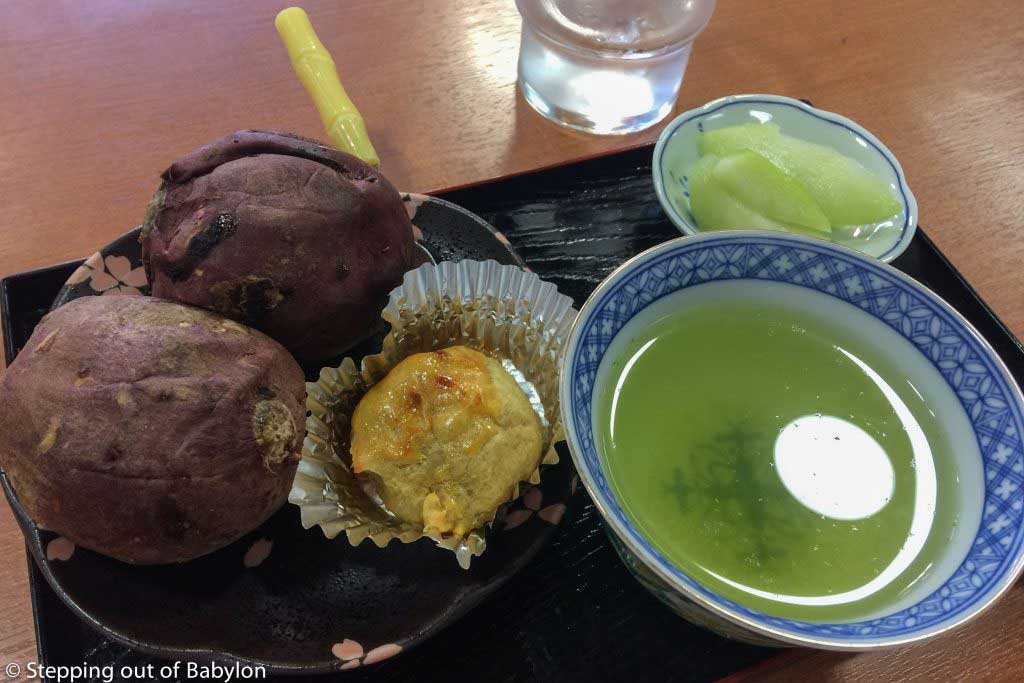
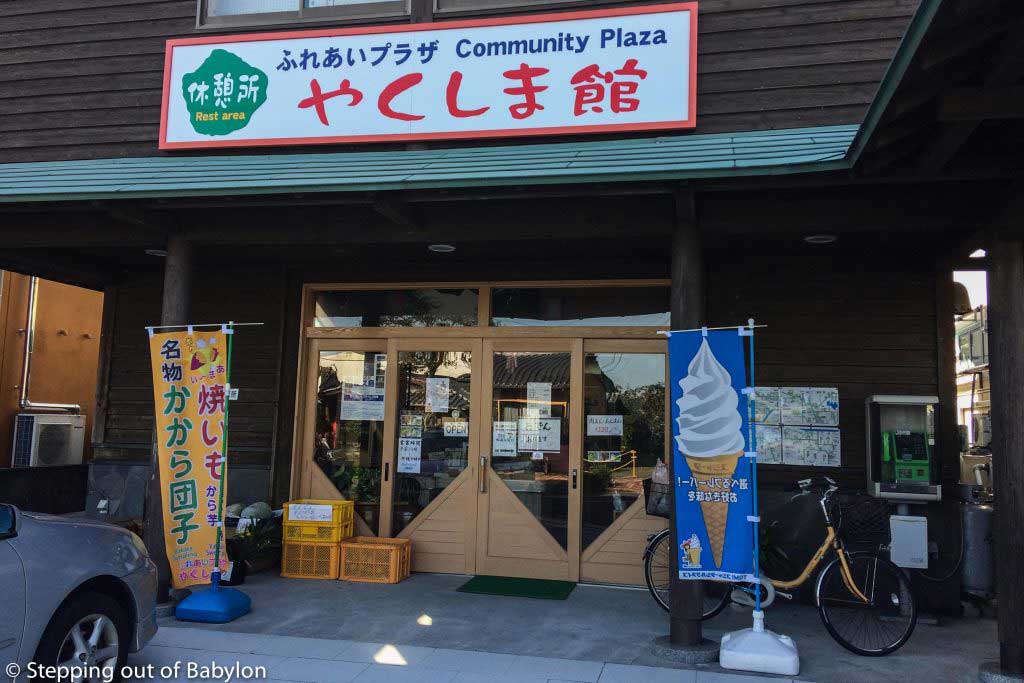
At the Community Plaza, a small shop located a few meters further from Sudomari Minshuku Friend Guest House, they serve also food for a very cheap price. The usual dish is curry (meat) but if you are in the mood for a snack you can try the sweet potato set, that also include a tea and a delicious sweet, also made form sweet potato… only 100 ¥ (it closes around 4pm).

Things to know when you arrive at Yakushima:

  • The tourist information in Miyanoura, that you gonna find on the right side of the road when you leave from the harbor, has the door closed with a sign “closed today”; go around the building (along the left side), as the main door is the opposite side; the Information office is open from 9 am until 5 pm,
    everyday.
    Here you can get the maps of the trails, the bus schedule as also the Kotsu Bus Pass.
  • There are two big supermarkets at Miyanoura, and they are open from 9 am until 10pm; there you can find ready-made meals for take-away.
  • Money: It’s better to get cash before the trip, as in Yakushima the only ATMs are in the post office spread along the
    island, but they charge 220 ¥ commission for each withdraws.

How to reach Yakushima by ferry boat:

click this link:

How to go From Kagoshima to Yakushima by ferry

There are three options to arrive in Yakushima by boat (there’s also the option to reach the island by plane):

  • Toppy & Rocket (High-speed boat)
    • One way: 9200 ¥
    • Return trip: 16600 ¥
    • Duration: 3h
    • Departure: Kagoshima High-speed boat Terminal (Kousokusen) located 700m north from the ferry terminal)
    • Arrives at Miyanoura or Anbo, depending on the schedule
    • There are 6 boats daily, each way. It’s a passenger boat.
  • Ferry Yakushima 2
    • One way: 6100 ¥
    • Return trip: 11000 ¥
    • Duration: 4h
    • Departure: Kagoshima Ferry Terminal (Minamifuto)
    • Arrives at Miyanoura Port
    • There is only one boat daily, each way.
  • Ferry Hibiscus (slow ferry)
    • One way: 3900 ¥
    • Return trip: 7800 ¥
    • Duration: 13h to Yakushima (overnight trip) but the return trip takes 6.5h (it departures from Yakushima in the morning)
    • Departure: Taniyama Port
    • Arrives at Miyanoura Port (Yakushima)
    • There is only one boat a day, each way.
    • It’s a cargo boat, very basic, no seats, with some room for passengers.
    • To Yakushima it’s an overnight trip and it stops at Tanegashima island for cargo operation);
    • During the stop at Tanegashima Island, the passengers to Yakushima can’t leave the boat… I mean, they can but can’t board again with the same ticket!!
Ferry Hibiscus

Ferry Hibiscus tickets… if you buy return ticket you must exchange the payment receipt at the Miyanoura Port before boarding into the boat

Ferry Hibiscus Schedule:

  • departure 18:00 from Kagoshima and arrives at Yakushima at 7:00
  • departure 7:00 from Yakushima and arrives at Kagoshima at 14:40

My choice was for the “super slow” Ferry Hibiscus, as it allow me to save one night in accommodation sleeping in the boat, at as it arrives early morning I could start to explore the island in the same day that I arrive, with time enough to drop my stuff at the guesthouse (I choose to stay in Miyanoura as it is more convenient in terms of accessibilities).

How to reach the Ferry Hibiscus harbour (Taniymakou):

But the Hibiscus ferry as one disadvantage as its departure from a harbour 13 km south from Kagoshima, and also far from the nearby trains line (Ibusukimakurazaki Line). But from Kagoshima-Chuo, there’s a direct bus to Taniyama Port:

  • The bus doesn’t have a number, and just make this route 3 times a day.
  • The most convenient time is the 15:48 (and also the last bus of the day), and it arrives at the harbor around 16:34… just on time for you to get the ticket and board in the ferry; the boarding start at 17:00.
  • This bus stop at the bus station nearby Kagoshima-Chuo, from the East side, at stop number 16 (East 16); it’s easy to identify the bus stop, but don’t expect to find information in western characters. When I took this bus it arrived 2 minutes later than scheduled and didn’t stop more than one minute, as there wasn’t another passenger to board.
  • The bus trip costs 380 ¥, one way; you pay on board at the end of the trip; the Taniyama Port is the last stop.
Bus stop at Kagoshima-Chuo Station
Bus stop at Taniyama Port
The bus that links Kagoshima-Chuo to Hibiscus Ferry harbor

The Hibiscus Ferry doesn’t have the usual passenger seats; instead, there are a few rooms, with a kind of carpeted platform where you can lay down. Blankets and pillows are provided. Maybe at first glance, it looks a bit basic, but the conditions are good enough for a good night of sleep… maybe disturbed by the cargo activity on the ship basement. The toilets are reasonably clean with toilet paper and soap. It’s a nice and easy trip!!!!

Passengers room at Hibiscus Ferry

Hibiscus ferry from Yakushima to Kagoshima:

  • The ferry arrives at Kagoshima at 14:40
  • The bus leaves Taniyama Port (aka Taniyamakou) at 15:16 and arrives at Kagoshima-Chuo at 16:02…. with a bit of delay due to the traffic.
Hibiscus ticket office at Taniyama Port
time table of the Bus from the harbour to Kagoshima-Chuo

At Kagoshima-Chuo (Shinkansen train station) there’s an information desk that can provide all the information and point the right way to find the bus to Taniyama Port. They can also give you pamphlets of the island with maps.

There’s no need to reserve a ticket for the Hibiscus ferry (neither for the Yakushima 2), as there are less than a dozen passengers on each trip… once I did the trip alone from Yakushima to Tanegashima!!!

Food:

Be prepared with food for the trip. Inside the boat, there only machines selling instant noodles and drinks. At Taniyama Port you fins more or less the same options.

So it’s better to buy food in Kagoshima before taking the bus. There’s a FamilyMart just outside the train station (East side) and another one crossing the road.

At Kagoshima-Chuo station there are a few restaurants for several budgets.

Money:

It’s also good to get cash before the trip, as in Yakushima the only ATMs are in the post office spread along the island, but they charge 220 ¥ commission for each withdraws.

Things to know when you arrive at Yakushima:

  • The tourist information in Miyanoura, that you gonna find on the right side of the road when you leave from the harbor, has the door closed with a sign “closed today”; go around the building (along the left side), as the main door is the opposite side; the Information office is open from 9 am until 5 pm, everyday. Here you can get the maps of the trails, the bus schedule as also the Kotsu Bus Pass.
  • Kotsu Bus Pass: the bus is the only way to move around Yakushima, but this service is scarce,
    with several places having only two buses a day. Apart from that, the bus is expensive, as a trip around the island (from Okonotaki to Miyanoura) costs 1900¥. So it’s better to get the bus Kotsu Pass, that allows an unlimited number of trip, with several options:
    • 1 day: 2000 ¥
    • 3 day: 3000 ¥
    • 4 day: 4000 ¥
  • You can get the Kotsu Bus Pass at the Information
    office of Miyanoura, Ambo Port and the Airport; at Miyanoura, the Yakushima Visitor Center (a kind of souvenir shop located on the left side of the main road, about 100m further from the Information Center, but this shop opens earlier, at 8 am) and also at the Youth Hostel.
  • There are two big supermarkets at Miyanoura, and
    they are open from 9 am until 10 pm; there you can find ready-made meals for
    taking away.

Where to sleep in Yakushima:

I choose to stay at Miyanoura. It’s not a charming place but it very close to the harbor, which reveals convenient when arriving and departures as you don’t need to de dependent on the buses. Miyanoura, wherever you stay, it’s a walking distance from the harbor.

I stayed at Sudomari Minshuku Friend, It’s a local guesthouse, with traditional Japanese shared rooms, some with beds others with tatamis. Quiet and homy place. Laundry is for free and you can use the kitchen. The manager is very friendly but doesn’t speak much English, so you can’t count much on him to get help with how to move around. It’s continentally located just in front of one Kotsu bus stops and it’s about 1.2km from the Hibiscus Ferry port. 3300¥ a night.

Hiroshima… more than memories from the war

Hiroshima wasn’t in the initial plan of this trip, as usually I avoid war related places in my travels. But I realize that I need to make a stopover somewhere to break the long trip from Fuji until Kagoshima, in the south of Japan main land. So Hiroshima pop up in the map as a good place to spend one day and also a good opportunity to feel a bit more the urban vibe after a long time focusing in nature and landscapes.

And it end up being a good choice, as the city offer a more warm weather, with a relax atmosphere and laidback people, almost making us forget that we are in a city with more than one million of inhabitants.

Atomic Bomb Dome

We can say that the city is strongly connected with the atomic bomb drop in 1945, with many sites and memorials evoking this sad event. Nowadays the life runs as usual in a modern Japanese city but still the memorial to the bomb victims is visited daily not only by tourist as also by locals that come here to pay there respects.

And in fact, the Atomic Bomb Dome, a kind of iconic image of Hiroshima and a subject impossible to overcome, produce a certain impact and it’s difficult to be affected by the energy of the place, that despite being surrounded by a beautiful park nearby a rive, still carry a negative memory.

Not far from this memorial, we can reach the Hiroshima Castle, a replica of the one destroyed during the war.

Hiroshima Castle

And walking a bit more we reach the Shukkeien Garden, a traditional Japanese garden constructed in XVII century, and rebuild after the war. The design of the garden allow you to observe different perspective while you walk around the pond, which is the center of this type of Japanese gardens, where the trees are placed and were chosen according a tradition the miniaturized natural landscapes.

It’s a very calm place where you can easily spend one hour walking along the narrow paths and go up and down the small artificial hills, where small shrines can be spotted in the middle of the vegetation.

Shukkeien Garden

The Hondori-Dori is the center of the commercial life in Hiroshima, and a good place for a first approach to this city to feel the local vibe. Along this street and also the nearby alley you have a wide choice of restaurants, where is possible to find good udon with a reasonable price, at Chikara restaurant, for example.

Hondori-Dori

There’s not much to see in Hiroshima in terms of sightseeing, but the city offer a chill vibe, very relax and with the highest concentration of bicycles that I saw until now in this country… and people here cycle fast, crossing streets and sidewalks, away from the usual formal Japanese style!!!

Where to sleep in Hiroshima:

As far I am concerned, when I plan to stay in a place for a short period (like one or two nights) I prefer to stay close by the train station, as like that I don’t need to walk much with the backpack. Then, after drop my luggage I can easily move around by walking or taking local public transportation.

So my choice was to Hiroshima Hana Hostel. It’s located 600 meters from the Hiroshima train station. From here you can in 205minutes reach the Hondori-Dori, the main commercial street. The Hiroshima Hana Hostel is simple, not very modern but has a very good atmosphere and a super friendly and helpful staff.

Nikko… time to enjoy the mountains

Despite being not very far way north from Tokyo, Nikko village is considerably colder as it’s located almost 1300 meters above the sea level. But on the other hand, it’s the ideal place to find the autumn colors that densely cover the steep slopes of the surrounding mountains.

The main reason why Nikko receives so many visitors due to a relatively close location fro Tokyo that allows a day trip to visit the impressive Tosho-gu Temple surrounded by an impressive cedar forest. And that is already a good reason to come, but Nikko has more to offer if you move away from the village area, offering a big diversity of landscapes, with lakes, waterfalls, Natural Parks with several hiking trails… and onsens, that with the winter days are a good treat to warm up the cold evenings.

It’s winter, and in Japan, the sunset is around 4:30pm, so it’s better to wake up early to enjoy the short winter days. And nature rewards anyone who dares to get up early facing the cold mornings with amazing landscapes, where we can see the steam coming off the still lake surface, heated by the nearby hot spring waters. It’s a magical moment where time seems to stop to offer this natural scenery where around there has been nothing but the silence that surrounds the dawn.

And Lake Yunoko was one of the magic places visited around Nikko, where the boiling smelly water from the nearby hot spring offers a kind of apocalyptic vision, with the dense steam almost hiding the surrounding trees and the soil cover with yellowish colours left by the sulfur waters rich in mineral and with therapeutic properties. Nearby, the Okunikko Yumoto Onsen offers the chance to bath in these waters in an old fashion but comfortable place open to the public… and without restriction to tattooed people!

Okunikko Yumoto Onsen

Senjogahara is part of the Nikko National Park it’s a flat area located 1400m above the sea level, where the lake located in this plateau is slowly being naturally drained and transform in wetlands, rich in wildlife, where it’s easy to spot monkeys. In November you’ll find here a typical winter landscape where the yellow birch leaves cover the ground leaving exposed the white tree trunks. It’s a kind of meditative experience, walking along these trails, where we feel that nature is preparing to face the cold winter temperatures, that here bring snow.

Senjogahara

Senjogahara
Senjogahara

Around Nikko:

For this is better to get a car, but many of the places listed below can be reached by bus, starting from the Nikko bus terminal.

  • Nikkowanoshiro Onsen Yashio (can be reached by public bus from Tobu-Nikko), with sulfur water, offering also sauna (400¥).
  • A scenic road that winds up the mountains from Kiotaki to Lake Chusenji
  • Kegon falls nearby Lake Chusenji… many visitor but still a great landscape and an impressive waterfall
  • Senjogahara-moor hiking trails… different options according to length, but all in almost flat areas.
  • Okunikko Yumoto Onsen (about 30km north from Tobu-Nikko) located nearby a Lake Yunoko, with very strong sulfur water (500¥)
  • Kirifuri Plateau from where you can climb the steps that take you from the 1345m to 1450m, to reach a high point that according to the local information you can even see and Tokyo Tower in clear days!!
Lake Chusenji

Where to sleep in Nikko:

Tora Nikko Guest House… located very close to the train station, in a traditional wooden house with basic rooms and dorms. Very homey and with a super friendly owner, that also runs the cafe in front. The door isn’t easy to finds and there isn’t a clear sign with the name of the guesthouse, but is just next-door of Nikko Guest House Sumica.

How to reach Nikko:

The easiest way to reach Nikko village is by train, and there’s a direct line from Tokyo, but if you are traveling by Shinkansen train you need to change trains in Utsunomia Station to catch the Tobu-Nikko Line (the JP rail pass is also valid here).

Just watch out that Nikko has two train stations… the last one is Tobu-Nikko, and it’s the one close by the hostels and the Toshu-gu temple.

Mount Fuji… perfect from any perspective

Sitting in a cafe at Shimoyoshida train station (yes, Japan’s train stations can offer very cozy and pleasant places) watch the movement of the station as visitors head for Arakuratama Sengen Park, one of the best high spots to observe Mount Fuji.

Mount Fuji is undoubtedly an unquestionable point of Japan’s iconography and has been present for centuries in literature and painting, receiving thousands of tourists, both foreign and local, the latter most during the weekends.

But there are many places to see from Mount Fuji, even on clear days you can see it from Tokyo. But to observe this still active volcano there are many chances, being the region called Fuji five Lakes the best base point to explore and observe this almost perfect volcanic cone.

From the Fuji Five Lakes, I chose Kawaguchiko Lake, which is the easiest to reach by train, being the Fujiyuko Line railway station, which is accessible from Tokyo. Although not the most important settlement in the area, Kawaguchiko is prepared to receive the huge influx of tourism, and for the first time in Japan, I found myself in a place where most things are tourist orientated… but nothing wrong with that!!!

Kawaguchiko is still a nice and calm place if you move away from the train/bus station area, and it’s not easy to spot a small garden with radish or cabbage next to the houses, which in this town are all of the small and with uniform size and style.

If you want to stay away from the crowds you really must climb up the lot, reach the Goten, on the top of the Arakurayama Mountain … watch out, as bears were spotted nearby, so bring a bell or something to keep them away.

Kawaguchiko it’s also a good base point from where you can reach on foot Kawaguchiko Tenjozan Park (the top of the ropeway) and Arakuratama Sengen Park, that’s a bit far but doable.

Despite the tourism Kawaguchiko town offer nice spots to relax, like plenty of coffee shops, cool and stylish hostels (with a wide range of budgets) and very good restaurants … and you don’t even need to make any effort to see the Mount Fuji, as it dominates the town and you can easily spot in just wandering along Kawaguchiko streets.

In alternative you have Shimoyoshida and Gekkouji, but in my opinion these are too much “sleepy towns” but if you want to be away from the crowds and look for a more local experience these are good places to stay with train connection with Kawaguchiko and the Fujiyuko Line Note that the Fujiyuko Line is private, so if you have the JP Rail pass it’s not valid here and for all the trip from Otsuki Station you pay 1170¥ for the ticket (local train) plus an extra 200¥ if you choose the express train.

Where to stay in Kawaguchiko:

Kagelow Mt. Fuji Hostel was mu choice, with a nice common area (which is also a café and restaurant) where you can chill if the Mount Fuji is in “his” cloudy days !!! … you can even see Fuji from the hostel terrace, and it’s an easy walk from the Kawaguchiko train station.

Where to stay in Gekkouji:

I stay in Mt Fuji Hostel Michael… It’s simple and quiet but most of all it is conveniently located at a walking distance from the train station.

Where to eat in Kawaguchiko:

Hotou Fudo… an just in front of the train station, serving the Hotou, a traditional local soup (vegetarian) in iron pans… delicious food and here you can’t go wrong whatever you choose; it close around 7 pm.

Tempura Restaurante Nija… an informal restaurant with tempura sets, with options for vegetarians.

Onsen in Fuji area:

There are a few onsen (hot springs) in the Mount Fuji area, but some of them are associated with hotels and charge high entrance fees or are far way from the any train station.

But not far from Shimoyoshida Station, maybe 15 minutes walking, there a small onsen, a bit away from everything, located in a traditional wooden house, surrounded by a small garden. The Yoshinoike Onsen, charge 600¥ for 2 hours, that is more than enough to stay there, and offer in the end tea and radish pickles. You must bring your own towel (if not they sell one for 270¥) but the soap is available. Doen’s have a Fuji view or a outdoor pool but you can seen the trees by the window and enjoy an almost empty pool with very hot water!!!

Yoshinoike Onsen
Yoshinoike Onsen

How to reach Kawaguchiko by train:

The Fujikyuko Line links Ōtsuki to Kawaguchiko with a regular and frequente service.

But watch out that this is a private line, so if you are traveling with a JR Pass, it’s not valid in this line and at Ōtsuki you need to get a ticket.

The Fujikyuko Line has two types of service; the slower one (Local) and the fast one (Express) that for extra 600¥, saves you 11 minutes… yes, just eleven minutes!!!

Kamakura and the temples

It’s time to leave the autumn colors of the Hokkaido region behind, and move to more mild temperatures. Kamakura is located a little south of Tokyo, is famous for the big concentration of Buddhist temples and Shinto shrines.

I choose to stay a few days, to have time to enjoy the place, starting early in the morning to avoid the crowds and spend the rest of the day wandering through the commercial streets of Kamakura, enjoying the cozy cafes and delighting with hand-made noodles.

Located by the sea, nearby a wide bay of dark sand where some surfers try their change in the small waves. But the visitors don’t come to Kamakura looking for waves but the focus is directed towards the hills where a dense forest nestles temples and shrines. The Daibutsu, the country’s second-largest bronze Buddha is undoubtedly Kamakura’s most famous site, but it is far from being the most interesting.

In fact, it’s difficult to say which are the “best” temples or shrines to visit, as for the Buddhist followers some of these places have great importance and meaning, but for a “foreigner” maybe a hidden temple in the forest in a less busy place may result in a memorable experience than a huge construction full of stressed visitors.

And from what I saw in Kamakura, the Kotoku-in (with the Daibutsu) and the Hokoku-ji (famous for the bamboo forest) weren’t the most significant temples… but Sugimoto-dera (located a bit far from the Kamakura train station, but reachable by bus) was the temple that caused a stronger impression on me, maybe because of the location, on the top of a small steep slope, surrounded by big cedar trees or maybe because of the quietness due to the almost absence of visitors.

Kotoku-in
Hokoku-ji

The Sugimoto-dera is one of the oldest temples in Kamakura, and it’s allowed to go inside close to the altar. Being in such a special place, where the senses focus on the smell of cedarwood mixed with the smoke of incense that has been lit by pilgrims for centuries left in me a strong and pleasant memory. As the eyes become accustomed to the dimness, various Buddha statues show up, where the golden tones with which they were once covered give way to the dark tones of the wood. In Sugimoto-dera we can feel the sacred air impregnated with religiosity and devotion of the many pilgrims who come here.

Sugimoto-dera

The Zeniarai Benzaiten Shrine has the peculiarity of being accessible by a tunnel dug in the rock, which ends in an area surrounded by mountains and forests. There are surrounded by rocky cliffs with small shrines hidden in caves where pilgrims say their prayers and perform the Shinto rituals. The dense smoke of the burning incense creates a thin mist and a mystic atmosphere.

Zeniarai Benzaiten Shrine

Last but not least… Kencho-ji is a famous temple connected with the Zen meditation, comprising various impressive wood buildings, vast and at the same time graceful and elegant. Despite a large number of visitors, Kencho-ji can still offer a relaxing atmosphere, if you go early in the morning before the arrival of the crowds, especially on the weekends.

Kencho-ji

Hasedera Temple

The Hasedera Temple was the last temple visited in Kamakura and I was a bit surprised with its hillside gardens, traversed by small streams where artificial ponds with colorful koi swim. In one of the buildings, the Kyozo, there is a gigantic prayer well that I hadn’t found yet in the Buddhist temples of Japan.

Benten-Kutsu Cave

But what stands up above all in the Hasedera Temple is the Benten-Kutsu Cave, an artificial cave with Buddha statues carved in the rock. You can breathe the cold and humid air here, but the heavy silence makes this place special. Walking through the cave are several rooms were on the floor and on the walls devotees place small statues of Benten-Kutsu with prayers and wishes left by pilgrims and visitors… anyone can ask for a wish, write on the statue and place it under Benten-Kutsu’s protection!!!

Benten-Kutsu Cave

Notes:

  • The Daibutsu Trail and the Ten-en Hiking Course were closed as a result of the last typhoon.
  • You need to pay for almost the temples listed above… something between 200¥ and 500¥.
  • The temples open at 8 am and it’s the best time to visit them; around 10 o’clock the most popular places are already crowded.

Where to sleep in Kamakura:

The WeBase Kamakura Hostel is located a bit far from the train station, but very close to the beach as also from the Hasedera Temple and Kotoku-in Temple.

The conditions are amazing and it even has a common bath (a kind of hot spring but with normal water tap); it’s a bit pricy and it lacks in atmosphere and character. Is more like a hotel but with dorms, not at all a backpacker place!

Hokoku-ji

Ainu… people from the north!

Hokkaido is also home to one of Japan’s small ethnic groups, the Ainu, descendants of Caucasian peoples from Russia. There are some cultural centers and museums with information about Ainu culture and people, but in Hakodate I found it as easily as possible at the Hakodate City Museum of Northern Peoples.

It is a small collection but it focuses on various topics of Ainu culture, located in a lugubrious building that was once a bank.

Hakodate City Museum of Northern Peoples

Places to find more about the Ainu people:

  • Shiraoi Porotokotan Ainu Museum: http://www.ainu-museum.or.jp/en/ 
  • Nibutani Ainu Culture Museum (Nibutani town where about 80%
    of the population is Ainu) http://www.town.biratori.hokkaido.jp/biratori/nibutani/
  • Foundation for Ainu Culture: https://www.ff-ainu.or.jp/web/english/
  • Hokkaido Museum (Sapporo): http://www.hm.pref.hokkaido.lg.jp/en/
  • Hakodate City Museum of Northern Peoples: http://www.zaidan-hakodate.com/hoppominzoku/#sisetu

In April 2020, a large museum dedicated exclusively to Ainu culture is expected to open in Hokkaidō. https://www.ainu-upopoy.jp/en/

  • « Go to Previous Page
  • Page 1
  • Page 2
  • Page 3
  • Go to Next Page »

Footer

search

Tags

accommodation Assam Bagan Bali Border Crossing Borneo Colombo Dambulla Dao Cheng Esfahan Fes Food Gilis Hiking hokkaido Istanbul Itinerary Jakarta Java Kashan Kuala Lumpur Kumano Kodo Lombok Majuli Meghalaya Meknes Mekong Nagaland Natural Park Nongriat Northeast States Ouarzazate Sarawak Shiraz Sichuan Province Sishuan Sumatra Tabriz Tehran transportation Visa Yangon Yazd Yogyakarta Yunnan Province

I’m Catarina, a wanderer from Lisbon, Portugal… or a backpack traveller with a camera!

Every word and photo here comes from my own journey — the places I’ve stayed, the meals I’ve enjoyed, and the routes I’ve taken. I travel independently and share it all without sponsors or ads, so what you read is real and unfiltered.

If you’ve found my blog helpful or inspiring, consider supporting it with a small contribution. Every donation helps me keep this project alive and free for everyone who loves exploring the world.

Thank you for helping me keep the journey going!

BUY ME A COFFEE

Categories

Recent Posts:

  • How to go from Hualien to Dulan Beach
  • Taroko Gorge: between marble cliffs and emerald rivers
  • Hualien: a dull gateway to Taroko Gorge
  • Taiwan: Itinerary for an 16 day trip
  • Vietnam: Itinerary
  • 3 months in India: Kolkata, Tamil Nadu, Karnataka, Goa and Kerala
  • Backpacking Turkey in 24 Days: itinerary & costs
  • English
  • Português

© Copyright 2026 Stepping out of Babylon · All Rights Reserved · Designed by OnVa Online · Login