• Skip to main content
  • Skip to footer

Stepping Out Of Babylon

Travel & Photography

  • About me
    • Contact
  • Destinations
    • Africa and Middle East
      • Iran
      • Lebanon
      • Morocco
      • Turkey
    • East Asia
      • China
      • Japan
      • Taiwan (Formosa)
    • South Asia
      • Bangladesh
      • India
      • Nepal
      • Sri Lanka
    • Southeast Asia
      • Cambodia
      • Indonesia
      • Lao
      • Malaysia
      • Myanmar
      • Singapore
      • Thailand
      • Vietnam
  • Itineraries
  • Travel tips
    • Border crossing
    • Hiking and Natural parks
    • Food Journey
    • Visa
  • Photography

Kumano Kodo

Yunomine… there’s no place like “onsen”!!!

TheYunomine Onsen is an integral part of the over 1000-year-old Kumano pilgrimage tradition, but in fact, this hot spring with its medicinal properties was found much earlier. Pilgrims performed hot water purification rituals in these piping hot mineral waters after their long journey in preparation to worship at Kumano Hongu Taisha.

Yunomine onsen

The onsen, or hot springs as also the public baths (sento) have a long tradition in Japan and nowadays people still visit these places regularly. In the winter it’s a very good way to warm up the body and to relax the muscles.

In fact, apart from hiking and soak in the hot springs, Yunomine Onsen doesn’t have much to offer, but there is something in this small village nestled in a valley around the river where the sulfur hot waters emerge, that grab me and made me want to stay longer than I had initially thought.

There’s a kind of fairy tale atmosphere where the dim light of the cloudy winter days increases the sensation of being in an unreal place. The nights were rainy, and despite not being in a high altitude, November brings low temperatures during the night, creating a morning mist that takes hours to shed from the thickly overgrowing mountains that surround Yunomine.

Yunomine Onsen lives at a slow pace marked by the arrival of the local bus that brings new visitors and pilgrims, and by the hikers, that along the day slowly emerges from the forest. And Yunomine is a perfect place to recover from a hard and long hike, where it’s easy to connect with the rhythm of nature!

I confess that since the first time that I try the onsen in Japan I become really fond of it, and never lose a chance to try the hot springs if they are close by or easy to reach. It’s a very good way to warm up the body in the cold winter days but apart from that, there is also a relaxation feeling that can’t be reached in another way. It’s not just about relaxing the muscles but there is also an interior relief, that many times come out as a sigh or deep breath.

But Tsuboyu, the oldest hot spring in Japan has something special. It’s basically a hole created by the rock in the river where the water emerges between the stones with a milky color and with a lot of floating things that look like cooked egg white, that are called Yu-no-hana, or hot spring flowers, that are floating white mineral deposits and that are a sign of the medicinal qualities of the water.

These waters are believed to have healing powers and they are also part of the purification ritual that the Kumano Kodo pilgrims perform on the way to Hongu Taisha.

The small wooden hut in the middle of the river is the Tsuboyu the Yunomine onsen, the oldest in Japan, and you can still bath in this natural pool that is considered a purification ritual before you reach Hongu Taisha

Yunomine onsen
Toko-ji Temple at Yunomine onsen

With Yunomine as a base point, there are several options for day hiking:

  • The easiest option is to make Akagi-goe trail (6km) until reach Akagi-goe junction (close by Hosshinmon Oji) and from there take the Nakahechi Trail to Kumano Hongu Taisha (10km),
    one of the most important shrines of Kumano Kodo; return to Yunomine by the short
    but steep trail of Dainichi-goe (3.5
    km). Like this you can make a loop, starting and finish in the Yunomine Onsen,
    that doesn’t take you more than 4 hours.
  • IF you feel with more energy, hike the Nakahechi Trail, from Akagi-goe junction until the detour
    pass (Jagata-Jizo), which is about 6 km; it’s a bit more demanding as you also
    need to do the Akagi-goe trail  (6 km more). Unfortunately, or not, to do
    this part of the trail you have to go back the same way, as there isn’t the
    possibility to make a loop or to find a bus along the way to return to Yunomine
    Onsen. It took me 7 hours in total so it’s better to start early morning if you
    are hiking in the short winter days.
  • The third option is to hike the part of the Nakahechi Trail that goes from the
    Hongu Taisha to Nashi Taisha. For that, you need to take the bus from Yunomine
    Onsen to Ukegawa, and that is the
    beginning of the second part of the trail, as the forest path suffers a break
    after Hongu Taisha. From Ukegawa
    it’s an easy walk until Koguchi,
    where you can find a bus that brings you back to Yunomine Onsen. It’s about 4
    hours hike with gentle slopes.

See more at Kumano Kodo… walk the spiritual path?!

Kumano Hongu Taisha. The symbol of the Kumano Kodo is a crown with three legs.

Kumano Hongu Taisha

Kumano Hongu Taisha

At Yunomine there are three onsens:

  • Tsuboyu, a small wooden hut located in the river that cross the village; it’s a private
    onsen, which means that it’s for one person each time as there isn´t a gender
    separation: 780 ¥ and you can only
    stay for 30’ minutes… maybe it isn’t the most charming place but is, without
    doubt, the most special onsen that I try! Here you need to bring your own
    stuff, like soap and shampoo and there are not towels to rent or sell.
  • Medicine bath, it’s a small pool where the water is cooled down without being added
    cold water: 390 ¥. Here you can’t
    shower with soap or shampoo.
  • Public bath, have the hot spring water is cooled by adding cold water: 260 ¥

Check more details at: http://www.tb-kumano.jp/en/onsen/yunomine/

Tsuboyu where the conditions are basic but provides a remarkable experience

But if you want something more sophisticated you can walk to Wataze Onsen (900 ¥), about 40 minutes from Yunomine and there you find a more sophisticated onsen, with a pool inside and 4 pools outside with water at different temperatures. There’s a small garden, and over the fence you can see the mountains. Soap, shampoo and conditioner are provided for free.

The Kawayu Onsen, in the river, is a bit far and didn’t have the opportunity to visit it.

Where to eat in Yunomine onsen:

Apparently, some of the ryokans have restaurants but I didn’t try as I found one place, very simple and informal that suite me perfectly.

It’s called Yunomune Tea House but doesn’t have the name in western characters (but has a menu in English with pictures) but is a small bamboo construction just behind the Toko-ji Temple. There you can find several noodle soups, all of them delicious (several vegetarian options), with the prices from 550 ¥ until 800 ¥. Opens everyday from 7a.m. until 5p.m. The owner is far from look friendly but is indeed a very nice and gentle person.

At Hongu Taisha you have many more options to buy food as also a bigger choice of restaurants.

Shopping for hiking in Yunomine onsen:

Yunomine doesn’t have many options for shopping. The small supermarket closes on Mondays and doesn’t open early, so you need to prepare your stuff in the day before if you want to start early the hiking day.

For fruit, tofu (here you can find goma-tofu, that is made with sesame), cookies, chocolates and snacks there is also a small grocery shop.

The J-Hoppers Guesthouse sells a few things that you can use as a dinner as also to bring with you to eat during the day when you hike. They sell eggs, instant soup, rice, etc…

How to go from Yunomine to Tanabe or Hongu Taisha:

See the detail schedule at Kumano Kodo… Spiritual path?!?!

How to more around Yunomine Onsen by bus:

How to go from Yunomine to Osaka and Kyoto

From Yunomine to Tanabe:

You can start the day early from Yunomine and catch the first bus at 6:13 that drop you at Tabane at 8:00. It costs 1980 ¥… 6:13 is quite early but if you don’t want to spend one night in Tanabe this is the cheapest option, otherwise, you must use the train, which offers more flexibility.

From Tanabe to Osaka:

From Tabane to Osaka (stopping at Namba station and Osaka Station) there are direct trains several times a day, but if you don’t you have the JP rail pass, it’s cheaper to travel by bus.

There are 9 buses during the day departing from Tabane; the trip costs 2930 ¥ and takes about 3 hours.

If your destination is Kyoto Statin, there are also direct buses from Tanabe twice a day; the trip costs 3400 ¥ and takes about 3.5 hours.

Unfortunately even taking the first bus from Yunomine, you can’t reach on time (just for a few minutes) to catch the direct bus to Kyoto (7:30 am) and you need to wait in Tanabe until 9:30… but it’s not so bad as you have time to have breakfast! There is a /eleven just in the Kii Tanabe station, where there’s also a living room where you can wait. The buses to Osaka and Kyoto departure from the bus terminal just in front.

information about schedules and prices from the buses departing from Tanabe to Kyoto and Osaka

From Osaka (Namba) to Kyoto station:

If you take the bus from Tanabe you can stop at Namba Station or at Osaka Station. From both stations, you have trains connection to Kyoto. Apparently, the trip to Kyoto is cheaper by train than by bus.

I got off at Namba as I had plenty of time… and wanted to spot again at Namba Udon, one of the most delicious meal that I had in Japan!!

Namba Udon… a informal and basic restaurant close by Namba Station (metro) that i couldn’t miss when I pass by Osaka

From the bus terminal, I walk until Namba Metro station, took the Midosuji Line (180 ¥) to Yodoyabashi and there took the Keihan Main Line to Gion-Shijo Station (420 ¥), that is a bit further from Kyoto Station, but it drops me closer from my guesthouse. Maybe it isn’t the cheapest option but was the most convenient to avoid to take the metro in Kyoto… but it all depends on where your accommodation is located.

Here is a resume of the option given by the tourist information center in Osaka (inside the metro Namba station) that, by the way, is a good source of information also about Kumano Kodo and Koyasan.

Other ways to go from Namba to Kyoto Station

Kumano Kodo… walking the spiritual path?!

The Kumano Kodo is and ancient pilgrimage trails, with more than 1000 years, that link the three main shrines in Kii Peninsula: Hongu Taisha, Nachi Taisha and Hayatama Taisha, that since 2004 are classified as World Heritage by UNESCO as “Sacred Sites and Pilgrimage Routes of the Kii Mountain Range” that also includes the pilgrimage routes of Kumano Kodo that link these three holy places as also Koyasan.

Nowadays, Kumano Kodo is attracting more and more visitors from all over the world, most of them, more connected with the hiking experience than with the spiritual purification of a pilgrimage.

The Nakahechi trail is the most popular of the different routes of Kumano Kodo to reach Hongu Taisha, and starts in Takijiri Oji, located about 30 minutes by bus from Kii-Tanabe and ends at Nashi Taisha, also an important shrine, on the other side of the Kii Peninsula, the south most part of the Wakayama Prefecture.

Most of the people do the 30 km between Takijiri Oji andHongu Taisha in two days sleeping in Chikatsuya Oji, a small village with a few accommodations, and return to Tanabe by bus.

I choose a different strategy, considering my budget, the season (at the end of November the days are short) and the weather conditions as in the winter this area receives rain often… but also had to have in consideration the availability of the accommodations, that force me sometimes to change my travel plans, as in the weekends some areas are fully booked with only rooms left in the top range hotels.

So I use Tanabe as a base point of the first part of the Nakahechi Trail and then move to Yunomine Onsen to do the second part until Hongu Taisha, as also some secondary trails.

Kumano Kodo first stage: Tanabe

Starting early from Tanabe, where it’s easy to find budget accommodations, it’s possible to do the 23 km of the Kumano Kodo Nakahechi Trail, from Takijiri Oji until the detour pass, overcomingChikatsuya Oji and return by bus to Tanabe in the same day. I finish the first hiking stage where the Nakahechi Trail makes a detour in the result of rock instability provoked by a typhoon in 2011, that force to close this part of the Kumano Kodo trail, more or less, forever…

But in fact, the most interesting part of the Nakahechi Trail that I did in this first day, was from Takijiri Oji until Chikatsuya Oji, as from there, most of the trail leaves the narrow mountain trails and goes along a paved road, with houses and cars, pushing away the mystic experience of walking in the deep forest.

The first kilometer of the trail is particularly steep until you reach Tsurugi Sutra Mound, but from there, despite the constants up and down the hill, you can experience some flat areas that are easy to walk providing an opportunity to enjoy more the surrounding natures.

But, the most challenging parts of the trail are also the ones that give the chance to face fears and overcome anxieties, offering an opportunity to go inwards and to reconnect... and the nature that surrounds us along this trail, dominated by massive cedar and pine trees creates the perfect environment to do inwards and reconnect with our being.

Along the way, many signs help you in orientation and it’s almost impossible to get lost along the trail, but watch out when the trail crosses the road, as sometimes the sign that points you the way is not so easily visible. As a tip, look to the pavement and you’ll find a stone path that leads you to the trail again.

Every 500 meters they’ve numbered marks that are also marked in the map (you must get one in the information point, in Osaka, Koyasan, Tanabe or somewhere else) that help you with orientation… sometimes these marks look that are almost two kilometers away from each other, but not! It’s just your tricky mind!!!

Kumano Kodo second stage: Yunomine onsen

The second stop of this Kumano Kodo experience was in Yunomine Onsen, considered the most ancient hot spring in Japan, with about 1800 years. Yunomine is not properly part of the pilgrimage route, but its location close by the Hongu Taisha that it became part of the experience as also a treat after a day of hiking.

With Yunomine as a base point, I did two days of hiking. The first one was to make 10 km more of the Nakahechi Trail from Akagi-goe junction (Hosshinmon Oji) until Kumano Hongu Taisha, one of the most important shrines of Kumano Kodo.

To reach Nakahechi Trail from Yunomine you must hike the Akagi-goe (6 km) and on the return, you can enjoy the short but steep trail of Dainichi-goe (3.5 km). Like this you can make a loop, starting and finish in the Yunomine Onsen, that doesn’t take you more than 4 hours. This is an easy hike, that you don’t need to start very early and don’t need to rush. It has steep parts but offers very beautiful and impressive views, as you are deep inside the forest, surrounded by tall cedar trees whose high dense canopy filter the low winter light, creating a sense of isolation.

On the second day I did the missing part of the Nakahechi Trail, from the detour pass (Jagata-Jizo) until the Akagi-goe junction, which is about 6 km, but end up being more demanding as you also need to do the Akagi-goe trail  (6 km more). Unfortunately, or not, to do this part of the trail you have to go back the same way, as there isn’t the possibility to make a loop or to find a bus along the way to return to Yunomine Onsen…. but in the other hand you can enjoy the trail from a different perspective, and for sure you’ll spot thing that you didn’t saw before!!!

It’s a more demanding hike with long steep parts, practically to reach the Mikoshi-toge pass, so it’s better to get out of the bed early. But starting early morning, just a bit before the sunrise also bring great rewards, as you can spot monkeys and even dears, that at that time walk in the mountains before the arriving of the hikers. In the winter, the mornings start with the mist that very slowly comes off the forest.

Like this, I completed the Nakahechi Trail, from Takijiri Oji until Hongu Taisha, that is about 38 km… and had the amazing experience of the soak in the sulfur water of Yunomine Onsen!!!

Along the trails, there are several shrines where the pilgrims worship and play purification rituals “to rid one’s body and Sprit of impurities from past and present lives and to be ritually reborn and rejuvenated by the virtuous powers of Kumano deities”, mainly connected with Shinto religion, but where the images of Buddha are also present, as this deity was easily incorporated in the Shintoism. According to the tradition, evil spirits sometimes overcomes travelers in this area, and along the Kumano trails there are many stone craving statues of Jizo, a Buddhist deity who is the savior and protector of children and travelers. Many visitors make a brief stop in front of these statues to pay tribute to these entities, bowing and praying according to the Shinto rituals.

The pilgrimage it’s a path, usually hard and with obstacles, which are a way to test the confidence in yourself or in a spiritual entity and overcome your own blockages.
Spiritual or not, Kumano Kodo is a great place to be in contact with nature, observing the stillness of the tress and the quietness that warp these mountains where the sun hardly through the compact tree canopy that retain for hour the mist of winter mornings.

Along the Kumano Kodo Nakahechi Trail you can find stamps at significant points of the trail, connected with shrines or statues. The stamps are inside small houses that are easy to spot, and you help yourself stamping your passport. You can get the official pilgrim passport at Kumano Travel offices, or in alternative at the entrance of the trail, in Takijiri Oji, although this one is not valid if you want to have the “completion of pilgrimage” official stamp of the Dual Pilgrim that connect Kumano Kodo with Camino de Santiago.

Official or not, it’s funny to find the stamps and slowly fill up the “passport”; it’s also a good souvenir from your experience as a pilgrim in Kumano Kodo.

Along the way, you’ll find toilets and places to rest (some of them covered), but drinking water is not so easily available.

At the tourist information offices in Osaka, Tanabe and Koyasan, as also in some hostels and guesthouses in the area of Kumano Kodo, you’ll find a booklet with all the detailed information about the Kumano Kodo trails. There’s one booklet for each trail, with maps, trail altitude graphics and all the detail information that you need while hiking. You can download The Kumano Kodo Nakahechi Trail here.

At Hongu Taisha, after finishing the first part of the Nakahechi Trail you can enjoy the “moude mochi” a red bean glutinous rice cake, dusted with brown rice powder which represents the Kumano spirits of warmth and humbleness that can only be found close by one of the three holy shrine of Kumano. It’s served with matcha and eaten with the help of a small carved wood stick.

Check for more detail information at Kumano Travel website:

Where to sleep in Tanabe:

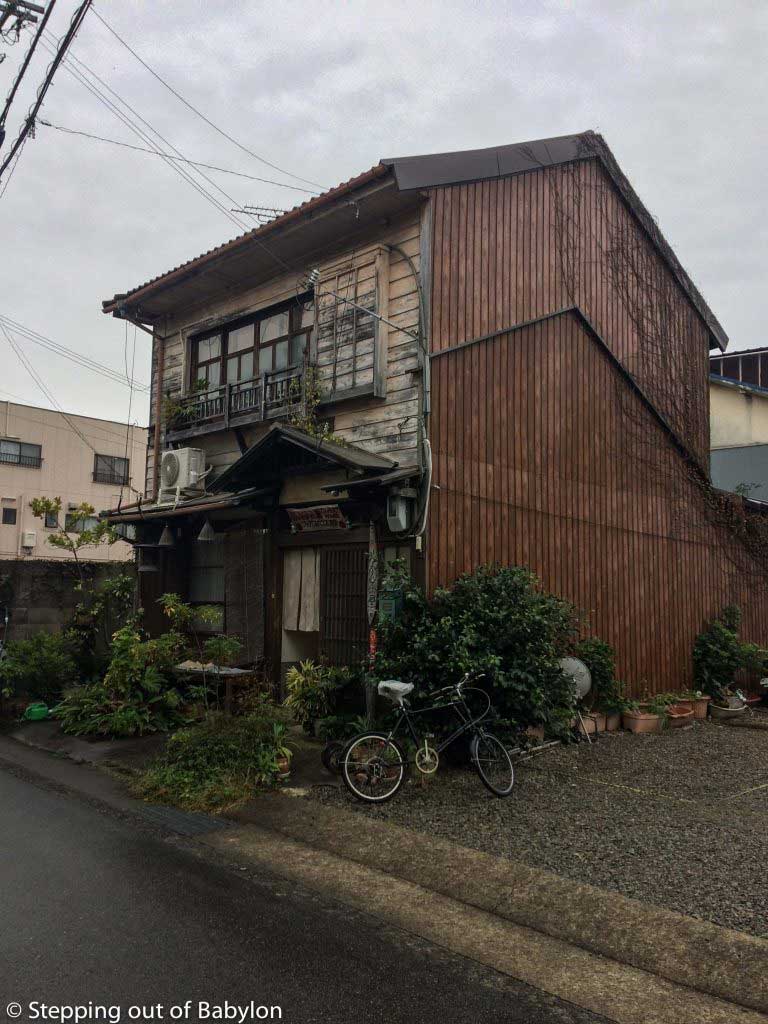
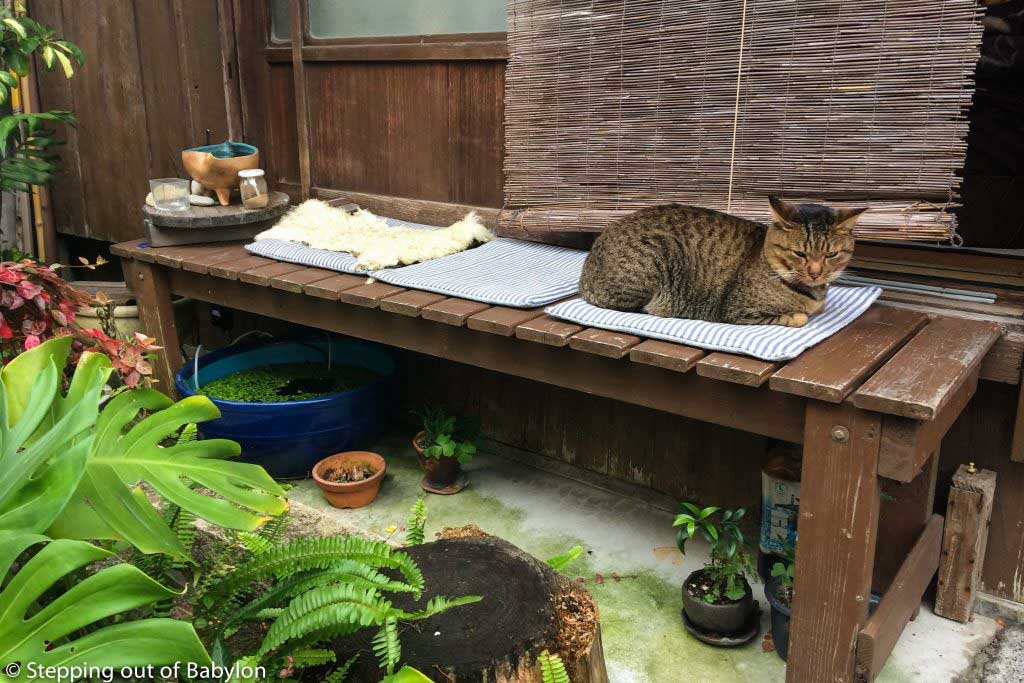
Despite the lack of interesting things to do in Tanabe, in this city I had one of the best stays in Japan. The Buddha Guest House, located a few minutes from the Kii-Tanabe station is a lovely traditional wooden Japanese house, located in a residential neighborhood. There are three rooms, all shared, where you sleep in a mattress over the traditional tatamis. I found it very comfortable and cozy. There’s also a small backyard and a very independent cat in the house! Laundry (100 ¥) and kitchen facilities are available. 2300 ¥ per night.

Here, I confess that felt at home… and most of the time I have the house all for myself!!… but this guesthouse as also Tanabe in general is not the place to stay if you look for
social life.

See more at Tanabe… the starting point of the Kumano Kodo

Where to sleep in Yunomine onsen:

Yunomine is a small settlement along the road that runs parallel to a small river where the hot spring is located. There’s one small supermarket, one small grocery shop, one small restaurant… and onsens!!!

There are many accommodations in Yunomine; basically most of the buildings are accommodations, but the majority is ryokans style that provides also meals and has their own onsen. In terms of guesthouses or hostel with dorms, there isn’t much offer but the J-Hoppers Yunomine is an exception… and a good exception, as it offers very good conditions, with a big kitchen as a nice and a comfortable living room that is a good place to socialize a bit during the long winter evenings. In the evening there’s cooked rice for free, and rice porridge in the morning.

This guesthouse has three private onsen (basically the showers are there) with one of then open air. It’s great to wake up early morning and enjoy the relaxing inside the high temperature water while listening to the rain hit gently the roof.

Where to eat in Yunomine onsen:

Apparently, some of the ryokans have restaurants but I didn’t try as I found one place, very simple and informal that suite me perfectly.

It doesn’t have the name in western characters (but has a menu in English with pictures) but is a small bamboo construction just behind the Yunomine temple. There you can find several noodle soups, all of them delicious (several vegetarian options), with the prices from 550 ¥ until 800 ¥. Opens everyday from 7a.m. until 5p.m. The owner is far from look friendly but is indeed a very nice and gentle person.

In Hongu Taisha you have many more options to buy food as also a bigger choice of restaurants.

Shopping for hiking in Yunomine onsen:

Yunomine doesn’t have many options for shopping. The small supermarket closes on Mondays and doesn’t open early, so you need to prepare your stuff in the day before if you want to start early the hiking day.

For fruit, tofu (here you can find goma-tofu, that is made with sesame), cookies, chocolates and snacks there is also a small grocery shop.

The J-Hoppers Guesthouse sells a few things that you can use as a dinner as also to bring with you to eat during the day when you hike. They sell eggs, instant soup, rice, etc…

How to go from Yunomine back to Tanabe or Hongu Taisha:

How to more around Yunomine Onsen by bus:

(link)

Luggage store and luggage delivery:

Most of the foreigners do the Kumano Kodo on foot, doing all the trails with a backpack and sleeping along the way. Between the Japanese is more common come by car and visit some of the shrines that easy to reach by the road along the Kumano Kodo.

I found it difficult to do it with my 12 kg backpack, so I choose two places as a base point for daily hikes… I wish I had more time to do all the Nakahechi Trail until Nashi Taisha!!!

But there are other options: or you can leave your luggage at the guesthouse and hike for a couple of days or so, and then come back to pick the stuff… or you can hire the services that drop-off your luggage at specific places. Ask more details at Kumano Travel (Tanabe) or on their website.

How to go from Koyasan to Kumano Kodo by bus

From Koyasan to Tanabe:

Just to make it clear: Tanabe is the name of the city, but Kii-Tanabe is the name of the train station, as there is another station in Japan with the same name. Many places in this area have the “kii” prefix to identify them as being part of the Kii Peninsula.

You need to take three buses to reach Tanabe form Koyasan: once in Gomodanzan and then in Kirari-Ryujin (Ryujin Onsen). But don’t worry as all this is extremely well organized you don’t wait more than 10 minutes to get on the next bus. There is a combined ticket for the entire trip; it means that you pay only once, at the beginning of the trip to Koyasan. 

The bus departure from Koyasan station at 9:45; change at Gomodanzan that departure at 11:05, arrive at Kii-Tanabe at 13:11.

The trip costs in total 4520 ¥.

The bus from Koyasan station stops also in Senjuibashi and in Okunoin-mae.

This bus service between Koyasan and Tanabe runs only until the end of November. It’s better to reserve in advance, not because of having too many guests (at the end of November I was the only one in the last part of the trip) but for them to organize and be waiting for you every time you change buses.

bus stop at Okunoin-mae, Koyasan
from Kirari-Ryujin to Tanabe instead of a bus is a mini-van due to the reduce number of passengers… in the end of November I was the only one going to Tabane
Combine bus ticket from Koyasan to Tanabe
Gomodanzan

From Koyasan to Kumano Hongu Taisha:

The bus departure from Koyasan station at 9:45; change at Gomodanzan that departure at 11:05 to Hongu Taisha-mae at 14:22.

The trip costs in total 5590 ¥.

The bus from Koyasan station stops also in Senjuibashi and in Okunoin-mae.

bus to Ryujin Onsen from Gomodanzan

Tanabe… the starting point of Kumano Kodo

Tanabe is the second biggest city in Wakayama Prefecture, but this doesn’t offer any enthusiastic lifestyle, being a quiet place where the streets are empty most of the time. Still, it was a good base point to do part of the Kumano Kodo Nakahechi Trail.

Kumano Kodo is an ancient pilgrimage trails with more than 1000 years, that link the three main shrines in this area: Hongu Taisha, Nachi Taisha and Hayatama Taisha, that since 2004 are classified as World Heritage by UNESCO, attracting more and more visitors from all over the world. Along the trails, there are several shrines where the pilgrims worship and perform purification rituals, mainly connected with the Shinto religion.

The Nakahechi trail is the most popular of the different routes of Kumano Kodo to reach Hongu Taisha, and starts in Takijiri Oji, located about 30 minutes by bus from Kii-Tanabe and ends at Nashi Taisha, also an important shrine, on the other side of the Kii Peninsula, the south most part of the Wakayama Prefecture.

The symbol of Kumano Kodo: a crown with three legs

Most of the people do the 30 km between Takijiri Oji and Hongu Taisha in two days sleeping in Chikatsuya Oji, a small village with a few accommodations, and return to Tanabe by bus.

I choose a different strategy, considering my budget as also the weather conditions (in the winter this area receives rain often)… and the availability of the accommodations, that force me sometimes to change my travel plans, as in the weekends some areas are fully booked with only rooms left in the top range hotels.

Nakahechi trail of the Kumano Kodo

So I stayed in Kii-Tanabe, and did the 23 km of the Kumano Kodo Nakahechi Trail, overcoming Chikatsuya Oji and return by bus to Tanabe in the same day, as here it’s easy to find budget accommodations and meals. On this first day, I finish the hiking where the Nakahechi Trail makes a detour in the result of rock instability provoked by a typhoon in 2011, that force to close this part of the Kumano Kodo trail, more or less, forever… This hike took me 8 hours.

After, I move by bus to Yunomine Onsen and stayed there to do 8 km more of the Nakahechi Trailuntil Kumano Hongu Taisha, one of the most important shrines of Kumano Kodo. To reach Nakahechi Trail from Yunomine you must hike the Akagi-goe and on the return, you can enjoy the short but steep trail of Dainichi-goe. Like this you can make a look, starting and finish in the Yunomine Onsen, that don’t take you more than 4 hours.

Yunomine was also the base point to complete the final part of the Nakahechi Trail, before reach Hongu Taisha. From Jagata-oji to the intersection with the Akagi-goe there are not more than 4.2 km but it took me 6 hours do do it, as you can’t use buses for the return trip or can’t also do it as loop, so you need the return thought the same way.

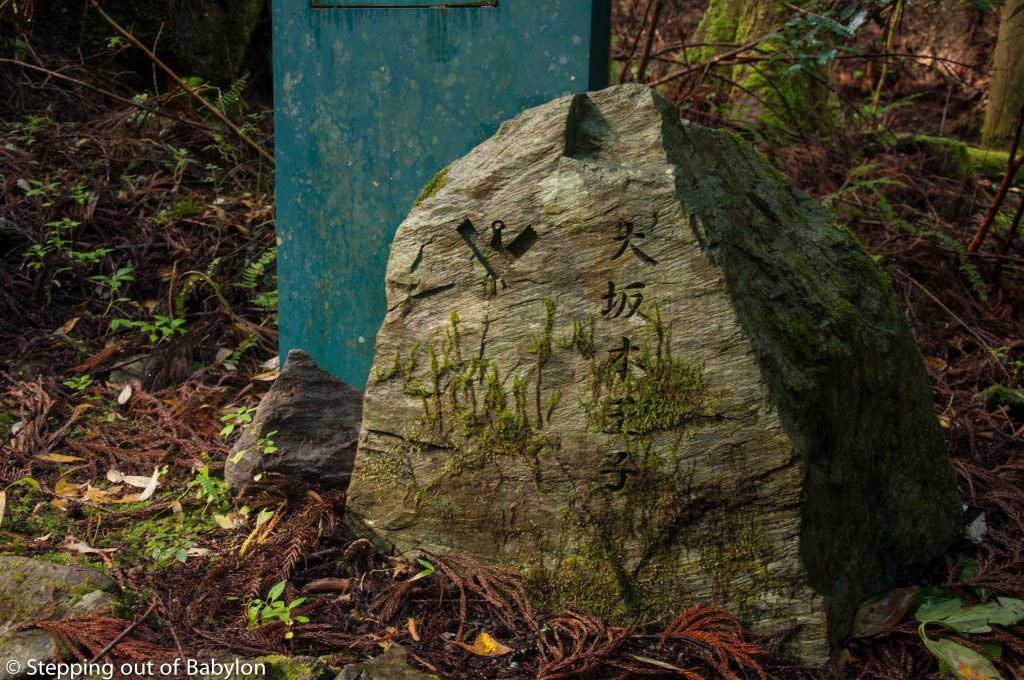
marks along the Nakahechi Trail, every 500 meters
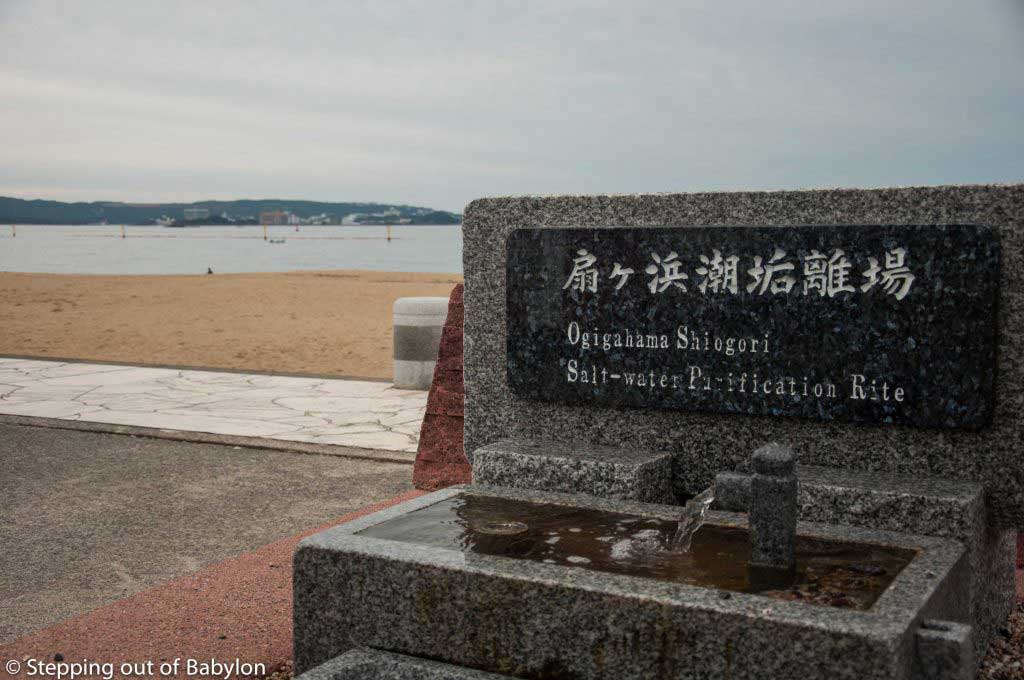
The purification by water is one of the most common rituals of the Shintu religion, and as Tanabe, located by the sea is a starting point for the Kumano Kodo pilgrimage, here the ritual is performed with salt water
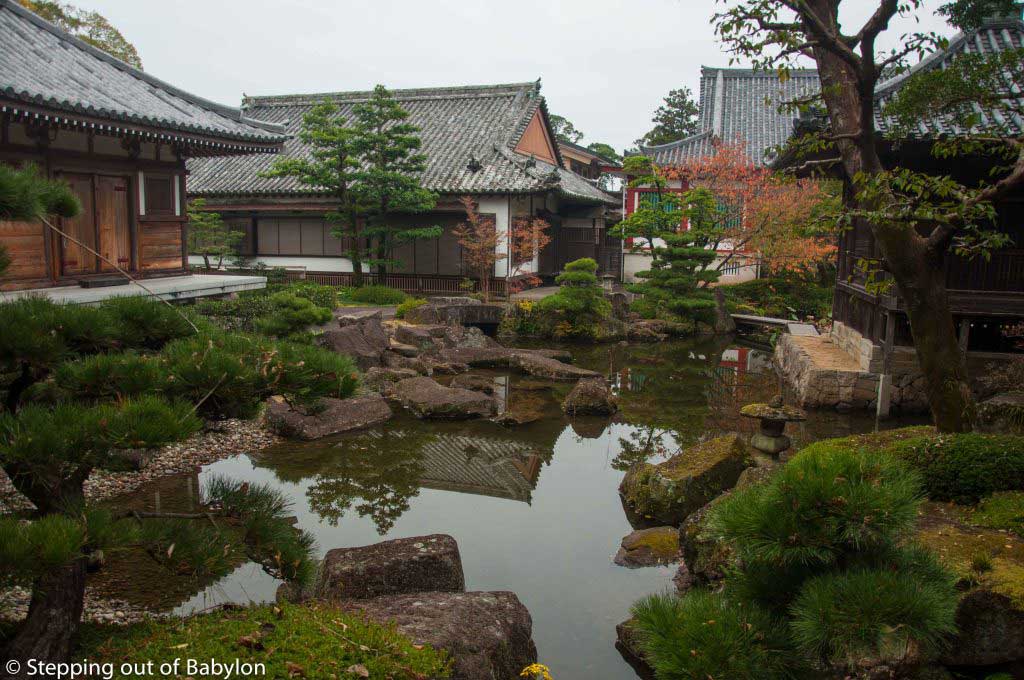
Kozanji Buddhist temple
Ajikoji area in Tanabe

See more at:

Kumano Kodo… the Nakahechi Trail

How to go from Koyasan to Tanabe by bus:

check this link

Where to sleep in Tanabe:

Despite the lack of interesting things to do in Tanabe, in this city I had one of the best stays in Japan. The Buddha Guest House, located a few minutes from the Kii-Tanabe station is a lovely traditional wooden Japanese house, located in a residential neighborhood. There are three rooms, all shared, where you sleep in a mattress over the traditional tatamis. I found it very comfortable and cozy. There’s also a small backyard and a very independent cat in the house! Laundry (100¥) and kitchen facilities are available. 2300 ¥ per night.

Here, I confess that felt at home… and most of the time I have the house all for myself!!

Buddha Guest House
Buddha Guest House

Buddha Guest House

Where to eat in Tanabe:

Most of the Tanabe restaurants are concentrated in an area called Ajikoji, where scattered along narrow and mazy streets you can find also bars, more properly “izakaya” that is a type of restaurant that also serves alcohol, mostly sake and beers.  I try the Ichiyoshi, which has an English menu, with many vegetarian and even vegan options. The food was delicious and a meal costs around 1200 ¥.

Most of the izakaya style restaurants only open for dinner. So if you want to have a simple meal during the day, in a local environment, they’re a small eatery on the main street from the station called “barg” but without a sign in western characters. It’s just next to a pharmacy and serves warm udon with raw egg and butter, for 350 ¥. Looks vulgar but it was so much tasty that the usual udon!

Tourist information center in Tanabe:

At the Kii-Tanabe station you have the tourist information center that can give you good orientation about the Kumano Kodo trails as well about the Wakayama province.

There you can also get the schedule of the buses in the Kumano Kodo area, from Tanabe until Shingu, passing by Yunomine Onsen and Hongu Taisha, as well as prices and schedules about long distance buses to Osaka and Kyoto (departing from the bus terminal just in from of the train station).

How to go from Tanabe to Osaka and Kyoto:

How to go from Yunomine to Osaka and Kyoto

Footer

search

Tags

Arugam Bay Assam Bali Border Crossing Borneo Cappadocia Colombo Dambulla Esfahan Fes Food Gilis Hiking Hikkaduwa hokkaido Istanbul Itinerary Jakarta Java Kandy Kashan Kataragama Kumano Kodo Lombok Meghalaya Meknes Mekong Nagaland Natural Park Nongriat Northeast States Ouarzazate Sarawak Shiraz Sichuan Province Sumatra Tabriz Tehran transportation Varanasi Visa Yangon Yazd Yogyakarta Yunnan Province

I’m Catarina, a wanderer from Lisbon, Portugal… or a backpack traveller with a camera!

Every word and photo here comes from my own journey — the places I’ve stayed, the meals I’ve enjoyed, and the routes I’ve taken. I travel independently and share it all without sponsors or ads, so what you read is real and unfiltered.

If you’ve found my blog helpful or inspiring, consider supporting it with a small contribution. Every donation helps me keep this project alive and free for everyone who loves exploring the world.

Thank you for helping me keep the journey going!

BUY ME A COFFEE

Categories

Recent Posts:

  • How to go from Hualien to Dulan Beach
  • Taroko Gorge: between marble cliffs and emerald rivers
  • Hualien: a dull gateway to Taroko Gorge
  • Taiwan: Itinerary for an 16 day trip
  • Vietnam: Itinerary
  • 3 months in India: Kolkata, Tamil Nadu, Karnataka, Goa and Kerala
  • Backpacking Turkey in 24 Days: itinerary & costs
  • English
  • Português

Copyright © 2026 · Stepping Out Of Babylon on Genesis Framework · WordPress · Log in