• Skip to main content
  • Skip to footer

Stepping Out Of Babylon

Travel & Photography

  • About me
    • Contact
  • Destinations
    • Africa and Middle East
      • Iran
      • Lebanon
      • Morocco
      • Turkey
    • East Asia
      • China
      • Japan
      • Taiwan (ROC)
    • South Asia
      • Bangladesh
      • India
      • Nepal
      • Sri Lanka
    • Southeast Asia
      • Cambodia
      • Indonesia
      • Lao
      • Malaysia
      • Myanmar
      • Singapore
      • Thailand
      • Vietnam
  • Itineraries
  • Travel tips
    • Border crossing
    • Hiking and Natural parks
    • Food Journey
    • Visa
  • Photography

Destinations

How to go from Chennai Airport to Chennai City Center

The Chennai International Airport is located about 20 km southwest from the center of the city. To avoid the extra cost of a taxi, and all the issues like bargain the price or get the chance to be cheated the train shows up as the best option if you are traveling with a small budget, particularly if you are alone and can’t share the taxi fare.

It’s not difficult but it takes a bit of time.

The closest train station is Tirusulam, located at a walking distance from the airport.

As you leave the arrivals passenger terminal you are facing a big car park. Just walk a bit to the right side, passing under a concrete viaduct (a highway), and keep walking straight until you see the entrance of the “pedestrian subway”. If you as the direction to the guards of the airport or to some taxi drivers they will show you the way, even if they don’t speak much English… just ask “railway station” or “train”.
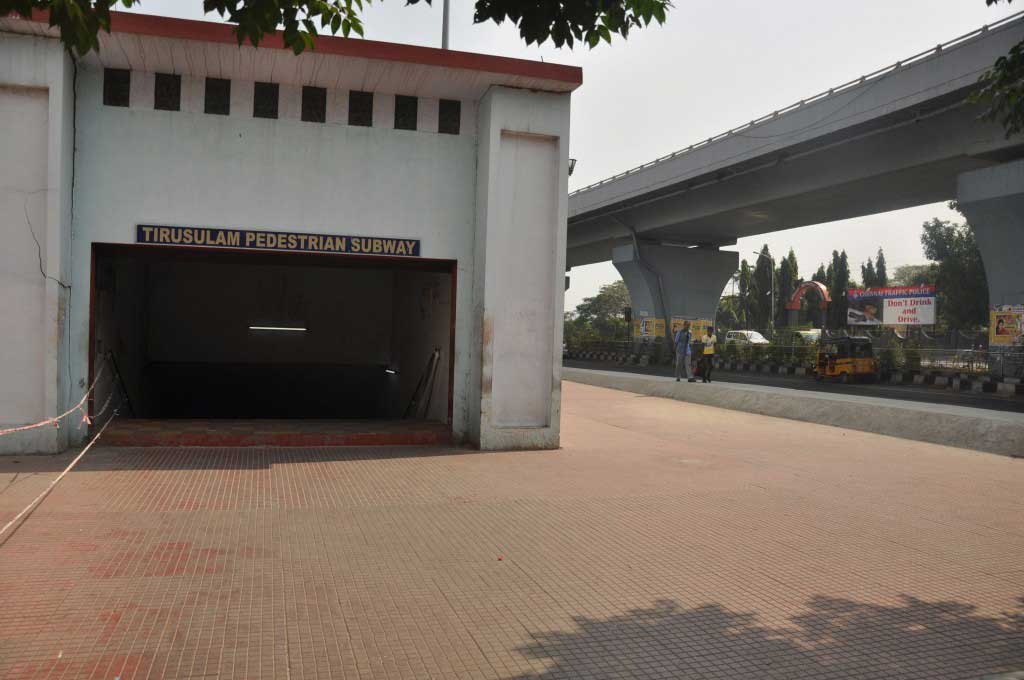
Way from the Airport to the Train Sation. Chennai


Take this pedestrian subway and you’ll reach the station ticket counter, where you can buy the 10 rupees ticket. At the ticket counter is better to ask the number of the line… or try your change looking for “Chennai-Beach”.

There are 2 main trains station in Chennai: Central e Egmore. Central is the best located one, closer from Triplicane (a neighborhood with cheap guest houses) and is also where you can find the “Tourist Ticket Counter”, in case that you want to move on from Chennai by train. Unfortunately, the train that pass by Tirusulam (airport) goes doesn’t go to Chennai-Central but to Chennai-Egmore.
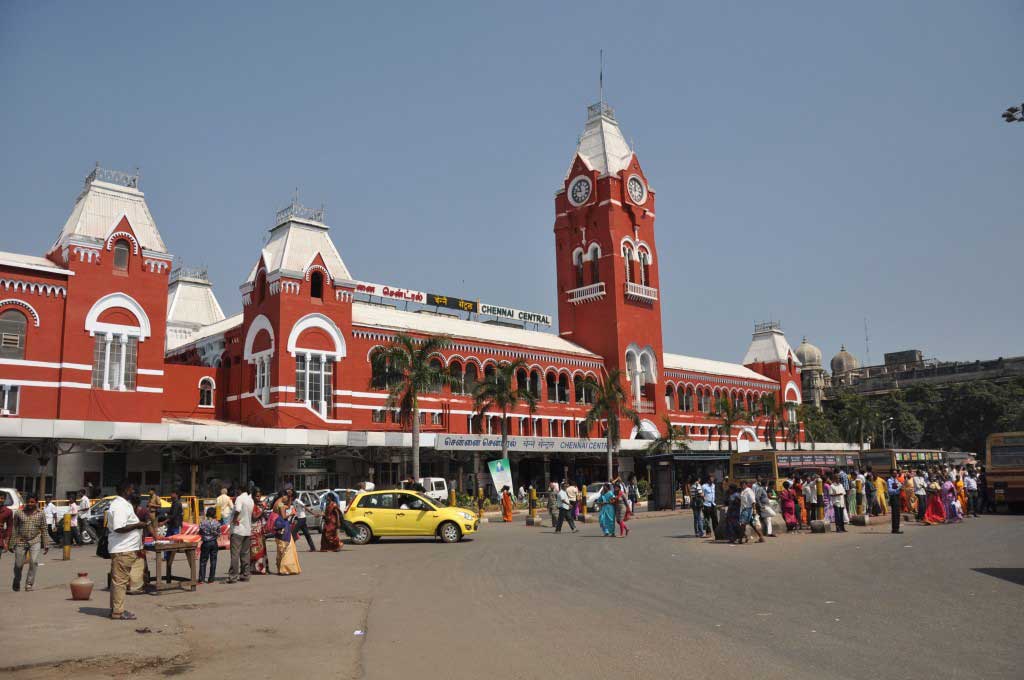
Chennai-Central Train Station


As you arrive at the platform, choose the side that goes to “Chennai-Beach”. There are signs, but you can also ask the people there. As it is a suburban train, you don’t need to wait for a long time, but also don’t expect to find a seat, as these trains as all unreserved. Anyway, the trip doesn’t take more than 20 minutes.
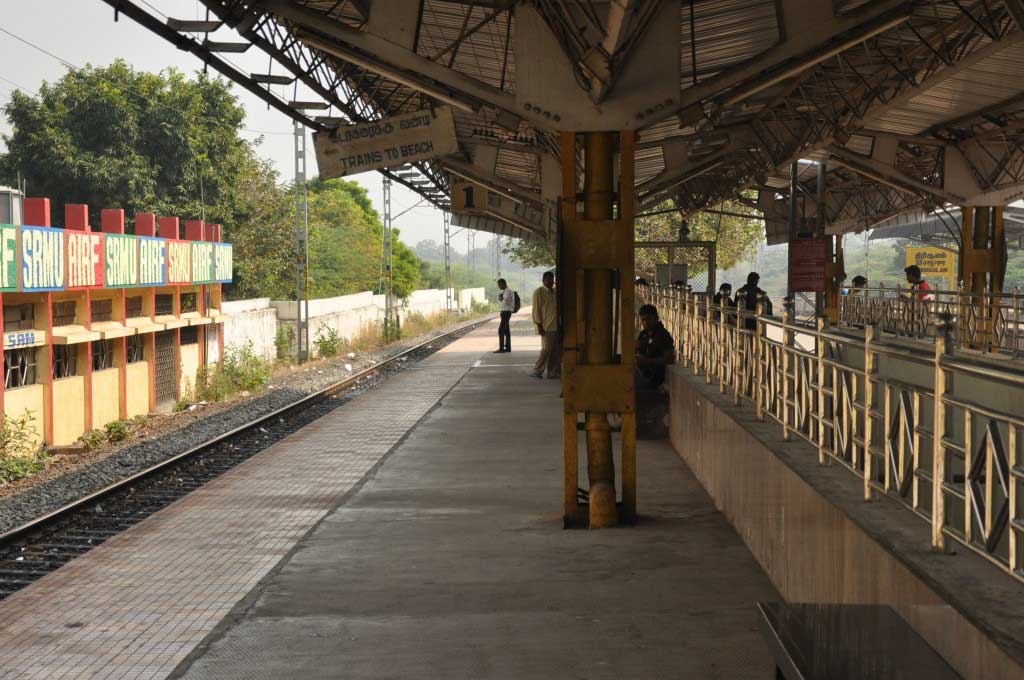
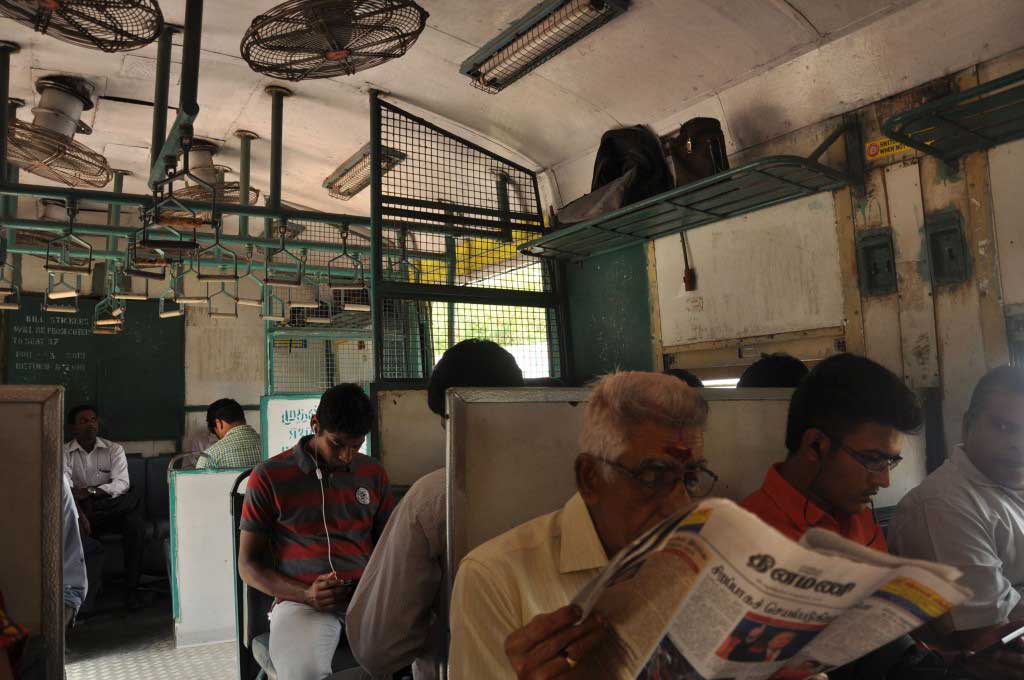
Tirusulam train station. Chennai-beach platform to Chennai-Central
Train from the airport to Chennai-Egmore. Chennai


If your want to go to Triplicane, nearby Egmore train station you can catch the bus number: 22, 27B, 29A or 29D.

In case that Chennai is just a stopover in a bigger itinerary and you need to buy a train ticket, is better to go straight to Chennai-Central, where you can find the “Tourist Ticket Counter”. At Egmore, you can’t buy tickets for long distance trips.

From Egmore to Chennai-Central is better to take a tuk-tuk to overcome the 2 km full of traffic and noise that separate the two stations. A tuk-tuk will cost between 70 to 100 rupees.

At Chennai-Central you have the challenge to find the “Tourist Ticket Counter”. Facing the main old building you need to walk to the left side until you find a big white building, a kind of modern concrete construction. Inside the big lobby, there’s a staircase. The ticket counter is in the first floor. Just in case: there’s an ATM of State Bank of India at the entrance of this building.
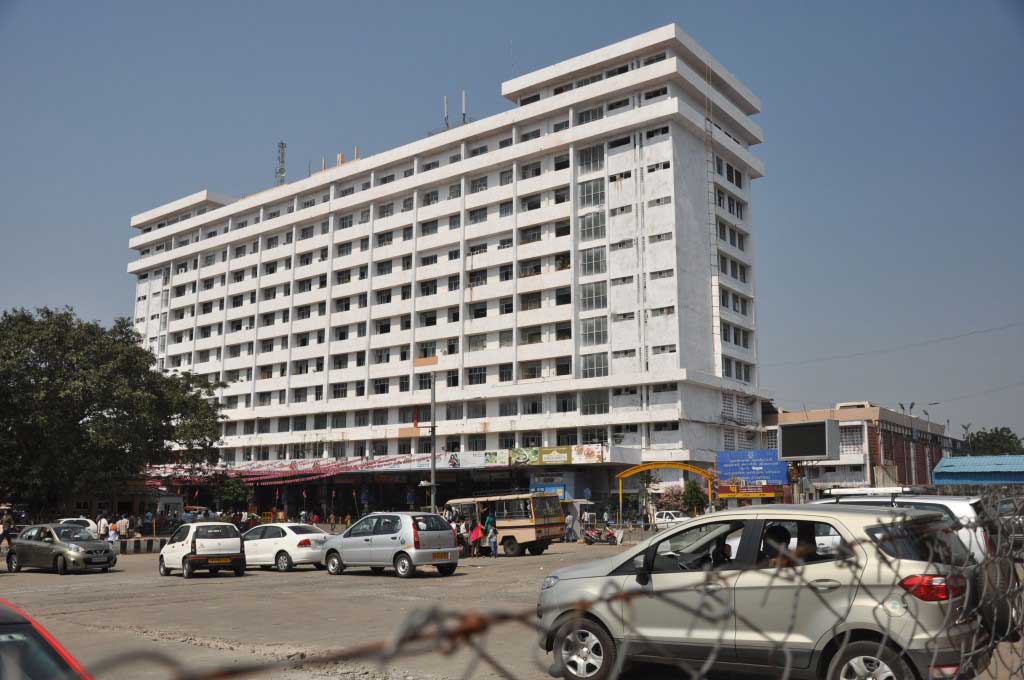
building next to Chennai-Central were is the “Tourist Ticket Counter”


Arriving at Chennai-Central, there are buses to Triplicane: 32, 32A that stop in front of the station. But watch out because you can take easily the bus in the wrong direction. Double-check the direction of the bus, with the driver or the ticket seller, before jump to the bus… I already get lost twice!


Where to sleep in Chennai:

I’m used to stay in Triplicane, a Muslim neighborhood with good connection by bus with the two train stations. In Triplicane there are some guesthouses and cheap hotel.

My favorite is Broad Lands, a classic from hippie times, located in a charming and decadent house that was at times the residence of a rich Muslim.
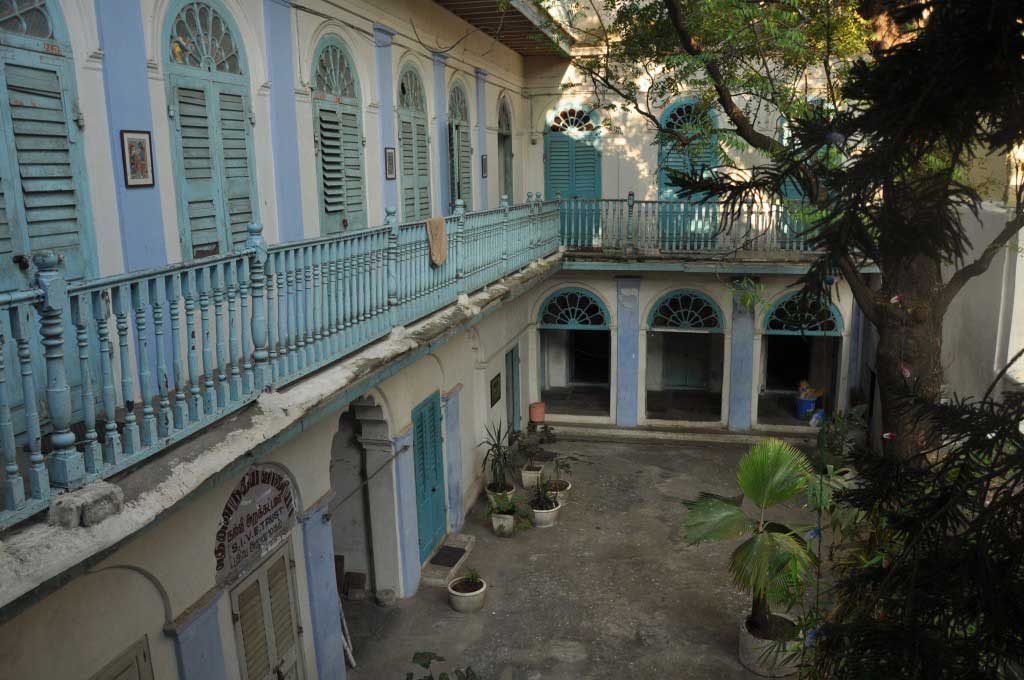
 

Broad Lands. Triplicane. Chennai

Address: 18, Vallabha Agraharam St, Opp Star Theatre, Triplicane, Chennai, Tamil Nadu 600005, India

Phone:+91 44 2854 8131
India_Chennai_Broad Lands

Where to eat in Chennai:

One of the reasons why I prefer to stay in Triplicane is not just because of the glamor of Broad Lands, but also for restaurants, where you can taste amazing food, flowing the traditional south India style. Predominantly vegetarian and yummy!!!

Along the main road of Tripicane, where the bus drops you and awalking distance from the Broad Lands, there are several options.

My choice goes Ratna Café, for south Indian snacks, but where you can also find thali during the day, more or less until 3 p.m. The prices are cheap, but if you prefer a bit more comfort, which means air-condition, there’s another room on the first floor, where is charged a bit more for the same food.
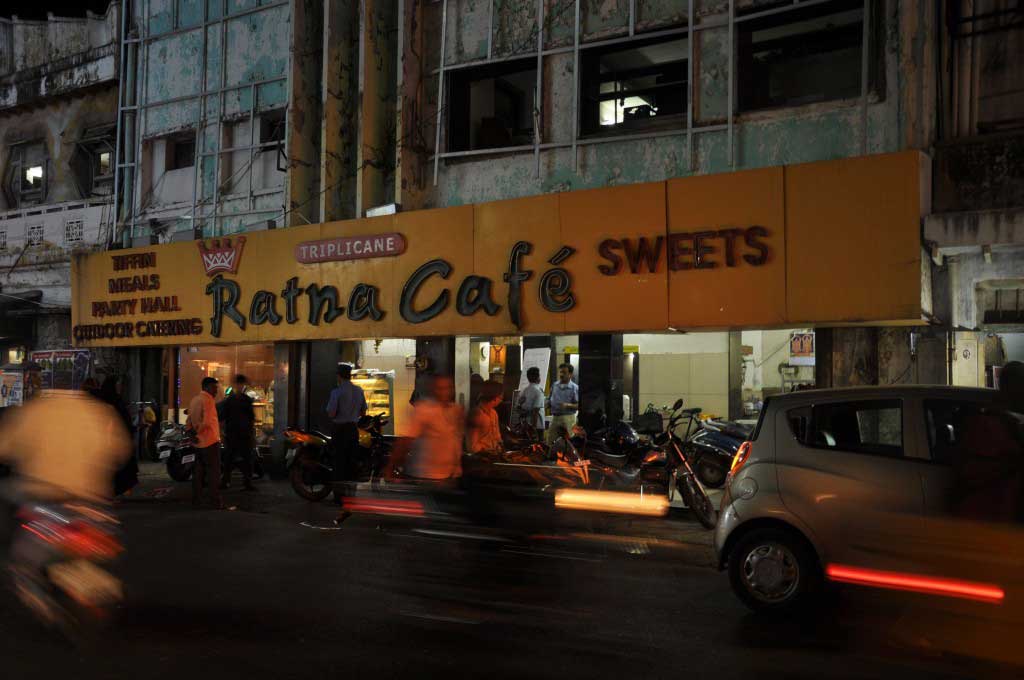
Rana Cafe. Restaurant. Triplicane. Chennai

With also amazing food is Anandha Bhavan, located on the left side of the same road. The place is simple but with an atmosphere. Is very popular between locals and the thali (only vegetarian) is amazing… and you can repeat as many times as you want… just for 70 rupees.

The Triplicane main street is noisy and has a lots of traffic, so is not a place for a pleasant walk, so is better just ask about these restaurants to the local people, specially shop keeps, that everybody knows Ratna Café and Anandha Bhavan are a kind of institutions of this neighborhood as also from Chennai.
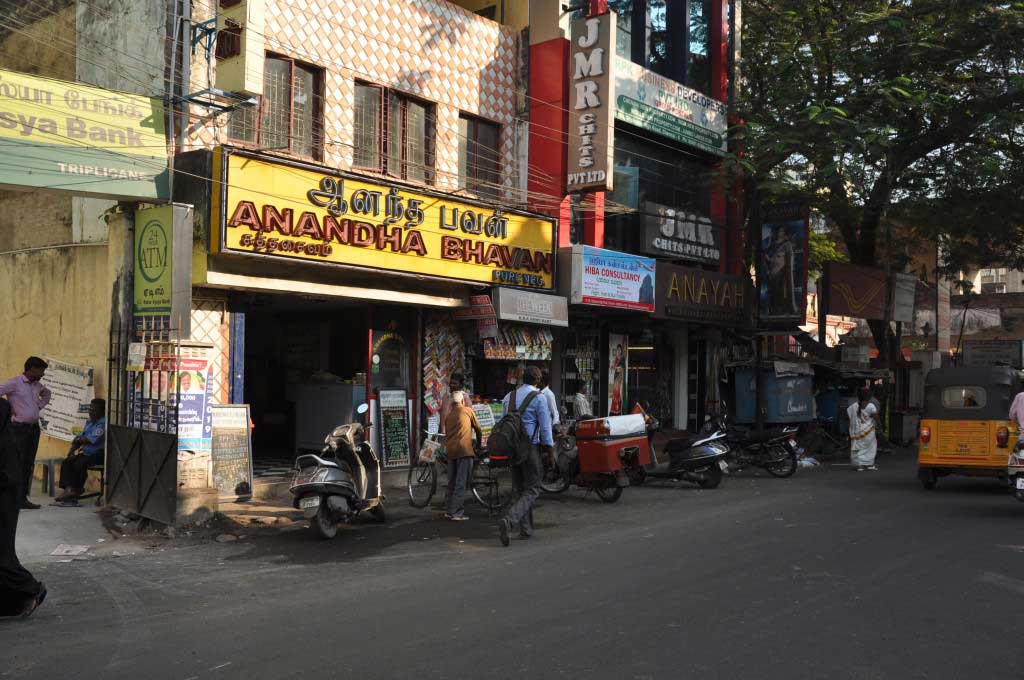
Anandha Bhavan. Restaurant. Triplicane. Chennai

How to go from Chennai to New Delhi by train:

To travel by train from Chennai to Delhi I strongly recommend the train number 12269 (Hazrat Nizamuddin Duronto Express).

It’s a long journey of 28 hours but this train just makes a few stops, so there’s not many people come in and out all the time, and all the meals are included, breakfast, lunch, dinner, snacks, chai and even water and newspaper. The Duronto Express trains link the biggest Indian cities, and offer a better service; despite the ticket being a bit more expensive it definitively worth the comfort, especially for long journeys. The train is more modern and clean, and the toilets have maintenance during the trip.

It departure from Chennai-Central early morning and after spending one night on the train you arrive next day to Hazrat Nizamuddin, a few kilometers from New Delhi Train Station. Beddings are available on the train for 10 or 20 rupees!

The food is good. The chai is free.

One of the best train trip that I experience in India, even in Sleeper Class!

How to travel by bus in Sri Lanka… the challenge!

Any reflection about Sri Lanka can be complete without mentioning the buses… these way of transportation is practically unavoidable on a trip around the island, where despite the reasonable railway network it show inefficient to cover the entire territory.

So the buses have the key role to connect cities, towns and villages… and it is no exaggeration to say that the bus network covers almost all the territory, which service can be slow, but are guaranteed! There is always a bus service linking all the main cities, and if they have a less convenient schedule, there is always the option of going first to an intermediate stop, and then take another bus to the final destination. Sometimes a 150km journey can involve three buses.

One advantage of traveling by bus in Sri Lanka is that the bus stations, are located in the city center, usually at a walking distance from the train station, as also from rooms and restaurants. The inconvenient of this is that in big cities, such as Colombo, cross the city to get to the bus station may involve one hour or more, even at off-peak hours!

Trincomalee Bus station. Sri Lanka
Batticaloa Bus station. Sri Lanka
Monaragama Bus station. Sri Lanka
Ktaragama Bus station. Sri Lanka
Pottuvil Bus station. Sri Lanka

The bus terminals can be huge, as in Colombo, occupying a big covered area, or modest as in Pottuvil, where buses line up along the road. Also differ in terms of organization and information, but in general all have signs indicating the place were each bus stops, according to he destination. About timetables the information doesn’t exist, being necessary to use the information desk, or more easily to bus drivers that waiting at the bus.

Bus Stand. Sri Lanka

In a country where the overwhelming majority of the population (about 8%) has a car, the buses are the most popular option, not only for urban routes but also to cover long distances, such as the 400 kilometers that separate Colombo of Jaffna, lasting more than 12 hours.

Yes… the bus trips are long… very long, made at an average speed of 35 km/h. The buses don’t necessarily run at this speed, but due to the traffic, that even in national roads is intense, and mainly due to multiple stops to pick up and drop off passengers, as breaks for rest and meals. Private buses, which are the majority that runs on national roads, are even worse in terms of stops, as they stop to collect passengers at any point, not limited only to the bus stands. Travel on night buses take less time but this service is only available on few routes, between the biggest cities.

In Sri Lanka is few the express buses, that link two points without intermediate stops. However buses with air-conditioning, which are available between the biggest cities as also to the airport, have fewer stops, and some even use the recently open “expressways”, a kind of highway that shortens travel time and increases comfort.

Ar-condition Bus from Colombo to Kandy. Sri Lanka

The bus trips are slow, but no one seems to care, accepting the fact for granted, the same applies to overcrowding, with buses run fully packed, with passengers standing in the corridor, or even hanging by the doors. This situation is worst on weekends and holidays, occasions choose to visit relatives and for pilgrimages to religious sites.

However given the efficient coverage of the bus network, the high frequency, that resulting in reduced waiting times between transfers, the good location of the terminal and the easiness of the connection at stopovers, the buses become an attractive way to travel in Sri Lanka.

Compared to train, also very slow, the bus trips can’t, most od the times, offer such interesting landscapes, especially in mountain areas, where the train runs by “tracks” away from settlements. National roads, particularly those linking the main cities, or along more densely populated areas, such as Colombo-Kandy and Colombo-Galle, are far from offering a pleasant landscape, borders by buildings, houses, shops, warehouses, workshops, street vendors, etc… that creates a visually unattractive and polluted landscape. In addition, to this visual pollution joins air pollution produced by the vehicles, mainly buses and trucks, as also motorbikes and tuk-tuks. Impossible to remain indifferent to constant and disturbing honking, produced by all these vehicles, including the bus driver itself, always keeping one hand on the horn, which is far from producing a discrete sound, being high-pitched, making bus trips even more tiring.

However, from all the bus trip, beautiful and memorable trips landscapes remain!

Bus trips. Sri Lanka

Any bus in Sri Lanka has an automatic payment system, so in addition, to the driver, there is always an assistant, usually a young man, that not also charge tickets, but also touts the bus destination each time it passes by a bus stand or by a group of people standing on the roadside.

Bus Driver. Sri Lanka

Tickets can have different appearances, some with information in English, others only in Sinhala. The price is often handwritten, according to the distance traveled… but the values ​​are a mystery as they aren’t posted. This means that sometimes some guys try to charge more money, but it is an unusual situation, with Sri Lanka population showing a high degree of honesty. SLTB buses of the state-owned company (Sri Lanka Transport Board) often have printed tickets which contain the origin and end, as well as the distance and the cost associated with the trip.

Bus Ticket. Sri Lanka
Bus Price. Sri Lanka

But whatever the value, the price is always low, a fact that also contributing to the popularity of buses, which are more expensive than the train, but have the advantage of offering a greater flexibility in terms of schedule and are unbeatable in terms of frequency.

Lanka Ashok Leyland Bus. Sri Lanka

And you can’t talk about buses without referring to Lanka Ashok Leyland, name printed in front of any vehicle, corresponding to the company in Sri Lanka that manufactures or assembles almost all buses, trucks, tractors and tuk-tuks. Being all from the same factory, all follow the same model, with only small variations of finishes, with the comfort changing according to the age of the vehicle. Wisely older vehicles are limited to short distances and urban areas. For long trips, intercity, buses are in good condition, yet without offering much more comfort. Whatever the model, the vehicles always have 5 seats in a row, two on one side and three on the other, leaving one narrow corridor, where it’s difficult for passengers to cross, particularly if transporting goods. The seats are somewhat soft, but with too vertical backboard, and no support for the head, which becomes uncomfortable on long journeys.

Perhaps as a way to customize this massive uniformity, the interior of the bus is usually decorated according to the taste and religious orientation of the driver, with stickers, posters, garlands of plastic flowers, soft toys, Buddha images, flowers, Hindu iconography or the face of Christ.

Inside bus. Sri Lanka
Bus. Sri Lanka
Bus. Sri Lanka
Bus. Sri Lanka
Bus. Sri Lanka

The roof, as well as the seats, is also customized for each vehicle, lined with colorful plastic, or with fancy curtains on the windows. Whatever option the interior of the vehicle is generally clean and well maintained

All but ALL buses have music, usually excessive loud, charged by one or more speakers, always with local music. Some may even have a TV that always shows a concert with a similar style of music.

Bus. Sri Lanka
Bus. Sri Lanka
Bus. Sri Lanka
Bus. Sri Lanka

These vehicles that resemble a bulky box, painted dark red or in white and blue colors, are a crucial milestone in Sri Lanka landscape, whether in cities or along national roads, which sometimes circulate over speed taking into account the number of people, bicycles and other vehicles occupying the narrow roads. Yet buses are an efficient and convenient way to travel through Sri Lanka.

Governamental bus vs Private Bus. Sri Lanka
Lanka Ashok Leyland Bus. Sri Lanka


… for those planning to travel by bus:

  • Never use the luggage compartment; is always full of dust or mud, if it rains; even if the driver insists on placing your backpack in the trunk, never let it happen, insisting put it inside, either by the driver or near the front door, in an area without seats.
  • It can be said that it’s unnecessary to ask for the duration of the trip because the answer requires long consideration and almost always results in the standard “3 hours” answer … and that usually last much more. The best it to make a calculation based on the distance (which usually drivers also don’t know) considering an average speed of 35 km/h.
  • In order to enjoy the landscape, the best option is to sit in the front seat, on the left side (opposite the driver) and near the window. If you stay on the side of the corridor, there is the discomfort of been pushed by the movement of people and luggage. Sitting at front seat has another drawback that is the persistent sound of the horn, but has additional cool air that comes through the door, which is usually always open.
  • The bus entry it by the back door and the exit is made by the front door. But this rule is far from been followed by all passengers, and sometimes is easier to get through the front door, to talk straight to the driver, about the destination or stops of the bus.
  • The dark-red vehicles belonging to the public company, the SLTB. Vehicles of private companies are usually white with some tracks in blue.
  • There aren’t “sleeping buses” in Sri Lanka… all have seats.
Lanka Ashok Leyland Bus. Sri Lanka
Bus. Sri Lanka
Place near the dirver to put luggage and backpacks during bus trips… avoid the trunk!! Sri Lanka

About Sri Lanka

A rich and interesting country with a diverse culture and traditions resulting from the long history and the geographical position that puts this island on the trade route between East and West that dominated the seas for centuries, resulting in a mixture of various influences: religious, cultural, gastronomic and social.

A country where in addition to the natural religious divisions, the society is also stratified by caste, which influences the level and quality of education, the marriages, the jobs as also the position in society, which is clearly dominated by the Sinhalese, mostly Buddhists, where little space left for minorities like Tamils ​​and Muslims.

A country where the climate provides plenty and variety in terms of food, which is visible in the markets as also in the Sri Lankan cuisine, and where tourism plays an important role in the economy of the country.

A country where the majority of the 20 million of inhabitants live away from poverty, and where the literacy rates are around 98% and the life expectancy is 75 years old.


Religion

Despite the proximity to neighboring India, the dominant religion in Sri Lanka is Buddhism, followed by 70% of the population; 8% follows Hinduism; 7% are Muslims and the remain can be divided by the various currents of Christianity left by the Portuguese, Dutch and British presence.

Buddhism clearly dominates the religious map of the country, occupying the entire central region od the island, both mountain and the plains areas, with the exception of the north of the country, a region where the Tamil presence makes clearly Hindu.

The Muslim community is quite apparent on this coast, predominantly in the areas surrounding the Trincomalee and further south in the Pottuvil area.

Christianity has taken root in some parts of the west coast north of Colombo.

From this results a particular organization of society in Sri Lanka, which is divided by religions that roughly correspond to the different ethnic groups, and hence resulted in a civil war that lasted for 25 years and only ended in 2009, opposing the majority Sinhalese ethnic group to Tamil, mainly Hindu, whose presence on the island date before the British rule, who during the 19 century, created a strong migration of population from southwestern India, to work in Sri Lanka tea plantations.

Buddist flags at Sri Pada. Sri Lanka
Hindu temple at Kataragama. Sri Lanka
Sri Lanka
Sri Lanka


Poya Day

According to the Sri Lankan Buddhist tradition the full moon days are considered sacred, called the Poya days, being a national holiday; ie every month has, at least, one holiday, adding to other holidays corresponding to the Hindu religion, practiced by the Tamil community, by the Christians, like the Christmas and Easter, as also the historic day that marks the independence from the British.

But despite being a holiday, in these days is not difficult to find the commerce to work normally, as well as markets and other services. The exception is the official services such as embassies, post office, etc …

However these holidays, whether is the Poya day or any other religious day, especially if it is on a Friday or Monday, are chosen to visit relatives and friends, as for peregrinations, so use public transportation, either bus or train, is a difficult task, which may require travel two or three hours of walking… no space even to sit on the floor, or even make it almost impossible to get space on a bus or a train.

Calendar_DSC_7789

Burghers

On the east coast of Sri Lanka, particularly in the towns of Batticaloa and Trincomalee centers a distinct community of dominant ethnic groups: the burgers.

By Burghers identifies the descendants of Portuguese and Dutch who by family ties have been mixing with the Sinhalese population, creating an ethnic group with their own language, Creole, and professing the Christian religion, which still remain despite the presence of the British that left the Protestant religion here.

From the Portuguese remains the names like Silva, Perera or the Pereira, Fonseca… in the signs of commercial activities, street names or inscribed on plaques that identify doctors offices or law firms … showing that this small population of Burgher holds a high status in Sri Lankan society.

In Batticaloa is the “Lourenço de Almeida Social & Cultural Centre”, a cultural association belonging to the “Sri Lankan Portuguese Burgher Foundation”, which provides a number of social and cultural activities in this region of Sri Lanka.

The presence of the Burghers, representing about 0.3% of the Sri Lankan population is discrete but extends beyond the names and surnames to fair skin tones and the blue and green eyes of some of the inhabitants.

Hello, in Singalese, Tamil and in latin characters
Train station between Hatton and Ella. Sri Lanka

Language or languages …

In Sri Lanka, there are two official languages: Sinhala, Tamil, with the English as a link between all population, regardless of ethnic, religious. Despite, the English being currently taught in schools, not the entire population, especially of the lower castes, have the opportunity to learn English. Yet, virtually all the population speaks basic words which are usually enough to know prices, directions or schedules.

In fact, Sri Lanka is the country where more easily find people speaking English, compared to other countries of the Indian subcontinent, previously visited, such as India and Nepal.

It is quite often things are also identified with Latin characters, along with Sinhala and Tamil writing; different languages but both using complex and rounded characters.

In terms of pronunciation is not difficult, as reading the words (like, for example, name os places or food) when written in Latin characters, is not far from the local pronunciation, with one or another exception.


Cricket vs football

No doubt the cricket dominates in terms and sport, not only for what you see in newspapers and television but also by the improvised cricket fields that pop up a little everywhere that attract the younger population, exclusively boys.

Little or no room left for football but where the name of Cristiano Ronaldo is not totally unknown.

Cricket game near Kataragam Temples. Sri Lanka

Clothing

In Sri Lanka coexists western wear with the more traditional clothing, with men choosing mainly of pants and shirt, especially in cities and urban areas, but where it is not uncommon to find men wearing the traditional lungi, a clear influence of India that is a light and fresh outfit, suitable for hot and humid climate.

The lungi does not follow any particular style of Sri Lanka in terms of colors or patterns, but some men still wear the traditional lungi with batik motifs, with and floral and geometric designs simple and generally in gray colors.

Women mostly abandoned the traditional sahree, complex and not so practical, to wear skirt or dress generally below the knee. But sahree are still quite popular, also an influence of Indian culture, but that in Sri Lanka is used in a slightly different style in the way how it is wrapped around the waist.

Although becoming less prevalent, sahree is a popular outfit to wear on special occasions such as religious celebrations or festive days and curiously is mandatory for public school teachers.

The uniforms of the students maintain a certain colonial style, some with a tie, shorts, and shirt which brings out badges… all in white including shoes. Girls, wich hair must be braided, follow a similar style, with skirt and shirt.

Sri Lanka traditional outfit for men... on the right side a batik lungi
Sri Lanka traditional outfit for men… on the right side a batik lungi
School kids. Sri Lanka
Colombo. Sri Lanka
Colombo. Sri Lanka

Cost of tourist attractions

As usual in some Asian countries, cultural heritage, natural parks and religious site that are able to attract tourism are subject to a higher fee for foreigners.

In Sri Lanka, this discrimination is evident and extended to virtually everything from temples, natural parks, archeological sites, museums, caves, etc… The only exception found was the Dambulla Cave Temple, where the government recently abolished the entry ticket for any visitor.

This makes that for those traveling on a budget, is necessary to make a careful selection of what places to visit, or eventually considered not to visit any places of the “tourist route”. The choice of this trip was to Sigiriya, from what these considerations result…

Like any Classified Patrimony by UNESCO in Sri Lanka, Sigiriya also has a high cost of entry, 4200 LKR, equivalent to 27 €, much more expensive than a ticket to visit the Louvre Museum (15 €) or the Vatican Museum (16 €). What makes the visit to the tourist sites in Sri Lanka, such as Sigiriya, Polonnaruwa, and Anuradhapura, more expensive than any of the most famous places in Europe.

Local people paid a derisory amount, that in Sigiriya is 50 LKR equivalent to 0.30€, or has sometimes entitled to free entrance, as is the case of the Buddha Tooth Relic Temple at Kandy.

The high value is to preserve sites and is not available relevant information on the site, not being distributed any brochure or map that allows a better interpretation of the site.

In addition to the issue of discrimination in the entrance fee, between local people and foreigners that may be to some point acceptable, the amounts charged to visitors are indeed too high, sometimes 90 times more expensive than the local price!!!!! … and all subsidized by UNESCO, which in turn is financed by dozens of countries, including the countries of the “foreigners” who visit Sri Lanka !!!


Money, Banks and ATM

The currency in Sri Lanka and the Sri Lankan Rupee, locally identified by “rupee”, circulating in beautiful decorated bills with motifs of flora and fauna, mixed with ethnic and folk design, which are added some “landmarks” of national progress and development, as dams, bridges, ports, etc… all surrounded by the characters of the Sinhala and Tamil writing, which by in itself serve as decorative motif.

For lower amounts ​​circulate notes with new design along with others with older motifs, but both maintaining the same style of color.

Coins also circulate, but is always hard to find change for small amounts, like for buy a street-food snack or a bus ticket for a short ride.

There are ATM’s all over the place, from various banks. The maximum amount of money you can get an ATM in Sri Lanka is 50,000 LKR per day. However, the maximum amount depends mainly on the limit associated with each card and defined by your bank. In Portugal the limit per withdraw is 200 € per day with a maximum of two movements a day, resulting in a maximum of 30,000 LKR each time.

Regardless of the fees and commissions charged by your bank, the ATMs in Sri Lanka charge from 200 LKR (HNB-Hatton National Bank) to 300 LKR (Commercial Bank… for example).

HNB Bank... that charges 200 SLK commission
HNB Bank… that charges 200 SLK commission

… About white in Sri Lanka!

One of the images that last from Sri Lanka is the white color. The white of school uniforms, the white clothes are worn by pilgrims who flock to the Buddhist temples, the white lungi of tamil conducting the puja at the Hindu temples, the white of the lotus flowers deposited at the temples…

And yet the white that neatly covers churches, temples, and stupas… the immaculate white and impeccably maintained that contrasts with the green of the tropical vegetation and the black hair of the Sinhalese population.

Sri Lanka
Sri Lanka
Sri Lanka
Sri Lanka
Church and stupa at Galle Fort. Sri Lanka
Buddhist Temple at Kandy. Sri Lanka

Tuk-tuks, tuk-tuks, tuk-tuks …

Impossible to remain indifferent to the thousands of tuk-tuk that roam the streets and roads of the country … yes thousands, because there is no place where their bright colors are a presence in Sri Lankan “landscape” and filling the air with a “symphony” of honks.

tuk-tuk line up in front of Galle Train Station. Sri Lanka

One of the popular forms of transport in urban areas as also for short distances, the tuk-tuks in Sri Lanka are modern, clean and in good condition. All have the same model, with minor variations, being manufactured locally by ubiquitous Lanka Ashok Leyland, which also manufactures buses, trucks, tractors, and several more machines.

Perhaps as a way to customize as mass production many of the tuk-tuk drivers, who generally are also the owners, choose to set shiny decorations inside, religious stickers or stick outside the vehicle, phrases or quotations whose meaning is sometimes obscure and enigmatic.

Don't follow me... tuk-tuk. Sri Lanka
Don’t follow me… tuk-tuk. Sri Lanka
Face is the index of the soul... tuk-tuk. Sri Lanka
Face is the index of the soul… tuk-tuk. Sri Lanka
Open your mind always... tuk-tuk. Sri Lanka
Open your mind always… tuk-tuk. Sri Lanka

Any tuk-tuk ride must be negotiated before you jump in, and it’s unlikely that a foreigner gets less than 100 LKR, even for a short ride of two or three kilometers. But even negotiating the price, the tuk-tuk drivers in Sri Lanka aren’t receptive to make big discounts.

Still waters run deep... tuk-tuk. Sri Lanka
Still waters run deep… tuk-tuk. Sri Lanka
too much of anything is good for nothing... tuk-tuk. Sri Lanka
too much of anything is good for nothing… tuk-tuk. Sri Lanka
Great minds think a like!.... tuk-tuk. Sri Lanka
Great minds think a like!…. tuk-tuk. Sri Lanka

30 days in Sri Lanka: costs

Travelling in Sri Lanka is not as expensive as it may seem at first glance, but is not much attractive place for backpackers because the tourism infrastructure are more focus on groups and tours arranged by travel agencies. A tourism more focused on resorts, boutique hotels, heritage houses, tea states… were most of the tourist travel by taxi, being unusual see foreigners in buses or train, except at the railway lines that cross the Hill County and the tea plantations.

Although Sri Lanka attract quiet some backpacker and solo travellers, specially the ones looking for surf spots and others choosing this island as a stopover between India and southeast Asia.
However, despite not being “backpackers friendly”, travel in Sri Lanka may be an option even for small budgets, as far as you stick to public transports (bus and train), sleeping in guesthouses or homestays and avoid the most popular tourist attractions like monuments, temples, natural parks… basically travel by yourself!
The food is very cheap, and local restaurants offer enough quality at very low prices. The street food is still cheaper and usually with enough quality.

The transports, buses and trains, are also very cheap, but slow and uncomfortable.

Cost: € 14 / day

Divided as follows:
32% food
45% accommodations
5% transports
10% culture and tourism
8% diverse

This value was obtained by taking into account:

  • All trips were made by train or bus; only two tuk-tuks.
  • Nearly all meals were in local food restaurants or street food; including at least a rice and curry, snacks, fruit and a “king coconut” a day.
  • Water was mostly from tap, as in Sri Lanka is safe drinking.
  • The accommodation was in guest houses, homestays and some budget hotels; mostly in rooms with en-suite. Never air conditioning, or breakfast included.
  • Some stays were in shared room.
  • No accommodation was booked. On site it is almost always possible to bargain the rates, especially if you are traveling in low season.
  • Stays in the coastal beaches This was in low season; in the west coast it was during peak season.
  • Includes only one entry in one of the many tourist sites: Sigiriya, about 28 € … the most expensive by the way!
  • Does not include excursions, guides, sports activities or visits to national parks.
  • does not include visa fee.

Example of some prices in January 2016:

  • Single room costs at least 1000 LKR
  • Train ticket Kandy-Colombo (2nd class): 190 LKR (normal) or 280 LKR (express)
  • Bus ticket Kandy-Colombo(115 km): 160 LKR
  • Rice and curry: 100 to 200 LKR
  • King coconut: 50 LKR
  • 5 apples: 100 LKR
  • Veg Roti (street food): 30 LKR
  • Kottu: 70 LKR

Visa fee: 35 USD

http://www.eta.gov.lk/slvisa/visainfo/fees.jsp?locale=en_US

30 days in Sri Lanka: itinerary & costs

Distance Travelled: 1745 km

(by bus: 1365 km … by train: 380 km)

Days: 30 days

Date: january 2016

Itinerary:

  • Kandy: 2 days
  • Hikkaduwa, Narigama, Galle: 10 days
  • Mirissa: 1 day
  • Kandy: 2 days
  • Ella: 2 days
  • Adam’s Peak (Sri Pada): 1 day
  • Kataragama: 2 days
  • Arugam Bay: 3 days
  • Batticaloa: 1 day
  • Trincomalee: 2 days
  • Dandulla and Lion Rock (Sigiriya) : 3 days
  • Colombo: 1 day

Considering that the average speed of a bus or a train in Sri Lanka is around 35 km/h… to make the 1745 kilometers I spent 50 hours inside buses or trains… not easy to move in Sri Lanka, yet, super-cheap as all this trips didn’t cost more than 24€!!!

30 day in Sri Lanka. Southwest Coast. Itenerary
30 day in Sri Lanka. Southwest Coast. Itinerary

30 day in Sri Lanka. Central Hills, Southeast and East Coast. Itenerary
30 day in Sri Lanka. Central Hills, Southeast and East Coast. Itinerary

Costs
14 €/day (one person)

Divided as follows:
32% food
45% accommodations
5% transports
10% culture and tourism
8% diverse

… considering traveling solo, eating just local (vegetarian) food, no a/c rooms, sometimes dorms, travel by public transport like bus and train (unreserved) avoiding taxis or tourist shuttles, no alcohol, tabaco or soft drinks… doesn’t include laundry… shopping and souvenirs are also not included, as well health expenses and communications (SIM card, mobile, telephone, internet…).

Doesn’t include visa fee.

Travelling in Sri Lanka is not as expensive as it may seem at first glance, but is not much attractive place for backpackers because the tourism infrastructure are more focus on groups and tours arranged by travel agencies. A tourism more focused on resorts, boutique hotels, heritage houses, tea states… were most of the tourist travel by taxi, being unusual see foreigners in buses or train, except at the railway lines that cross the Hill County and the tea plantations.

Although Sri Lanka attract quiet some backpacker and solo travellers, specially the ones looking for surf spots and others choosing this island as a stopover between India and southeast Asia.
However, despite not being “backpackers friendly”, travel in Sri Lanka may be an option even for small budgets, as far as you stick to public transports (bus and train), sleeping in guesthouses or homestays and avoid the most popular tourist attractions like monuments, temples, natural parks… basically travel by yourself!
The food is very cheap, and local restaurants offer enough quality at very low prices. The street food is still cheaper and usually with enough quality.

The transports, buses and trains, are also very cheap, but slow and uncomfortable.

This value was obtained by taking into account:

  • All trips were made by train or bus; only two tuk-tuks.
  • Nearly all meals were in local food restaurants or street food; including at least a rice and curry, snacks, fruit and a “king coconut” a day.
  • Water was mostly from tap, as in Sri Lanka is safe drinking.
  • The accommodation was in guest houses, homestays and some budget hotels; mostly in rooms with en-suite. Never air conditioning, or breakfast included.
  • Some stays were in shared room.
  • No accommodation was booked. On site it is almost always possible to bargain the rates, especially if you are traveling in low season.
  • Stays in the coastal beaches This was in low season; in the west coast it was during peak season.
  • Includes only one entry in one of the many tourist sites: Sigiriya, about 28 € … the most expensive by the way!
  • Does not include excursions, guides, sports activities or visits to national parks.
  • does not include visa fee.

Example of some prices in January 2016:

  • Single room costs at least 1000 LKR
  • Train ticket Kandy-Colombo (2nd class): 190 LKR (normal) or 280 LKR (express)
  • Bus ticket Kandy-Colombo(115 km): 160 LKR
  • Rice and curry: 100 to 200 LKR
  • King coconut: 50 LKR
  • 5 apples: 100 LKR
  • Veg Roti (street food): 30 LKR
  • Kottu: 70 LKR

LKR= Sri Lanka rupee

Visa fee: 35 USD

see more detail at: http://www.eta.gov.lk/slvisa/visainfo/fees.jsp?locale=en_US

see also:

Arriving to Sri Lanka

Sri Lanka food

How to go from Colombo to the Airport (Negombo)

Basically there are 3 ways to go to reach the Sri Lankan international airport, Bandaranaike International Airport, that is located 30 kilometers north from the center of the city: by taxi, by train and by bus.

  • By taxi is the most confortable, fast and expensive. Takes around 30 minutes and at least 2500 LKR.
  • By train is far the cheapest but as the trains usually don’t run on time, are frequently full and don’t have much frequency, this isn’t a very attractive option. Although the train station is not far form the Airport, about 100 LKR tuk-tuk ride.
  • By bus, is the balanced option between time and cost… and here there are two alternatives.

Sri Lanka_Colombo_Fort_Train Station_DSC_8486
Colombo-Fort Train station

Option 1:

Bus a/c (expressway), number 187: 100 LKR

This bus takes 1 hour, and as go by the expressway; don’t have many stops and don’t get much traffic on the way. It drops you in the entrance of the airport, from where is a walking distance to the building.

As it goes by the express-way, instead of the national road, the duration of the trip is more or less the same along the day, although if you need to catch the plain have in mind that all kind of transportation take more time than expected. Sometimes the buses delay the departure waiting for a few more passengers.

These buses run 24 hours, everyday of the week, every 15 minutes, but during the night the frequency decrease of 1 each hour.

Airport bus (expressway)

Option 2:

Normal Bus (national road): 60 LKR

The drive may ask for extra money for the luggage… but you don’t need to pay nothing, not in this bus or in any other in Sri Lanka.

At 5 o’clock in the morning it took 1.10h. Later it will take much more time, as it stops every time there’s a passenger on the road side, no mater if it is a bus stand or not. If you ask about how long is the trip until the airport, the driver always gonna say one hour, but during rush hour, it can take two hours.

But these buses don’t drop at the airport, but in a bus terminal of the closest village of Katunayake. From Katunayake Bus Terminal you need to walk about 1.6 km or take a tuk-tuk that cost around 100 LKR and take 5 minutes.

Pettah Bus Station, opp Colombo-Fort Train Staion

Both these buses start from the same place: Pettah Bus Station, located at the opposite side of Colombo-Fort Train Station, at Olcott Mawatha Road (A1), not far from a foot bridge over the road.

There’s nothing that indicates that there is a bus stand there, not a sign or a shelter, but during the day many buses line waiting for passengers.

The buses that go by the expressway are smaller, a bit more modern and have air-conditioner, witch means that the windows are blocked. The buses that go to Katunayake Bus Terminal are the usual private buses, big and with a white or blue colour

Sri Lanka_Colombo_bus to Airport_DSC_8410
Pettah Bus Station, where stop the buses that go to the airport

.

Colombo… the bazar and the sea

Colombo, Sri Lanka’s capital was the last stop on a route that lasted a month in the island of Sri Lanka, formerly called Ceylon.
The city shows little attractive to visitors without significant tourist, historical or cultural attractions, and given it’s large and highly congested traffic that create a noisy and polluted atmosphere, that mixed with the hot and humid climate, don’t produce much enthusiasm to make city tours.
The oldest part of the city is called Colombo Fort, which once was really limited by walls, of which nothing remains. Survive some imposing buildings attesting to the power of British colonialism, where the between were modern buildings grow, with offices, hotels, and luxury housing, making this neighborhood, where is also located the official residence of the president, in a quiet, sophisticated and well-policed ​​area.

Near Colombo Train Station

Colombo Fort
Colombo Fort

Not far away, at a distance that can easily be done on foot, is the Galle Face, a promenade that stretches along the sea for about a kilometer. During the day, under the burning sun, few venture in these place, but after five o’clock, with the end of the working day and as the sun is going down, Galle Face starts attracting much of the local population that occurs here relishing the fresh sea breeze.
While watching the sunset, is time for a walk, chatting, dating, play with the kids and to enjoy a snack, sold in more than ten stalls that line up along Galle Face. For an unknown reason, all the stall sell the same kind of snacks: pol roti, ulundhu vadai and parippu vada, which does not offer great choice to those who want to eat something other than fried.

Galle Face. Colombo
Galle Face. Colombo

Galle Face. Colombo
Galle Face. Colombo

But what aroused most interesting was the walk through the neighborhood located next to Colombo Fort, Pettah, one of the oldest neighborhoods in the Sri Lankan capital, which is currently occupied by an extensive bazaar where you can find a bit of everything from food, textiles, electronic goods, jewelery, clothing, etc… in a cluttered and busy environment, which seems dominate by chaos, but in Pettah the trade is organised by streets where each one is sold a specific type of products.

Pettah. Colombo
Pettah. Colombo

Pettah. Colombo
Pettah. Colombo

Along the streets of Pettah that due to traffic, the large number of people, the street vendors and lots of goods piled along the sidewalks, seem too narrow, porter move hastily transporting goods on the back or pushing hand-cars in an effort increased by the tropical warmth felt from the beginning of the day.

Pettah. Colombo
Pettah. Colombo

Pettah. Colombo
Pettah. Colombo

So the stay in Colombo was marked by the bustling bazaar of Pettah and the walks by the sea, along the Galle Face, savoring the warm breeze coming from the sea.

Galle Face. Colombo
Galle Face. Colombo


Where to stay in Colombo:
In Colombo, the cheapest options for accommodation are located further south of the city, so for those who want to stay in Colombo only for one or two nights, on arrival or at the end of the trip, the best option is to stay in Colombo-Fort. At Colombo-Fort is located the train station and two bus terminals, as well the bus stand for the bus to Negombo Airport, officially called Bandaranaike International Airport.
However, Colombo-Fort is a very expensive area in terms of accommodation, without many options. In a hostel, a bed in a dorm costs around € 18 (Cityrest Fort Hostel) so the cheapest option was the YMCA, a century-old institution that occupies an equally ancient building.
Not being very well referenced in the touristic guides, YMCA Colombo offers reasonable conditions, with a diverse range of rooms, from dorms, to double. The toilets and bathrooms are shared. The rooms along with the bathrooms need some repairs, but the basic is assured. The rooms are decorated with classic and heavy furniture that matches with the austere and sober style of the place, that together contribute to creating a captivating atmosphere that makes you forget the little flaws. YMCA is a good place to stay in Colombo, but a bit overpriced
YMCA Colombo
Address: 39, Bristol Street, Colombo 01
Tel: 011-2325252 / 3
Email: ymcacbo@sitnet.lk
Dorm (male or female): 1500 LKR
Single room: 2050 LKR, shared toilet
Another alternative for those who do not intend to spend much time in Sri Lankan capital, or must stay for only a few hours, between a train, a plane or bus trips, is to stay in the Pettah area. Directly opposite the railway station in Colombo-Fort, across the street, are several “hotels” and guest houses that rent rooms, usually above restaurants (in Sri Lanka commonly called by “hotel”) or shops. The area is busy and noisy, but for a short stay can be a good option.


Where to eat in Colombo:
After the short stay in Colombo, two places pop up, that are recommended sites:
One of the options was in Pettah to taste a delicious rice and curry in the local atmosphere: a restaurant frequented predominantly by Muslims, but where easily find vegetarian food:
Hotel Bankshall
Address: 57, Bankshall Street. Petah, Colombo 11
This “hotel” that has nothing to do with rent rooms, serving among other things, a tasty rice and curry for 110 rupees, with the right to “refill” and many smiles among the prying eyes of other unaccustomed customers the foreigners in this place.

Colombo Fort, two blocks behind the YMCA, is the Ruhunu Food Center, a big restaurant serving a bit of everything: rice and curry, snacks, sandwiches, hoopers, roti, kottu… very busy and a bit crowded, but with very good food, and a lot of smiles. Even at dinner, you can find here rice and curry, which unusual in Sri Lanka, where this dish is reserved for lunch.
Food Center Ruhunu
Address: Lotus Road, Colombo 01 (near the Sri Lanka Telecom and Sir Baron Jayathilaka Mawatha Road


Transportation in Colombo:
Colombo distances are great with the city to extend for several kilometers south along the sea, so the tuk-tuk is a good choice, although the traffic is intense, noisy and the air polluted.
Buses are by far the cheapest solution, and given the large amount, for sure that there is a bus to any part of the city.
However, my experience was limited to walking, hiking between Pettah, Fort and Galle Face, easily made on foot.
At Colombo-Fort are concentrated the main public transport services, serving the city as also other parts of the country: train station (Colombo-Fort), and two bus terminals, Colombo Central Bus Stand and Bastian Mawatha Bus Station, all located within 500 meters.


How to go to Colombo Airport (Negombo):


how to go to Colombo airport


Colombo Population: 650,000
Columbus elevation: 9 meters

Sri Lankan food… a spicy experience

The Sri Lankan food is without any doubt strongly marked by the spices, the coconut and especially the chilly… yes, the traditional food is really spicy and not advisable for weak stomachs, but is not at all in excessive, as it doesn’t overlap the flavour of the other ingredients!

Having a strong South Indian influence, the Sri Lanka food is vegetarian friendly, with rice and vegetables curries being the base of the dish and with the meat and fish appearing as an easily avoidable complement.

The ease of communicating in English also helps to order a vegetable variant of the dishes on the menu, which are usually prepared in the moment.

In terms of the spices, the most common are the cumin, coriander, cloves, cardamom, ginger and turmeric. Also, present in many dishes are the curry leaves as also the cinnamon, which in Sri Lanka has a less sweet taste than the usual. Coriander is used in powder or fresh seeds. Cumin is also very popular, and easy to identify the seeds in curries, which are fried together with garlic. The onion is often used raw in the preparation as a side dish of curries, as sambol, a mixture of raw ingredients, made from coconut (pol sambol) or green leaf vegetables (sambol gotukola)… but always spicy.

The rice is the pillar of Sri Lankan cousine. It can be just steamed and serve with aromatic and delicious curries or as an ingredient in the preparation of string hoppers (idyyappam), a kind of noodles made from rice flour, eaten as a meal, with curries and dahl; these string hoppers also have a sweet version, being stuffed with grated coconut and sugar, called lavariya… both can be found at breakfast time!

Rice is also present in another icon of Sri Lankan cuisine, the hoppers: a pancake, thick in the center and crispy on the edges, made from rice flour and coconut milk, which serves as a snack or as a meal, accompanied by curries or spicy sauces. With similar ingredients are make the coconut hoppers, but being cooked steamed, are soft and smooth; less popular than the hoppers but much tastier and sweet version.

String hoppers (idyyappam), servidos muitas vezes como pequeno-almoço
String hoppers made from rice flour and served often as breakfast… these were made with rice flour that gives them the brownish tone

hoppers
Hoppers whose dough is cooked in small pans over high heat until the thin edges become crisp and the thicker center is fluffy and soft

Coconut Hoppers... uma versão adocicada para pequeno-almoço
Coconut Hoppers… a sweet version for breakfast

The Sri Lanka dishes use a wide range of vegetable, and despite being a predominantly Buddhist country, is usual the consumption of meat, normally chicken, but also fish, especially at coast areas. But it is extremely easy to find vegetarian food, both at meals or snacks. In Muslim areas is evident the highest consumption of meat curries (usually chicken), while in regions with a greater Tamil presence, is easier to find vegetarian food.

Snacks and Street Food

Talking about snacks… Sri Lanka was a pleasant surprise: the variety, the taste, and easy to find, as they are cooked and sold bit everywhere. These delicious snacks are eaten for breakfast or at any time of the day, that they serve as a light meal. Are sold at a bakery, at roti shops, restaurants, street stalls… on trains, on buses… by street hawkers…

The names are many… ulundhu vadai, parippu vada , samosas, pol roti, coconut roti, patties, rolls, cutlets, roti… but all have in common the fact that are deep fried, spicy and usually vegetarian.

In terms of street food the easiest to find are the ulundhu vadai a fried dough pastry, ring-shaped, seasoned with spices, which is sometimes open in half and stuffed with a red and spicy paste. Also very popular are the parippu vada, small patties made from a paste of lentils, which are deep-fried, resulting in a crispy and spicy snack.

Both quite oily, but very tasty, often sold on trains and buses… but also easy to find on street stalls, usually at the busiest areas the city, such as markets, bus terminals and train stations. Made early in the morning or in the end of the afternoon, are kept at windows shop, which is a way to announce that a new fresh lot.

em cima "paties" recheados de vegetais em forma de meia-lua e "ulundhu vadai", massa frita em forma de anel. em baixo "parippu vada" um pastel frito feito de lentilhas, picante e estaladiço
on top”patties” stuffed with vegetables in a half-moon and “ulundhu vadai” fried dough ring-shaped. below “parippu vada” a fried pastry made of lentils, spicy and crispy

To these ones, can be added the patties, a pastel with a half-moon shape, with thick and soft dough, that are stuffed with lentils or mixed vegetable, and fried in oil. With a similar filling, but with a different dough and cooked in the oven, but not so common as other snacks, the samosas are usually sold in bakeries. In Sri Lanka the so called “bakeries” are shops like cafes but intended primarily for the sale of savory snacks as well as some sweets, juices and ice cream… but they are also a place to enjoy a tea or a coffee.

There is further a great variety of snacks, often deep-fried as rolls and cutlets, usually fish or meat, but sometimes made with vegetable filling, with a cylinder or ball shape. Whatever is the filling option, the result is always a blow of spicy.

But undoubtedly the most popular, in whatever part of the country, either in big cities or small towns, beach or mountains… is the roti, made the at “roti shops” that also serve kottu. The rotis are made with very thin dough; the same used for the parathas, and filled with a vegetable paste, strongly spicy. The dough is folded in a triangle shape, slightly flattened, and fried in a metal plate. If they are filled with fish have a cylinder shape, and if the meat is in the form of a rectangle.

roti com a forma de triangulo indicando que têm rechio de vegetais
“Roti” shaped triangle to indicate vegetable filling

Vadai e pol roti
“Pol roti”, a savory rice flour pancake with grated coconut, which is accompanied by a spicy red paste. In the middle are the “ulundhu vadai,” a fried dough pastry, flavoured with spices

vendedor ambulante de snacks nas ruas de Galle Fort
hawker snacks at Galle Fort streets

snacks à venda em Gelle Front, que depois do pôr do sol e local popular para passear em Colombo, e saborear alguns snacks
snacks for sale in Galle Front, which after the sunset is a popular place to relax in Colombo, enjoying some snacks and the fresh sea breeze

Roti and hoppers shop
“Roti shop” which also serves hoppers

Rice and curry

But if the snacks created a good impression of the tasty and diverse Sri Lankan cuisine, rice and curry, was remarkable, being the mandatory meal of the 30 days spent in Sri Lanka. Usually is eaten at lunch, but sometimes also as the first morning meal, the Sri Lankan rice and curry is a balanced meal, healthy and energetic, leaving the stomach satisfied for many hours. For all this is the most popular meal in Sri Lanka, being cheap and easy to find all over the place.

Even though consumed daily the rice and curry (so called also in Sri Lanka) never tired or becomes dull, it is amazing the variety of ingredients used, which results in a wide variety of curries.

The base is always rice, usually wit a thick lentils curry spiced with curry leaves and dry-fried chilies; the curries use a wide range of ingredients like pumpkin, courgette, jackfuit, bananas, potatoes, beets, green beans, okra, eggplant, many green leaf vegetables, some fruits… to add to many other unidentified or unknown ingredients. Adding to this dish, that always has a vegetarian base, can still be joined fish or meat curries.

The jackfruit, a giant tropical fruit, usually consumed fresh is in Sri Lanka mainly used in curries, in their different states of maturation, from “green” to ripen; and it’s not only the pulp that is used also the seeds, that look and have a similar texture of the beans. The jackfruit, despite not having a very intense flavour, has a soft texture leaving the food with a sticky appearance resulting from natural gum… a bit like okra.

Rice and Curry.... no primeiro plano o gotukola sambol, à esquerda o dahl, à direita um caril de beterraba, e ao fundo um caril de jackfruit
Rice and Curry… in the foreground the “gotukola sambol,” left the “dahl” right a beet curry, and the background the “jackfruit” curry

Homemade Rice and Curry... arroz, batata, frango e abóbora
Homemade Rice and Curry… rice, potatoes, chicken and pumpkin, all cooked with coconut oil

Rice and Curry. Sri Lanka
Rice and Curry… where it is made available rice and various curries to “refill” the dish

Despite the curries diversity, the base is always rice, served in a generous amount and may be white grain or locally called “red”, a variety of traditional rice Sri Lanka, that where the grain after cooking seems to bring a thin layer of reddish or brownish tone. Tastier but less common than white rice

Almost always the rice and curry dish is garnish with papadum, a thin and crisp wafer which is fried in oil, but always served in a small amount.

Rice and Curry. Sri Lanka
Rice and Curry … “red rice” in the center, below dahl, on the left curry pumpkin and “gotukola sambol”, and green beans on top, and at right “sambol pol”

Rice and Curry Traditional Buffet. Sri Lanka
Rice and Curry served in a traditional way, with various curries and condiments, placed in clay pots, where each person is served in “buffet” style

Rice and Curry. Sri Lanka
Rice and Curry, with “jackfruit” curry on the right side, and “papadum” on top

Rice and Curry. Sri Lanka
Rice and Curry served in a traditional way in lotus leaf

The combinations of curries are numerous and varied, generally with two or three or four varieties, resulting in a colorful and appealing plate. Attractive is also the price, because you can find a vegetarian rice and curry for 80 LKR (0.50 €) in small villages, and in the cities, it cost between 100 and 150 LKR, if you choose one of the most simple and casual places. In tourist areas the rates rise to 200 LKR minimum, but in some restaurants can cost more than 400 LKR. The meat or fish options are always somewhat more expensive.

The rice and curry is served on a plate, but always with the right to “refill” if you’re not a sophisticated restaurant or in very touristy areas.

In some places, either in small street stalls, the door of a cafe, a kiosk of a bus terminal and at more modest restaurants is possible to find the rice and curry for takeaway, that in Sri Lanka called “parcel”, in which the food is wrapped in plastic and then wrapped and newspaper. This system is quite popular among the local population, but impractical if you’re traveling, as cutlery isn’t provided, because in Sri Lanka is tradition and custom to eat with the hand (right) and the cutlery is provided only in restaurants, usually just a spoon.

Rice and Curry. Sri Lanka
Rice and Curry… with Dahl, “papadum” and a mixture of seeds of “jackfruit”, which resemble beans are cooked with spices and coconut resulting in an original curry

Rice and Curry. Sri Lanka
Rice and Curry, with “pol sambal” on the right side of the plate; on the left a mixture of green leaf vegetables with fresh coconut, fresh and spicy at the same time.

Rice and Curry. Sri Lanka
Rice and Curry …. with “red rice”, dahl on the left, “jackfruit” curry on the right side, and at the bottom “gotukola sambol”, a mixture of a green leafy vegetable with coconut and onion, all raw, that creates an interesting and fresh taste

It can be considered that the rice and curry is the national dish of Sri Lanka, beyond all ethnic groups, castes and religions.

Roti and kottu

Although rice and curry is considered the national dish of Sri Lanka, the rotis and kottus are strong competitors in this title. They are cheap, easy to find all over the place, easy to takeaway, with a wide variety and are mouthwatering.

The rotis are more frequent as a snack in the morning, as breakfast, or during the day between meals. But they can also be eaten as lunch accompanied by other snacks available in the restaurant, that brought to the table in a tray with others snacks, with the customer to make the selection and pay only those who consumed.

The rotis are made with the same dough of lachha paratha, a very thin flat bread, unleavened, which is extended with the help of quite some oil to almost tear. After rolled are flattened and fried on a metal plate until golden and slightly crisp… works like a bread that accompanies meals being a clear influence of Tamil culture from South India (not to be confused with the parathas northern India).

roti, pasteis de massa fina que são fritos sobre uma chapa metálica
“roti”, thin dough pastries, stuffed, which are fried on a metal plate until get crispy

The kottus, cooked in so-called “roti shops” are the most popular option for dinner outside. The kottus are based on a pancake made from wheat flour, similar to parathas which is fried in a metal plate, and then cut into small pieces and mixed with vegetables, eggs or meat. It results in a consistent meal but little nutritious as vegetables (onions, carrots, tomatoes, peas, spring onions…) are in small quantities, resulting in a lot of wheat and some oil. But the preparation of kottu always deserves attention because it involves a small show provided by the cook, that with two metal spatulas, cutting and mixing the ingredients with dough over the hot metal surface, a task performed with elaborate and spectacular moves, but that produces a noise a bit annoying and that overlaps the talks.

Kotu
Vegetable kottu

But with the same name, roti, can also indicate another snack, this more common at roti shops and some restaurants. These rotis are made with the same dough of parathas being prepared at the moment, and may have different fillings (vegetable, meat, cheese, egg…), resulting in a very thin crepe, flattened and folded into a rectangle.

roti, mas numa outra versão, e preparados na hora, cujo recheio pode ter muitas combinações, desde vegetais, caris, queijo, ovo... e até chocolate e banana, para agradar ao guloso padrão ocidental
roti, but in another version, and freshly prepared, whose filling may have many combinations, from vegetables, curries, cheese, eggs… and even chocolate and banana, to please the sweet western standard

The “roti shops” are specialising in rotis, kottus and fried rice… and to find a rice and curry, is better to look for a restaurant, that in Sri Lanka, are identify by the name “hotel”, and this designation applied the simplest establishments, unpretentious and cheap, but they are the favourite places among the local population…. and that don’t rent rooms!!

King Coconut

The “king” of the coconut! This species of native coconuts from Sri Lanka is an image that left a “yellow” memory of the island, where everywhere they sell these coconuts that grow almost everywhere (except in mountain areas), without requiring special care.

And not only in the color these coconuts are different, are also in the flavour, very sweet and more intense than the usual green coconuts shell, popular in neighbouring India.

The coconut has refreshing properties, helping lower the body temperature, which is great in tropical climates such as Sri Lanka. Besides leaving a fresh feeling when you drink the coconut water, it also leaves the stomach satiated due to the nutritional richness of the coconut. I often had it for breakfast or as a snack in the warm afternoons.

King Coconut. Sri Lanka

The coconut milk used in many dishes is made from the pulp, which gets thicker as the coconut matures and loses water. When almost dry, it grated and used to make pol sambol, a mixture of grated coconut, chilli (fresh and dry), onion, lime juice and salt. The grated coconut is also used as an ingredient of gotukola sambol , a crude mixture of a green leaf plant (gotukola) with chilli, onions and some spices.

Pol roti... panqueca salgada feita à base de côco ralada e farinha
Pol roti… on the right, a savory pancake made from grated coconut and flour: on the left the “ulundhu vadai”

Resulting from rice flour and grated coconut mixture, the pittu, is steamed in a cylindrical mold, resulting in a roll shape, that is soaked in curries, eaten as breakfast but that sometimes can be found at dinner time. Also, from this mixture is the pol roti, but where the dough is worked in the form of pancake and cooked on the stove, and which also serves as curries side dish.

pittu, rolo feito à base ce côco que depois de cozinhado ao vapor serve para acompanhar caris
“pittu”… roll made from grated coconut that after steamed is eaten with curries

In addition, the coconut is essential to making the most of the curries that are the basis of Sri Lankan cuisine, grated as a condiment or as coconut oil to cook.

Sweets

The sweets didn’t cause great impression in the gastronomic experience of Sri Lanka, but two stood out: coconut hopper and lavariya… not too sweet, light and without oil !!!

The sweet string hoppers or lavariya are a kind of noodles made with rice flour and steamed, which are then filled with a mixture of grated coconut, brown sugar (jaggery) and flavoured with cardamom… a delight.

lavariya, string hopper com recheio de côco e açucar
“lavariya”, string hopper stuffed with coconut and sugar

The coconut hoppers are made with rice flour and coconut, cooked steamed on a banana leaf; sold in pairs with a slightly sweet and creamy filling. They are soft, light and delicious.

Coconut Hoppers... a steamed version of the hoopers that is also made from rice flour and coconut milk
Coconut Hoppers… a steamed version of the hoopers that is also made from rice flour and coconut milk

Curd and honey

The curd and honey, which is no more than yogurt drizzled with honey, which in fact is not honey but molasses (treacle), very popular in Ella, where you can find it in different variations like curd and honey with rice, which makes it a good choice for breakfast. Good, but not amazing.

Curd and honey
Curd and honey

The traditional curd, a thicker yogurt, fatter than the usual, made with buffalo milk. Can be found in “milk bars” which are small street stalls, in “milk shops” and in some grocery stores. Being always sell in clay pots, with the smaller version weighing half a kilo. Mysteriously kept during the day outside of the refrigerator, without deterioration. They have sugar as usual find in Nepalese and Indian versions.

Curd
Curd, a yogurt made from buffalo milk

In bakeries beyond savory snacks, there are also cakes, that remind the European confectionary, with versions of bread sponge cake or marble cake, but with a rectangular shape. Another popular cake, similar to the “muffins”, but that proved to be quite dry and boring. In some cities, some bakeries offer a great variety of pastries with creams and fillings, but little catchy and too sweet.

uma versão do Sri Lanka dos muffins, ou praticamente o mesmo que os "queques" portugueses
Sri Lanka a version of the muffins

Bread

Despite these delicacies, bread in pale a Western version, is quite popular… toasted with butter or broken into pieces and drizzled with curry … unattractive but sold all over the places in so-called “bakeries”, in groceries, and in the streets by hawkers with bicycles or motorized tricycles that roam the streets of the villages, making themselves announced by ringing a bell or playing some tune.

The small white mass of bread, very light and tasteless, sold plain or stuffed with omelet: round or shaped as a baguette, are a Sri Lankan version of the sandwich. To these are also others to remind the “milk bread” and “donuts” but whose industrial aspect didn’t attracted.

carrinha do pão
van bread that circulates through the streets of cities

Pão
Bread in a more westernised version is also very popular in Sri Lanka, but unattractive, with white and very light dough, but with tropical climate gets quickly “rubbery”

Tea and coffee

Sri Lanka is known for tea, the famous Ceylon tea that the British introduced, and that continue to be produced on a large scale. And it is indeed the national drink, consumed with milk and lots of sugar.

But the coffee, without being famous, is quite nice, being prepared by filtration (filter coffee), not very strong, aromatic and smooth.

Meals Schedules

To find a particular type of food, you need first to learn about the schedule of each kind of food, as in Sri Lanka are followed unwritten rules about what to eat at certain times of the day.

So, in the morning, it’s time for roti, stuffed vegetables, fish or meat, as well as samosas, patties, rolls and cutlets, also with different fillings but all deep-fry in oil. The hoppers coconut and lavariya, slightly sweetened and steamed often serve breakfast.

Ulundhu Vada em primeiro plano.... depois roti, roti, roti...
“Ulundhu Vada” in the foreground… after cheese roti, roti fish, veg roti…

At lunch, the popular rice and curry are usually served from noon, and until it finishes at the pot, what can last a less than one hour but can extend up to two hours… looking for a rice and curry later increases the chances of eating cold food or reheated… or more probably not even find rice and curry. In some places, usually, in cities and great restaurants, this traditional meal is available from the morning, being served at breakfast. At lunch, an alternative to rice and curry are the string hoppers, but these more common in the most traditional places in Sri Lanka or in big restaurants in the main cities.

Rice and Curry buffet restaurant
Rice and Curry served in the traditional way of Sri Lanka on “buffet” system

String hopper (idyyappam) com dahl, um caril de lentilhas
“String hopper” to “dahl”, a simple curry lentils

At dinner time, which ends early, it is difficult to find places serving meals after 9.30 p.m, the more popular are the kottu, the roti and the paratha. For those who want a more substantial meal also the fried rice is a meal easy to find in the “Roti Shops”. The hoppers are also one of the traditional choices in the evening.

Fried rice with dahl, um caril de lentilhas
“Vegetable fried rice” accompanied by dahl, a lentil curry where sometimes a fried chilli show up remind us how spicy this cuisine can be!!!

Throughout the day, you can find the ulundhu vadai (fried dough ring-shaped), parippu vada (fried lentil pattie), the pol roti (pancake-based flour and coconut), the coconut roti (disc-shaped with onion and coconut)… and the omnipresent roti, whose popular vegetarian option triangle is marked in memory of Sinhalese snacks.

Street food junto à estação de comboios de Kandy, durante a manhã
Street food at Kandy railway station during the morning

Street food in Galle Fort, Colombo que só surge depois do pôr do sol
Street food in Galle Face, Colombo, that only comes after the sunset

The Sri Lankan cuisine was a good surprise, quiet different form the neighbouring India, very tasty, colourful, rich, nutritive… and vegetarian friendly. Resulting from different influences, the Sri Lankan food is absolutely connected with the green landscape and the warm tropical weather.

…. I miss the rice and curry as also the king coconut!

  • « Go to Previous Page
  • Page 1
  • Interim pages omitted …
  • Page 19
  • Page 20
  • Page 21
  • Page 22
  • Page 23
  • Interim pages omitted …
  • Page 30
  • Go to Next Page »

Footer

search

Tags

accommodation Assam Bagan Bali Border Crossing Borneo Colombo Dambulla Dao Cheng Esfahan Fes Food Gilis Hiking hokkaido Istanbul Itinerary Jakarta Java Kashan Kuala Lumpur Kumano Kodo Lombok Majuli Meghalaya Meknes Mekong Nagaland Natural Park Nongriat Northeast States Ouarzazate Sarawak Shiraz Sichuan Province Sishuan Sumatra Tabriz Tehran transportation Visa Yangon Yazd Yogyakarta Yunnan Province

I’m Catarina, a wanderer from Lisbon, Portugal… or a backpack traveller with a camera!

Every word and photo here comes from my own journey — the places I’ve stayed, the meals I’ve enjoyed, and the routes I’ve taken. I travel independently and share it all without sponsors or ads, so what you read is real and unfiltered.

If you’ve found my blog helpful or inspiring, consider supporting it with a small contribution. Every donation helps me keep this project alive and free for everyone who loves exploring the world.

Thank you for helping me keep the journey going!

BUY ME A COFFEE

Categories

Recent Posts:

  • How to go from Hualien to Dulan Beach
  • Taroko Gorge: between marble cliffs and emerald rivers
  • Hualien: a dull gateway to Taroko Gorge
  • Taiwan: Itinerary for an 16 day trip
  • Vietnam: Itinerary
  • 3 months in India: Kolkata, Tamil Nadu, Karnataka, Goa and Kerala
  • Backpacking Turkey in 24 Days: itinerary & costs
  • English
  • Português

© Copyright 2026 Stepping out of Babylon · All Rights Reserved · Designed by OnVa Online · Login