• Skip to main content
  • Skip to footer

Stepping Out Of Babylon

Travel & Photography

  • About me
    • Contact
  • Destinations
    • Africa and Middle East
      • Iran
      • Lebanon
      • Morocco
      • Turkey
    • East Asia
      • China
      • Japan
      • Taiwan (ROC)
    • South Asia
      • Bangladesh
      • India
      • Nepal
      • Sri Lanka
    • Southeast Asia
      • Cambodia
      • Indonesia
      • Lao
      • Malaysia
      • Myanmar
      • Singapore
      • Thailand
      • Vietnam
  • Itineraries
  • Travel tips
    • Border crossing
    • Hiking and Natural parks
    • Food Journey
    • Visa
  • Photography

Search Results for: Laos

How to apply for Chinese visa in Laos

Definitely getting the Chinese visa, even for tourism, isn’t a simple task, requiring more documents than it’s normal for most of the South East Asia countries.

China doesn’t have the visa upon arrival.

The tourist visa, type “L”, is 30 days and is valid for three months from the date of issue. Staying longer than the thirty days entitles you to a heavy fine and a formal apology request based on a good justification (according to information collected on the net the fine is 500 yuan), running the risk of being banned from entry in China forever.

My first attempt to obtain the visa was at the Chinese embassy in Bangkok, which is a time-consuming and demanding task. It’s advisable to arrive early, as visa services only work in the morning, and yet there is no shortage of a wait of more than four hours, in a crowded room, which can be extended in the afternoon.

Even though I had arrived a little more than half an hour after the opening of the doors, I came upon a veritable throng which filled the vast hall with more than two hundred people.

According to information gathered from other tourists who are more accustomed to this process, it is practically impossible to apply for an entry visa in China if there is no copy of a return plane ticket, which I did not have because my objective was to enter China along the border with Laos. It is also necessary to provide proof of accommodation reservations during your stay in China.

I gave up! Following some advice, I chose to apply for a visa elsewhere, which in Thailand may be in Chiang Mai, or in Vientiane, capital of Laos, which in my case was more favorable.

I choose Laos because it was on the way to China…. the process in Vientiane proved to be simple and easy, taking no longer than 10 minutes, including the time for completing the application form, for a total of four pages.


Documents required for visa application to China:

  1. Passport valid for 6 months;
  2. Visa application form: it’s available in the embassy, duly filled in, which in addition to identification data, company name and contact details of the employer (may be fake data because this information is not verified by consular services) , should also include the planned itinerary and the number of days and should be excluded allusions to a visit to Tibet ;
  3. Photograph with light background;
  4. Copy of passport
  5. Copy of flight ticket: it is enough to one-way ticket; if you choose to enter China by crossing land border, the best is to forge a ticket based on any another, changing dates and names using Photoshop or other image editing software;
  6. Copy of bank statement proving financial means to bear the expenses of the stay;
  7. Proof of booking of accommodation: just send a few emails to various hotels or hostels to book room for the dates outlined in the application form for a visa; is then re-contact these entities to cancel the reservation; if they not accept reservations without payment of a percentage (the case of many lodges associated with Hostelworld), just take the email reply and edit the text confirming the booking.
  8. Cost

Single Entry                                          $ 30

Double Entry                                        $ 45

Multiple Entry valid for 6 months      $ 60

Multiple Entry valid for 12 months    $ 90

Multiple Entry valid for 24 months    $ 90

This amount can be paid in dollars or in local currency. In Bangkok payment is made in the embassy services, but in Vientiane is necessary to go to the Bank of China to make the payment, which adds a payment of 1,000 kip for bank charges.

For citizens with American passports the visa fee is $130.

  1. Visa is ready in 4 days.

Embaixada Chinesa em Vientiane, Laos (Chinese embassy in Vientiane, Laos)

Website: http://la.china-embassy.org/eng/

Email: chinaemb_la@mfa.gov.com

Ambassador: Mr. Bu Jianguo

Address: Wat Nak Road, Sisattanak, Vientiane, Lao P.D.R (P.O.Box 898)

Office Hours: 8:00-11:30, 14:00-17:00 Monday-Friday

Tel: +856-21-315100

Fax: +856-21-315104

Email: chinaemb_la@mfa.gov.com

Consular Office

Office Hours: 9:00-11:30 Monday-Friday

Tel: +856-21-315105

Embaixada Chinesa em Bangkok, Tailândia (Chinese embassy in Bangkok Thailand)

Website: http://www.chinaembassy.or.th

Email: chinaemb_th@mfa.gov.cn

Ambassador: Mr. Guan Mu

Address: 57, Ratchadapisek Road, Bangkok, 10310, Thailand

Tel: +66-2-2450088, 2457043, 2457044 (direct)

Fax: +66-2-2468247

Consular Office

Office Hours: 09:00-11:30, Monday-Friday

Tel: +66-2-2457033, 2457036 (24 hour Auto Answer), 2478970 (14:00-17:00 Working Day)

Fax: +66-2-2472214

China Visa
China Visa


Laos food… a bit more than noodles soup

With many similarities with the cuisine of Thailand and some influences of China and Vietnam, the traditional Lao food is a modest sample of the neighbouring countries cuisine. Stand out the noodles and soups, but the grilled are also very popular, but despite the meat is a constant presence, the consumption of fish is not unusual, given the proximity to the Mekong and other rivers that cross the country.

For vegetarians, the options are very slim, not much more than noodles soup, which even if you order without meat, the broths are usually made with chicken or pork and probably you’ll notice the flavour of meat, that can be disguised with the spicy sauces and seasonings alway available.

The noodle soup was a constant presence in my diet during my stay in Laos, where I ate noodles soup at least once a day, often as breakfast.

Both in cities as small villages there are always restaurants that serve only serve noodle soup, changing the quality of the broth and the kind of meat served, but especially the type of noodles that can range from very thin and almost transparent to thicker and consistent strips, but always made from rice flour.

The soup is served with a plate full of raw vegetables such as cabbage, lettuce, green beans, leeks, spring onions, mint, spinach and other vegetables popular in Asian markets but absent from western cuisine. The soups aren’t spicy at all, but sauces like fish, soy, oyster, etc… but chilly can be added in powder, as fresh chilies or as an oily paste, which is often generously laid on the soup and can transform a clear broth in a red soup. Limes in slices are always available on the tables of restaurants, which give a twist of freshness to these soups.

To eat this soup in Laos style, you must use bamboo chopsticks to eat the noodles and other solid ingredients, while the spoon in the left hand is used to eat the broth.

As an alternative to the noodle soup, is also possible to find rice soup, a broth made with overcooked rice which are added a bit of spring onions, soy sprouts and small pieces of meat. This option can only be found in the morning as it just eaten as breakfast with a glass of green tea.

Very popular is the lap, a dish that can be with meat or fish, usually very spicy, prepared with lots of mint leaves and chilies, which is generally eaten with hands with the help of stick-rice, a very glutinous type of rice, dominant in Laos.

A melhor sopa de noodles do Laos, experimentada logo no segundo dia de estadia, na povoação fronteiriça de Huay Xai, com o requinte de servir um pequeno prato de pasta de amendoim onde tradicionalmente são mergulhadas as malaguetas ants e serem comidas
The best noodles soup in Laos, ate in the first day, just after crossing the border at Huay Xai, with lots of vegetables peanut sauce and tea

Stiky-rice, servido como é tradicional em potes de bambo
Sticky rice, in the traditional bambu pots

Sticky-rice a acompanhar um prato de vegetais salteados... uma alternativa vegetariana à tradicinal carne grelhada que acompanha este tipo de arroz
Sticky-rice with stir fry vegetables… but usually this kind of rice is served with meat

restaurante em Luang Prabang que somente serve sopa de noodles, aberto desde manhã bem cedo mas que encerra pouco depois da 1 hora da tarde
street restaurant in Luang Prabang that only have noodles, open since early morning, but close around 1 pm; very popular between local people, serving a good food for a very cheap price, in a casual environment

ingredientes para a preparação da sopa de noodles, que para além dos vegetais custuma ter pedaços de carne, por vezes sangue cozido ou visceras, que são também usadas na confecção do caldo
tray with the ingredients for the noodles soup that apart from a wide range of vegetables, also have meat, intestines and cooked blood

ingredientes para a preparação da sopa de noodles
Ingredients for noodles soup

Besides the noodle soup, you can find easily fried rice and fried noodles. Curries are also part of Laos gastronomy but simple and less sophisticated versions of the ones served in Thailand.

Is visible a greater diversity in the food served in the North of the country, a more wet and fertile area, compared to southern regions, where the climate is dryer and supply are more limited, except the rice that dominates the landscape in the south flat areas.

About sweets, there is little to say because the desserts are not part of the menu of typical restaurants in Laos, being very rare to find some pastry out of the tourist areas. However, as also in Thailand, the rotis are very popular, and can be found in street stalls, that show up after the sun set along the city street. The rotis are a kind of pancake, made from a very thin dough, stuffed with banana, chocolate or egg, fried bit a bit of oil, and drizzled with condensed milk in the end, for extra sweetness.

This roti business is very popular and dominated almost exclusively by Indians, many from Chennai, as this area the roti, in a plain style, are usually eaten with the meal. This Indian community provides also restaurants where is possible to find the traditional Indian dishes for those already tired of some monotony of Lao cuisine.

banca de rua em Vientianne que serve dsde manhã bem cedo sopa de arroz e sopa de noodles, assim como o tradicional café
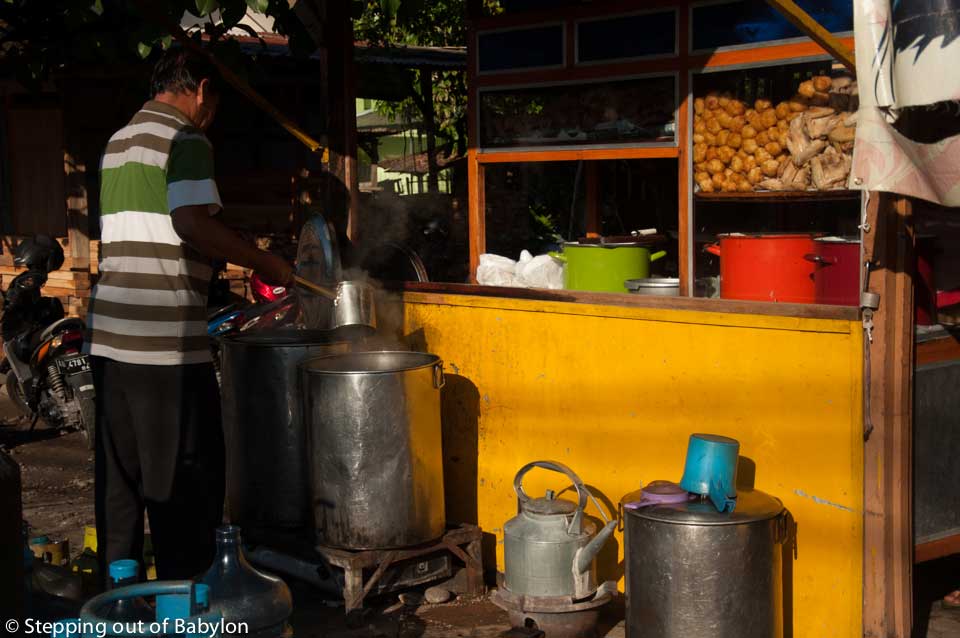
Street stall in Vientianne that since early morning serve rice and noodles soup, as also the traditional Lao coffee, being a very popular place between local people

molhos e picantes que são adicionados à comida, juntamente com sal, e açucar: uma presença constante em todas as mesas dos restaurantes tradicionais do Laos
A big range of condiments and sauces are available in the restaurants tables, as also sugar, that is manny times added to the food

Muitos do condimentos usados na cozinha do Laos são de origem Tailandesa ou, como é o caso, Chineza
Most of the ingredients used in Lao cuisine come from Thailand and China, making it hard to understand what we have on the table to seasoning the food

The so-called Lao Coffee is a constant presence throughout the country, usually served in the morning on the street stalls. But it can also be found in the more sophisticated cafes in touristic and cosmopolitan areas of Luang Prabang and Vientiane, side by side with French bakery.

The Lao coffee is prepared in a very characteristic way: there’s a metal pot, which always keeps in the heat with boiling water, from where the water is removed with a ladle and poured into a jug, passing through a conical filter cloth, containing the coffee powder. From the jug it’s poured into small glasses, passing again through the coffee filter, to make ti stronger. In the end is usually added condensed milk, or sugar with milk powdered. The coffee that remains in the filter is used more than once, serving to prepare several coffees. It can also be drunk plain without dairy or sweeteners, and this is the best way to appreciate the dense and thick texture of this coffee that have an unexpectedly soft taste and somewhat light bitter flavor.

The price of a Lao Coffee is from 4,000 to 5,000 kips, and is often served accompanied by a kind of bread made in the of fried dough, and sometimes is also serve with a glass of tea… yes, the tea is served even with the coffee and is offered for free.

The French presence is visible in the bread, especially the baguettes, which are sold on the streets and bus terminals, consume as a meal or as a snack between meals, stuffed with not-identify paste, spicy sauces, meat (usually pork or processed meat) and vegetables. They are a popular option for a meal in the long and endless bus trips, due to be easy to take away and to the low price around 7,000 10,000 kips, less than 1 euro.

In tourist areas, it is possible to find restaurants with a wide range of Western food, but with much higher prices than traditional food found in the simple and modest restaurants frequented by locals, where you can have a meal for 10,000 kip, about 1 €.

Lao-coffee
Lao-coffee

In terms of snacks the Lao coisine doesn’t offer many choice, being basically rice cakes, that can be sweet or salted. The sweat ones are made from puff rice, and the salted version is made with cooked rice, mix with egg that is grill with the shape of a small pancake.

noodles frescos vendidos nos mercados espalhados por todo o Laos, e que marcam a diferença entre as várias sopas vendidas em restaurnates, muitas das vezes contiguos uns aos outros
fresh noodles, that can be found all over the country, being sold in markets and also made in the restaurants. the quality of the noodles make the difference in the soups, making on place more popular than the one next door

snack muito popular no norte do país, feito á base de arroz cozido que depois de espalmado é mergulhando em ovo batido e grelhado no carvão
snack made with rice and egg.

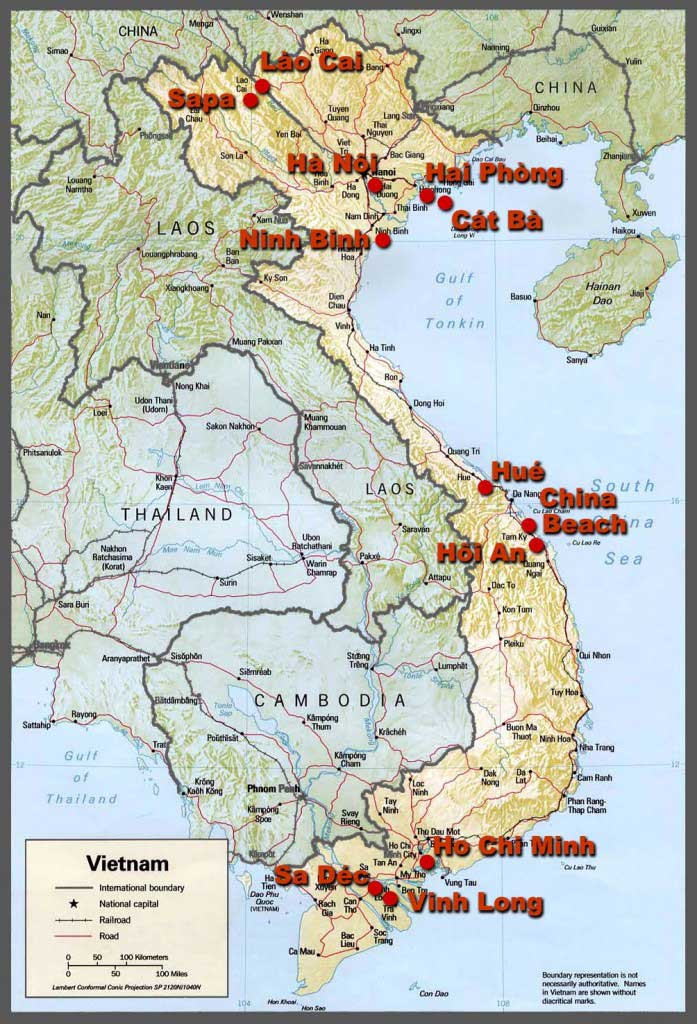
Vietnam: Itinerary

vietnam-map

Itinerary

#1     Lisbon – Paris – Ho Chi Minh

#2     Ho Chi Min
#3     Sá Dec – Vinh Long

#4     Vinh Long (Mekong) – Ho Chi Minh

#5     Ho Chi Minh – Da Nang (Nuo Nuoc Beach)

#6     Nuo Nuoc Beach (Marbel Montains)

#7     Nuo Nuoc Beach (Hoi An)

#8     Nuo Nuoc Beach (My Son)

#9     Da Nang – Hué (comboio)

#10   Hué

#11   Hué – Ninh Binh

#12   Ninh Binh (Tam Coc)

#13   Ninh Binh (Cuc Phuong e Hoa Lu)

#14   Ninh Binh – Haiphong – Cat Bá

#15   Cat Bá

#16   Halong Bay

#17   Cat Bá – Haiphong – Hà Nôi

#18   Hà Nôi

#19   Sapa (Trekking #1)

#20   Sapa (Trekking #2)

#21   Sapa (Bac Há)

#22   Hà Nôi

#23   Hà Nôi

#24   Hà Nôi – Ho Chi Minh – Paris – Lisbon

Visa Requirements:

Since there is no Vietnamese embassy or consulate in Portugal, it is necessary to use the internet ([http://www.visa-vietnam.org/](http://www.visa-vietnam.org/)) or a travel agency to obtain the visa.

Through the website, you can obtain an entry approval letter for Vietnam, which will be sent to you by email after filling out a form with your passport details and paying $20 per person (the more people you have, the cheaper it gets). This is for a 30-day, single-entry visa.

When you arrive in Vietnam, you must present this document, along with your passport, to customs and pay an additional $25 (it must be in dollars; they don’t accept other currencies, and there are no ATMs available).

Vaccines:

The best option is to consult with the Curry Cabral Hospital. The consultation costs €4.5, which corresponds to the moderation fee, and some vaccines are given on-site after the consultation.

If you have the vaccines required by the national vaccination program, including tetanus, only the hepatitis A and B vaccines, and the typhoid vaccine, are necessary.

It’s advisable to book in advance.

Travel Insurance:

It’s advisable to take out insurance. We opted for Império Bonança. The cost was €41.10 for two people over 24 days. We used Atributo Seguros (21 891 94 85) as an intermediary, and everything was handled quickly and efficiently by email and phone.
Weather:

You can check the weather at: [MSN Weather – Vietnam](http://weather.msn.com/region.aspx?&wealocations=Vietnam&setunit=C#current).

TRANSPORTATION IN VIETNAM
  • Bicycle:

Pleasant, especially in cities with little traffic or when cycling in rural areas. We tried it in Hué, and the price is negotiable. We rented bikes at the hostel in Hué and paid 30,000 VND (about €1.2) per bike for one day, from morning to evening.

  • Rickshaw:

The most charming mode of transport in Vietnam, but not the fastest. They are often found in city centers and are usually used for sightseeing routes; the price is negotiable.

  • Motorbike:

The best option for renting a motorbike is through hotels or guesthouses. No driver’s license or other documents are required. Helmets are mandatory. The price ranged from 80,000 VND, but it is negotiable. When renting a bike for a day, it is common to return it by the end of the day.

It’s advisable to test the bike before finalizing the rental to assess the condition of the vehicle, especially the brakes, which are important if you plan to take longer trips.

In large cities, it is not recommended to drive a motorbike due to the heavy traffic and lack of traffic rules (there are no pedestrian crossings, no priority at intersections or roundabouts).

  • Honda-om:

A service similar to a taxi but on a motorbike. It’s ideal for moving around urban areas where taxis may take longer. The price is negotiable. If you need to carry luggage, it can be placed on the passenger’s back or between the driver’s legs. We didn’t try this.

  • Taxi:

It’s best to insist on using the meter, especially when you’re confident about the route. However, many drivers prefer to negotiate the fare instead of using the meter, which generally isn’t in the passenger’s favor.

  • Public Bus:

The cheapest option for transportation; recommended for urban areas and short distances, as they lack many comforts. If you’re carrying luggage, you may need to pay an extra fee.

  • Travel by Tourist Bus:

Operated by private companies. Recommended for longer trips, as they offer more comfortable seats and air-conditioning. There are also sleeper buses for overnight trips between major cities (290,000 VND between Hué and Ninh Binh). Tickets can be bought at bus stations, which are easy to find in almost every city, with various companies represented.

  • Travel by Mini-bus

Operated by private companies; seats about 15 people, but there isn’t much space for bulky luggage. They connect major cities, with several trips per day. Tickets can be bought at bus stations, where you can compare prices and schedules from various companies. It’s advisable to book in advance, especially for popular routes and weekends. One company we found nationwide is Mai Linh. [Mai Linh Website](http://www.mailinh.vn/)

  • Travel by Train in Vietnam

The railway network in Vietnam covers only the coastal region, with the main route being the North-South Reunification Line, connecting Hanoi to Ho Chi Minh City. There are also two connections to the Chinese border—Lao Cai and Dong Dang.

As of now, it’s not worth trying the Vietnam Railways website, as the English page is not working.

Trains are divided into different categories based on comfort:

  • SE1 to SE6: “soft sleep” (4 beds) with air-conditioning; “hard sleep” (6 beds) with air-conditioning; restaurant car. These are the most comfortable vehicles with the best-conditioned carriages, but they’re the most expensive tickets.
  • SE7 to SE8: “hard sleep” (6 beds) with air-conditioning; “soft seat” (cushioned seat) with air-conditioning; restaurant car. They do not have “soft sleep” carriages.
  • TN1 to TN2: “hard sleep” (6 beds) with or without air-conditioning; “hard seat” (wooden seat). These are the least comfortable vehicles.

The “soft sleep” beds come with sheets, a pillow, and a blanket… although not always in the best hygienic condition, they are generally acceptable. In the carriages with seats, passengers often carry large volumes of luggage, making it difficult to move around.

The best website for train information we found was [Seat61 – Vietnam](http://www.seat61.com/Vietnam.htm). Besides ticket sales (which we didn’t try, as we bought tickets at stations or through hotels or travel agencies), it helps understand how the rail system works, which is a bit different from what we’re used to. It also provides information on routes, ticket prices, and the best scenic train journeys.

It’s recommended to book in advance, especially for sleeper carriages and on weekends or public holidays. If you buy a ticket and later decide not to travel, you can exchange it at the station ticket counters with a 10% fee.

  • Travel by plane in Vietnam

The fastest way to travel. Flights are no longer than 1.5 hours, but the downside is spending a lot of time at the airport, waiting between check-in and the flight. The main airlines for domestic flights are Vietnam Airlines and JetStar, the latter being a low-cost carrier with a reputation for delays, so it’s best to account for that if you have a connecting flight. The earlier you buy tickets, the cheaper they will be (a round-trip from Hanoi to Ho Chi Minh cost under $75).

– Vietnam Airlines (http://www.vietnamairlines.com.vn/)

– JetStar (http://www.jetstar.com/)

Accommodation In Vietmam

The best website to choose a hotel is TripAdvisor: [TripAdvisor – Vietnam](http://www.tripadvisor.com/Hotels-g293921-Vietnam-Hotels.html). It’s important not to rely solely on the rankings but to read reviews and look at recent photos, considering the traveler’s country of origin.

It’s not advisable to make reservations that require payment upfront, as sometimes the photos shown on websites don’t reflect the current condition of the rooms.

Before starting the trip, we only booked a hotel for the first night in Ho Chi Minh. For those who don’t want to take chances, just head to the Old Quarter and walk around a few streets, especially Bui Vien Street, where there’s a high concentration of hotels and, of course, tourists!

Throughout our trip, we exchanged experiences with other travelers who recommended hotels and guesthouses to stay in, and from there we simply made reservations by email or phone.

Travel Guides

We chose the Rough Guides dedicated exclusively to Vietnam. In comparison to the Lonely Planet, it’s more detailed and comprehensive, as it focuses on one country, unlike most other guides that cover Laos and Cambodia as well. You can also consult it online, although it has less detailed information: [Rough Guides – Vietnam](http://www.roughguides.com/website/travel/destination/content/?titleid=103&xid=idh119763192_0005)

A website dedicated to promoting organized tours but also offering useful information about the Sapa area and the region’s ethnic minorities: [Sapa Lao Cai](http://www.sapalaocai.com/)

Another website for good tips, even on accommodation: [Travelfish Vietnam](http://www.travelfish.org/country/vietnam)

About the food in Cambodia

In summary, it can be said that Cambodia is not an easy country for vegetarians, as this is a strange concept in this country where meat consumption dominates. But there are always options like noodle soups, curries and some snacks that help to get around the situation!

As in Lao, the noodle soups continued to be present but the quality decreased: not only are the broths less aromatic, but sometimes the noodles are made from dry pasta or even instant noodles. The usual dish of aromatic herbs and vegetables that accompanied these soups in the neighbouring country, is often absent here.

In Cambodian food, there is a strong influence of Chinese and Vietnamese cuisine, which is visible in the many restaurants serving “phò”, the traditional vietnamese noodle soup.

Another influence of China is the hot pots, which are very popular among Cambodians (as in many other Southwest Asian countries), especially in cities and particularly on weekends, where these restaurants are filled with families and groups of friends who share this meal, consisting of a pan with a boiling broth, where pieces of meat are floating, which remain hot on the table with the use of a mini gas stove, and where the various side dishes, such as cabbage, fresh herbs, pasta, pieces of meat and also viscera…

These noodle soups, prepared at the moment, can be made in the vegetarian version, however, although meat is not added, there is no increase in the amount of vegetables that usually come down to a handful of soy sprouts and a few cabbage leaves. As for the broth that serves as the base for these soups, almost transparent and with a light flavour, it is likely to contain products of animal origin in its preparation.

The so-called rice soups, popular as a morning meal, although a little boring, are also an option for vegetarians, since you can always order without meat, alternatively adding soy sprouts.

More advisable in terms of a vegetarian diet are fry-noodles, where the rice noodles are stir fry with some vegetables and egg and seasoned with mysterious sauces.

Coffee is usually served with ice and is almost always sweetened with condensed milk. The preparation is in everything similar to that found in Vietnam, with the boiling water being poured over the coffee in a kind of metallic filter, placed on the top of the glass. Often the coffee is already made, in a very concentrated dose, which is then diluted in hot water when the coffee is served. The flavour is smooth but with a particular flavour, but it is necessary to use a certain communication skill to avoid the popular condensed milk, which totally crushes the original flavour of the coffee.

The curries continue to be strongly present, much less spicy than in neighbouring Thailand, served with the usual dose of rice. The most popular of these curries is amok, which can be seafood, fish, meat or just vegetables, highlighting the mild aroma of spices from which lemongrass, turmeric and ginger stand out. Traditionally this dish is made very slowly, in steam, on a banana leaf. Not as easy to find as a noodle soup, amok served with rice is a delicious option for vegetarians and is more likely to be found in restaurants than in markets.

In Cambodia, vegetarian options are scarcer than in other countries in Southeast Asia, dominating meat, whether fresh or processed in the form of small meatballs whose appearance is far from attractive but which is extremely popular in Cambodia. In the south of the country, given the proximity to the sea, fish and seafood are strongly present, with markets offering a wide variety of products, which is reflected in the dishes and even street snacks.

And as in any Asian country, street food has a strong presence, due to its variety, both in sweets and in snacks, appearing at specific times of the day, often next to markets, schools, or in the busiest streets of cities. They can be small stalls transported on bicycles or compact kitchens coupled to motorcycles.

As in many Southwest Asian countries, it is not difficult to find exotic foods by European standards, and Cambodia seems to offer even more opportunities to find frogs for sale in the markets or grasshoppers fried at a street stall.

Sopa de arroz, servida somente de manhã, como primeira refeição do dia, e que muitas vezes é acompanhada de uma especie de pão frito
Rice soup, served only in the morning, as the first meal of the day, which is often accompanied by a kind of fried bread
stree food em Siem Reap
street food in Siem Reap
pasteis de massa de arroz recheados com legumes e mergulhados numa mistura de molhos doces, salgados e picantes
rice noodles stuffed with vegetables and dipped in a mixture of sweet, savoury and spicy sauces
banca que todas as noite surge nas ruas de Siem Reap servindo a sopa de noodles tradicional do Vietnam
every night several small stands appear on the streets of Siem Reap serving Vietnamese traditional noodle soup
muitas vezes é possivel encontrar fruta já descascada e cortada que se vende nas ruas, em especial nas zonas mais frequentadas por turistas.
it is often possible to find already peeled and cut fruit that is sold on the streets, especially in the areas most frequented by tourists
fritos de banana e massa
fried banana
phô
Vietnamese phô soup
bancas de venda de comida em Siem reap, em frente ao local de partidas dos autocarros... depois da hora de ponta mudan-se para outras paragens.
food stalls in Siem reap, in front of the bus departure point … but after the rush hour it moves to other stops
nooodlles
dry noodles
chá que está semptre disponivel nas mesas
tea that is always available on the tables
sops de noodles com legumes
noodle soup with vegetables
molhos e mais molhos... mas poucos picantes, em comparação com o que era oferecido na Tailândia ou mesmo no Laos
sauces and more sauces … but few spicy, compared to what was offered in Thailand or even Laos
café confeccionado de forma semelhante à que se encontra no Vietnam
ice coffee made by the filter process
street-food em Phnom Penh
street-food in Phnom Penh
fruta de uma especie de palmeira, servida com leite de coco, gelo e muito, muito açucar
toddy fruit, from a kind of palm tree, translucent and gelatinous, served with coconut milk and ice…. very sugary
fruta de uma especie de palmeira
toddy palm fruit
mercado de Phnom Penh
Phnom Penh market
bolos cozinhados ao vapor, em folha de bananeira
steamed cakes in banana leaf
noodles fritos com legumes e ovo estrelado... sempre frito dos dois lados!
fried noodles with vegetables and a fried egg … always fried on both sides!
banca de rua
street stall
street food em Phnom Penh
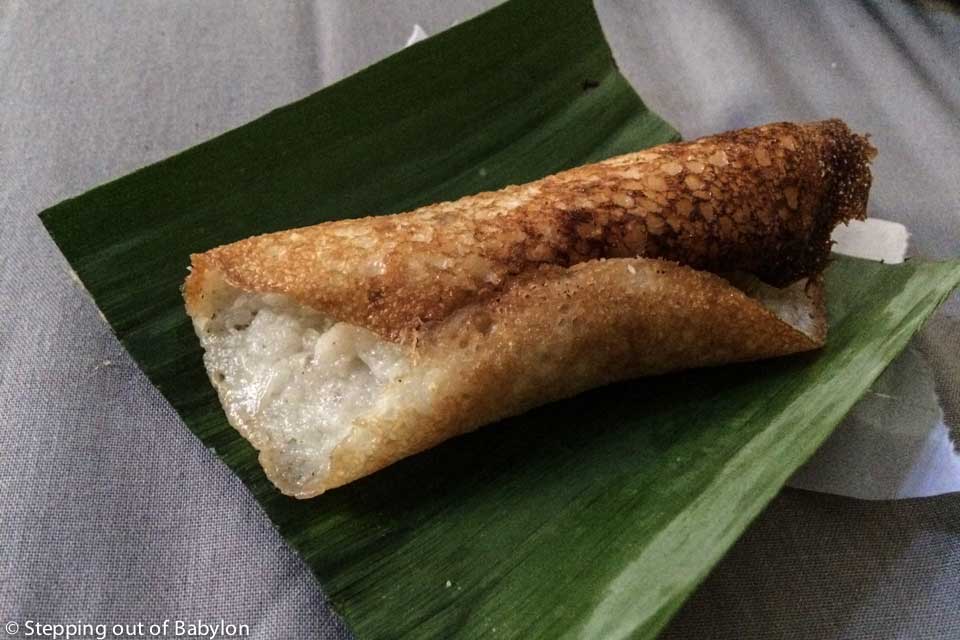
street food in Phnom Penh: pancake served hot, stuffed with sticky rice and sweetened with a mixture of coconut and sugar
street food em Phnom Penh
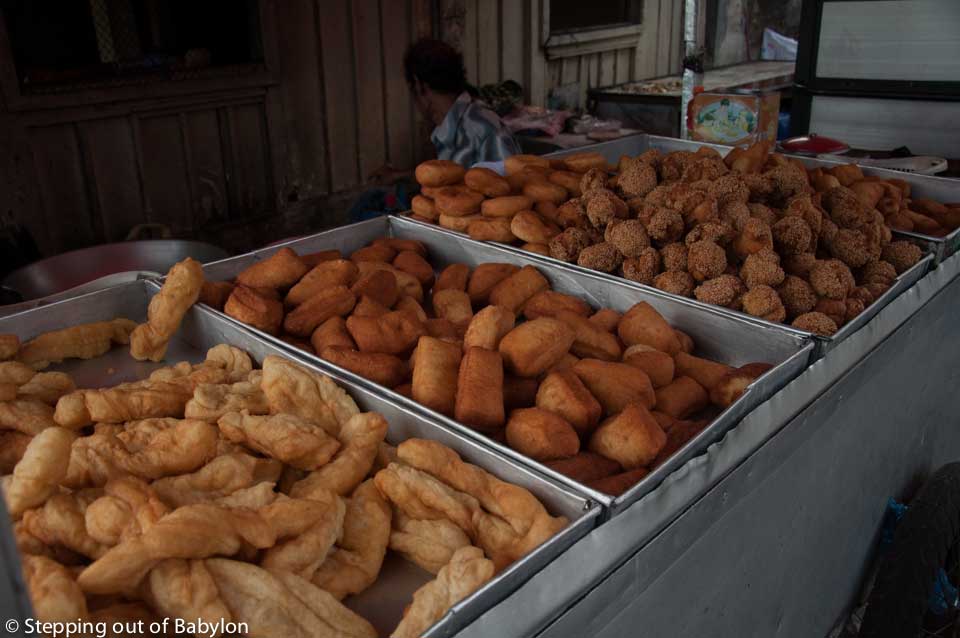
street food in Phnom Penh with fry dough, also called oily sticks
um dos muitos snacks de rua: massa doce frita e salpicada de sésamo
one of the many street snacks: fried sweet dough, sprinkled with sesame seads
restaurante de phô em Phnom Penh
“phô” restaurant in Phnom Penh
DSC_3399

Vegetable “amok“… the famous Cambodian curry that most of the times is made with fish, but that can also be ordered in a vegetarian version only with legumes.

Uma especie de custard, mas cozinhada dentro de uma pequena abóbora que depois de cozida se pode comer a casca; é servida às fatias, regadas com leite de côco, calda de açucar, gelo e leite condensado. Muito popular na Tailândia, pode-se também encontrar nos mercados do Camboja

A kind of custard, but cooked inside a small pumpkin that after being cooked you can eat the peel; it is served sliced, drizzled with coconut milk, sugar syrup, ice and condensed milk. Very popular in Thailand, it can also be found in Cambodian markets

banca no mercado de Sihanouk Ville dedicada à venda de doces, onde domina o leite de côco e o leite condensado
stall in the Sihanouk Ville market dedicated to the sale of sweets, where coconut milk and condensed milk dominate

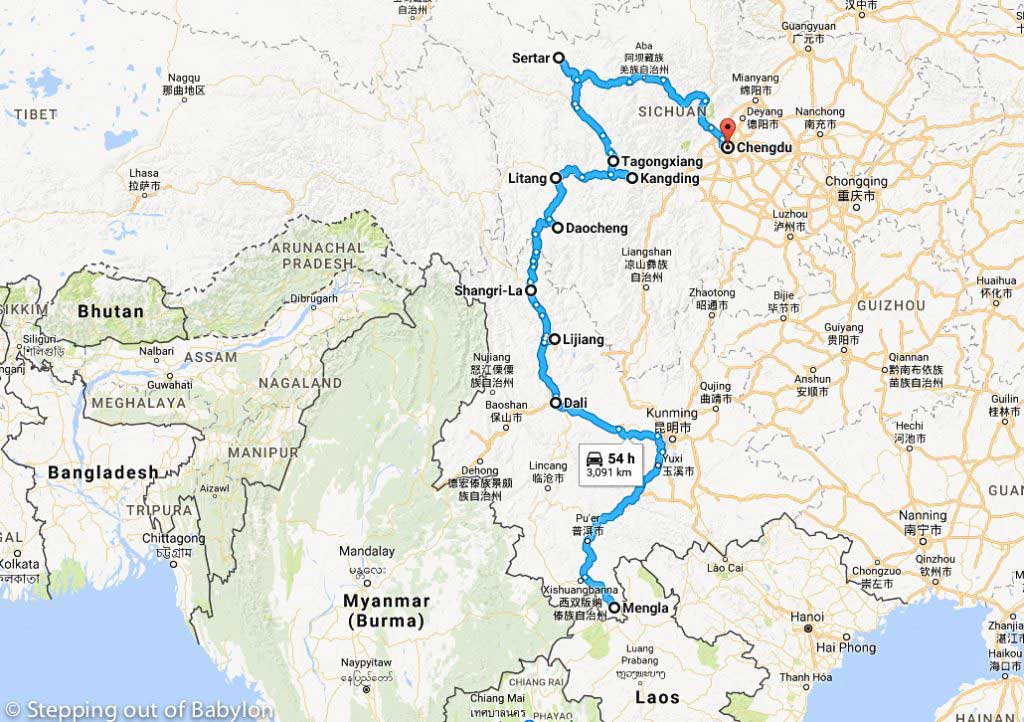
28 days in China: itinerary & costs

Itinerary:

Kunming: 4 days

Dali: 3 days

Lijiang: 3 days

Shangri-la (Zhongdian): 3 days

Daocheng and Yading Natural Park: 3 days

Litang: 3 days

Kanding: 1 day

Sertar and Larung Gar: 4 days

Chengdu: 4 days

China: itenerário
China: itinerary

Cost:

18,5 € / day

… per person, considering traveling alone, eating only local (vegetarian) food in informal restaurants, markets and street-food; Sleeping mostly in hostels with dormitories, travel by public transport whenever possible; Without alcohol, soft drinks or tobacco; Communications (telephone calls and Internet) is not contemplated in this value; Shopping and souvenirs are also not included.

Note: this trip was held in May / June 2014.

See also:

https://steppingoutofbabylon.com/wp/en/2017/08/apply-for-chinese-visa-in-laos/

https://steppingoutofbabylon.com/wp/en/2017/08/food-in-china-so-much-choice/


https://steppingoutofbabylon.com/wp/en/2017/08/youth-hostels-yha-cheap-and-good-accommodation-in-china/


Food in China… so much choice!

This is a difficult subject to address given the gastronomic diversity of China and the short visit to the provinces of Sichuan and Yunnan provide good examples, so it is difficult to choose a traditional dish or a typical meal that is homogeneously found in all places.

However, in the visited areas, restaurants can easily be found where the common denominator is the existence of a fridge where the available food is exposed, from vegetables, meat, mushrooms, tofu, eggs… and from where the customer can chooses the desired combinations, which are cook in a few minutes. The dishes the come to the table are always shared among the group of friends or family, gathered around the table, being polite to remove one piece of food at a time and put it in the bowl, from where, after mixing with a piece of rice it’s eaten. At the end of the meal, it is respectful to leave some food on the plates, a sign of the abundance of food.

Contrary to what is common in Southasian countries, in China it’s unusual to find “street-food”. The most popular and economical option is the small family restaurants, informal and open to the street, where the kitchen is located at the entrance of the restaurant advertising the menu. The most common in these eateries is the noodles soup with all the possible meat variations: pork, beef, chicken, intestines and other internal organs… ghrrr!

In fact, China is not an easy country for vegetarians, and the concept itself is a kind of unknown is more remote areas, even among the Buddhist and the Tibetan communities. Although, vegetables are a constant presence in Chinese meals that are compost by several dishes where meat is an almost mandatory presence. The tofu, as a Chinese intention, is easy to find both in restaurants menus as in snack stall, as it is part of traditional food the tofu isn’t seen as a vegetable alternative as in western countries. Mushrooms are also very common and can be a good choice for vegetarian dishes. However, some traditional Chinese dishes are practically impossible to find without meat, fish or seafood, as is the case with dumplings, steamed buns and the dim sun. But rice and noodles dishes, stir-fry or in soups, are good alternatives for vegetarians as far as you can order them without animal meat… the communication is always the big issue!!! The good thing for vegans is that dairy is almost 100% excluded from the traditional Chinese cuisine, and things like cheese and milk are rare. On the other hand, soy milk is very popular and is part of the traditional Chinese food, particularly a the breakfast.

In Sichuan, famous for its aromatic pepper, the gastronomy stands out for the spicy taste present in almost all dishes, from soups, stir fry or grill. The ingredients, usually vegetables and meat, often cook in a thick of spicy gravy, come wrapped in oil, but with a delicious and aromatic!

In areas closer to the Tibet Autonomous Region you can find some of the typical Tibetan dishes, although the number of restaurants serving them is small compared to the overwhelming presence of Chinese food restaurants. It stands out the traditional tupka, a soup of vegetables or meat, in a thick broth and with barley pasta cut roughly in pieces. The dumplings that in the Tibetan version are called momos, are also traditional in this area and can be found as a morning meal.

Traditionally from the cold Tibetan areas is butter tea that accompanies meals. The salty butter’s taste stands out in this drink, which as it cools creates a thin layer of fat at the surface.

Refeição típica chinesa, em que dois ou mais pratos acompanham uma tijela de arroz. Sempre presente está o chá que muitas vezes é disponibilizado gratuitamente
Typical Chinese meal where two or more dishes are eaten with steam rice. The tea is the most common drink and many time is served for free at the restaurants.

Sopa à base de noodles sobre os quais é despejado um caldo e são acrescentados legumes ou carne, assim como condimentos salgados ou picantes, de acordo com o gosto de cada pessoa
noodles soup

Legumes no mercado de Dali
Dali Market

Raiz de lótus, à venda no mercado de Dalí, muito popular na gastronomia chinesa
Lótus root, at Dalí market

ovos sujeitos a um prolongado processo de fermentação tornando a clara transparente e que lhes confere um gosto muito particular cuja intensidade os torna repulsivos para certos paladares
fermented eggs with a funny smell and taste… that doesn’t suite everyone

Legumes no mercado de Dali
Dali market

sopa fria de noodles: encontra-se por vezes ao fim da tarde nas ruas das cidades de Yunnam, onde pequenas banca oferecem um diversidade de noodles, tanto em forma, cor e sabor, que são condimentados com um molho picante, algumas ervas frescas, cebolinho e amendoim ralado
Cold noodles soup: easy to find in the end of the day in the street of Yunnan cities, seasoned with spicy sauce, fresh h and grind peanuts

OLYMPUS DIGITAL CAMERA
Amazing dinner prepared by my two travel mates. The food is an serious issue in China, and is always prepared with fresh ingredients brought everyday in the markets

dumplings feitos de massa de arroz, geralmente recheados de carne, e cozinhados ao vapor. São uma das mais populares opções par ao pequeno almoço, com os restaurantes fazendo-se anunciar pelas grandes panelas metálicas constituídas por diversos tabuleiros, de onde sai um intenso vapor que se espalha pelas ruas; são acompanhados por um molho picante e por vezes com um caldo feito à base de arroz cozido, simples e praticamente sem sal
dumplings made with rice dough, usually fill with meat and steamed, are the most popular option for the breakfast. the eateries that serve the dumplings are easily spotted by the big metal pans that stand outside the front door

outra opção de pequeno almoço, com uma sopa de noodles de sabor acre e ácido, acompanhada de ovo cozido e de pão frito, de massa semelhante às “farturas” mas de sabor salgado
another option for the breakfast are the noodles soup with a sour taste, served with egg and fry bread

panelas para cozinhas dumplings ao vapor e o pão frito em forma de longos palitos, que se pode também encontrar no Laos e na Tailândia como acompanhamento da primeira refeição da manhã
dumplings pan and the fry bread that is also traditional in Thailand and Laos

Cozinha de um restaurante na China
Kitchen from a restaurant in China

Cozinha de um restaurante na China
Kitchen from a restaurant in China

Cozinha de um restaurante na China
Kitchen from a restaurant in China

noodles frescos à venda no mercado de Chengdu
fresh noodles at Chengdu market

dumplings de vegetais acompanhando um "sumo" feito de arroz muito cozido ligeiramente adocicado e que constitui uma das populares opções para acompanhamento do pequeno-almoço a par com o leite de soja
vegetarian dumplings for breakfast and a drink made with soy milk

cabeças de pato e pescoços de galinha, grelhados e condimentados: popular como snack entre refeições
duck heads and chicken necks can be a snack between meals

Um dos pratos pelo qual a gastronomia de Sishuan é muito popular em que num caldo espesso e oleoso, condimentado com especiarias e pimenta, são cozinhados vegetais, cogumelos e algas, com ou sem carne, decorado com cebolinho e sementes de sésamo, e que é acompanhado de arroz
One of the most popular Sichuan dishes, a thick and oily gravy, seasoned with spices and pepper, where meat, mushrooms or vegetables are cooked

O tofu encontra-se presente em muitos restaurantes, sendo contudo mais fácil de encontrar nas grandes cidades
The tofu is easy to find in China, and is a good alternative to vegetarians in a gastronomy where the meat is a constant presence

restaurante junto à estação de comboios de Chengdu que dispõem de tofu confecionado localmente e onde os dumplins são cozinhados nos tradicionais recipientes de bambu
eatery in Chengdu with tofu and dumplings cooked in the traditional bambu baskets

pão feito de massa de arroz e cozido ao vapor, muito popular nas zonas regiões tibetanas, e que pode ser simples ou recheado de legumes, carne (quase sempre porco), cogumelos ou à base de feijão azuki que lhe confere um sabor ligeiramente doce
steamed bread, popular in tibetan areas, that can be plain or filled with meat, vegetables or with Azuki beans that give a touch of sweetness

queijo à base de leite de yak, e que no caso de ser fumado adquire um tom acastanhado; apesar do aspecto tosco a este queijo tem uma forte consistência apresentando-se compacto e “borachoso” ao mastigar
cheese made with yak milk

Hot-pot, muito popular em vários países asiáticos, mas com diferentes cambiantes em relação aos ingredientes, mas reservada para dias festivos ou jantares de fim de semana, em que um caldo é mantido quente com ajuda de carvão ou de um dispositivo elétrico ou a gás, colocado na mesa, e onde os comensais vão mergulhado os diverso ingredientes. Na região do Tibete, este prato é constituído por legumes, cogumelos, algas e algumas tiras de carne que vêm já misturadas com o caldo.
Hot-pot, reserved for special day and family gatherings. Different ingredients are cooked in a stock that is kept war at the table.

Tupka tibetana
Tupka, tibetan traditional soup that can be made vegetarian

uma sopa à base de dumplins recheados de legumes na região de Sertar, mais ligada à gastronomia do Tibete... deliciosa para aquecer o corpo e o espírito nos frias noites do planalto tibetano
dumplings soup in Sertar region, a warmer Tibetan version adjust to the colt temperatures

Kunming… the life around the Green Lake

(English version from the text posted in Jun/2014)

Kunming, the capital of Yunnan province, breathes a modern and cosmopolitan atmosphere, with wide avenues, organised traffic, some green spaces and which despite its slightly more than 1 million inhabitants offers a calm and relaxed atmosphere.

The so-called Green Lake dominates the center of Kunming, if one can call this area a center, as most of the Chinese cities practically nothing remains really old, with traditional buildings already being replaced by concrete buildings, some of which are already being demolished to give way to modern buildings, and with huge orthogonal streets, with wide sidewalks where the traffic circulates at the rhythms of luminous signs.

The state of Yunnan, bordering Tibet, Burma, Laos and Vietnam and its population mirrors these influences well, with the highest concentration of ethnic groups and where nearly half of the population is non-Han, the major Chinese ethnic group.

A little of this ethnic diversity is evident in the activity around Green Lake Park, where, in the shadow of countless trees, various groups gather to perform dances, forming wheels around modest sound columns, filling the space with color and variety of traditional costumes that many insist on wearing.

Green Lake, Kunming
Green Lake, Kunming

Green Park, onde pela manhã muitos dos habitantes de Kunming praticam tai-chi
Green Park, where in early morning people gathering to practice tai-chi

Green Lake, Kunming
Green Lake, Kunming

Green Lake, Kunming
Green Lake, Kunming

Green Lake, Kunming
Green Lake, Kunming

Kunming
Kunming

Green Lake, Kunming
Green Lake, Kunming

Green Lake, Kunming
Green Lake, Kunming

Kunming
Kunming

Kunming
Kunming

Kunming
Guang Hua, the “old street” where the old buildings are being renew

Kunming
one of the many comercial areas with the most famous international brands

Kunming
Kunming

Kunming
Kunming

Kunming
school kids, Kunming

Kunming
Kunming

Kunming
islamic temple in Kunming

Kunming
Kunming

Kunming
playing cards is a popular outdoor activity

Population: 1.044.000

Elevation: 1890 m

A short guide to hang out in Yogyakarta

Yogyakarta is modern, cosmopolitan and has a lot to offer, being easy to stay here for a week or more without getting bored.

From stylish cafes, trendy restaurants, concept shops… Yogyakarta has a lot of cultural events going on in this city, away from the traditional dance and music, mostly tourist orientated.

This post is just an unpretentious short list of spots that worth to visit while you stay in this appealing city. But there’s a lot more to explore that is impossible to find in a short five-days visit to Jogja… the nickname for Yogyakarta, used by locals.


Yogyakarta
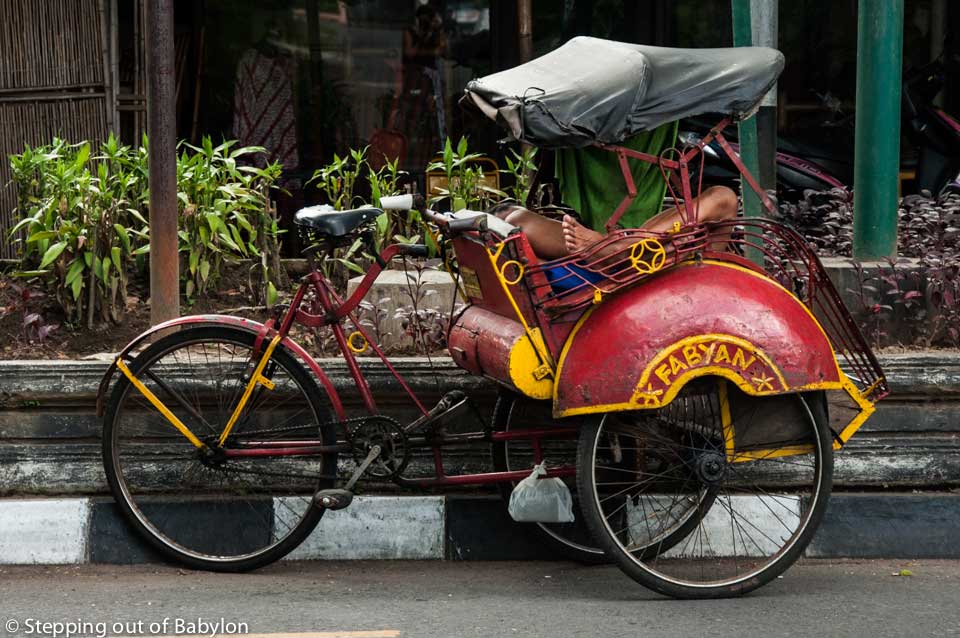
the “becaks”, cycle rickshaws, are everywhere around the city, usually chilling at street corners while waiting for clients. Yogyakarta

Yogyakarta
Despite the busyness of the main streets there’s always some time to read the news. Yogyakarta

Yogyakarta
Yogyakarta

Yogyakarta
Yogyakarta is modern and cosmopolitan but maintain the charm of the traditional neighbourhoods

Yogyakarta has a perfect balance between the

… a few places to chill

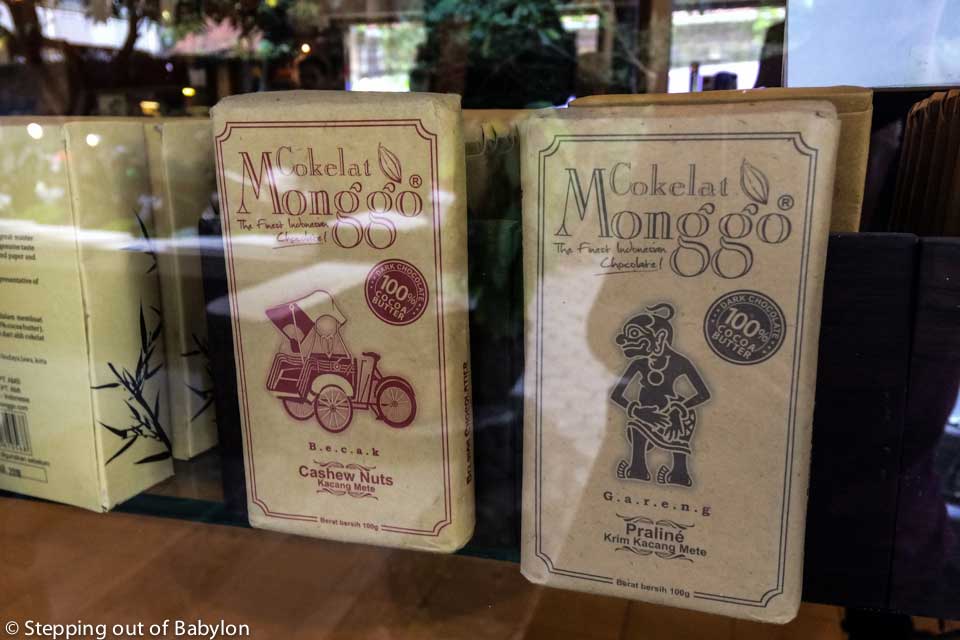
Cokelat Monggo is an reference shop in Jogja, selling chocolate made from Indonesian cacao. At Jalan Tirtodipuran there’s a shop exclusively dedicated to this brand selling a big range of chocolate bars, but you can laos find Monggo products in other shops in Yogyakarta. The cafe next door is a chill place to hang out and try one of the chocolate treats available on the menu.

[columns] [span6]

Cokelat Monggo
Hot chocolate at Cokelat Monggo

[/span6][span6]

Cokelat Monggo_IMG_3310
Chocolate bars from Cokelat Monggo

[/span6][/columns]

 If you are walking on the long a exhausting Malioboro street, Margo Mulyo is a cool and unpretentious eatery to take a rest, eat or drink something in a place full of character… also very popular between the local population.

Margo Mulyo
Margo Mulyo


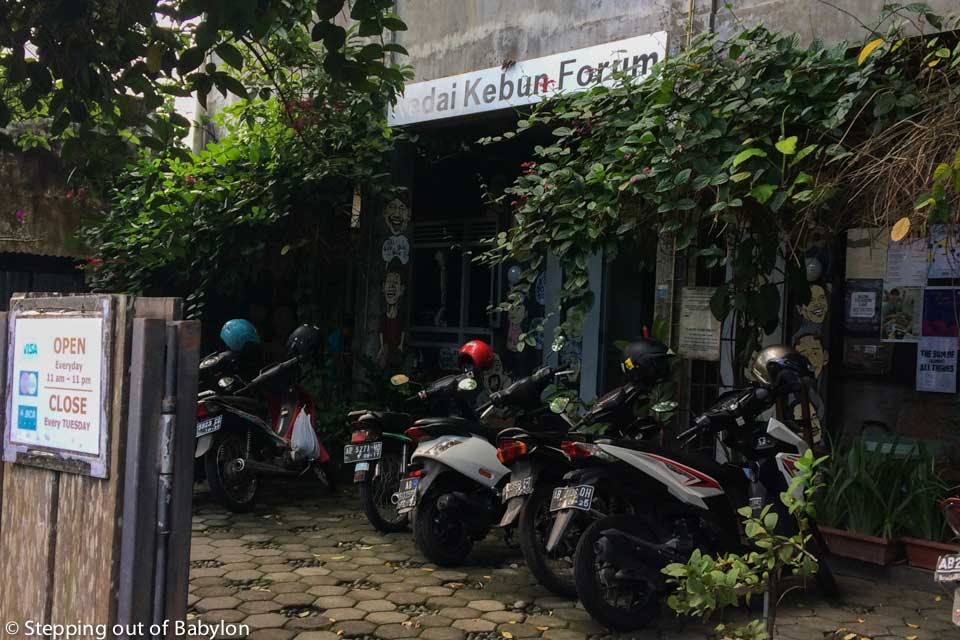
Kedai Kebun Forum, at Jalan Tirtodipuran, is a cultural association that promote several events and where you….can see art exhibitions, watch a movie and get updated about what’s going on in Yogyakarta art scene… There’s also a restaurant in a cool and quiet spot surrounded by trees and bamboos that is a nice place to hang out, reading a book and enjoying a Indonesian coffee.

www.kedaikebum.com

Kedai Kebun Forum
Kedai Kebun Forum. Yogyakarta

Local Markets

A good place to experience local lifestyle are the markets, locally called “pasar”… there are many around Yogyakarta, but from the ones that I visit I strongly recommend the Pasar Kotagede (also written as Kota Gede) as it is small, with the building focus on food products and with the streets around selling a bit of everything. Is better to go early morning when the market has more people and shows up more vibrant.

Is totally away from the Yogyakarta tourist beaten track, and not many foreigners come here… so be prepared to be the star!

Pasar Kotagede
Pasar Kotagede

Pasar Kotagede
Pasar Kotagede

Batik

A stay in Yogyakarta can avoid the batick, as is part of the city identity… and as soon our eyes get used to the intricate patterns of this traditional art of dyed, you’ll be attracted by the diversity of designs, styles and colors of this fabrics. The batik is good souvenir from this city, which is also representative of the Indonesian culture that in Java are used mostly as man shirts and as sarong by the women.

There are hundred of shops specialize in batik, some selling the fabric by meter, other as a sarong, a shirt, trousers, scarfs, shawls, etc… Even if you are not in the shopping mood, it worth visit a visit to a couple of these shops!

  • Along Jalan Malioboro there are also many shops, from the simple to the more sophisticated. Outside along the sidewalk there are an endless number of streets sellers, most of them with batik items.
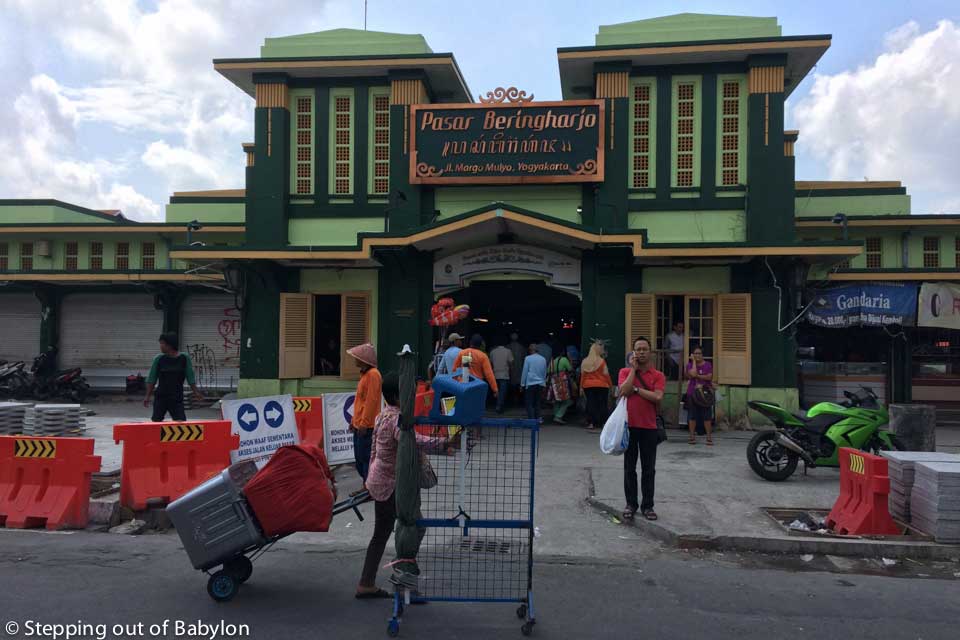
  • Pasar Beringharjo (Jalan Malioboro) is definitively the highest concentration of batik sellers but the quality maybe is not the best and it’s quite busy place.
  • In front of Pasar Beringharjo, there a big and old school shop Mirota Batik (Jalan Malioboro), with big choice of products made form different batik technics, with a beautiful decoration that really worth to visit, even if you are not in the mood for shopping. It’s a classic shop that looks more like an institution in Yogyakarta and which is also a good place for souvenirs.
  • The Batik Winotosastro (Jalan Tirtodipuran) is a traditional shop of hand made batik that also includes a factory, that you can visit and learn the different processes to make the batik… and in the end you’ll understand why some of this fabrics are so expensive!
  • There is also some antique shops specialized in batik articles in Yogyakarta which you can find a few along Jalan Tirtodipuran.
  • Jalan Gamelan, inside the Kraton, has also a few shops but more focus on cloths made form batik fabrics, some of them sophisticated and made more for western customers.

[columns] [span6]

Batik
Batik

[/span6][span6]

Batik
Batik

[/span6][/columns]

Pasar Beringharjo at the busy Malioboro Street, the heart of the comercial area in Yogyakarta

… because food matters

And because food matters… eating is also an important issue when we travel and an enjoyable food experience can change the perspective and the all experience of a place, that can be a city or a country.

The Indonesian food in not properly vegetarian, with the chicken being present in almost all menus. But there are a lot of dishes without meat or fish available in restaurants, warungs (restaurants), masakan padang and also at street food stalls that are a constant presence everywhere, since early morning until evening.

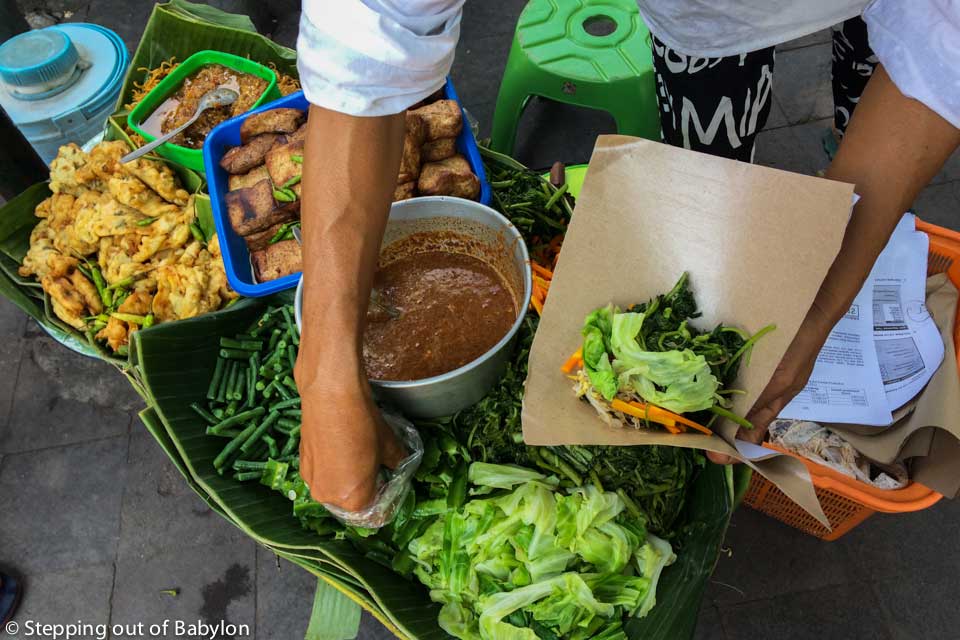
The tofu and tempeh are very popular, and eggs and steam vegetables (spinach, morning-glory and papaya leaf) are also common. Salads made with compressed rice and steam vegetables with a sweet peanut sauce – gado-gado and lotek – are also easy to find, mostly at street food stalls:

Here are some budget eateries that I try, most of them nearby them located near Mantrijeron (where I slept) and kampung Kraton areas.

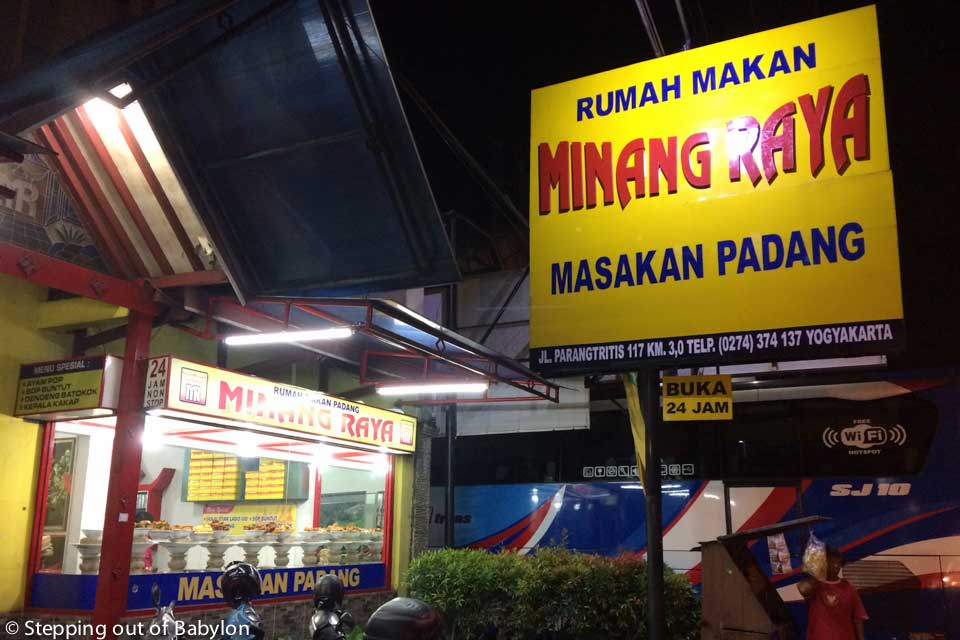
  • Mirang Raya, Ruman Makan Massakan Padang (Jl Parangtritis, 117). Tasty food with many options and cheap price. Some of these Rumah Makan (restaurants) restaurants work on the self-service system, and not really matter the quantity that you put on your plate, but you pay according to the number of items you choose to your plate. A vegan meal costs 10.000 to 15.000 Rp.
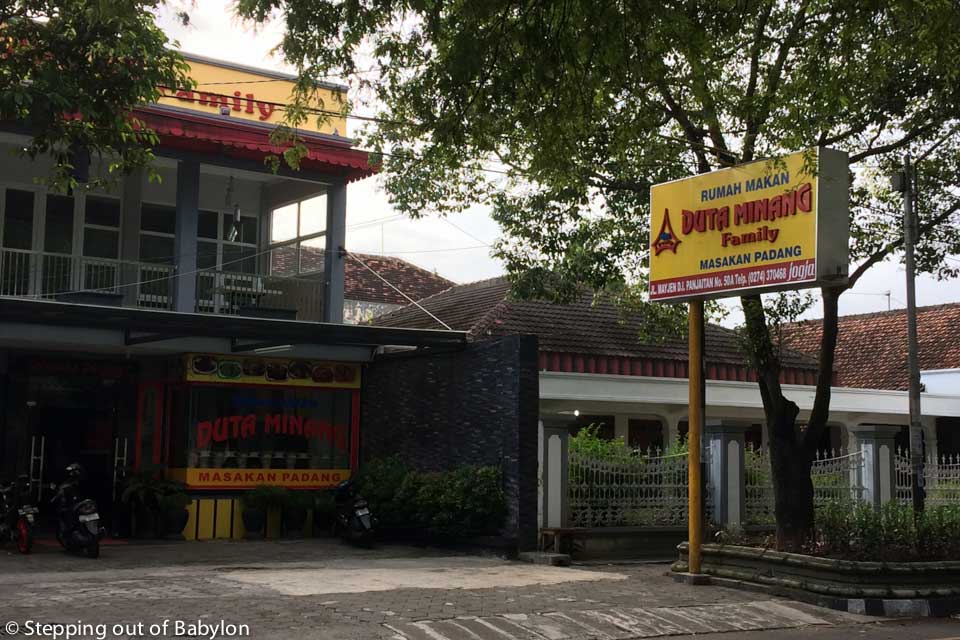
  • Duta Minang, Rumah Makan Massakan Padang (Jl Mayjen D. I. Panjaitan, 50). The classic padang food with many delicious options in a more sophisticated atmosphere but also with the cheap prices, with a meal with tempeh, tofu, vegetables and egg cost 20.000 Rp.
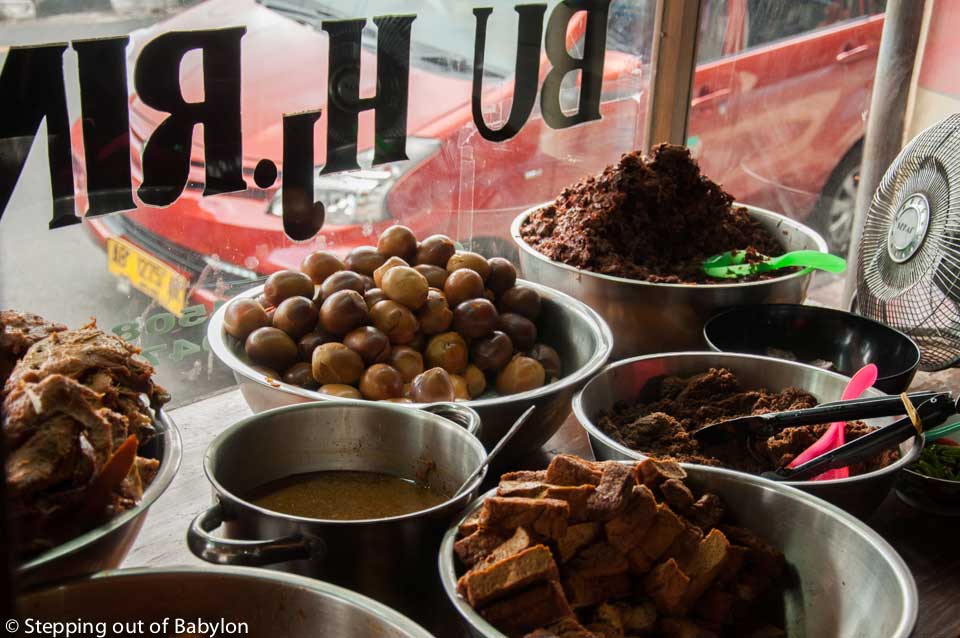
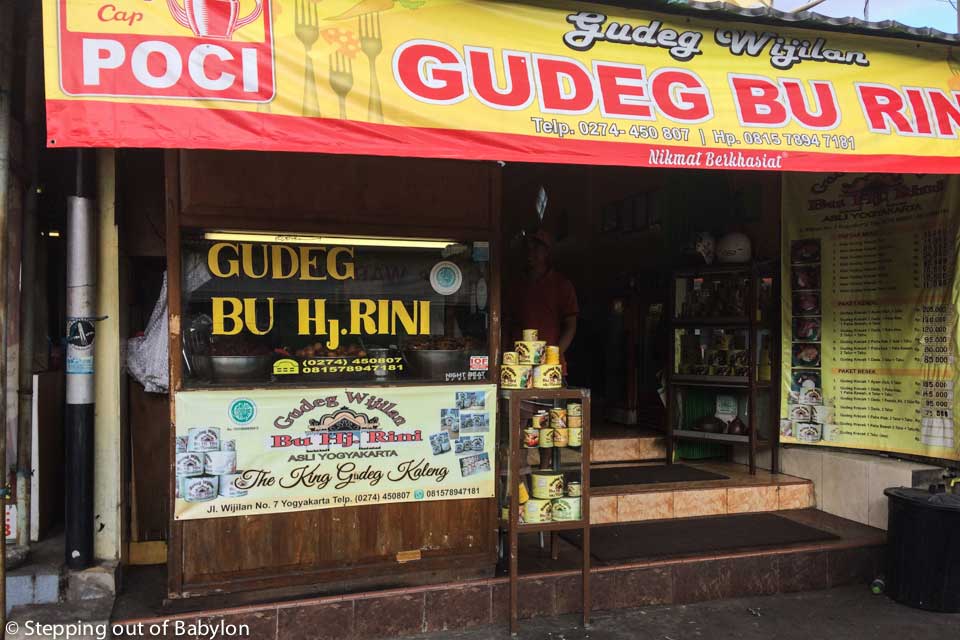
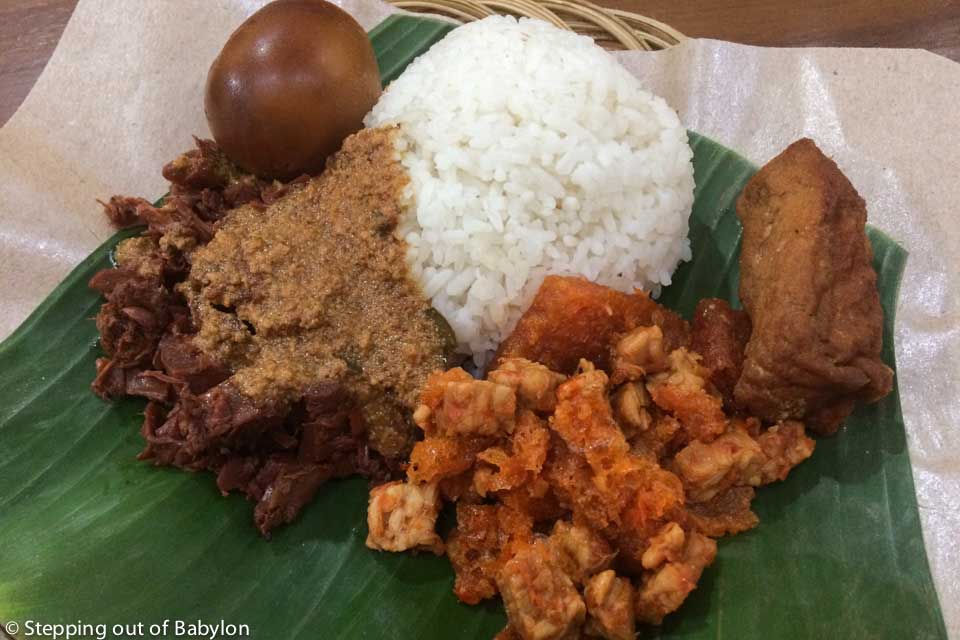
  • Gudeg Bu Hj. Rini (Gudeg Wijilan). Jl Wilijan, 7… if you visit Yogyakarta you must try the gudeg… a jackfruit curry that despite the less attractive look is delicious!!! Along with this street, you’ll find a dozen of gudeg restaurants, but this one was recommended by local people and has friendly prices and a casual environment. A gudeg dish, with rice, egg, krecek (a yellow sambal) and gori (unripe jackfruit curry with coconut milk and sugar) costs around 11.000 Rp…. this is the original version but meat can be added.

where to eat Yogyakarta...Gudeg Bu Hj. Rini
where to eat Yogyakarta… Gudeg Bu Hj. Rini… you must try this local specialty. Maybe it done’s look inviting but is delicious

[columns] [span6]

Gudeg Bu Hj. Rini
Gudeg Bu Hj. Rini

[/span6][span6]

Gudeg Bu Hj. Rini
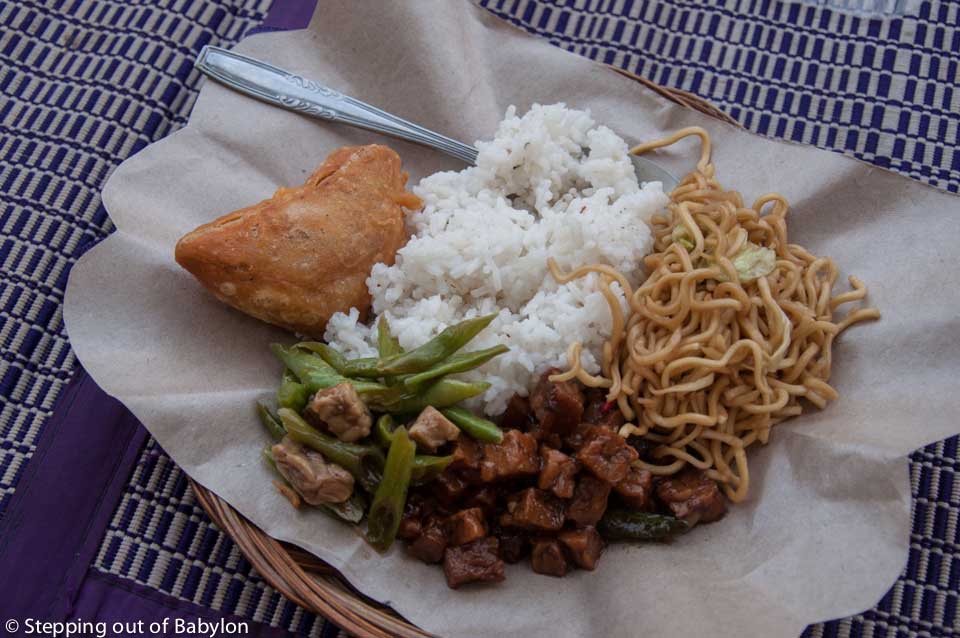
A gudeg dish, with rice, egg, krecek (a yellow sambal), tempeh, tofu and gori (unripe jackfruit curry with coconut milk and suggar) costs around 11.000 Rp…. this is the original version but meat can be added. Gudeg Bu Hj. Rini, Yogyakarta

[/span6][/columns]

[columns] [span6]

Masakan Padang
Mirang Raya, Ruman Makan Massakan Padang (Jl Parangtritis, 117). Tasty food with many options and cheap price. Mantrijeron. Yogyakarta

[/span6][span6]

Duta Minang_Ruman Makan_Yogyakarta_IMG_3325

[/span6][/columns]


…a bit of a bite on the Yogyakarta street food

And as in any Asian country, the street-food is part of the gastronomic experience. And Indonesia offers a big choice always for a cheap price. And it’s safe! At least I have been eating street food daily for the last 6 weeks and no stomach problems!

There are street food everywhere around the center of Yogyakarta, and on a short visit is impossible to have a stomach to try everything… but in these particular places I found the tastiest options… vegetarians options:

  • Jalan Kemasan on the way to Kotagede Market (Pasar Kotagede), early mornings. Inside the market and in the shops around the market building there are also food stalls, that is good opportunity to try the Indonesian sweets that usually are not too sweet and buy some savory snacks to take-away.
  • Along Jalan Malioboro you find many food stalls with bakso (meatballs soup) and mie (noodles) options mainly concentrated on the top north of the street. There are as also food hawkers selling lotek (a mix of vegetables with peanut sauce on top… my favorite!), mainly located in the south part of the street.
  • There are also some street-food stalls along Jl Mayjen D. I. Panjaitan, with soups, nasi and gado-gado.
  • Deep fry stuff. Locally called gorengan, is widely available everywhere, but usually just in street-food stalls. Banana, tofu (tahu), chicken and tempeh are the most common ingredients of gorengan. At Yogyakarta is also easily available bolang baling… that are basically deep-fry dough with different shapes and slightly different taste, some of this are like doughnuts.

Lotek salad
Lotek salad


coconut pancake. Yogyakarta

Bakso Soup in one of the quiete streets of Kraton. y+Yogyakarta
Bakso Soup in one of the quiete streets of Kraton. Yogyakarta

Goregan, fry tofu, banana, tempeh... at the sttreet of Yogyakarta
Goregan, fry tofu, banana, tempeh… at the streets of Yogyakarta

Nasi campur... a breakfast that can be eaten in the Yogyakarta streets
Nasi campur… a breakfast that can be eaten in the Yogyakarta streets

Yogyakarta street Art

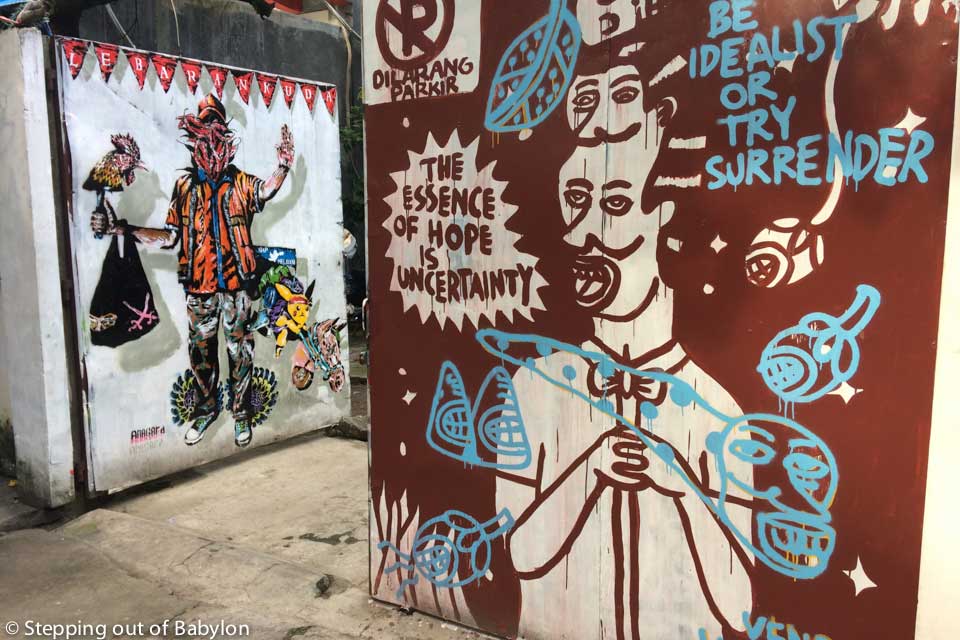
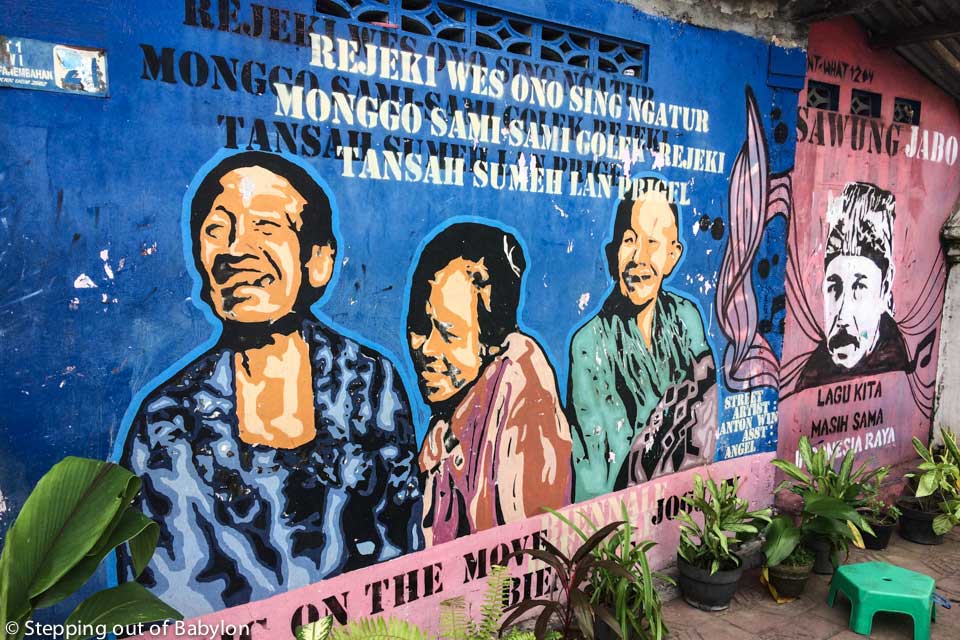
Yogyakarta stands up for it’s cultural and artistic activity that is visible in the vibrant street art that is spread a bit everywhere in the city, as also for the number of galleries, antique shops, cultural centers and art associations.

The street art in Jogja is alive and creative, filling empty spaces of the city with a colorful creativity and a sharp imagination. Just walk around and let yourself being surprised by the art that comes out from the small alleys or abandons walls!… Mantrijeron is a good place to start!


Street at at Yogyakarta

Street at at Yogyakarta

Street at at Yogyakarta

Street at at Yogyakarta

Enjoy Yogyakarta!

  • Page 1
  • Page 2
  • Go to Next Page »

Footer

search

Tags

accommodation Assam Bagan Bali Border Crossing Borneo Colombo Dambulla Dao Cheng Esfahan Fes Food Gilis Hiking hokkaido Istanbul Itinerary Jakarta Java Kashan Kuala Lumpur Kumano Kodo Lombok Majuli Meghalaya Meknes Mekong Nagaland Natural Park Nongriat Northeast States Ouarzazate Sarawak Shiraz Sichuan Province Sishuan Sumatra Tabriz Tehran transportation Visa Yangon Yazd Yogyakarta Yunnan Province

I’m Catarina, a wanderer from Lisbon, Portugal… or a backpack traveller with a camera!

Every word and photo here comes from my own journey — the places I’ve stayed, the meals I’ve enjoyed, and the routes I’ve taken. I travel independently and share it all without sponsors or ads, so what you read is real and unfiltered.

If you’ve found my blog helpful or inspiring, consider supporting it with a small contribution. Every donation helps me keep this project alive and free for everyone who loves exploring the world.

Thank you for helping me keep the journey going!

BUY ME A COFFEE

Categories

Recent Posts:

  • How to go from Hualien to Dulan Beach
  • Taroko Gorge: between marble cliffs and emerald rivers
  • Hualien: a dull gateway to Taroko Gorge
  • Taiwan: Itinerary for an 16 day trip
  • Vietnam: Itinerary
  • 3 months in India: Kolkata, Tamil Nadu, Karnataka, Goa and Kerala
  • Backpacking Turkey in 24 Days: itinerary & costs
  • English
  • Português

© Copyright 2026 Stepping out of Babylon · All Rights Reserved · Designed by OnVa Online · Login