• Skip to main content
  • Skip to footer

Stepping Out Of Babylon

Travel & Photography

  • About me
    • Contact
  • Destinations
    • Africa and Middle East
      • Iran
      • Lebanon
      • Morocco
      • Turkey
    • East Asia
      • China
      • Japan
      • Taiwan (ROC)
    • South Asia
      • Bangladesh
      • India
      • Nepal
      • Sri Lanka
    • Southeast Asia
      • Cambodia
      • Indonesia
      • Lao
      • Malaysia
      • Myanmar
      • Singapore
      • Thailand
      • Vietnam
  • Itineraries
  • Travel tips
    • Border crossing
    • Hiking and Natural parks
    • Food Journey
    • Visa
  • Photography

Search Results for: Vietname

Vietnam: Itinerary

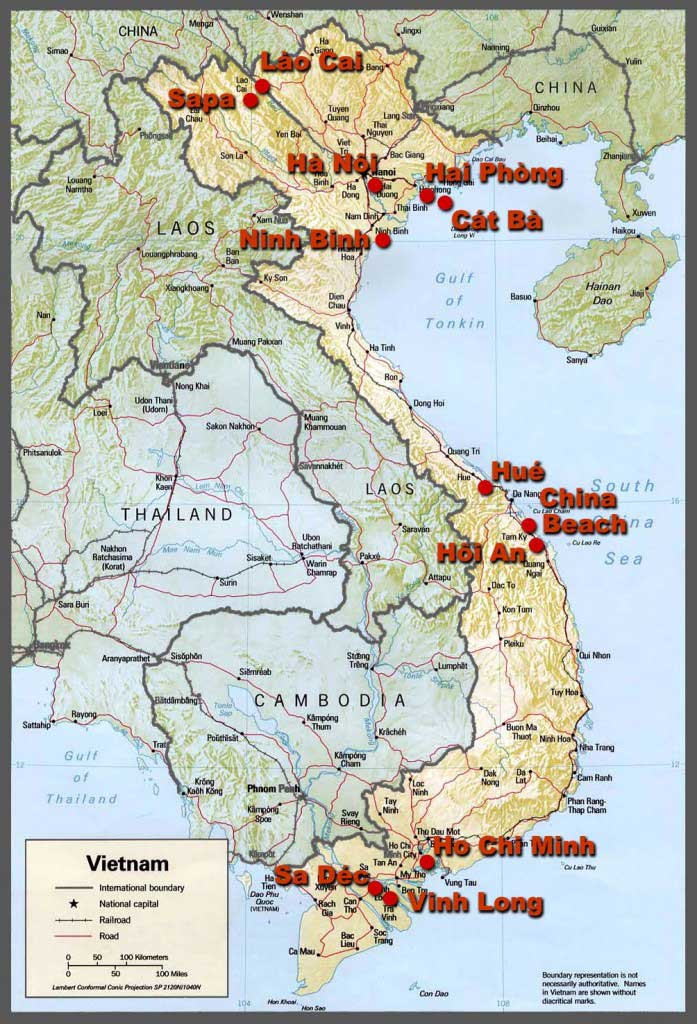
vietnam-map

Itinerary

#1     Lisbon – Paris – Ho Chi Minh

#2     Ho Chi Min
#3     Sá Dec – Vinh Long

#4     Vinh Long (Mekong) – Ho Chi Minh

#5     Ho Chi Minh – Da Nang (Nuo Nuoc Beach)

#6     Nuo Nuoc Beach (Marbel Montains)

#7     Nuo Nuoc Beach (Hoi An)

#8     Nuo Nuoc Beach (My Son)

#9     Da Nang – Hué (comboio)

#10   Hué

#11   Hué – Ninh Binh

#12   Ninh Binh (Tam Coc)

#13   Ninh Binh (Cuc Phuong e Hoa Lu)

#14   Ninh Binh – Haiphong – Cat Bá

#15   Cat Bá

#16   Halong Bay

#17   Cat Bá – Haiphong – Hà Nôi

#18   Hà Nôi

#19   Sapa (Trekking #1)

#20   Sapa (Trekking #2)

#21   Sapa (Bac Há)

#22   Hà Nôi

#23   Hà Nôi

#24   Hà Nôi – Ho Chi Minh – Paris – Lisbon

Visa Requirements:

Since there is no Vietnamese embassy or consulate in Portugal, it is necessary to use the internet ([http://www.visa-vietnam.org/](http://www.visa-vietnam.org/)) or a travel agency to obtain the visa.

Through the website, you can obtain an entry approval letter for Vietnam, which will be sent to you by email after filling out a form with your passport details and paying $20 per person (the more people you have, the cheaper it gets). This is for a 30-day, single-entry visa.

When you arrive in Vietnam, you must present this document, along with your passport, to customs and pay an additional $25 (it must be in dollars; they don’t accept other currencies, and there are no ATMs available).

Vaccines:

The best option is to consult with the Curry Cabral Hospital. The consultation costs €4.5, which corresponds to the moderation fee, and some vaccines are given on-site after the consultation.

If you have the vaccines required by the national vaccination program, including tetanus, only the hepatitis A and B vaccines, and the typhoid vaccine, are necessary.

It’s advisable to book in advance.

Travel Insurance:

It’s advisable to take out insurance. We opted for Império Bonança. The cost was €41.10 for two people over 24 days. We used Atributo Seguros (21 891 94 85) as an intermediary, and everything was handled quickly and efficiently by email and phone.

Weather:

You can check the weather at: [MSN Weather – Vietnam](http://weather.msn.com/region.aspx?&wealocations=Vietnam&setunit=C#current).

TRANSPORTATION IN VIETNAM
  • Bicycle:

Pleasant, especially in cities with little traffic or when cycling in rural areas. We tried it in Hué, and the price is negotiable. We rented bikes at the hostel in Hué and paid 30,000 VND (about €1.2) per bike for one day, from morning to evening.

  • Rickshaw:

The most charming mode of transport in Vietnam, but not the fastest. They are often found in city centers and are usually used for sightseeing routes; the price is negotiable.

  • Motorbike:

The best option for renting a motorbike is through hotels or guesthouses. No driver’s license or other documents are required. Helmets are mandatory. The price ranged from 80,000 VND, but it is negotiable. When renting a bike for a day, it is common to return it by the end of the day.

It’s advisable to test the bike before finalizing the rental to assess the condition of the vehicle, especially the brakes, which are important if you plan to take longer trips.

In large cities, it is not recommended to drive a motorbike due to the heavy traffic and lack of traffic rules (there are no pedestrian crossings, no priority at intersections or roundabouts).

  • Honda-om:

A service similar to a taxi but on a motorbike. It’s ideal for moving around urban areas where taxis may take longer. The price is negotiable. If you need to carry luggage, it can be placed on the passenger’s back or between the driver’s legs. We didn’t try this.

  • Taxi:

It’s best to insist on using the meter, especially when you’re confident about the route. However, many drivers prefer to negotiate the fare instead of using the meter, which generally isn’t in the passenger’s favor.

  • Public Bus:

The cheapest option for transportation; recommended for urban areas and short distances, as they lack many comforts. If you’re carrying luggage, you may need to pay an extra fee.

  • Travel by Tourist Bus:

Operated by private companies. Recommended for longer trips, as they offer more comfortable seats and air-conditioning. There are also sleeper buses for overnight trips between major cities (290,000 VND between Hué and Ninh Binh). Tickets can be bought at bus stations, which are easy to find in almost every city, with various companies represented.

  • Travel by Mini-bus

Operated by private companies; seats about 15 people, but there isn’t much space for bulky luggage. They connect major cities, with several trips per day. Tickets can be bought at bus stations, where you can compare prices and schedules from various companies. It’s advisable to book in advance, especially for popular routes and weekends. One company we found nationwide is Mai Linh. [Mai Linh Website](http://www.mailinh.vn/)

  • Travel by Train in Vietnam

The railway network in Vietnam covers only the coastal region, with the main route being the North-South Reunification Line, connecting Hanoi to Ho Chi Minh City. There are also two connections to the Chinese border—Lao Cai and Dong Dang.

As of now, it’s not worth trying the Vietnam Railways website, as the English page is not working.

Trains are divided into different categories based on comfort:

  • SE1 to SE6: “soft sleep” (4 beds) with air-conditioning; “hard sleep” (6 beds) with air-conditioning; restaurant car. These are the most comfortable vehicles with the best-conditioned carriages, but they’re the most expensive tickets.
  • SE7 to SE8: “hard sleep” (6 beds) with air-conditioning; “soft seat” (cushioned seat) with air-conditioning; restaurant car. They do not have “soft sleep” carriages.
  • TN1 to TN2: “hard sleep” (6 beds) with or without air-conditioning; “hard seat” (wooden seat). These are the least comfortable vehicles.

The “soft sleep” beds come with sheets, a pillow, and a blanket… although not always in the best hygienic condition, they are generally acceptable. In the carriages with seats, passengers often carry large volumes of luggage, making it difficult to move around.

The best website for train information we found was [Seat61 – Vietnam](http://www.seat61.com/Vietnam.htm). Besides ticket sales (which we didn’t try, as we bought tickets at stations or through hotels or travel agencies), it helps understand how the rail system works, which is a bit different from what we’re used to. It also provides information on routes, ticket prices, and the best scenic train journeys.

It’s recommended to book in advance, especially for sleeper carriages and on weekends or public holidays. If you buy a ticket and later decide not to travel, you can exchange it at the station ticket counters with a 10% fee.

  • Travel by plane in Vietnam

The fastest way to travel. Flights are no longer than 1.5 hours, but the downside is spending a lot of time at the airport, waiting between check-in and the flight. The main airlines for domestic flights are Vietnam Airlines and JetStar, the latter being a low-cost carrier with a reputation for delays, so it’s best to account for that if you have a connecting flight. The earlier you buy tickets, the cheaper they will be (a round-trip from Hanoi to Ho Chi Minh cost under $75).

– Vietnam Airlines (http://www.vietnamairlines.com.vn/)

– JetStar (http://www.jetstar.com/)

Accommodation In Vietmam

The best website to choose a hotel is TripAdvisor: [TripAdvisor – Vietnam](http://www.tripadvisor.com/Hotels-g293921-Vietnam-Hotels.html). It’s important not to rely solely on the rankings but to read reviews and look at recent photos, considering the traveler’s country of origin.

It’s not advisable to make reservations that require payment upfront, as sometimes the photos shown on websites don’t reflect the current condition of the rooms.

Before starting the trip, we only booked a hotel for the first night in Ho Chi Minh. For those who don’t want to take chances, just head to the Old Quarter and walk around a few streets, especially Bui Vien Street, where there’s a high concentration of hotels and, of course, tourists!

Throughout our trip, we exchanged experiences with other travelers who recommended hotels and guesthouses to stay in, and from there we simply made reservations by email or phone.

Travel Guides

We chose the Rough Guides dedicated exclusively to Vietnam. In comparison to the Lonely Planet, it’s more detailed and comprehensive, as it focuses on one country, unlike most other guides that cover Laos and Cambodia as well. You can also consult it online, although it has less detailed information: [Rough Guides – Vietnam](http://www.roughguides.com/website/travel/destination/content/?titleid=103&xid=idh119763192_0005)

A website dedicated to promoting organized tours but also offering useful information about the Sapa area and the region’s ethnic minorities: [Sapa Lao Cai](http://www.sapalaocai.com/)

Another website for good tips, even on accommodation: [Travelfish Vietnam](http://www.travelfish.org/country/vietnam)

About the food in Cambodia

In summary, it can be said that Cambodia is not an easy country for vegetarians, as this is a strange concept in this country where meat consumption dominates. But there are always options like noodle soups, curries and some snacks that help to get around the situation!

As in Lao, the noodle soups continued to be present but the quality decreased: not only are the broths less aromatic, but sometimes the noodles are made from dry pasta or even instant noodles. The usual dish of aromatic herbs and vegetables that accompanied these soups in the neighbouring country, is often absent here.

In Cambodian food, there is a strong influence of Chinese and Vietnamese cuisine, which is visible in the many restaurants serving “phò”, the traditional vietnamese noodle soup.

Another influence of China is the hot pots, which are very popular among Cambodians (as in many other Southwest Asian countries), especially in cities and particularly on weekends, where these restaurants are filled with families and groups of friends who share this meal, consisting of a pan with a boiling broth, where pieces of meat are floating, which remain hot on the table with the use of a mini gas stove, and where the various side dishes, such as cabbage, fresh herbs, pasta, pieces of meat and also viscera…

These noodle soups, prepared at the moment, can be made in the vegetarian version, however, although meat is not added, there is no increase in the amount of vegetables that usually come down to a handful of soy sprouts and a few cabbage leaves. As for the broth that serves as the base for these soups, almost transparent and with a light flavour, it is likely to contain products of animal origin in its preparation.

The so-called rice soups, popular as a morning meal, although a little boring, are also an option for vegetarians, since you can always order without meat, alternatively adding soy sprouts.

More advisable in terms of a vegetarian diet are fry-noodles, where the rice noodles are stir fry with some vegetables and egg and seasoned with mysterious sauces.

Coffee is usually served with ice and is almost always sweetened with condensed milk. The preparation is in everything similar to that found in Vietnam, with the boiling water being poured over the coffee in a kind of metallic filter, placed on the top of the glass. Often the coffee is already made, in a very concentrated dose, which is then diluted in hot water when the coffee is served. The flavour is smooth but with a particular flavour, but it is necessary to use a certain communication skill to avoid the popular condensed milk, which totally crushes the original flavour of the coffee.

The curries continue to be strongly present, much less spicy than in neighbouring Thailand, served with the usual dose of rice. The most popular of these curries is amok, which can be seafood, fish, meat or just vegetables, highlighting the mild aroma of spices from which lemongrass, turmeric and ginger stand out. Traditionally this dish is made very slowly, in steam, on a banana leaf. Not as easy to find as a noodle soup, amok served with rice is a delicious option for vegetarians and is more likely to be found in restaurants than in markets.

In Cambodia, vegetarian options are scarcer than in other countries in Southeast Asia, dominating meat, whether fresh or processed in the form of small meatballs whose appearance is far from attractive but which is extremely popular in Cambodia. In the south of the country, given the proximity to the sea, fish and seafood are strongly present, with markets offering a wide variety of products, which is reflected in the dishes and even street snacks.

And as in any Asian country, street food has a strong presence, due to its variety, both in sweets and in snacks, appearing at specific times of the day, often next to markets, schools, or in the busiest streets of cities. They can be small stalls transported on bicycles or compact kitchens coupled to motorcycles.

As in many Southwest Asian countries, it is not difficult to find exotic foods by European standards, and Cambodia seems to offer even more opportunities to find frogs for sale in the markets or grasshoppers fried at a street stall.

Sopa de arroz, servida somente de manhã, como primeira refeição do dia, e que muitas vezes é acompanhada de uma especie de pão frito
Rice soup, served only in the morning, as the first meal of the day, which is often accompanied by a kind of fried bread
stree food em Siem Reap
street food in Siem Reap
pasteis de massa de arroz recheados com legumes e mergulhados numa mistura de molhos doces, salgados e picantes
rice noodles stuffed with vegetables and dipped in a mixture of sweet, savoury and spicy sauces
banca que todas as noite surge nas ruas de Siem Reap servindo a sopa de noodles tradicional do Vietnam
every night several small stands appear on the streets of Siem Reap serving Vietnamese traditional noodle soup
muitas vezes é possivel encontrar fruta já descascada e cortada que se vende nas ruas, em especial nas zonas mais frequentadas por turistas.
it is often possible to find already peeled and cut fruit that is sold on the streets, especially in the areas most frequented by tourists
fritos de banana e massa
fried banana
phô
Vietnamese phô soup
bancas de venda de comida em Siem reap, em frente ao local de partidas dos autocarros... depois da hora de ponta mudan-se para outras paragens.
food stalls in Siem reap, in front of the bus departure point … but after the rush hour it moves to other stops
nooodlles
dry noodles
chá que está semptre disponivel nas mesas
tea that is always available on the tables
sops de noodles com legumes
noodle soup with vegetables
molhos e mais molhos... mas poucos picantes, em comparação com o que era oferecido na Tailândia ou mesmo no Laos
sauces and more sauces … but few spicy, compared to what was offered in Thailand or even Laos
café confeccionado de forma semelhante à que se encontra no Vietnam
ice coffee made by the filter process
street-food em Phnom Penh
street-food in Phnom Penh
fruta de uma especie de palmeira, servida com leite de coco, gelo e muito, muito açucar
toddy fruit, from a kind of palm tree, translucent and gelatinous, served with coconut milk and ice…. very sugary
fruta de uma especie de palmeira
toddy palm fruit
mercado de Phnom Penh
Phnom Penh market
bolos cozinhados ao vapor, em folha de bananeira
steamed cakes in banana leaf
noodles fritos com legumes e ovo estrelado... sempre frito dos dois lados!
fried noodles with vegetables and a fried egg … always fried on both sides!
banca de rua
street stall
street food em Phnom Penh
street food in Phnom Penh: pancake served hot, stuffed with sticky rice and sweetened with a mixture of coconut and sugar
street food em Phnom Penh
street food in Phnom Penh with fry dough, also called oily sticks
um dos muitos snacks de rua: massa doce frita e salpicada de sésamo
one of the many street snacks: fried sweet dough, sprinkled with sesame seads
restaurante de phô em Phnom Penh
“phô” restaurant in Phnom Penh
DSC_3399

Vegetable “amok“… the famous Cambodian curry that most of the times is made with fish, but that can also be ordered in a vegetarian version only with legumes.

Uma especie de custard, mas cozinhada dentro de uma pequena abóbora que depois de cozida se pode comer a casca; é servida às fatias, regadas com leite de côco, calda de açucar, gelo e leite condensado. Muito popular na Tailândia, pode-se também encontrar nos mercados do Camboja

A kind of custard, but cooked inside a small pumpkin that after being cooked you can eat the peel; it is served sliced, drizzled with coconut milk, sugar syrup, ice and condensed milk. Very popular in Thailand, it can also be found in Cambodian markets

banca no mercado de Sihanouk Ville dedicada à venda de doces, onde domina o leite de côco e o leite condensado
stall in the Sihanouk Ville market dedicated to the sale of sweets, where coconut milk and condensed milk dominate

Footer

search

Tags

accommodation Assam Bagan Bali Border Crossing Borneo Colombo Dambulla Dao Cheng Esfahan Fes Food Gilis Hiking hokkaido Istanbul Itinerary Jakarta Java Kashan Kuala Lumpur Kumano Kodo Lombok Majuli Meghalaya Meknes Mekong Nagaland Natural Park Nongriat Northeast States Ouarzazate Sarawak Shiraz Sichuan Province Sishuan Sumatra Tabriz Tehran transportation Visa Yangon Yazd Yogyakarta Yunnan Province

I’m Catarina, a wanderer from Lisbon, Portugal… or a backpack traveller with a camera!

Every word and photo here comes from my own journey — the places I’ve stayed, the meals I’ve enjoyed, and the routes I’ve taken. I travel independently and share it all without sponsors or ads, so what you read is real and unfiltered.

If you’ve found my blog helpful or inspiring, consider supporting it with a small contribution. Every donation helps me keep this project alive and free for everyone who loves exploring the world.

Thank you for helping me keep the journey going!

BUY ME A COFFEE

Categories

Recent Posts:

  • How to go from Hualien to Dulan Beach
  • Taroko Gorge: between marble cliffs and emerald rivers
  • Hualien: a dull gateway to Taroko Gorge
  • Taiwan: Itinerary for an 16 day trip
  • Vietnam: Itinerary
  • 3 months in India: Kolkata, Tamil Nadu, Karnataka, Goa and Kerala
  • Backpacking Turkey in 24 Days: itinerary & costs
  • English
  • Português

© Copyright 2026 Stepping out of Babylon · All Rights Reserved · Designed by OnVa Online · Login