• Skip to main content
  • Skip to footer

Stepping Out Of Babylon

Travel & Photography

  • About me
    • Contact
  • Destinations
    • Africa and Middle East
      • Iran
      • Lebanon
      • Morocco
      • Turkey
    • East Asia
      • China
      • Japan
      • Taiwan (Formosa)
    • South Asia
      • Bangladesh
      • India
      • Nepal
      • Sri Lanka
    • Southeast Asia
      • Cambodia
      • Indonesia
      • Lao
      • Malaysia
      • Myanmar
      • Singapore
      • Thailand
      • Vietnam
  • Itineraries
  • Travel tips
    • Border crossing
    • Hiking and Natural parks
    • Food Journey
    • Visa
  • Photography

Itinerary

Taiwan: Itinerary for an 16 day trip

Itinerary:

  • Taipei: 2 days
  • Jiufen: 1 day
  • Yilan: 2 days
  • Hualien and the Taroko Gorge: 2 days
  • Dulan Beach: 2 days
  • Kenting: 1 day
  • Tainan: 3 days
  • Taichung and the Sun Moon Lake: 2 days
  • Taipei: 1 day

Costs:

Costs based on solo travel, with a focus on keeping things budget-friendly… and a lot of walk!!!

33 €/day (December 2019)

This average daily budget includes:

  • eating only local food and a lot of street-food in markets
  • staying always in hostels
  • using public transportation (mainly buses and train)
  • renting scooter in some places
  • entrance tickets for tourists attractions like natural parks, museums, palaces, etc
  • no spending on alcohol, tobacco, or soft drinks
  • doing my own laundry
  • a local SIM card for local network

NOTE: This daily average does not include expenses for shopping, souvenirs, medical or health-related costs, or visa fees (as these vary depending on your country of origin).


See also: Short guide to the Taiwanese breakfast
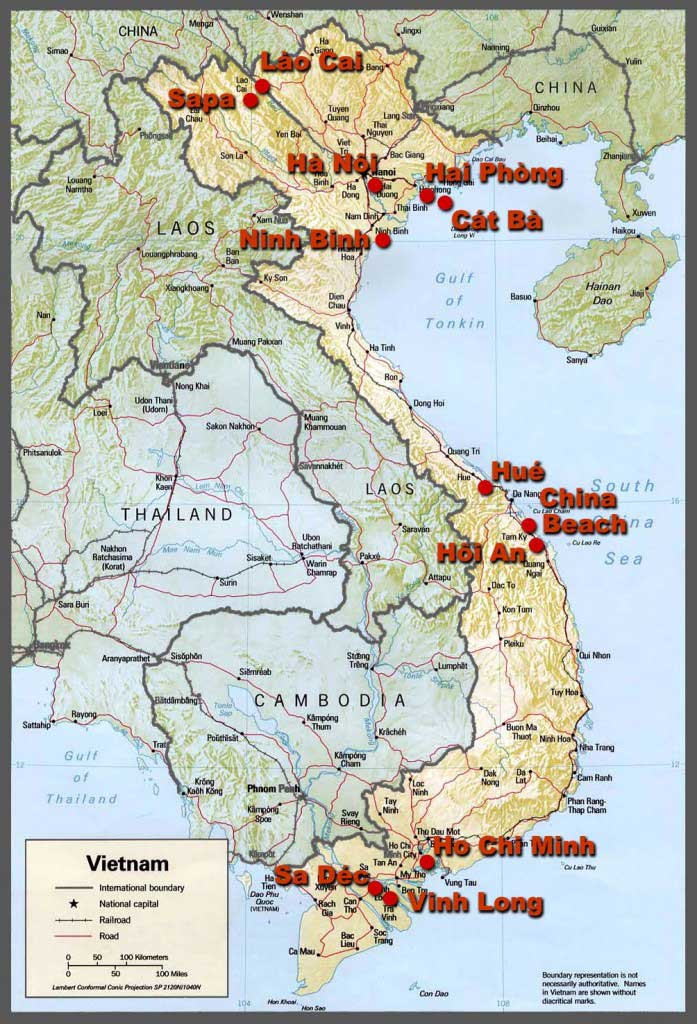
Vietnam: Itinerary

vietnam-map

Itinerary

#1     Lisbon – Paris – Ho Chi Minh

#2     Ho Chi Min
#3     Sá Dec – Vinh Long

#4     Vinh Long (Mekong) – Ho Chi Minh

#5     Ho Chi Minh – Da Nang (Nuo Nuoc Beach)

#6     Nuo Nuoc Beach (Marbel Montains)

#7     Nuo Nuoc Beach (Hoi An)

#8     Nuo Nuoc Beach (My Son)

#9     Da Nang – Hué (comboio)

#10   Hué

#11   Hué – Ninh Binh

#12   Ninh Binh (Tam Coc)

#13   Ninh Binh (Cuc Phuong e Hoa Lu)

#14   Ninh Binh – Haiphong – Cat Bá

#15   Cat Bá

#16   Halong Bay

#17   Cat Bá – Haiphong – Hà Nôi

#18   Hà Nôi

#19   Sapa (Trekking #1)

#20   Sapa (Trekking #2)

#21   Sapa (Bac Há)

#22   Hà Nôi

#23   Hà Nôi

#24   Hà Nôi – Ho Chi Minh – Paris – Lisbon

Visa Requirements:

Since there is no Vietnamese embassy or consulate in Portugal, it is necessary to use the internet ([http://www.visa-vietnam.org/](http://www.visa-vietnam.org/)) or a travel agency to obtain the visa.

Through the website, you can obtain an entry approval letter for Vietnam, which will be sent to you by email after filling out a form with your passport details and paying $20 per person (the more people you have, the cheaper it gets). This is for a 30-day, single-entry visa.

When you arrive in Vietnam, you must present this document, along with your passport, to customs and pay an additional $25 (it must be in dollars; they don’t accept other currencies, and there are no ATMs available).

Vaccines:

The best option is to consult with the Curry Cabral Hospital. The consultation costs €4.5, which corresponds to the moderation fee, and some vaccines are given on-site after the consultation.

If you have the vaccines required by the national vaccination program, including tetanus, only the hepatitis A and B vaccines, and the typhoid vaccine, are necessary.

It’s advisable to book in advance.

Travel Insurance:

It’s advisable to take out insurance. We opted for Império Bonança. The cost was €41.10 for two people over 24 days. We used Atributo Seguros (21 891 94 85) as an intermediary, and everything was handled quickly and efficiently by email and phone.

Weather:

You can check the weather at: [MSN Weather – Vietnam](http://weather.msn.com/region.aspx?&wealocations=Vietnam&setunit=C#current).

TRANSPORTATION IN VIETNAM
  • Bicycle:

Pleasant, especially in cities with little traffic or when cycling in rural areas. We tried it in Hué, and the price is negotiable. We rented bikes at the hostel in Hué and paid 30,000 VND (about €1.2) per bike for one day, from morning to evening.

  • Rickshaw:

The most charming mode of transport in Vietnam, but not the fastest. They are often found in city centers and are usually used for sightseeing routes; the price is negotiable.

  • Motorbike:

The best option for renting a motorbike is through hotels or guesthouses. No driver’s license or other documents are required. Helmets are mandatory. The price ranged from 80,000 VND, but it is negotiable. When renting a bike for a day, it is common to return it by the end of the day.

It’s advisable to test the bike before finalizing the rental to assess the condition of the vehicle, especially the brakes, which are important if you plan to take longer trips.

In large cities, it is not recommended to drive a motorbike due to the heavy traffic and lack of traffic rules (there are no pedestrian crossings, no priority at intersections or roundabouts).

  • Honda-om:

A service similar to a taxi but on a motorbike. It’s ideal for moving around urban areas where taxis may take longer. The price is negotiable. If you need to carry luggage, it can be placed on the passenger’s back or between the driver’s legs. We didn’t try this.

  • Taxi:

It’s best to insist on using the meter, especially when you’re confident about the route. However, many drivers prefer to negotiate the fare instead of using the meter, which generally isn’t in the passenger’s favor.

  • Public Bus:

The cheapest option for transportation; recommended for urban areas and short distances, as they lack many comforts. If you’re carrying luggage, you may need to pay an extra fee.

  • Travel by Tourist Bus:

Operated by private companies. Recommended for longer trips, as they offer more comfortable seats and air-conditioning. There are also sleeper buses for overnight trips between major cities (290,000 VND between Hué and Ninh Binh). Tickets can be bought at bus stations, which are easy to find in almost every city, with various companies represented.

  • Travel by Mini-bus

Operated by private companies; seats about 15 people, but there isn’t much space for bulky luggage. They connect major cities, with several trips per day. Tickets can be bought at bus stations, where you can compare prices and schedules from various companies. It’s advisable to book in advance, especially for popular routes and weekends. One company we found nationwide is Mai Linh. [Mai Linh Website](http://www.mailinh.vn/)

  • Travel by Train in Vietnam

The railway network in Vietnam covers only the coastal region, with the main route being the North-South Reunification Line, connecting Hanoi to Ho Chi Minh City. There are also two connections to the Chinese border—Lao Cai and Dong Dang.

As of now, it’s not worth trying the Vietnam Railways website, as the English page is not working.

Trains are divided into different categories based on comfort:

  • SE1 to SE6: “soft sleep” (4 beds) with air-conditioning; “hard sleep” (6 beds) with air-conditioning; restaurant car. These are the most comfortable vehicles with the best-conditioned carriages, but they’re the most expensive tickets.
  • SE7 to SE8: “hard sleep” (6 beds) with air-conditioning; “soft seat” (cushioned seat) with air-conditioning; restaurant car. They do not have “soft sleep” carriages.
  • TN1 to TN2: “hard sleep” (6 beds) with or without air-conditioning; “hard seat” (wooden seat). These are the least comfortable vehicles.

The “soft sleep” beds come with sheets, a pillow, and a blanket… although not always in the best hygienic condition, they are generally acceptable. In the carriages with seats, passengers often carry large volumes of luggage, making it difficult to move around.

The best website for train information we found was [Seat61 – Vietnam](http://www.seat61.com/Vietnam.htm). Besides ticket sales (which we didn’t try, as we bought tickets at stations or through hotels or travel agencies), it helps understand how the rail system works, which is a bit different from what we’re used to. It also provides information on routes, ticket prices, and the best scenic train journeys.

It’s recommended to book in advance, especially for sleeper carriages and on weekends or public holidays. If you buy a ticket and later decide not to travel, you can exchange it at the station ticket counters with a 10% fee.

  • Travel by plane in Vietnam

The fastest way to travel. Flights are no longer than 1.5 hours, but the downside is spending a lot of time at the airport, waiting between check-in and the flight. The main airlines for domestic flights are Vietnam Airlines and JetStar, the latter being a low-cost carrier with a reputation for delays, so it’s best to account for that if you have a connecting flight. The earlier you buy tickets, the cheaper they will be (a round-trip from Hanoi to Ho Chi Minh cost under $75).

– Vietnam Airlines (http://www.vietnamairlines.com.vn/)

– JetStar (http://www.jetstar.com/)

Accommodation In Vietmam

The best website to choose a hotel is TripAdvisor: [TripAdvisor – Vietnam](http://www.tripadvisor.com/Hotels-g293921-Vietnam-Hotels.html). It’s important not to rely solely on the rankings but to read reviews and look at recent photos, considering the traveler’s country of origin.

It’s not advisable to make reservations that require payment upfront, as sometimes the photos shown on websites don’t reflect the current condition of the rooms.

Before starting the trip, we only booked a hotel for the first night in Ho Chi Minh. For those who don’t want to take chances, just head to the Old Quarter and walk around a few streets, especially Bui Vien Street, where there’s a high concentration of hotels and, of course, tourists!

Throughout our trip, we exchanged experiences with other travelers who recommended hotels and guesthouses to stay in, and from there we simply made reservations by email or phone.

Travel Guides

We chose the Rough Guides dedicated exclusively to Vietnam. In comparison to the Lonely Planet, it’s more detailed and comprehensive, as it focuses on one country, unlike most other guides that cover Laos and Cambodia as well. You can also consult it online, although it has less detailed information: [Rough Guides – Vietnam](http://www.roughguides.com/website/travel/destination/content/?titleid=103&xid=idh119763192_0005)

A website dedicated to promoting organized tours but also offering useful information about the Sapa area and the region’s ethnic minorities: [Sapa Lao Cai](http://www.sapalaocai.com/)

Another website for good tips, even on accommodation: [Travelfish Vietnam](http://www.travelfish.org/country/vietnam)

3 months in India: Kolkata, Tamil Nadu, Karnataka, Goa and Kerala

detailed south India itinerary: Tamil Nadu, Karnataka & Kerala

Itinerary:

  • Kolkata
  • Bodhgaya
  • Chennai
  • Tiruvannamalai
  • Mysore: day trips to Srirangapatna, Somanathapura & Talakadu
  • Kulshalnagar (sleep in Bylakuppe Village)
  • Munroe island (Munroturuttu)
  • Kovolam beach: day trips to Thiruvananthapuram (Trivandrum) for the Attukal Bhagavathy (Attukal Pongala Festival)
  • Panjim
  • Arambol
  • Mumbai

Average costs based on solo travel, with a focus on keeping things budget-friendly:

14 €/day (Jan, Feb and March 2024)

This average daily budget includes:

  • eating only local food in low/medium range restaurants and some street-food
  • staying always in guesthouses
  • using public transportation (mainly trains and buses)
  • entrance tickets for tourists attractions like natural parks, museums, palaces, etc
  • no spending on alcohol, tobacco, or soft drinks
  • doing my own laundry
  • SIM card for local network

NOTE: This daily average does not include expenses for shopping, souvenirs, medical or health-related costs, or visa fees (as these vary depending on your country of origin). Also doesn’t include in and out flights as also the domestic flight Bodhgaya – Chennai

3 months trip: complete itinerary map

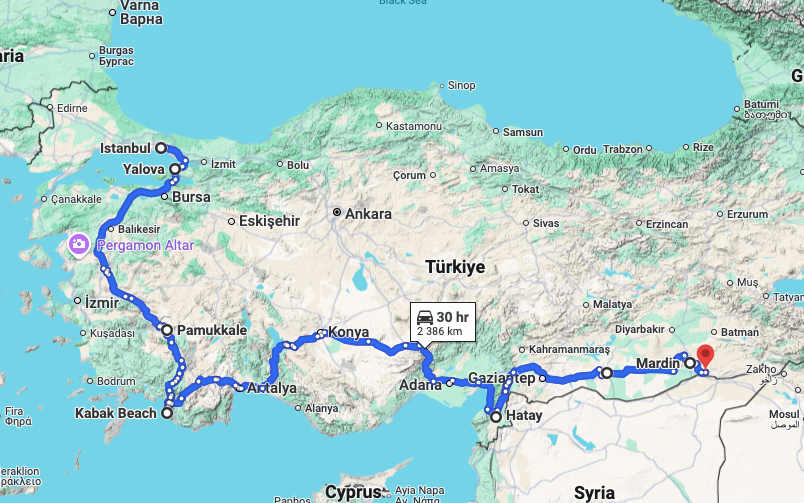
Backpacking Turkey in 24 Days: itinerary & costs

Itinerary:

  • Istanbul: 3 days
  • Yalova: 2 days
  • Pamukkale: 2 days
  • Kabak Beach (Fethiye): 2 days
  • Hatay-Antakya: 3 days
  • Şanlıurfa: 3 days
  • Mardim: 5 days (day trip to Dara)
  • Istanbul: 1 day

Average costs based on solo travel, with a focus on keeping things budget-friendly… and a lot of walk!!!

20 €/day (May 2022)

This average daily budget includes:

  • eating only local food in budget restaurants
  • staying always in hostels or shared-rooms
  • using public transportation (mostly buses)
  • entrance tickets for tourists attractions like natural parks, museums, palaces, etc
  • a few visits to hammam (Turkish bath)
  • no spending on alcohol, tobacco, or soft drinks
  • doing my own laundry
  • SIM card for local network

NOTE: This daily average does not include expenses for shopping, souvenirs, medical or health-related costs, or visa fees (as these vary depending on your country of origin).

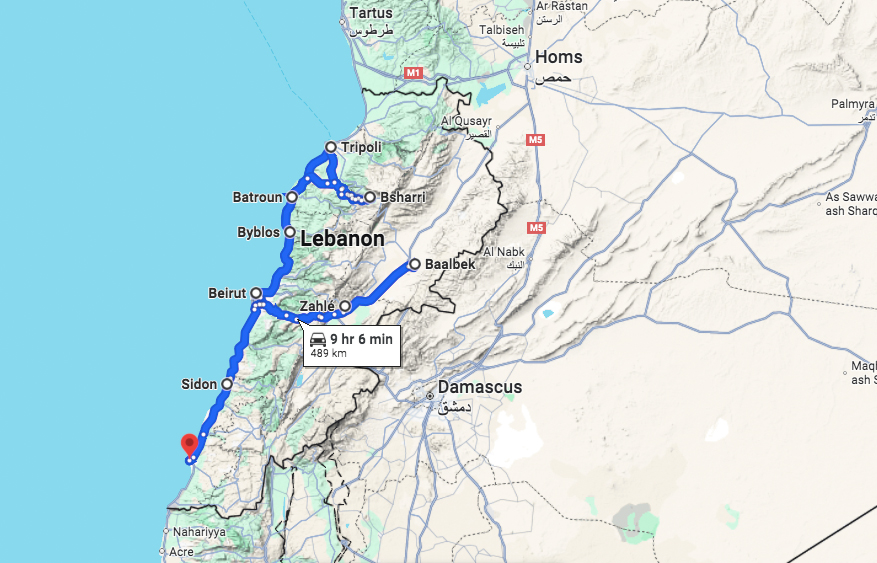
Lebanon: Itinerary for a 15 days solo trip

Itinerary:

  • Beirut
  • Byblos (Jbeil): a day trip from Beirut
  • Batroun: a day trip from Beirut
  • Tripoli (Trâblous)
  • Beirut
  • Bcharré (Bsharri) and the Qadisha Valley
  • Baalbek and Beqaa Valley (Chateau Ksara)
  • Beirut
  • Sidon (Saida)
  • Tyre (Sour): a day trip from Sidon
  • Beirut

Average costs based on solo travel, with a focus on keeping things budget-friendly… and a lot of walk!!!

32 €/day (September 2023)

This budget includes:

  • eating only local food
  • staying in hostels or budget hotels
  • using public transportation (mainly buses and occasional taxis to/from the airport)
  • no spending on alcohol, tobacco, or soft drinks
  • doing my own laundry
  • a local SIM card for connectivity

Note: This daily average does not include expenses for shopping, souvenirs, medical or health-related costs, or visa fees (as these vary depending on your country of origin).

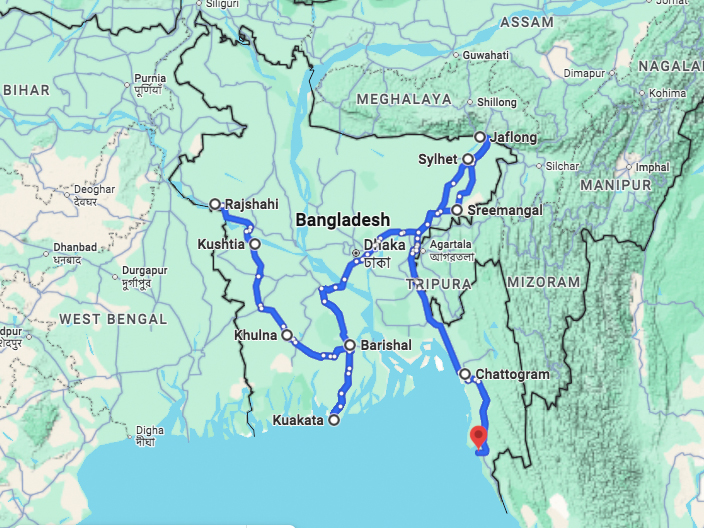
25 Days solo travel in Bangladesh: Itinerary

Itinerary:

  • Dhaka: 1 day
  • Sreemangal: 2 days
  • Syhlet + Jaflong: 2 days
  • Sonargaon + Panam Nagar: 2 days (stay in Dhaka)
  • Rajshahi + Sona Masjid + Puthia: 3 days
  • Kushtia: 1 day
  • Khulna + Bagerhat: 2 days
  • Barishal + Banaripara: 2 days
  • Dhaka: 1 day
  • Kuakata: 2 days
  • Chittagong: 1 day
  • Cox’s bazar + Inani Beach + Maheskhali Island: 3 days
  • Dhaka: 1 day


Average costs based on solo travel, with a focus on keeping things budget-friendly
:

23 €/day (January 2025)

This average daily budget includes:

  • sticking to local cuisine while trying a variety of restaurants—from street food stalls to mid-range restaurants and a few upscale experiences
  • staying always in budget hotels (hostels don’t existe in Bangladesh and what you can find give that name are mostly for long term stays, hosting students and workers)
  • using public transportation (mainly bus, train, ferry-boat, auto-rickshaws and a lot of cycling rickshaws; for urban longer distances I used the Uber service for taxis and moto-taxi)
  • entrance tickets for tourists attractions like natural parks, museums, palaces, etc
  • no spending on alcohol, tobacco, or soft drinks
  • doing my own laundry (couldn’t find this service at the hotels where i stay but also didn’t made a big effort to find an alternative)
  • a SIM card for local network with unlimited data

NOTE: This daily average does not include expenses for shopping, souvenirs, medical or health-related costs, or visa fees (as these vary depending on your country of origin). Also doesn’t include visa fee or flights in and out of the country

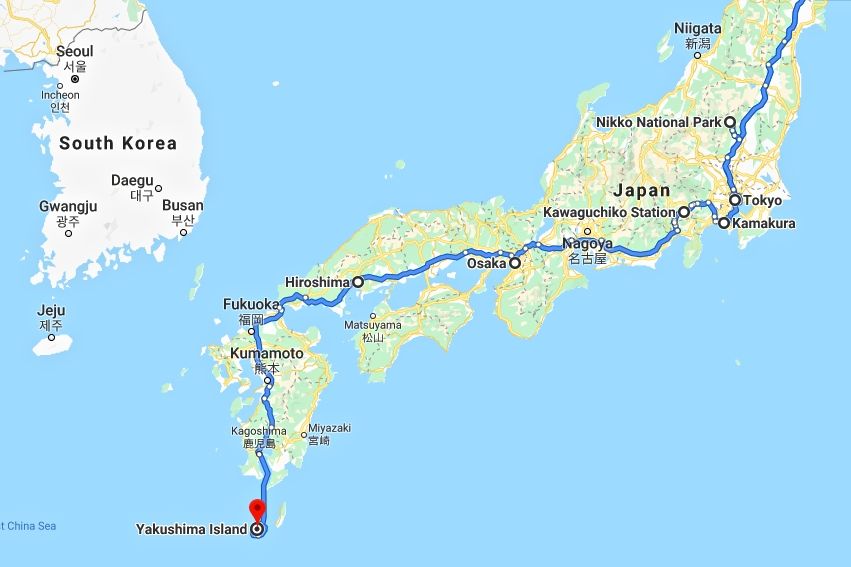
6 weeks in Japan: itinerary & costs

Itinerary:

  • Tokyo: 5 days
  • Noboribetsu (Hokkaido): 2 days
  • Hakodate (Hokkaido): 2 days
  • Nikko: 4 days
  • Kamakura: 4 days
  • Kawaguchiko (Mount Fuji): 3 days
  • Hiroshima: 1 day
  • Yakushima: 4 days
  • Osaka: 2 days
  • Koyasan: 4 days
  • Tanabe and Yunomine (Kumano Kodo trail): 6 days
  • Kyoto: 4 days

My trip didn’t exactly follow this sequence from north to south, mostly because I had a 21 days JP Rail Pass, so I use it to make the longest trips (like Hokkaido and Yakushima, stopping in a few places along the way), leaving the Kansai region (Osaka, Koyasan, Kumano Kodo and Kyoto) for the end of the trip where the bus trips are more frequent and sometimes are the only option.

The weekends and especially the holidays also influence the trip plan, pushing me sometimes to temporary skip some places because the budget accommodations were fully booked, choosing a less crowded destination, and go there after the busy days. It happened in Nikko and Kamakura, which are a popular destination on the weekends as they are to Tokyo.

I always try to stay more than one night in each place… there was one exception, Hiroshima, that intended to be a break in a long trip between Mount Fuji and Yakushima.

Total Itinerary

Average costs based on solo travel, with a focus on keeping things budget-friendly

48 €/day (October/November 2019)

Average daily costs for the most significant categories of expenses:

  • food: 13 €/day (choosing options without meat or fish products)
  • accommodation: 23 €/day
  • transports: 21 €/day

This transport average includes the JP Rail pass that I bought in advance on-line and it cost 518€ for 21 days, as also the local bus and metro tickets, the private railway lines (Kawaguchiko, Koyasan) and the Yakushima ferry and Kumano Kodo buses; it doesn’t include the flights.

It’s included a SIM card and internet for all days.

In terms of accommodation, I stay always in dorms. In Japan the standard is high and all the places where I stay offer very comfortable conditions, some with bunk beds other more like a capsule hotel.

In terms of food, I usually made one meal a day with food from the supermarket; I’m not meaning instants soups and so on, but proper fresh meals that have a good quality in Japan.

In touristic activities, I spent around 4€ a day, and that include lots of temples and a few museums but mostly onsen, the Japanese style hot springs of which I became completely addicted and made up more than half of my expenses in this category.

In hygiene, there’s not much to spend as all the hostels provide shampoo, shower gel, conditioner and toilet paper.

Laundry costs around 100¥ (less than one euro) but in some places is free.


NOTE: This daily average does not include expenses for shopping, souvenirs, medical or health-related costs, or visa fees (as these vary depending on your country of origin). Also it don’ts includes flights in and out of the country.

detail itinerary in North of Japan

detail itinerary in South of Japan
detail itinerary in Kansai region

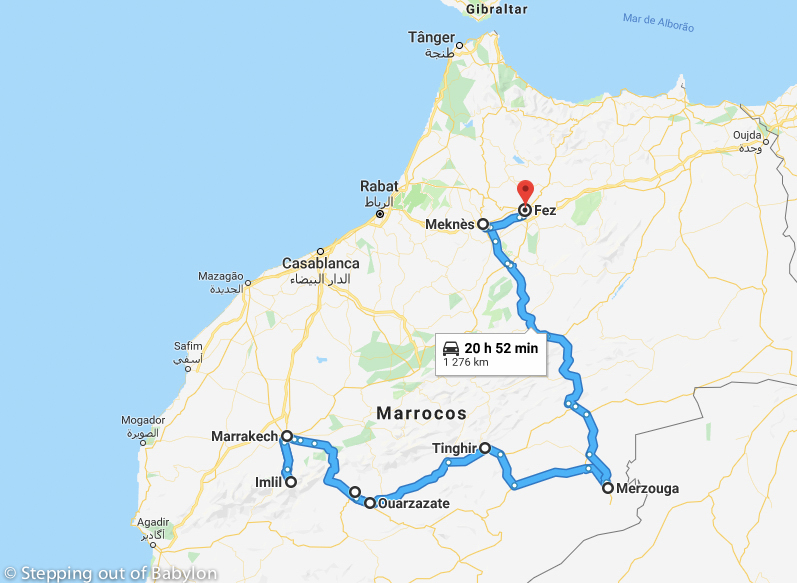
20 days in Morocco: itinerary & costs

Itinerary:

  • Marrakesh: 3 days
  • Imlil: 2 days
  • Marrakesh: 1 day
  • Ouarzazate and Ait BenHadou: 2 days
  • Tinghir: 4 days
  • Merzouga and Erg Chebbi: 2 days
  • Meknes and Mulay Idriss: 3 days
  • Fes: 2 days


Average costs based on solo travel, with a focus on keeping things budget-friendly:

16 €/day (September 2018)

his average daily budget includes:

  • eating only local food and a lot of street-food in markets
  • staying always in hostels
  • using public transportation (mainly buses and train)
  • entrance tickets for tourists attractions like natural parks, museums, palaces… and hamman 
  • no spending on alcohol, tobacco, or soft drinks
  • doing my own laundry
  • SIM card for local network

NOTE: This daily average does not include expenses for shopping, souvenirs, medical or health-related costs, or visa fees (as these vary depending on your country of origin). Also it doesn’t includes flights to and from of the country.

Some costs in detail:

Erg Chebbi (desert Tour): 250 Dirham, including camel ride from and to Merzouga, sleep in tent, dinner and breakfast

… considering eating just local (vegetarian) food, sharing room or sleeping in dorms, travel by public transport only, no alcohol and no soft drinks, making my own laundry… Shopping and souvenirs are also not included, as well health expenses.

SIM card and mobile data (Orange SIM Card=30Dirham + 20Dirham/week for data).

Includes also hamman experience that in Fes cost me 60 Dirham.

Note: this trip was made during Oct/Nov 2018, which can be considered the low season, when the prices of the accommodation are lower, which is particularly significant in Imlil and Merzouga.

  • Page 1
  • Page 2
  • Page 3
  • Go to Next Page »

Footer

search

Tags

Arugam Bay Assam Bali Border Crossing Borneo Cappadocia Colombo Dambulla Esfahan Fes Food Gilis Hiking Hikkaduwa hokkaido Istanbul Itinerary Jakarta Java Kandy Kashan Kataragama Kumano Kodo Lombok Meghalaya Meknes Mekong Nagaland Natural Park Nongriat Northeast States Ouarzazate Sarawak Shiraz Sichuan Province Sumatra Tabriz Tehran transportation Varanasi Visa Yangon Yazd Yogyakarta Yunnan Province

I’m Catarina, a wanderer from Lisbon, Portugal… or a backpack traveller with a camera!

Every word and photo here comes from my own journey — the places I’ve stayed, the meals I’ve enjoyed, and the routes I’ve taken. I travel independently and share it all without sponsors or ads, so what you read is real and unfiltered.

If you’ve found my blog helpful or inspiring, consider supporting it with a small contribution. Every donation helps me keep this project alive and free for everyone who loves exploring the world.

Thank you for helping me keep the journey going!

BUY ME A COFFEE

Categories

Recent Posts:

  • How to go from Hualien to Dulan Beach
  • Taroko Gorge: between marble cliffs and emerald rivers
  • Hualien: a dull gateway to Taroko Gorge
  • Taiwan: Itinerary for an 16 day trip
  • Vietnam: Itinerary
  • 3 months in India: Kolkata, Tamil Nadu, Karnataka, Goa and Kerala
  • Backpacking Turkey in 24 Days: itinerary & costs
  • English
  • Português

Copyright © 2025 · Stepping Out Of Babylon on Genesis Framework · WordPress · Log in