• Skip to main content
  • Skip to footer

Stepping Out Of Babylon

Travel & Photography

  • About me
    • Contact
  • Destinations
    • Africa and Middle East
      • Iran
      • Lebanon
      • Morocco
      • Turkey
    • East Asia
      • China
      • Japan
      • Taiwan (ROC)
    • South Asia
      • Bangladesh
      • India
      • Nepal
      • Sri Lanka
    • Southeast Asia
      • Cambodia
      • Indonesia
      • Lao
      • Malaysia
      • Myanmar
      • Singapore
      • Thailand
      • Vietnam
  • Itineraries
  • Travel tips
    • Border crossing
    • Hiking and Natural parks
    • Food Journey
    • Visa
  • Photography

India

Nongritat and the living root bridges

Magic. Dream. Unreal.

Words that show up in my mind when I recall Nongriat.

Nongriat
Nongriat


The rain, though predictable, unexpectedly began as we start the descent to the village of Nongriat, forcing to some breaks for tea and rest in modest bamboo huts. But what was coming to be an inconvenience proved to be a blessing, with the vegetation gaining a glow that gives greater vividness and contrast to the green nuances that fill entirely the horizon.

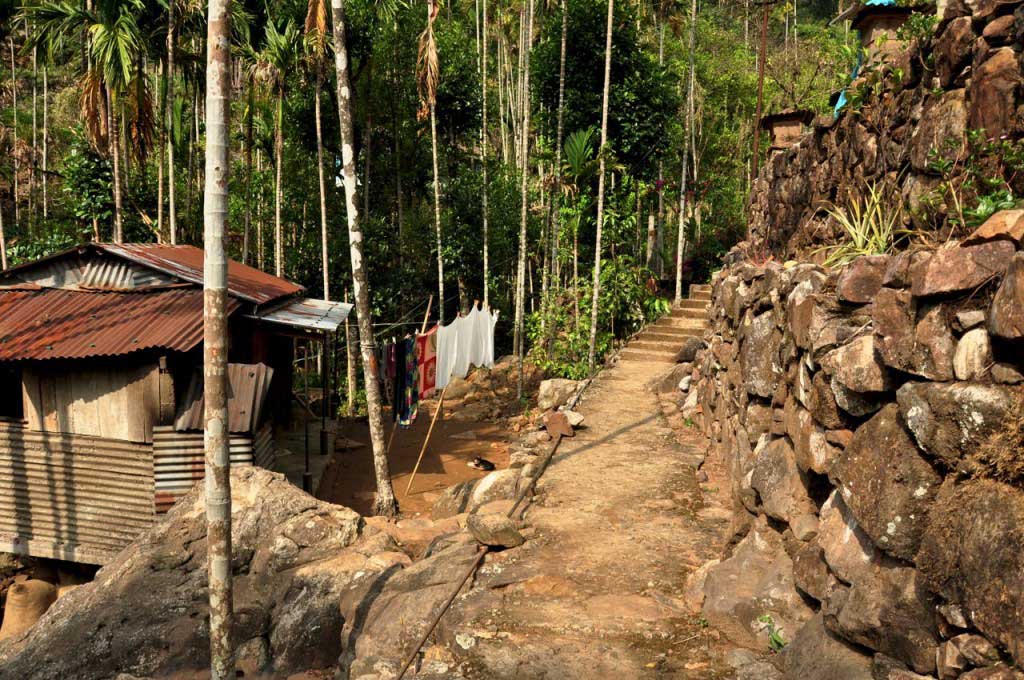
As the sound of drops of rain goes away, turn the shy sounds of the jungle, with an invisible orchestra formed by frogs and insects. Mosses and lichens show with all its power, absorbing water drops that slowly give off the bamboo leaves, which seem to bend under the weight of water.
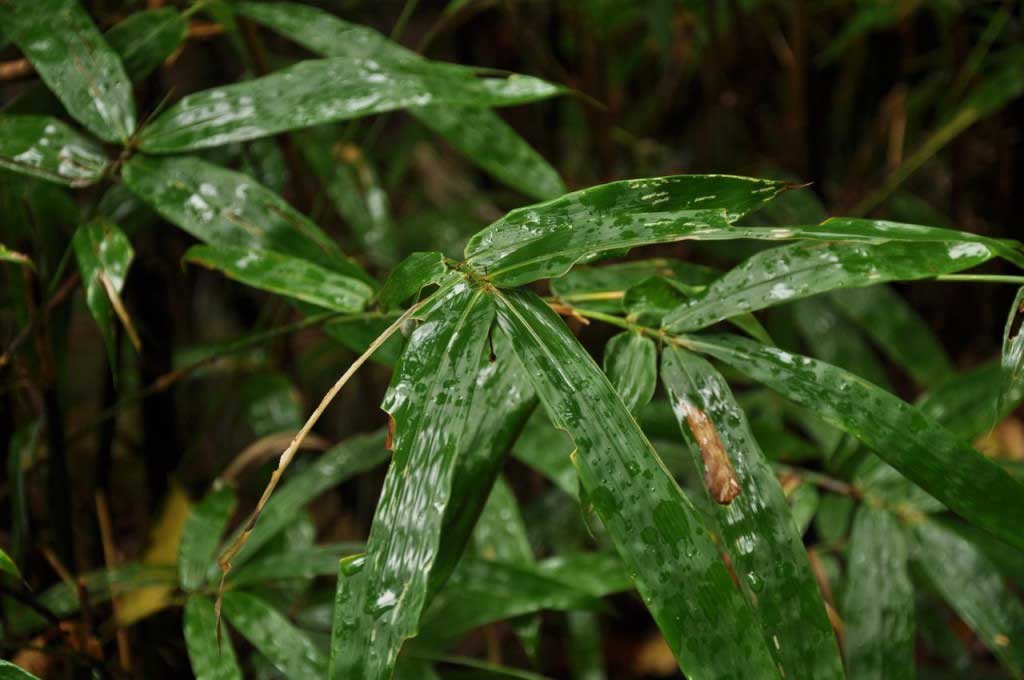
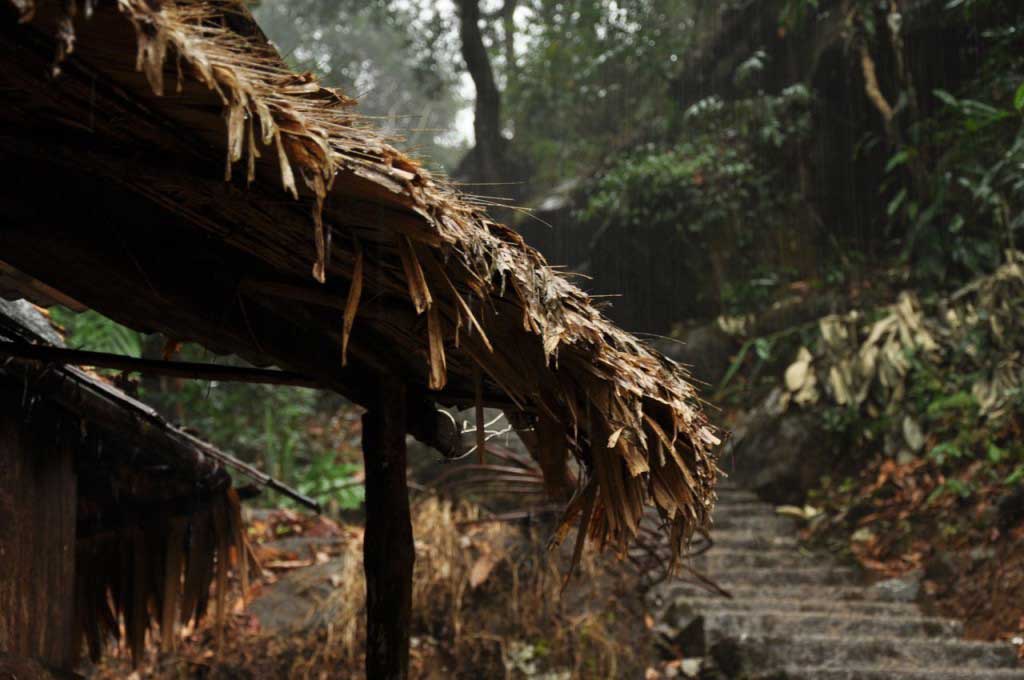
a caminho de Nongriat
on the way to Nongriat


a caminho de Nongriat
on the way to Nongriat


a caminho de Nongriat
on the way to Nongriat


Despite having lost the title of rainiest place in the world, resulting from the persistent deforestation, both to feed the timber industry or as fuel for the local population, Nongriat and the surrounding region of Mawsynram and Cherrapunjee in East Khasi Hills, continue to show a high rainfall. Even out of the monsoon (July and August) heavy rains are frequent, which during the so-called dry season only lasts a few minutes. From this semi-tropical climate, resulting in a lush and diverse vegetation: giant trees, palm trees, bamboos, ferns and ficus, whose aerial roots are indispensable to the construction of footbridges, which make so many people come to Nongriat.
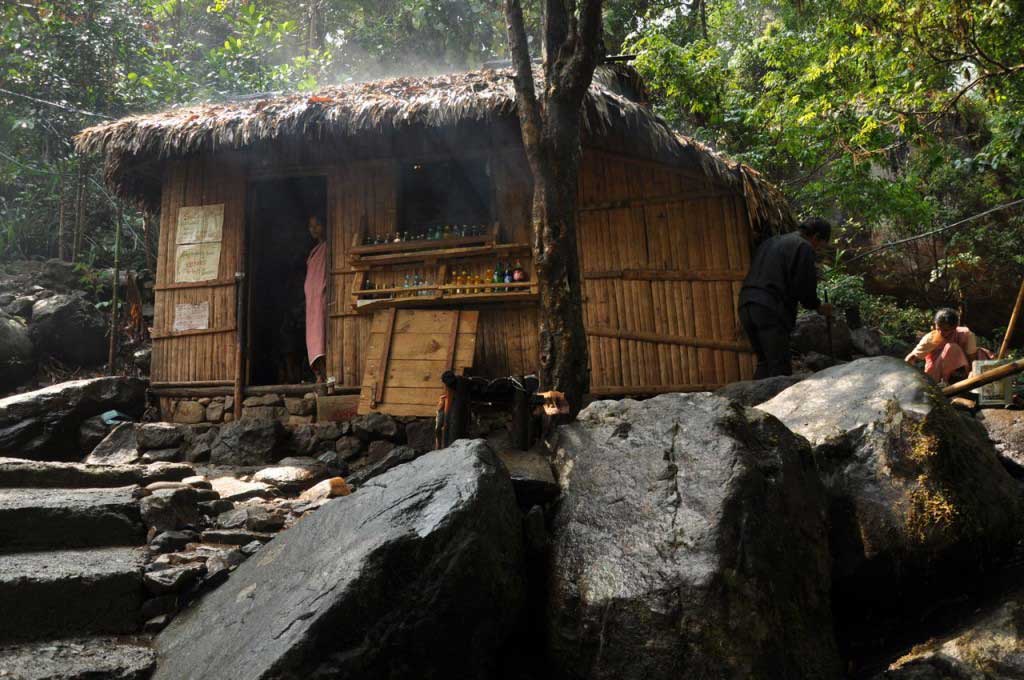
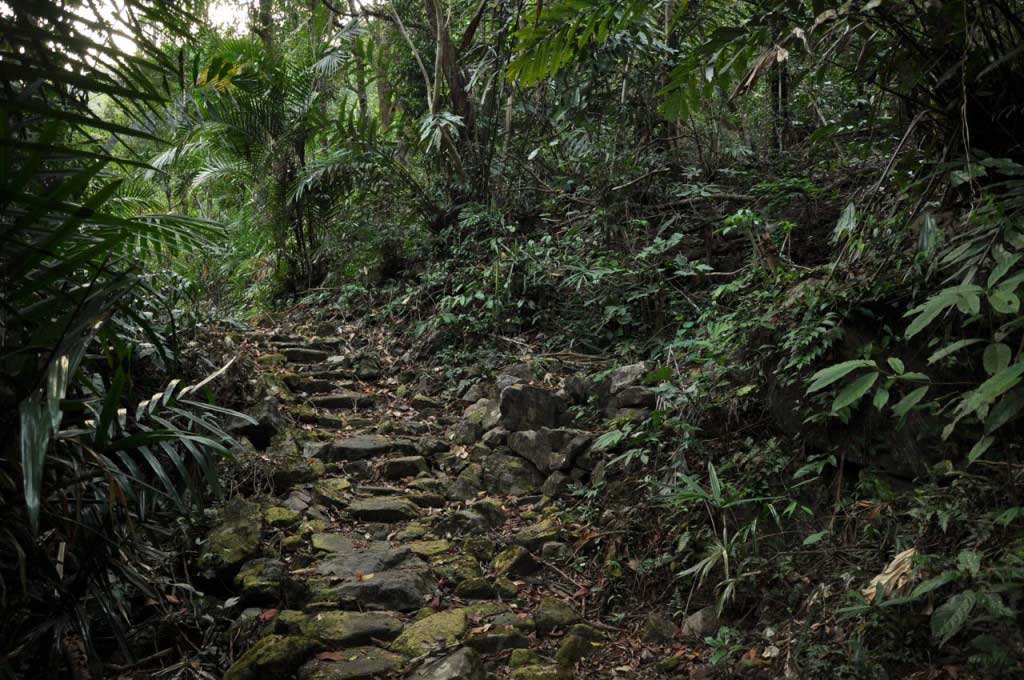
Nongriat. Megahlaya


Nongriat
Nongriat


bay leaves porter. Nongriat


Nongriat. Megahlaya


 The night arrives early in the valley, with green slopes and be lost as the blue sky surrenders to the night, leaving the village in almost total darkness, interrupted here and there by the faint glow of electricity that reaches every home. It’s this darkness that makes me realize how far I’m from the so-called civilization and how comfortable can be this simple and modest lifestyle, where the contact with nature brings a deep calm and tranquility.

Enjoying the freshness brought by night, we are naturally invited to share the calm evening with the other guests, surrounded by the dark cloak of night. But an unexpected glow, with an unusual intensity, emerges from behind the mountains, drawing ever more clearly the top of the contours of the hilltop, in the opposite of the village. It is the show of moonrise, that here with the full moon night, offers a magical view that makes all people stare, creating a space of quietness in the cross talk of the guests.


Kashi Hills. Megahlaya


Nongriat is one of the hundreds of villages that are located on the slopes of the East Kashi Hills, and due to the isolation remain the traditional way of life of Kashi tribe almost intact. A lifestyle based on collecting product directly in the forest and sold them in Sohra market, that attracts people from that region every Wednesday. The forest provides pepper, bay leaf, betel nut, cinnamon, lemon juice… pineapples grow spontaneously a little everywhere, jackfruit abounds in the tree trunks, and around the village there’s beehive whose honey is also a business that supports the local economy. Porters go up and down the slopes bringing forest products and return with food and other products necessary for the simple life of this population of 150 people, where apparently the majority are children.
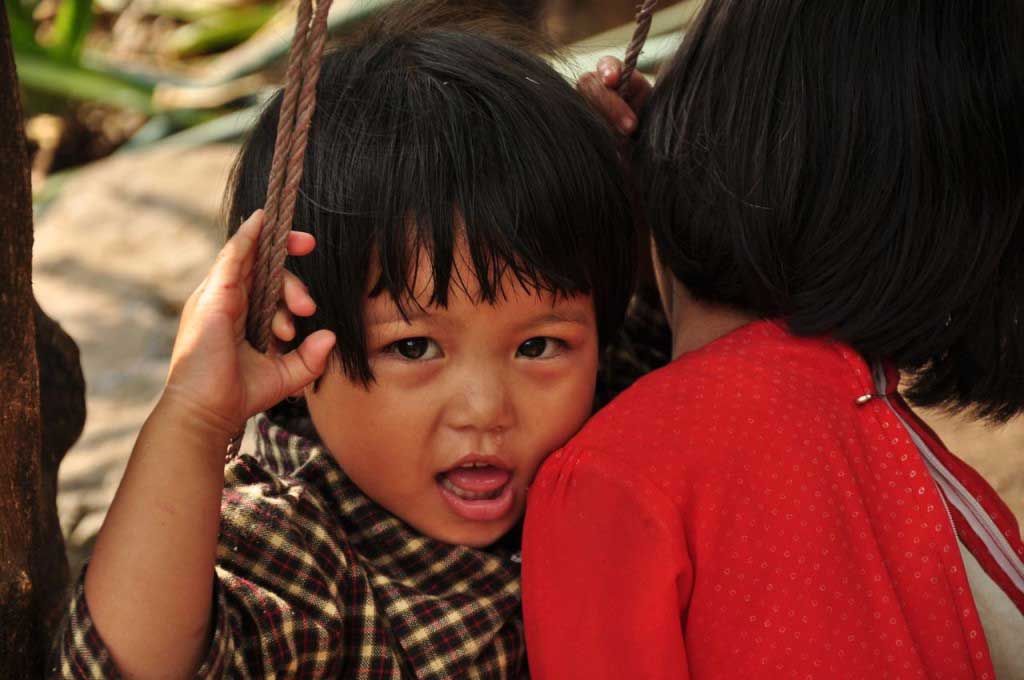
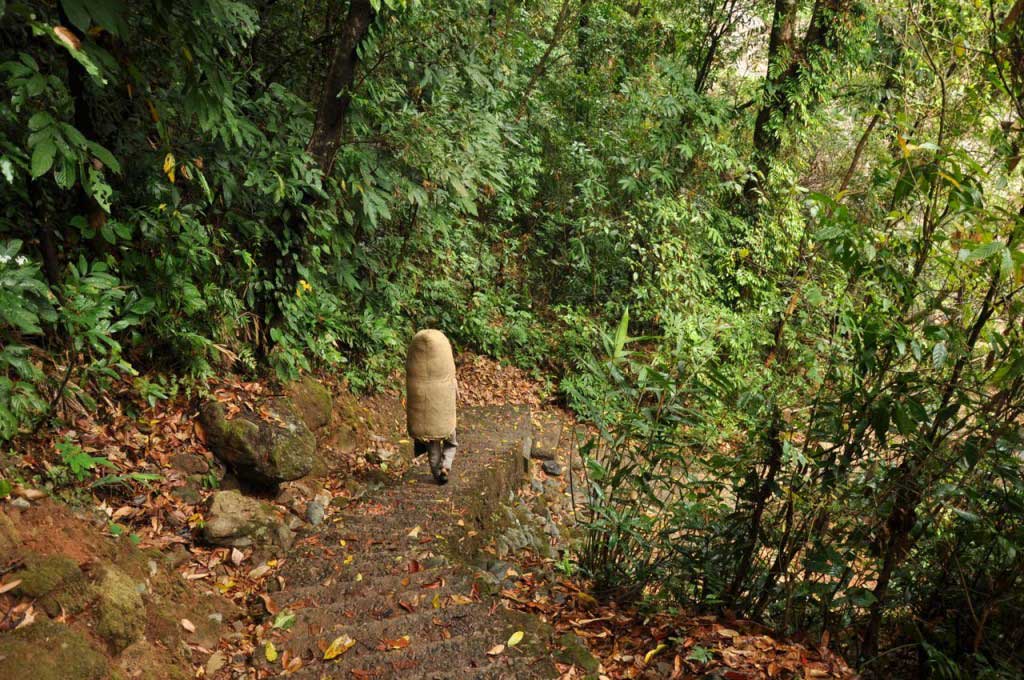
Nongriat. Megahlaya


Porter carrying bay leaves picket at the forest to be sold at Sohra weekly market


Vila de Nongriat
Nongriat village


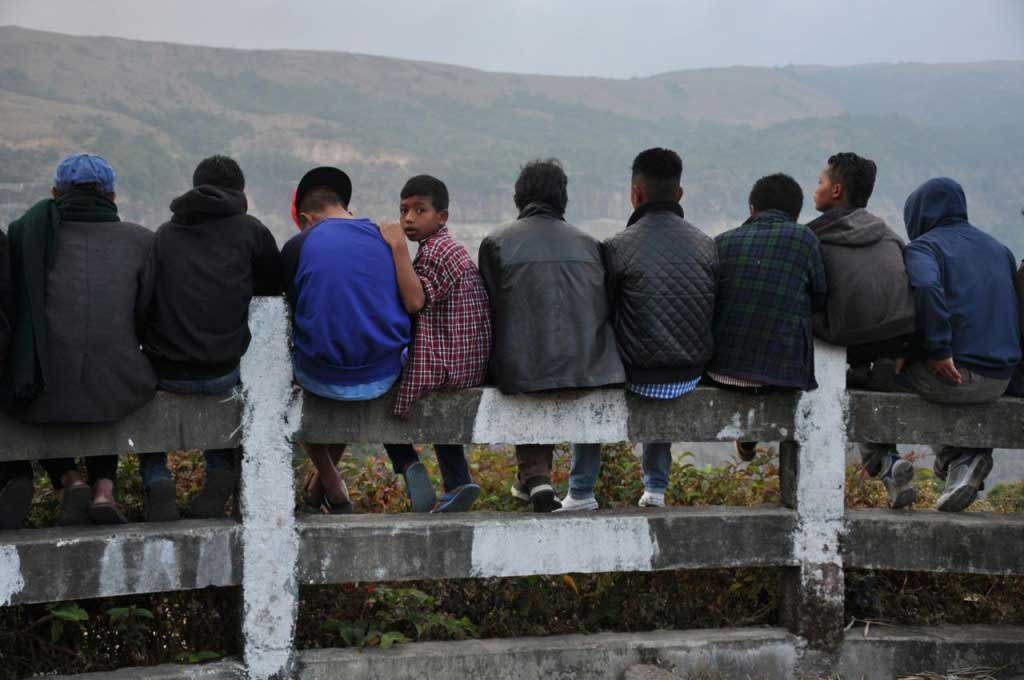
It’s the laugh of children in their restless plays that fills the air of the village, where is strange the absence of birds, monkeys and other animals. Early morning, in upright school uniform, the children forward to the village primary school, while the older ones need to climb the slope to take classes in Tyrna and Sohra. Despite the isolation and rural environment of this region, which could lead to a lack of interest in school, education is taken very seriously, with virtually all children going to school and learn English, language that is spoken by the majority of the population, even in the most remote villages as Sohra.

The Christian church is also a strong presence here in Megahlaya, that due to the remote location, as well as Nagaland, remained impervious to Hinduism, but could not resist the Christianization in the nineteenth century, during the British presence in India, imposed by missionaries that found here a fertile ground between an animist population.

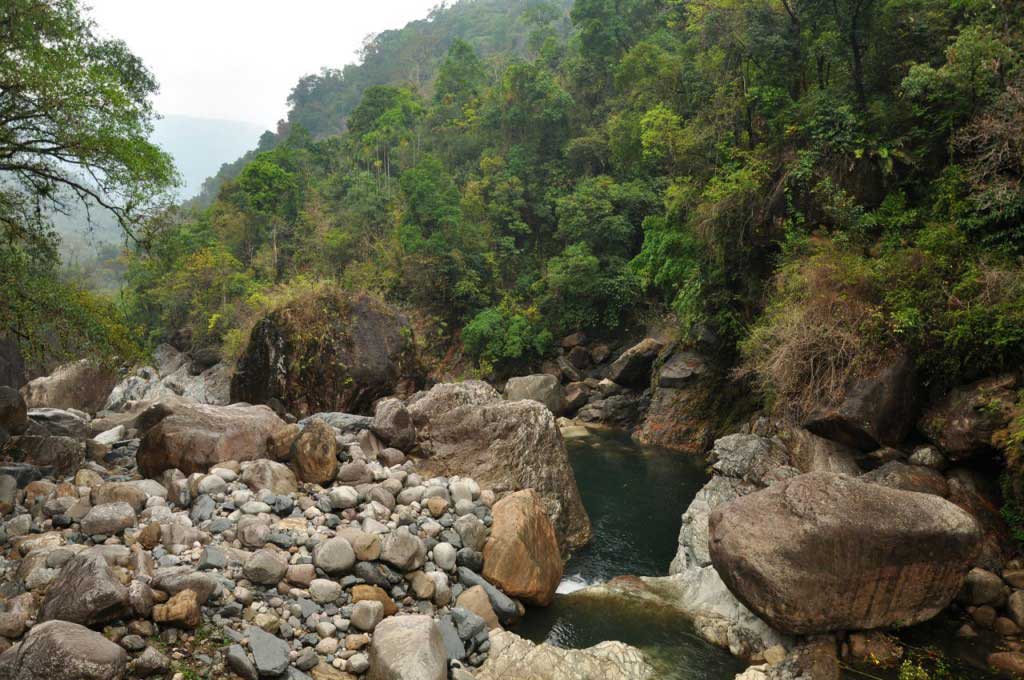
But Nongriat has more attractive than only the living root bridges, with several paths leaving from the village, some towards neighbouring village, who also hide other living bridges, others toward the waterfalls, being the Rainbow Waterfall the most popular destination. For those who want to bathe in the clear waters of this cascade, of an unusual blue, have to go down a steep path, but along the way, as well as in other parts of the rivers that surround Nongriat are several natural pools formed by granitic rocks along river bed, providing clear and calm waters for a refreshing bath, relieving the heaviness from warm and moist tropical air. During the monsoon is not allowed bathing in the river due to the force of the water.

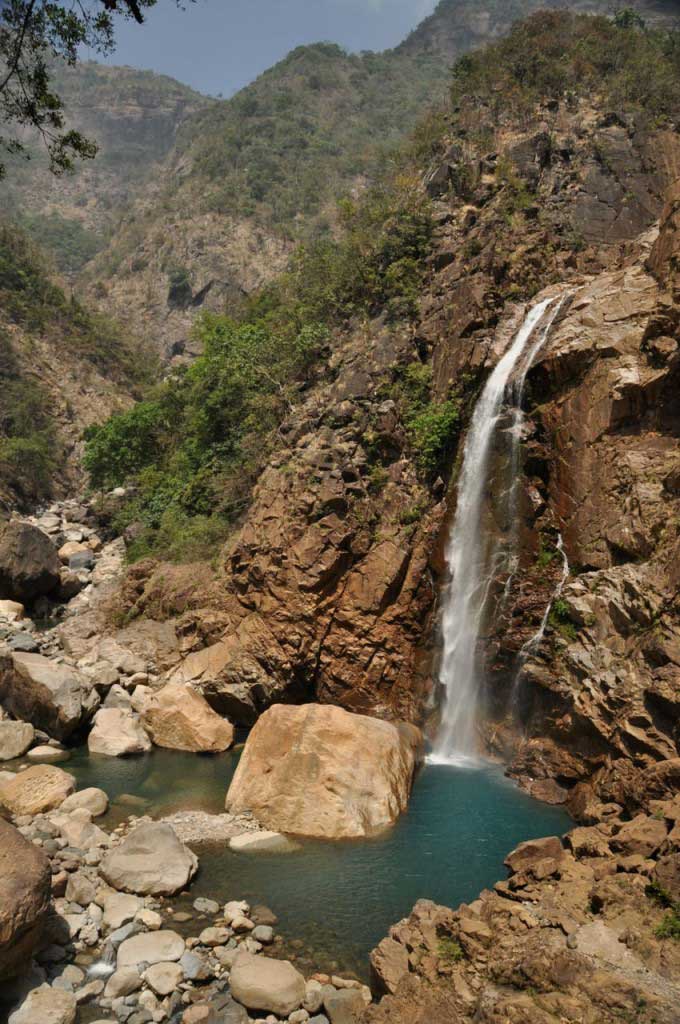
 

uma das pontes suspensas junto à aldeia de Nongriat que dá acesso às Rainbow falls
suspension bridge along the way from Nongriat to the Rainbow falls


Rainbow falls. Nongriat. Megahlaya


Nongriat. Megahlaya

Hiking to Nongriat. practical information:


  • all the way is done along a very clear path, made in cement stairs that have fairly regular steps and it’s in good condition, as the result of financial funds to support the agricultural development of the region;
  • the descent is all done in steps until you reach the valley which then forces you to go through some metal suspension bridges; there are between 2500-3000 steps until Nongriat;
  • the descent is not difficult, but the hot and humid climate, causing a constant perspiration, make the most tiring journey;
  • the climb up is intense, forcing a few stops that are always a good time to enjoy the view; enough water is required in particular for the ascending path;
  • the descent takes less than 1.5 hours, with some stops for enjoying the views and rest, but the way up can take almost the doubled;
  • recommended to take the minimum weight in the backpack, it is advisable to leave most of the luggage at the guest house in Sohra.
  • if it rains a raincoat doesn’t prove to be effective because it causes, even more, sweat; it is better to have quickly dry clothes;
  • You do not need special shoes, some comfortable sandals serve perfectly, as all the way is cemented.
  • after Nongritat, if you wish to explore surrounding villages, hiking shoes may be more comfortable, but the sandals cover the needs if they have good grip in wet conditions;
  • it is recommended to stay at least one night Nongriat, to have the chance of visit more bridges, waterfalls and natural pools, away from the busiest trail;
  • during the weekend the number of visitors significantly increases, so it is best to arrive on Sunday and leave on the next Saturday morning, avoiding the noise and confusion and the view of the trash caused by irresponsible visitors who blindly seek “double deck bridge” just for the perfect selfie, totally unaware of the environment!!!


caminho para Nongriat


Where to stay in Nongriat:

There are three homestays in Nongriat. The first is at the entrance of the village, after crossing one of the living root bridges, one in the center of Nongriat, and the last is located just after crossing the double deck bridge. The Serene Homestay is the most popular and which offers better conditions. There are double rooms and shared room, but all have shared toilet outside. Dinner is prepared for all guests and for everyone else that ordered, served in buffet style, with delicious vegetarian food made by the owner and his wife.

The Serene Homestay

Bed: 200 rupees per person, regardless of double or shared room.

Dinner: 130 rupees

The owner Ryan is a good source of information about trails, pools and other villages and bridges in the valley, as also about the way of life and local culture. His environmental awareness and good English make Ryan the spokesman of Nongriat and neighbouring villages, who come together to prevent the government to open a road to the valley. This so-called “progress” would destabilize the socio-economic way of life and would have environmental consequences resulting from the increase in visitors.

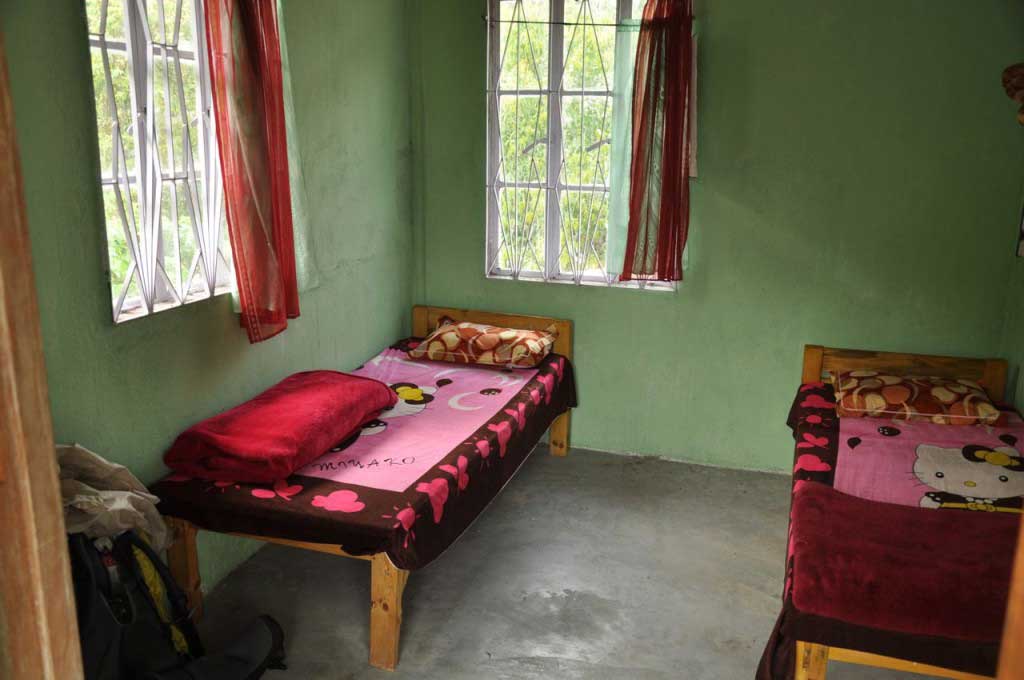
Serene Homestay, em Nongriat


Serene Homestay, em Nongriat


Where to eat in Nongritat:

Any of homestays in Nongriat serves food as well as the huts near the two roots bridge existing in Nongriat. However, it is a very simple food, mainly rice and dal… and chicken.

The best option is the Serene Homestay, with vegetarian food. The breakfast with porridge, fruit and nuts are delicious. Dinner (130 rupees) is served in buffet style, both for homestay guests as for who order in advance, and it is a great opportunity to socialize with other travelers.
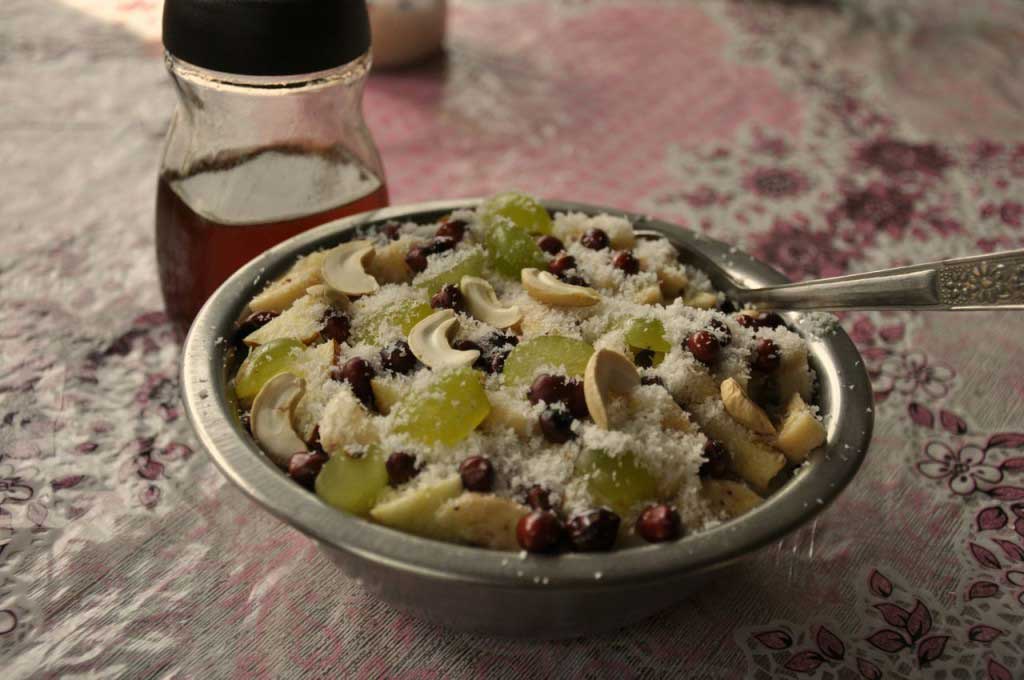
 

pequeno-almoço no Serene Homestay, em Nongriatpequeno-almoço no Serene Homestay, em Nongriat

How to go from Sohra (Cherrapunjee) to Nongriat:

In front of the By the Way Lodge, there is a bus stand where around 9 am stops a bus bound for Tyrna, the nearest town of Nongriat with road access … from now on there are only paths down the mountain slopes to the villages located along the valley.

  • Bus Sohra to Tyrna (20 rupees) passes around 9 am, the trip takes about 1 hour)
  • shared-taxi Sohra to Tyrna: 40 rupees
  • in Tyrna is necessary to walk the road to find the path that leads to Nongriat, about 30 minutes walk down the road. Just go asked for “Nongriat” the local population because everyone knows the way, even the children.
  • Coming to a small cluster of houses, where there is a shop chai made in bamboo, the trail to Nongriat is on the left side that second account has more than 2,800 steps and a few suspension bridges until reaching Nongriat.
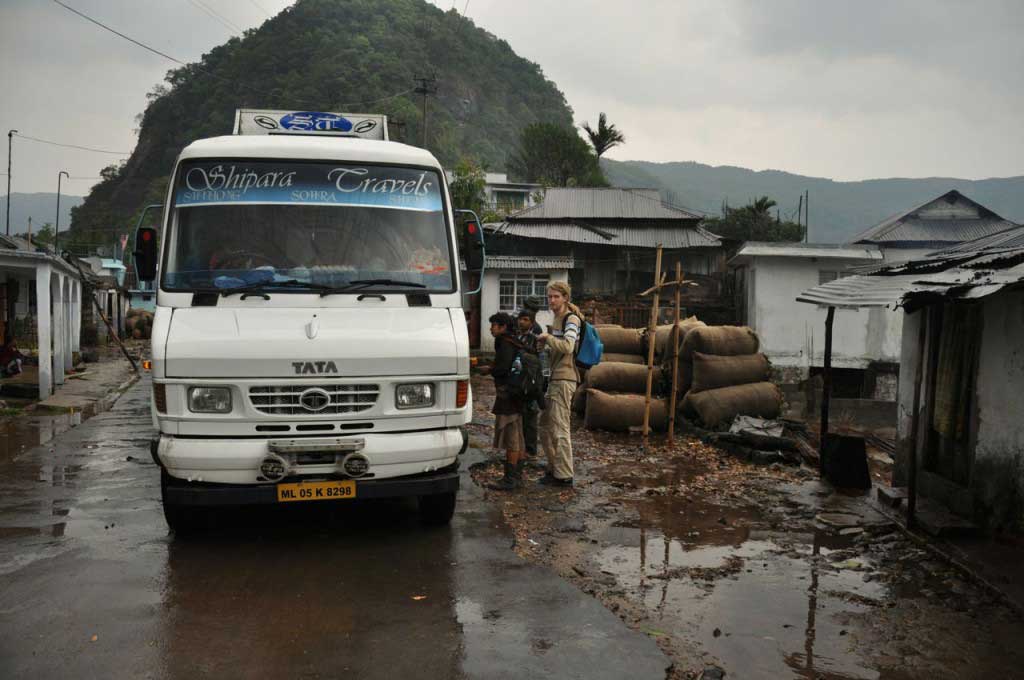
 

Bus de Sohra para Tyrna


Tyrna
Tyrna

Cherrapunjee… the wettest place on earth?!

Cherrapunjee or Sohra?!?!?!?… the first name is the “official” and is the one on the maps, the second name is by which this village, situated on a plateau near the Khasi Hills, is known by the local population, belonging to Khasi tribe.

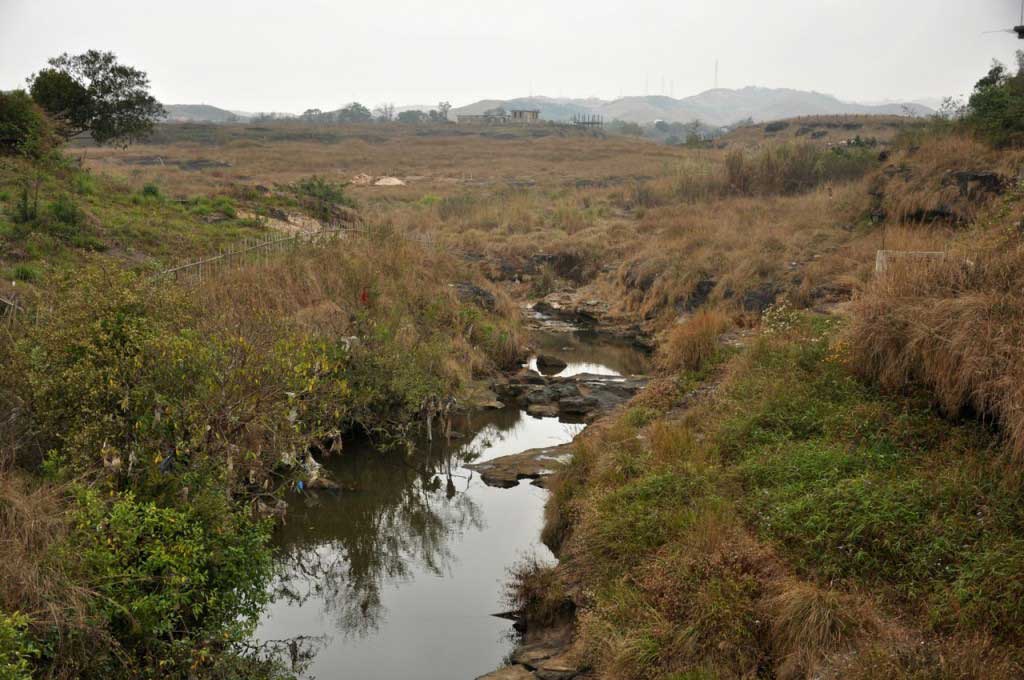
At this time of year, when the monsoon rains are a distant memory, only streams slide the bedrock of this plateau, where the green grass surrenders to dryness, changing to yellow tones.

After leaving behind the gray city of Shillong, and traveling by the winding road of rural landscapes and mountains of profuse vegetation, where we witness the bucolic but hard rural life, one comes to the desolate village of Sohra. The arrival on Sunday morning, with the sky covered with a soft blanket of gray clouds, the shops closed, streets empty of people and roads deserted of traffic, left a gloomy impression that even the next day, with the sun shining in a blue sky, could not erase.

Sohra (Cherrapunjee)
Sohra
Sohra (Cherrapunjee)

In a region heavily dominated by Christianity, in different forms, Christians, Anglicans, Protestants, Evangelicals, Presbyterians, etc…, the Sunday is entirely reserved for church. By midmorning, the deserted streets of Sohra, are gaining some colorful, with people walking towards the various churches in fancy clothes, where men dress impeccably ironed shirts, women wear lungis made from sophisticated fabrics, girls wear proudly pompous and colorful dresses and hair carefully combed, with fancy ties.

Situated on a plateau of the Khasi Hills, about 1400 meters above sea level, Sohra suffers from desertification, in an area where agriculture is difficult in a field depleted by erosion resulting from logging, which caused already visible climate change that made this place, formerly called “wettest place on earth,” has lost this title.

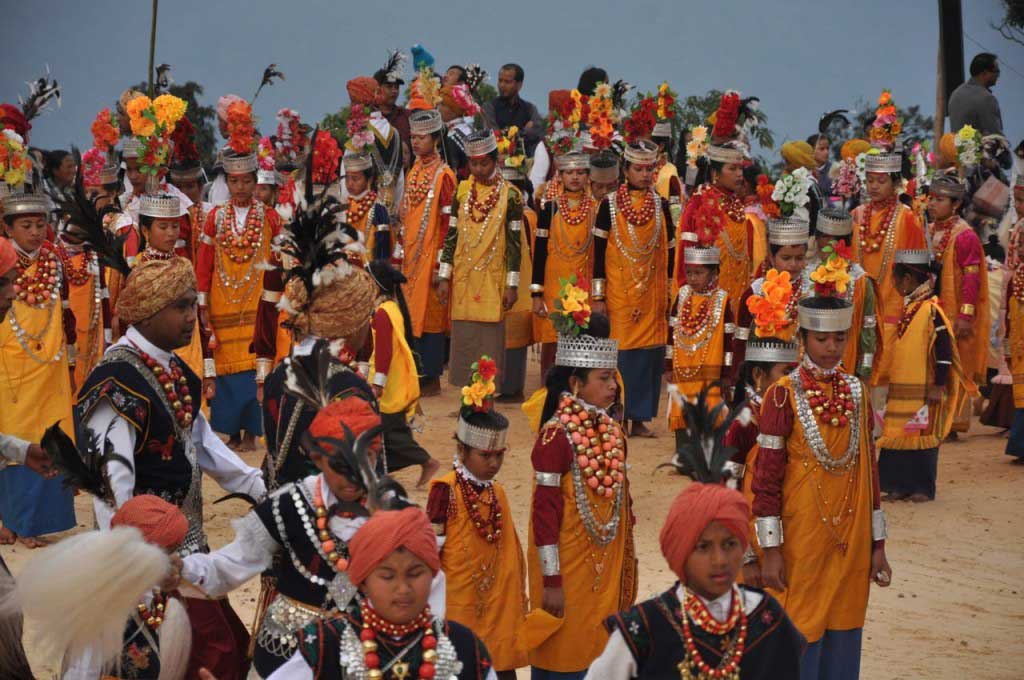
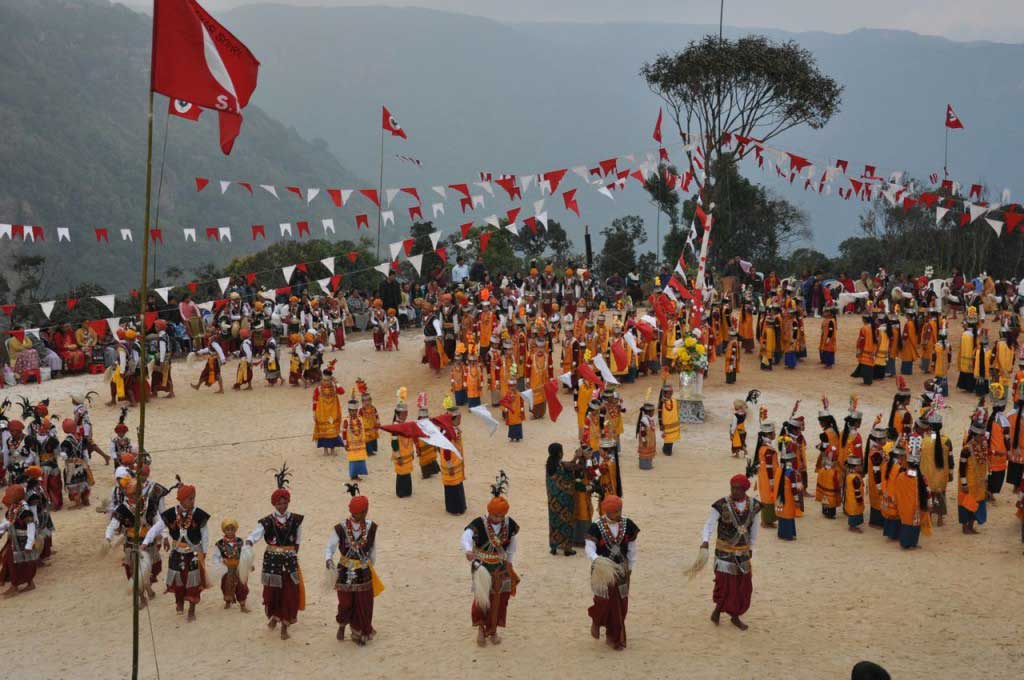
Kashi festival, Sohra (Cherrapunjee)

However Shora is obligatory passage point for those exploring the slopes of the Khasi Hills, and also serves as a technical stopover for those who want to come down to the valleys, where inhabitants keep the traditional way of life of Khasi culture. The village of Nogriat stands out by the fantastic bridges made from living tree roots: the living root bridges.

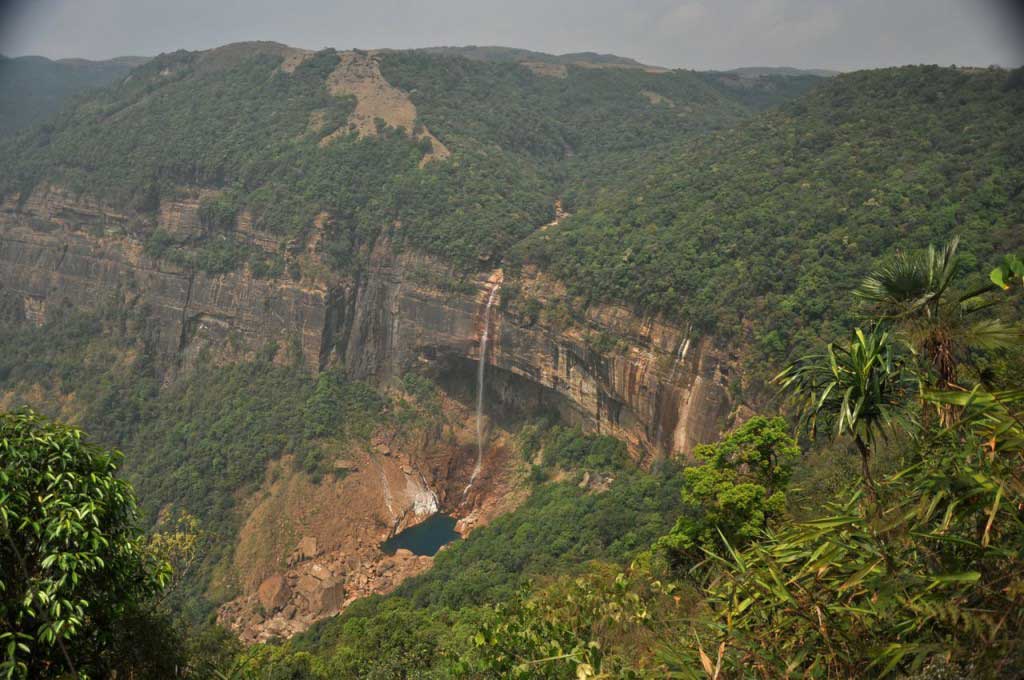
There is little to do or see in Sohra, but the day can be used for a visit to Nohkalikai Falls, 5 kilometers Sohra Market. In April, the amount of water in the rivers is not abundant, but still, a visit to the falls provides an interesting walk and a view of the chain of hills that extends to the Bangladesh border.

Nohkalikai Falls. Sohra (Cherrapunjee)

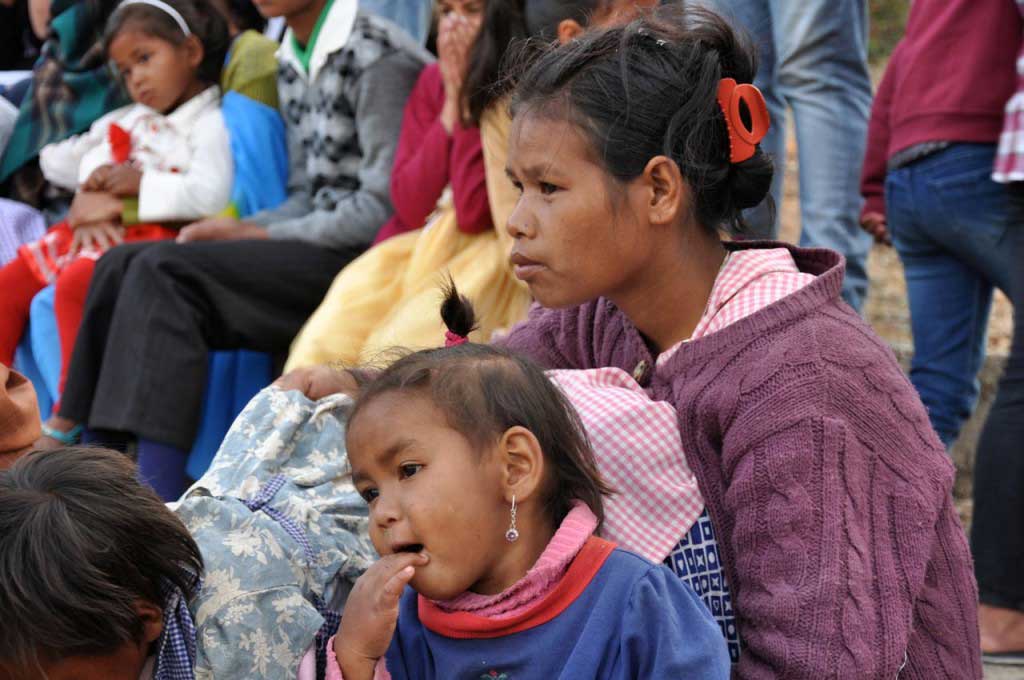
The stay of a day Sohra gave the opportunity to watch the last three days of a festival, where children and adults, wearing traditional costumes, performed dances to the sound of a minimalist and repetitive music.

Kashi festival, Sohra (Cherrapunjee)

Nohkalikai Falls:

Ticket: 10 rupees + 20 rupees for camera.

There isn’t a public transportation to the waterfalls, so the option is to get a taxi (300 rupees) or try to hitchhiking.

Tarifas. Nohkalikai Falls. Sohra (Cherrapunjee)
Entry fees to Nohkalikai Falls. Sohra (Cherrapunjee)

Onde dormir em Sohra:

There are several options in terms of accommodation in Sohra, but most are located in Lower Cherrapunjee, in an area where the houses are a bit spread, about 3 kilometers from Sohra Market, the town center.

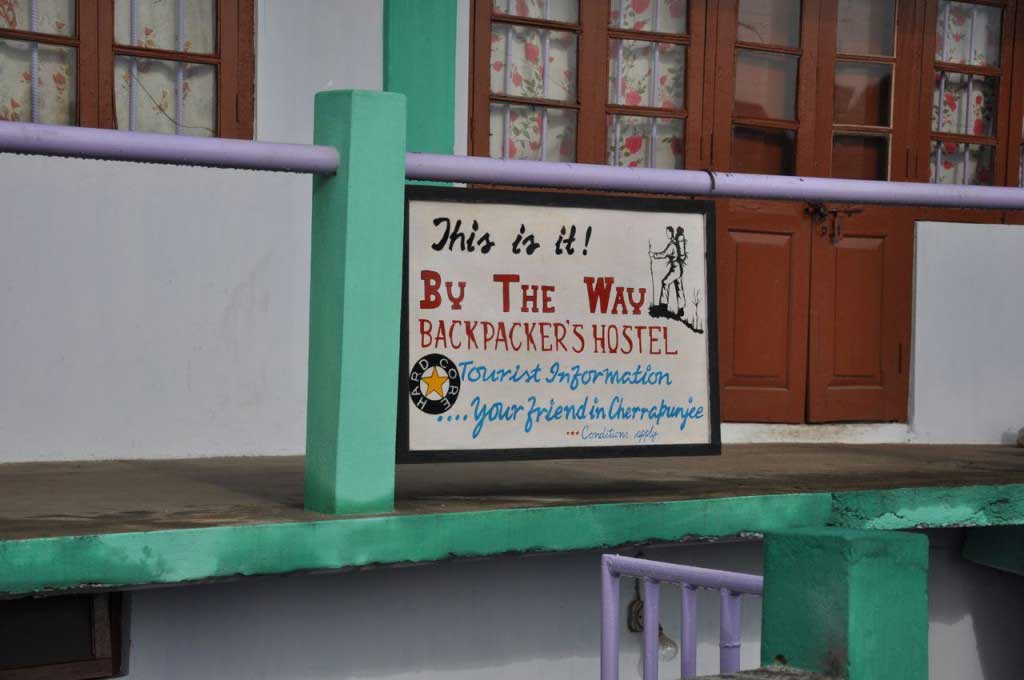
Of the various accommodations available the choice was for the unassuming By the Way Lodge, where the owner, who looks more like a Rastafarian, welcomes us with kindness, providing all the information.

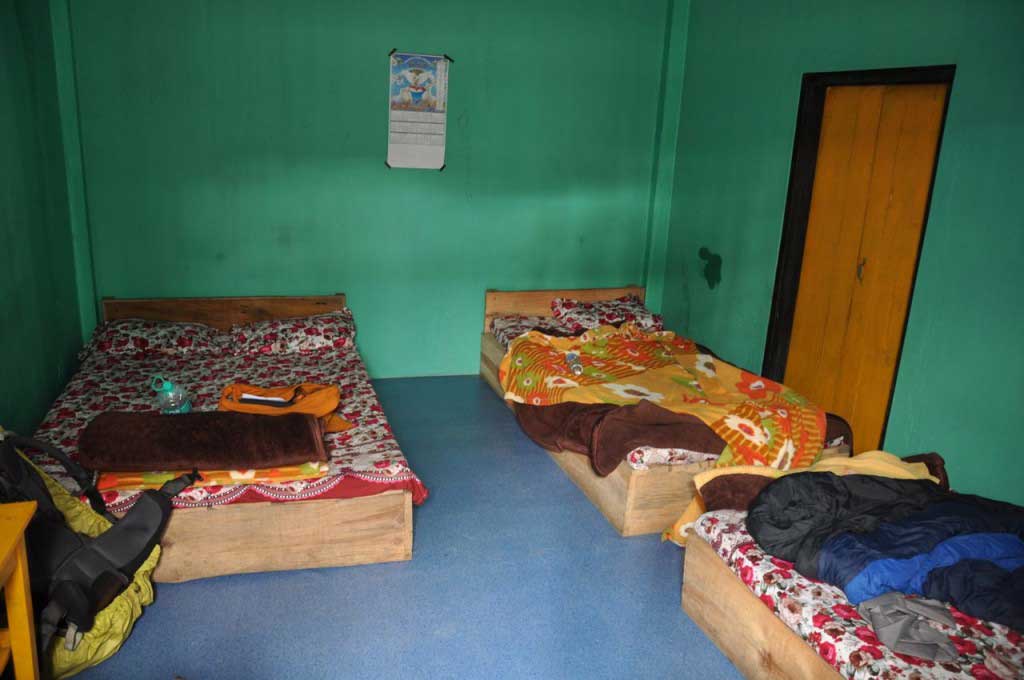
There are two dorms and a few rooms. The toilet and shower (with hot water) are shared and located outside the room, as the local custom, but are modern and spotlessly clean. There’s a good atmosphere and is the ideal place to meet other backpackers and rest, before and after, the demanding way to Nongriat. You can leave part of the luggage at the By the Way Lodge.

By the Way Lodge (Dukan Road, Lower Cherrapunjee). Nearby Indian Petrol Pump station. Less than 500 meters from the last sumo stand.

Dorm: 250 rupees

The By the way hostel is located close to India Petrol pump station. Less than 500 meters from the last stop of sumo in Lower Cherrapunjee.

By the Way Backpackers Hostel. Sohra (Cherrapunjee)

Lower Cherrapunjee does not have much to offer than some restaurants and accommodations, but is a large area of natural landscape, that right after the monsoon is totally green and crossed by streams, but in March starts to get dry. But the By the Way Lodge and the friendliness of its owner are more than enough reasons to choose to stay in Lower Cherrapunjee before going to Nongriat.
Where to eat in Sohra (Cherrapunjee):

Meghalaya cuisine, not being friendly to vegetarians, is possible to find the traditional dishes of Indian cuisine, as also some Asian vegetarian option the Lower Cherrapunjee restaurants.

7 Trep Restaurant: Good Indian food. A curry with a rich variety of vegetables served in a generous portion and served with a big bowl of rice only costs 70 rupees. The noodles and momos are the favorites of the local population. The food is cooked at the moment, which may take a while. The staff is very friendly.

Sunday everything is closed in Sohra Market, but some restaurants are open in Lower Cherrapunjee.

But for those who want to get an early start, there are few options for breakfast. There a few small shops, a mixture of coffee and groceries, serving milk-tea and meals, based mainly on rice and meat, from 8.30 in the morning.

um restaurante local em Sohra (Cherrapunjee)
local restaurant, Sohra (Cherrapunjee)
pequeno-almoço num restaurante local em Sohra (Cherrapunjee)
rice and chickpeas as a breakfast at a local restaurant, Sohra (Cherrapunjee)

Transports in Sohra (Cherrapunjee):

To cover the three kilometers separating Lower Cherrapunjee from Sohra Market there are shared-taxis (locally called “tempo”) picking up and dropping passengers, along the road, without any specific place. Usually you have to wait until they are nearly full to do the trip. The tempo are small cars (Maruti Suzuki) painted in black and yellow.

  • Shared taxis Lower Cherrapunjee to Sohra Market: 10 INR
paragem de "sumos" em Lower Cherrapunjee
“sumo” stand at Lower Cherrapunjee

How to go from Sohra (Cherrapunjee) to Nongriat:

In front of the By the Way Lodge, there is a bus stand where the 9 am passes a bus bound for Tyrna, the nearest town of Nongriat with road access… from there are only paths down the mountain to the villages located along the valley.

  • Bus Sohra to Tyrna 20 (INR passes around 9 am, the trip takes close to 1 hour)
  • shared-taxi Sohra to Tyrna: 40 INR
  • in Tyrna is necessary to walk the road to find the path that leads to Nongriat, about 30 minutes walk down the road. Just asked for “Nongriat” to the local population because everyone knows to show the way, even the children.
  • arriving to a small group of houses where there is a bamboo chai-shop, the trail to Nongriat, that has more than 2,800 steps and a few suspension bridges until reaching the village.

ATM in Sohra:

There is no ATM in Lower Cherrapunjee, next to the petrol station, on the Dukan Road, as well as in Sohra Market.

There is no ATM in Tyrna or Nongriat.
How to go from Sohra (Cherrapunjee) to Shilllong:

Both in Lower Cherrapunjee as in Sohra Market, sumos (shared jeeps with yellow color) link daily (except Sundays) Sohra to Shillong. They work from dawn until the end of the day. The trip starts when the tempo is full.

  • sumo from Sohra to Shillong: 70 INR (1.5 hours)

elevation: 1484 m

population: 14.816

Shillong… arriving to the “abode of the clouds”

Being Shillong the capital of the Indian state of Meghalaya, which literally means “abode of the clouds” due to high rainfall, I was received by a grey clouds that in a few minutes became a storm, with the dark sky to light up with the sound of thundering, lowering the temperature and reminding us how unpredictable is the climate in mountain areas. After the storm was time to walk through the city center looking for budget accommodation. A task that has proved exasperating, similar to what had happened in Guwahati: many hotels don’t allow foreigners, it was weekend and Shillong attract people looking for fresh air, and some event that brought many visitors from the rest of India.

After the round the various hotels where the answer was almost always “full”, even when apparently the place was desert, finally comes up to a site – Marwari Basa Hotel – modest and reasonably priced, yet little warm considering the weather in Shillong. Followed another round, always trough the steep streets of the city, which proved fruitless, due to inflated prices and by the usual response of “full” in places that don’t have a license to host foreigners. Accepting the defeat, with fatigue making the legs heavy but with high morale, it was time to return Marwari Basa Hotel, that despite all show to be the best option… but to my astonishment, arriving at reception I’m received with discouraging “full”… how is it possible?!?!? 15 minutes before there more than ten rooms empty?!?!? Faced with the situation that it was obvious that there were no guests there, the owner has agreed to provide me a room, but at twice the price !!! Faced with such an unpleasant and idiot attitude, I turn back and restart my search. But this time, the reasonable knowledge acquired from the city center, allowed me to find a “cubicle” where to sleep, too expensive but comfortable and using the manager words “more or less clean”!

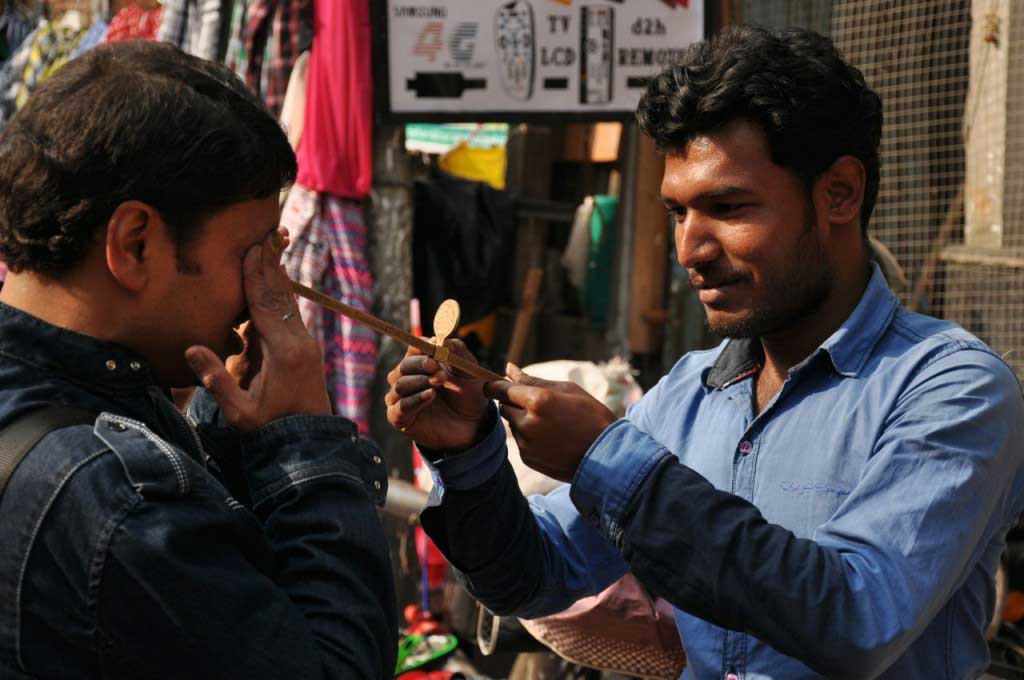
Medidnfo dioptrias no Police Bazaar. Shillong
need glasses?!?!?…. at Police Bazaar. Shillong

Shillong, the state capital of Meghalaya, due to the fresh and mild climate of the mountains attracts the inhabitants of the neighboring state of Assam, seeking relief from the scorching heat of the plains, in a city that is less than 3 hours from Guwahati.

Here the urban atmosphere wins an exotic touch by the presence of the inhabitants from the local tribes, the Kashi and the Garo, whose Mongols faces with fair skin, small and with a different outfit, easily stand out from the rest of the Indian population.

From the supposed atmosphere of British colonial times, that choose this place because of the fresh climate, little left in this concrete city, perched on a hilltop, and spread by the surrounding slopes. Here and there appear houses whose architecture reveals links to Europe, by the large windows, porches and gardens, but where the typical roofs, quite inclined and with complex configuration, were being replaced by the rusty color of metal rooftops.

The city center, locally designated Police Bazaar, surrounded by gray concrete buildings and a nearby roundabout, that link several main roads permanently busy, with heavy traffic, noisy and polluted, particularly the GS Road. Surprisingly the commercial area of the city has become modern and cosmopolitan with many shops selling the most popular international brands of clothing, which is reflected in the way of dressing of the younger population, which fully adopted the Western style.

Police Street. Shillong

Apart from this cosmopolitan area, located near the Police Bazaar, Shillong has other shopping areas, less sophisticated but more stimulating.

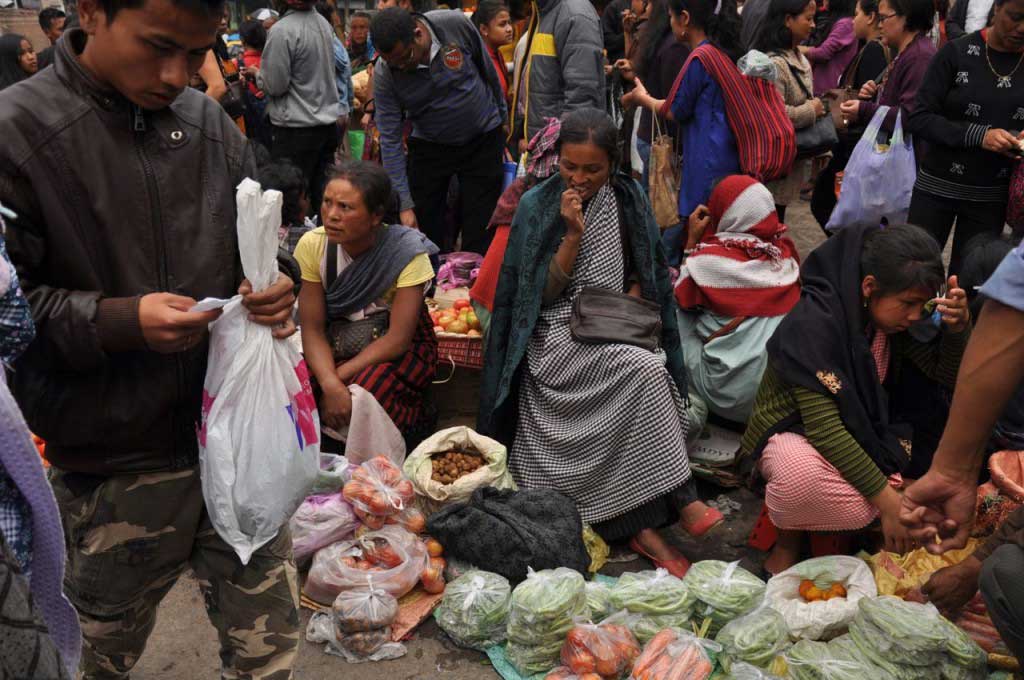
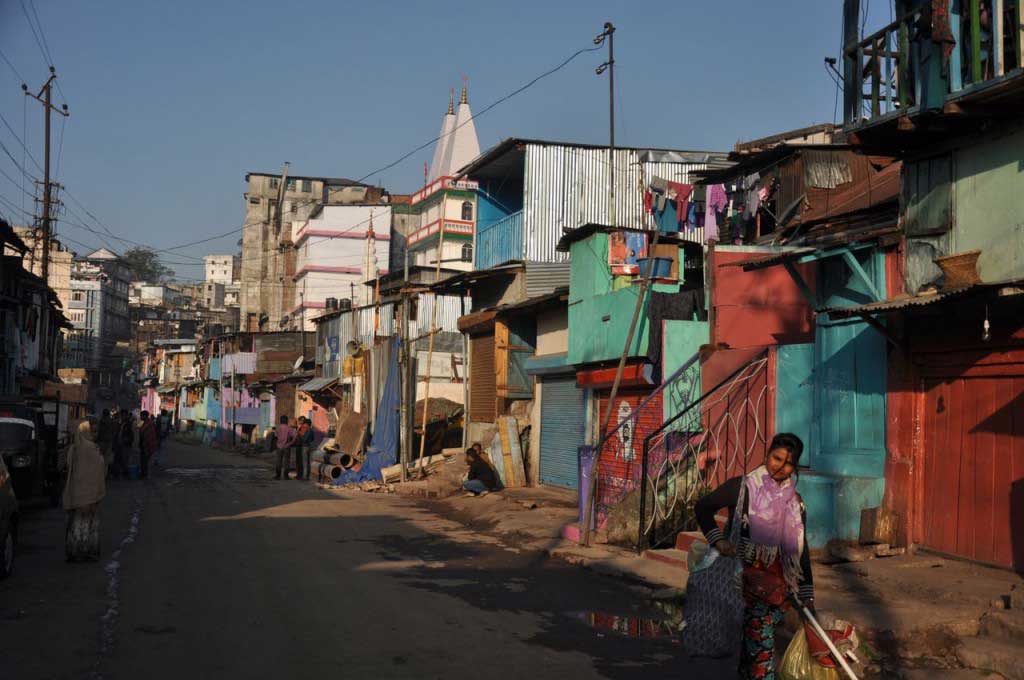
Wandering by gray and sad streets of decaying buildings along dirty and muddy streets we arrive at the Bara Bazaar (also called Bar bazaar). A market where is sold a bit of everything, where small shops align along narrow and winding streets, and whose merchandise extends beyond the limits of the shop, making even more difficult to walk along the crowded streets.

Bara Bazaar. Shillong

A vibrant and lively market, the Bara Bazaar is a good first contact with the population of the Kashi tribe, which dominates the hills of this area of Meghalaya state, and gather here to sell and purchase products, ranging from traditional artifacts to modern clothes, from plastic toys to farming tools, from homemade cakes to wild mushrooms!

Women from Kashi tribe, in addition to facial features, are easily identified by the outfit using a cloth, usually of chess pattern, which is fastened in the shoulder, covering the western style clothes that almost everybody dress.

Wandering through the market streets, the attention is diverted to the variety and originality of the food available so that from time to time one foot slips into a muddy hollow of the pavement. Here and there resemble curious and smiling eyes, in round faces that don’t allow photos.

Shillong
Shillong
Shillong
Shillong

Where to stay in Shillong:

There are lots of choices for accommodation, but the prices are too high for the conditions offered, with hotels more focused in Indian family style tourism and in businessmen, and not so much for backpackers. There are no proper guesthouses, but just hotels. Shillong is a popular weekend destination for Indian tourists from West Bengal state.

Near the Police Bazaar, along the GS Road, and on the back alleys Police Street, there are several options:

Marwari Basa Hotel: single 300 INR, double 600 INr, shared toilet. The rooms are very basic but with good light, all with shared bathroom. The building is old, entrenched between concrete buildings but has some charm. It lies between the GS Road (which is well labeled) and the Police Street, a narrow street that connects the two main arteries of the city, away from the GS Road noise. The owner’s son, apparently the boss, is very unfriendly.

Hotel Lamlyn (GS Road) single with toilet: 600 INR. Staff friendly but with a noisy environment. Some rooms have no window, as is the case of the individual room. Reasonably clean, with a modern en-suite and hot shower.

Hotel Lamlyn... "more or less clean sheets" using the word of the owner. Shillong
Hotel Lamlyn… “more or less clean sheets” using the word of the owner. Shillong


Apparently, there is a Youth Hostel in Shillong but couldn’t find or get any information.

Onde comer em Shillong:

In Shillong stand the Indian food restaurants, from the most modest to the most sophisticated.

But the choice was for the momos, a obvious Asian influence, in a small and humble restaurant in the pedestrian streets that linking GS Road and the Police Street (AC Lane). Only momos are served there, vegetarians and with meat, and a soup, a thick chicken broth, with a meal costing only 40 rupees. The restaurant is open all day, but closes early, shortly after the setting of the sun, which here is ore or less, 5 pm.

momos restaurant. Shillong
Vegetarian momos at Shillong

In Bara Bazaar there are some restaurants, and along the streets is possible to find vendors, some with the delicious coconut cakes, steamed, that are a specialty from the neighbouring village of Sohra.

Transport in Shillong:

There are little to see in Shillong, and the center of the city can be done on foot, but all the streets are steep. The Police Bazaar Street is the most enjoyable for walking because it’s closed to traffic.

How to go from Shillong to Sohra (Cherrapunjee):

Few buses run on Saturdays in Meghalaya. No public or private buses to Sohra (Cherrapunjee) on Sundays; the only alternative is the sumo (shared taxis) or a taxi. On Sunday, there is no public transport in Meghalaya.

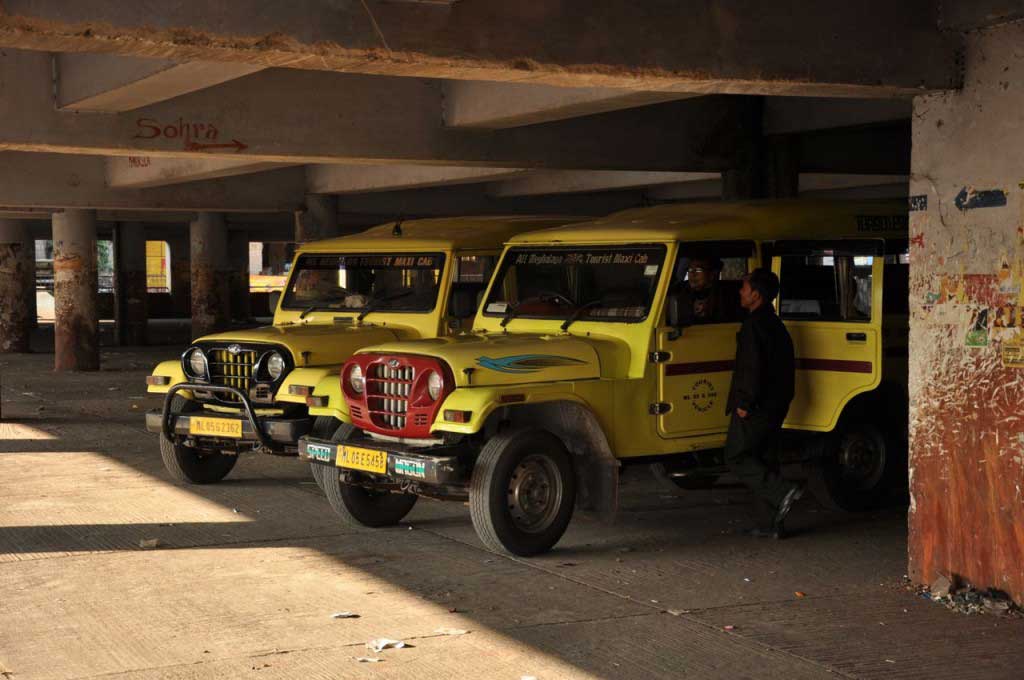
Anyway, sumos or buses depart from the same place, a bus terminal located near the Bara Bazaar. This terminal, a seemingly unfinished concrete building, are on the first-floor sumos to Sohra, that runs all day, since 6 a.m. and depart when they are full (11 passengers).

  • sumo (shared taxi) from Shillong to Sohra: 70 INR

The journey takes 1.5 hours. The view is beautiful and should seat on the left side of the vehicle, near the window. The sumo makes the first stop in Sohra Market, and the second stop in Lower Cherrapunjee, where is most of the lodgings and restaurants, and is what you might call tourist area.

"sumo" terminal. Bara Bazaar. Shillong
“sumo” terminal. Bara Bazaar. Shillong
"sumo" para Sohra. Bara Bazaar. Shillong
“sumo” para Sohra. Bara Bazaar. Shillong

How to go from Shillong to Guwahati:

Buses connecting Shillong to Guwahati depart from Bus Station that is located on GS Road, less than 5 minutes from the main roundabout. Directly opposite the station is an official Tourist Office, but little has interests because the maps provided are vague and has little information. But this Tourist Office can be useful for those who want to rent a vehicle with driver.

  • Bus ticket from Shillong to Guwahati: 135 rupees (4h)

Alternatively, you can make this trip in less time using a sumo (shared taxi). The sumo runs from Guwahati Keating Road, one of the roads out of the main roundabout.

  • sumo Shillong to Guwahati: 170 rupees (the journey takes at least about 2.45pm, depending on traffic)


elevation: 1525 m

population: 132.867

Guwahati… the gateway to Northeast States

Guwahati, not being the capital of the state of Assam, is the city that works as a gateway to the so-called Northeastern States, mainly due to its geographical position in a lowland area, between Bhutan and the mountains of the state of Meghalaya.

Under the generic name of Northeastern States, gathering seven states also called Seven Sisters, located in the extreme north-east of India, delimited by Bhutan, Bangladesh, Burma (Myanmar) and Tibet (China). These states along with Sikkim are “linked” to the rest of the India by a narrow strip of territory, part of the state of West Bengal. This strip of Indian territory between Nepal and Bangladesh is called “chicken’s neck,” that at some point only 23 km wide.

These Seven Sisters are Arunachal Pradesh, Assam, Meghalaya, Tripura, Mizoram, Manipur and Nagaland. Until recently these states had some restrictions being necessary permits to visit, but currently, only the state of Arunachal Pradesh requires permits, both foreign and Indian nationality, given the sensitive border with China.

Guwahati
Guwahati

After a 30 hours train trip, the usual bustle of Indian big cities waits for us, with noise, traffic and the hurried movements of people. But Guwahati has the advantage of having the train station right in the center of the city, which avoids the usual stress of negotiating rates with tuk-tuks drivers.

And being the gateway to the northeastern states, it is noted upon arrival, a big ethnic diversity.

Leaving the train station we are faced with the Paltan Bazaar located on the left side of the busy national highway running through the town, the GS Road (Guwahati-Shillong Road). In Paltan Bazaar, within five minutes from the station and the bus terminal, there’re plenty of accommodations, dominating the hotels with a big range of prices and quality. But this is here where the difficulties begin. Many of the hotels don’t have the special license need to accept foreigners, given the small number of non-Indians visitors that come so far. Therefore, the most modest lodgings don’t accept foreigners, arguing that they are full when are obvious the room keys hanging patiently at the reception.

This way we are pushed to more expensive hotels, some taking advantage of the few alternatives, charging high prices for a room in miserable conditions… 600 rupees that don’t guarantee clean sheets!

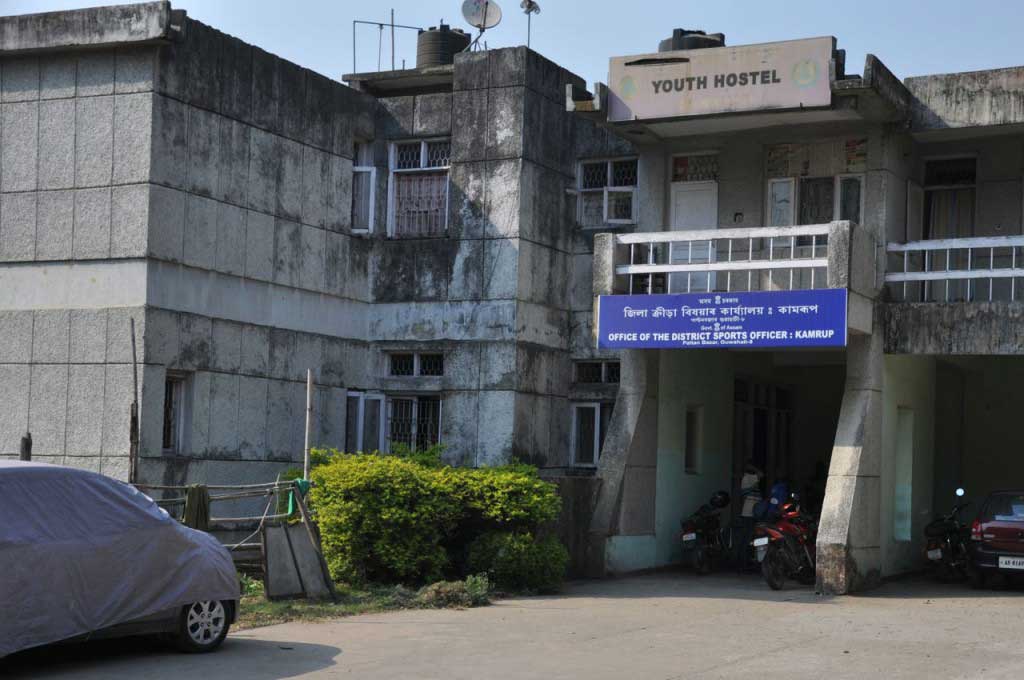
In this search for a place to sleep came on my way the Youth Hostel, an institution that I was unaware of existing in India. In a building that has seen better days, reigns an atmosphere of abandonment and emptiness, where the room show an urgent need of repairs and the toilet is decrepit, but cheap price, the clean sheets and the friendly staff made this place look like a warming shelter to spend a night, before traveling to the mountains of Meghalaya.

Fancy Bazzar
Fancy Bazaar


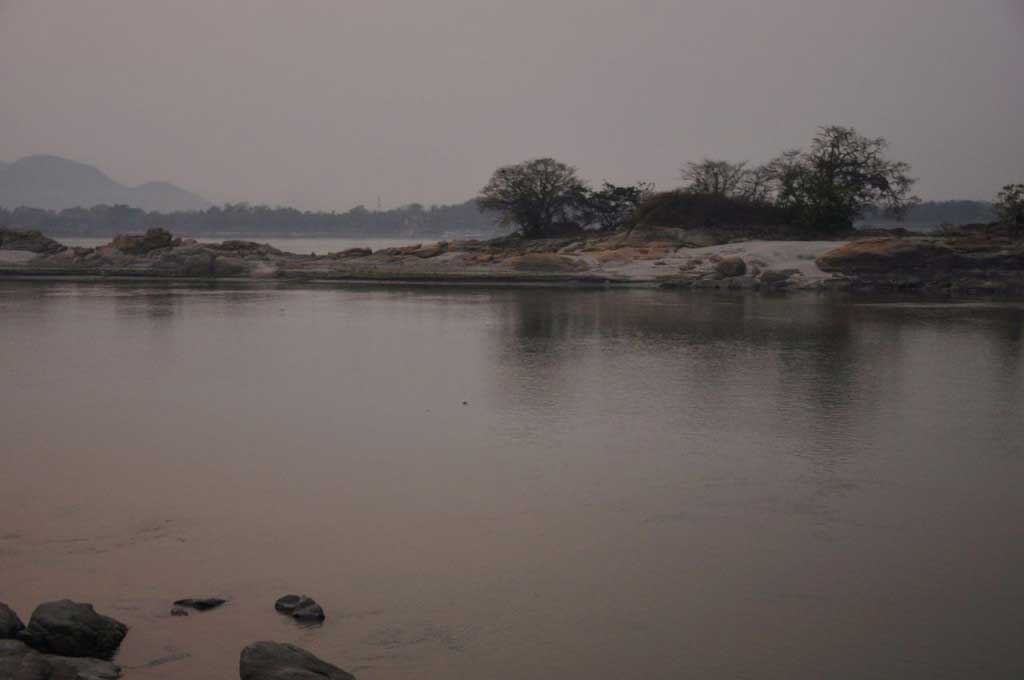
The last afternoon spent in the Guwahati there wasn’t the opportunity to get away from restless city center, away from the confusing Paltan Bazaar and Fancy Bazaar, which despite the names are quite similar. But there was time to walk to the banks of Brahmaputra, which the brownish waters offers a serene landscape that contrasts with the movement of the city streets. The Brahmaputra, one of the largest Asian rivers, runs through the state of Assam, heading south until the Bay of Bengal, crossing the plains of Bangladesh.

Brahmaputra
Brahmaputra

In Hindu religion, it is common the representation of the yoni with the lingam, which corresponds to the female and male elements of cosmic creation, according to the Shiva followers. But in India, there are few temples dedicated exclusively to the female side of this energy: Shakti (also referred as Devi), the goddess representing the energy of creation and change, also associated with fertility and creativity.

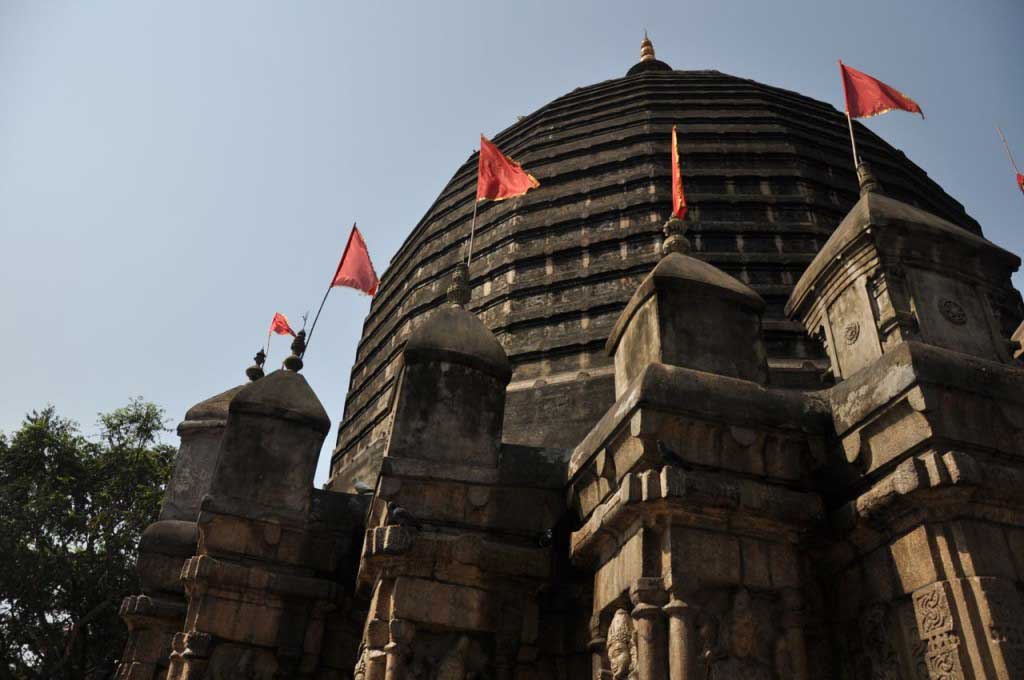
Guwahati is one of the most important temples dedicated to mother goddess: the Kamakhya Temple, where during Ambubachi Mela animals are sacrificed, according to Tantric tradition, with the blood of goats symbolizing the annual period of goddess Kamakhya.

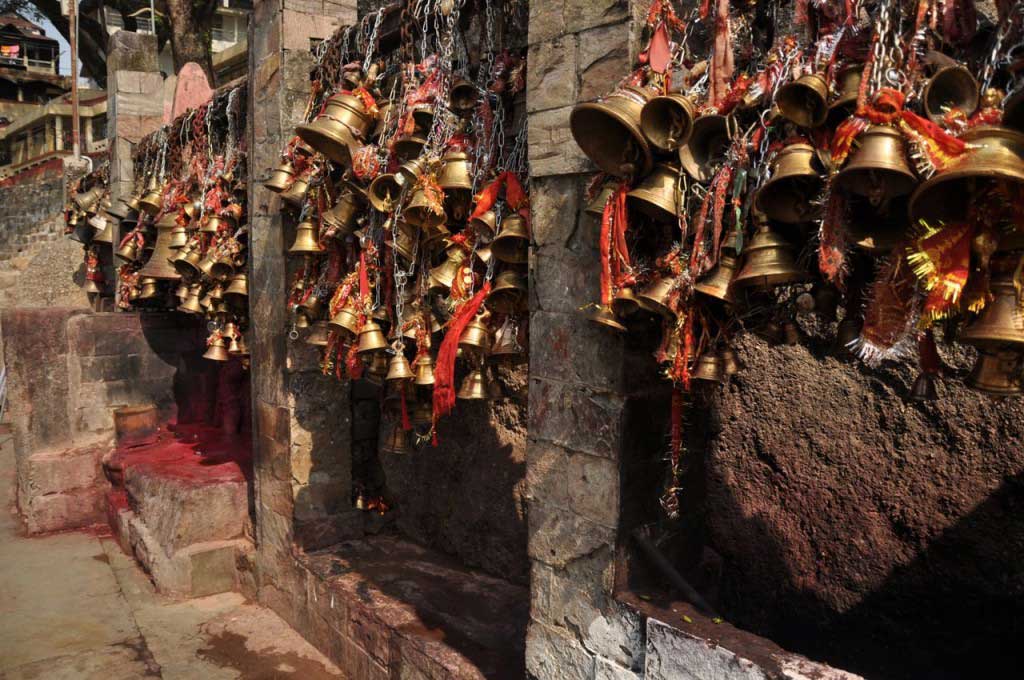
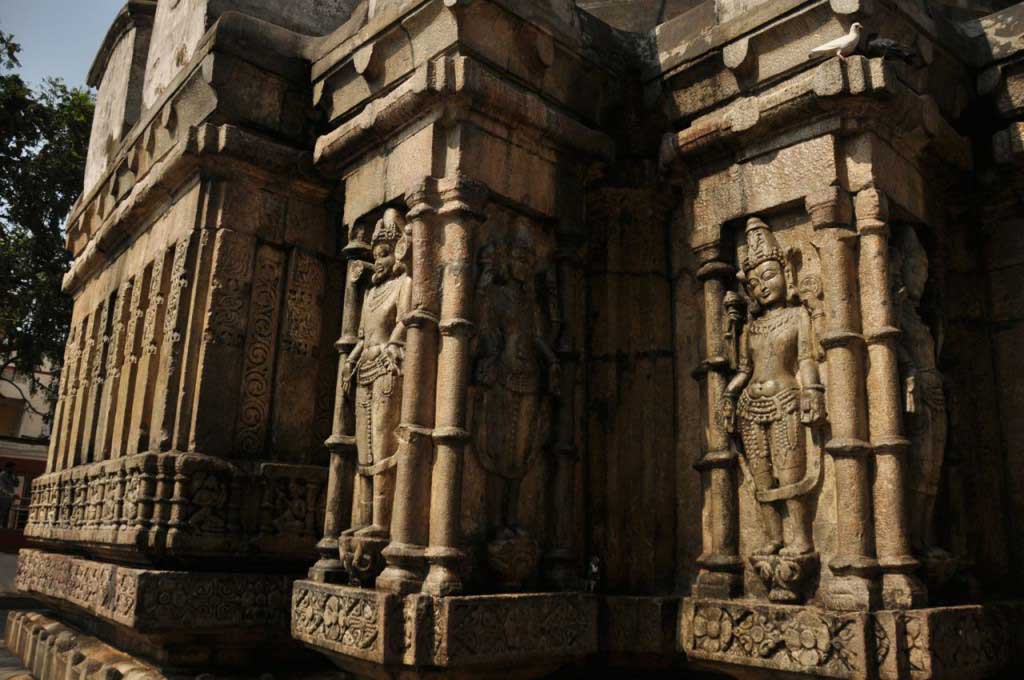
Kamakhya Temple. Guwahati


Kamakhya Temple. Guwahati


Kamakhya Temple. Guwahati


Kamakhya Temple. Guwahati


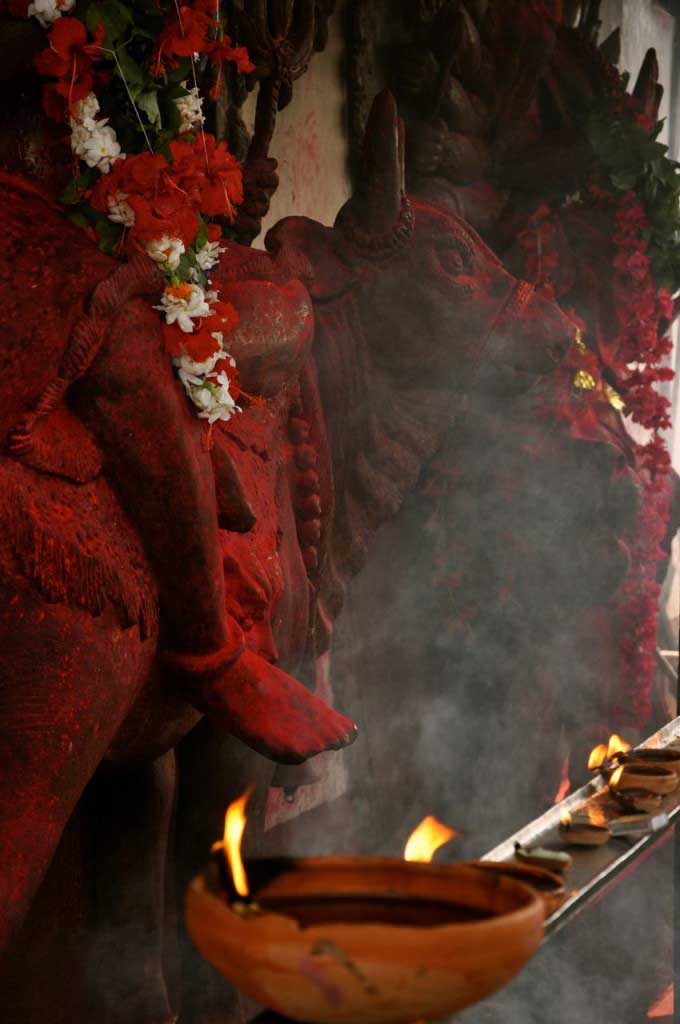
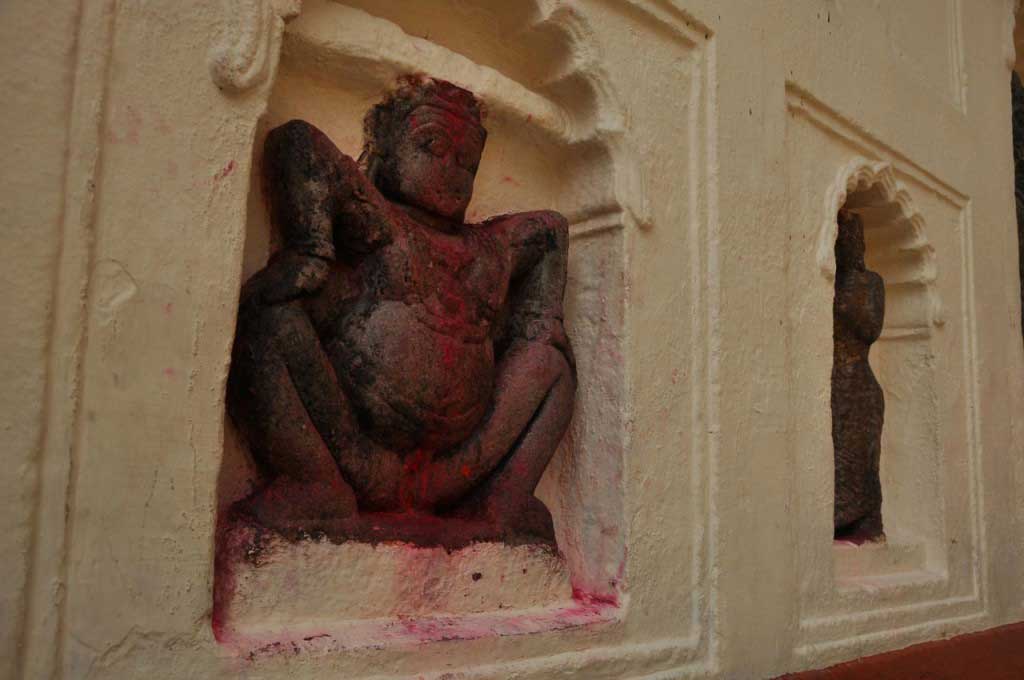
For those who visit the place, where the red color stands out, symbolizing the menstruation, the female reproductive cycle and fertility… in the red robes of the pujari (followers of goddess Kamakhya), in the red flowers that adorn statues, in the red pigment covering the statues of Kamakhya, from whom are lit incense and candles, and the red that seems to come out from vaginas of women statues associated with fertility.

Kamakhya Temple. Guwahati


Kamakhya Temple. Guwahati


How to go to the Kamakhya Temple:


To go to Kamakhya, you can catch one of the buses that pass on GS Road. Just ask for “Kamakhya” and stop on the main road (AT Road). The bus ticket costs 8 rupees. After crossing a gate, there are the ASTC buses that make the journey to the top of the hill, for 7 rupees; these buses depart when are full and the journey takes about 10 minutes. There is a pedestrian access, a staircase you access to the temple but that seems to be little used, with the pilgrims prefer the comfort and the speed of the bus.

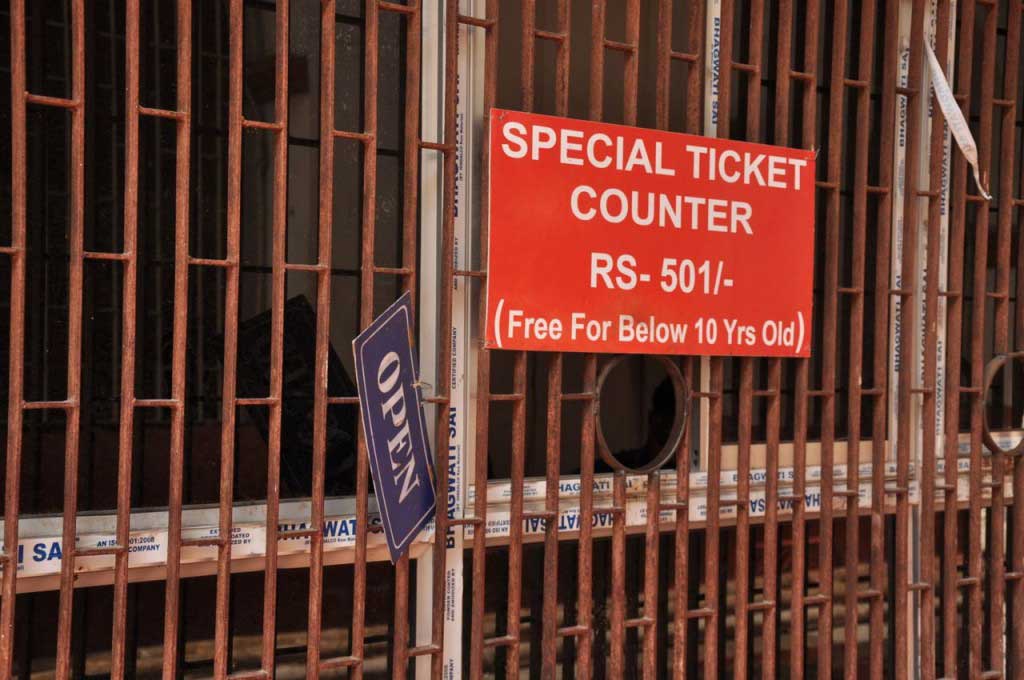
To visit the interior of the temple is required to join the dozens of pilgrims waiting patiently in a long queue, holding offerings to Kamakhya altar. But as often happens in India, where is strong the distinction between social classes, there is a VIP access which saves the pilgrims and visitors from a long wait, by paying 501 rupees… yes, five hundred and one… why this modest rupee among other 500!?!!


Portico junto à estrada principal onde estacionam os bus que vão até ao cimo da colina. Kamakhya Temple. Guwahati
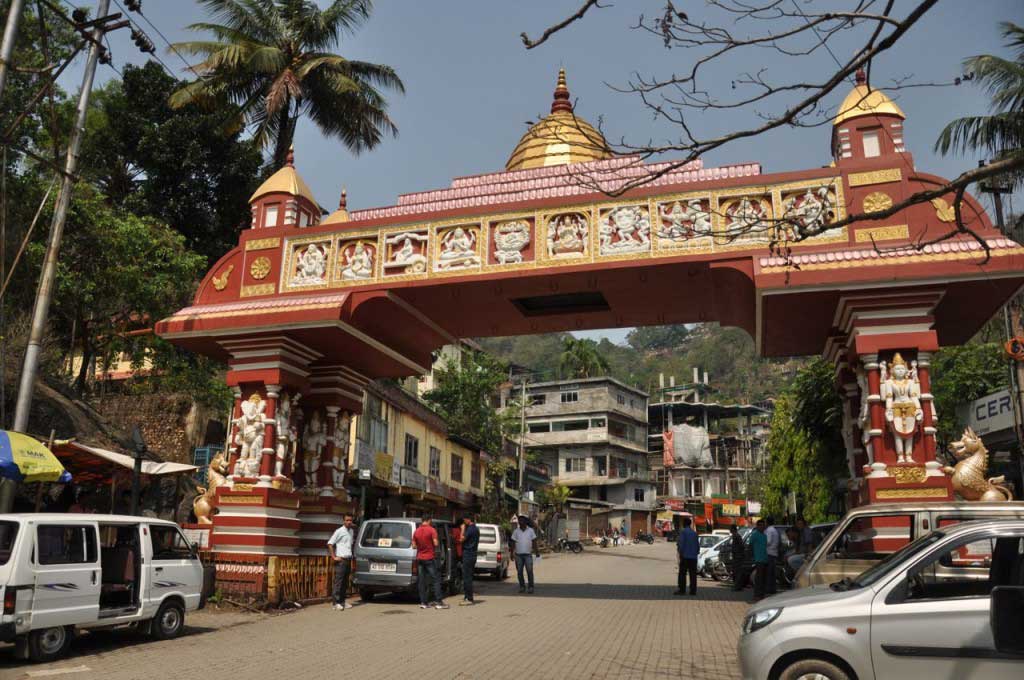
Gate that mark the entrance to the road that goes up to Kamakhya Temple, where buses stop. Guwahati


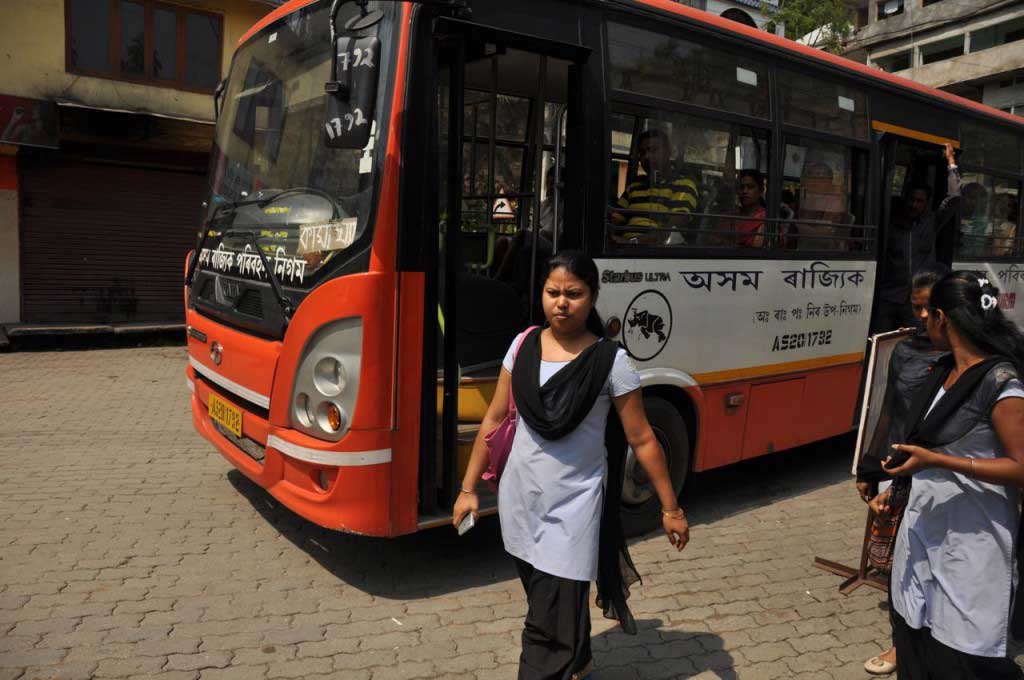
autocarro para o Kamakhya Temple. Guwahati
Bus Kamakhya Temple. Guwahati


Kamakhya Temple. Guwahati

Where to stay in Guwahati:

For those who stay only for one night, the GS Road and the side streets around Paltan Bazaar, offer dozens of options for several prices. From my experience, you can’t get a room with shared toilet for less than 500 rupees, which however don’t guarantee clean sheets.

Unexpectedly I found the Youth Hostel that has a discreet access on the right side of GS Road, on the corner of MD Shah Road. The building looks abandoned, and in fact, almost no one stays here, with some of the rooms being used as offices of Assam tourism department. The available room works in a dormitory system, with 4 beds with a private bathroom, but everything is in a miserable condition, in need of heavy repairs especially the toilet facility. The bed is comfortable and the sheets are clean; it has a mosquito net for each bed.

The Youth Hostel is an option for those who intended to stay only one night in Guwahati and have a very short budget.

Youth Hostel Guwahati: Bed in a dormitory room with toilet: 250 INR (the room, regardless of the number of occupants). Despite being a dorm, as no one else the room was just for me.


Youth Hostel. Guwahati


Youth Hostel. Guwahati


Youth Hostel. Guwahati

Where to eat in Guwahati:

Many restaurants, here called “hotel” line up next to the train station and along the GS Road, as well as the cross streets of Paltan Bazaar, with reasonable vegetarian thalis for 60 rupees. Here rules the typical Indian food, but in a poorer version that usual, with rice, potato based curries and watery dal. Almost all restaurants have vegetarian and non-vegetarian options, which reflects the taste of the Assamese for meat.
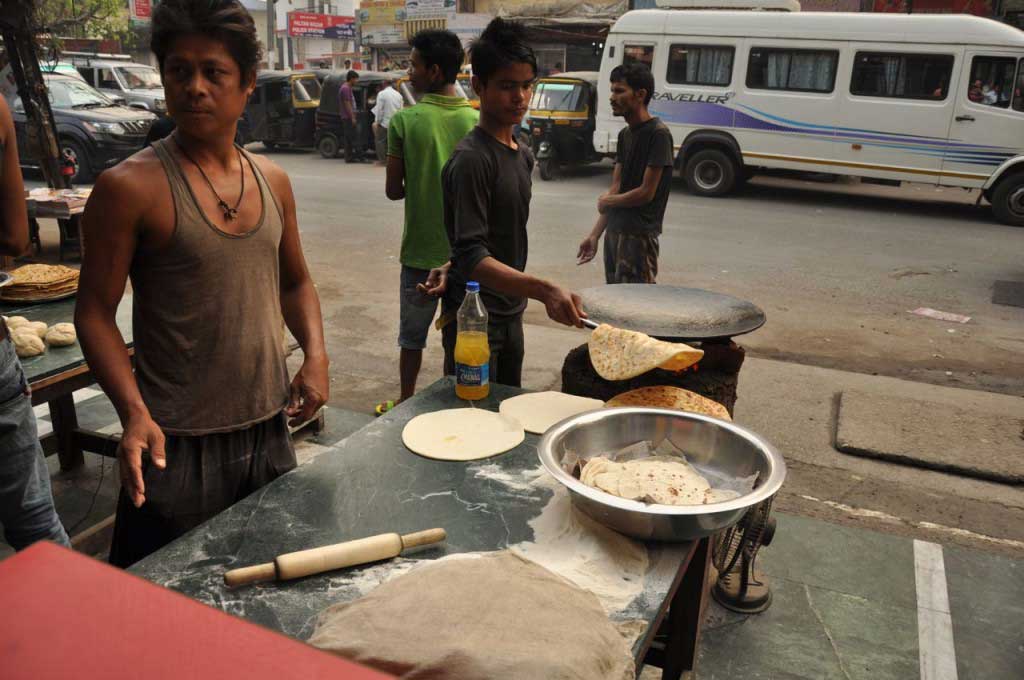
There are great parathas during the morning in two small restaurants at the beginning of GS Road, Greenview and Deepak Restaurant, located on the right side of those coming from the south of the train station exit.
 

"parathas" no Paltan bazaar. Guwahati.
“parathas” at Paltan bazaar. Guwahati.


restaurante de comida indiana e deliciosas "parathas" no Paltan bazaar. Guwahati.
Indian food restaurant with good “parathas” at Paltan bazaar. Guwahati.


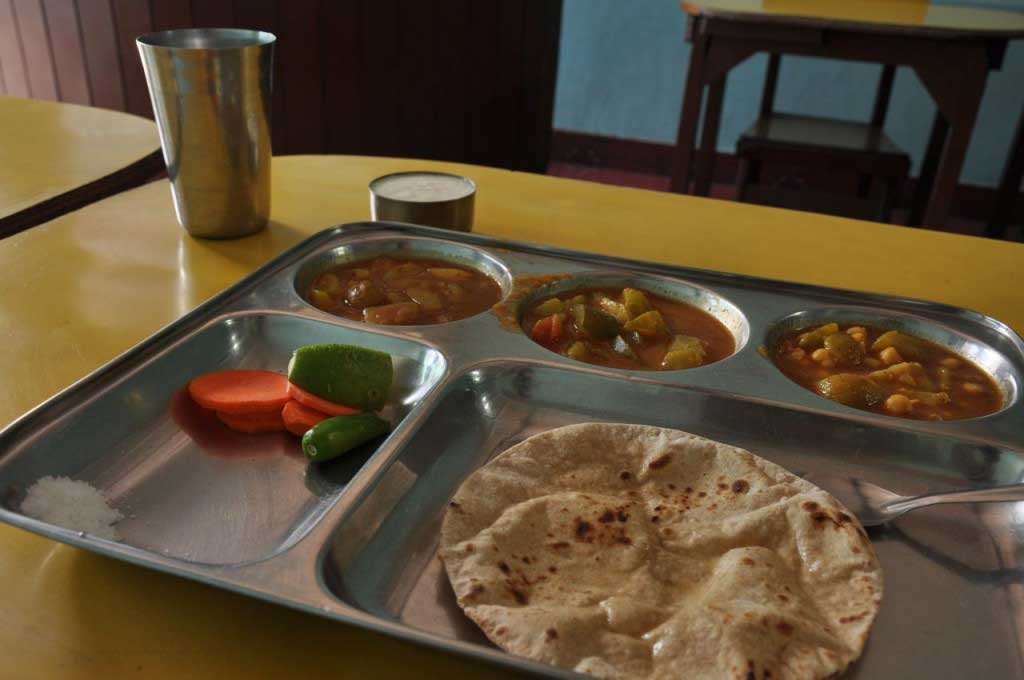
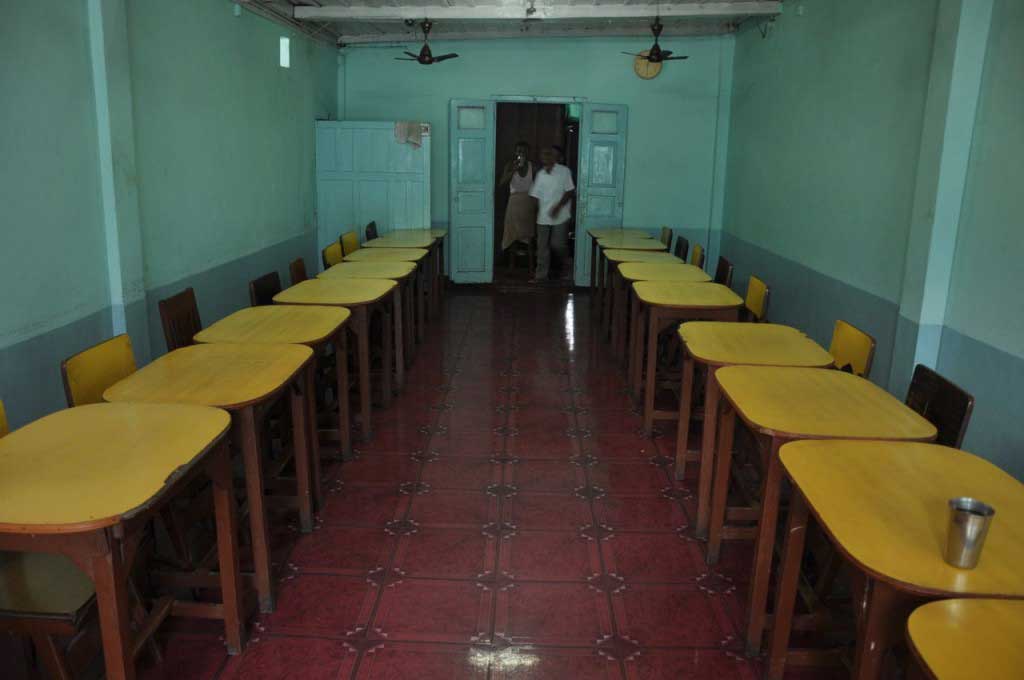
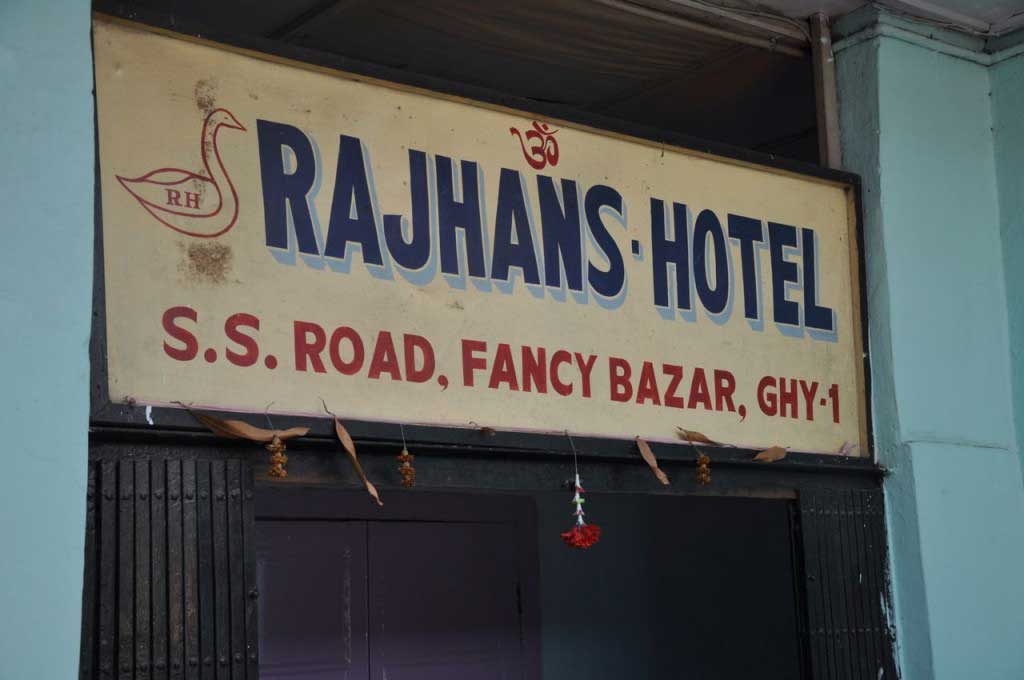
If you are in Fancy Bazaar and feel the call of the stomach, Rajhans Hotel, on the second floor of an anonymous building is a nice option with vegetarian food, friendly service and a decor that takes us to a school canteen, which have certain charisma and a super smiley staff.

Rajhans Hotel: S.S. Road, Fancy Bazaar, Guwahati. Vegetarian thali for 70 rupees.

Rajhans Hotel. Vegetariano. Fancy bazaar. Guwahati.
Kitchen of Rajhans Hotel. Vegetarian restaurant at Fancy bazaar. Guwahati.


tahli no Rajhans Hotel. Vegetariano. Fancy bazaar. Guwahati.
Vegetarian tahli no Rajhans Hotel. Fancy bazaar. Guwahati.


Rajhans Hotel. Vegetariano. Fancy bazaar. Guwahati.
Rajhans Hotel. Vegetarian restaurant at Fancy bazaar. Guwahati.


Rajhans Hotel. Vegetariano. Fancy bazaar. Guwahati.
Rajhans Hotel. Vegetarian restaurant at Fancy bazar. Guwahati.


Transports in Guwahati:

Both the train station and the public bus terminal (ASTC) are conveniently located in the center of Guwahati, close to hotel and restaurants and other commercial activity.

From Guwahati, there are trains that cross Assam stat, towards the North until Dibrugarh, passing through Dimapur.


Note: Guwahati railway station has two entrances: the north side (the same side of the river) and that is the main entrance, and another on the south side that leads directly to the GS Road (Guwahati-Shillong Road). The Reservation Office (for long distance tickets) is in a building a few meters from the north entrance of the station (opposite the Paltan bazaar).


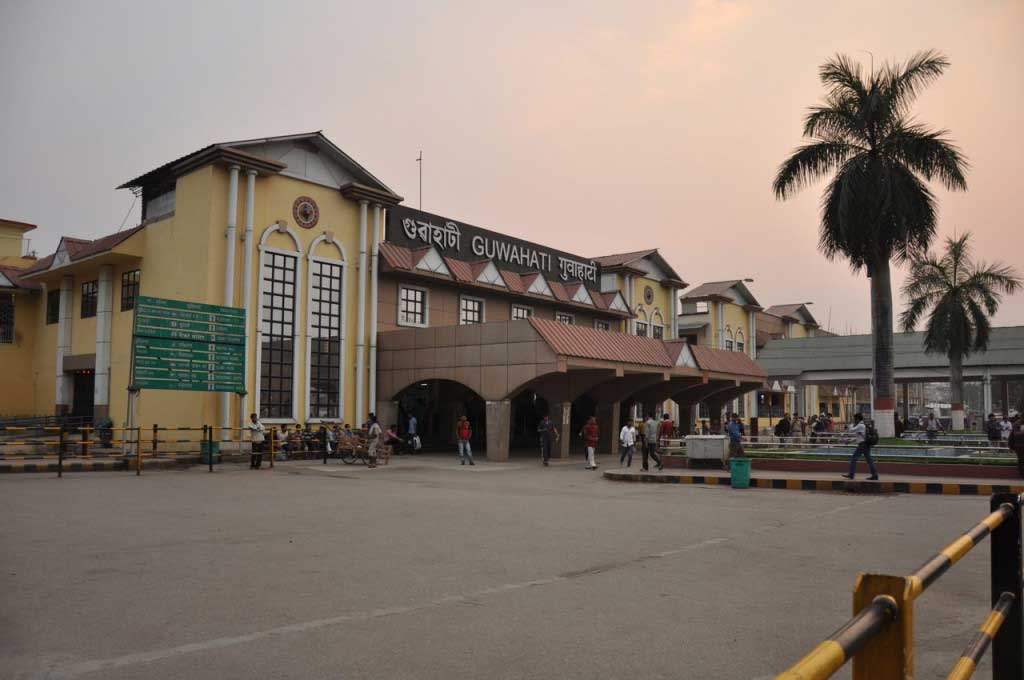
Guwahati Train Station. South entrance. Paltan Bazaar


Guwahati Train Station. North entrance.


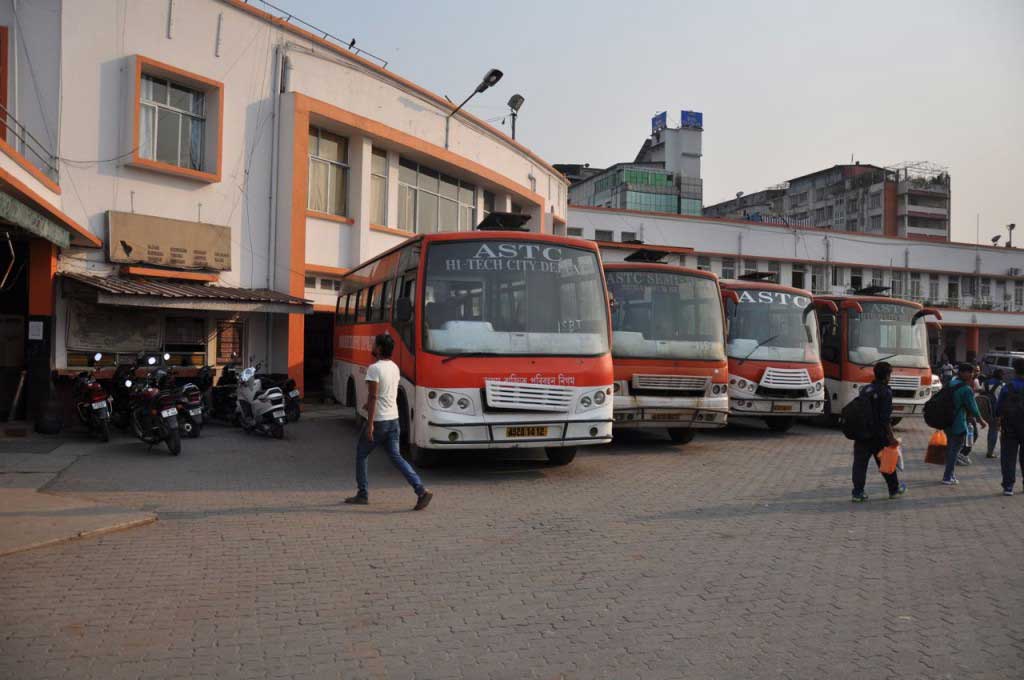
The public bus station is just outside the train station (near the Paltan Bazaar). The ticket office ASTC is inside the building, although there are several counters of private companies that also sell tickets for ASTC buses.

The bus (ASTC) from Guwahati to Shillong leaves at 7:30 am, and the journey takes 4 hours.

  • Bus ticket to Guwahati-Shillong: 135 rupees (a/c)… in fact, the air conditioning doesn’t work, but it is bearable because the bus always runs with the door open, and as we move away from the plains of Assam, the temperature is drop down.


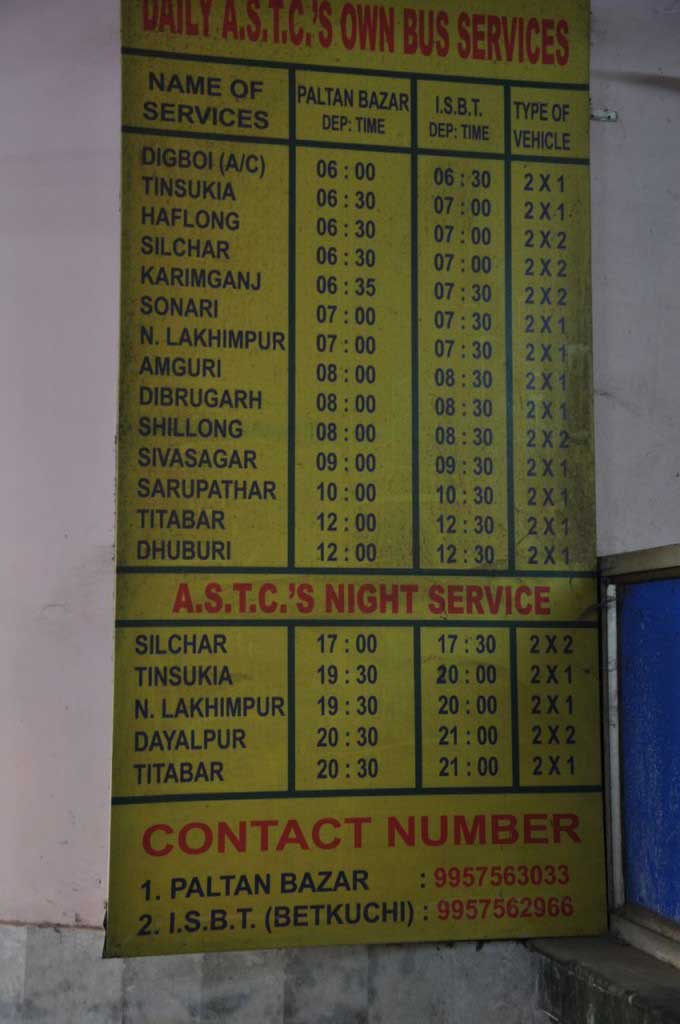
horários. Terminal de autocarros da ASCT em Guwahati
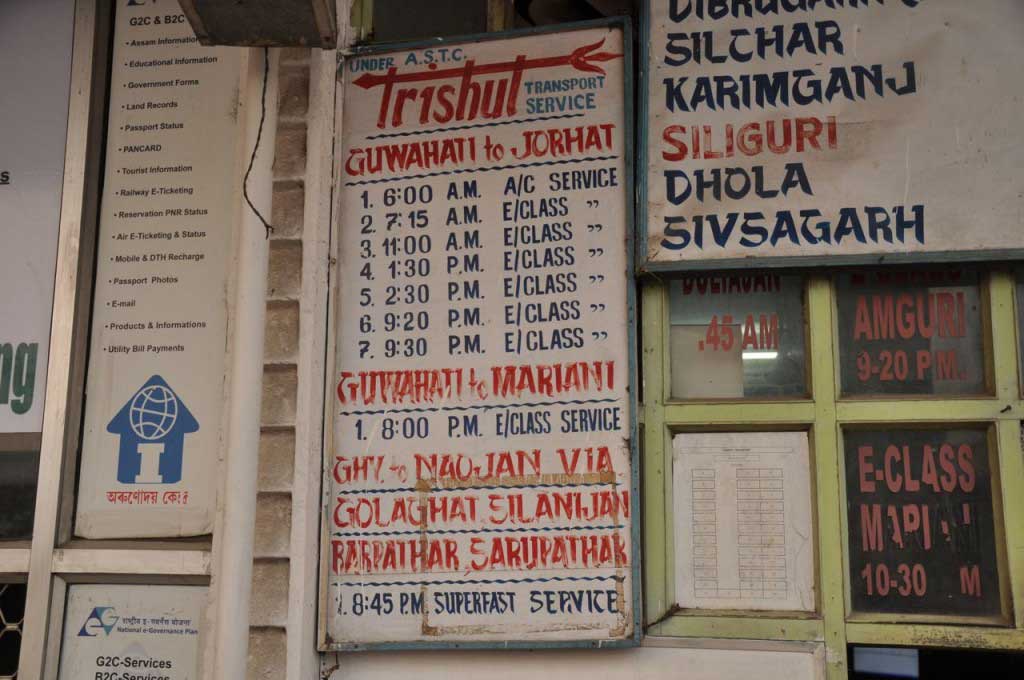
Timetable of private buses from Guwahati


Terminal de bus ASCT em Guwahati
Central buses Terminal. Guwahati


Terminal de autocarros da ASCT em Guwahati
Timetable of private buses from Guwahati


horários. Terminal de autocarros da ASCT em Guwahati
Timetable of ASCT buses from Guwahati


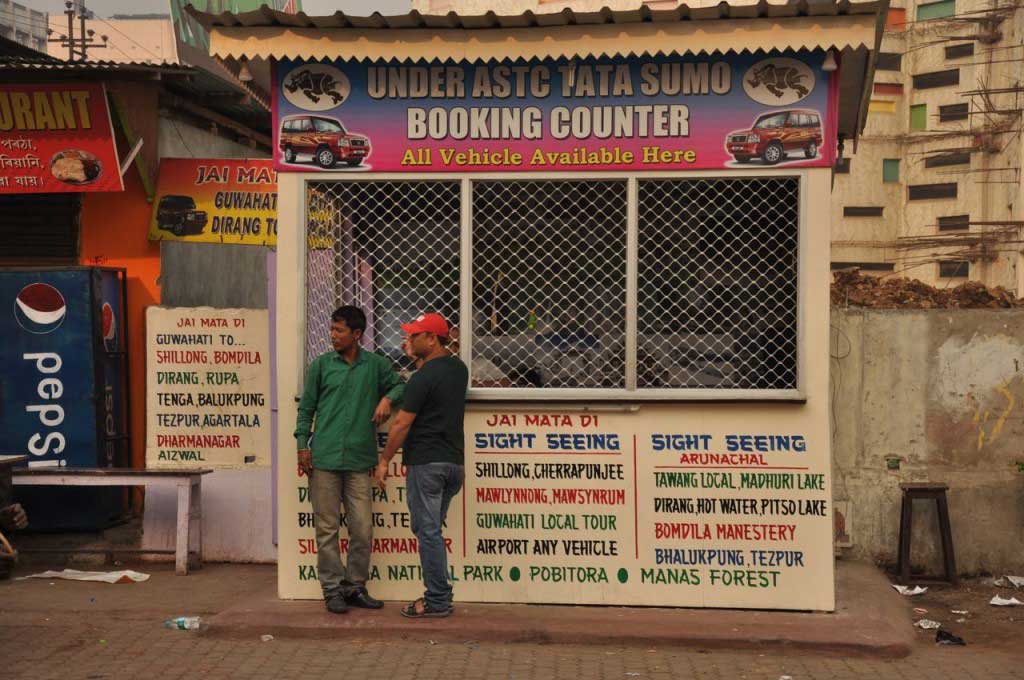
As an alternative to the buses, there are sumos, a shared all-terrain, which are a very popular mode of transport in the Northeast states, and that makes the connection between the main cities. Inside the Guwahati Bus Terminal, in the bus park, there’s a booth where you can buy tickets for the sumos. In general, these vehicles have no set time, circulating during the day, since very early morning, and depart when they are full.

  • sumo Guwahati to Shillong: 170 rupees (the trip takes about 2.45 pm, depending on traffic and number of stops)

bilheteira de "sumo" no Terminal Central de autocarros
“sumo” counter at Guwahati central bus terminal


Internet in Guwahati:

Most hotels don’t have internet and those who have charge sometimes 100 rupees per day. The best option is the cyber-cafes that aren’t easy to find.

In GS Road, on the left side for who comes from the train station, there is a shop “complex”, and on the first floor there’s a cyber-cafe, Virtual Office, with good connection and wi-fi.

  • Wi-fi: 30 rupees per hour.


Elevation: 56 m

Population: 809,895

How to go from Varanasi to Mughal Sarai Train Station

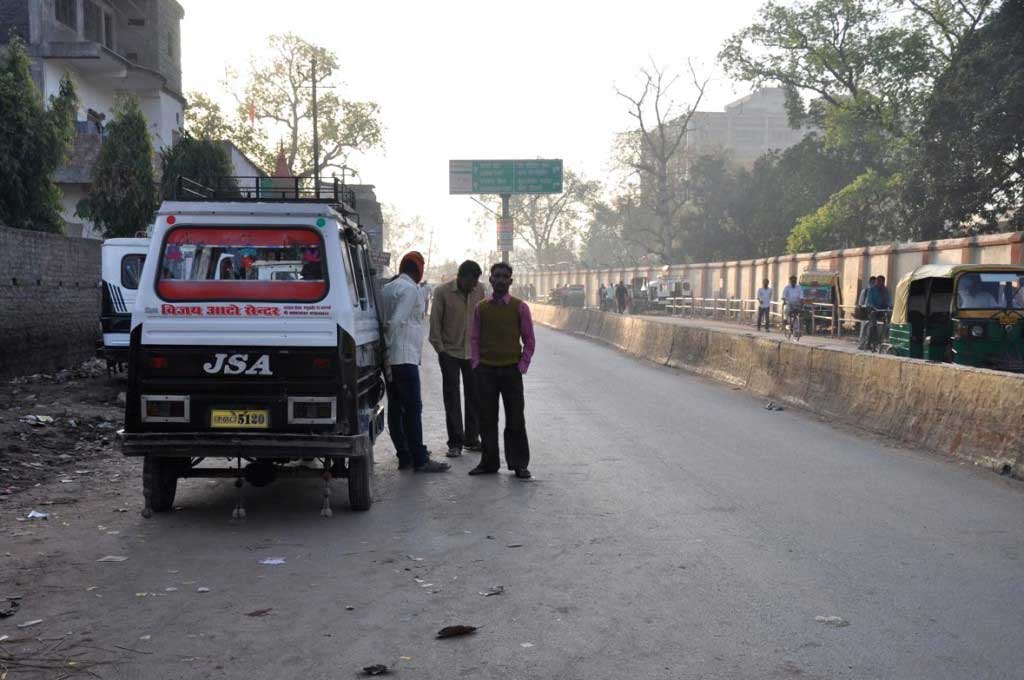
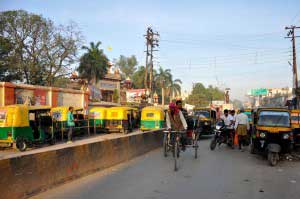
savari at BHU Gate. Varanasi. India


Most of the trains that leave or reach Varanasi stop at Mugal Sarai, 15 km far form the center of the old city, Godowlia Chowk. The two train stations that are located closer to the center of Varanasi – Varanasi Junction, Manduadih and Varanasi City – don’t have such interesting connection with the major train routs that run east-west India, or show less interesting schedules with trains departure from Varanasi in the middle of the night and often with long delays, like the ones that link Varanasi with Gorakpur, on the way to Nepali border Sonauli-Belahiya.

Although, if you are coming or going to New Delhi the best train that you can get is the Shiva-Ganga Express (Train number 12560), that start at New Delhi Railway station and have his terminus at Manduadih. It’s a clean modern train that runs overnight and usually arrive with small delays.

There are 3 options to reach Mugal Sarai Train Station from Varanasi:

  • Taxi
  • tuk-tuk
  • savari (shared taxi)


The taxi is far the most confortable but maybe to expensive if you travel alone… anyway be prepared to pay more than 500 rupies. The taxi has the advantage that run all the time, including evening.

The tuk-tuk are the most popular option, though not so confortable as the taxi, it can be a good option especially if you carry big and heavy luggage. As a woman alone, is not the safest way to travel after the sunset, as the road to Mugal Sarai cross an empty area.

Tuk-tuk: 250 rupies (INR)… from Godowlia Chowk or Bengali Tola area.

The savaris are a kind of big tuk-tuk where 8 passengers are squeeze on the back of the vehicle. The luggage goes on top. It’s far the cheapest option as also the most uncomfortable, as part of the road is bumpy and dusty… but if you are alone, this a totally safe, as you go for sure share the ride with more people… too many in fact! The savaris run since early morning until evening, and just departure when they are full, that in early morning, around 7 am, didn’t took more than 10 minutes..

  • From Varanasi Train Station (also called Varanasi Junction or Varanasi Cantonement): 20 rupies
  • From BHU Gate (near Assi Gaht): 30 rupies


The trip takes around 40 minutes by tuk–tuk to 1 hour by savari. But during rush hour it can take much more, especially if you are in Goudalia area or at the Varanasi Train Station, as the tuk-tuk or savaris need to cross the city to reach the bridge. At BHU Gate you are already a bit out from the center of the city so don’t have so much traffic issues, anyway, go with time.


How to go from Mugal Sarai to Varanasi:

When you leave the station, walking along the footbridge, you must walk until the main building. Don’t turn on the right when you see a ramp where in the end of it some tuk-tuks wait.

When you arrive to the main building ignore the tuk-tuk drivers and walk until you are in the parking area in front of the station building, a kind of yard before you reach the main road. There on your right side you’ll see a group of vehicle bigger that a tuk-tuk, with the capacity of about 6 people: these are the so-called “savaris”, a shared taxi. Talk tot he drivers and find one that goes to BHU, from there you can catch a rickshaw (cyclo) to nearby one of the gath or to the Varanasi Railway Station.

The savari departure when they are full.

The trip takes about 1 hour without traffic.


BHU Gate. Varanasi. India

Costs:

  • to Varanasi Train station (Varanasi Junction also called Varanasi Cantonement): 20 rupies
  • to BHU Gate (near Assi Gaht): 30 rupies

If you prefer the tuk-tuk to reach Varanasi, you’ll probably face the problem to get a good deal with the drivers, but shouldn’t be more than 250 rupies.

Other information about transport prices in Varanasi:

  • Rickshaw from Bengali Tola to Varanasi train station: 50 INR
  • Tuk-tuk from Bengali Tola to Varanasi trains station: 100 INR
  • Rickshaw from Bengali Tola to BHU Gate: 30 INR


Caution:

Mugal Sarai is located far away from Varanasi and the road to reach there is a kind od highway, far from any village, in a kind of empty area, so is no recommended for women travel alone to do this ride after dark. Also the station itself is not a place to be alone during the evening; if you must do it, try to find the rest room inside the station and don’t walk alone outside the station… train station in India become a bit dodgy after dark, so if you can avoid take evening trains, and check the usual delays of the train in order to avoid long waits alone in a spooky train station.


http://trainstatus.info/


Mugal Sarai Train Station

How to go from Chennai Airport to Chennai City Center

The Chennai International Airport is located about 20 km southwest from the center of the city. To avoid the extra cost of a taxi, and all the issues like bargain the price or get the chance to be cheated the train shows up as the best option if you are traveling with a small budget, particularly if you are alone and can’t share the taxi fare.

It’s not difficult but it takes a bit of time.

The closest train station is Tirusulam, located at a walking distance from the airport.

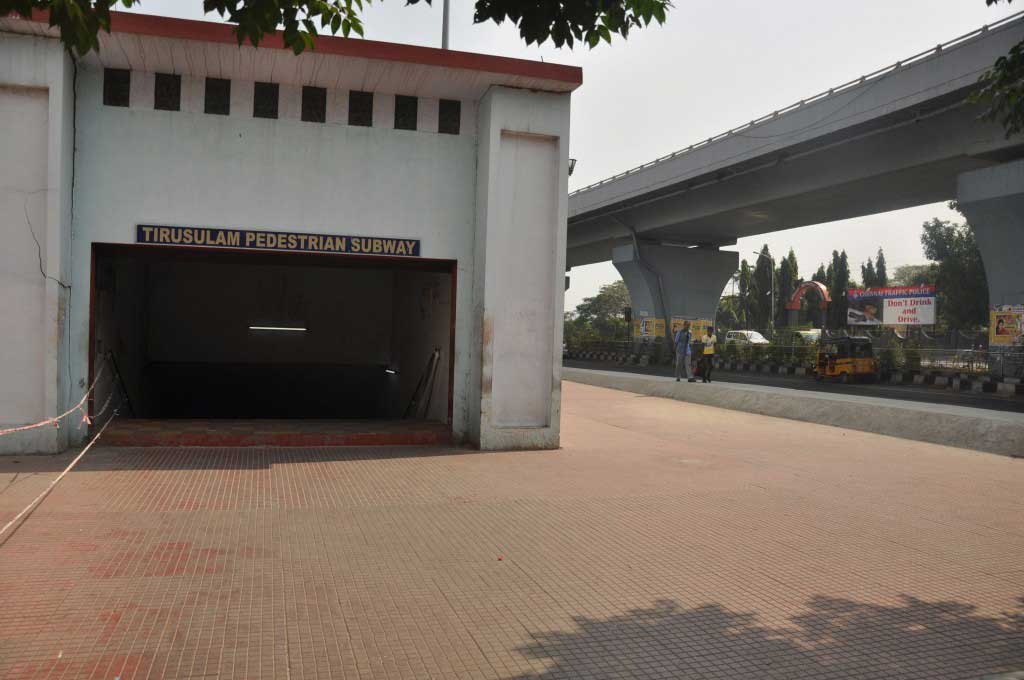
As you leave the arrivals passenger terminal you are facing a big car park. Just walk a bit to the right side, passing under a concrete viaduct (a highway), and keep walking straight until you see the entrance of the “pedestrian subway”. If you as the direction to the guards of the airport or to some taxi drivers they will show you the way, even if they don’t speak much English… just ask “railway station” or “train”.

Way from the Airport to the Train Sation. Chennai


Take this pedestrian subway and you’ll reach the station ticket counter, where you can buy the 10 rupees ticket. At the ticket counter is better to ask the number of the line… or try your change looking for “Chennai-Beach”.

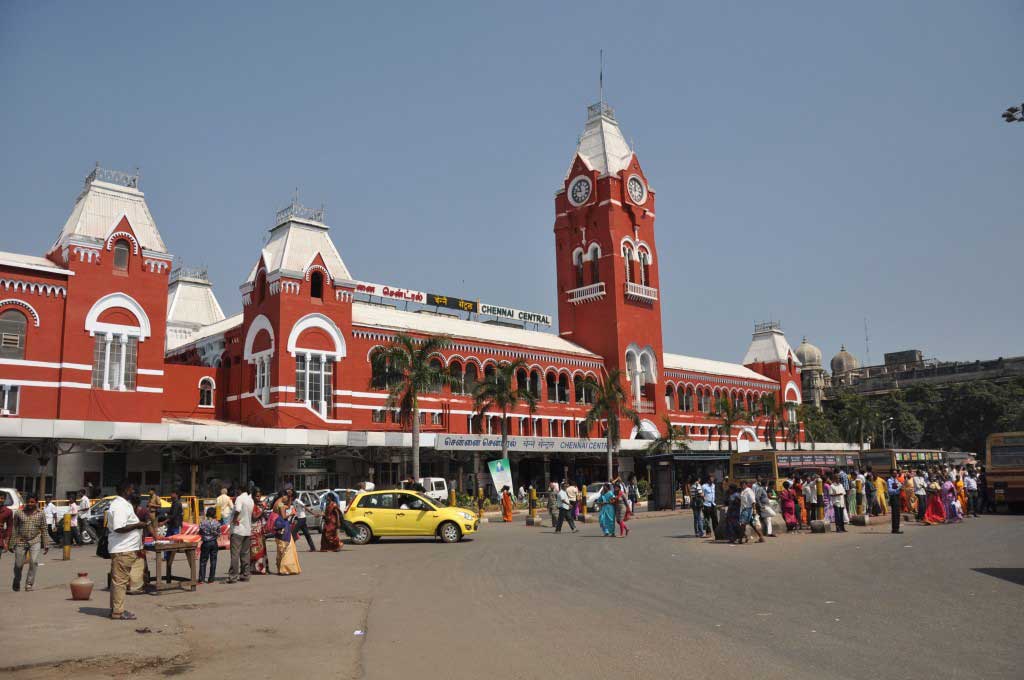
There are 2 main trains station in Chennai: Central e Egmore. Central is the best located one, closer from Triplicane (a neighborhood with cheap guest houses) and is also where you can find the “Tourist Ticket Counter”, in case that you want to move on from Chennai by train. Unfortunately, the train that pass by Tirusulam (airport) goes doesn’t go to Chennai-Central but to Chennai-Egmore.

Chennai-Central Train Station


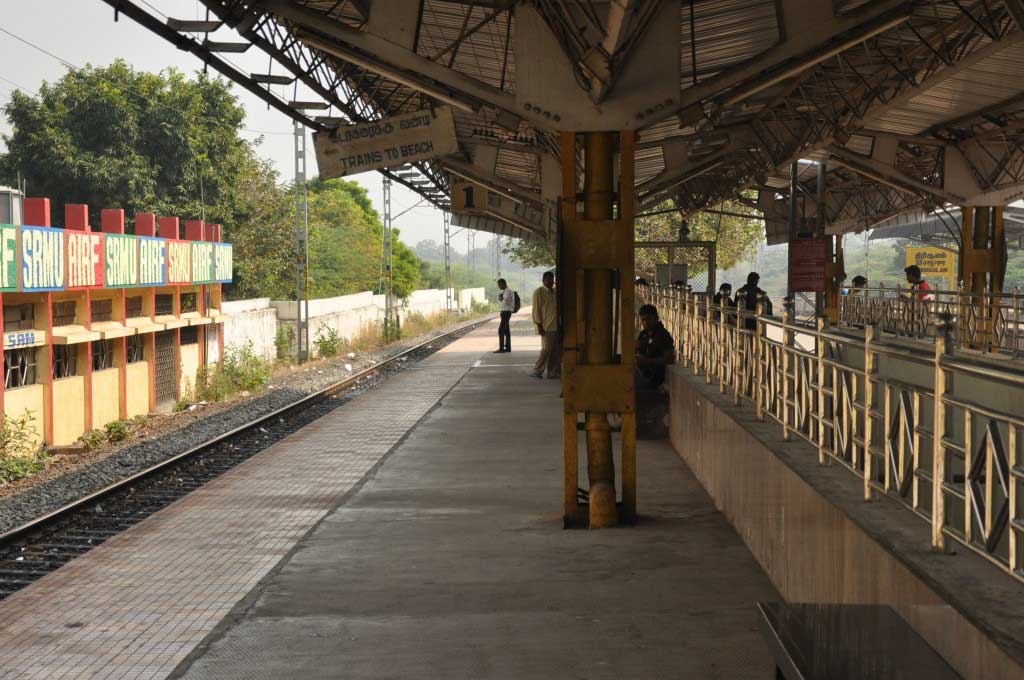
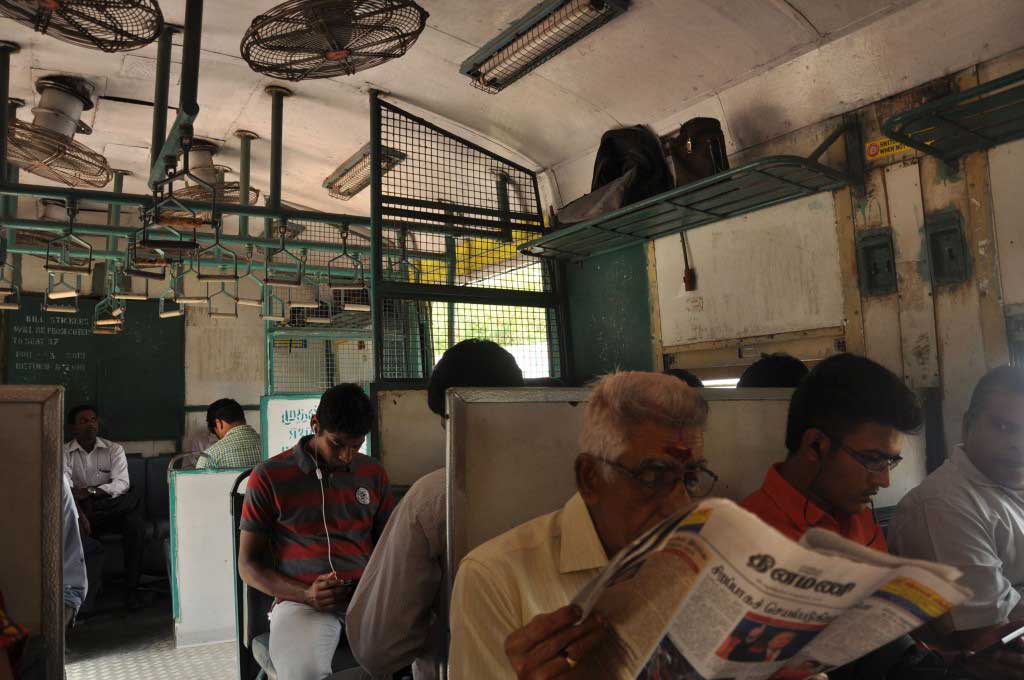
As you arrive at the platform, choose the side that goes to “Chennai-Beach”. There are signs, but you can also ask the people there. As it is a suburban train, you don’t need to wait for a long time, but also don’t expect to find a seat, as these trains as all unreserved. Anyway, the trip doesn’t take more than 20 minutes.

Tirusulam train station. Chennai-beach platform to Chennai-Central
Train from the airport to Chennai-Egmore. Chennai


If your want to go to Triplicane, nearby Egmore train station you can catch the bus number: 22, 27B, 29A or 29D.

In case that Chennai is just a stopover in a bigger itinerary and you need to buy a train ticket, is better to go straight to Chennai-Central, where you can find the “Tourist Ticket Counter”. At Egmore, you can’t buy tickets for long distance trips.

From Egmore to Chennai-Central is better to take a tuk-tuk to overcome the 2 km full of traffic and noise that separate the two stations. A tuk-tuk will cost between 70 to 100 rupees.

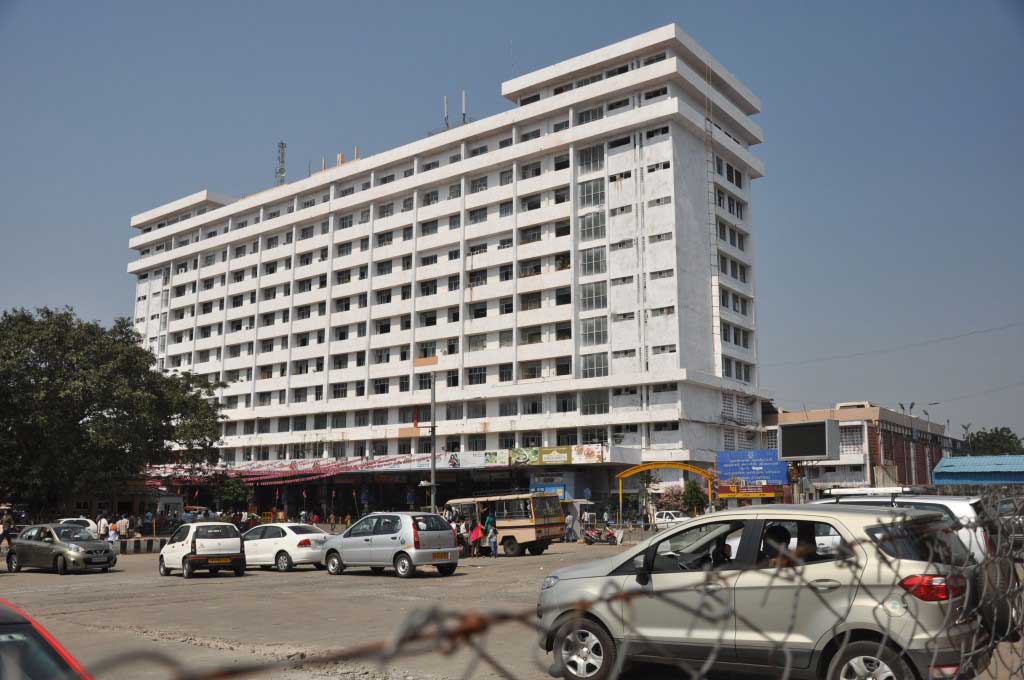
At Chennai-Central you have the challenge to find the “Tourist Ticket Counter”. Facing the main old building you need to walk to the left side until you find a big white building, a kind of modern concrete construction. Inside the big lobby, there’s a staircase. The ticket counter is in the first floor. Just in case: there’s an ATM of State Bank of India at the entrance of this building.

building next to Chennai-Central were is the “Tourist Ticket Counter”


Arriving at Chennai-Central, there are buses to Triplicane: 32, 32A that stop in front of the station. But watch out because you can take easily the bus in the wrong direction. Double-check the direction of the bus, with the driver or the ticket seller, before jump to the bus… I already get lost twice!


Where to sleep in Chennai:

I’m used to stay in Triplicane, a Muslim neighborhood with good connection by bus with the two train stations. In Triplicane there are some guesthouses and cheap hotel.

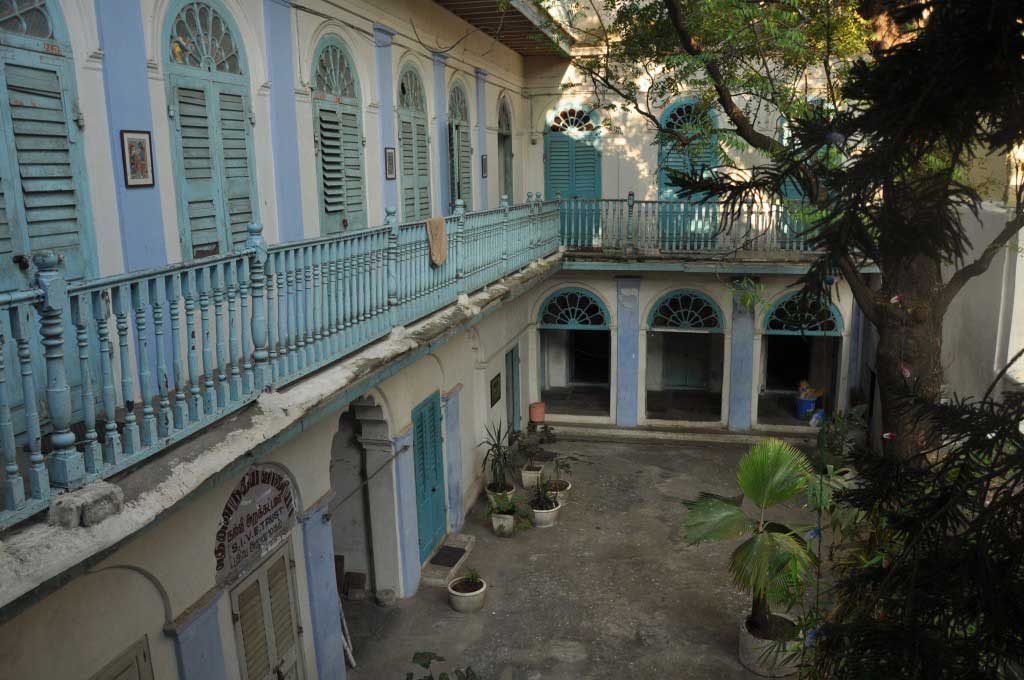
My favorite is Broad Lands, a classic from hippie times, located in a charming and decadent house that was at times the residence of a rich Muslim.


Broad Lands. Triplicane. Chennai

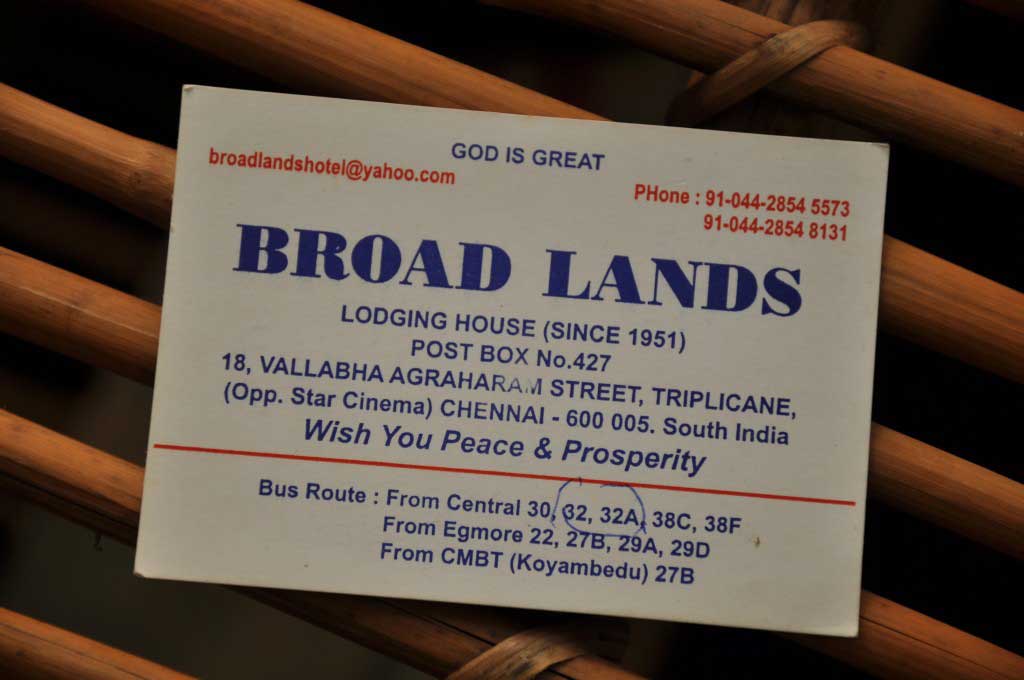
Address: 18, Vallabha Agraharam St, Opp Star Theatre, Triplicane, Chennai, Tamil Nadu 600005, India

Phone:+91 44 2854 8131

India_Chennai_Broad Lands

Where to eat in Chennai:

One of the reasons why I prefer to stay in Triplicane is not just because of the glamor of Broad Lands, but also for restaurants, where you can taste amazing food, flowing the traditional south India style. Predominantly vegetarian and yummy!!!

Along the main road of Tripicane, where the bus drops you and awalking distance from the Broad Lands, there are several options.

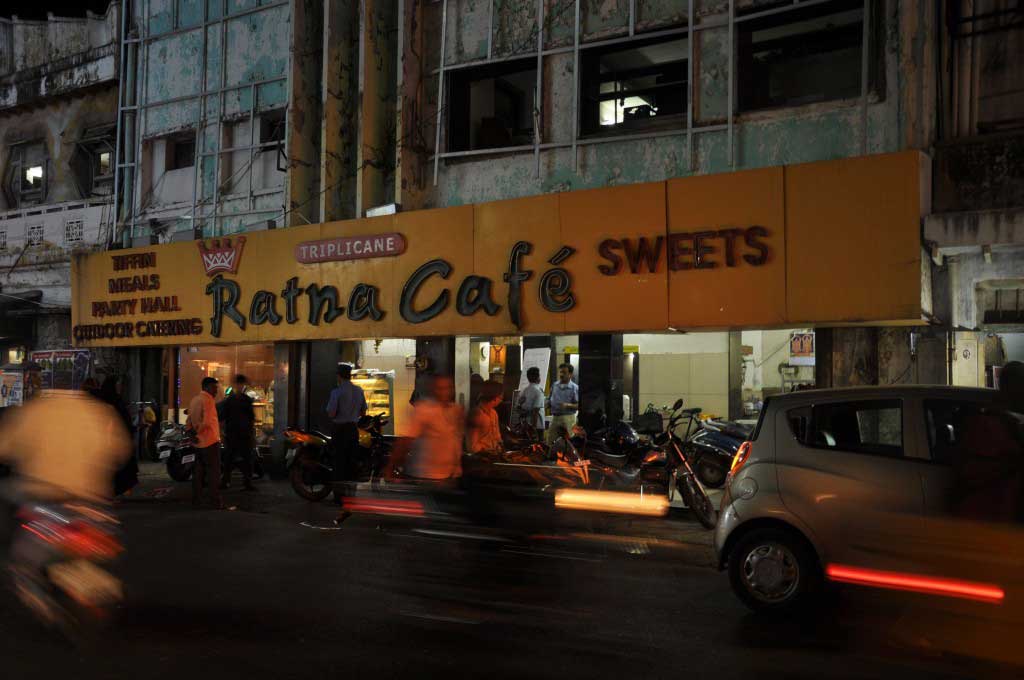
My choice goes Ratna Café, for south Indian snacks, but where you can also find thali during the day, more or less until 3 p.m. The prices are cheap, but if you prefer a bit more comfort, which means air-condition, there’s another room on the first floor, where is charged a bit more for the same food.

Rana Cafe. Restaurant. Triplicane. Chennai

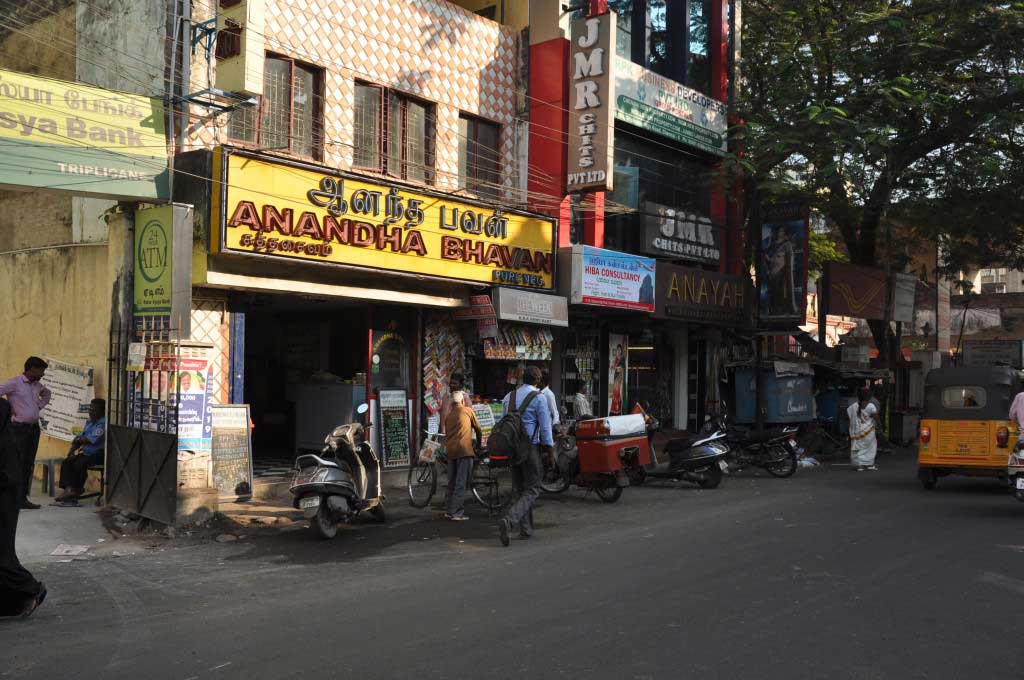
With also amazing food is Anandha Bhavan, located on the left side of the same road. The place is simple but with an atmosphere. Is very popular between locals and the thali (only vegetarian) is amazing… and you can repeat as many times as you want… just for 70 rupees.

The Triplicane main street is noisy and has a lots of traffic, so is not a place for a pleasant walk, so is better just ask about these restaurants to the local people, specially shop keeps, that everybody knows Ratna Café and Anandha Bhavan are a kind of institutions of this neighborhood as also from Chennai.

Anandha Bhavan. Restaurant. Triplicane. Chennai

How to go from Chennai to New Delhi by train:

To travel by train from Chennai to Delhi I strongly recommend the train number 12269 (Hazrat Nizamuddin Duronto Express).

It’s a long journey of 28 hours but this train just makes a few stops, so there’s not many people come in and out all the time, and all the meals are included, breakfast, lunch, dinner, snacks, chai and even water and newspaper. The Duronto Express trains link the biggest Indian cities, and offer a better service; despite the ticket being a bit more expensive it definitively worth the comfort, especially for long journeys. The train is more modern and clean, and the toilets have maintenance during the trip.

It departure from Chennai-Central early morning and after spending one night on the train you arrive next day to Hazrat Nizamuddin, a few kilometers from New Delhi Train Station. Beddings are available on the train for 10 or 20 rupees!

The food is good. The chai is free.

One of the best train trip that I experience in India, even in Sleeper Class!

How to apply for Indian Visa in Kandy (Sri Lanka)

The process in Kandy isn’t difficult but need some patience and some extra rupees due the bureaucracy and rigid rules.

The Indian Visa Services in Kandy (IVS) is almost empty all the time, so you don0t need to wait for a long for your turn. The IVS is also easy and cheap to reach by local bus.

Documents:

  • Passport (valid for 6 months and at least two blank pages)
  • Copy of passport
  • Copy of Sri Lanka visa page
  • Reference Form, aka FAX
  • 3 photos (not just 2 like everywhere else)
  • fee: 6172 LKR


Some observations:

  • The Reference Form or FAX Form, can be downloaded from the official page of IVS (http://ivsvisalanka.com/ForeignPassport.aspx). Although this form is not accepted by the Kandy services and you must buy a new one (with the same information but in a different format) inside de IVS (40 LKR);
  • You can fill the form on line, but probably the officers will find some mistake and make you fill another one. If you don’t want to fill the form again and come back in the next day you can go to one of the nearby agencies that do it for you (350 LKR)… that’s why you need 3 photos, because this guys can’t upload your photo. Inside the IVS, behind a photocopy machine there’s also a man that can do it (250 LKR)

Visa applications shops_DSC_7093

Anyway, some tips that can be useful for you to fill the form:

  • If you have been in India before you must have a copy of the last visa, and mention that in the on-line form.
  • If you don’t have a previous visa stamp in the current passport, just say NO when you fill the form on line.
  • If you want to apply for 6 months visa with multiple entries you must write “all ports” in the field “port of arrival” and “port of exit”.


After you have all the paper, the process at the IVS doesn’t take more than 10 minutes.

The approval process takes 5 working days. Meanwhile you keep your passport with you.

Then on the 6th day (or later) you need to submit your passport at 9 am.

In the same day you can pick it at 4 pm.


Usually, if you already have a visa in your passport, probably you can only get a 3 months visa if you apply in a foreigner country. In your country you cam always get the 6 months with multiply entries. Anyway, this is no a official rule, just a knowledge get by my experience and information shared with other travellers.


List os countries elected for visa on arrival to India
List os countries  for visa on arrival to India


Address:

No. 675,
William Gopallawa Mawatha,
Kandy.
Email: infokandy@ivsglobal.in


Submission Time: 8:30 am to 2:00 pm
Collection Time: 16:00 to 17:00
Website:  http://www.ivsvisalanka.com


Schedule. IVS (India Visa Services) @ Kandy

How to go to IVS in Kandy:

Form the bus terminal close to Clock Tower, ask for a bus that go to Peradeniya Road.

And ask to get out at the “India visa” or at the “Amaya Channel Center” that are at the same place.

Bus ticket: 12 LKR

Bus from Clock Tower bus stand to IVS (Kandy)


IVS location @ Kandy

How to apply for Indian Visa in Malaysia and Thailand

At least since December 2015 that is not possible to get an Indian Tourist visa is Malaysia, as also in Thailand.

At the IVS /Indian visa Services) in Kuala Lumpur you can apply for visa, give all the documentation, fill a form as non-resident, make the payment and anyone will tell you that the India Embassy in Malaysia in not longer giving tourist visa to non-Malaysia Resident for more than two years. The only things that they ask is you to sign a paper that you agree to the submission of your application to the High Commission, don’t tell nothing about the meaning of this.

Later you’ll find that there is 99% of chances that you application is refused, and no way to have you money back.

The IVS staff in Kuala Lumpur is extremely impolite and totally incompetent to provide proper and clear information.

The only option if you are in one of this countries (Malaysia or Thailand), is to apply for 1 month e-visa if you are citizen of one of the 133 eligible counties:

Andorra, Anguilla, Antigua & Barbuda, Argentina, Armenia, Aruba, Australia, Bahamas, Barbados, Belgium, Belize, Bolivia, Brazil, Cambodia, Canada, Cayman Island, Chile, China, China- SAR Hongkong, China- SAR Macau, Colombia, Cook Islands, Costa Rica, Cuba, Djibouti, Dominica, Dominican Republic, East Timor, Ecuador, El Salvador, Estonia, Fiji, Finland, France, Georgia, Germany, Grenada, Guatemala, Guyana, Haiti, Honduras, Hungary, Indonesia, Ireland, Israel, Jamaica, Japan, Jordan, Kenya, Kiribati, Laos, Latvia, Liechtenstein, Lithuania, Luxembourg, Malta, Malaysia, Marshall Islands, Mauritius, Mexico, Micronesia, Monaco, Mongolia, Montenegro, Montserrat, Mozambique, Myanmar, Nauru, Netherlands, New Zealand, Nicaragua, Niue Island, Norway, Oman, Palau, Palestine, Panama, Papua New Guinea, Paraguay, Peru, Philippines, Poland, Portugal, Republic of Korea, Republic of Macedonia, Russia, Saint Christopher and Nevis, Saint Lucia, Saint Vincent & the Grenadines, Samoa, Seychelles, Singapore, Slovenia, Solomon Islands, Spain, Sri Lanka, Suriname, Sweden, Taiwan, Tanzania, Thailand, Tonga, Turks & Caicos Island, Tuvalu, UAE, Ukraine, United Kingdom, USA, Uruguay, Vanuatu, Vatican City-Holy See, Venezuela, Vietnam.

https://indianvisaonline.gov.in/visa/tvoa.html


Indian Visa Services (IVS) in Kuala Lumpur


Indian Visa Services (IVS) in Kuala Lumpur

Apply for Indian Visa in Thailand

Since October 2015, it is no longer possible for a non-Thailand residents to get a Indian Tourist visas in Bangkok or any other city.

Indian Tourist Visa is only given to Thai residents.

Check update info at: http://www.travelfish.org/orientation_detail/thailand/bangkok_and_surrounds/bangkok/bangkok/138


The only option is to apply for 1 month e-visa if you are citizen of one of the 133 eligible counties:

Andorra, Anguilla, Antigua & Barbuda, Argentina, Armenia, Aruba, Australia, Bahamas, Barbados, Belgium, Belize, Bolivia, Brazil, Cambodia, Canada, Cayman Island, Chile, China, China- SAR Hongkong, China- SAR Macau, Colombia, Cook Islands, Costa Rica, Cuba, Djibouti, Dominica, Dominican Republic, East Timor, Ecuador, El Salvador, Estonia, Fiji, Finland, France, Georgia, Germany, Grenada, Guatemala, Guyana, Haiti, Honduras, Hungary, Indonesia, Ireland, Israel, Jamaica, Japan, Jordan, Kenya, Kiribati, Laos, Latvia, Liechtenstein, Lithuania, Luxembourg, Malta, Malaysia, Marshall Islands, Mauritius, Mexico, Micronesia, Monaco, Mongolia, Montenegro, Montserrat, Mozambique, Myanmar, Nauru, Netherlands, New Zealand, Nicaragua, Niue Island, Norway, Oman, Palau, Palestine, Panama, Papua New Guinea, Paraguay, Peru, Philippines, Poland, Portugal, Republic of Korea, Republic of Macedonia, Russia, Saint Christopher and Nevis, Saint Lucia, Saint Vincent & the Grenadines, Samoa, Seychelles, Singapore, Slovenia, Solomon Islands, Spain, Sri Lanka, Suriname, Sweden, Taiwan, Tanzania, Thailand, Tonga, Turks & Caicos Island, Tuvalu, UAE, Ukraine, United Kingdom, USA, Uruguay, Vanuatu, Vatican City-Holy See, Venezuela, Vietnam.

https://indianvisaonline.gov.in/visa/tvoa.html


  • « Go to Previous Page
  • Page 1
  • Page 2
  • Page 3
  • Page 4
  • Page 5
  • Go to Next Page »

Footer

search

Tags

accommodation Assam Bagan Bali Border Crossing Borneo Colombo Dalí Dambulla Dao Cheng Esfahan Fes Food Gilis Hiking hokkaido Istanbul Itinerary Jakarta Java Kashan Kuala Lumpur Kumano Kodo Lombok Majuli Meghalaya Meknes Mekong Nagaland Natural Park Nongriat Northeast States Ouarzazate Sarawak Shiraz Sichuan Province Sumatra Tabriz Tehran transportation Visa Yangon Yazd Yogyakarta Yunnan Province

I’m Catarina, a wanderer from Lisbon, Portugal… or a backpack traveller with a camera!

Every word and photo here comes from my own journey — the places I’ve stayed, the meals I’ve enjoyed, and the routes I’ve taken. I travel independently and share it all without sponsors or ads, so what you read is real and unfiltered.

If you’ve found my blog helpful or inspiring, consider supporting it with a small contribution. Every donation helps me keep this project alive and free for everyone who loves exploring the world.

Thank you for helping me keep the journey going!

BUY ME A COFFEE

Categories

Recent Posts:

  • How to go from Hualien to Dulan Beach
  • Taroko Gorge: between marble cliffs and emerald rivers
  • Hualien: a dull gateway to Taroko Gorge
  • Taiwan: Itinerary for an 16 day trip
  • Vietnam: Itinerary
  • 3 months in India: Kolkata, Tamil Nadu, Karnataka, Goa and Kerala
  • Backpacking Turkey in 24 Days: itinerary & costs
  • English
  • Português

© Copyright 2026 Stepping out of Babylon · All Rights Reserved · Designed by OnVa Online · Login