• Skip to main content
  • Skip to footer

Stepping Out Of Babylon

Travel & Photography

  • About me
    • Contact
  • Destinations
    • Africa and Middle East
      • Iran
      • Lebanon
      • Morocco
      • Turkey
    • East Asia
      • China
      • Japan
      • Taiwan (Formosa)
    • South Asia
      • Bangladesh
      • India
      • Nepal
      • Sri Lanka
    • Southeast Asia
      • Cambodia
      • Indonesia
      • Lao
      • Malaysia
      • Myanmar
      • Singapore
      • Thailand
      • Vietnam
  • Itineraries
  • Travel tips
    • Border crossing
    • Hiking and Natural parks
    • Food Journey
    • Visa
  • Photography

Search Results for: burma

Dalí… the postcard city

(English version from the text posted in Jun/2014)

Dali is a small town in the Yunnan region which stands out because it is located on the trade route between China and Burma (Myanmar) and although it has lost importance with the closure of this access it has been able to take advantage of its architectural features to become a tourist place, attracting thousands of visitors, mostly Chinese, who come here on a day trip or choose to stay longer attracted by the picturesque calm of the village.

The old part of Dali is concentrated in the interior of thick lower walls, forming a square, with a door in each of the faces, oriented according to the cardinal points. Of these ornate doors with elaborate wooden constructions painted with gaudy corrals and which contrasts strongly with the gray of the stones that form the walls, one gets a clear idea of the privileged location of the city, which on the one hand has the massive presence of a seemingly An insurmountable mountainous chain, from where small streams flow through the city, flowing into Lake Dian (Diã Chí) that is on the opposite side.

The gray of the stone that serves as the base for most of the buildings and the clay used in the fabrication of the characteristic tiles that uniformly cover the houses of Dalí, make the city a gray and dull stain that defers in the blue of the sky that punctuated of thick white clouds frame Almost always the landscape.

The main streets are exclusively dedicated to the sale of traditional items from the region, between weaving and goldsmith, food products dominated by dried meat and flower-based sweets, amulets and clothes inspired by the traditional costumes of various ethnic groups and many tea shops, by which the Yunnan region is famous.

In the evening, countless restaurants fill up, livening the streets with live music, along which craftsmen expose their work, in a more creative and alternative approach to the local crafts.

In Dali, the Bai ethnic group predominates, whose traditional costumes are only worn by guides who lead large groups of Chinese tourists through the city streets, in silent electric vehicles, visiting museums and temples and strolling along the walls surrounding the old part of the city.

From Dalí lies a touristy and picturesque town, calm and organised, but where a certain spontaneity is lacking, breathing a “postal” atmosphere. The small market located in one of the corners of the wall offers a bit of color and exoticism due to the diversity of the products on display, some difficult to identify in the eyes of a Westerner not accustomed to Chinese cuisine.

Dalí
Dalí

Dalí
Dalí

Dalí
Dalí

Ao fim do dia, numa das maiores praças da cidade reúnem-se mulheres que ao som de musica chinesa praticam exercício que mais se assemelha a uma dança
Dalí

ao longo de algumas das ruas, correm pequenos riachos
Dalí

Dalí
Dalí

Um das portas de acesso à cidade antiga de Dalí que se encontra cercada por espessas muralhas
Dalí

Dalí
Dalí

Dalí
Dalí

Dalí
Dalí

Uma das ruas principais de Dalí, totalmente dedicadas ao comércio de produtos locais pelos quais esta região da província de Yunnan é famosa, como doces feitos à base de flores, carne seca, e especialmente o chá
Dalí

Dalí
Dalí

Dalí
Dalí

Mercado de Dalí
Dalí Market

Mercado de Dalí
Dalí Market

Mercado de Dalí
Dalí Market

OLYMPUS DIGITAL CAMERA
Dalí

OLYMPUS DIGITAL CAMERA
Dalí

Population: 110.000

Elevation: 1900 m

Kunming… the life around the Green Lake

(English version from the text posted in Jun/2014)

Kunming, the capital of Yunnan province, breathes a modern and cosmopolitan atmosphere, with wide avenues, organised traffic, some green spaces and which despite its slightly more than 1 million inhabitants offers a calm and relaxed atmosphere.

The so-called Green Lake dominates the center of Kunming, if one can call this area a center, as most of the Chinese cities practically nothing remains really old, with traditional buildings already being replaced by concrete buildings, some of which are already being demolished to give way to modern buildings, and with huge orthogonal streets, with wide sidewalks where the traffic circulates at the rhythms of luminous signs.

The state of Yunnan, bordering Tibet, Burma, Laos and Vietnam and its population mirrors these influences well, with the highest concentration of ethnic groups and where nearly half of the population is non-Han, the major Chinese ethnic group.

A little of this ethnic diversity is evident in the activity around Green Lake Park, where, in the shadow of countless trees, various groups gather to perform dances, forming wheels around modest sound columns, filling the space with color and variety of traditional costumes that many insist on wearing.

Green Lake, Kunming
Green Lake, Kunming

Green Park, onde pela manhã muitos dos habitantes de Kunming praticam tai-chi
Green Park, where in early morning people gathering to practice tai-chi

Green Lake, Kunming
Green Lake, Kunming

Green Lake, Kunming
Green Lake, Kunming

Green Lake, Kunming
Green Lake, Kunming

Kunming
Kunming

Green Lake, Kunming
Green Lake, Kunming

Green Lake, Kunming
Green Lake, Kunming

Kunming
Kunming

Kunming
Kunming

Kunming
Guang Hua, the “old street” where the old buildings are being renew

Kunming
one of the many comercial areas with the most famous international brands

Kunming
Kunming

Kunming
Kunming

Kunming
school kids, Kunming

Kunming
Kunming

Kunming
islamic temple in Kunming

Kunming
Kunming

Kunming
playing cards is a popular outdoor activity

Population: 1.044.000

Elevation: 1890 m

Yangon revisited

Three years passed since my last visit to Myanmar, many changes happens in the country… since 2014, the military government that run the country since 1962 was pushed away, the first democratic election gave a smashing victory to the National League for Democracy, open the door for the elections of the first non-military president in 54 years, resulting in big political, economic and social reforms in a country that conquer again the freedom of speech. Aung San Suu Kyi, the face of the fight for freedom, human rights and democracy in Myanmar is now everywhere, more visible than ever, has her father, Aung San, whose features are printed on the old kyat bill, that people proudly hang on the house walls.

Despite all these positive changes, Myanmar is still far from be a pacified country: nowadays fights resulting from ethnic conflicts still going on between the army and “rebel” groups in Shan hills, and religious and ethnic differences are responsible for the massacre of the Rohingya people in Rakhine State, in a country where the Buddhism is the dominant religion and where the monks play a strong influence in the rule of Myanmar.

Yangon... Where bodhi tree grows freely on the buildings, taking advantage of the wall cracks, softening the austerity of colonial British-style buildings
Yangon… Where bodhi trees grow freely on the old buildings, taking advantage of the wall cracks, softening the austerity of colonial British-style buildings

But all these don’t change much the life at the old capital of Myanmar, before called Rangon, where the old colonial buildings keep the decadent charm, resulting of years of neglect…

…where a layer of mold slowly takes over the blue and green pale color of the walls…

…where bodhi trees grow freely on the old buildings, taking advantage of the wall cracks, softening the austerity of colonial British-style buildings…

…where the pigeons wait patiently aligned along electric cables, nearby a corner where a corn seller wait for customers that will come to create good karma feeding the birds…

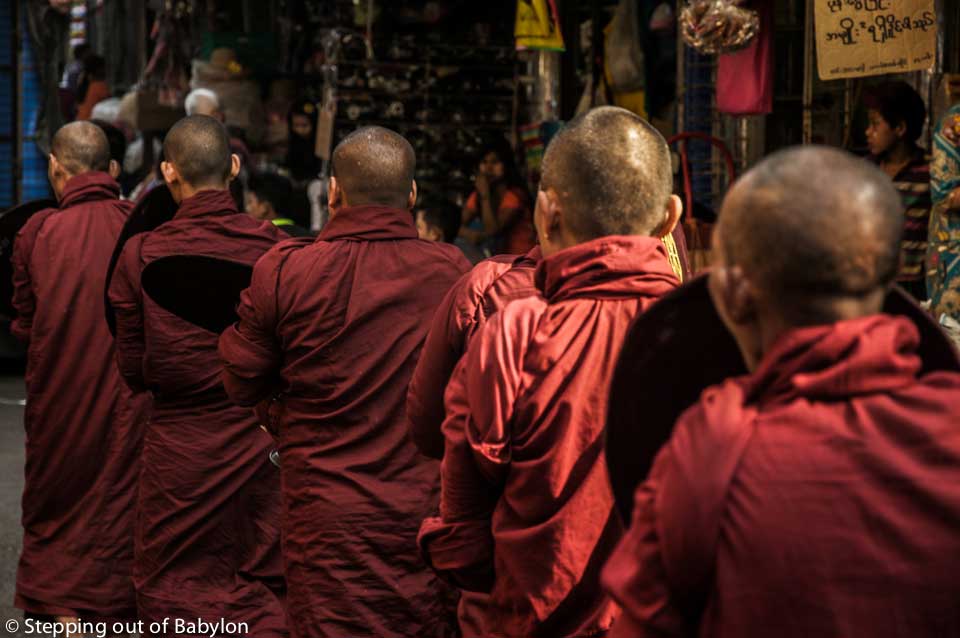
…where every morning monks walk along the city begging for alms, dyed the street with the maroon color.

…where the markets keep their usual fuss, and where the smell of dry fish mixes with the fermented bamboo sprouts, with the people’s voices muting the beeps of the cars…

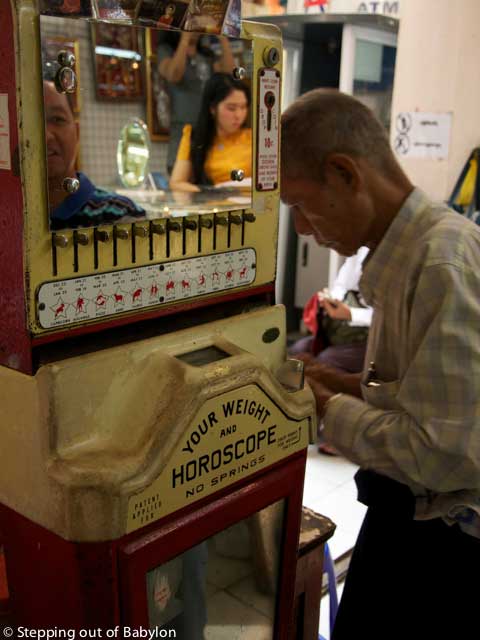
…where fortune tellers and astrologers wait for customers on the shade of a tree, in a country where the Buddhism didn’t erase totally superstition and the animist traditions…

…where reading the news is an almost mandatory activity between male citizens, no matter religion or ethnic group…

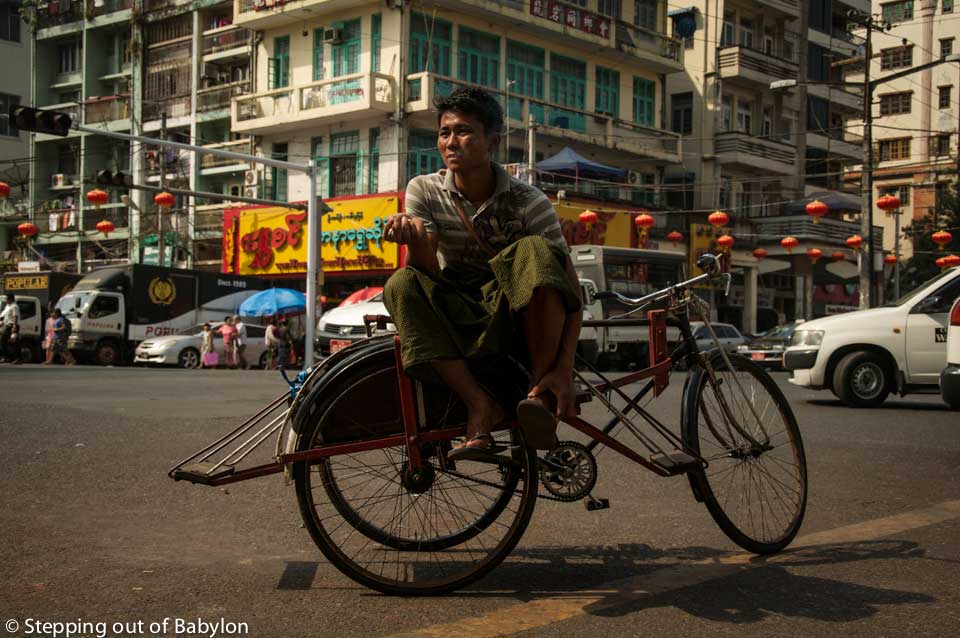
…where the rickshaw drivers wait quietly indifferent to the busy traffic of the city, chewing paan or smoking a cigar…

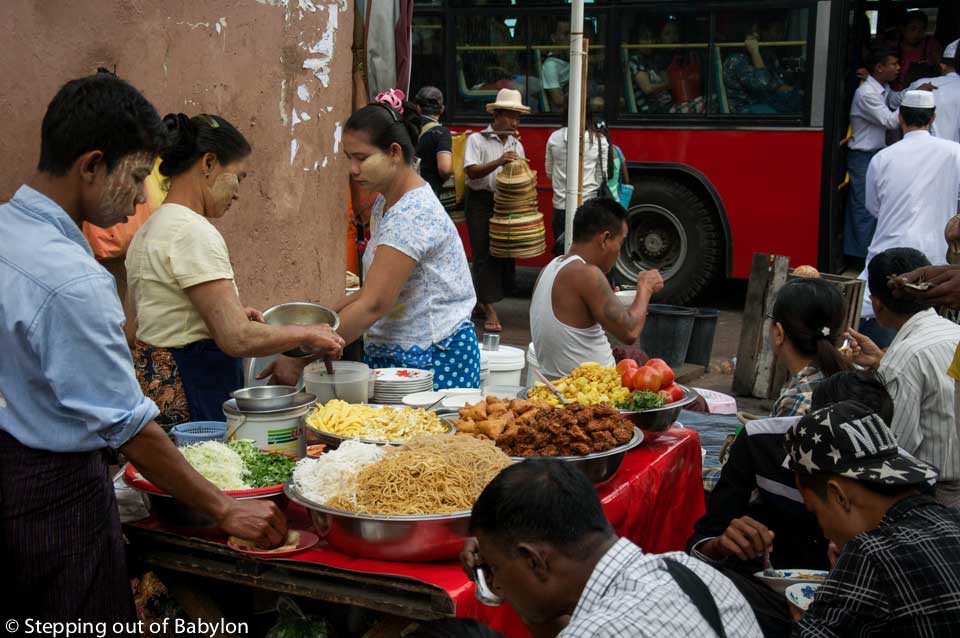
…where the street food is present everywhere, following a precise but indecipherable schedule, with a paratha stall vanish and replaced by a paan hawker in a blink…

…where a Synagogue is located a few meters from a Buddhist temple, from where you can see the minaret of the mosque, while listening to the sound of the bells from the Hindu temple…

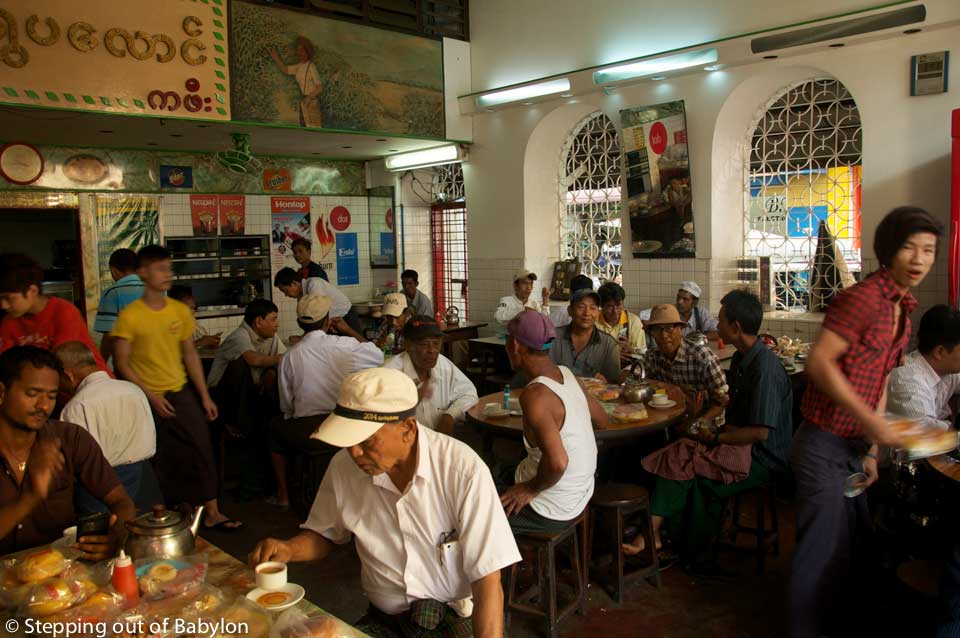
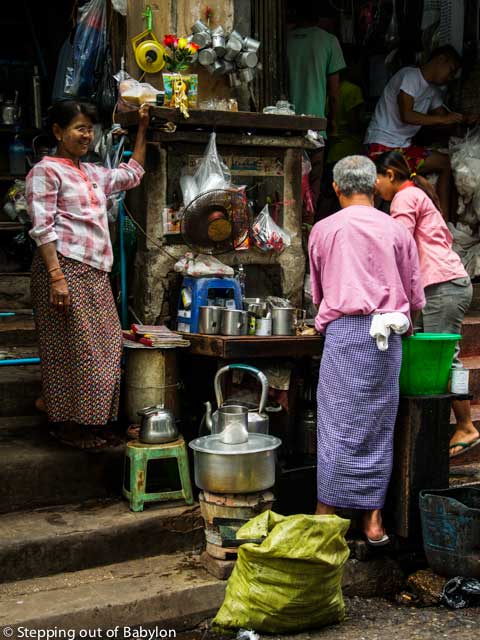
…where the teahouses, remind us of the Chinese presence, a heritage of the Chinese presence in the country, serve an excessively sweetened milk tea mixed with the sound of the male chat, under the freshness of the lazy ceiling fans…

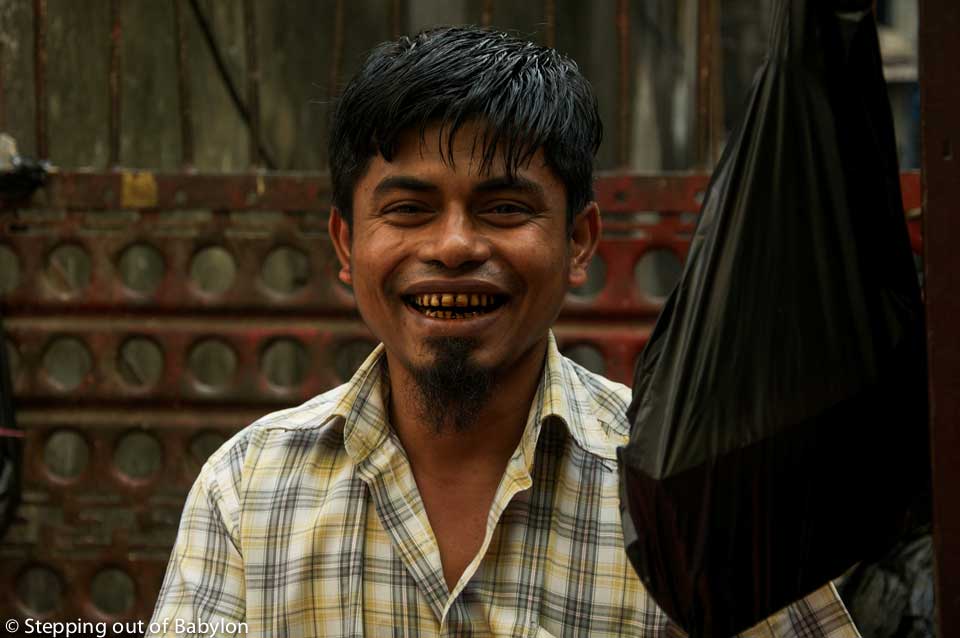
…where the smiles pop up easily from any faces revealing, most of the times, the teeth red dyed by the areca nut and the betel leaf, as chewing paan is a national addiction.

Yangon... where the smiles pop up easily from any faces revealing, most of the times, the teeth red dyed by the areca nut and the betel leaf, as chewing paan is a national addiction
Yangon… where the smiles pop up easily from any faces revealing, most of the times, the teeth red dyed by the areca nut and the betel leaf, as chewing paan is a national addiction

Yangon... where the teahouses, remind us of the Chinese presence, a heritage of the Chinese presence in the country, serve an excessively sweetened milk tea mixed with the sound of the male chat, under the freshness of the lazy ceiling fans
Yangon… where the teahouses, remind us of the Chinese presence, a heritage of the Chinese presence in the country, serve an excessively sweetened milk tea mixed with the sound of the male chat, under the freshness of the lazy ceiling fans

Yangon... here every morning monks walk along the city begging for alms, dyed the street with the maroon color
Yangon… here every morning monks walk along the city begging for alms, dyed the street with the maroon color

Yangon... where the rickshaw drivers wait quietly indifferent to the busy traffic of the city, chewing paan or smoking a cigar.
Yangon… where the rickshaw drivers wait quietly indifferent to the busy traffic of the city, chewing paan or smoking a cigar

Yangon... where the street food is present everywhere, following a precise but indecipherable schedule, with a paratha stall vanish and replaced by a paan hawker in a blink.
Yangon… where the street food is present everywhere, following a precise but indecipherable schedule, with a paratha stall vanish and replaced by a paan hawker in a blink.

Yangon... where the pigeons wait patiently aligned along electric cables, nearby a corner where a corn seller wait for customers that will come to create good karma feeding the birds
Yangon… where the pigeons wait patiently aligned along electric cables, nearby a corner where a corn seller wait for customers that will come to create good karma feeding the birds

[columns] [span6]

Yangom... Where fortune tellers and astrologers wait for customers on the shade of a tree, in a country where the Buddhism didn’t erase totally superstition and the animist traditions
Yangom… Where fortune tellers and astrologers wait for customers on the shade of a tree, in a country where the Buddhism didn’t erase totally superstition and the animist traditions

[/span6][span6]

Yangon
Yangon… a tea shop in every corner

[/span6][/columns]

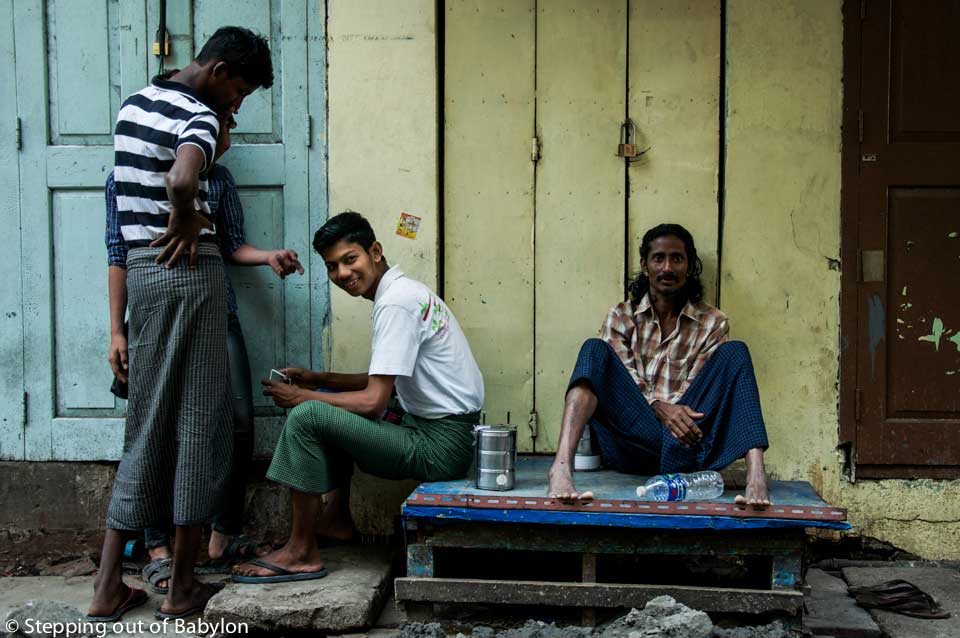
Yangon definitively is a city that seduces and engages, cosmopolitan and authentic, where the different cultures, ethnic and religions live together in a peaceful and respectful way.

Yangon... multiethnic and multicultural and multireligious
Yangon… multiethnic and multicultural and multireligious


Food in Northeast India… for vegetarians!

For a vegetarian diet, all the Northeast Indian states visited were a tremendous disillusionment, capable even of taking out the appetite. With the exception of the state of Assam, whose population is mostly Hindu, meat consumption is a constant presence in the states of Nagaland and Meghalaya, which dominates Christianity.

So this text is only a pale sample of the Northeast States cuisine, but it serves as a guide to those who choose not to eat meat or fish and planning to travel in these remote places.

In the states of Nagaland and Meghalaya is clear the influence of Asian cuisine, often coming up the noodles and chowming, while in Assam is clear the influence of Indian cuisine, specifically from the Punjab region. But the more than 2300 kilometers that separate the two regions, cause a diminish in the intensity of the flavours and reduced the range of ingredients.

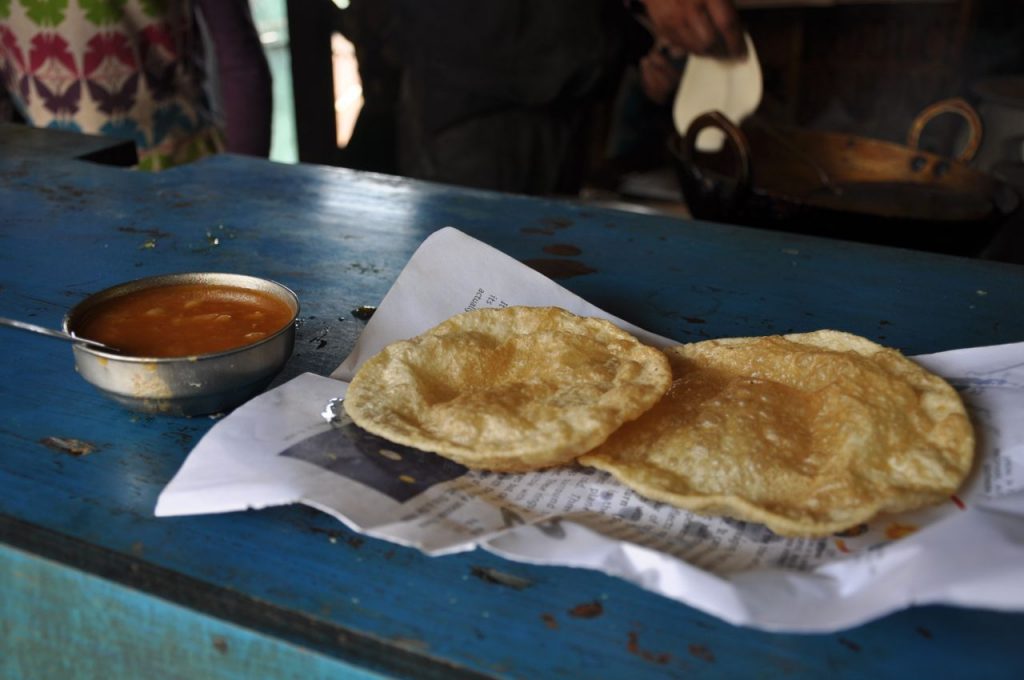
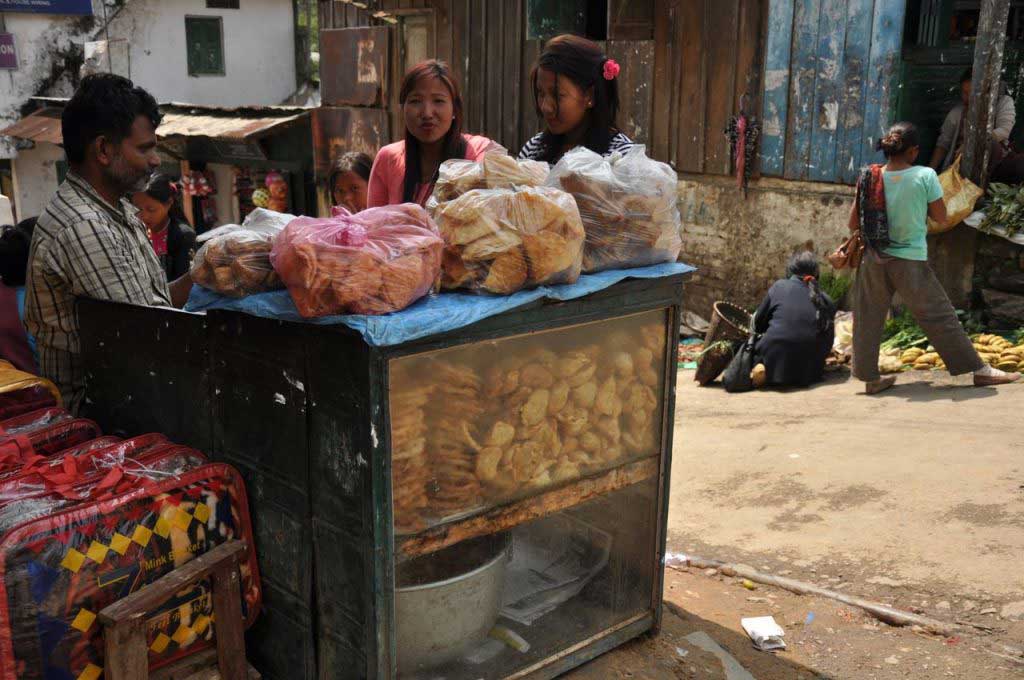
puri stall at Mon village. An almost mandatory stop before a shared-taxi trip in Nagaland.

Assam and the parathas

In Assamese cities are easy to find the classic Indian dishes, such as the dal (lentil curry) as the vegetable and beans curries. The samosas are also very popular as also some other deep fry stuff as the puris. Being a state crossed by the gigantic Brahmaputra River, which floods the plains and creates an ideal place for planting rice, a cereal essential in any Indian meal.

What stood out in Assam were the parathas, a flatbread made from wheat flour that can be found almost in any part of the country, but in Assam have a kind of twist: are thicker and more oily, pale and without the toasted look, resulting in a compact and undercooked dough. These parathas can be stuffed with potato masala, or more often plain, served with simple curries, usually made from potatoes and yellow-peas. The parathas can be found in most of the restaurants and dhabas but are often available in street stalls, being a popular street food in Assam.

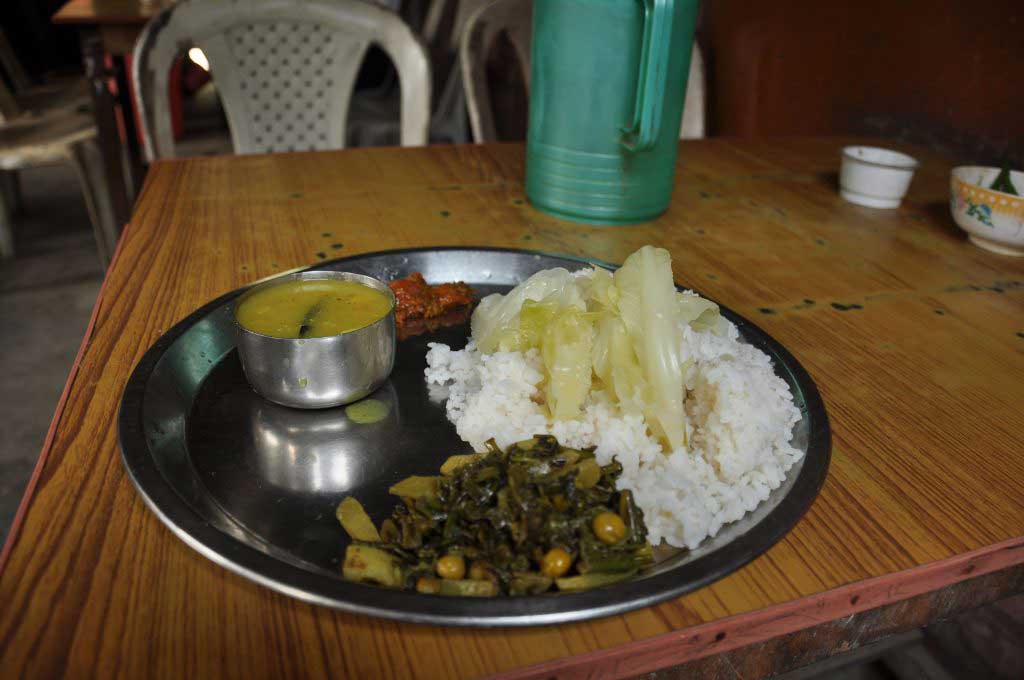
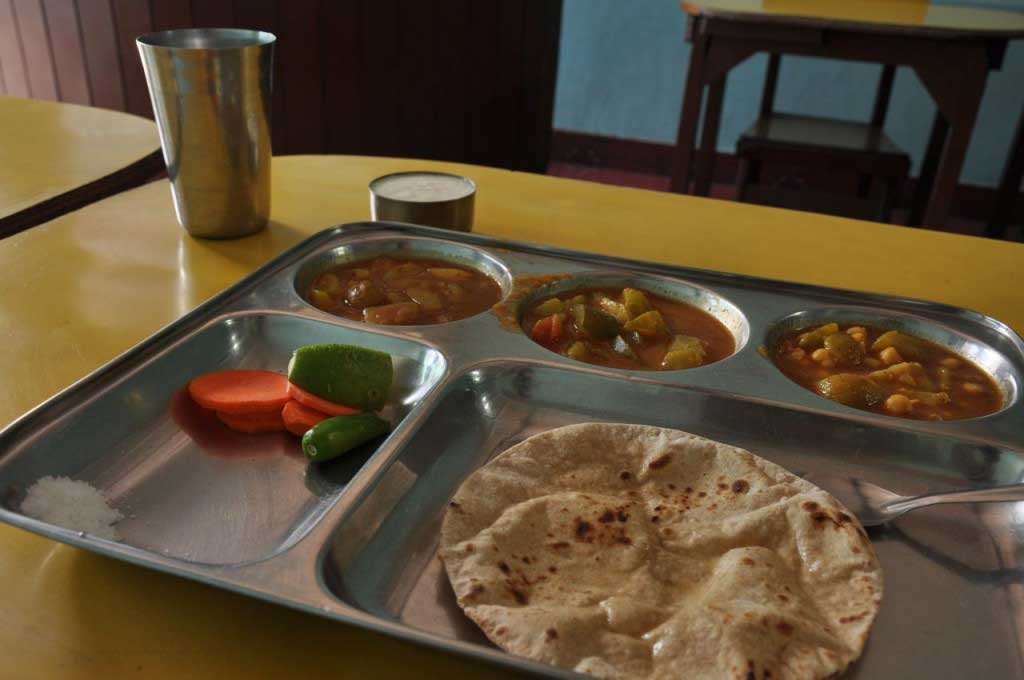
The classic Indian thali, a meal based on rice, dal and vegetables, is also a bit different in Assam, with a very watery dal, a tasteless curry and over the rice a piece of steamed cabbage… yes! just a plain steamed cabbage without any seasoning. Very healthy, fills the stomach but don’t leave a good memory.

The parathas can be found in most of the restaurants and dhabas but are often available in street stalls, being a popular street food in Assam.

These parathas can be stuffed with potato masala, or more often plain, served with simple curries, usually made from potatoes and yellow-peas.

The classic Indian thali, a meal based on rice, dal and vegetables, is also a bit different in Assam, with a very watery dal, a tasteless curry and over the rice a piece of steamed cabbage. .. yes, just a plain steamed cabbage without any seasoning. Very healthy, fills the stomach but don't leave a good memory.
The classic Indian thali, a meal based on rice, dal and vegetables, is also a bit different in Assam, with a very watery dal, a tasteless curry and over the rice a piece of steamed cabbage. .. yes, just a plain steamed cabbage without any seasoning. Very healthy, fills the stomach but don’t leave a good memory.

Nagaland and the “puris”

If at Assam the cuisine proved uninspired, at least in what concern vegetarian option, at Nagaland state every meal was a challenge for a vegetarian traveler. At mountain areas dominates the meat, present in all markets at Nagaland, as also smoked and dry fish.

At the entrance of small towns, there’s always an area where animals are gathered waiting to be slaughtered, while other pieces of meat are sold to those arriving by motorbike or car or to the ones that are traveling by bus, and use the stops for pick passengers to do the shopping. At the cities, the slaughter of animals, mostly turkey and chicken, is made at the markets, where birds wait in cages. Though the air spreads the smell of blood and animal shit that create a sad and heavy atmosphere.

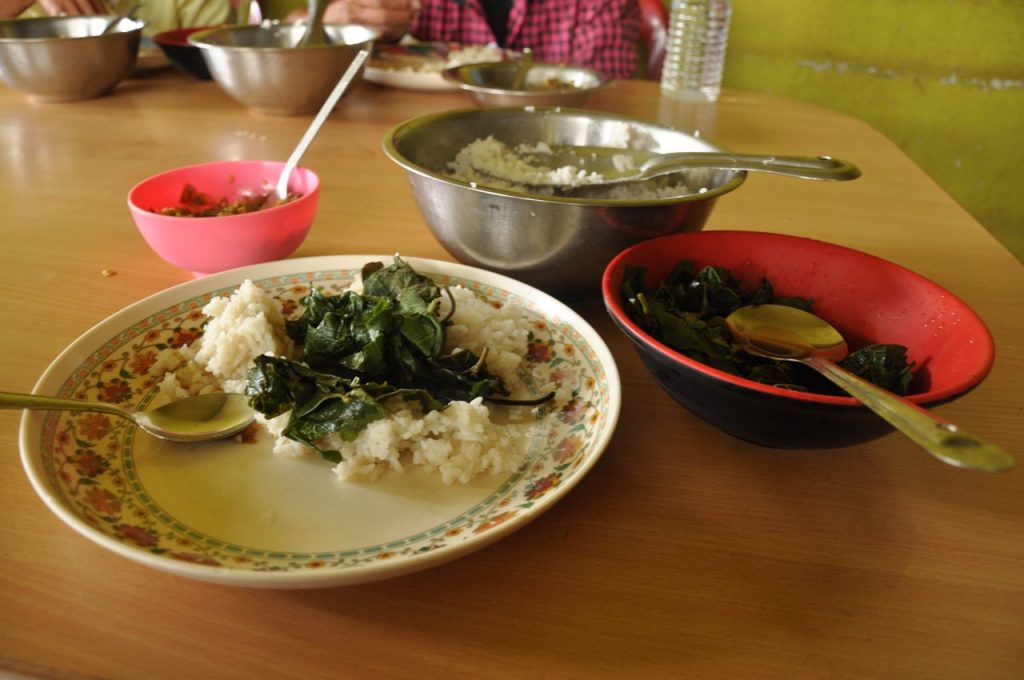
In Nagaland cities, you can find some vegetarian options such as the so-called “rice”: a rice-based dish, with dal and vegetables, or noodles soup or stir-fry noodles. But in the small villages or in more remote areas as Mon, there is not much more to eat than rice and some boiled greens, seasoned with a fermented and spicy vegetables.

An option that can be found a bit everywhere, and along the day, are the puris, a small flatbread, fried in oil and served with a potato and a small bowl of yellow-peas curry. The puris are excessively oily, here more than usual, soaking the newspaper where they are served, and the curry is spicy but watery. This results in a highly caloric but little nutritious meal, yet quite popular among the local population at Mon, Kohima and Mokochung.

An option that can be found a bit everywhere, and along the day, are the puris, a small flatbread, fried in oil and served with a potato and a small bowl of yellow-peas curry.

But in the small villages or in more remote areas as Mon, there is not much more to eat than rice and some boiled greens, seasoned with a fermented and spicy vegetables.

Meghalaya and the Asian influence

Despite the proximity to Bangladesh, the state of Meghalaya is visible the influence from the Asian cuisine by the noodles (rice flour pasta) served in soups or stir-fry. From Tibet came the momos, a small bun stuffed with meat or vegetables.

Shillong, the capital of this state is very modern and cosmopolitan, so it’s easy to find restaurants of the international chains of fast-food, but due to a large number of Indian tourists, there is a wide range of restaurants with traditional Indian dishes.

From Tibet came the momos, a small bun stuffed with meat or vegetables.

Despite the proximity to Bangladesh, the state of Meghalaya is visible the influence from the Asian cuisine by the noodles (rice flour pasta) served in soups or stir-fry.

A breakfast at Northeast India

As this is a region with little international tourism that make almost impossible to find the so-called “continental breakfast” outside the more fancy hotels.

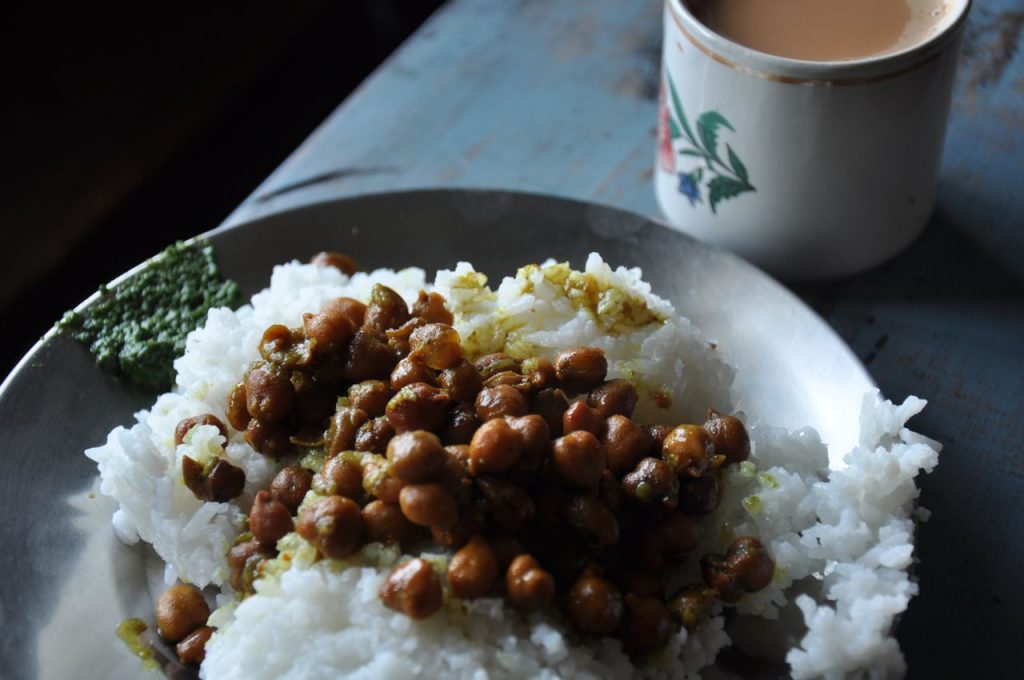
But breakfast usually is not a problem, as the local options reveal almost always a good choice, but in Northeast India this option proved daunting. At Assam was a paratha, served with potato curry and accompanied by a jam. At Meghalaya, in the village of Sohra, the only option available, without meat, was a plate of rice with chickpeas and mint sauce with chili… by chance a simple but tasty combination. At Nagaland, along one of the long bus trip, was time for a chai and a samosa… very tasty and popular combination. At Mon, before starting a journey of 8 hours by sumo (shared taxi), there was an opportunity to taste a very popular breakfast among the local population: deep-fried dough served with a potato curry… a very oily option to start the day!

But breakfast usually is not a problem, as the local options reveal almost always a good choice, but in Northeast India this option proved daunting. At Assam was a paratha, served with potato curry and accompanied by a jam
But breakfast usually is not a problem, as the local options reveal almost always a good choice, but in Northeast India this option proved daunting. At Assam was a “paratha“, served with potato curry and accompanied by a jam

At Meghalaya, in the village of Sohra, the only option available, without meat, was a plate of rice with chickpeas and mint sauce with chili... by chance a simple but tasty combination.
At Meghalaya, in the village of Sohra, the only option available, without meat, was a plate of rice with chickpeas and mint sauce with chili… by chance a simple but tasty combination.

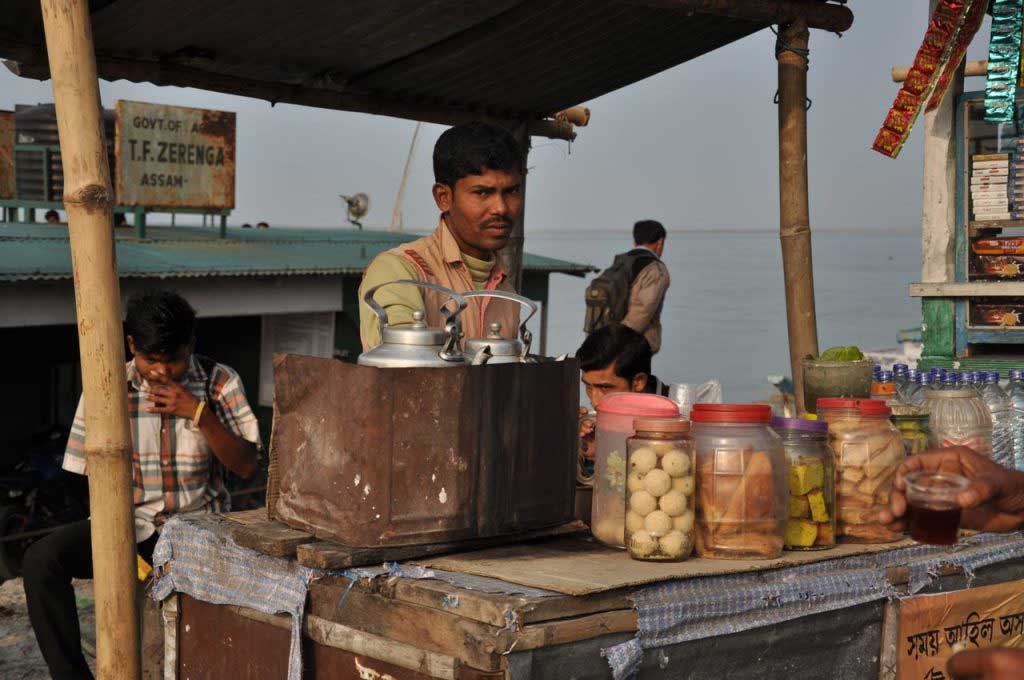
At Nagaland, along one of the long bus trip, was time for a chai and a samosa... very tasty and popular combination.
At Nagaland, along one of the long bus trip, was time for a chai and a samosa… very tasty and popular combination.

At Mon, before starting a journey of 8 hours by sumo (shared taxi), there was an opportunity to taste a very popular breakfast among the local population, deep-fried dough served with a potato curry ... a very oily option to start the day!
At Mon, before starting a journey of 8 hours by sumo (shared taxi), there was an opportunity to taste a very popular breakfast among the local population, deep-fried dough served with a potato curry … a very oily option to start the day!

Sweets

The only experience with sweets along this trip through Northeastern Indian states was been in Assam, where beyond the classic Indian sweets, there was something new for me: a kind of puff dough, deep-fried and drizzled with a thick sugar syrup that after cool down become solid. This syrup results in a yellow-brown color with a bright and appealing look, sold in different shapes, but with a monotonous and boring taste of sugar.

in Assam, where beyond the classic Indian sweets, there was something new for me: a kind of puff dough, deep-fried and drizzled with a thick sugar syrup that after cool down become solid. This syrup results in a yellow-brown color with a bright and appealing look, sold in different shapes, but with a monotonous and boring taste of sugar

Markets

Markets are always a place that awakens the senses, sharpens the curiosity and stimulates the imagination to try to identify the products sold and their use in the gastronomy of each region.

Kohima, in Nagaland, definitely stood out by the markets, where the exotic and diverse food supply reflects the originality of Nagaland cuisine that includes a lot of meat, eggs, dried fish, eels, snails, worms, mice, frogs… and wasp larvae, still sold in the hive.

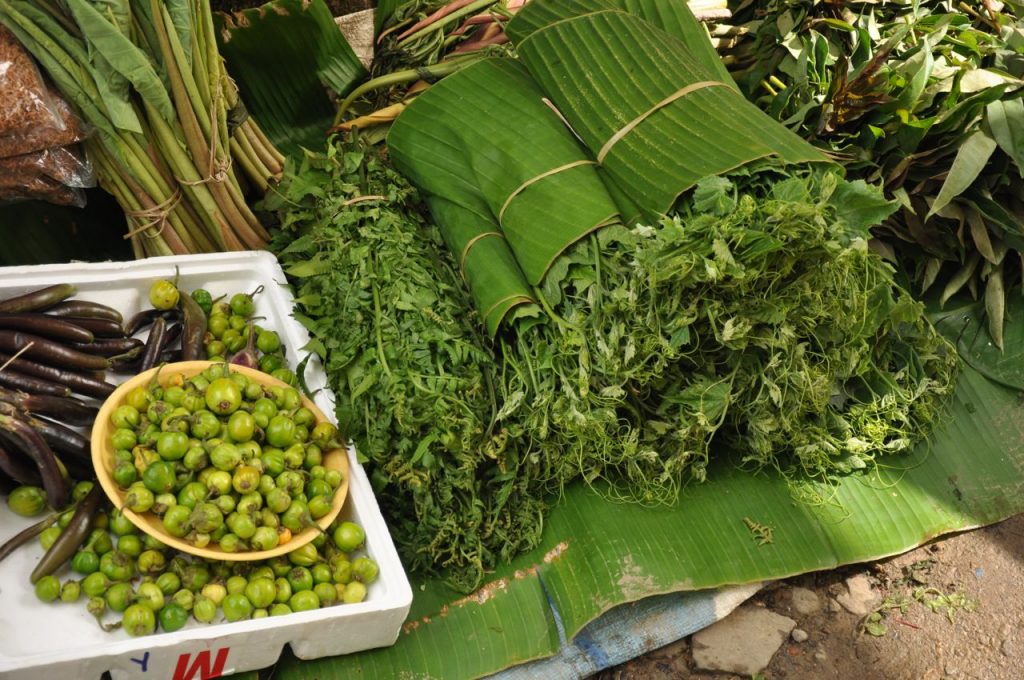
Regarding vegetables, these markets show a mix of tropical and mountain products. From the warm plains of Assam come the papaya, and the banana. But, as also in Burma, beyond the fruit, the trunk and the flower of the banana tree are also used for cooking. From the cool mountain air of Nagaland arrive a wide variety of mushrooms and bamboo that are eaten in sprouts. There’s also a big range of veggies, many of them totally unknown to the European taste.

Banana trunk in Kohima Market. Nagaland

Regarding vegetables, these markets show a mix of tropical and mountain products. Kohima Market. Nagaland

Dried fish and eels at Mao Market. Kohima. Nagaland

worms sold at Mao Market, in Kohima. Nagaland

nagaland_mokochung_market_dsc_8718
Vegetables in a Kohima market. Nagaland.

Kohima, in Nagaland, definitely stood out by the markets, where the exotic and diverse food supply reflects the originality of Nagaland cuisine that includes a lot of meat, eggs, dried fish, eels, snails, worms, mice, frogs... and wasp larvae, still sold in the hive.
Kohima, in Nagaland, definitely stood out by the markets, where the exotic and diverse food supply reflects the originality of Nagaland cuisine that includes a lot of meat, eggs, dried fish, eels, snails, worms, mice, frogs… and wasp larvae, still sold in the hive.

***

As a conclusion, it can be considered that the gastronomical experience offered in the visit to the northeastern states of India wasn’t enjoyable, left a memory of monotonous and tasteless food, where the potato was a constant ingredient in almost all meals over the 22 days trip… but of course this is a point of view of a vegetarian, who can not do justice a cuisine of such a large area.

The “paan” chewers

"paan" chewer in the streets of Guwahati, Assam, India

“paan” chewer in the streets of Guwahati, Assam, India


From the experience of traveling in the Northeast states of India, there was one thing that caused a strong impression in the memory of the sensations: the paan… the smell, the color, the gestures, the sound of spit and red trace left on the ground.

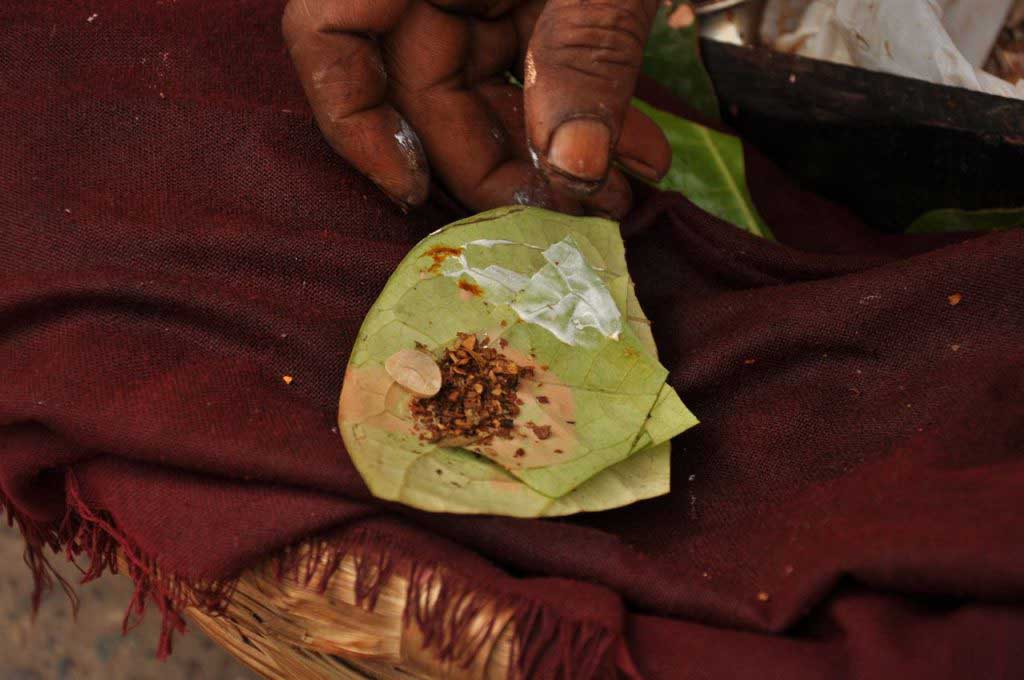
But what is the paan!?! Basically, paan is areca nut, whose appearance resembles a nutmeg, cut into small pieces and wrapped in betel leaf, a green vine leaf that has stimulant effects. To this mixture, is often added tobacco (chewing tobacco) and lime (calcium hydroxide … yes, the same as the lime which is used to cover walls.

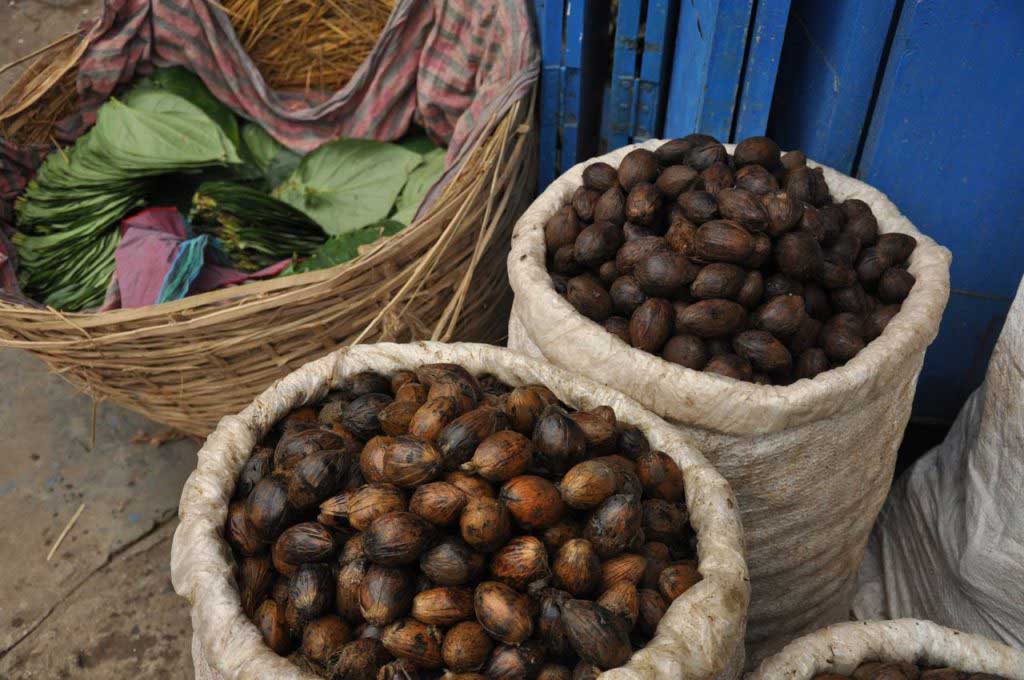
The areca nut, resembles much the nutmeg, both in size and in the appearance of the fruit, but rather born of a tree is the fruit of a palm tree, whose nuts grow in clusters at the top of a thin, high trunk.

Areca nut still with the skin of the fruit
Betel Leaf sold in markets (folha de Betel à venda nos mercados)
Areca nut without skin
Areca nut without skin at a market in Burma (Myanmar)
Areca nut tree. Megahlaya. India

The betel leaf is carefully folded in the form of a small rectangle or triangle shape, keeping the areca nut mix inside, and placed in the mouth between the cheek and the teeth. This “pack” is slightly chewed so slowly release the juice that gives gradually a reddish color to the saliva, which extends to the corners of the mouth and lips. After a few years of use, it results, in the decayed teeth and stained red, as well as a certain addition, due to the stimulation property of betel leaf. Mixed with tobacco, it increases the carcinogenic effects of the areca nut.

paan street stall. Burma
paan street stall. Burma (Myanmar)
"paan" before being fold in the betel leaf. "paan" uma mistura de nós de areca, cal e tabaco de mascar, enbrulhada numa folha de betel)
“paan” before being fold in the betel leaf. (“paan” uma mistura de nós de areca, cal e tabaco de mascar, embrulhada numa folha de betel)

The paan produces a strong salivation, which makes their consumers have frequent need to spit, which is often made in a showy way, a jet of red saliva, which leaves a trail through the streets, sidewalks and even on the walls!

Being very popular in India, the habit of consuming paan lies spread by all Asian countries, being more evident in India, Nepal, Bangladesh, Sri Lanka and Burma, with this last country being the place where the presence of paan is a constant being also chewed by women and the children.

But weeks spent through some of the northeastern states of India, like Assam, Nagaland and Meghalaya, left a stronger mark of this phenomenon. Here, perhaps more than in any other regions of India, areca nut “rules”, being even chewed without betel leaf or any other mixture.

Being predominantly a male habit, common among the poorest, it is a mark image among bus and tuk-tuks drivers; but in Northeast India the paan is also quite popular among women, and its cross-consumption to the various social classes, not being surprising to find a shepherd in Majuli Island spiting paan or the receptionist of a hotel in Mokokchung with corners of the mouth marked in red by the areca nut.

The chewing tobacco consumption is also very popular, being mixed with lime in order to moist the tobacco dry leaves, forming a paste which is placed near the gums. The tobacco preparation, rubbing the mixture in the hand palm with the index finger, being in the end slightly beaten to become flat and compact, are one of the most preset gestures… in the cities or in the villages, on the streets or in shops, on buses and trains… everywhere!!!

Despite the chew of tobacco be unpleasant, as it produces the frequent need of spit, the paan with its sweetish smell created, after three weeks of traveling through northeastern India, a certain distaste and aversion, for the combination of the spitting sound with the jet red saliva discharged, which doesn’t strive to be discreet or delicate, making the act of spitting an art, where the trajectory and distance of the red track left on the ground, is a matter of pride.

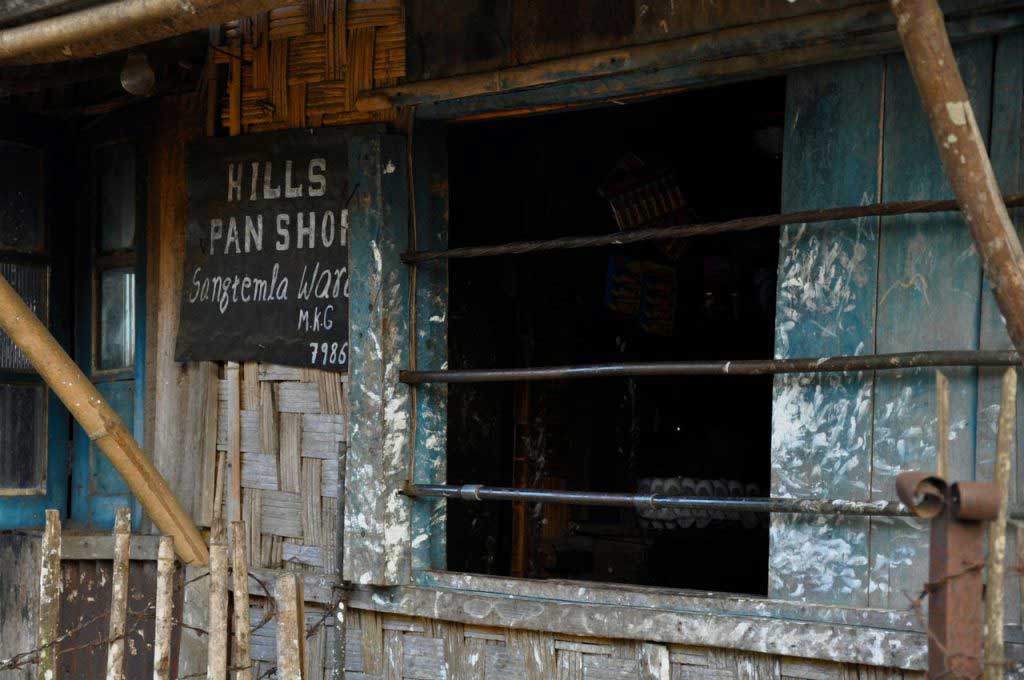
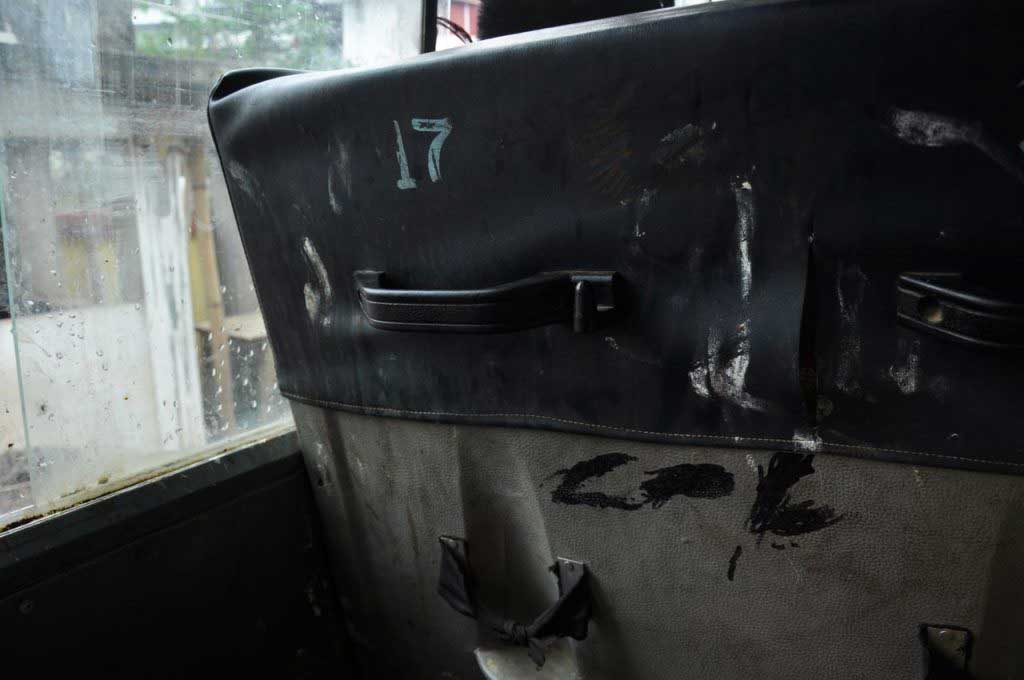
And a little everywhere, always come up white marks left by lime stuck to the fingers, that is rubbed on doorposts of the paan shops, or on the seats of a bus or a train…

paan shop, that are small stall where the paan is prepared and sold, usually in pack of six. Mokokchung, Nagaland. India
marks left by the fingers with lime that is used to mix with the tobacco and the areca nut (marcas deixadas pela cal usada para misturar o tabaco de mascar com o noz de areca).


And the smell also left a strong mark on my memory, with hotel rooms with paan presence, and long trips made by bus or the sumo, in the company of enthusiastic paan chewers, whose sweet smell pervades the space, and my field of vision regularly crossed by someone that need to spit out by the window.

A negative but strong memory that created in me a disgust of the paan, which my senses can not remain indifferent.

tuk-tuk driver spiting the paan, leaving a red trace on the streets (condutor de tuk-tuk

Mon… in the land of the Nagas

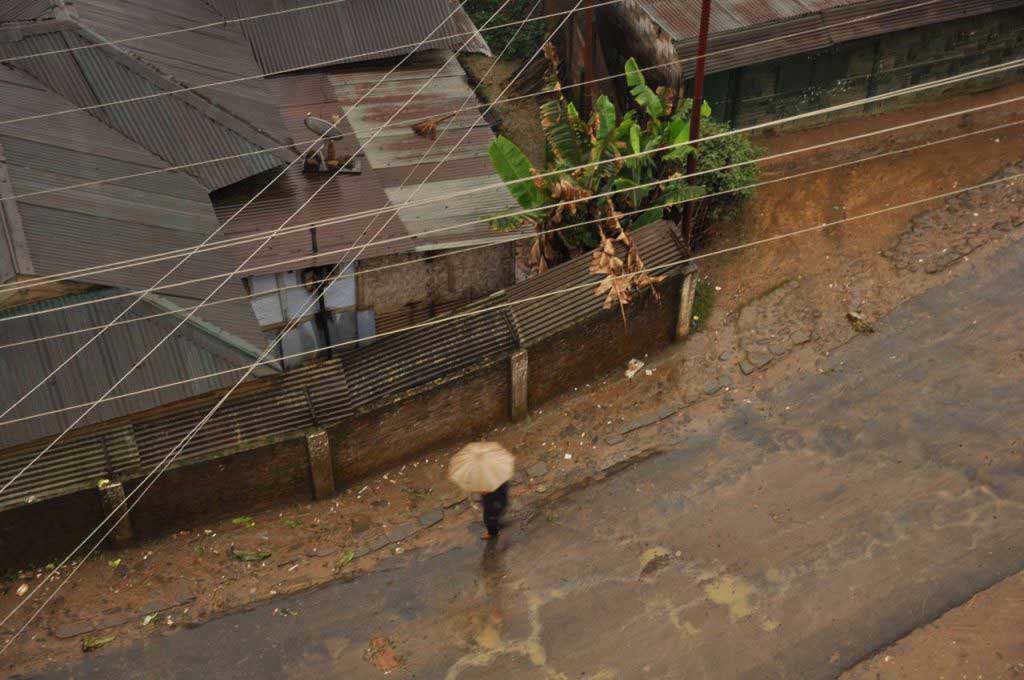
Mon greeted me with a violent storm that emerged unexpectedly just after the sunset, after a day when the blue had dominated the sky and nothing could presume this abrupt weather change, that brought also an uncomfortable chill air.

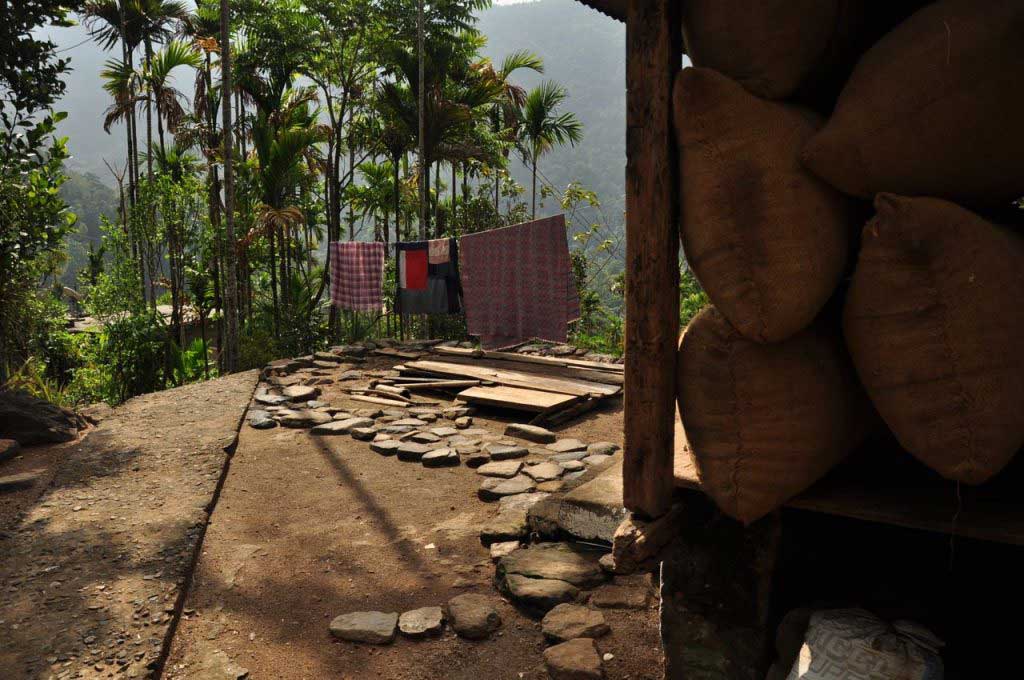
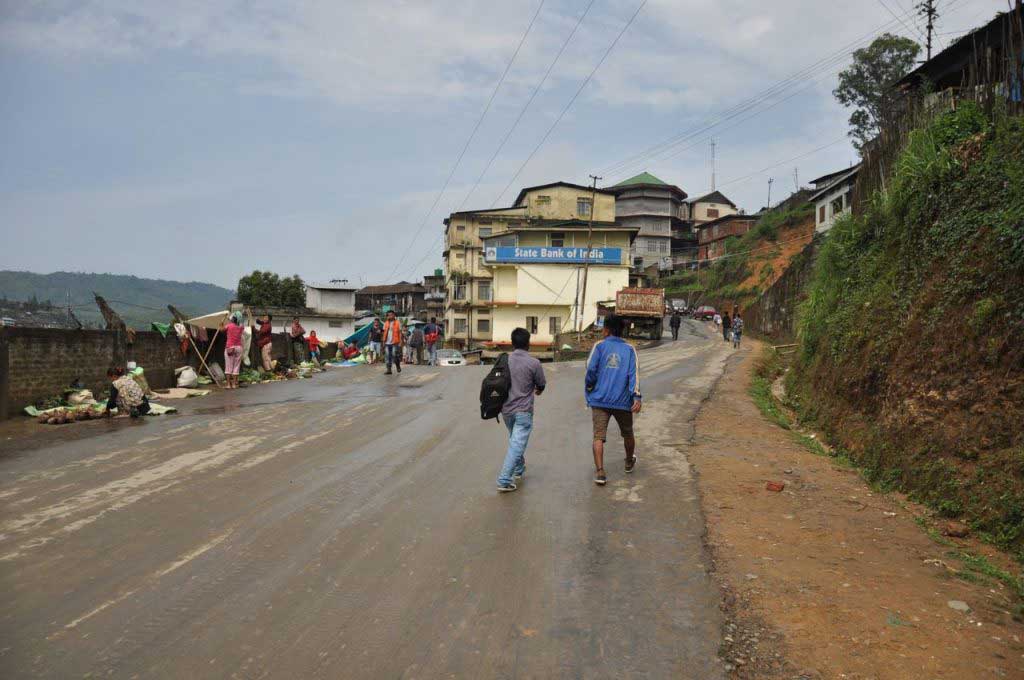
Mon, a small town located on top of hills and spread by its slopes, along winding roads, made of concrete buildings and metal roofs. Mon seems wrapped in a dull and gray mantle, where the scattered light rain creates a sad and depressing atmosphere, making dampen the enthusiasm of any visitor.

Mon Town. Nagaland
Mon Town. Nagaland
Mon Town. Nagaland
Mon Town. Nagaland

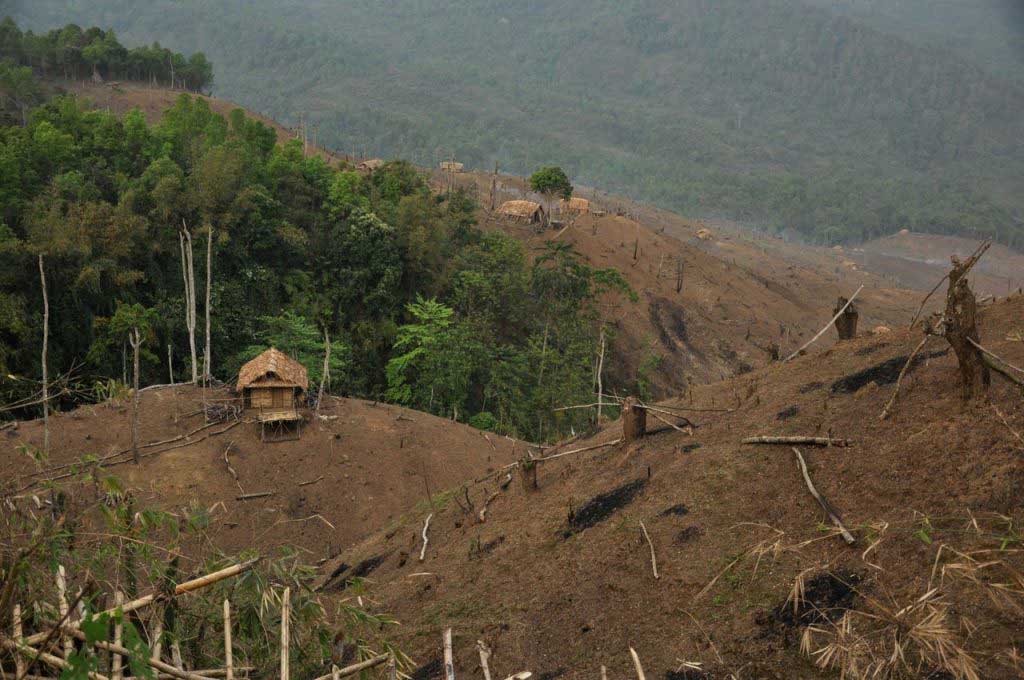
In the mountains that surround the town create an insurmountable barrier on the horizon, where the green dense forest contrast with the urban gloomy scenario. But in some places it’s visible the heaviness of human impact, where large areas of semi-tropical forest have been completely wiped out, exposing the grayish-brown soil that transmits an immense feeling of desolation.

montanhas que rodeiam a cidade de Mon. Nagaland
Mountains around Mon. Nagaland
Montanhas em volta da cidade de Mon, sujeitas a intensa desflorestação que deixam o solo exposto À erosão. Mon. Nagaland
Walking arounf Mon Town. Nagaland

The Nagaland mountains gathering various tribes and ethnic groups, which can count on about 16 and that under the British rule were divided between what is now India and Burma. But these modern borders don’t respect the ethnic and cultural characteristics of these people, which led to conflicts and violent actions, which lasted until 2013. Mon is the center of Konyak tribe, whose territory also extends to the north of Burma, whose physical features and Mongols faces clearly refer us to the Asian people.

The solid mountain range sheltered for centuries these Naga tribes, allowing these people to remain distant from the culture, language and Indian religion, keeping until today their own language, whose writing is curiously in Latin characters. It was also a result of this isolation that they could keep the religious practices, linked to animism, that were only destroyed by the arrival of missionaries, in the nineteen century who brought Christianity to these populations.

But despite this influence, the Konyak, kept alive their traditions, being famous as headhunters, where heads of warriors of enemy tribes were hung in the Morong (communal houses), as trophies after each fight. But from these traditions nothing remains, with human skulls already replaced by skulls of animals in the Morong decoration. But what have not disappeared yet, are the tattoos that men still show on their faces and neck, showing that they were succeeded as headhunters. These tattoos and the pierced ears are decorated with animals horns, are still used by some Konyak men, as well as colored beads necklaces, adorned with bronze carved faces, indicating the number of men killed. But only among the older ones you can find the famous tattoos of these warriors, as the times of tribal fights are getting distant.

Konyak tribe. Mon. Nagaland
Konyak tribe man. Mon. Nagaland

A power cut left Mon Town in the dark during the two days of my stay, and as in the Northeast of India night arrives early, there is not much to do in Mon after 5 pm, pushing me to my room, in a totally empty hotel located on a building abandon during the night, where I was the only human presence. By nine o’clock at night, without electricity and without company, sleep settles softly.

Outside, in a total darkness only interrupted by the glare of the headlights of scarce cars or motorbikes, Mon shows up hostile and sinister.

Mon_Food Market_DSC_8667
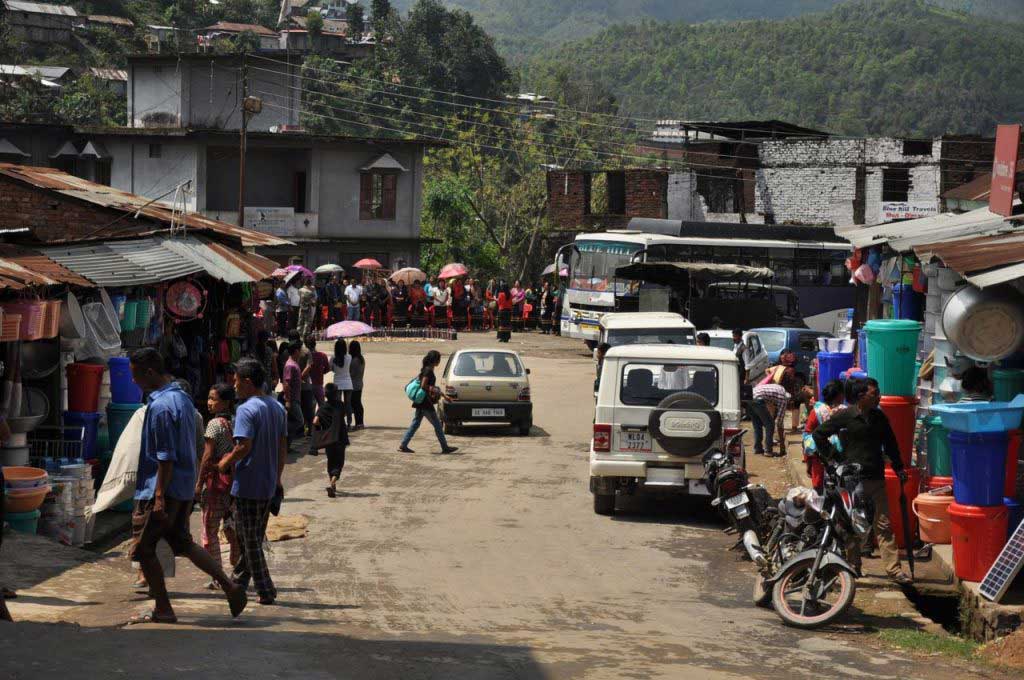
Mon street market. Nagaland
Mon Town. Nagaland
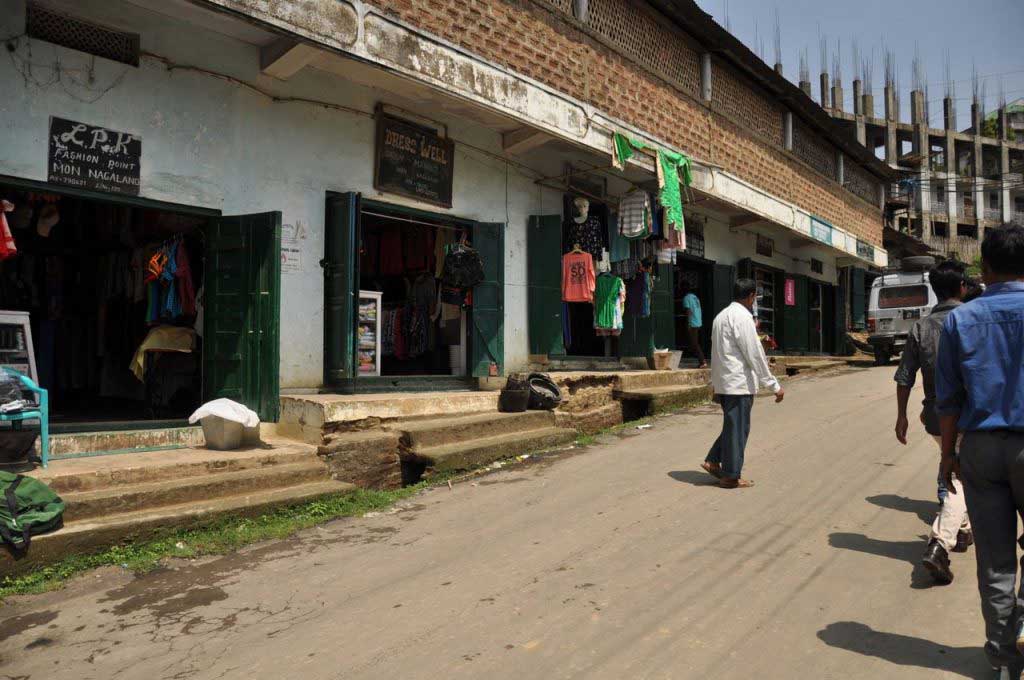
Shopping area at Mon Town. Nagaland

During the day, Mon gains a certain life especially along the streets that gather most of the shops but is still present the feeling of poverty that dominates the city. A poverty not visible in houses or in people, not even in the outfits, were by the way youth wears very westernized and modern clothes, but a poverty associated with underdevelopment that shows up in the appearance of the shops, on the items they sell, in the short supply of products, in scarce diversity of the food at stores or street markets, uninteresting and monotonous food… a kind of poverty that result more from the isolation to which this population is subject, where the only access to Mon has to be done by an unpaved road, where the 65 km takes at least three hours to be covered, and where there are any accessible road connecting Mon other cities of Nagaland state. It is perhaps this isolation and the harsh conditions that make life difficult at Mon, that result in hard and closed faces, from where it is difficult to get a smile.

Mon Town. Nagaland
Mon Town. Nagaland

Where to sleep in Mon:

Pamount Guest House: located above the State Bank of India (also known as SBI), less than 5 minutes from the sumo stand. Double room by 1000 rupees but may be negotiated up to 800 rupees, because the place is empty all year except during the Aoling Festival.

Paramount Guest House contact: 9612170232; 08257811627

The room is small but comfortable and clean, with en-suite and some furniture, but there are several types of rooms with a bigger area. Curiously the six existing rooms on the top floor of this building have an odd numbered 9 to 235, jumping by 170, 210, 75, 215… which later turns out to be the number recorded in each of the keys !!!!

Paramaunt Guest house. Mon. Nagaland

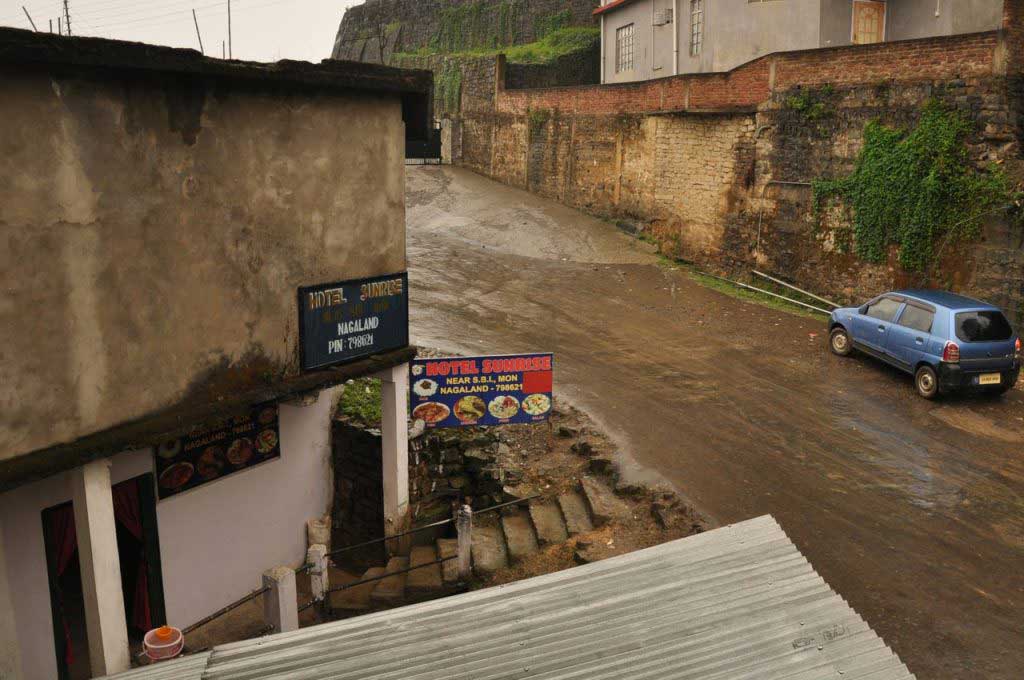
Just on the right side of the State Bank of India building, is the Sunrise Hotel that basically works as a restaurant, but also has rooms to rent. The room are more modest than the Paramount guest house, by 500 rupees, that can be negotiable. The Sunrise Hotel has only two rooms, but any of them with more than two beds; the bathroom is outside the building and has poor conditions.

Sun Rise Hotel. Mon. Nagaland

The Paramount Guest House and the Sunrise Hotel are the only accommodation in central Mon, yet there is Helsa Cottage, which has better rooms for 1500 rupees but is a bit further away.

Where to eat in Mon:

Mon is far from being attractive in terms of food, with a small number of restaurants, all very far from the westernized patterns. During the day, along the main streets, some place serve food but are hardly localizable because there’s no indication, but a curtain covering the door means that is a place with food, basically rice with dal and curry, locally known simply as “rice”.

Being a mountainous area the meat is constantly present but you can always ask for the “rice” in a vegetarian version, making clear no pork and no chicken. However this kind of meal, which gives the right to a “refill” it costs just for 50 rupees, is nutritionally poor and because vegetables are potatoes with a few yellow-peas and the dal (lentil curry) is rather watery.

In terms of street food, Mon doesn’t have much to offer beyond samosas and other fried dough snacks, excessively oily and sold in very poor hygienic conditions.

Basically, you can say that Mon is a disappointment in terms of gastronomy judging by what is available in restaurants and street stalls.

The Paramount Guest House prepares meals by order, that can be served in the room or in the dining room, a rice with dal and curry for 100 rupees, but without the spicy touch.

Next door is the Sun Rise Hotel restaurant serving rice, dal and vegetables, since morning for 40 rupees, but doesn’t serve dinner.

Along the streets of downtown Mon, especially at Market Street, the shopping area, there are several small and discreet eateries that serve puris, samosas or rice with curry. Two puris with a cup of sabji (potato and yellow peas curry) cost 10 rupees.

street food em Mon Town. Nagaland
street food at Mon Town. Nagaland

Transport in Mon:

Mon has a few public bus, but with an uncertain schedule, and is difficult to get information about the destinations. There are private buses, very early in the morning, but just to Dimapur and Kohima. The local means of transport are the sumos and the shared taxis.

  • Hire a taxi to Longwa costs 2500 rupees return. These taxis are stope near the sumo stand.
  • The sumo for Longwa costs 220 rupees (one way) and departure at 6 a.m. or in the afternoon by 1 p.m. It is necessary to book tickets in advance at least one day. The same for the way back. At Mon the tickets for sumo must be booked in a grocery, bit further down from the police circle, on the road that leaves Mon to Sonari.
  • A taxi to Mon Village (about 5 kilometers) costs 800 rupees; no sumo or shared taxis make this trip.

Sundays there is not any kind of transport in Nagaland … there is neither bus nor sumo or taxis.

autocarro publico. Mon Town. Nagaland
Nagaland bus company. Mon Town. Nagaland

How to go to Mon:

And the fastest way to get to Mon is from the neighboring state of Assam, at the city of Sonari. From Sonari sumos run daily, and this arduous journey takes three hours by a dirty road in poor conditions, where most of the journey is in a mountain area.

Being in Nagaland there are only two options to get to Mon: from Dimapur or from Kohima. From these cities run private buses and sumo to Mon, but they always need to pass through Assam and by the city of Sonari, as the roads in Nagaland state are in very bad conditions.

How to go from Mon to Mokokchung:

There’s only one road to get out of Mon, and goes to Sonari, in the neighboring Assam state; so to travel between Mon and any other city of Nagaland, such as Mokokchung, it is always necessary to go through Sonari and Assam roads, are not very good but are flat and paved.

  • sumo from Sonari to Mon: 200 rupees (3 hours)
  • sumo from Mon to Mokokchung: 650 rupees (8 hours)

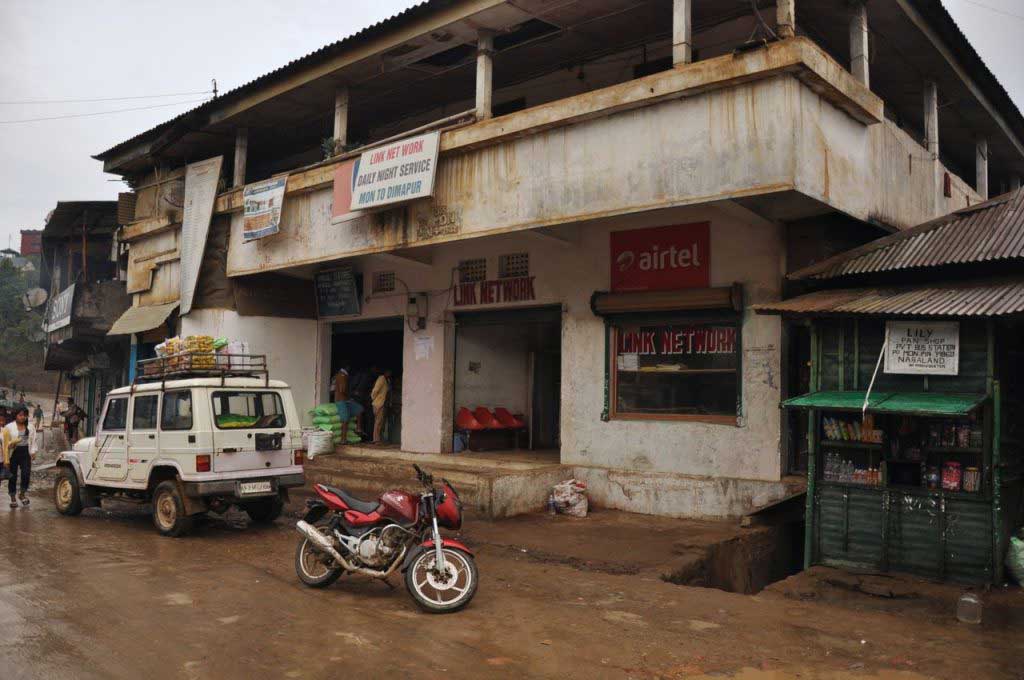
At Mon there’s only one sumo company that run to Mokokchung, the Link Network, with sumos to leave by 6:30 a.m, Monday to Saturday.

For any trip leaving Mon, either to Kohima, Dimapur, Sonari or Mokokchung, is necessary to book tickets at least one day in advance, and soon as possible to be able to choose one of the front seats, as the back seats are narrow extremely uncomfortable for such a long trip. Whatever the destination, the sumo run all early in the morning for 6 am.

empresa que faz a ligação de Mon para Mokochung. Mon. Nagaland
office of “sumo” between Mon and Mokochung. Mon. Nagaland

How to go from Mon to Longwoa:

The 35 kilometers that separate Mon from Longwoa are not easy to do, the means of transport are few; as there are no buses, the trip must be made by sumo or taxi. The sumos run, twice a day: 7 a.m. and 2 p.m. With the shortage of transport is required to reserve the ticket with a minimum of one day in advance.

The journey takes more than 1 hour.

These sumos don’t run from the sumo stand, like the other bound to Kohima, Dimapur, etc… but the road “down” the police circle (roundabout where sometimes is a police officer command the traffic). The sumo park in front of a grocery store, that also sell tickets.

  • sumo: 220 rupees (one way)
  • taxi: 2500 rupees (return)

Mon Festival:

Aoling Festival: annually from 1 to 6 April

During the festival, a show of Konyak culture and traditions, and even a few days before the city of Mon begins to get more visitors, and is almost impossible to find a room, if you didn’t book in advance, and also increase the prices. It is advisable to book in advance if you wish to stay in Mon during the festival.

Internet in Mon:

There is no internet place at Mon; neither Paramount Guest House or Sunrise Hotel have internet or wi-fi.

Right next to the entrance of the State Bank of India, in a corridor with shops, the first shop on the left side, with copies and prints, have internet (when the signal works).

ATM on Mon:

There is only one ATM at Mon, the State Bank of India, where people line up to withdraw money, as the ATM it is not always available or working.

There are frequent power cuts In Mon, affecting the operation of the ATM. So it is recommended to bring enough money for all stay, as there are also no exchange shops.

State Bank of India. Mon Town. Nagaland

elevation: 655 m

population: 16,120

From the Assam plains to Nagaland mountains… from Majuli to Mon
It’s time to say goodbye to the stillness of Majuli and the plains of Assam to heading up the hill to the challenging Nagaland. With the sunrise was time to get out of bed and prepare for departure from the island of Majuli, with the fields still wrapped in a fine mist. The first ferry leaves the island at 7 am, but to get there you have to wait on the roadside for a crowded bus heading to the makeshift pier, that is forced to change location according to the ups and downs of the Brahmaputra river.

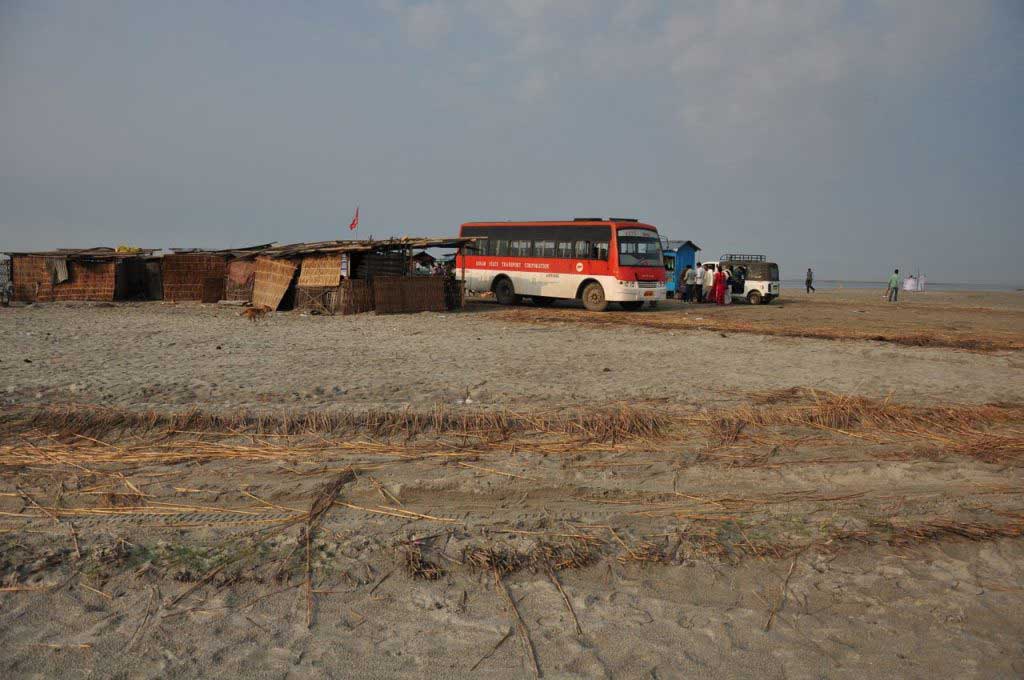
Ferry boat Pier at Majuli Island. Assam

The boat ride is calm and monotonous landscape invites to sleep, but as soon as we landed in Nimati Gaht, this quietness is broken by the tempos drivers, who hurriedly try to put the largest number of passengers in their own vehicle, always in bigger number than space available.

The trip until Jorhat takes no more than half an hour but is uncomfortable enough for us look forward the arrival in the city, where we are “dumped” on a street where taxis and rickshaws line, and where each driver tries to push us to his vehicle. In this situation, when we don’t know where we are and have no idea of the direction to take, the best is to walk a bit, away from this chaos and look for reliable information. So it was time to find same food. But again was impossible to avoid the monotonous paratha with the usual curry of yellow peas and potatoes. To get trustful information in places where the English language isn’t “lingua franca”, the best option is to look for a pharmacy, where usually the owners speak a reasonable English.

With precise guidelines about the direction to take, it was time to start the trip with another series of buses and many transfers… from Jorhart to Sivasagar, from Sivasagar to Sonari, finally from Sonari to Mon.

As not everything follows the logic that we used, not always the buses leave us in the terminals, but somewhere along the road, at the mercy of tuk-tuk and taxi drivers who eagerly wait for disoriented passengers. But as always happen n this kind of long journey, someone shows up willing to help: or giving directions or sharing part of the ride, with the communication resumed to basic words or by using gestures.

Despite the discomfort of the buses, the many transfers, the warm weather, the journey from Majuli flow quit well, with good coordination between different means of transportation and short waits between buses, which encouraged me to go on the same day to Mon, saving me from stay one night in the unattractive and dusty town of Sonari.

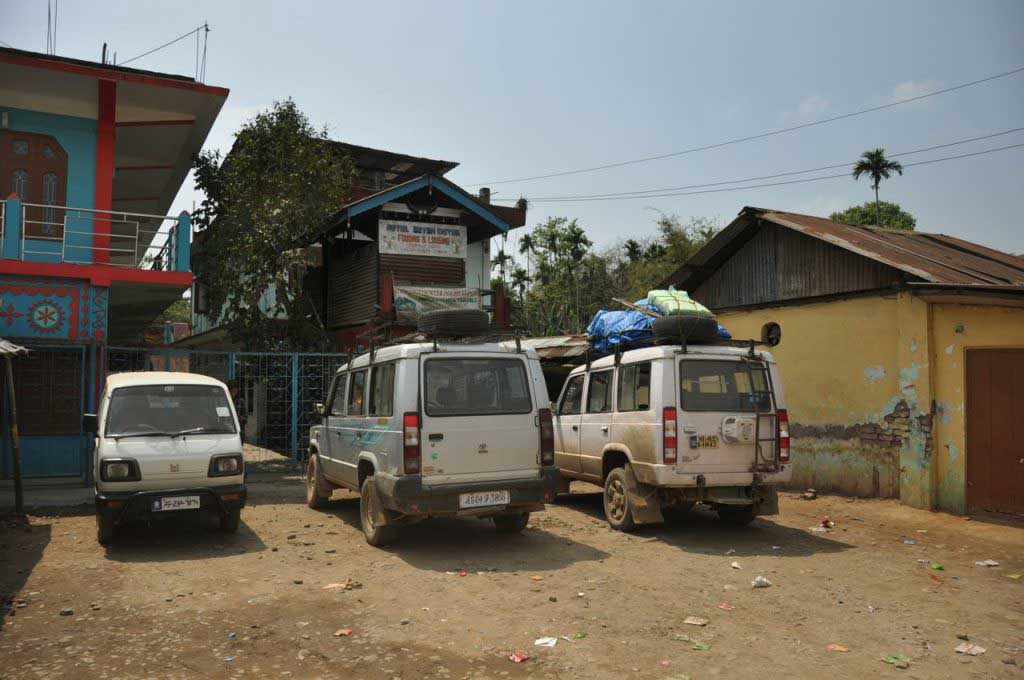
"sumo" stand at Sonari. Assam
“sumo” stand at Sonari. Assam

Nagaland is reputed to be dangerous, especially Mon… perhaps because tribal wars have lasted until recently, perhaps due the proximity of Burma and opium route, or more likely by the isolation and negligence that is voted on this region, where scarce basic infrastructure and were is evident a certain underdevelopment. So often I received warnings not to travel alone in Nagaland, and especially never walk at night on the streets.

With this warnings, it becomes a priority to arrive as soon as possible to Mon, situated in a part of the country where the sun goes down before 5 pm. The only sumo waiting at Sonari was already full and there was no guarantee if there will be more sumos that day. Having glimpsed some space on the back of the Jeep, I could explain why gesture that there was still room for one more. Immediately the friendly driver proceeded to the reorganization of the goods on the top of the Jeep, to get some space near the other passengers, that despite not speaking English received me with smiles.

Nagaland_road Sonari-Mon_DSC_8624
Road from Sonari to Mon. Nagaland

It was easy to know when we leave Assam and entered in Nagaland: Assam is flat… as soon as we start to go up the mountains we know that we are in Nagaland!

The road that leaves from Sonari, though asphalted is in poor condition, goes flat through tea plantations and warm temperature, into the direction of the mountains. Nagaland begins in the village of Tizit, and from here is always up until Mon, by a dirt road, where trucks and Jeep move slowly, overcoming bumps, avoiding pits and crossing small water stream. Is a road opened on the mountain slopes, with scattered villages, but where the impact of human presence is evident, by intense deforestation that leaves the poor top soil exposed to erosion, stolen life to this green forest, that is replaced by a brown color.

As we get closer to Burmese border, it is clear that we get in a sensitive area of the Indian territory, by the proximity to the opium route and by the ethnic and tribal conflicts that have kept this area in a war until 10 years ago. Along the way we are stopped by several checkpoints, by police and the army, and even by civilians who make rough inspections of vehicles, goods and passenger documentation, with foreigners being controlled with more bureaucracy.

One of the checkpoints along the road from Sonari to Mon. Nagaland

The arrival at Mon was a bit grim, mainly because of the warnings about being a “dangerous” area, that never revealed or specified the risks, but that left a shadow of concern in the air.

The optimism and enthusiasm that characterized this journey from the plains of Majuli island, faltered on arrival Mon… maybe due to the tiredness, maybe because of the dark sky… but probably as a result of the heavy energy of the place. But the arriving of the night and the rainy weather didn’t allow to see more than a cluster of houses, spread along the hills, where the gray tone of the sky blends with the rusty metal roofs.

Paisagem a caminho de Mon. Nagaland
Landscape on the way to Mon. Nagaland

Permits:

It is not necessary any permit for entering and traveling in the state of Nagaland.

But you must give a copy of the passport in the check-point in Tizit. If you don’t a copy, you find a shop across the street that can make one for 5 rupees.

How to go from Majuli to Mon:

Is a long and demanding journey, but with luck it’s possible to be done in a single day, saving a night on the uninteresting town of Sonari. But if necessary Sonari has accommodation. Another alternative is to stay in Sivasagar one day, taking the opportunity to visit the famous temples, and start the second stage of the journey on the next day.

  • The journey begins at 6.30 am in the morning to catch the first ferry out of Majuli at 7 am.
  • As you arrive at Nimati Gaht take a tempo (small shared taxis that carry more than 8 squeezed passengers) from the pier to Jorhat. All tempos end their journey on the main road at Jorhat, next to a petrol station. In front of the petrol station, there are tempos and tuk-tuk (also shared) following to the Jorhat Bus Terminal, located at the entrance of the city, close to the highway.
  • At the bus terminal is necessary to look for buses to Sonari, or in an alternative to Sivasagar. Outside the terminal, also stop private buses, bound for Dibrugarh, passing through Sivasagar. This was the option avoid the long wait for the ASTC (public company) buses, but these private companies have the disadvantage of stopping at much more time to collect passengers… but still are faster.
  • At Sivasagar is needed to take another bus to Sonari, from the Bus Terminal. As these two cities are close, there are regular services is this connection works as a local bus. You can buy the ticket inside the vehicle, but it doesn’t ensure a seat.
  • At Sonari, the bus stops at the main street, and you need to take a tempo to the sumo stand to Mon. It’s located on a side street, parallel to the main road. There is no indication or schedule of sumos… the later it gets smaller the chance to find a sumo for Mon. If necessary, in this place there are basic accommodation and you can make a meal based on rice and curry (50 INR) while waiting.
  • The sumo trip to Mon is long and uncomfortable, with the first part along a ruined pavement road, along a flat area. After crossing the border with the state of Nagaland, marked by a police/army checkpoint at Tizit, the conditions get worst, becoming a dirty road, in very poor condition, going up the mountain. Along the way, the sumo stops several times to drop goods and passengers, but there is no village around. Only halfway we find a small group of stalls selling fruit and vegetables and where you can buy water.
  • The travel from Sonari to Mon takes about 3 hours depending on the number of stops, obstacles on the road, and the various checkpoints where sometimes the passengers must get out.
  • The arrival Mon is almost by the end of the day but before 5 pm.
food at the "sumo" stand at Sonari, before start the trip to Mon. Assam
“not that bad” food at the “sumo” stand at Sonari, before start the trip to Mon. Assam

Summary:

Bus until Kamalabari Ghat: 15 rupees (15 minutes)

Ferry from Kamalabari Ghat (Majuli) to Nimati Gaht: 20 rupees (1.15 h)

tempo from Nimati Gaht to Jorhat: 30 rupees (30 minutes)

tempo from Jorhat (petrol station) to the Bus terminal: 10 rupees (10 minutes)

bus from Jorhat to Shivasagar: 50 rupees (2 hours)

tempo from Shivasagar to the bus stand: 20 rupees (5 minutes)

Bus de Shivasagar for Sonali: 30 rupees (2 hours)

tempo de Sonari to the stand sumo (to Mon): 10 rupees (10 minutes)

sumo de Sonali to Mon: 200 rupees (3 hours)… for just 65 km!!!!

Guwahati… the gateway to Northeast States

Guwahati, not being the capital of the state of Assam, is the city that works as a gateway to the so-called Northeastern States, mainly due to its geographical position in a lowland area, between Bhutan and the mountains of the state of Meghalaya.

Under the generic name of Northeastern States, gathering seven states also called Seven Sisters, located in the extreme north-east of India, delimited by Bhutan, Bangladesh, Burma (Myanmar) and Tibet (China). These states along with Sikkim are “linked” to the rest of the India by a narrow strip of territory, part of the state of West Bengal. This strip of Indian territory between Nepal and Bangladesh is called “chicken’s neck,” that at some point only 23 km wide.

These Seven Sisters are Arunachal Pradesh, Assam, Meghalaya, Tripura, Mizoram, Manipur and Nagaland. Until recently these states had some restrictions being necessary permits to visit, but currently, only the state of Arunachal Pradesh requires permits, both foreign and Indian nationality, given the sensitive border with China.

Guwahati
Guwahati

After a 30 hours train trip, the usual bustle of Indian big cities waits for us, with noise, traffic and the hurried movements of people. But Guwahati has the advantage of having the train station right in the center of the city, which avoids the usual stress of negotiating rates with tuk-tuks drivers.

And being the gateway to the northeastern states, it is noted upon arrival, a big ethnic diversity.

Leaving the train station we are faced with the Paltan Bazaar located on the left side of the busy national highway running through the town, the GS Road (Guwahati-Shillong Road). In Paltan Bazaar, within five minutes from the station and the bus terminal, there’re plenty of accommodations, dominating the hotels with a big range of prices and quality. But this is here where the difficulties begin. Many of the hotels don’t have the special license need to accept foreigners, given the small number of non-Indians visitors that come so far. Therefore, the most modest lodgings don’t accept foreigners, arguing that they are full when are obvious the room keys hanging patiently at the reception.

This way we are pushed to more expensive hotels, some taking advantage of the few alternatives, charging high prices for a room in miserable conditions… 600 rupees that don’t guarantee clean sheets!

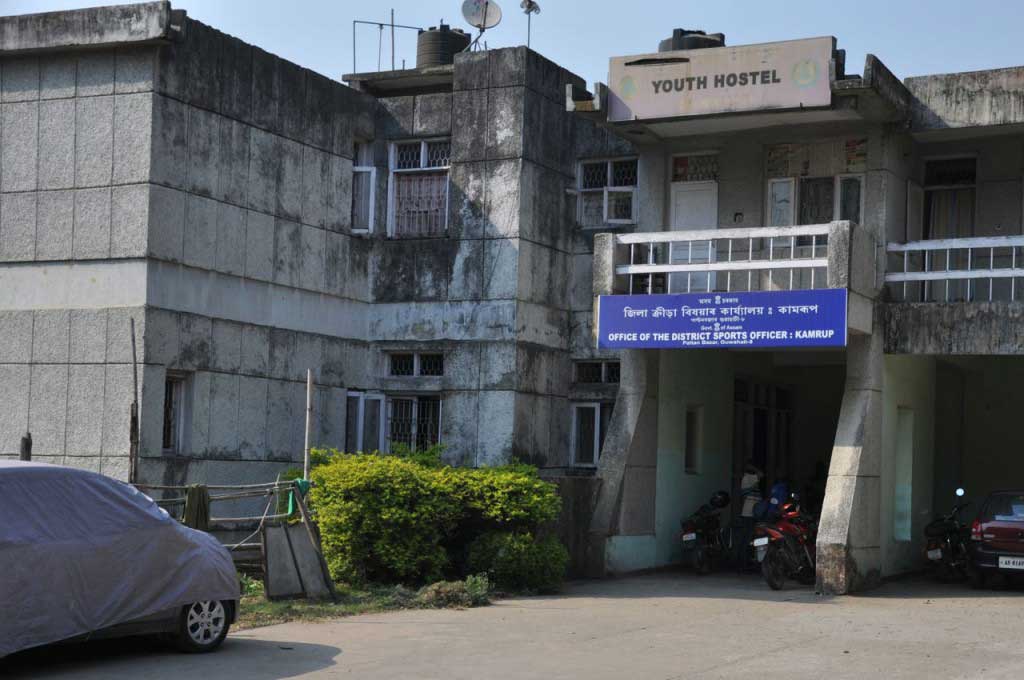
In this search for a place to sleep came on my way the Youth Hostel, an institution that I was unaware of existing in India. In a building that has seen better days, reigns an atmosphere of abandonment and emptiness, where the room show an urgent need of repairs and the toilet is decrepit, but cheap price, the clean sheets and the friendly staff made this place look like a warming shelter to spend a night, before traveling to the mountains of Meghalaya.

Fancy Bazzar
Fancy Bazaar


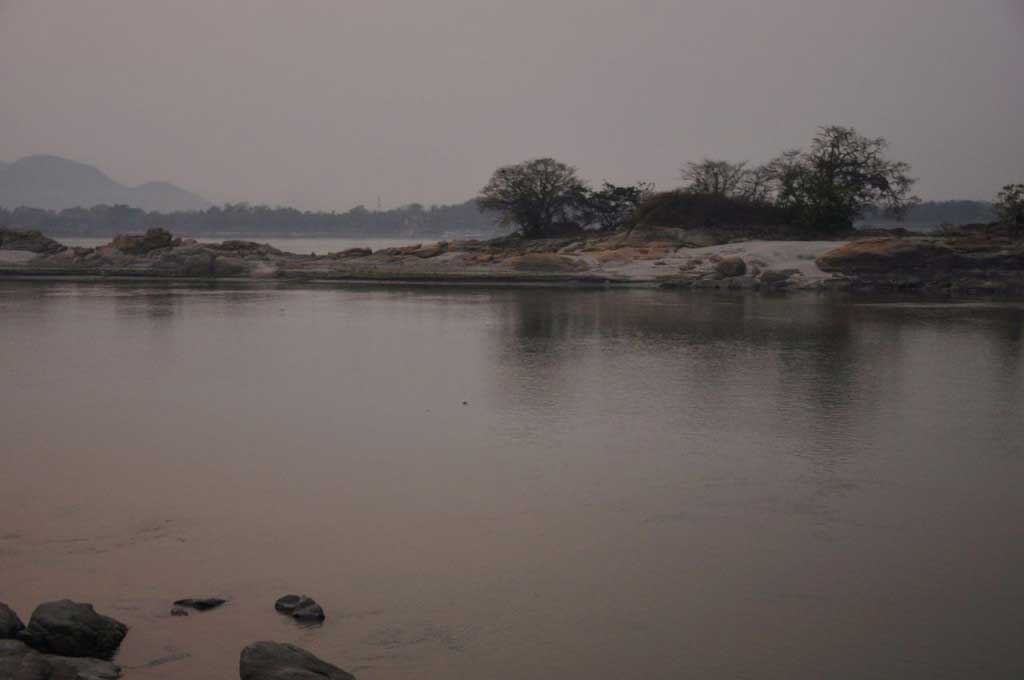
The last afternoon spent in the Guwahati there wasn’t the opportunity to get away from restless city center, away from the confusing Paltan Bazaar and Fancy Bazaar, which despite the names are quite similar. But there was time to walk to the banks of Brahmaputra, which the brownish waters offers a serene landscape that contrasts with the movement of the city streets. The Brahmaputra, one of the largest Asian rivers, runs through the state of Assam, heading south until the Bay of Bengal, crossing the plains of Bangladesh.

Brahmaputra
Brahmaputra

In Hindu religion, it is common the representation of the yoni with the lingam, which corresponds to the female and male elements of cosmic creation, according to the Shiva followers. But in India, there are few temples dedicated exclusively to the female side of this energy: Shakti (also referred as Devi), the goddess representing the energy of creation and change, also associated with fertility and creativity.

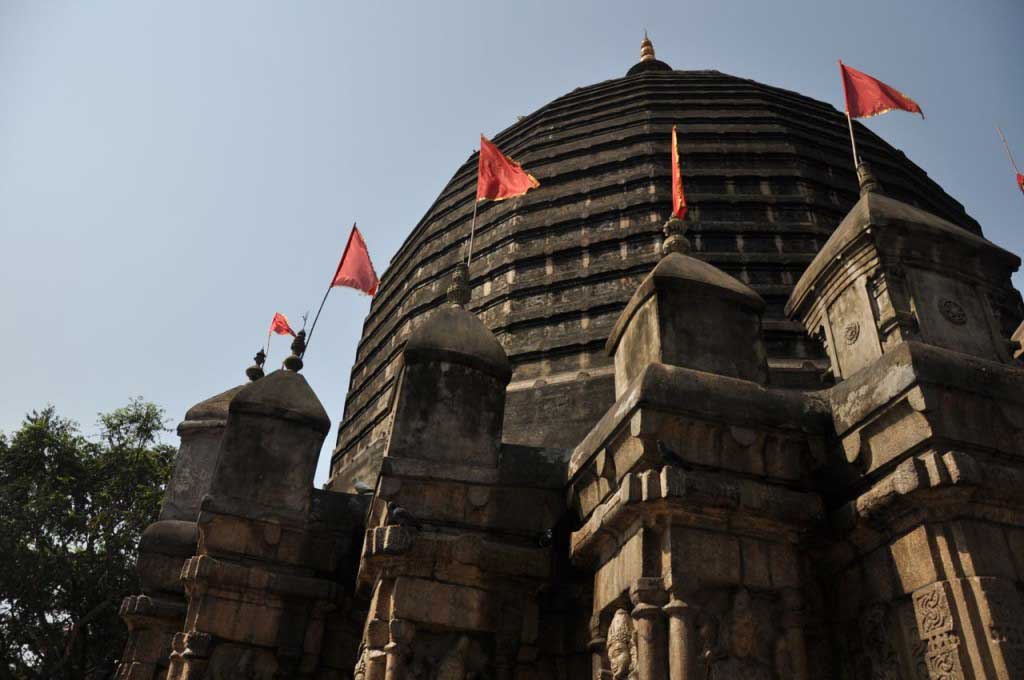
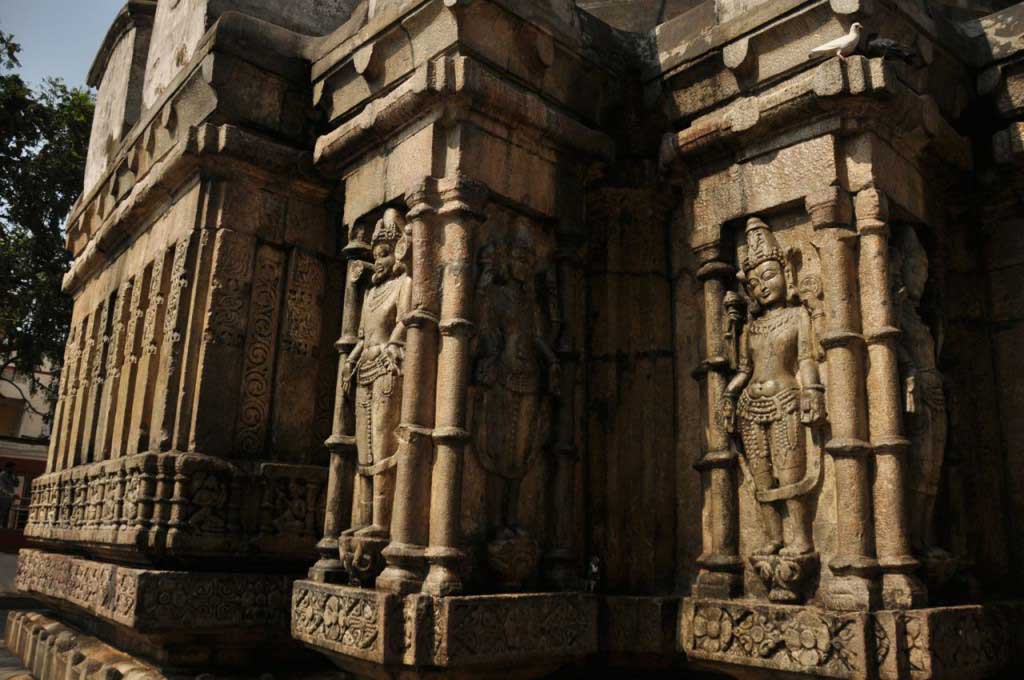
Guwahati is one of the most important temples dedicated to mother goddess: the Kamakhya Temple, where during Ambubachi Mela animals are sacrificed, according to Tantric tradition, with the blood of goats symbolizing the annual period of goddess Kamakhya.

Kamakhya Temple. Guwahati


Kamakhya Temple. Guwahati


Kamakhya Temple. Guwahati


Kamakhya Temple. Guwahati


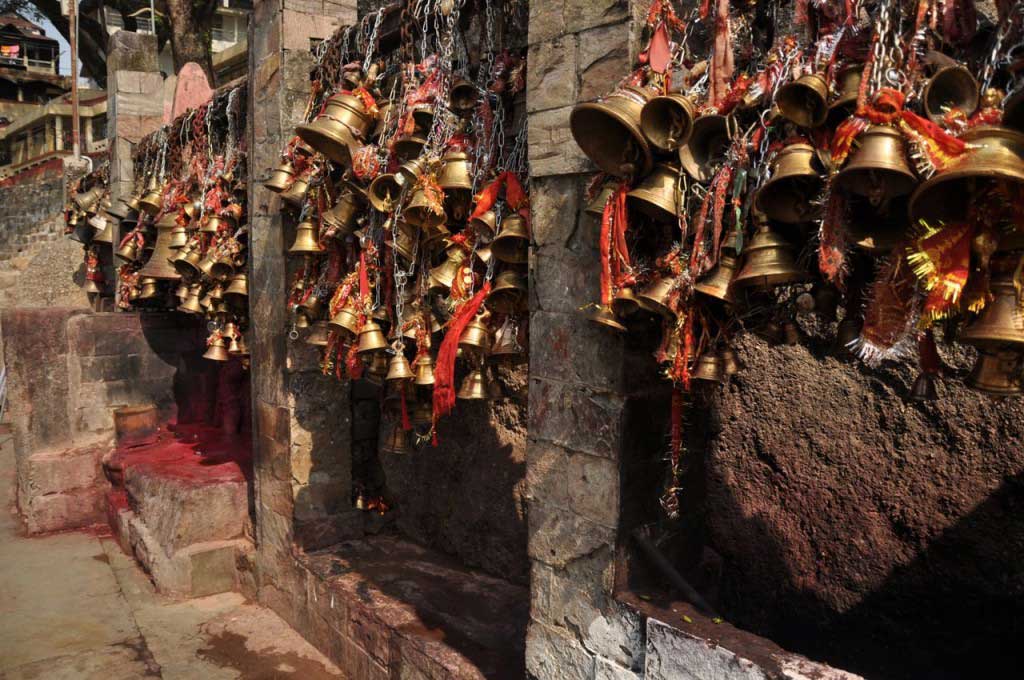
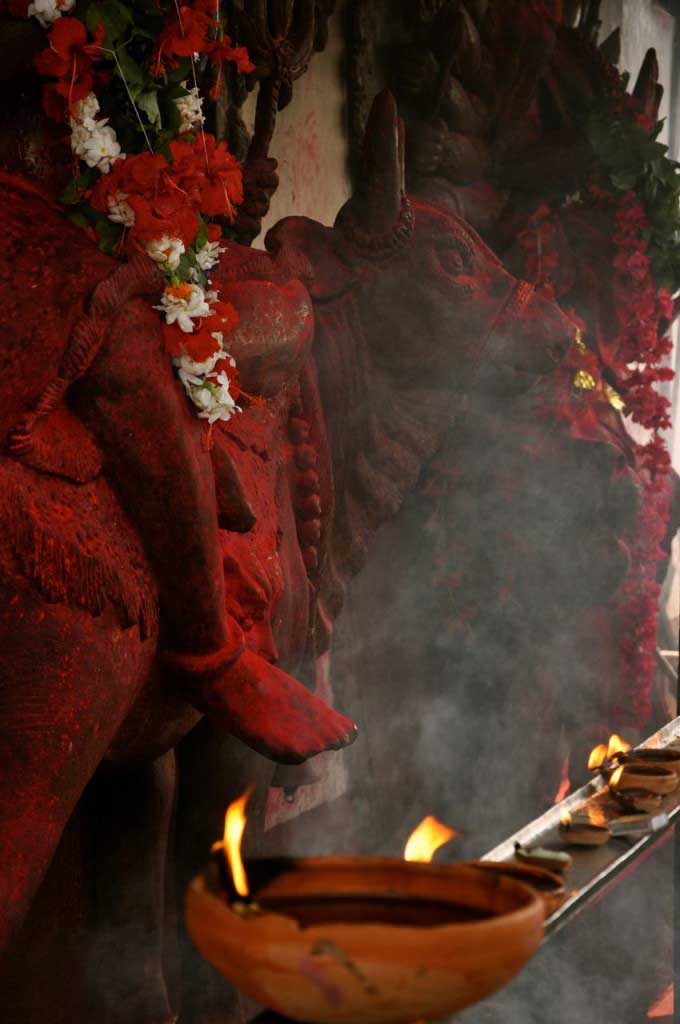
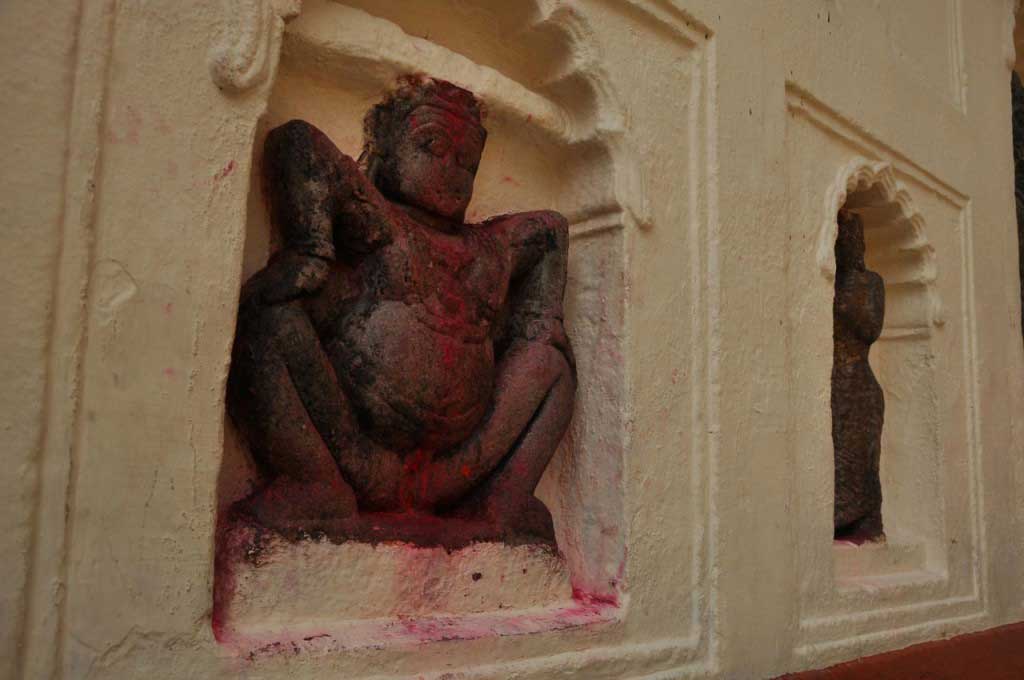
For those who visit the place, where the red color stands out, symbolizing the menstruation, the female reproductive cycle and fertility… in the red robes of the pujari (followers of goddess Kamakhya), in the red flowers that adorn statues, in the red pigment covering the statues of Kamakhya, from whom are lit incense and candles, and the red that seems to come out from vaginas of women statues associated with fertility.

Kamakhya Temple. Guwahati


Kamakhya Temple. Guwahati


How to go to the Kamakhya Temple:


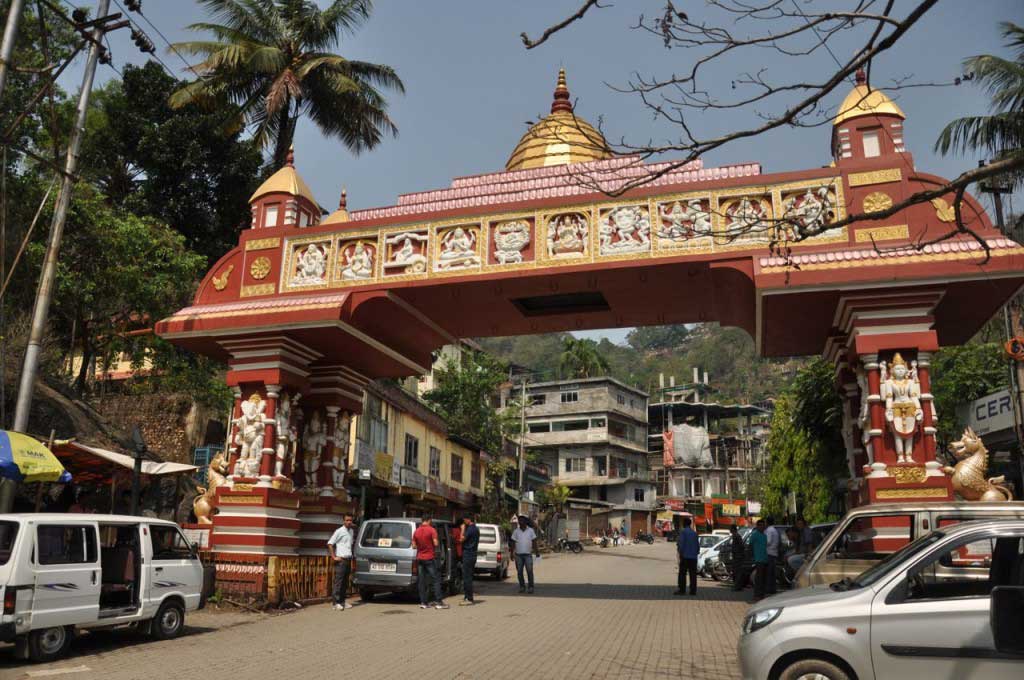
To go to Kamakhya, you can catch one of the buses that pass on GS Road. Just ask for “Kamakhya” and stop on the main road (AT Road). The bus ticket costs 8 rupees. After crossing a gate, there are the ASTC buses that make the journey to the top of the hill, for 7 rupees; these buses depart when are full and the journey takes about 10 minutes. There is a pedestrian access, a staircase you access to the temple but that seems to be little used, with the pilgrims prefer the comfort and the speed of the bus.

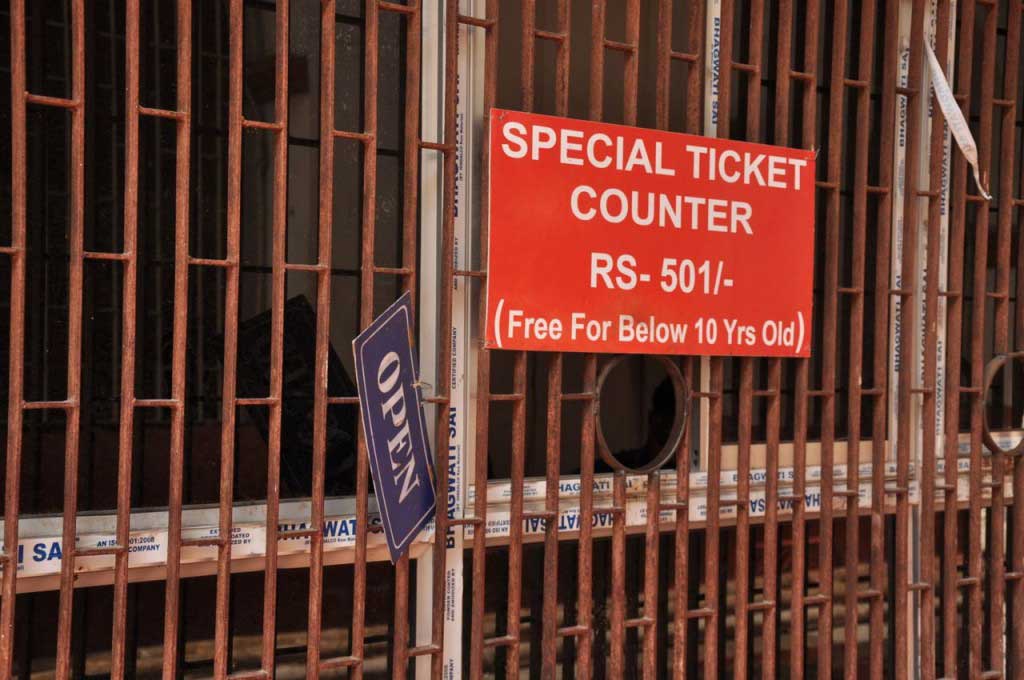
To visit the interior of the temple is required to join the dozens of pilgrims waiting patiently in a long queue, holding offerings to Kamakhya altar. But as often happens in India, where is strong the distinction between social classes, there is a VIP access which saves the pilgrims and visitors from a long wait, by paying 501 rupees… yes, five hundred and one… why this modest rupee among other 500!?!!


Portico junto à estrada principal onde estacionam os bus que vão até ao cimo da colina. Kamakhya Temple. Guwahati
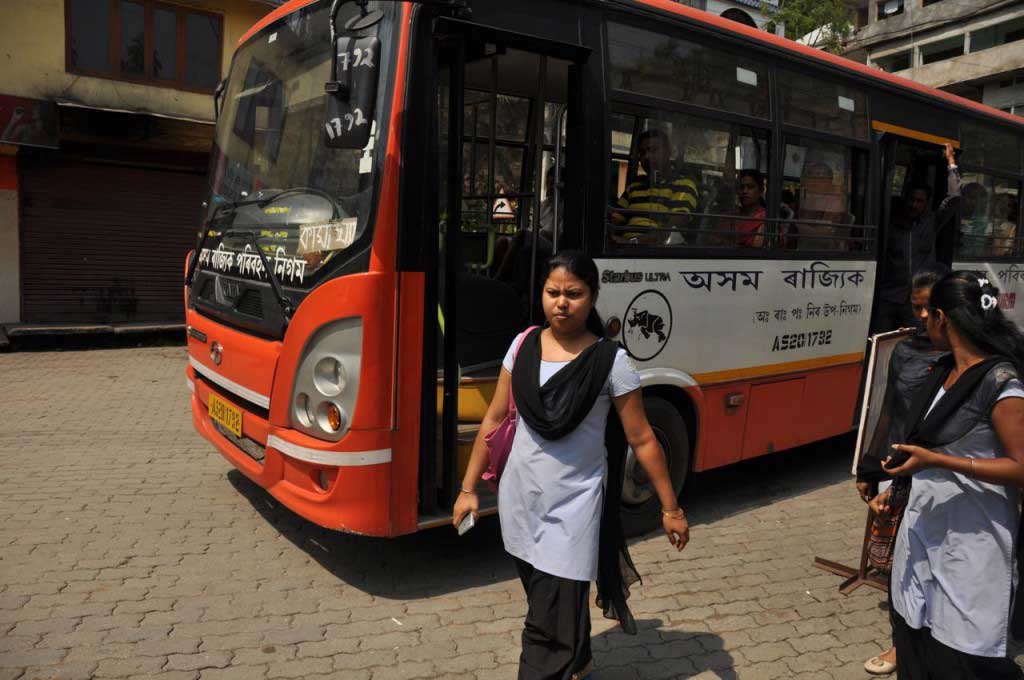
Gate that mark the entrance to the road that goes up to Kamakhya Temple, where buses stop. Guwahati


autocarro para o Kamakhya Temple. Guwahati
Bus Kamakhya Temple. Guwahati


Kamakhya Temple. Guwahati

Where to stay in Guwahati:

For those who stay only for one night, the GS Road and the side streets around Paltan Bazaar, offer dozens of options for several prices. From my experience, you can’t get a room with shared toilet for less than 500 rupees, which however don’t guarantee clean sheets.

Unexpectedly I found the Youth Hostel that has a discreet access on the right side of GS Road, on the corner of MD Shah Road. The building looks abandoned, and in fact, almost no one stays here, with some of the rooms being used as offices of Assam tourism department. The available room works in a dormitory system, with 4 beds with a private bathroom, but everything is in a miserable condition, in need of heavy repairs especially the toilet facility. The bed is comfortable and the sheets are clean; it has a mosquito net for each bed.

The Youth Hostel is an option for those who intended to stay only one night in Guwahati and have a very short budget.

Youth Hostel Guwahati: Bed in a dormitory room with toilet: 250 INR (the room, regardless of the number of occupants). Despite being a dorm, as no one else the room was just for me.


Youth Hostel. Guwahati


Youth Hostel. Guwahati


Youth Hostel. Guwahati

Where to eat in Guwahati:

Many restaurants, here called “hotel” line up next to the train station and along the GS Road, as well as the cross streets of Paltan Bazaar, with reasonable vegetarian thalis for 60 rupees. Here rules the typical Indian food, but in a poorer version that usual, with rice, potato based curries and watery dal. Almost all restaurants have vegetarian and non-vegetarian options, which reflects the taste of the Assamese for meat.

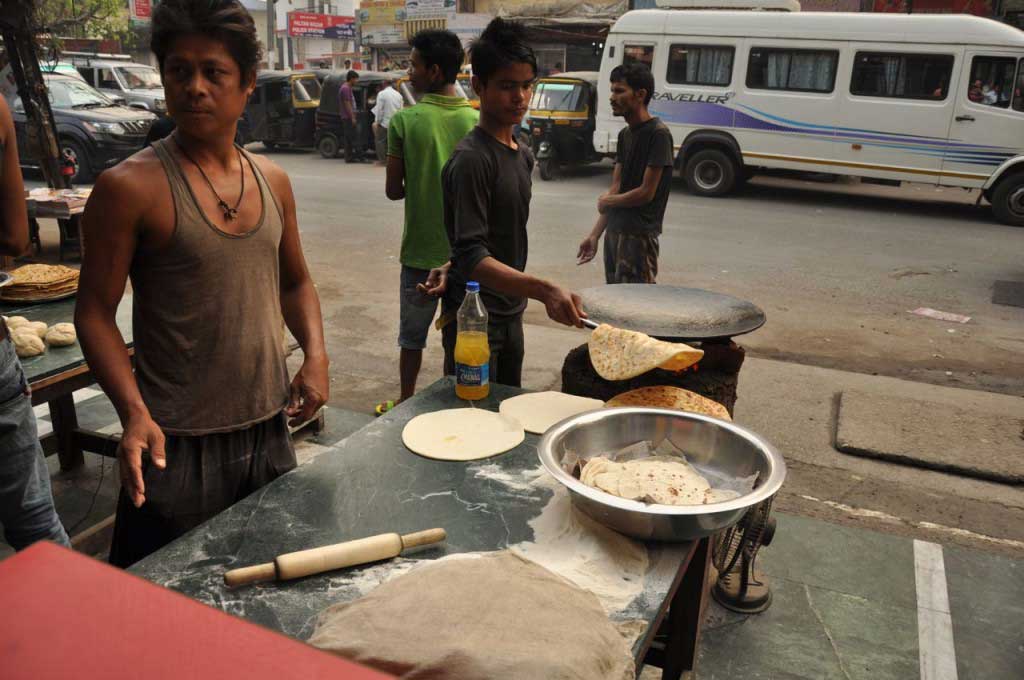
There are great parathas during the morning in two small restaurants at the beginning of GS Road, Greenview and Deepak Restaurant, located on the right side of those coming from the south of the train station exit.


"parathas" no Paltan bazaar. Guwahati.
“parathas” at Paltan bazaar. Guwahati.


restaurante de comida indiana e deliciosas "parathas" no Paltan bazaar. Guwahati.
Indian food restaurant with good “parathas” at Paltan bazaar. Guwahati.


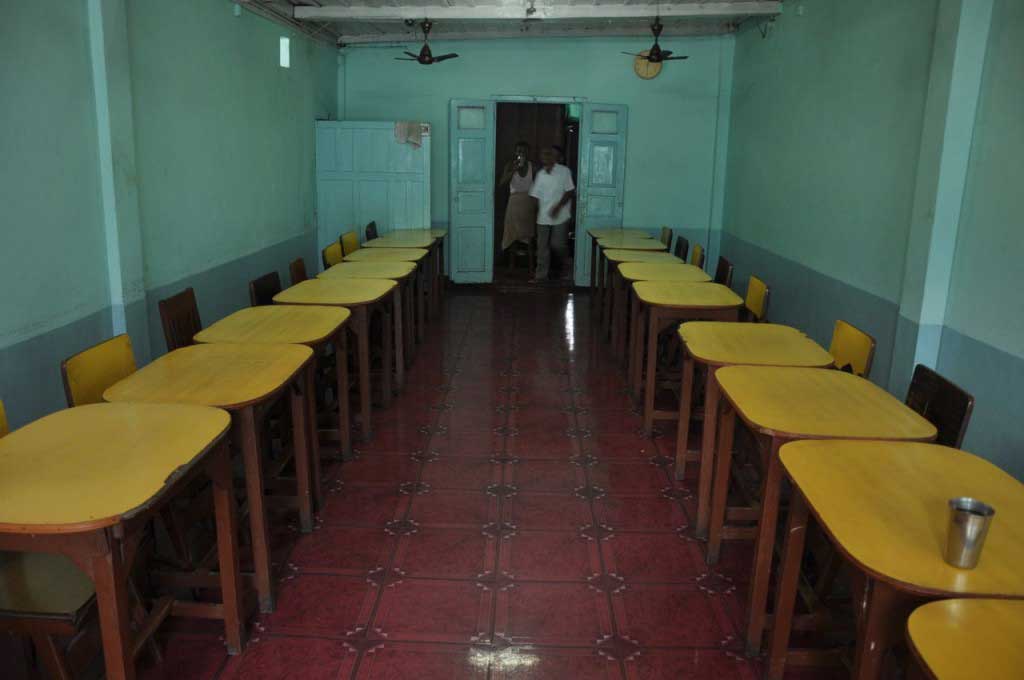
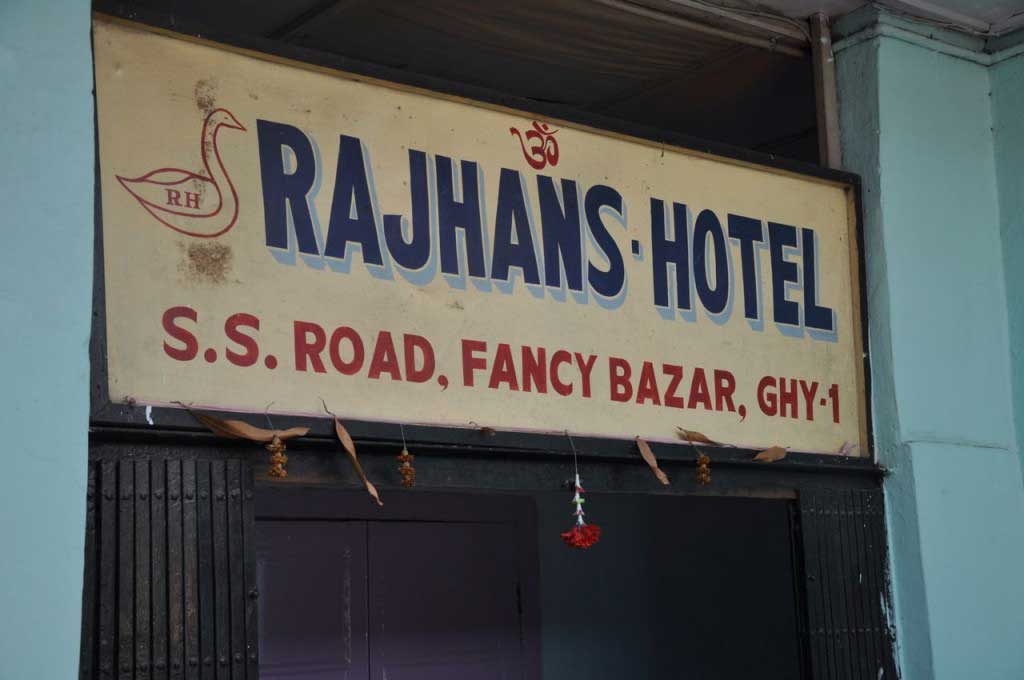
If you are in Fancy Bazaar and feel the call of the stomach, Rajhans Hotel, on the second floor of an anonymous building is a nice option with vegetarian food, friendly service and a decor that takes us to a school canteen, which have certain charisma and a super smiley staff.

Rajhans Hotel: S.S. Road, Fancy Bazaar, Guwahati. Vegetarian thali for 70 rupees.

Rajhans Hotel. Vegetariano. Fancy bazaar. Guwahati.
Kitchen of Rajhans Hotel. Vegetarian restaurant at Fancy bazaar. Guwahati.


tahli no Rajhans Hotel. Vegetariano. Fancy bazaar. Guwahati.
Vegetarian tahli no Rajhans Hotel. Fancy bazaar. Guwahati.


Rajhans Hotel. Vegetariano. Fancy bazaar. Guwahati.
Rajhans Hotel. Vegetarian restaurant at Fancy bazaar. Guwahati.


Rajhans Hotel. Vegetariano. Fancy bazaar. Guwahati.
Rajhans Hotel. Vegetarian restaurant at Fancy bazar. Guwahati.


Transports in Guwahati:

Both the train station and the public bus terminal (ASTC) are conveniently located in the center of Guwahati, close to hotel and restaurants and other commercial activity.

From Guwahati, there are trains that cross Assam stat, towards the North until Dibrugarh, passing through Dimapur.


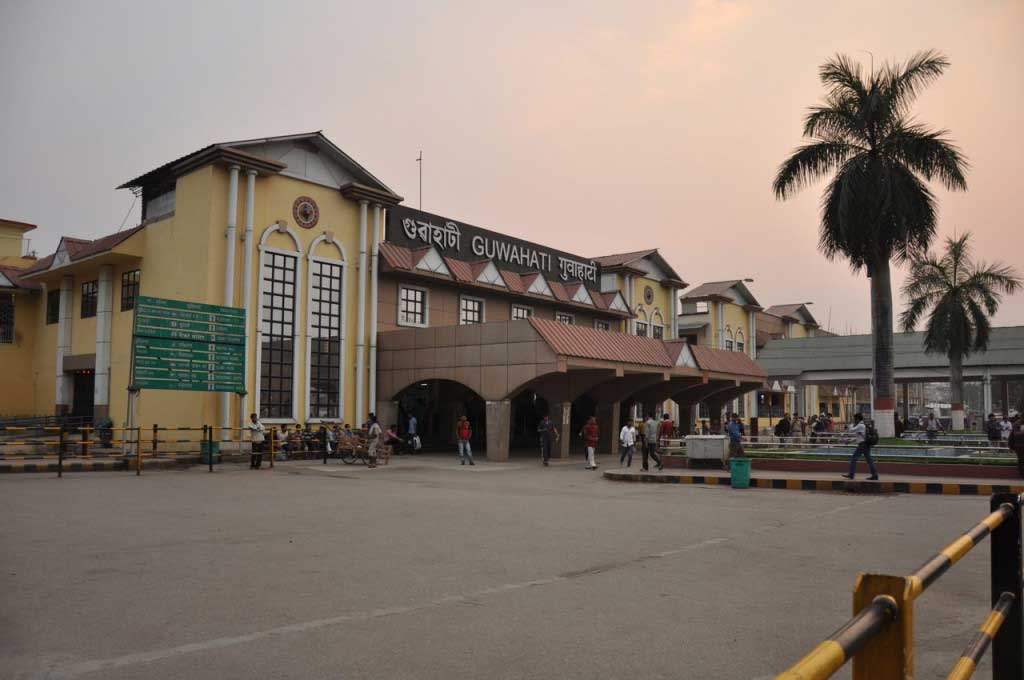
Note: Guwahati railway station has two entrances: the north side (the same side of the river) and that is the main entrance, and another on the south side that leads directly to the GS Road (Guwahati-Shillong Road). The Reservation Office (for long distance tickets) is in a building a few meters from the north entrance of the station (opposite the Paltan bazaar).


Guwahati Train Station. South entrance. Paltan Bazaar


Guwahati Train Station. North entrance.


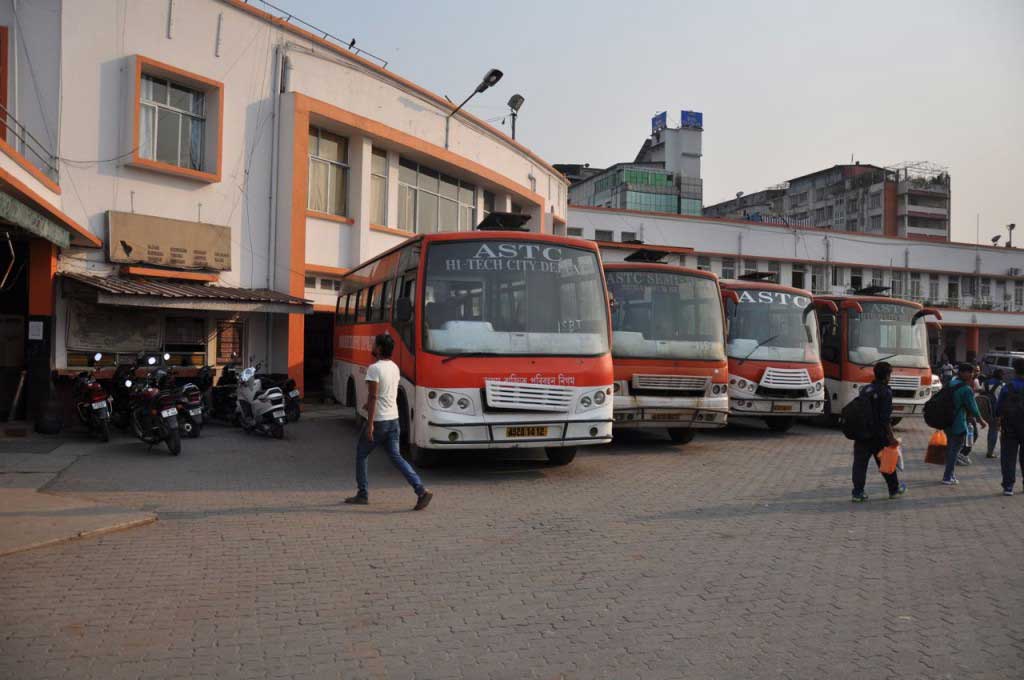
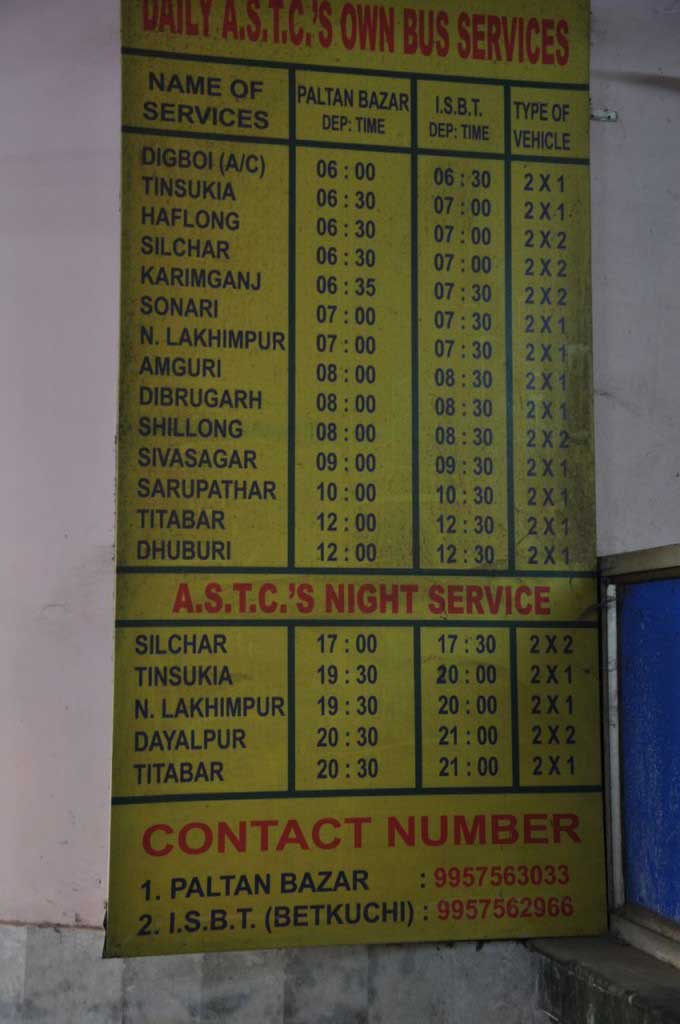
The public bus station is just outside the train station (near the Paltan Bazaar). The ticket office ASTC is inside the building, although there are several counters of private companies that also sell tickets for ASTC buses.

The bus (ASTC) from Guwahati to Shillong leaves at 7:30 am, and the journey takes 4 hours.

  • Bus ticket to Guwahati-Shillong: 135 rupees (a/c)… in fact, the air conditioning doesn’t work, but it is bearable because the bus always runs with the door open, and as we move away from the plains of Assam, the temperature is drop down.


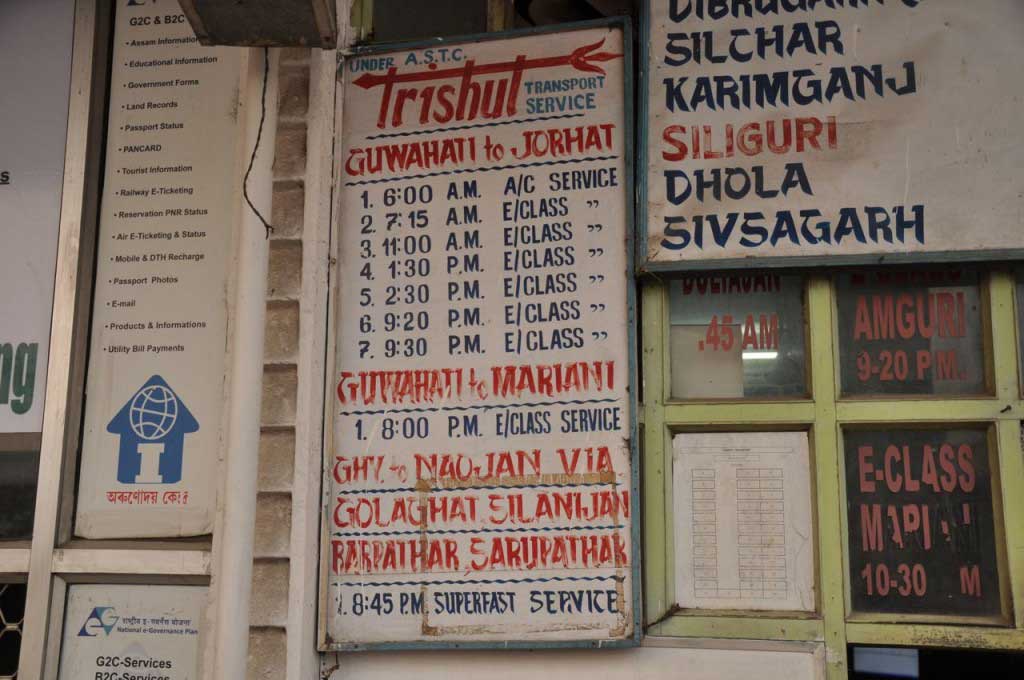
horários. Terminal de autocarros da ASCT em Guwahati
Timetable of private buses from Guwahati


Terminal de bus ASCT em Guwahati
Central buses Terminal. Guwahati


Terminal de autocarros da ASCT em Guwahati
Timetable of private buses from Guwahati


horários. Terminal de autocarros da ASCT em Guwahati
Timetable of ASCT buses from Guwahati


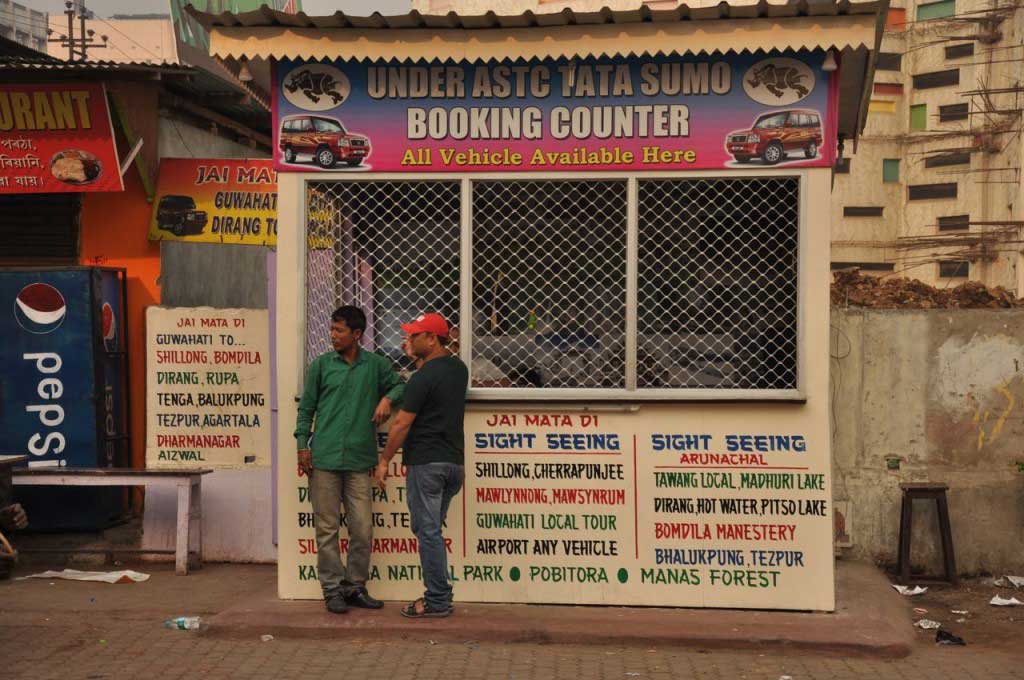
As an alternative to the buses, there are sumos, a shared all-terrain, which are a very popular mode of transport in the Northeast states, and that makes the connection between the main cities. Inside the Guwahati Bus Terminal, in the bus park, there’s a booth where you can buy tickets for the sumos. In general, these vehicles have no set time, circulating during the day, since very early morning, and depart when they are full.

  • sumo Guwahati to Shillong: 170 rupees (the trip takes about 2.45 pm, depending on traffic and number of stops)

bilheteira de "sumo" no Terminal Central de autocarros
“sumo” counter at Guwahati central bus terminal


Internet in Guwahati:

Most hotels don’t have internet and those who have charge sometimes 100 rupees per day. The best option is the cyber-cafes that aren’t easy to find.

In GS Road, on the left side for who comes from the train station, there is a shop “complex”, and on the first floor there’s a cyber-cafe, Virtual Office, with good connection and wi-fi.

  • Wi-fi: 30 rupees per hour.


Elevation: 56 m

Population: 809,895

  • Page 1
  • Page 2
  • Go to Next Page »

Footer

search

Tags

Arugam Bay Assam Bali Border Crossing Borneo Cappadocia Colombo Dambulla Esfahan Fes Food Gilis Hiking Hikkaduwa hokkaido Istanbul Itinerary Jakarta Java Kandy Kashan Kataragama Kumano Kodo Lombok Meghalaya Meknes Mekong Nagaland Natural Park Nongriat Northeast States Ouarzazate Sarawak Shiraz Sichuan Province Sumatra Tabriz Tehran transportation Varanasi Visa Yangon Yazd Yogyakarta Yunnan Province
I’m Catarina, a wanderer from Lisbon, Portugal… or a backpack traveller with a camera!

Every word and photo here comes from my own journey — the places I’ve stayed, the meals I’ve enjoyed, and the routes I’ve taken. I travel independently and share it all without sponsors or ads, so what you read is real and unfiltered.

If you’ve found my blog helpful or inspiring, consider supporting it with a small contribution. Every donation helps me keep this project alive and free for everyone who loves exploring the world.

Thank you for helping me keep the journey going!

BUY ME A COFFEE

Categories

Recent Posts:

  • How to go from Hualien to Dulan Beach
  • Taroko Gorge: between marble cliffs and emerald rivers
  • Hualien: a dull gateway to Taroko Gorge
  • Taiwan: Itinerary for an 16 day trip
  • Vietnam: Itinerary
  • 3 months in India: Kolkata, Tamil Nadu, Karnataka, Goa and Kerala
  • Backpacking Turkey in 24 Days: itinerary & costs
  • English
  • Português

Copyright © 2025 · Stepping Out Of Babylon on Genesis Framework · WordPress · Log in