• Skip to main content
  • Skip to footer

Stepping Out Of Babylon

Travel & Photography

  • About me
    • Contact
  • Destinations
    • Africa and Middle East
      • Iran
      • Lebanon
      • Morocco
      • Turkey
    • East Asia
      • China
      • Japan
      • Taiwan (Formosa)
    • South Asia
      • Bangladesh
      • India
      • Nepal
      • Sri Lanka
    • Southeast Asia
      • Cambodia
      • Indonesia
      • Lao
      • Malaysia
      • Myanmar
      • Singapore
      • Thailand
      • Vietnam
  • Itineraries
  • Travel tips
    • Border crossing
    • Hiking and Natural parks
    • Food Journey
    • Visa
  • Photography

Shan State

Hikking through Palaung Villages

Strange feeling to be in a remote village where the hills and the winding and steep dirty roads create a barrier with the modern world.

This sense of isolation is intensified with the nightfall, where a cloak of darkness surrounds the village, with the blackness of the moonless night enters through the windows, creating a thick obstacle between us and the inhabitants of the house where we will spend the night, where the cultural and language differences do not allow us to break.

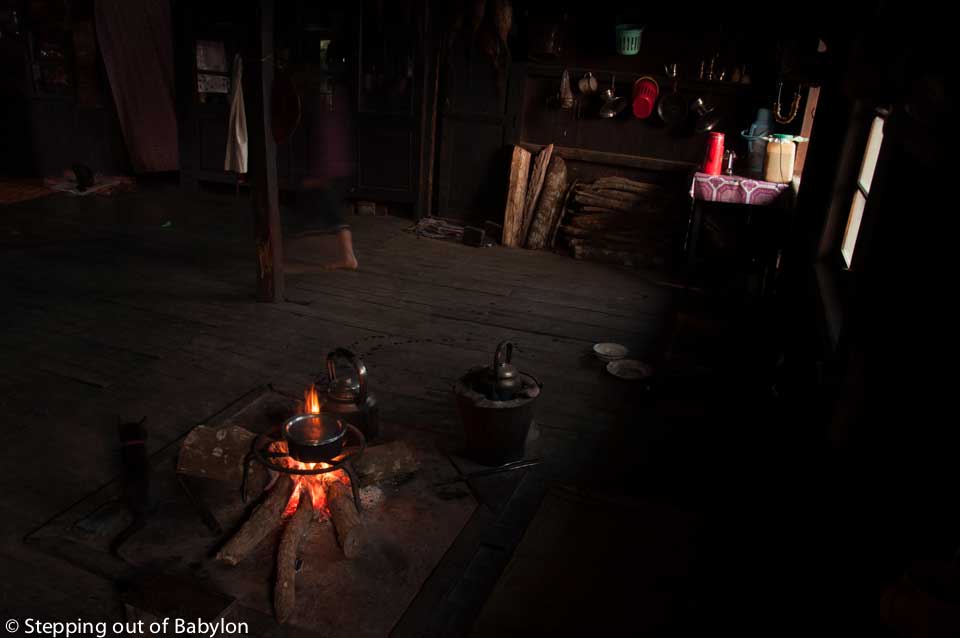
Large rooms made of wood and bamboo, simple, comfortable and above all functional, where the fire is the center of the house, being kept lit throughout all day, from the first rays of the sun until bedtime… that here is around nine o’clock. A fine and discreet smoke that burns the eyes and leaves an fragrant trace on the clothes, reminding us how different the way of life in the countryside.

Shortly after sundown, as soon as the sky darkens, the movements in the streets of the Palaung village cease, the ballads of the donkeys, the clucking of the chickens, the tweeting of the birds and the laughter of the children suddenly ceases. The families gather to the houses, wrapped in the rituals of preparation of food. Rituals where everyone, including the children, seems to know their role by heart, making the daily life resemble a silent play.

A thin layer of smoke remains in the main room of the house, a large area almost empty of furniture that is at the same time the living room and the kitchen. The few belongings wait for special days in lockers embedded in the wooden walls, almost becoming invisible in the penumbra that permanently fills the space, despite the various windows that look to the succession of woody hills.

From this first stop in a village on the outskirts of Kyaukme, a further two days’ hike through the western region of Shan State, dominated by the Palaung tribe, whose population shares the ethnic heritage with China, but along many centuries developed its own characteristics of language, clothing and gastronomy.

The Palaung, whose features are more Asian than the Bamar ethnic group (dominant in Myanmar) are easily recognizable by the way women dress, with sarongs of gaudy colors in purple, blue and green, and by the white handkerchiefs that cover carelessly the Heads, whose hair is kept shaven, following an unknown tradition.
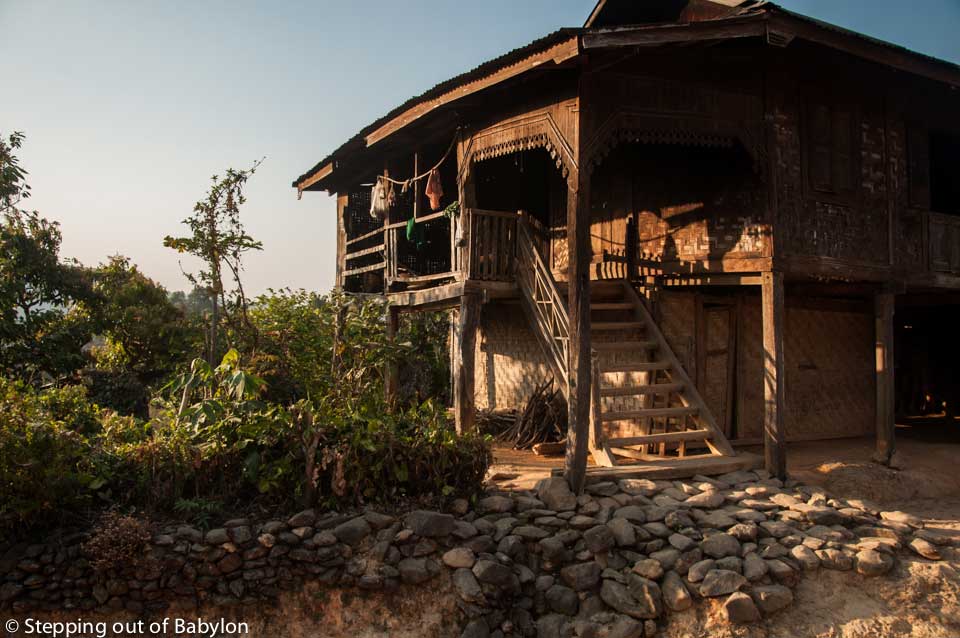
Palaung village. Kyaukme region. Shan State
Woody hills that little by little have been replaced by tea plantations, the main commercial activity in the region
Palaung village. Kyaukme region. Shan State
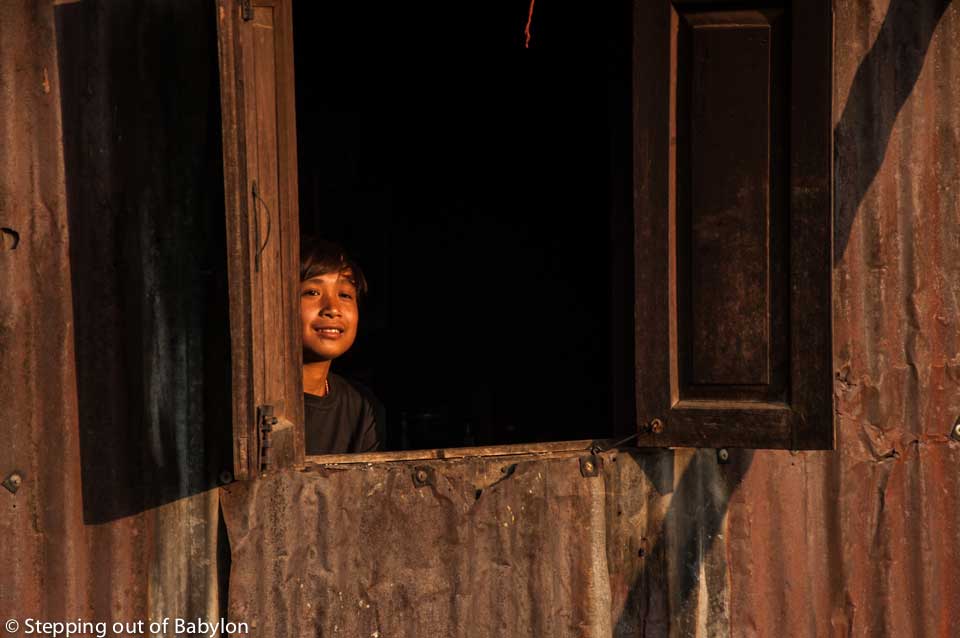
shy but curious smiles wait for us everywhere
Palaung village. Kyaukme region. Shan State
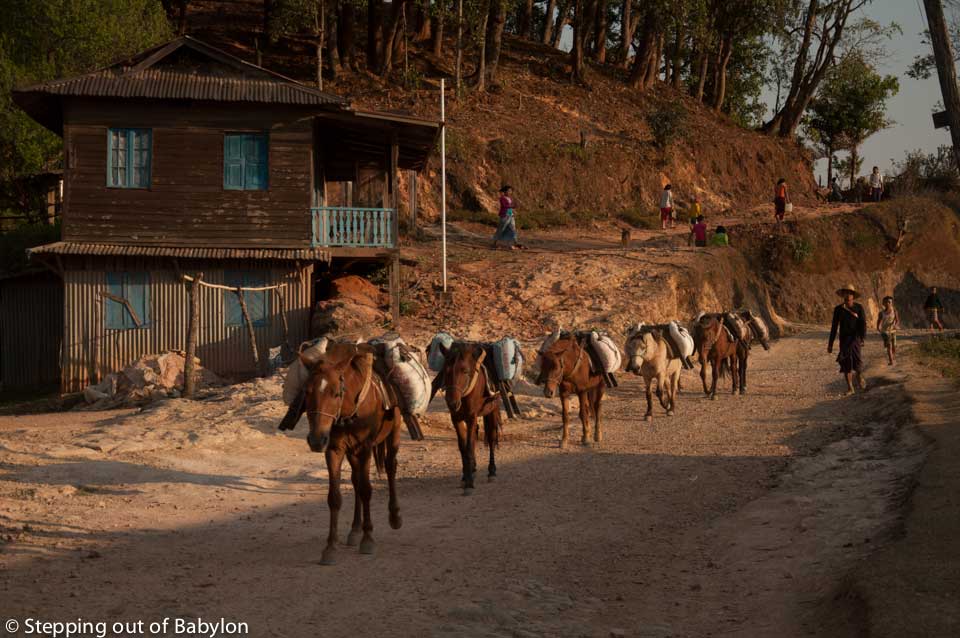
Despite the recently made roads the donkeys are still commun as a way to transport cargo between villages
A tecelagem é parte do quotidiano das mulheres da tribo Palaung
Weaving is part of the everyday life of women of the Palaung tribe, whose sarongs are made by themselfs
Palaung_Kyaukme_Shan State_Myanmar_DSC_2934
Inside one of the houses where we spend the night during the three days of walking through Palaung villages… the fire is the main source of light of the house
Palaung village. Kyaukme region. Shan State
Easy going life at the villages, where even the population that work in the tea plantation keep the slow pace
Palaung village. Kyaukme region. Shan State
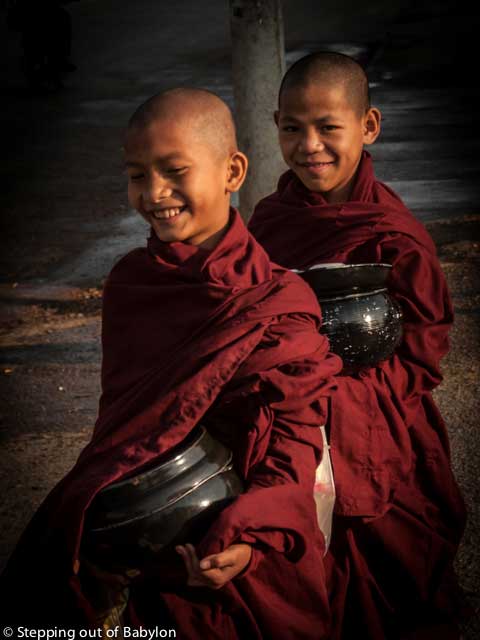
In the main villages there is always a small monastery attached to the pagoda, so it is common to find children in monastic costumes
Palaung village. Kyaukme region. Shan State
altar decorado com motivos birmaneses numa das aldeias
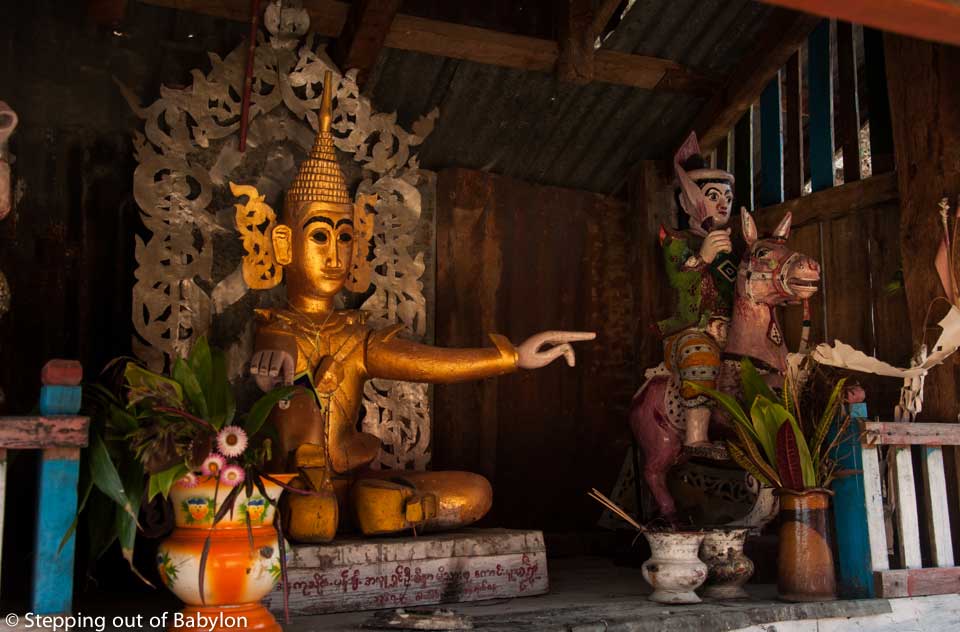
Buddhist altar decorated with Burmese motifs in one of the villages
mulheres da tribo Palaung, com o tradicional lenço que cobre a cabeça rapada
Women of the Palaung tribe, with the traditional scarf covering the shaved head… a tradition with blur contours
Palaung village. Kyaukme region. Shan State
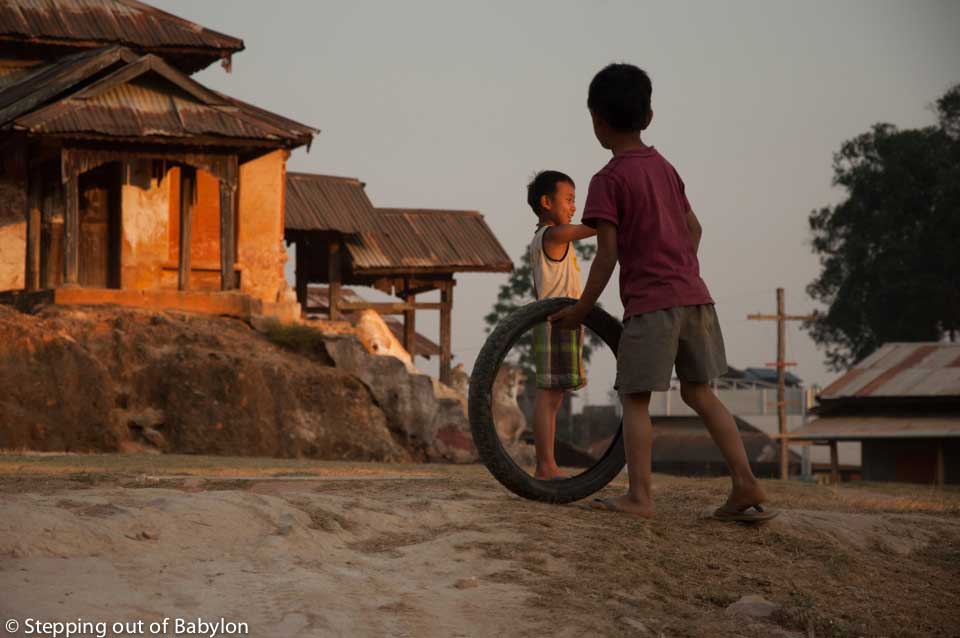
During the day children play leisurely on the streets of villages, practically without traffic

But here also the religion acquires its own contours. Despite the domination of Buddhism that arrived in the eleventh century, there are still traces of rituals and beliefs related to animism. A small group of people gathers in one of the village houses bringing offerings, where a woman in trance communicates with the spirits … practical questions about the whereabouts of a lost cow or the crops are answered by spirits by the voice of a possessed woman, who’s tone change from female to male tone according to each spirit evoked.

Sessão espírita numa das aldeias, mostrando que o Budismo não esmagou totalmente as práticas animistas
Spiritist session in one of the villages, showing that Buddhism did not completely crush animistic practices

In all villages that we visited always seem to be full of children running freely in the streets, waving and smiling, curious and excited by the unusual presence of strangers.

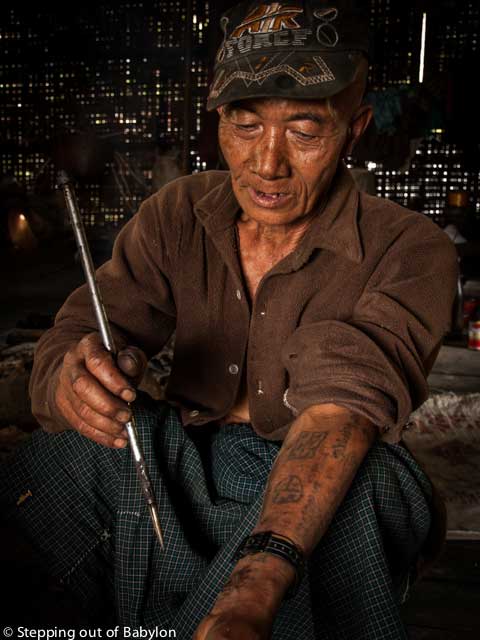
But it is not only the children who show their curiosity, as the adults cannot disguise the pride with which they pose for the photographs, hiding damage teeth under a closed-lipped smile. But are the men who, despite language differences, show more communicative, exposing the tattoos that cover the body, with symbols and inscriptions, that work as protection against all kind of bad things, a practice common among the male population and also among the Buddhist monks, both in Myanmar as in Thailand.

 

Palaung village. Kyaukme region. Shan State
Men rom the Palaung tribe with protection symbols tattooed on his chest
as tattoos para proteção com símbolos e inscrições Budistas são comuns entre os habitantes mais velhos
Tattoos for protection with Buddhist symbols and inscriptions are common among older people

How to visit the Palaung villages around Kyaukme

These three days of hiking were organized by Thura, a Burmese from the Shan ethnic group, whose mother was from the Palaung tribe. He’s friendliness, the very good english and the contacts with local people allows him to travel around this region, which is probably impossible to visit without a guide who speaks the local language.

The route is done on foot and by motorcycle. The hike is easy and made with many breaks but sometimes the path can be in a less shady area.

The nights are spent in local families houses, on improvised beds on the living room floor, with blankets and blankets. The bathrooms are basic (a small hut outside the house) and the washing is made on the back of the house without much privacy or hot water.

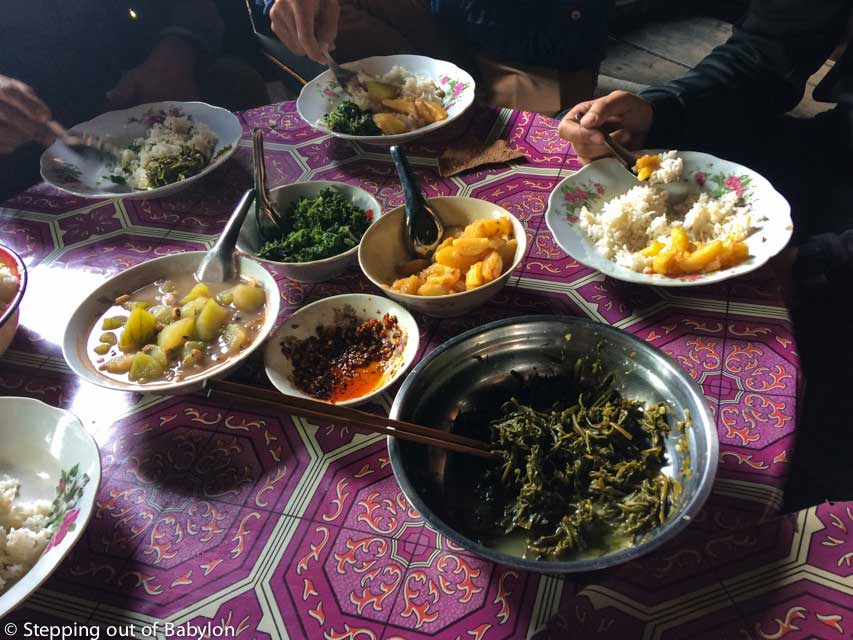
Meals (can be vegetarian or not) are either in a family home or in local restaurants. This is a good opportunity to try the local food and have the taste of a homemade meal.

Everything is included (motorbike, gas, meals, water) and this tour costs 25€ per person, a day… that is not much more than you spend on food and accommodation when you travel in Myanmar

Thura Tours contact: http://thuratrips.page.tl/
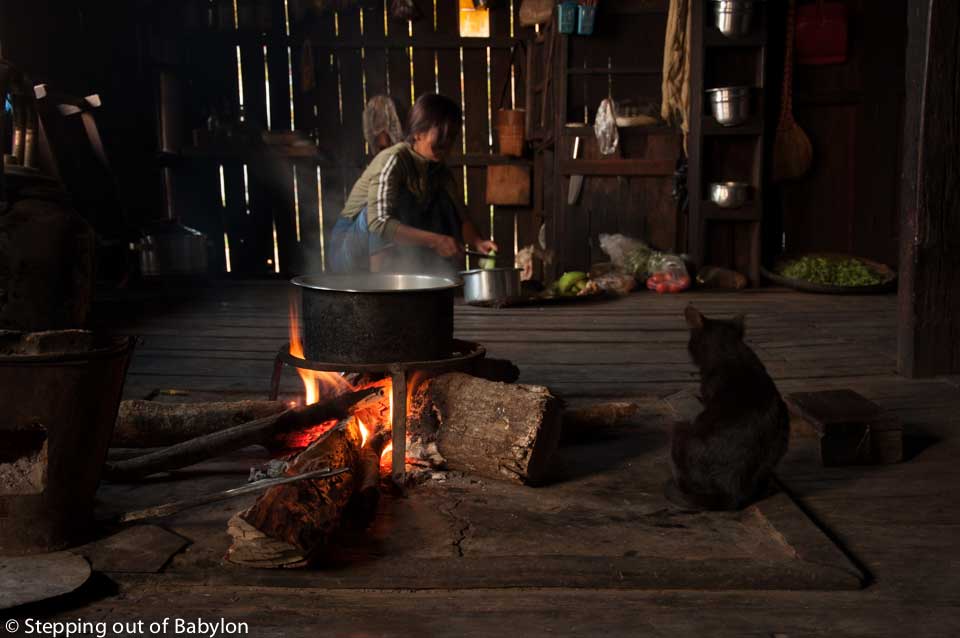


casa de aldeia onde o fogo é o centro da casa seja para aquecimento seja para cozinhar
one of the village house where we stay overnight; the fire is the center of the house whether for heating or for cooking
Refeição preparada por uma das famílias que nos acolheu durante os três dias de caminhada
Meal prepared by one of the families who welcomed us during the three days of walking… delicious vegetarian meals where the bowls never stop to be refilled

Kyaukme… first step on Shan State

Kyaukme isn´t one of the most popular places to stay when you visit the Shan State, with Hsipaw and Pyin Oo Lwin on the top of the list of the places chosen as a base point to explore this area. This northeast region of Myanmar is well known by the presence of different ethnic groups, generically denominated Shan people that include different tribes that in common have the same Chinese roots and the language, similar with Tahi and Lao.

But there are many reasons to stay and enjoy this town: is small enough to be made on foot, and with some interesting thing to keep you entertained for a couple of days: some sightseeing points, a nice market, lots of street-food… and a laid back vibe… where there’s always time for a smile and to pet a stray cat!

Despite the proximity to the surrounding villages, where predominates the Palaung, one of the tribes that make up the ethnic mosaic of the Shan state, the traditional colorful costumes of the Palaung women are not glimpsed in Kyaukme. However, in the faces of the people of this region we can note the Eastern features, distinct from the Bamar, the dominant ethnic group in Myanmar.

As a result of ethnic and cultural differences, the Shan State has been for a long time a name connected fights opposing the army to groups of the local population. These conflicts still going on, and are a mix of stand up for recognition and respect for cultural differences, as also a fight against the military dictatorship that ruled the country for 54 years. But now, despite the recent democracy, the conflicts are still going on, with these “rebels” groups controlling the region from the top of the hills.

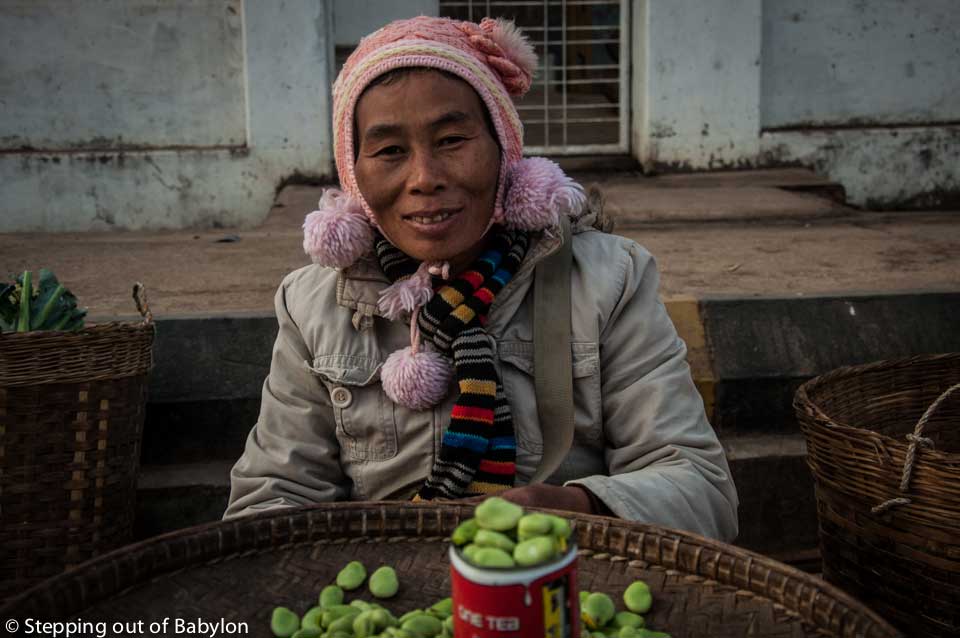
But the daily life at Kyaukme starts early, while the first sunrays shine on the local food market, heating the chilly morning. This is a good opportunity to try some of the local snacks, a mix of Chinese with Burmese influence, but for that, you need to wake up early, as the market close around 7.30 a.m.

Along the streets, monks walk begging for alms, and despite the serious faces gazing the ground, the younger monks can´t avoid a curious smile when they look to the foreigners.

Kyaukme
Kyaukme
Kyaukme
Kyaukme
Kyaukme
Kyaukme
Kyaukme
Kyaukme

Kyaukme_DSC_3153

Where to sleep in Kyaukme:

As Kyaukme is starting to be an alternative to the more popular Hsipaw, there several accommodation options for foreigners.

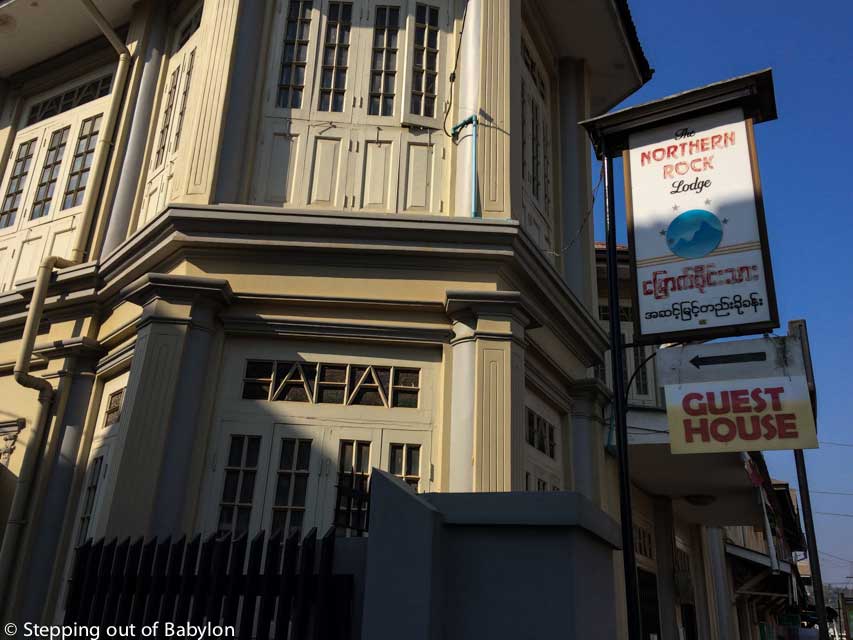
The choice was to Northen Guest House, probably the most smiley staff in town. The building has character, with a well-preserved colonial charm. There are different types of rooms, some with shared bathroom and some without window.

  • Double room with toilet inside: 21 USD
  • Double room with shared toilet: 12 USD

[columns] [span6]

Accommodation Kyaukme

[/span6][span6]

Accommodation Kyaukme
Accommodation Kyaukme. contacts

[/span6][/columns]

Where to eat in Kyaukme:

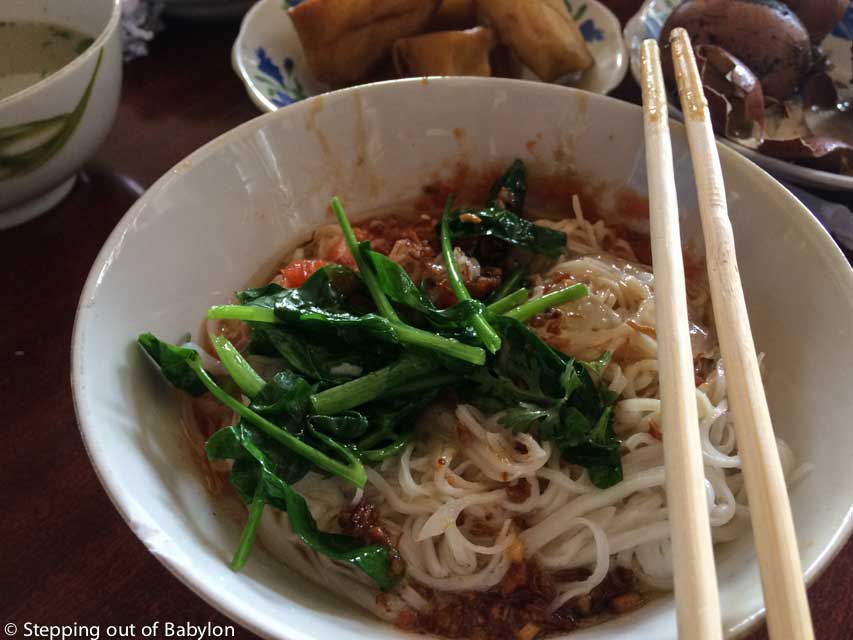
But not much later starts another market, this one indoors selling a mix of traditional Burmese clothes and crafts with some Chinese imported products. On the streets around this building that occupy one block of the town grid, another market starts in the afternoon… street food is almost everywhere, and here is a good opportunity to try the traditional Shan noodles soup, that has a more Chinese touch compared to the other Burmese soups like mohinga.

Shan noodles soup
Shan noodles soup

Wi-fi in Kyaukme:

Cherry Pan Tea House, where most of the workers are kids, has the best wi-fi connection in town, if you don’t want to go for a more expensive experience of the Banyan Coffee shop.

On the other side of the street there’s another tea-shop with wi-fi…. but watch out that the tea in this kind of teashops is sweetened with condensed milk resulting in an extremely sweet drink that little has to do with tea. The coffee here is “coffee mix” an instant industrial drink made with sugar, milk powder (in fact a creamer without dairy) and a bit of coffee.

wi-fi in Accommodation Kyaukme

How to go from Mandalay to Kyaukme:

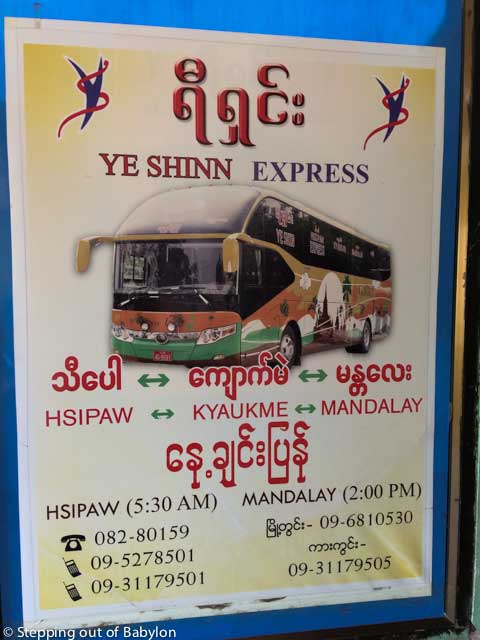
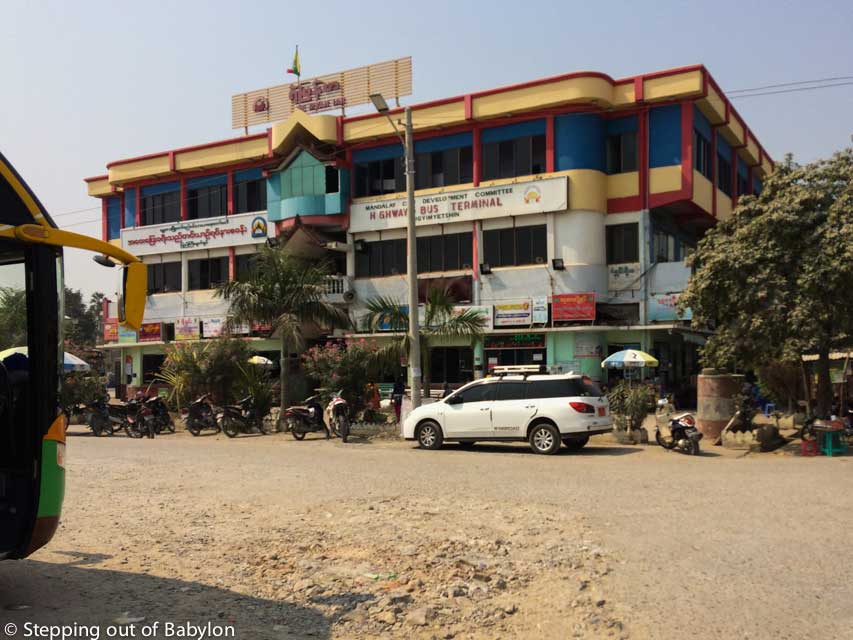
From Mandalay, you can get a direct bus at Pyi Gyi Myat Shin Bus Terminal. There are two buses leaving at the same time to Hsipaw that stop at Pyin Oo Lwin and Kyaukme. The best buses from Ye Shinn Express are more modern and comfortable.

The buses departure at 2 pm. The ticket cost 4000 kyats and the trip takes around 3.5 hours… but can be much more as the road pass by a mountain area with often traffic jams.

Pyi Gyi Myat Shin Bus Terminal is very small terminal, with basic conditions the make long waiting a bit hard.

[columns] [span6]

Bus Schudule Mandalay to Kyaukme

[/span6][span6]

Pyi Gyi Myat Shin Bus Terminal at Mandalay

[/span6][/columns]

Footer

search

Tags

Arugam Bay Assam Bali Bogor Border Crossing Borneo Colombo Esfahan Fes Food Gilis Hiking Hikkaduwa hokkaido Istanbul Itinerary Jakarta Java Kashan Kumano Kodo Lombok Marrakesh Meghalaya Meknes Mekong Nagaland Natural Park Northeast States Ouarzazate Sarawak Shan State Shiraz Sichuan Province Sumatra Tabriz Taipei Tehran transportation ubud Varanasi Visa Yangon Yazd Yogyakarta Yunnan Province

I’m Catarina, a wanderer from Lisbon, Portugal… or a backpack traveller with a camera!

Every word and photo here comes from my own journey — the places I’ve stayed, the meals I’ve enjoyed, and the routes I’ve taken. I travel independently and share it all without sponsors or ads, so what you read is real and unfiltered.

If you’ve found my blog helpful or inspiring, consider supporting it with a small contribution. Every donation helps me keep this project alive and free for everyone who loves exploring the world.

Thank you for helping me keep the journey going!

BUY ME A COFFEE

Categories

Recent Posts:

  • How to go from Hualien to Dulan Beach
  • Taroko Gorge: between marble cliffs and emerald rivers
  • Hualien: a dull gateway to Taroko Gorge
  • Taiwan: Itinerary for an 16 day trip
  • Vietnam: Itinerary
  • 3 months in India: Kolkata, Tamil Nadu, Karnataka, Goa and Kerala
  • Backpacking Turkey in 24 Days: itinerary & costs
  • English
  • Português

© Copyright 2026 Stepping out of Babylon · All Rights Reserved · Designed by OnVa Online · Login