• Skip to main content
  • Skip to footer

Stepping Out Of Babylon

Travel & Photography

  • About me
    • Contact
  • Destinations
    • Africa and Middle East
      • Iran
      • Lebanon
      • Morocco
      • Turkey
    • East Asia
      • China
      • Japan
      • Taiwan (Formosa)
    • South Asia
      • Bangladesh
      • India
      • Nepal
      • Sri Lanka
    • Southeast Asia
      • Cambodia
      • Indonesia
      • Lao
      • Malaysia
      • Myanmar
      • Singapore
      • Thailand
      • Vietnam
  • Itineraries
  • Travel tips
    • Border crossing
    • Hiking and Natural parks
    • Food Journey
    • Visa
  • Photography

Search Results for: China

Litang… the Chinese “wild, wild West”

(English version from the text posted in Jun/2014)

Wild, Wild West… are the words that best fit the image that one has on arrival in Litang: dusty, paved streets, pigs eating scraps of food in the middle of the main road, forcing old and noisy trucks to get away, releasing clouds of black escape and raising the dust of the road that seems to cover the whole city, robbing it of the colours and leaving an uniform grey tone.
Groups of men gather along the sidewalks, leaning against the walls, the poles, and the trees, wearing heavy, thick jackets, chatting and watching the street movement, with a strong, dark-skinned face, half-covered by the flaps of felt hats, rolling the beads of the rosaries in their fingers.

The city is famous in the region for the annual horse races that in August bring together several ethnic groups of this region, some still nomad, living from the cattle raising, to exhibit their talents and equestrian skills. However, these races were banned last year by the government due to protests against the Chinese presence in the region.

Around Litang, a small and compact city lies a vast plain of agricultural fields where cattle pasture, which extends to the mountains with rounded ridges, almost deserted, which dominate the landscape. This produces an interesting contrast with the intense blue of the sky, which characterizes these regions of dry air and high altitude of the Tibetan plateau.

In spite of the evident Chinese presence, which stands out in the dozens of restaurants that line the main street, Tibetan culture clearly dominates, with a large part of the population resisting the adoption of Mandarin, with the exception of children who learn it at school.

At night, the people gather daily in the central square, built in a modern, organised Chinese style, to perform traditional Tibetan dances, with the ladies seeming to compete in the display of the traditional long dresses adorned with colorful aprons, characteristic of Tibet. Around the square, several groups of policemen watch over the participants, as these gatherings provided before a pretext for demonstrations against the Chinese presence in Tibet.

Viagem de autocarro entre Dao Cheng e Litang
Bus trip from Dao Cheng to Litang

Viagem de autocarro entre Dao Cheng e Litang
Bus trip from Dao Cheng to Litang

Viagem de autocarro entre Dao Cheng e Litang
Bus trip from Dao Cheng to Litang

Viagem de autocarro entre Dao Cheng e Litang
Bus trip from Dao Cheng to Litang

Viagem de autocarro entre Dao Cheng e Litang
Bus trio from Dao Cheng to Litang

Litang
Litang

Litang
Litang

Litang
Litang

Litang
Litang

Litang
Litang

Pequeno e discreto tempo que exibe orgulhosamente um retrato do Dalai Lama, imagem proibida na China
Small Buddhist temple where a photos of Dalai Lama is proudly shown, an image forbiden in China

Litang
Litang

Litang
Litang

Litang
Litang

Litang
Litang

Litang
Litang

Mosteiro de Litang
Litang Monastery

Mosteiro de Litang
Litang Monastery

Mosteiro de Litang
Litang Monastery

Population: 51.300

Elevation: 4014 m

from Shangri-lá to Dao Cheng…by bus

(English version from the text posted in Jun/2014)

308 kilometers and 11 hours of bus separate these two villages near the border with the so-called Autonomous Region of Tibet: Shangri-la, in the Yunnan Province, and Dao Cheng in Sichuan Province.

Although since the mid-eighteenth century Tibet was under the administration of the Emperor of China, it was only in 1950, when occupied by the People’s Liberation Army, that it became part of China, with the majority of its territory on Autonomous Region of Tibet. The remaining area was then divided by the nearby provinces of Qinghai, Gansu, Sichuan and Yunnan.

Given the difficulty of traveling in the Tibet Autonomous Region, which requires specific authorization and obliges to travel in groups, which inevitably push foreigners to travel agencies, that increase significantly the cost of the trip, it gets too expensive to visit Tibet for a backpacker budget. The best option for those who want to know what remains of Tibetan culture and to enjoy the remarkable landscapes of the Tibetan plateau is to visit the villages located nearby the Autonomous Region of Tibet border, where the easiest access is made by the provinces of Sichuan and Yunnan.

Alternatively, the region of Ladakh, in the far north of India, is also another way to get close to Tibet. In Kathmandu, Nepal, and in the state of Himachal Pradesh in northern India, it is possible to have contact with this culture due to the presence of a large number of Tibetan refugees, including the Dalai Lama in Dharamsala district, precisely at McLeod Ganj village.

The bus ride, in spite of the poor road conditions, where part of the beaten path, crossing the mountain chain of Meili Xue Shan, also called Mainri Snow Mountains, climbing high passages and descending to the valleys to cross rivers, with the road winding up the steep slopes, offers breathtaking landscapes.

On the way out of Shangri-la, the landscape is dominated by the green of the pines covering almost every slope of the mountains, except for the highest peaks where the rigor of winter still leaves traces of snow covering these landscapes. In the valleys run streams and rivers whose low level of water reveals a rug formed by stones, rounded by the passages of the icy waters.

Leaving behind small settlements surrounded by modest agricultural fields, arranged along the fertile banks of water lines, where yaks and wild horses graze, we start to go up the steep slopes. Increasingly the landscape gets more desert, with the human presence disappearing almost completely. The abrupt gray cliffs seem to touch the white of the clouds that decorate the blue sky.

The settlements lying along the road, which are no more than a few houses scattered along the road, feature a characteristic Tibetan architecture, with buildings consisting of three thick stone walls forming a rectangle, within which are built With aid of robust wooden trunks the habitation, almost always of two floors; Whose main facade is entirely wood; The doors and windows are framed by elaborate and colorful designs painted in wood carved in intricate geometric shapes that stand out in the white of the walls.

As you enter Sichuan Province, the houses acquire other characteristics, the outer walls being entirely built of stone, with the door and window decorations giving way to a black trapeze frame, making these dwellings more solid and Dark, feeling enhanced by the gray stone walls that at cost stand out from the dry, dusty landscape.

Crossing the highest points, and moving North, the landscape grows more and more arid, with the forest giving way to sandy and rocky slopes of gray and brownish colors, giving the landscape a wild and inhospitable tone… the typical Tibetan plateau landscape!

...de Shangri-lá a Dao Cheng
… from Shangri-lá to Dao Cheng

...de Shangri-lá a Dao Cheng
… from Shangri-lá to Dao Cheng

paragem para almoço... de Shangri-lá a Dao Cheng
lunch break

...de Shangri-lá a Dao Cheng
… from Shangri-lá to Dao Cheng

...de Shangri-lá a Dao Cheng
… from Shangri-lá to Dao Cheng

...de Shangri-lá a Dao Cheng
… from Shangri-lá to Dao Cheng

bus ... de Shangri-lá a Dao Cheng
bus … from Shangri-lá to Dao Cheng

...de Shangri-lá a Dao Cheng
… from Shangri-lá to Dao Cheng

...de Shangri-lá a Dao Cheng
… from Shangri-lá to Dao Cheng

...de Shangri-lá a Dao Cheng
… from Shangri-lá to Dao Cheng

...de Shangri-lá a Dao Cheng
… from Shangri-lá to Dao Cheng

...de Shangri-lá a Dao Cheng
… from Shangri-lá to Dao Cheng

Note: photos taken from inside the bus

Sumtseling Monastery… an impressive Buddhist temple

(English version from the text posted in Jun/2014)

A few kilometers north of Zhondgian is the famous Sumtseling Monastery (Sumtseling Gompa), which is considered to be the most important Buddhist monastery in Southwest China, with more than 300 years, with about six hundred monks.

The monastery, dominating one of the slopes of the mountains that surround the city of Zhondgian is formed by multiple buildings, mainly destined to the lodging of the monks, emphasizing in the top of the elevation the main temples crowned by the golden glow of the roofs.

In spite of the presence of large groups of visitors guided by guides that at the expense of small loudspeakers lead the visitors through the various temples, it is possible to find in this monastery lonely nooks that invite to the introspection, while observing Buddha statues covered of antiquity and to appreciate the wind that drags the cold dry air from the summit of the mountains and fiercely shakes the bodies exposed to the implacably intense sun that the few clouds that scatter the sky can not cushion.


Mosteiro de Sumtseling

Mosteiro de Sumtseling

Mosteiro de Sumtseling

Mosteiro de Sumtseling

Mosteiro de Sumtseling

Mosteiro de Sumtseling

Mosteiro de Sumtseling

Mosteiro de Sumtseling

Mosteiro de Sumtseling

Mosteiro de Sumtseling

Mosteiro de Sumtseling

Mosteiro de Sumtseling

Mosteiro de Sumtseling

Mosteiro de Sumtseling

Mosteiro de Sumtseling

Mosteiro de Sumtseling

Mosteiro de Sumtseling

Mosteiro de Sumtseling

Mosteiro de Sumtseling

Mosteiro de Sumtseling

Mosteiro de Sumtseling

Mosteiro de Sumtseling

Mosteiro de Sumtseling

Mosteiro de Sumtseling

Mosteiro de Sumtseling

Mosteiro de Sumtseling

Mosteiro de Sumtseling

Mosteiro de Sumtseling

Mosteiro de Sumtseling

Mosteiro de Sumtseling

Mosteiro de Sumtseling

Mosteiro de Sumtseling

Mosteiro de Sumtseling

Mosteiro de Sumtseling

How to visit the Sumtseling Monastery

  • Tickets: 140 yuan (ticket includes transportation from the Monastery )
  • For those who want to visit the Monastery for free should take the Bus 3 (2 yuan), which passes close to the Old Town, towards North; the driver requires all tourists to leave to move to gigantic installations ticketing.

To the rear of this building are the buses that transport visitors directly to the monastery.

Skirting the building on the left (the right side is a guard) picks up the road that goes towards the monastery.

The path is always going up but doesn’t take more than 15 minutes, and allows you to make a detour to the left toward a hill where they run the “sky burial” and where it has a phenomenal view, both in terms of landscape as the Monastery.

Continuing the ascent, you reach a high point where you can go straight down the road towards the main entrance of the monastery or alternatively down toward a lake, bypassing it with a wooden walkway; the latter route is longer but more beautiful.

Arriving at the monastery, you must walk to the left side (the main entrance is on you right) to find a secondary entrance that is not guarded.

From here you climb up to the temples.

To exit, one can use the main door because there is no control.

The return can be done by Bus 3 that part of the enclosure opposite the main entrance of the Monastery; ticket price of bus: 2 yuan.

Dalí… the postcard city

(English version from the text posted in Jun/2014)

Dali is a small town in the Yunnan region which stands out because it is located on the trade route between China and Burma (Myanmar) and although it has lost importance with the closure of this access it has been able to take advantage of its architectural features to become a tourist place, attracting thousands of visitors, mostly Chinese, who come here on a day trip or choose to stay longer attracted by the picturesque calm of the village.

The old part of Dali is concentrated in the interior of thick lower walls, forming a square, with a door in each of the faces, oriented according to the cardinal points. Of these ornate doors with elaborate wooden constructions painted with gaudy corrals and which contrasts strongly with the gray of the stones that form the walls, one gets a clear idea of the privileged location of the city, which on the one hand has the massive presence of a seemingly An insurmountable mountainous chain, from where small streams flow through the city, flowing into Lake Dian (Diã Chí) that is on the opposite side.

The gray of the stone that serves as the base for most of the buildings and the clay used in the fabrication of the characteristic tiles that uniformly cover the houses of Dalí, make the city a gray and dull stain that defers in the blue of the sky that punctuated of thick white clouds frame Almost always the landscape.

The main streets are exclusively dedicated to the sale of traditional items from the region, between weaving and goldsmith, food products dominated by dried meat and flower-based sweets, amulets and clothes inspired by the traditional costumes of various ethnic groups and many tea shops, by which the Yunnan region is famous.

In the evening, countless restaurants fill up, livening the streets with live music, along which craftsmen expose their work, in a more creative and alternative approach to the local crafts.

In Dali, the Bai ethnic group predominates, whose traditional costumes are only worn by guides who lead large groups of Chinese tourists through the city streets, in silent electric vehicles, visiting museums and temples and strolling along the walls surrounding the old part of the city.

From Dalí lies a touristy and picturesque town, calm and organised, but where a certain spontaneity is lacking, breathing a “postal” atmosphere. The small market located in one of the corners of the wall offers a bit of color and exoticism due to the diversity of the products on display, some difficult to identify in the eyes of a Westerner not accustomed to Chinese cuisine.

Dalí
Dalí

Dalí
Dalí

Dalí
Dalí

Ao fim do dia, numa das maiores praças da cidade reúnem-se mulheres que ao som de musica chinesa praticam exercício que mais se assemelha a uma dança
Dalí

ao longo de algumas das ruas, correm pequenos riachos
Dalí

Dalí
Dalí

Um das portas de acesso à cidade antiga de Dalí que se encontra cercada por espessas muralhas
Dalí

Dalí
Dalí

Dalí
Dalí

Dalí
Dalí

Uma das ruas principais de Dalí, totalmente dedicadas ao comércio de produtos locais pelos quais esta região da província de Yunnan é famosa, como doces feitos à base de flores, carne seca, e especialmente o chá
Dalí

Dalí
Dalí

Dalí
Dalí

Mercado de Dalí
Dalí Market

Mercado de Dalí
Dalí Market

Mercado de Dalí
Dalí Market

OLYMPUS DIGITAL CAMERA
Dalí

OLYMPUS DIGITAL CAMERA
Dalí

Population: 110.000

Elevation: 1900 m

Nasi Campur… so simple and so delicious!!

In the Indonesian language “nasi” means rice and “campur” means mixture, and nasi campur is basically a dish that mix steamed rice with other dishes: meat, fish, vegetables or egg, seasoned with sambal (see below).

In Java, the nasi campur is usually served with a portion of fried noodles, a style that hardly be found in other Indonesian Islands, which probably is an old influence from Chinese gastronomy, as also the tofu that is a regular presence in the Javanese cuisine.

In a certain way, nasi campur (pronounce as “champoor”) is quite similar to what can be found in Sumatra Island, called nasi kapau or nasi padang, but with different ingredientes and recipes, with the Javanese food being cooked with less gravy, less spicy and more sweetness than the neighbouring island. The presence of noodles, tofu and tempeh also makes a difference from this rice dish served in Java and in other islands.

nasi campur
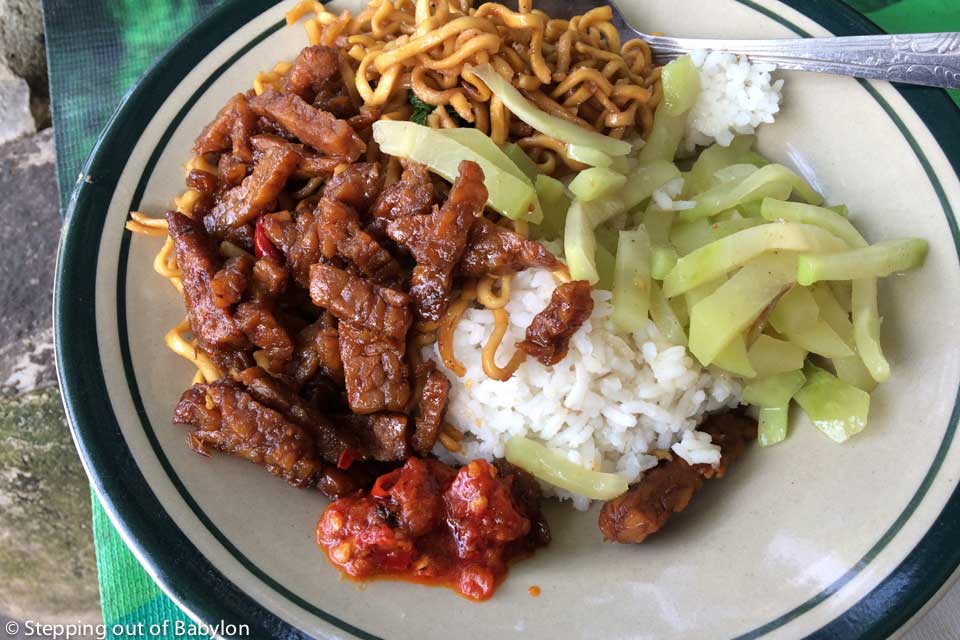
nasi campur served in the traditional way in banana leaf and cooked on Javanese style with fry noodles, sweet tempeh and some vegetables… with a bit of a grind coconut, fried, sweet and seasoned with spices
nasi campur
The Javanese “nasi campur” in a vegetarian version, just with sit fry vegetables, fry noodles and sweet tempeh over a scoop of rice… the “sambal” stands up in the plate by it’s bright red colour

Thanks to the usual presence of vegetables (sayur in Indonesian language) like green beans, papaya and cassava leaf, bean sprouts, cabbage, spinach and other green leaf vegetables… the Indonesian cuisine, despite not being vegetarian (not even in Bali that is an island dominated by Hinduism) has a lot of options for vegetarians. And the frequent presence of tofu and tempeh especially in Java, Bali and Lombok create a wider range of options, even for the ones that want to avoid eggs.

But watch out if you are a “purist” about vegetarianism as there are a few animal products hidden in some of the Indonesian dishes, like the shrimp past that is used in the sambal… some super-small fishes mix in tempeh and vegetable dishes… and also in some crackers served with gado-gado and other salads that are flavoured with peanuts or shrimp past.

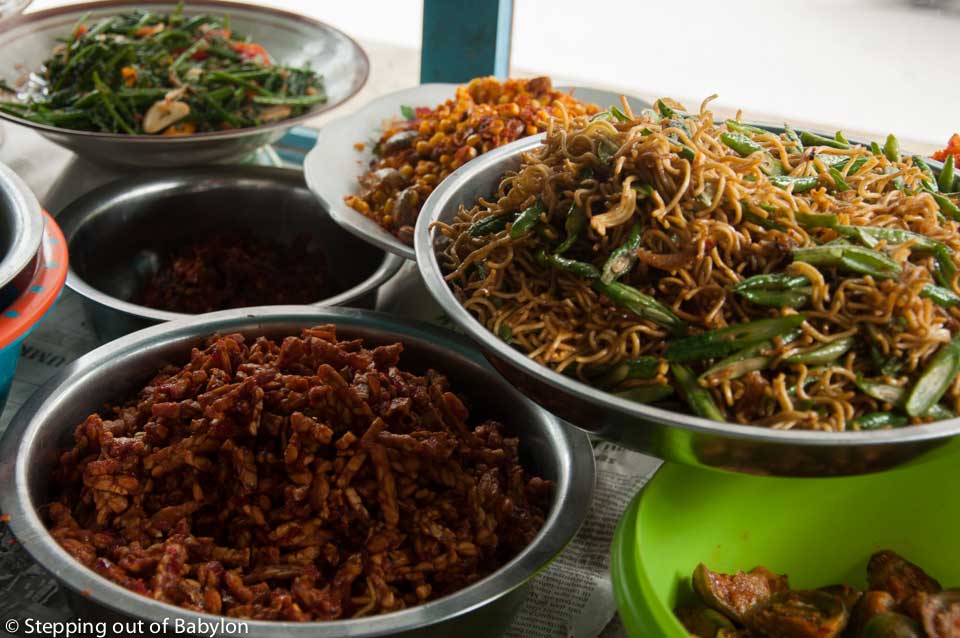
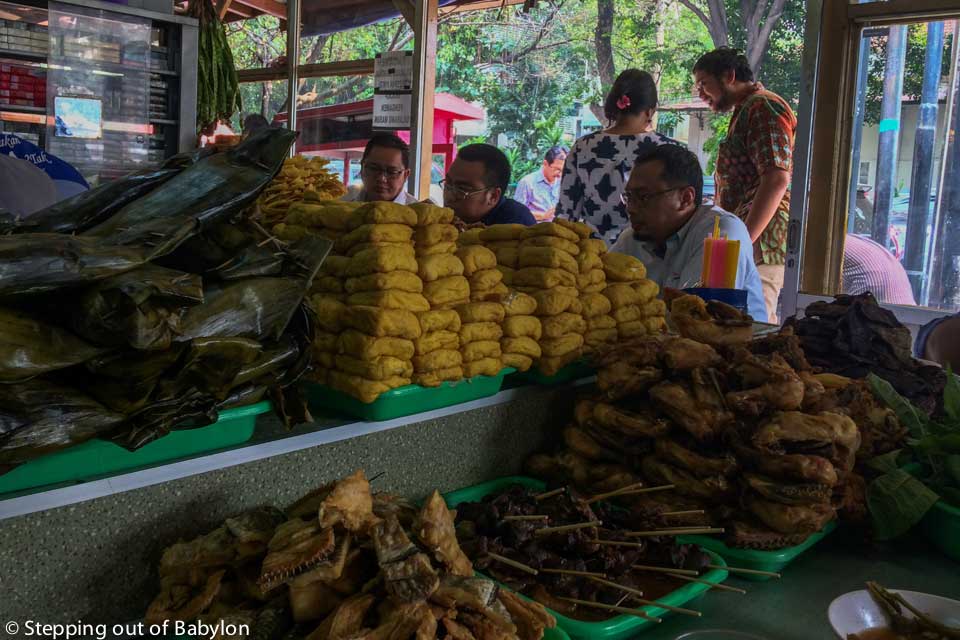
the most popular places to eat the "nasi campur" are small informal eateries that are easily identify by the window where the food is exposed in tray os plates... the noodles are an influence of the Chinese gastronomy but the "tempeh" is a traditional Indonesian food made from fermented soy beans, which can be cooked in different ways
the most popular places to eat the “nasi campur” are small informal eateries that are easily identify by the window where the food is exposed in tray os plates… the noodles are an influence of the Chinese gastronomy but the “tempeh” is a traditional Indonesian food made from fermented soy beans, which can be cooked in different ways

Something about tempeh…

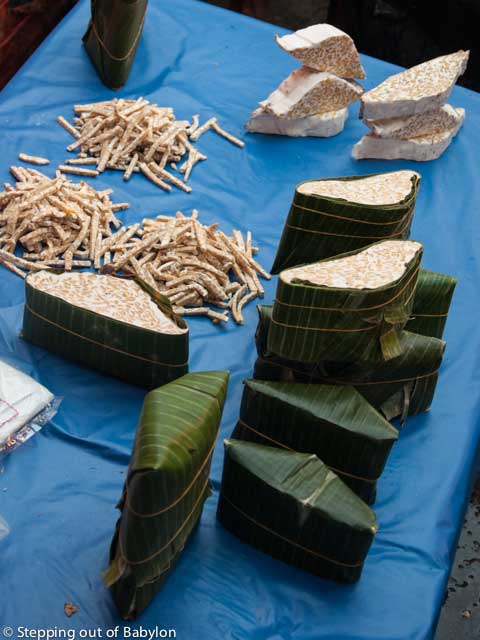
But the Javanese cuisine as something unique to offer: the tempeh!! Tempeh is made from fermented soybean, that gets aggregated forming a soft but compressed block, sometimes warped in banana leaf, which is sold fresh in local markets all over Java but that can also be found in nearby islands of Sumatra, Bali and Lombok.

Due to its compact consistency, the tempeh can be cut in slices or chopped in small pieces. Unlike most of the soy products, the tempeh isn’t an influence from China, but an Indonesian product that is present almost in every restaurant that serves rice dishes.

Is difficult to identify the taste of the tempeh as it isn’t something that stands up in a dish despite being a fermented product, but it can be described as something between beans and mushrooms, resulting from the fermentation of the soybeans that creates a thin layer of mould. It has a heavy and thick consistency but smooth on the month, giving a feeling sensation in the stomach.

The same way as the tofu, the tempeh can be simply deep-fried (goreng) or simply fried in a pan, but can also be cooked with fry peanuts in a sweet and red sauce made from spices and sugar… that is one on the reason why the Javanese food is famous for the sweetness.

[columns] [span6]

tempeh
The tempeh is usually sold in blocks that can be cut in slices or chopped in small pieces.. according to the time of the fermentation the tempeh may look different and have distinctive smells

[/span6][span6]

tempeh
Tempeh packed sold in markets

[/span6][/columns]

tempeh
tempeh sold in a street stall and wrapped in banana leaf… where is visible the layer of mould between the soybeans
fry tempeh... one of the most popular way to cook the tempeh
fry tempeh… one of the most popular way to cook the tempeh… delicious and crunchy

Sambal?!?!

Sambal (don’t mistake with “sambol” a Sri Lankan dish made from coconut) is a spicy condiment made from chilies, usually with a bright red colour but that can also be found in green. The sambal is a must in any nasi campur plate and gives a special touch to any meal. Sometimes a meal can just be some fried tempeh seasoned with sambal and served with a portion of steamed rice!

The sambals in Indonesia are hot but not extremely spicy and the recipe also includes tomato, garlic, shrimp paste and lime juice… but can have more other ingredients, with each restaurant having its own recipe.

The Indonesian sambal change from island to island, from market to market, from restaurant to restaurant… but are a mandatory presence at any rice dish served in Indonesia.

Sambal
Different kinds of “sambal” sold in a Market in Bukittinggi (Sumatra). The “sambal” is a condiment that can be find everywhere in Indonesia that is always added to a rice dish
Tempeh served with sambal and rice


Where to eat nasi campur?

Basically, you can find nasi campur everywhere! It is served in a la carte restaurants, in informal eateries where the food is exposed in trays at the window, in a improvised stall set up in front of a house, in a hidden back street kiosk or inside the markets in a kind of food courts. The nasi campur can also be found in street hawkers that usually hang around the food markets, caring a basket loaded with the familiar paper cones that wraps the food.

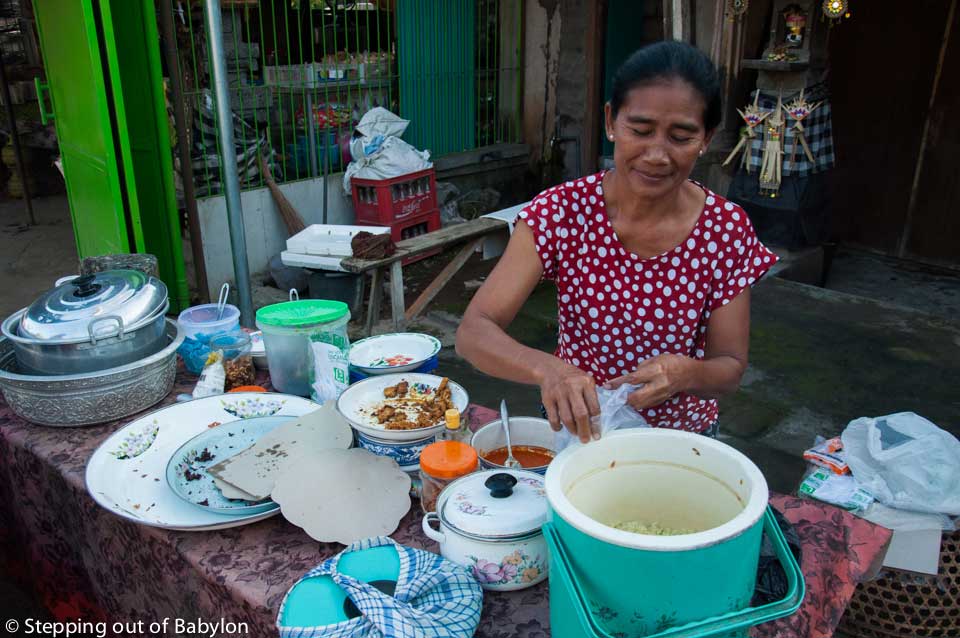
Early morning is the best time to find this informal way to eat the nasi campur, as many housewives set up a table on the street selling food, most of the times for take-away by people on the way to the work, but where is always possible to ask for a plate and seat on the side walk, interacting with other customers and enjoying the movement of the street.

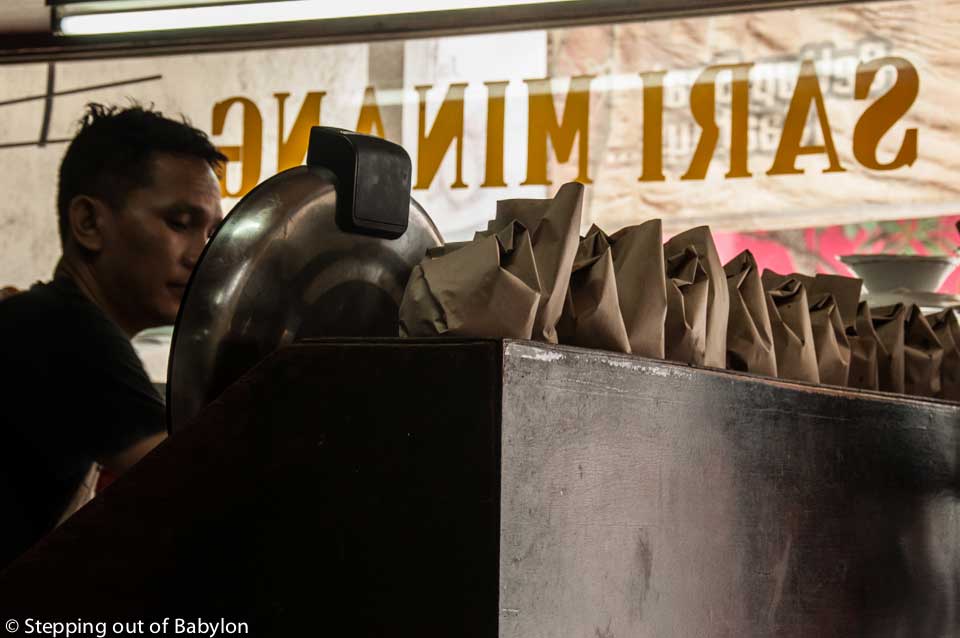
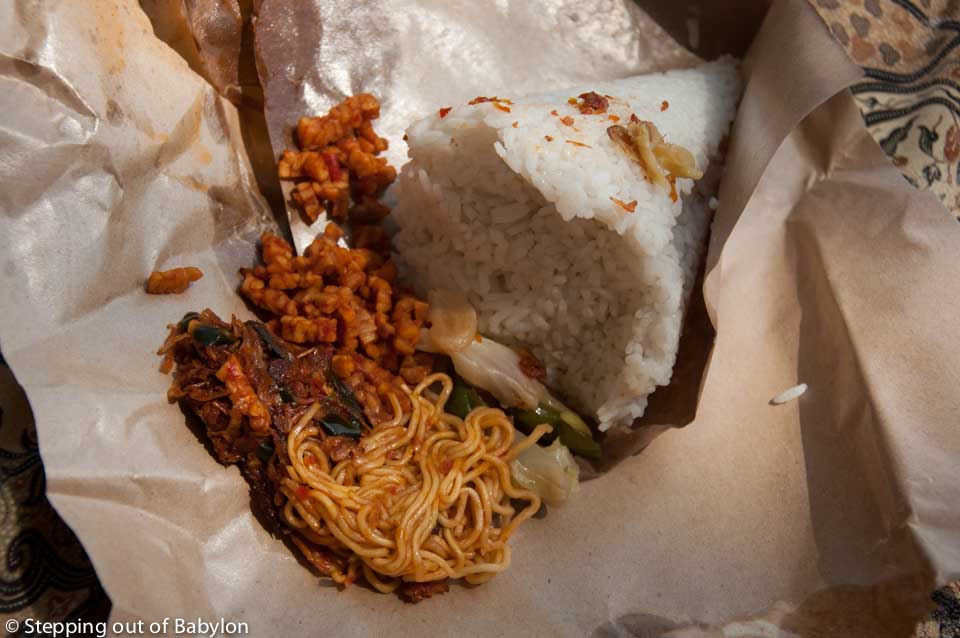
small eateries that are a bit everywhere in Indonesia that serve nasi campur, where the take away sytem is very popular, with the food wraped in paper sheets forming a cone
small eateries that are a bit everywhere in Indonesia that serve nasi campur, where the take away sytem is very popular, with the food wrapped in paper sheets forming a cone
Nasi campur can also be found in improvised food stall that pop up in the mornings along the streets
nasi campur for take away: rice, fry noodles, sweet fry tempeh

Despite the fried rice being the dish easiest to find in Indonesia, mostly due to the easy and quick way to prepare, the nasi campur can be considered the most popular Indonesian food staples, including here all the variations resulting from the different cultures, traditions and climates that characterise this huge country!

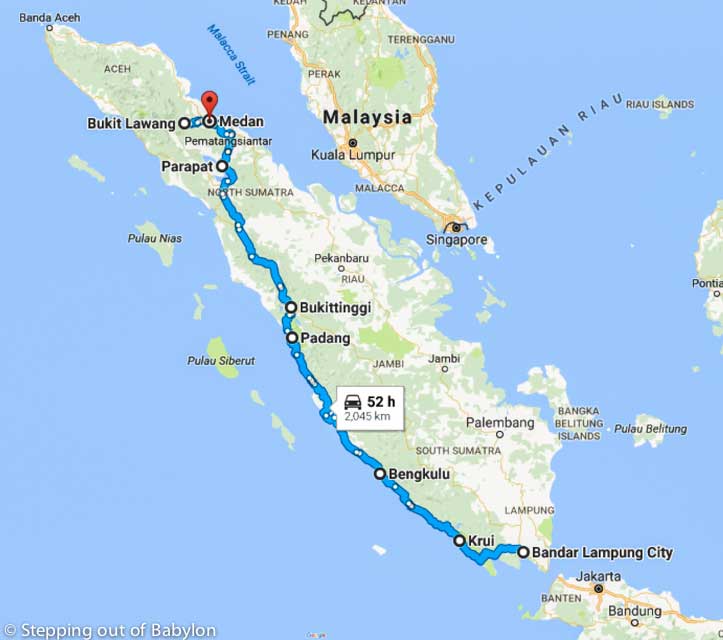
22 days in Sumatra: itinerary & costs

Itinerary:

  • Ferry crossing Merak-Bakauheni (from Java to Sumatra by ferry)
  • Bandar Lampung: 1 day
  • Krui: 5 days
  • Bengkulu: 1 day
  • Padang: 3 days
  • Bukittinggi: 4 days
  • Lake Toba: 3 days
  • Bukit Lawang: 3 days
  • Medan: 2 days

Costs:

13.4 €/day

… considering traveling solo, eating just local (vegetarian) food, no a/c rooms, sometimes dorms, travel by public transport, no alcohol and no soft drinks, making my own laundry and walking a lot on foot… Shopping and souvenirs are also not included, as well health expenses and communications (SIM card, mobile, telephone, internet…).

Costs in Sumatra:

  • room (fan): minimum 60.000 Rp up to 100.000 Rp (one person); in Sumatra the accommodation is usually cheaper that other Indonesian islands. There are many places with dorms in the cities for 60.000 or 80.000 Rp; nearby the beach areas the prices increase reaching 100.000 Rp. Most of the times the breakfast isn’t included.
  • meal: less than 20.000 Rp for a meal (local food, street-food, vegetarian meals). The water is usually free at the guesthouses, as also coffee and tea.
  • rent a scooter: 70.000 Rp/day or 100.000 Rp/day; a litter of petrol: 10.000 Rp in road side shops (at the pump station is 8.500 Rp/l)
  • angkot (small local bus): costs from 2.000 Rp to 10.000 Rp for an urban area trip.
  • ojek (moto-taxi): 10 km cost around 15.000 Rp (but the price of the ojek depends on your bargain skills and the needs of the driver, weather, time of the day…).
    At Medan the GoJek, Uber and Grab companies offer moto-taxi services, that are an easy way to move around.
  • There is only one passenger train service in Sumatra (Bandar Lampung to Palembang), so the bus is the most common option but the distances are big and sometimes the plain is the best option as the prices are not much higher than the bus, and a bus trip of 15 hours can be mande in 1 hour by plane. Still… all this Sumatra trip was done by land!!!!
  • A bus trip of 680 km costs around 200.000 Rp, in a air-con bus.
  • At Sumatra the cost with transportation increase significantly compared with Bali, Lombok or Java) as the distances are bigger. But the accommodation is cheaper than in the other islands that i visit.

Note: this trip was made duriing Jun 2017, which still is still considered the low season, when the prices of the accommodation are lower, that can be significant at beach areas.

MAP_Bandar Lampung City, Lampung, Indonesia to Medan - Google Maps-1-2
Sumatra: itinerary


see also:

Masakan Padang… the most popular Indonesian cuisine

Padang… where is the food?!

“Padang” is one word that will cross your way as soon as you arrive in Indonesia, written at many signs and restaurant windows. Masakan Padang, that means Padang food, is the typical cuisine of the Minangkabau people of West Sumatra, and Padang is the capital of this region.

But visiting Padang, located in a traditional Muslim area of Sumatra, during the Ramadan, didn’t allow to experience the big choice of the restaurants with this kind of that put the name of this city on the gastronomic map of Indonesia.

But padang food is a bit everywhere in Indonesia, and despite the religious rules that push people to fasting during the day (more or less from sunrise until sunset), some restaurants still serve food during the day, although keeping the window where usually the food is displayed covered by a curtain as also the door, showing this way respect for the ones that are fasting. During the Ramadan, some of the restaurants that are open don’t allow the clients to eat there, selling food just for takeaway.

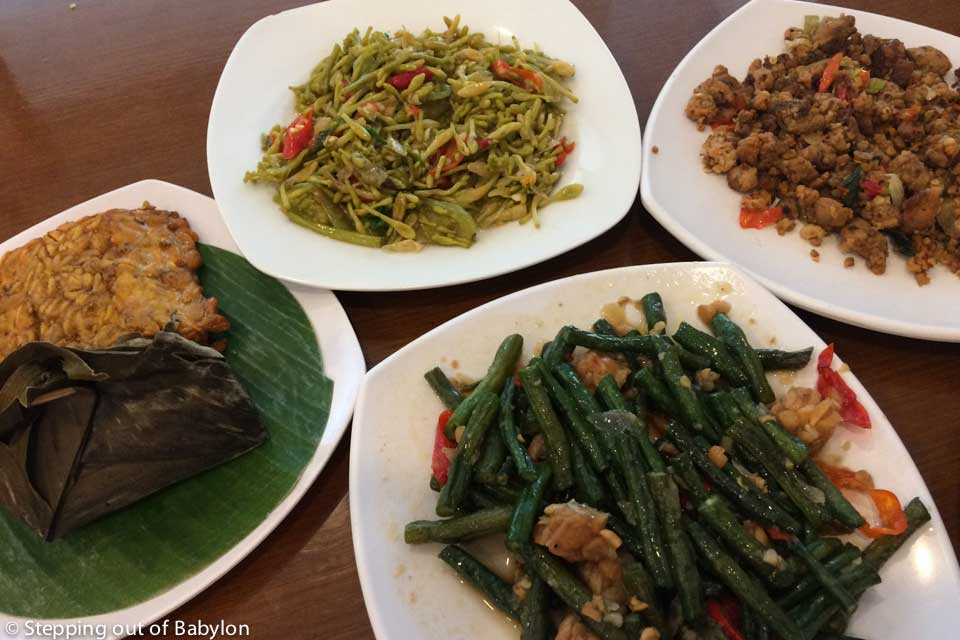
The Masakan Padang restaurants are easily identified be the way the food is presented: in piles at plates or in big metal bowls or trays for more juicy dishes, like curries. The plates are exposed at a window and visible from the outside, and most of them open from the morning until the evening. The food is served at room temperature and just the rice is kept warm.

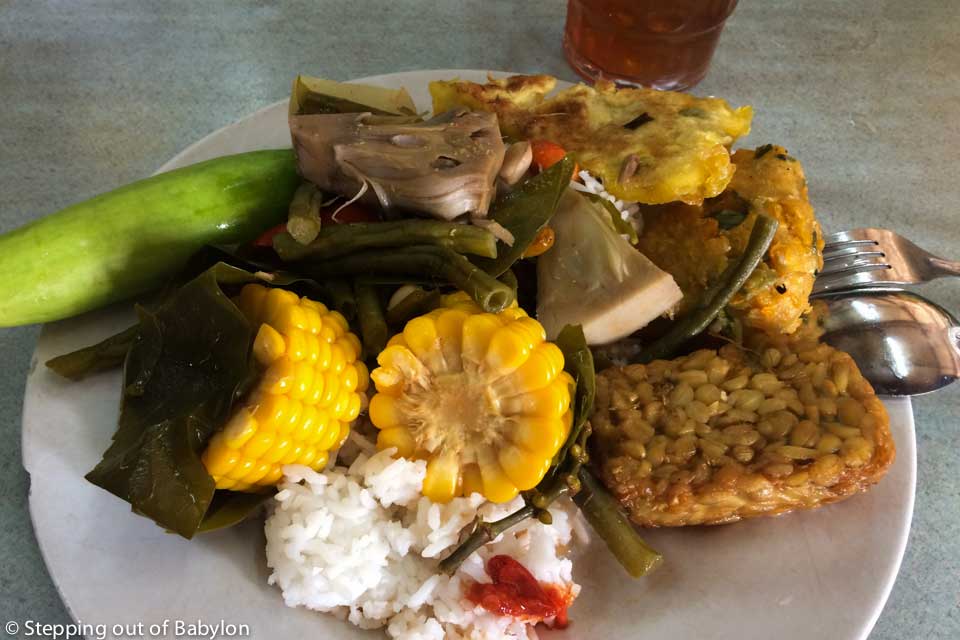
Due to the big vegetarian choices available, like tofu, tempeh, green leaf vegetables, vegetable curies, jackfruit curries, and eggs in many ways… the Masakan Padang restaurants are a great choice for vegetarians!!!!

But beyond the famous cuisine Padang has more to offer, although it is not a charming or engaging city, that was seriously afecte by 2009 earthquake. But still there enough things to see during a couple of days.

Padang
Padang
Padang
Padang
an example of Minangkabau arquitecture at Taman Iman Bonjol

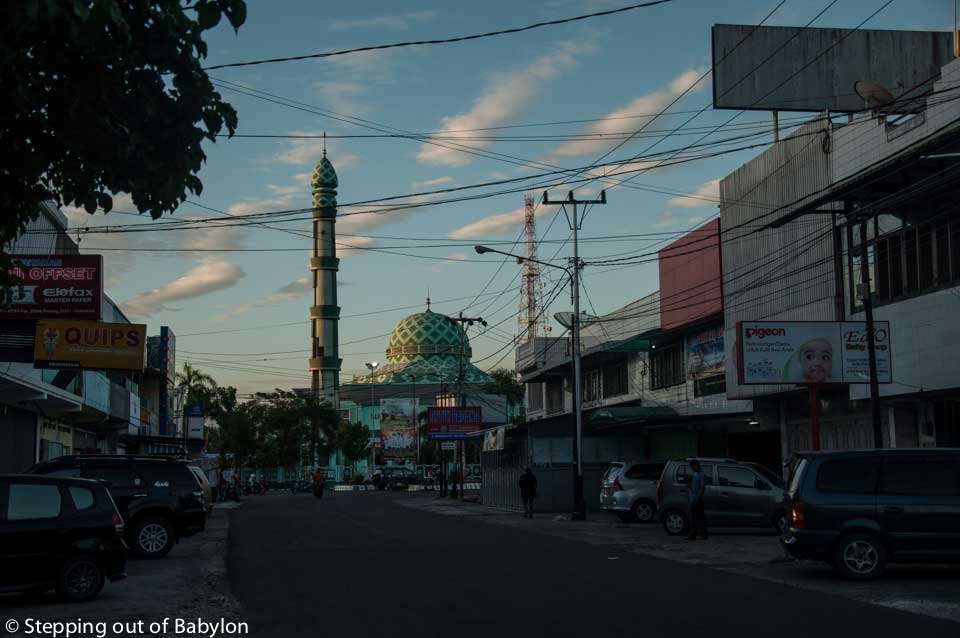
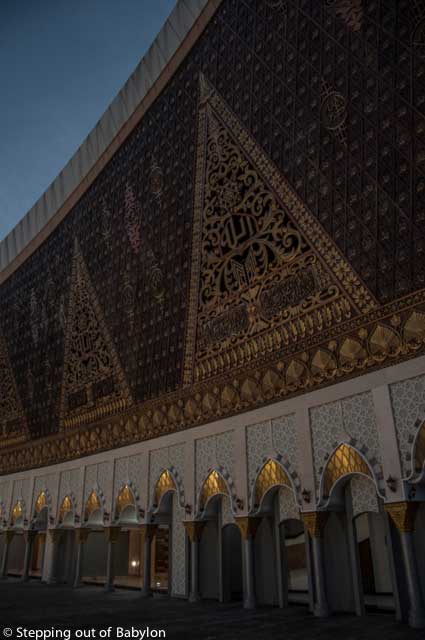
Masjid Sumatera Raya Barat, the grand mosque of West Sumatra!!! In fact is an impressive building that crossed my way just I arrive in Padang, even before the first sun rays! It’s a massive structure inspired on the pointy rooftop of the Minangkabau (an ethnic group from West Sumatra) houses.

Majid Raya Sumatera Barat
Majid Raya Sumatera Barat... a new mosque with a modern design that was for me the most interesting sightseeing of Padang
Majid Raya Sumatera Barat… a new mosque with a modern design that was for me the most interesting sightseeing of Padang
Majid Raya Sumatera Barat

As the Ramadan time stole a bit the life of the city, with many shops closed, including many restaurants, was necessary a bit of walk to explore the other side of Padang. There’s a big Chinese community, even a neighbourhood identified as Chinatown with the traditional gate. Here the life runs at the usual pace, away from fasting traditions, and with markets and restaurants working normally.

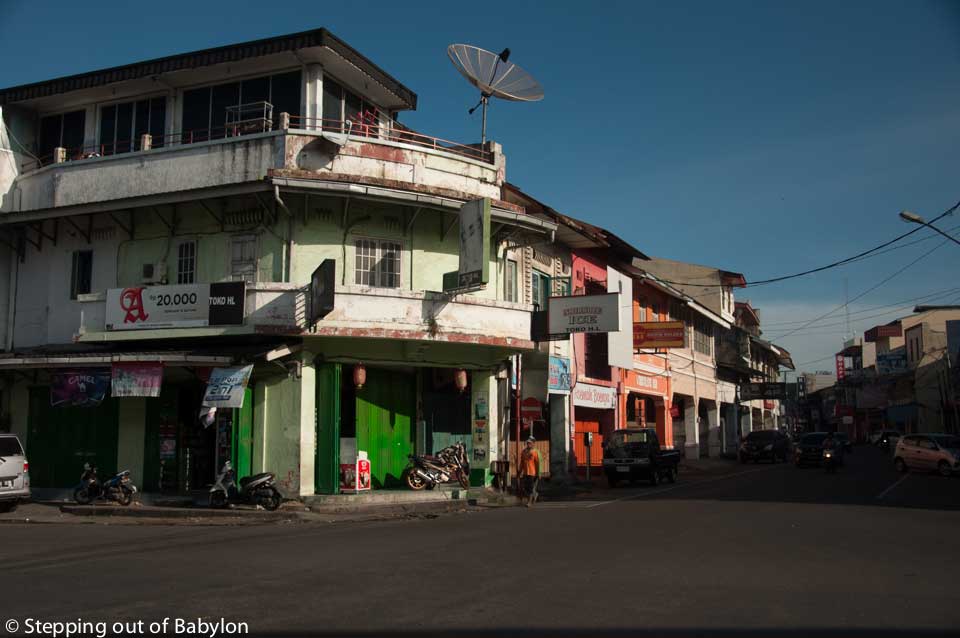
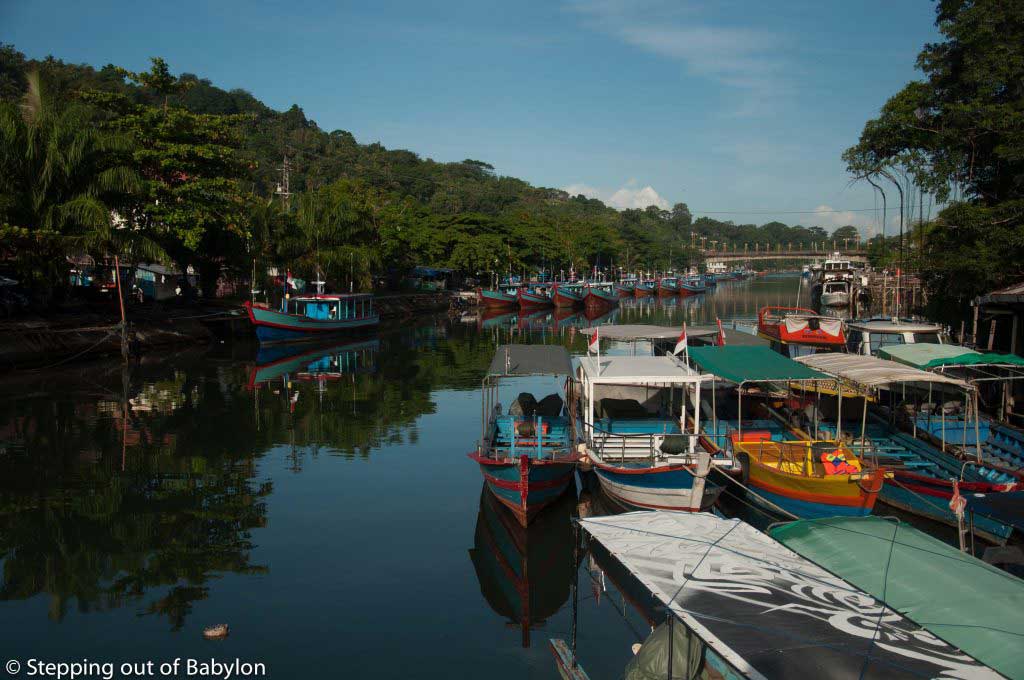
Nearby the Chinatown, along the Jalan Batang Arau can be found what remains of the Dutch presence here… not much more that a few warehouses and buildings. Some of them are abandoned and others were transformed into bars and restaurants that are closed during the day, giving an sad feeling to this riverside area, despite the colourful fishing boats that are aligned along the riverside, known as Dutch Harbour.

Padang's Chinatown, that during the Ramadan keep the usual pace, but where many restaurants keep a curtains covering the windows to respect the muslim fasting during this period
Padang’s Chinatown, that during the Ramadan keep the usual pace, but where many restaurants keep a curtains covering the windows to respect the muslim fasting during this period
Padang’s river front… old Dutch Harbour

But the Ramadan despite bringing fasting and closed restaurants also has the bright side: the Ramadan food markets!!!! Usually improvise street-market that just run during this season, that open during the afternoon selling food, some of which can only be found during the Ramadan, where people come to buy the food to break the fasting as also for the last meal before dawn, that impose the fasting again. So these markets are a delight for the senses and a temptation to everyone, although can be impolite eating this meals, snacks or sweets on the street, before the sound of the siren marking the end of the fasting.

At Padang, the Ramadan treats, many of them homemade, can be found in many streets between 4 and 5 p.m., but at Taman Iman Bonjol, a small park at the center of Padang where people play sports, hang out and where lots of kids play, where is located the Ramadan Food Market.

Ramadan Food Market at Taman Iman Bonjol


But with or without Ramadan, the markets are always the center of the activity in any Indonesia city, and Padang is not an exception! The Pasar Raya, the main market in the city, is a group of a few buildings that didn’t look inviting to visit. But outside along the Jalan Pasar Raya is where everything interesting happens… a street crowded with sellers, hawkers, people and traffic… clothes, fruits, fish and tasty food… busy, colourful and vibrant of activity.

Impossible to be unnoticed here!!! From everywhere the usual “hello” and “where are you from?”… Portugal?!?! Cristiano Ronaldo! 🙂

Pasar Raya
Pasar Raya
Pasar Raya
Pasar Raya
Pasar Raya
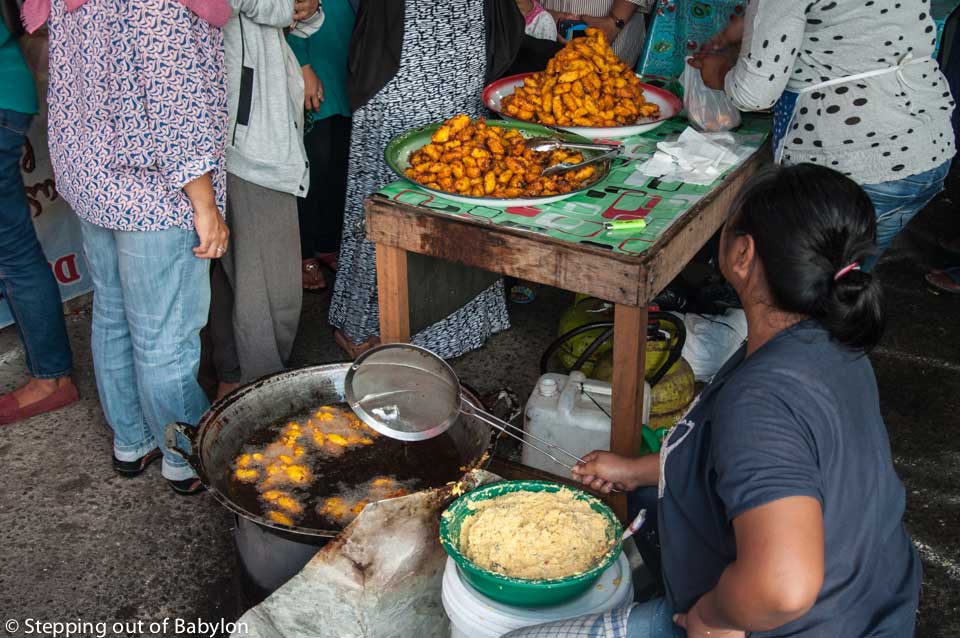
Padang street food
street food at Pasar Raya… delicious deep-fry snack made form corn and seasoned with kefir leaf.

Where to sleep in Padang:

Most of the people just stay in Padang on the way to Mentawai Island, but still, there are many accommodations in the city for different budgets. I choose one with a dorm as the prices at Padang are a bit height that the usual in Sumatra.

The Brigitte House, as different kinds of rooms, as also a dorm with 4 beds… is a nice place with good conditions, a balcony, a rooftop and is located in a quiet area. The staff is friendly but the owner can be a bit distant and indifferent to the guests, particularly the ones that are not buying one of the many tour pack available at the guesthouse. I don’t miss the place but the price was attractive considering other options in Padang. The bed at the dorm, with air-con, safe lockers and breakfast included is 95.000 Rp a day.

https://brigitteshousepadang.com/

Brigitte House
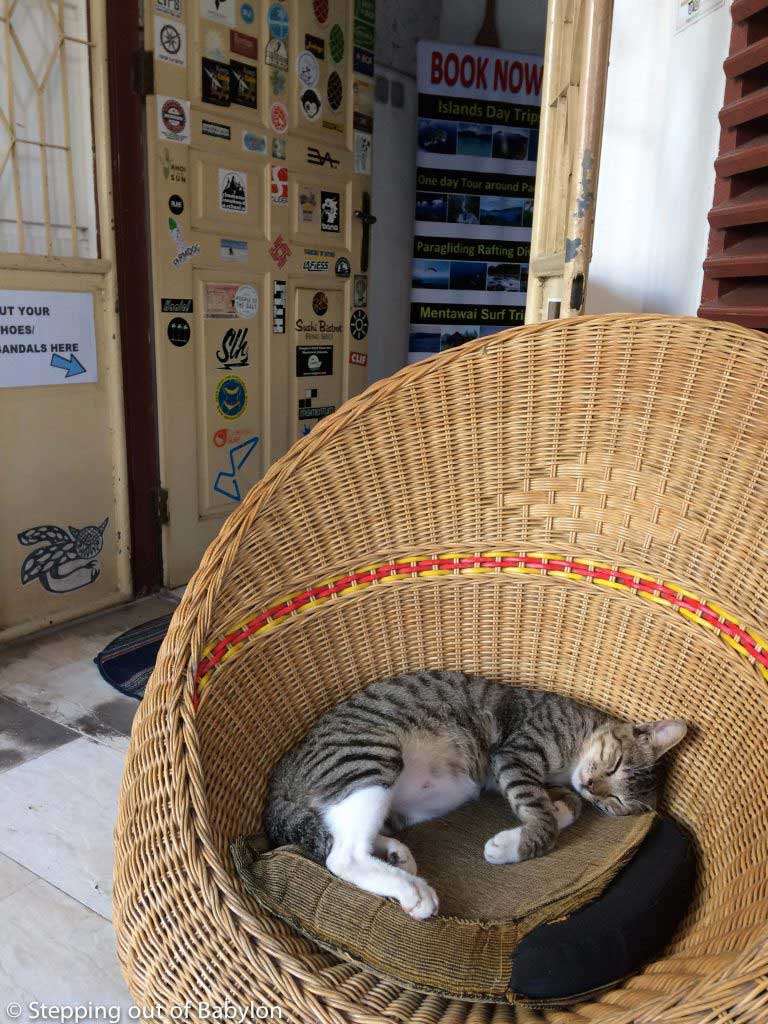
Brigitte House… the cats are the coolest thing here!!!

Where to eat in Padang:

Ramadan… most of the places are closed, that make the visit of the most famous Indonesian cuisine a bit odd experience. But on the other hand, the Ramadan creates a curious phenomenon: the food markets that show up on the streets, some organized some very informal, during the afternoon and last until five or six in the evening. It’s a place where people come to buy food, already cooked, looking for treats to break the day fasting and having the next morning meal already in mind. It’s a delight for the senses, with a huge variety of Indonesian cousin, where is also possible to find types of food specially prepared for this season.

At Padang, nearby the Taman Iman Bonjol, a park chosen by local to chill with lots of kids playing, there’s a market area with delicious food!

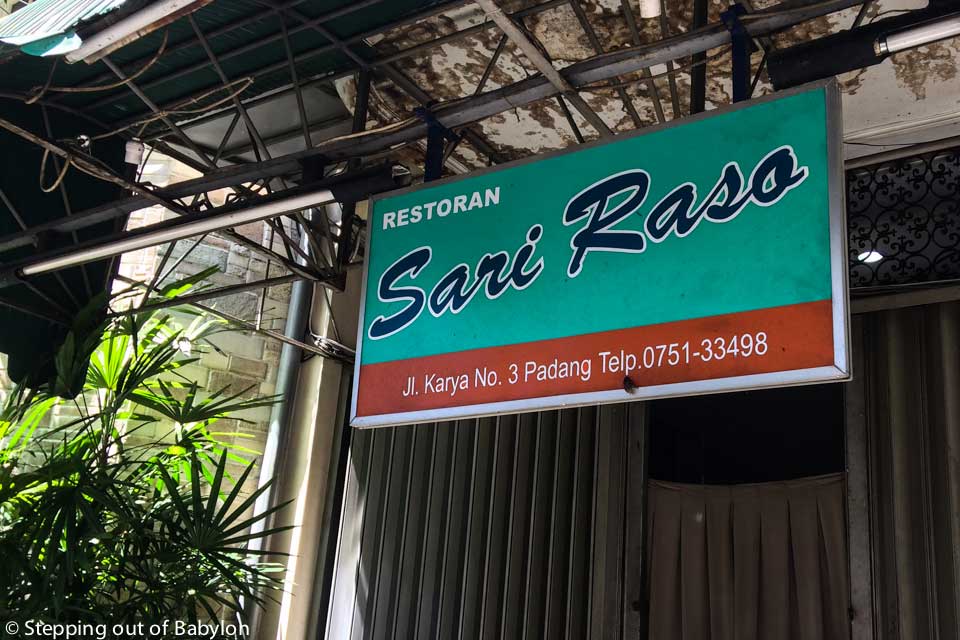
But during the day, there are many other options to try the Padang food, locally called Masakan Padang. Yet, most of them were closed during the Ramadan, so I just found two of the top choices restaurants open: Restoran Sari Raso (at Jalan Karya, 3; open from 10 a.m. to 7 p.m.) and Rumah Makan Pagi Sore (Jalan Pondok, 143; open from 7.30 a.m. to 9 p.m.).

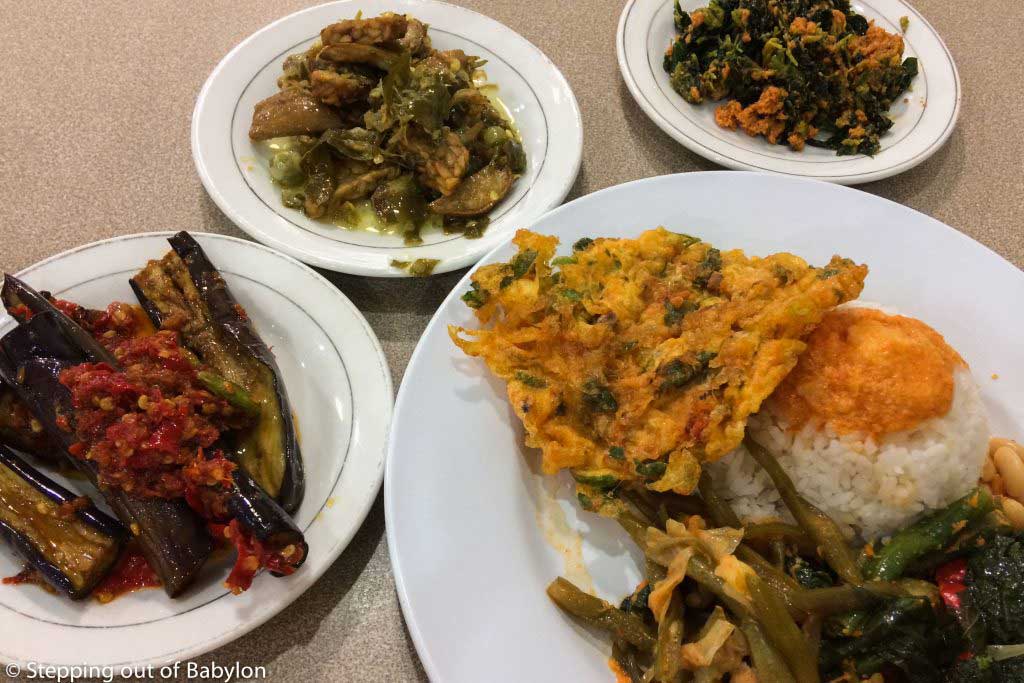
From this two eateries just have the opportunity to try the Sari Raso that is famous also for the wide range of vegetable dishes. The place during the Ramadan looks closed but behind the curtain that covered the door there’s delicious food served in an informal atmosphere. If you seat and ask for 4 or 5 dishes, hidang style, you may pay something around 50.000 Rp, just for vegetable and egg dishes. It’s a big portion of off just for one person, but you also have the pesan system, where the food you choose is served on a plate with rice, and this will cost around 15.000 Rp.

Sari Raso... delicious food, with a lot of vegetarian option... one of the few masakan padang restaurant that was open during the day at Padang
Sari Raso… delicious food, with a lot of vegetarian option… one of the few masakan padang restaurants that was open during the day at Padang
A delicious meal at Sari Raso Restaurant... a reference of Padang food
A delicious meal at Sari Raso Restaurant… a reference of Padang food

How to move around Padang:

There are many types of angkot (public transport) in Padang, and the type of vehicle as also the colour indicates the route/destination. It’s not easy to understand how this system works, but there’s a big concentration of this angkot nearby Pasar Raya… and there you must tell to the drivers about your destination, and wait until one point you the right vehicle. Is not easy and it takes time and patience, as almost anyone speaks English, and you going to feel how useful is to know a few words of Indonesian!!!

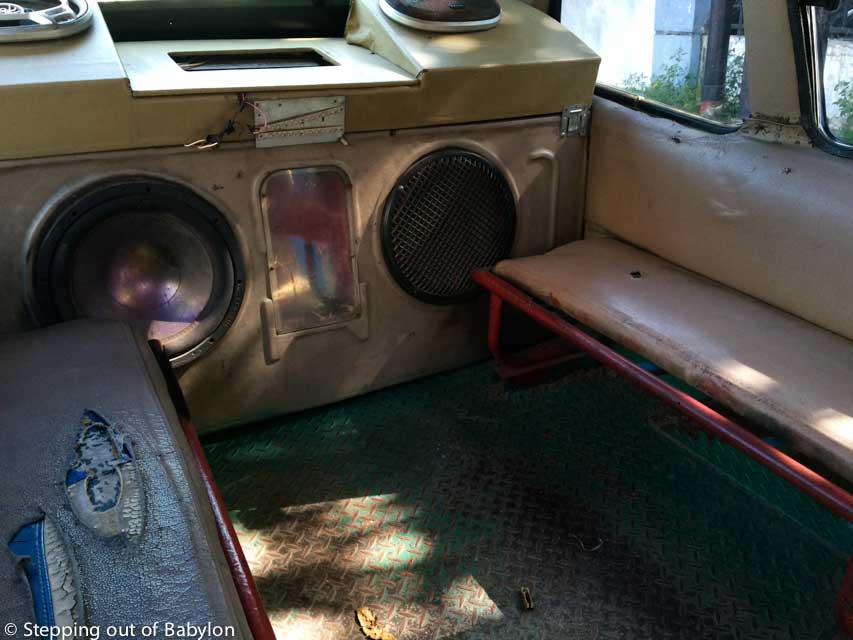
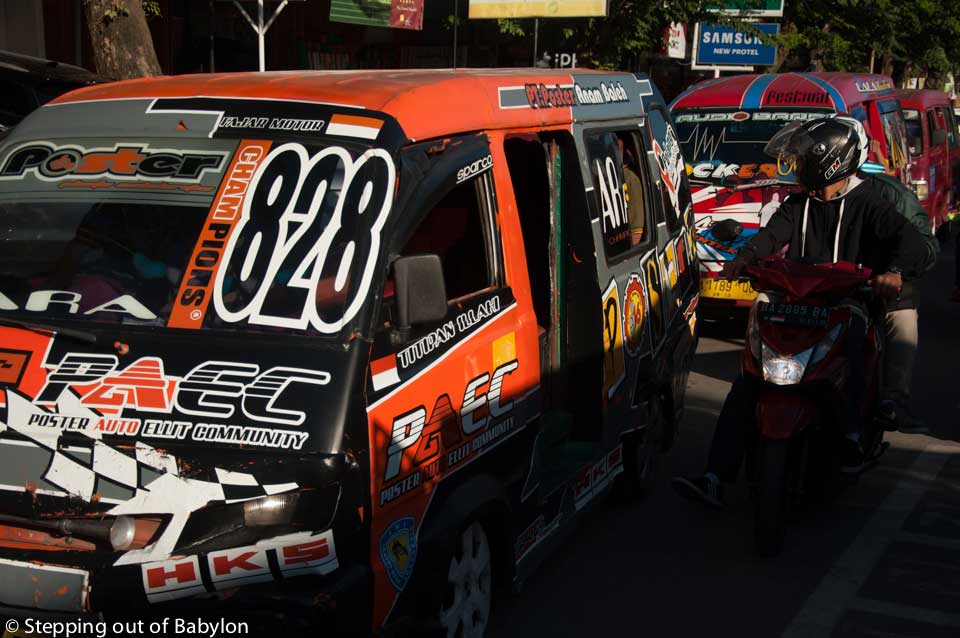
For some strange reason, most of the public transport vehicles at Padang are personalized with eccentric decoration and always have a blasting sound system that can transform a trip in hellish experience!!! Sometimes these angkots are very old, dirty and in bad conditions, but nothing looks to affect the sound system, which sometimes is the only thing that is not decrepit.

But to make things easy, there are also the TransPadang, modern and confortable buses that have a number according to the route, as also specific bus stops (bus halt) that are easy to identify. A TransPadang trip cost 3.000 Rp.

Sometimes these angkots are very old, dirty and in bad conditions, but nothing looks to affect the sound system, which sometimes is the only thing that is not decrepit.
the public transport in Padang have a "particular" look
the public buses in Padang have a “particular” look


See also: Masakan Psdang… the most popular Indonesian cuisine

Jakarta… where are the durians??!?!?

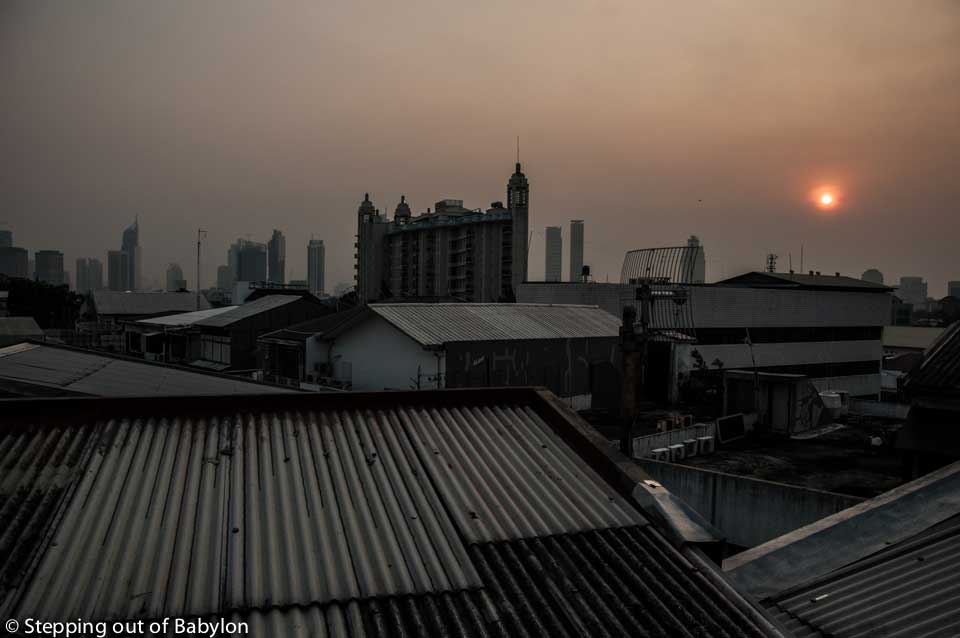
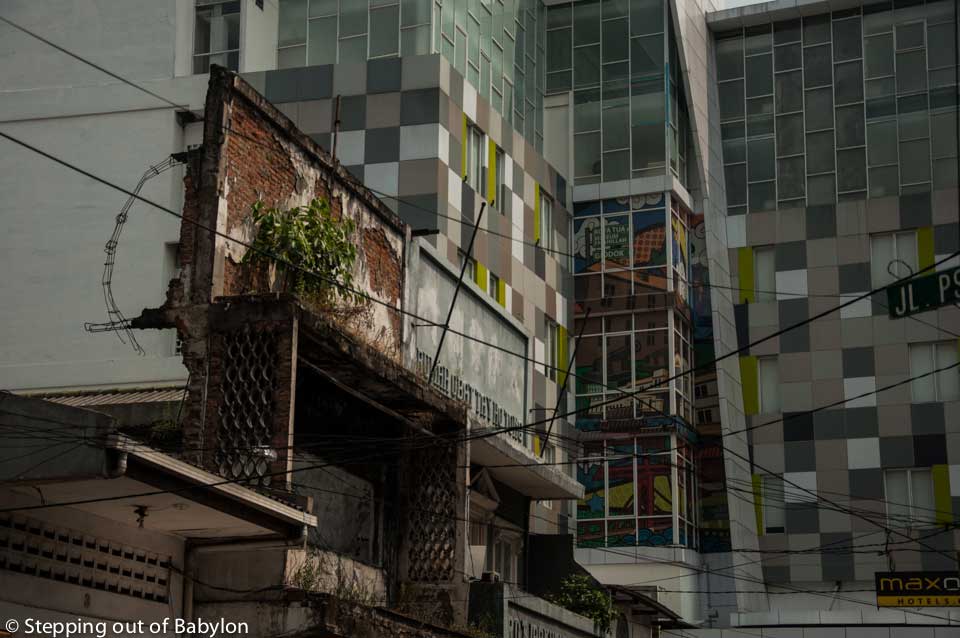
Jakarta, one of the Asian megapolis, a city with a fast economical and population grow, with a modern and westernized lifestyle, with the usual social gap between the rich and poor, where the upmarket malls contrast with the poverty of the suburbs.

Jakarta is known as the “big durian”. I don’t know from where this nickname came from but maybe because Jakarta is more like an agglomeration of cities that could resemble the inside of the durian, compact and dense… and with a spiked shell that usually keeps away the tourists, that just see Jakarta as a necessary stopover when arriving to Indonesia or before leaving to other destination.

It’s a big city with 10 million of inhabitants, long avenues, wide roads and intense traffic, but where the people still keep a gentleness that is less and less common in the big cities, where people usually don’t avoid eye contact and can answer with a smile!

Maybe Jakarta doesn’t have much to offer to a tourist that just arrives in Indonesia, but for people traveling for a long time, Jakarta (as also Yogyakarta) offer an urban and modern lifestyle, trendy and sophisticated places, with plenty of choices that are a nice break on the low key places that I found along this two months in Indonesia.

And like a durian, that are not such a popular presence in the markets, Jakarta left a mix of feelings, between seduction and loathing!!!!

Jakarta doesn’t have the appealing of Yogyakarta, and the interesting places can be a bit far out from each other’s, but still can be an interesting way to spend the time in the “big durian”. Skipping monuments, churches and museums, that for me are usually a bit boring, here is a list of the sight that I found interesting and that free to visit!

Jakarta
Jakarta
Jakarta
Jakarta
Jakarta
Jakarta
Jakarta
Jakarta

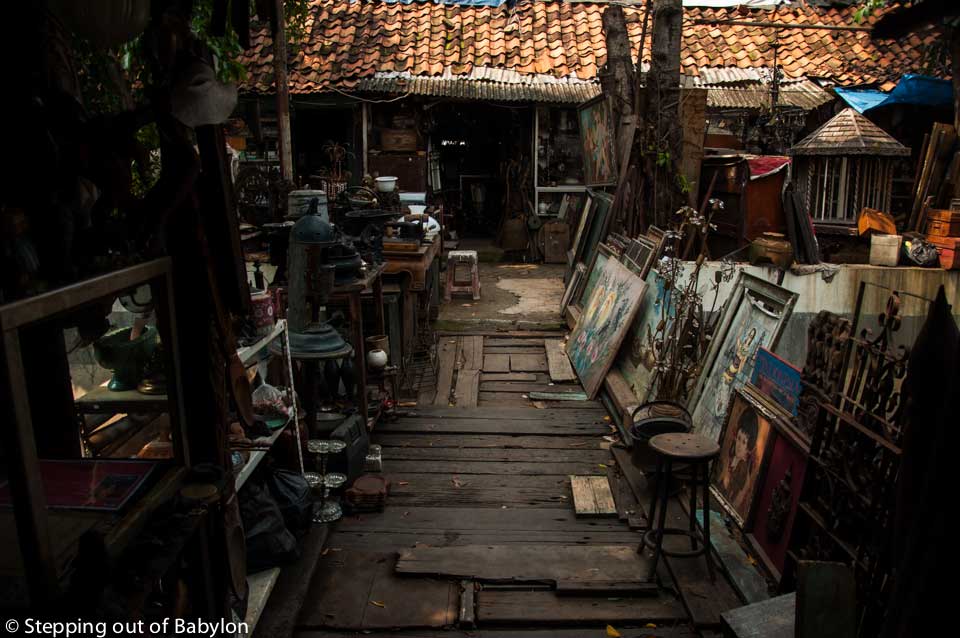
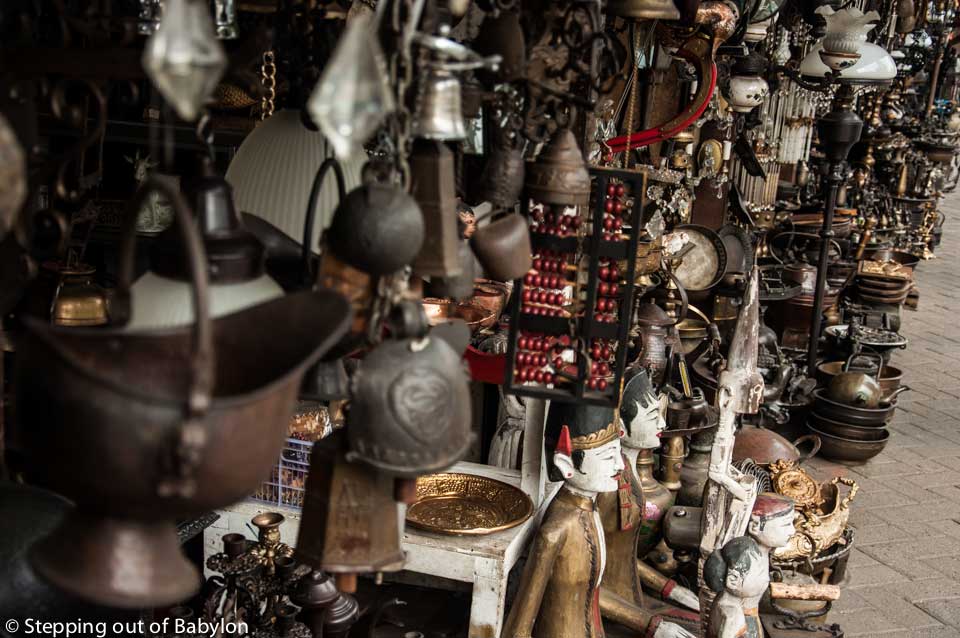
Antiques market

Walk along the Jalan Surabaya (close from Cikini train station) and let yourself lose in the thousands of objects, from statues, coins, fabrics, jewelry… but watch out that not everything is an antique just because it look old and dusty!!! If you are tired you can have a break on the Gianti Coffee, just opposite of the antique shops.

Antiques market at Jalan Surabaya
Antiques market
Antiques market at Jalan Surabaya

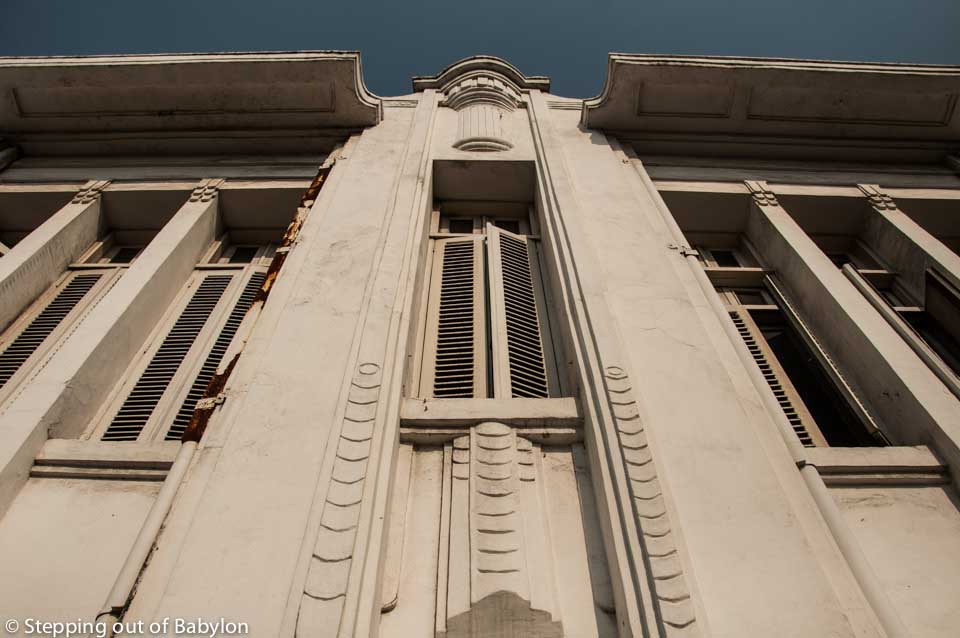
Colonial quarter (old Batavia)

The area is called Jakartakota, or simply Kota, and Fatahillah Square (Taman Fatahillah) is the center of a group of old building left by the Dutch colonization, most of them transformed into museums, but others are simply abandon. Despite the rehabilitation of the area, that is the central tourist attraction of Jakarta, the area around has a certain depressed appearance, like around the canal where you can find a metal drawbridge.

Jakartakota
Jakartakota
Jakartakota where the Fatahillah Square is the heart where bicycles with cheesy decoration can be rented to cycle around the square
Jakartakota
Jakartakota

Glodok

The Chinatown of Jakarta, where you can find a lot of Chinese culture, from restaurants, tea houses, shops and the market with the usual bizarre products. To reach Glodok area you can take the train to Jakarta Kota and from there you can walk.

  • The Jin De Yuan Temple (Jl. Kemenangan) was seriously affected by a fire 2 years ago that destroy seriously the building including statues and the rooftop, and what remains from it has a strange, although atmosphere, something between desolation and charming abandon.
  • The Glodok Market (Jl. Kemenangan) is a must see in the area.
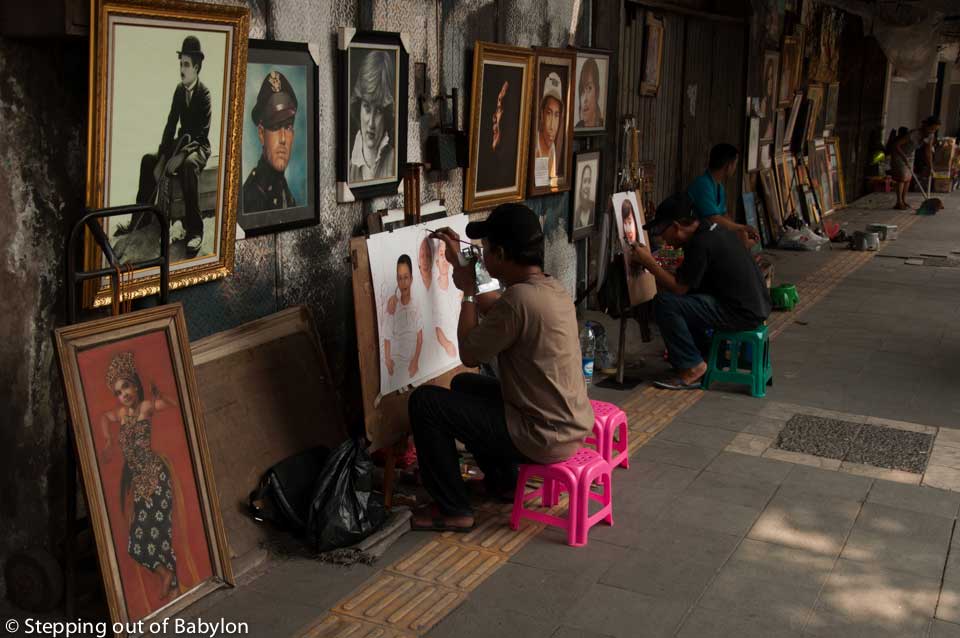
  • Along Jalan Pintu Besar Selatan you can see many painters working on the canvas or simply selling paintings… is a mix of styles where the portraits dominate… a bit cheesy and sometimes with doubtful taste but worth a look on the way from the trains station to Glodok.
Jin De Yuan Temple
Jin De Yuan Temple, also called Vihara Dharma Bhakti on the center of Glodok
Jin De Yuan Temple a Buddhist temple in Jakarta's chinatown
Jin De Yuan Temple a Buddhist temple in Jakarta’s chinatown
many painters working on the canvas or simply selling paintings along Jalan Pintu Besar Selatan
Glodok market
Glodok market… with the usual “strange” and difficult to identify products

Pasar Baroe

This is not much of a market but more a street with shops, mostly fabrics and cloths shops… is a bit lazy during the mornings but gets better later on. Not impressive if you are not in the mood for muslim style cloths, but still you can find some sarong shops and spot some traditional shops that keep the classic style.

Pasar Baroe
Pasar Baroe

Pasar Muara Angke

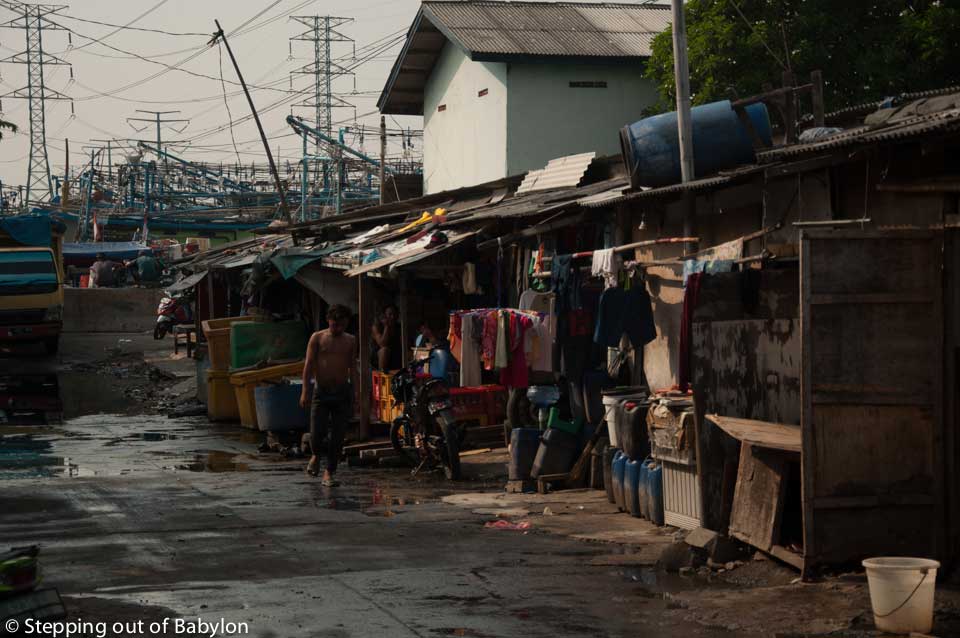
This is located a bit far out on the north of Jakarta, and is mainly focus on the fish, with lots of warehouses and small markets that run very early in the morning. During the day is an poor and depressed port area, with same activity connected with storage and fish processing. Nearby is the Baywalk Mall, a modern shopping area with international brands and a huge massive concrete structure of apartments overlooking the sea.

Pasar Muara Angke
Pasar Muara Angke

Pasar Muara Angke

Pasar Muara Angke.... a poor and depressed port area on the north of Jakarta
Pasar Muara Angke…. a poor and depressed port area on the north of Jakarta
Pasar Muara Angke
Pasar Muara Angke

Plaza Indonesia

The malls… yes! There is a lot of money in Jakarta, and the malls are a good way to see it! There are many shopping areas in the city, but the Plaza Indonesia is maybe on of the most sophisticated and posh one, with a concentration of the most luxurious international brands. It worth a visit to this side of Jakarta, away from the smelly and shabby market of Pasar Muara Angke.


Where to sleep in Jakarta:

The “official” backpackers area of Jakarta is nearby Jalan Jaksa.

But following the advice of the owner of the homestay where I slept in Bogor, I stay at Cikini (pronounces xikini), where the Six Degrees Hostel stands by the reasonable prices and the good conditions offered. There are several types of dorms as also rooms, safe lockers, free fast and reliable wi-fi, free water, tea and coffee, the breakfast is included…. there’s also a kitchen and a roof top that change to a bar, but where the party don’t disturb the sleep of anyone. The rooms don’t have windows (but all with air-con) what is good for travelers that what to recover from the jetlag… and avoid the noise that comes from the street (Jl. Cikini Raya). The staff is friendly and can help you with moving on and around!

http://jakarta-backpackers-hostel.com/

The Six Degrees Hostel is located about 5 minutes walking from the Cikini trains station. Around there’s restaurants and many street-food options, mainly after the sunset. You can have a meal for 10.000 Rp (street-food) or for 100.000 Rp (midrange restaurant) depending on your choice. There are also nice cafes and bakeries around for the delight of a sweet tooth.

[columns] [span6]

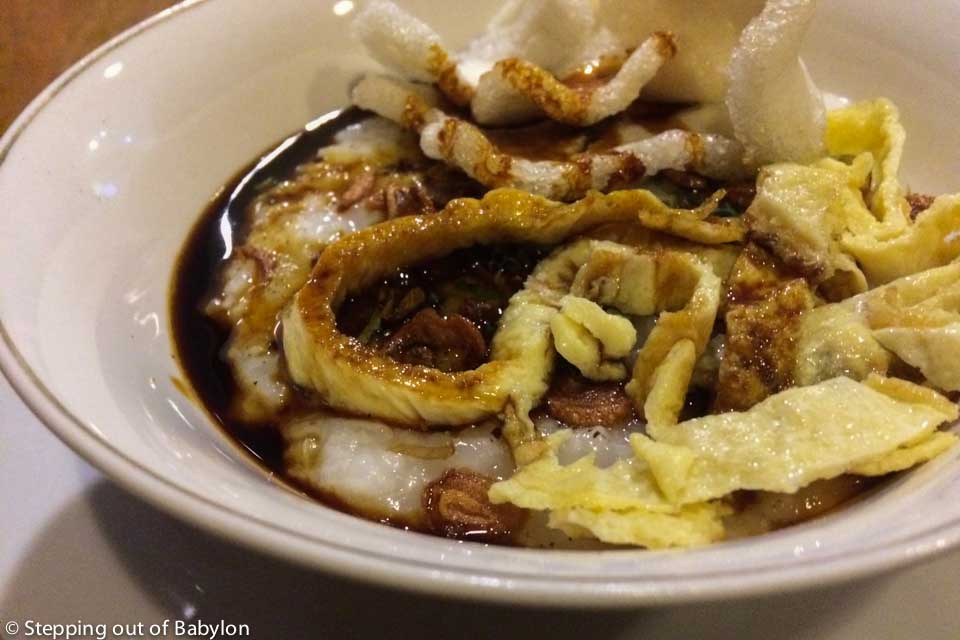
Bubur... a traditional Indonesia breakfast served at Six Degrees Hostel... a kind of rice porridge with a egg topping
Bubur… a traditional Indonesia breakfast and one of the option served at Six Degrees Hostel breakfast… a kind of rice porridge with a egg topping

[/span6][span6]

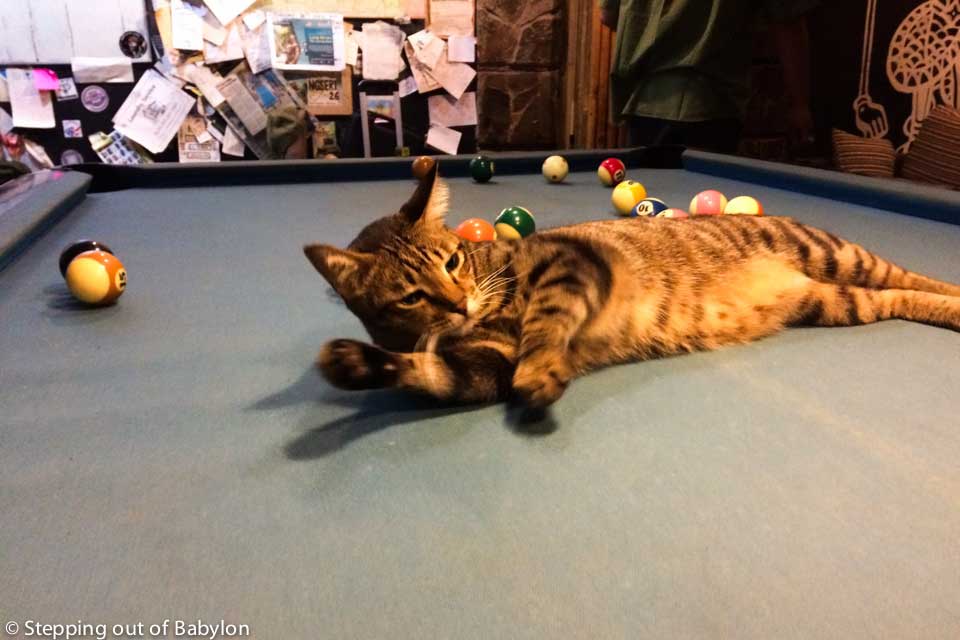
This is Nemo... the spoiled cat of Six Degrees Hostel!! cool cat!
This is Nemo… the spoiled cat of Six Degrees Hostel!! cool cat!

[/span6][/columns]

Where to eat and hang-out around Cikini (Menteng):

As any capital, Jakarta offers a lot of choices For someone that just stayed in this mega city for 4 days will be pretentious to give tips about best food and cool places to chill in the “big durian”… so this is just an overview of Cikini area where I spent most of the time:

  • Bakoel Koffie… good atmosphere, good coffee but not so good cakes. Can be busy and noisy at lunchtime. My favorite place to chill and read a book and blogging!!!
  • Gianti Coffee… a bit hidden at Jalan Surabaya (not far from Madam Chin restaurant); has different areas with nice decoration and cozy environment. But too noisy around lunchtime.
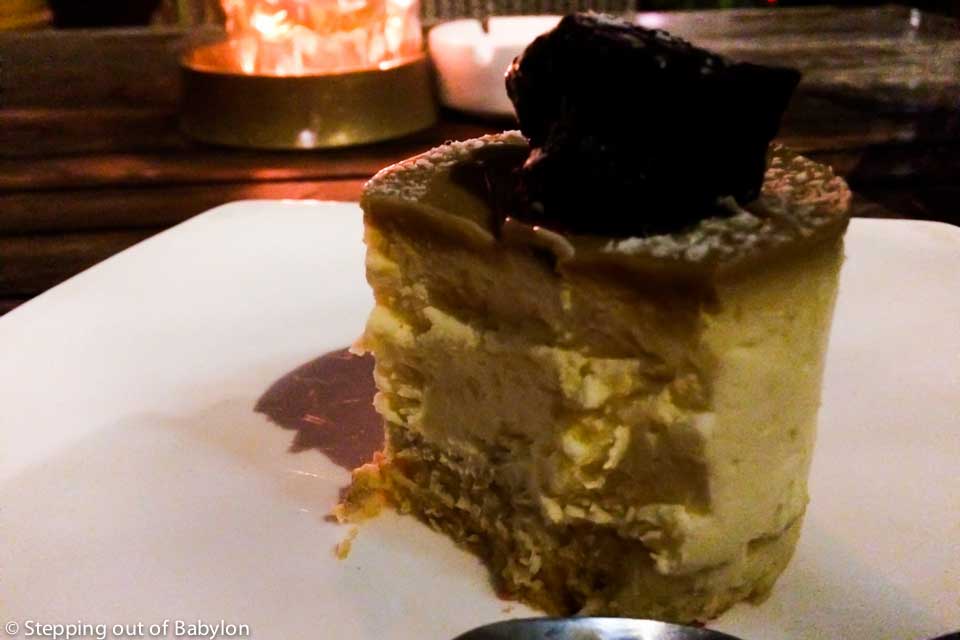
  • Cheesecake Factory (Jalan Cikini Raya)… a super posh place with high-quality products. The cheesecake that I try was perfect! The prices are high but not much more than you can find in others trendy coffee shops of Jakarta. It worth if you are in the mood for a treat!
  • On the ground floor of the Ibis Budget, there’s a food court with. I try the Riung Sunda, a sundanese food restaurant. Is expensive and you can find better in some of the street stalls nearby, for 10 times less the price!!!!
  • Street food…. its’ everywhere along Jl. Cikini Raya, particularly after 5 p.m. Cikini Raya is famous for martabak (Indonesian pancake). During the day you can find a good nasi campur at Jl Cikini 4, as also gado–gado.
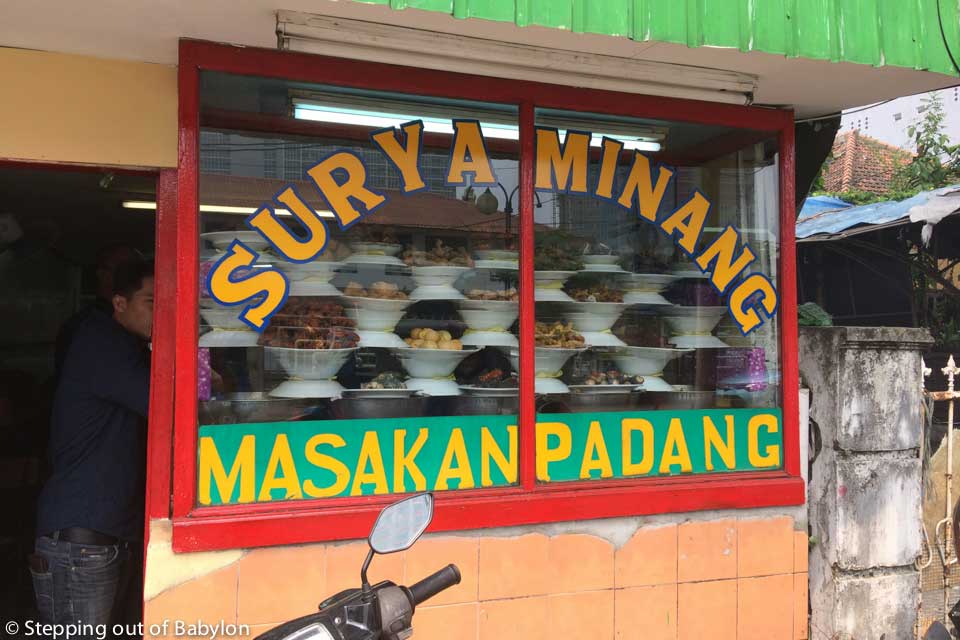
  • Surya Minang… a masakan padang at Jl Raden Saleh (before you reach the Sedahna restaurant) with tasty, simple and cheap food. Is better arrive before 1 p.m. as the runs out quickly! Sedahna restaurant is a reference for padang food but doesn’t have many vegetarian options and is more expensive.
  • On the corner of Jl Cikini Raya with Jala Ciliman there a very popular restaurant that gets full around lunchtime with the local population. Apparently, it doesn’t have a name but is easy to spot with some hawkers selling juices in front during the day. This eatery works on self-service system… a huge meal (vegetarian) cost me 30.000 Rp.
Bakoel Koffie...old school cafe at Cikini
Bakoel Koffie…old school cafe at Cikini
Cheesecake Factory at Cikini
Cheesecake Factory at Cikini… a perfect cheesecake serve in a very posh place!

[columns] [span6]

sundanese food... a meal that cost 100.000 Rp at Riung Sunda restaurant... Is expensive and you can find better in some of the street stalls nearby, for 10 times less the price!!!!
sundanese food… a meal that cost 100.000 Rp at Riung Sunda restaurant… Is expensive and you can find better in some of the street stalls nearby, for 10 times less the price!!!!

[/span6][span6]

street-food at Jl. Cikini Raya... delicious and tasty for just 10.000 Rp
street-food at Jl. Cikini Raya… delicious and tasty for just 10.000 Rp

[/span6][/columns]

Surya Minang... a masakan padang with tasty, simple and cheap food. Is better arrive before 1 p.m. as the runs out quickly!
Surya Minang… a masakan padang with tasty, simple and cheap food. Is better arrive before 1 p.m. as the runs out quickly!

[columns] [span6]

Many options in this self-service eatery at Cikini, that serves food since morning until evening

[/span6][span6]

•On the corner of Jl Cikini Raya with Jala Ciliman there a very popular restaurant that gets full around lunchtime with the local population.
• On the corner of Jl Cikini Raya with Jala Ciliman there a very popular restaurant that gets full around lunchtime with the local population.

[/span6][/columns]

How to move around in Jakarta:

  • TransJakarta: modern and comfortable buses that have the advantage of using dedicated lanes in some parts of the city. Unfortunately, the single journey tickets are not longer available and you need to buy a monthly card that is not really an option if you stay just for a few days in Jakarta.
  • Train: if your accommodation is nearby a train station this is maybe the easier and cheapest way to move. I stay at Cikini and this line has trains every 10 or 15 minutes to Jakarta Kota, the “center” and old colonial quarter. The tickets cost 3.000 Rp for trips inside the city. You need to buy a card (10.000 Rp) that you charge for each trip, and in the end of your stay you can give it back and get the 10.000 Rp return… but the train doesn’t reach the airport yet, but the line is supposed to open in August 2017.
  • GoJek, Uber, Grab… all these companies offer moto-taxi services. They are everywhere and are the best way to move through the intense traffic. You just need to download their app and have an Indonesian SIM card. The most efficient way to move around if you are alone. It’s ok to travel with your backpack! Usually, the trips inside de city cost around 10.000 Rp. The ojek (independent moto-taxis are easy to find but with them, you need to deal the price).
  • On foot… forget about it!!!!! Everything is too far, and the hot and humid climate makes a short walk during the day in a sweaty experience.
  • There is no subway in Jakarta!
The train is a easy and cheap way to move around Jakarta, a megacity without subway. Line Jakartakota-Manggarai

See also:

Jakarta: How to go from the city to the airport by public transport

Jakarta: How to go from the airport to the city by public transport


  • « Go to Previous Page
  • Page 1
  • Page 2
  • Page 3
  • Page 4
  • Page 5
  • Page 6
  • Go to Next Page »

Footer

search

Tags

Arugam Bay Assam Bali Border Crossing Borneo Cappadocia Colombo Dambulla Esfahan Fes Food Gilis Hiking Hikkaduwa hokkaido Istanbul Itinerary Jakarta Java Kandy Kashan Kataragama Kumano Kodo Lombok Meghalaya Meknes Mekong Nagaland Natural Park Nongriat Northeast States Ouarzazate Sarawak Shiraz Sichuan Province Sumatra Tabriz Tehran transportation Varanasi Visa Yangon Yazd Yogyakarta Yunnan Province

I’m Catarina, a wanderer from Lisbon, Portugal… or a backpack traveller with a camera!

Every word and photo here comes from my own journey — the places I’ve stayed, the meals I’ve enjoyed, and the routes I’ve taken. I travel independently and share it all without sponsors or ads, so what you read is real and unfiltered.

If you’ve found my blog helpful or inspiring, consider supporting it with a small contribution. Every donation helps me keep this project alive and free for everyone who loves exploring the world.

Thank you for helping me keep the journey going!

BUY ME A COFFEE

Categories

Recent Posts:

  • How to go from Hualien to Dulan Beach
  • Taroko Gorge: between marble cliffs and emerald rivers
  • Hualien: a dull gateway to Taroko Gorge
  • Taiwan: Itinerary for an 16 day trip
  • Vietnam: Itinerary
  • 3 months in India: Kolkata, Tamil Nadu, Karnataka, Goa and Kerala
  • Backpacking Turkey in 24 Days: itinerary & costs
  • English
  • Português

Copyright © 2025 · Stepping Out Of Babylon on Genesis Framework · WordPress · Log in