• Skip to main content
  • Skip to footer

Stepping Out Of Babylon

Travel & Photography

  • About me
    • Contact
  • Destinations
    • Africa and Middle East
      • Iran
      • Lebanon
      • Morocco
      • Turkey
    • East Asia
      • China
      • Japan
      • Taiwan (Formosa)
    • South Asia
      • Bangladesh
      • India
      • Nepal
      • Sri Lanka
    • Southeast Asia
      • Cambodia
      • Indonesia
      • Lao
      • Malaysia
      • Myanmar
      • Singapore
      • Thailand
      • Vietnam
  • Itineraries
  • Travel tips
    • Border crossing
    • Hiking and Natural parks
    • Food Journey
    • Visa
  • Photography

Mulay Idriss

Mulay Idriss and the countryside lifestyle

Meknes, with a bit more than half million inhabitant is a very dense and compact urban center, surrounded by countryside, where gentle hills of dense trees stand out, behind which are plains planted with agriculture fields, interrupted here and there by scattered olive trees. The winter light filter by the scattered clouds increase the contrast of the landscape, enhance the green of the plants and the brown of the soil.

the rural lifestyle is widely present in Mulay Idriss

Along this rural landscape small villages pop up, but is one called Mulay Idriss that stands up and is a popular destination for tourist visiting Meknes, as is close location, about 30 kilometers north from the medina, make a easy day trip to Moroccan countryside lifestyle, on the way to Volubilis, the ruins of an ancient Roman city.

But Moulay Idriss Zerhoun, as it’s also called to the location close by the Mount Zerhoun, is much more popular for the Moroccan that for the foreigners as this village is where Mulay Idriss, that is considered the founder of Morocco by unifying the north part of the territory, arrive in the end of the first century bringing the Shia sect of the Muslim religion to these lands.
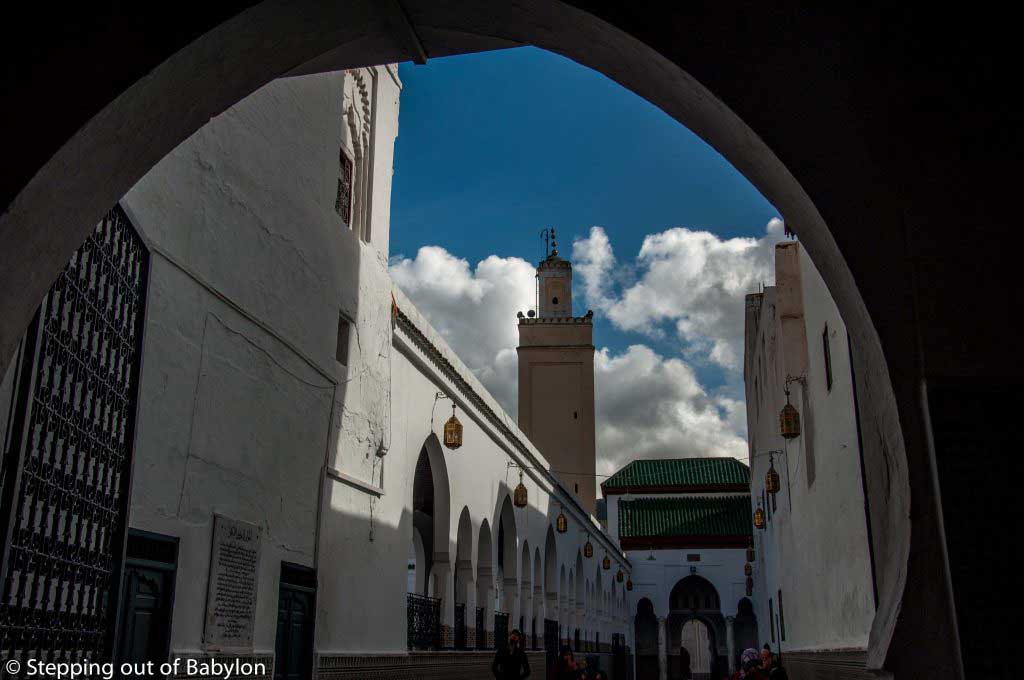
entrance of the Moulay Idriss mausoleum

Is tomb is located in this village, making Moulay Idriss Zerhoun an important peregrination place for Moroccan, being closed to foreigners until 2005. Nowadays, the building where the tomb is located is still closed to non-Muslims, as all the mosques in the country; only the madrasas (Islamic school) are open to foreigners.

This village, with its compact white building sliding down the hill, is a good contrast with the busyness of Meknes medina. The pace is slow here and Mulay Idriss is a good opportunity to observe the rural lifestyle where the donkeys still play an important role carrying good uphill, and where the markets offer an appealing variety of fresh vegetables and fruits.
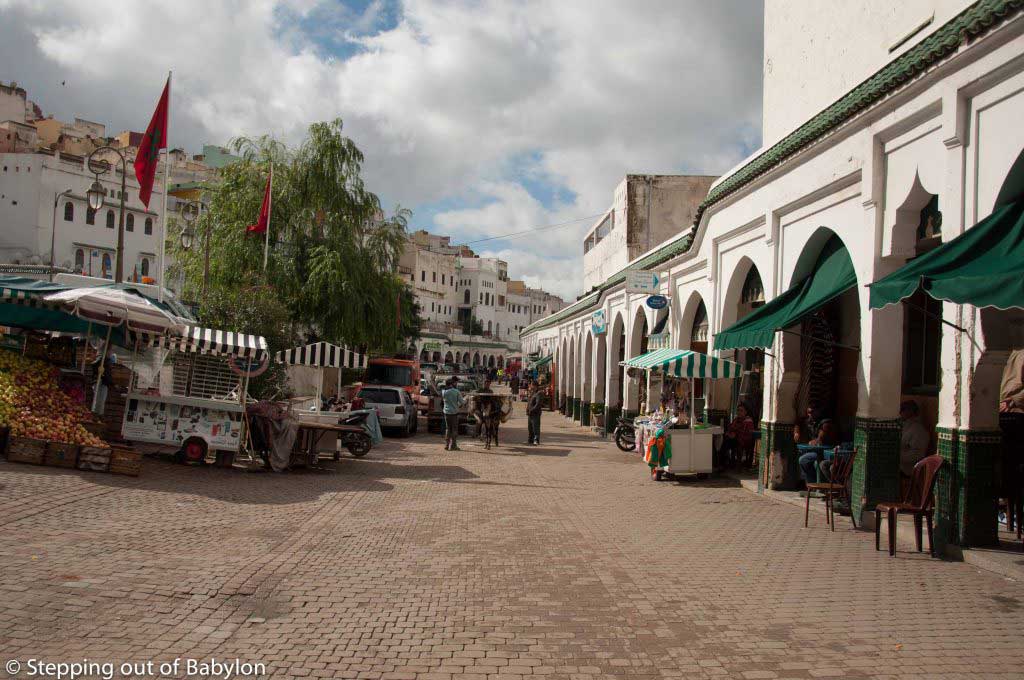
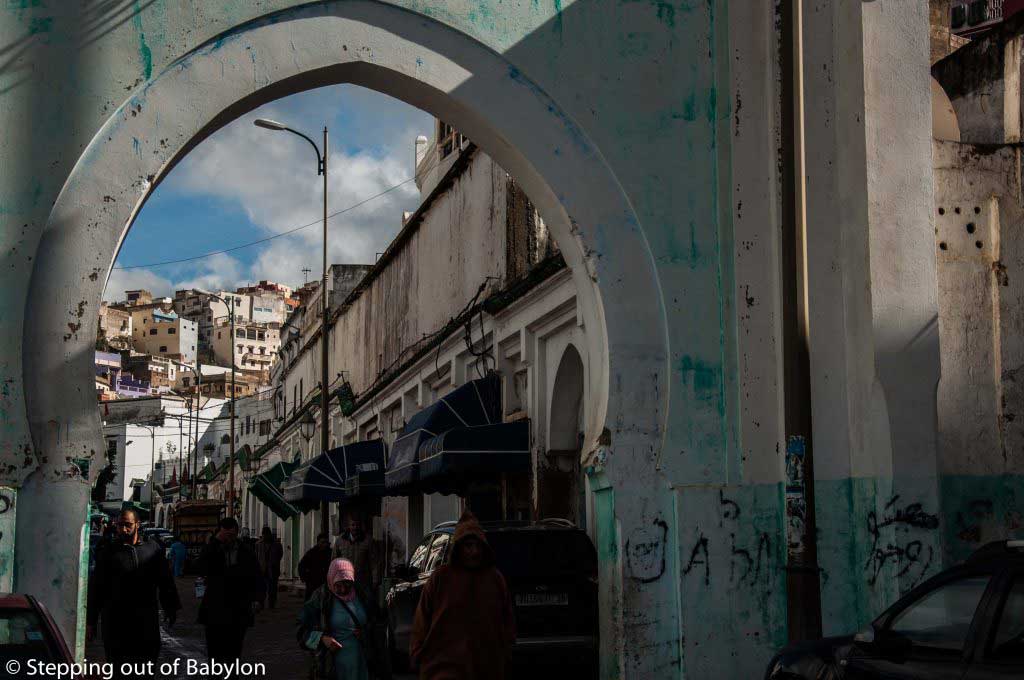
Moulay Idriss main saqure
Moulay Idriss main sqaure
Moulay Idriss
Moulay Idriss
Moulay Idriss market
Moulay Idriss
Moulay Idriss

Where to sleep in Mulay Idriss:

There’s no special reason to sleep in Mulay Idriss and walking around didn’t spot any sign of accommodation.

But as Moulay Idriss Zerhoun is so close to Meknes, can easy be reached by taxi or public bus, in a day trip with still lot’s of time to visit Volubilis… so there isn’t an important reason to stay overnight in this village.

Where to eat in Mulay Idriss:

On the street that goes from the bus stand (number 15) to the main square, as also in the square itself, there are several options for food, selling kebabs and tagines. As the food here is mostly meat orientated and the prices are a bit higher, it was a good opportunity to try the Moroccan style sandwiches, which are a bit everywhere. It’s basically half of a flatbread, stuffed with what you choose from the food that is available at the window… can be meat, but there’s a choice for vegetarians, as grill vegetables, egg, boiled potato, deep fry aubergine…

As you cross the main gate, on the way to the Mulay Idriss’s tomb, you’ll hardly found any shop o place to eat, so it’s better to surrender and choose one of the restaurants or eateries downstairs, around the main square, and ignore trying the insistent invitation of restaurant employees.
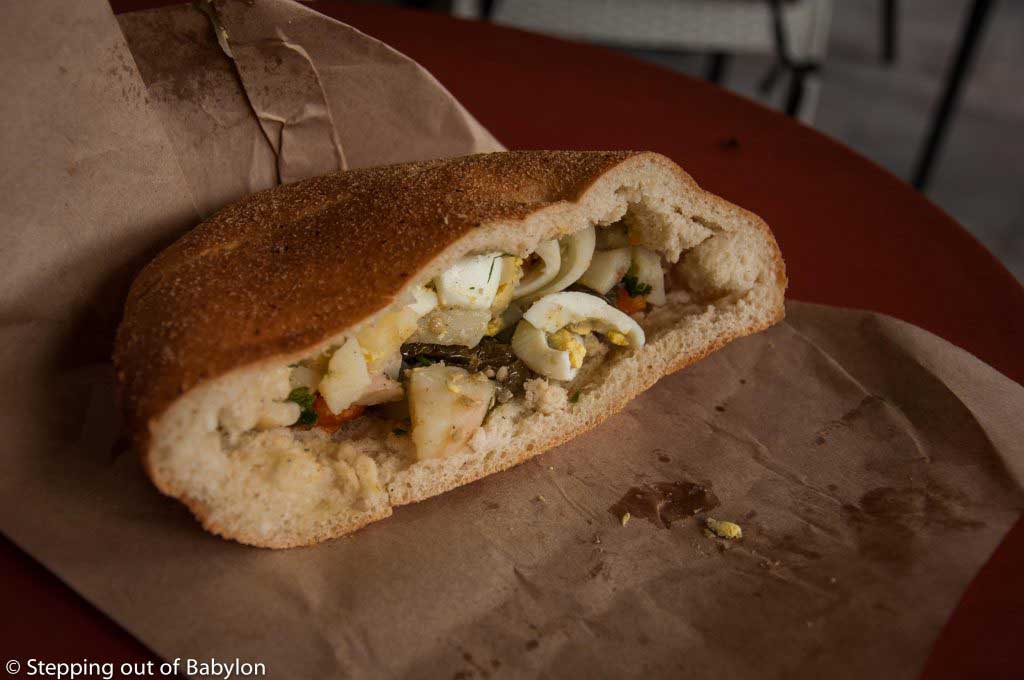
Morocco style sandwich

How to move around in Mulay Idriss:

Definitely on foot, but be prepared to climb the steep narrow street, some of them with steps, that which spread around the whole hill, but on the top, you will be rewarded with nice views.

Mulay Idriss
Mulay Idriss

How to go from Meknes to Moulay Idriss:

To visit Moulay Idriss and Volubilis you can catch the local bus, called City Bus, number 15. It stops in Avenue Mohammed VI, close by the roundabout. The place is easy to reach: if you are in from the Bab Mansour, just walk down, to the right side and you’ll see the roundabout from where the avenue starts; the bus stop in the beginning of the avenue and despite the lack of a sign you’ll see lots of people waiting there for buses.

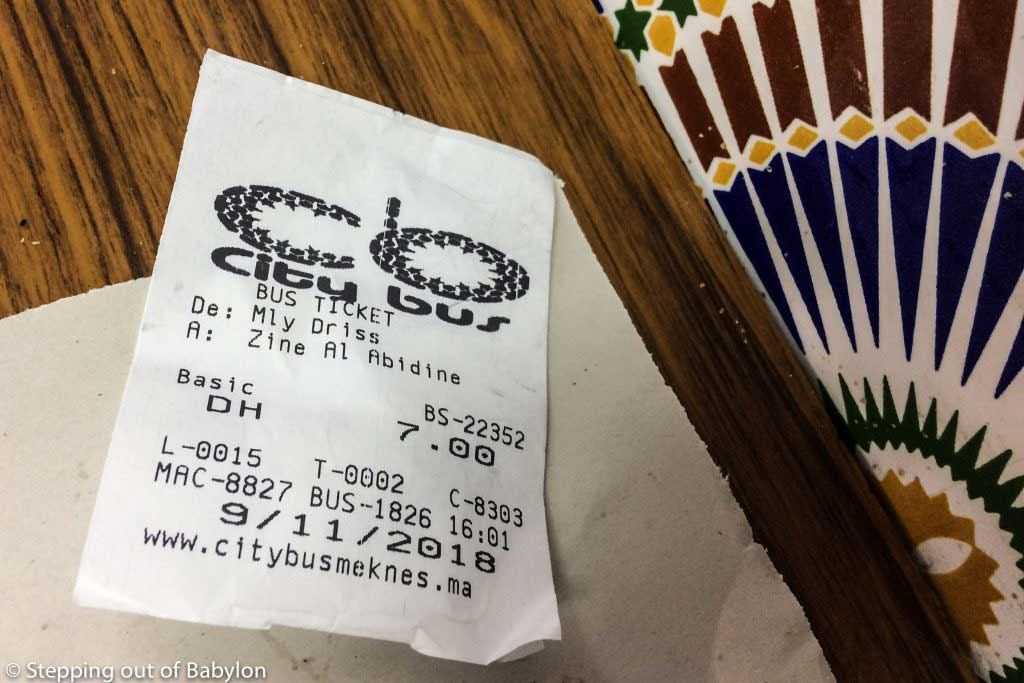
The ticket cost 7 Dirham and the trips take 30 minutes along a beautiful countryside landscape.

If you also want to visit Volubilis, there isn’t a direct way by public transport and you need to catch a shared taxi at Moulay Idriss.

[columns] [span6]

Bus 15 from Meknes to Mulay Idriss

[/span6][span6]

bus ticket price from Meknes to Mulay Idriss Zerhoun

[/span6][/columns]


A quick guide to hammam experience in Morocco

Public baths, or hammam as they are called locally, are a “must do” in a Moroccan trip as they are still part of the routine of the local population, not just because of the traditions as also because many houses, particularly in the old parts of the cities (medinas), don’t have bathing facilities. And besides this, the public bath keeps playing an important role in social life, particularly for the women, who find in the hammams a place to socialize and move away from the housewives routines to which they are still totally dedicated.

Traditionally, in all Moroccan cities, towns and villages, where there is a mosque there’s also a hammam and a bakery!!! But they are not easy to spot, as many times there’s no sign outside or if there’s one it’s in Arabic writing. So this pushes many times the foreigner visitors to a more touristic (and expensive experience) where the hammam gets close to a spa, with comfort and western standards but where local people don’t go.

But if you are looking for a relaxing chill experience, a public hammam is not the best choice, as the conditions are simple and basic, without a proper dressing room, a place to sit, to be scrubbed or to receive a massage. There’s only the floor, the walls, tanks with cold and hot water, and few rooms at different temperatures… there are buckets all over the place and people move in a certain bustle by filling the buckets and transporting them to the different rooms, since there are no showers, using jugs to pour water on the body, with a mother and daughters or friends to help each other in this process. Forget the sophistication and the quietness of the spa cliché… this is much more interesting!!!!

In Morocco the hammam has total gender segregation; in the ones that don’t have these facilities there’s a different schedule for men and women. This makes that in the women side there are a lot of kids (both sex), and a lot of girls and teenagers, making it busy and noisy place where it’s a challenge to relax… but at the same time it’s a gathering of women from different generations where, without modesty or shame, the body is exposed showing how the aging process manifest in our bodies.

If you want a scrub (it’s used the French word gommage) or a massage you must ask to a friend or in the case that you are alone you can hire the services of the hammam staff.

Despite the noise and the movement I confess that the visit to the public bath end up being a very enjoyable and relaxing and experience, I recommend to be made at the end of the day, as when I come out I felt melting and with only energy to eat a soup before walking back to the guesthouse.

One curiosity… the water for the hammam is heated with fire, in fact, was this way that I spot the first public bath, as passing by a narrow door I saw a pile of wood, and at the end of a dark corridor a man feeding a huge stove.

It’s a very nice and interesting experience and I only try these baths at the end of my trip to Morocco, otherwise, I would have visited the hammam more times. Forget the glamorous idea of a hammam and join the locals… you’ll receive a lot of sincere smiles.

Public hammam in Meknes:

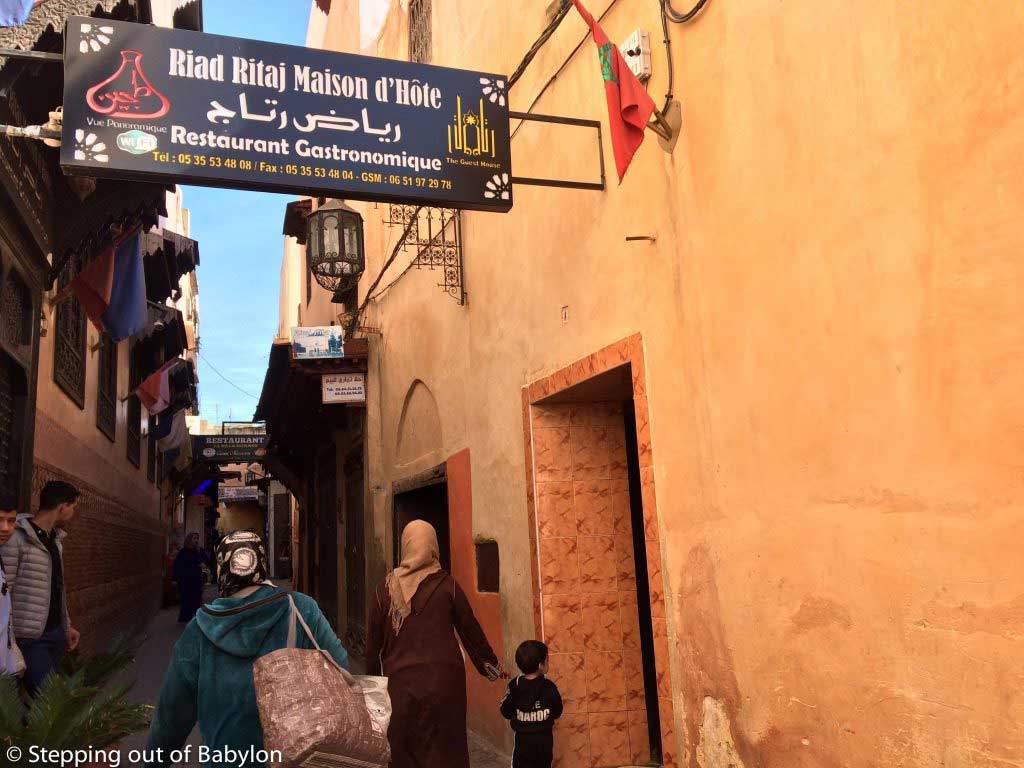
In Meknes, the public hammam is located inside the medina, a few meters from the Lahdim Square, if you walk to the right side (with Bab Mansour on your back), along a narrow street, you’ll find the sign “Riad Ritaj Maison d’Hotel” that’s is also a restaurant. Just in front, on the opposite side of the alley, you’ll find a small and anonymous door without any sign that is the entrance to the hammam.

As far as I remember, this hammam open at 12 for women, but the schedule changes along the day, with the late afternoon reserved men, until 8 p.m. The entrance costs 10 Dirham and if you need a massage or scrub you must pay extra. Bring your own towel, soap, etc… buckets are available inside. The staff of Riad Ritaj it’s available to give you more detail information! Just ask, as they are very friendly!

In such a big medina, for sure Meknes have another hammam, but many times the people from hotels will point you the more touristic ones… I was very lucky as the owner of the Restaurant Mille et Une Nuits (located closely) gave me useful tips about the traditional hammam as also about the way it works and what to bring.

Hammam in Meknes
Hammam in Meknes

Public hammam in Mulay Idriss:

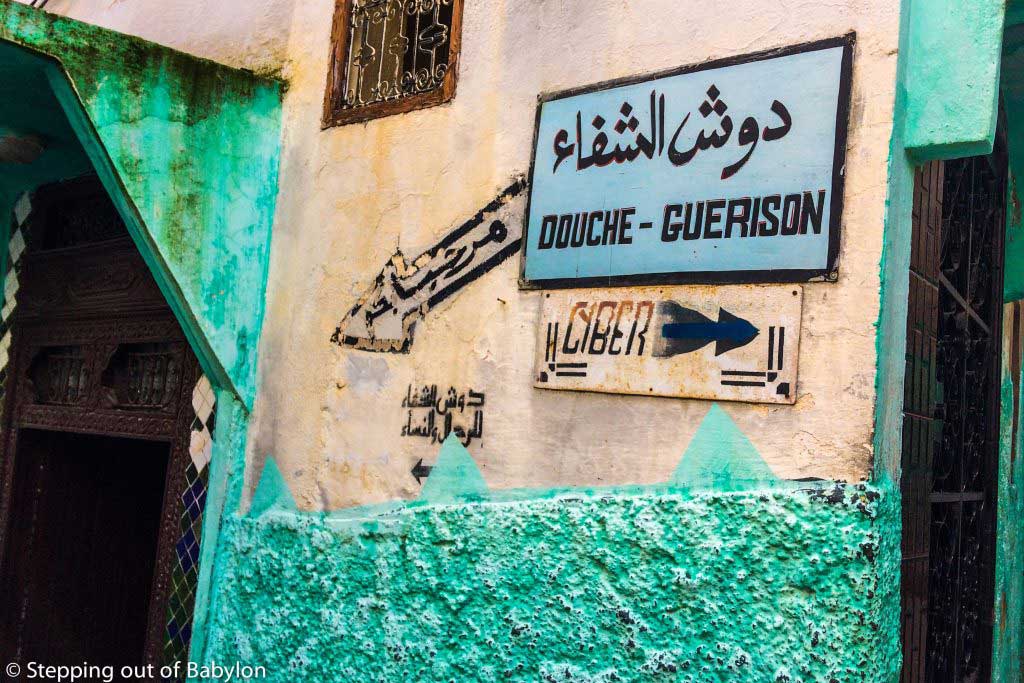
In Mulay Idriss is more difficult to indicate the way to the hammam, as it is located in the old part of the village, somewhere in the maze of streets that spreads on the hillside, in a steep street with steps. It looks very small and it was almost impossible to understand the schedules, as the lady in charge spoke no English.

For sure that if you ask local people they all can point you the direction of the hammam!

Hammam in Mulay Idriss

Public hammam in Imlil:

There’s also a hammam in Imlil more focus in the tourist clients, just on the right side of the road, after the turn to the Toubkal trail. It’s in a red colour building a bit up the hill but visible from the road, not far from the small bridge. The local association manages this place and the profits support the local community.

Public hammam in Fes:

This was the only hammam that I visit in Morocco, so all I’m not sure if this is the Moroccan standard.

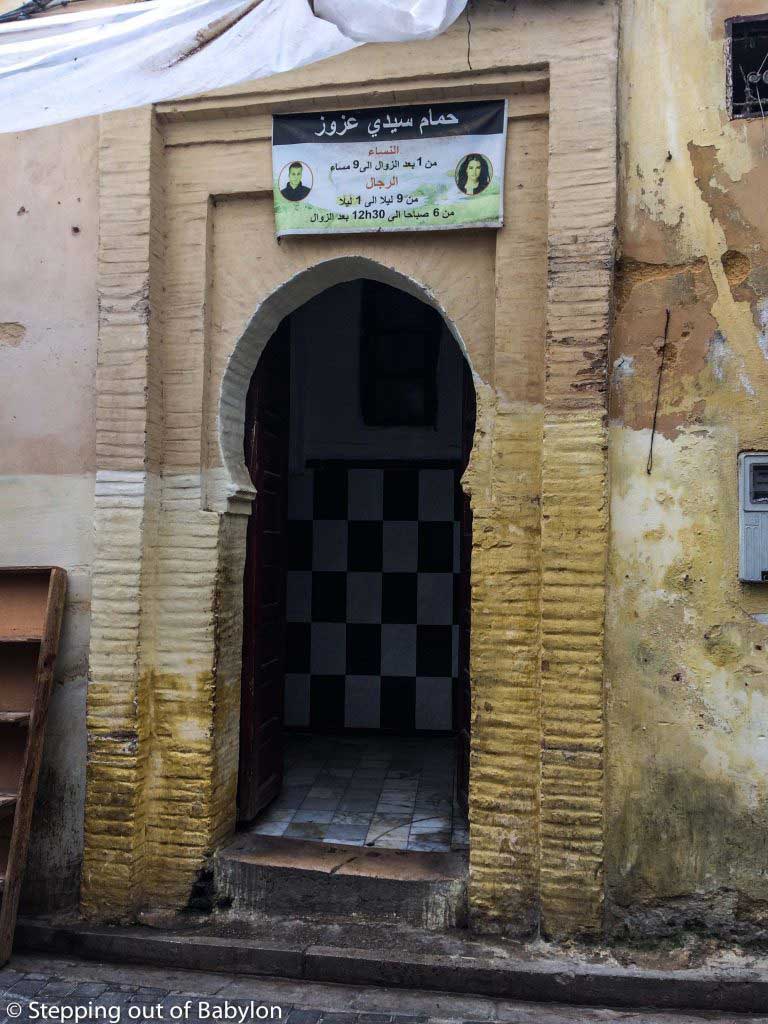
It’s located inside the medina, in one of the main streets, Rue Talaa Sghira, not far from the Bab Boujeloud, the most famous gate. It’s called Hammam Sidi Azouz (you can find in Google maps as also Maps.me app). Walk down the street you’ll spot a simple door, with an arc shape, tiles on the tiles on the background wall and a sign above (check the photos below).

At the entrance, you need to pay the hammam fee, 15 Dirham, to the doorman. Once you step inside you reach the dressing room, a large room, with high ceiling formed by vaults of Moorish style. Here there are bench and closets where you can put clothes and stuff. There are no security lockers but the place seemed to be safe and there’s a person apparently cleaning and taking care of the place, whom I tip with 5 Dirhams to keep an eye on my stuff.

Once you cross a small door, you’ll get inside the bath area of the hammam, a sequence of rooms with an arched ceiling and a black and white tile floor, that as you move further get warmer and warmer. On the last one, where you can feel the intensity of the hot steam, there are two big water tanks, one cold and the other one very hot, from where the ladies fill up their buckets. It’s a place without windows and the only light comes from the small openings on the top of the high ceiling, wrapping the place with a dim light, that with the steam create a fantastic ambiance.

There’s a lady in charge, to who took care of me, and by gestures and a few French words guide me in this experience, bringing me water buckets, point me where to stay, poured water over me to remove the soap and scrub my entire body… she’s also responsible for the massage but I skip that part as it was out of my budget.

The scrubbing part I confess was the most impressive… following the instruction of the lady, I just lay down on the floor (that is warm) while she scrubs my body vigorously with a proper glove. It was intense and for moments I thought that my skin couldn’t handle with such rough treatment, but after the first impact I start to enjoy the sensation and at the same time the feeling of total surrender to the care of someone else.

For the scrub I pay 50 Dirham, which is more than the locals pay for this service but I really enjoy it and I felt very grateful for her help managing the hammam procedures.

Hammam in Fes
Hammam in Fes
Schedule of Hammam in Fes

What you need for a hammam:

  • Towel
  • Soap and shampoo… or the traditional “beldi” or “savon beldi”, a kind of olive soap, that maybe doesn’t look appealing by its dark colour but will give an extra smoothness to the skin. You can buy in some herbalist shops in the medina markets.
  • For the scrubbing, you need your own glove (you can find easily at the souk and according to the quality it can cost from 5 to 15 Dirham).
  • Big bucket and a small jug that you can buy at the souk… I use the big buckets available at the hammam and borrow the jug from a lady there.
  • Some ladies bring a small plastic stool to avoid sitting directly on the floor, as there are no benches or whatsoever to seat, but a towel can also work.
  • .. no one uses them but I always appreciate and avoid you to slip.

In terms of etiquette, on the men side, it isn’t accepted full nudity. At the ladies side, most of the women wear only panties, and nothing to cover the breasts. So is better to bring extra underwear to change after the bath.

To be honest, I can’t add more detailed information than what is written in this blog… and with a male perspective!!!

http://theviewfrommorocco.blogspot.com/2006/12/future-home-for-view-from-fez.html

olive soap
that dark brown paste in the center of the photo is the “savon beldi”, a traditional olive soap

Footer

search

Tags

Amed Arugam Bay Assam Bali Bogor Border Crossing Borneo Colombo Esfahan Fes Food Gilis Hiking Hikkaduwa hokkaido Istanbul Itinerary Jakarta Java Kashan Kohima Kumano Kodo Lombok Marrakesh Meghalaya Meknes Mekong Nagaland Natural Park Northeast States Ouarzazate Sarawak Shan State Shiraz Sichuan Province Sumatra Tabriz Tehran transportation Varanasi Visa Yangon Yazd Yogyakarta Yunnan Province

I’m Catarina, a wanderer from Lisbon, Portugal… or a backpack traveller with a camera!

Every word and photo here comes from my own journey — the places I’ve stayed, the meals I’ve enjoyed, and the routes I’ve taken. I travel independently and share it all without sponsors or ads, so what you read is real and unfiltered.

If you’ve found my blog helpful or inspiring, consider supporting it with a small contribution. Every donation helps me keep this project alive and free for everyone who loves exploring the world.

Thank you for helping me keep the journey going!

BUY ME A COFFEE

Categories

Recent Posts:

  • How to go from Hualien to Dulan Beach
  • Taroko Gorge: between marble cliffs and emerald rivers
  • Hualien: a dull gateway to Taroko Gorge
  • Taiwan: Itinerary for an 16 day trip
  • Vietnam: Itinerary
  • 3 months in India: Kolkata, Tamil Nadu, Karnataka, Goa and Kerala
  • Backpacking Turkey in 24 Days: itinerary & costs
  • English
  • Português

© Copyright 2026 Stepping out of Babylon · All Rights Reserved · Designed by OnVa Online · Login