• Skip to main content
  • Skip to footer

Stepping Out Of Babylon

Travel & Photography

  • About me
    • Contact
  • Destinations
    • Africa and Middle East
      • Iran
      • Lebanon
      • Morocco
      • Turkey
    • East Asia
      • China
      • Japan
      • Taiwan (Formosa)
    • South Asia
      • Bangladesh
      • India
      • Nepal
      • Sri Lanka
    • Southeast Asia
      • Cambodia
      • Indonesia
      • Lao
      • Malaysia
      • Myanmar
      • Singapore
      • Thailand
      • Vietnam
  • Itineraries
  • Travel tips
    • Border crossing
    • Hiking and Natural parks
    • Food Journey
    • Visa
  • Photography

Stepping out of Babylon

Shwedagon Pagoda… the gold and the moon

Watching the moonrise while the last sun rays still shine on the gold that covers the Shwedagon Pagoda, creating a memorable moment full of a magic atmosphere.

For most of the visitor, Shwedagon Pagoda is just one more pagoda and not the biggest one, but according to the tradition is the oldest in the country, with more than 2500 years, and is particularly important as shelter the relic of some Buddha’s hairs.

What we can see now was improved and upgrades during centuries by several Burmese kings, resulting in an impressive structure that includes also temples and shrines, decorated with intricate and complex floral ornaments, typical of Burmese art. Parallel to this traditional style some modern decorations were added, with many Buddha images, decorated with neon lights that blink behind the statues, giving a cheesy and tasteless appearance to such a sacred place.

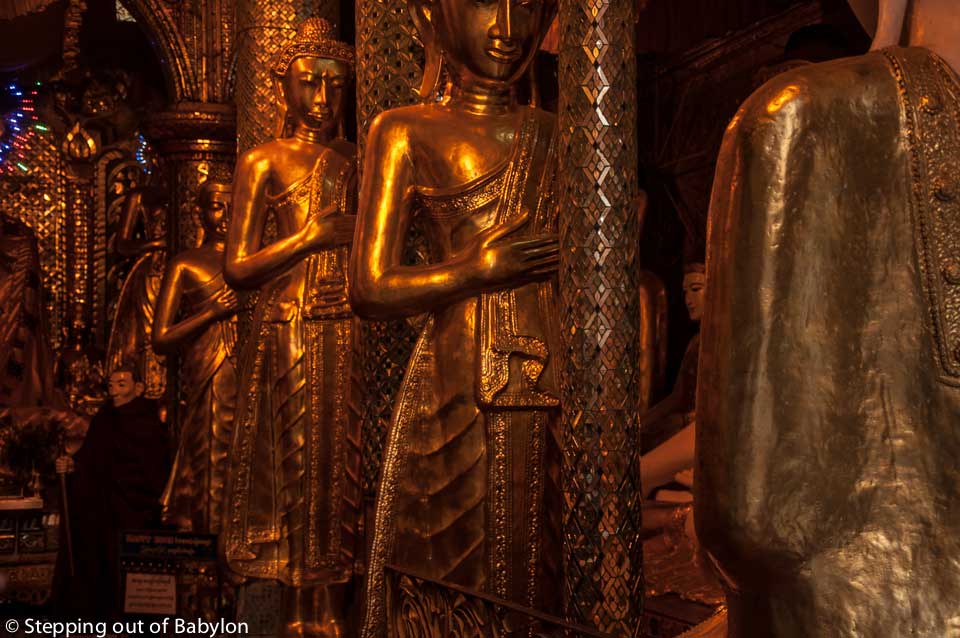
The gold rules at Shwedagon Pagoda!!! Is everywhere covering and decorating, ceilings, columns, images, ornaments, statues, altars, walls… makes us feel surrounded by an imaginary world made from this precious metal.

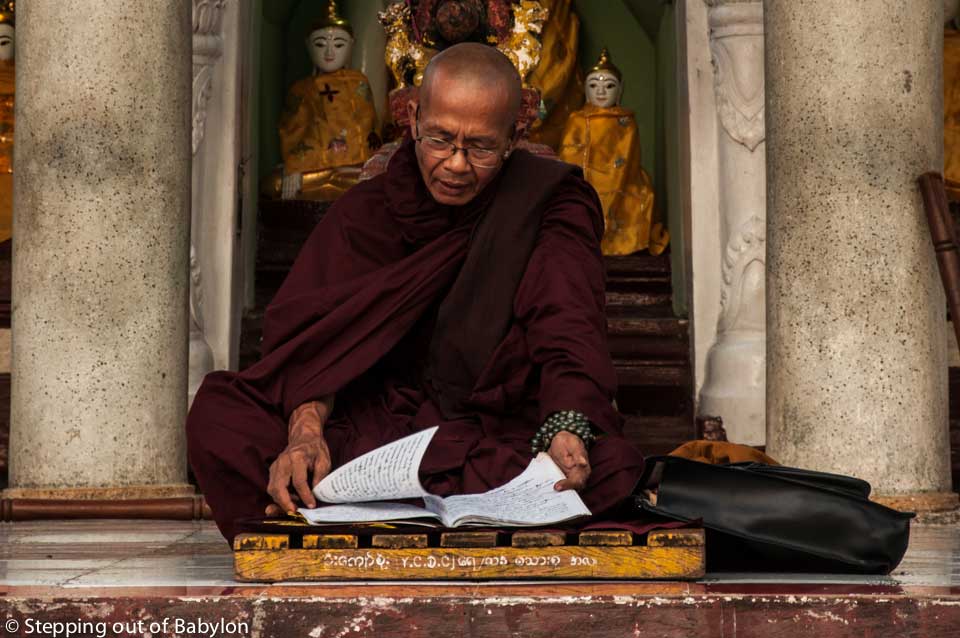
But more interesting than all is to observe the quotidian life of the pagoda, a mix of pilgrimage and amusement place, where kids play while parents pray. Groups of visitors pose for a souvenir photo in front of the pagoda, while others coming from distant parts of the country, which ethnic group is easy to identify by the clothes and face features, pray in one of the many temples around the pagoda.
DSC_1984
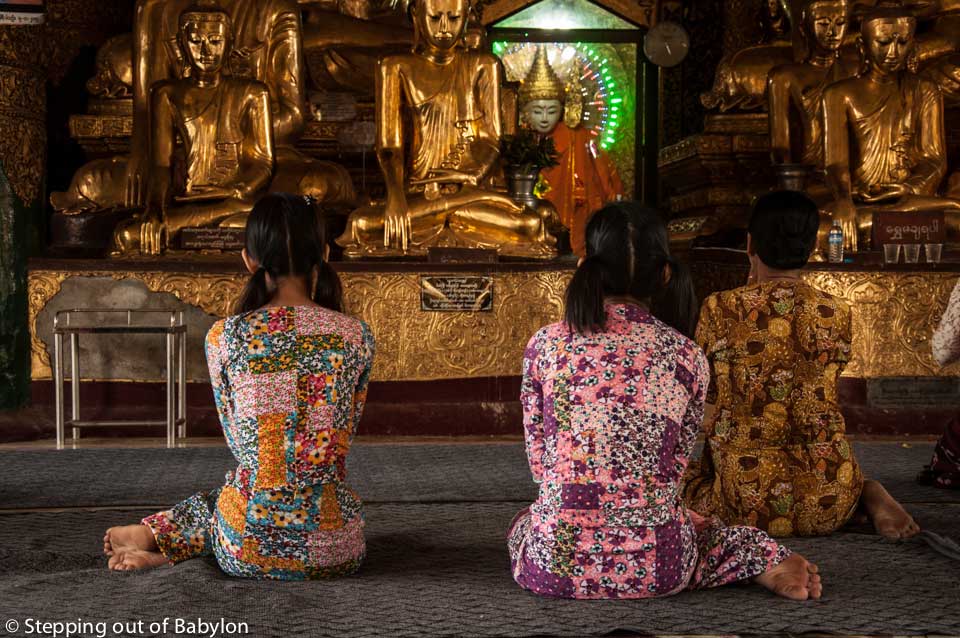
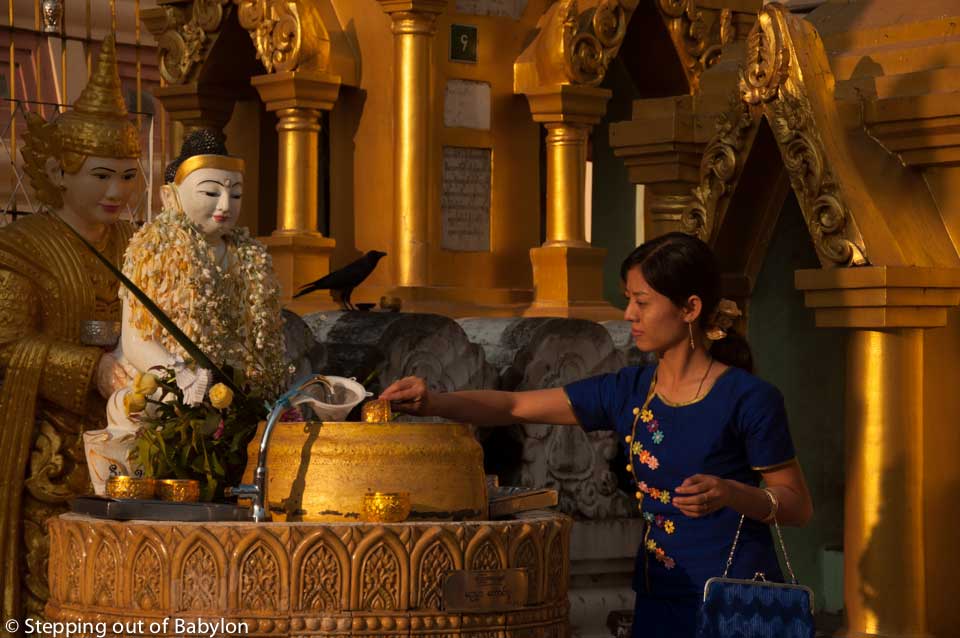
according with the Myanmar Buddhist tradition each person should pray at the altar correspondent to the day of the week of the birth day

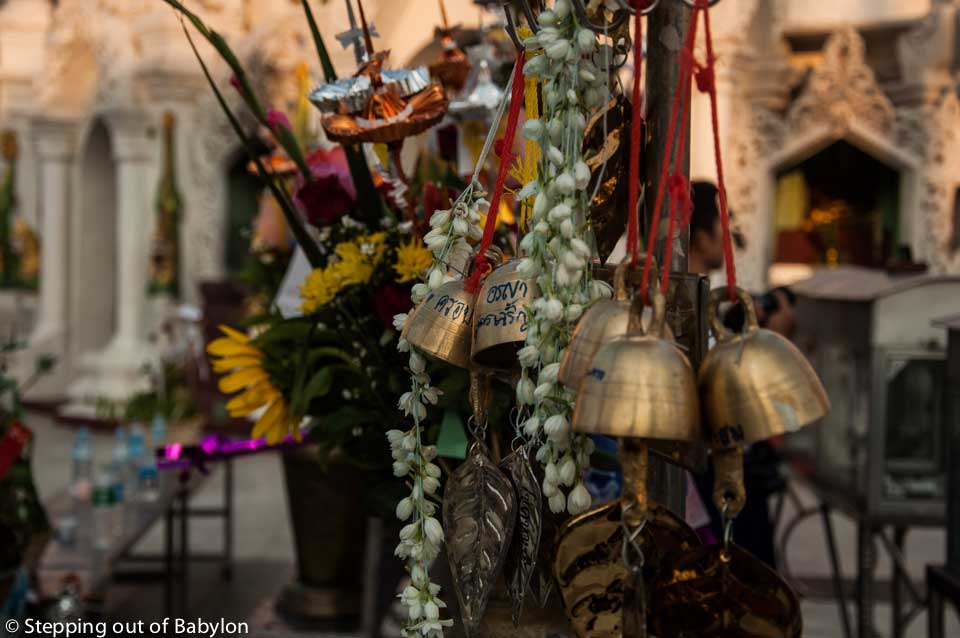
Offerings hanging nearby the pagoda

Praying at on of the temples of Shwedagon Pagoda

DSC_2047
Gold, gold, gold… all over the Shwedagon Pagoda

DSC_2052
Shwedagon Pagoda

How to go to Shwedagon Pagoda by bus:

The Shwedagon Pagoda is located 5 km north from Yangon Downtown.

To visit the Shwedagon Pagoda you can take the local bus (city bus) at Sule Pagoda bus stand (Sule Pagoda Road opposite of Sule Shangri-La Hotel). Is hard to know the number of the bus, and hard to identify them if you are not yet used to Burmese number, but just ask the people that are waiting at the bus stand and they will point you the bus when it shows up.

The ticket is 200 Kyats, in an air- conditioned bus. The trip takes around 30 minutes.

Depending on the bus you take, maybe you need to walk about 10 minutes to reach one of the entrances.
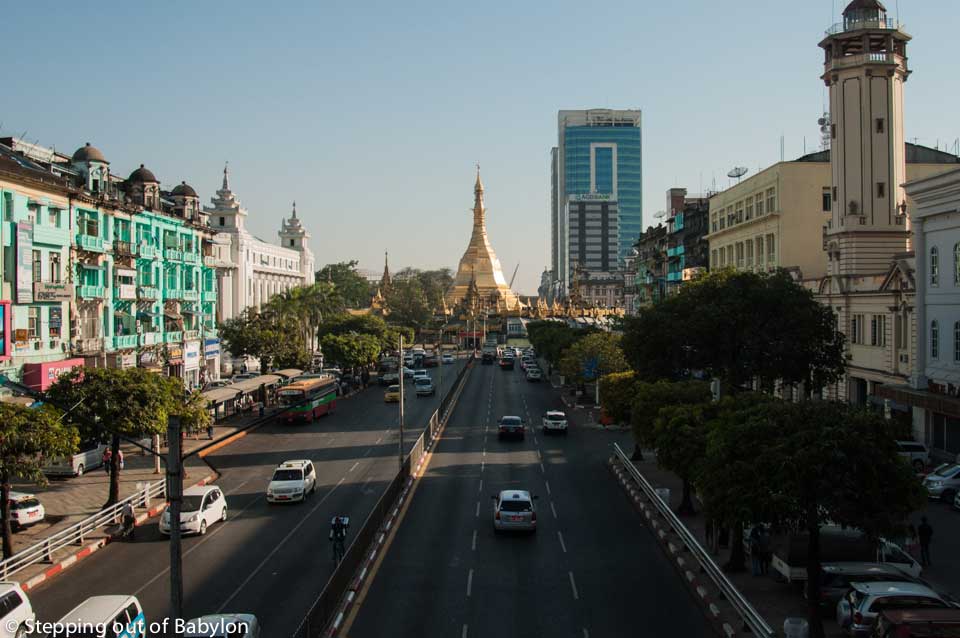
Sule Pagoda Road. The bus stand to Shwedagon Pagoda is located on the left side

Shwedagon Pagoda ticket:

As usual in Myanmar, there’s a special fee for foreigners (Myanmar citizens don’t pay anything) of 8.000 kyats.

There are four main entrances, orientated for each cardinal point, and a couple of small entrances more, but all with ticket counters, that make it impossible for a foreigner to get in without a ticket. But if you walk around, trusting in maps application, you can find a discreet entrance to get inside the Shwedagon Pagoda without passing by a ticket counter. Although when you buy your ticket is given you a sticker, that must be kept visible during all visit… so if you manage to sneak inside the temple without a ticket, you must be careful as the guards will look for you entrance sticker.

Shewdagon Pagoda ticket

Best time to visit Shwedagon Pagoda:

The most popular hour is around sunset when the last light rays give a special tone to the gold that covers the pagoda… and you can even stay a bit longer to see the electric lights turn on and have a new perspective of the place.

But the sunset is also the time that the pagoda is visited by local people, praying and lighting candles, and when most of the tourists arrive, many with guides or in groups, make it a bit noisy and crowded.

Try to arrive around 5 p.m. and you’ll have time to visit the place, walk around, take rest in a shade and find a quiet spot to sit and enjoy the scenery. You can easily spend 2 hours visiting the Shwedagon Pagoda.

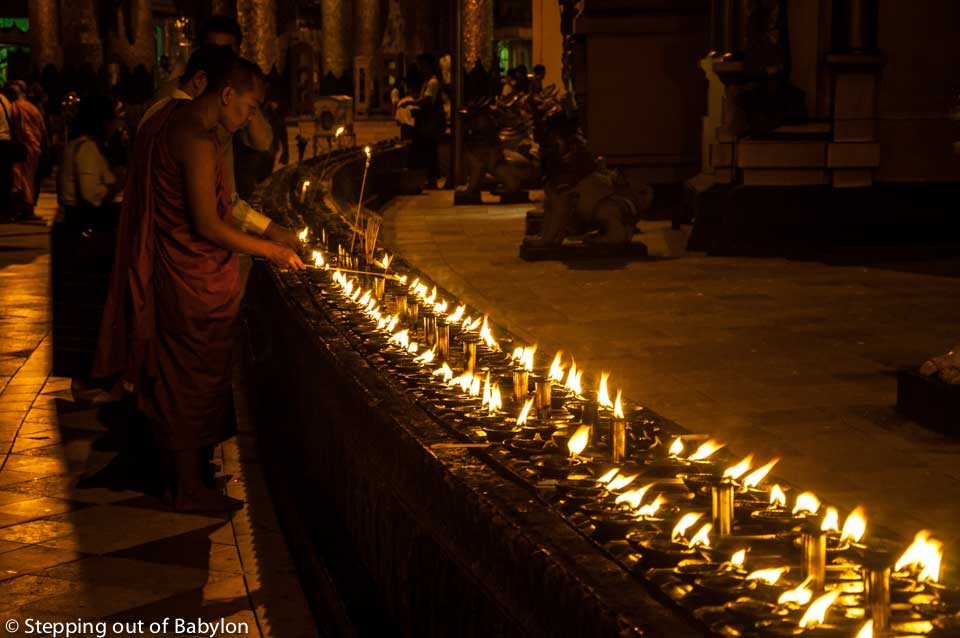
Shwedagon Pagoda at the moonrise

Shwedagon Pagoda. Yangon
 

Yangon… eat, sleep and move around

Yangon… eat, sleep and move around

A short guide to help the ones that are visiting Yangon for the first time.

Where to sleep in Yangon


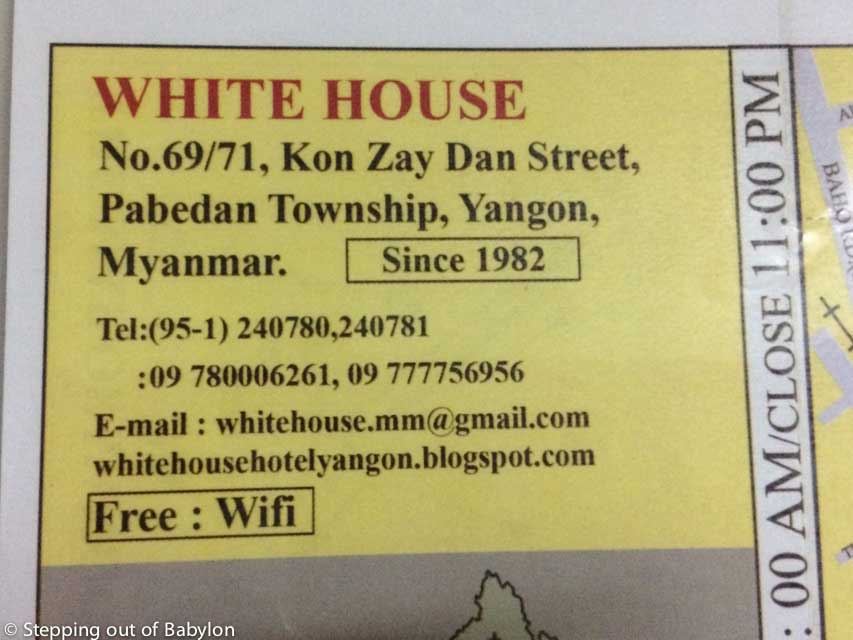
After checking a few places, including some new western-style hostel with dorms, the choice was to the White House Hotel… an old school accommodation, basic, cheap and very-very clean. The staff is friendly and helpful. Good location at Yangon downtown, between Sule Pagoda and the Chinatown area…. so plenty of food around at a walking distance.

There are rooms for many prices… but the cheapest ones are without window and with shared toilet. Basic, small and quiet, but is better get one with air-con as the fan maybe is not enough to provide freshness and dryness during the hottest months… but all depends on how long you plan to stay! Hot water shower, with good pressure, clean toilets with toilet paper.

Cheaper than White House Hotel I think there’s only Mahabandoola Guest house, with the same style but not so clean, particularly the bathrooms and toilets.

[columns] [span6]

White House Hotel Yangon. Address and contact

[/span6][span6]

IMG_2115

[/span6][/columns]

Moving around Yangon


All downtown of Yangon can be visited on foot… maybe is a too big area to do it in one day, but in three days you can see a lot, and even have time to take a short nap during the warmest part of the day. It worth to wake up early one time to see the early city vibe, that starts really early with market and food stalls start just as the sunrise.

Walk randomly along the streets grid and enjoy the Friday fuss at the Muslim neighbourhood, the groups of monks line by height begging for alms, drink a cold lassi at the Indian area of the city or enjoy a sweet milk tea in one of the Chinese style tea shops.

To visit the Shwedagon Pagoda you can take the bus at Sule Pagoda bus stand (Sule Pagoda Road). The ticket is 200 Kyat, in a air- conditioned bus.

DSC_1950

Where to eat in Yangon


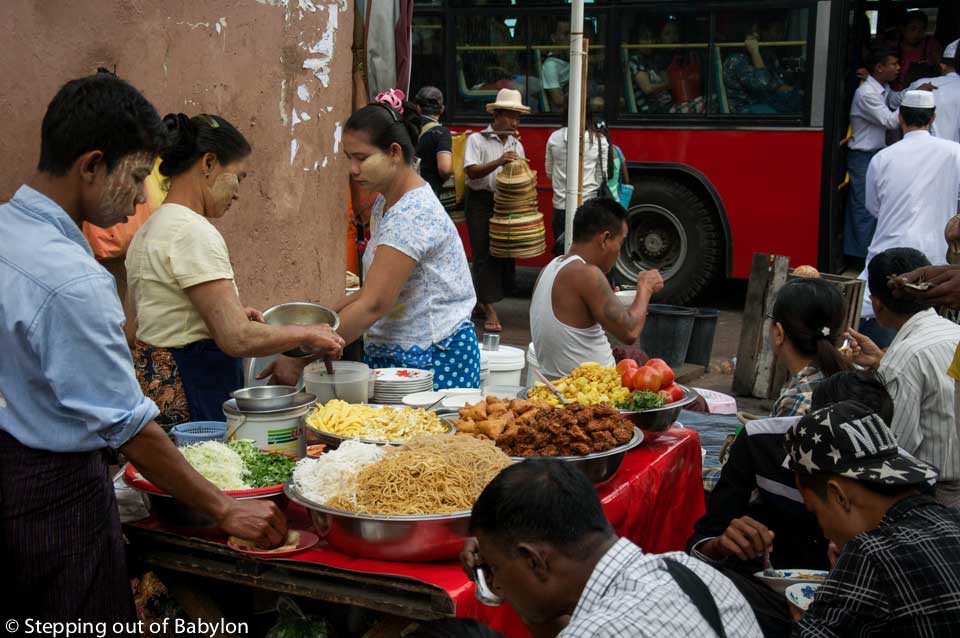
At each corner of Yangon downtown you can find some food: fruits, deep-fry snacks, sweets and puddings, sticky rice, noodles soups, mohinga, parathas, noodle salads, juices, stir fry rice and noodles… it looks that each time you find something new to try!!!

But it all depends on the time of the day… so don’t expect to find parathas after 9 a.m. or mohinga after 5 p.m… just walk random and grab what look more attractive, without thinking about hygiene conditions. Choose a place to seat along the street and have your food or tea, surrounded by friendly smiles, and enjoy the contact with local people! They will be happy to have you around and that you appreciate the local food.

Any of this street-food should cost you less than 1.000 kyats.

A mohinga bowl without meat is around 500 kyats.

  • Ingyin New South Indian Food Center is a good option.

The famous Nilar Biryani Restaurant suffers a strong upgrade and has a new look and new prices, not anymore the casual biryani place from before, but worth a try.

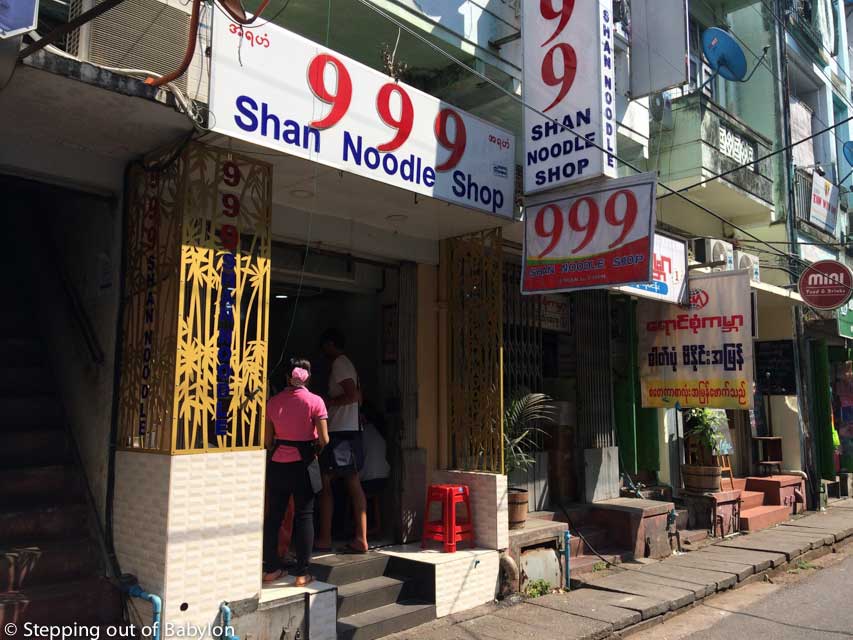
  • Shan food: basically noodle soup cooked in Shan State style, serving also the traditional Burmese food, like tea leaf salad. A bit touristic and busy but with good food.
  • Strand Road food market: For an evening meal the place with the more options is the street food market along Strand Road... it starts more or less close to the 30th street and goes on for more than ten blocks… I could never walk until the last stall.

It’s open every day from 4 p.m until 11 p.m. and there you can find every kind of Burmese food, from grill fish to hot pot soups, from fry noodles to noodle soups, from smoothies to lassi, from sweet sticky rice to the delicious rice pancakes!

Despite many stalls serve meat, there’s also a lot’s of vegetarian options.

Food market that every evening occupy the sidewalk between the Strand Road and the port area

Shan noodles... very popular between foreigners but a good way to try the food from Shan State
Shan noodles… very popular between foreigners but a good way to try the food from Shan State

How to go from Yangon to Aung Mingalar Highway Bus Terminal


This bus terminal is located 20 km north of the city center, on the right side of the Nº 3 Main Road, the highway that connects Yangon to Mandalay.

Note: Most of the buses departure from Aung Mingalar Bus Terminal, but if your destination is the west coast, like Ngwe Saung or Ngapali for example, your bus probably will depart from Dagon Ayeyar Highway bus station.

Dagon Ayeyar Highway Bus Station is located about 22 km far from Yangon city center, on the side of the Yangon-Pathein Highway (west from Yangon, after crossing the Yangon river). A taxi from Yangon to Dagon Ayeyar Bus Station costs about 8.000 kyats.

  • By mini-van (shared-taxi):

Nearby Sule Pagoda, on the corner of Sule Pagoda Road and Maha Bandoola Road (northeast corner of the square) you’ll find a group of mini-vans that work like a shuttle between the terminal and the city.

They are identified by the sign “Aung Mahar Taxi Cab” and the ride cost 1.000 kyats. The trip can take almost one hour because of the traffic jam that are frequent in Yangon.

  • By taxi:

The taxi drivers will ask you 10.000 kyats but you can get it for 7.000 kyats. In evening time or very early in the morning maybe you need to pay 8.000 kyats.

IMG_2326

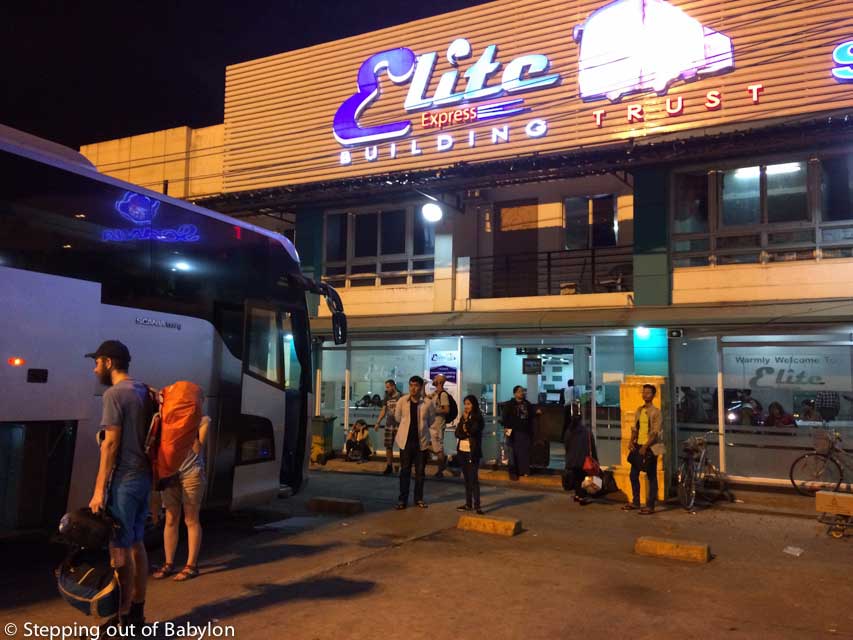
Aung Mingalar Highway Bus Terminal

The Aung Mingalar Highway Bus Terminal is huge, and the way it is organized has nothing to do with what we used to call a terminal. Is more like a grid of streets, with yards where each company has their office. There are thousands of bus companies and each bus departure from the parking area in front of the office/ticket counter. In between you have restaurants and others shops, storage areas, a lot of people, hawkers… too big and too confuse for you to manage if you are in a rush or if you have heavy luggage. So is better to ask your taxi driver to drop you at the bus company office from where you have the ticket. You need to pay extra 200 Kyat for the taxi get inside the terminal.

At the entrance of the terminal, there is dozen of hawkers asking you where you go, to try to push you to a certain company. If you already have a ticket you are “safe” otherwise to need to know where to go, or trust in one of this guys.

IMG_2182
One of the bus companies that departure from Aung Mingalar Highway Bus Terminal, Yangon

Where to buy bus tickets in Yangon

  • At Hotels, hotels, guesthouse and travel agents that charge a small fee.
  • By the internet (http://www.go-myanmar.com/by-bus)
  • Directly at the bus company offices at the terminal… if you have time and energy.
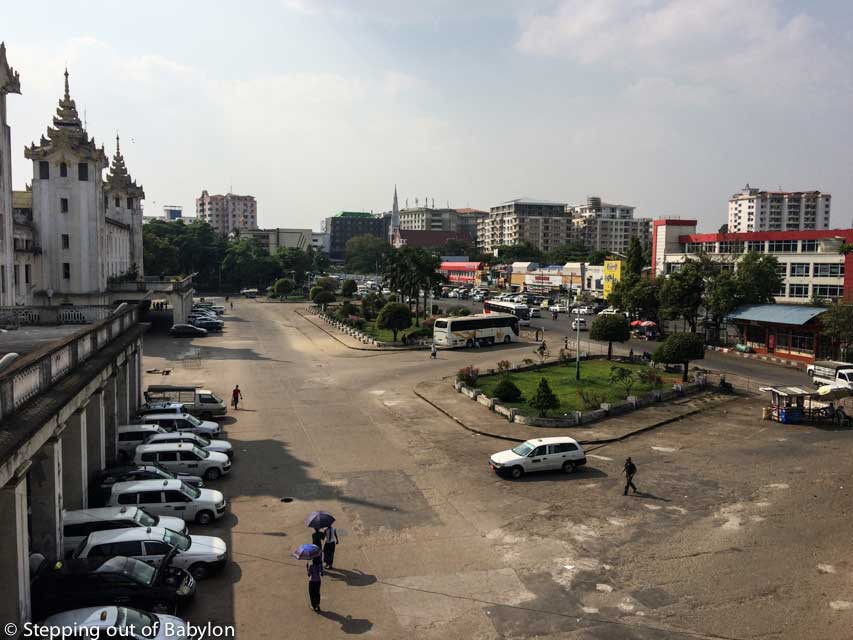
  • But if you want to check different option in terms of costs and schedules you can go to the small offices of ticket sellers in front of the Train Station. You can reach there by crossing the Pansodan Bridge and turn right when you see a staircase, after crossing over the rail lines. You’ll be at a wide ground, with the station building on your left and the offices on the right side. From here there are also some private shuttles to the Aung Mingalar Bus Terminal, which service can be arranged by the same company where you buy the ticket.

To buy bus ticket in Yangon: on the ledt side is the train station and on the right side are located the offices from ticket agents and bus companies
To buy bus ticket in Yangon: on the left side is the train station and on the right side are located the offices from ticket agents and bus companies

How to go from Yangon to the Airport

  • By bus:

There’s a local bus (city bus) that take you close to the airport, and that departure from the bus stops on Sule Pagoda Road (in front of Sule Shangri-La Hotel). Is hard to know the number of the bus, but just ask the people that are waiting and they will point you the bus when it shows up. The ride takes almost 1 hour but can be more because of the traffic, and at rush hours is almost guarantee that you find a jam along most of the way. The ticket should cost around 200 kyats.

Any bus stops at the airport; the nearby bus stop (called Sal Mile Kone at Pyay Road) is about 2 km walking.

  • By taxi:

If you ask in your hotel you can get a taxi to the airport for 8.000 kyats.

At the streets the taxi driver’s start by 10.000 kyats, but you can negotiate and get it for 6.000 kyats. Take into consideration that if you need a taxi very early in the morning (live 5 a.m. or so) you’ll maybe need to pay a bit more because you’ll not find many taxis in the streets at that time. The same applies to evening rides.

ATMs in Myanmar

The maximum amount of cash you can withdraw at the ATM is 300.000 kyats and is charged a commission of 5.000 kyats.

Not all the ATM accepts foreigner cards but KBZ is a good and reliable option and can be found a bit everywhere.

The ATMs are available in every cities and town.

If you prefer to exchange money, the banks offer a very good rate (sometimes better that the exchange shops) with no commission. But some have a maximum amount of money that each person can change a day (100 euros for example) and your bills must be in good condition, no wrinkles, not dirty or damage and no marks of pen, pencil or stamps.

Yangon revisited

Three years passed since my last visit to Myanmar, many changes happens in the country… since 2014, the military government that run the country since 1962 was pushed away, the first democratic election gave a smashing victory to the National League for Democracy, open the door for the elections of the first non-military president in 54 years, resulting in big political, economic and social reforms in a country that conquer again the freedom of speech. Aung San Suu Kyi, the face of the fight for freedom, human rights and democracy in Myanmar is now everywhere, more visible than ever, has her father, Aung San, whose features are printed on the old kyat bill, that people proudly hang on the house walls.

Despite all these positive changes, Myanmar is still far from be a pacified country: nowadays fights resulting from ethnic conflicts still going on between the army and “rebel” groups in Shan hills, and religious and ethnic differences are responsible for the massacre of the Rohingya people in Rakhine State, in a country where the Buddhism is the dominant religion and where the monks play a strong influence in the rule of Myanmar.

Yangon... Where bodhi tree grows freely on the buildings, taking advantage of the wall cracks, softening the austerity of colonial British-style buildings
Yangon… Where bodhi trees grow freely on the old buildings, taking advantage of the wall cracks, softening the austerity of colonial British-style buildings

But all these don’t change much the life at the old capital of Myanmar, before called Rangon, where the old colonial buildings keep the decadent charm, resulting of years of neglect…

…where a layer of mold slowly takes over the blue and green pale color of the walls…

…where bodhi trees grow freely on the old buildings, taking advantage of the wall cracks, softening the austerity of colonial British-style buildings…

…where the pigeons wait patiently aligned along electric cables, nearby a corner where a corn seller wait for customers that will come to create good karma feeding the birds…

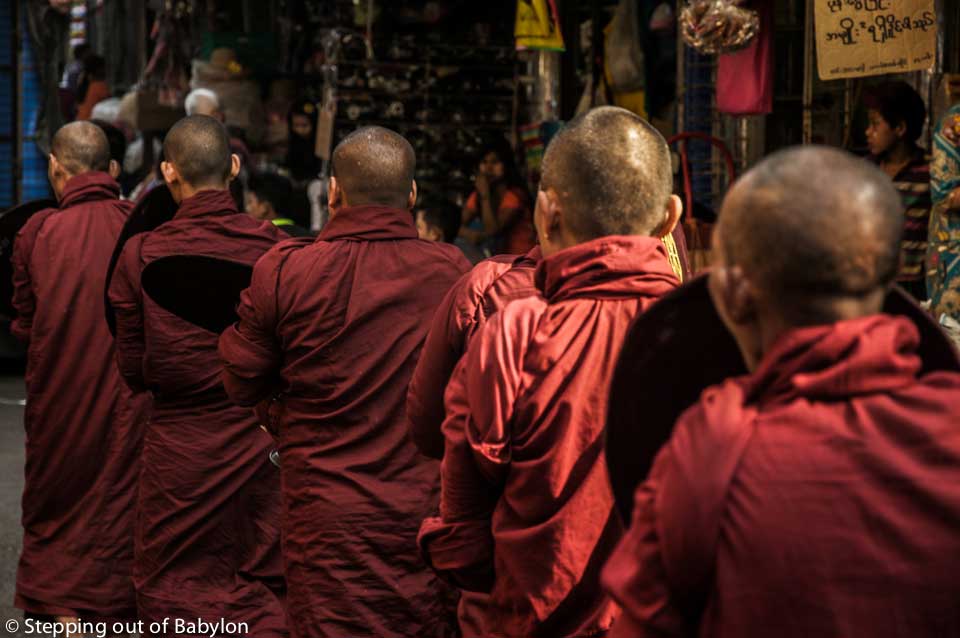
…where every morning monks walk along the city begging for alms, dyed the street with the maroon color.

…where the markets keep their usual fuss, and where the smell of dry fish mixes with the fermented bamboo sprouts, with the people’s voices muting the beeps of the cars…

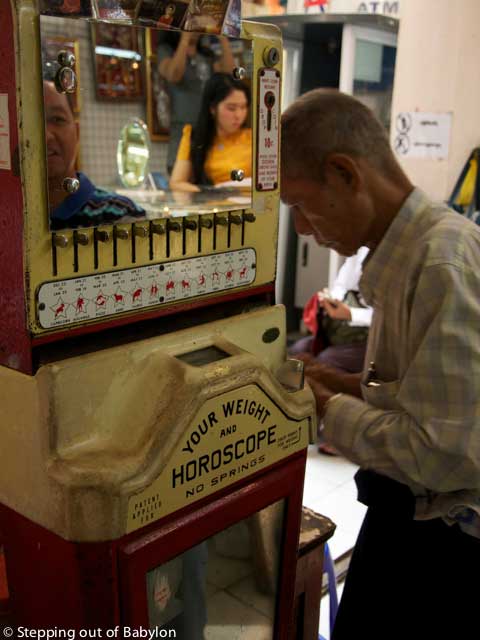
…where fortune tellers and astrologers wait for customers on the shade of a tree, in a country where the Buddhism didn’t erase totally superstition and the animist traditions…

…where reading the news is an almost mandatory activity between male citizens, no matter religion or ethnic group…

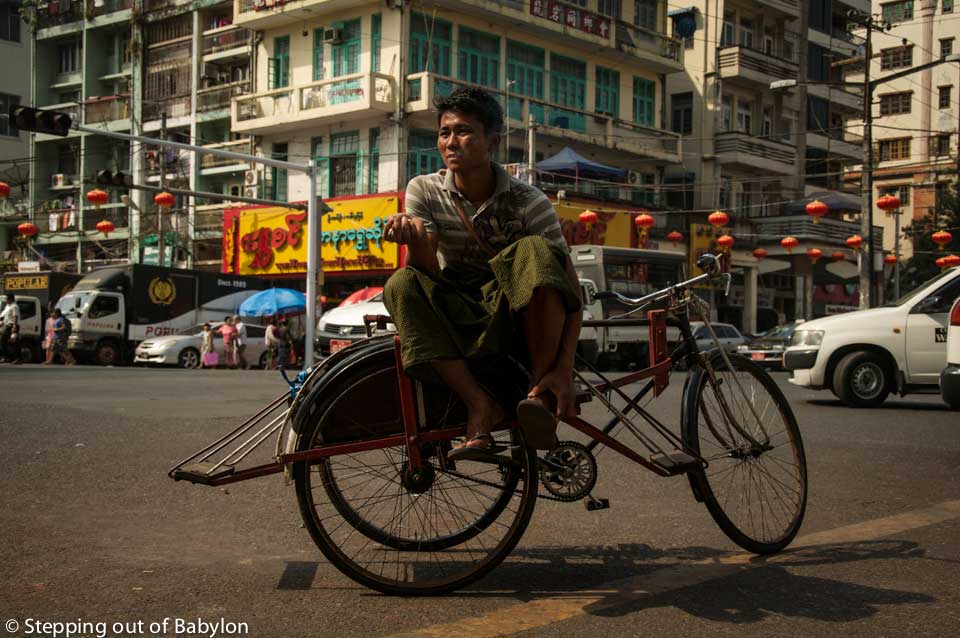
…where the rickshaw drivers wait quietly indifferent to the busy traffic of the city, chewing paan or smoking a cigar…

…where the street food is present everywhere, following a precise but indecipherable schedule, with a paratha stall vanish and replaced by a paan hawker in a blink…

…where a Synagogue is located a few meters from a Buddhist temple, from where you can see the minaret of the mosque, while listening to the sound of the bells from the Hindu temple…

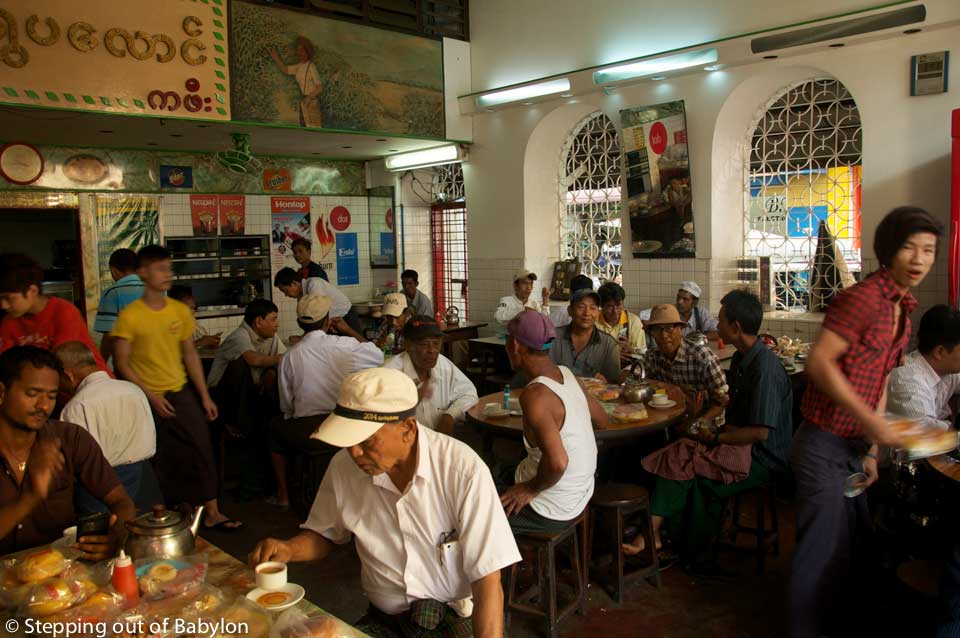
…where the teahouses, remind us of the Chinese presence, a heritage of the Chinese presence in the country, serve an excessively sweetened milk tea mixed with the sound of the male chat, under the freshness of the lazy ceiling fans…

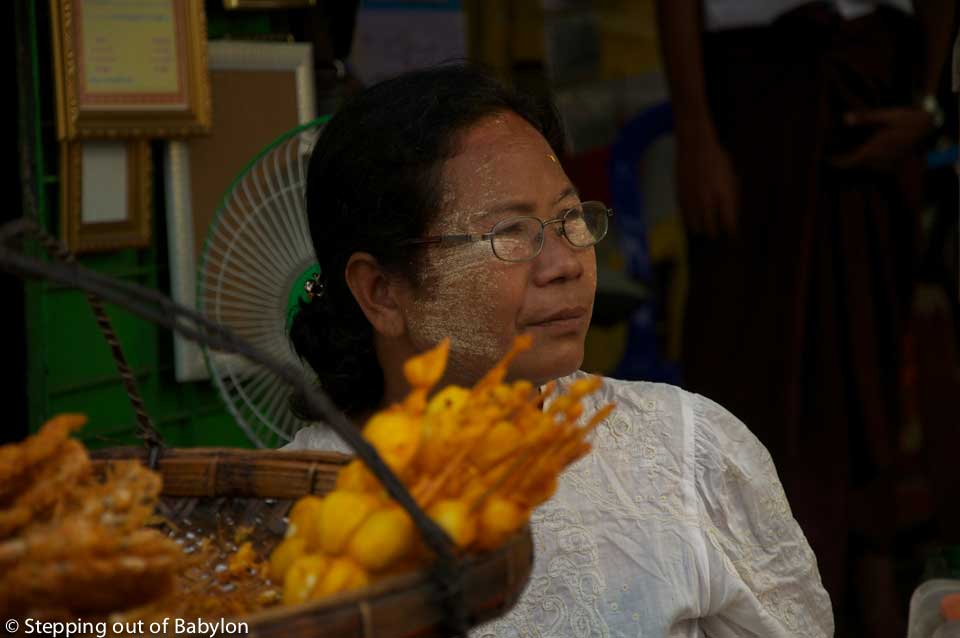
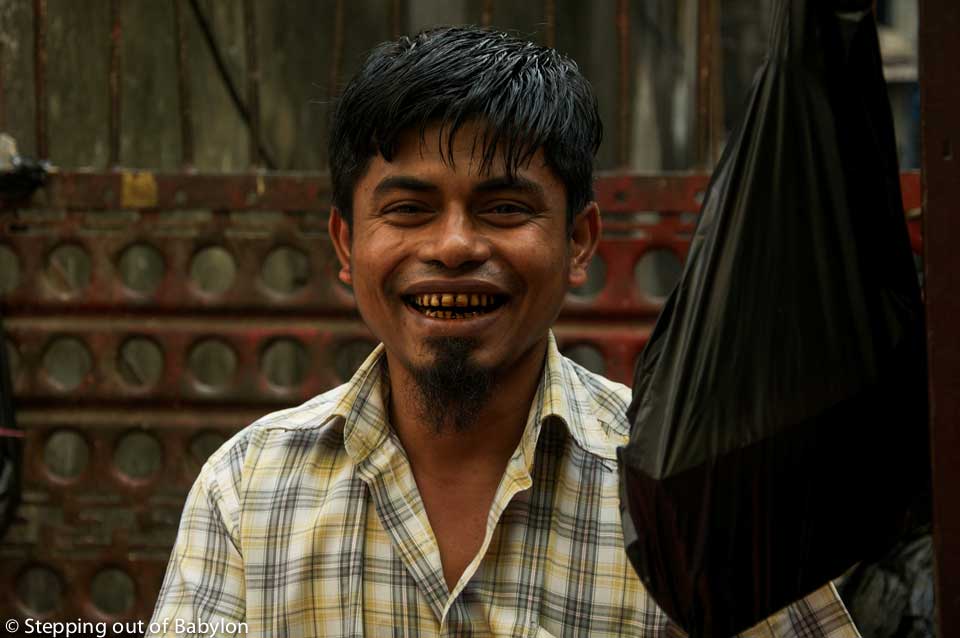
…where the smiles pop up easily from any faces revealing, most of the times, the teeth red dyed by the areca nut and the betel leaf, as chewing paan is a national addiction.

Yangon... where the smiles pop up easily from any faces revealing, most of the times, the teeth red dyed by the areca nut and the betel leaf, as chewing paan is a national addiction
Yangon… where the smiles pop up easily from any faces revealing, most of the times, the teeth red dyed by the areca nut and the betel leaf, as chewing paan is a national addiction

Yangon... where the teahouses, remind us of the Chinese presence, a heritage of the Chinese presence in the country, serve an excessively sweetened milk tea mixed with the sound of the male chat, under the freshness of the lazy ceiling fans
Yangon… where the teahouses, remind us of the Chinese presence, a heritage of the Chinese presence in the country, serve an excessively sweetened milk tea mixed with the sound of the male chat, under the freshness of the lazy ceiling fans

Yangon... here every morning monks walk along the city begging for alms, dyed the street with the maroon color
Yangon… here every morning monks walk along the city begging for alms, dyed the street with the maroon color

Yangon... where the rickshaw drivers wait quietly indifferent to the busy traffic of the city, chewing paan or smoking a cigar.
Yangon… where the rickshaw drivers wait quietly indifferent to the busy traffic of the city, chewing paan or smoking a cigar

Yangon... where the street food is present everywhere, following a precise but indecipherable schedule, with a paratha stall vanish and replaced by a paan hawker in a blink.
Yangon… where the street food is present everywhere, following a precise but indecipherable schedule, with a paratha stall vanish and replaced by a paan hawker in a blink.

Yangon... where the pigeons wait patiently aligned along electric cables, nearby a corner where a corn seller wait for customers that will come to create good karma feeding the birds
Yangon… where the pigeons wait patiently aligned along electric cables, nearby a corner where a corn seller wait for customers that will come to create good karma feeding the birds

[columns] [span6]

Yangom... Where fortune tellers and astrologers wait for customers on the shade of a tree, in a country where the Buddhism didn’t erase totally superstition and the animist traditions
Yangom… Where fortune tellers and astrologers wait for customers on the shade of a tree, in a country where the Buddhism didn’t erase totally superstition and the animist traditions

[/span6][span6]

Yangon
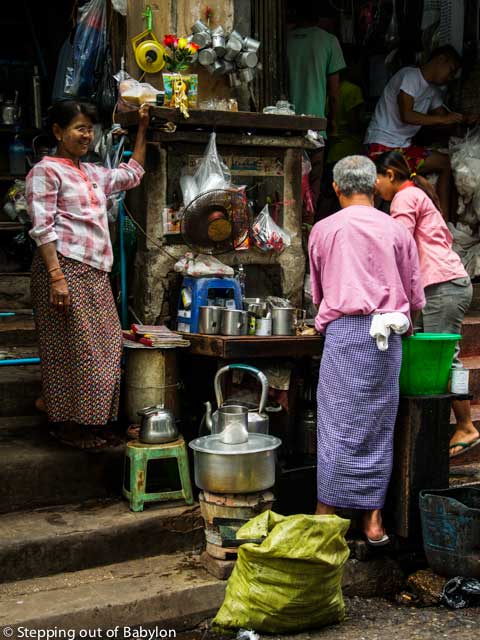
Yangon… a tea shop in every corner

[/span6][/columns]

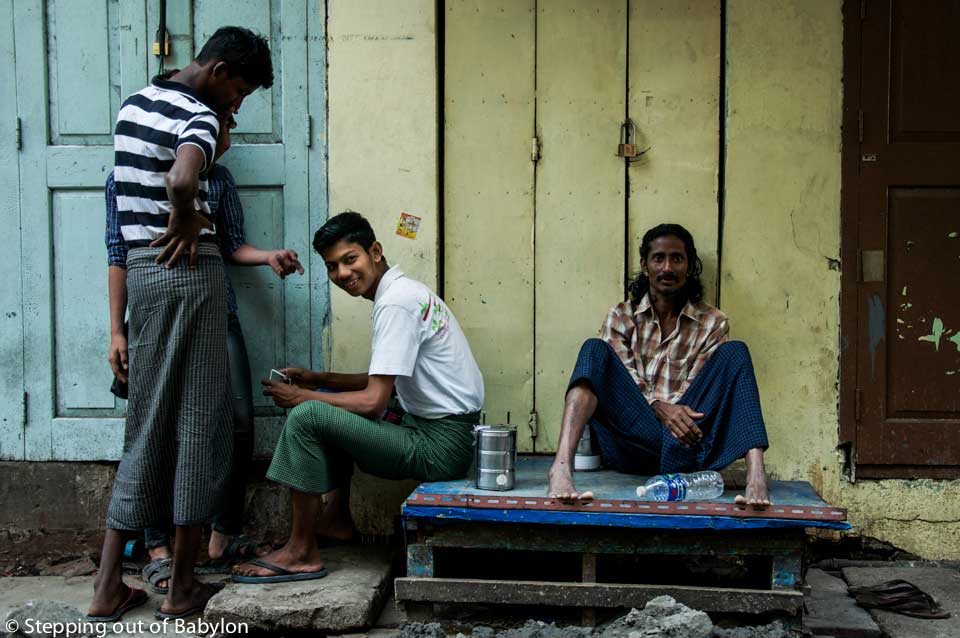
Yangon definitively is a city that seduces and engages, cosmopolitan and authentic, where the different cultures, ethnic and religions live together in a peaceful and respectful way.

Yangon... multiethnic and multicultural and multireligious
Yangon… multiethnic and multicultural and multireligious


How to get a Thai visa in Vientiane… from Chiang Mai

The so-called “visa run” is a classic for travels that choose to stay for a long time in Thailand. But let’s start with what is a visa run?? Running for a visa? More or less!!! Means go to a nearby country, cross to border and come back to Thailand again, preferentially in the same day!!

Laos, Cambodia, Myanmar and Malaysia are the neighboring countries, but being in the north of Thailand, the easiest way to get a new 60 days tourist visa is going to Vientiane, the capital of the Lao People’s Democratic Republic

Mae Sai, in Myanmar, is also a popular option but crossing by land only give you 15 days visa (NOTE: since 31st December 2016, you can get 30 days tourist visa, on arrival, for free).


Step by step… time and costs:

Day 1: from Chiang Mai to Thai Consulate in Vientiane

  • Bus from Chiang Mai to Udon Thani: 545 baht

The best price is from Phetprasert company (good and comfortable buses), that has several buses leaving during the day, but the best option is the on that departure at 7.30 pm, from Terminal 2 of Arcade Bus Station, otherwise you’ll arrive unnecessarily early to the border.

A VIP bus can cost around 800 bahts and is better to buy the ticket in one of the counters of the Terminal 3.

If you don’t carry much luggage you can go on foot from the old town to the Arcade Bus Station, and it will take you between around 40 minutes walking.

  • The bus departure at 30 pm and arrive to Udon Thani around 6.30 am. The bus drops the passengers in from of the City Plaza, a modern mall. Watch out because this is not the last stop.
  • After the bus leave, you’ll see on the other side of the street a kiosk (with Van Station sign) where you can buy a ticket for the mini-van that take you to the border: Nong Khai
Mini-van kiosk at Udon Thani, in front of Central Plaza

The mini-van ticket from Udon Thani to Nong Khai cost 50 baht. It takes 1.5 hours and drops you at the Immigration area.

  • Thai Immigration at Nong Khai: basically you need to wait on the line and show the passport and the departure card.

If you overstay in Thailand you need to line on the counter on the left and pay the fee (500 baht a day).

  • After you get the stamp you´ll find a desk outside the room that sells the tickets to a bus that cross the Thai-Lao Friendship Bridge over the Mekong. Apparently crossing the bridge on foot is not allowed!

The bus ticket cost 20 baht, and the trip takes about 10 minutes. The bus departure when is full.

The bus will drop you just at the Thanaleng border crossing and you just need to walk a few meters to the Lao Immigration.

Crossing the Thai-Lao friendship bridge
  • Lao Immigration procedures: when you get off the bus you’ll see a counter on your left side, where you can find the immigration form.

For the Lao visa you need:

  • 1 passport photo,
  • Immigration form,
  • 35 USD (you can pay in baht – 1500 baht – but it will be more expensive). The fee depends on from your country but most of the Europeans countries pay the same. The French citizens pay 30 USD. Check your situation on line.

After you present the document and pay the visa fee (everything in the same counter) you need to wait a few minutes. Every now and then the third window of the counter will open and your name will be called and the passport gave back to you, with a 30 days visa, single entry. A transit visa will cost you the same and will give you more trouble.

Note: the Lao Immigration works from 8 am to 4 pm, so if you cross the border out of this schedule, no matter in which way, you need to pay 1 USD extra.

  • As soon you cross the border gate, mini-van drivers that take you to Vientiane or directly to the Thai embassy approach you. You need to wait until there at least 3 passengers.

The mini-van trip cost you 25.000 kip or 100 baht (the driver will be happy to receive baht… so don’t rush to exchange money at the border and just wait to arrive at the Vientiane to get a better rate!!!) the trip takes around 30 minutes.

  • If your trip to Laos is just to get the visa, so is better go directly to the embassy, as it closes at noon.

Consular Section: Monday to Friday

08.30 – 12.00: Application for Visa

13.00 – 15.00: Distribution of Passports with visa

Close on Saturday and Sunday (check also Thai and Lao holidays http://vientiane.thaiembassy.org/en/embassy/calendar.php)

  • Procedures at Thai Embassy in Laos:

For the Thai visa you’ll need:

  • 2 passport photos
  • a copy of the last Thai visa and also the page with the stamp of entry in the country
  • a copy of the Lao visa

At the Consulate the things are a bit chaotic and busy.

As you cross the Consulate Gate you must go first to the building on your left where you can ask for the application form, and where you can also take the copies of your passport: 20 baht each (you can pay baht or kip).

Inside this building there are some desks where a few consular officials can help you to fill the forms and glue the photos… you must pay 4.000 kip for this service, but filing the form has no big issues and you can save time and money doing it by yourself!!!

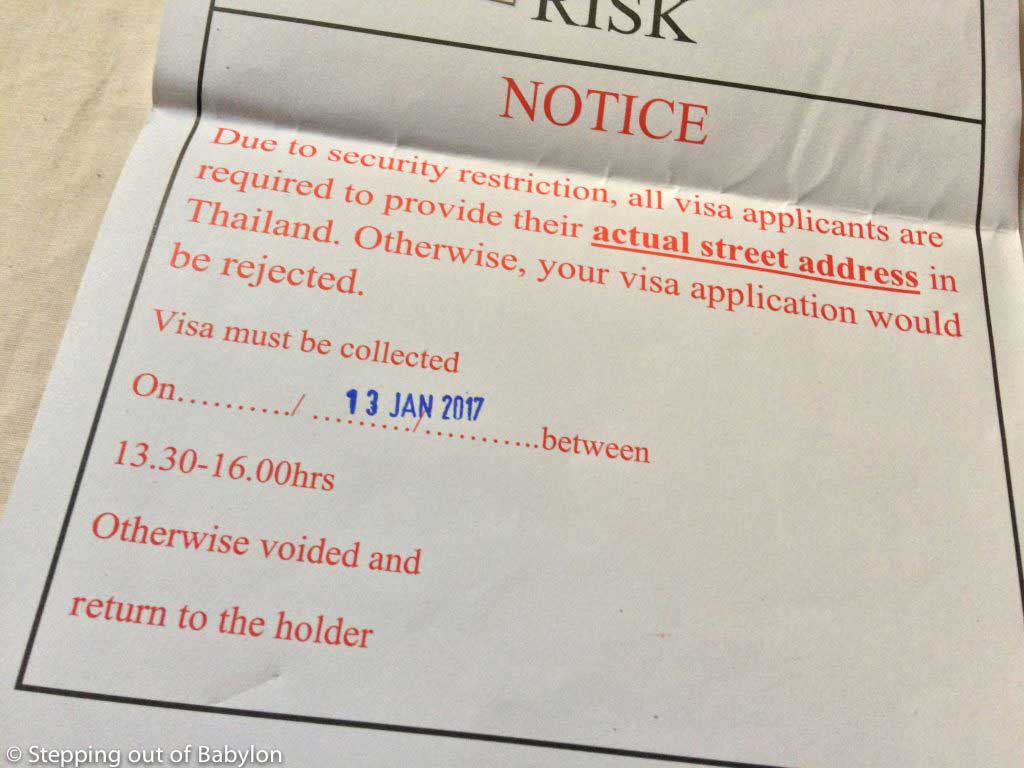
Note: you must write an address of a place or the guest house where you plan to stay in Thailand… don’t need to make proof of any reservation but you must provide a valid name and an address.

Note: you must write an address of a place or the guest house where you plan to stay in Thailand... don’t need to make proof of any reservation but you must provide a valid name and an address.
Note: you must write an address of a place or the guest house where you plan to stay in Thailand… don’t need to make proof of any reservation but you must provide a valid name and an address.

With all this paper stuff ready you need now to join the long queue that zig-zag under the shed, that you see as you come out of the building. This part is fast, as is just the time need to the consular officials check your documents, and give you a number, that you’ll use next day to pick the passport with the new visa stamp, for 60 days with a single entry.


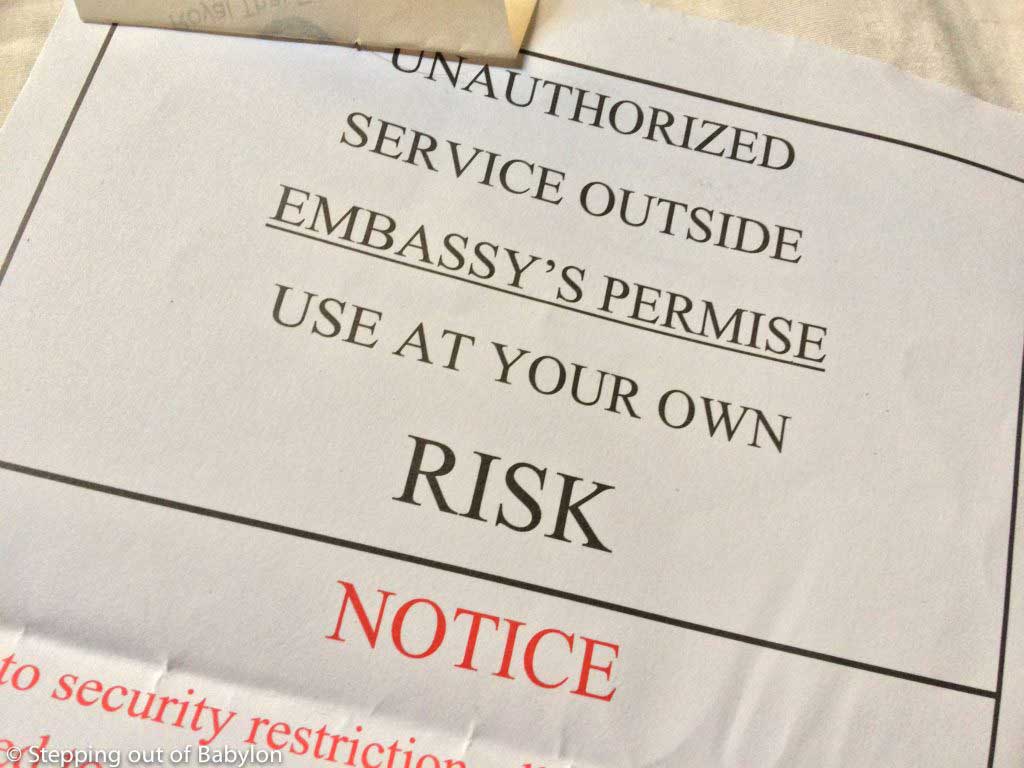
Watch out: when you come off the mini-van, maybe someone forward you to one of the improvised offices where someone fill the form for you, make the copies and arrange everything for you (4.000 kips), even with the promise that paying an extra you can get the visa on the same day… don’t trust in this touts! The consular officials reject the forms that they have… and then you need to do it by yourself inside de consular services.

Watch out: when you come off the mini-van, maybe someone forward you to one of the improvised offices where someone fill the form for you, make the copies and arrange everything for you (4.000 kips), even with the promise that paying an extra you can get the visa on the same day... don’t trust in this touts! The consular officials reject the forms that they have... and then you need to do it by yourself inside de consular services.
Watch out: when you come off the mini-van, maybe someone forward you to one of the improvised offices where someone fill the form for you, make the copies and arrange everything for you (4.000 kips), even with the promise that paying an extra you can get the visa on the same day… don’t trust in this touts! The consular officials reject the forms that they have… and then you need to do it by yourself inside de consular services.


Exceptionally, from 1st of December 2016 until 28th of February 2017, the 60 days tourist visa is free. http://vientiane.thaiembassy.org/en/news/announce/detail.php?ID=362

Now that you have you have the ticket with the number is time to find a guesthouse, have rest and some food in the sleepy Vientiane.

You can reach the center of the city on foot, which that take around 40 minutes walking slowly.

In Vientiane, you can get a bed dorm for 40.000 kips (Garden Hostel, Sihome), get street food for 10.000 kips and watch the time pass by near the Mekong waters.

Day 2: from the Thai Consulate in Vientiane to Chiang Mai

  • On the next day, after 1 pm you can go the embassy to collect your passport. The officer behind the counter will calls people by the ticket number given to you the day before. But don’t worry, is ok if you arrive later (2 pm is a good time), as this way you just need to go to the counter and show your recipe, no matter if it already call your number. This is super fast.
  • Outside de Consulate the mini-van driver will be waiting to take the foreigners back to the Thai border. Again you can pay in baht or kip the mini-van ride: 100 baht.
  • Arriving at the Lao Immigration you must get your passport stamped.
  • Take the bus to cross the Thai-Lao Friendship Bridge: 20 baht
  • Fill the arriving/departure card and get your passport stamped with the day that you must leave the country.
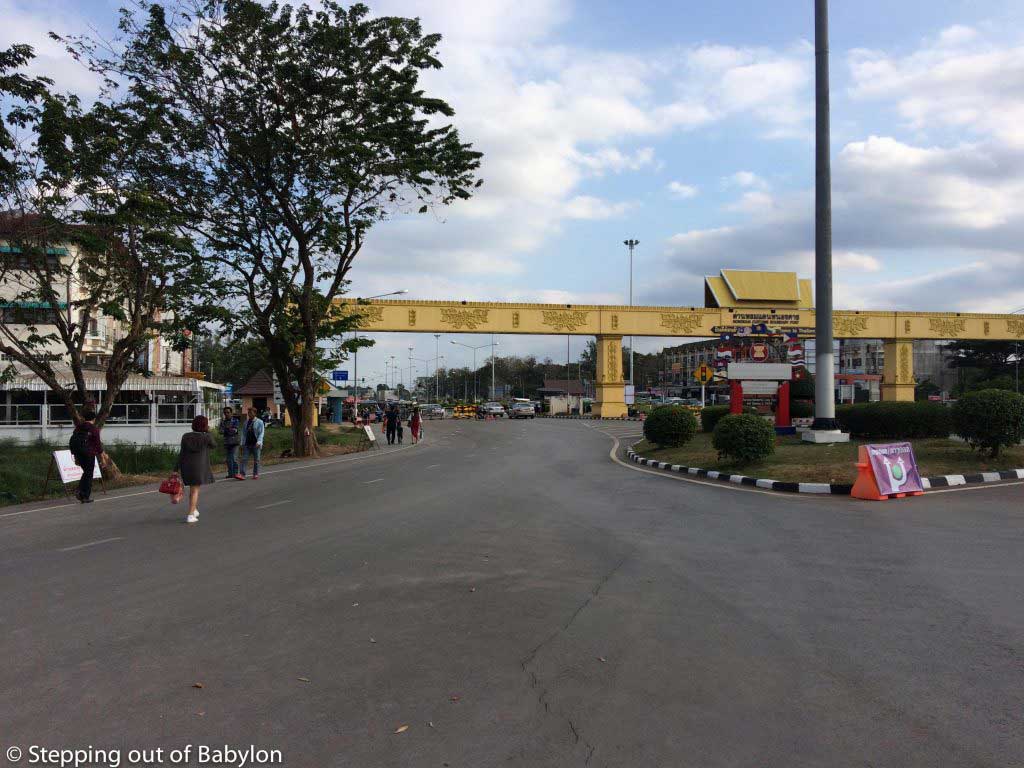
  • After the Thai Immigration procedures, you must walk out the border crossing area, until you pass under a big gate decorated in gold. Many taxi and tuk-tuk drivers will approach you to take you to Nong Khai (if you are going to the south, like Bangkok) or Udon Thani if you are going back to Chiang Mai, for a big amount of money. Ignore them!

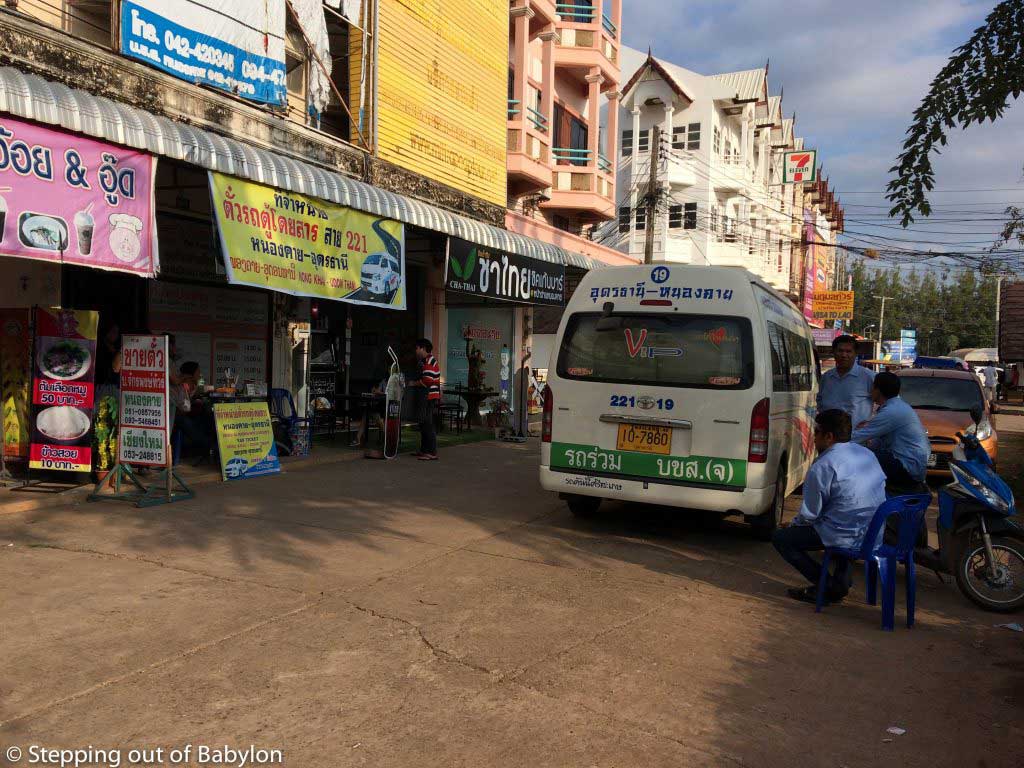
Keep walking a bit further after the gate and you’ll see a few tuk-tuk line up on your left (if you arrive at a 7 eleven, you walk too much), behind them is the office of the mini-van company that takes you to Udon Thani for the just 50 baht! Just need to wait a bit, as the mini-vans run every hour.

Thai border at Nong Khai, after passing under this gate you'll fin the mini-van to Udon Thani and Nong Khai Bus Station
Thai border at Nong Khai, after passing under this gate you’ll fin the mini-van to Udon Thani and Nong Khai Bus Station
office of Mini-van from Nong Khai to Udon Thani
Schedule of the mini-van that link Nong Khai border with Nong Khai Bus Terminal and Udon Thani Bus terminal... you dont need to hire one of the expensive taxis or tuk-tuks
Schedule of the mini-van that link Nong Khai border with Nong Khai Bus Terminal and Udon Thani Bus terminal… you dont need to hire one of the expensive taxis or tuk-tuks
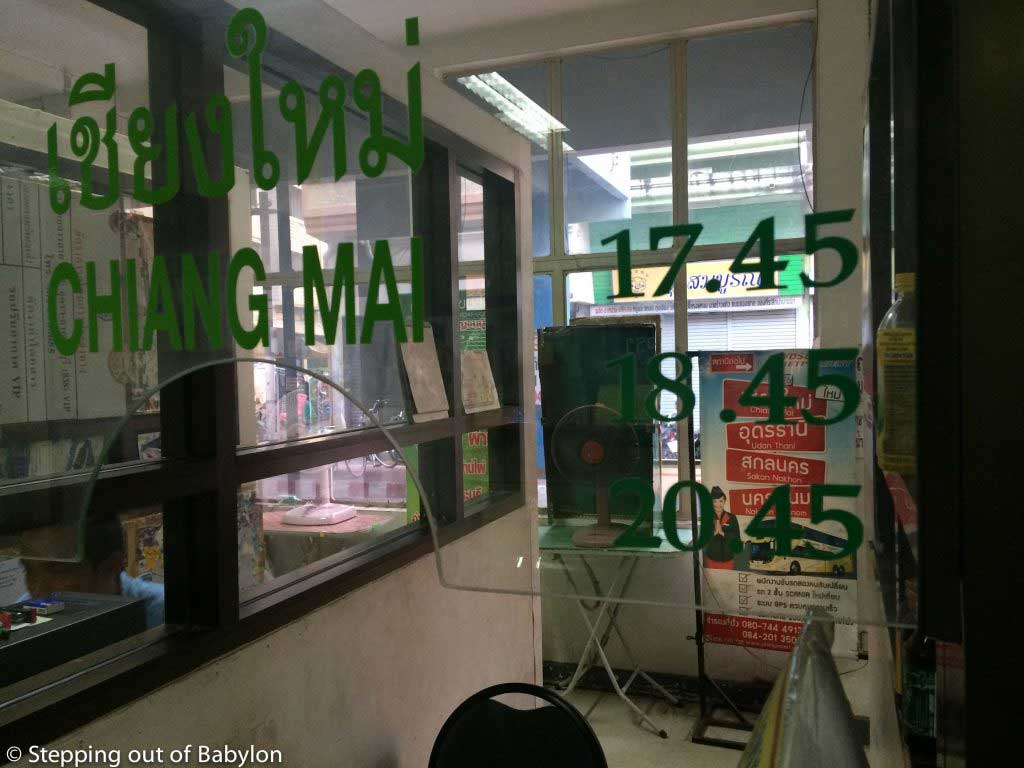
  • Probably you’ll arrive in Udon Thani around 5 pm. At Udon Thani Bus Terminal you need to find the counter that sells tickets to Chiang Mai… the buses departure at:

17.45, 18.45 and 20.45h.

Depending on the demanding you may have the lucky to get a ticket for the first bus… otherwise just need to wait a bit for the next one. There a nice café in the opposite of the entrance of the bus terminal or you can enjoy the air-conditioner of the Central Plaza, a mall very close by.

The bus will pick you at the entrance of the Central Plaza, at the same place where they drop you in the morning of the day before…. just wait there patiently because the bus can arrive a bit later (I wait 30 minutes)…. but no worry because at the kiosk in front (van Station) there a bus company official that can help you.

The bus arrives at Chiang Mai in the next morning, 11 hours later.

And here you are again in Thailand for a couple of more months… and you can even extend this visa for more 30 days!!!!!

Schedule of the bus from Udon Thani to Chiang Mai

Costs of the visa run:

Transportation: 1430 baht (considering not using tuk-tuk in Vientiane)

Sleep: 40.000 kip (dorm with breakfast) (approx. 175 baht)

(The cots of the food in Vientiane are not included as you send more or less the same as in Chiang Mai).

So you will spend minimum 1600 baht plus the 35 USD of the Lao visa.

Bus tickets form Chiang Mai to Udon Thani

Streets of Kathmandu

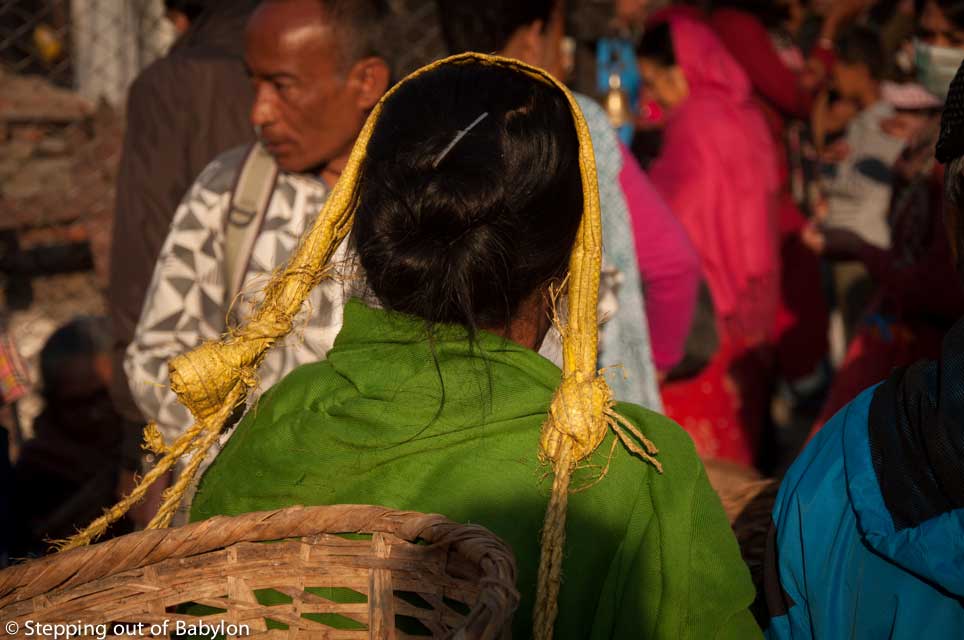
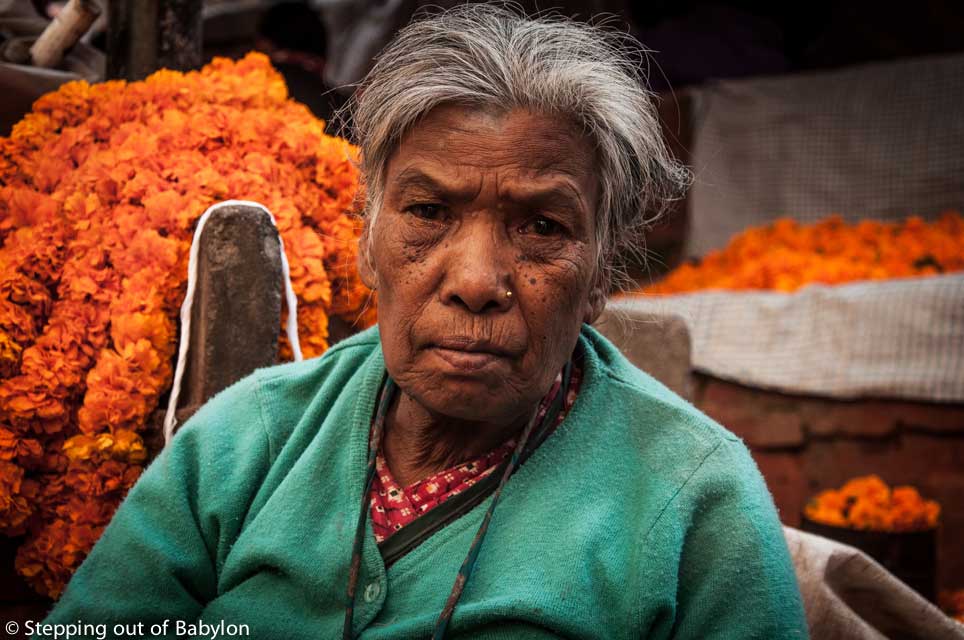
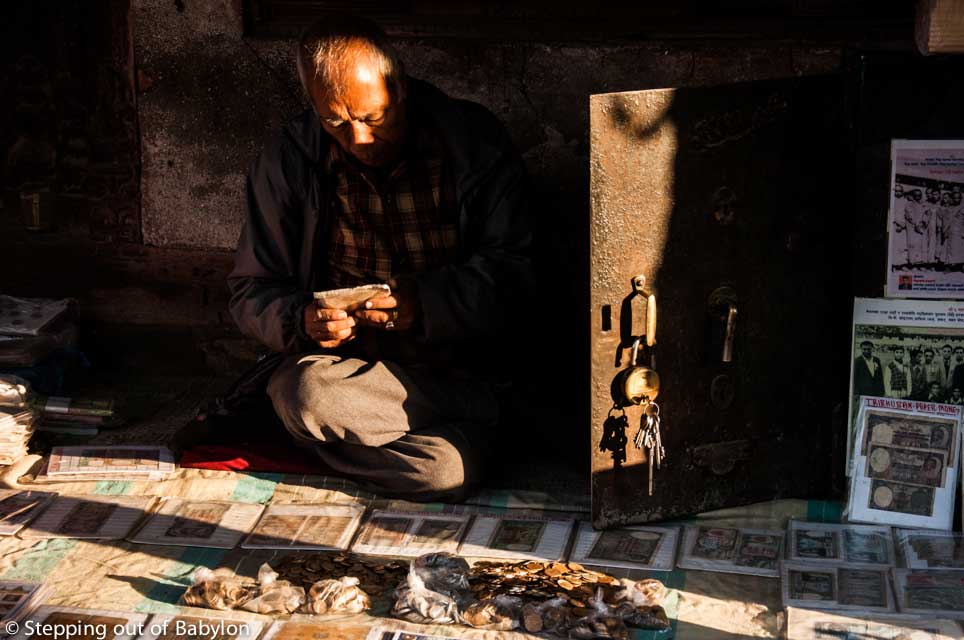
The streets of Kathmandu, despite the intense noise and the heavy pollution, that can create a strong negative impact on new visitors, always have something new and unexpected to offer.

The crowded streets gain a magic atmosphere with the light of the sunset, lightning up hidden corners and people’s faces. Old buildings facades standing out from the urban landscape, where the dust creates an almost permanent veil.
The morning markets, that daily fills up squares and narrow streets, gain a special atmosphere as soon as the first sun rays crawl over the dense and compact mass of buildings, giving a new intensity to the colors and bringing a new perspective to the scenery.

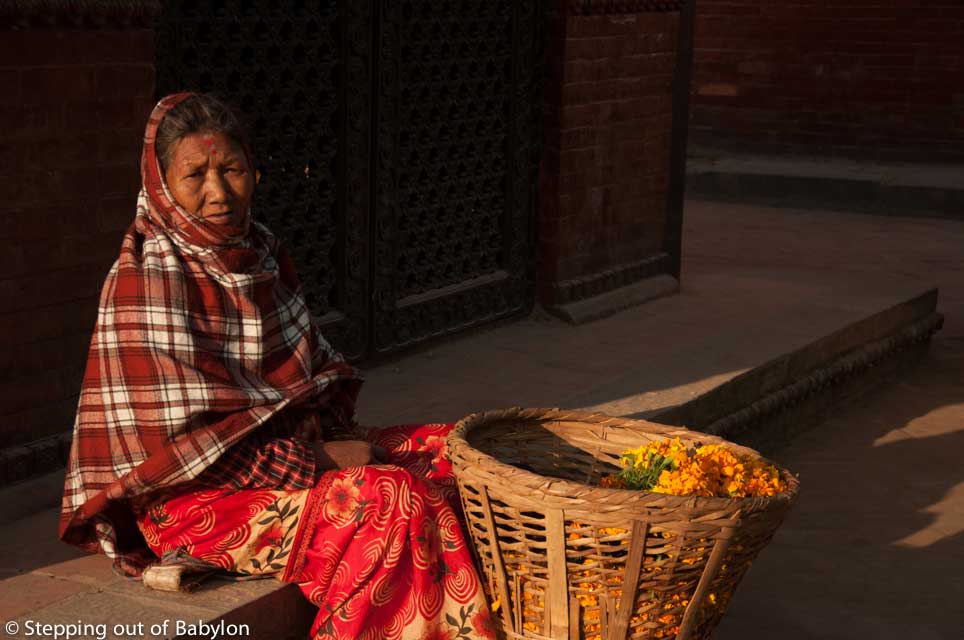
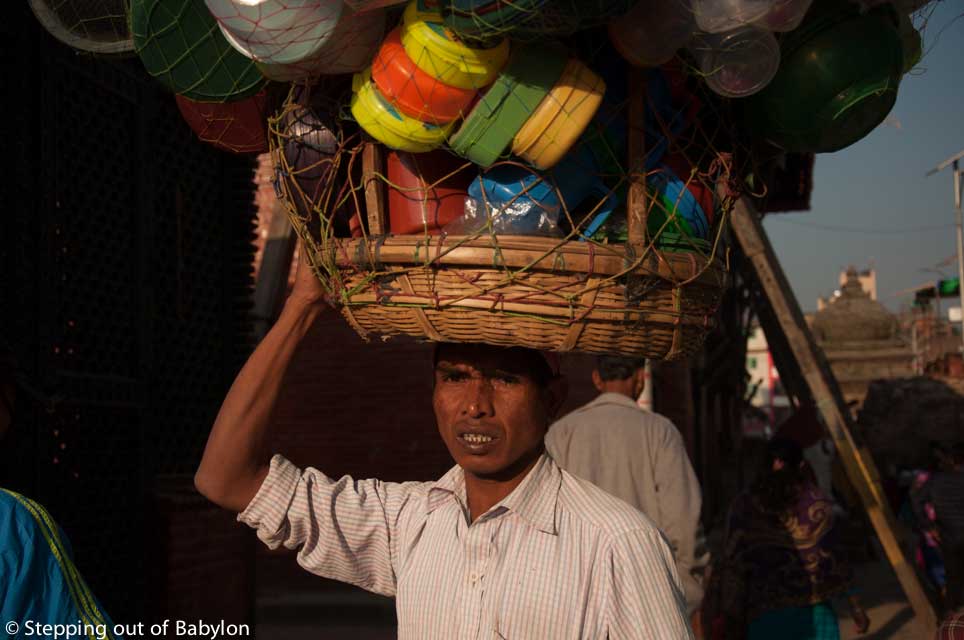
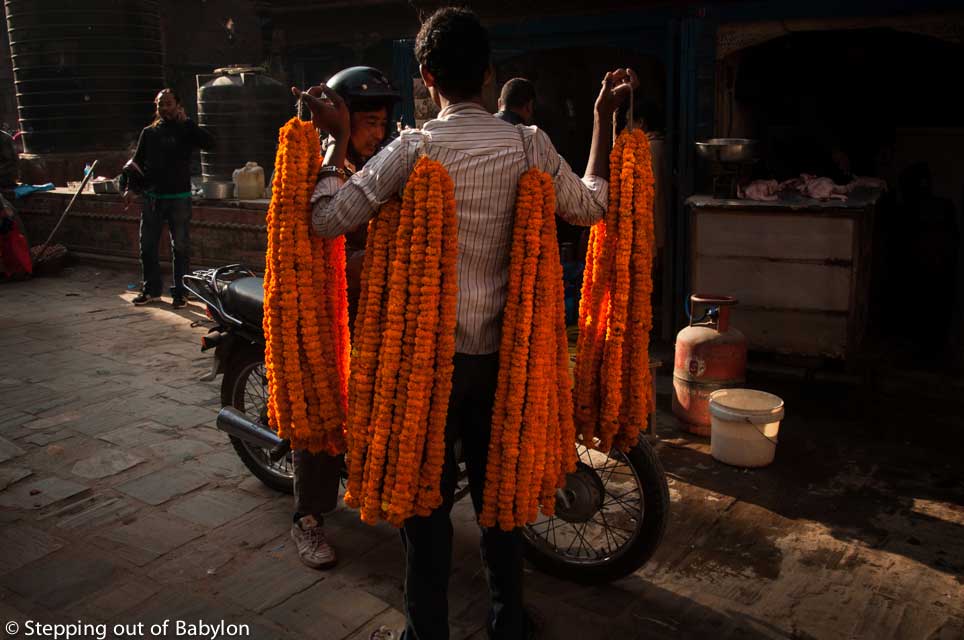
Walking along the mazy streets of the old part of Kathmandu, that get unbelievably crowded at dusk, can reveal a tough challenge. But at the same time it can reveal new routines of the daily life of the city… from the “puja” rituals to the washing of the clothes, from religious processions to the movement of the porters, from the fruits and vegetable hawkers to the marigold garland makers.

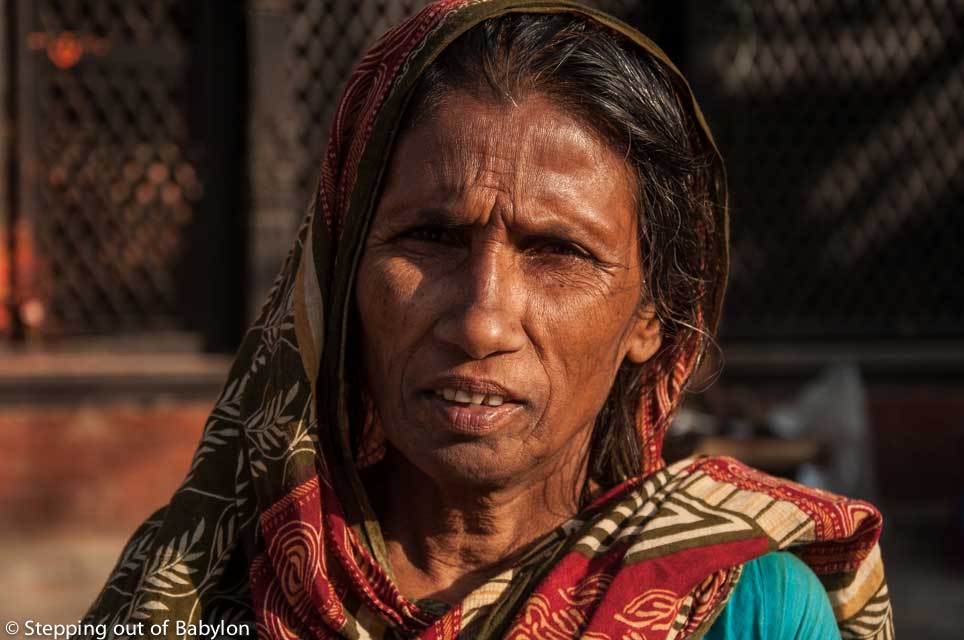
Even though we have passed countless times along the same street, bend the same corner, walk along the same path and pass by the same “stupa”… Kathmandu always has something that surprises us: a new light that changes familiar images, a new detail in the wood carving of a door, a new brightness that makes a normal color stand out, a smile filled with curiosity from a young face, the serious gaze of those who have seen many things, or just a new scent of a warm snack just coming out of a pan full of oil.

Streets of Kathmandu


Streets of Kathmandu


Streets of Kathmandu


https://steppingoutofbabylon.com/wp/en/2016/09/a-guide-for-snacks-and-street-food-in-kathmandu/


https://steppingoutofbabylon.com/wp/en/2016/11/in-search-of-the-best-dal-bhat-in-kathmandu/


How to Apply for Thai visa in Kathmandu

Get the Thai visa in Kathmandu is easy and without big issues!

But you can probably get a visa on arrival for 30 days if you arrive by plane, or 15 days if you arrive by land, totally for free.

The process takes 2 working days, but watch out that during the high season (September and October) it can take up to 5 days. Also check the holiday calendar, as the Thai embassy close during Thai holidays as also the Nepali holidays, and can be closed for several days in a raw like during the Dashain and Tihar festivals. http://www.thaiembnepal.org.np/?do=embassy&index=holidays&lang=en

To apply for a tourist visa (60 days that you can extend for more 30 days during your stay in Thailand in one of the many immigration offices along the country) you need:

  • Passport valid for 6 months
  • 3 passport size photos
  • 3 prints of the form that you can find online.

You need 3 of these forms, filled with your information and also with an address of the place you gonna stay in Thailand… just put an address of a hotel or guest house that you find on the internet… you’ll also gonna need it to fill the immigration card on arriving at the airport or any land border. http://www.thaiembnepal.org.np/?do=services&index=visa&lang=en

  • A print of the balance of your bank account.
  • A Print of passport and Nepali visa
  • A print of the flight ticket to Thailand. On the website is written that you must have a return ticket but I just show one-way ticket and didn’t had any problem and didn’t even need to justify nothing.

Tourist visa costs: 35.000 rupees. Single entry.


Thai embassy at Kathmandu

Schedule of visa section

to submit application: 09:30 – 12:00
to collect the passport: 14:00 – 16:00

The visa section is open from Monday to Friday (the Thai embassy don’t follow the Nepali weekend: Friday and Saturday).

visa section schedule of Thai embassy at Kathmandu

Visa application process:

To save from being too long on the line, because there are some guys from travel agencies that arrive with a pile of passports, is better to arrive a bit earlier. I arrive 30 minutes before the opening and I was the first one… but just for a few minutes.

  • At the counter, you submit the documents and passport.
  • if everything is ok you’ll need to go to the Bank of Kathmandu to make the payment. The Bank of Kathmandu is located about 10 minutes walking from the Thai embassy. Basically, you go down along the main road (Basbari Road) and when you reach the big junction you must turn right. Then the back is on the first floor of a building located 300 meters ahead,
  • At the bank you fill a form, and make the deposit in the name of the Thai Embassy… don’t worry because the staff is used to it). Note that you need to pay 100 rupees extras as back fees!
  • Returning to the embassy you show up the payment recipe (that is also the recipe that you need to show to pick the passport) and it will be stamped with the day when you can pick your passport.

All the process took me one hour including the bank stuff!

If by any reason you cannot pick the passport by yourself, anyone can do it for you as far as it has the recipe, but that person will need to show identification, passport or ID card.

Bank of Kathmandu where the visa fee must be deposited

Address:

Basbari Road, Maharajgunj 167/4 ward 3

http://www.thaiembnepal.org.np/?lang=en

How to go to Thai embassy at Kathmandu:

The easiest way is by taxi, and you can even ask the guy to drive you to the bank and then back… but it can be expensive!

The other was is to pick a tempo, a shared tuk-tuk. The tempos start from Sundara/New Road. The one that goes along Basbari Road is the number 5; sometimes the tempos are identified with nepali numbers… or sometimes are not even identified with nothing, but just ask for “Basbari” and someone will point you a white and green ruined three well vehicle.

At Basbari road you can ask to the tempo driver to drop you close to Thai embassy, that probably the driver knows. From the main road is less that 500 meters until you find the gate.

The tempo takes 20 to 30 minutes to reach Basbari, and the ticket cost 15 to 20 rupees. This vehicles a bit uncomfortable so if possible try to get the front seat…


tempo number "5" that pass by Barbari st.
tempo number “5” that pass by Basbari st.

… In search of the best dal bhat in Kathmandu

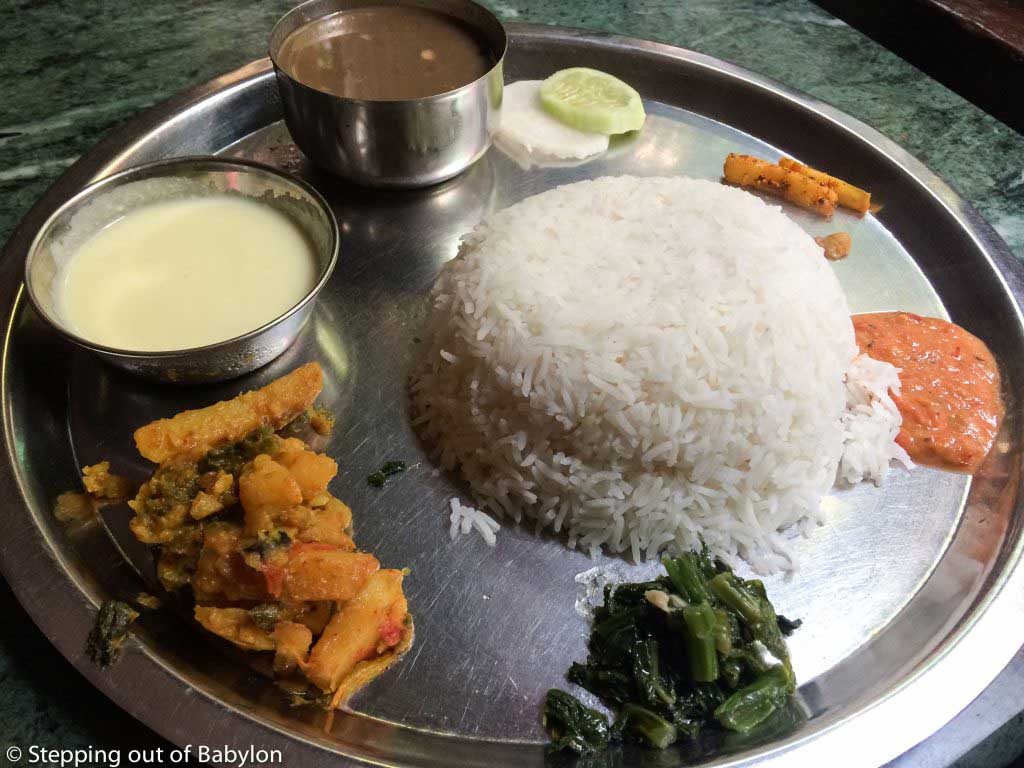
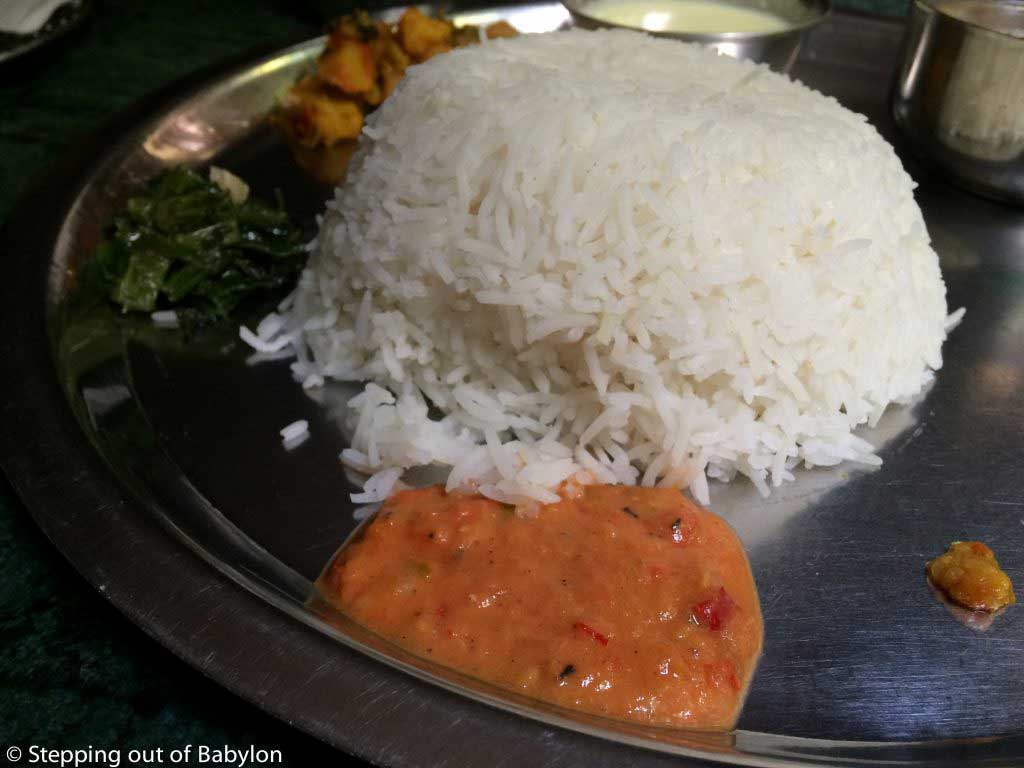
Dal bhat, same as rice and lentils… this is maybe the most famous and eaten Nepali dish, being the staple food of most of the population. The dal bhat, in Nepal also called “khana” is a meal that includes a dal (lentils soup), a vegetable curry (tarkari), saag (stir fry green leaf vegetable). Radish pickle, gundruk, yogurt and hot tomato sauce are added to this dish that is always eaten with steamed rice… a lot of rice!!

Is basically a vegetarian meal but it can also be served with meat, mostly chicken… and at Nepal the consumption of meat is quite common.

It can be eaten as breakfast or as also lunch, and in restaurants is served along all day… but most have home made dal bhat! Usually, you can find dal bhat in restaurants just after 10 am.

Being Nepal a country with so many different cultures, topography, climates, traditions, also the dal baht reflect this diversity. The rice dominates most of the country cuisine, but very high in the mountains the rice is replaced by corn or maize, buckwheat, barley or millet.

Thakali is an ethnic group as also a region located in the farthest northeast of Nepal, close to the Tibetan border, at the high Himalaya. From this remote area comes the most popular version of dal bhat. The restaurants in Kathmandu from this kind of cuisine – thakali bhanchha – serve usually the dal bhat with rice and not with another kind of grains, as usual in the high mountain areas, but are a good option to try this speciality.

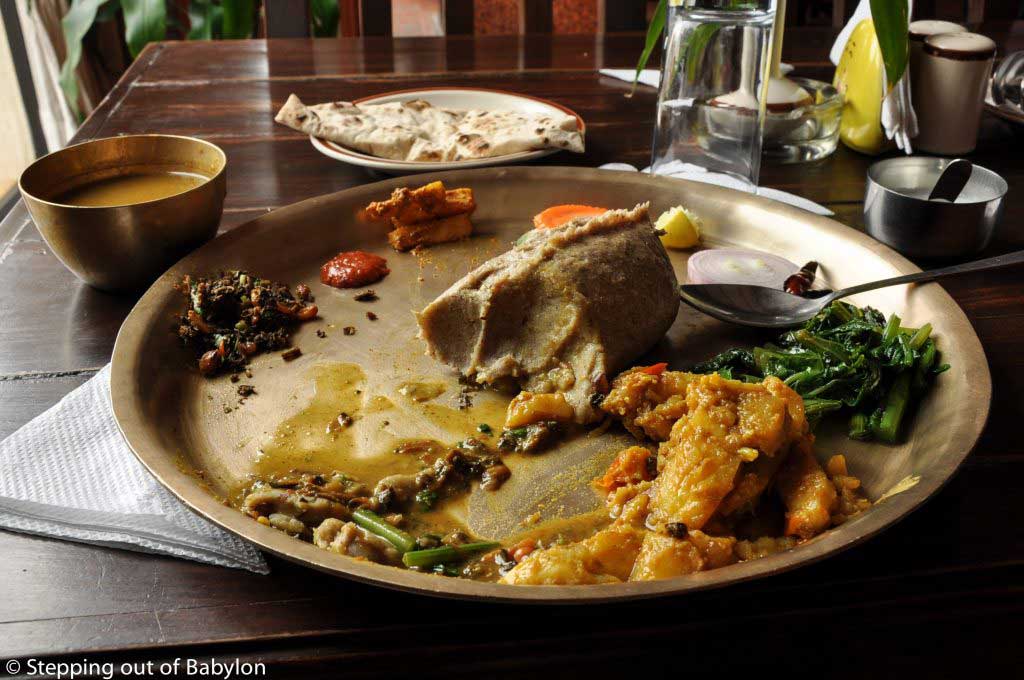
In Nepal, the dal bhat is served in a heavy brass plate, with the rice at the center with the curry, saag, salad and seasonings arranged around and with the dal in a small bowl, sometimes also in brass metal. In the non-vegetarian option, the meat is served also in a small bowl, and never in big portions.

***

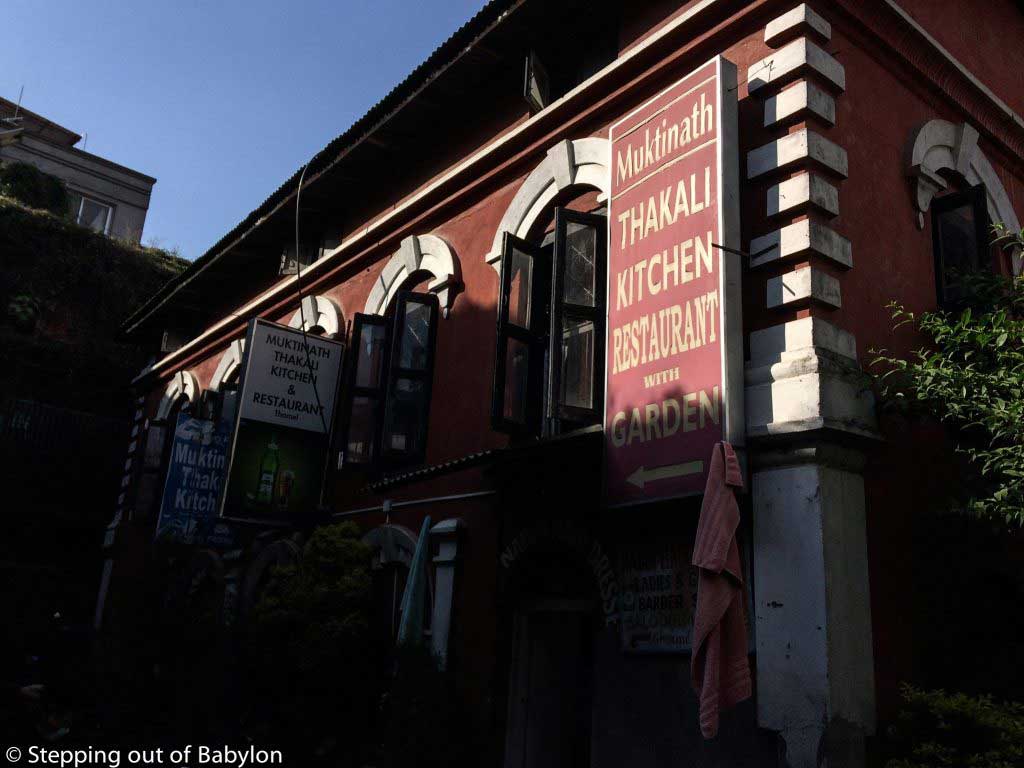
One of my favourites restaurantes in Kathmandu to eat dal bhat is the Muktinath Thakali Kitchen right in the heart of Thamel, but not so visible and easy to find. Is famous between tourists but also very popular among Nepali people that assure the quality of the food!

Here the dal bhat is served with rice, which is not traditional in the Thakali region, but undoubtedly the rice is the most popular cereal in Nepal, and the Nepali can eat a lot of it at each meal 🙂

The dal bhat at Muktinath Restaurant is very rich, served according to the tradition: rice, curry, dal, saag, pickle, salad (just cucumber), spicy sauce… and a with a papad (crispy chips, made from dal and fry in oil). The curry is very tasty, usually not spicy, the dal has the touch of the ghee, and a good quality of rice, with a long grain… and this all cost 200 rupees (vegetarian option) and the staff is super friendly.

This dal bhat is served also yogurt and the gundruk, that for me is one of the main reasons to visit this place, as the gundruk, being a typical homemade season, but not so easy to find in restaurants.


Dal bhat served at the Muktinath Takali Restaurant

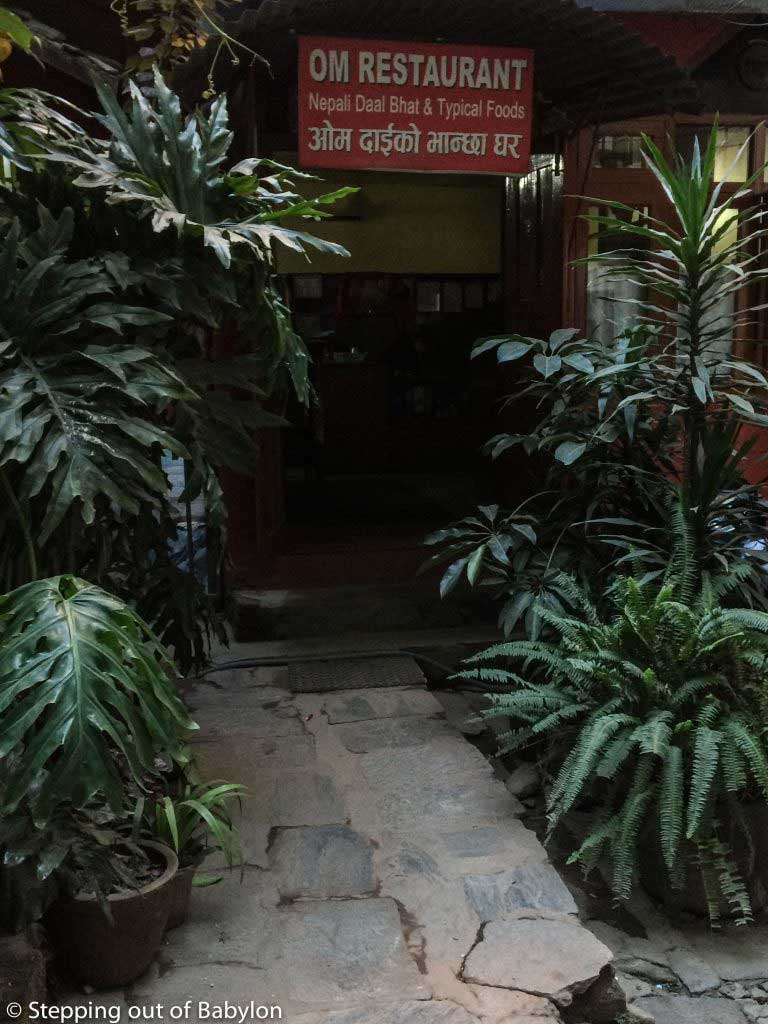
For a more local-underground-cheap version of dal bhat I strongly recommend the Om Restaurant also called as Om Bhava, located in s hidden backstreet of Thamel. The Dal Bhat at Om Bahava is not so rich as the one from Muktinath Kitchen as it comes without the papad and gundruk, but it worth to go there to taste the yummy taste of a homemade dal bhat that makes us forget that we are at a restaurant!

The place is simple and humble, the owner is super friendly smiley Nepali, never saying no to another refill of this amazing food! The price is also good: 130 rupees for the vegetarian option and 200 rupees for the one with chicken.

dal bhat from Om Restaurant. Thamel. Kathmandu

Dal

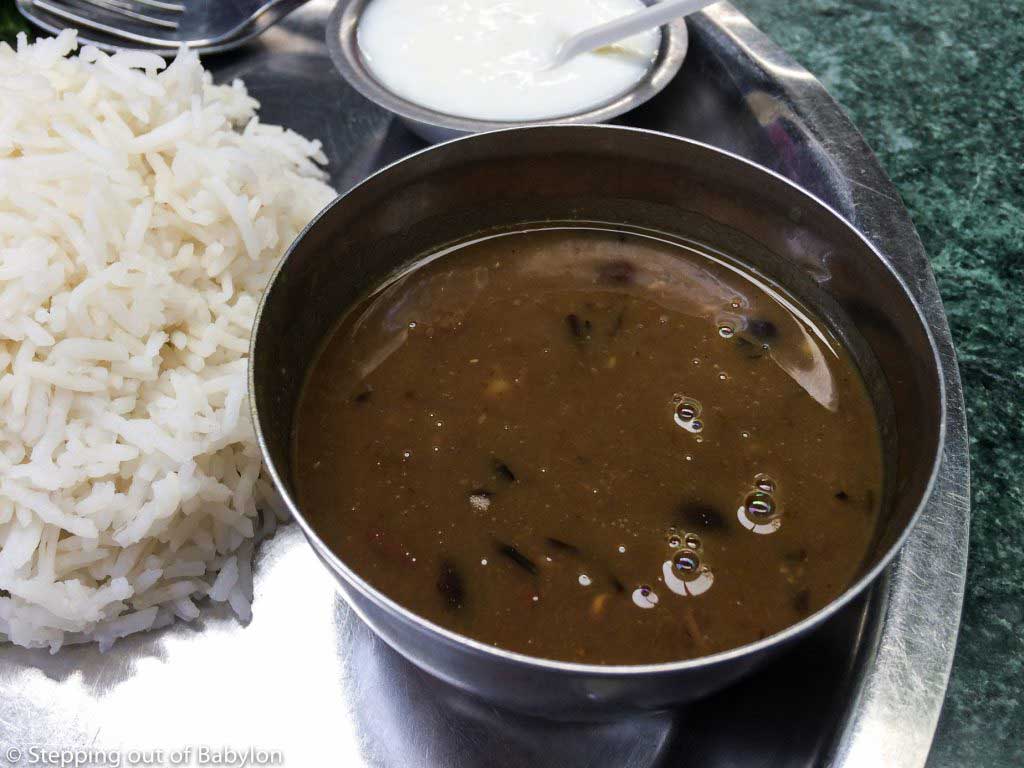
After rice, this is the core of a Nepali meal! The dal is basically a soup made with lentils, any kind of lentils seasoned with coriander, cumin and turmeric…. and a bit of fresh ginger that give a special flavor Sometimes, as the dal in Nepal is expensive, potatoes are added to this soup, make it thicker.

A spoon of ghee (clarified butter), if added, gives a special touch to this simple dish.

From the big variety of dal, my favorite one in the black dal, in Nepal called “maas ko dal”, from where results a thick and textured soup, where this small beans almost disappear due to the overcooking in a pressure pan. A bit of ginger always give a twist to this soup, bringing a sharpness to the taste.

Dal made from black dal...one of my favourits. Muktinath Takali Restaurant
Dal made from black dal…one of my favourits. Muktinath Takali Restaurant

Gundruk

This is a classic side dish that is served with the dal bhat… unfortunately many places forget this detail that is fundamental for me!!!

The Gundruk is prepared with fermented leafs of spinach, radish or mustard, that are later dried and storage. For serving the dry leafs are soaked in water and fry in a pan with onion, tomato, turmeric, salt and chili, resulting in a mix of acid and spicy flavor.

Due to the fermentation process gundruk is an important font of minerals.

Difficult or almost impossible to find in the market or shops as this is a homemade treat, but at least the dry leafs could be found in the street markets of Kathmandu.


Gundruk, served as a side dish at Muktinath Restaurant

Tarkari

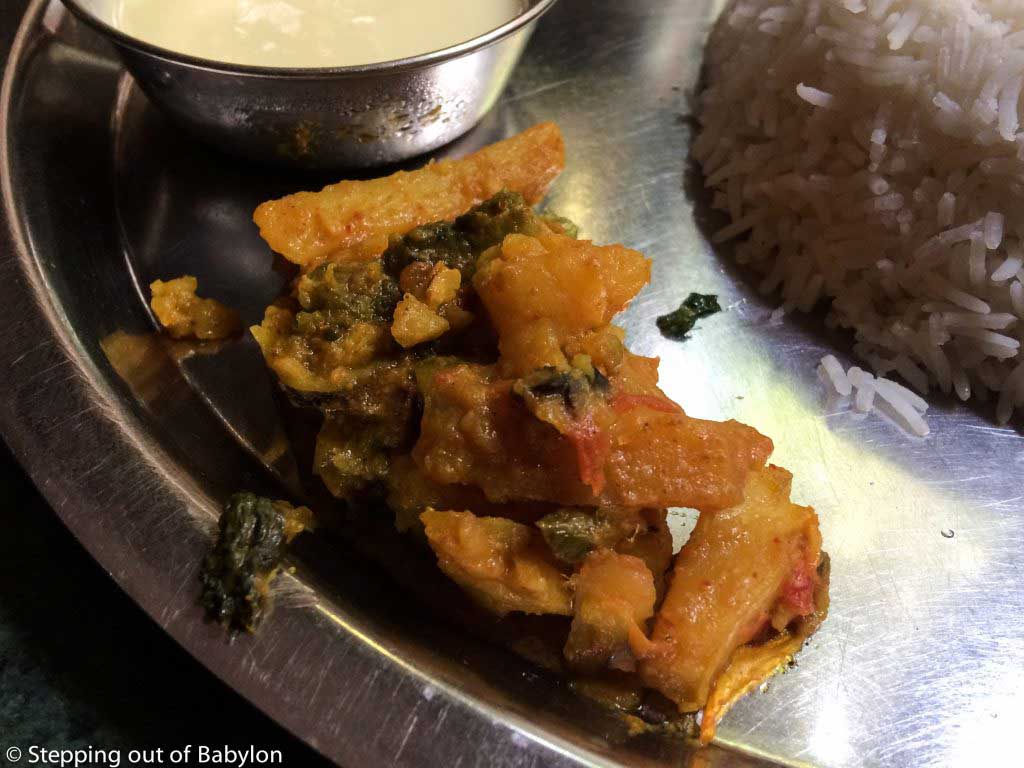
The tarkari is a stew made from different types of vegetables, changing according to the season, but where the potato is almost always present. Coriander, cumin and turmeric are used to season, where is common the presence of onion and garlic.

There’s a huge variety of vegetables available in the market at Kathmandu, some of them totally unknown from the western eyes, but other, like carrot, cauliflower, potato, pumpkin, aubergine, zucchini are quite frequent. Mushrooms coming from the mountains are also used but is a treat reserved for a specific season. Despite all this variety in the tarkari doesn’t have more than two kinds of it, and potato is often one of them.

Changing according to season and from place to place, the tarkari could be a bit spicy, but is never oily or heavy.


tarkari... that means vegetables, stew and seasoned with tumeric, coriander and cumin... a important part of a dal bhat. At Om Restauant
tarkari… that means vegetables, stew and seasoned with tumeric, coriander and cumin… a important part of a dal bhat. At Om Restauant


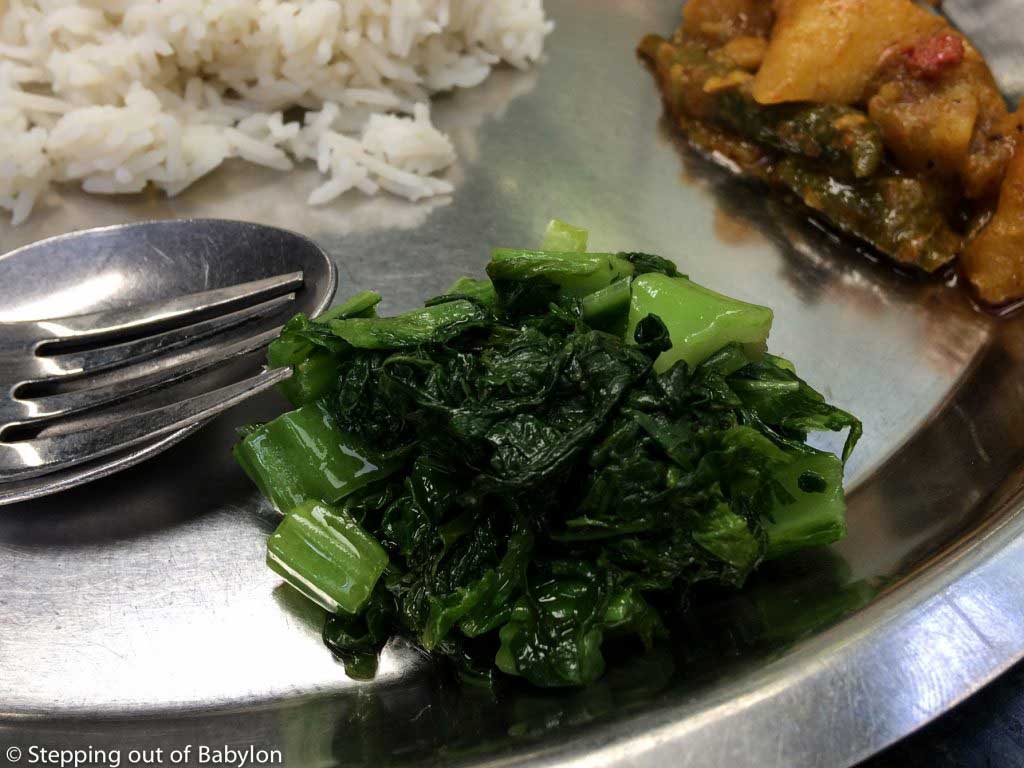
Saag, stir fry spinach leafs, mustard leafs, radish leafs or another kind of green leaf vegetables

saag from the dal bhat served at Muktinath Restaurant.


Radish pickle, chopped into small pieces, and seasoned with mustard oil and chili; this side dish is strongly spicy and give a boost to the dal bhat combination of tastes.


Radish Pickle as a side dish of dal bhat at Muktinath_Restaurant.

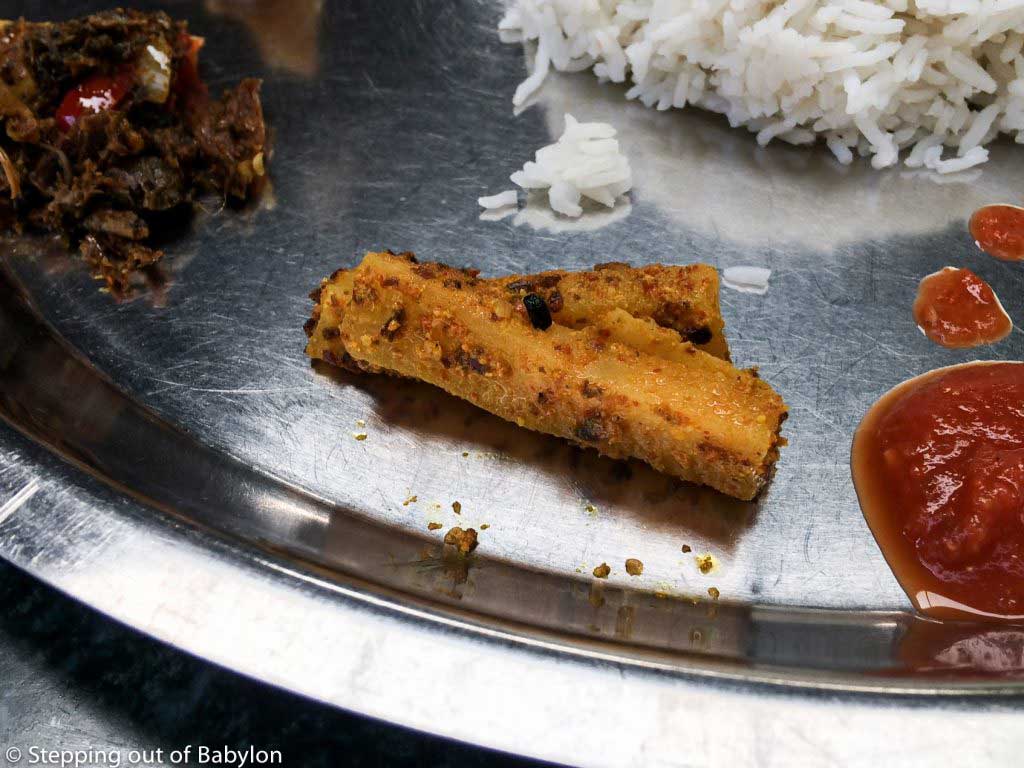
Salad… usually not much more that a slice of radish, tomato, carrot or a piece of cucumber.

Papad, chili, lime and cucumber as a dal bhat side dish at Muktinath Takali Restaurant.

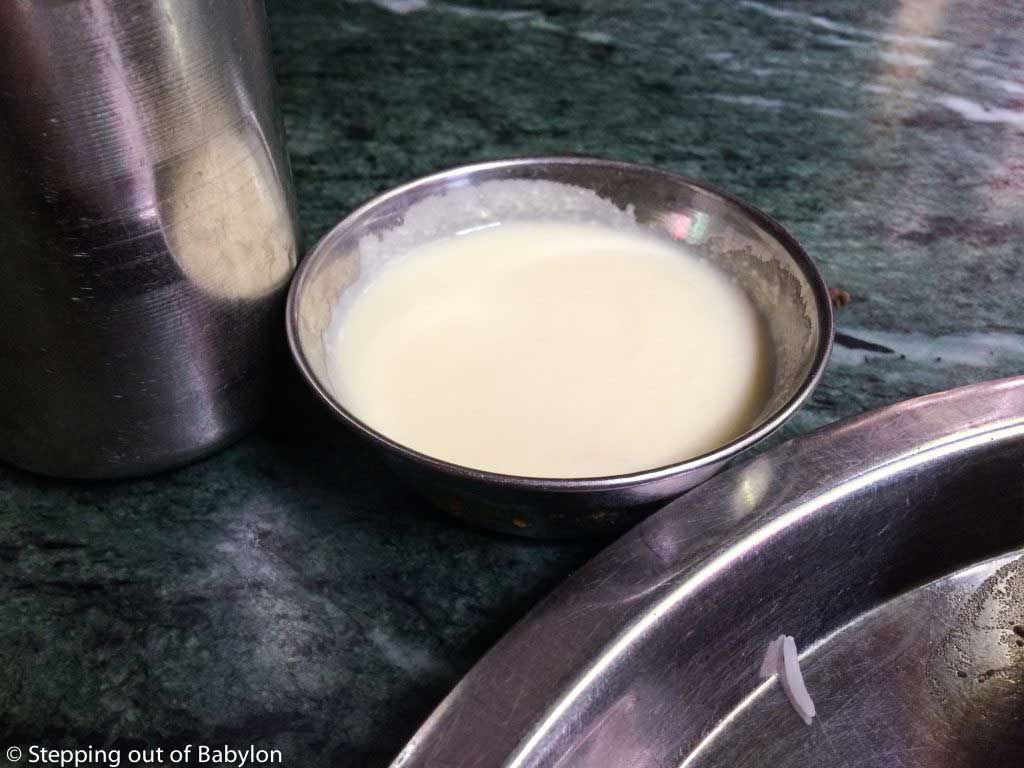
Yogurt… usually a bit sweet but not always present in some dal bhats; is a good combination with the salt and spicy taste of the rest of the dish.

yogurt serve with the dal bhar at Om Restaurant

Red sauce, not really my favorite and always skip it, but is made from tomato, chili and Sichuan pepper, having a sour and acid taste.


tomato sauce, sower and spicy at Om Restaurant.

… and last but no the least: Rice, plain and unsalted steamed rice… couldn’t be simpler.

Muktinath Thakali Kitchen

In the center of Thamel… difficult to give a proper address but try to look for Funky Buddha Bar, and passing the entrance gate you’ll see a red brick building on you left where is located the Muktinath Restaurant. Inside, passing the kitchen you have a kind of open-air area more pleasant called “garden”.

Muktinath Takali Restaurant. Thamel. Kathmandu

Om Restaurant

The Om Restaurant is hidden in the end of a back street of Thamel. Try to find first the Roots Bar, and from there is less than 100 meters. The place is dark and far from be attractive, but has a kind of character and the dal bhat is delicious… and maybe the cheapest meal in Thamel!

Om Restaurant. Thamel. Kathmandu

Note that in all restaurants the dal bhat is served in the refill system, which means that the plate is served with a not so big portion of food, but after someone will pass by bringing more food, and you can refill you plate as many times you want!


Another version of the dal bhat, hard to find in restaurants, is made with barley, cereal that grows at high levels as the rice, typical from lowlands, is hard to grow above 2000 meters high.

dal bhat, with barley instead of rice.

I can’t finish this post without mention a homemade dal bhat, cooked at mountain style, that despite the presence of the rice as also served with corn, cooked and beaten, resulting in a yellow thick paste. Very delicious, with the sweetness of the corn balancing the spiciness of the curry.

 home-made dal bhat
home-made dal bhat

Tihar Festival at Kathmandu streets

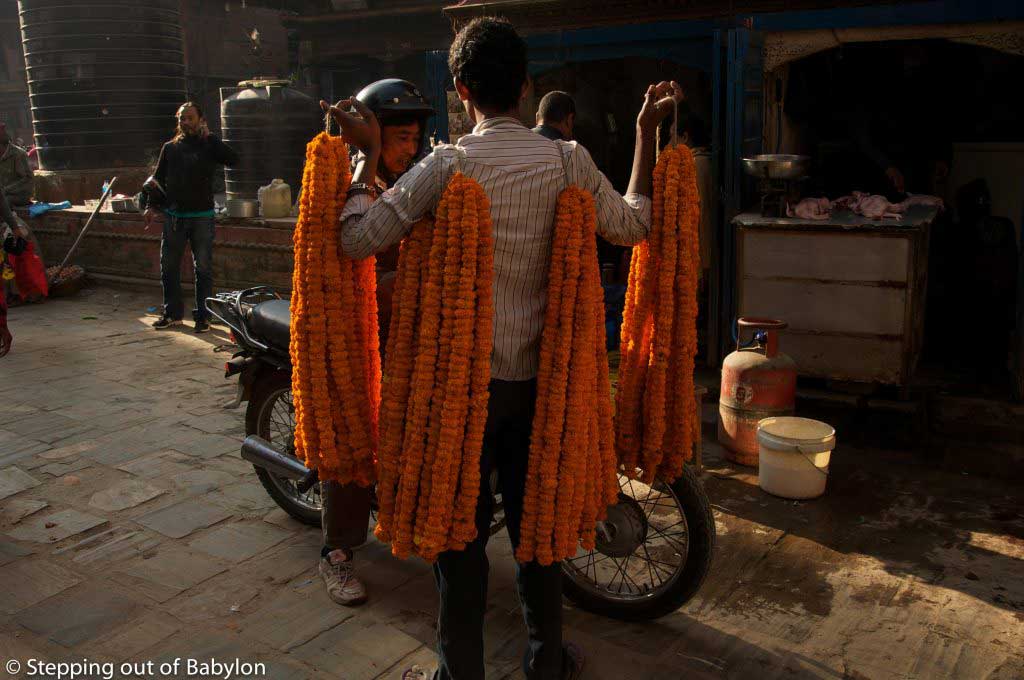
marigold garland seller during Tihar Festival. Kathmandu

Kukur Puja

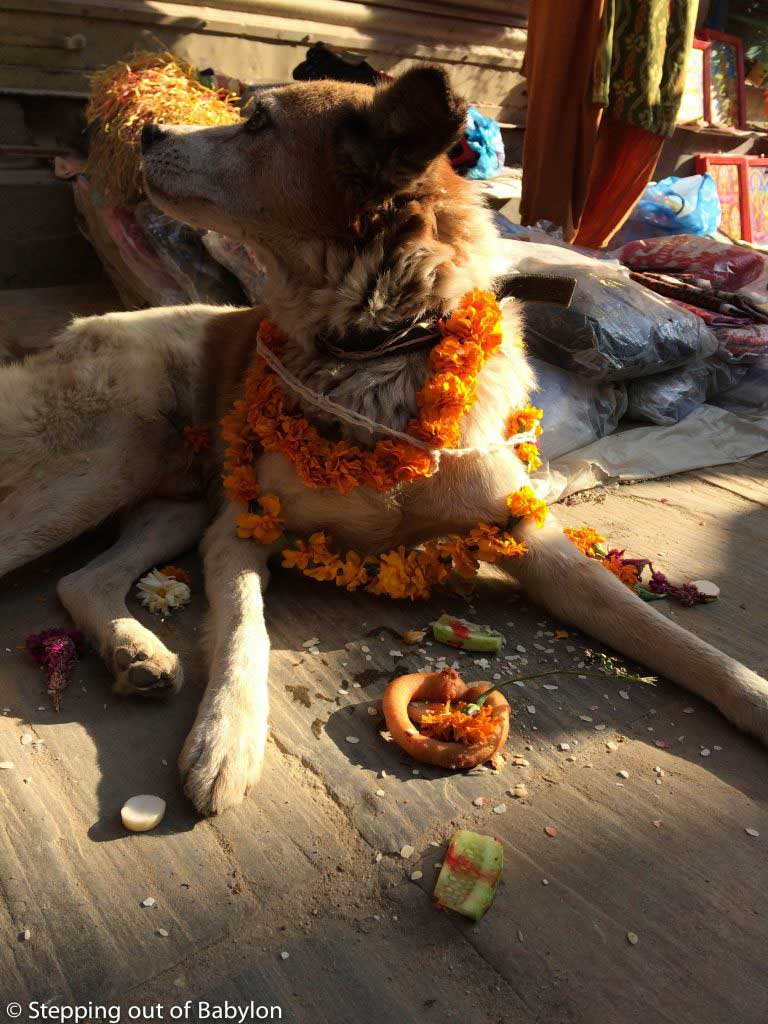
During the Tihar festival, one of the most important religious festivals in Nepal, there is one day dedicated to worship dogs, “kukur” in Nepali.

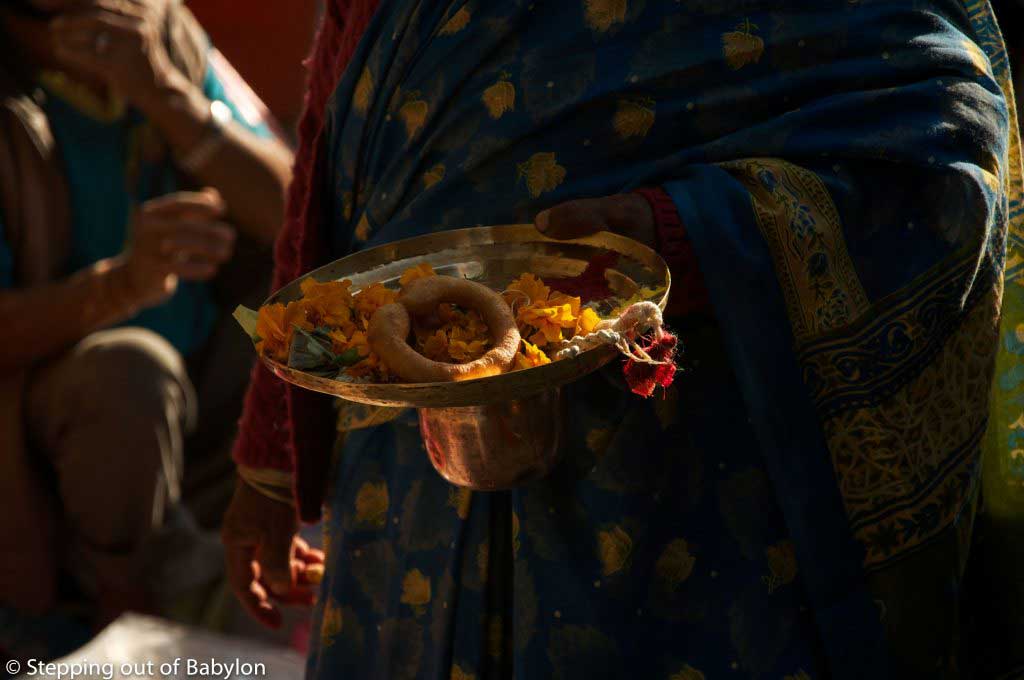
Early morning, through Kathmandu streets, people put “tikka”, red pigment on the dog’s forehead, a flower garland of marigolds on the neck, throw rice and some drops of water. Is offered food to the dogs like sweets, meat and the traditional “sel roti”, the Nepali traditional bread made from rice flour and deep fry.

Both home and stray dogs receive the puja, as is believed that this ritual brings protection to humans and strength the link between humans and dogs.

The dogs seam a bit confuse with the “tikka” and the garlands, but they easily forget the suspicion and the discomfort in front of the food treats.

kukur puja during Tihar Festival. Kathmandu
kukur puja during Tihar Festival. KAthmandu
offerings of sweets, flowers, rice and money for kukur puja during Tihar Festival. Kathmandu
kukur puja during Tihar Festival. Kathmandu

Gai Puja

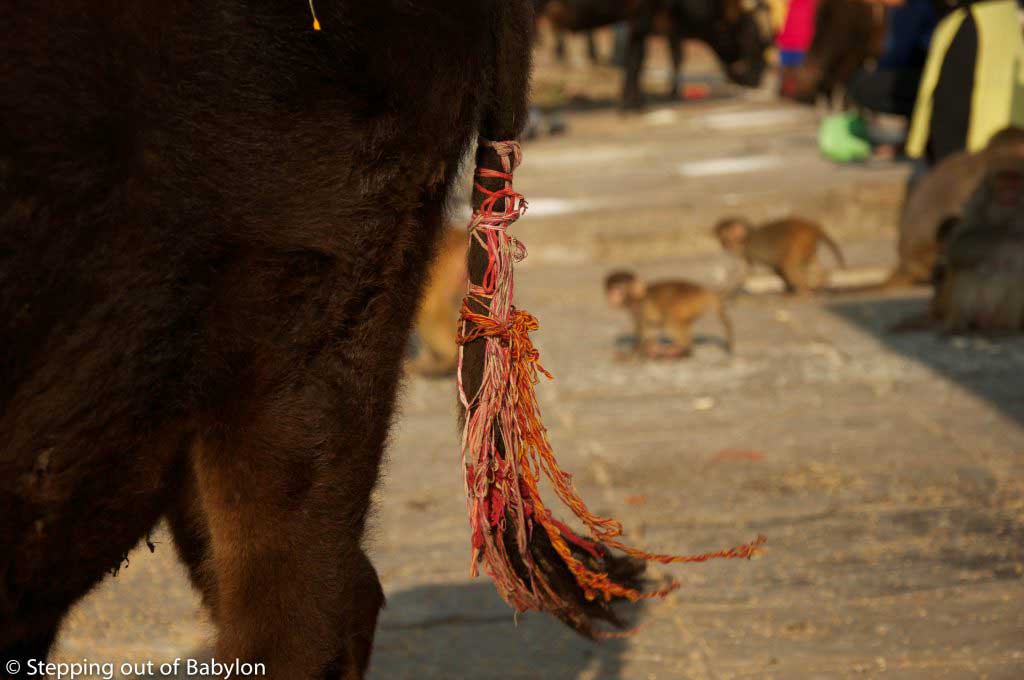
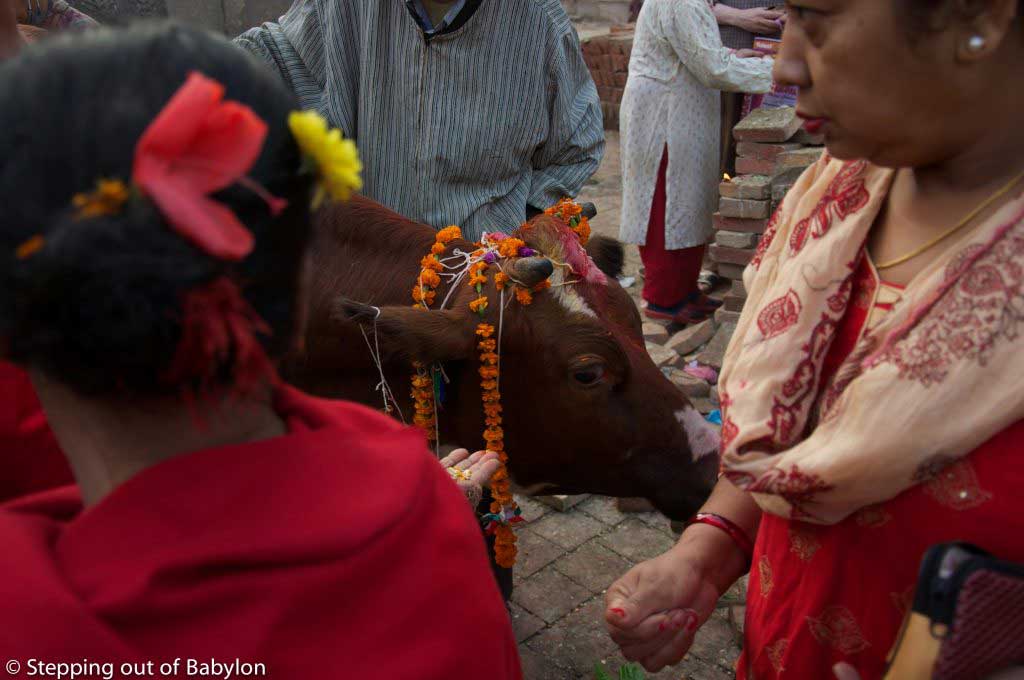
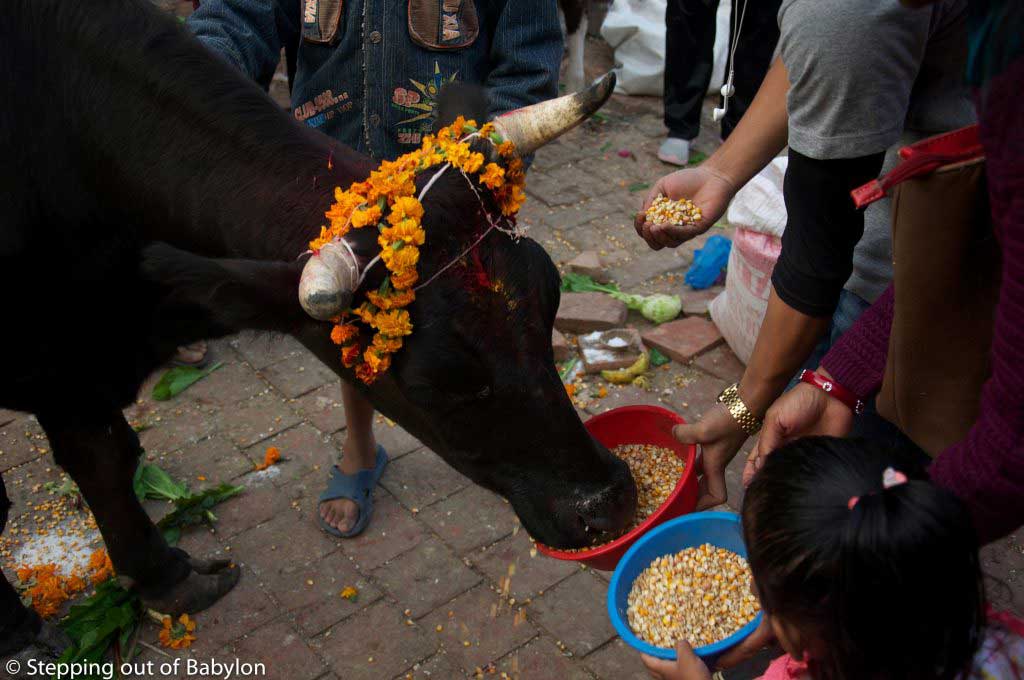
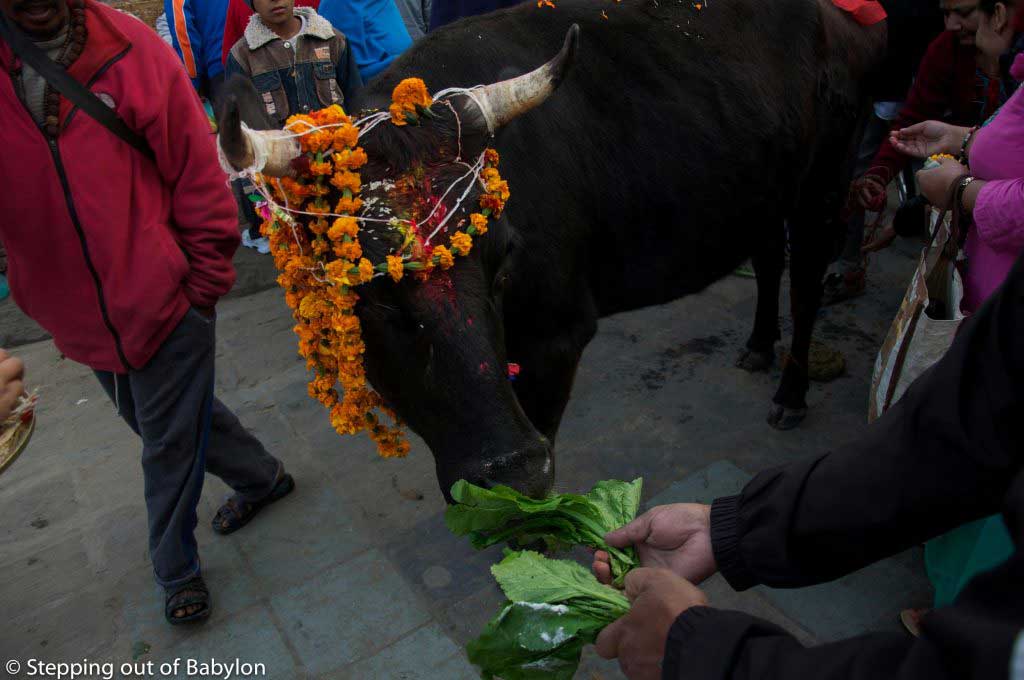
On the third day of Tihar Festival is the turn of the cows to be worship, with offerings of rice, corn, fruits, salt, wheat flour, cookies, chapattis and green veggies! At the same time that they receive food treats, people light candles and incense, drop flower petals on their head and their back, and wrap the tail’s cow with a colourful string. Sesame oil id drop in the forehead of the cow and a “tikka” is made with red pigment.

Contrary to the dogs, that in the morning are more in the mood to sleep that to have food, the cows get enthusiastic with the offerings being totally indifferent to the marigolds garland and all the “puja” rituals. Small money bills are put on the head of the cows that quickly disappears on the pocket of someone, but that doesn’t seam to disturb the ritual of Gai Tihar.

gai puja during Tihar Festival. Kathmandu
offerings for gai puja during Tihar Festival. Kathmandu
gai puja during Tihar Festival. Kathmandu

Lakshmi Puja

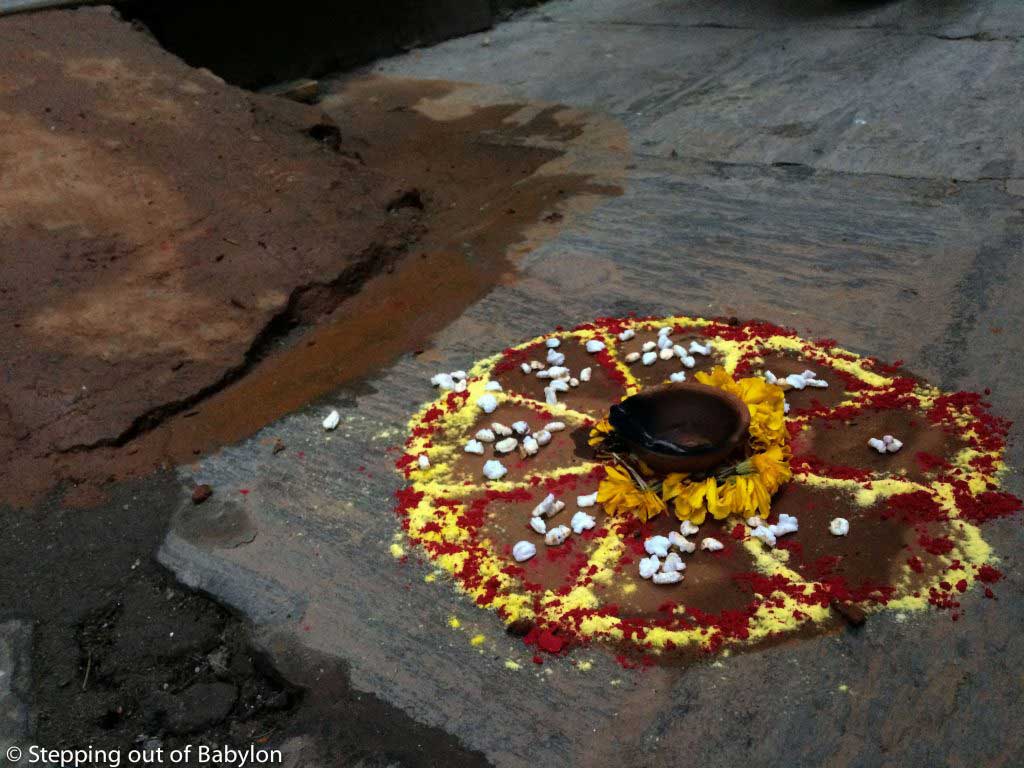
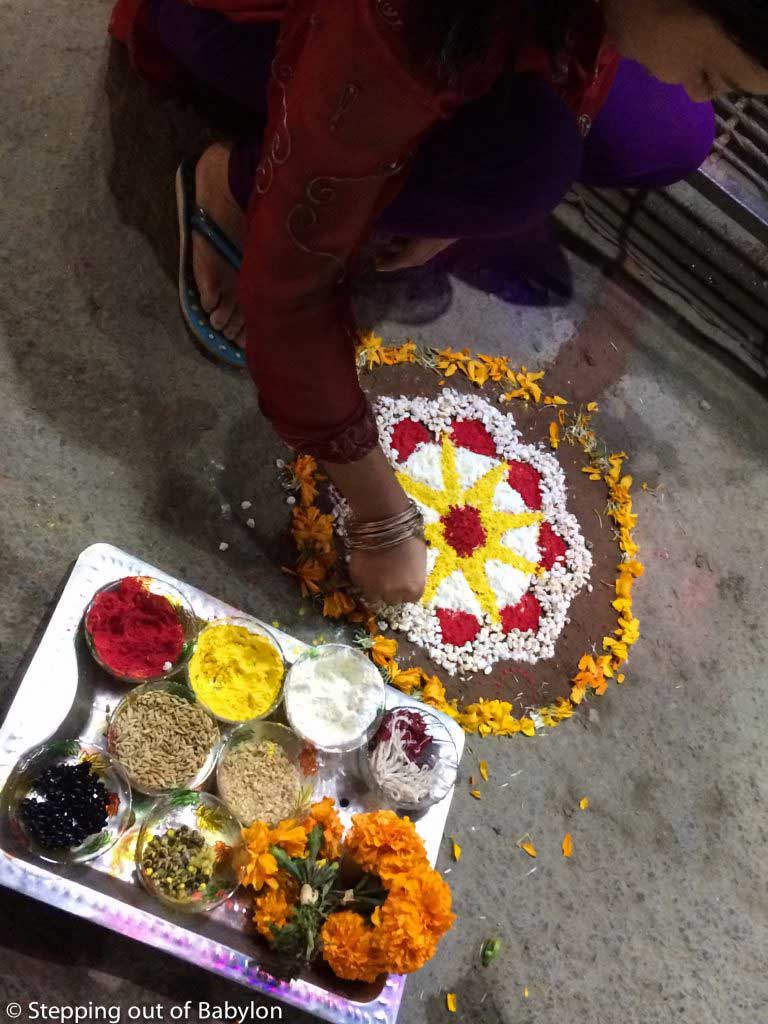
Tihar is celebrated mostly during the day, usually with early morning pujas, but on the evening of the third day of the festival the dark streets of Kathmandu lights up for welcoming the Goddess Lakshmi.

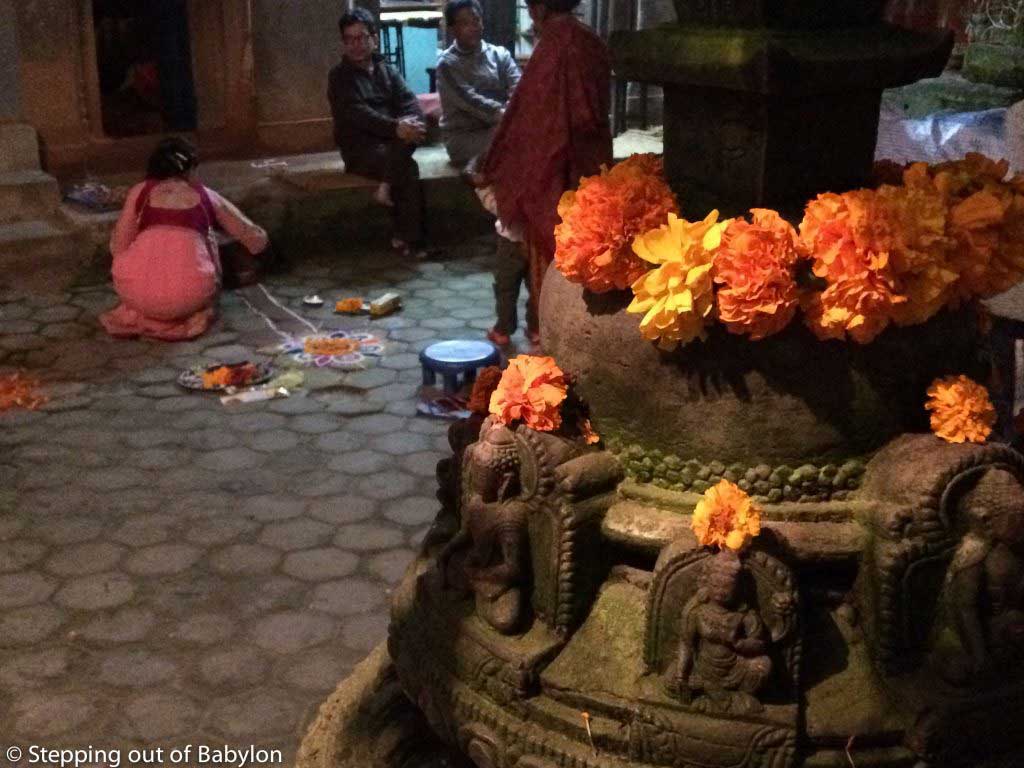
At the entrance of the houses and shops the floor is decorated with colourful designs, mostly mandalas, adorned with flowers, candles and food offerings, while garlands of marigolds are hung above the doors.

The entrance of the houses and shops are painted with a red-brown mud, creating a path that is light up with candles to invite the goddess Lakshmi to come inside.

Along the night people gathering at the streets decorated with lights, chattering, playing music and cards, while groups of children go from door to door, singing songs ask for money and sweets, firecrackers blow every now and then, the creating one of the most animated nights of Nepal.

Lakshimi Puja during Tihar Festival. Kathmandu

Note: the best time to see caw puja and dog puja is early morning… so be prepared to jump out of the bed just after the sun rise. Walking along Kathmandu streets you can see a bit everywhere the Kukur Puja, but is better to look for a area with several butchers as there’s a favorite dogs place. For Gai Puja you can see some cows at Basantapur, near Durbar Square, the ground at the entrance of Pashupatinath Temple complex (near the ticket counter, but you don’t need to get the ticket). Lakshimi Puja happens in the evening of the third day of the Tihar festival and is allover the city streets.

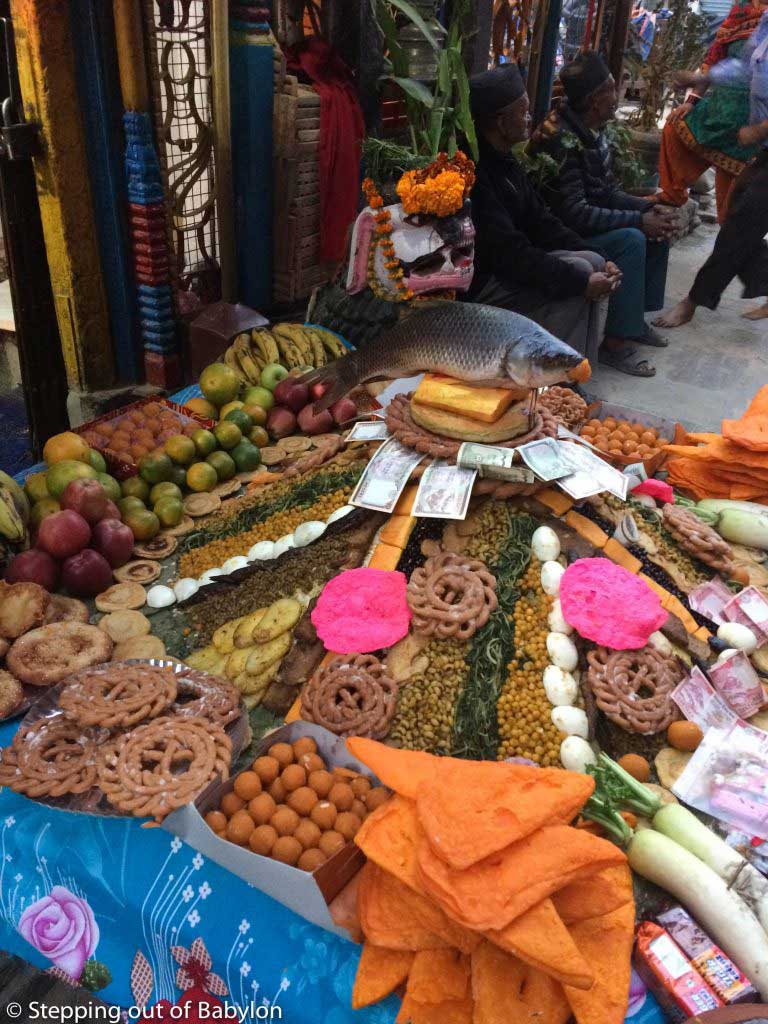
oferings of food piles in from of a small temple during Tihar Festival. Kathmandu
offerings of food piles in from of a small temple during Tihar Festival. Kathmandu


https://steppingoutofbabylon.com/wp/en/2016/11/in-search-of-the-best-dal-bhat-in-kathmandu/

https://steppingoutofbabylon.com/wp/en/2016/09/a-guide-for-snacks-and-street-food-in-kathmandu/


  • « Go to Previous Page
  • Page 1
  • Interim pages omitted …
  • Page 15
  • Page 16
  • Page 17
  • Page 18
  • Page 19
  • Interim pages omitted …
  • Page 31
  • Go to Next Page »

Footer

search

Tags

Amed Assam Bagan Bali Border Crossing Borneo Colombo Esfahan Fes Food Gilis Hiking hokkaido Istanbul Itinerary Jakarta Java Kashan Kuala Lumpur Kumano Kodo Litang Lombok Majuli Meghalaya Meknes Mekong Mulay Idriss Nagaland Natural Park Northeast States Ouarzazate Sarawak Shangri-lá (Zhongdian) Shiraz Sichuan Province Sishuan Sumatra Tabriz Tehran transportation Visa Yangon Yazd Yogyakarta Yunnan Province

I’m Catarina, a wanderer from Lisbon, Portugal… or a backpack traveller with a camera!

Every word and photo here comes from my own journey — the places I’ve stayed, the meals I’ve enjoyed, and the routes I’ve taken. I travel independently and share it all without sponsors or ads, so what you read is real and unfiltered.

If you’ve found my blog helpful or inspiring, consider supporting it with a small contribution. Every donation helps me keep this project alive and free for everyone who loves exploring the world.

Thank you for helping me keep the journey going!

BUY ME A COFFEE

Categories

Recent Posts:

  • How to go from Hualien to Dulan Beach
  • Taroko Gorge: between marble cliffs and emerald rivers
  • Hualien: a dull gateway to Taroko Gorge
  • Taiwan: Itinerary for an 16 day trip
  • Vietnam: Itinerary
  • 3 months in India: Kolkata, Tamil Nadu, Karnataka, Goa and Kerala
  • Backpacking Turkey in 24 Days: itinerary & costs
  • English
  • Português

© Copyright 2026 Stepping out of Babylon · All Rights Reserved · Designed by OnVa Online · Login