• Skip to main content
  • Skip to footer

Stepping Out Of Babylon

Travel & Photography

  • About me
    • Contact
  • Destinations
    • Africa and Middle East
      • Iran
      • Lebanon
      • Morocco
      • Turkey
    • East Asia
      • China
      • Japan
      • Taiwan (Formosa)
    • South Asia
      • Bangladesh
      • India
      • Nepal
      • Sri Lanka
    • Southeast Asia
      • Cambodia
      • Indonesia
      • Lao
      • Malaysia
      • Myanmar
      • Singapore
      • Thailand
      • Vietnam
  • Itineraries
  • Travel tips
    • Border crossing
    • Hiking and Natural parks
    • Food Journey
    • Visa
  • Photography

Stepping out of Babylon

Namo Buddha… in search of tranquility

Sometimes the intense pace of Kathmandu city, with its constant traffic, horns, polluted and dusty air, make for a getaway in search of a healthy atmosphere and a quieter environment.

Namo Buddha Stupa
Namo Buddha Stupa

The location of Kathmandu, surrounded by mountains, offers several options for a day trip in search of nature, green landscapes, mountains, and clean air… a place where the birds chirping and singing overlap the noise caused by human beings, such as happens in the overpopulated Kathmandu. Namo Buddha is one of these discrete paradises situated a few kilometers from the capital where it dominates the Tibetan culture and religion, being one of the main places of Buddhist pilgrimage in Nepal, together with the stupas of Boudha and Swayambhunath.
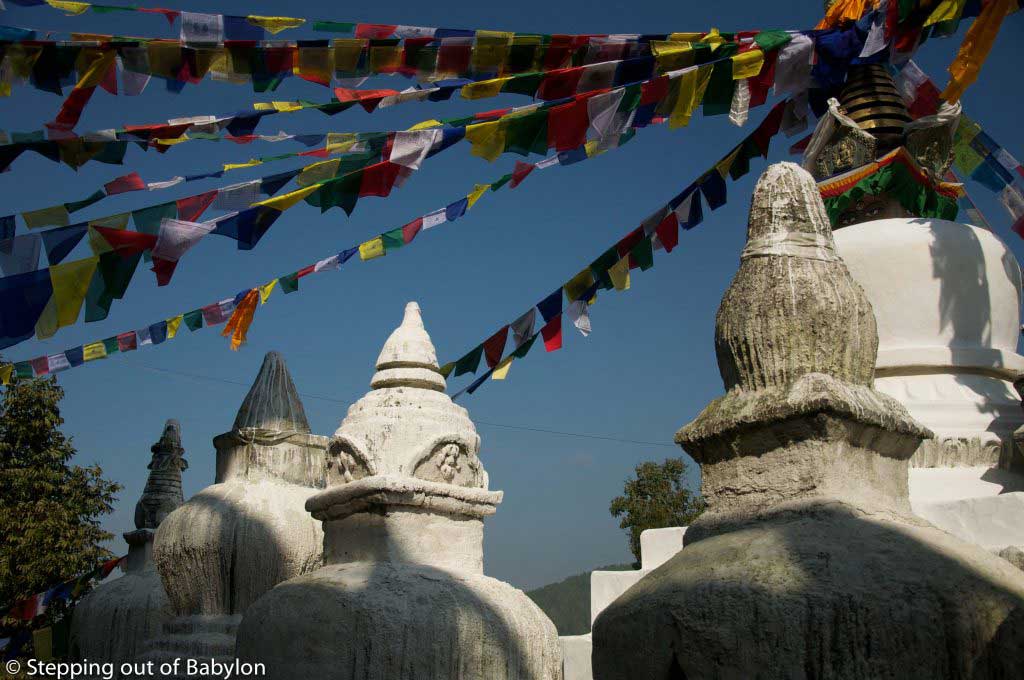
Namo Buddha Stupa
Namo Buddha Stupa

Away from Namo Buddha Stupa to Thrangu Tashi Yangtse Monastery

The stupa houses the relics of a prince who, according to tradition, offered his blood and body as food to a starving tiger as an act of compassion. Apart from the religious significance, the modest stupa does not make a big impression, with the place being surrounded by small restaurants and souvenir shops.

But up the hill, through a dense grove of trees along a path decorated with prayer flags, you reach the top of the hill, from where you can see the Thrangu Tashi Yangtse Monastery.The monastery is of recent construction, and its architecture does not impress, but the interior of the vast temple, with ceiling and walls decorated with delicate Buddhist paintings create a sacred ambiance.

In the various buildings that are part of the monastery are other smaller temples, with elaborate statues of Buddha and the goddess Tara.
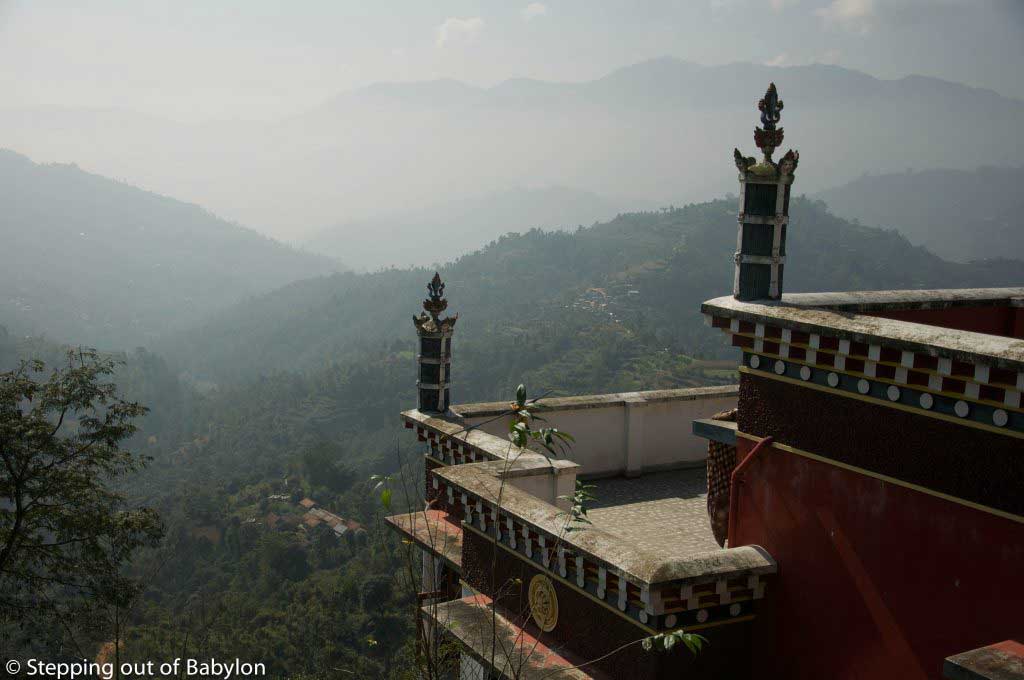
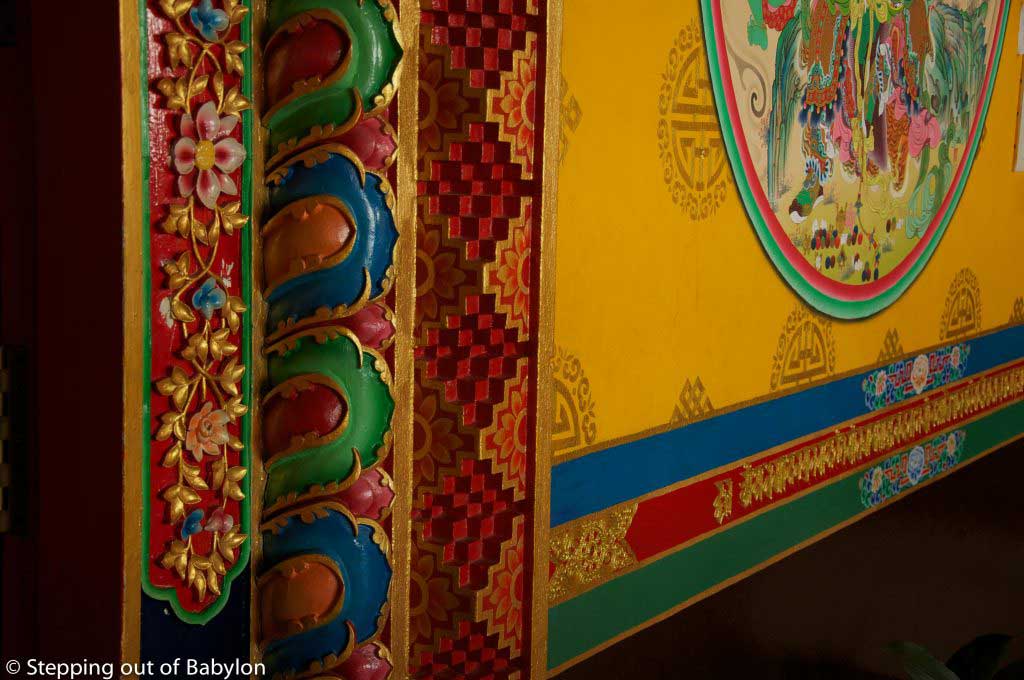
Thrangu Tashi Yangtse Monastery

Thrangu Tashi Yangtse Monastery

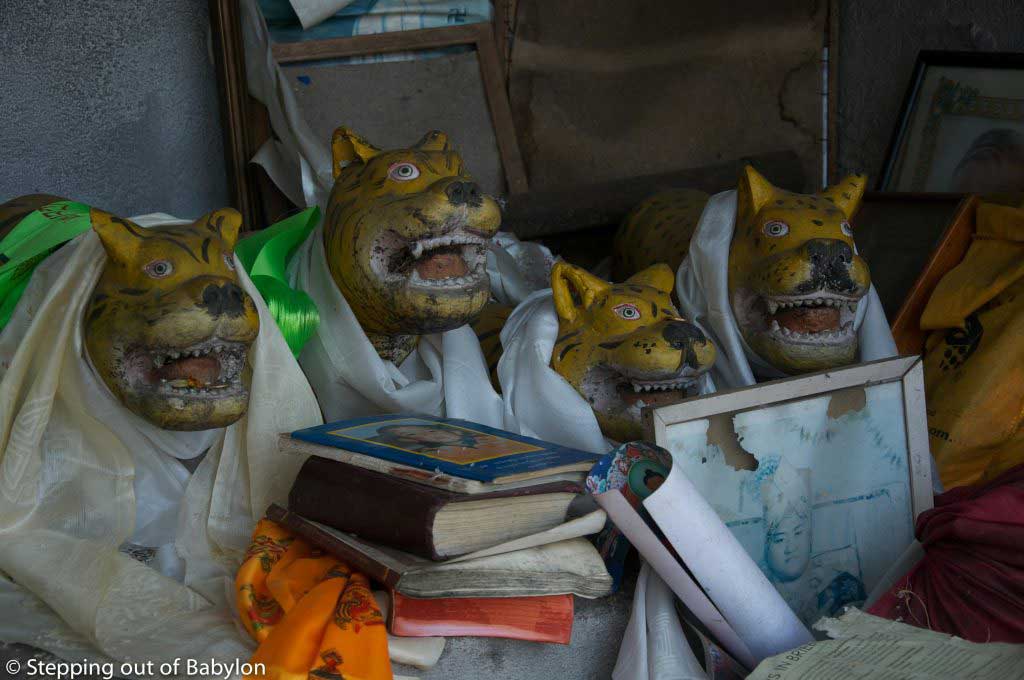
Nearby Thrangu Tashi Yangtse Monastery some temples evoking the tradition of the prince that gave is blood and is live to save a tiger

Around Thrangu Tashi Yangtse Monastery

There is an atmosphere of calm and tranquility, promoted by the sacred environment of the monastery and the intense green forest that frames the place, crowned by the snow white that covers the mountains of the Annapurna range.

Note: photos inside the temple arte not allowed

Where to sleep in Namo Buddha:

Namo Buddha is located 40 kilometers from the center of Kathmandu, about two hours away, so it can be visited in one morning. It is advisable to get out of Kathmandu early, around 7 a.m., to avoid the traffic jam.

But in the area, within walking distance, there are a few resorts.

Where to eat in Namo Buddha:

Around the stupa of Namo Buddha, there are several restaurants aimed to pilgrims, who also sell religious articles and incense but that are not inviting for more than a chai.

Along the road where the bus stops, there are three eateries that serve tea and meals, but definitively Banepa offers better options in terms of food.

Transportation to Namo Buddha:

There are no direct buses from Kathmandu to Namo Buddha.

You need to catch a bus at Ratna Park to Banepa first (depart with high frequency).

At the bus terminal of Banepa (bus park), there are buses that pass through Namo Buddha; just ask for Namo Buddha from the various buses that are parked in the bus park.

The bus stops very close to the stupa. After the stupa is about 10 to 15 minutes walk to the monastery.

  • bus Kathmandu to Banepa: 1 hour, 45 rupees
  • Benepa to Namo Buddha bus: 1 hour, 60 rupees

The bus frequency from Namo Buddha to Banepa is not high, so you may have to wait an hour for the next bus… or get a ride from a truck, but pay attention: being faster is more expensive than the bus.

The road between Kathmandu and Banepa is in good condition and the trip is reasonably comfortable, on a flat route. But from Banepa to Namo Buddha the road is steep and winding, unpaved and very deteriorated, making this last stage uncomfortable and tiring.
Pushkar: a guide to snacks and street food

A guide to snacks and street food in Pushkar for vegetarians!

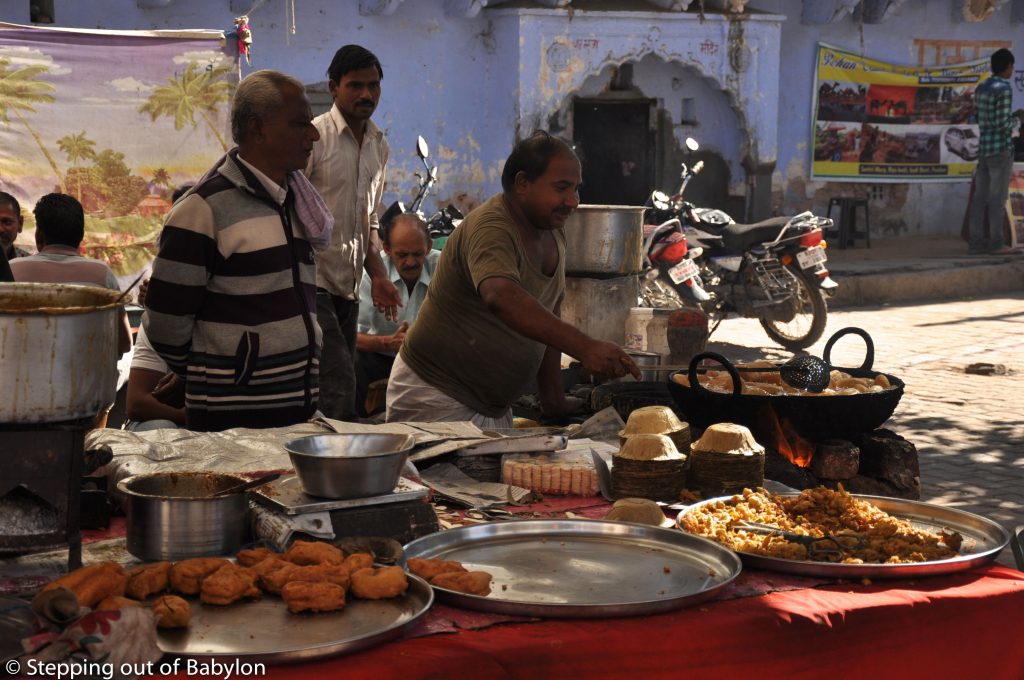
As a holy place for Hindu religion, in Pushkar the meat is banned as also eggs, so is easy to find delicious vegetarian snacks in the small local eateries as also in the many street food stalls, that at different hours of the day pop up along the Pushkar streets!

street-fooddsc_8737-copy
Street food at the Main Bazar Road, Pushkar

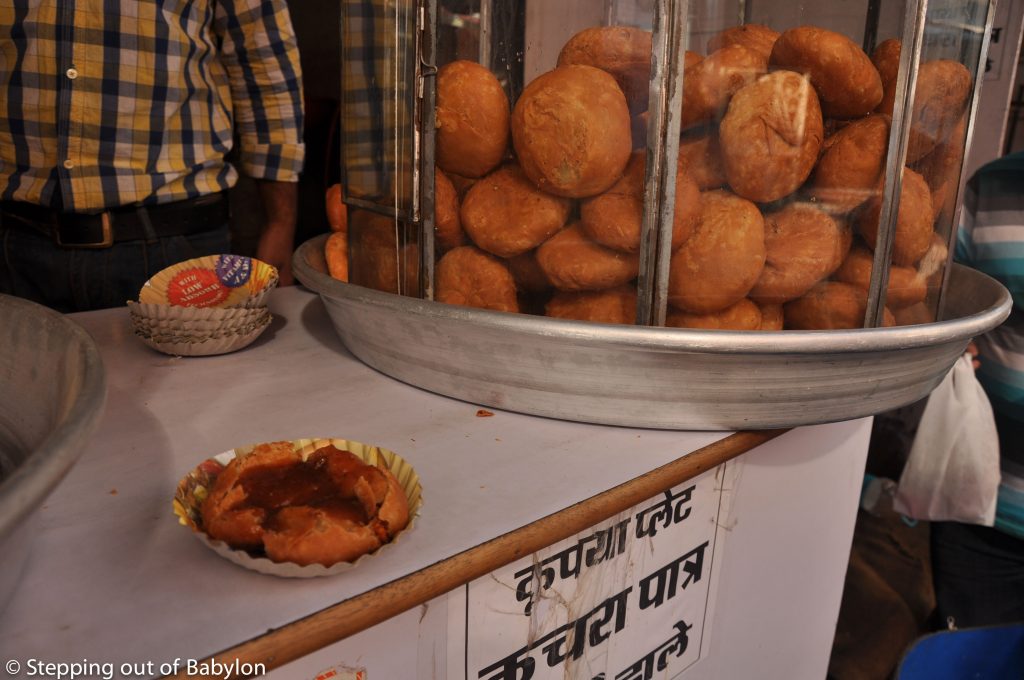
Kachori… crunchy and spicy

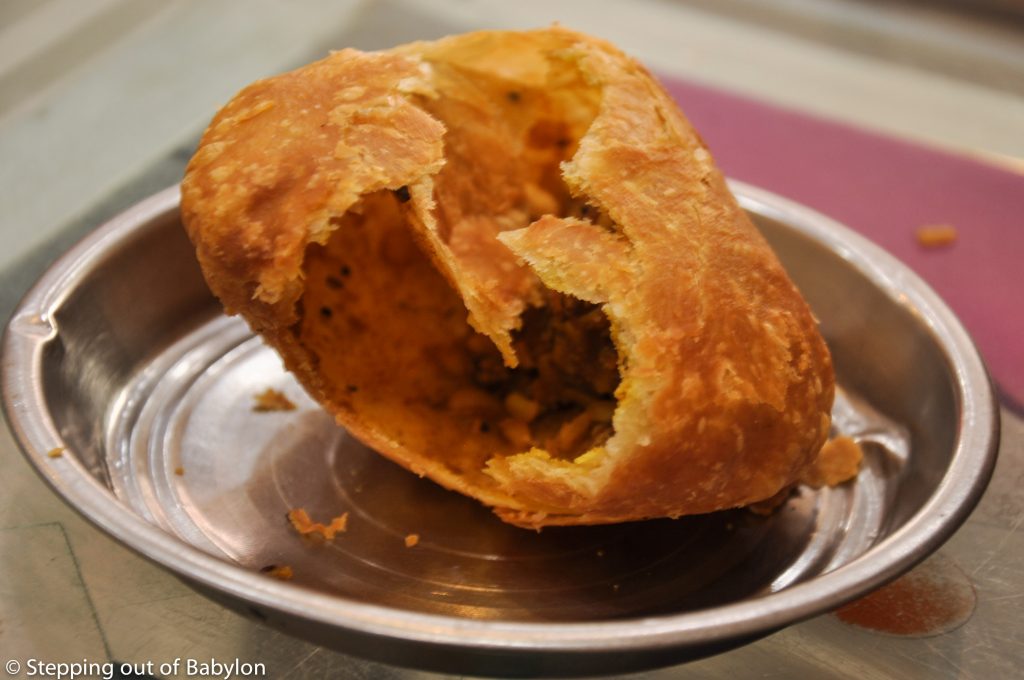
Kachori can be pointed as a gastronomic icon of Rajasthan snacks. This deep-fry dough fills with a mix of lentil (dal) and species can be found in many places in India. The filling can change a bit from place to place, but the hollow crispy dough is a must from any kachori…. yes!

These patties have a small quantity of dal inside and get hollow when are dipped in hot oil. When served, the kachori is slightly smash and topped with a big spoon of a sweet and spicy sauce with a reddish colour.

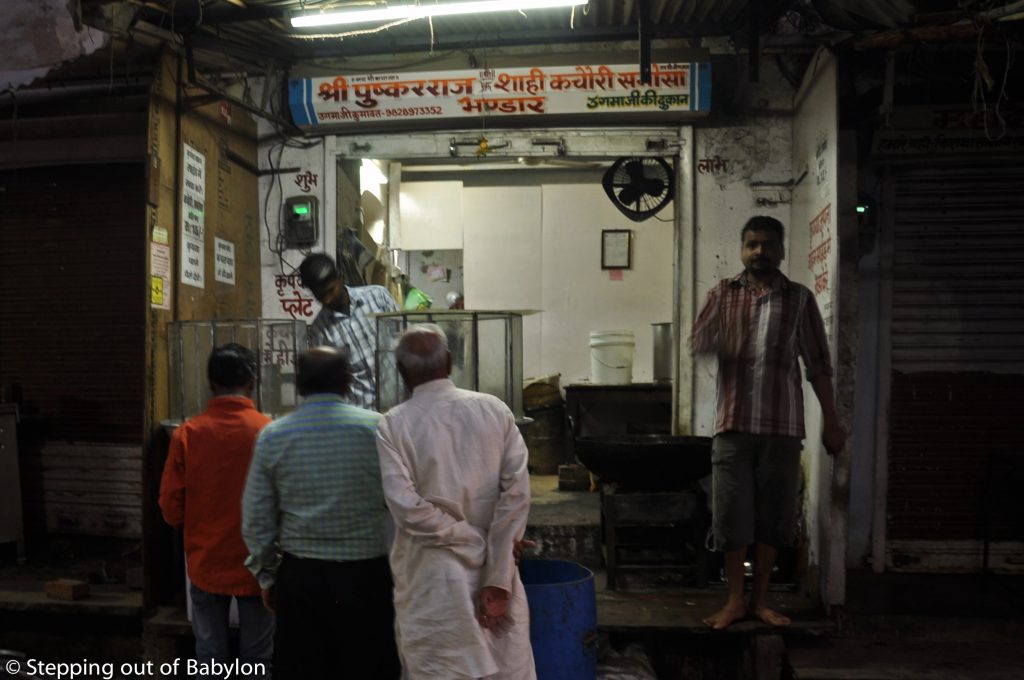
In Pushkar, the kachori can be found in many places, but my favourite one is a small eatery that only has this snacks and samosas (not so special) a couple of minutes from the square where every morning fruits and vegetables hawker gather.

Address: behind Sri Raghunatha Swamy Temple, in a corner about 2 minutes walk from the Market Square, walking in the opposite direction of the lake. Close around 5 p.m.

kachori in a plain version, without the sauce. Pushkar
kachori_dsc_8479-copy
Kachuri
kachori-stall_dsc_8960-copy
kachuri eatery the best place to try a kachuri at Pushkar

Poha… my favourite breakfast

My favorite street-food in Pushkar and also my favorite breakfast: light, spicy a delicious… without oil or much deep-fry stuff!

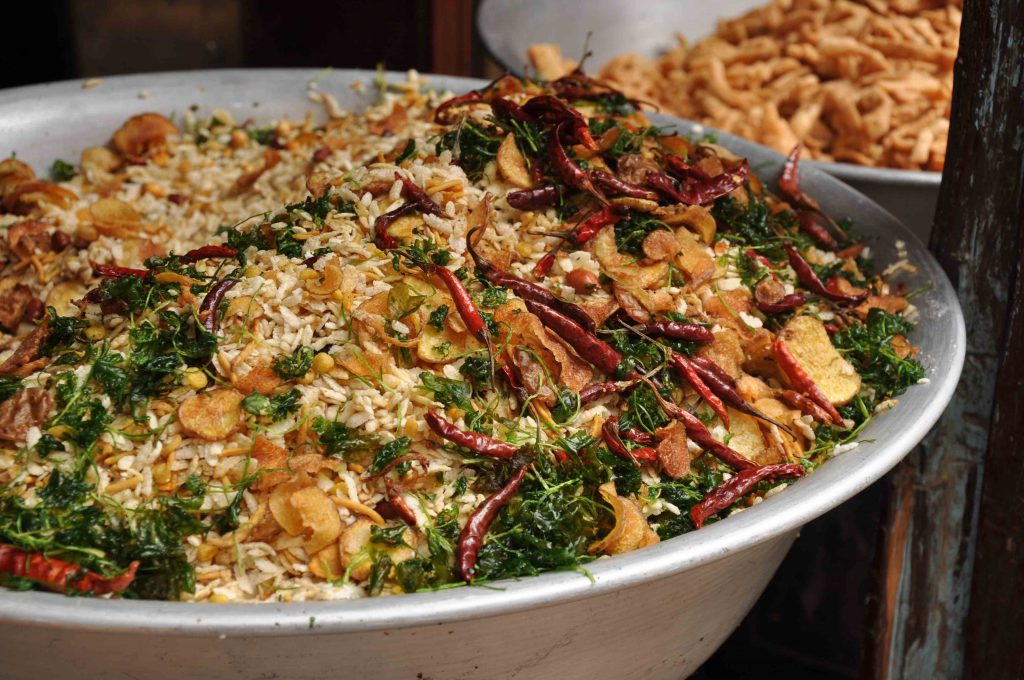
Poha is basically flattened rice that after gets dry looks like flakes. The poha can be cooked is different ways, as eaten in the morning as breakfast or during the day as a snack, and can be found a bit everywhere in India.

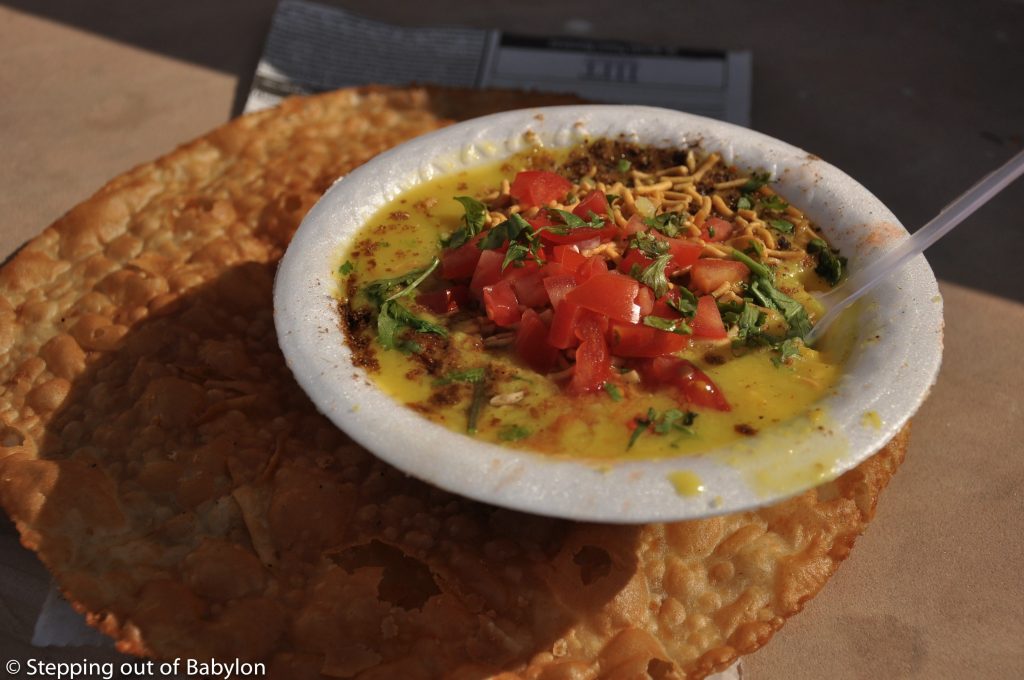
In Pushkar, a popular street stall serves poha cooked with an aromatic mix of cumin, chili, coriander seed, mustard seeds and curcuma that give the yellow color! Then, over this rice mix, is added fresh tomato, onion, cilantro and a big spoon of a creamy and delicious dal (lentil soup). The aloo bhujiya on top gives a crunchy texture to this tasty and healthy meal.

The phoa with dal is be served in a bowl, but if not the phoa can just be served over a newspaper or over a deep-fry cracker, crispy but oily. This wafer can also be cracked and used to top the poha and dal mix.

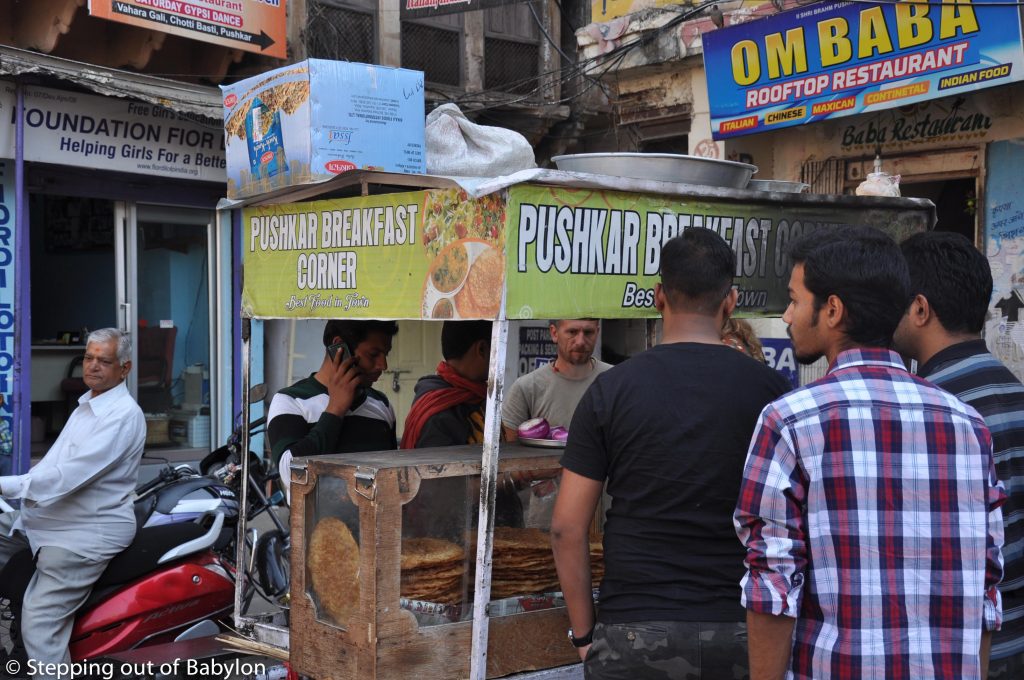
Address: “Pushkar Breakfast Corner” at main market square (a small where every morning fruit and vegetables hawker gather). Every morning until the food finish usually before 10 a.m.

poha-breakfast_dsc_9006-copy
poha… my favourit breakfast. Every morning at Market Square. Pushkar

poha-breakfast-stall_dsc_9045-copy

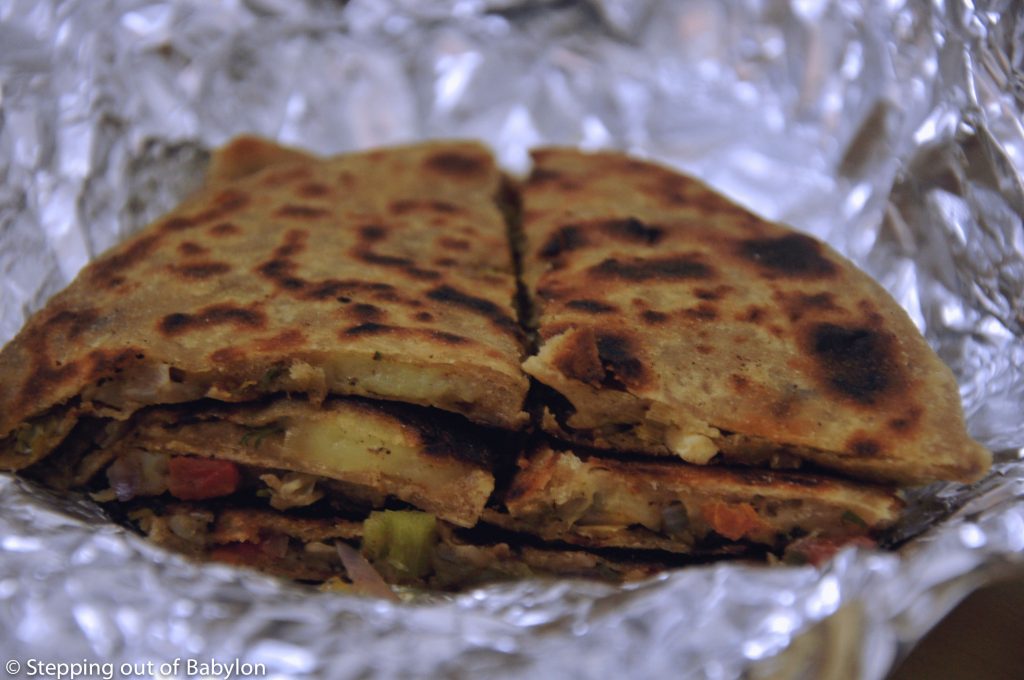
Paratha… best paratha ever!

… thick, rich in vegetables, spicy and not too oily… yes, the best paratha that I ever try in India!

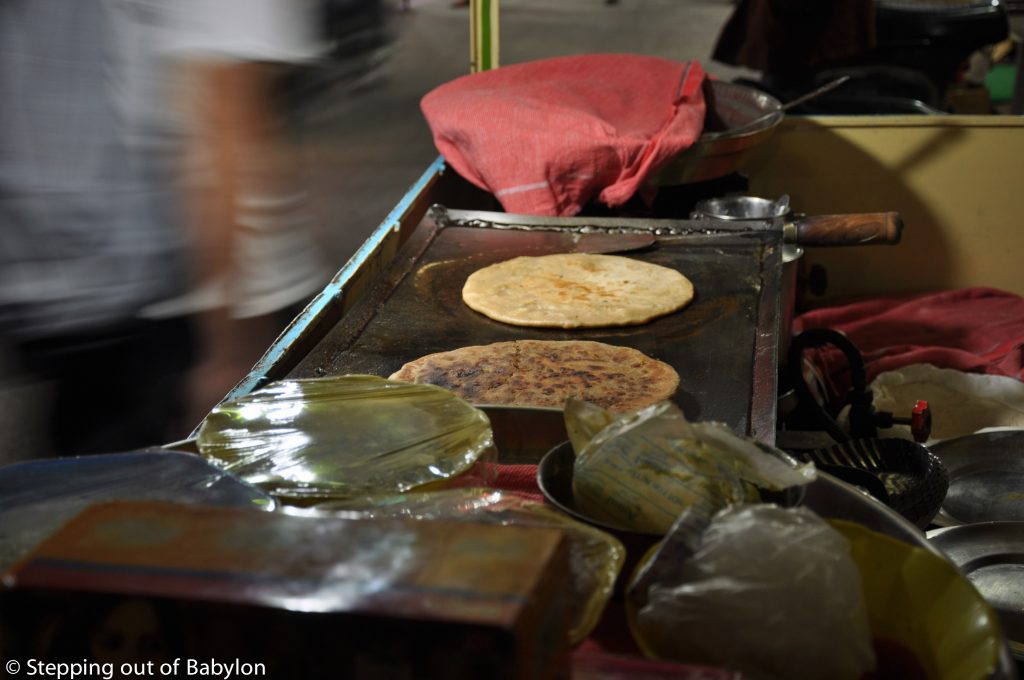
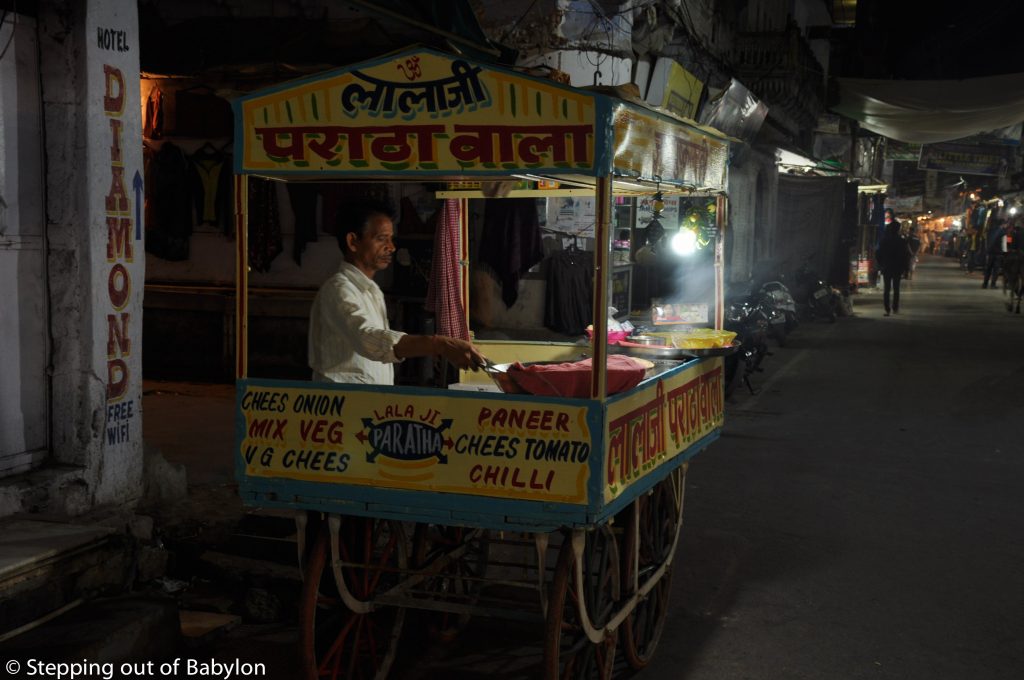
This treat can be found after 5 p.m. in the Lala Ji stall that only make parathas: from the classic aloo (potato) to cheese, onion, vegetable and paneer… but the one that wins is the cheese-vegetables! All are served with a green mint sauce and raita (a yogurt made sauce)

Everything is made at the moment so you may need to wait a bit, and you can eat just there on the street or ask for parcel.

Address: Lala Ji stays along Main Street of Pokhara (Main Market Road) not far from Nagar Palika Ghat.

paratha_street-stall_dsc_8908-copy
hfhkjklçl
paratha_street-stall_dsc_9024-copy
“Lala Ji” the best paratha in Pushkar… everyday from 5 p.m.
paratha_dsc_9044-2-copy
paratha from Lala Ji. Pushkar

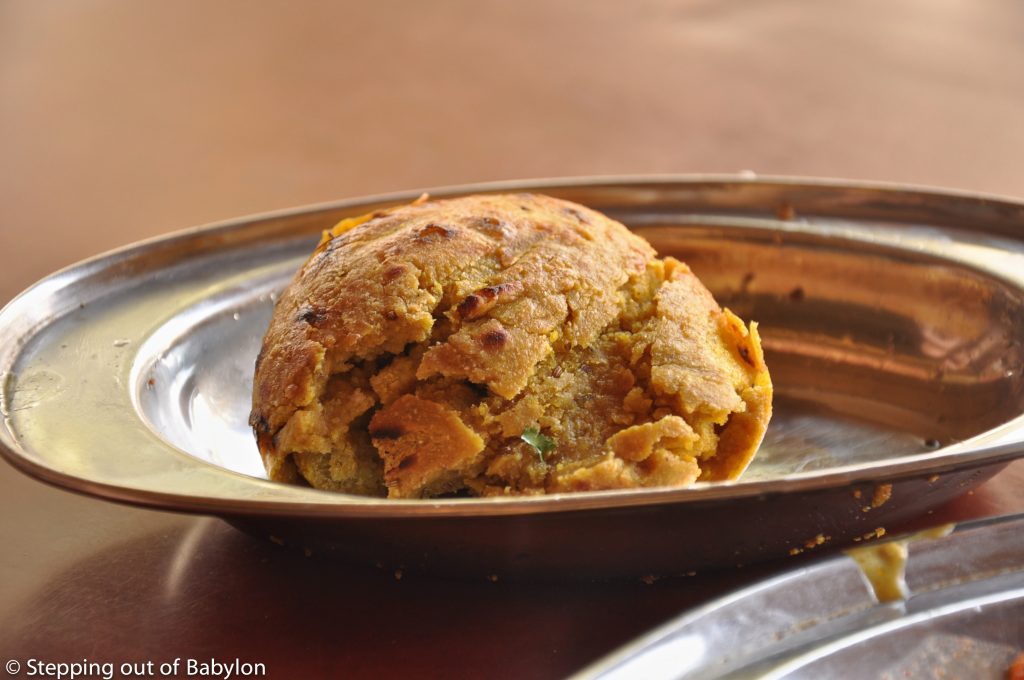
Baati

This a typical Rajasthan bread, made from whole wheat flour, semolina, chickpea flour, seasoned with cumin, turmeric, coriander seeds and cooked in wood oven. Just before being served the bread balls are put over the burning coal to get a roast look and the grill taste, and generously soaked in ghee (clarified butter).

From this mix of flour results a rustic bread, dense and with a dry texture, so the ghee put over the warm baati give a more moist and soft texture. In Rajasthan, the baati is eaten soaked in dal, the so-called dal baati, but can also be a filling snack.

"baati" at Shree Karni Maa Restaurant. Puskkar
“baati” at Shree Karni Maa Restaurant. Pushkar

Dal Baati

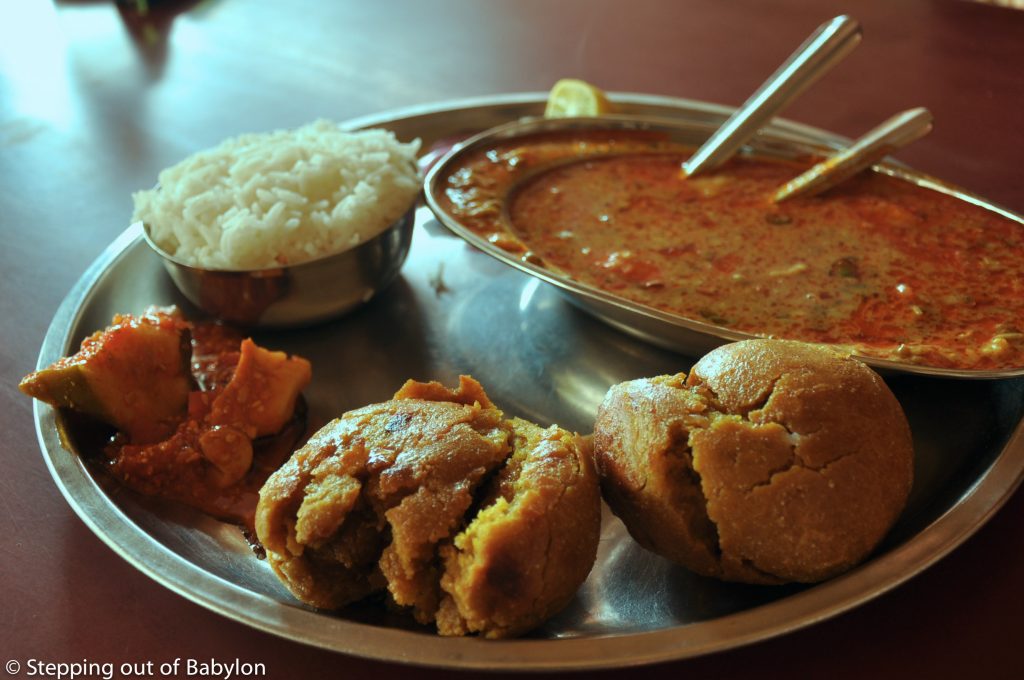
Dal Baati (or dal baati churma) is a typical Rajasthan meal: basically, a dal served with the baati, Rajasthan style bread. The dal is made with a mix of different kinds of lentil, resulting in thick gravy, where are visible tomato and onion finely chopped, aromatized by cumin, coriander, turmeric, cloves, bay leaves and ginger.

In Pushkar, at the Shree Karni Maa Restaurant, the dal baati is served with rice and some achaar (a salty and spicy pickle)… a very filling meal. The rice here is not the traditional way to serve dal baati, because in more dry areas, like in Rajasthan the rice is a rare cereal.

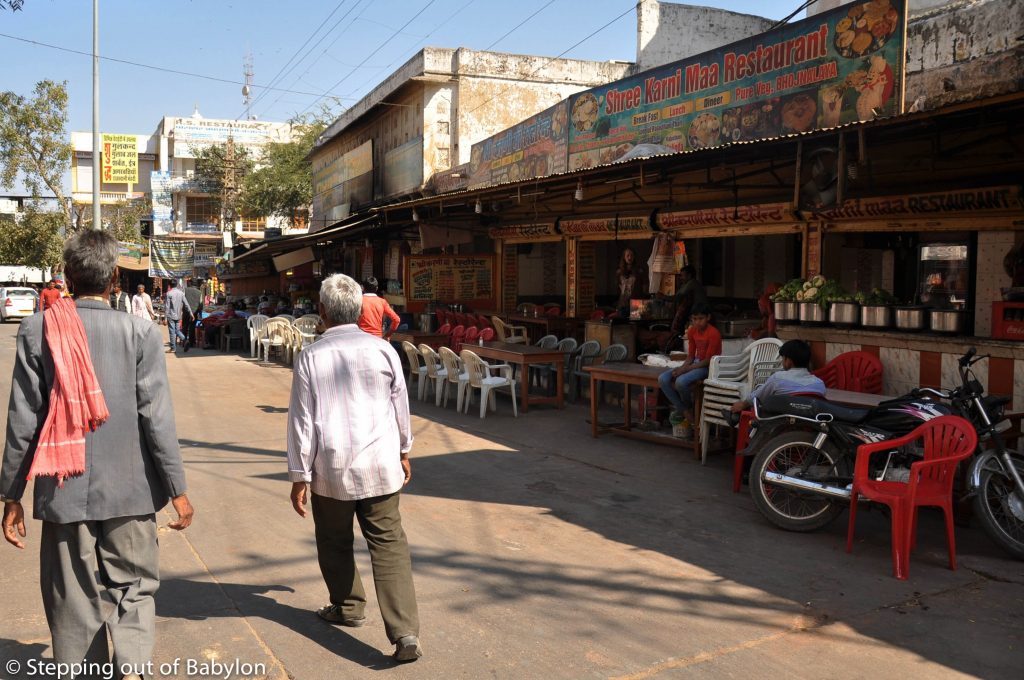
Address: Shree Karni Maa Restaurant, you need to walk a bit further from Brahma Temple, and turn left.

"dal Baati" at Shree Karni Maa Restaurant. Puskkar
“dal Baati” at Shree Karni Maa Restaurant. Pushkar

Thali… in Rajasthan style!

Thali means plate and is referred to a complete meal, that include, rice, vegetables, curries, dal, bread, changing from one region to the others, that is served in a metal plate.

To find a typical Indian food in Pushkar you need to find the local restaurants more focused on pilgrims and Indian tourists! The Shree Karni Maa Restaurant is one of my favourites that despite a big choice of food with some Rajasthan dishes have a very tasty and rich thali.

The thali comes with a tasty light curry, a thik and rich dal, sabji (mix of vegetables), curd (yogurt), achhar (a salty and super spicy pickle), papadum (crispy thin cracker) and a small bowl of rice… all the time are coming freshly cooked roti, roasted over the fire. Delicious!

Address: Shree Karni Maa Restaurant, you need to walk a bit further from Brahma Temple, and turn left. There you’ll see on both sides of the streets lots of restaurants side-by-side… the Shree Karni Maa Restaurant is on your left, and his for me one of the best thali in Pushkar… but not the cheapest! The thali costs 200 rupees, and have an unlimited refill, except the curd (yogurt).

yummy thali at Shree Karni Maa Restaurant. Puskkar
Shree Karni Maa Restaurant. Puskkar
Shree Karni Maa Restaurant. Pushkar

Lassi, sweet lassi

If you going to visit India, you must try the lassi!!! Is a drink made from yogurt, thick, fresh and nutritious… unfortunately with quite some sugar! The lassi has the origin in Punjab state, but is spread all over the north of India as also in Nepal and can also be salted and seasoned with cumin.

There as many lassi places in Pushkar… on of my favorites is at L.M.B…. is creamy, topped with pistachio and served in clay pots!

Address: Hotel L.M.B. is not a hotel in the way that id doesn’t have a place to sleep, but in same parts of India, “hotel” means a restaurant. This place has the same name as a famous one in Jaipur but I think that has nothing to do with each other, as this one in Pushkar is a bit dodgy. Near Main Gau Ghat.

lassi_dsc_8518-copy
lassi served in clay pots at L.M.B. Hotel. Pushkar

Chai

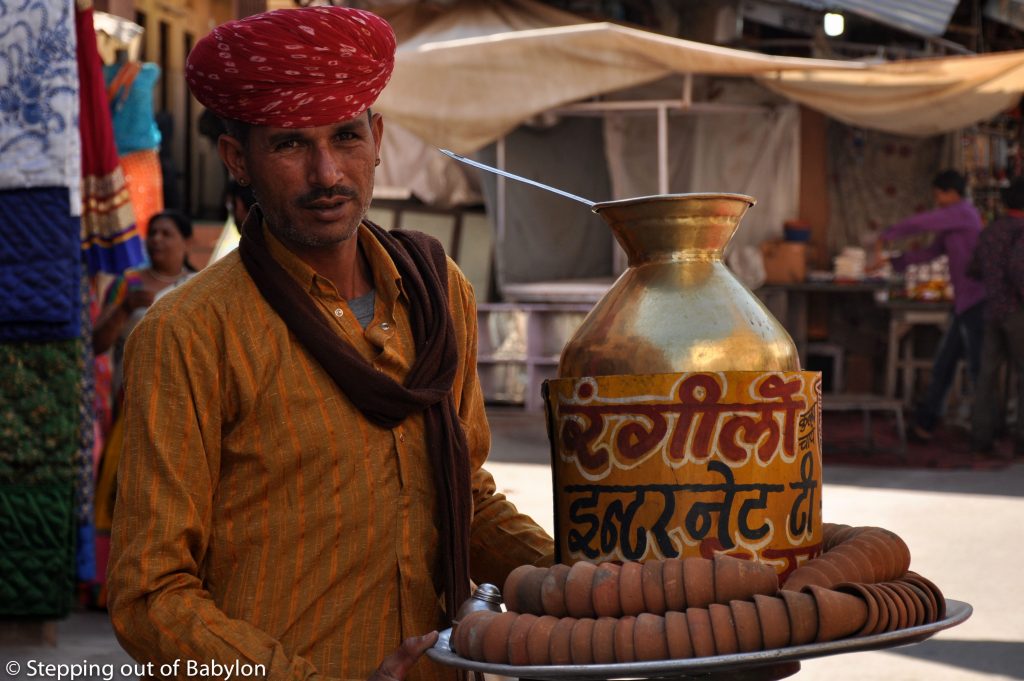
Chai, a tea mix with milk… and sugar, is everywhere in India, but in Pushkar you can find hawkers that walk along the street with their movable stalls. These stalls are something!!! In a fragile metal structure, a kind of tripod, there’s a shinny metal pan that is kept warm with burning coal, and around lays the clay pots. The chai is served in the traditional clay pots, disposed after used.

"chai" at the street of Pushkar
“chai” seller at Pushkar streets

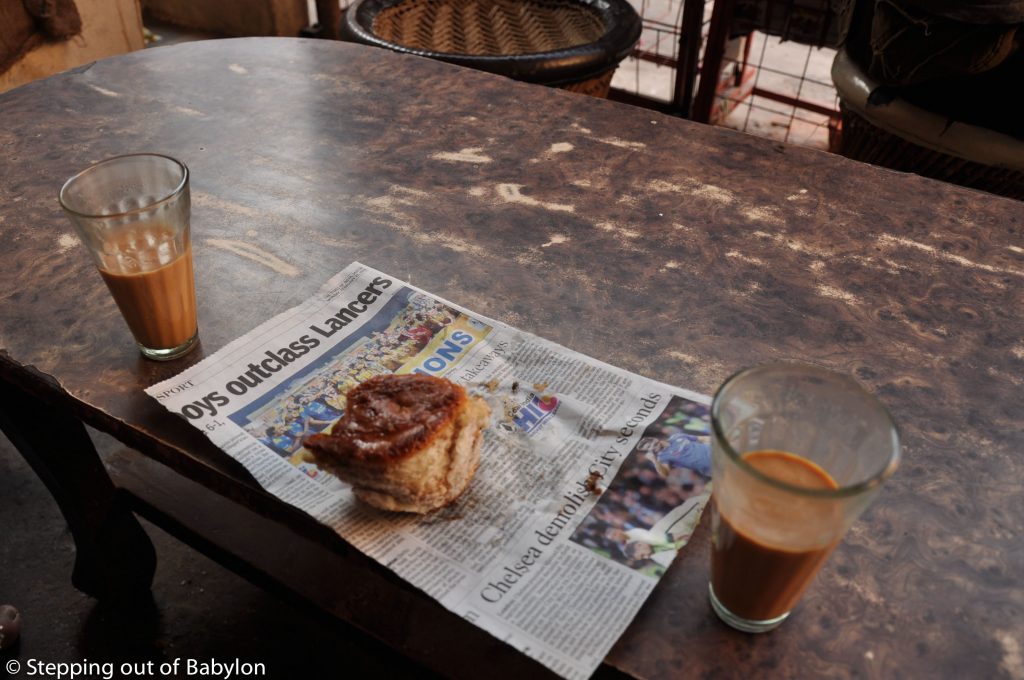
But for me, the best ones can be found just at the main square of Pushkar, in a small stall easily identify by some bamboo stools near the road where many travellers gather. The chai here is amazing! Dark, rich in spicy flavours and with a touch of ginger, this is more a masala tea than a chai, and is difficult to drink just one… just the location of the stall, near the road, is annoying due to the noise and pollution.

Address: Main Market Square, in a small stall, mix between grocery and chai shop, with some stool outside… when you pass by the owner will tell you to try the “best chai in Pushkar!”.

"chai" from the famous chai shop near Market Square.
“chai” at the famous chai shop near Market Square… according to the owner “the best chai in Psuhkar!”

Kathmandu: a guide to snacks and street-food

Snacks and street food in Kathmandu for vegetarians… a quick guide about what to eat and where to eat!

Momos

The momos (also written as mo:mo) are the most popular snack in Nepal, and can be found in small eateries or street stalls a bit everywhere along Kathmandu streets. This small dumpling is made from wheat flour, filled with meat or vegetables, is one of the most popular snacks but is also common as a meal.

In Basantapur, there are a few places selling momos, easily identify by the big aluminium pan, with several trays, that usually stay outside the place. Most of these places just serve buff momos, but there are two places that serve vegetarian ones. One is more or less in front of the palace (Durbar Square), on the same street of Kumari House, a very small restaurant with seats just on the first floor, that offer an interesting view to the square. The name is just in Nepali.

Address: Durbar Square, few buildings further from Kumari House.

momos. Kathmandu
momos. Kathmandu

An other momo eatery, in fact, my favourite momos, is a street stall just in front of Teleju Temple, that serves buff, chicken and veg momos. The Makhan Top Mo:Mo is a very popular and the single bench available will probably be full, force you to eat standing. But still is a good opportunity to appreciate the vibe of the square especially around 5 o’clock, time that looks like all Kathmandu population is on the streets!

A bowl of 10 veg momo cost 60 rupees and is also possible to ask for takeaway.

Address: street stall in front of Teleju Temple.

momos from Makhan Top Mo:Mo. Kathmandu
momos from Makhan Top Mo:Mo, near Teleju Temple. Kathmandu
momos. Kathmandu
meat momos… the half-moon shape indicates that are filled with vegetables, the ball shape ones are buff momos. Kathmandu
kathmandu_street-food_momos-stall_dsc_9360-copy
momos from Makhan Top Mo:Mo, near Teleju Temple. Kathmandu

The fry-momos, are a kind of Indian twist to the original recipe, and after steamed are deep-fry in oil, that give a crunchy feeling to the dough. They are not so popular as the steamed ones, but can be found on a back street of Basantapur (Kampukot Marg) that link to Yatkha.

fry momos. Basantapur. Kathmandu
fry momos… with the half-moon shape that means that are filled with vegetables. Basantapur. Kathmandu

Samosa

Apparently originated from Middle East, the samosa is, without a doubt, a symbol of India gastronomy, especially in term of snacks, and is spread all over the country, as also in neighbouring countries. Nepal didn’t escape to the samosa invasion and this snack is easy to find in the small restaurants along Basantapur and Durbar Square.

My favourite samosa, without a name in western characters is located a few doors further from the Kumari House, just next to the momo place mentioned before. The place is far from being charming, and “clean” is a word that you can’t apply there, but the samosas are delicious, and can be served plain or a yellow dal curry. Spicy and oily but irresistible will they are still warm.

A samosa with curry cost 20 rupees. the samosas are always vegetarian in India and Nepal, usually filled with a spicy mix of potato and beans.

Address: Durbar Square, few doors further from Kumari House

samosa
samosa at Durbar Square eatery. Kathmandu
samosa place at Basantapur
samosa eatery at Basantapur. Kathmandu

Samosa Chaat

Another popular Indian snack that is easy to find in Kathmandu is the samosa chaat, usually from lunchtime until evening. This snack is made with a samosa broken into pieces, and topped with onion, tomato, yellow peas dal, fresh coriander and curd (sweet yogurt) and seasoned with cumin powder, chili powder and Himalayan salt… and a few drops of lime.

But this is the recipe of the small and unnoticed place, the Jay Durga Chaat & Egg-Roll House, located in a back street (Dafter Marg) nearby the so-called Freak Street (Jhochhen Road), 5 minutes from Basantapur.

A samosa chaat cost 90 rupees, but can be found cheaper in hawkers near Teleju Temple at dusk.

Address: Dafter Marg, near  Freak Street, Basantapur

kathmandu_street-food_samosa-chaat_dsc_9246-copy
samosa chaat. Kathmandu
samosa chaat place
samosa chaat eatery near Basantapur

Dahi Puri

The puris (small crunchy shell made from a very thin deep-fry dough) can be found a bit all over the city, usually hawkers specialized on this snack that show up at Kathmandu streets at the end of the afternoon. But these street stalls only have the pani puri, a spicier but less interesting version of the puris.

But my favourites are the dahi puri! It has the same base: puris stuffed with a potato and chickpeas mix but drizzled with yogurt (dahi), coriander and tamarind sauce, and seasoned with cumin and chilli powder. The result is a sweet and spicy mix, very yummy!

As the hawkers in Kathmandu only have pani puris, to find the dahi puri the best option is to walk a bit way from Basantapur, to Khechapukhu Sadak, somewhere between Sundhara e New Road, and look for a small stall in the center od the square, with the sign Khichapokhari Youth Club… usually surrounded by people that stop here for the snacks:

The puris are served in a plate with 6, and each one must be eaten in one bit… otherwise the juice will fill up your hand.

Address: Khechapukhu Sadak somewhere between Sundhara and New Road.

kathmandu_street-food_dhai-puri_img_0254
“dahi puri” from Khichapokhari Youth Club. Kathmandu
kathmandu_street-food-stall_dsc_9646-copy
Khichapokhari Youth Club a popular place for snacks like puris and momos. Kathmandu

Sekuwa

Although being easy to find vegetarian food in Nepal, the meat is quite popular and the sekuwa even more, as it can be eaten as a snack or as a meal, in the many eateries that grill the meat just outside the shop, feeling the air with smoke and the smell of the meat.

Could be made from different kinds of meat, seasoned with a red sauce, and cut in small pieces stick in bamboo and grilled in a wood fire. The sekuwa is usually eaten with puff rice.

Address: a bit everywhere around Basantapur

kathmandu_street-food_sekuwa_dsc_9401-copy
sekuwa. Durbar Square. Kathmandu
kathmandu_street-food_sekuwa_dsc_9395-copy
sekuwa. Durbar Square. Kathmandu

Lassi

A drink made from yogurt, sweetened and chill with ice, that despite it Indian origin is quite popular in Kathmandu.

The Janakpur Dahi Lassi Bhandhar is probably the most popular place and it only sells lassi: big or small, with a topping of raisins, pistachio and caju. As there is no place to seat, people gather in front of the shop, but the pollution and the beeps of the traffic.

Small lassi: 30 rupees and big lassi 60 rupees.

Address: at Chandraman Singh Marg, nearby Indra Chowk.

Lassi from Janakpur Dahi Lassi Bhandhar. Kathamndu
“lassi” from Janakpur Dahi Lassi Bhandhar. Kathamndu
Janakpur Dahi Lassi Bhandhar
Janakpur Dahi Lassi Bhandhar. Kathmandu

Curd (Juju Dhau)

The curd is a rich and thick yogurt, usually with sugar that traditional was made in clay pot. Nowadays is possible to find curd in may places along the city, but the traditional one from Newari region, called Juju Dhau (king yogurt), made in a clay pots are not so common.

One of my favourite places is the Bhaktapur King Curd Shop at the end of Freak Street (Jhochhen Road), just near a junction of five streets. Here is possible to find the original King Curd from Bhaktapur, made from buffalo milk in clay pots or clay plates, sold in different sizes.

Address: at the end of Freak Street (Jhochhen Road) near the cross road of Jor Ganesh Galli with Nabahi Marg

kathmandu_street-food_king-curd_dsc_9544-copy
“king curd” in a clay pot from Bhaktapur King Curd Shop. Kathmandu
Bhaktapur King Curd Shop. Kathmandu

Not far from Durbar Square, in the Guna Kamdev Marg, that leaves the square on the way to the south, there is also a very small place that sells good curd, also in clay pots.

Sel Roti

These deep-fry rings, made from rice flour, are a very popular Nepali breakfast; are made and sold usually during the morning in small shops along the old part of Kathmandu.

They are a bit sweet and get crispy just after being made, which make them irresistible, but heavy for delicate stomachs.

Address: a bit everywhere around Basantapur, as for example at the bakeries along Guna Kamdev Marga

Sel Roti. Nepali breakfast. Kathmandu

Khajuri

These are my favourite Nepali sweet… they don’t have much sugar, and despite being cooked in oil are not very that oily.

The Khajuri are made from wheat flour, sugar and ghee (clarified butter) and can be found in all bakeries during all the time, as they can last for quite a long time without loosing the crispy texture.

Address: at the bakeries along Guna Kamdev Marga, a few meters from Basantapur

Kajuri. newari sweet. Kathmandu

Laakhamari

The Laakhamari is a special bread made usually during the religious festivals, and is easily identify by is complex shape made looking like a complex and artistic knot. Made from a mix of flours, sugar and butter and deep-fry in oil.

After is usually covered with a layer of glazed sugar

Address: at the bakeries along Guna Kamdev Marga, a few meters from Basantapur and many other bakeries in Kathmandu.

kathmandu_street-food_sweets_laakhamari_dsc_9257-copy
Laakhamari
kathmandu_street-food_sweets_laakhamari_dsc_9259-copy
“laakhamari” prepared on Kathmandu street during one of the Nepali religious festivals

Nepali doughnuts (donuts)

Almost so popular as the sel roti, the Nepali version of doughnuts is everywhere, from bakeries to small eateries. This deep-fry dough with the shape of a ring can be eaten plain or stuffed with cream.

Nepali doughnuts. Kathmandu
Nepali doughnuts being fried at front os a small bakery. Kathmandu

Roasted peas

Peas, beans, corn, chickpeas… all roasted and seasoned in a different way, usually with a salty and hot mix of species.

These snacks are always sold by hawkers and can be found a bit everywhere along Kathmandu streets.

spicy roasted peas. Kathmandu

Others snacks….

Walking along Kathmandu streets I’m still surprised with something new in terms of food, prepared in the street or made in small eateries, sometimes so small that most of the things are cooked on the streets… sometimes is not easy to get the name or the ingredients… but here there a few more snacks!!!

breakfast fry doug. Kathmandu
Savory snacks. Kathmandu
puff pastry filled with meat or vegetables. Basantapur, Durbar Square. Kathmandu
potato deep-fry snack, popular in the afternoon. Kathmandu

Enjoy!

Maha Shivaratri in Varanasi

Maha Shivaratri: a Hindu festival in honor of Shiva.
Varanasi: the spiritual capital of India, and the holiest of the seven sacred cities.
Ganges: the most sacred river of the Hindus.

From the combination of this three sacred symbols result in a intense and devotional atmosphere along the banks of the Ganga, with thousands of pilgrims taking the sacred bath in the most auspicious day, the day that marks the wedding of Lord Shiva with Parvati.
The festival starts with an early purifying bath, follow by the visit to the temple to worship the Shiva Lingam, the male symbol of cosmic creation, with offers of milk, honey and flowers.
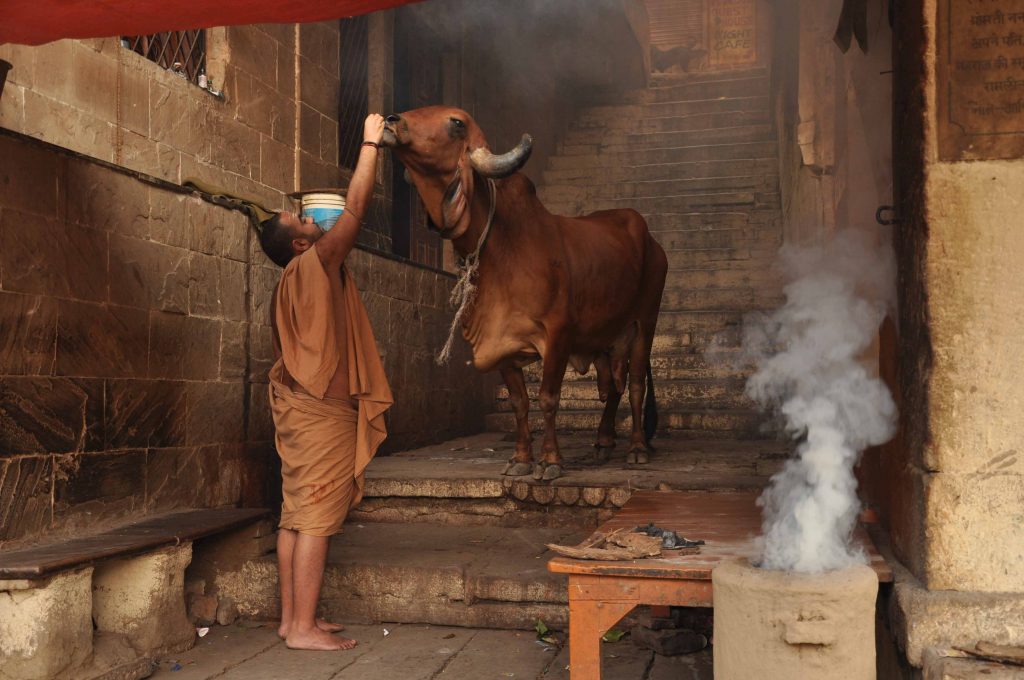
Maha Shivaratri Means literally “the night of Shiva” and during all night the streets of the ancient Varanasi filled with people coming from all parts of India. In a pilgrimage, people visit the city’s many temples dedicated to Shiva, performing “puja” and observing a fast during all day and night.
Along the day the sound of bells played during the pujas fills the narrow streets of the city and candles light the Ganga Ghats.


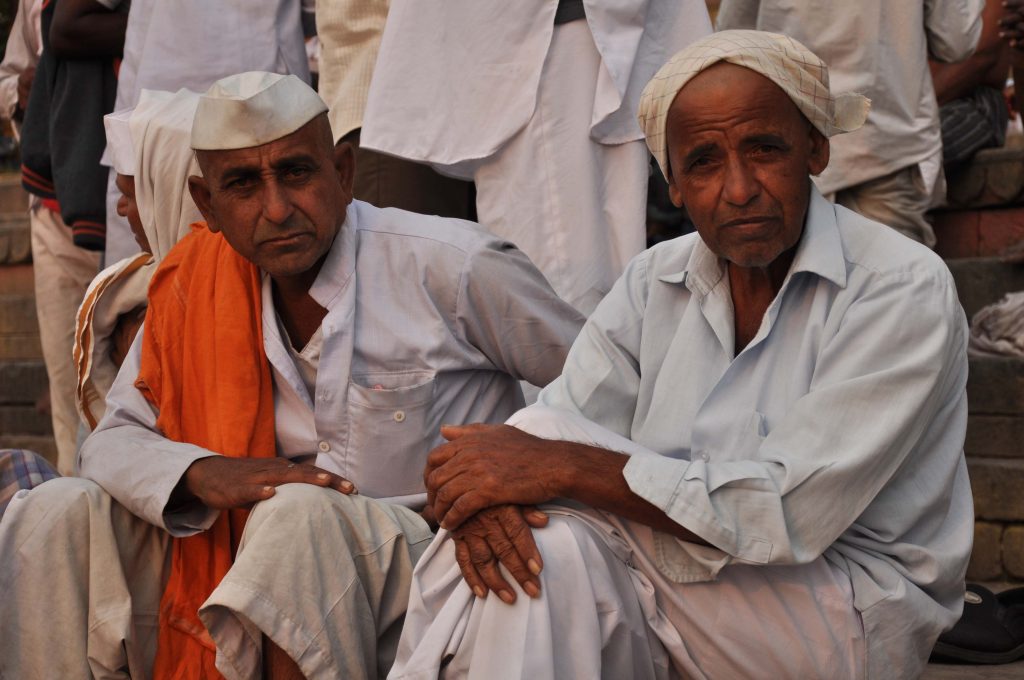
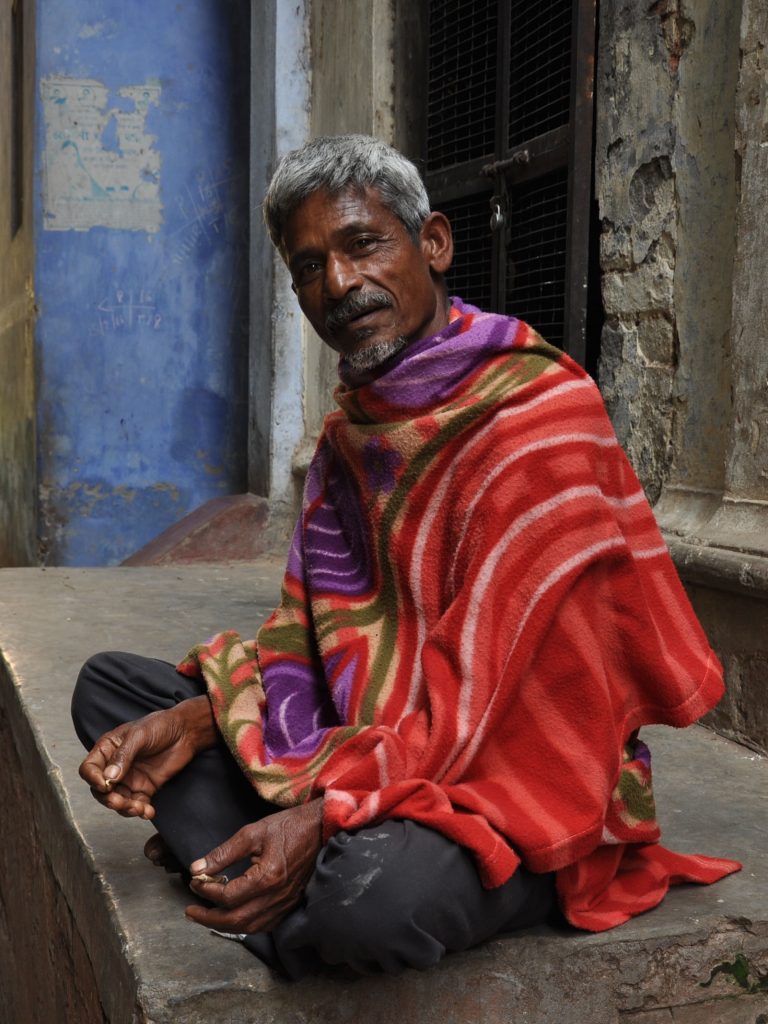
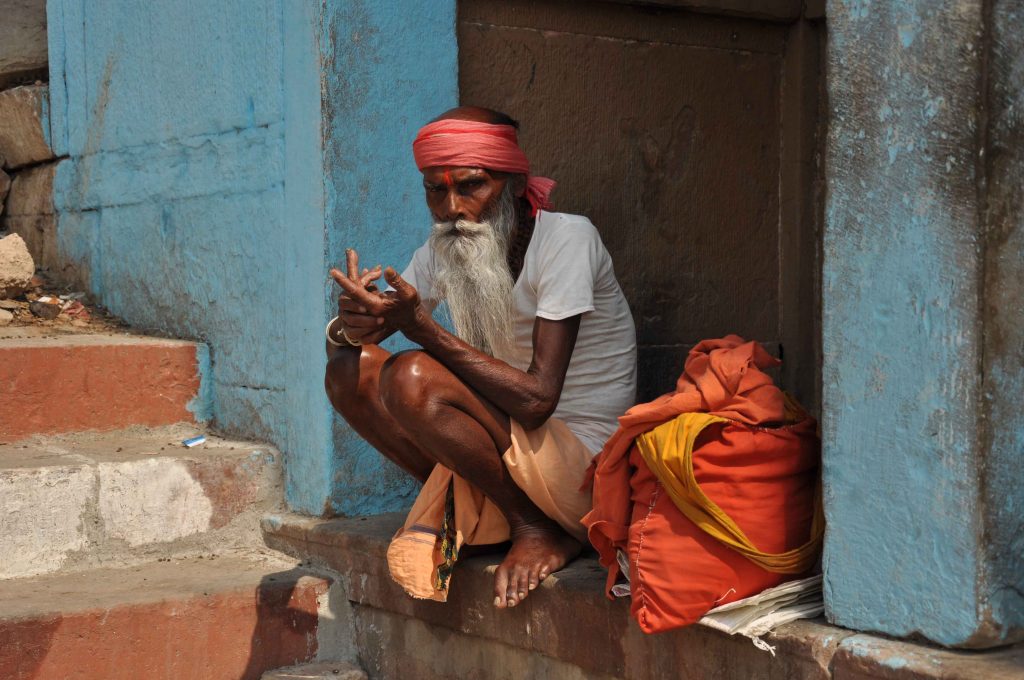
Varanasi. India
Varanasi. India
Varanasi. India
Varanasi. India
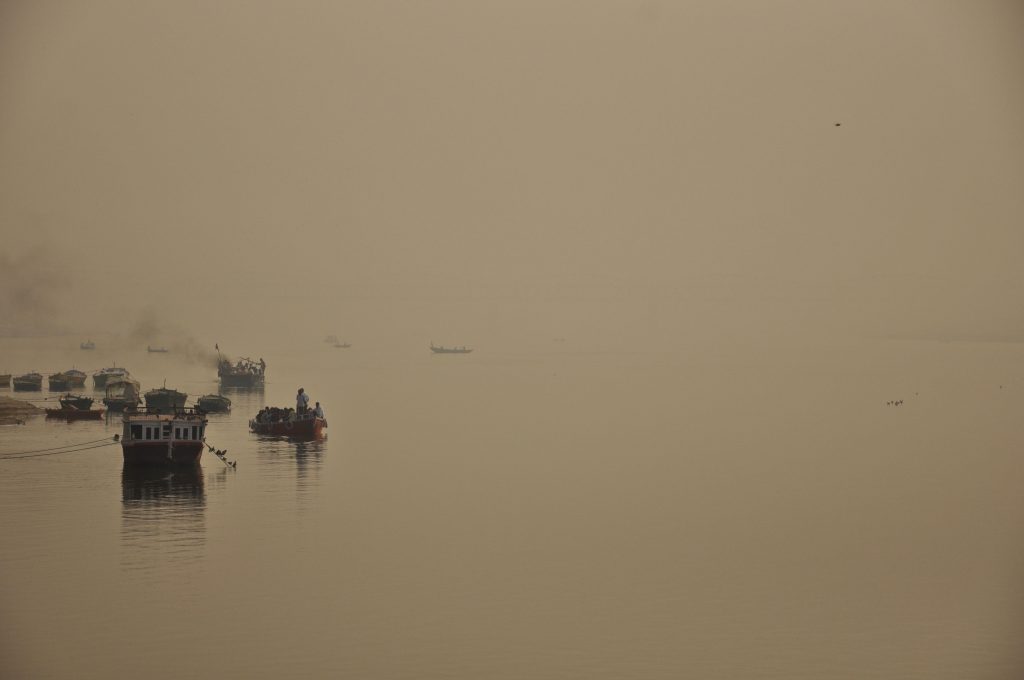
Ganga River. Varanasi. India
Varanasi. India
Varanasi. India
Ganga Gahts. Varanasi. India
Varanasi. India
Varanasi. India
Shiva Lingam near a Bodhi Tree. Varanasi. India
Maha Shivaratri. Varanasi. India
Varanasi. India
Pilgrims during Maha Shivaratri. Varanasi. India
Varanasi. India
Varanasi. India

Arriving in New Delhi… by train, by bus, by plane

If you arrive in Delhi by train:

New Delhi has several train stations, but if you travel in long distance trains you’ll probably arrive at: New Delhi (close to Pahar Ganj), Old Delhi (also know just by Delhi or Delhi Junction) or Hazrat Nizamuddin.

Nizamuddin is the one located south of the city center, about 8 km. From Nizamuddin you can take another train (don’t even need train ticket) to New Delhi Railway Station (there isn’t trains connection to Old Delhi), probably in one of the crowded unreserved trains or in, an also crowded, suburban train. Is not easy to know which train to catch, but you can also go to the ticket counter, ask and buy a ticket that cost 10 rupees. If you are a woman you can try to find the “ladies wagon”, there are usually not so crowded but are noisier due to the number of kids and babies.

From Old Delhi to New Delhi the distance is not that much, around 3 km but far enough to be made on foot, as the street are noisy, polluted and crowded. So basically there are three options:

  • by taxi… but I never ever trust in a Delhi taxi driver… there are many scams, and even I had already an unpleasant experience.
  • by tuk–tuk…. far the best option but is always a hassle to get a fair price for the ride.

The trip will take about 15 minutes because of the intense traffic; it should cost around 100 rupees, but never get this price… so just try or best bargain skills or share the tuk-tuk with another backpacker that you maybe find on the way.

  • by Metro… the cheapest option, easy but could be too crowded at peak hours, especially if you travel with a big backpack or lots of luggage.

The closest Metro station from Old Delhi is Chandni Chowk

The closest Metro station from New Delhi Train Station and Pahar Ganj is New Delhi.

Both are located on the same Metro line (Yellow line) with one stop in between.

The trip takes about 20 minutes including the time need to buy ticket, line for security check, and waiting for the metro.

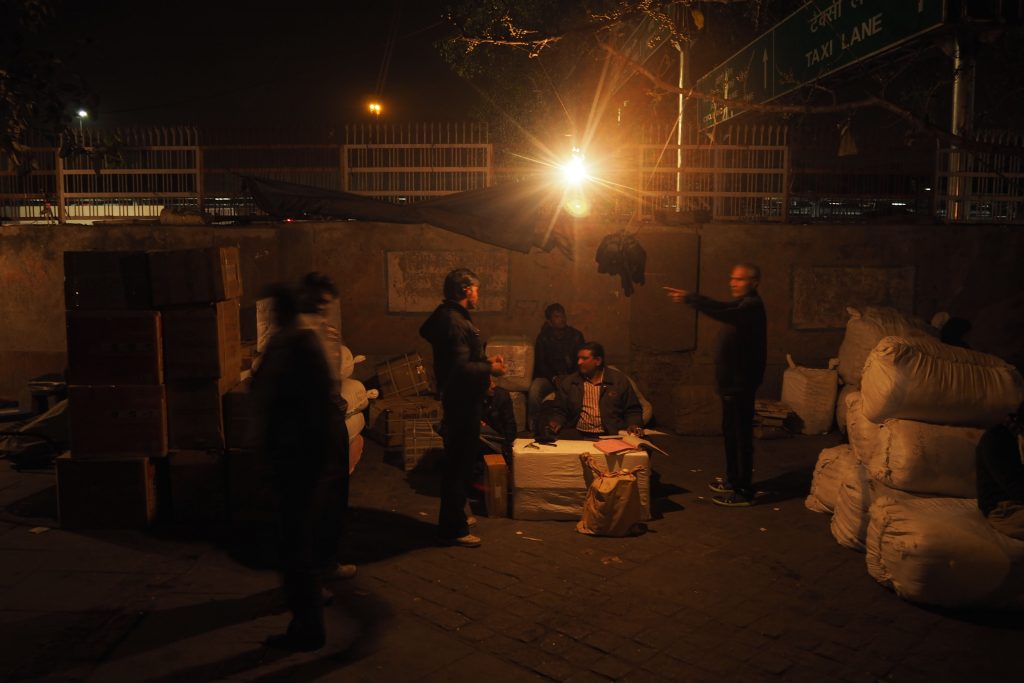
Old Delhi area after the sun set

If you arrive in Delhi by bus…

If you arrive in Delhi by bus, you can stop in many-many different places. Coming from north (like Dharamshala) or from the west (like Rajasthan) you’ll probably arrive at an area called Kashmiri Gate… is a bus terminal, but most of the buses drop you somewhere in a street nearby, under some viaducts. If you arrive during the night it could be confusing try to find where to go, and with dozens of tuk-tuk, taxi and rickshaw drivers surrounding you… but don’t get stressed and don’t jump in the first tuk-tuk… just walk a while away from the bus area, try to follow the crowd… most of the people go to the same place: METRO.

The best option, as soon as you get rid of the push tuk-tuk drivers is to ask someone “metro” or “Kashmiri Gate Metro”. Try to find a street stall, a chai seller, a police, a security guard, even a bus driver… but ask someone that look that are effectively working and not just hanging around.

“Metro” is the magic word and after a walk that will take more than 10 minutes, trough a way that is not linear (you maybe need to ask the way a few times… always double check with other people… sometimes even when people don’t now the way, point any direction just not to loose “their face”). You must pass under a huge concrete viaduct, cross a big avenue, walk along a sidewalk between a wall and a fence, and then you’ll see the massive subway station, that here run above the ground: Kashmiri Gate.

From Kashmiri Gate to Pahar Ganj just take the yellow line to New Delhi.

But some buses can let you nearby Old Delhi Train Station, in an area called Fatepuri (Fatehpur). Is close to the station bus if you are not familiar with the place is not easy to reach the station. Fatepuri, is also called Old Punjab Bus Stand.

Nearby the Old Delhi Train Station, on the south side, there’s a Metro station: Chandni Chowk… just ask for “metro” to street stall vendors. Then just take the yellow line to New Delhi and Pahar Ganj, or whatever is your destination.

New Delhi Metro platform... were there are ladies compartment
New Delhi Metro platform… were there are ladies compartment

Arriving in New Delhi by plain:

If you travel by plane, the most convenient way to reach the center of Delhi is by metro. There a direct line (Airport Express Line) that link the airport to the New Delhi Train Station that is the closest Metro station from Pahar Ganj. The closest Metro station from Old Delhi is Chandni Chowk

As you collect your luggage you’ll just need to follow the “Metro” signs.

Need to buy the ticket and then pass the security control.

  • ticket: 100 rupees (one way)
  • Metro schedule: 05:30 a.m. to 11:30 p.m.
  • There’s a train every 15 minutes, and the trip will take you about 20 minutes.

If you are traveling with more than 2 people so maybe is cheaper to use the taxis. But watch out: there is a big scam with the taxis pre-payed at the airport!!!!!! Yes! Even with the pre-paid taxis!!! Be special careful if you are travel alone, especially if you are a woman. Even if you are not alone, try to choose a flight that arrives late, or too late for you to catch the Metro, and consider, at least, one hour more for the immigration formalities, collection luggage, etc…

Airport Pre-paid taxis scam

So this is the scam: you pay the taxi, find your car and your driver, and the trip start smooth, usually with a friendly chat. As you leave the airport area and approach the urban are of New Delhi, the taxi driver will start to tell you that don’t know very well the place where you ask to go… even if it is the most well know place like “New Delhi Railway Station” or “Pahar Gang” were most of the travelers stay. Even if you insist that is in the center and is a well know place, he will try to ask a friend, by phone or sometimes even stop in a place to ask directions.

From now on you are in trouble: the “friend” will tell you that the place is closed, that there is a demonstration on the streets, or a religious festival, a strike or something else, and that is impossible to drop you in that place, that the police close the roads, and so on… they will tell you that is not safe, and even if you insist that you are updated with the news, they will make everything to block your movements.

Quickly you’ll be surrounded by guys, apparently, all trying to help you, but all part of the scam. All this is a way to make you fell vulnerable and without the time and “mental space” to think clear.

After that “someone” will help you to find an alternative place to sleep… “someone” that look friendly and speak a better English… of course that the “available” places to stay will cost you more that 100$… If you said that you don’t have so much money, they will contact other cheap places but all will be fully booked… even if you try some of the guidebooks accommodations, they will call then, speak in Hindi, and then will give the information that are also fully booked.

So this is the scam!… maybe you can bargain and get an 80$ room, but will be difficult to get rid of these people, especially if is already dark, or if you are alone. Try to be cool. Don’t trust anyone and don’t accept advice from anyone that approach you, as they can be part of the scam too. If you find a shop (not a travel agency), a bank, a commercial area, just pick your luggage, and get rid of the “gang”. Look for someone that can help you to catch another taxi, trust more in the women that in the men.

I had this problem in 2008. I was with my partner and we strongly argue and insist that we had a room booked by a friend of us, and that we had already called him on the phone and he was there, in the hotel, waiting for us. The taxi driver lets us close from Pahar Gang, but a few block away. It was in the morning so it was not a big deal.

And this situation is still going on as I heard a woman traveling solo (2016), that was not so lucky, and was pushed to an expensive place… at least for one night.

Stall at Pahar Gange were you can rent a taxi... otherwise you can rent one at your guesthouse or hotel, as any place has their own connection with the taxi drivers, and the price is all the same... it will be difficult to have a better deal
Stall at Pahar Gange were you can rent a taxi… otherwise you can rent one at your guesthouse or hotel, as any place has their own connection with the taxi drivers, and the price is all the same… it will be difficult to have a better deal


How to go from Pahar Ganj to the airport:

To go to the airport, the taxi is a safe way to travel and don’t need to worry about the price as the thing is more or less organize, and it will be hard to find a ride cheaper than 350 rupees. Note that the tuk-tuks don’t go so far as the airport. Is better reserve the taxi directly at the reception of your hotel or guesthouse, because if there’s a delay (never happen to me) the guys have the contact of the taxi driver and can manage the situation without stress… they even tell the best for you to be ready to leave according to the traffic!

Food in Northeast India… for vegetarians!

For a vegetarian diet, all the Northeast Indian states visited were a tremendous disillusionment, capable even of taking out the appetite. With the exception of the state of Assam, whose population is mostly Hindu, meat consumption is a constant presence in the states of Nagaland and Meghalaya, which dominates Christianity.

So this text is only a pale sample of the Northeast States cuisine, but it serves as a guide to those who choose not to eat meat or fish and planning to travel in these remote places.

In the states of Nagaland and Meghalaya is clear the influence of Asian cuisine, often coming up the noodles and chowming, while in Assam is clear the influence of Indian cuisine, specifically from the Punjab region. But the more than 2300 kilometers that separate the two regions, cause a diminish in the intensity of the flavours and reduced the range of ingredients.

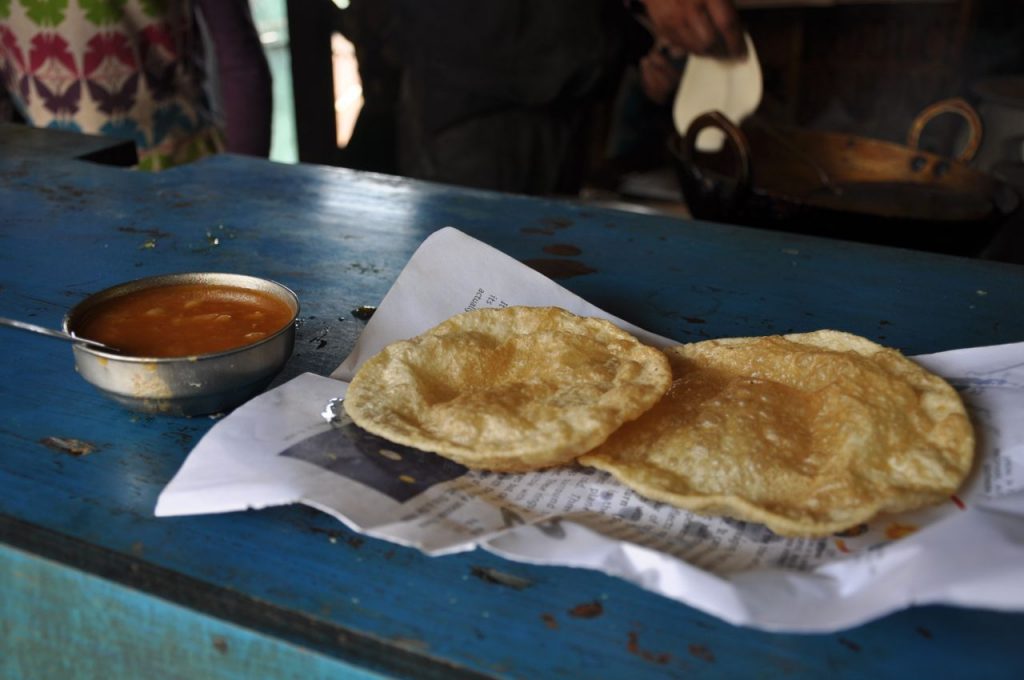
puri stall at Mon village. An almost mandatory stop before a shared-taxi trip in Nagaland.

Assam and the parathas

In Assamese cities are easy to find the classic Indian dishes, such as the dal (lentil curry) as the vegetable and beans curries. The samosas are also very popular as also some other deep fry stuff as the puris. Being a state crossed by the gigantic Brahmaputra River, which floods the plains and creates an ideal place for planting rice, a cereal essential in any Indian meal.

What stood out in Assam were the parathas, a flatbread made from wheat flour that can be found almost in any part of the country, but in Assam have a kind of twist: are thicker and more oily, pale and without the toasted look, resulting in a compact and undercooked dough. These parathas can be stuffed with potato masala, or more often plain, served with simple curries, usually made from potatoes and yellow-peas. The parathas can be found in most of the restaurants and dhabas but are often available in street stalls, being a popular street food in Assam.

The classic Indian thali, a meal based on rice, dal and vegetables, is also a bit different in Assam, with a very watery dal, a tasteless curry and over the rice a piece of steamed cabbage… yes! just a plain steamed cabbage without any seasoning. Very healthy, fills the stomach but don’t leave a good memory.

The parathas can be found in most of the restaurants and dhabas but are often available in street stalls, being a popular street food in Assam.

These parathas can be stuffed with potato masala, or more often plain, served with simple curries, usually made from potatoes and yellow-peas.

The classic Indian thali, a meal based on rice, dal and vegetables, is also a bit different in Assam, with a very watery dal, a tasteless curry and over the rice a piece of steamed cabbage. .. yes, just a plain steamed cabbage without any seasoning. Very healthy, fills the stomach but don't leave a good memory.
The classic Indian thali, a meal based on rice, dal and vegetables, is also a bit different in Assam, with a very watery dal, a tasteless curry and over the rice a piece of steamed cabbage. .. yes, just a plain steamed cabbage without any seasoning. Very healthy, fills the stomach but don’t leave a good memory.

Nagaland and the “puris”

If at Assam the cuisine proved uninspired, at least in what concern vegetarian option, at Nagaland state every meal was a challenge for a vegetarian traveler. At mountain areas dominates the meat, present in all markets at Nagaland, as also smoked and dry fish.

At the entrance of small towns, there’s always an area where animals are gathered waiting to be slaughtered, while other pieces of meat are sold to those arriving by motorbike or car or to the ones that are traveling by bus, and use the stops for pick passengers to do the shopping. At the cities, the slaughter of animals, mostly turkey and chicken, is made at the markets, where birds wait in cages. Though the air spreads the smell of blood and animal shit that create a sad and heavy atmosphere.

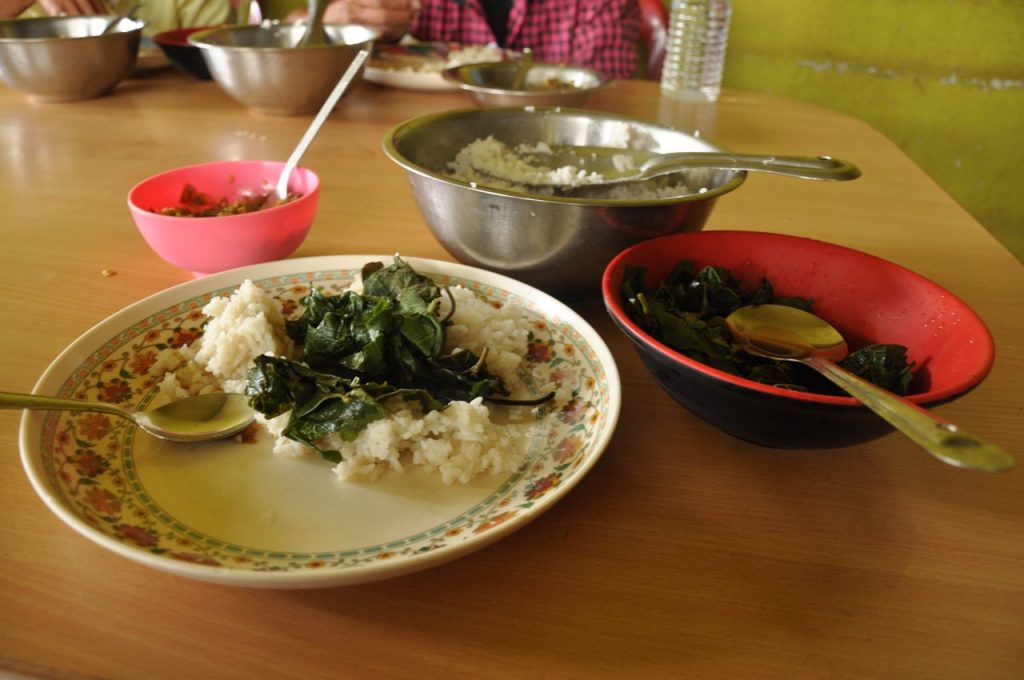
In Nagaland cities, you can find some vegetarian options such as the so-called “rice”: a rice-based dish, with dal and vegetables, or noodles soup or stir-fry noodles. But in the small villages or in more remote areas as Mon, there is not much more to eat than rice and some boiled greens, seasoned with a fermented and spicy vegetables.

An option that can be found a bit everywhere, and along the day, are the puris, a small flatbread, fried in oil and served with a potato and a small bowl of yellow-peas curry. The puris are excessively oily, here more than usual, soaking the newspaper where they are served, and the curry is spicy but watery. This results in a highly caloric but little nutritious meal, yet quite popular among the local population at Mon, Kohima and Mokochung.

An option that can be found a bit everywhere, and along the day, are the puris, a small flatbread, fried in oil and served with a potato and a small bowl of yellow-peas curry.

But in the small villages or in more remote areas as Mon, there is not much more to eat than rice and some boiled greens, seasoned with a fermented and spicy vegetables.

Meghalaya and the Asian influence

Despite the proximity to Bangladesh, the state of Meghalaya is visible the influence from the Asian cuisine by the noodles (rice flour pasta) served in soups or stir-fry. From Tibet came the momos, a small bun stuffed with meat or vegetables.

Shillong, the capital of this state is very modern and cosmopolitan, so it’s easy to find restaurants of the international chains of fast-food, but due to a large number of Indian tourists, there is a wide range of restaurants with traditional Indian dishes.

From Tibet came the momos, a small bun stuffed with meat or vegetables.

Despite the proximity to Bangladesh, the state of Meghalaya is visible the influence from the Asian cuisine by the noodles (rice flour pasta) served in soups or stir-fry.

A breakfast at Northeast India

As this is a region with little international tourism that make almost impossible to find the so-called “continental breakfast” outside the more fancy hotels.

But breakfast usually is not a problem, as the local options reveal almost always a good choice, but in Northeast India this option proved daunting. At Assam was a paratha, served with potato curry and accompanied by a jam. At Meghalaya, in the village of Sohra, the only option available, without meat, was a plate of rice with chickpeas and mint sauce with chili… by chance a simple but tasty combination. At Nagaland, along one of the long bus trip, was time for a chai and a samosa… very tasty and popular combination. At Mon, before starting a journey of 8 hours by sumo (shared taxi), there was an opportunity to taste a very popular breakfast among the local population: deep-fried dough served with a potato curry… a very oily option to start the day!

But breakfast usually is not a problem, as the local options reveal almost always a good choice, but in Northeast India this option proved daunting. At Assam was a paratha, served with potato curry and accompanied by a jam
But breakfast usually is not a problem, as the local options reveal almost always a good choice, but in Northeast India this option proved daunting. At Assam was a “paratha“, served with potato curry and accompanied by a jam

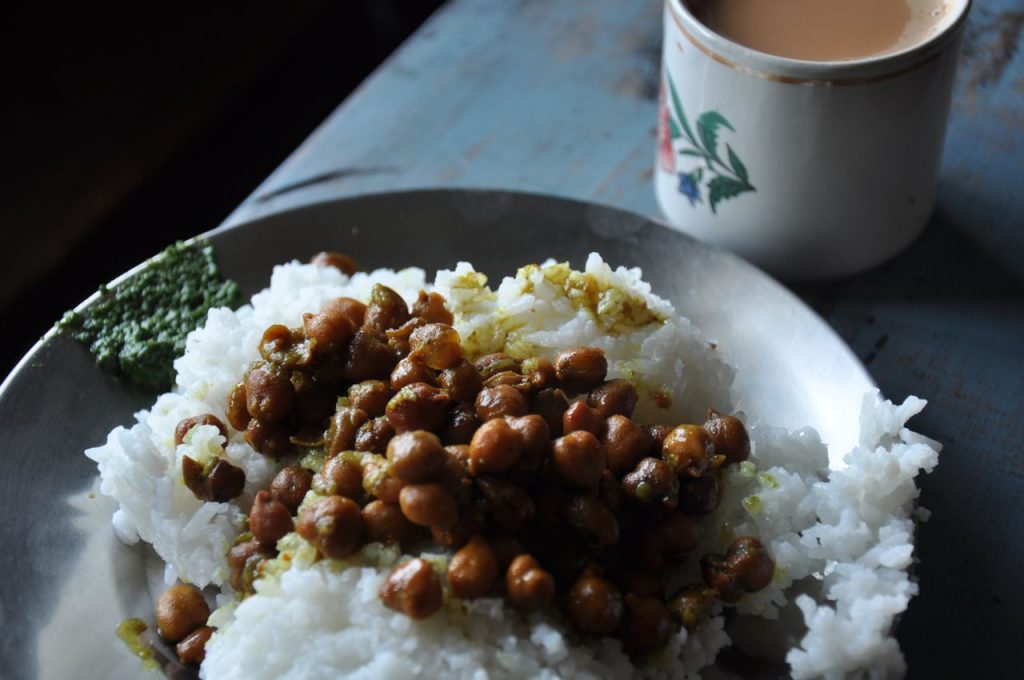
At Meghalaya, in the village of Sohra, the only option available, without meat, was a plate of rice with chickpeas and mint sauce with chili... by chance a simple but tasty combination.
At Meghalaya, in the village of Sohra, the only option available, without meat, was a plate of rice with chickpeas and mint sauce with chili… by chance a simple but tasty combination.

At Nagaland, along one of the long bus trip, was time for a chai and a samosa... very tasty and popular combination.
At Nagaland, along one of the long bus trip, was time for a chai and a samosa… very tasty and popular combination.

At Mon, before starting a journey of 8 hours by sumo (shared taxi), there was an opportunity to taste a very popular breakfast among the local population, deep-fried dough served with a potato curry ... a very oily option to start the day!
At Mon, before starting a journey of 8 hours by sumo (shared taxi), there was an opportunity to taste a very popular breakfast among the local population, deep-fried dough served with a potato curry … a very oily option to start the day!

Sweets

The only experience with sweets along this trip through Northeastern Indian states was been in Assam, where beyond the classic Indian sweets, there was something new for me: a kind of puff dough, deep-fried and drizzled with a thick sugar syrup that after cool down become solid. This syrup results in a yellow-brown color with a bright and appealing look, sold in different shapes, but with a monotonous and boring taste of sugar.

in Assam, where beyond the classic Indian sweets, there was something new for me: a kind of puff dough, deep-fried and drizzled with a thick sugar syrup that after cool down become solid. This syrup results in a yellow-brown color with a bright and appealing look, sold in different shapes, but with a monotonous and boring taste of sugar

Markets

Markets are always a place that awakens the senses, sharpens the curiosity and stimulates the imagination to try to identify the products sold and their use in the gastronomy of each region.

Kohima, in Nagaland, definitely stood out by the markets, where the exotic and diverse food supply reflects the originality of Nagaland cuisine that includes a lot of meat, eggs, dried fish, eels, snails, worms, mice, frogs… and wasp larvae, still sold in the hive.

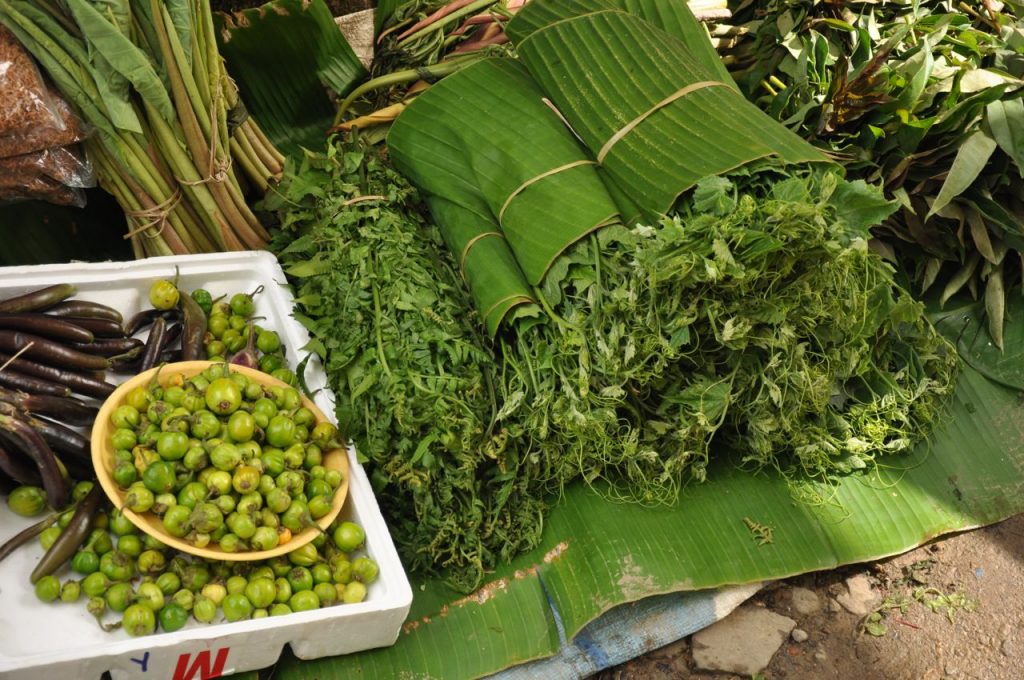
Regarding vegetables, these markets show a mix of tropical and mountain products. From the warm plains of Assam come the papaya, and the banana. But, as also in Burma, beyond the fruit, the trunk and the flower of the banana tree are also used for cooking. From the cool mountain air of Nagaland arrive a wide variety of mushrooms and bamboo that are eaten in sprouts. There’s also a big range of veggies, many of them totally unknown to the European taste.

Banana trunk in Kohima Market. Nagaland

Regarding vegetables, these markets show a mix of tropical and mountain products. Kohima Market. Nagaland

Dried fish and eels at Mao Market. Kohima. Nagaland

worms sold at Mao Market, in Kohima. Nagaland

nagaland_mokochung_market_dsc_8718
Vegetables in a Kohima market. Nagaland.

Kohima, in Nagaland, definitely stood out by the markets, where the exotic and diverse food supply reflects the originality of Nagaland cuisine that includes a lot of meat, eggs, dried fish, eels, snails, worms, mice, frogs... and wasp larvae, still sold in the hive.
Kohima, in Nagaland, definitely stood out by the markets, where the exotic and diverse food supply reflects the originality of Nagaland cuisine that includes a lot of meat, eggs, dried fish, eels, snails, worms, mice, frogs… and wasp larvae, still sold in the hive.

***

As a conclusion, it can be considered that the gastronomical experience offered in the visit to the northeastern states of India wasn’t enjoyable, left a memory of monotonous and tasteless food, where the potato was a constant ingredient in almost all meals over the 22 days trip… but of course this is a point of view of a vegetarian, who can not do justice a cuisine of such a large area.

Indian Northeast States: itinerary & costs

Distance Travelled: 1530 km (all by land; no flights)

Length: 22 days

Date: March 2016

States visited: Assam, Meghalaya and Nagaland

Itinerary:

  • Guwahati (Assam): 1 day
  • Shillong (Mengalaya): 2 days
  • Cherrapunji-Sohra (Meghalaya): 1 day
  • Nongriat Village (Meghalaya): 4 days
  • Guwahati (Assam): 1 night
  • Majuli Island (Assam): 5 days
  • Mon Village (Nagaland): 3 days
  • Mokokchung (Nagaland): 2 days
  • Kohima (Nagaland): 2 days
  • Guwahati (Assam): 1 day

Costs based on solo travel, with a focus on keeping things budget-friendly… and a lot of walk!!!

11 €/day

This average daily budget includes:

  • traveling solo
  • eating just local (vegetarian) food at dhabas or local restaurants
  • staying in guesthouses, no a/c rooms (sometimes sharing accommodation with other travellers)
  • traveling only by public transportation, mostly bus or sumo (shared jeep).
  • entrance tickets for tourists attractions like natural parks, museums, palaces, etc
  • no alcohol, tabaco or soft drinks
  • doing my own laundry
  • SIM card for local network

NOTE: This daily average does not include expenses for shopping, souvenirs, medical or health-related costs, or visa fees (as these vary depending on your country of origin).

India Notheast states. Location map
India Northeast states. Location map
India Northeast States Itenerary. Itenerary Map
India Northeast States Itinerary. Itinerary Map

How to cross the border Sunauli – Belahiya (India/Nepal)

India and Nepal have several border crossings open to foreigners. The most popular although is the Sonauli (India) – Belahiya (Nepal), due to its location, more or less in the middle of the south Nepal border, and maybe the shortest route to reach Kathmandu by land. Also, the location of this border cross, between Varanasi and Kathmandu or Pokhara, make this desolated and unfriendly place a choice for those who want to travel by land.

But for those traveling in Northeast India, like Sikkim, Bengal and the so-called North-eastern states (Assam, Nagaland, Meghalaya, Arunachal Pradesh, etc…) the border Panitanki (India) – Kakarbitta (Nepal) located on the east side of Nepal is the best option. For more details about this border crossing check my posts about “Border Crossing” on Tips/Dicas de Viagem category.

The closest train station from the Sonauli – Belahiya border is Gorakhpur, with easy connection with Delhi and Varanasi. Gorakhpur is far from being a charming or appealing place, so try to arrange things in order to avoid one night there.

Just when you come out from the train station, you just need to ignore all the tuk-tuk drivers that will surround you and walk straight forward until the main road. Just on the other side, near crossroad with a statue with a guy on a horse, you’ll see a few buses stop… not a bus terminal or even a bus stand… just a few buses along the road. Try to ask the drivers about one that goes to Sonauli; usually, it stops on the right corner (if you have the trains station on your back).

The bus departure more or less every hour, or even before if it’s full. The buses run all day, starting around 6 am, until evening.

In case that you arrive late, close to evening time, is advisable to sleep in Gorakhpur, and make the trip to Sonauli next morning, as there are not many infrastructures in Sonauli, and the place itself in “not a place to stay”!!! Anyway, the Sonauli – Belahiya border is open 24 hours.

The bus from Gorakhpur to Sonauli, will take about 1.5 hours.

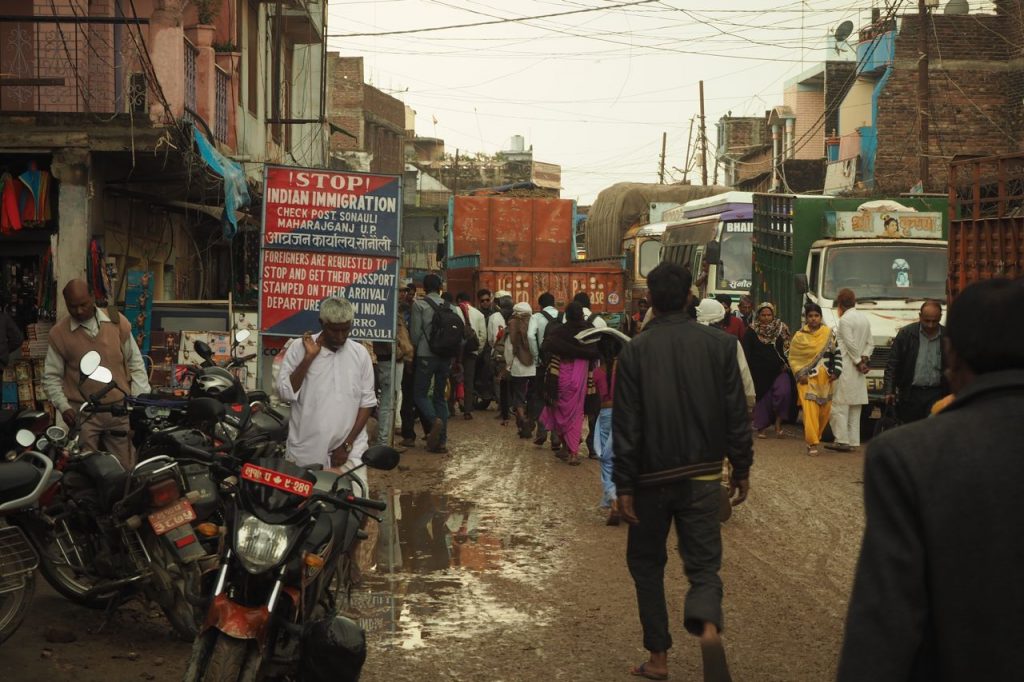
From the bus stand until the Indian Immigration Office is about 600 meters that will take around 10 minutes to walk along a dusty or muddy road (depending the weather) between trucks. Some people prefer to hire a cycle-rickshaw but it just worth if you travel with lots of luggage.

Indian Immigration Office at Sunauli. India

At the Indian Immigration Office you need to fill a form and give it back with your passport to the staff that usually is very friendly. The office is very small and sometimes you need to stay outside while an officer collects the passports and give them back after stamped. Always check if you have the exit stamp before leaving any country!

Don’t be surprised if you see many people crossing the border without passing by the Immigration Office, as the Nepal and Indian citizens don’t need a visa or even a passport to cross any border between India and Nepal.

After this, you keep walking along the same road and will see a big gate that represents the border India – Nepal. Is possible that an officer will ask for your passport, but sometimes they are more focus in controlling local people because of the smuggling than the tourists.

After the gate you walk a few more meters and will see, on the right side, a small house with a kind of garden where is the Nepal Immigration Office. There you need to need to fill a form, give a photo, show the passport and pay the visa fee according to the length of your stay. Usually it will not take more than 10 minutes.

You will be welcomed with a friendly smile and a proud “welcome to Nepal!”.

Nepal has Visa on Arrival, so to get your visa you need:

  • passport
  • 1 photo
  • fill a couple of forms
  • …and money to pay the visa fee. You can pay in dollars (USD) or Indian rupees (INR). Must be played in cash. There’s neither ATM or Exchange shop nearby, so be prepared. In the India side you can exchange money. If you pay in dollars is better to bring the exact amount, as change isn’t always available. If you pay in euros you’re doing a bad deal as the 25$ are automatically converted in 25€!

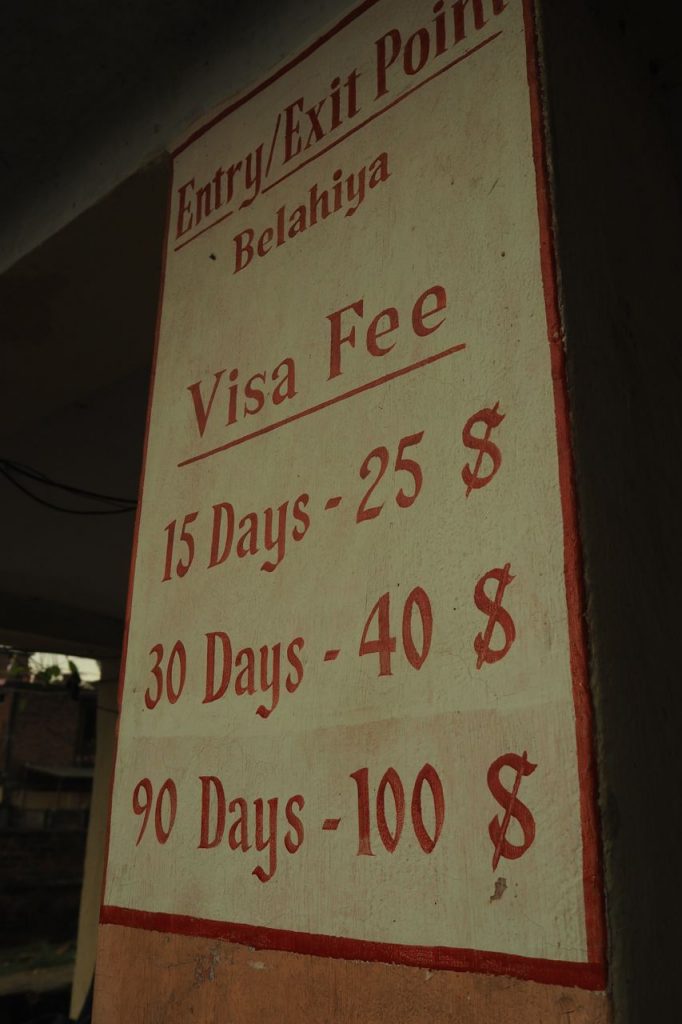
The Nepal visa can be (September 2016):

  • 15 days: 25 USD
  • 30 days: 40 USD or 2700 INR
  • 90 days: 100 USD

At the Nepal side of the border you’ll see a few exchange money shops. From my experience the rates are quite alright.

Probably some will ask if you need a bus to Pokhara or Kathmandu. This maybe is not the beast deal that you can have but save you from walking (or take a bus) to the bus terminal (also called Bhairahawa Bus Park).

From Belahiya there are also buses to Lumbini and Chitwan.


Note about Nepal Visa Fees:

If you are planning to stay in Nepal for 2 months is better to apply for the 3 months visa. Otherwise, you pay 40$ for the first 30 days and then need to extend your visa for more 30 days… so as extending the visa will cost your 2$ a day, an extra month will be 60$… that in total is the same cost of the 90 days visa…. and you save yourself a few hours at the Immigration Office in Kathmandu or Pokhara.

Nepal Visa Fees
Nepal Visa Fees

Extend Nepal Visa:

To extend you Nepal Visa, you can do it in Kathmandu or Pokhara.

In Pokhara usually there are fewer people and you can get you new stamp quickly. At Katmandu is always more busier and confuse. But in both places you find helpful staff.

Not that the maximum number of days that you can stay in Nepal is 150 a year.

How to go from Sonauli-Belahiya to Kathmandu by bus:

Just after crossing the border you arrive at Belahiya, the first populated place that you cannot even call a village, but where you can find (after the Immigration Office), also on the right side of the road, a few travel agencies that sell bus tickets to Pokhara and Kathmandu. Usually there are always a few buses parked in a dusty/muddy ground that works like a bus terminal, called Belhiya Bus Park.

The soon you arrive more are the chances to have a bus to your destination, as most of the buses departure in the morning. Still is possible to catch a bus to Kathmandu around 2 p.m. There are also buses that departure at the end of the afternoon, but the information given by these travel agencies are not clear. But watch out: the bus trip to Kathmandu will take more than 8 hours that the ticket seller said… probably 10 hours depending on the traffic at Kathmandu, so if you arrive late to the border be prepared to arrive at Kathmandu in the evening!!!

Sometimes I felt that these private bus companies are taking advantage of people that just arrive and are not yet familiarized with the currency and prices, and I already notice that the bus ticket from Kathmandu to Belahiya is cheaper than the opposit way.

There aren’t public buses in Nepal, except a few local buses in Kathmandu. But if you want to avoid an overcharge ticket at the border (we are talking something about 200 rupees more, more or less 2$) you can walk or take a taxi to the Bhairahawa Bus Park around 7 km further along the main road and from there you have more bus companies but I couldn’t get a proper schedule of the buses to Kathmandu.

Where to eat at Sonauli-Belahiya:

Don’t try to eat at Sonauli. It will be difficult to find an inviting place and even if you choose one dhaba (road side restaurant), possible your meal will be disturbed by may touts trying to “help” you crossing the border or changing money.

If you really need a meal is better to wait until cross the border to Nepal side (Belahiya), that has a much quieter and friendly environment. With a short walk you can see the few places available, and it can be an option for a quick meal, but if you look for something more inviting you need to take a local bus (walk by the main road until you find the Bus Terminal on your right side) and go to the nearby village Siddharthanagar (also called Bhairawa or Bahirahawa).

Best train from Varanasi to Gorakhpur:

If you are traveling from Varanasi to Nepal, you can make the all trip by bus (there are even bus services from Varanasi to Kathmandu, that I don’t recommend) or by train. The train is the most comfortable option as it allow you to have a reasonable night of sleep and arrive at Gorakhpur early in the morning, with plenty of time to take the bus the Sonaluli-Belahiya border, and with strong chances to reach Kathmandu in the same day… but in the evening!

From Varanasi all the trains that arrive in Gorakhpur in the morning leave late in the evening, so avoid to choose a train that departure from Mugah Sarai, as this station is very far out from the city, and in the evening is not recommended for women or solo travelers. check my previous post:  http://steppingoutofbabylon.com/en/2016/06/how-to-go-from-varanasi-to-mugal-sarai-train-station/

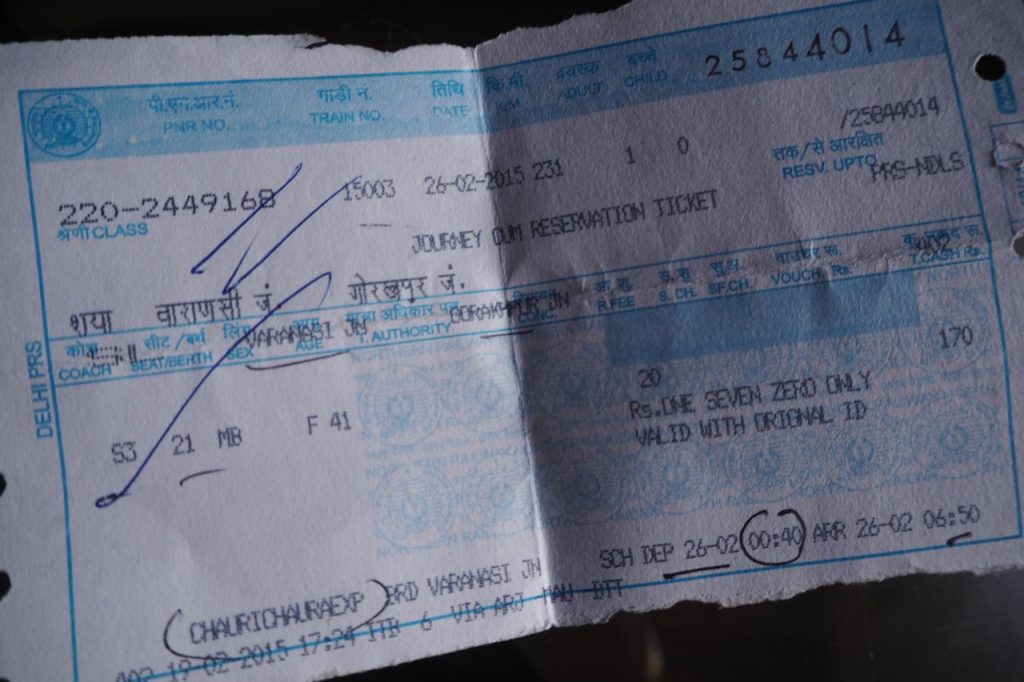
For me the best option was the night train that departure from Varanasi Junction (easily reach buy tuk-tuk even during the night, but I recommend to arranje it with the help of the guesthouse staff): Train number 15003 (Chauri Chaura Express) that departure at 00:40 and arrive to Gorakhpur (last stop) at 6.50 a.m… sometimes with a bit of delay!!!

http://steppingoutofbabylon.com/en/2016/06/how-to-go-from-varanasi-to-mugal-sarai-train-station/

Train ticket from Varanasi to Gorakhpur
  • « Go to Previous Page
  • Page 1
  • Interim pages omitted …
  • Page 16
  • Page 17
  • Page 18
  • Page 19
  • Page 20
  • Interim pages omitted …
  • Page 31
  • Go to Next Page »

Footer

search

Tags

accommodation Assam Bali Border Crossing Borneo Cappadocia Colombo Dalí Dambulla Dao Cheng Esfahan Fes Food Gilis Hiking hokkaido Istanbul Itinerary Jakarta Java Kashan Kataragama Kumano Kodo Lombok Majuli Meghalaya Meknes Mekong Nagaland Natural Park Nongriat Northeast States Ouarzazate Sarawak Shiraz Sichuan Province Sumatra Tabriz Tehran transportation Visa Yangon Yazd Yogyakarta Yunnan Province

I’m Catarina, a wanderer from Lisbon, Portugal… or a backpack traveller with a camera!

Every word and photo here comes from my own journey — the places I’ve stayed, the meals I’ve enjoyed, and the routes I’ve taken. I travel independently and share it all without sponsors or ads, so what you read is real and unfiltered.

If you’ve found my blog helpful or inspiring, consider supporting it with a small contribution. Every donation helps me keep this project alive and free for everyone who loves exploring the world.

Thank you for helping me keep the journey going!

BUY ME A COFFEE

Categories

Recent Posts:

  • How to go from Hualien to Dulan Beach
  • Taroko Gorge: between marble cliffs and emerald rivers
  • Hualien: a dull gateway to Taroko Gorge
  • Taiwan: Itinerary for an 16 day trip
  • Vietnam: Itinerary
  • 3 months in India: Kolkata, Tamil Nadu, Karnataka, Goa and Kerala
  • Backpacking Turkey in 24 Days: itinerary & costs
  • English
  • Português

© Copyright 2026 Stepping out of Babylon · All Rights Reserved · Designed by OnVa Online · Login