Itinerary:
- Khuri and Thar Desert
https://goo.gl/maps/H8omHfuj9As

See also:
https://steppingoutofbabylon.com/wp/pt/2014/12/gastronomia-do-gujarat/
https://steppingoutofbabylon.com/wp/pt/2013/09/notas-da-india-4/
Travel & Photography
https://goo.gl/maps/H8omHfuj9As
https://steppingoutofbabylon.com/wp/pt/2014/12/gastronomia-do-gujarat/
https://steppingoutofbabylon.com/wp/pt/2013/09/notas-da-india-4/
The streets of Kathmandu, despite the intense noise and the heavy pollution, that can create a strong negative impact on new visitors, always have something new and unexpected to offer.
The crowded streets gain a magic atmosphere with the light of the sunset, lightning up hidden corners and people’s faces. Old buildings facades standing out from the urban landscape, where the dust creates an almost permanent veil.
The morning markets, that daily fills up squares and narrow streets, gain a special atmosphere as soon as the first sun rays crawl over the dense and compact mass of buildings, giving a new intensity to the colors and bringing a new perspective to the scenery.
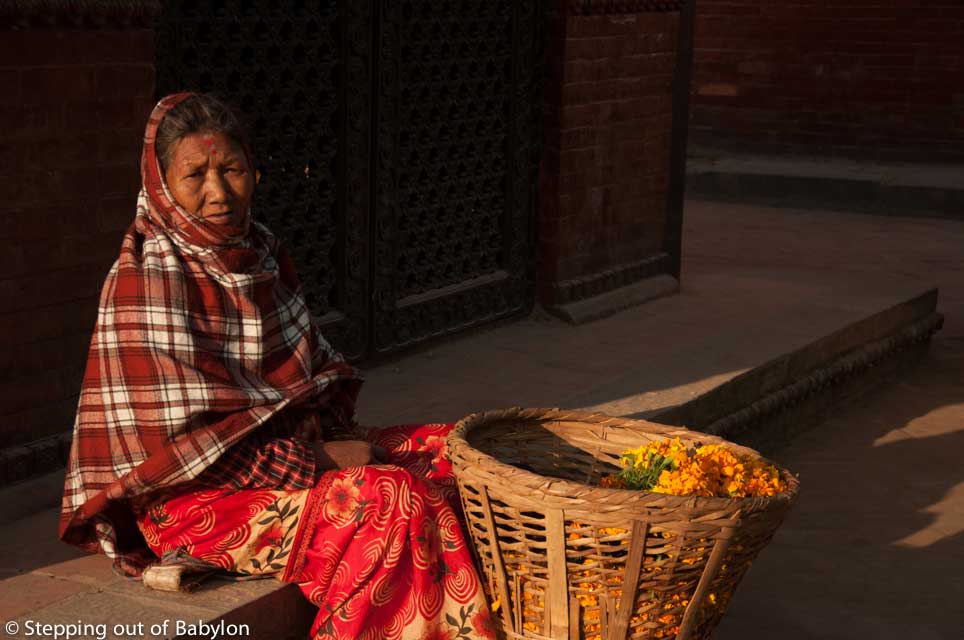
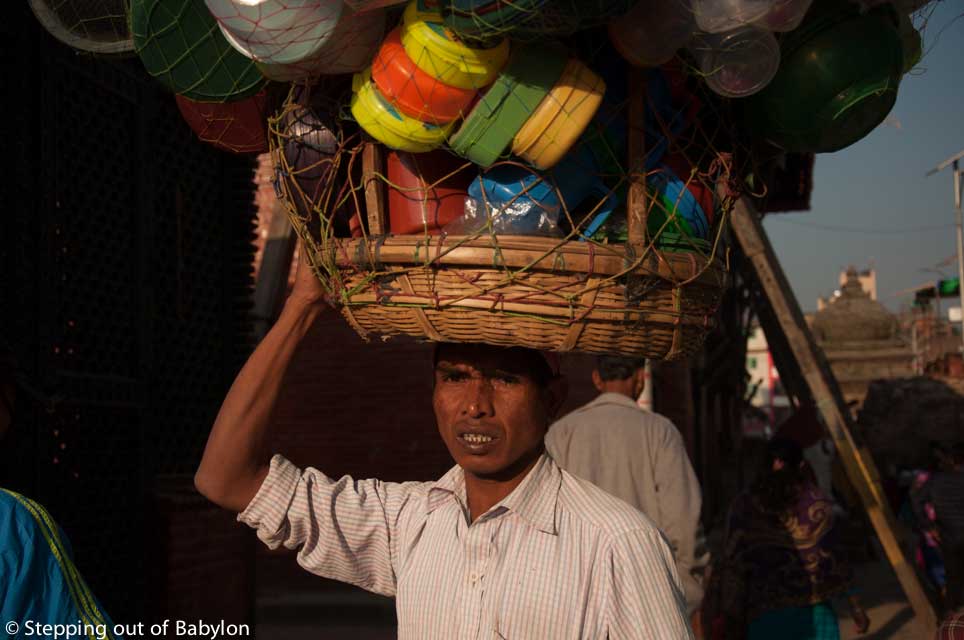
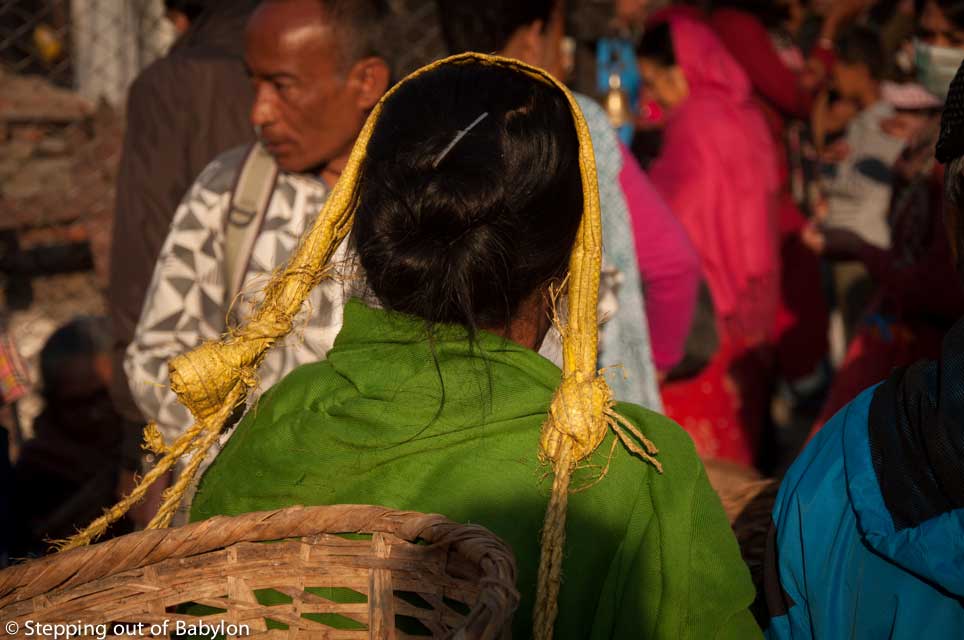
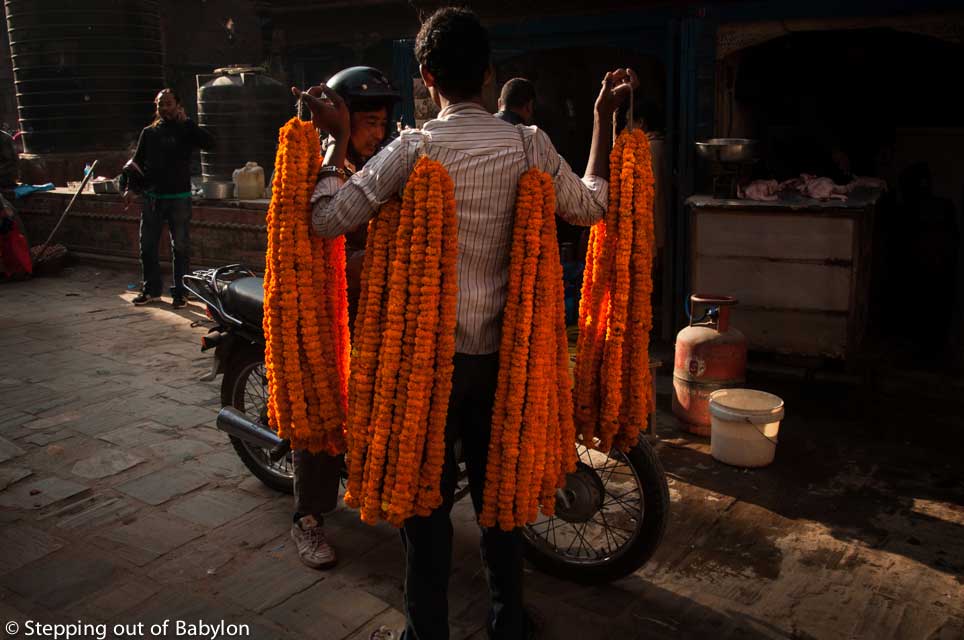
Walking along the mazy streets of the old part of Kathmandu, that get unbelievably crowded at dusk, can reveal a tough challenge. But at the same time it can reveal new routines of the daily life of the city… from the “puja” rituals to the washing of the clothes, from religious processions to the movement of the porters, from the fruits and vegetable hawkers to the marigold garland makers.
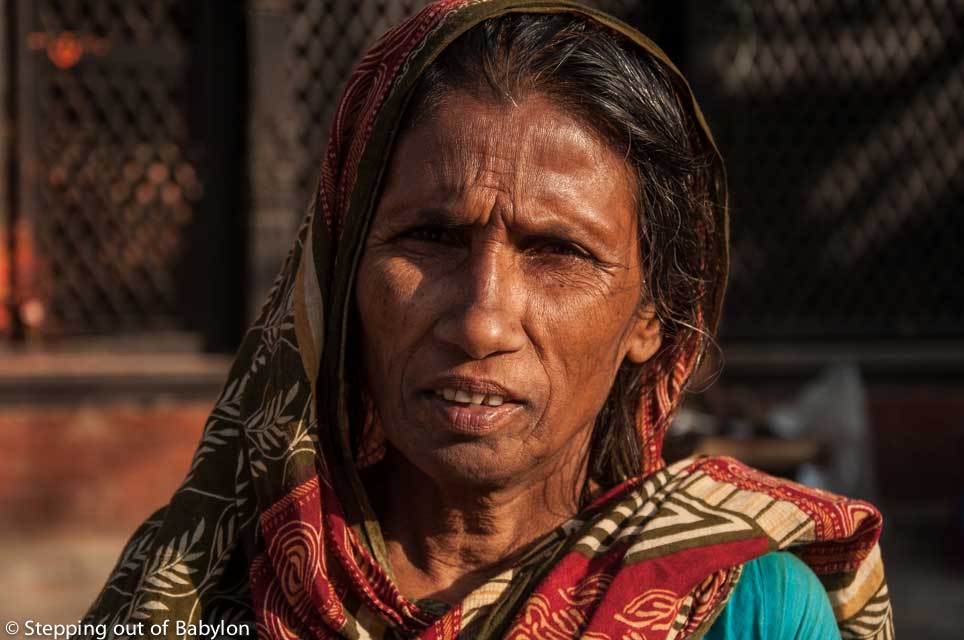
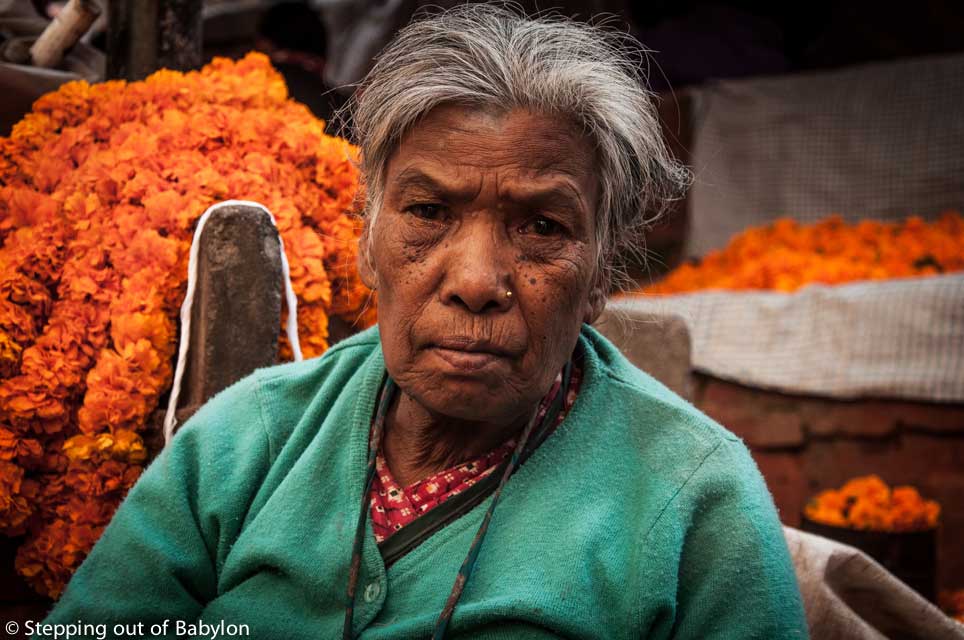
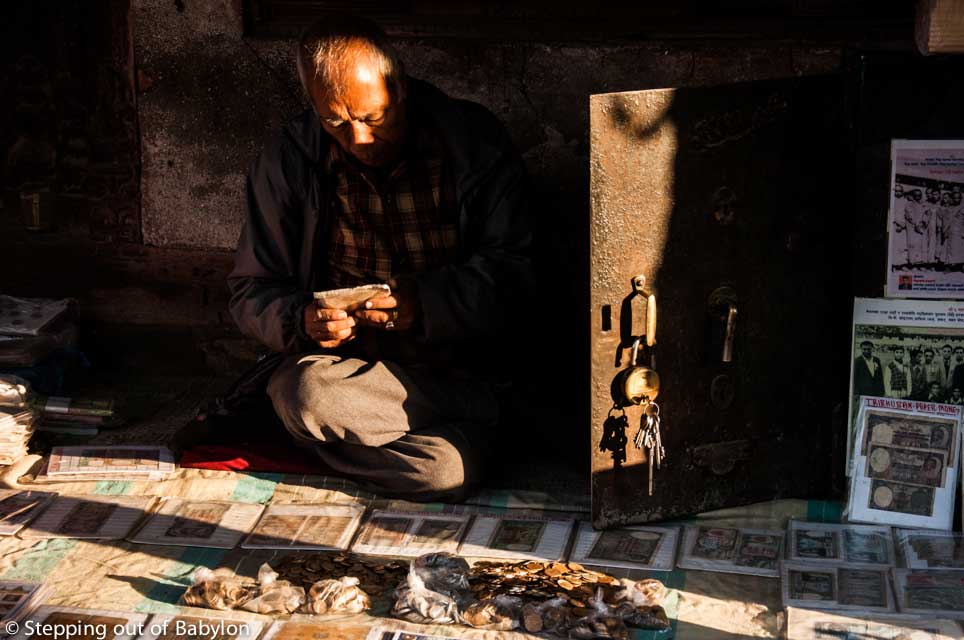
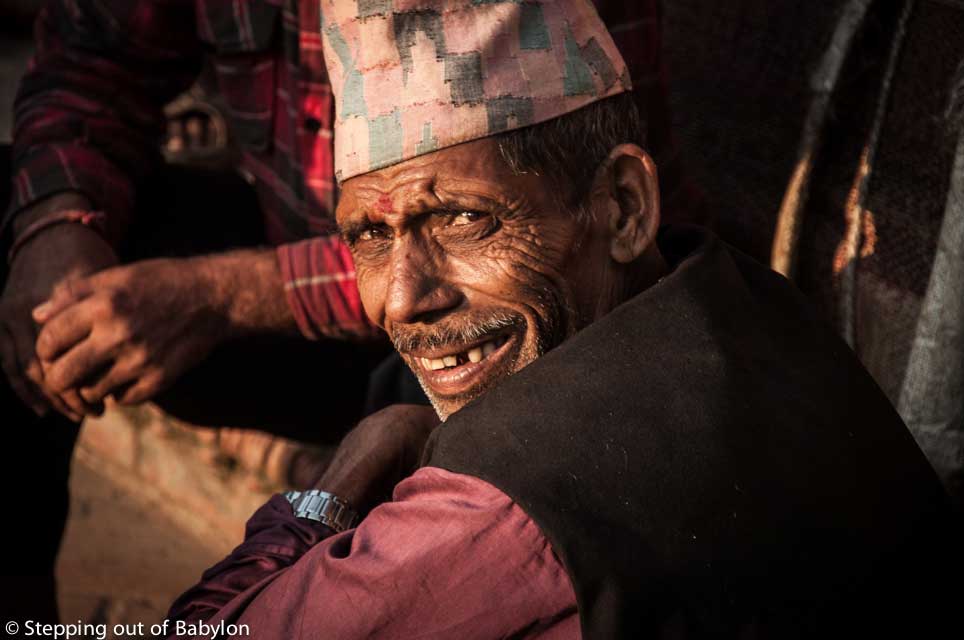
Even though we have passed countless times along the same street, bend the same corner, walk along the same path and pass by the same “stupa”… Kathmandu always has something that surprises us: a new light that changes familiar images, a new detail in the wood carving of a door, a new brightness that makes a normal color stand out, a smile filled with curiosity from a young face, the serious gaze of those who have seen many things, or just a new scent of a warm snack just coming out of a pan full of oil.
https://steppingoutofbabylon.com/wp/en/2016/09/a-guide-for-snacks-and-street-food-in-kathmandu/
https://steppingoutofbabylon.com/wp/en/2016/11/in-search-of-the-best-dal-bhat-in-kathmandu/
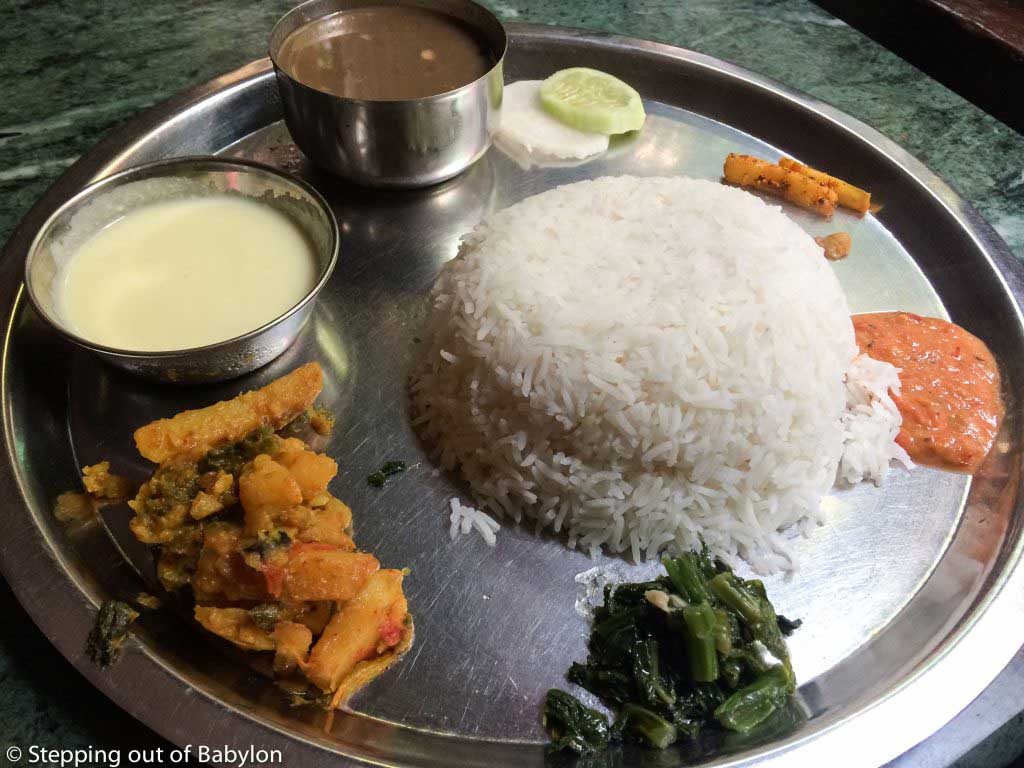
Dal bhat, same as rice and lentils… this is maybe the most famous and eaten Nepali dish, being the staple food of most of the population. The dal bhat, in Nepal also called “khana” is a meal that includes a dal (lentils soup), a vegetable curry (tarkari), saag (stir fry green leaf vegetable). Radish pickle, gundruk, yogurt and hot tomato sauce are added to this dish that is always eaten with steamed rice… a lot of rice!!
Is basically a vegetarian meal but it can also be served with meat, mostly chicken… and at Nepal the consumption of meat is quite common.
It can be eaten as breakfast or as also lunch, and in restaurants is served along all day… but most have home made dal bhat! Usually, you can find dal bhat in restaurants just after 10 am.
Being Nepal a country with so many different cultures, topography, climates, traditions, also the dal baht reflect this diversity. The rice dominates most of the country cuisine, but very high in the mountains the rice is replaced by corn or maize, buckwheat, barley or millet.
Thakali is an ethnic group as also a region located in the farthest northeast of Nepal, close to the Tibetan border, at the high Himalaya. From this remote area comes the most popular version of dal bhat. The restaurants in Kathmandu from this kind of cuisine – thakali bhanchha – serve usually the dal bhat with rice and not with another kind of grains, as usual in the high mountain areas, but are a good option to try this speciality.
In Nepal, the dal bhat is served in a heavy brass plate, with the rice at the center with the curry, saag, salad and seasonings arranged around and with the dal in a small bowl, sometimes also in brass metal. In the non-vegetarian option, the meat is served also in a small bowl, and never in big portions.
***
One of my favourites restaurantes in Kathmandu to eat dal bhat is the Muktinath Thakali Kitchen right in the heart of Thamel, but not so visible and easy to find. Is famous between tourists but also very popular among Nepali people that assure the quality of the food!
Here the dal bhat is served with rice, which is not traditional in the Thakali region, but undoubtedly the rice is the most popular cereal in Nepal, and the Nepali can eat a lot of it at each meal 🙂
The dal bhat at Muktinath Restaurant is very rich, served according to the tradition: rice, curry, dal, saag, pickle, salad (just cucumber), spicy sauce… and a with a papad (crispy chips, made from dal and fry in oil). The curry is very tasty, usually not spicy, the dal has the touch of the ghee, and a good quality of rice, with a long grain… and this all cost 200 rupees (vegetarian option) and the staff is super friendly.
This dal bhat is served also yogurt and the gundruk, that for me is one of the main reasons to visit this place, as the gundruk, being a typical homemade season, but not so easy to find in restaurants.

For a more local-underground-cheap version of dal bhat I strongly recommend the Om Restaurant also called as Om Bhava, located in s hidden backstreet of Thamel. The Dal Bhat at Om Bahava is not so rich as the one from Muktinath Kitchen as it comes without the papad and gundruk, but it worth to go there to taste the yummy taste of a homemade dal bhat that makes us forget that we are at a restaurant!
The place is simple and humble, the owner is super friendly smiley Nepali, never saying no to another refill of this amazing food! The price is also good: 130 rupees for the vegetarian option and 200 rupees for the one with chicken.
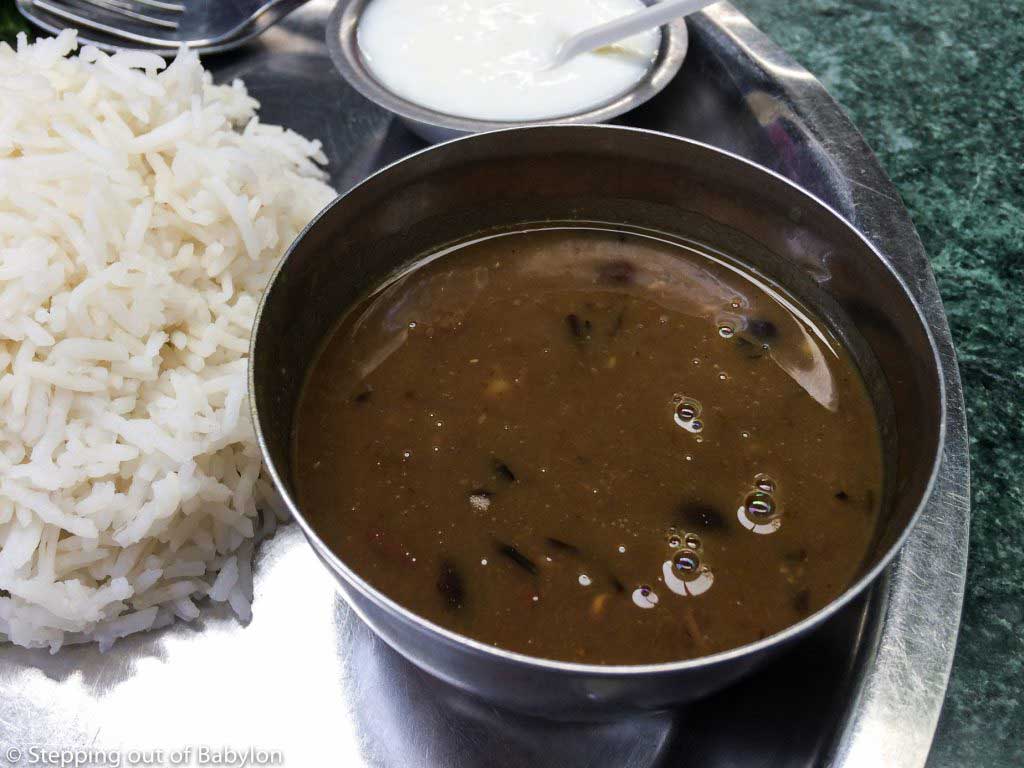
Dal
After rice, this is the core of a Nepali meal! The dal is basically a soup made with lentils, any kind of lentils seasoned with coriander, cumin and turmeric…. and a bit of fresh ginger that give a special flavor Sometimes, as the dal in Nepal is expensive, potatoes are added to this soup, make it thicker.
A spoon of ghee (clarified butter), if added, gives a special touch to this simple dish.
From the big variety of dal, my favorite one in the black dal, in Nepal called “maas ko dal”, from where results a thick and textured soup, where this small beans almost disappear due to the overcooking in a pressure pan. A bit of ginger always give a twist to this soup, bringing a sharpness to the taste.
Gundruk
This is a classic side dish that is served with the dal bhat… unfortunately many places forget this detail that is fundamental for me!!!
The Gundruk is prepared with fermented leafs of spinach, radish or mustard, that are later dried and storage. For serving the dry leafs are soaked in water and fry in a pan with onion, tomato, turmeric, salt and chili, resulting in a mix of acid and spicy flavor.
Due to the fermentation process gundruk is an important font of minerals.
Difficult or almost impossible to find in the market or shops as this is a homemade treat, but at least the dry leafs could be found in the street markets of Kathmandu.

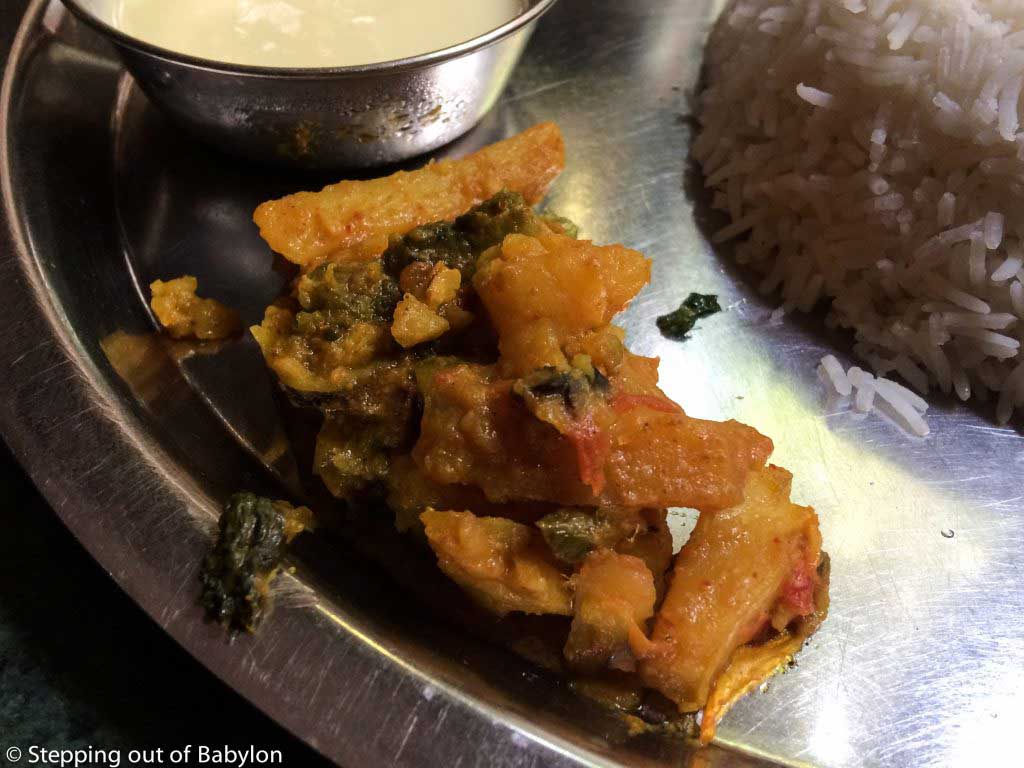
Tarkari
The tarkari is a stew made from different types of vegetables, changing according to the season, but where the potato is almost always present. Coriander, cumin and turmeric are used to season, where is common the presence of onion and garlic.
There’s a huge variety of vegetables available in the market at Kathmandu, some of them totally unknown from the western eyes, but other, like carrot, cauliflower, potato, pumpkin, aubergine, zucchini are quite frequent. Mushrooms coming from the mountains are also used but is a treat reserved for a specific season. Despite all this variety in the tarkari doesn’t have more than two kinds of it, and potato is often one of them.
Changing according to season and from place to place, the tarkari could be a bit spicy, but is never oily or heavy.
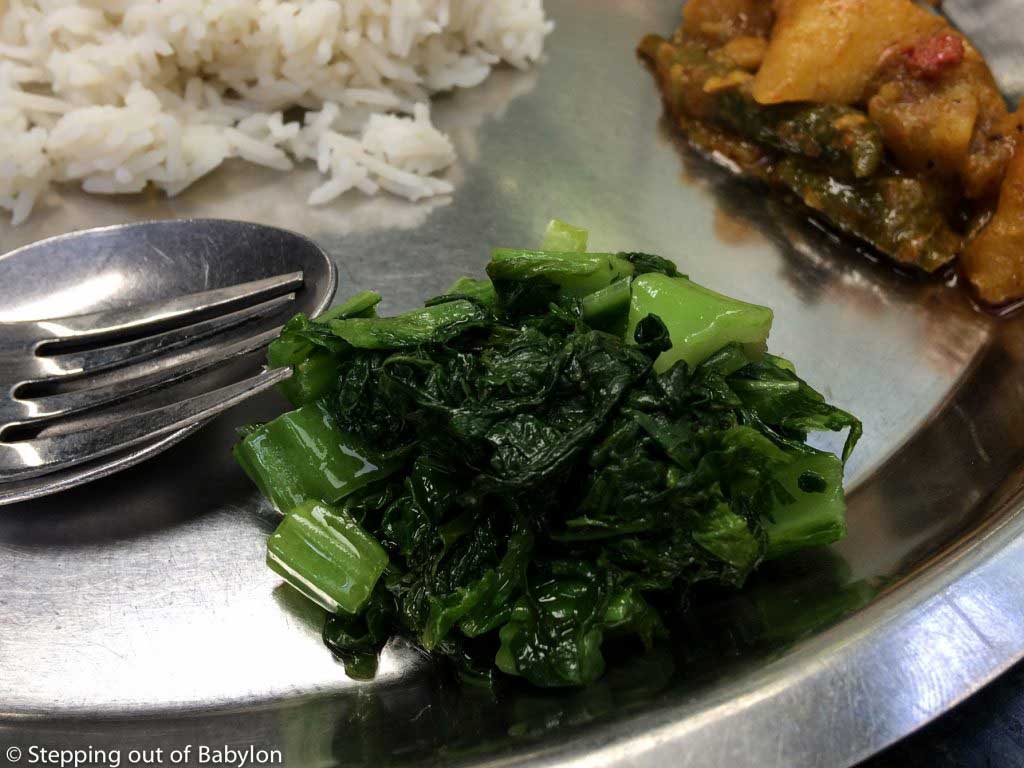
Saag, stir fry spinach leafs, mustard leafs, radish leafs or another kind of green leaf vegetables
Radish pickle, chopped into small pieces, and seasoned with mustard oil and chili; this side dish is strongly spicy and give a boost to the dal bhat combination of tastes.
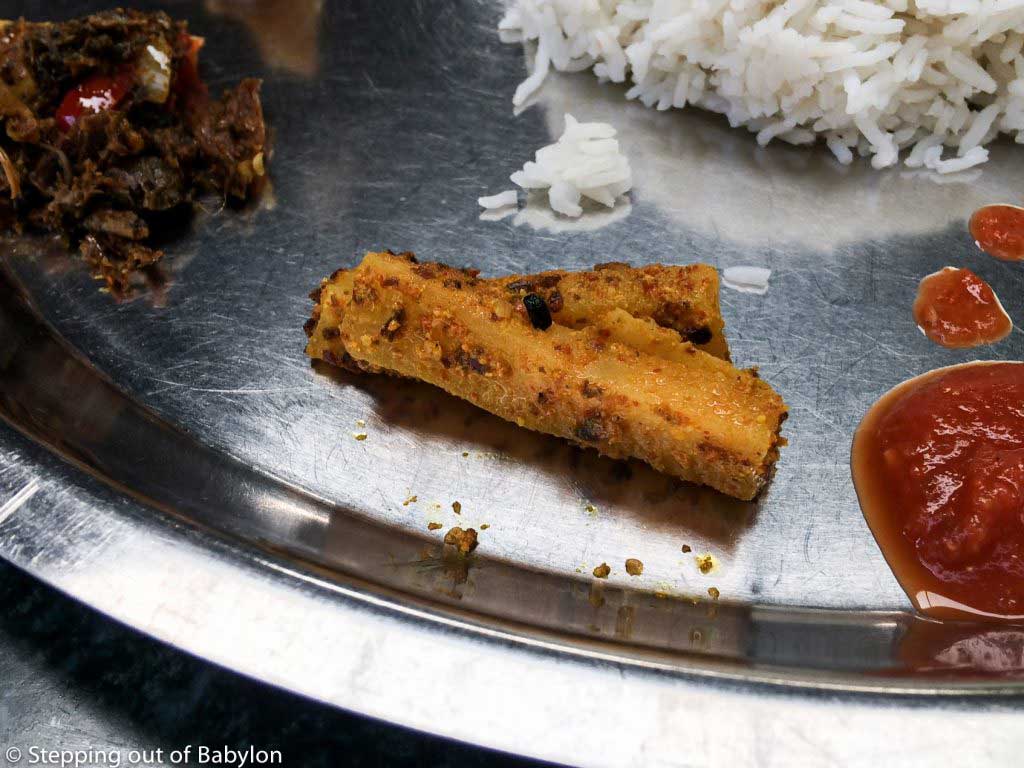
Salad… usually not much more that a slice of radish, tomato, carrot or a piece of cucumber.

Yogurt… usually a bit sweet but not always present in some dal bhats; is a good combination with the salt and spicy taste of the rest of the dish.
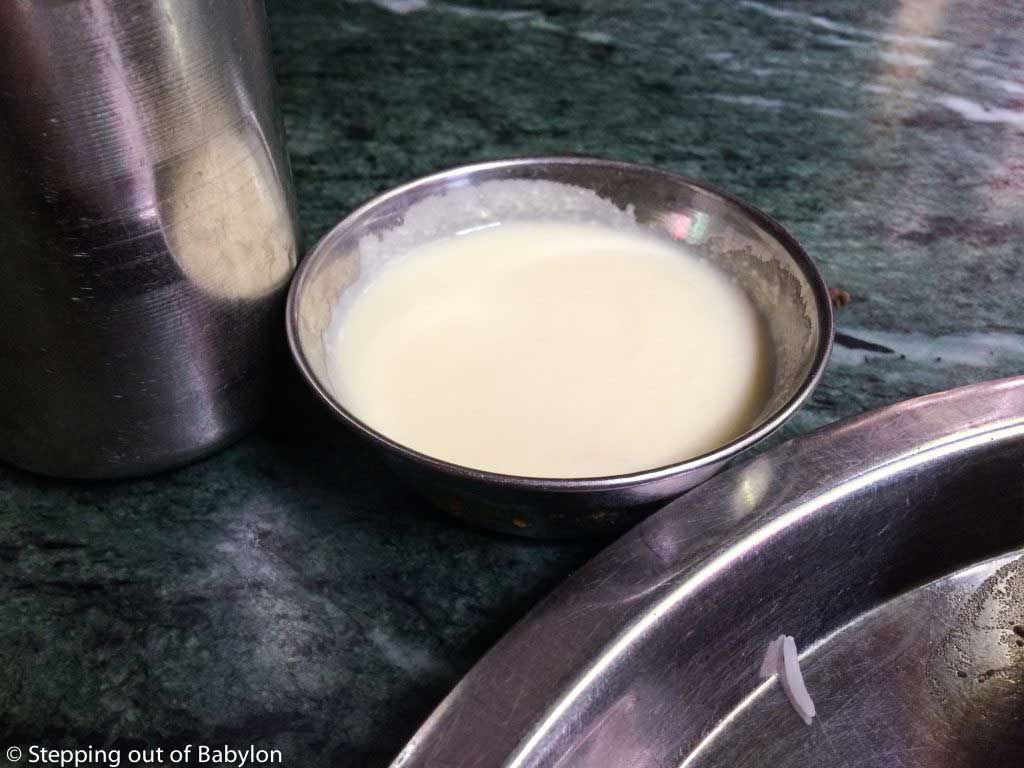
Red sauce, not really my favorite and always skip it, but is made from tomato, chili and Sichuan pepper, having a sour and acid taste.
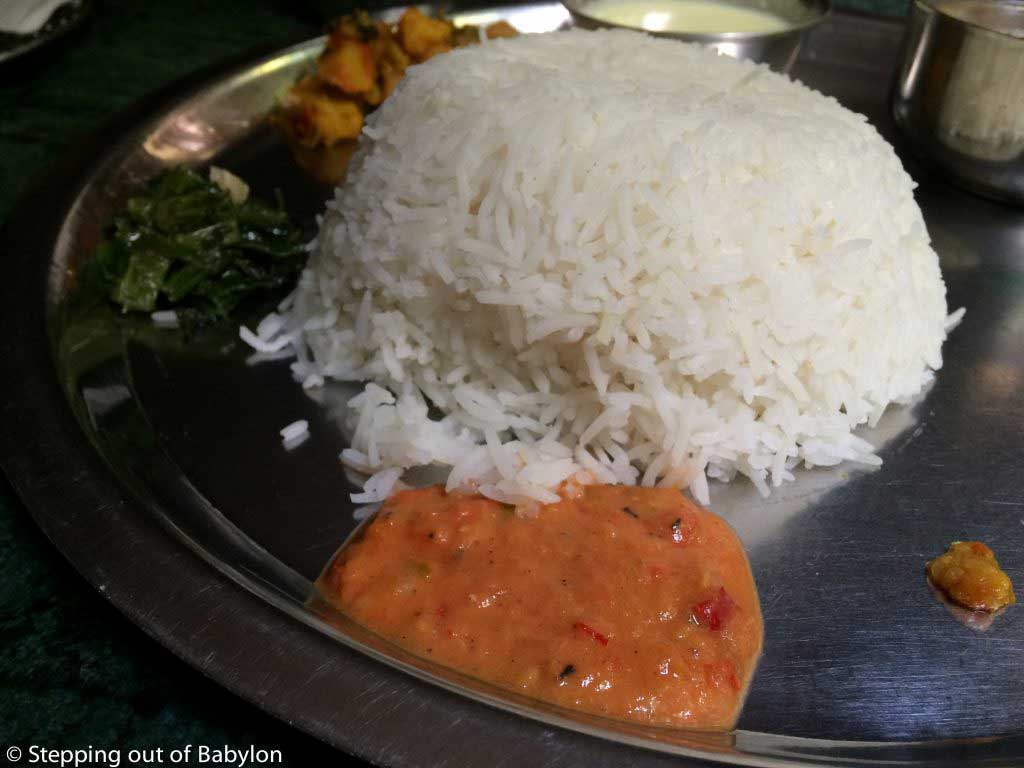
… and last but no the least: Rice, plain and unsalted steamed rice… couldn’t be simpler.
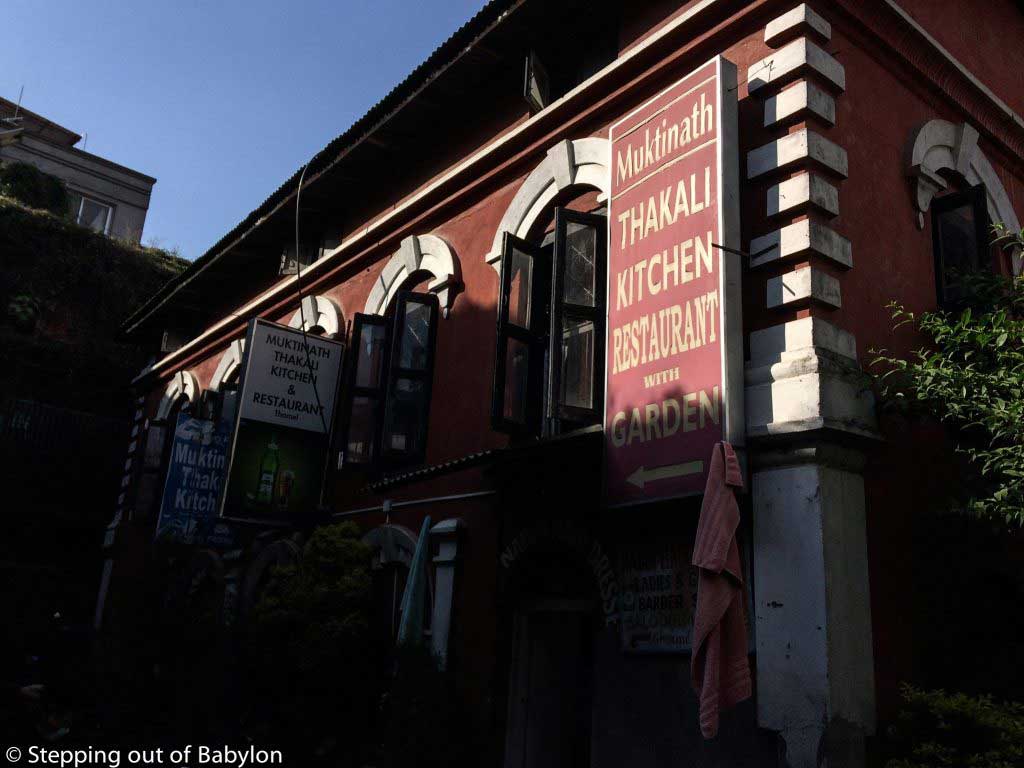
In the center of Thamel… difficult to give a proper address but try to look for Funky Buddha Bar, and passing the entrance gate you’ll see a red brick building on you left where is located the Muktinath Restaurant. Inside, passing the kitchen you have a kind of open-air area more pleasant called “garden”.
The Om Restaurant is hidden in the end of a back street of Thamel. Try to find first the Roots Bar, and from there is less than 100 meters. The place is dark and far from be attractive, but has a kind of character and the dal bhat is delicious… and maybe the cheapest meal in Thamel!
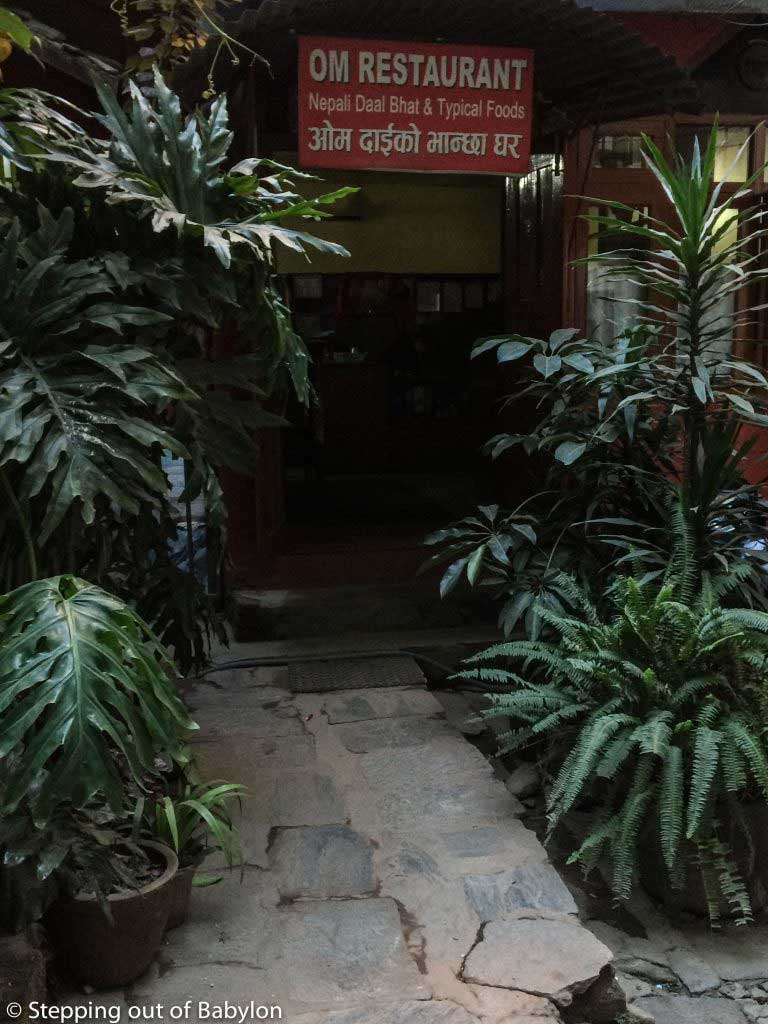
Note that in all restaurants the dal bhat is served in the refill system, which means that the plate is served with a not so big portion of food, but after someone will pass by bringing more food, and you can refill you plate as many times you want!
Another version of the dal bhat, hard to find in restaurants, is made with barley, cereal that grows at high levels as the rice, typical from lowlands, is hard to grow above 2000 meters high.
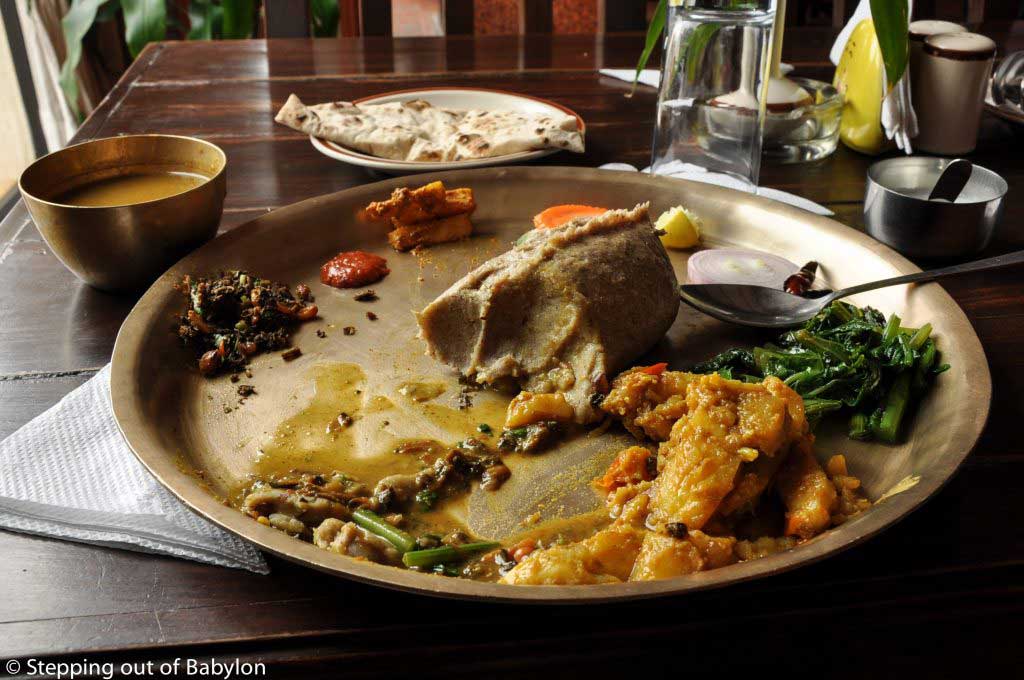
I can’t finish this post without mention a homemade dal bhat, cooked at mountain style, that despite the presence of the rice as also served with corn, cooked and beaten, resulting in a yellow thick paste. Very delicious, with the sweetness of the corn balancing the spiciness of the curry.

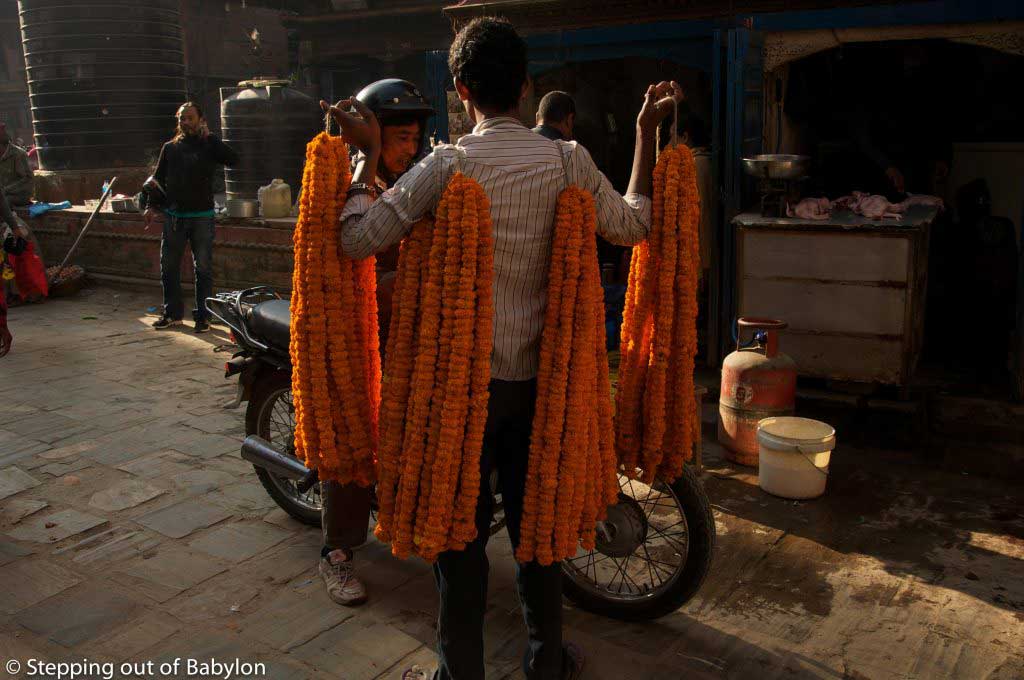
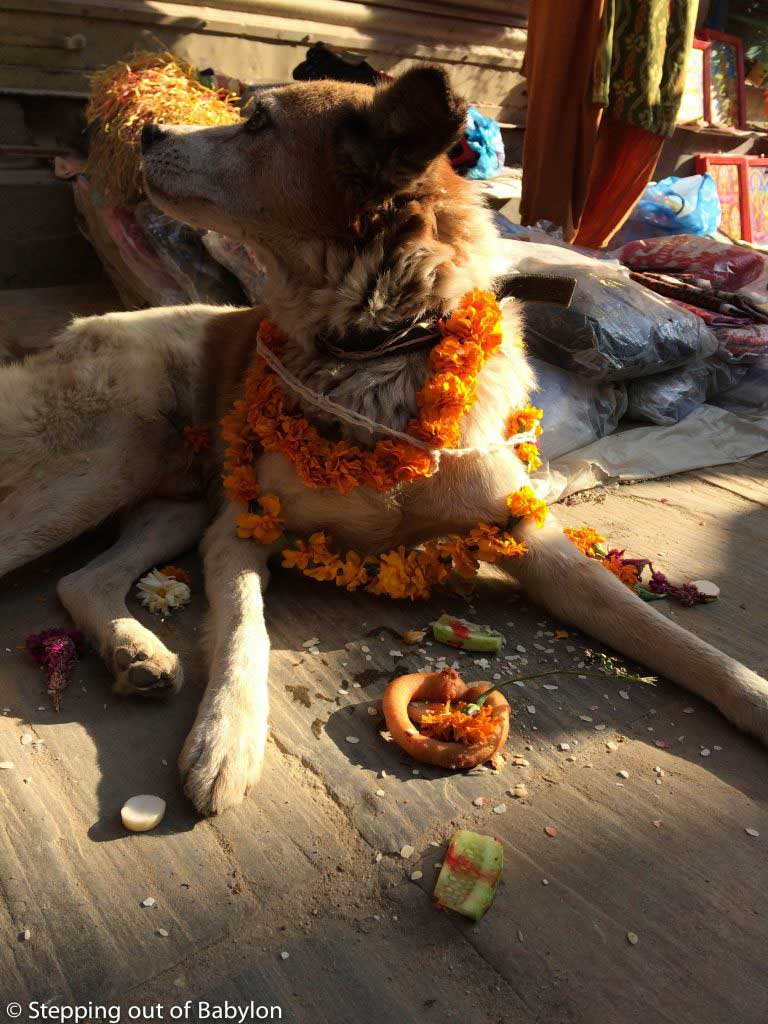
During the Tihar festival, one of the most important religious festivals in Nepal, there is one day dedicated to worship dogs, “kukur” in Nepali.
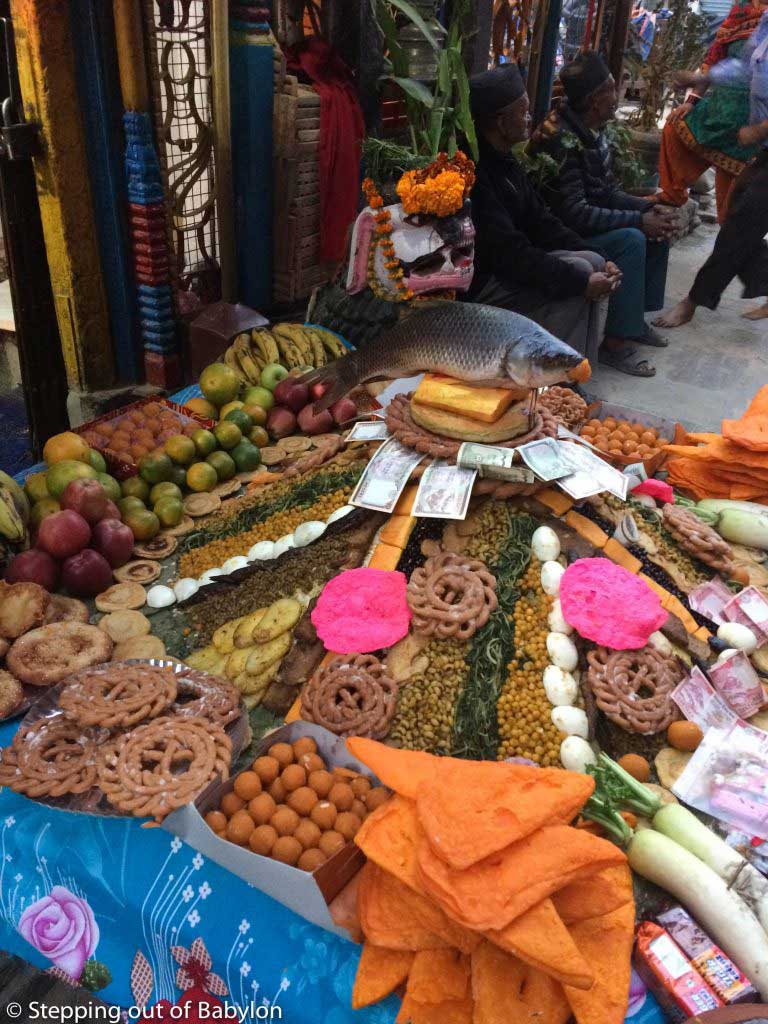
Early morning, through Kathmandu streets, people put “tikka”, red pigment on the dog’s forehead, a flower garland of marigolds on the neck, throw rice and some drops of water. Is offered food to the dogs like sweets, meat and the traditional “sel roti”, the Nepali traditional bread made from rice flour and deep fry.
Both home and stray dogs receive the puja, as is believed that this ritual brings protection to humans and strength the link between humans and dogs.
The dogs seam a bit confuse with the “tikka” and the garlands, but they easily forget the suspicion and the discomfort in front of the food treats.
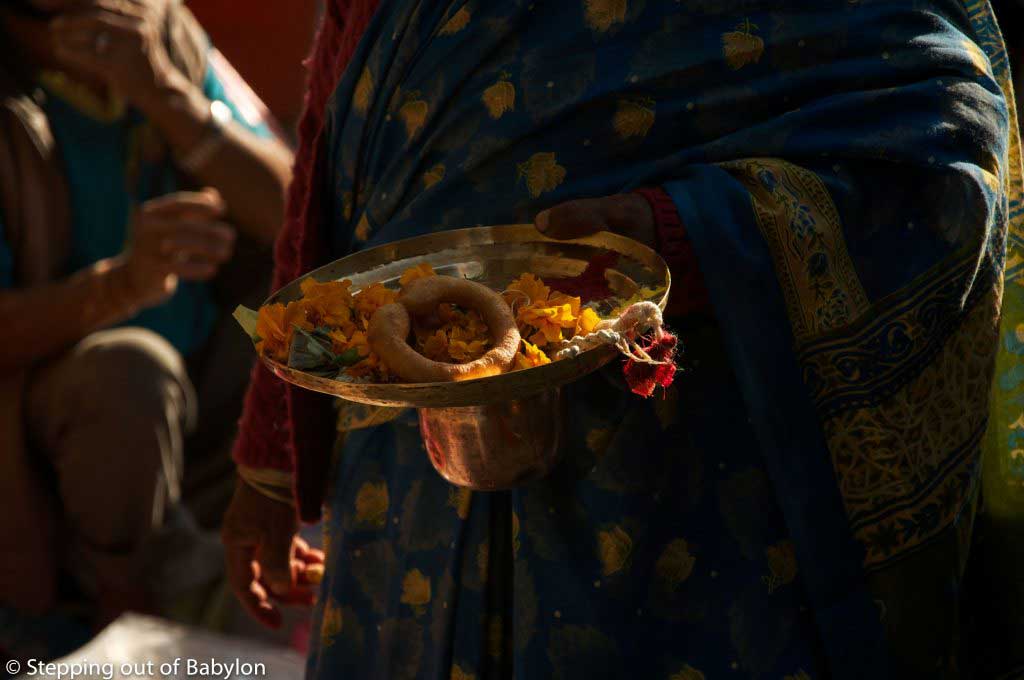


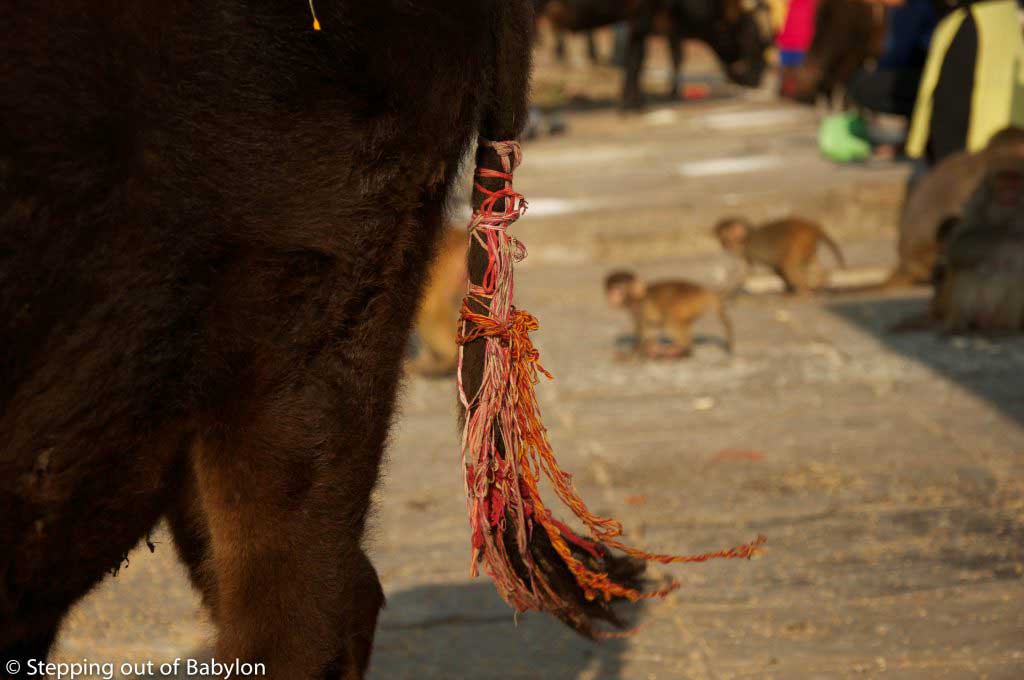
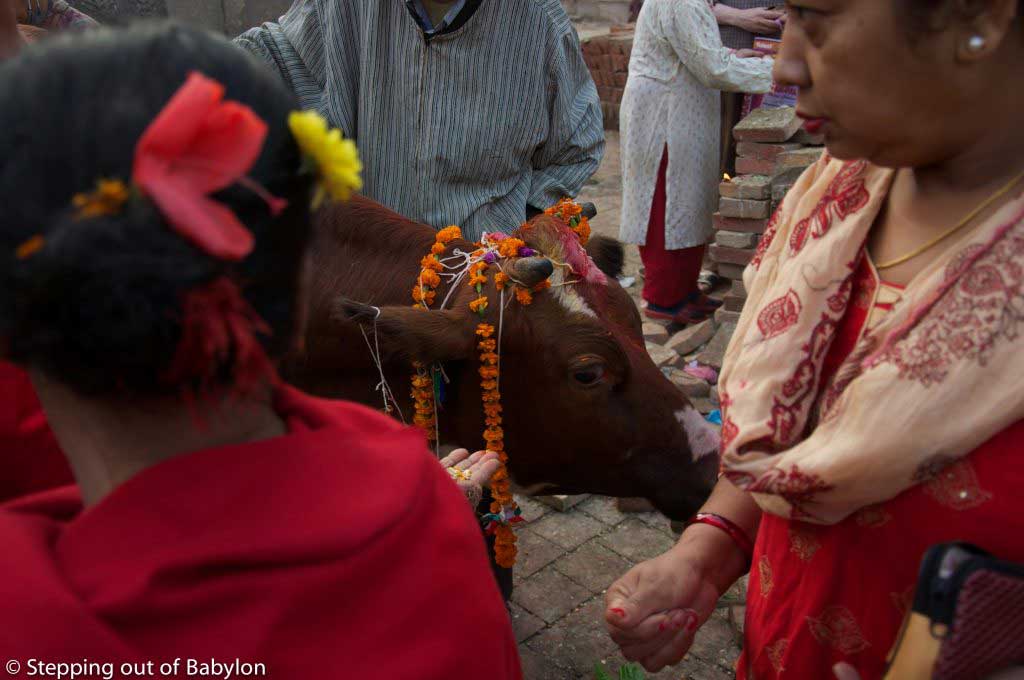
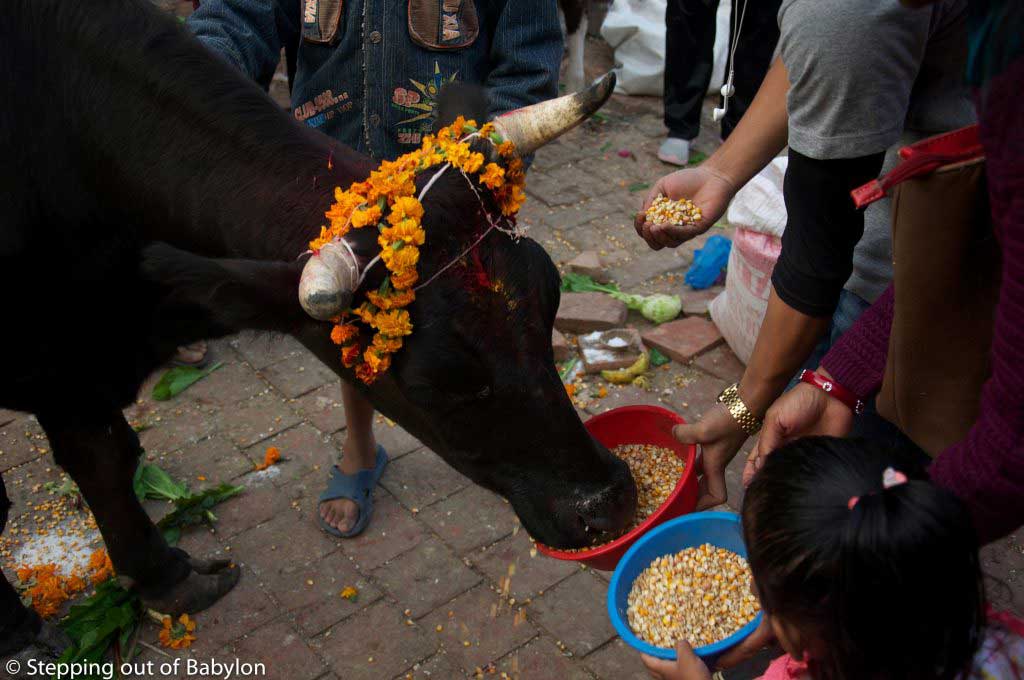
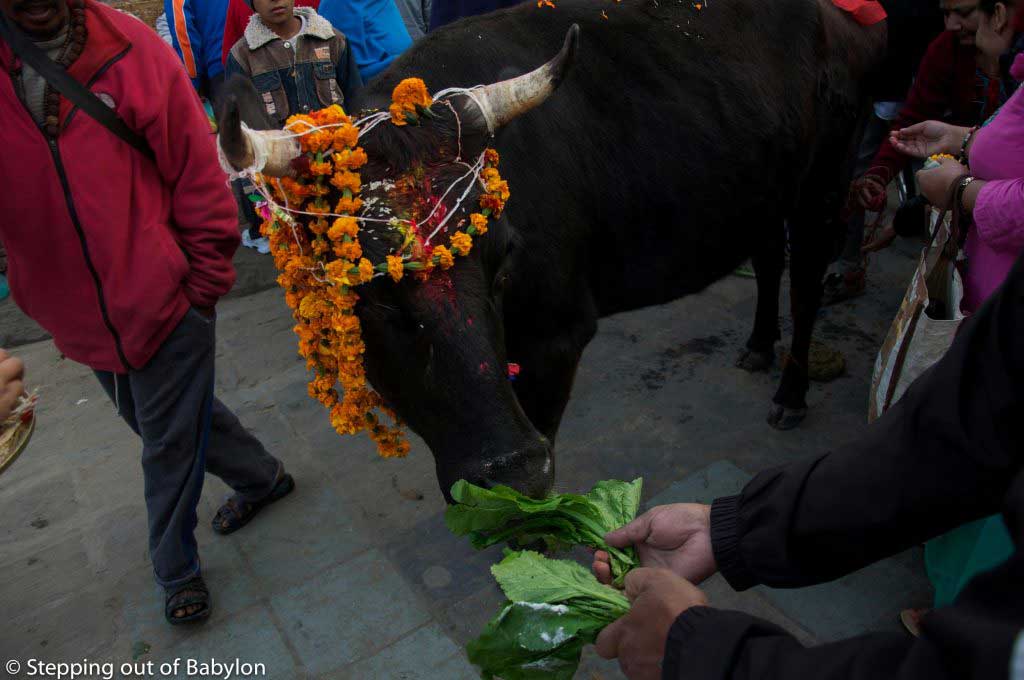
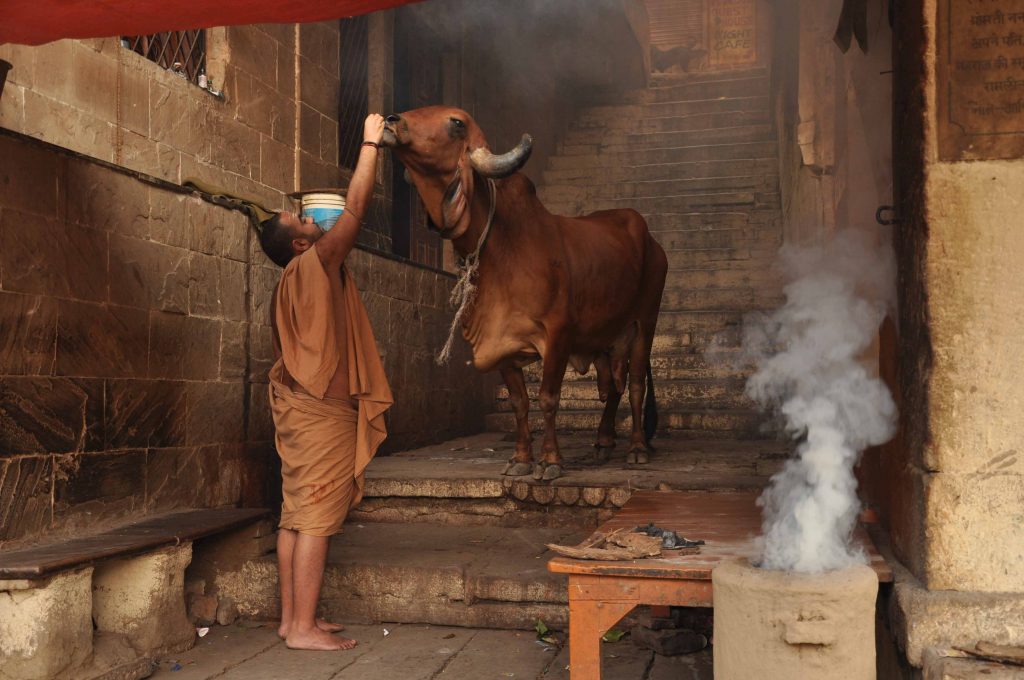
On the third day of Tihar Festival is the turn of the cows to be worship, with offerings of rice, corn, fruits, salt, wheat flour, cookies, chapattis and green veggies! At the same time that they receive food treats, people light candles and incense, drop flower petals on their head and their back, and wrap the tail’s cow with a colourful string. Sesame oil id drop in the forehead of the cow and a “tikka” is made with red pigment.
Contrary to the dogs, that in the morning are more in the mood to sleep that to have food, the cows get enthusiastic with the offerings being totally indifferent to the marigolds garland and all the “puja” rituals. Small money bills are put on the head of the cows that quickly disappears on the pocket of someone, but that doesn’t seam to disturb the ritual of Gai Tihar.

Tihar is celebrated mostly during the day, usually with early morning pujas, but on the evening of the third day of the festival the dark streets of Kathmandu lights up for welcoming the Goddess Lakshmi.
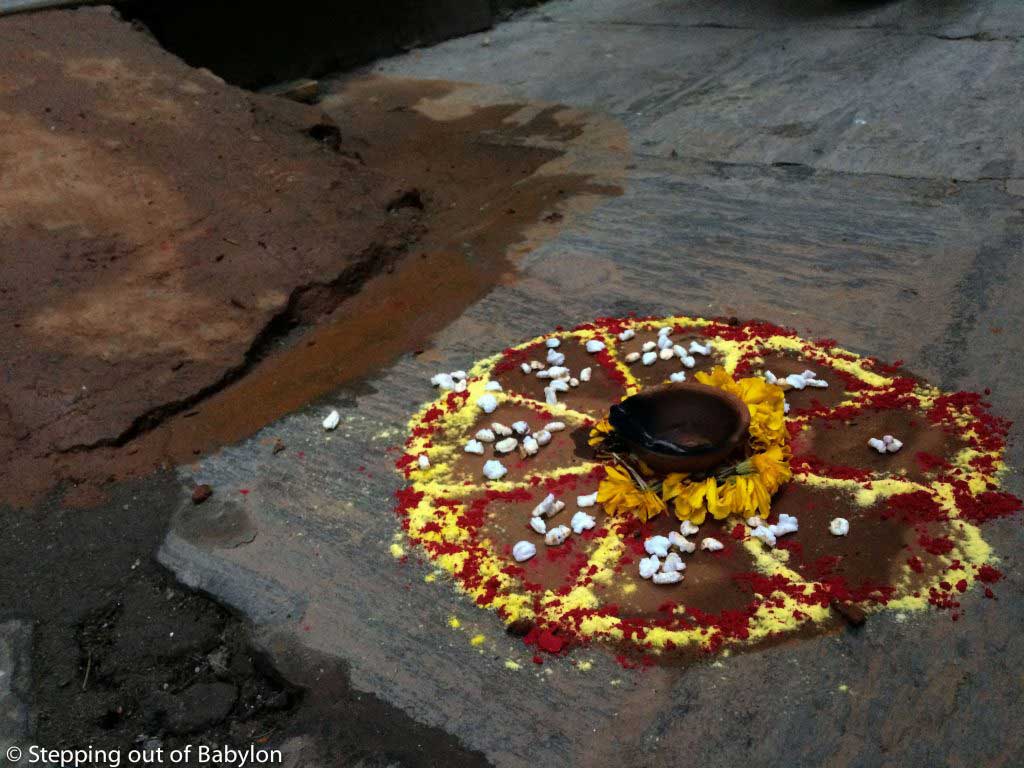
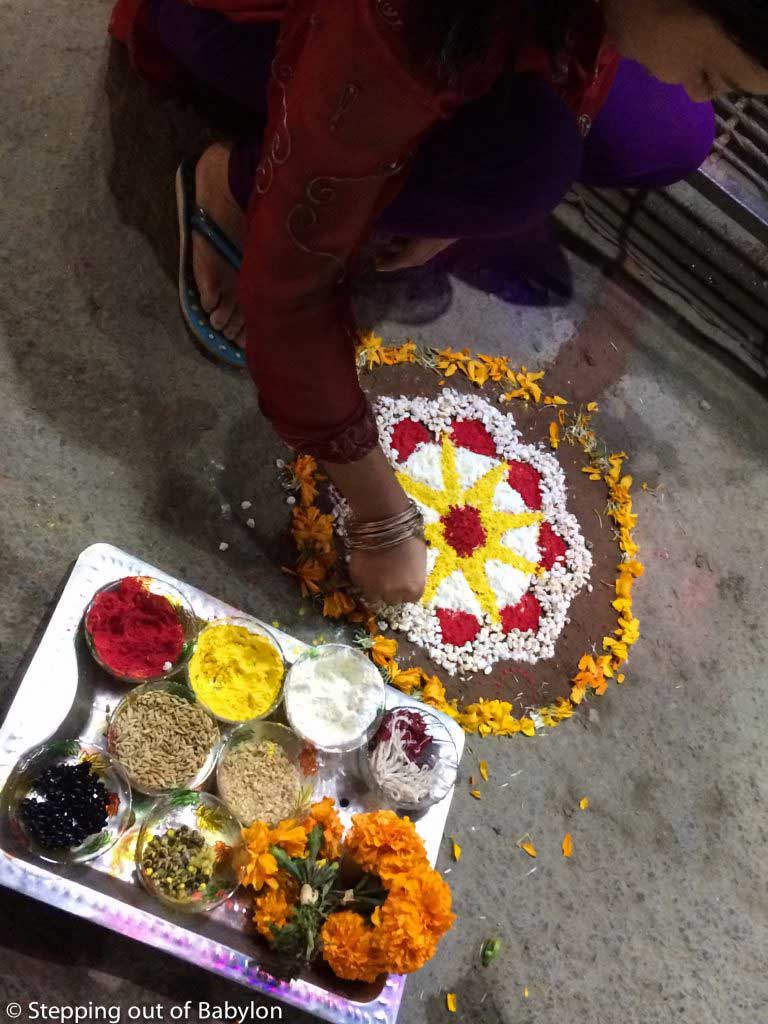
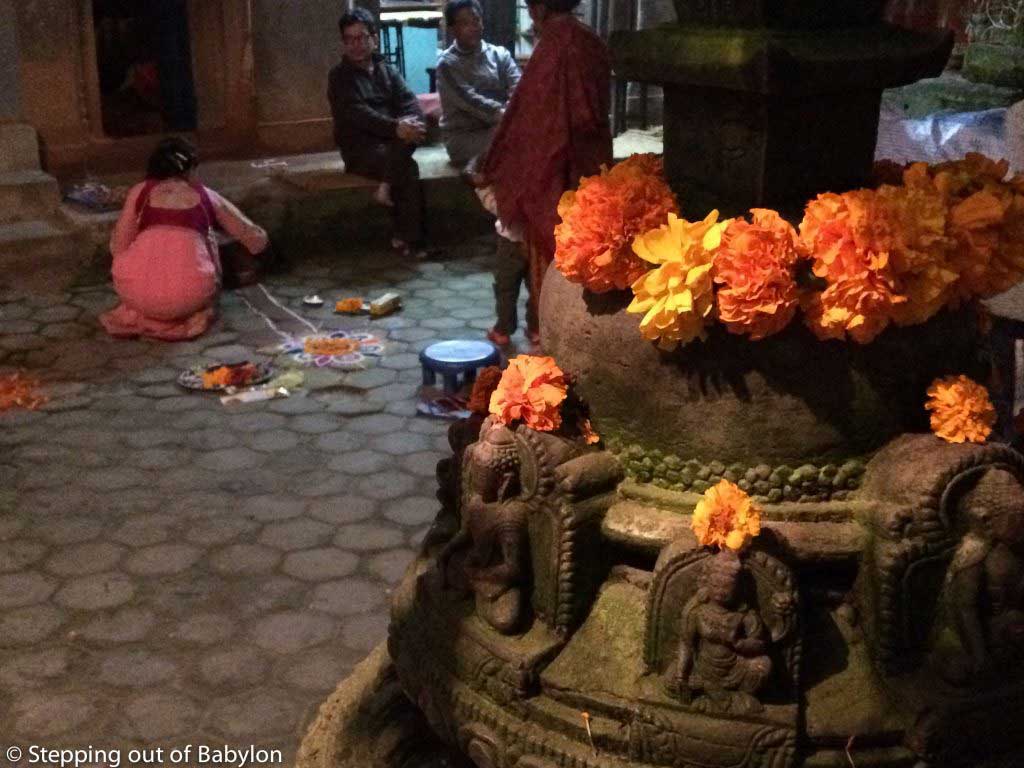
At the entrance of the houses and shops the floor is decorated with colourful designs, mostly mandalas, adorned with flowers, candles and food offerings, while garlands of marigolds are hung above the doors.
The entrance of the houses and shops are painted with a red-brown mud, creating a path that is light up with candles to invite the goddess Lakshmi to come inside.
Along the night people gathering at the streets decorated with lights, chattering, playing music and cards, while groups of children go from door to door, singing songs ask for money and sweets, firecrackers blow every now and then, the creating one of the most animated nights of Nepal.



Note: the best time to see caw puja and dog puja is early morning… so be prepared to jump out of the bed just after the sun rise. Walking along Kathmandu streets you can see a bit everywhere the Kukur Puja, but is better to look for a area with several butchers as there’s a favorite dogs place. For Gai Puja you can see some cows at Basantapur, near Durbar Square, the ground at the entrance of Pashupatinath Temple complex (near the ticket counter, but you don’t need to get the ticket). Lakshimi Puja happens in the evening of the third day of the Tihar festival and is allover the city streets.
https://steppingoutofbabylon.com/wp/en/2016/11/in-search-of-the-best-dal-bhat-in-kathmandu/
https://steppingoutofbabylon.com/wp/en/2016/09/a-guide-for-snacks-and-street-food-in-kathmandu/
Sometimes the intense pace of Kathmandu city, with its constant traffic, horns, polluted and dusty air, make for a getaway in search of a healthy atmosphere and a quieter environment.

The location of Kathmandu, surrounded by mountains, offers several options for a day trip in search of nature, green landscapes, mountains, and clean air… a place where the birds chirping and singing overlap the noise caused by human beings, such as happens in the overpopulated Kathmandu. Namo Buddha is one of these discrete paradises situated a few kilometers from the capital where it dominates the Tibetan culture and religion, being one of the main places of Buddhist pilgrimage in Nepal, together with the stupas of Boudha and Swayambhunath.
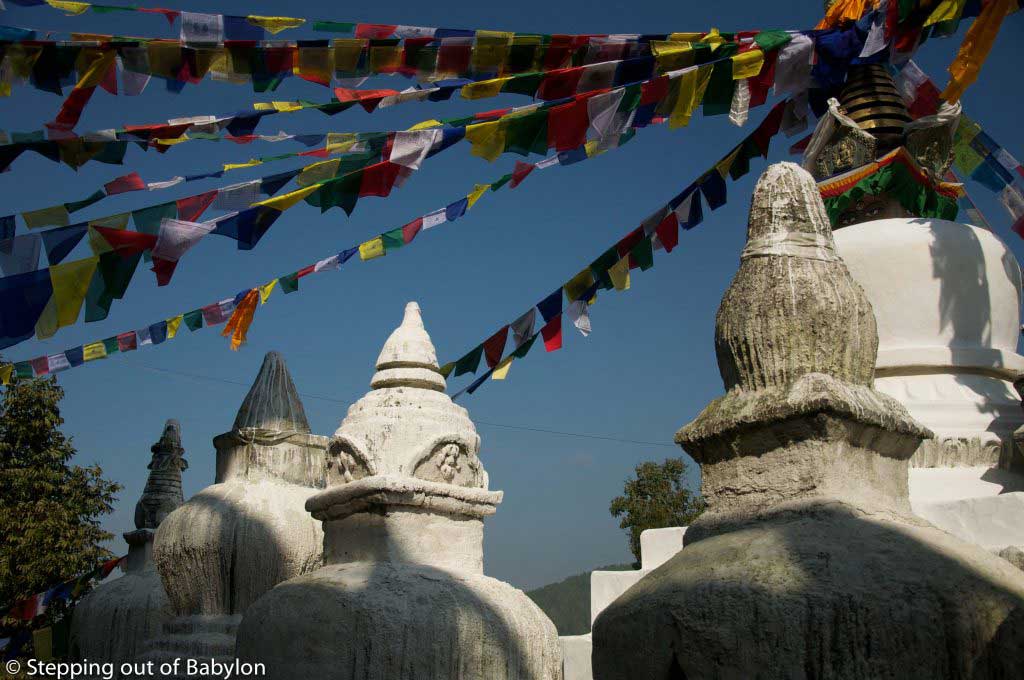

The stupa houses the relics of a prince who, according to tradition, offered his blood and body as food to a starving tiger as an act of compassion. Apart from the religious significance, the modest stupa does not make a big impression, with the place being surrounded by small restaurants and souvenir shops.
But up the hill, through a dense grove of trees along a path decorated with prayer flags, you reach the top of the hill, from where you can see the Thrangu Tashi Yangtse Monastery.The monastery is of recent construction, and its architecture does not impress, but the interior of the vast temple, with ceiling and walls decorated with delicate Buddhist paintings create a sacred ambiance.
In the various buildings that are part of the monastery are other smaller temples, with elaborate statues of Buddha and the goddess Tara.
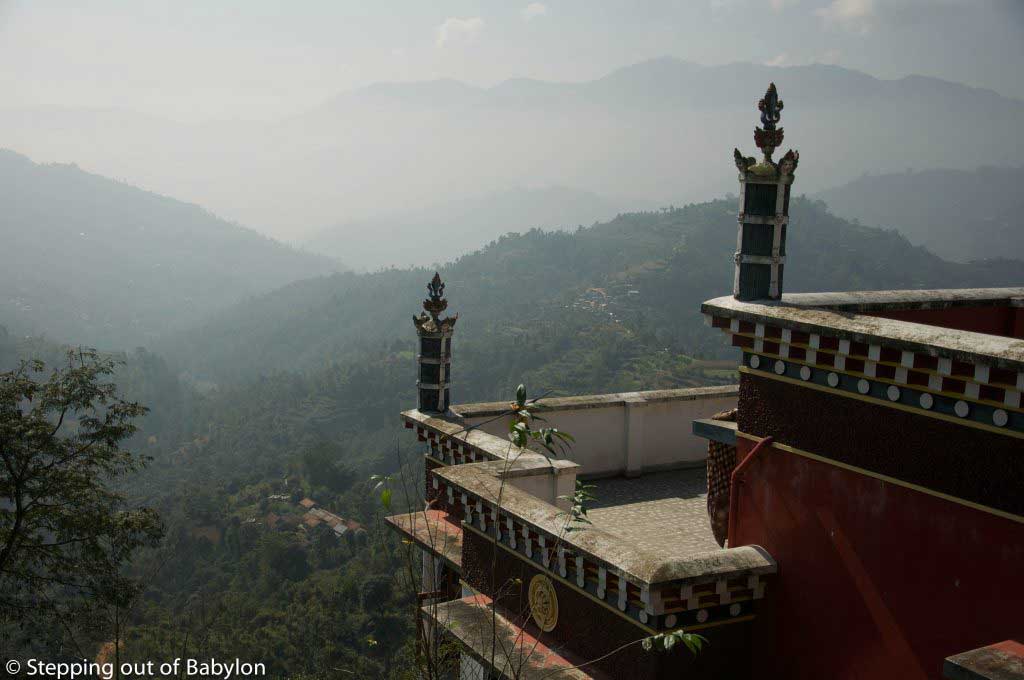
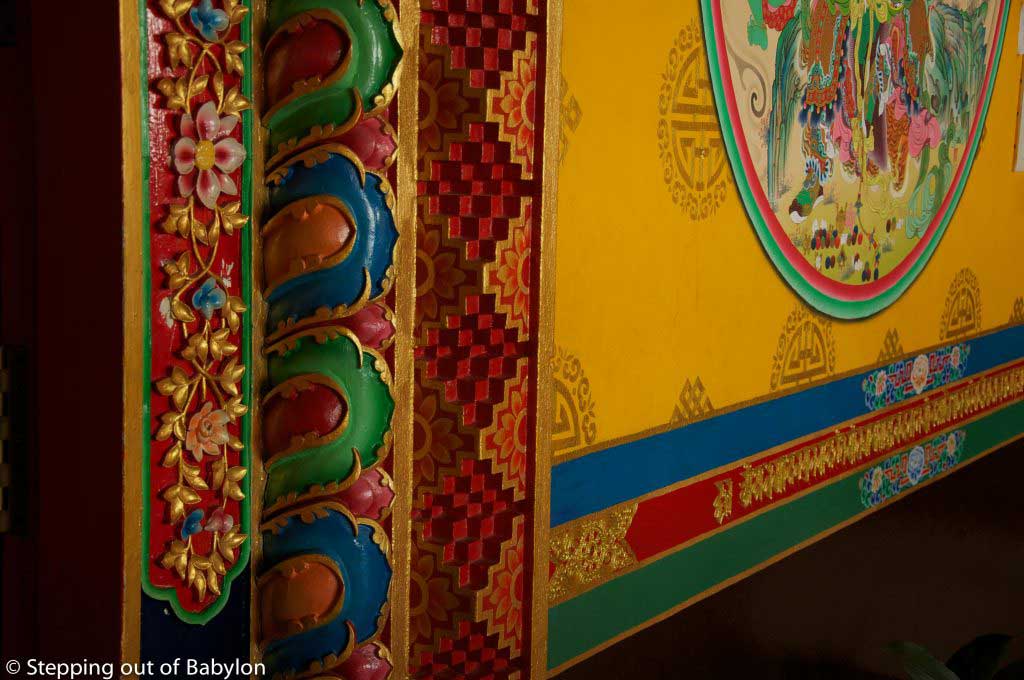
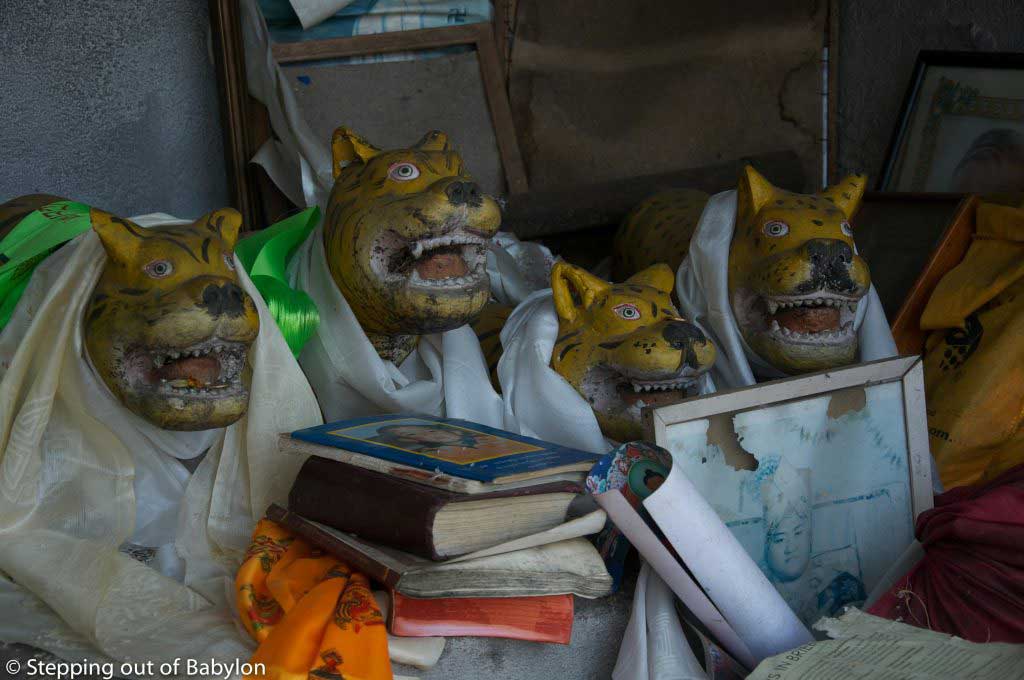
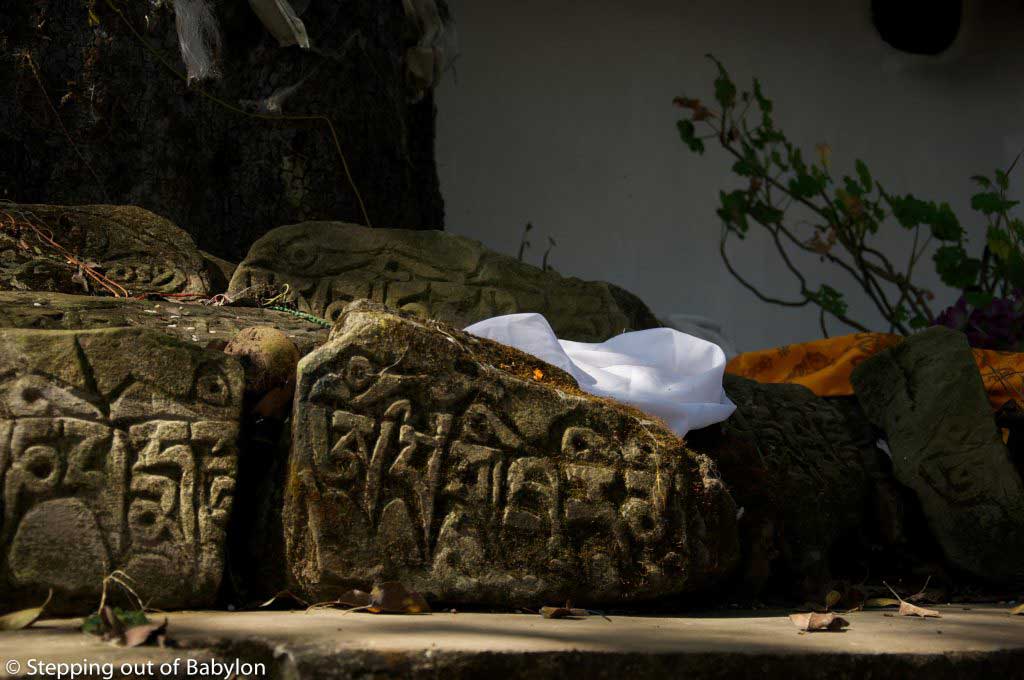
There is an atmosphere of calm and tranquility, promoted by the sacred environment of the monastery and the intense green forest that frames the place, crowned by the snow white that covers the mountains of the Annapurna range.
Namo Buddha is located 40 kilometers from the center of Kathmandu, about two hours away, so it can be visited in one morning. It is advisable to get out of Kathmandu early, around 7 a.m., to avoid the traffic jam.
But in the area, within walking distance, there are a few resorts.
Around the stupa of Namo Buddha, there are several restaurants aimed to pilgrims, who also sell religious articles and incense but that are not inviting for more than a chai.
Along the road where the bus stops, there are three eateries that serve tea and meals, but definitively Banepa offers better options in terms of food.
There are no direct buses from Kathmandu to Namo Buddha.
You need to catch a bus at Ratna Park to Banepa first (depart with high frequency).
At the bus terminal of Banepa (bus park), there are buses that pass through Namo Buddha; just ask for Namo Buddha from the various buses that are parked in the bus park.
The bus stops very close to the stupa. After the stupa is about 10 to 15 minutes walk to the monastery.
The bus frequency from Namo Buddha to Banepa is not high, so you may have to wait an hour for the next bus… or get a ride from a truck, but pay attention: being faster is more expensive than the bus.
The road between Kathmandu and Banepa is in good condition and the trip is reasonably comfortable, on a flat route. But from Banepa to Namo Buddha the road is steep and winding, unpaved and very deteriorated, making this last stage uncomfortable and tiring.
As a holy place for Hindu religion, in Pushkar the meat is banned as also eggs, so is easy to find delicious vegetarian snacks in the small local eateries as also in the many street food stalls, that at different hours of the day pop up along the Pushkar streets!
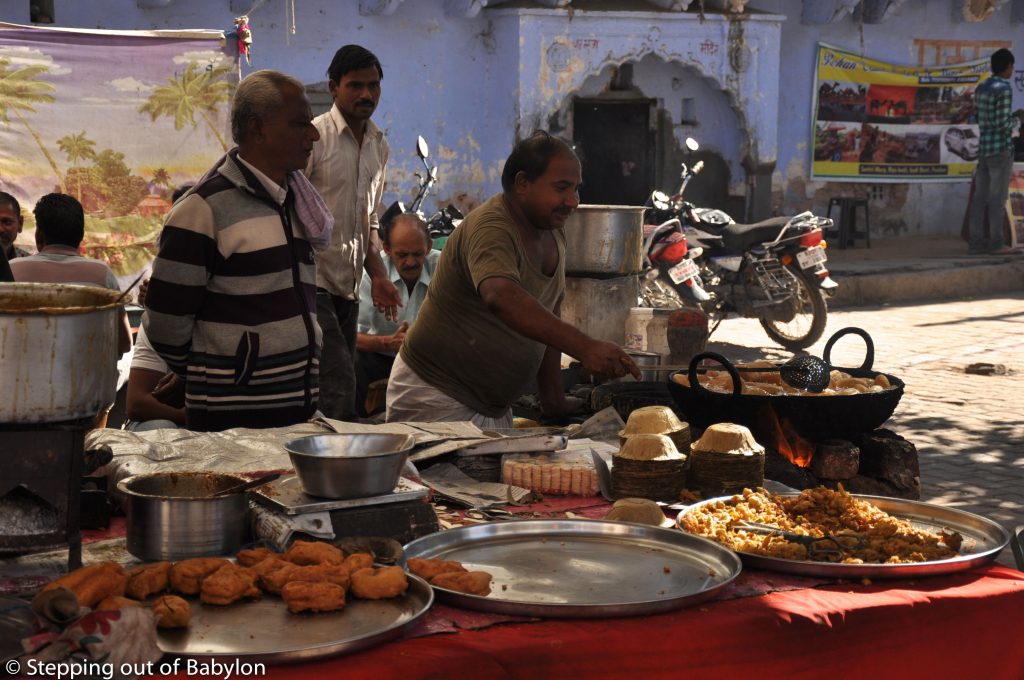
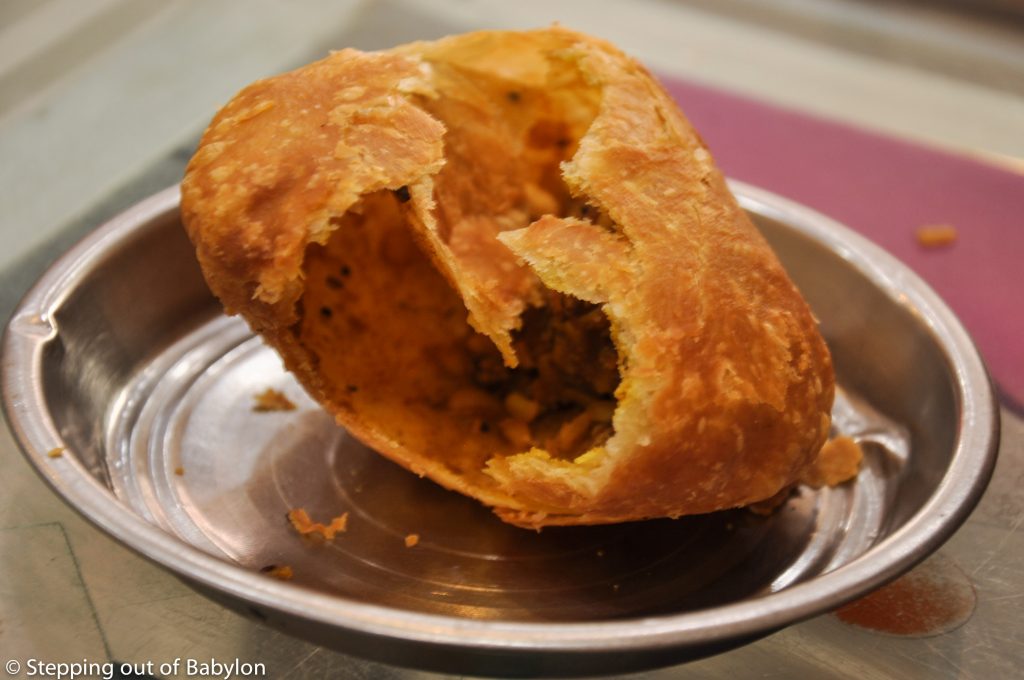
Kachori can be pointed as a gastronomic icon of Rajasthan snacks. This deep-fry dough fills with a mix of lentil (dal) and species can be found in many places in India. The filling can change a bit from place to place, but the hollow crispy dough is a must from any kachori…. yes!
These patties have a small quantity of dal inside and get hollow when are dipped in hot oil. When served, the kachori is slightly smash and topped with a big spoon of a sweet and spicy sauce with a reddish colour.
In Pushkar, the kachori can be found in many places, but my favourite one is a small eatery that only has this snacks and samosas (not so special) a couple of minutes from the square where every morning fruits and vegetables hawker gather.
Address: behind Sri Raghunatha Swamy Temple, in a corner about 2 minutes walk from the Market Square, walking in the opposite direction of the lake. Close around 5 p.m.
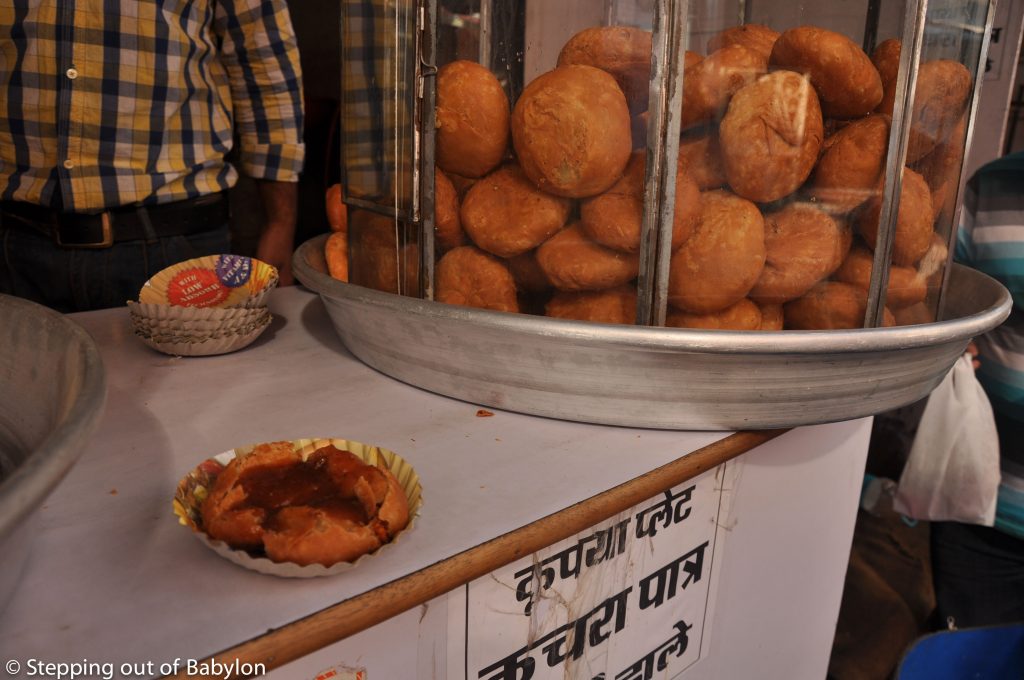
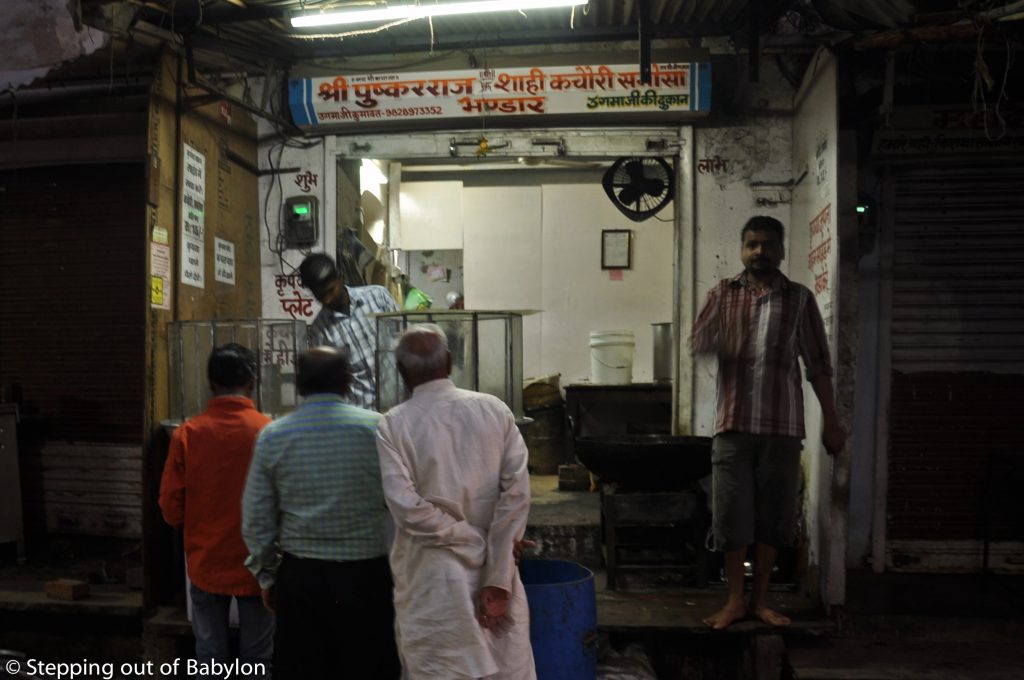
My favorite street-food in Pushkar and also my favorite breakfast: light, spicy a delicious… without oil or much deep-fry stuff!
Poha is basically flattened rice that after gets dry looks like flakes. The poha can be cooked is different ways, as eaten in the morning as breakfast or during the day as a snack, and can be found a bit everywhere in India.
In Pushkar, a popular street stall serves poha cooked with an aromatic mix of cumin, chili, coriander seed, mustard seeds and curcuma that give the yellow color! Then, over this rice mix, is added fresh tomato, onion, cilantro and a big spoon of a creamy and delicious dal (lentil soup). The aloo bhujiya on top gives a crunchy texture to this tasty and healthy meal.
The phoa with dal is be served in a bowl, but if not the phoa can just be served over a newspaper or over a deep-fry cracker, crispy but oily. This wafer can also be cracked and used to top the poha and dal mix.
Address: “Pushkar Breakfast Corner” at main market square (a small where every morning fruit and vegetables hawker gather). Every morning until the food finish usually before 10 a.m.
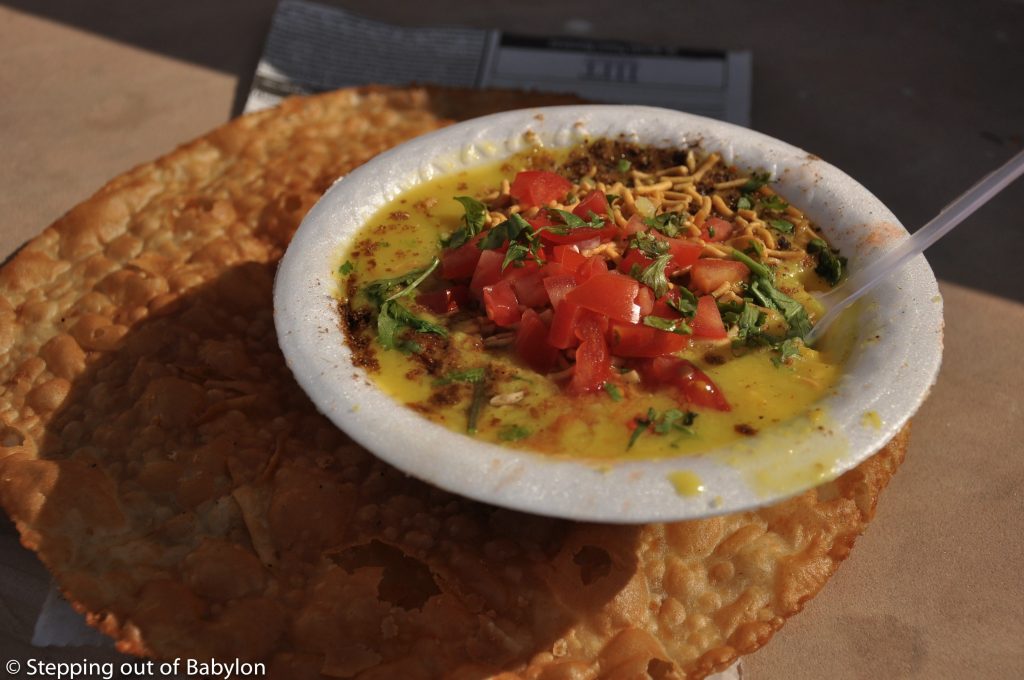
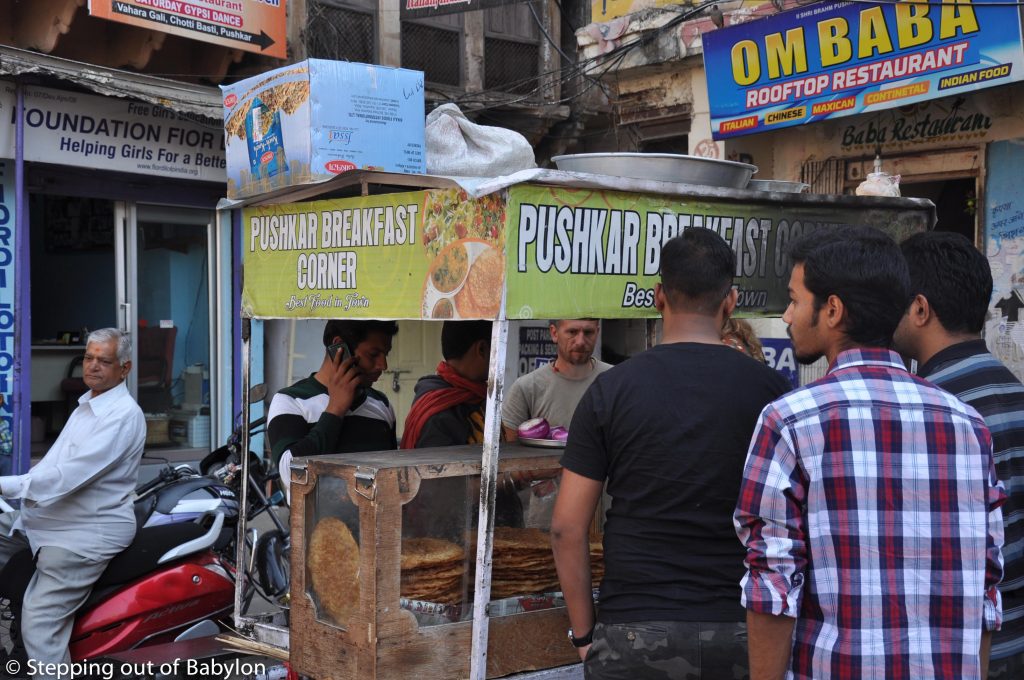
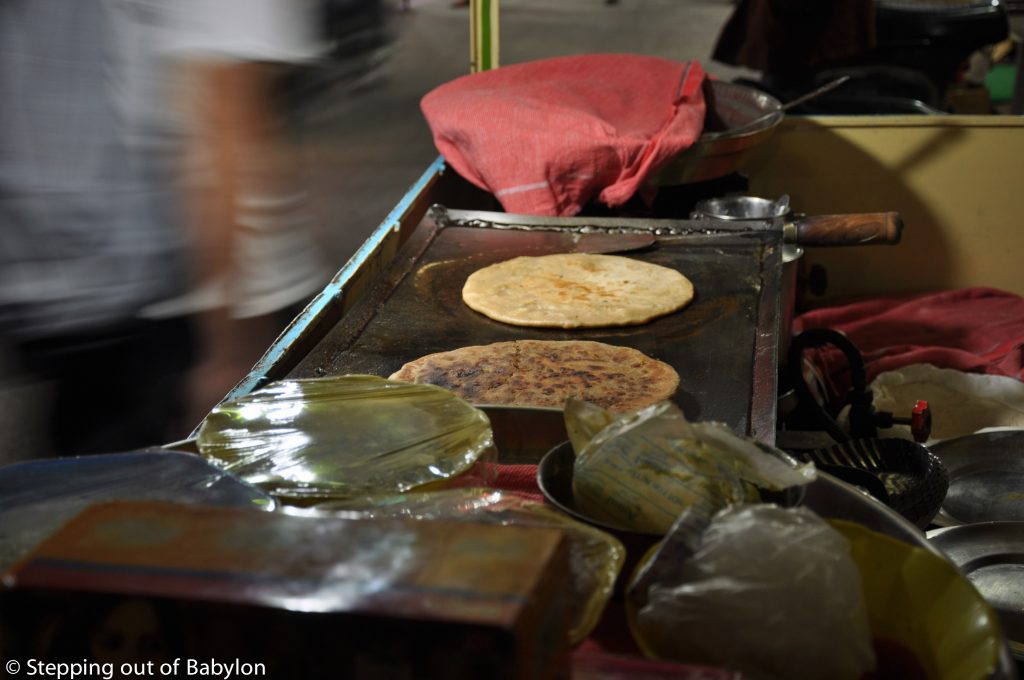
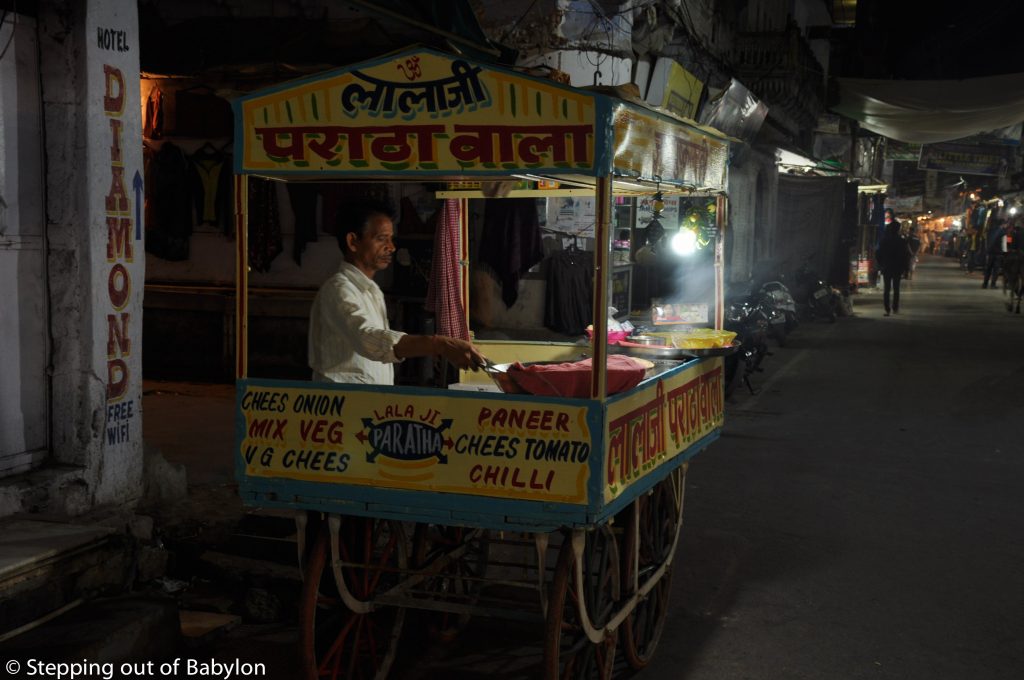
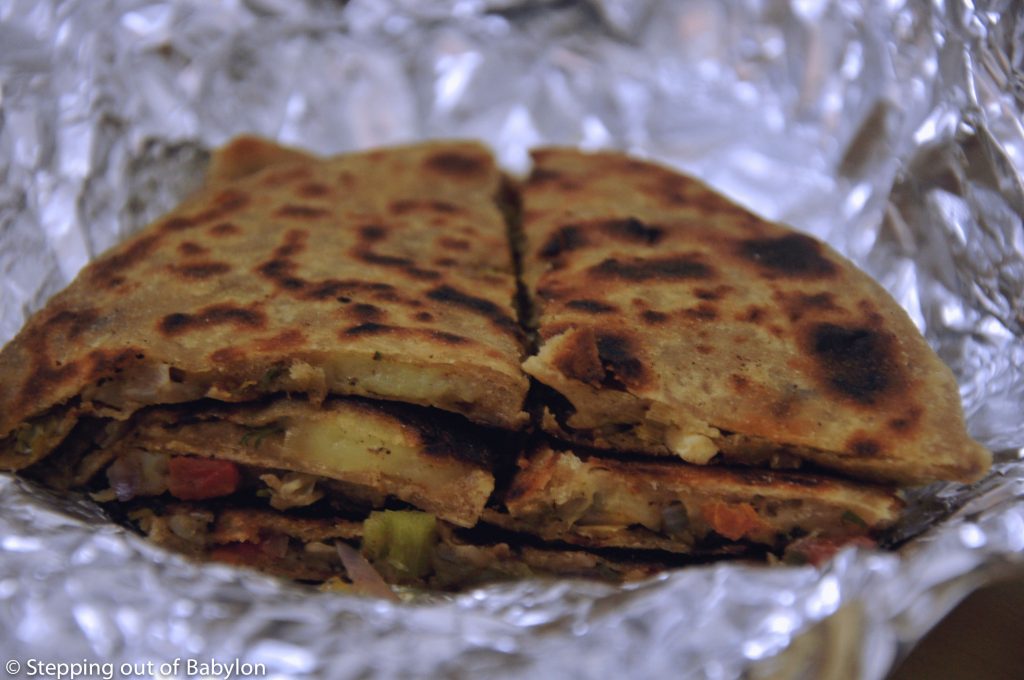
… thick, rich in vegetables, spicy and not too oily… yes, the best paratha that I ever try in India!
This treat can be found after 5 p.m. in the Lala Ji stall that only make parathas: from the classic aloo (potato) to cheese, onion, vegetable and paneer… but the one that wins is the cheese-vegetables! All are served with a green mint sauce and raita (a yogurt made sauce)
Everything is made at the moment so you may need to wait a bit, and you can eat just there on the street or ask for parcel.
Address: Lala Ji stays along Main Street of Pokhara (Main Market Road) not far from Nagar Palika Ghat.
This a typical Rajasthan bread, made from whole wheat flour, semolina, chickpea flour, seasoned with cumin, turmeric, coriander seeds and cooked in wood oven. Just before being served the bread balls are put over the burning coal to get a roast look and the grill taste, and generously soaked in ghee (clarified butter).
From this mix of flour results a rustic bread, dense and with a dry texture, so the ghee put over the warm baati give a more moist and soft texture. In Rajasthan, the baati is eaten soaked in dal, the so-called dal baati, but can also be a filling snack.
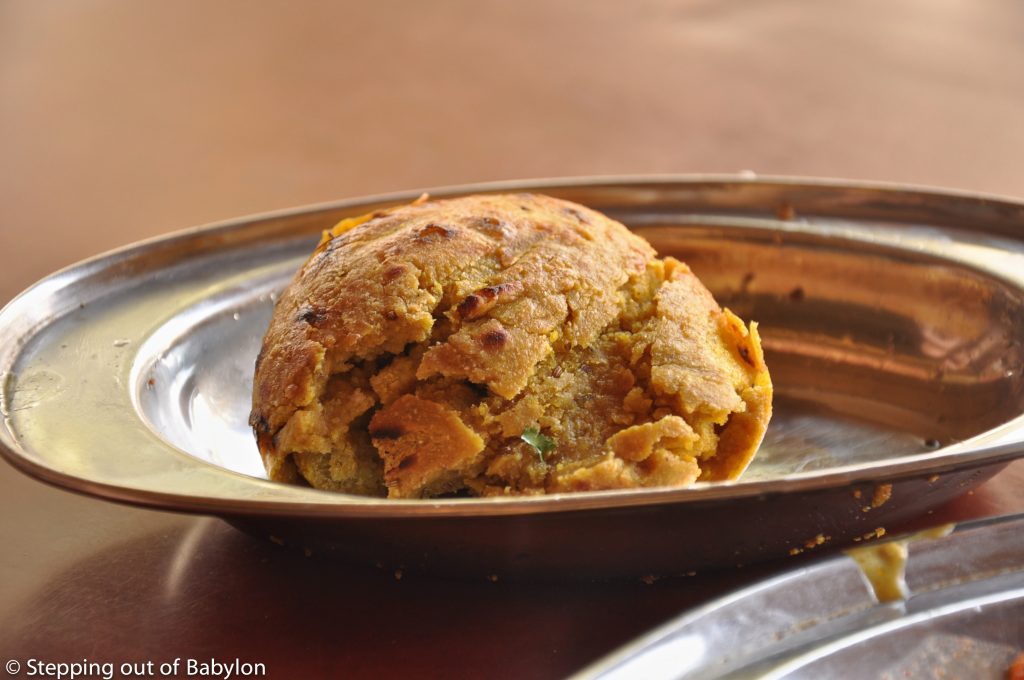
Dal Baati (or dal baati churma) is a typical Rajasthan meal: basically, a dal served with the baati, Rajasthan style bread. The dal is made with a mix of different kinds of lentil, resulting in thick gravy, where are visible tomato and onion finely chopped, aromatized by cumin, coriander, turmeric, cloves, bay leaves and ginger.
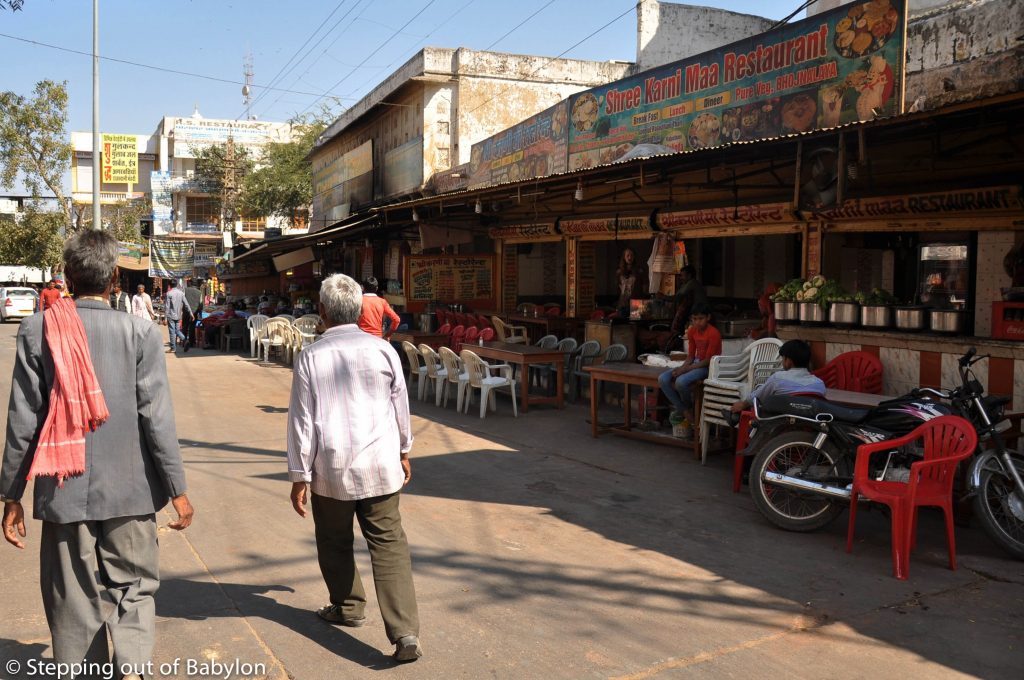
In Pushkar, at the Shree Karni Maa Restaurant, the dal baati is served with rice and some achaar (a salty and spicy pickle)… a very filling meal. The rice here is not the traditional way to serve dal baati, because in more dry areas, like in Rajasthan the rice is a rare cereal.
Address: Shree Karni Maa Restaurant, you need to walk a bit further from Brahma Temple, and turn left.
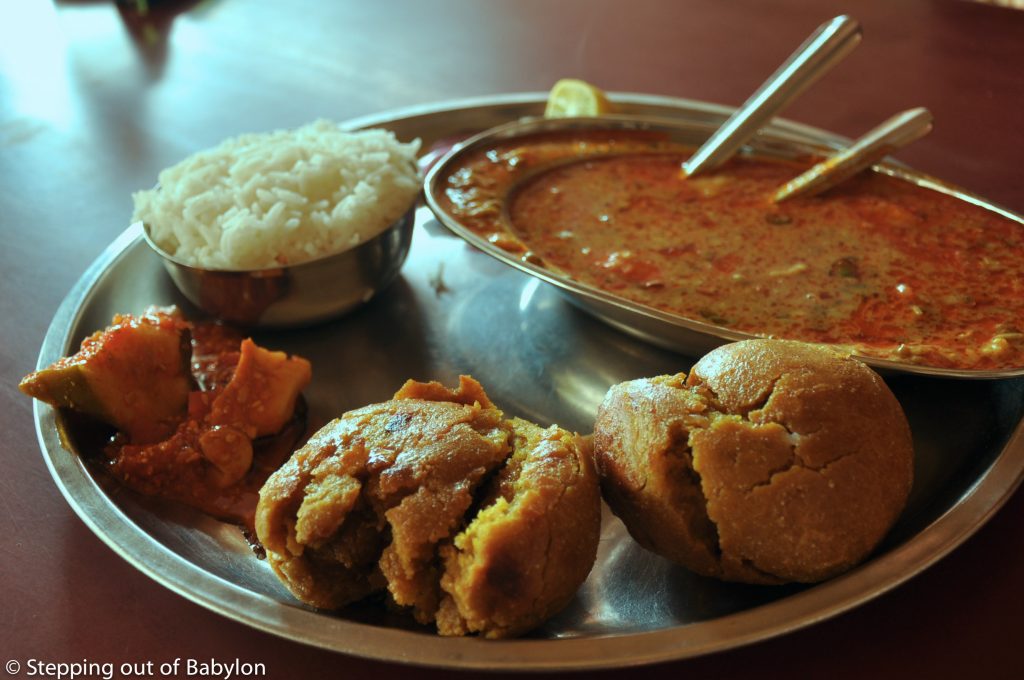
Thali means plate and is referred to a complete meal, that include, rice, vegetables, curries, dal, bread, changing from one region to the others, that is served in a metal plate.
To find a typical Indian food in Pushkar you need to find the local restaurants more focused on pilgrims and Indian tourists! The Shree Karni Maa Restaurant is one of my favourites that despite a big choice of food with some Rajasthan dishes have a very tasty and rich thali.
The thali comes with a tasty light curry, a thik and rich dal, sabji (mix of vegetables), curd (yogurt), achhar (a salty and super spicy pickle), papadum (crispy thin cracker) and a small bowl of rice… all the time are coming freshly cooked roti, roasted over the fire. Delicious!
Address: Shree Karni Maa Restaurant, you need to walk a bit further from Brahma Temple, and turn left. There you’ll see on both sides of the streets lots of restaurants side-by-side… the Shree Karni Maa Restaurant is on your left, and his for me one of the best thali in Pushkar… but not the cheapest! The thali costs 200 rupees, and have an unlimited refill, except the curd (yogurt).

If you going to visit India, you must try the lassi!!! Is a drink made from yogurt, thick, fresh and nutritious… unfortunately with quite some sugar! The lassi has the origin in Punjab state, but is spread all over the north of India as also in Nepal and can also be salted and seasoned with cumin.
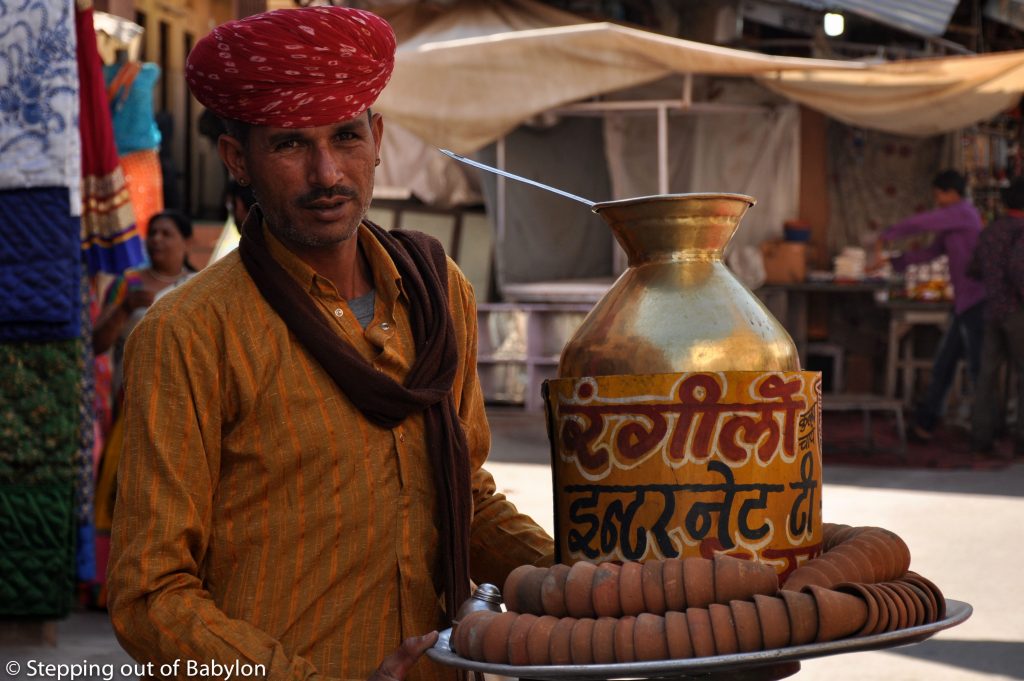
There as many lassi places in Pushkar… on of my favorites is at L.M.B…. is creamy, topped with pistachio and served in clay pots!
Address: Hotel L.M.B. is not a hotel in the way that id doesn’t have a place to sleep, but in same parts of India, “hotel” means a restaurant. This place has the same name as a famous one in Jaipur but I think that has nothing to do with each other, as this one in Pushkar is a bit dodgy. Near Main Gau Ghat.

Chai, a tea mix with milk… and sugar, is everywhere in India, but in Pushkar you can find hawkers that walk along the street with their movable stalls. These stalls are something!!! In a fragile metal structure, a kind of tripod, there’s a shinny metal pan that is kept warm with burning coal, and around lays the clay pots. The chai is served in the traditional clay pots, disposed after used.
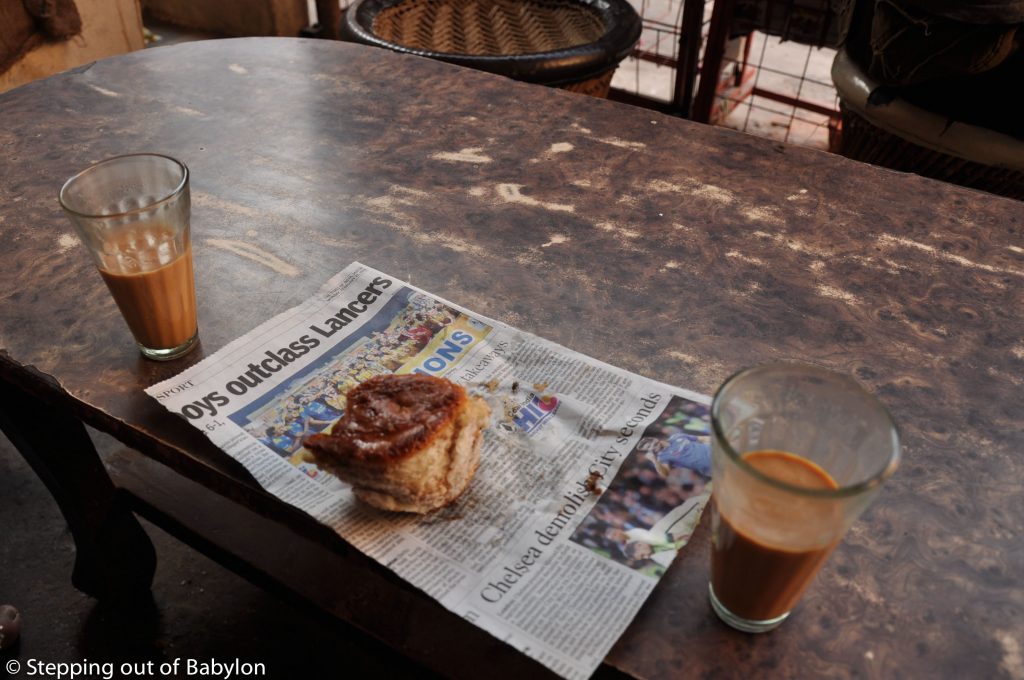
But for me, the best ones can be found just at the main square of Pushkar, in a small stall easily identify by some bamboo stools near the road where many travellers gather. The chai here is amazing! Dark, rich in spicy flavours and with a touch of ginger, this is more a masala tea than a chai, and is difficult to drink just one… just the location of the stall, near the road, is annoying due to the noise and pollution.
Address: Main Market Square, in a small stall, mix between grocery and chai shop, with some stool outside… when you pass by the owner will tell you to try the “best chai in Pushkar!”.
The momos (also written as mo:mo) are the most popular snack in Nepal, and can be found in small eateries or street stalls a bit everywhere along Kathmandu streets. This small dumpling is made from wheat flour, filled with meat or vegetables, is one of the most popular snacks but is also common as a meal.
In Basantapur, there are a few places selling momos, easily identify by the big aluminium pan, with several trays, that usually stay outside the place. Most of these places just serve buff momos, but there are two places that serve vegetarian ones. One is more or less in front of the palace (Durbar Square), on the same street of Kumari House, a very small restaurant with seats just on the first floor, that offer an interesting view to the square. The name is just in Nepali.
Address: Durbar Square, few buildings further from Kumari House.

An other momo eatery, in fact, my favourite momos, is a street stall just in front of Teleju Temple, that serves buff, chicken and veg momos. The Makhan Top Mo:Mo is a very popular and the single bench available will probably be full, force you to eat standing. But still is a good opportunity to appreciate the vibe of the square especially around 5 o’clock, time that looks like all Kathmandu population is on the streets!
A bowl of 10 veg momo cost 60 rupees and is also possible to ask for takeaway.
Address: street stall in front of Teleju Temple.


The fry-momos, are a kind of Indian twist to the original recipe, and after steamed are deep-fry in oil, that give a crunchy feeling to the dough. They are not so popular as the steamed ones, but can be found on a back street of Basantapur (Kampukot Marg) that link to Yatkha.

Apparently originated from Middle East, the samosa is, without a doubt, a symbol of India gastronomy, especially in term of snacks, and is spread all over the country, as also in neighbouring countries. Nepal didn’t escape to the samosa invasion and this snack is easy to find in the small restaurants along Basantapur and Durbar Square.
My favourite samosa, without a name in western characters is located a few doors further from the Kumari House, just next to the momo place mentioned before. The place is far from being charming, and “clean” is a word that you can’t apply there, but the samosas are delicious, and can be served plain or a yellow dal curry. Spicy and oily but irresistible will they are still warm.
A samosa with curry cost 20 rupees. the samosas are always vegetarian in India and Nepal, usually filled with a spicy mix of potato and beans.
Address: Durbar Square, few doors further from Kumari House


Another popular Indian snack that is easy to find in Kathmandu is the samosa chaat, usually from lunchtime until evening. This snack is made with a samosa broken into pieces, and topped with onion, tomato, yellow peas dal, fresh coriander and curd (sweet yogurt) and seasoned with cumin powder, chili powder and Himalayan salt… and a few drops of lime.
But this is the recipe of the small and unnoticed place, the Jay Durga Chaat & Egg-Roll House, located in a back street (Dafter Marg) nearby the so-called Freak Street (Jhochhen Road), 5 minutes from Basantapur.
A samosa chaat cost 90 rupees, but can be found cheaper in hawkers near Teleju Temple at dusk.
Address: Dafter Marg, near Freak Street, Basantapur


The puris (small crunchy shell made from a very thin deep-fry dough) can be found a bit all over the city, usually hawkers specialized on this snack that show up at Kathmandu streets at the end of the afternoon. But these street stalls only have the pani puri, a spicier but less interesting version of the puris.
But my favourites are the dahi puri! It has the same base: puris stuffed with a potato and chickpeas mix but drizzled with yogurt (dahi), coriander and tamarind sauce, and seasoned with cumin and chilli powder. The result is a sweet and spicy mix, very yummy!
As the hawkers in Kathmandu only have pani puris, to find the dahi puri the best option is to walk a bit way from Basantapur, to Khechapukhu Sadak, somewhere between Sundhara e New Road, and look for a small stall in the center od the square, with the sign Khichapokhari Youth Club… usually surrounded by people that stop here for the snacks:
The puris are served in a plate with 6, and each one must be eaten in one bit… otherwise the juice will fill up your hand.
Address: Khechapukhu Sadak somewhere between Sundhara and New Road.


Although being easy to find vegetarian food in Nepal, the meat is quite popular and the sekuwa even more, as it can be eaten as a snack or as a meal, in the many eateries that grill the meat just outside the shop, feeling the air with smoke and the smell of the meat.
Could be made from different kinds of meat, seasoned with a red sauce, and cut in small pieces stick in bamboo and grilled in a wood fire. The sekuwa is usually eaten with puff rice.
Address: a bit everywhere around Basantapur


A drink made from yogurt, sweetened and chill with ice, that despite it Indian origin is quite popular in Kathmandu.
The Janakpur Dahi Lassi Bhandhar is probably the most popular place and it only sells lassi: big or small, with a topping of raisins, pistachio and caju. As there is no place to seat, people gather in front of the shop, but the pollution and the beeps of the traffic.
Small lassi: 30 rupees and big lassi 60 rupees.
Address: at Chandraman Singh Marg, nearby Indra Chowk.


The curd is a rich and thick yogurt, usually with sugar that traditional was made in clay pot. Nowadays is possible to find curd in may places along the city, but the traditional one from Newari region, called Juju Dhau (king yogurt), made in a clay pots are not so common.
One of my favourite places is the Bhaktapur King Curd Shop at the end of Freak Street (Jhochhen Road), just near a junction of five streets. Here is possible to find the original King Curd from Bhaktapur, made from buffalo milk in clay pots or clay plates, sold in different sizes.
Address: at the end of Freak Street (Jhochhen Road) near the cross road of Jor Ganesh Galli with Nabahi Marg


Not far from Durbar Square, in the Guna Kamdev Marg, that leaves the square on the way to the south, there is also a very small place that sells good curd, also in clay pots.
These deep-fry rings, made from rice flour, are a very popular Nepali breakfast; are made and sold usually during the morning in small shops along the old part of Kathmandu.
They are a bit sweet and get crispy just after being made, which make them irresistible, but heavy for delicate stomachs.
Address: a bit everywhere around Basantapur, as for example at the bakeries along Guna Kamdev Marga

These are my favourite Nepali sweet… they don’t have much sugar, and despite being cooked in oil are not very that oily.
The Khajuri are made from wheat flour, sugar and ghee (clarified butter) and can be found in all bakeries during all the time, as they can last for quite a long time without loosing the crispy texture.
Address: at the bakeries along Guna Kamdev Marga, a few meters from Basantapur

The Laakhamari is a special bread made usually during the religious festivals, and is easily identify by is complex shape made looking like a complex and artistic knot. Made from a mix of flours, sugar and butter and deep-fry in oil.
After is usually covered with a layer of glazed sugar
Address: at the bakeries along Guna Kamdev Marga, a few meters from Basantapur and many other bakeries in Kathmandu.


Almost so popular as the sel roti, the Nepali version of doughnuts is everywhere, from bakeries to small eateries. This deep-fry dough with the shape of a ring can be eaten plain or stuffed with cream.


Peas, beans, corn, chickpeas… all roasted and seasoned in a different way, usually with a salty and hot mix of species.
These snacks are always sold by hawkers and can be found a bit everywhere along Kathmandu streets.

Walking along Kathmandu streets I’m still surprised with something new in terms of food, prepared in the street or made in small eateries, sometimes so small that most of the things are cooked on the streets… sometimes is not easy to get the name or the ingredients… but here there a few more snacks!!!

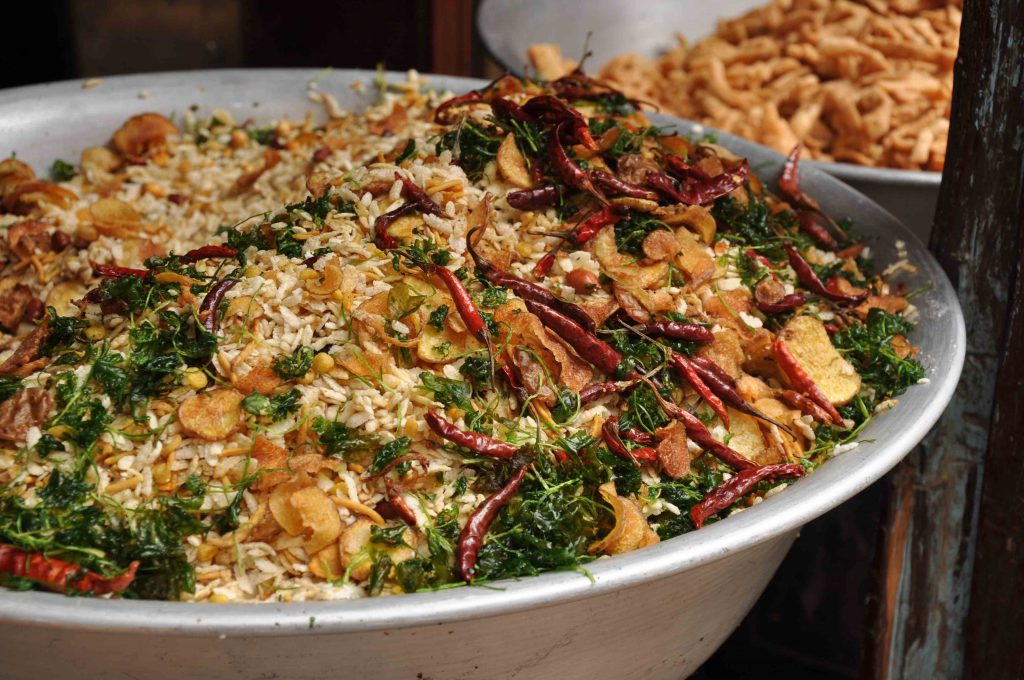


Enjoy!
Maha Shivaratri: a Hindu festival in honor of Shiva.
Varanasi: the spiritual capital of India, and the holiest of the seven sacred cities.
Ganges: the most sacred river of the Hindus.
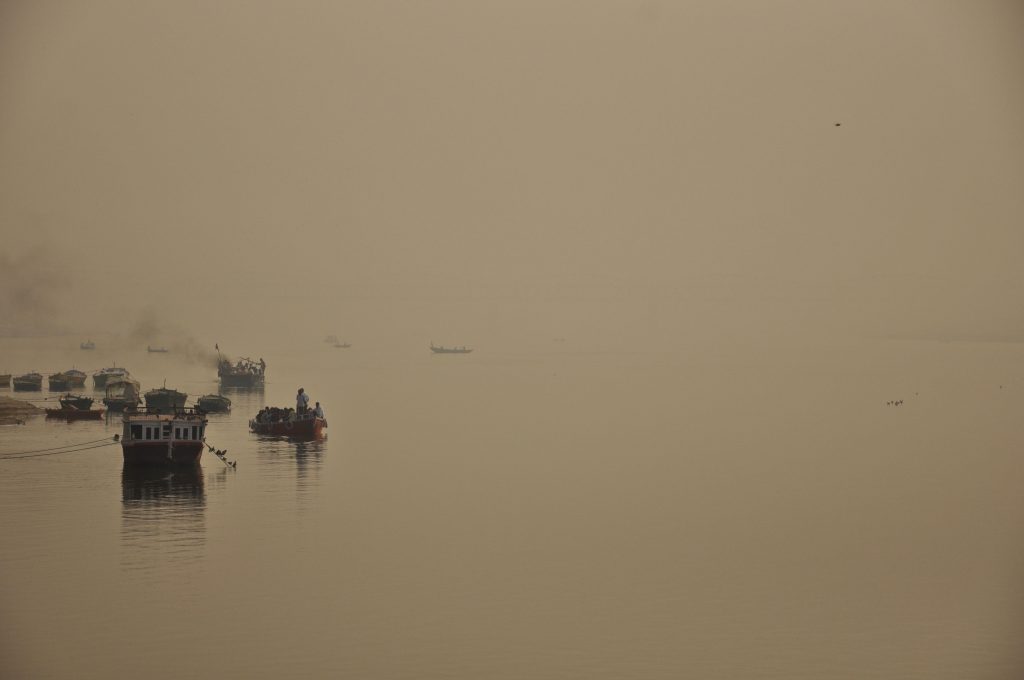
From the combination of this three sacred symbols result in a intense and devotional atmosphere along the banks of the Ganga, with thousands of pilgrims taking the sacred bath in the most auspicious day, the day that marks the wedding of Lord Shiva with Parvati.
The festival starts with an early purifying bath, follow by the visit to the temple to worship the Shiva Lingam, the male symbol of cosmic creation, with offers of milk, honey and flowers.
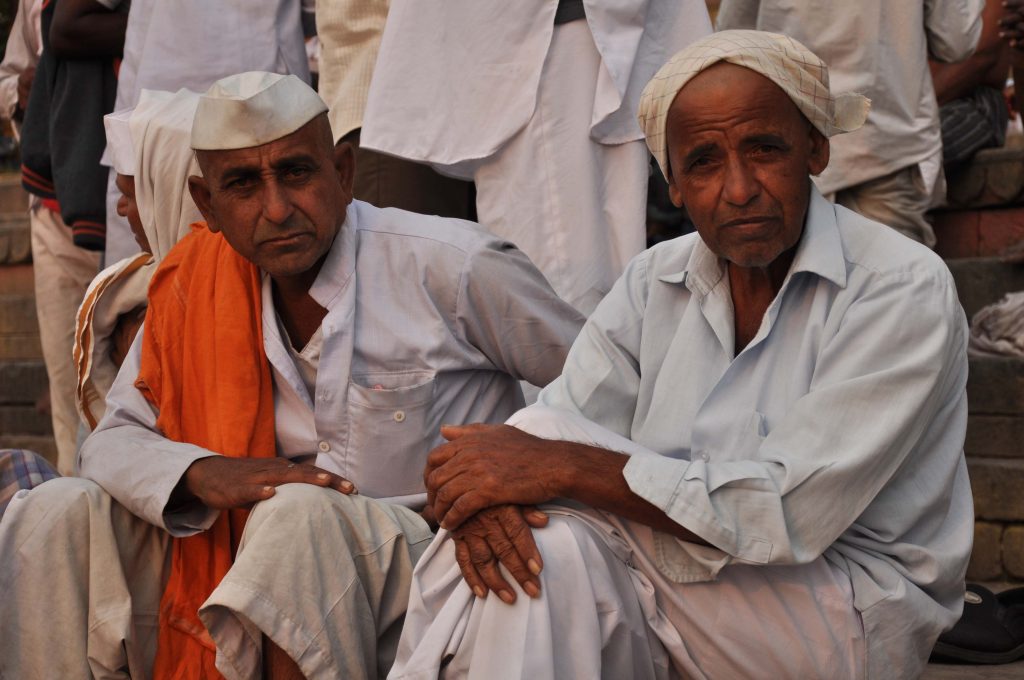
Maha Shivaratri Means literally “the night of Shiva” and during all night the streets of the ancient Varanasi filled with people coming from all parts of India. In a pilgrimage, people visit the city’s many temples dedicated to Shiva, performing “puja” and observing a fast during all day and night.
Along the day the sound of bells played during the pujas fills the narrow streets of the city and candles light the Ganga Ghats.


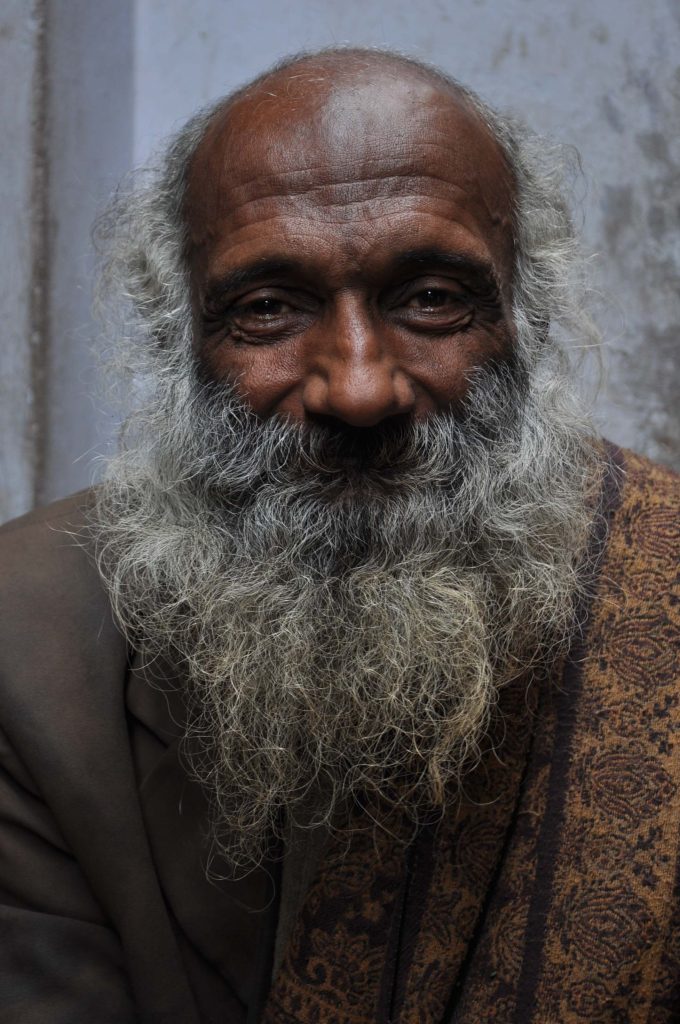

I’m Catarina, a wanderer from Lisbon, Portugal… or a backpack traveller with a camera!
Every word and photo here comes from my own journey — the places I’ve stayed, the meals I’ve enjoyed, and the routes I’ve taken. I travel independently and share it all without sponsors or ads, so what you read is real and unfiltered.
If you’ve found my blog helpful or inspiring, consider supporting it with a small contribution. Every donation helps me keep this project alive and free for everyone who loves exploring the world.
Thank you for helping me keep the journey going!