• Skip to main content
  • Skip to footer

Stepping Out Of Babylon

Travel & Photography

  • About me
    • Contact
  • Destinations
    • Africa and Middle East
      • Iran
      • Lebanon
      • Morocco
      • Turkey
    • East Asia
      • China
      • Japan
      • Taiwan (ROC)
    • South Asia
      • Bangladesh
      • India
      • Nepal
      • Sri Lanka
    • Southeast Asia
      • Cambodia
      • Indonesia
      • Lao
      • Malaysia
      • Myanmar
      • Singapore
      • Thailand
      • Vietnam
  • Itineraries
  • Travel tips
    • Border crossing
    • Hiking and Natural parks
    • Food Journey
    • Visa
  • Photography

South Asia

Arriving in New Delhi… by train, by bus, by plane

If you arrive in Delhi by train:

New Delhi has several train stations, but if you travel in long distance trains you’ll probably arrive at: New Delhi (close to Pahar Ganj), Old Delhi (also know just by Delhi or Delhi Junction) or Hazrat Nizamuddin.

Nizamuddin is the one located south of the city center, about 8 km. From Nizamuddin you can take another train (don’t even need train ticket) to New Delhi Railway Station (there isn’t trains connection to Old Delhi), probably in one of the crowded unreserved trains or in, an also crowded, suburban train. Is not easy to know which train to catch, but you can also go to the ticket counter, ask and buy a ticket that cost 10 rupees. If you are a woman you can try to find the “ladies wagon”, there are usually not so crowded but are noisier due to the number of kids and babies.

From Old Delhi to New Delhi the distance is not that much, around 3 km but far enough to be made on foot, as the street are noisy, polluted and crowded. So basically there are three options:

  • by taxi… but I never ever trust in a Delhi taxi driver… there are many scams, and even I had already an unpleasant experience.
  • by tuk–tuk…. far the best option but is always a hassle to get a fair price for the ride.

The trip will take about 15 minutes because of the intense traffic; it should cost around 100 rupees, but never get this price… so just try or best bargain skills or share the tuk-tuk with another backpacker that you maybe find on the way.

  • by Metro… the cheapest option, easy but could be too crowded at peak hours, especially if you travel with a big backpack or lots of luggage.

The closest Metro station from Old Delhi is Chandni Chowk

The closest Metro station from New Delhi Train Station and Pahar Ganj is New Delhi.

Both are located on the same Metro line (Yellow line) with one stop in between.

The trip takes about 20 minutes including the time need to buy ticket, line for security check, and waiting for the metro.
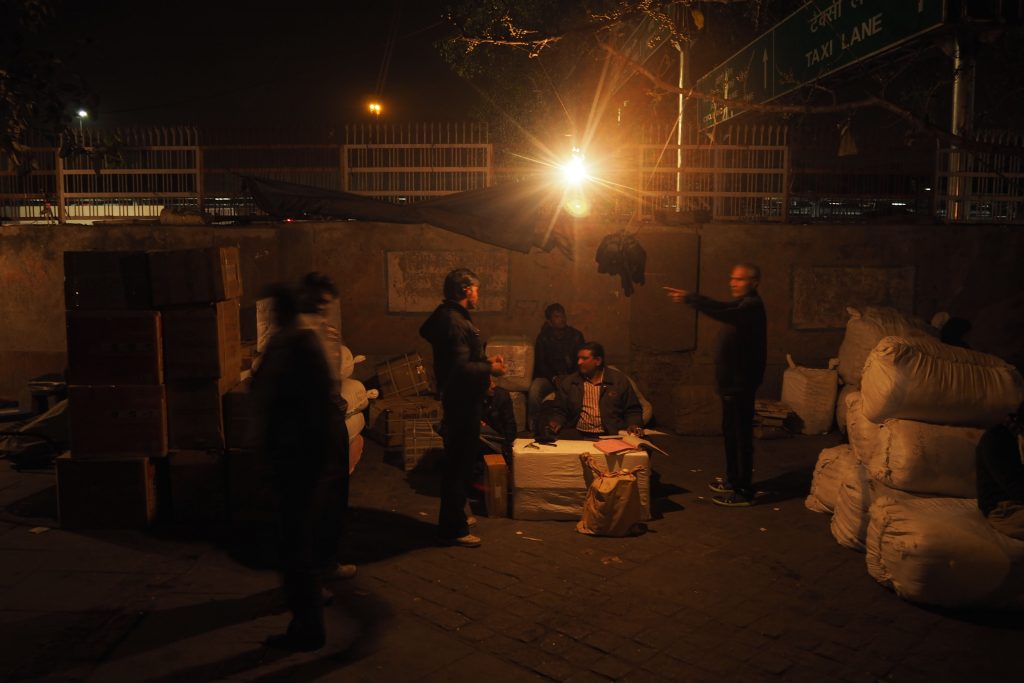
Old Delhi area after the sun set

If you arrive in Delhi by bus…

If you arrive in Delhi by bus, you can stop in many-many different places. Coming from north (like Dharamshala) or from the west (like Rajasthan) you’ll probably arrive at an area called Kashmiri Gate… is a bus terminal, but most of the buses drop you somewhere in a street nearby, under some viaducts. If you arrive during the night it could be confusing try to find where to go, and with dozens of tuk-tuk, taxi and rickshaw drivers surrounding you… but don’t get stressed and don’t jump in the first tuk-tuk… just walk a while away from the bus area, try to follow the crowd… most of the people go to the same place: METRO.

The best option, as soon as you get rid of the push tuk-tuk drivers is to ask someone “metro” or “Kashmiri Gate Metro”. Try to find a street stall, a chai seller, a police, a security guard, even a bus driver… but ask someone that look that are effectively working and not just hanging around.

“Metro” is the magic word and after a walk that will take more than 10 minutes, trough a way that is not linear (you maybe need to ask the way a few times… always double check with other people… sometimes even when people don’t now the way, point any direction just not to loose “their face”). You must pass under a huge concrete viaduct, cross a big avenue, walk along a sidewalk between a wall and a fence, and then you’ll see the massive subway station, that here run above the ground: Kashmiri Gate.

From Kashmiri Gate to Pahar Ganj just take the yellow line to New Delhi.

But some buses can let you nearby Old Delhi Train Station, in an area called Fatepuri (Fatehpur). Is close to the station bus if you are not familiar with the place is not easy to reach the station. Fatepuri, is also called Old Punjab Bus Stand.

Nearby the Old Delhi Train Station, on the south side, there’s a Metro station: Chandni Chowk… just ask for “metro” to street stall vendors. Then just take the yellow line to New Delhi and Pahar Ganj, or whatever is your destination.

New Delhi Metro platform... were there are ladies compartment
New Delhi Metro platform… were there are ladies compartment

Arriving in New Delhi by plain:

If you travel by plane, the most convenient way to reach the center of Delhi is by metro. There a direct line (Airport Express Line) that link the airport to the New Delhi Train Station that is the closest Metro station from Pahar Ganj. The closest Metro station from Old Delhi is Chandni Chowk

As you collect your luggage you’ll just need to follow the “Metro” signs.

Need to buy the ticket and then pass the security control.

  • ticket: 100 rupees (one way)
  • Metro schedule: 05:30 a.m. to 11:30 p.m.
  • There’s a train every 15 minutes, and the trip will take you about 20 minutes.

If you are traveling with more than 2 people so maybe is cheaper to use the taxis. But watch out: there is a big scam with the taxis pre-payed at the airport!!!!!! Yes! Even with the pre-paid taxis!!! Be special careful if you are travel alone, especially if you are a woman. Even if you are not alone, try to choose a flight that arrives late, or too late for you to catch the Metro, and consider, at least, one hour more for the immigration formalities, collection luggage, etc…

Airport Pre-paid taxis scam

So this is the scam: you pay the taxi, find your car and your driver, and the trip start smooth, usually with a friendly chat. As you leave the airport area and approach the urban are of New Delhi, the taxi driver will start to tell you that don’t know very well the place where you ask to go… even if it is the most well know place like “New Delhi Railway Station” or “Pahar Gang” were most of the travelers stay. Even if you insist that is in the center and is a well know place, he will try to ask a friend, by phone or sometimes even stop in a place to ask directions.

From now on you are in trouble: the “friend” will tell you that the place is closed, that there is a demonstration on the streets, or a religious festival, a strike or something else, and that is impossible to drop you in that place, that the police close the roads, and so on… they will tell you that is not safe, and even if you insist that you are updated with the news, they will make everything to block your movements.

Quickly you’ll be surrounded by guys, apparently, all trying to help you, but all part of the scam. All this is a way to make you fell vulnerable and without the time and “mental space” to think clear.

After that “someone” will help you to find an alternative place to sleep… “someone” that look friendly and speak a better English… of course that the “available” places to stay will cost you more that 100$… If you said that you don’t have so much money, they will contact other cheap places but all will be fully booked… even if you try some of the guidebooks accommodations, they will call then, speak in Hindi, and then will give the information that are also fully booked.

So this is the scam!… maybe you can bargain and get an 80$ room, but will be difficult to get rid of these people, especially if is already dark, or if you are alone. Try to be cool. Don’t trust anyone and don’t accept advice from anyone that approach you, as they can be part of the scam too. If you find a shop (not a travel agency), a bank, a commercial area, just pick your luggage, and get rid of the “gang”. Look for someone that can help you to catch another taxi, trust more in the women that in the men.

I had this problem in 2008. I was with my partner and we strongly argue and insist that we had a room booked by a friend of us, and that we had already called him on the phone and he was there, in the hotel, waiting for us. The taxi driver lets us close from Pahar Gang, but a few block away. It was in the morning so it was not a big deal.

And this situation is still going on as I heard a woman traveling solo (2016), that was not so lucky, and was pushed to an expensive place… at least for one night.

Stall at Pahar Gange were you can rent a taxi... otherwise you can rent one at your guesthouse or hotel, as any place has their own connection with the taxi drivers, and the price is all the same... it will be difficult to have a better deal
Stall at Pahar Gange were you can rent a taxi… otherwise you can rent one at your guesthouse or hotel, as any place has their own connection with the taxi drivers, and the price is all the same… it will be difficult to have a better deal


How to go from Pahar Ganj to the airport:

To go to the airport, the taxi is a safe way to travel and don’t need to worry about the price as the thing is more or less organize, and it will be hard to find a ride cheaper than 350 rupees. Note that the tuk-tuks don’t go so far as the airport. Is better reserve the taxi directly at the reception of your hotel or guesthouse, because if there’s a delay (never happen to me) the guys have the contact of the taxi driver and can manage the situation without stress… they even tell the best for you to be ready to leave according to the traffic!

Food in Northeast India… for vegetarians!

For a vegetarian diet, all the Northeast Indian states visited were a tremendous disillusionment, capable even of taking out the appetite. With the exception of the state of Assam, whose population is mostly Hindu, meat consumption is a constant presence in the states of Nagaland and Meghalaya, which dominates Christianity.

So this text is only a pale sample of the Northeast States cuisine, but it serves as a guide to those who choose not to eat meat or fish and planning to travel in these remote places.

In the states of Nagaland and Meghalaya is clear the influence of Asian cuisine, often coming up the noodles and chowming, while in Assam is clear the influence of Indian cuisine, specifically from the Punjab region. But the more than 2300 kilometers that separate the two regions, cause a diminish in the intensity of the flavours and reduced the range of ingredients.

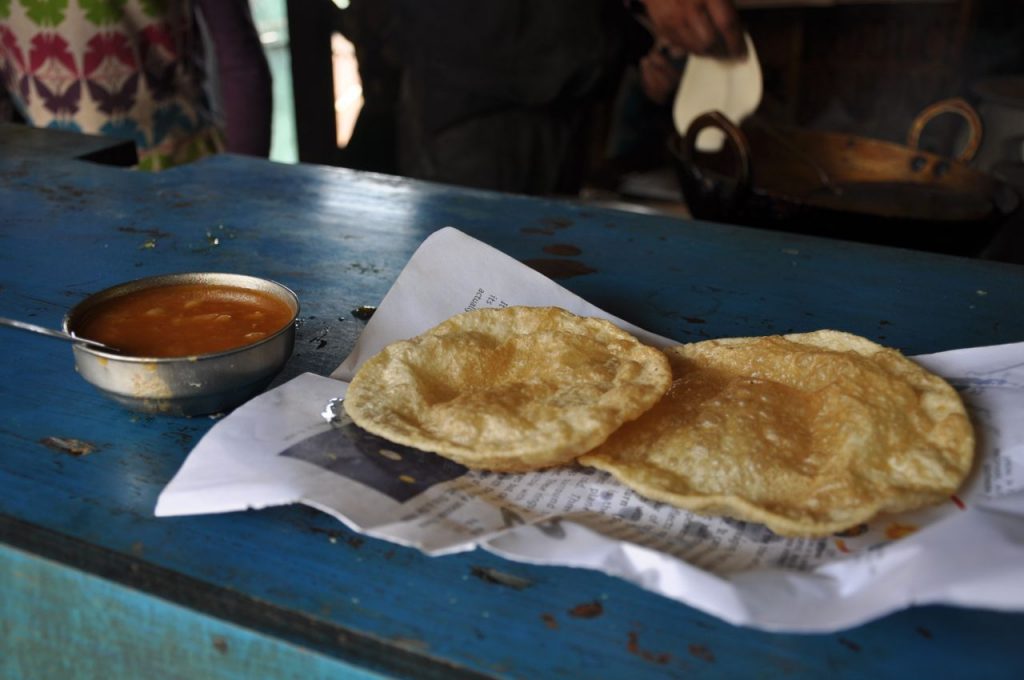
puri stall at Mon village. An almost mandatory stop before a shared-taxi trip in Nagaland.

Assam and the parathas

In Assamese cities are easy to find the classic Indian dishes, such as the dal (lentil curry) as the vegetable and beans curries. The samosas are also very popular as also some other deep fry stuff as the puris. Being a state crossed by the gigantic Brahmaputra River, which floods the plains and creates an ideal place for planting rice, a cereal essential in any Indian meal.

What stood out in Assam were the parathas, a flatbread made from wheat flour that can be found almost in any part of the country, but in Assam have a kind of twist: are thicker and more oily, pale and without the toasted look, resulting in a compact and undercooked dough. These parathas can be stuffed with potato masala, or more often plain, served with simple curries, usually made from potatoes and yellow-peas. The parathas can be found in most of the restaurants and dhabas but are often available in street stalls, being a popular street food in Assam.

The classic Indian thali, a meal based on rice, dal and vegetables, is also a bit different in Assam, with a very watery dal, a tasteless curry and over the rice a piece of steamed cabbage… yes! just a plain steamed cabbage without any seasoning. Very healthy, fills the stomach but don’t leave a good memory.

The parathas can be found in most of the restaurants and dhabas but are often available in street stalls, being a popular street food in Assam.

These parathas can be stuffed with potato masala, or more often plain, served with simple curries, usually made from potatoes and yellow-peas.

The classic Indian thali, a meal based on rice, dal and vegetables, is also a bit different in Assam, with a very watery dal, a tasteless curry and over the rice a piece of steamed cabbage. .. yes, just a plain steamed cabbage without any seasoning. Very healthy, fills the stomach but don't leave a good memory.
The classic Indian thali, a meal based on rice, dal and vegetables, is also a bit different in Assam, with a very watery dal, a tasteless curry and over the rice a piece of steamed cabbage. .. yes, just a plain steamed cabbage without any seasoning. Very healthy, fills the stomach but don’t leave a good memory.

Nagaland and the “puris”

If at Assam the cuisine proved uninspired, at least in what concern vegetarian option, at Nagaland state every meal was a challenge for a vegetarian traveler. At mountain areas dominates the meat, present in all markets at Nagaland, as also smoked and dry fish.

At the entrance of small towns, there’s always an area where animals are gathered waiting to be slaughtered, while other pieces of meat are sold to those arriving by motorbike or car or to the ones that are traveling by bus, and use the stops for pick passengers to do the shopping. At the cities, the slaughter of animals, mostly turkey and chicken, is made at the markets, where birds wait in cages. Though the air spreads the smell of blood and animal shit that create a sad and heavy atmosphere.

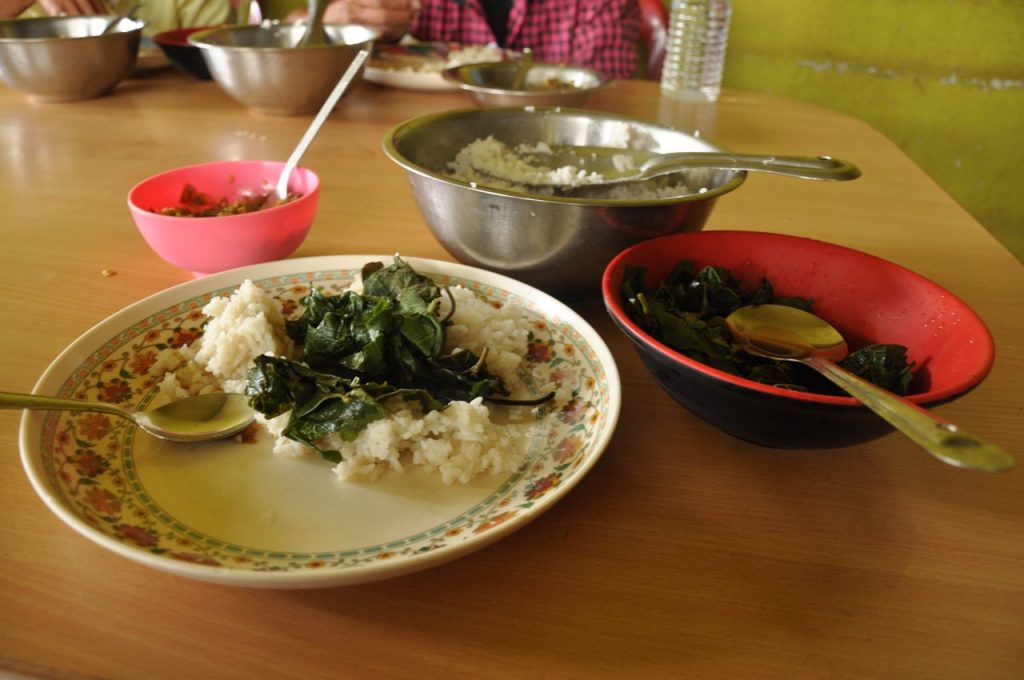
In Nagaland cities, you can find some vegetarian options such as the so-called “rice”: a rice-based dish, with dal and vegetables, or noodles soup or stir-fry noodles. But in the small villages or in more remote areas as Mon, there is not much more to eat than rice and some boiled greens, seasoned with a fermented and spicy vegetables.

An option that can be found a bit everywhere, and along the day, are the puris, a small flatbread, fried in oil and served with a potato and a small bowl of yellow-peas curry. The puris are excessively oily, here more than usual, soaking the newspaper where they are served, and the curry is spicy but watery. This results in a highly caloric but little nutritious meal, yet quite popular among the local population at Mon, Kohima and Mokochung.

An option that can be found a bit everywhere, and along the day, are the puris, a small flatbread, fried in oil and served with a potato and a small bowl of yellow-peas curry.

But in the small villages or in more remote areas as Mon, there is not much more to eat than rice and some boiled greens, seasoned with a fermented and spicy vegetables.

Meghalaya and the Asian influence

Despite the proximity to Bangladesh, the state of Meghalaya is visible the influence from the Asian cuisine by the noodles (rice flour pasta) served in soups or stir-fry. From Tibet came the momos, a small bun stuffed with meat or vegetables.

Shillong, the capital of this state is very modern and cosmopolitan, so it’s easy to find restaurants of the international chains of fast-food, but due to a large number of Indian tourists, there is a wide range of restaurants with traditional Indian dishes.

From Tibet came the momos, a small bun stuffed with meat or vegetables.

Despite the proximity to Bangladesh, the state of Meghalaya is visible the influence from the Asian cuisine by the noodles (rice flour pasta) served in soups or stir-fry.

A breakfast at Northeast India

As this is a region with little international tourism that make almost impossible to find the so-called “continental breakfast” outside the more fancy hotels.

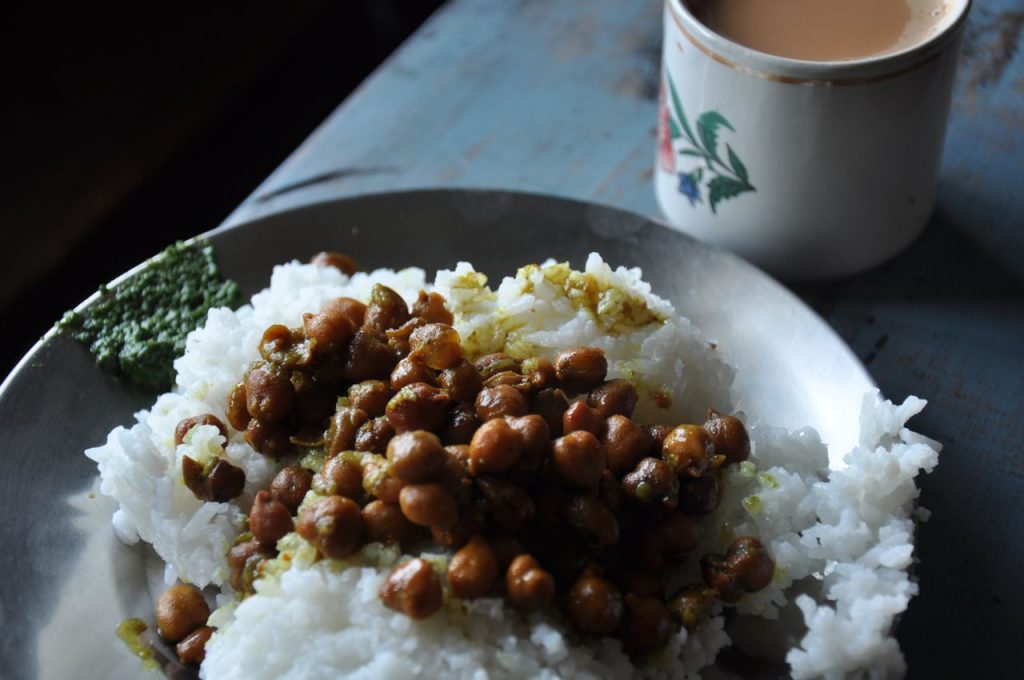
But breakfast usually is not a problem, as the local options reveal almost always a good choice, but in Northeast India this option proved daunting. At Assam was a paratha, served with potato curry and accompanied by a jam. At Meghalaya, in the village of Sohra, the only option available, without meat, was a plate of rice with chickpeas and mint sauce with chili… by chance a simple but tasty combination. At Nagaland, along one of the long bus trip, was time for a chai and a samosa… very tasty and popular combination. At Mon, before starting a journey of 8 hours by sumo (shared taxi), there was an opportunity to taste a very popular breakfast among the local population: deep-fried dough served with a potato curry… a very oily option to start the day!

But breakfast usually is not a problem, as the local options reveal almost always a good choice, but in Northeast India this option proved daunting. At Assam was a paratha, served with potato curry and accompanied by a jam
But breakfast usually is not a problem, as the local options reveal almost always a good choice, but in Northeast India this option proved daunting. At Assam was a “paratha“, served with potato curry and accompanied by a jam

At Meghalaya, in the village of Sohra, the only option available, without meat, was a plate of rice with chickpeas and mint sauce with chili... by chance a simple but tasty combination.
At Meghalaya, in the village of Sohra, the only option available, without meat, was a plate of rice with chickpeas and mint sauce with chili… by chance a simple but tasty combination.

At Nagaland, along one of the long bus trip, was time for a chai and a samosa... very tasty and popular combination.
At Nagaland, along one of the long bus trip, was time for a chai and a samosa… very tasty and popular combination.

At Mon, before starting a journey of 8 hours by sumo (shared taxi), there was an opportunity to taste a very popular breakfast among the local population, deep-fried dough served with a potato curry ... a very oily option to start the day!
At Mon, before starting a journey of 8 hours by sumo (shared taxi), there was an opportunity to taste a very popular breakfast among the local population, deep-fried dough served with a potato curry … a very oily option to start the day!

Sweets

The only experience with sweets along this trip through Northeastern Indian states was been in Assam, where beyond the classic Indian sweets, there was something new for me: a kind of puff dough, deep-fried and drizzled with a thick sugar syrup that after cool down become solid. This syrup results in a yellow-brown color with a bright and appealing look, sold in different shapes, but with a monotonous and boring taste of sugar.

in Assam, where beyond the classic Indian sweets, there was something new for me: a kind of puff dough, deep-fried and drizzled with a thick sugar syrup that after cool down become solid. This syrup results in a yellow-brown color with a bright and appealing look, sold in different shapes, but with a monotonous and boring taste of sugar

Markets

Markets are always a place that awakens the senses, sharpens the curiosity and stimulates the imagination to try to identify the products sold and their use in the gastronomy of each region.

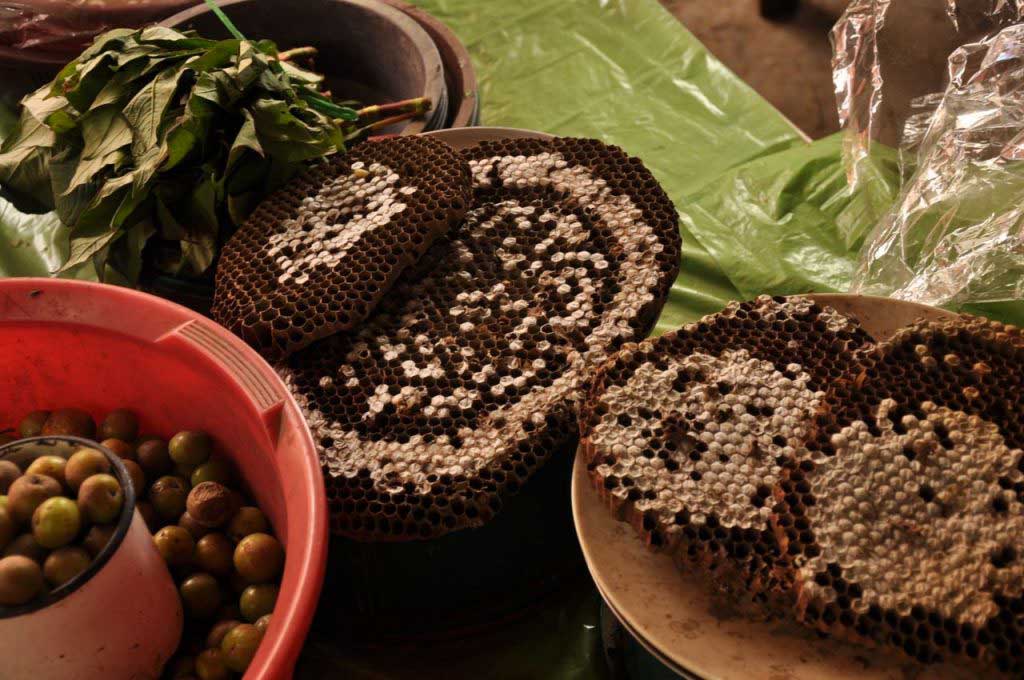
Kohima, in Nagaland, definitely stood out by the markets, where the exotic and diverse food supply reflects the originality of Nagaland cuisine that includes a lot of meat, eggs, dried fish, eels, snails, worms, mice, frogs… and wasp larvae, still sold in the hive.

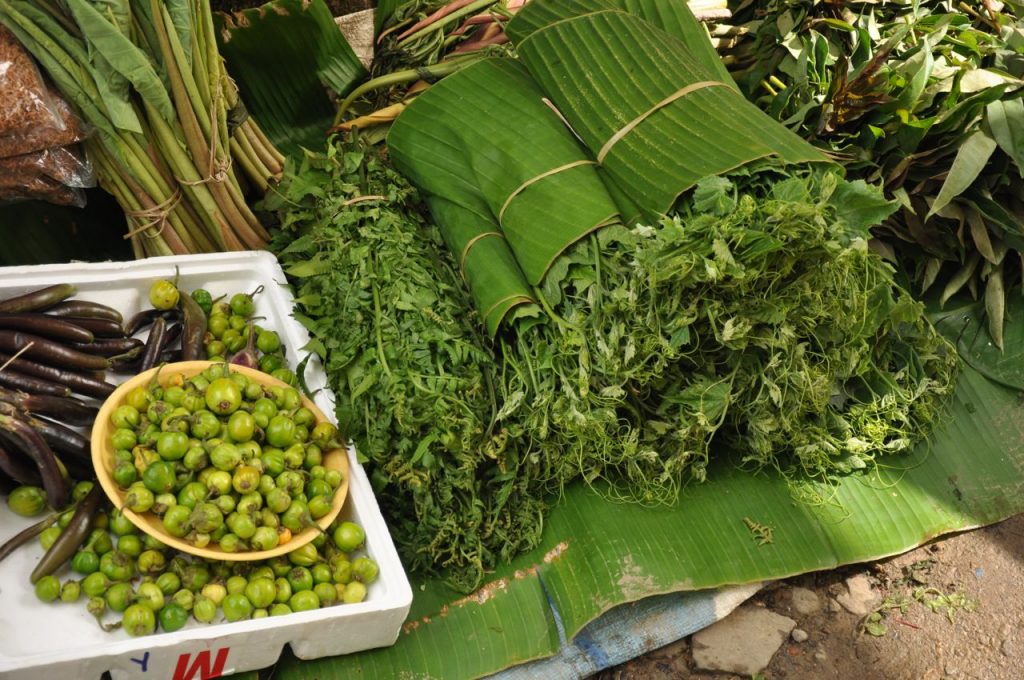
Regarding vegetables, these markets show a mix of tropical and mountain products. From the warm plains of Assam come the papaya, and the banana. But, as also in Burma, beyond the fruit, the trunk and the flower of the banana tree are also used for cooking. From the cool mountain air of Nagaland arrive a wide variety of mushrooms and bamboo that are eaten in sprouts. There’s also a big range of veggies, many of them totally unknown to the European taste.

Banana trunk in Kohima Market. Nagaland

Regarding vegetables, these markets show a mix of tropical and mountain products. Kohima Market. Nagaland

Dried fish and eels at Mao Market. Kohima. Nagaland

worms sold at Mao Market, in Kohima. Nagaland

nagaland_mokochung_market_dsc_8718
Vegetables in a Kohima market. Nagaland.

Kohima, in Nagaland, definitely stood out by the markets, where the exotic and diverse food supply reflects the originality of Nagaland cuisine that includes a lot of meat, eggs, dried fish, eels, snails, worms, mice, frogs... and wasp larvae, still sold in the hive.
Kohima, in Nagaland, definitely stood out by the markets, where the exotic and diverse food supply reflects the originality of Nagaland cuisine that includes a lot of meat, eggs, dried fish, eels, snails, worms, mice, frogs… and wasp larvae, still sold in the hive.

***

As a conclusion, it can be considered that the gastronomical experience offered in the visit to the northeastern states of India wasn’t enjoyable, left a memory of monotonous and tasteless food, where the potato was a constant ingredient in almost all meals over the 22 days trip… but of course this is a point of view of a vegetarian, who can not do justice a cuisine of such a large area.

Indian Northeast States: itinerary & costs

Distance Travelled: 1530 km (all by land; no flights)

Length: 22 days

Date: March 2016

States visited: Assam, Meghalaya and Nagaland

Itinerary:

  • Guwahati (Assam): 1 day
  • Shillong (Mengalaya): 2 days
  • Cherrapunji-Sohra (Meghalaya): 1 day
  • Nongriat Village (Meghalaya): 4 days
  • Guwahati (Assam): 1 night
  • Majuli Island (Assam): 5 days
  • Mon Village (Nagaland): 3 days
  • Mokokchung (Nagaland): 2 days
  • Kohima (Nagaland): 2 days
  • Guwahati (Assam): 1 day

Costs based on solo travel, with a focus on keeping things budget-friendly… and a lot of walk!!!

11 €/day

This average daily budget includes:

  • traveling solo
  • eating just local (vegetarian) food at dhabas or local restaurants
  • staying in guesthouses, no a/c rooms (sometimes sharing accommodation with other travellers)
  • traveling only by public transportation, mostly bus or sumo (shared jeep).
  • entrance tickets for tourists attractions like natural parks, museums, palaces, etc
  • no alcohol, tabaco or soft drinks
  • doing my own laundry
  • SIM card for local network

NOTE: This daily average does not include expenses for shopping, souvenirs, medical or health-related costs, or visa fees (as these vary depending on your country of origin).

India Notheast states. Location map
India Northeast states. Location map
India Northeast States Itenerary. Itenerary Map
India Northeast States Itinerary. Itinerary Map

How to cross the border Sunauli – Belahiya (India/Nepal)

India and Nepal have several border crossings open to foreigners. The most popular although is the Sonauli (India) – Belahiya (Nepal), due to its location, more or less in the middle of the south Nepal border, and maybe the shortest route to reach Kathmandu by land. Also, the location of this border cross, between Varanasi and Kathmandu or Pokhara, make this desolated and unfriendly place a choice for those who want to travel by land.

But for those traveling in Northeast India, like Sikkim, Bengal and the so-called North-eastern states (Assam, Nagaland, Meghalaya, Arunachal Pradesh, etc…) the border Panitanki (India) – Kakarbitta (Nepal) located on the east side of Nepal is the best option. For more details about this border crossing check my posts about “Border Crossing” on Tips/Dicas de Viagem category.

The closest train station from the Sonauli – Belahiya border is Gorakhpur, with easy connection with Delhi and Varanasi. Gorakhpur is far from being a charming or appealing place, so try to arrange things in order to avoid one night there.

Just when you come out from the train station, you just need to ignore all the tuk-tuk drivers that will surround you and walk straight forward until the main road. Just on the other side, near crossroad with a statue with a guy on a horse, you’ll see a few buses stop… not a bus terminal or even a bus stand… just a few buses along the road. Try to ask the drivers about one that goes to Sonauli; usually, it stops on the right corner (if you have the trains station on your back).

The bus departure more or less every hour, or even before if it’s full. The buses run all day, starting around 6 am, until evening.

In case that you arrive late, close to evening time, is advisable to sleep in Gorakhpur, and make the trip to Sonauli next morning, as there are not many infrastructures in Sonauli, and the place itself in “not a place to stay”!!! Anyway, the Sonauli – Belahiya border is open 24 hours.

The bus from Gorakhpur to Sonauli, will take about 1.5 hours.

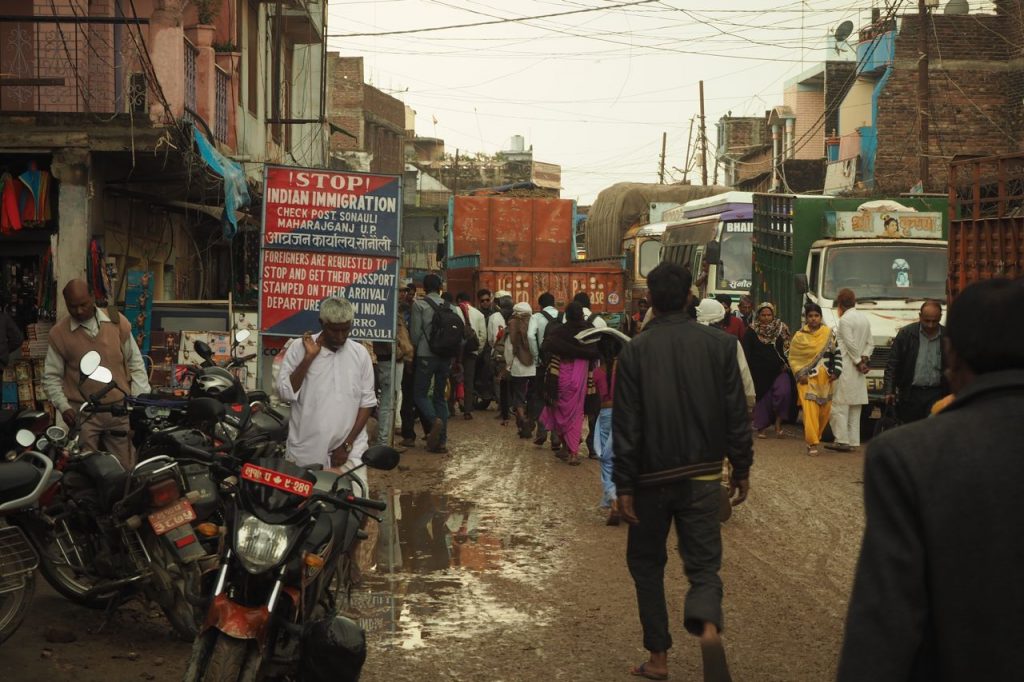
From the bus stand until the Indian Immigration Office is about 600 meters that will take around 10 minutes to walk along a dusty or muddy road (depending the weather) between trucks. Some people prefer to hire a cycle-rickshaw but it just worth if you travel with lots of luggage.

Indian Immigration Office at Sunauli. India

At the Indian Immigration Office you need to fill a form and give it back with your passport to the staff that usually is very friendly. The office is very small and sometimes you need to stay outside while an officer collects the passports and give them back after stamped. Always check if you have the exit stamp before leaving any country!

Don’t be surprised if you see many people crossing the border without passing by the Immigration Office, as the Nepal and Indian citizens don’t need a visa or even a passport to cross any border between India and Nepal.

After this, you keep walking along the same road and will see a big gate that represents the border India – Nepal. Is possible that an officer will ask for your passport, but sometimes they are more focus in controlling local people because of the smuggling than the tourists.

After the gate you walk a few more meters and will see, on the right side, a small house with a kind of garden where is the Nepal Immigration Office. There you need to need to fill a form, give a photo, show the passport and pay the visa fee according to the length of your stay. Usually it will not take more than 10 minutes.

You will be welcomed with a friendly smile and a proud “welcome to Nepal!”.

Nepal has Visa on Arrival, so to get your visa you need:

  • passport
  • 1 photo
  • fill a couple of forms
  • …and money to pay the visa fee. You can pay in dollars (USD) or Indian rupees (INR). Must be played in cash. There’s neither ATM or Exchange shop nearby, so be prepared. In the India side you can exchange money. If you pay in dollars is better to bring the exact amount, as change isn’t always available. If you pay in euros you’re doing a bad deal as the 25$ are automatically converted in 25€!

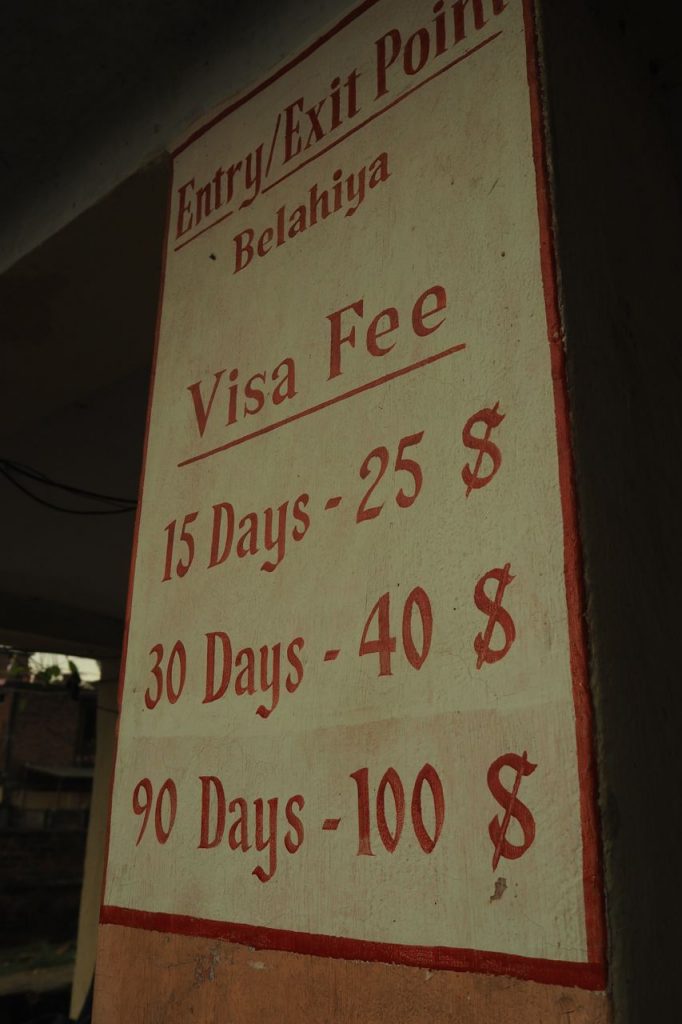
The Nepal visa can be (September 2016):

  • 15 days: 25 USD
  • 30 days: 40 USD or 2700 INR
  • 90 days: 100 USD

At the Nepal side of the border you’ll see a few exchange money shops. From my experience the rates are quite alright.

Probably some will ask if you need a bus to Pokhara or Kathmandu. This maybe is not the beast deal that you can have but save you from walking (or take a bus) to the bus terminal (also called Bhairahawa Bus Park).

From Belahiya there are also buses to Lumbini and Chitwan.


Note about Nepal Visa Fees:

If you are planning to stay in Nepal for 2 months is better to apply for the 3 months visa. Otherwise, you pay 40$ for the first 30 days and then need to extend your visa for more 30 days… so as extending the visa will cost your 2$ a day, an extra month will be 60$… that in total is the same cost of the 90 days visa…. and you save yourself a few hours at the Immigration Office in Kathmandu or Pokhara.

Nepal Visa Fees
Nepal Visa Fees

Extend Nepal Visa:

To extend you Nepal Visa, you can do it in Kathmandu or Pokhara.

In Pokhara usually there are fewer people and you can get you new stamp quickly. At Katmandu is always more busier and confuse. But in both places you find helpful staff.

Not that the maximum number of days that you can stay in Nepal is 150 a year.

How to go from Sonauli-Belahiya to Kathmandu by bus:

Just after crossing the border you arrive at Belahiya, the first populated place that you cannot even call a village, but where you can find (after the Immigration Office), also on the right side of the road, a few travel agencies that sell bus tickets to Pokhara and Kathmandu. Usually there are always a few buses parked in a dusty/muddy ground that works like a bus terminal, called Belhiya Bus Park.

The soon you arrive more are the chances to have a bus to your destination, as most of the buses departure in the morning. Still is possible to catch a bus to Kathmandu around 2 p.m. There are also buses that departure at the end of the afternoon, but the information given by these travel agencies are not clear. But watch out: the bus trip to Kathmandu will take more than 8 hours that the ticket seller said… probably 10 hours depending on the traffic at Kathmandu, so if you arrive late to the border be prepared to arrive at Kathmandu in the evening!!!

Sometimes I felt that these private bus companies are taking advantage of people that just arrive and are not yet familiarized with the currency and prices, and I already notice that the bus ticket from Kathmandu to Belahiya is cheaper than the opposit way.

There aren’t public buses in Nepal, except a few local buses in Kathmandu. But if you want to avoid an overcharge ticket at the border (we are talking something about 200 rupees more, more or less 2$) you can walk or take a taxi to the Bhairahawa Bus Park around 7 km further along the main road and from there you have more bus companies but I couldn’t get a proper schedule of the buses to Kathmandu.

Where to eat at Sonauli-Belahiya:

Don’t try to eat at Sonauli. It will be difficult to find an inviting place and even if you choose one dhaba (road side restaurant), possible your meal will be disturbed by may touts trying to “help” you crossing the border or changing money.

If you really need a meal is better to wait until cross the border to Nepal side (Belahiya), that has a much quieter and friendly environment. With a short walk you can see the few places available, and it can be an option for a quick meal, but if you look for something more inviting you need to take a local bus (walk by the main road until you find the Bus Terminal on your right side) and go to the nearby village Siddharthanagar (also called Bhairawa or Bahirahawa).

Best train from Varanasi to Gorakhpur:

If you are traveling from Varanasi to Nepal, you can make the all trip by bus (there are even bus services from Varanasi to Kathmandu, that I don’t recommend) or by train. The train is the most comfortable option as it allow you to have a reasonable night of sleep and arrive at Gorakhpur early in the morning, with plenty of time to take the bus the Sonaluli-Belahiya border, and with strong chances to reach Kathmandu in the same day… but in the evening!

From Varanasi all the trains that arrive in Gorakhpur in the morning leave late in the evening, so avoid to choose a train that departure from Mugah Sarai, as this station is very far out from the city, and in the evening is not recommended for women or solo travelers. check my previous post:  http://steppingoutofbabylon.com/en/2016/06/how-to-go-from-varanasi-to-mugal-sarai-train-station/

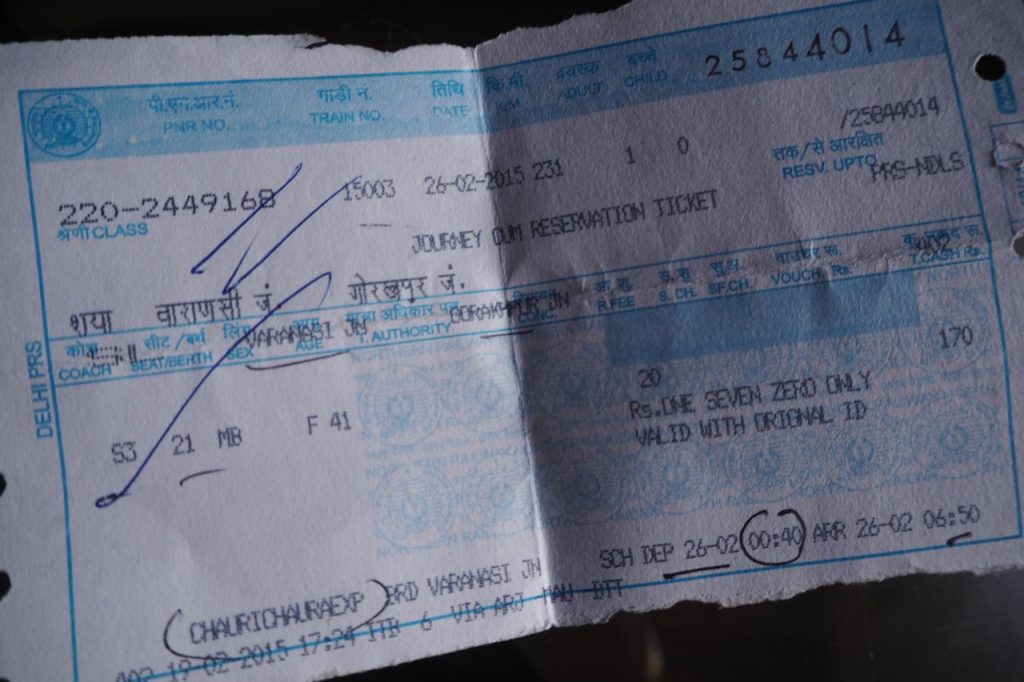
For me the best option was the night train that departure from Varanasi Junction (easily reach buy tuk-tuk even during the night, but I recommend to arranje it with the help of the guesthouse staff): Train number 15003 (Chauri Chaura Express) that departure at 00:40 and arrive to Gorakhpur (last stop) at 6.50 a.m… sometimes with a bit of delay!!!

http://steppingoutofbabylon.com/en/2016/06/how-to-go-from-varanasi-to-mugal-sarai-train-station/

Train ticket from Varanasi to Gorakhpur

How to cross the border Panitanki – Kakarbhitta (India/Nepal)

India and Nepal have several border crossings open to foreigners. The most popular although is the Sonauli-Belahiya, due to it location, more or less in the middle of the south Nepal border, and maybe the shortest rout to reach Kathmandu by land. Also the location between Varanasi and Kathmandu or Pokhara, make this desolated and unfriendly place a choice for those how want to travel by land. For more details about Sonauli-Belahiya border crossing check my previous posts. http://steppingoutofbabylon.com/en/2016/09/how-to-cross-the-border-sunauli-belahiya-india-nepal/

But for those traveling in north east India, like Sikkim, Bengal and the so-called North-eastern states (Assam, Nagaland, Megahlaya, Arunachal Pradesh, etc…) the border Panitanki (India) – Kakarbhitta (Nepal) located on the east side of Nepal is the best option.

Being less popular is far more pleasant the Sonauli-Belahiya, but if you destination is Kathmandu you have to face a 16 hours bus trip.

The Panitanki – Kakarbhitta border is open 24 hours on the India side, and from the Nepal side from 6 am to 7 pm.

(Aug 2017 update: the border is open 24 hours on the Nepali side. The gates are open from 6 a.m. to 10 p.m.)

(Feb 2019 update: the border is open until 10 p.m on both sides)

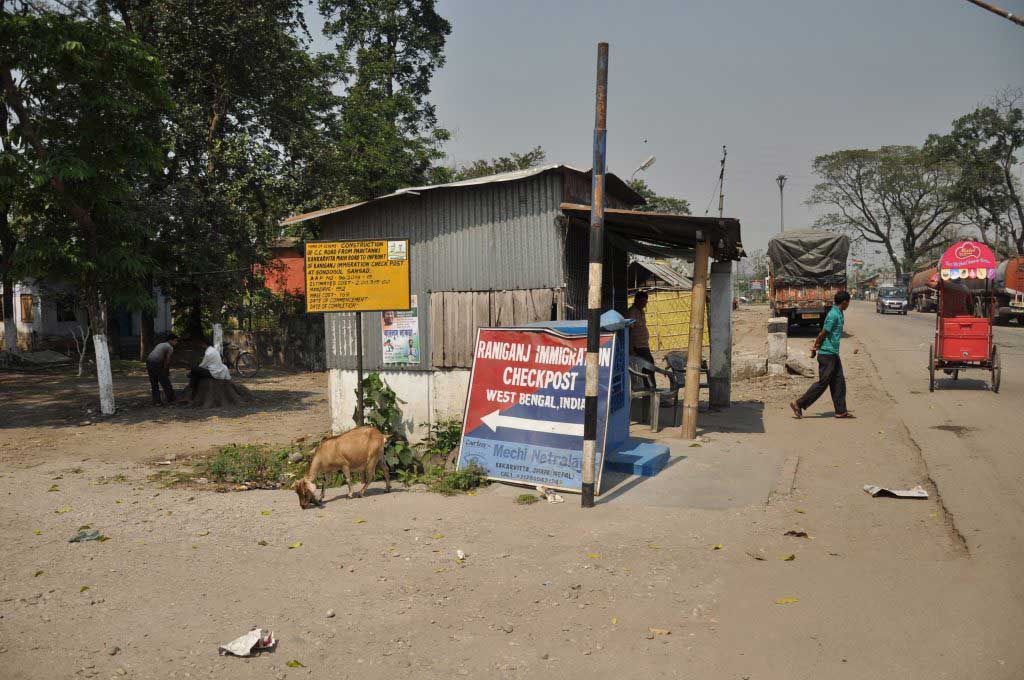
At Panitanki just ask to local people “Nepal” and everyone knows where the border is. From here you can walk until Indian Immigration Office. Not more than 10 minutes walking. The road as asphalt but you must do your walk with truck passing close to you. So if you prefer avoid some sweat and dust you can arrange the entire trip until Nepali side with one of the many cycle rickshaws.

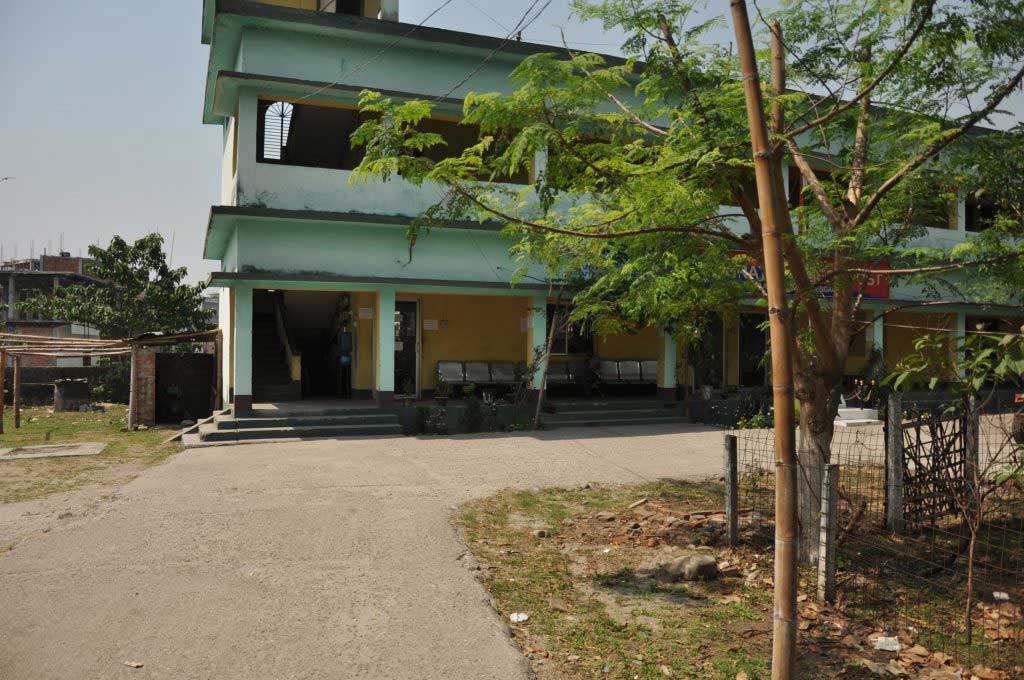
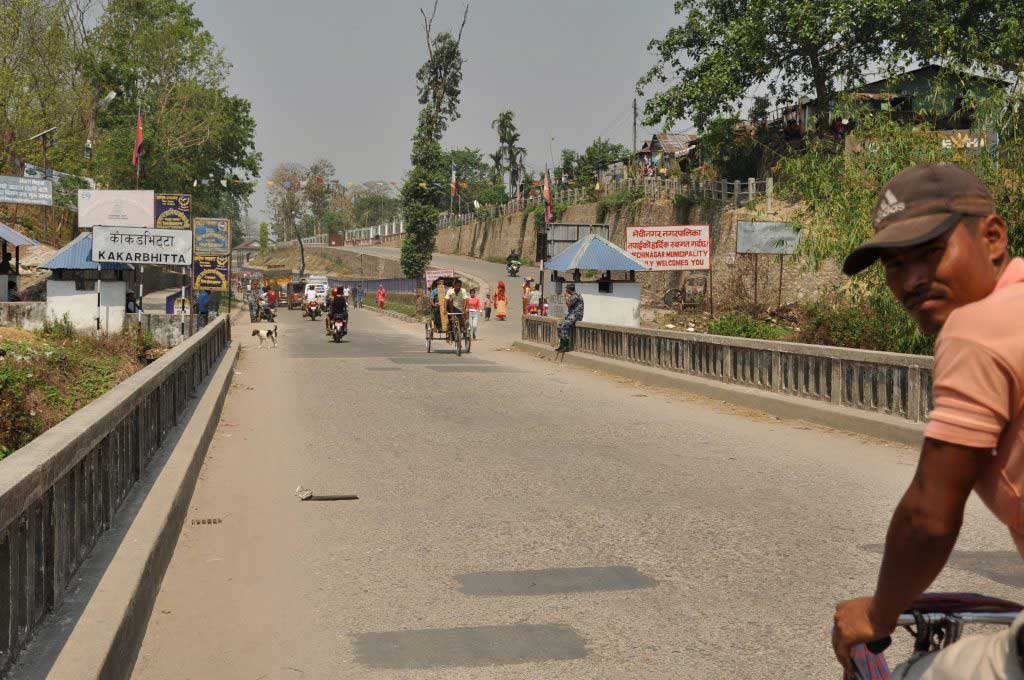
The Panitanki – Kakarbhitta border is marked by a river, and the bridge connection the two sides is a kind of “no mans land”. The Indian Immigration Office is a few meters before the bridge, in a small alley on your left side. Anyway if you miss it, the guards near the gate will call you and show you the way.

At the Indian Immigration Office, you show your passport and in less than 2 minutes you have your exit stamp.

Indian Immigration Office. Panitanki
way to the Indian Immigration Office. Panitanki
Indian Immigration Office. Panitanki

From here you need to cross the bridge. I have made it on foot, and I was not the only one, but if your luggage is heavy or if you are caring many items maybe is better to hire a rickshaws. Anyway walking you have more time to enjoy the view of the river and surroundings that with the heat of April are almost dry, but that after the monsoon rain must offer a pleasant view. The walk make me sweat and regret not had taken a rickshaw, but at the same time offer me lots of smiles from the local people and children waving… not many foreigners cross this point, and even less do it on foot. And above all, crossing a border on foot has always a special meaning… a kind of symbolic entrance in a country… not with the easiness and apparatus of the airports but with a humbleness necessary to a traveler.

Indian side of the Panitanki Panitanki-Kakarbitta border
Indian side of the Panitanki-Kakarbitta border
bridge at Panitanki-Kakarbitta border
arrivnig to Nepal border. Panitanki-Kakarbitta border
arriving to Kakarbitta, Nepal side of Panitanki-Kakarbitta border

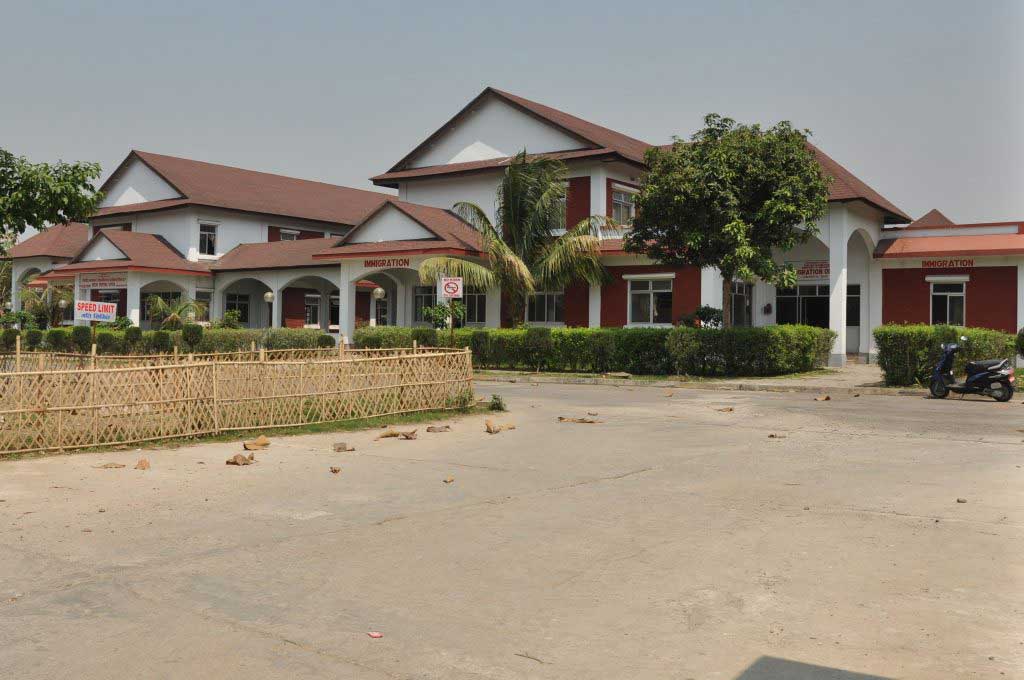
After crossing the bridge you are at Nepal, more properly Kakarbitta. Walking a few meters more you’ll on the right side a ramp that lead you to a gate. Behind the gate is the building of the Nepali Immigration Office. As the both Nepali and Indian don’t need immigration formalities to cross the border, this office is almost empty all day. Nepal has Visa on Arrival, so to get your visa you need:

  • passport
  • 1 photo
  • fill a couple of forms that they will give you there
  • …and money to pay the visa fee. You can pay in dollars (USD) or Indian rupees (INR). Must be played in cash. There is no ATM or Exchange shop nearby, so be prepared. In the India side you can exchange money. If you pay in dollars is better bring the exact amount, as change isn’t always available.

The Nepal visa can be (April 2016):

  • 15 days: 25 USD
  • 30 days: 40 USD or 2700 INR
  • 90 days: 100 USD

The staff at the Nepal Immigration office is very nice and provides a lot of information, especially about schedules and prices for the different kinds of buses. With the help of Nepali officers I could easily avoid touts that always come to try to push you to one of their buses. They are annoying but not persistent.

After have your stamp in the passport, that will take about 5 minutes, you just walk right until you cross a big gate that symbolically mark the entrance in Nepal.

Panitanki-Kakarbitta border crossing_Kakarbitta Nepal Immigration Office_DSC_9177
Nepal Immigration office at Kakarbitta. Panitanki-Kakarbitta border
Panitanki-Kakarbitta border crossing_Kakarbitta_DSC_9178
Gate that marks Nepali border. The bus terminal in just a few meter further, on the right side. Kakarbitta

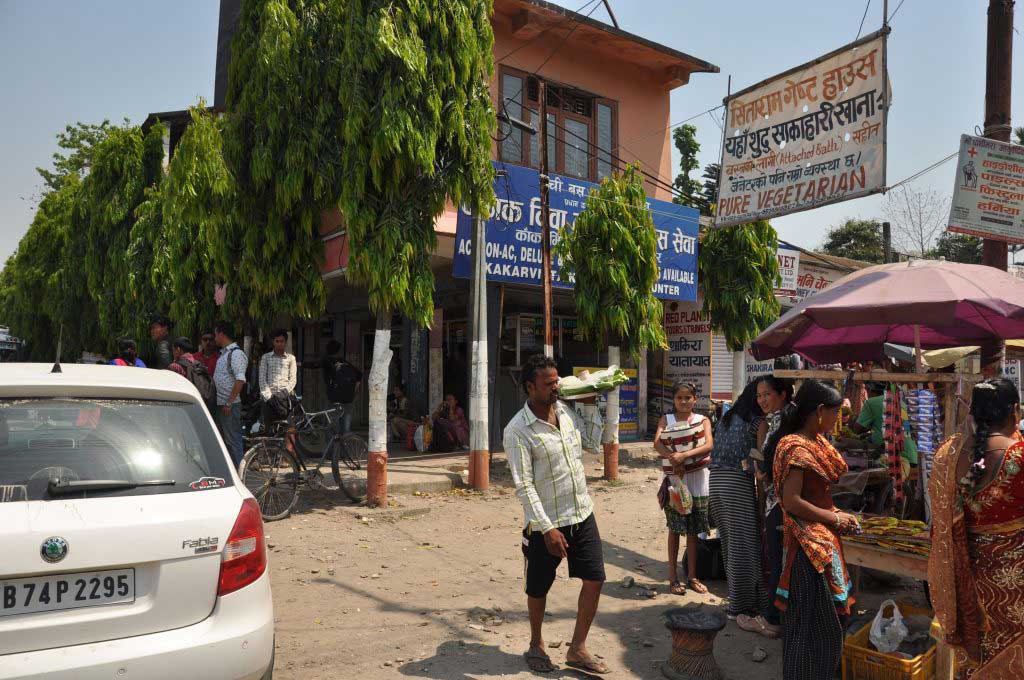
From here you walk a few meters and on your start to see a few shops, keep walking until a corner, where bus tickets are sold. There are several shops, but in this one you are dealing directly with the bus company and avoid extra fees from intermediaries and travel agencies. The shop is open to the street, with the counter surrender by windows. The prices are clearly written on the window. The bus terminal is just in front.

From Kakarbitta there are direct buses to the main nepali cities: Kathmandu, Jonakpur, Biratnagar, Itahari, etc…

ticket counter fot the buses from Kakarbitta to Kathmandu, at the Kakarbitta bus terminal, located on the right side just after crossing the border

How to go from Siliguri (New Jalpaiguri Junction) to Panitaki:

Probably you’ll arrive to Panitanki coming from Sikkim, Darjeeling, Siliguri or New Jalpaiguri.

Siliguri is the closest train station from the Nepali border, but most of the trains stop at is New Jalpaiguri also known as NJP, a more important station. Just in front of New Jalpaiguri train station, you’ll see a few nice blue buses parked that go to Siliguri. From there you need another bus to Panitanki. To avoid this bus transfer you must walk a bit further, to the end of the train station car park, until find a bus, not so nice and modern as the other ones, but that goes direct to Panitanki; it takes about 1 hour to make around 35 km, but it stop many times, including Siliguri. If you arrive during the day, there’s no reason to stop in Siliguri, but is never a good option crossing the border during the night.

Bus ticket New Jalpaiguri (NJP) to Panitanki: 20 INR (Indian rupees) (about 1 hour)

bus from New Jalpaiguri Junction (in front of the train station) to Panitanki

How to go from Kakarbitta to Kathmandu by bus:

As there is no railway service in Nepal just remains two options to reach Kathmandu: by plane or by bus.

The plane far from be the best option is terms of time and comfort is out of a backpacker budget, as also out of the spirit of traveling… so the bus remain as the only reasonable option.

There are good bus connections between Kakarbitta (also referred as Kakarvitta) and the capital, with a/c buses depart early in the morning: 4 am, 5 am, 6 am and 7 am, and in the afternoon: 3 pm, 4 pm and 5 pm. Officially the trip is 12 hours… but it took 16 hours, with the last two hours already in the traffic jam of Kathmandu suburbs.

The evening buses arrive to Kathmandu more or less all at the same time, despite the time of the departure, as later the bus departure, les traffic find on the way.

Despite de 16 hours bus journey, the trip is not so hard as imagined, as about 2/3 of the trip is made on the Terai, the flat area in south of Nepal. The last part is the hardest one with the road going up to the mountain, with quiet some curves and bumps that hardly allow you to sleep.

Is strongly advisable to take air-condition bus (a/c bus) not just because of the heat from the south of Nepal during almost all the year, but also because of the dust and the noise. The a/c with the windows locked provides a more pleasant and relax trip… it worth to pay some extra rupies more.

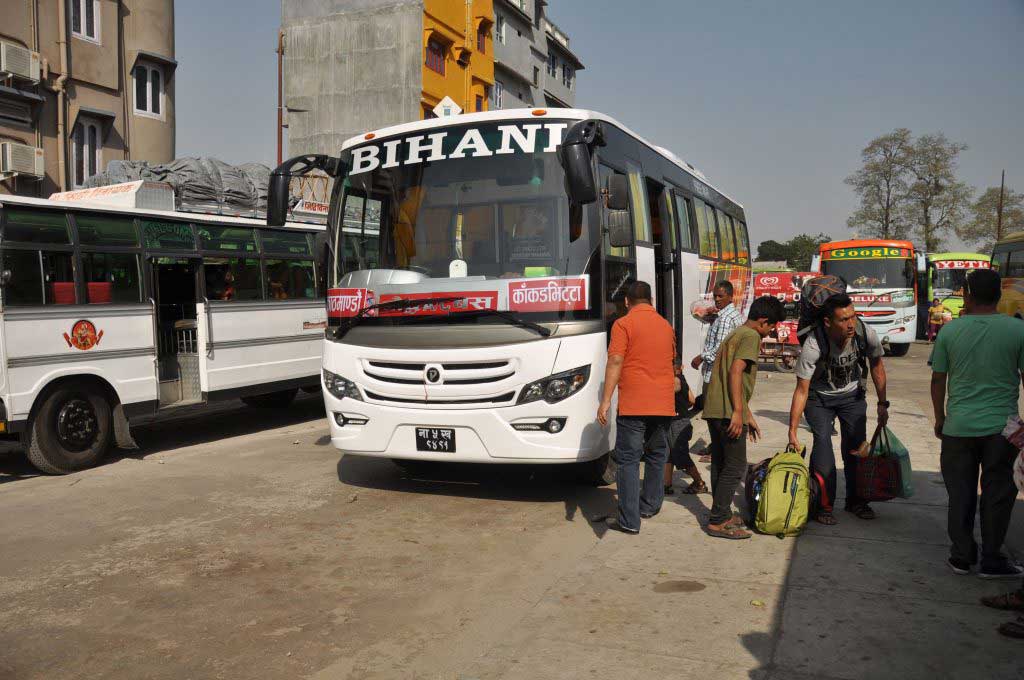
The best buses are from the BIHANI company. Called a/c Delux, are modern, almost new and quiet comfortable, spacious, and the reclining seats, have a support for the legs that provide a almost horizontal position… not a sleeping bus but very confortable. Still your sleep could be disturbed by the music and the movie show on the screen… a kind of Nepali version of Bollywood. The bus stop a coupe of times for food.

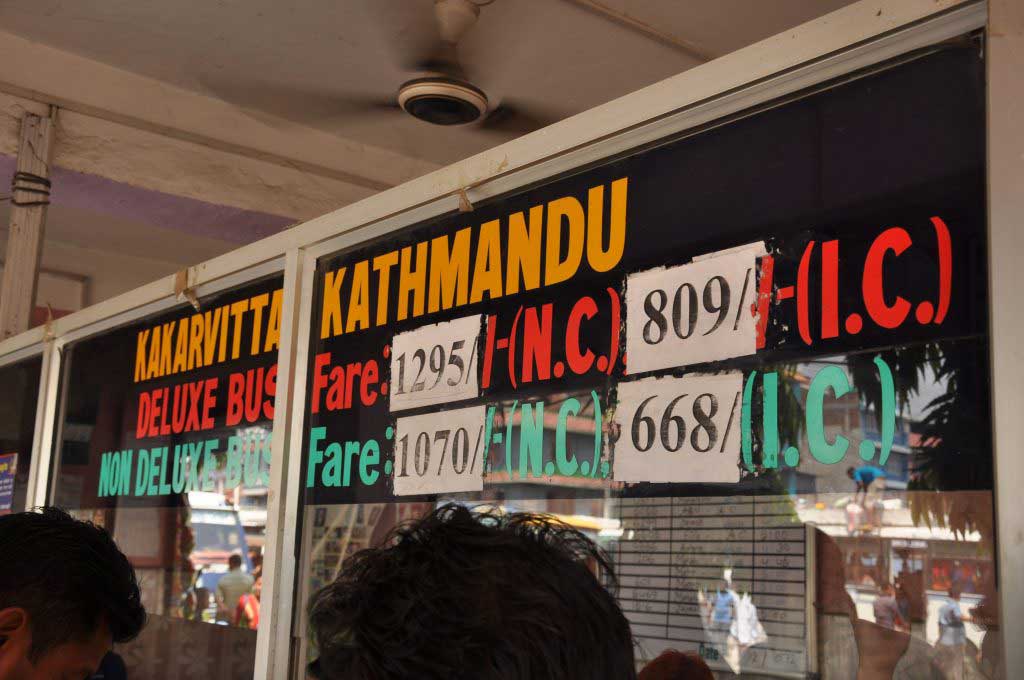
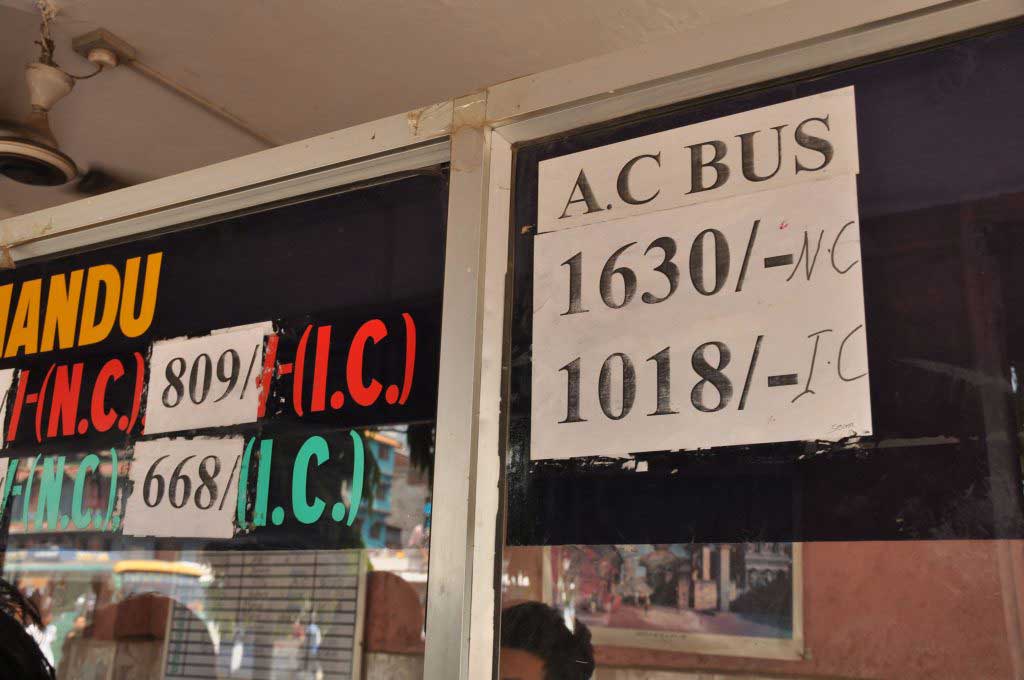
ticket fares from Kakarbitta to Kathmandu:

  • Bus “a/c Delux”: 1630 NPR (nepali rupees) (16 hours)
  • bus “delux”: from 809 NPR to 1295 NPR (more or less the same travel time but less comfort)
  • Bus “non delux”: from 668 to 1070 NPR (I strongly discouraged trip in this “normal” buses, only if there’s any other option)
bus fares from Kakarbitta to Kathmandu
“delux” and “non delux” bus fares from Kakarbitta to Kathmandu at Kakarbitta Bus terminal
a/c bus fares from Kakarbitta to Kathmandu

From my experience at Neapli roads I must say that there are no pleasant or easy bus trips in Nepal. Or is too hot, like almost all the year along the Terai, or at mountain the winding roads, or the drivers are crazy, or there are many stops, or the bus is too crowded, or the road is too dusty, or if it’s raining too muddy. Even the super-delux bus is most of the times old, uncomfortable, dirty and even with broken seat.

This trip from Kakarbitta to Kathmandu, on a a/c bus was far the most pleasant trip that I have ever made in Nepal.

a/c bus from Kakarbitta to Kathmandu
a/c bus from Kakarbitta to Kathmandu… the best bus that I ever catch in Nepal.
Bus ticke Kakarbitta to Kathmandu
Bus ticket Kakarbitta to Kathmandu… with the company name and contacts

Karkarbitta to Kathmandu by mini-van: (update Feb 2019):

As an alternative to these night buses there are mini-vans that take just 11 hours and reach Kathmandu around 5 p.m., very convenient as you can make the trip during the day and arrive in Kathmandu before the sunset. This vans make a kind of short cut, passing through Sindhuli, Dhulikhel and Bhaktapur, before reaching the capital.

Departure time is around 5 a.m.

In the image below you can find the contact of this vans, locally identify as “Hiace”, to get more details about the ticket price and from where they departure.

contact info of the mini-van from Kakarbitta to Kathmandu

Where to eat at Kakarbitta:

At Kakarbitta after having my precious bus ticket was time to relax and have some food.

Kakarbitta is far from be attractive town, but nor sob ad from what we are used to expect form a border town. Is quiet, cross by a main road, dusty but that doesn’t have that much traffic. Around the bus terminal, basically the center of all activity at Kakarbita, there are a few shop, restaurants and few fruit stalls.

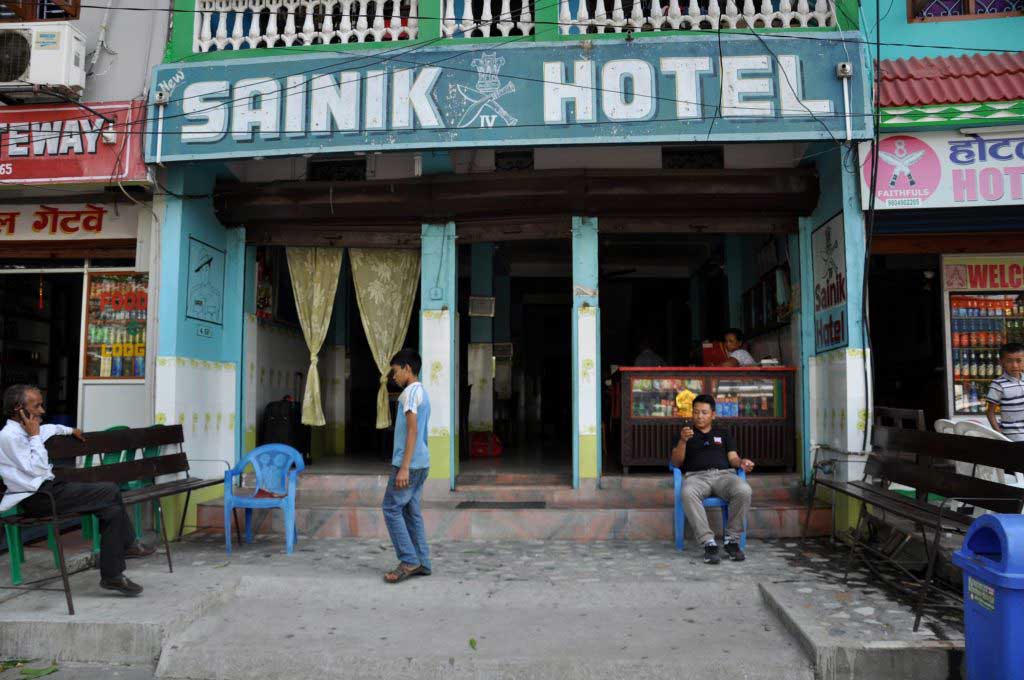
On the opposite side of the terminal, that is quieter, line up a few restaurants, also called hotel, with some also with lodging. The choice was for the Sainik Hotel, clean and spacious. The kana (local meal based on rice, dhal, curry, vegetables and pickle) was delicious and served at the traditional brass plate. The meal with two chai was 80 rupees (NPR) with refill. Strongly recommend.

Beyond the food Sainik Hotel also provide nice conditions to wait about 4 hours for my bus: quiet and with smiley and friendly staff.

Dal bath at Sainik Hotel. Kakarbitta. Nepal
Sainik Hotel... good food and a good welcome @ Kakarbitta
Sainik Hotel… good food and a good welcome @ Kakarbitta

The “paan” chewers

"paan" chewer in the streets of Guwahati, Assam, India

“paan” chewer in the streets of Guwahati, Assam, India


From the experience of traveling in the Northeast states of India, there was one thing that caused a strong impression in the memory of the sensations: the paan… the smell, the color, the gestures, the sound of spit and red trace left on the ground.

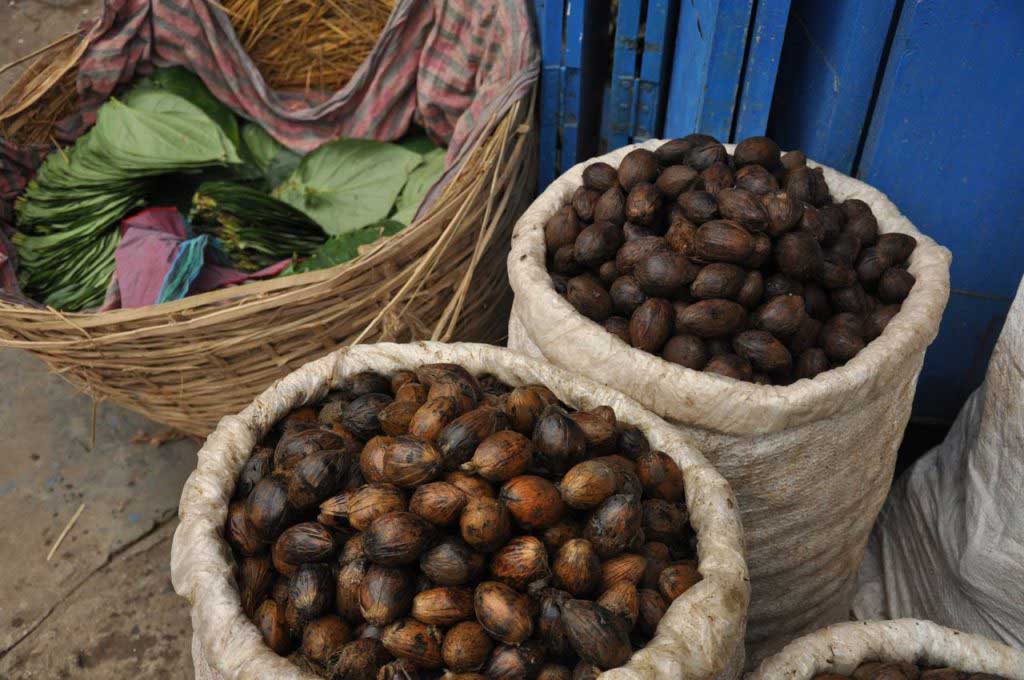
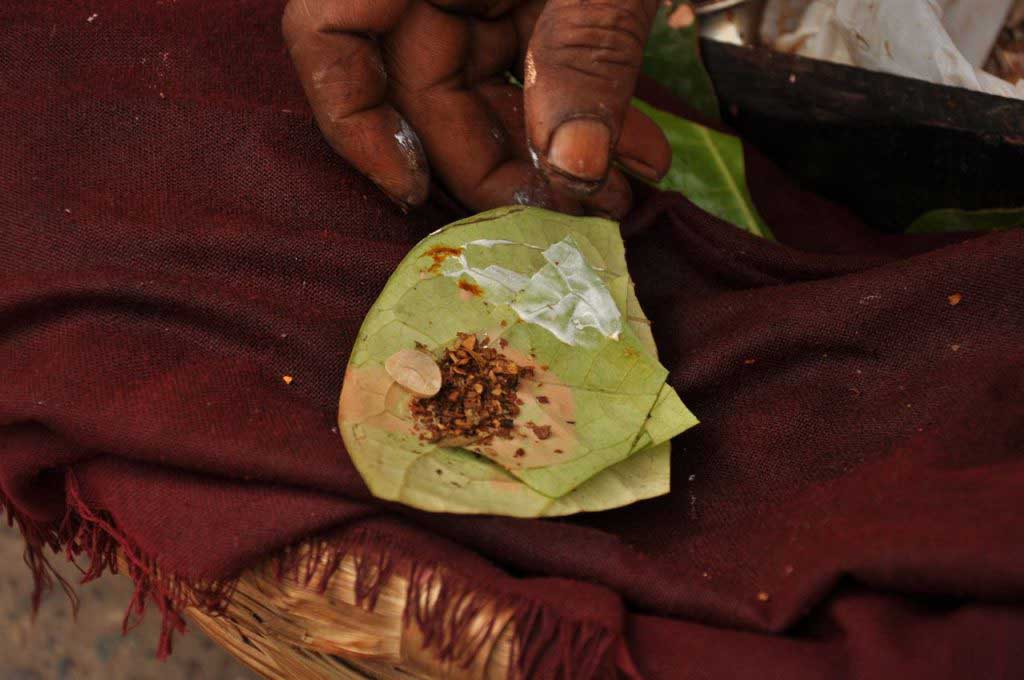
But what is the paan!?! Basically, paan is areca nut, whose appearance resembles a nutmeg, cut into small pieces and wrapped in betel leaf, a green vine leaf that has stimulant effects. To this mixture, is often added tobacco (chewing tobacco) and lime (calcium hydroxide … yes, the same as the lime which is used to cover walls.

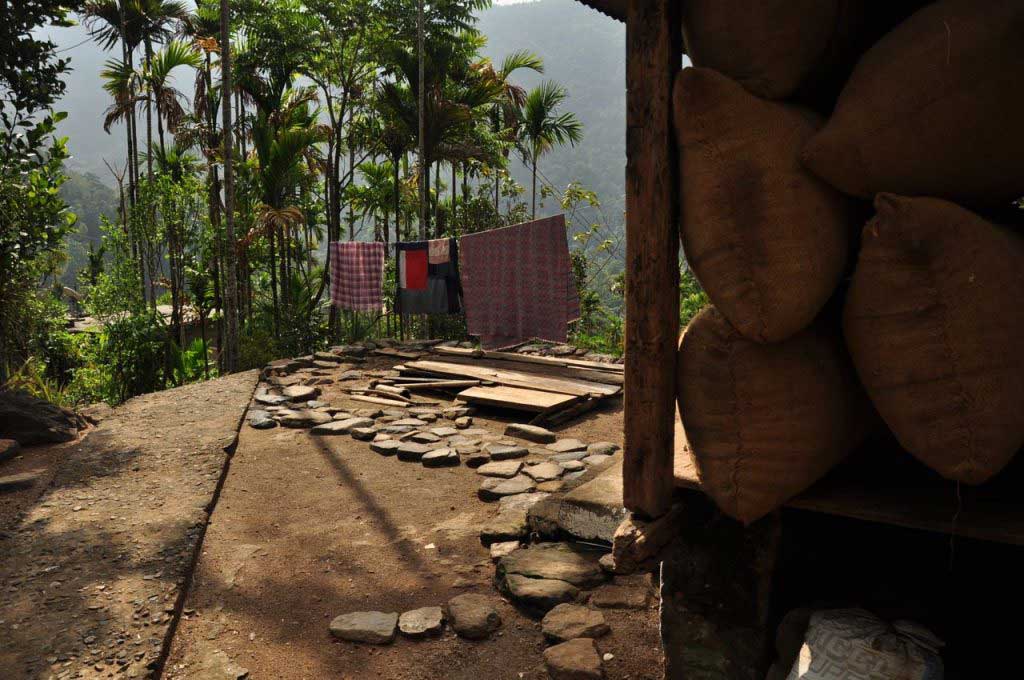
The areca nut, resembles much the nutmeg, both in size and in the appearance of the fruit, but rather born of a tree is the fruit of a palm tree, whose nuts grow in clusters at the top of a thin, high trunk.

Areca nut still with the skin of the fruit
Betel Leaf sold in markets (folha de Betel à venda nos mercados)
Areca nut without skin
Areca nut without skin at a market in Burma (Myanmar)
Areca nut tree. Megahlaya. India

The betel leaf is carefully folded in the form of a small rectangle or triangle shape, keeping the areca nut mix inside, and placed in the mouth between the cheek and the teeth. This “pack” is slightly chewed so slowly release the juice that gives gradually a reddish color to the saliva, which extends to the corners of the mouth and lips. After a few years of use, it results, in the decayed teeth and stained red, as well as a certain addition, due to the stimulation property of betel leaf. Mixed with tobacco, it increases the carcinogenic effects of the areca nut.

paan street stall. Burma
paan street stall. Burma (Myanmar)
"paan" before being fold in the betel leaf. "paan" uma mistura de nós de areca, cal e tabaco de mascar, enbrulhada numa folha de betel)
“paan” before being fold in the betel leaf. (“paan” uma mistura de nós de areca, cal e tabaco de mascar, embrulhada numa folha de betel)

The paan produces a strong salivation, which makes their consumers have frequent need to spit, which is often made in a showy way, a jet of red saliva, which leaves a trail through the streets, sidewalks and even on the walls!

Being very popular in India, the habit of consuming paan lies spread by all Asian countries, being more evident in India, Nepal, Bangladesh, Sri Lanka and Burma, with this last country being the place where the presence of paan is a constant being also chewed by women and the children.

But weeks spent through some of the northeastern states of India, like Assam, Nagaland and Meghalaya, left a stronger mark of this phenomenon. Here, perhaps more than in any other regions of India, areca nut “rules”, being even chewed without betel leaf or any other mixture.

Being predominantly a male habit, common among the poorest, it is a mark image among bus and tuk-tuks drivers; but in Northeast India the paan is also quite popular among women, and its cross-consumption to the various social classes, not being surprising to find a shepherd in Majuli Island spiting paan or the receptionist of a hotel in Mokokchung with corners of the mouth marked in red by the areca nut.

The chewing tobacco consumption is also very popular, being mixed with lime in order to moist the tobacco dry leaves, forming a paste which is placed near the gums. The tobacco preparation, rubbing the mixture in the hand palm with the index finger, being in the end slightly beaten to become flat and compact, are one of the most preset gestures… in the cities or in the villages, on the streets or in shops, on buses and trains… everywhere!!!

Despite the chew of tobacco be unpleasant, as it produces the frequent need of spit, the paan with its sweetish smell created, after three weeks of traveling through northeastern India, a certain distaste and aversion, for the combination of the spitting sound with the jet red saliva discharged, which doesn’t strive to be discreet or delicate, making the act of spitting an art, where the trajectory and distance of the red track left on the ground, is a matter of pride.

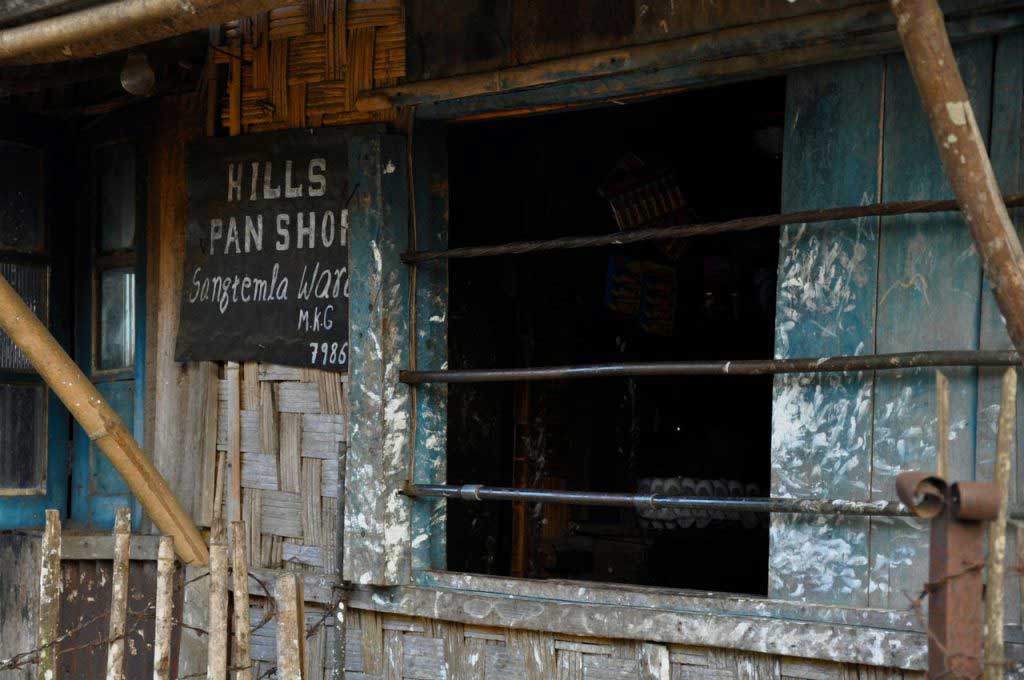
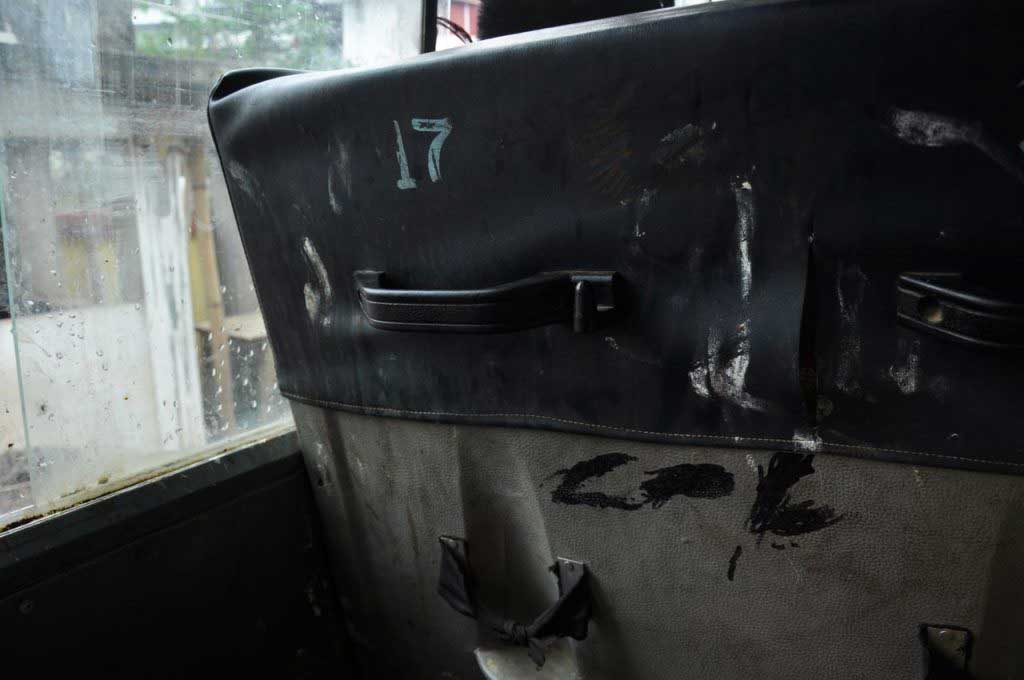
And a little everywhere, always come up white marks left by lime stuck to the fingers, that is rubbed on doorposts of the paan shops, or on the seats of a bus or a train…

paan shop, that are small stall where the paan is prepared and sold, usually in pack of six. Mokokchung, Nagaland. India
marks left by the fingers with lime that is used to mix with the tobacco and the areca nut (marcas deixadas pela cal usada para misturar o tabaco de mascar com o noz de areca).


And the smell also left a strong mark on my memory, with hotel rooms with paan presence, and long trips made by bus or the sumo, in the company of enthusiastic paan chewers, whose sweet smell pervades the space, and my field of vision regularly crossed by someone that need to spit out by the window.

A negative but strong memory that created in me a disgust of the paan, which my senses can not remain indifferent.

tuk-tuk driver spiting the paan, leaving a red trace on the streets (condutor de tuk-tuk

Travelling in “unreserved” in an Indian train… from Kohima to Guwahati

They can say yes, there are reserved seats on the train… they can even sell tickets where the number of the coach and our seat are clearly written… but no! No! On the train from 12.31 pm (number 05968, Dibrugarh – Rangiya Special) from Dimapur to Guwahati, there are no reserved seats. It is an “unreserved” train. In other words: it is a hand-to-hand fighting to get into an already full of carriages, where luggage, elbows, and knees are the weapons for this “war.”

Train trip Dimapur-Guwahati in unreserved coach

Despite this journey between Dimapur and Guwahati have coincided with regional elections of Assam state, where part of the coaches were reserved for the army, reducing the number of seats for passengers, the fact that this train doesn’t have reserved seats seems to be part of normal service. Both station staff as the passengers knows that. I was even gently warned by one of the railway station staff with the simple words “you need to rush to the train“… I found it strange because there were more than two hours for the arriving of the train… “rush“?!?!… for what??! I thought… but this was a polite way of saying “fight“!!!

With a big effort and with the aid of a helpful passenger, I could get on the train and find room for my backpack. And then followed an arduous journey of more than five and a half hours in a crowded train, standing and without much change to get a seat.

As if all this were not already too painful, joins the climate of Assam plains that in April is hot and dry, and where each time the train stops, the air inside the coach stagnate, making it look like we were in a kind of oven. The passengers patiently waiting for the train to start move, with a kind of helpless surrender, to bring some fresh air through the windows.

Slowly a thin layer of dust discreetly glues to the skin with the help of sweat, which slowly soak clothes and leave a shiny glow on the face.

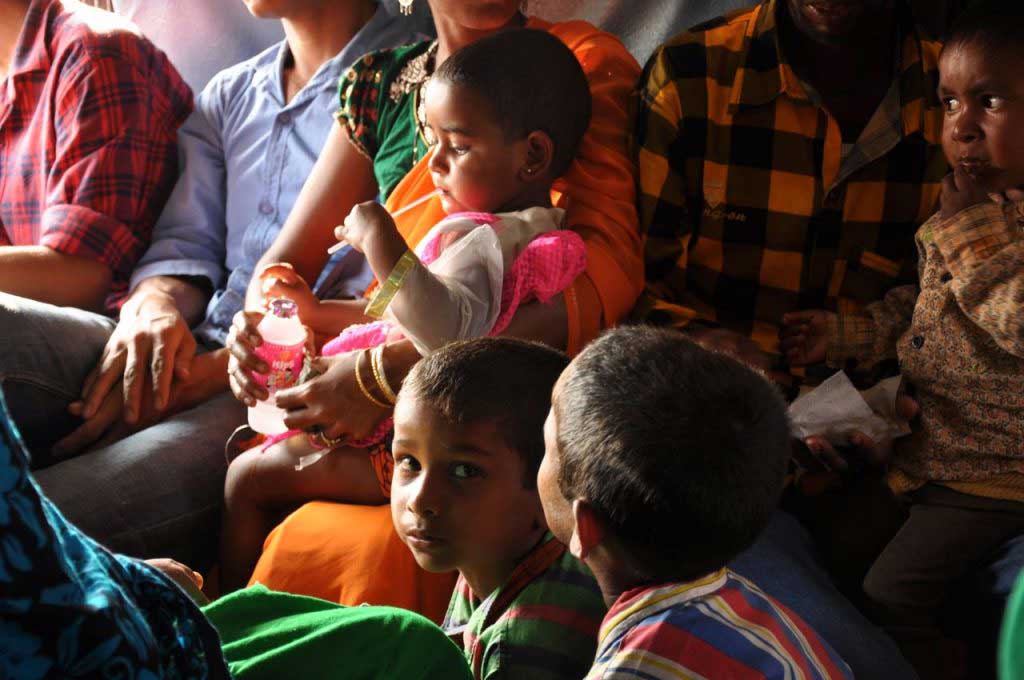
Hopefully, at the end of the trip I managed to share a bench of two seats with two other passengers… and with a little good will there also a bit of space to fit a child… thankfully most of the passengers are slim, and the sharing of these adversities strengthens the feeling of mutual aid.

By the middle of the train corridor, totally crowded with people and luggage, food vendors persistently circulate among passengers carrying food and drinks: samosas, water, cookies, lassi, sodas, ice cream, peanuts and the refreshing cucumber, cut into slices and seasoned with chili. It is an incessant movement of vendors, loudly advertising their products, opening passage by pushing and stepping between the standing passengers, creating a constant stirring and leaving no opportunity to have some comfort in this painful journey.

By the window pass images of rice paddies and of dry fields waiting for rain, where the intensity of light invites you to close the eyes.

Dimapur
Dimapur

How to go from Kohima to Dimapur:

Kohima bus terminal is conveniently located in the center of the city and is where the NST (Nagaland State Transport) buses stop, connection with the most important Nagaland cities.

Strangely there is no fixed schedule for the beginning of the trip and according to information of the ticket counter, the bus to Dimapur only start when is full. So you need to arrive around 7 a.m., buy the ticket and wait because this is the only bus to Dimapur during all day.

Although not completely full, the trip began, around 7:20 a.m, with about 2/3 of the passengers. Buses of NST are in a very poor condition, dirty and with some broken seats, especially those that made the shortest routes, as Kohima-Dimapur.

  • Bus Kohima to Dimapur: 120 rupees (3 hours)

Right next to the bus station there’s a taxis stand, easily identifiable by the concentration of yellow vehicles. The journey by shared taxi costs 220 rupees and takes 2.5 hours. Taxis have no fixed schedule and leave as soon as they are full (which in the morning does not take long), running from 6 am until the end of the day.

The road between Kohima and Dimapur is mainly mountains, with the last third of the route already being done in the plains of Assam. The road has good pavement but with some sections under construction, resulting in a long and bumpy journey.

inside of a NST bus_Nagaland State Transport

How to go from Dimapur to Guwahati:

In fact, for those who want to skip one night in the dull Dimapur, and intends to follow directly from Kohima to Guwahati, there are interesting options.

According to the schedule of the Indian Railways, the train 05968, despite having no coaches with air conditioning or “sleeper class” has reserved seats in 2nd class. So the travel agencies in Kohima sold tickets for this train, with seat number and coach number, clearly inscribed on a ticket issued electronically and printed on paper.These intermediaries, are apparently work honestly, using the ticket sales service of Indian Railways. But when the train arrives at the station it’s clear that the 05968 is a unreserved train, as we see everyone running to get on the train, carrying luggage and children in the arms, making almost impossible the exit of the passengers that want to get out.

Buses are not an attractive option for the 250 km separating Dimapur from Guwahati, and probably start early morning from Dimapur, forcing to spend one night there.

There are trains from Dimapur to Guwahati, departing after 16 p.m. but reach Guwahati close to 10 p.m. which can be too late to find accommodation, especially for those who arrive in Guwahati for the first time and have a limited budget.

Not all trains run daily. More information about trains Dimapur – Guwahati:

http://indiarailinfo.com/search/685/0/546?date=0&dd=0&ad=0&co=0&tt=0&ed=0&dp=&ea=0&ap=&loco=&drev=0&arev=0&trev=0&rake=&rsa=0&idf=0&idt=0&dhf=0&dmf=0&dht=0&dmt=0&ahf=0&amf=0&aht=0&amt=0&nhf=-1&nht=-1&ttf=0&ttt=0&dstf=0&dstt=0&spdf=0&spdt=0&zone=0&pantry=0&stptype=undefined&raketype=0&cu=undefined&trn=0&q=

Dimapur: NST bus terminal

Dimapur:

  • At Dimapur the railway station is located very close to the bus terminal of the NST, less than 2 minutes walk.
  • At the train station, there is luggage room where you can leave your luggage while waiting for the train. The process is bureaucratic and requires the passport and detailed form fill by the station staff. The “luggage room” is on the same site of “parcel office”. It is mandatory to have a lock, even a backpack with multiple compartments and zippers… but just a padlock, play a symbolic role! Rs 20 per day per bag.
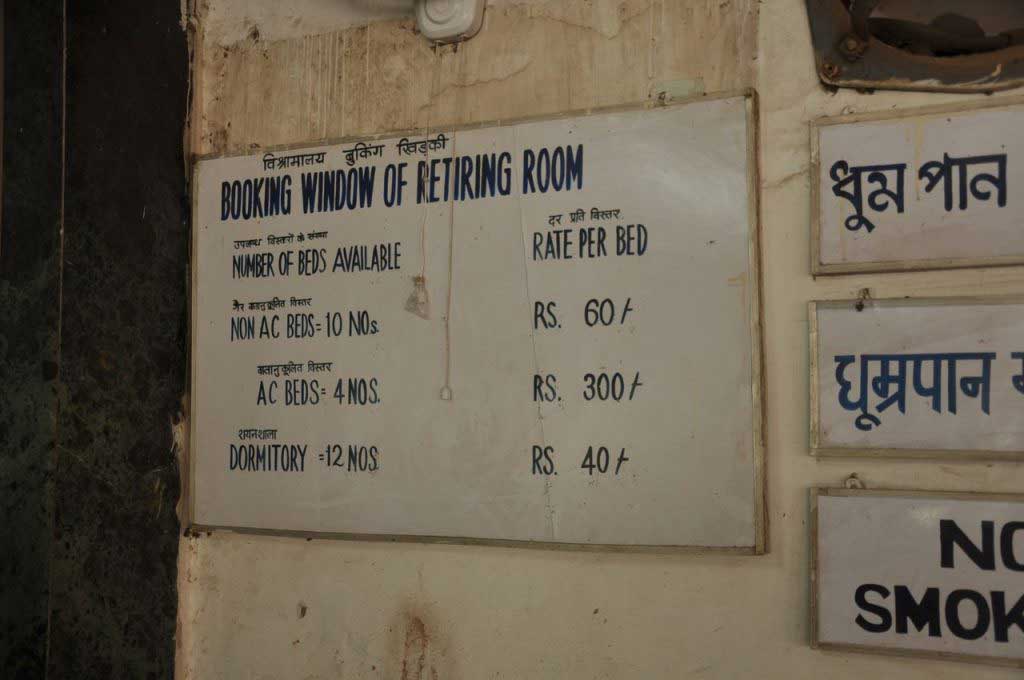
  • Dimapur Train station also has a “Retiring Room“, which serves as accommodation for ticket holders. I didn’t check the conditions, but it may be useful to those arriving later night and do not want to waste time looking for accommodation in Dimapur.
Dimapur: Train station Retiring room fees
Dimapur: Train Station: luggage Room
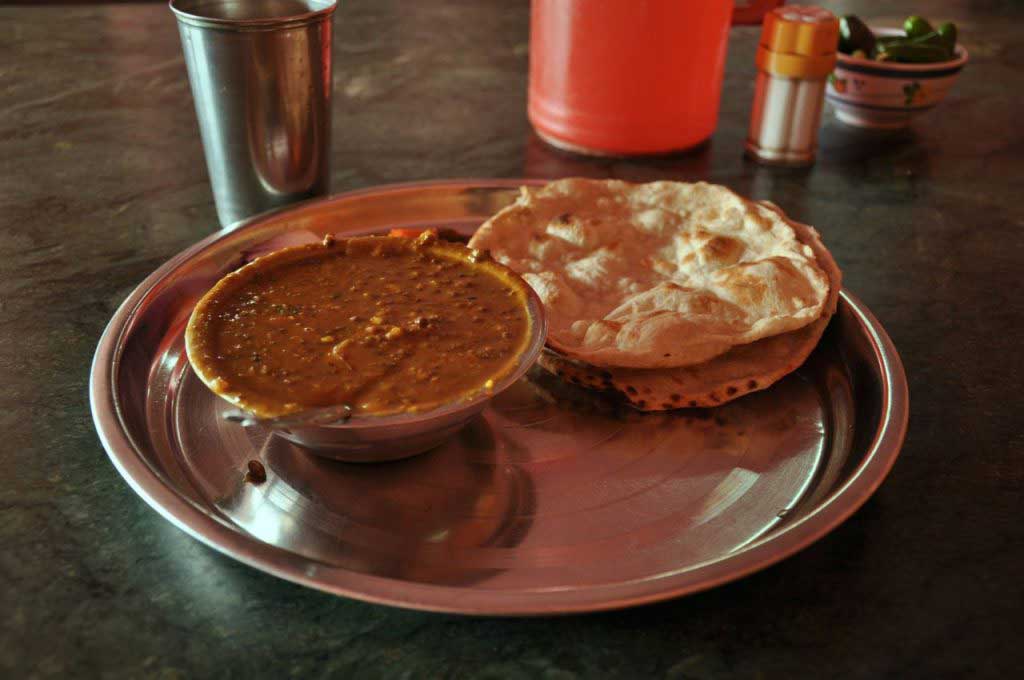
  • For a quick bite recommend the restaurant located beside the main entrance of Dimapur Train Station: Hotel Dimapur Shan-e-Punjab… for me that was missing the traditional Indian food, the dal with chapati was delicious. Besides the food this place as conditions to relax for an hour or two.
  • If you want a little more comfort, at the northern end of the passenger platform of Dimapur Train Station (for those who enter on the right), is a restaurant of Indian Railways with air conditioning.
Dimapur: Hotel Dimapur Shan-e-Punjab, em frente à estação de comboios... para quem tem saudades da tradicional comida indiana
Dimapur: Hotel Dimapur Shan-e-Punjab, em frente à estação de comboios… para quem tem saudades da tradicional comida indiana

Kohima and the exotic markets

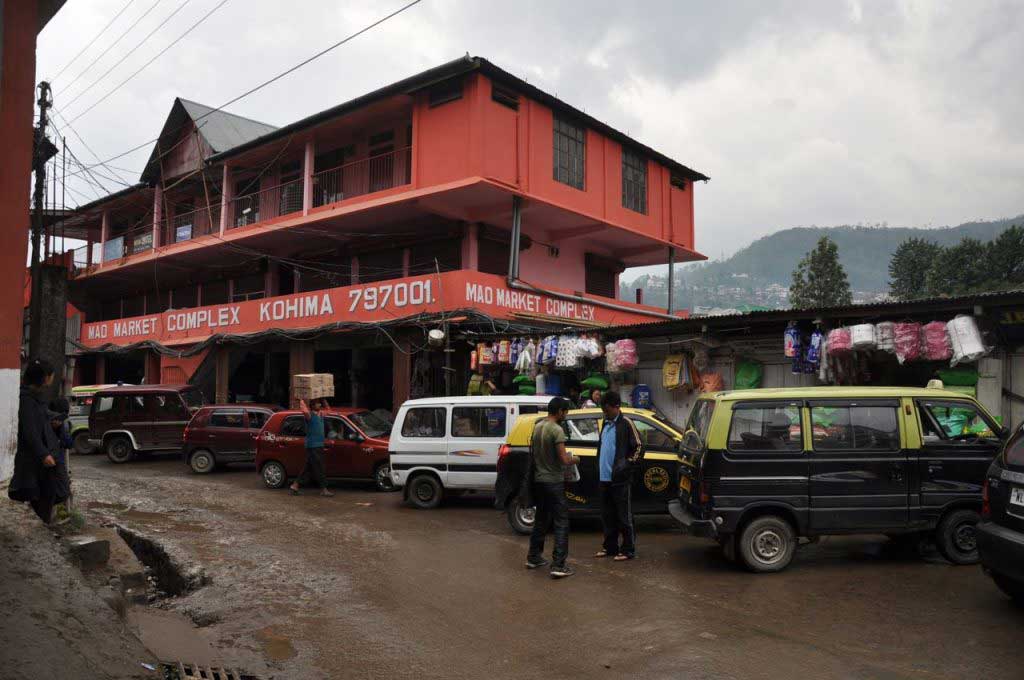
Mao Market. Kohima
wasp larvae at Mao Market. Kohima

Kohima definitely stood out by the markets, where the exotic and diverse food supply reflects the originality of Nagaland cuisine that includes a lot of meat, eggs, dried fish, eels, snails, worms, mice, frogs… and wasp larvae, still sold in the hive. Always present is the Naga Chilies, consider the spiciest chili in the world,

Regarding vegetables, these markets show a mix of tropical and mountain products. From the warm plains of Assam come the papaya, and the banana, that here, despite the fruit, is also used the trunk and the flower that are used for cooking. From the cool mountain air arrive the mushrooms and bamboo, eaten in sprouts. There’s also a wide variety of veggies, many of which are totally unknown to the European taste.

Mao Market. Kohima
Mao Market. Kohima
Mao Market. Kohima
Mao Market. Kohima
Mao Market. Kohima
Worms at Mao Market. Kohima

Kohima is the capital of Nagaland, and as it’s usual in this state of Northeast India, all cities are located in mountain areas, preferably on the top of the hills, stretching by the slopes, along the winding and steep roads, that doesn’t encourage long walks.

Sporadic rain and a constant gray sky paint with dark colours this city of concrete and metal roofs with few attractive features. However, this city can be a good starting point to know the culture of Nagaland tribes and becomes quite popular in terms of tourism during the Hornbill festival, a show of local culture.

Like any trip in Nagaland implies a high level of stress, mental and physical, due to the discomfort and duration of the trip, Kohima showed up as an almost compulsory stop on the route between Mon-Mokokchung-Guwahati.

Kohima
Naga Market Kohima
Kohima
Kohima

With a few interesting to see, where I effortlessly avoided the popular War Cemetery and the State Museum of Kohima, what stood out were the food markets, especially the Mao Market… apparently, there is no relationship between this place and the leader of the Communist Chinese Party. In this market, situated in a small concrete building, are sold food products used in Nagaland cuisine, and that are not so easily found at city shops, such as worms and frogs, that here are sold alive… and in a strong activity to get out from the containers where they are sold.

Mao Market. Kohima
Mao Market. Kohima
Market. Kohima
Market. Kohima
Market. Kohima
Market. Kohima

But near this small market extends to another market… or better to many other markets, a sequence of buildings, wood constructions covered with metal roof, where along narrow and labyrinthine corridors and stairs, we go from clothes sales to the food area, losing easily the orientation, requiring some persistence to find a way out… and nothing guarantee that it is the same point of entry!

Market. Kohima
Market. Kohima

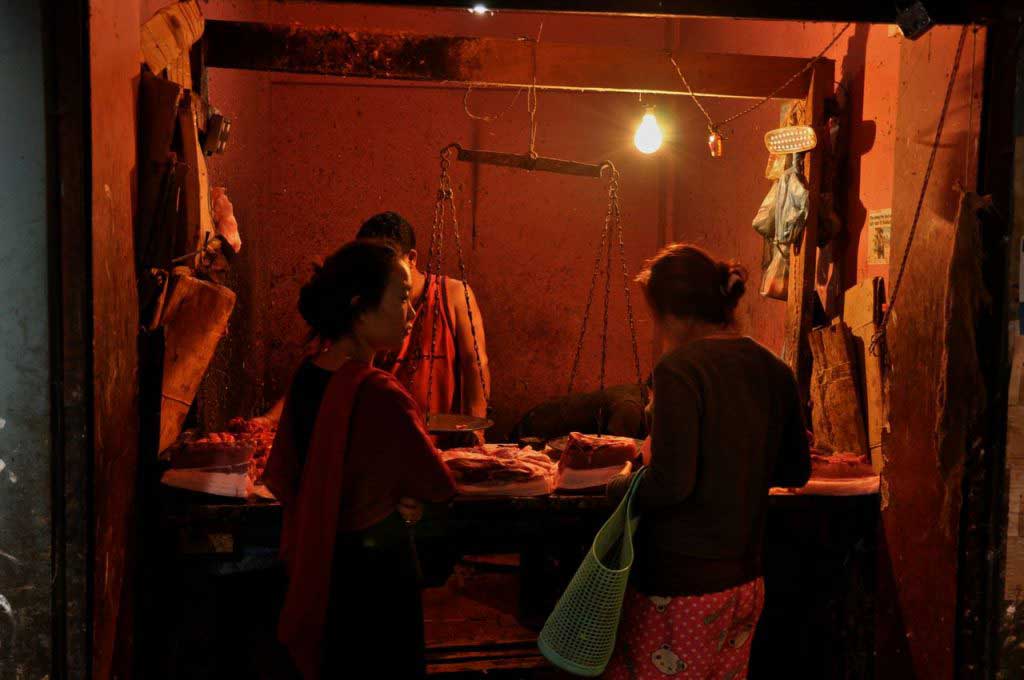
But in this market, going down to darker and less crowded areas we are surprised by a heavy and disgusting smell, a mixture of blood and shit. It is the area where animals are sold and slaughter, and where chickens and ducks waiting for their turn under the yellowish light of the dim lights that illuminate the place, where is notorious the heavy smell of death.

Market. Kohima
Market. Kohima

Kohima_fish market_DSC_8927

How to go to Mao Market:

Near the intersection of Midland Colony, there is a bus stand, where stops the buses that pass close to Mao Market, near the Sokhriezie Junction, in Kohima–Imphal Road. There’s no visible sign on the bus neither a number, but just ask the tickets collector that everyone knows the place; the trip costs 10 rupees and takes about 15 minutes.

Mao Market. Kohima
Mao Market. Kohima

Onde dormir em Kohima:

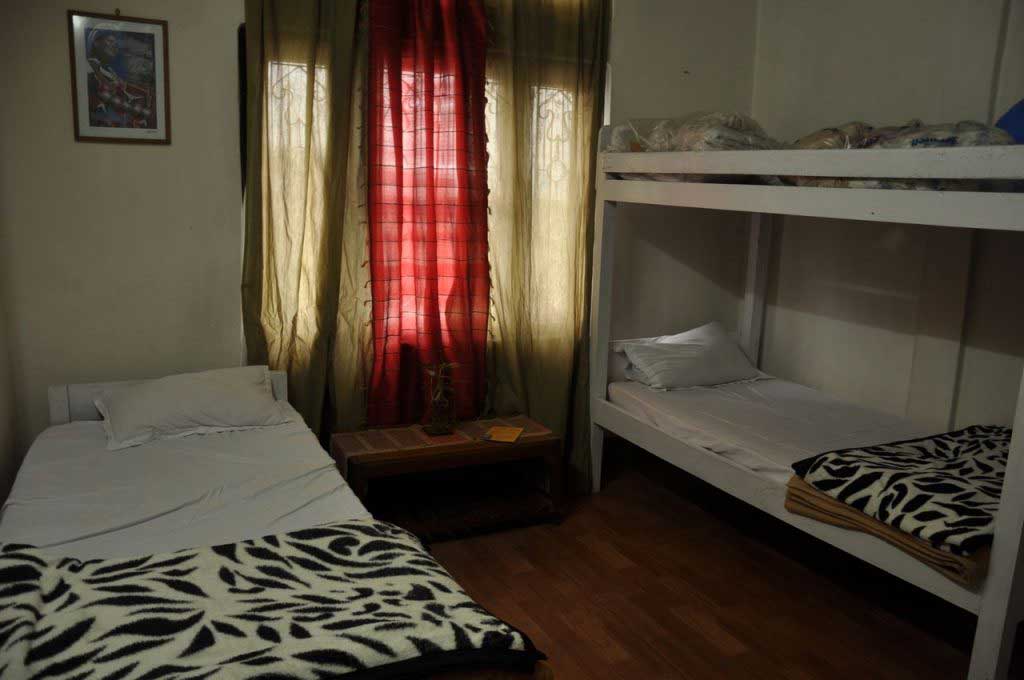
Where to stay in Kohima:

Running away from the anonymous environment and from the desert and creepy hotels, Kohima surprised with the Morung Lodge, found by chance when I was looking for Pine Hotel in Midland Colony. Morung Lodge is a real guest house where you feel the family atmosphere and the comfort provided by an environment with personality.

Morung Lodge

Address: Midland Colony (just after the Hotel Pine).

Contacts: 985 634 3037 (Nino) or 841 481 4214 (Amen)

Email: nino@explorenagaland.com

Wi-fi: 100 rupees/day

Veg dinner: 200 rupies

Morung Lodge. Kohima
Morung Lodge Contacts. Kohima

Where to eat in Kohima:

Being the Nagaland gastronomy heavily dominated by meat, vegetarian meals resume to a monotonous rice, dal and veg curry (locally just called rice) or a Chow Mein, reminding us how close we are from Asia.

Kohima is a good opportunity to try the Naga food with some dedicated restaurants, but where it is impossible to find vegetarian food.

Despite the strong influence of Asian food culture, you can find everywhere Indian snacks such as samosas and puris. At Midland Colony in Kohima, in Mokokchung Road, very close to the Morung Lodge, the small Hotel Taste (no rooms, just food) serves from 6 a.m. delicious samosas, which may be completed with a chai (tea with milk)… too sweet for my taste, but that is a popular choice among the local population as the first meal of the day.

Also in the same area, near the main intersection of Midland Colony (near the Baptist Church), are some restaurants that serve an reasonable rice (rice with vegetable curry and dal) for 80 rupees.

Transport in Kohima:

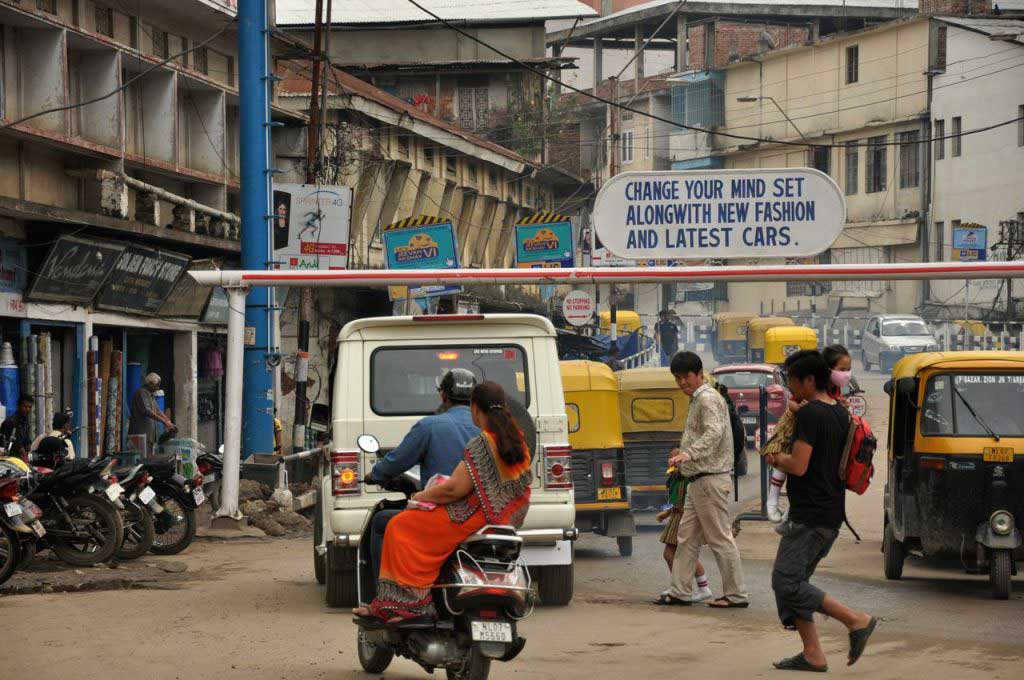
The city of Kohima doesn’t show friendly for walks, as the city extends over a large area, along busy and noisy roads without proper infrastructure for pedestrians.

For longer distances, there are small buses that run through the city, the “City Bus“. A trip costs about 10 rupees.

Kohima
Kohima

How to go from Kohima to Dimapur:

From the bus terminal of the NST run a bus to Dimapur around 7 a.m, but the departure time is not fixed, and the bus starts only when is full, according to the ticket information. However, my trip began with just 2/3 of the passengers, around 7:20 a.m.

Buses from NST (Nagaland State Transport) are in very poor condition, dirty and with some broken seats, especially those that make the shorter routes, as is the case Kohima-Dimapur.

  • Bus from Kohima to Dimapur: 120 rupees (3 hours)

Right next to the bus station, there’s a taxis stand, easily identifiable by the concentration of yellow vehicles. The trip costs 220 rupees, in shared-taxi, and takes 2.5 hours. Taxis have no fixed schedule and leave as soon as they are full (which in the morning does not take long), running from 6 a.m. until evening. This service doesn’t work during the night

The road between Kohima and Dimapur is mainly on a mountain road, with the last third of the route already being done in the plains of Assam. The road pavement is in good conditions but with sections under construction and others full of bumps that make this 70 km a tiring journey.

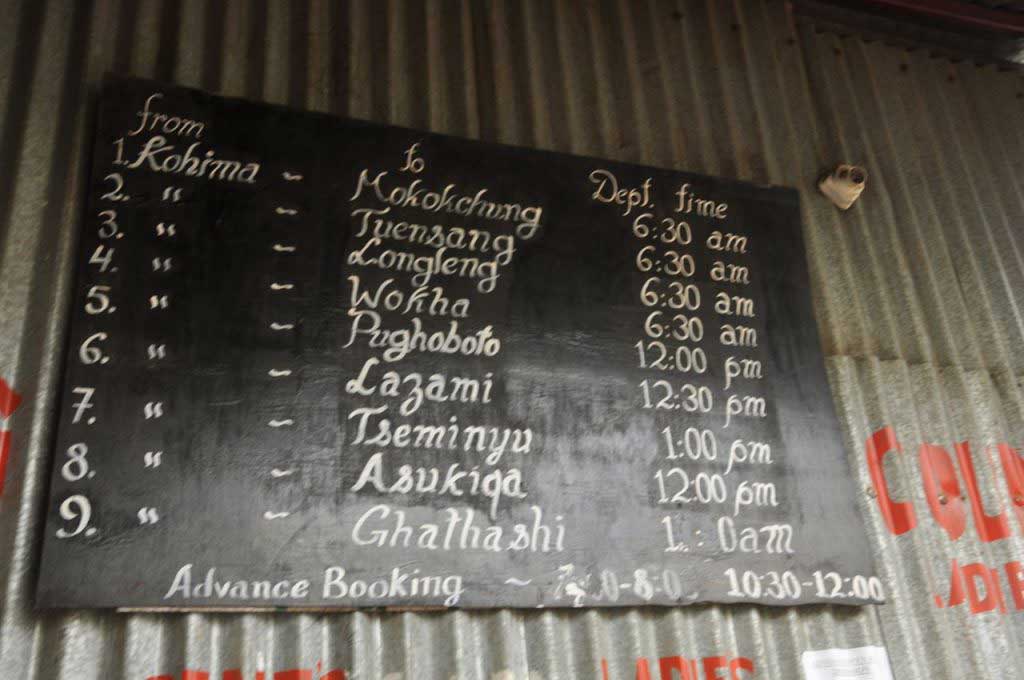
NTC bus schedule from Kohima


elevation: 1444

population: 100.000

  • « Go to Previous Page
  • Page 1
  • Page 2
  • Page 3
  • Page 4
  • Page 5
  • Interim pages omitted …
  • Page 8
  • Go to Next Page »

Footer

search

Tags

accommodation Assam Bali Border Crossing Borneo Cappadocia Colombo Dalí Dambulla Dao Cheng Esfahan Fes Food Gilis Hiking hokkaido Istanbul Itinerary Jakarta Java Kandy Kashan Kataragama Kumano Kodo Lombok Meghalaya Meknes Mekong Nagaland Natural Park Nongriat Northeast States Ouarzazate Sarawak Shiraz Sichuan Province Sumatra Tabriz Tehran transportation Visa Yangon Yazd Yogyakarta Yunnan Province

I’m Catarina, a wanderer from Lisbon, Portugal… or a backpack traveller with a camera!

Every word and photo here comes from my own journey — the places I’ve stayed, the meals I’ve enjoyed, and the routes I’ve taken. I travel independently and share it all without sponsors or ads, so what you read is real and unfiltered.

If you’ve found my blog helpful or inspiring, consider supporting it with a small contribution. Every donation helps me keep this project alive and free for everyone who loves exploring the world.

Thank you for helping me keep the journey going!

BUY ME A COFFEE

Categories

Recent Posts:

  • How to go from Hualien to Dulan Beach
  • Taroko Gorge: between marble cliffs and emerald rivers
  • Hualien: a dull gateway to Taroko Gorge
  • Taiwan: Itinerary for an 16 day trip
  • Vietnam: Itinerary
  • 3 months in India: Kolkata, Tamil Nadu, Karnataka, Goa and Kerala
  • Backpacking Turkey in 24 Days: itinerary & costs
  • English
  • Português

© Copyright 2026 Stepping out of Babylon · All Rights Reserved · Designed by OnVa Online · Login