• Skip to main content
  • Skip to footer

Stepping Out Of Babylon

Travel & Photography

  • About me
    • Contact
  • Destinations
    • Africa and Middle East
      • Iran
      • Lebanon
      • Morocco
      • Turkey
    • East Asia
      • China
      • Japan
      • Taiwan (ROC)
    • South Asia
      • Bangladesh
      • India
      • Nepal
      • Sri Lanka
    • Southeast Asia
      • Cambodia
      • Indonesia
      • Lao
      • Malaysia
      • Myanmar
      • Singapore
      • Thailand
      • Vietnam
  • Itineraries
  • Travel tips
    • Border crossing
    • Hiking and Natural parks
    • Food Journey
    • Visa
  • Photography

Search Results for: indonesia

Amed… a good surprise!

After the white and thin sand of the beaches of Lombok, I arrive at the dark and stony beaches of Amed, on the east coast of Bali. In common they have the clear waters and the amazing aquatic life, with amazing colorful fishes and the less colorful but also impressive corals.

Rocky and dark, the beaches around Amed maybe don’t look very attractive at the first look, but the surrounding landscape is impressive with the Mount Angun, the highest point of the Bali island, at a very short distance, and with the Mount Batur behind, most of the times with the top surrounded by clouds, but that turns into a magic image at the sunset.

But this rocky shore, although it doesn’t offer a nice place for long walks along the sea, has the advantage of keeping the water clear and totally transparent, creating the perfect conditions for observing the corals, the fishes, the starfishes… most of them with bright and intense color, almost unreal.

Amed is definitively a dive spot, and this quiet village, not much more than a few houses along the road, with most of the accommodations along the seashore. The road winding along the coast to the south, where there are many more beaches, most of them still keeping the fishing as the core activity but where the number of resort and expensive accommodation is increasing.


Amed beach with Mount Angun at the sunset, Bali
Amed beach, Bali
Amed beach, nearby BarAcuda Bar… almost empty and away from the less clean area nearby the fishing boat of Amed village, Bali
Amed village, Bali
Amed village, Bali
Amed beach, Bali
Amed beach, Bali

But the quietness of the beach, in this time of the year between the end of the monsoon and the start of the high season, offer an almost empty beach, with warm and still waters and the show offer underwater by the aquatic life, easy to reach and with a lot of beauty… an unexpected surprise in this less travel coast of Bali!!!

Amed beach, Bali
Amed beach, Bali

Where to sleep in Amed:

Several options for all the budgets in Amed, where is easy to avoid the expensive resorts. Stay in Amed, even if you need to walk 10 minutes to the beach, make it easier to reach local food and some supermarkets and grocery shops.

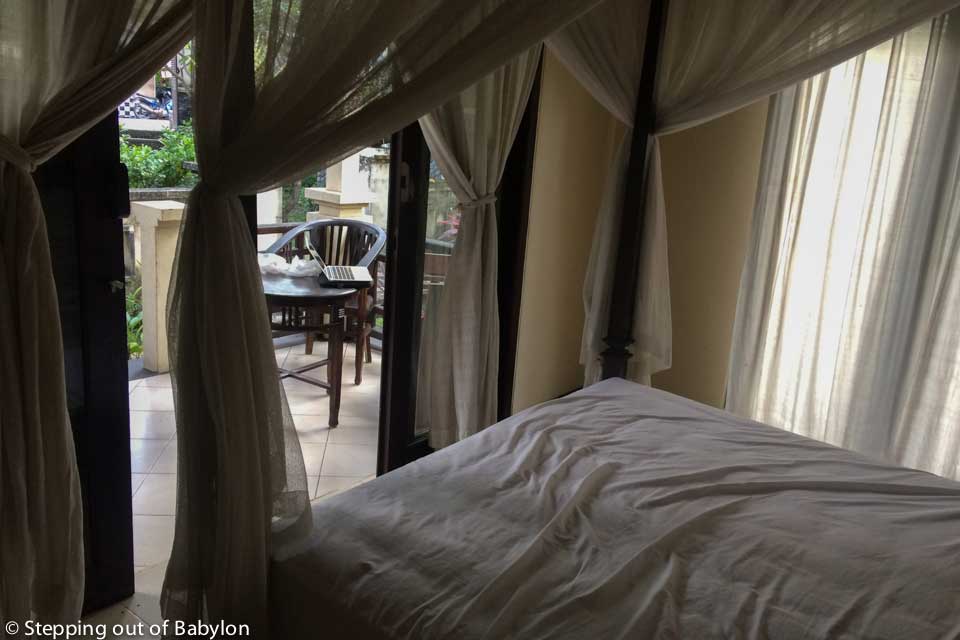
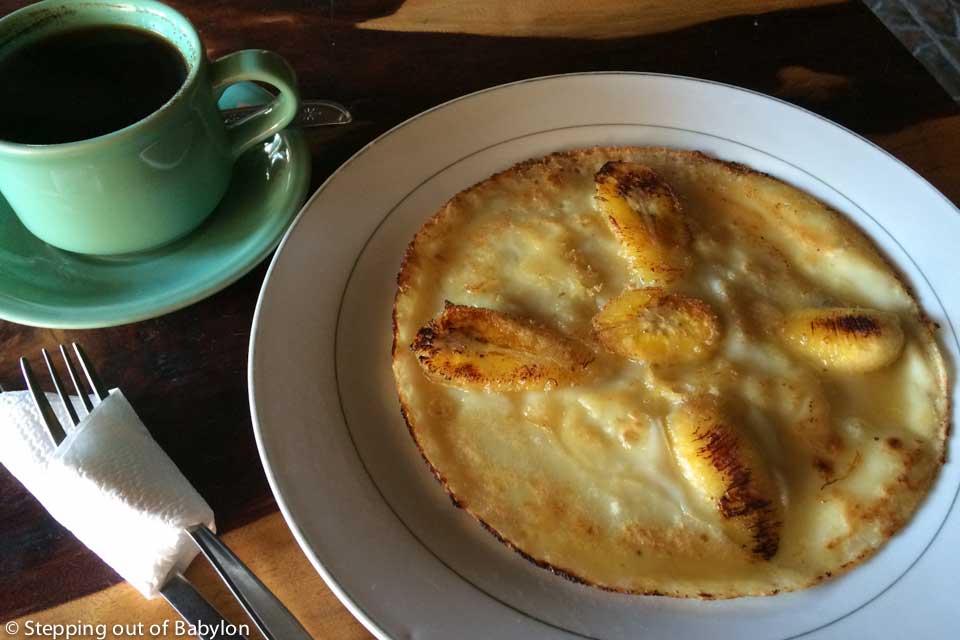
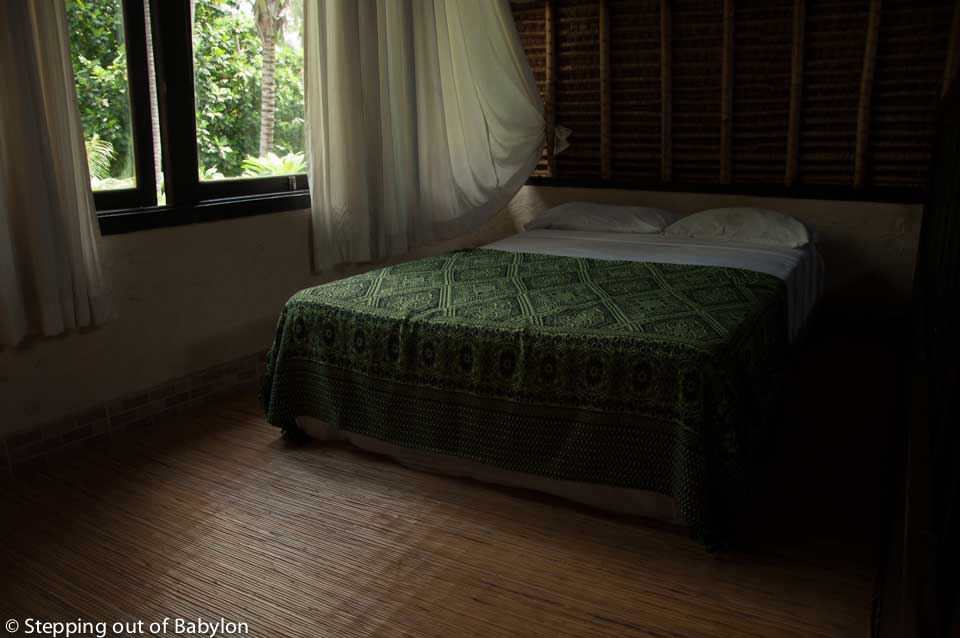
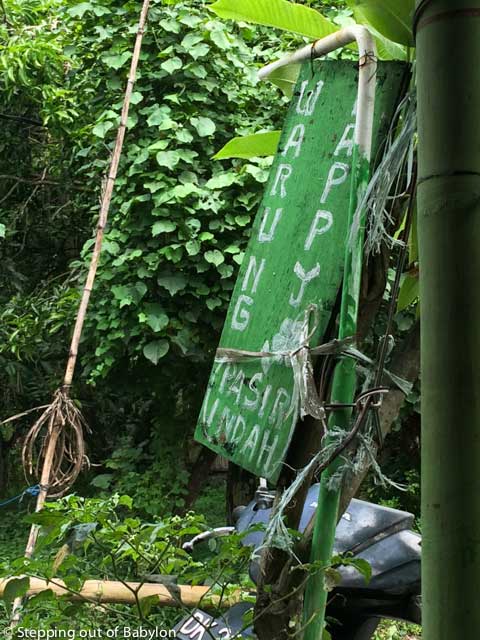
  • Bucu Homestay (nearby BLD Diver shop). This place is not easy to find but you can go to the Pacha bar (an reggae bar on the main road) and there you’ll find the owner I Wayan of this family homestay. I Wayan can also give a lot of information and help you to plan your trip, as by shuttle services as by public transport, or even to arrange a boat trip to Gilis in fast boat. In low season a room with fan costs 100.000 Rp at Bucu Homestay (pronounce buchu), including breakfast that is served at Pacha Bar. The owner can also arrange a scooter for 50.000 Rp/day.

http://www.amedbucu.com/

[columns] [span6]
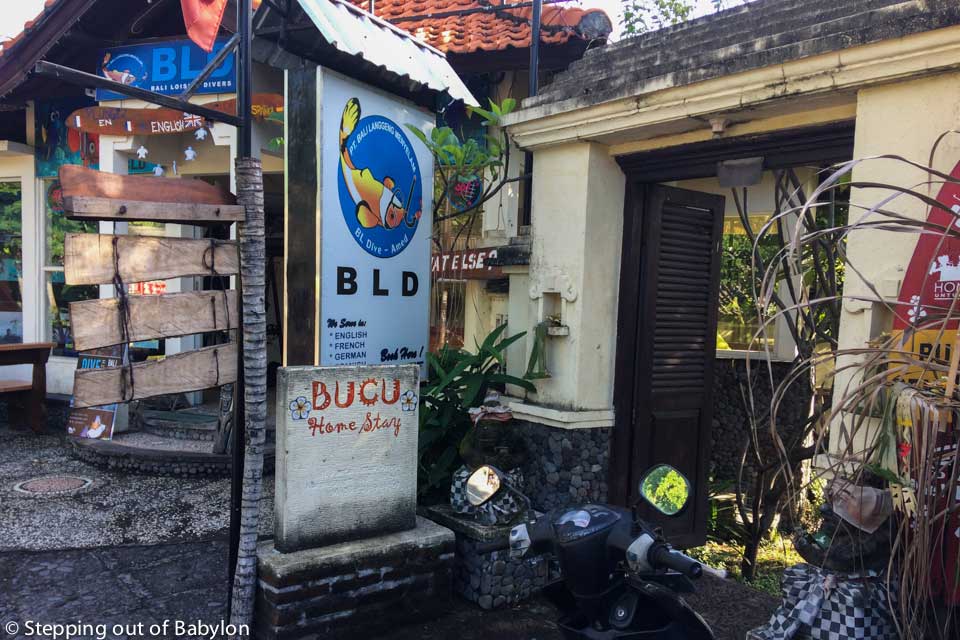
Bucu Homestay. Amed, Bali

[/span6][span6]

lovely room at Bucu Homestay. Amed, Bali

[/span6][/columns]

  • Behind Pacha Bar (located on the main road) also have bungalows in a very nice traditional construction and with a mezzanine (150.000 Rp for a double but where there’s space for four people) and a very good dorm (100.000 Rp) with a/c, locker, solid bunk beds and quite same privacy, just next to the Pacha Bar.

[columns] [span6]
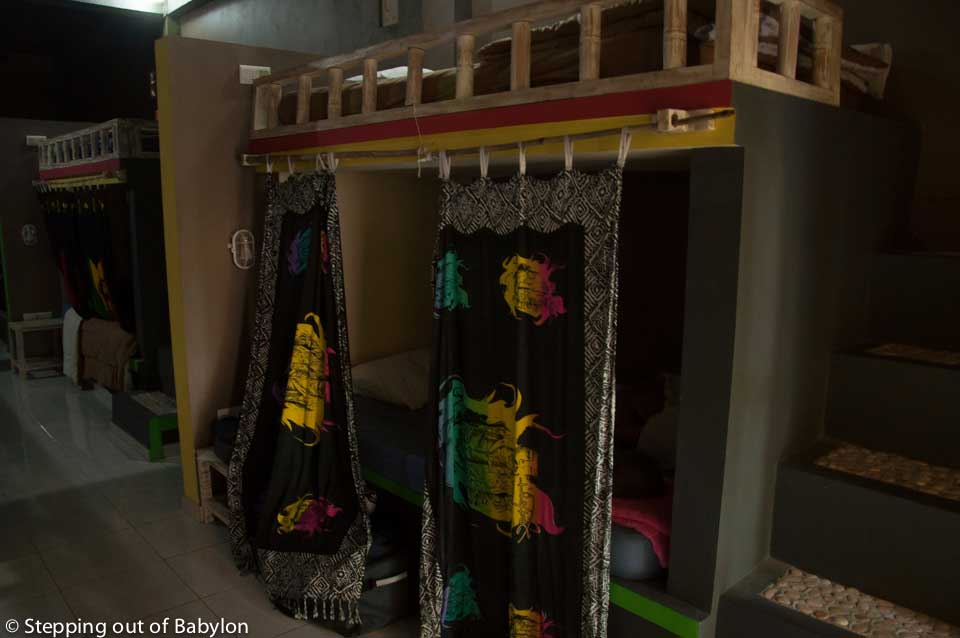
Pacha Bungalows, Amed, Bali

[/span6][span6]

breakfast at Bucu Homestay... tasty but why always pancakes at Indonesia tourist breakfasts!?!?!?
breakfast at Bucu Homestay… tasty but why always pancakes at Indonesia tourist breakfasts!?!?!?

[/span6][/columns]

[columns] [span6]

Pacha Bungalows, Amed, Bali

[/span6][span6]

Pacha Bungalows, Amed, Bali

[/span6][/columns]

Where to eat in Amed:

There are many options along the road from Amed to Jemeluk, but for this, you need a scooter, and any of this places stands up from the tourist-orientated menu.

But in Amed you can still find tasty local food with a local price.

  • Warung Man Pel (on the main road a bit after the bridge on the right side)… my favorite food! Usually is for take-away but there’s one table and you can eat there. Is open early in the morning but close before 11 a.m. Sometimes it opens again in the afternoon around 5 p.m…. sometimes don’t. A meal cost 10.000 Rp. Enak!!!
  • Warung Happy (on the main road nearby Sudi Homestay)… an old lady cooking the standard Indonesia menu. The portions are big and the food is spicy. The meals cost around 20.000 Rp.
The best food in Amed!!!! Enak!!!! but with a crazy schedule, opening early morning and closing before lunch time... sometimes open in the afternoon, sometimes don't!!!
The best food in Amed!!!! Enak!!!! but with a crazy schedule, opening early morning and closing before lunch time… sometimes open in the afternoon, sometimes don’t!!!

[columns] [span6]

Warung happy. Amed, Bali

[/span6][span6]

Warung happy on the main road of Amed, opp to Pacha Bar... simple food.
Warung happy on the main road of Amed, opp to Pacha Bar… simple food.

[/span6][/columns]

How to move around in Amed:

By foot you can go to the beach but is better to walk further south from the village, away from the fishing area to have a cleaner place. On foot you can reach many restaurants and small groceries shops with the basic things.

Everywhere else you need a scooter.

Schedules and prices of the shuttle from Amed to different destination in Bali

What to do in Amed:

  • Snorkeling is defectively the best if you are not in the diving scene. I found a nice pace for snorkeling in front of the BarAcuda bar, where you can get the snorkeling set for 000 Rp a day, or just ask for a discount if you just want it for one hour. You don’t need to go far to reach the corals.
  • Rent a scooter and drive along the coast, to south until Aas. You have nice views and can stop in one of the many beaches that you’ll find along the way. Is a ride of 15 kilometers that is not amazing but is nice to do.
  • Swim at the warm and quiet waters. The beach just in front of Amed isn’t clean, but you walk about 1.5 kilometers and you’ll find a nice place to swim, almost empty nearby Kembali Beach Bungalows and Diver’s Café Amed. Walking along the road, parallel to the shore, isn’t easy to find the entrance to the beach, as the construction didn’t leave much space to reach the shore, but you can cross the resorts and hotel area without problem.
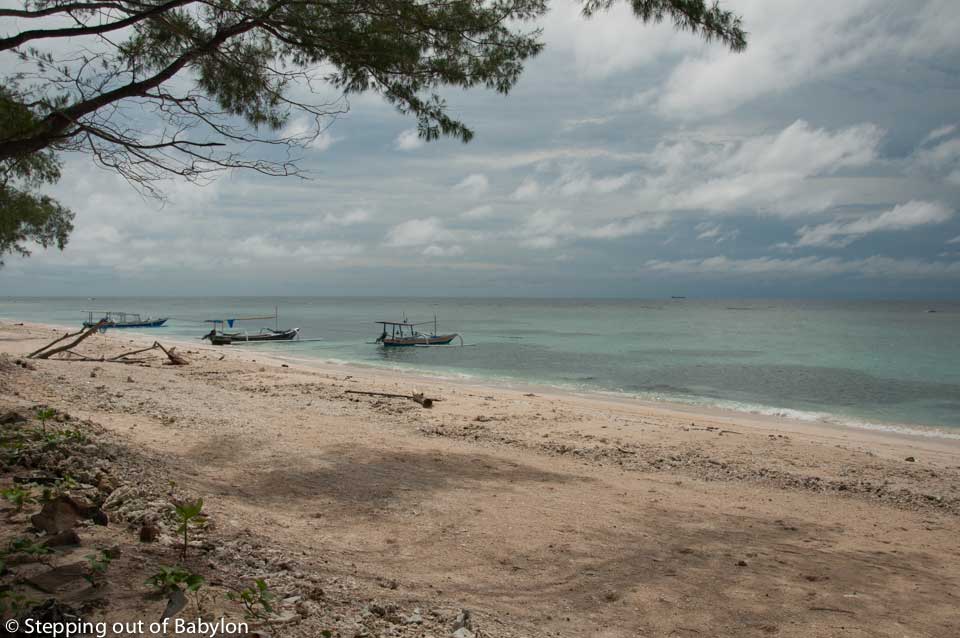
How to go from Gili to Amed (Bali) by public transport

It takes all day… and you can’t really control the length of the trip, as the ferry boat takes more than 4 hours and the bemos usually departure when they have more than three people.

From Gili Meno to Amed… step by step:

  • Boat from Gili Meno to Bangsal, departure at 8 a.m. (but is better arrive earlier as the boat leave as soon as it gets full) and costs 14.000 Rp and the trip takes 25 minutes.
  • At Bangsal you need to walkway from the pier avoiding the touts that will try to sell you something. You need to walk 1.2 kilometers until Pemenang where the bemos wait. If it’s too much to walk for you can get a cimodo or an ojek (moto-taxi).
  • The bemo from Pemenang to Mataram costs 20.000 Rp and takes around 1 hour. Tell the driver that you are going to Lembar and he will drop you nearby Pasar Cakranegara, on the Jalan AA. Gde Ngurah.
  • Then you need to spot a bemo that will be waiting on the left side of Jalan AA. Gde Ngurah (between the intersection with Jl Tumoang and Jl Chairil Anwar, not far from an Alfamart supermarket).
  • The bemo from Mataram to Lembar cost 20.000 Rp and it took 45 minutes and dropped me at the harbor entrance.
  • At Lembar harbor go straight to the ticket counter located on the right side. Public ferry Padangbai (Bali) cost 40.000 Rp. The ferryboats run 24 hours but don’t have a fix schedules and all depend on the time they need to fill the boat with trucks, cars and motorbikes. The ferry trip takes around 4.30 hours but can be more.
  • If you arrive during the day to Padangbai you can probably can find bemos that drive along the north coast (Candidasa, Amlapura and further north…) passing by Culik (pronounces Chulik). According to the information that I obtain you need two bemos as they don’t drive far distances.
  • I arrive around 7 p.m. (due to works at the pier of Padangbai that make the boat wait 1.5 hours offshore) so there were no bemos just the usual touts pushing me to a taxi for 300.000 to Amed. Think you can bargain up to 200.000 Rp but, as I was alone and still was too much.
  • So I got an ojek (moto-taxi) to Amed for 100.000 Rp… the ride took 1.5 hours… is a long 45 kilometers ride to do with a backpack on a motorbike!!!

Total time: 13 hours (5:45 hours in the ferry due to works at the Padangbai pier)

Total costs: 194.000 Rp (if you arrive during the afternoon you can use one of the bemos waiting at the pier, and save the hard trip by ojek)

The alternative to the public transport is the fast boat from Gilis to Amed, that takes 45 minutes and costs minimum 450.000 Rp… from Amed to Gilis you can get a fast-boat for 250.000 Rp.

Food:

There’s a masakan padang eatery at Lembar, on the left side a few meters before the ticket counter. Or you can get food and water from the vendors that hang around the pier.

Inside the ferry, you can have cookies, snacks, instant soup…


See also:

  • How to go from Lombok to Gilis
  • Mataram
  • How to go from Bali to Lombok by public ferry

Gili Meno… what a rest!!!

Definitively, Gili Meno is the most laidback island of the Gili group and the one where I feel the connection with the beach, the sea and with the rural lifestyle that still occupies the interior of the island, were cows, goats and chickens overtake the number of inhabitants.

Despite the rain from the end of the monsoon that left a strong print during the time spent at Gili Air, the days at Gili Meno were mainly sunny, with a gentle breeze and a full moon.

Gili Meno has a privileged position between the big Gili Trawangan, best known as Gili T, and the small Gili Air. From the east coast of the island, you can see the small flat Gili Air with it tinny beaches with the impressive mountains of Lombok behind, covered by dense vegetation with the top frequently wrapped in thick clouds of the end of the monsoon.

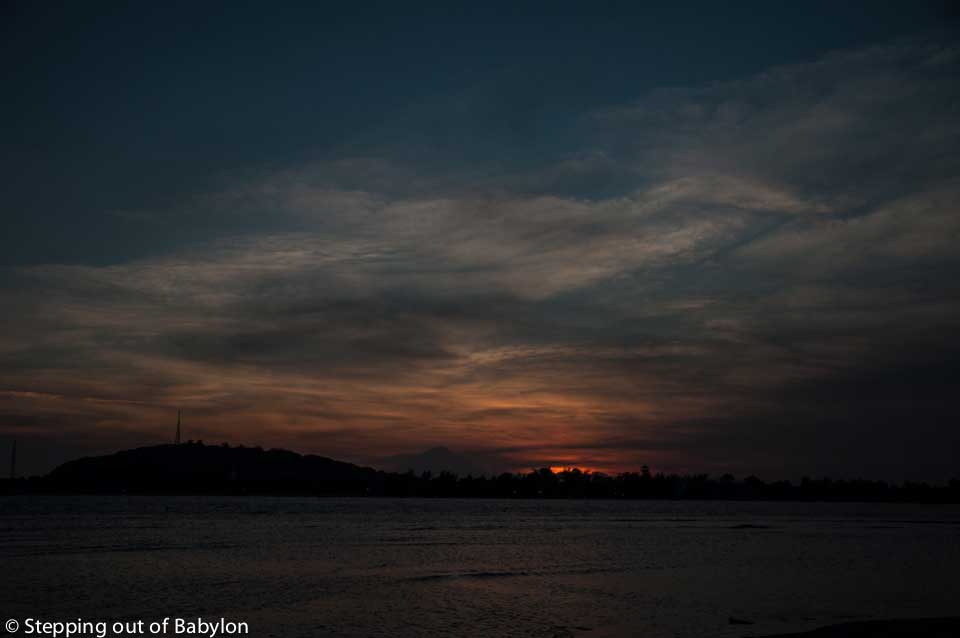
From Gili Meno west coast, despite the far distance is possible to see the contours of Mount Agung, the highest mountain of Bali, behind the small hills of Gili T, with this landscape getting a special twist at the sunset.

Lots of nature, not many resorts, restaurants, bars or nightlife, and with a seashore still with many natural and empty spaces make this island the more pleasant one, where you can find a strong connection with nature, an easy going rural lifestyle and where you interact with local people, that here look much happier and smiley than in Gili Air.

The quietness of the island is broken by the callings for prayers that come from the mosque several times a day, filling the air with a melody that in the beginning sounds strange and misplaced but that after a few days serves as a reference in a place where is easy to lost the perception of the hours and of the days…


Gili Meno
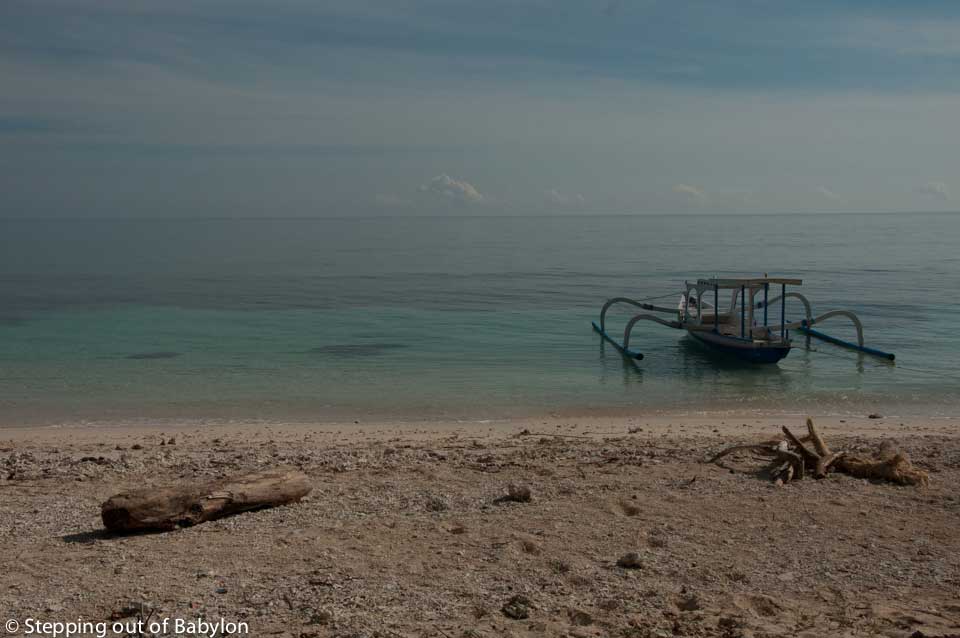
North coast of Gili Meno
Gili Meno
Gili Meno
Salt Lake. Gili Meno
Gili Meno
Gili Meno
Gili Meno
Gili Meno
Gili Meno
Gili Meno
Gili Meno
Gili Meno
Gili Meno
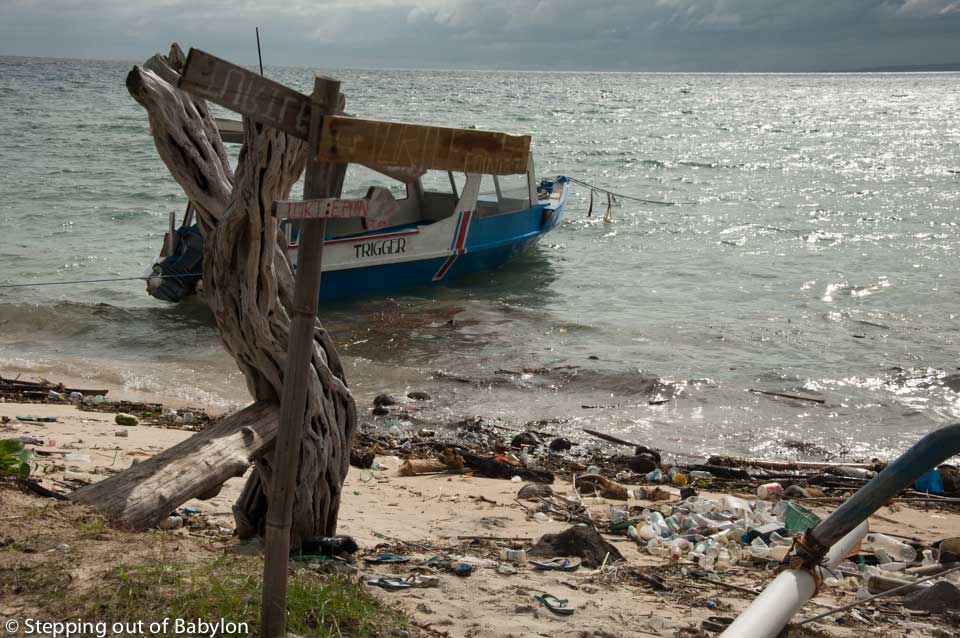
The east seashore has a lot of plastics along the sand and is also where the pier is located. Gili Meno

Where to sleep at Gili Meno:

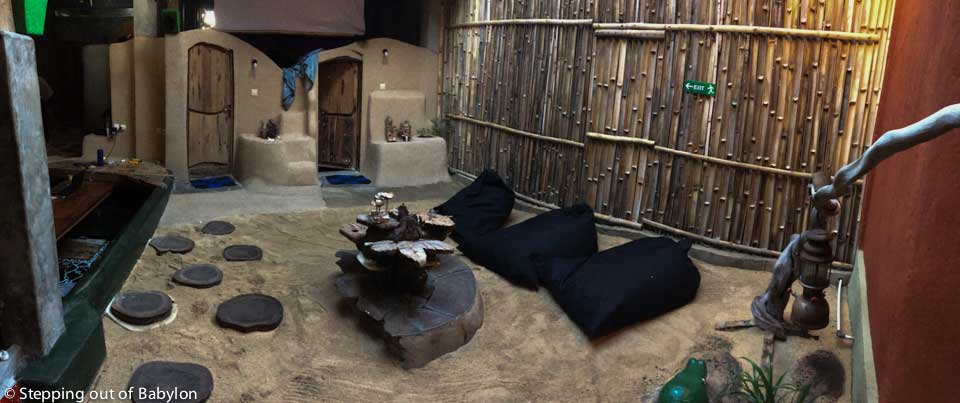
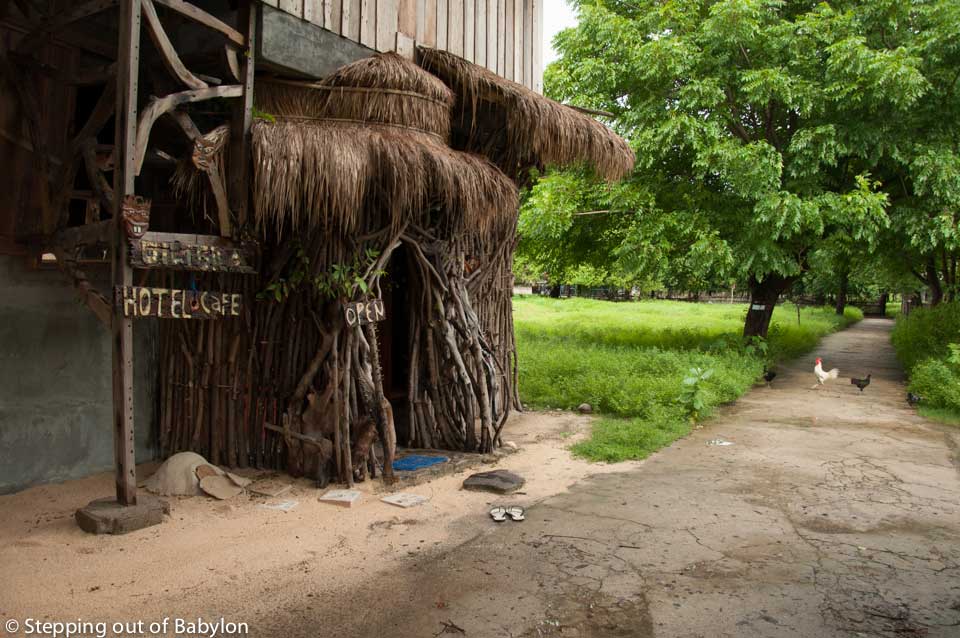
Gili Gila… that means “crazy gili” and in fact that a bit of craziness in this project. A hostel located in the center of the island, with dorms and rooms, build in a creative and very original way, with a lot of places to chill and socialize. But this craziness extends to the environment with a lot of party going on that makes difficult to sleep without good earplugs… a heavy contrast with the quietness of the island.

The dorms cost 100.000 Rp, including breakfast that is only pancakes. Water refill, tea and coffee are available for free all day. You better bring your own padlock and towel otherwise you need to “rent” at the reception. Has Gili Gila open recently the wi-fi is not working yet.

You can go snorkeling with the guys of the hostel and rent part of the gear there.

Gili Gila hostel. Gili Meno

[columns] [span6]

dorm at Gili Gila hostel. Gili Meno

[/span6][span6]

Gili Gila hostel. Gili Meno

[/span6][/columns]

Where to eat at Gili Meno:

At Gili Meno is still easy to find local food with local prices, in small eateries and family style warungs located along the roads that cross the island. And even at some of the restaurant nearby the beach is still possible to find reasonable prices, like the Yaya Warung.

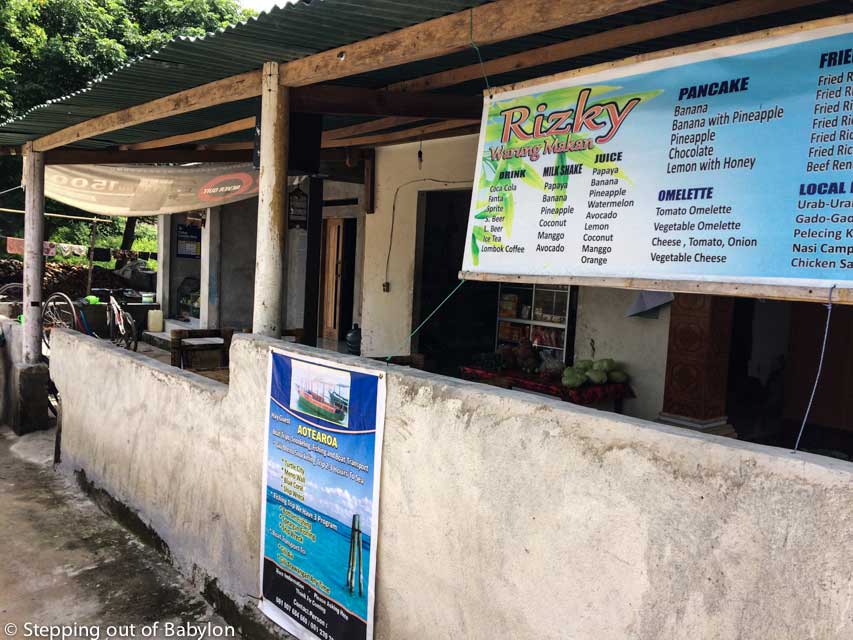
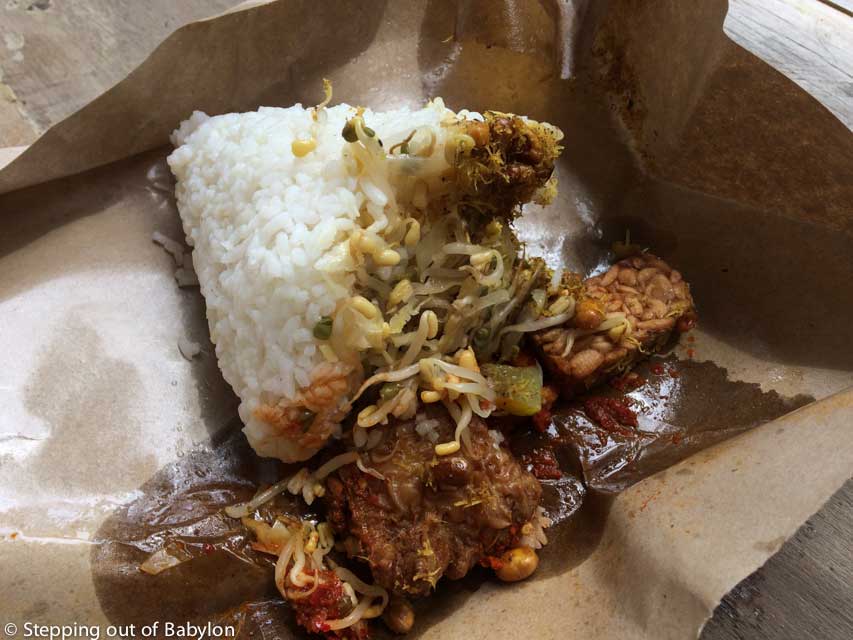
Nearby Gili Gila, the Rizkey Warung Makan, with delicious and cheap food, cooked by a super smiley lady. Beyond the standard Indonesia menu, you can also find Sasak food as Urap-Urap (mix of vegetables with grated coconut) and the Olah-Olah (mix of vegetables with a spicy coconut sauce).

Urap-Urap one of the Sarak specialities. Gili Meno
Rizkey Warung Makan... good food including Sasak specialities
Rizkey Warung Makan… good food including Sasak specialities

What to do in Gili Meno:

  • Snorkeling (the west coast of the island offer nice places with corals and many colorful fishes). You need to rent the gear (50.000 Rp a day).
  • Walk around the island… it’s not more than 5 kilometers. The south part of the island is a bit dry and without much shade.
  • Swim in the clear blue waters of Gili Meno. The best place is the north part of the island, without many resorts yet, and with very still waters and with some natural shade all day. The east seashore is littered with plastics.
  • Get lost on the narrow roads that cross the island and watch the countryside lifestyle with cows, goats and chickens a bit everywhere.
  • Visit the salt lake.
  • Watch the sunrise and the sunset.
Gili Meno
Gili Meno


Gili Meno
Gili Meno


How to move from Gili Meno to Lombok (Bangsal):

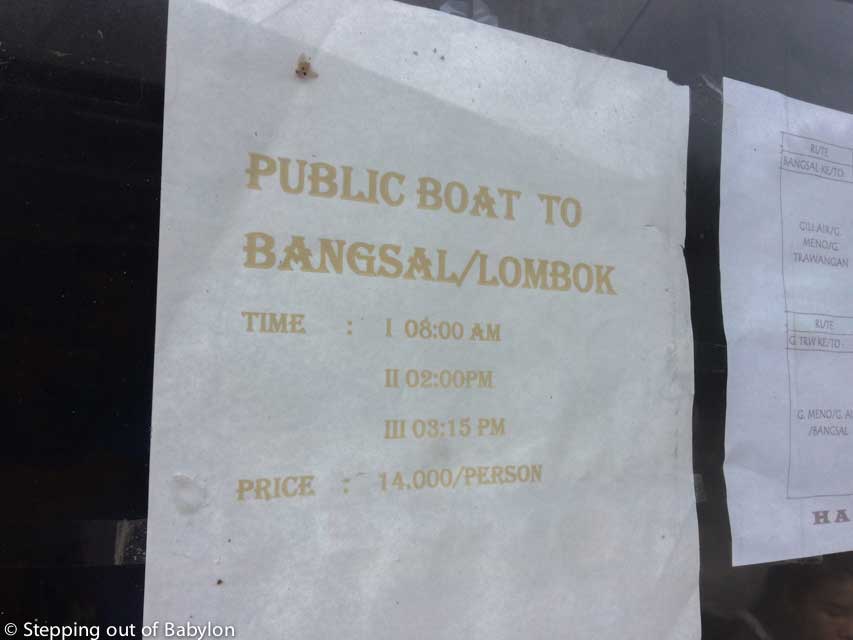
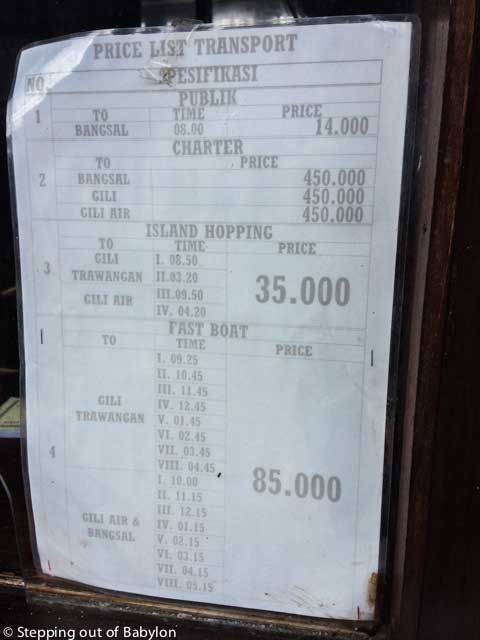
There public boats to Bangsal three times a day: 8:00, 14:00 and 15:15… and the ticket cost 14.000 Rp and the trip takes 25 minutes.

Schedule and prices from the boat from Gili Meno to Bangsal


How to go from Gili Meno to Gili Air:

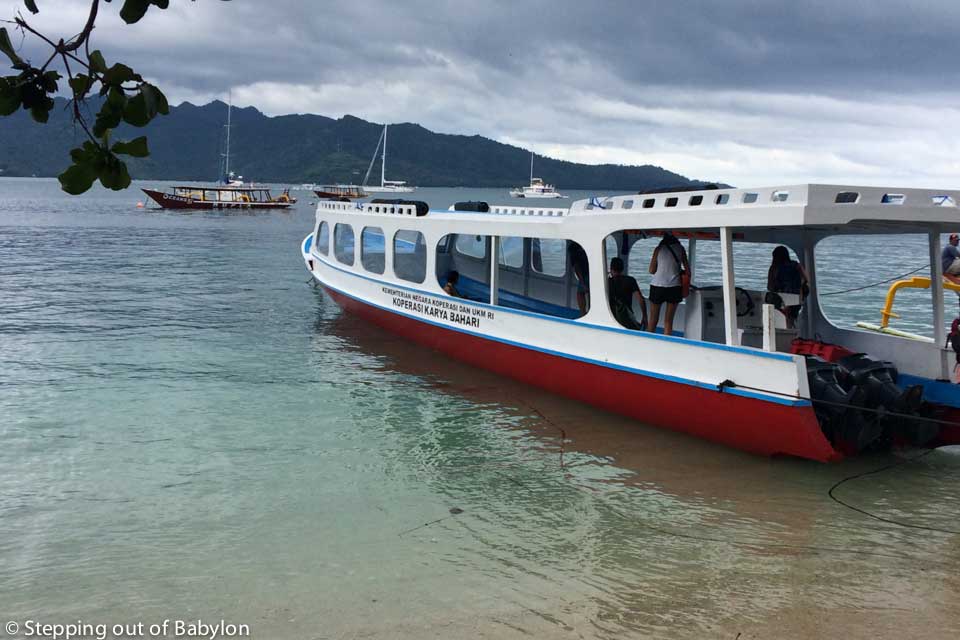
They’re a hopping island service boat, from the public company (Koperasi Angkutan Laut Karya Bahari) that links the three Gilis.

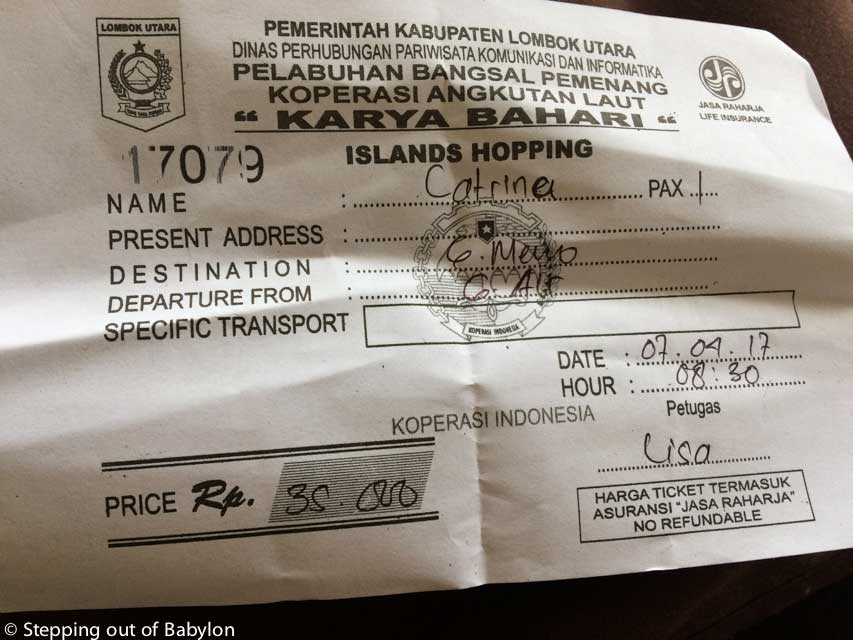
From Gili Meno to Gili Air the ticket cost you 35.000 Rp, and there are boats at 9:50, 16:20. The trip from Gili Meno to Gili Air takes about 10 minutes.

If you are on a very short budget and have plenty of time, you can take the boat back to Bangsal (12.000 Rp) and then another boat to Gili Air (14.000 Rp+2.500 Rp). I didn’t try this option that just saves you 6.500 Rp but maybe takes all day 🙂

Schedule and prices from the boat from Gili Meno to Bangsal

Gili Air… in search of quietness

The outline of the mountains surrounding the Bangsal harbor are blurring as the rain becomes more intense, a haze seems to dissolve the landscape. Under a thick cap of clouds the small boat departure from the big island to the Gilis, a group of three very small islands located on the northwest coast of Lombok.

The closest and the smallest one is Gili Air, next is distance and size is Gili Meno, and then is Gili Trawangan, the biggest and further island of the Gili group, and the most famous for its nightlife and party lifestyle… attracting the majority of the visitors as also the local population.

The first stop was the Gili Air. This small piece of sand with less than 5 square kilometers have more than 200 accommodation, and almost all the land is already occupied, without almost any rural activity, and with just a few empty spaces. The beach is all around the island (except the pier area that is a bit dump) with more or less 5 kilometers long, but is an always a narrow stretch of sand.

Is a nice place to stay a couple of days, away from urban agitation, is a place without cars or motorbikes, and where the most common way of moving around is by cimodo, the local name for horse carts… or just walk or cycle, as the distances are quite small.

How strange is to be at a beach that has the convex shape?!?!? Usually, the beaches forms a bay or are along a straight coast line, but here, with such a small island the beach always ends behind the bend… looks like the beach is inside out 🙂


Gili Air
Gili Air
Gili Air
From the east coast of Gili Air you can have a view of Lombok and when the clouds allow you can even see the top of the Rinjani Volcano, the highest point of Lombok
Gili Air
Main road in Gili Air where is the biggest concentration of restaurants, accommodation, shops, cafees, dive centers, travel agencies, money changers…
Gili Air
… but walking north there are more and more empty areas inside Gili Air
Gili Air
Gili Air

Where to sleep in Gili Air:

As usually everything is more expensive on the island, a rule that you can apply worldwide, I think! And Gilis are not an exception.

There a hundred of accommodations in Gili Air, most of them Bungalows, but also resorts, homestays and hostels… but I couldn’t find a place to sleep for less than 130.000 Rp… in low season and after a bargain and without breakfast.

I stayed at Dwi Inn on the north part of the island. A nice place with some rooms around a garden, located inland about 5 minutes walking from the beach… but without atmosphere!!

Where to eat local food at with a cheap price at Gili Air:

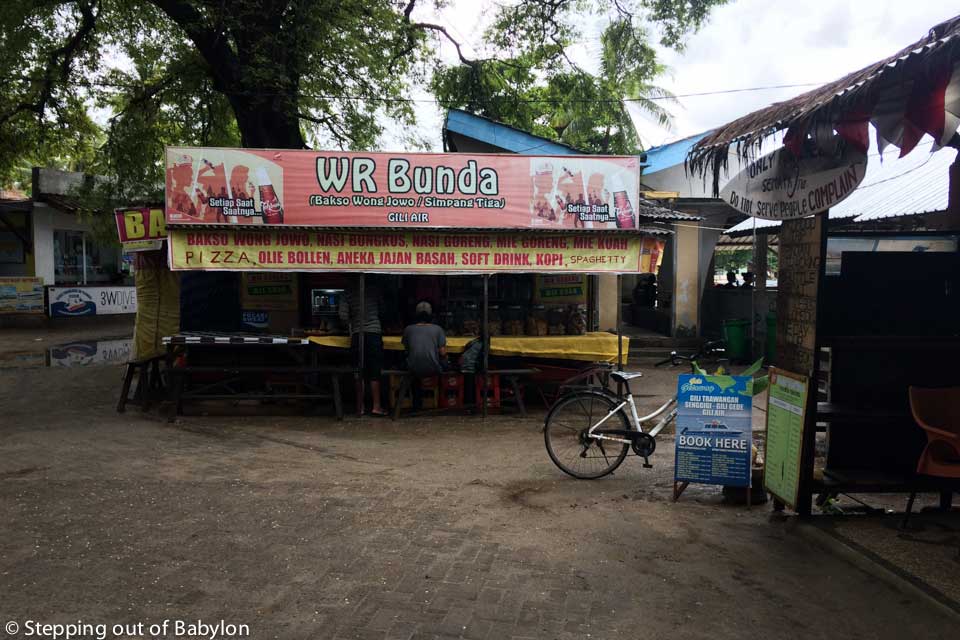
Near the pier the WR Bunda, a local grocery shop and eatery, sell nasi campur, in a pack, for 15.000 Rp.

Along the “main” road that goes from the pier to the north of the island you can find small groceries shops that sell fruit and sometimes food. There are small warungs along the many streets, sometimes quite hidden and without a sign, that are more focus on local population but that will be glad to serve you an unpretentious meal.

[columns] [span6]

Local food with local prices, near the pier. Gili Air

[/span6][span6]

"Nasi campur" from the warung near the pier. Gili Air
“Nasi campur” from the warung near the pier. Gili Air

[/span6][/columns]

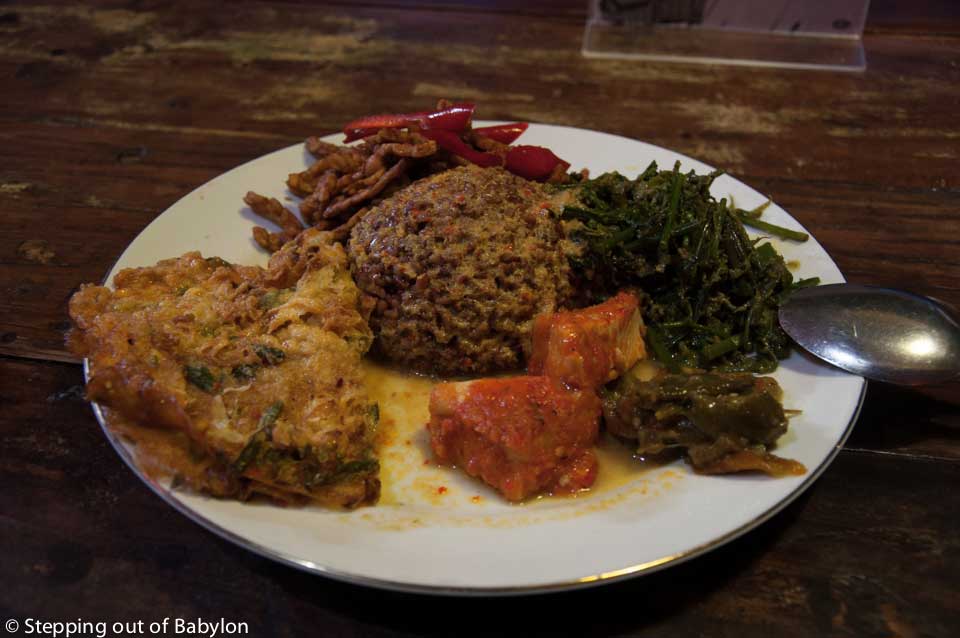
If you want to go for a treat, I strongly recommend the Warung Padang Sumatra, on the “main” road… white (10.000 Rp) or brown rice (20.000 Rp), and then you add vegetables, tempeh or tofu (10.000 Rp each portion), eggs (15.000 Rp) or meat, fish or prawns. Depending on your appetite, a meal will cost you around 50.000 to 60.000 Rp… three times more that the local masakan padang eateries but very delicious food!

Padang Sumatra... delicious food for a treat on a rainy day! Gili Air
Padang Sumatra… delicious food for a treat on a rainy day! Gili Air

How to move around in Gili Air:

The island is small enough to be done on foot, but renting a bicycle is very popular.

There are no motor vehicles in the island, so if you travel with heavy luggage you can rent the service of the horse cart,  locally called cimodos, and are parked nearby the pier.

cimodos waiting nearby the pier at Gili Air
Gili Air
Gili Air where the bicycles are quite popular between the visitors, with local people using more electric bikes!

How to go from Gili Air to Gili Meno:

They’re a hopping island service boat, from the public company (Koperasi Angkutan Laut Karya Bahari) that links the three Gilis.

From Gili Air to Gili Meno the ticket cost you 35.000 Rp, and there are boats at 8.30 and another at 15.00. The trip from Gili Air to Gili Meno takes about 10 minutes.

If you are on a very short budget and have plenty of time, you can take the boat back to Bangsal (12.000 Rp) and then another boat to Gili Meno (14.000 Rp + 2.500 Rp). I didn’t try this option that just saves you 6.500 Rp and maybe it will take you all day 🙂

[columns] [span6]

hopping boat between the three Gilis

[/span6][span6]

Hooping ticket between Gilis

[/span6][/columns]

How to go from Gili Air to Bangsal:

There are public boats all day that departure when are full (40 passengers)… the ticket is 12.000 Rp and the trip takes about 15 minutes.

Schedules and prices from the boat from Gili Air to Bangal and the other Gilis

Mataram… what am I doing here?!?!?

For what I saw during the day spent at Mataram, the capital of Lombok, doesn’t show any reason to stop here (except for the chance to stay at the lovely Oka and Son Guesthouse).

Usually what stand up in a city are the markets, the old part and some temples… here there’s not properly a center, with the city spreading along wide and busy avenues, that run more or less parallel to each others orientated east to west, with some quiet small streets in between, creating a grid, that make the orientation in Mataram easy.

Maybe the most interesting area is nearby the sea, around Taman Ampenan Sakaraja with some small buildings, a kind of shop houses that are a clear influence of the Chinese traders… but still far from be a charming or an appealing place.

Walking further west, following the calling for the sea, we face a poor area of the city, nearby Pantai Ampenan, a king of slum where the friendly smiles and the “hallo” that come from everywhere cannot hide the depressive appearance of the place, where the fishing is still an important activity while the kids play in the waves that bring the plastic that accumulates at the shore.

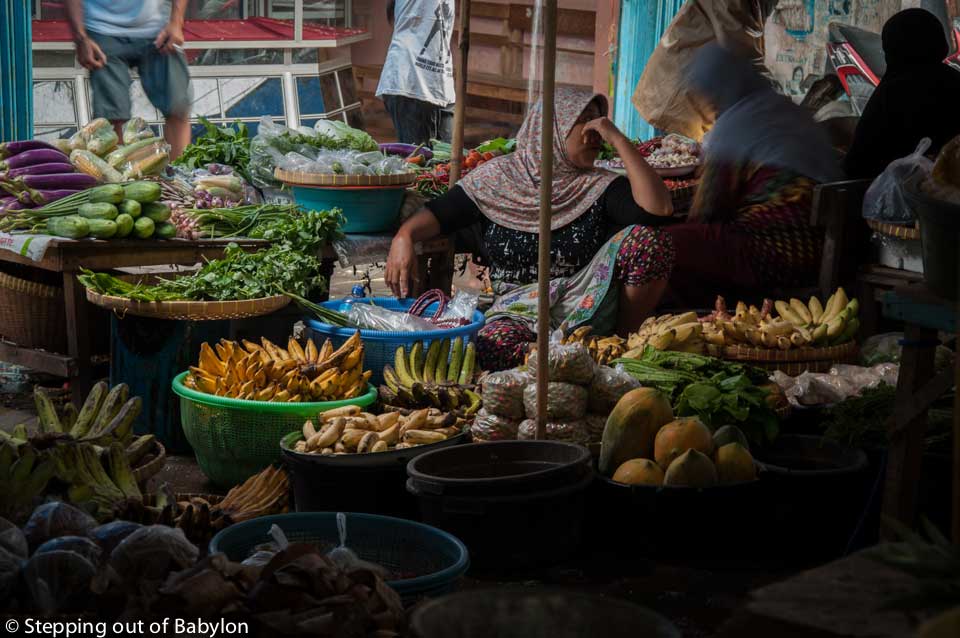
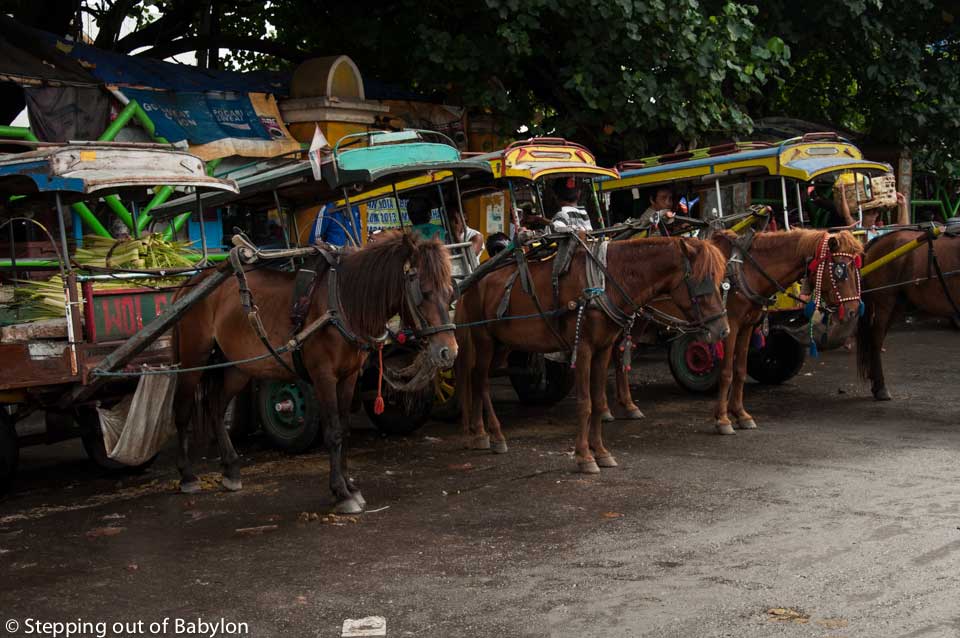
Nearby, the Pasar Kekon Roek, located in a gloomy and characterless building has a similar atmosphere, with the vendors suffering from a grey lethargy. But early morning the market is vibrating with activity with the usual movements of people and the porters. The line of horse carts (locally called cidomo) are an unexpected image in the urban landscape, bit still very popular for short distances.
The Pasar Tradisional Cakraneagara, one of the biggest market in Mataram, is far from be attractive without many interesting things for a visitor to see or buy… even the fruits and vegetable area shows oppressive, being better just buy outside along the Jalan Banjaran Sari.

But not all is bad in Mataram… in fact, walking along the small streets we can see many influence of the Balinese arquitectura, in temples and houses, that are the result of the Balinese kingdom, that extended it’s presence to the west part of Lombok, before the Dutch invasion. As a result there’s a small group of Hindu community in a island where the population is 87% Muslim.

Mataram, Lombok
Mataram, Lombok
Mataram, Lombok
Mataram, Lombok
Mataram, Lombok
Mataram, Lombok
Pantai Ampenan, Mataram, Lombok
Pasar Kekon Roek, Mataram, Lombok
Sweets at Pasar Kekon Roek, Mataram, Lombok
Pasar Kekon Roek, Mataram, Lombok

Where to sleep in Mataram:

The best area to find a quiet and affordable place to sleep is around Cakranegara (pronouce chakranegára), between the Cakranegara market and the Mataram Mall.

The hotel Viktor, with his three houses located at the same street (Jalan Abumanyu) is a very popular option, with nice and clean rooms. The breakfast is very poor, bread with chocolate, boiled egg and coffee.

The price for a room with fan, and bathroom inside (cold shower), cost 120.000 Rp (no chance to bargain). A room with ac is 170.000 Rp. The breakfast is included and water, tea and coffee are free and available all day.

The staff is ok, but will not help you in nothing about moving around or how to go to your next destination, pushing you always to “shuttle buses”, “tour packs” or a taxi!!!

The wi-fi hasn’t a good connection.

*

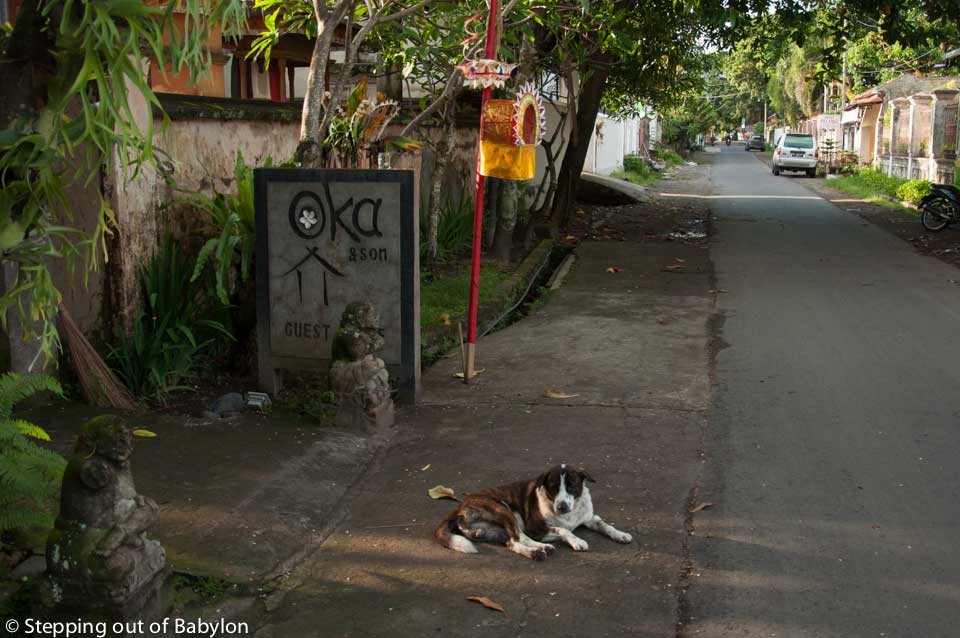
But walking around this area there are more options, and one place that has character and look to me very cozy is located nearby: Oka and Son Guesthouse (not to mistake with the next door called Oka homestay). Very nice place with the room facing a garden, build in Balinese style, and run by a super friendly couple. The rooms start in 150.000 Rp, and have a good wi-fi connection… and here is guaranteed that you have all the information you need about how to move around by public transportation, and no tout will show up trying to push you to expensive options. A place with a good vibe and a happy dog 🙂

Oka and Son Guesthouse

Phone: 0819-1600-3637

Address: Jalan Rapatmaja, Cilinaya, Cakranegara, Mataram

Oka and son Guesthouse (Jalan Rapatmaja, Cakranegara). Mataram, Lombok

Where to eat in Mataram:

Nearby Pasar Cakraneagara, along Jalan Tumpang Sari there are several options of local food, as also some street-food. The food area inside the Pasar Cakraneagara is far from being attractive.

At the Pasar Kekon Roek you can also get some snacks and sweets.

On the small streets between Jalan Selaparang and Jalan Tumpang Sari there are also small eateries very basic and very cheap. At the Jalan Banjaran Sari there is a good place to look for masakan padang food.

How to move around in Mataram:

Along Jalan Selaparang and Jalan Tumpang Sari you can find many bemos during the day, easy to identify by the yellow color, as many of them run from the Mandalika Bus terminal to Pasar Kekon Roek.

There must be a fix price for a ride, as everyone give the exact amount of money to the driver, but for foreigners you must negotiate the price before get inside the bemo. A ride inside Mataram shouldn’t cost more than 5.000 Rp.

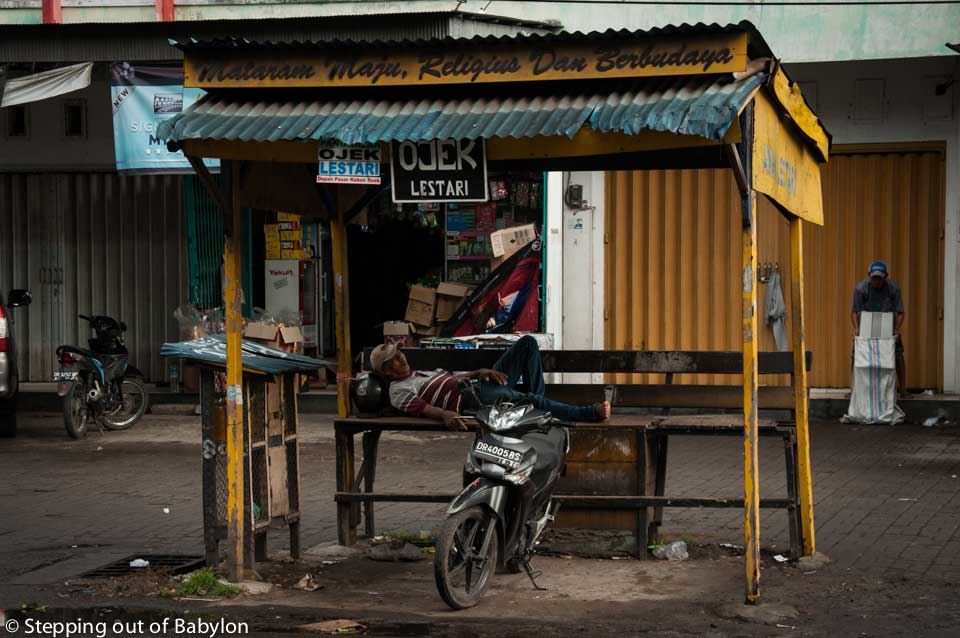
Ojek (moto-taxis) that gather a bit everywhere in Mataram streets but are easily found nearby the markets. Mataram, Lombok
Hose cart, locally called "cidomo" are still a common way to move around the city, specially for shot distances, and that are easy to find nearby the markets area. Mataram, Lombok
Hose cart, locally called “cidomo” are still a common way to move around the city, specially for shot distances, and that are easy to find nearby the markets area. Mataram, Lombok

ATMs and Money exchange in Mataram:

There are a few moneychangers in the city, but all far away from the Cakraneagara area, some of them with appealing rates, but to reach there you need a bemo.

So if you are at a walking distance from the Pasar Cakraneagara, the best option is to go to one of the goldsmiths (took emas) shops on the crossroad of Jalan Sutra Hasanudin with Jalan Selaparang. More or less they all have the same rate, but at my visit I could get a bit more for my euros at Toko Emas Melati.

There are a few moneychangers in Mataram, but the easiest way (and the most central) is to go to one of the Goldsmiths (Toko Emas in bahasa) located nearby the Pasar Chakranengara. Mataram, Lombok
There are a few moneychangers in Mataram, but the easiest way (and the most central) is to go to one of the Goldsmiths (Toko Emas in bahasa) located on crossroad of Jalan Sutra Hasanudin with Jalan Selaparang. Mataram, Lombok

Tetebatu and the Sasak wedding

Ducks, flying in a group with characteristic flapping wings, sending funny chirps that leave a subtle trace in the morning fresh air, returning again, moments before the sun disappears in the horizon.

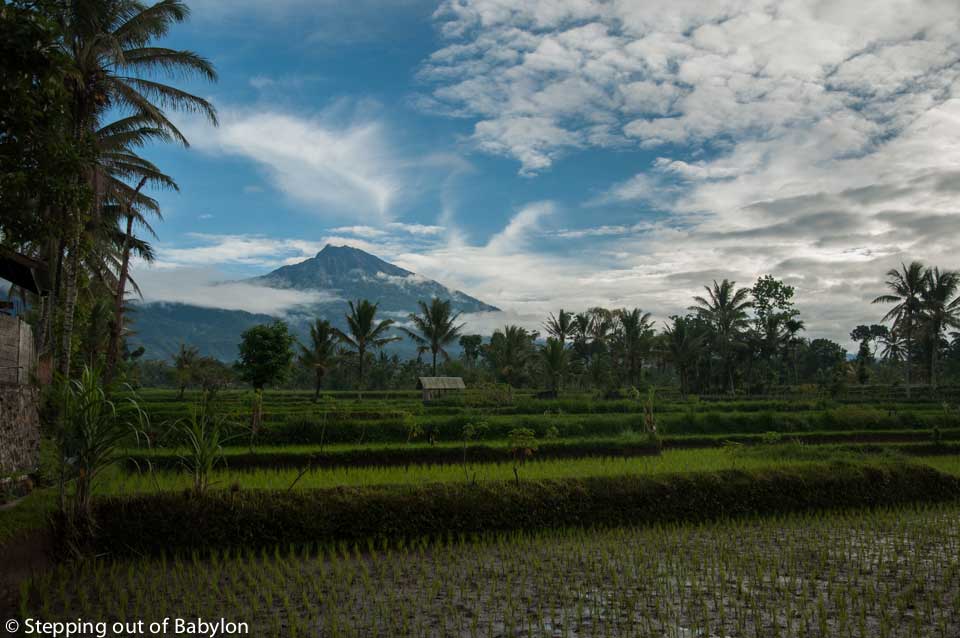
Tetebatu, on the way from the sea to the top of Rinjani volcano, is a perfect place to cultivate rice, with its smooth slopes facing south. The thick clouds that frequently hide the top of Rinjani Mountain, the highest point in Lombok, leave behind a huge quantity of rain that goes down the hill until flood the rice terraces. A short walk along the rice fields offer nice views to the Rinjani volcano, but that are quickly hidden by the clouds that arrive a few hours after the sunrise and stay there during the rest of the day.

The days run smooth in Tetebatu, marked by the chanting of prayers that come out from the mosques that are a bit everywhere around the village and even at small settlements spread around. The sound of the calling for prayers, five times a day, fill the air in the Tetebatu village, but the Arabic words don’t seem to match with the tropical landscape of rice fields and coconut trees.

In Tetebatu, as also other places in the countryside of center and East Lombok, still keep alive the Sasak culture and traditions, that despite the connection and the influence of the Balinese culture, differ mainly by being strongly based on the Muslim religion.

Nowadays what pops up from the Sasak culture is the music, the weaving patterns of the sarongs, the food where the coconut is a strong presence, and the Sasak language, that is spoken by all the population, with the Bahasa used to communicate mainly with people from other islands and for official proposes, as the Sasak just exist in the oral version.

Lombok_Tetebatu_DSC_3934
Tetebatu. Lombok
Lombok_Tetebatu_DSC_3966
Tetebatu. Lombok
Lombok_Tetebatu_Sasak_DSC_3885
Tetebatu, Lombok
Lombok_Tetebatu_DSC_3981
Tetebatu. Lombok
Lombok_Tetebatu_DSC_3975
Tetebatu. Lombok
Lombok_Tetebatu_DSC_3982
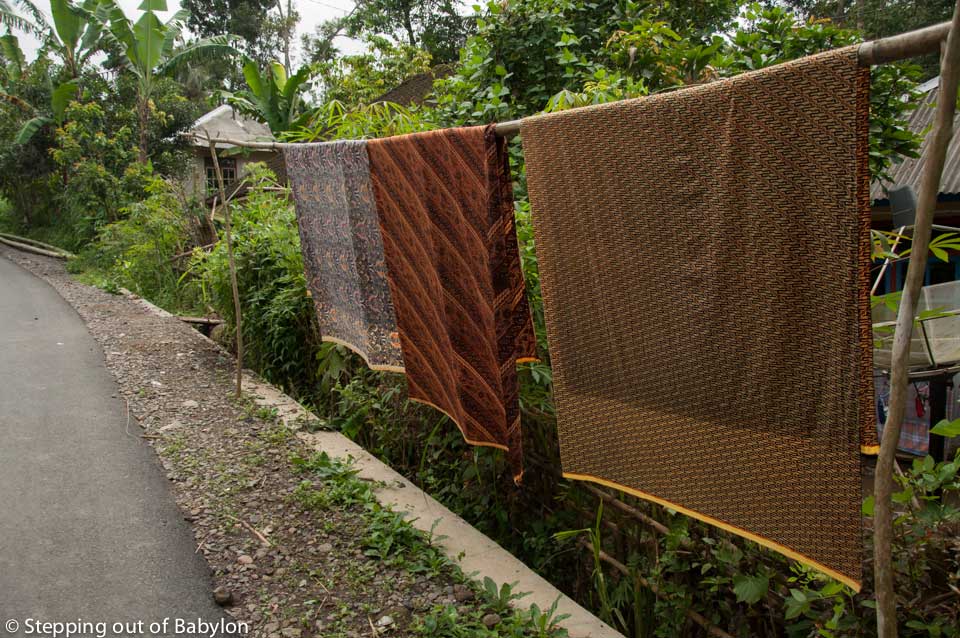
sarong with local patterns. Tetebatu. Lombok
Tetebatu, Lombok
Tetebatu, Lombok
Lombok_Tetebatu_DSC_3993
View of the Rinjani Volcano, during a clear moment without clouds early morning. Tetebatu. Lombok

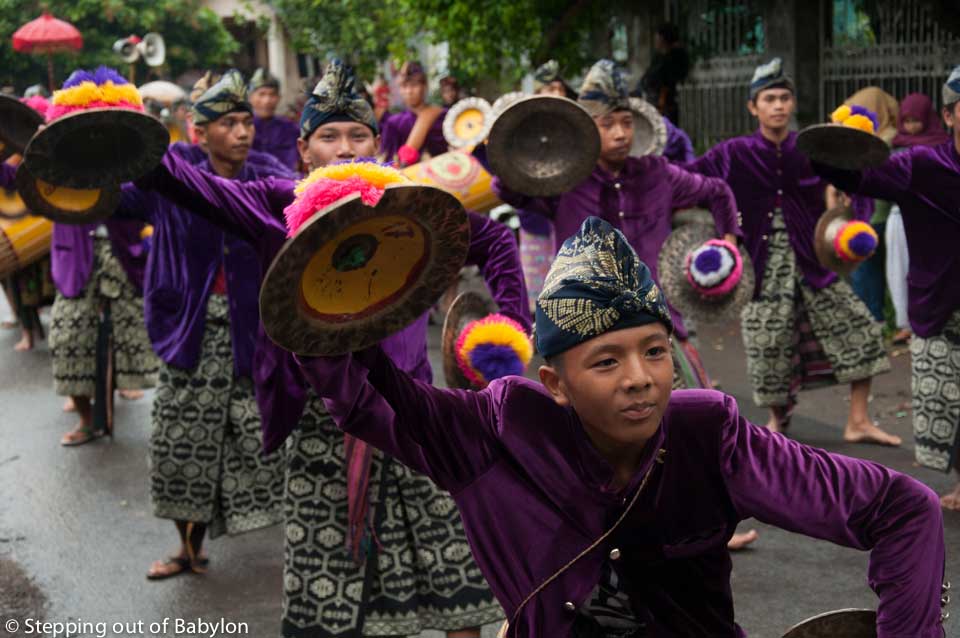
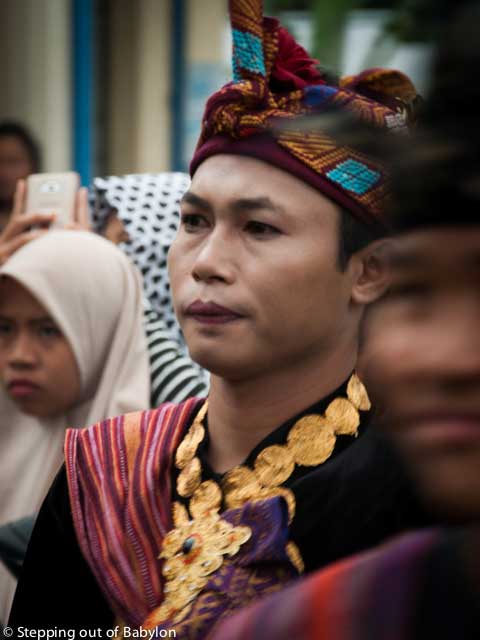
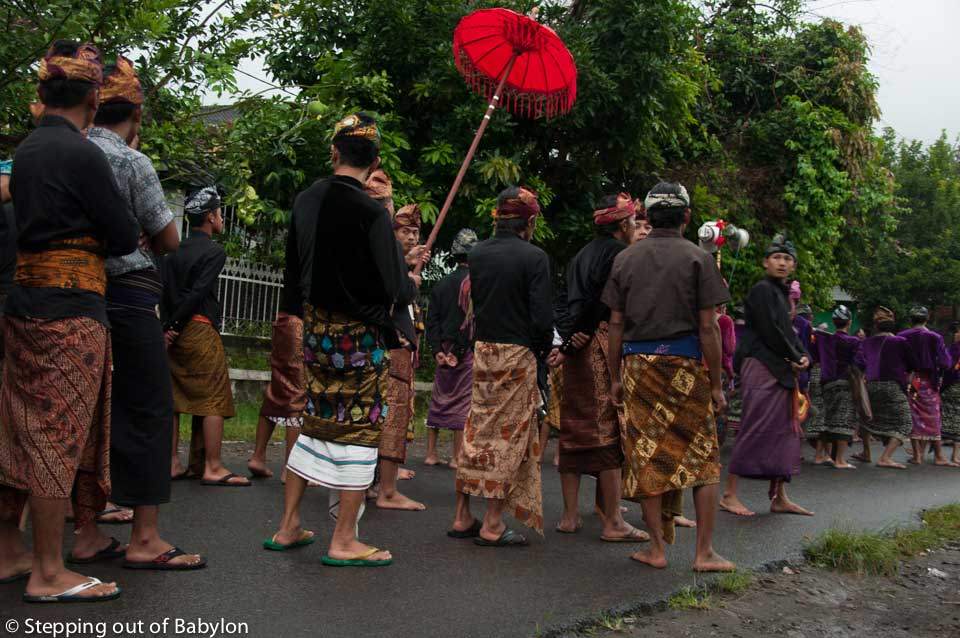
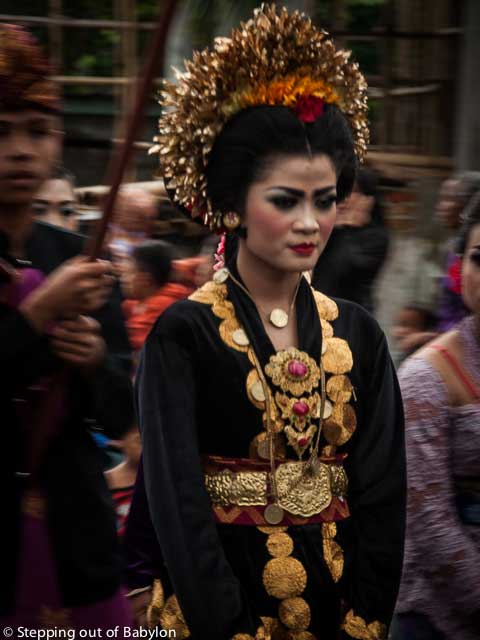
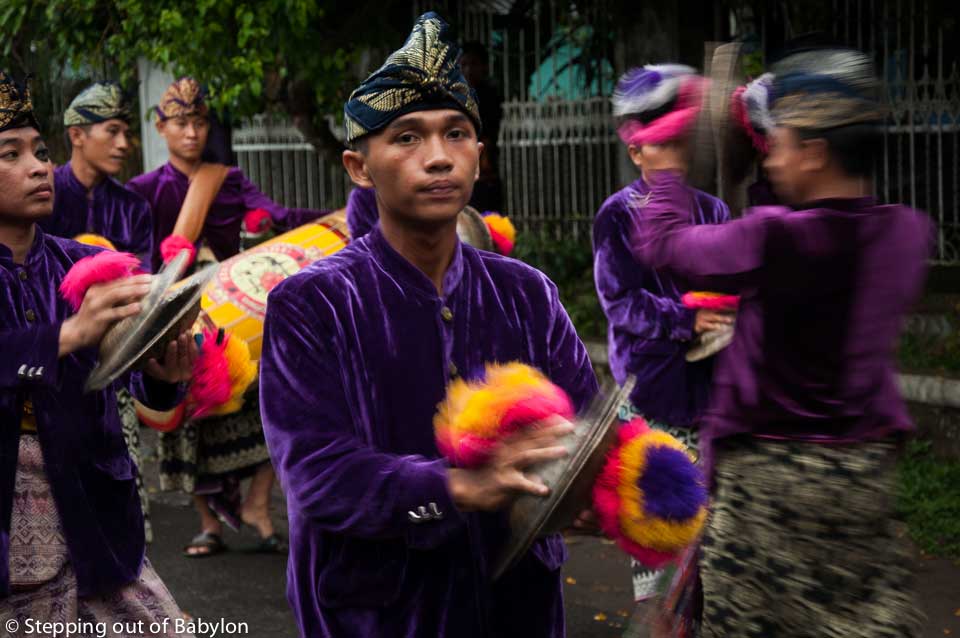
But his routine was suddenly broken by the parade of a Sasak wedding that filled Tetebatu main road, adding bright colors to the green scenario and spreading the melodious coming out from drums, bamboo xylophones, gongs and metal plates of the gamelan orchestra, that plays and perform dancing during the wedding parade.

Despite the majority of the population in Lombok being Muslim, the wedding parade shows a lot of the Balinese culture and influence, that pops up in the guest outfit, with many women without the Muslim hijab, dressing the Balinese kebaya, and the men with double sarongs and the udeng around the head. Also, the music and the dances performed during the parade that crosses the village is a clear influence from the neighbor Hindu island.

Sasak wedding parade at Tetebatu

Where to sleep in Tetebatu:

There are many accommodations in Tetebatu. Most of them are located on the road that leaves from the center of the village to East, on the way to Kemang Kuning. The prices are around 150.000 Rp, but during the low season, you can get a lower price. The Kemang Kuning Cottages have a room for 100.000 Rp but is a bit far out from the village, and just behind a mosque… and the first calling for prayers is around 4.30 in the morning.

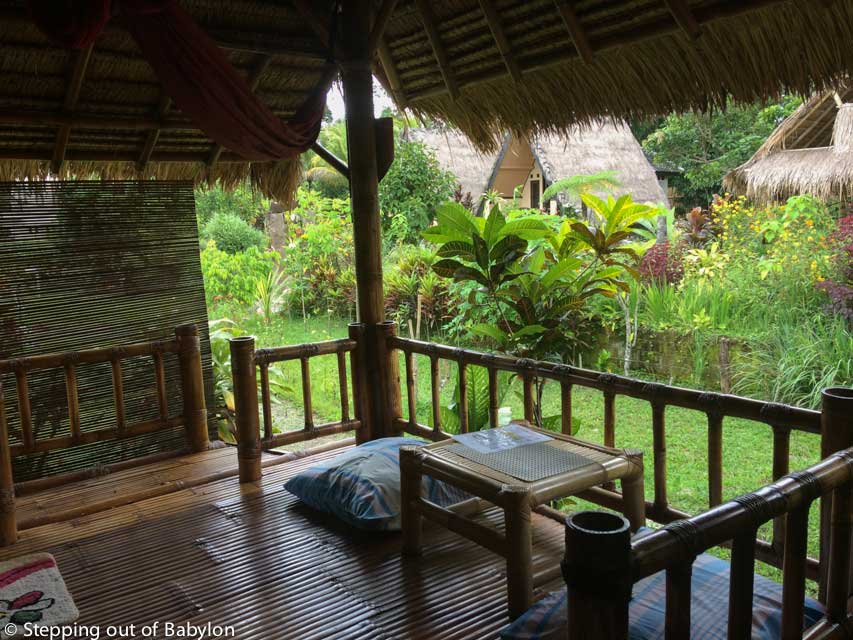
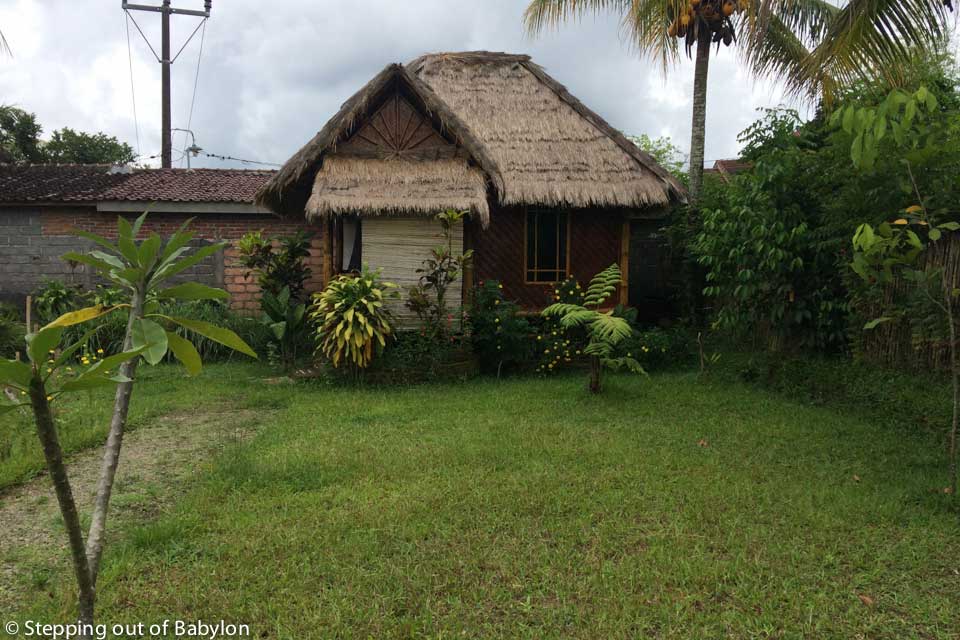
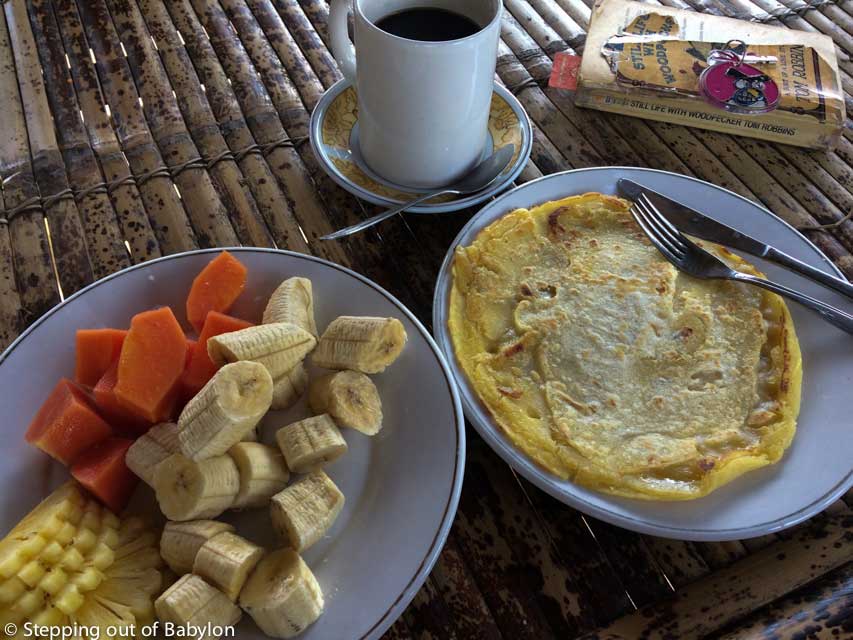
I stay at Matra Bungalows. There a three different type of accommodation here, and the cheapest one is a small hut with a single room and bathroom, for 100.000 Rp (low season) including breakfast (coffee, fruits and pancake). Matra Bungalows is a nice place to chill with a good vibe and a friendly and helpful staff that can help to move around, by hiring a guide or rent a scooter.

The wi-fi connection is very poor, here as in almost all the accommodations around…

[columns] [span6]

Matra Bungalows. Tetebatu. Lombok. Contact

[/span6][span6]

Matra Bungalows. Tetebatu. Lombok

[/span6][/columns]

[columns] [span6]

Matra Bungalows. Tetebatu. Lombok
The smallest room (1 person), but very cosy place of Matra Bungalows, where you can also find more sophisticated rooms. Tetebatu. Lombok

[/span6][span6]

breakfast at Matra Bungalows... there's also a menu that include Sasak specialities that are delicious here. Tetebatu. Lombok
breakfast at Matra Bungalows… there’s also a menu that include Sasak specialities that are delicious here. Tetebatu. Lombok

[/span6][/columns]

Where to eat in Tetebatu:

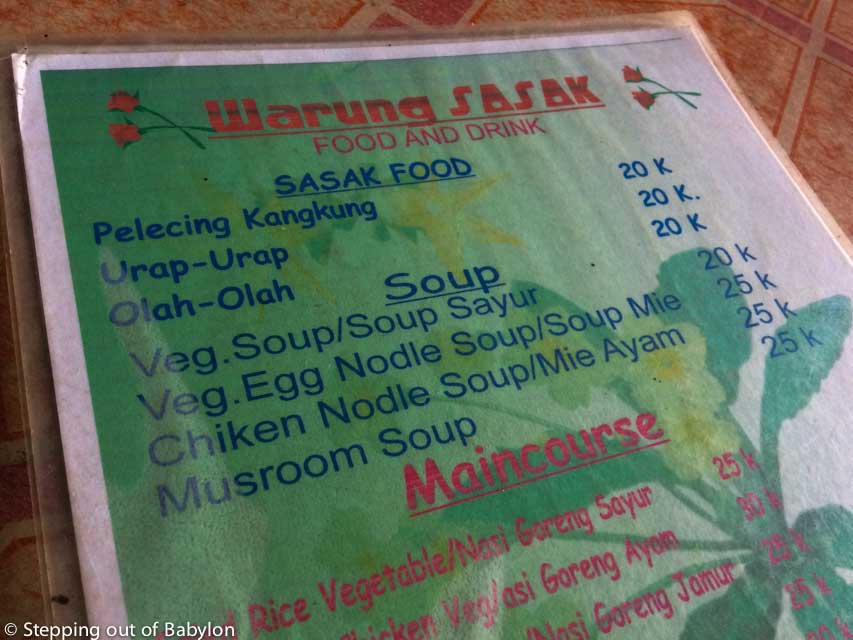
There is only one eatery at the center of Tetebatu, is called Warung Sasak, serving the usual Indonesia food as also some of the typical Sasak food. I have a huge and tasty meal of Nasi Campur (pronounces champur) with fry tempeh and fry tofu for 20.000 Rp.

But almost all the guesthouse or homestays have a restaurant and there are many options, some with nice views. The Matra Bungalows also serve food, including the Sasak traditional food, delicious and freshly made, like the Urap-Urap (mix of vegetables with grated coconut) and the Olah-Olah (mix of vegetables with a spicy coconut sauce).

Sasak food
Sasak food

How to move around Tetebatu:

On foot you can see a lot, walking through the rice fields, have nice views to the Gunung Rinjani (volcano and the highest point of Lombok), passing by small settlements with the rural lifestyle and even reach the Monkey Forest… and if you are lucky maybe see the black monkeys!

But to visit nearby villages, famous for handicrafts you need to rent a scooter or a guided tour.

ATMs and money exchangers in Tetebatu:

There is no ATM or money exchanger at Tetebatu.

The nearest ATM is at Kotaraja.

How to go from Tetebatu to Mataram:

Ojek from Tetebatu to Terara: 15.000 Rp

Bus from Terara to Mataram (stops at Mandalika Terminal): 20.000 Rp

Bemo from Mandalika Terminal to Chakra Negara area: 5.000 Rp…. think I pay too much because most of the people paid around 2.000 Rp…. but not sure!

Kuta Lombok… the secret paradise

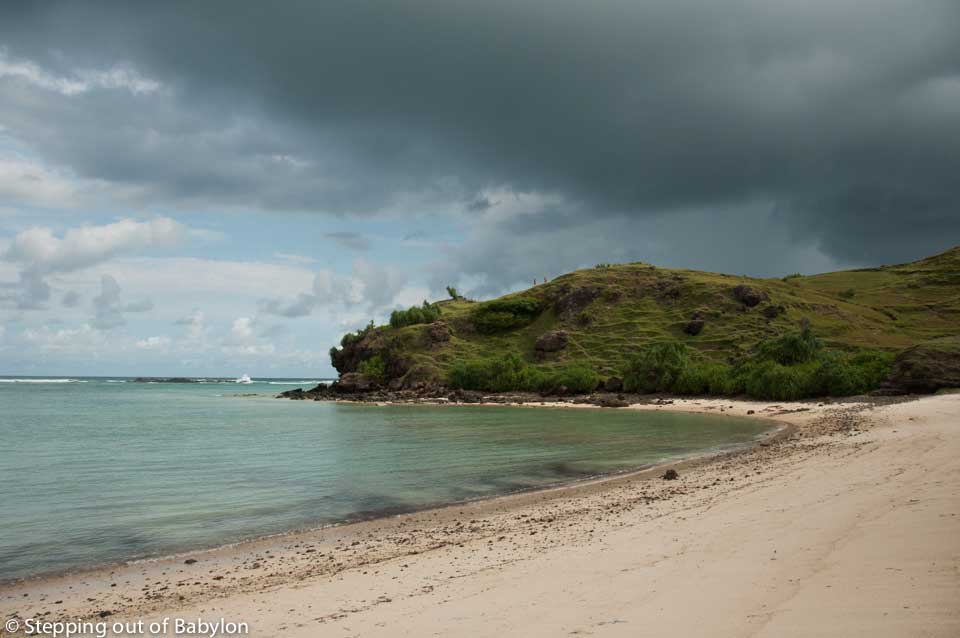
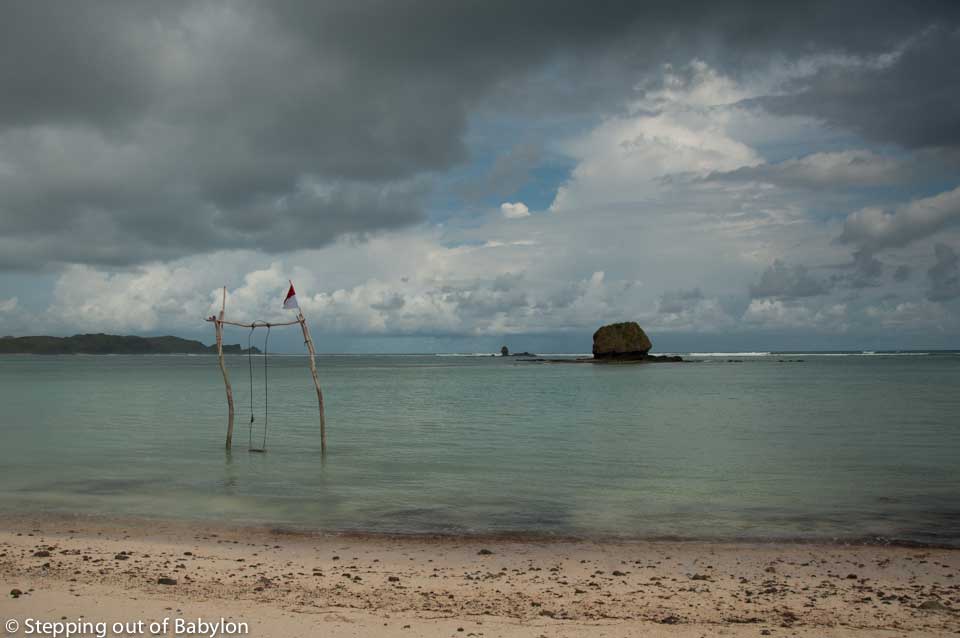
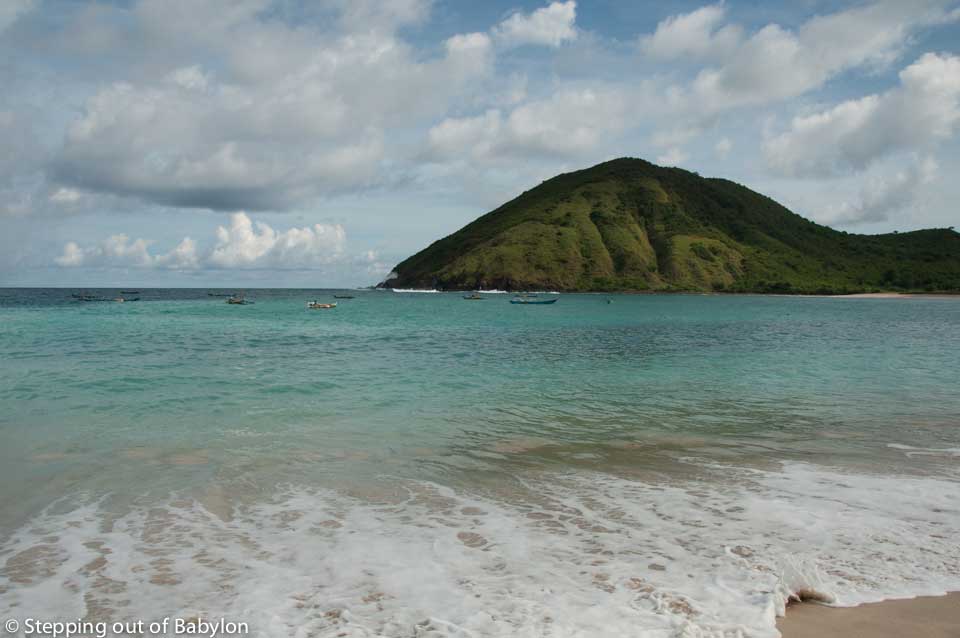
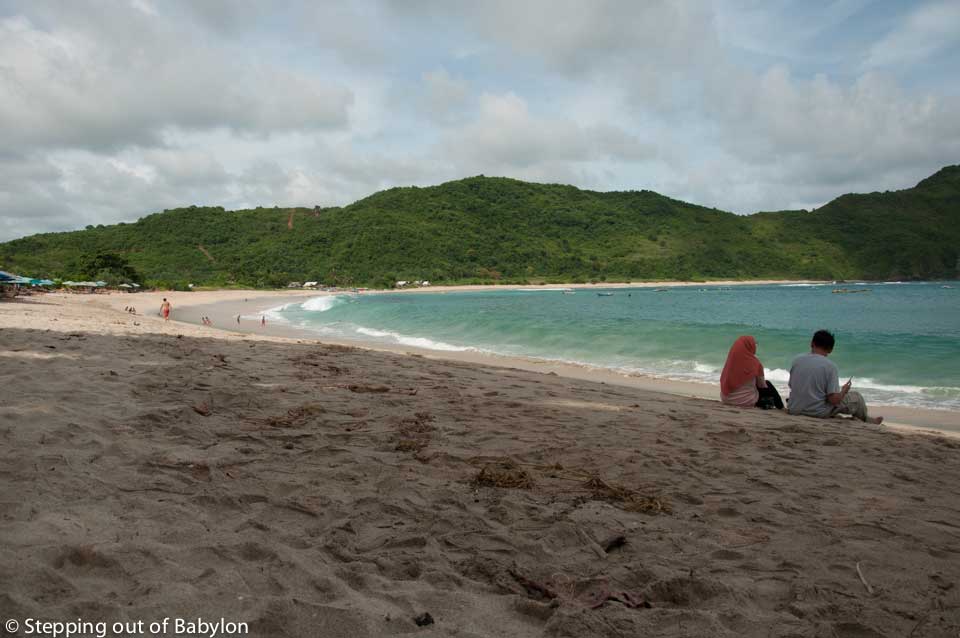
Beautiful… a kind of beauty that make me feel close to heaven… the light blue color of the sea, the green of the grass that cover the black rocky hills, the vivid blue of the sky, the white clouds like candy cotton, the sensation of the warm breeze on the wet skin. All balance to create a kind of perfect environment… even when the rain arrive, mostly in the afternoon, brought by the grey thick clouds, it matches perfectly on the landscape, leaving behind a shiny touch on the colors the scenery and a fresh air.

The atmosphere in Kuta is laid-back with most of the visitors coming here for surf… but despite the good waves the beaches are perfect for a swim, as the reef acts as a barrier away from the shore, making the waves break far away from the beach.

And this create a curious misperception in our senses, as we hear the sound of the waves breaking hard but in front of us the sea is quiet as a lake.

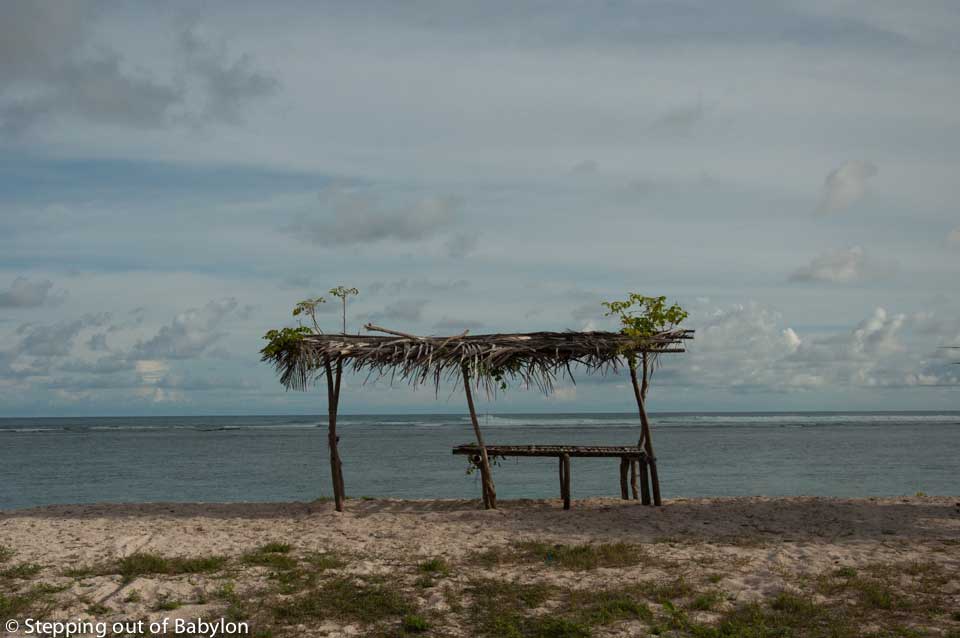
Long and empty beaches are waiting for someone to come and step in the untouched sand, made from crushed coral. Along the coast, for both sides of Kuta villages there are many more beaches to explore, all depending on your stamina as a scooter driver to go further… the roads to west are steeper and with more curves, but offer very nice viewpoints for the countryside landscape, where the green of the rice fields merge with the green of the coconuts trees and the green of the almost untouched forest!

But this paradise is threatened by the construction of luxury resorts and other tourist facilities, which construction works are already creating a big impact on the landscape, attract much more visitors that for sure will change the pace of Kuta and the surrounding beaches… maybe this “Kuta” will be something like the famous Kuta beach in Bali, already exploited by the tourism.

Kuta beach. Kuta, Lombok
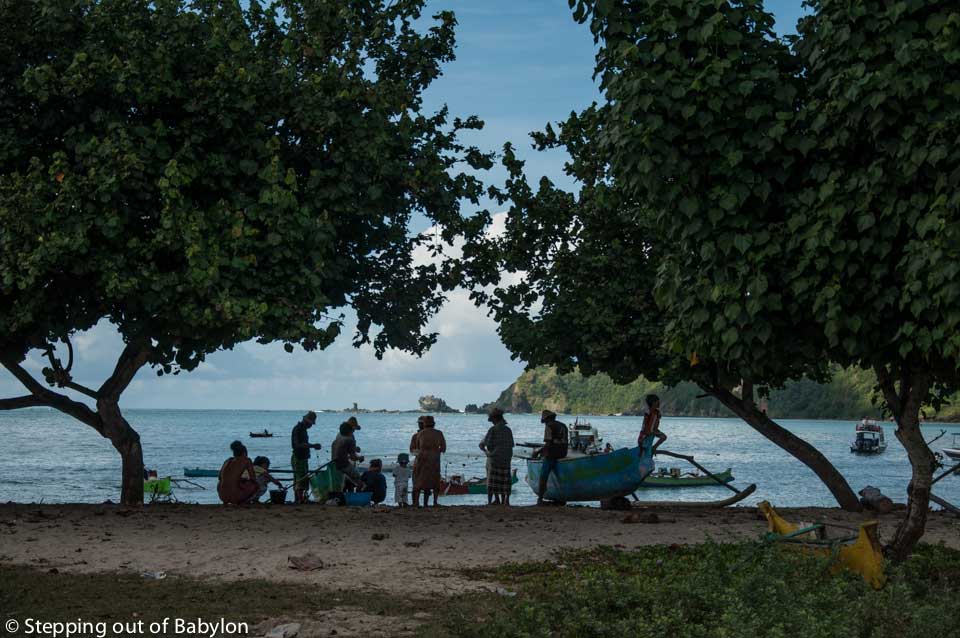
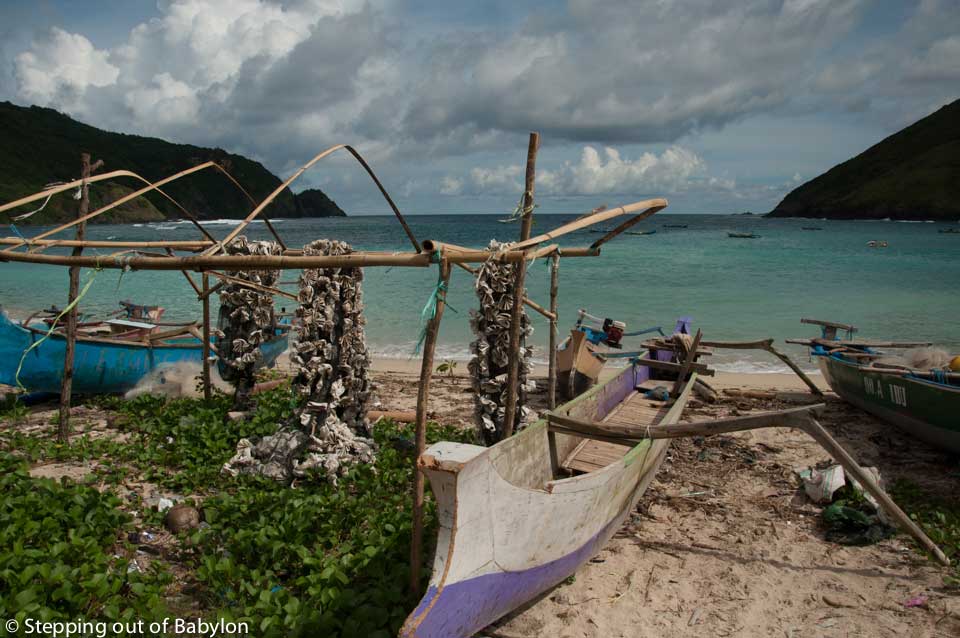
Kuta beach where fishing is still part of the daily life, despite the increasing number of tourists that daily arrive to this small village, looking for good waves to surf. Kuta, Lombok
Tanjung Aan beach. Kuta, Lombok
Mawun beach. Kuta, Lombok
Serenting beach. Kuta, Lombok
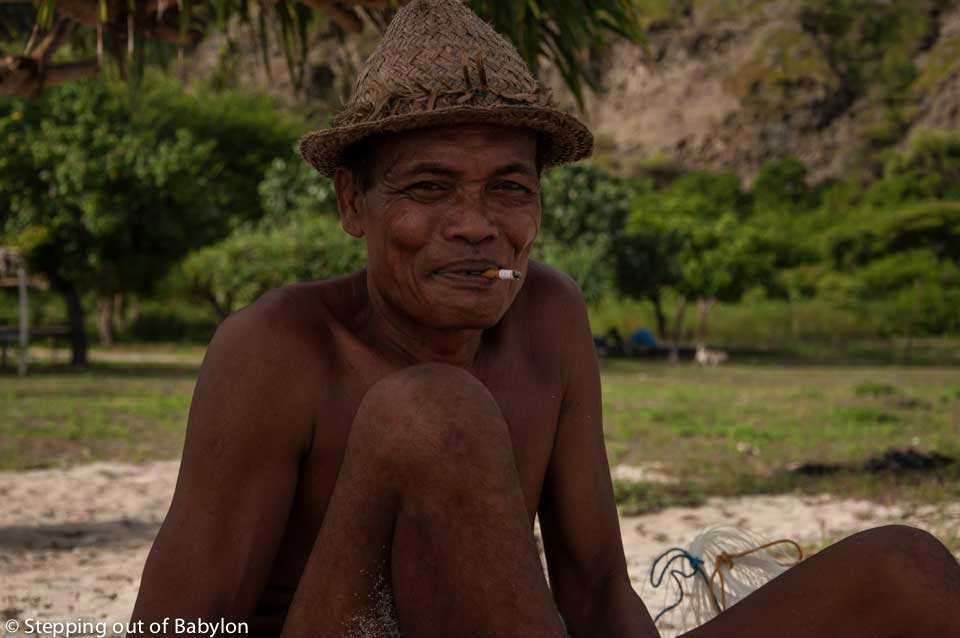
fisherman at Serenting beach. Kuta, Lombok
Serenting beach. Kuta, Lombok

Where to sleep in Kuta Lombok:

There’s are a LOT of options for lodging in Kuta Lombok and on the beaches around, for all the styles and budgets…. guesthouse, homestays, apartments, boutique hotel, resorts, hotels… and many more things are now under construction.

There’s no point to choose a place close to the beach of Kuta the village, as the view to the sea is not clear and the beach is a bit dump to swim… and as it is a fishermen village is not the best place to sunbathe in bikini, and Kuta beach attract also many Indonesians on weekend trips… maybe you’ll not feel comfortable in bikini surrounded by women with hijab!!!

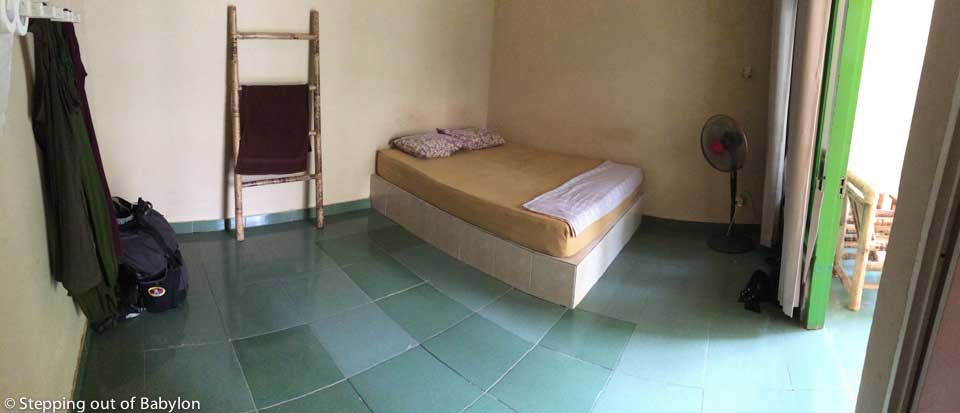
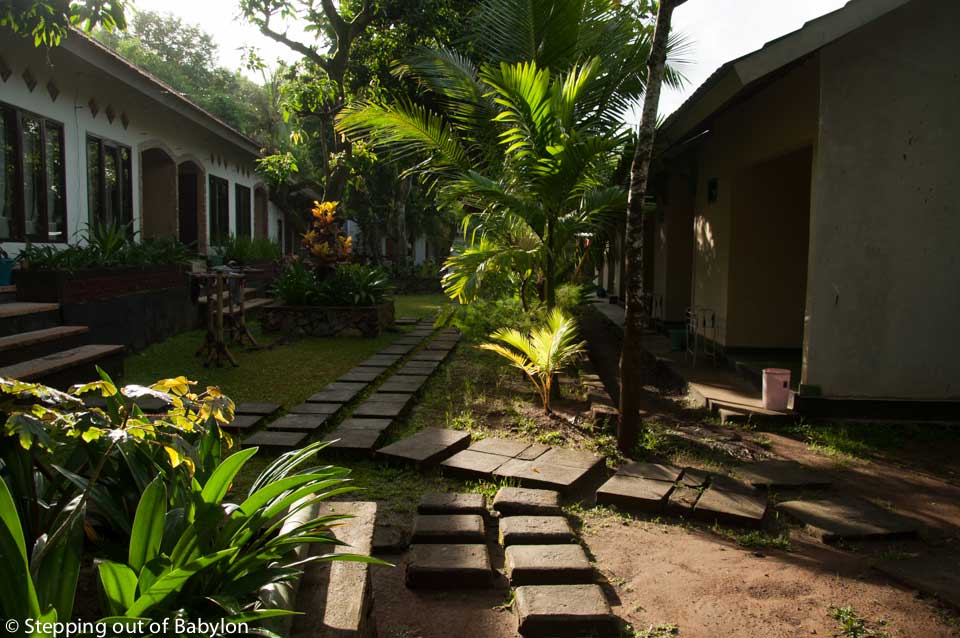
My choice was the Kuta Circle Homestay… a homestay that is not really a homestay but a row of rooms, with different styles, but where the friendliness of the family that runs the business makes you feel at home.

There are two types of room, with fan and with a/c, and both with toilet inside. The breakfast is included and can be eggs with toast or pancakes; it’s nothing special but is ok… and you can use the fridge and the kitchen and you are free to cook more pancakes during the breakfast time! Coffee and tea for free all day… and water refill by a small donation!

Don’t book on the websites… contact Kuta Circle Homestay directly.

https://kutacirclehomestay.com/

[columns] [span6]

Kuta Circle homestay... room without a/c. Kuta, Lombok
Kuta Circle homestay… room without a/c. Kuta, Lombok

[/span6][span6]

Kuta Circle with the room surrounded by a garden full of tree where the chicken move around during the day and where the frogs take over the place during the night. Kuta, Lombok

[/span6][/columns]

Where to eat in Kuta Lombok:

Eat local and cheap food in Kuta is easy! There are a lot of warungs that still keep the style and the prices of a small village. Some of them made an upgrade in the decoration and in the presentation of the dishes but the prices are still cheap.

You can have a gado-gado for 15.000 Rp and a nasi goreng for 25.000 Rp.

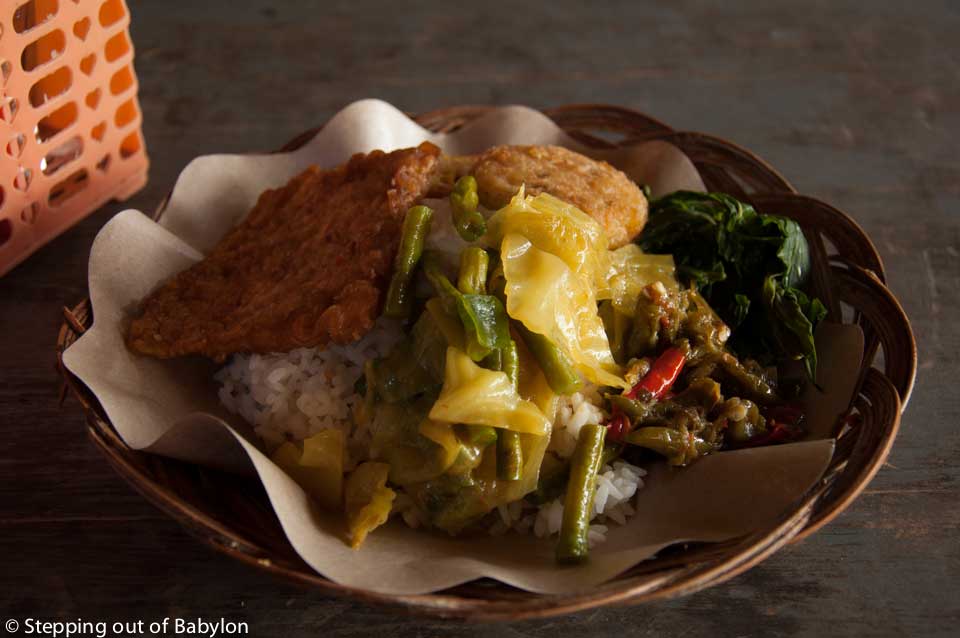
But my favourite is always the Padang food, simple and humbles, but serving a traditional delicious food with plenty of choices, from curries, to deep-fry stuff, from fish to meat, from tofu to tempeh, from vegetables to eggs… The base of a padang meal is the rice where you add what you choose from the several options exposed on the window. Don’t worry about refrigeration… I had food in this kind of places almost every day and didn’t have any stomach problem.
The cost of the padang meal depends on the quantity and the type of food, with eggs, meat and fish increasing the price… but a vegetarian meal in a can cost between 10.000 Rp (0.70€) to 20.000 Rp.

Name of the padang warungs that I try at Kuta Lombok:

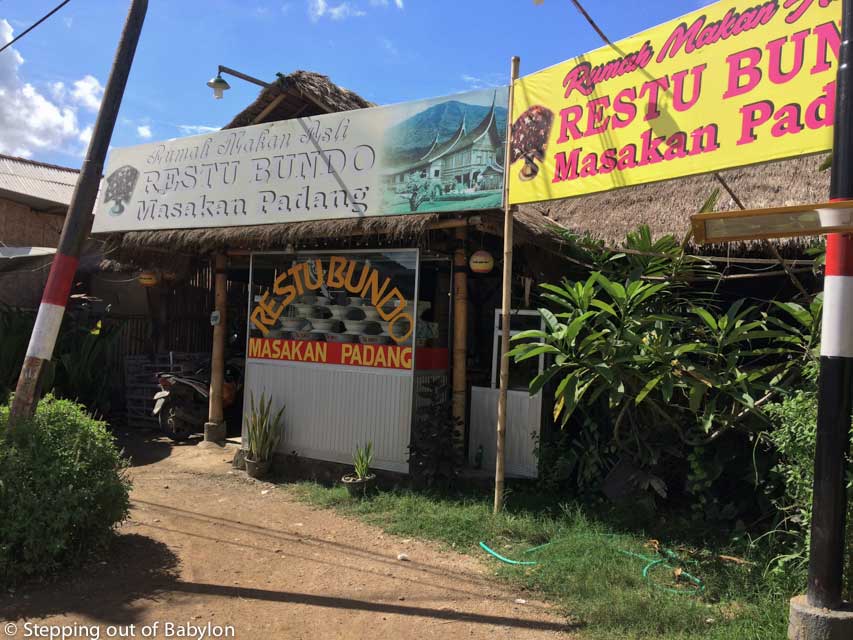
  • Resto Bundo Masakan Padang: cheap option for local food somewhere in Kuta village; close at 3 pm
  • RM restu bundo Masakan Padang: Not totally sure about the name but is the ONLY Padang eatery in on the road that links the circle (roundabout) to the village, just in front of the new huge mosque under construction (Jalan Pariwisata Pantai Kuta). This is my favorite of all places where I ate in Kuta… nice food, super friendly staff and very cheap prices… a vegetarian meal cost around 10.000 Rp (0.70€)

[columns] [span6]

local food and local prices at Kuta, Lombok

[/span6][span6]

local food and local prices at Kuta, Lombok

[/span6][/columns]

Best Beaches to swim around Kuta Lombok:

  • Mandalika: on the left side of Seger beach; it’s an almost desert beach with thin white sand and light blue water, with almost no curling. You can climb a small hill on the left side and see the view from there
  • Tanjung Aan: a long stretch of sand, almost desert except at the weekends that receive a few local visitors but that usually don’t stay away from the stalls and parasols.
  • Serenting: long and desert beach with light blue water.
  • Mawun: popular among foreigners, the shore can be a bit steep.

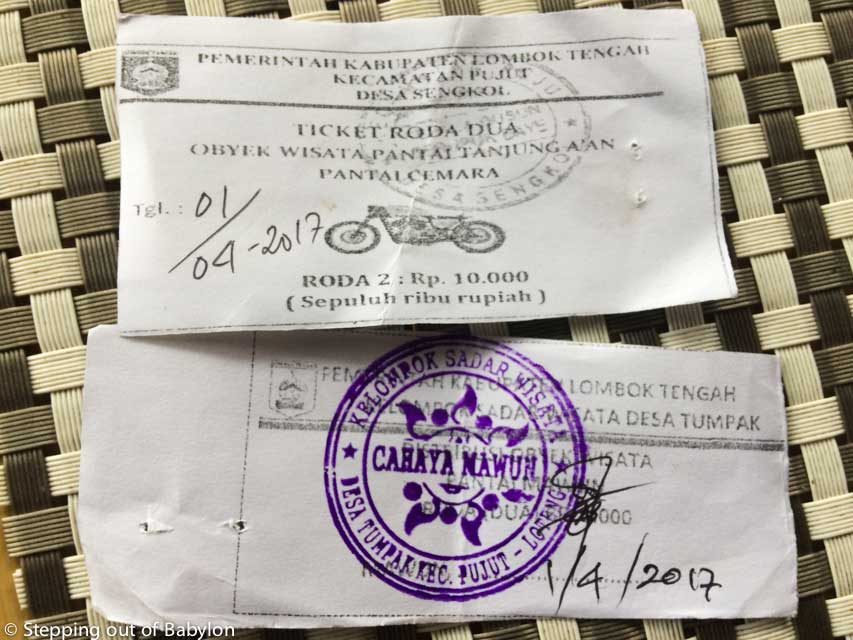
Many of the beaches have a kind of fee that apparently includes parking, for motorbikes or cars, and security. It’s always 10.000 Rp, no matter how long you stay and the type of the vehicle. Beaches with this fee are Seger, Tanjung Aan and Mawun.

Even when they look desert there’s a strong chance that the bracelet boys, the sarong ladies of the pineapple men show up from “nowhere” trying to make some business… they can be persistent, special the kids!

ticket to park at Seger, Tanjung Aan and Mawun beaches. Kuta, Lombok

How to move around Kuta Lombok:

On foot you can’t go far then the beach nearby Kuta village, that part of it is occupied by fishing activities with the fisherman and families hanging around which don’t let you very comfortable to swim in a bikini outfit. And despite this, the water is not that clean as there’s a small river that flows out to the beach with domestic dirty waters.

So the best option is to hire a scooter that costs 50.000 Rp a day. A liter of petrol cost 10.000 Rp at Kuta, and is available everywhere, on small pump station or in glass bottles at roadside shops.

There are many places renting scooters at Kuta village, but there also many reports of scam with the motorbikes… so is better if you rent at your guesthouse or homestay. I rent mine at Kuta Circle Homestay and didn’t have any issue.

How to go from Kuta Lombok to Tetebatu:

There are no public buses leaving from Kuta to Tetebatu. There are bemos but is difficult to communicate with the drivers. You can try your chance with the ojek (moto-taxi) drivers that the at the ojek corner, if you don’t carry much luggage and weight… must be less than 150.000 Rp to Tetebatu.

By taxi or private car, you pay between 175.000 to 300.000 Rp from Kuta to Tetebatu.

I hired a car with a driver at Kuta Circle homestay for 175.000 Rp. The trip takes 1.5 hours on a good condition road.

Ojek corner (moto-taxi) at Kuta Lombok

ATMs and money exchanger in Kuta:

There are a few ATM’s.

And there’s also one moneychanger shop, that every time I pass by it was closed.

moneychanger at Kuta, Lombok

Ubud… temples and rice fields

Rice fields, spirituality, yoga, organic and raw food, meditation… all this is part of the Ubud cliché! But despite being overwhelmed by the tourism the place is beautiful! And for sure that Ubud still has the magic touch that attracts so many visitors, that transform this rural area in one of the most popular destinations in Bali Island!

But at the first look, is hard to believe that this was a rural area less than 20 years ago, due to the concentration of shops, restaurants, cafes, hotels and guesthouses… a sequence of shops, with western orientated products, sophisticated and with high quality.

But behind this commercial activity, a bit away from the main roads of Ubud, everything is green, from the rice to the coconut trees!

Being a rural area a walk along the rice fields is a must, with the vivid green landscape creating a bright contrast with the blue sky, where the white cotton clouds aren’t enough to hide the strong sun, that makes these hikes a very sweaty experience, intensified by the strong humidity of the air at the rice fields area.

On the opposite side of the cosmopolitan and westernized lifestyle, the temples, spread a bit everywhere in Ubud, keeping a proud serenity, with their guardians watching and protecting the sacred place keep hidden behind the red brick walls.

Being Bali the only Hindu island in all Indonesia, that is the country with the biggest Muslim population, the religion here has a constant presence in everyday life, with rituals and offerings being made at home and on the temples, in order to pacify the gods and the spirits, special the evil spirits responsible for diseases and disasters. Having a strong connection with the Hinduism practiced in India, the traditions in Bali have many differences, looking almost like a different religion to a foreigner’s eyes.

Ubud_temples_DSC_3645
Pura Padang Kerta. Ubud
Ubud_temples_DSC_3315
Guardians of the temple to protect from the evil spirits. Pura Padang Kerta. Ubud

Ubud_temples_DSC_3356
Balinese temples with the rooftop made in coconut leaf fibers. Ubud
Ubud_temples_DSC_3616
Decoration of an altar in Ubud during the ceremonies that procedure the Nyepi day.
Ubud_temples_DSC_3359
Gunung Lebah Temple. Bali
Ubud_temples_DSC_3447
offerings nearby an altar. Ubud


About Ubud, many things were written and there’s a lot of information about lodging and food, but here I mention a proper budget places… not budget for two-weeks-holidays-tourists but for long term travellers, where each cents has significance 😉 So here is a simple suggestion about cheap local food, budget accommodation in a homestay.

Where to sleep in Ubud (budget option):

If you want to run away from villa, resorts and luxurious places, the best options are the homestays. There are many of this type of accommodation in Ubud, and the best is just walk around and find a sign that looks less catchy to the eyes, as this are usually the unpretentious and cheap places.

Walking down Jalan Hanoman I found this pearl between many posh options in the area: Dewi Ayu 2… don’t have any idea if exist a number 1, but this place suited me. This is a proper family homestay, very well located in the center of Ubud, with different types of rooms.

The cheapest ones (100.000 Rp) are very spacious, fan, basic furniture, cold shower and a terrace in front, where the breakfast is served, facing a garden. The place is very clean but showing the effect of the time. The breakfast include coffee, a generous portion of fruit and the “usual” banana pancakes… a standard of Indonesia tourist breakfast, don’t really know why!

The family is very friendly, and during the Nyepi day, where all the restaurants are closed, all the guests were treated with two homemade meals, cooked and offered by the grandmother… delicious and super kind!

Address: Dewi Ayu 2, Jalan Hanoman, 41, Ubud, Bali

The quiet streets of Jalan Sugriwa and Jalan Jembawan, streets parallel to Jalan Hanoman are also a good place to look for budget homestays in Ubud.

[columns] [span6]

Ubud_Dewi Ayu 2 Homestay_DSC_3295
Dewi Ayu 2 Homestay. Ubud. Bali

[/span6][span6]

Dewi Ayu Homestay. Ubud. Bali
Dewi Ayu 2 Homestay. Ubud. Bali

[/span6][/columns]

Where to eat local food for a cheap price:

Padang food: this is the budget option in terms of food in Bali. The “padang” or “masakan padang” are eateries, with a big range of food, from meat, fish, tofu, tempeh, eggs… and rice, of course! The meals can be eaten inside the restaurant or packed for take-away. The portions are generous and a meal cost around 20.000 Rp, less than 1.5 €. The base of padang food is the rice, and each person chooses what to add from a big variety that is show off at the window of the eatery… from meat, fish, tofu, vegetables, curry, tempeh, etc…

They open around 11 a.m. and close around 8 p.m… others close after lunch, specially in small towns and villages.
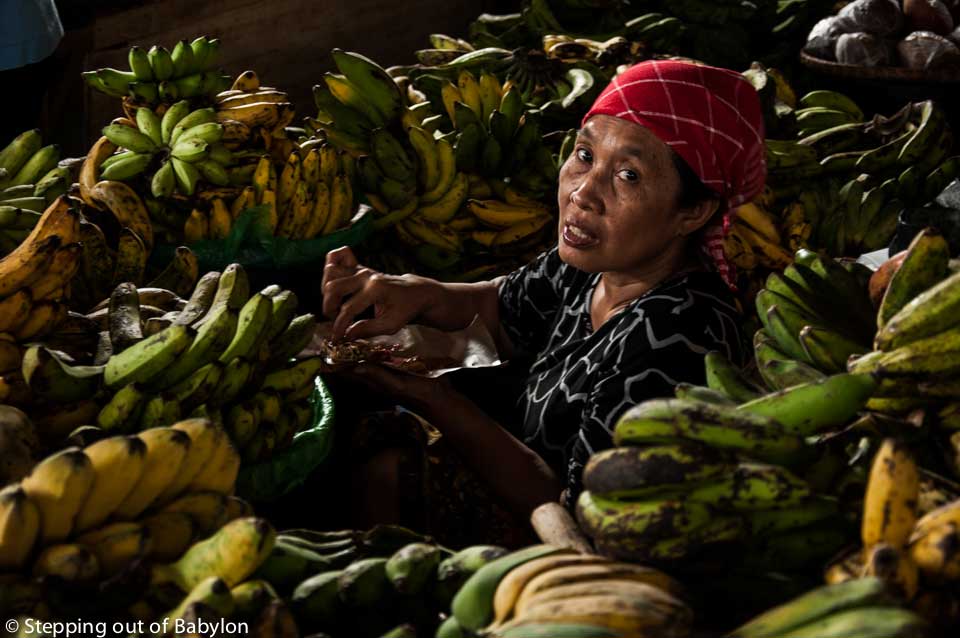
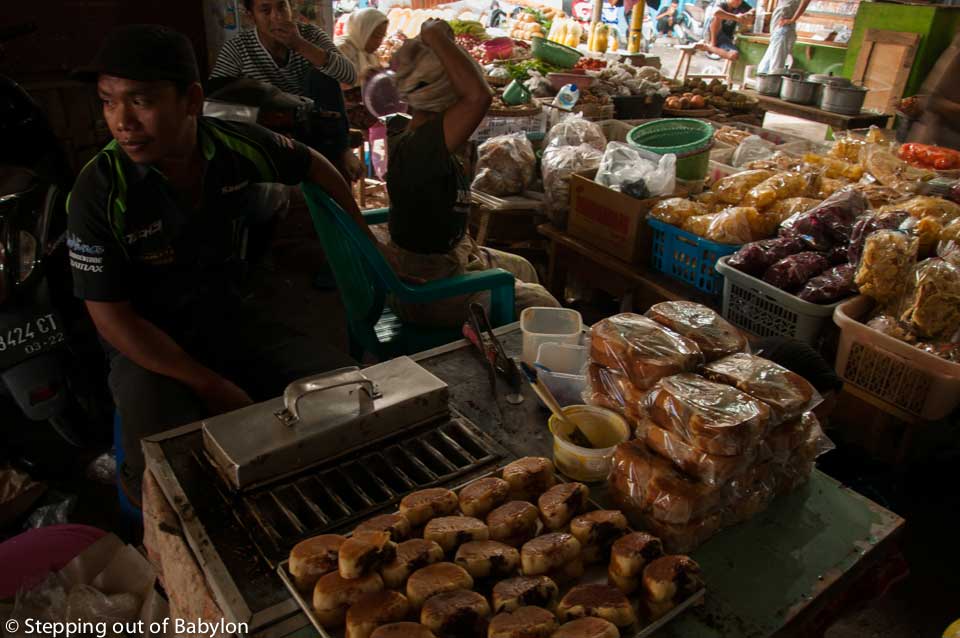
  • Rumah Makan Sari Minang (Jalan Ray Pengosekan, nearby the junction with Jalan Raya Nyuh Kuning, opp to Alfamart)… my favorite!!!
  • Sanak (Jalan Hanoman, 7)
  • Puteeri Minang (Jalan Raya, 77)

[columns] [span6]

_Ubud PAdang food_IMG_2610
Padang food restaurant… my favourite in Ubud

[/span6][span6]

_Padang Food_IMG_2619
Padang food

[/span6][/columns]

Warungs: These are local restaurants, usually simple and informal. They have a menu, sometimes posted on the wall with the usual range of Indonesian foods: nasi goreng, gado-gado, nasi campur, etc… the prices are between 20.000 to 40.000 Rp.

  • Warung Lokal (Jalan Gootama, 7)

Street food: there are a few options of street-food away from the main touristic streets. Usually, these stalls start around the sunset… you can find satay, bakso, martabak (a roti filled with vegetables or egg), goregan (deep fry stuff), injin (pancake stuffed with rice).

  • Junction between Raya Pengosekan and Jaan Made Lebah, in front of a supermarket
  • On Jalan Raya Ubud, between Jalan Jembawan and the Anjuna Statue (Jalan Raya Andong)
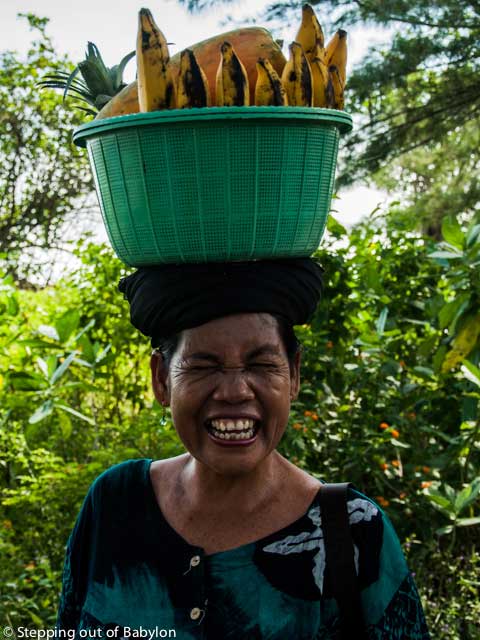
  • Around lunch time, you can spot same ladies nearby the market area, with a tray on the top of the head that usually have nasi goreng, deep-fry tofu, meat…

[columns] [span6]

_Ubud_street food_DSC_3451
Nasi goreng and fry tofu from a street-food seller, Ubud

[/span6][span6]

Martabak... cooking rotis with different filling and a lot of oil... only show up arounf sunset
Martabak… rotis with different filling and a lot of oil… only show up around sunset

[/span6][/columns]

Exchange money in Ubud:

There are a lot of money exchangers in Ubud… and there are also many stories about scams with exchanging money.

I didn’t have any problem the three times that I exchange my money in this two places, the process is easy and you don’t need to show the passport:

  • PT Bali Maspint Jinra, located at Jalang Pengosekan… nearby Bening Bungalow s
  • PT Bali Hastie Indomalaya, located on the west side of the Jalan Raya Ubud

Move around Ubud:

Move around is not an easy task in Ubud, as the Uber, GoJek, Grab…. and others transport companies are banned from town and cannot operate there due to the pressure of the local taxi and moto-taxi corporation, who’s drivers stay on every street and every corner offering their services.

Bemos apparently also don’t operate in Ubud, at least during the time I stay there I couldn’t see any.

To visit the rice fields and hike to Campuan ridge you can do all on foot. But if you want to go further than three kilometers you must hire a taxi or a moto-taxi that, if you are alone, is the cheapest option.

There isn’t a fixed rate, and the price must be negotiated before the ride… usually, the minimum that they ask is 50.000 Rp, but you must bargain. A 3 km moto-taxi ride shouldn’t cost you more that 20.000 Rp, even on a rainy day!!!!

.... only taxis or moto-taxis
…. only taxis or moto-taxis

What to do in Ubud for free:

  • Walk along the Campuhan ridge: very popular and a bit crowded at the sunset. It starts on the west side of Jalan Raya Ubud, before the bridge.
Ubud_Campung ridge_DSC_3333
Walk along the Campuhan ridge, Ubud
Ubud_Campuang ridge walk_DSC_3335
Walk along the Campuhan ridge, Ubud
  • Walk in the rice fields: easy and pleasant walk but without much shade. It starts on Jalan Raya Ubud, just before Museum Puri Lukisan, and ends nearby Desa Temple, also in Jalan Raya Ubud.
Ubud_rice fields_DSC_3434
rice fields walk. Ubud
Ubud_rice fields_DSC_3437
rice fields walk. Ubud
  • Walk to the river: pass by some rice fields, if you want you can go to the river and on the way back it passes by a more shady area. This walk starts on Jalan Raya Ubud, nearby Eden House, where you need to turn left after a few meters. When you reach the sign that points the river (doesn’t worth the effort to go down), you can turn right and follow the water ditch along the rice field and join the path that ends nearby Desa Temple.
Ubud_rice fields_river walk_DSC_3444
walk to the river. Ubud
  • Petulu and the herons:To reach the trees where the herons gather you need to pay 20.000 Rp, to help the development of the local community.This small village about 6 km north Ubud is famous for being the gathering of the herons, that around sunset return to the village filling the trees of white dots and the air with their chirp.The show of the herons doesn’t really worth the money, but the road that leads to the village of Petulu, that start somewhere on Raya Petulu, is quite nice, as you can have an idea of how Ubud look like before the tourism arrive here. It’s a long walk, and the part along Raya Petulu is uncharacteristic and with some traffic.
Petulu
Petulu
Petulu
Petulu
  • « Go to Previous Page
  • Page 1
  • Page 2
  • Page 3
  • Page 4
  • Page 5
  • Page 6
  • Go to Next Page »

Footer

search

Tags

Assam Bagan Bali Border Crossing Borneo Colombo Dao Cheng Esfahan Fes Food Gilis Hiking hokkaido Istanbul Itinerary Jakarta Java Kashan Kuala Lumpur Kumano Kodo Litang Lombok Majuli Meghalaya Meknes Mekong Mulay Idriss Nagaland Natural Park Northeast States Ouarzazate Sarawak Shangri-lá (Zhongdian) Shiraz Sichuan Province Sishuan Sumatra Tabriz Tehran transportation Visa Yangon Yazd Yogyakarta Yunnan Province

I’m Catarina, a wanderer from Lisbon, Portugal… or a backpack traveller with a camera!

Every word and photo here comes from my own journey — the places I’ve stayed, the meals I’ve enjoyed, and the routes I’ve taken. I travel independently and share it all without sponsors or ads, so what you read is real and unfiltered.

If you’ve found my blog helpful or inspiring, consider supporting it with a small contribution. Every donation helps me keep this project alive and free for everyone who loves exploring the world.

Thank you for helping me keep the journey going!

BUY ME A COFFEE

Categories

Recent Posts:

  • How to go from Hualien to Dulan Beach
  • Taroko Gorge: between marble cliffs and emerald rivers
  • Hualien: a dull gateway to Taroko Gorge
  • Taiwan: Itinerary for an 16 day trip
  • Vietnam: Itinerary
  • 3 months in India: Kolkata, Tamil Nadu, Karnataka, Goa and Kerala
  • Backpacking Turkey in 24 Days: itinerary & costs
  • English
  • Português

© Copyright 2026 Stepping out of Babylon · All Rights Reserved · Designed by OnVa Online · Login