• Skip to main content
  • Skip to footer

Stepping Out Of Babylon

Travel & Photography

  • About me
    • Contact
  • Destinations
    • Africa and Middle East
      • Iran
      • Lebanon
      • Morocco
      • Turkey
    • East Asia
      • China
      • Japan
      • Taiwan (Formosa)
    • South Asia
      • Bangladesh
      • India
      • Nepal
      • Sri Lanka
    • Southeast Asia
      • Cambodia
      • Indonesia
      • Lao
      • Malaysia
      • Myanmar
      • Singapore
      • Thailand
      • Vietnam
  • Itineraries
  • Travel tips
    • Border crossing
    • Hiking and Natural parks
    • Food Journey
    • Visa
  • Photography

Southeast Asia

Lake Toba… am I still in Sumatra?

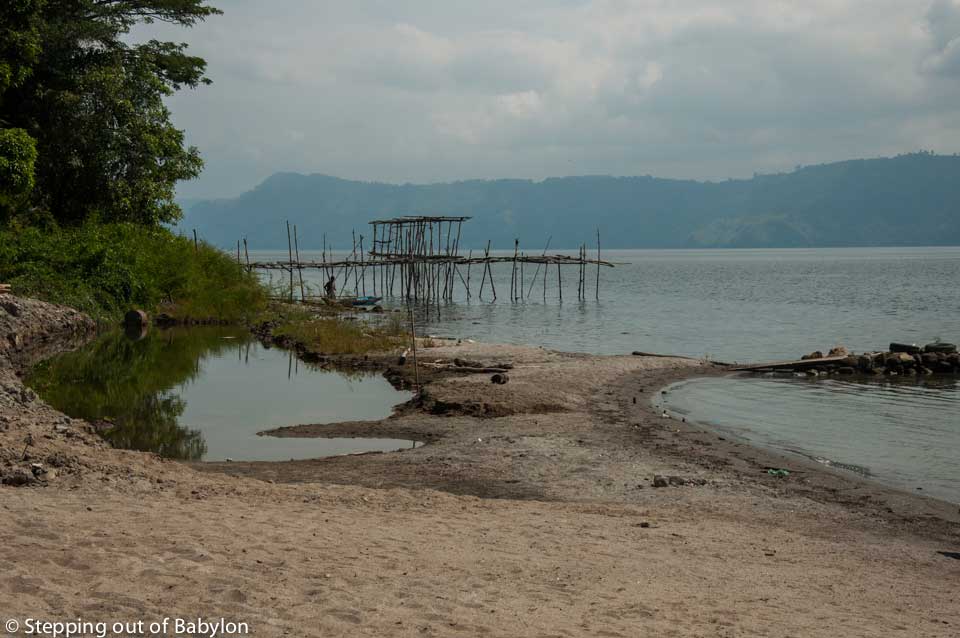
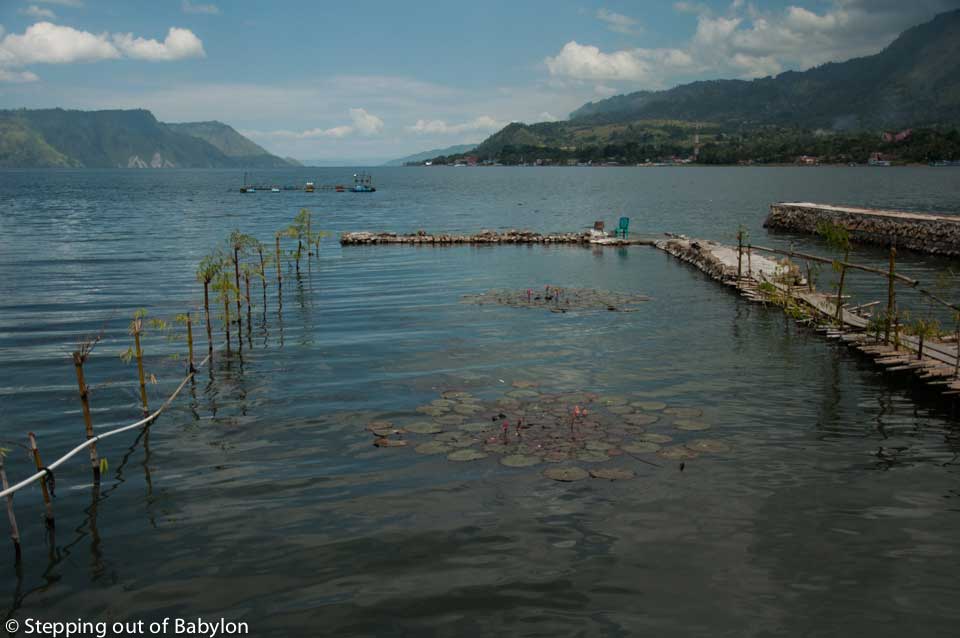
There is a lake result from a volcano crater, the Lake Toba, locally called Danau Toba. There’s an island inside the lake, a big island more than the size of Singapore, which was the cone of the volcano, the Samosir Island, Pulau Samosir.

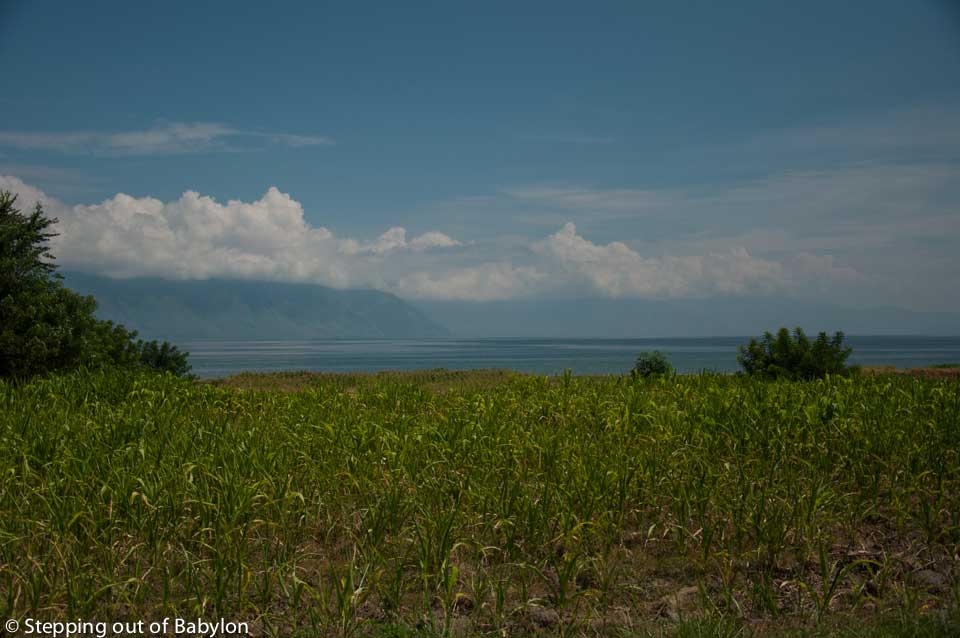
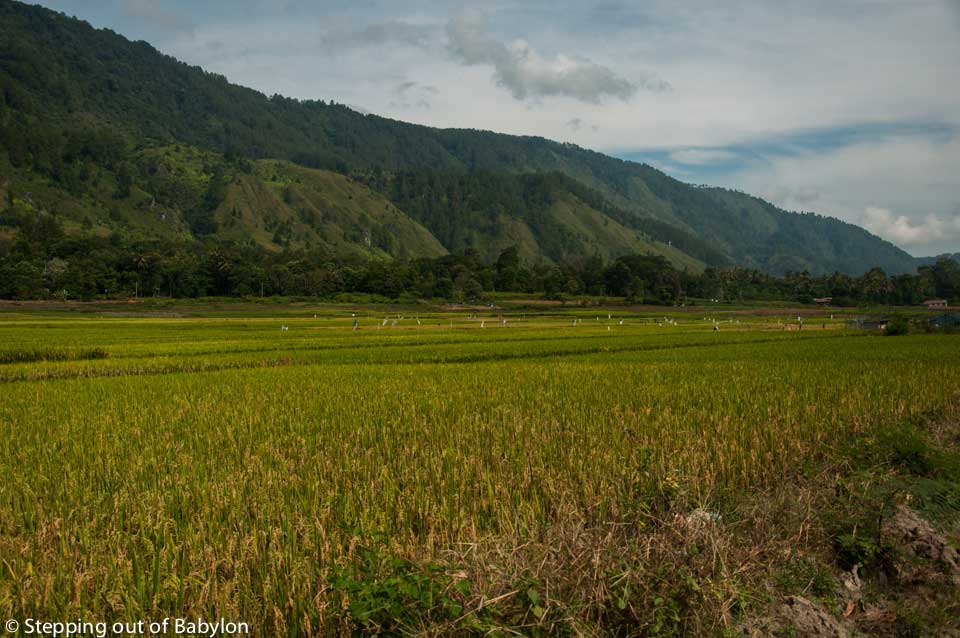
There’s a beautiful landscape where the blue of the lake waters contrasts with the gold grains of the rice fields. There’s an impressive cedar forest covering the steep slopes of the volcano. There’s a temperate climate with sunny warm days and fresh evenings. There are amazing traditional wooden houses from the Batak ethnic group… and there’s a small village called Tuktuk that is mostly a tourism orientated place, with empty shops, empty restaurants, empty guesthouses… where are the tourists!? What happen here?!?!?

It looks like Lake Toba was put aside on the tourist route of Sumatra… or maybe Sumatra is out of the Indonesian tourist route!

*****

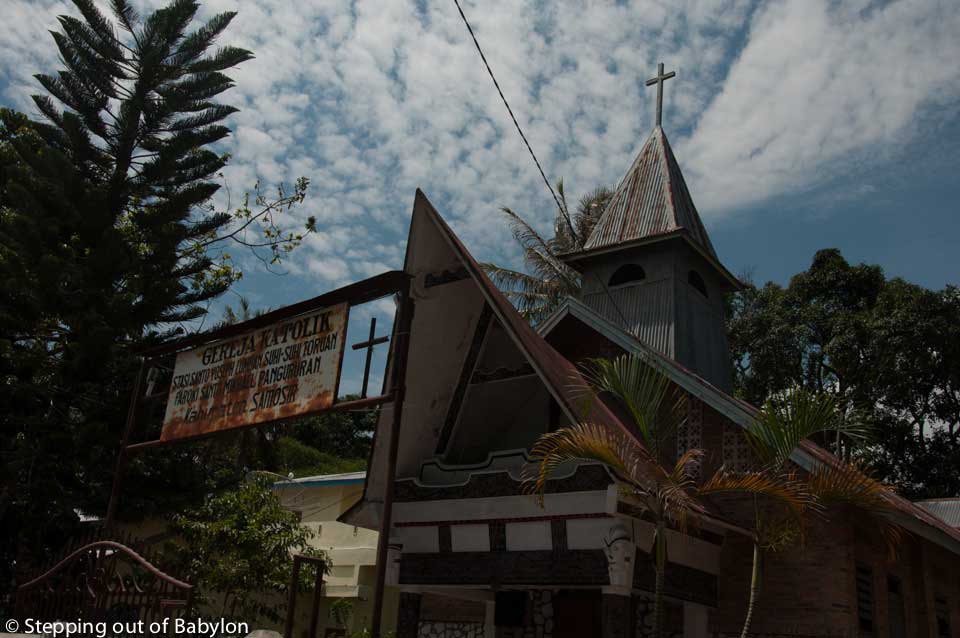
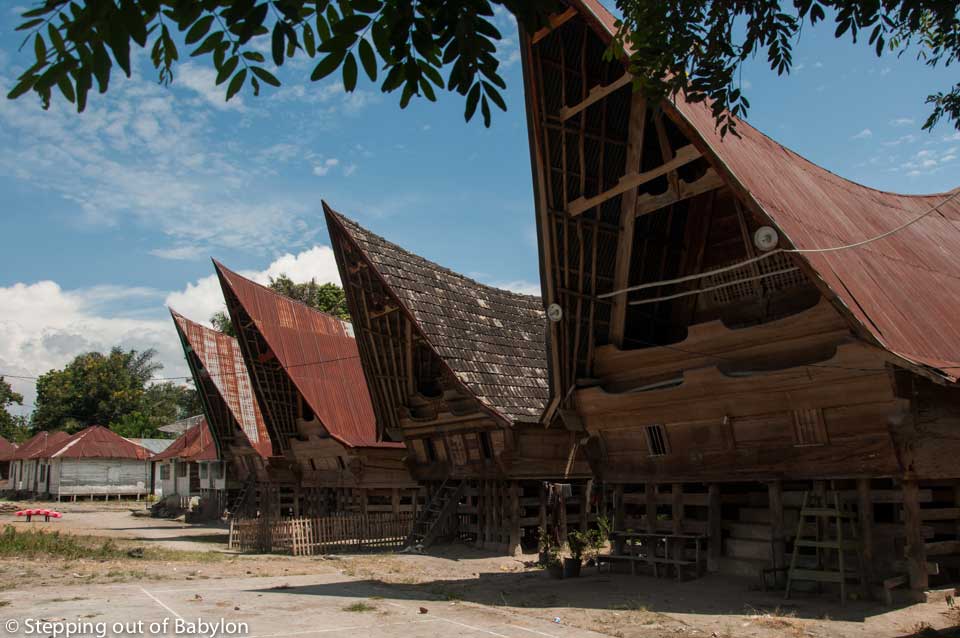
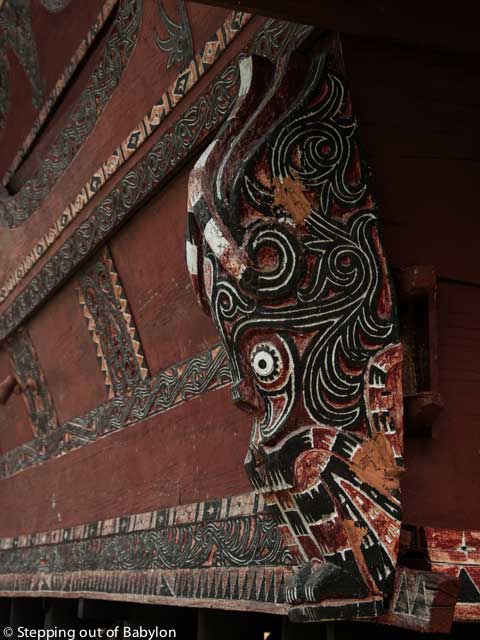
But letting behind all this consideration, Lake Toba is definitely a beautiful place where the Batak cultural identity is still visible in the characteristic architecture of the wooden houses with pointy and steep roofs, and proudly decorated with woodcarving motifs, painted in white, black and red. The Batak is a group of different ethnic groups of North Sumatra that share similar language and culture, but where some traditions were seriously affected by the arriving of the Christian missionaries in the IX century.

The landscape that surrounds the Lake Toba as well of the Samorir Island with green hills covered by cedar forest, the Christian churches the flowers that grow in front of the houses, the quietness of the place, the mild temperatures… all this make me wonder… I’m I still in Sumatra?!
Lake Toba
Lake Toba
Lake Toba
Lake Toba… rice fields, cedar forest, mild climate and Christian Churches… am I still in Sumatra?
Lake Toba
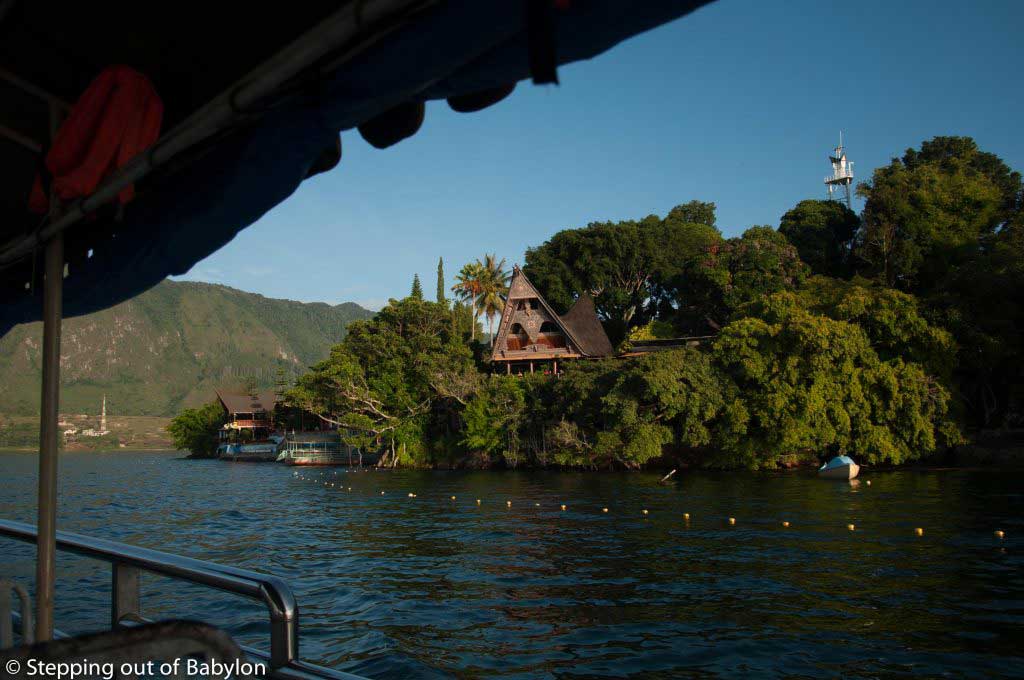
On the north part of the island, there’s a few beaches where is easy to access the lake water to swim… but at Tuktuk, most of the accommodations are nearby the lake and have a small pier from where is possible to jump to the warm lake waters
The Batak culture and traditions were seriously affected by the arriving of the Christian missionaries in the IX century.
Lake Toba
Lake Toba… where the blue of the lake waters contrasts with the gold grains of the rice fields
Samosir Island... Batak culture
Samosir Island
the Batak cultural identity is still visible in the characteristic architecture of the wooden houses with pointy and steep roofs, and proudly decorated with woodcarving motifs, painted in white, black and red
Samosir Island... Batak culture
Samosir Island… Batak woodcarving decorations
Lake Toba
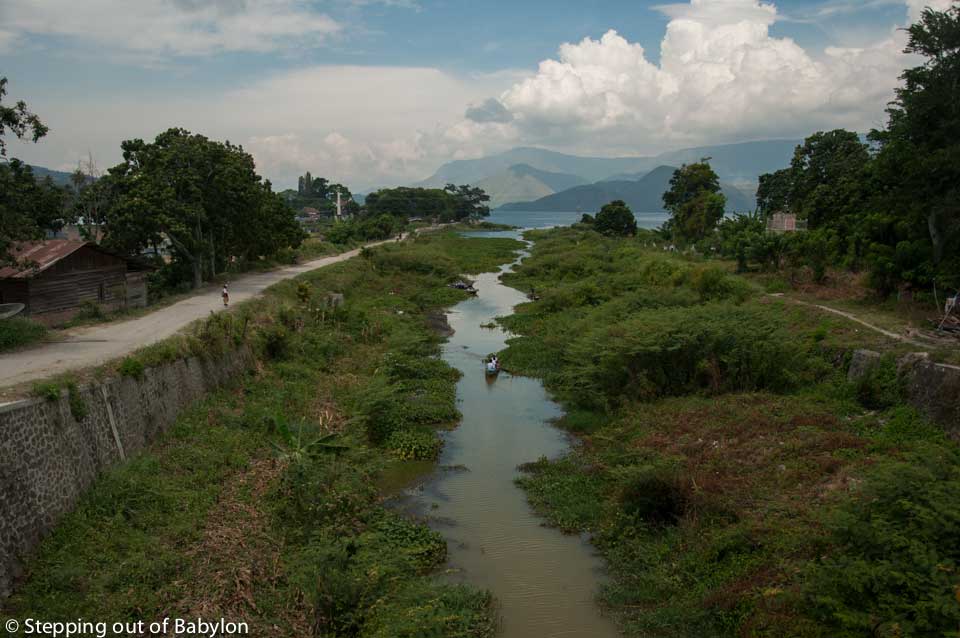
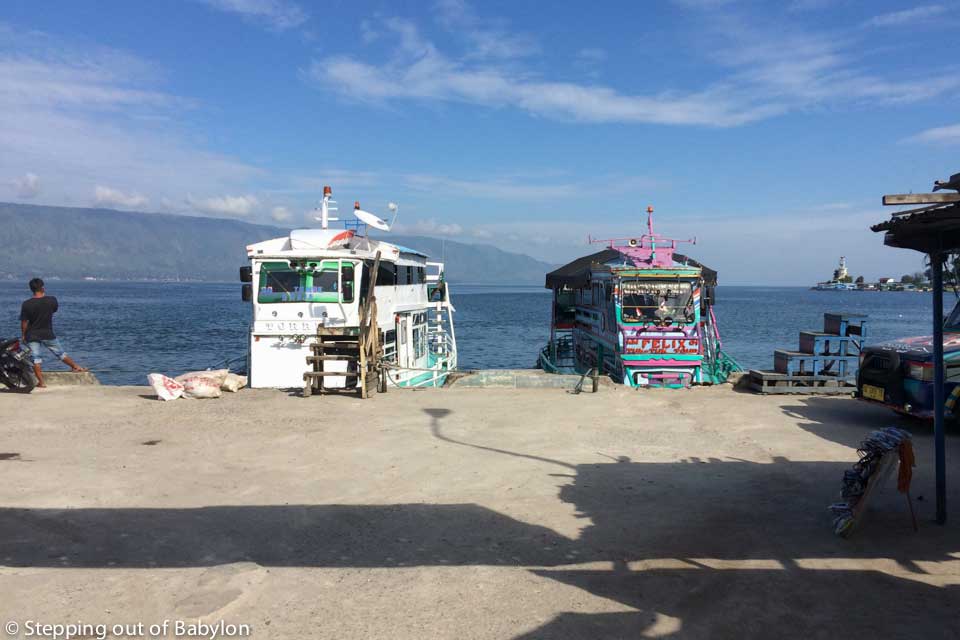
Pulau Samosir is not really and Island as it is just separated from mainland by this narrow canal than can be cross by a bridge
Lake Toba
Tuktuk, Pulau Samosir, Lake Toba

Where to sleep in Samosir Island/Lake Toba:

In general the accommodation prices at Tuktuk are cheaper that usual in Sumatra, and is possible to get a room for 50.000 Rp.

The Liberta Homestay is one of the many options available at Lake Toba and there, despite the abandoned look of the village, there’s a certain atmosphere as this place attracts travellers that choose this place to stay for long periods.

The location is perfect: nearby the lake and a few meters from the boat pier. There are trees and plant all around, making a quite and relaxing place to stay.

There is a wide range of room, with different characteristics and different prices, starting on 44.000 Rp (strange number this one, but apparently is to cover the government taxes, despite there isn’t a guest registration!!!)

I stay at the traditional Batak house, an old wooden house that has a big room with small doors, and a low ceiling in some areas, which make you very aware of your movements to avoid bumping your head. The toilet is attached but without hot shower. This room costs 66.000 Rp/night.

The breakfast isn’t included but there’s a restaurant at the place, serving a big choice of Indonesian and western food… I try cap cay (xap xai) a Chinese-Indonesia dish that was good but cooked according to the western taste, soft and without much species.

There’s wi-fi in the common/restaurant area but doesn’t reach all rooms.

The Liberta Homestay is a cool place with a certain character but the rooms as also the common area lack a little of maintenance and cleanliness.
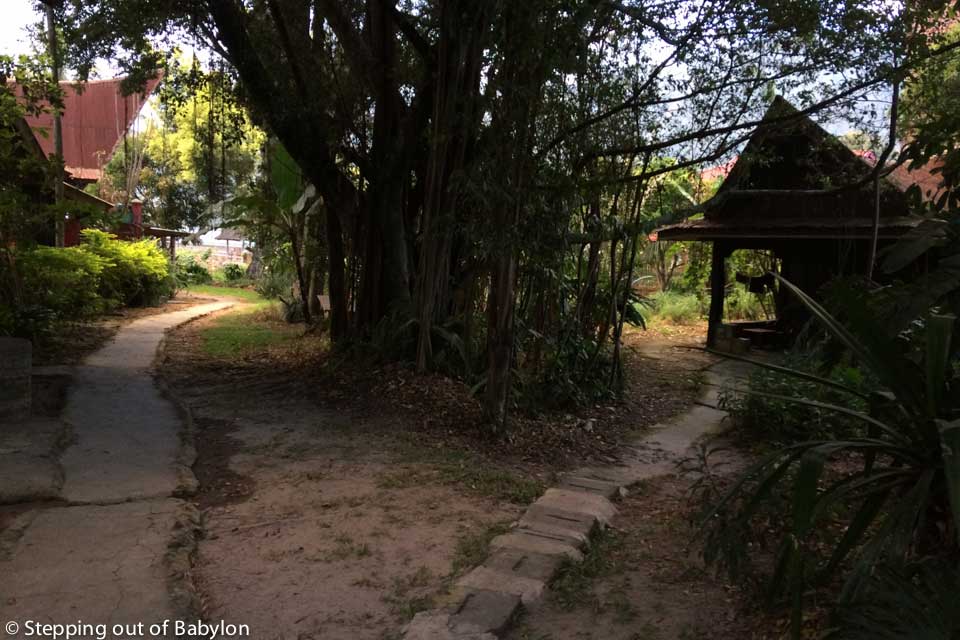
Liberta Homestay at Tuktuk. Lake Toba

Where to eat in Samosir Island/Lake Toba:

There are many restaurants with a big choice of western and Indonesia food, with a strong presence of fish. But the pizza is the very popular in Tuktuk.

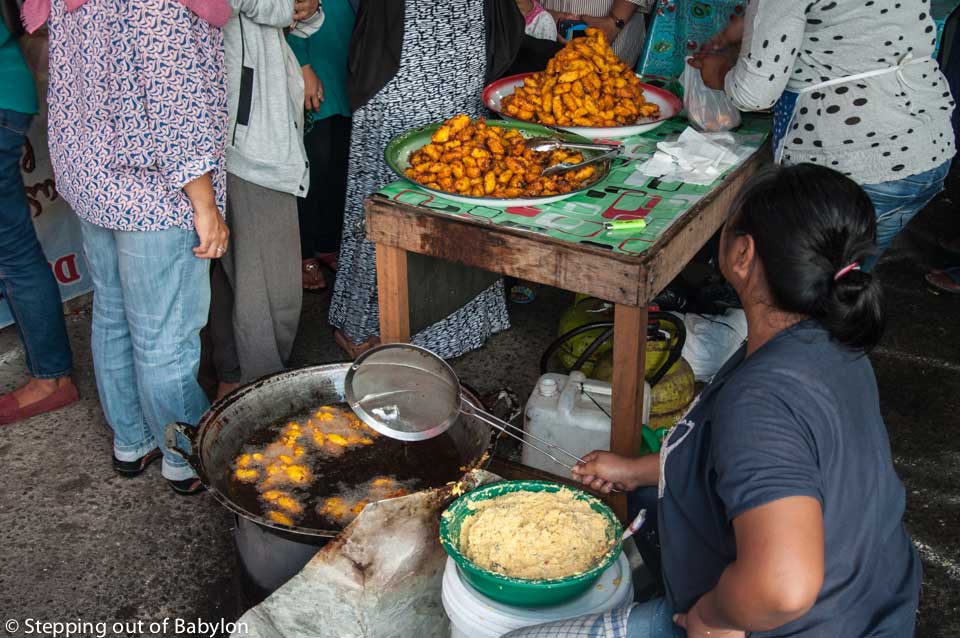
There are a few local eateries serving padang style food but run out of food around the middle of the morning. I try a few but didn’t find anything that stands up. For breakfast is possible to find at this eateries “gorengan”, deep fry banana, tempeh or chicken.

Tomok has a bigger concentration of local restaurants as also a small street market with fruits, nearby the ferry pier.

Tomok
Tomok, the other village that also has a boat connection with Parapat, isn’t much more than a street with avery small market, restaurants and shops… many of them selling souvenirs from Lake Toba
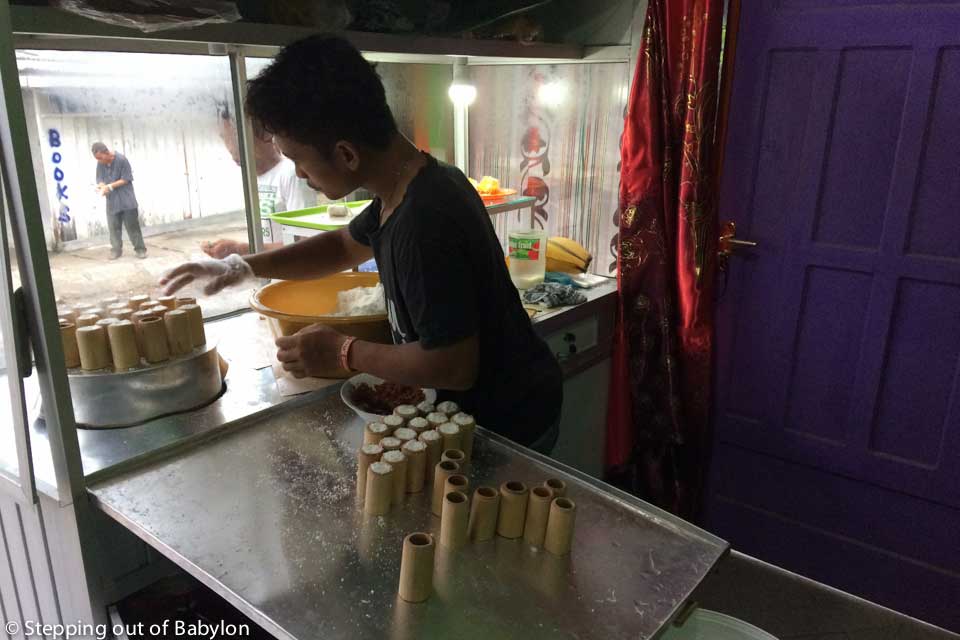
At the empty Tuktuk some sweet pop up in the end of the afternoon... a small shop open it's door to sell "putu bambu" a Indonesian sweet made form rice flour and with palm sugar, which are steamed inside a bambu and served with grind coconut
At the empty Tuktuk some sweet pop up in the end of the afternoon… a small shop open it’s door to sell “putu bambu” a Indonesian sweet made form rice flour and with palm sugar, which are steamed inside a bambu and served with grind coconut

How to move around in Samosir Island:

If you like to walk is possible to move around Tuktuk, as it is located in a kind of small peninsula with about 4 km perimeter.

But to go way from this area, even to Tomok, you gonna need a vehicle.

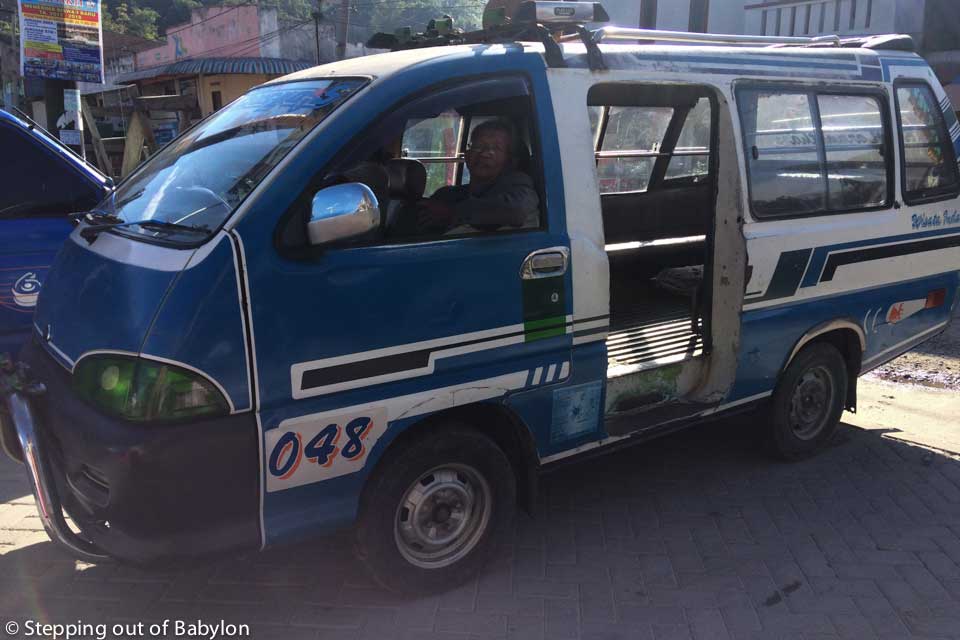
There are small buses along the road from Tomok to Pangururan.

Is possible to rent a scooter at Tuktuk but it will cost you 100.000 Rp a day (almost the double that you can find at others places in Indonesia) but with the tank full of petrol. Isn’t a good deal for you as you hardly empty the deposit in one day, only if you make a road trip around all Samosri Island… even so… and in the end of the day, if you still have half of the deposit with petrol, they don’t make any discount. So try to rent a scooter without the petrol included, as you can get a litter of 8.600 Rp just in front of Liberta Homestay.

Parts of the road are in good conditions others in bad and others are in works… all this make the 40 km from Tuktuk to Pangururan in a hard journey, but you can always take some rest in one of the many beaches along the way.

ATMs and Money exchange in Tuktuk:

Couldn’t see any ATM at Tuktuk but there are a few moneychangers.

How to reach Lake Toba/Tuktuk:

No matter if you came from Medan or from Padang/Bukitting you’ll need to stop at Parapat, the closest village from the lake that has boats to Samosir Island.

If you travel by bus, they will probably drop you along the main road, nearby the street that leads you to the pier. Probably there will be an angkot (local small buses) that take you to the boats.

At Parapat you have two options:

  • there are boats that departure from Ajibata to Tomok, that transport vehicles… but there’s no accommodation at Tomok but you can get an angkot that pass by Tuktuk
  • and there are boats just for passengers from Tigaraja to Tuktuk… and you can even ask them to drop you directly at your accommodation if it’s located away from the main pier. The boat ticket is 15.000 Rp, per person, each way.
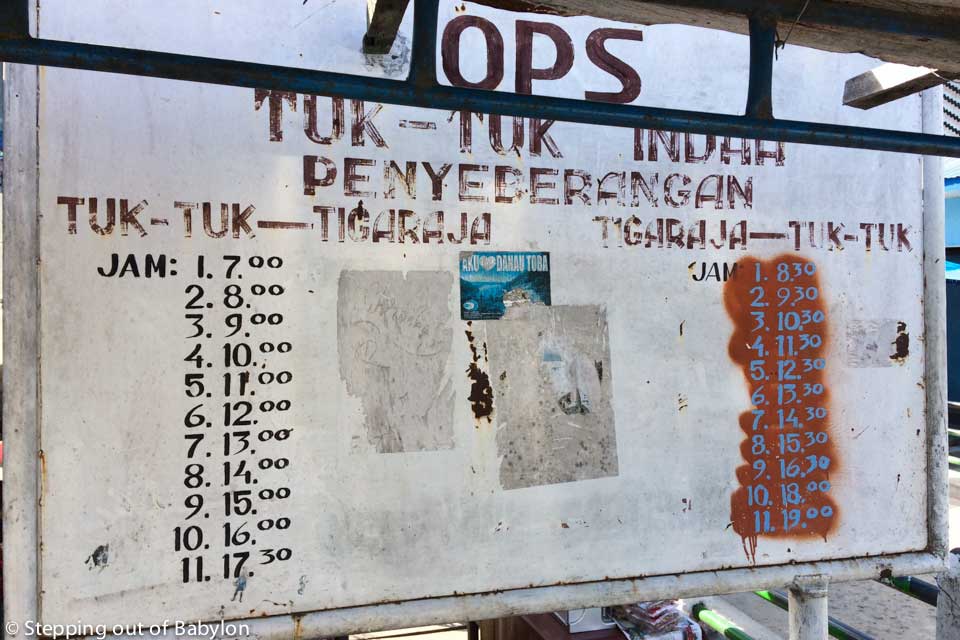
Boat schedule from Parapat to Pulau Samosir, and return
Schedule of the boats that link Parapat to Pulau Samosir

[columns] [span6]

"angkot" from Parapat's main road to the boat pier to Pulau Samosir
“angkot” from Parapat’s main road to the boat pier to Pulau Samosir

[/span6][span6]

Boat that link Parapat to Pulau Samosir

[/span6][/columns]

How to go from Lake Toba to Bukit Lawang or to Medan:

There is no way to go to Bukit Lawang without passing by Medan.

The best definitely is hire one of the tourist services available at all places and guesthouses at Tuktuk, that drop you directly at Bukit Lawang for 220.000 Rp per person. The car will wait for you at Parapat pier. This travel service is also available to the airport (Kualanamu International Airport) as also to Medan for 90.000 Rp per person.

But if you prefer, you can do the entire trip by local transport for 80.000 Rp…. but it takes you all day and a lot of energy. Here is the step by step to reach Bukit Lawang from Tuktuk:

  • You need to take the first boat at 7:00 a.m. It’s better to arrive 10 minutes before as the boat sometimes arrive earlier. Boat from Tuk Tuk to Parapat take between 30 to 45 minutes and cost 15.000 Rp.
  • At the pier, there will be angkot (local public mini-buses) that drop you at the main road, where the local bus to Medan passes every hour. The ticket cost 4.000 Rp.
  • Just wait at Parapat for the bus at the main road. The bus arrived at 8 a.m. at Parapat and took 5 hours to reach Medan. It will drop you at Amplas Terminal. The ticket costs 40.000 Rp. It’s an old bus, not very clean or comfortable and people smoke inside… fortunately was a trip without music.
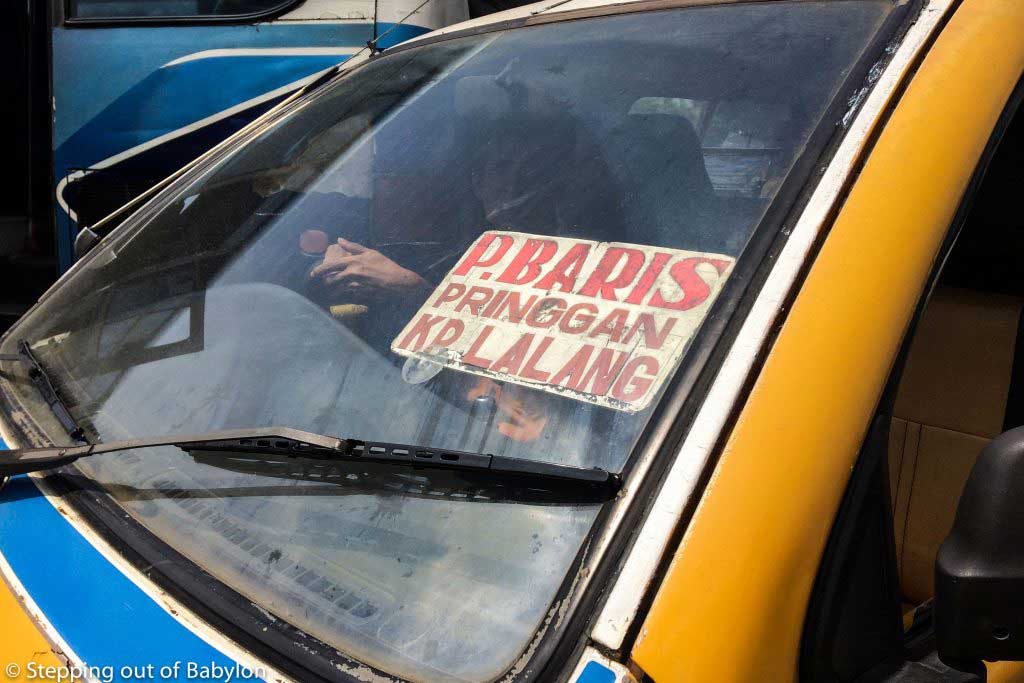
  • At Amplas Terminal, after you get ride of the ojek drivers, you’ll see a yellow angkot (mini bus). It has a sign saying “Baris” that is the name of the bus terminal nearby. But tell the driver that you want to go to Bukit Lawang and he will drop you directly at the place where the buses stop, at cross road Jalan Gatot Subroto/Pinang Baris Road. The angkot cost 10.000 Rp and the trip takes 1.45 minutes, as it needs to cross Medan from East to West, and traffic jams are common in Medan.
  • The public buses to Bukit Lawang departure every 15 minutes. They are orange colour and they stop just in front of the Mawar Bakery. That is an important reference point.
  • The trip takes more than 5 hours through a dusty and very bumpy road, along an endless palm oil trees landscape, in an old and crowded bus. The ticket cost 25.000 Rp. Pay only at the end of the trip to the driver’s helper. There are lots of people hanging around the place from the Bukit Lawang buses departure… stay way from everyone, as there’s a scam with the tickets involving people that are not working on the bus. Watch out your luggage.
  • It will drop you at Gotong Royong. From here you need an ojek to reach Bukit Lawang that is 2.5 km further. The best option is to ask a transportation from your guesthouse… believe me, after all this trip you’ll need this treat… and probably you’ll arrive close to the sunset, that makes more difficult to find your accommodation.
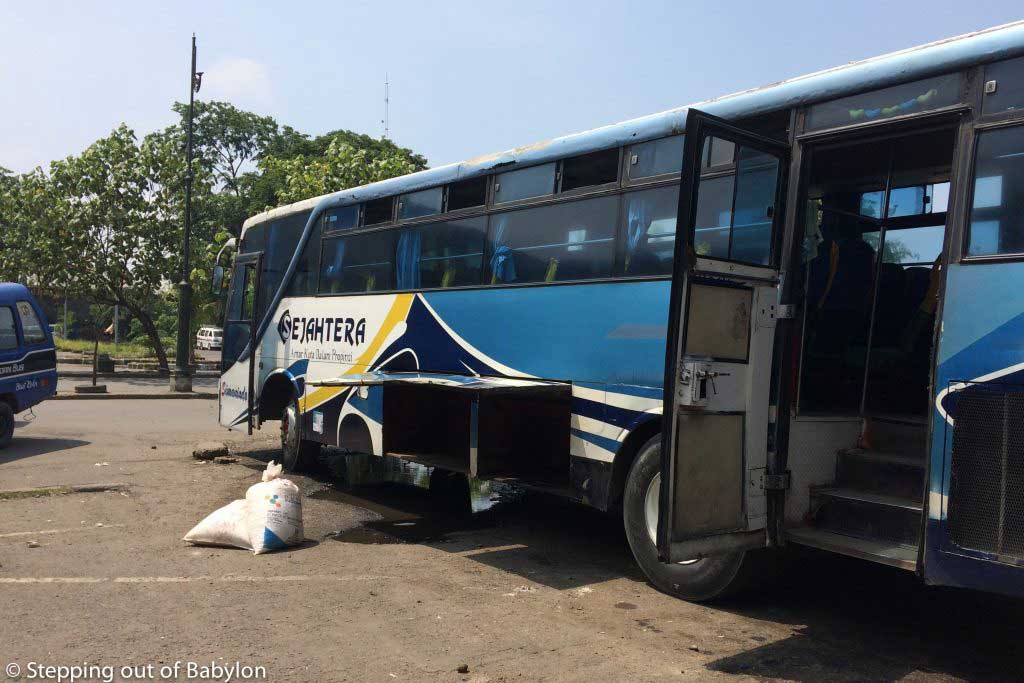
Local bus from Parapat to Medan (Amplas Terminal). It’s an old bus, not very clean or comfortable and people smoke inside
"angkot" that cross the city and drop you nearby the Pinang Baris Terminal, from where the bus to Bukit Lawang departure
“angkot” that cross the city and drop you nearby the Pinang Baris Terminal, from where the bus to Bukit Lawang departure

Bukittinggi… the lake, the valley and the food

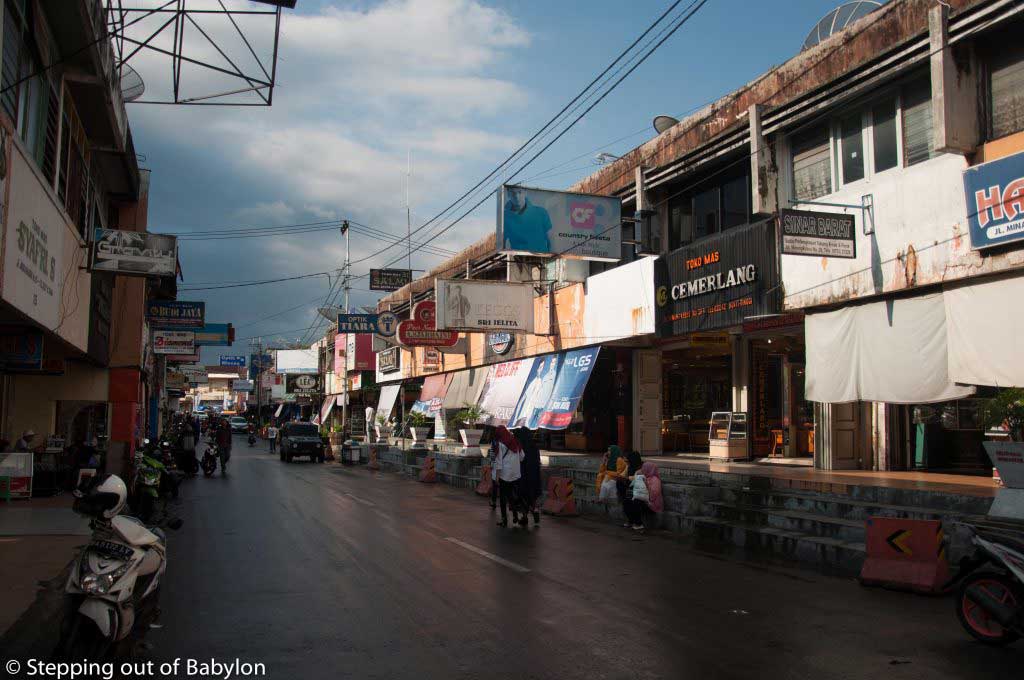
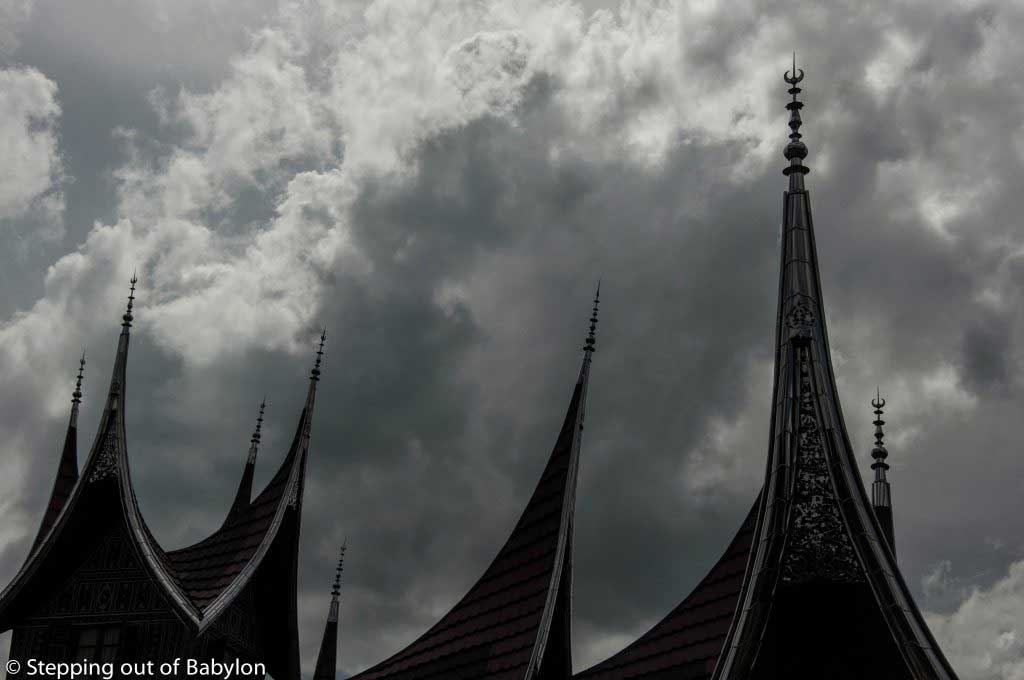
Bukittinggi, located in West Sumatra is the heart of the Minangkabau, an ethnic group that keep strong their traditions that are easily visible on the traditional architecture of wooden houses with the pointy roofs and by the less visible matriarchal society that is unique in Muslim communities.

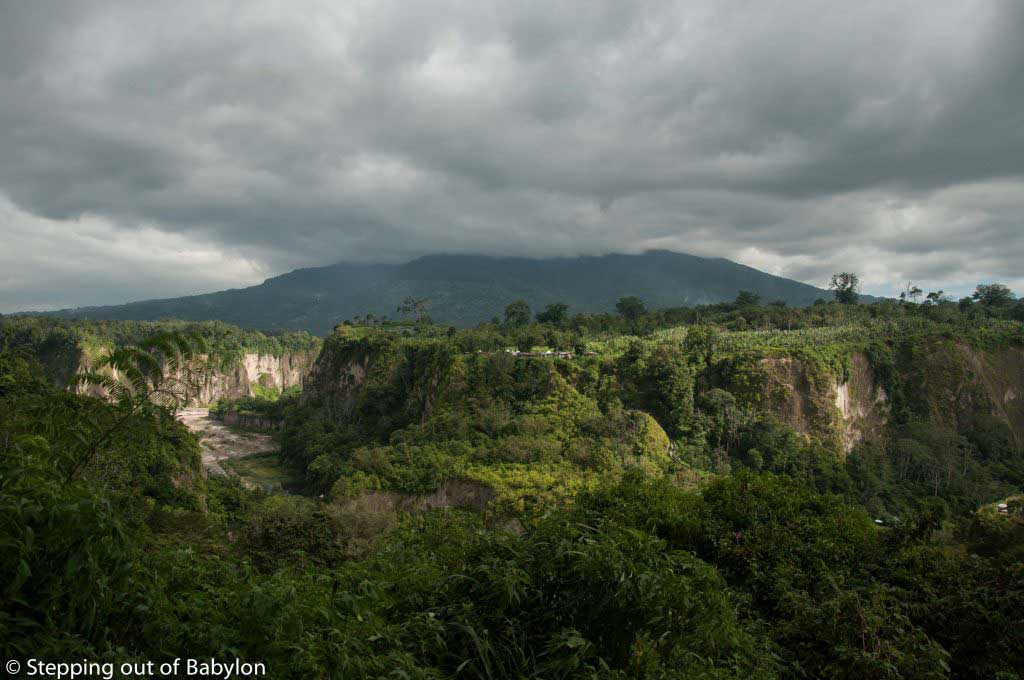
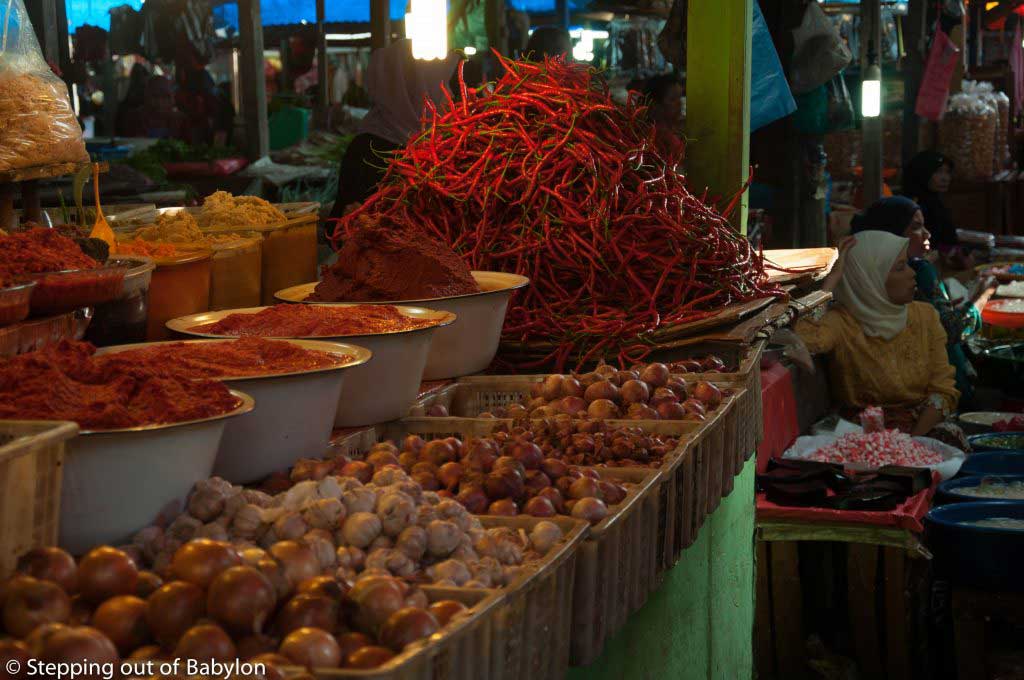
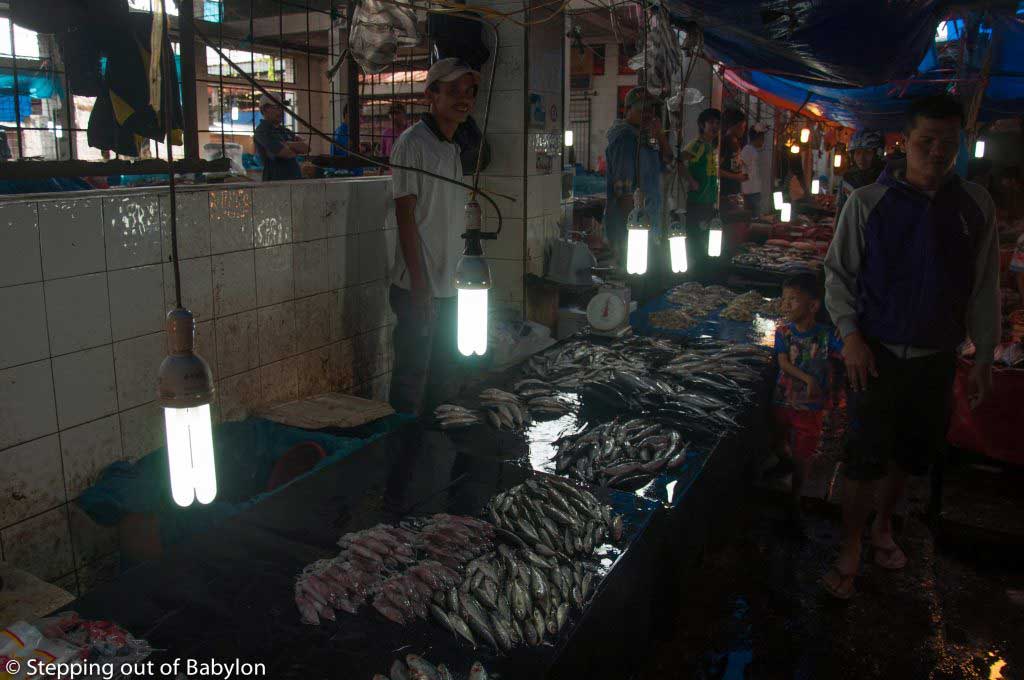
The city has a some attractions that are interesting and worth a visit, like the house of Mohammad Hatta were the first vice-president of Indonesia lived, a figure respected in the country and affectively called Bung Hatta; an old-fashion clock tower (Jam Gadang) left by the Dutch that marks the center of the city and you can’t avoid; lively markets especially the Pasar Bawah (lower market) with it’s narrow corridors, crooked stalls and filthy areas, all wrapped in a dim light where we are welcomed with curious smiles; the Panorama Park that is not much more than a viewpoint but that offer an privileged view to the Koto Gadang, a natural huge stone wall as also for Sianok Valley, a canyon where the narrow river that runs now feed fertile rice fields.

The city is dominated by the Mount Merapi, a volcano that is still active and recently had some explosions, altering the usual mild climate of Bukkittinggi to more clouds and rainy days (June 2017).

Mont Merapi, Bukittinggi

Sianok Valley, BukittinggiSianok Valley, Bukittinggi
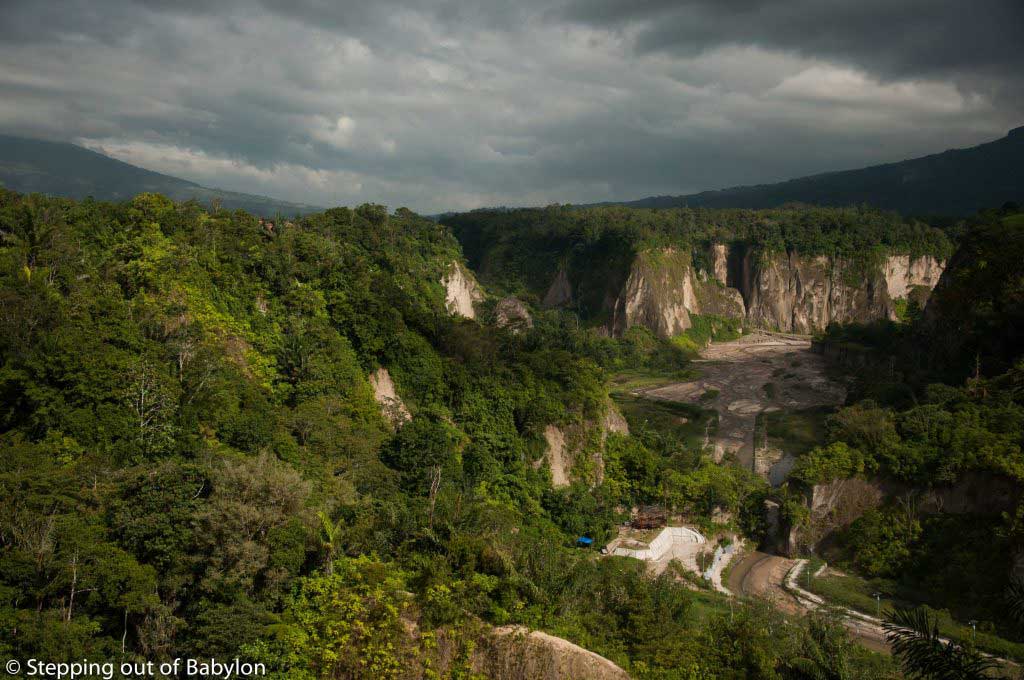
Koto Gadang, Bukittinggi

Bukittinggi
Bukittinggi
Pasar Bawah
Pasar Bawah… a lively market
Pasar Bawah
Pasar Bawah
Pasar Atas
Pasar Atas

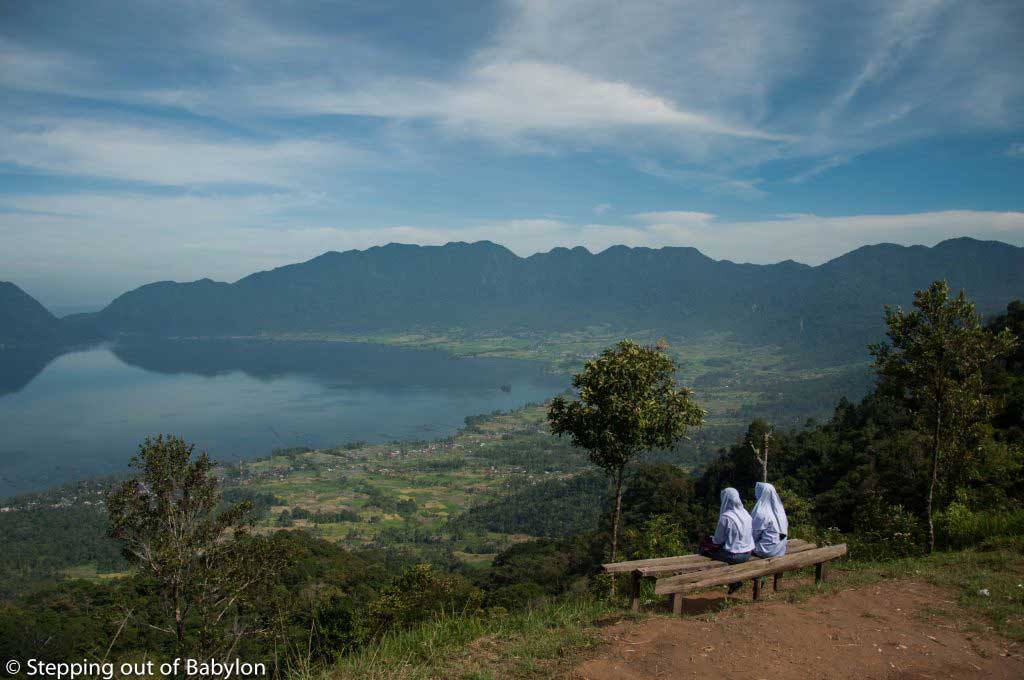
But maybe what attract people to Bukittinggi are the surroundings, with the Danau Maninjau on the top of the list. It’s a lake on the caldera of an extinct volcano located 20 kilometers from Bukittinggi that is a much more interesting view from the top and the Puncak Lawang that is a nearby hill that is quickly being transformed into an amusement park.

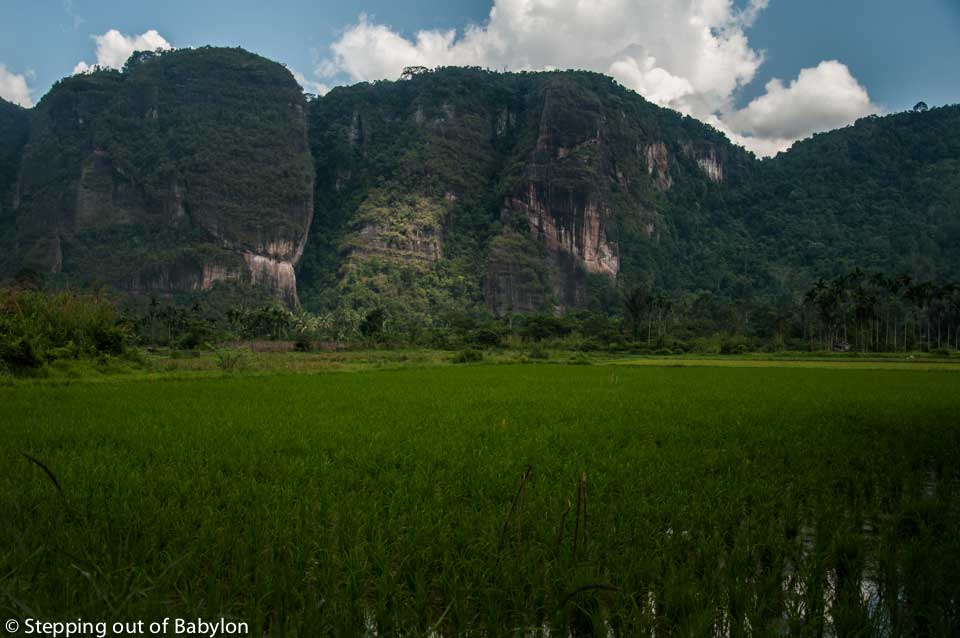
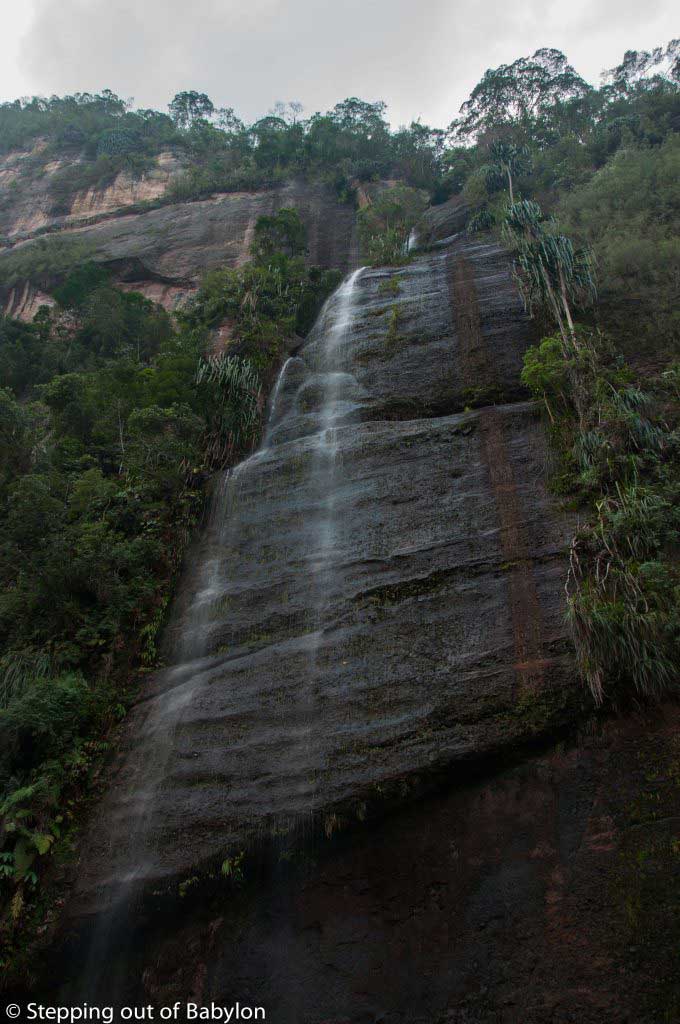
But the Harau Valley stands up from all attractions the around Bukittinggi, with its flat rice fields surrounded by huge vertical rock walls, with the top crowned by trees and vegetation. From these impressive walls, a few waterfalls create cool and refreshing areas that are a blessing, after the more than 40 kilometers scooter drive along intense traffic. The valley has a perfect image of quietness that is just disturbed by the lively chatting of the kids at the end of the school day.

Danau Maninjau
Danau Maninjau
Minang arquitecture nearby Danau Maninjau
Harau Valley
Harau Valley


Harau Valley
Harau Valley

Things to do in Bukittinggi and around:

  • Bung Hatta House (free)
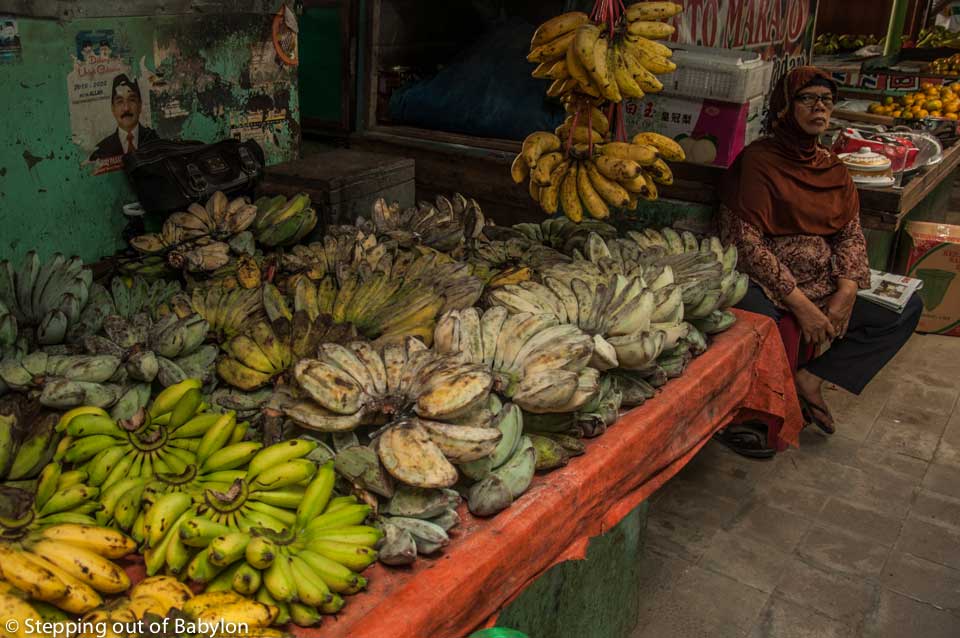
  • Pasar Bawah… fruits, vegetables, meat, fish, groceries… and Pasar Atas, more for stuff and uninspired souvenirs
  • Second-hand clothes market
  • Panorama Park (20.000 Rp) from where you have the best view to Mount Merapi, an active volcano
  • Sianok Canyon and Koto Gadang are free, and you just need to walk along the road that goes down to the river and turn left before the bridge, in a small alley between houses… but you can also reach there through the Panorama Park. To reach the closest viewpoint of Koto Gadang you need to cross a footbridge and then climb up a long stone staircase.
  • Danau Maninjang and Puncak Lawang viewpoint (10.000 Rp)
  • Harau Valley (free but maybe you need to pay to see some waterfalls)… you can find a few guesthouses (as also a camping area) along the only road the runs through the valley and from there make some hiking along the valleys


Where to sleep in Bukittinggi:

Along Jalan Teuku Umar you have several accommodations for different budgets, but the Hello Guest House is the best budget option with different kinds of rooms as also a dorm.

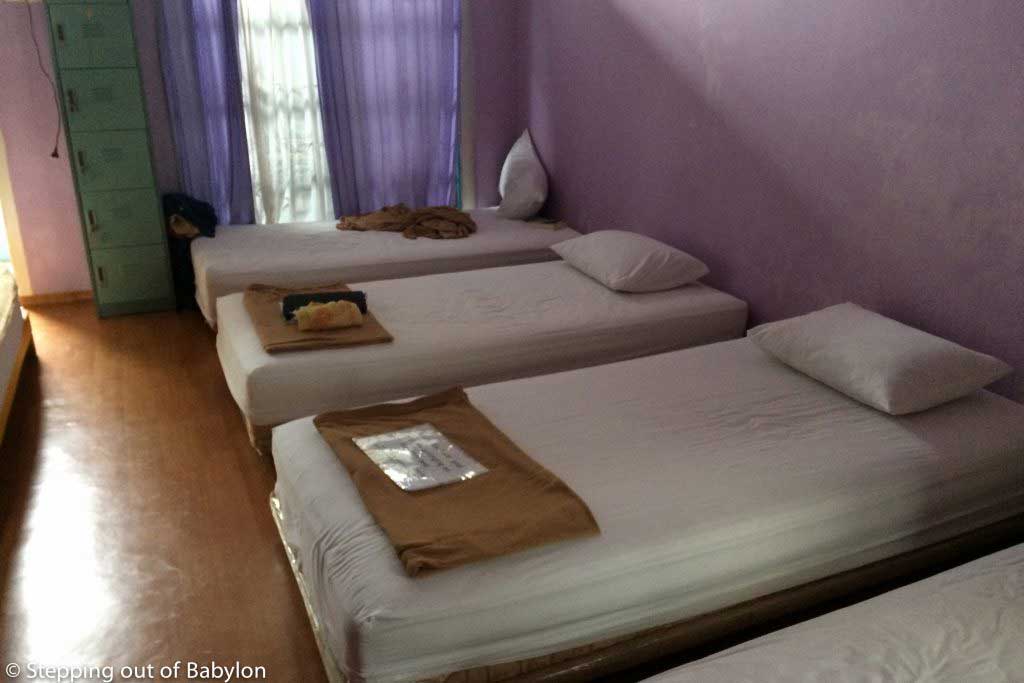
Is located a walking distance from all the attractions in the city, has a friendly staff and is very-very clean! The sheets are pure white, the towels are fresh and the blankets are washed for every new guest (an unusual thing in Sumatra).

It’s a family business and Ling, the manager, is very friendly and useful providing all the information about how to move around, what to visit, where to eat… all without pushing you for expensive options or tours. She also booked my the bus ticket without charging any commission! The atmosphere is simple and friendly.

There are different kinds of rooms for different prices. But the cheapest option for a solo traveller is the dorm, which has a bathroom inside, with hot water!!! It’s 75.000 Rp per bed, including a breakfast (western style) that change almost every day. Free tea and coffee all day…. and free bananas during the breakfast time!

Good wi-fi.

http://helloguesthouse.net/

There are quite some mosques at Bukittinggi and Hello Guest House is located nearby one of them… so you can be awake by the first morning calling around 4.30… but is like that all over the city, and is part of the deal if you are traveling in a Muslim country J
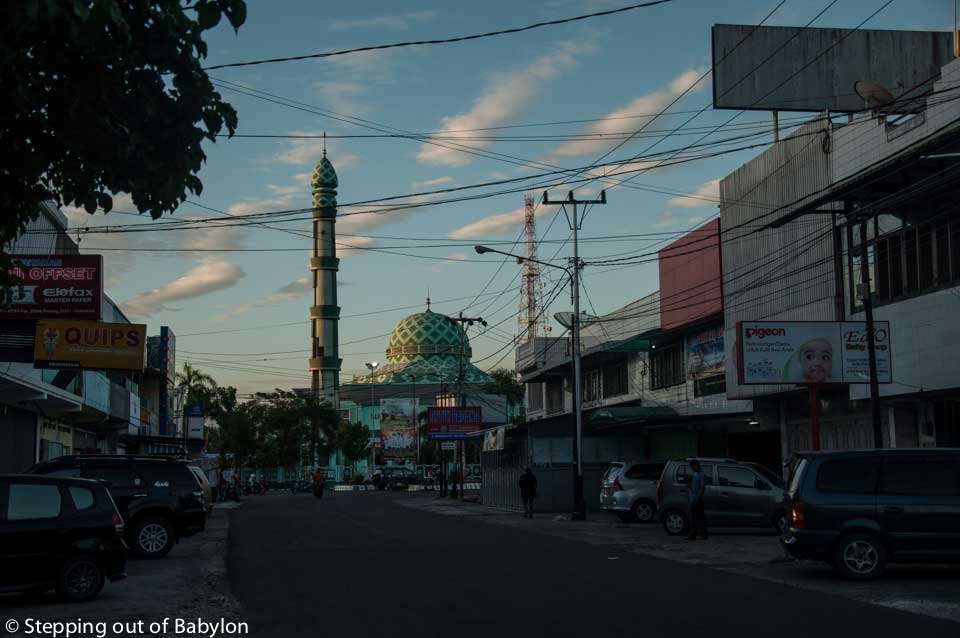
Strongly recommend this place that was one the reasons that made me stay longer at Bukittinggi than I had planned.
[columns] [span6]

Hello Guest House
Hello Guest House

[/span6][span6]

Hello Guest House
Hello Guest House

[/span6][/columns]

Where to eat in Bukittinggi:

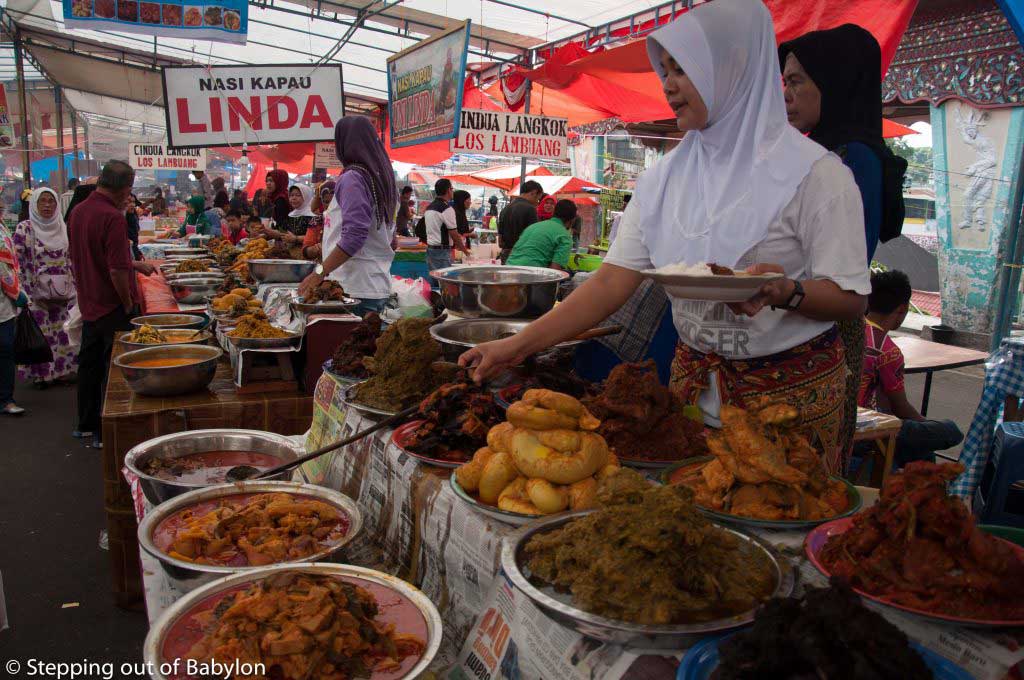
But for me, the most remarkable memory of Bukittinggi was the food!!! It was during the Ramadan, all pointed for closed restaurants and less interesting options, but Bukkittinggi presented a pleasant and delicious surprise: the Ramadan Food Market with a big choice of Minangkabau cuisine: the Rendang and Nasi Kapau.

After almost three months in Indonesia, this delicious cuisine still surprises me. Simple food but with a wide range of flavours and a spicy twist.

The rendang is basically a stew bit a huge quantity of spices that are cooked for many hours with coconut milk, resulting in a very dark and thick gravy that usually is cooked with meat but can also be found with egg.

The nasi kapau is basically a mix of dishes served with rice, in the same style of the nasi campur that can be found in Java, Bali and Lombok. Traditionally the nasi kapau is served with long spoons made from coconut and small portions of juicy curries are add to the dish that can have a mix of vegetables, egg, meat or fish… but where the unripe jackfruit curry is a must!!!

Out of the Ramadan period you can find the best rending at Rumah Makan Selamat (Jl A Yani). For nasi kapau, you must walk down, behind the Pasar Atas, through a staircase, pass the second-hand cloths market and turn right until you reach a ground with food stalls

See more about Indonesian food at: Masakan Padang… the most popular Indonesian cuisine


The Ramadan food market open from 2 p.m until 6 p.m…. as this is a fasting period is not possible to eat there, and everything is sold for takeaway, locally called “bungkus”… and even if you are starving avoid to eat or drink on the street to respect the other people fasting. This market is located on the top north of Pasar Atas, strategically located in from of a mosque!!!

Nasi Kapau at Ramadan Food Market at Bukittinggi
Nasi Kapau at Ramadan Food Market at Bukittinggi, traditionally served with long coconut spoons
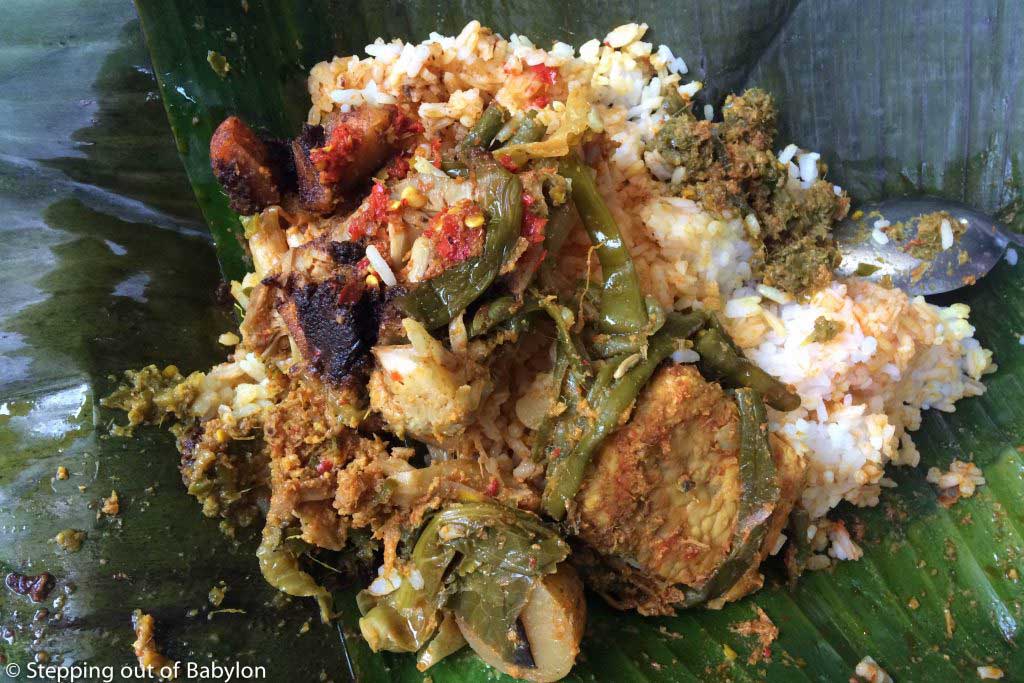
Nasi Kapau in "bungkus" style... packed in banana leaf for takeawya
Nasi Kapau in “bungkus” style… packed in banana leaf for takeaway… maybe it hasn’t the best presentation but it has a delicious taste
XXXXX
Looks like a meat sausage… but is filled with egg and tofu and is one traditional dish of Minang cuisine
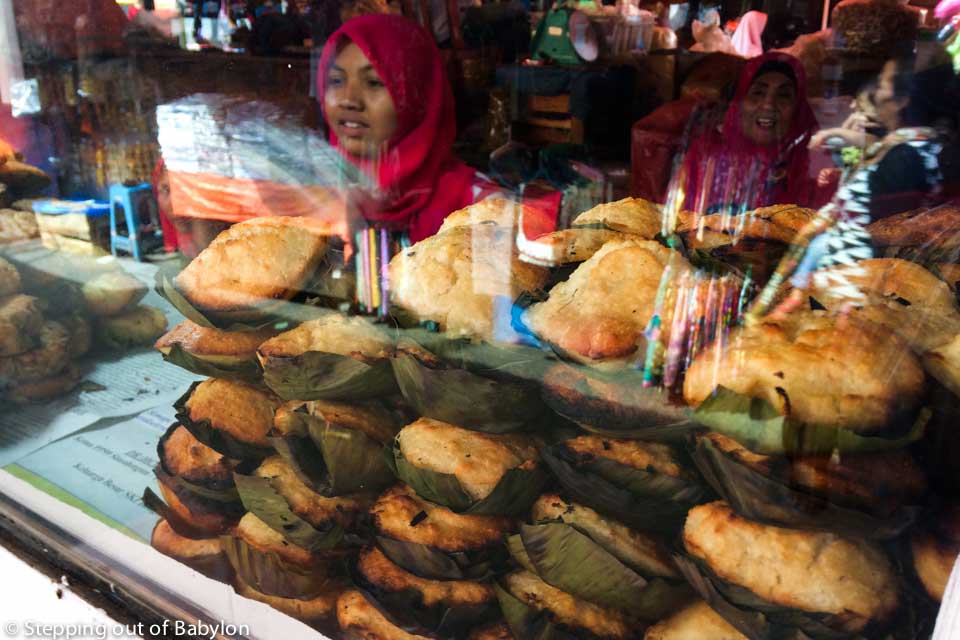
Bukittinggi… coconut cakes at Ramadan Food Market cooked directly over the fire wrapped in banana leaf

How to move around in Bukittinggi:

The city is small and easy to walk ad the most interesting things are close by from each other.

To explore the surroundings, like the Danau Maninjau, the Harau Valley or the Kings Palace is better to hire a scooter. Hello Guest House can arrange you a reliable scooter for 60.000 Rp a day.

There is also local public transport to both to Danau Maninjau and Harau Valley.

How to go from Bukittinggi to Lake Toba:

There are many local buses from Bukittinggi to Medan that pass by Parapat, the closest village from Lake Toba, but this are old buses without much comfort to make this 15 hours trip.

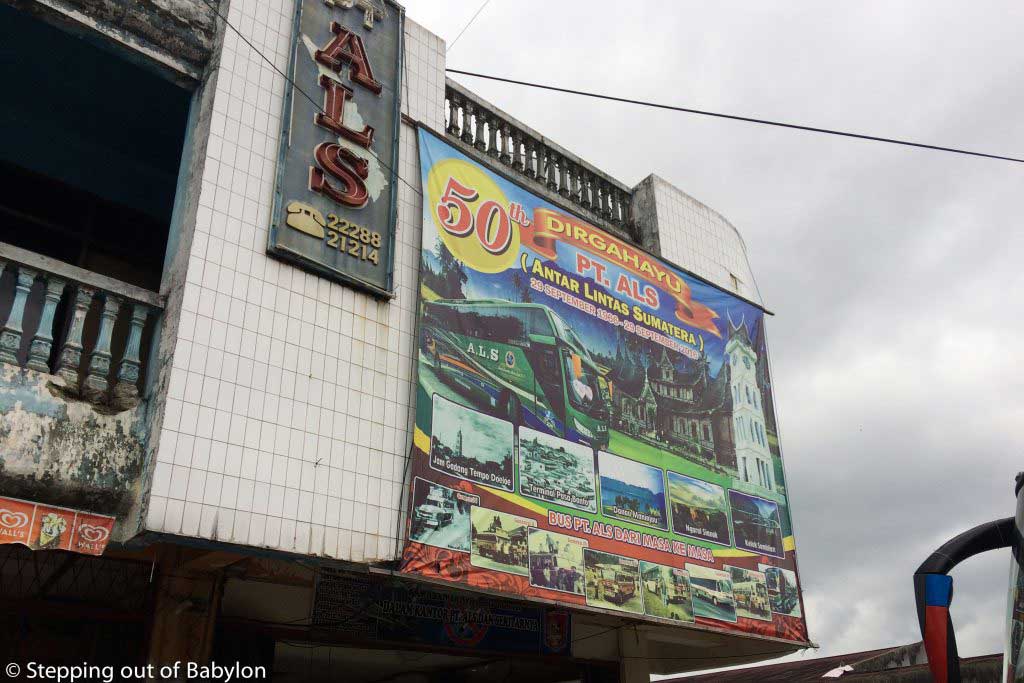
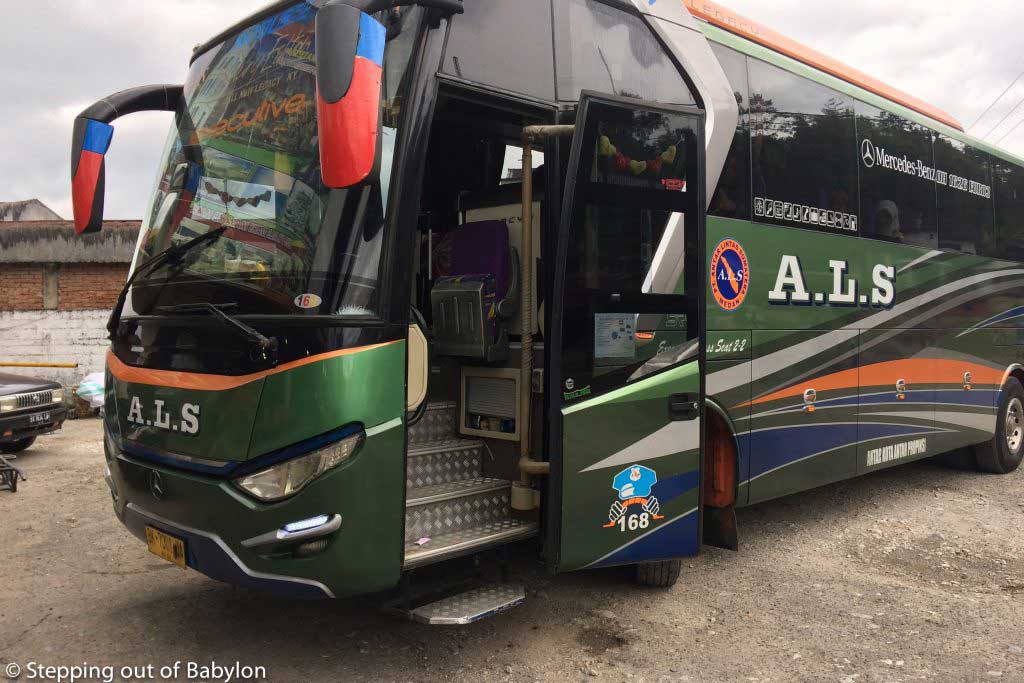
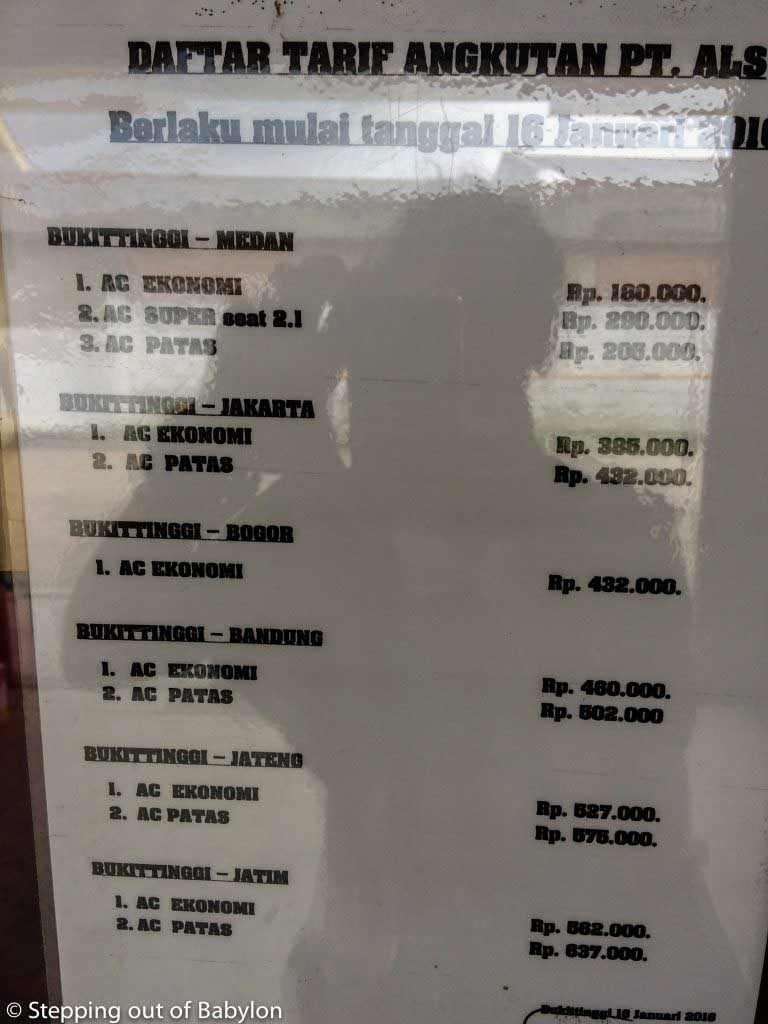
The ALS (Antar Lintas Sumatera) bus company has “executive” buses, daily at 5 p.m to Medan that will drop you at Parapat on the next morning around 7 am. The ticket cost 205.000 Rp (the same price as if you go to Medan).

It’s a modern and comfortable but the first part of the trip is along a very steep and winding road that made car-sick quite some people on the bus. The last part of the trip, the last two hours, the road crosses a very beautiful plateau, where the rural area is decorated with the Batak traditional houses. It really worth to be awake so soon!

The ALS buses don’t departure from the Bukittinggi Terminal but from the ALS office/counter at Jalan Soekarno-Hatta.

  • To reach ALS office you need to take an angkot (the red small mini-buses) that pass by Jalan Ahmad Karim that will drops you at Simpang Mandiangin (a crossroad on the way out of the city). The ticket is 3.000 Rp.
  • From there you can get another mini-bus, this time a blue one that drop you at ALS for more 4.000 Rp… or do it on foot as the distance is around 600 meters.

Watch out that the air-condition inside the bus is very cold, so bring proper clothes like a jacket, socks and a scarf to allow you comfortable sleep.

[columns] [span6]

ALS office at Jalan Soekarno-Hatta

[/span6][span6]

ALS "execituve" bus to Medan that pass by Parapat (Lake Toba)
ALS “executive” bus to Medan that pass by Parapat (Lake Toba)

[/span6][/columns]

How to go from Bukittinggi to Lake Toba: ALS bus fees from Bukittinggi

Masakan Padang… the most popular Indonesian food

Here are good news for vegetarian travellers!!!

“Padang” is one word that will cross your way as soon as you arrive in Indonesia, written at many signs and restaurant windows. Masakan Padang, that means Padang food, is the typical cuisine of the Minangkabau people of West Sumatra, and Padang is the capital of this region.

But you don’t need to travel so far to try this popular Indonesia cuisine, as the padang food is a bit everywhere in Sumatra, as also Java, Bali and Lombok…. and already become international, being easily found in neighbouring Asian countries.

As Sumatra is a dominant Muslim region, the Minangkabau (also called Minang) cuisine follows halal rules rigorously… so no pork!!!

The Masakan Padang restaurants are easily identified be the way the food is presented: in plates carefully piled for more dry food or in big metal bowls or trays for more juicy dishes, like curries. The plates are exposed at a window and visible from the outside, and most of these restaurants open from the morning until the evening making the food available during all day. The food is served at room temperature and just the rice is kept warm.

The Masakan Padang restaurants are easily identified be the way the food is presented: in plates carefully piled for more dry food or in big metal bowls or trays for more juicy dishes, like curries.
The Masakan Padang restaurants are easily identified be the way the food is presented: in plates carefully piled for more dry food or in big metal bowls or trays for more juicy dishes, like curries

The food is served at room temperature and just the rice is kept warm.
The food is served at room temperature and just the rice is kept warm. The tempeh on the left plate, as also the tofu on the top right side tray, are more common on the Masakan Padang restaurants in Java

The most popular curry of Masakan Padang cuisine is made with unripe jackfruit (gulai nangka) that is cooked with coconut milk
The most popular curry of Masakan Padang cuisine is made with unripe jackfruit (gulai nangka) that is cooked with coconut milk… a rich curry with a mix of sweet, spicy and fresh flavours. This kind of food is also available at the markets, most of the time just for take away

Serving systems

There are two types of serving in a Padang restaurant, the pesan (ordering) and hidang (serve) method. It took me time to understand how it works and sometimes I was surprised with the bill in the end, as a meal could cost 10.000 Rp or 50.000 Rp… without meat or fish dishes!!!

So the pesan is when the customer chooses the food from what is exposed at the windows, and the waiter takes a bit of each bowl and put on a plate with rice. This is the most common for people that are eating alone or at the more modest restaurants. At some restaurants is even the client that serves his own food. Depending on the number of dishes chosen, a meal like this can cost between 10.000 Rp and 20.000 Rp, for vegetarian/egg dishes.

The hidang is when all the dishes available are served in small plates that are placed at the client’s table… it can be more that ten different dishes. You don’t need to order anything and in the end, you pay just what you eat. This system is more common when people eat in groups, family or friends, as the portions served are much bigger that at the pesan system. I try once this system and a vegetarian meal cost me more than 50.000 Rp, for the same number of dishes!!!… but it doesn’t really worth if you are alone!

The takeaway system, locally called bungkus is always available at Masakan Padang eateries and is very popular with the locals. Most of the places just wrap the food in a paper (with one plastified side) but some restaurants the banana leaf is still used to parcel the food!!

The hidang is when all the dishes available are served in small plates that are placed at the client’s table... it can be more that ten different dishes. You don’t need to order anything and in the end, you pay just what you eat
The “hidang” is when all the dishes available are served in small plates that are placed at the client’s table… it can be more that ten different dishes. You don’t need to order anything and in the end, you pay just what you eat

So the pesan is when the customer chooses the food from what is exposed at the windows, and the waiter takes a bit of each bowl and put on a plate with rice.
So the “pesan” is when the customer chooses the food from what is exposed at the windows, and the waiter takes a bit of each bowl and put on a plate with rice… this is the cheapest option if you are alone, as the festive Padang meal, with a lot of dishes, is a huge portion just for one person

The takeaway system, locally called bungkus is always available at Masakan Padang eateries and is very popular with the locals, with the food wrap in banana leaf
The takeaway system, locally called “bungkus” is always available at Masakan Padang eateries and is very popular with the locals, with the food wrap in banana leaf. Maybe the presentation is not the most attractive but the flavours are delicious!

The Padang Meal

The typical Padang meal isn’t complete without these three things: rice (nasi), a juicy curry (gulai) and some green leaf boiled vegetables, that can be papaya leafs, spinach or cassava leaf. Then you can add meat, fish or egg, which can be fried or boiled, but usually seasoned with a red chilli sweet sauce. The omolete are also common, but sometimes they look more like a cake, cut in slices.

The sambals, a spicy sauce made from chillies, usually with a bright red colour but that can also be pale green, are a must in any plate, and give a special touch to any meal. The sambals in Indonesia are not extremely spicy.

The most popular curry of Masakan Padang cuisine is made with unripe jackfruit (gulai nangka) that is cooked with coconut milk and seasoned with ginger, galangal and turmeric, with the kaffir leaves and the lemongrass giving a fresh flavour to this delicious dish, that range from sweet to spicy tastes. The gulai nangka can also be cooked with green beans and cabbage.

a Masakan Padang meals with the "pesan" system... curry, vegetables, egg and sambal
a Masakan Padang meal with the “pesan” system… rice, curry, vegetables and sambal… as extra this plate has eggs in two versions: one seasoned with a red sauce that is fried after being boiled, and the other version is in an omolete, that is served in slices

Masakan Padang
Along the streets is also possible to find small improvised eateries that serve also food cooked at Padang style. Sometimes is not the most clean places but can have very tasty food… here is a mix of tempeh, jack fruit curry, tofu and a green vegetable that is very similar to young fern leafs. at the first plan is the “sambal” a spicy red sauce that is always present in this kind of food

Masakan Padang
the jackfruit after being cooked looked a bit like meat like the two pieces on the first plan. The rice is always plain, and the taste is given by the sauces from the curries and from the “sambal”

The sambals, a spicy sauce made from chillies, usually with a bright red colour but that can also be pale green, are a must in any plate, and give a special touch to any meal.
The “sambal” at a food market… a spicy sauce made from chillies, usually with a bright red colour but that can also be green, are a must in any plate, and give a special touch to any meal.

Dishes at Masakan Padang

The dishes available at the Masakan Padang restaurants change from island to island, and from region to region, according to the availability of the ingredients and the local taste: in Sumatra the curries are usually spicy, but in Java they are a bit sweeter and is common the presence of tempeh (fermented soybeans compressed in a tender block) and tofu (tahu) dishes, that are also easy to find at the masakan padang eateries in Bali and Lombok

At Sumatra the eggplant is widely popular, grilled and seasoned with a chilli sauce… looks spicy due to the red colour but n fact is sweet and very tender.

Cassava leafs with grind coconut and tumeric... a sweet combination
Cassava leafs with grind coconut and tumeric… a sweet combination very popular at Sumatra, the island from where the Padang food has it’s origin

At Sumatra the eggplant is widely popular, grilled and seasoned with a chilli sauce... looks spicy due to the red colour but n fact is sweet and very tender.
At Sumatra the eggplant is widely popular vegetable, grilled and seasoned with a chilli sauce… looks spicy due to the red colour but in fact is much sweet that expected

Tempeh with b
Tempeh with roasted peppers and small dry fish served in a restaurant at Padang… the dry fish with it’s strong flavour is part of the Indonesian cuisine, and is available a bit everywhere, not matter if it’s a place close of far away from the sea

unripe jackfruit and the spicy sambal, a spicy sauce made from chillies
unripe jackfruit on the tray, that always get an unattractive color, but is delicious and very tender. On the left is the “sambal”, a spicy sauce made from chillies… each eatery has his own recipe

About meat, the chicken is the most popular option and can se cooked in thick gravies, with a big range of tastes and colours, or in a drier version, boiled or fried. Beef and buffalo meat curries are also common at the Masakan Padang windows; the internal organs can also be present in these curries.

The fish is very popular, no matter if you are close from the sea or not, as the dry fish is quite common in Indonesia. Most of the times these are small fishes that deep-fry, looking very crispy and dry. The very small ones are used dried are sometimes mixed with tempeh or with vegetables, but is almost impossible to spot them at the plates or food trays. But the bigger fishes can be found fried of floating in thick coconut curries.

a very basic version of the typical Masakan Padang... some restaurants start to serve food in the morning and at around 2 p.m. there is not much to choose
a very basic version of the typical Masakan Padang… some restaurants start to serve food in the morning and at around 2 p.m. there is not much to choose… here is a vegetable curry, a deep fry made from potato, and omolee that look more like a slice of cake!!

Due to the big vegetarian choices available, like tofu, tempeh and green leaf vegetables that you can’t find in western countries, vegetable curries, jackfruit curries, and eggs in many ways… the Masakan Padang restaurants are a great choice for vegetarians!!!! Note that tempeh and tofu are more common in Java, being unusual to find it in Sumatra.

Due to the big vegetarian choices available... the Masakan Padang restaurants are a great choice for vegetarians!!!!
Due to the big vegetarian choices available… the Masakan Padang restaurants are a great choice for vegetarians!!!!

Curiously there is any sweets or deserts in the Padang restaurants… but I think that is part of the Asian style meals.

Padang… where is the food?!

“Padang” is one word that will cross your way as soon as you arrive in Indonesia, written at many signs and restaurant windows. Masakan Padang, that means Padang food, is the typical cuisine of the Minangkabau people of West Sumatra, and Padang is the capital of this region.

But visiting Padang, located in a traditional Muslim area of Sumatra, during the Ramadan, didn’t allow to experience the big choice of the restaurants with this kind of that put the name of this city on the gastronomic map of Indonesia.

But padang food is a bit everywhere in Indonesia, and despite the religious rules that push people to fasting during the day (more or less from sunrise until sunset), some restaurants still serve food during the day, although keeping the window where usually the food is displayed covered by a curtain as also the door, showing this way respect for the ones that are fasting. During the Ramadan, some of the restaurants that are open don’t allow the clients to eat there, selling food just for takeaway.

The Masakan Padang restaurants are easily identified be the way the food is presented: in piles at plates or in big metal bowls or trays for more juicy dishes, like curries. The plates are exposed at a window and visible from the outside, and most of them open from the morning until the evening. The food is served at room temperature and just the rice is kept warm.

Due to the big vegetarian choices available, like tofu, tempeh, green leaf vegetables, vegetable curies, jackfruit curries, and eggs in many ways… the Masakan Padang restaurants are a great choice for vegetarians!!!!

But beyond the famous cuisine Padang has more to offer, although it is not a charming or engaging city, that was seriously afecte by 2009 earthquake. But still there enough things to see during a couple of days.

Padang
Padang
Padang
Padang
an example of Minangkabau arquitecture at Taman Iman Bonjol

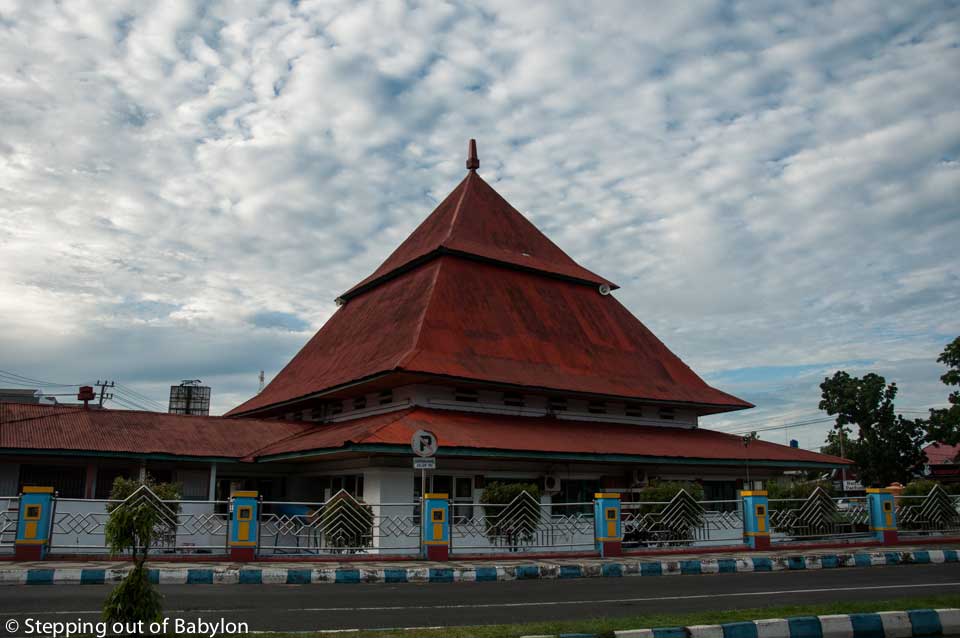
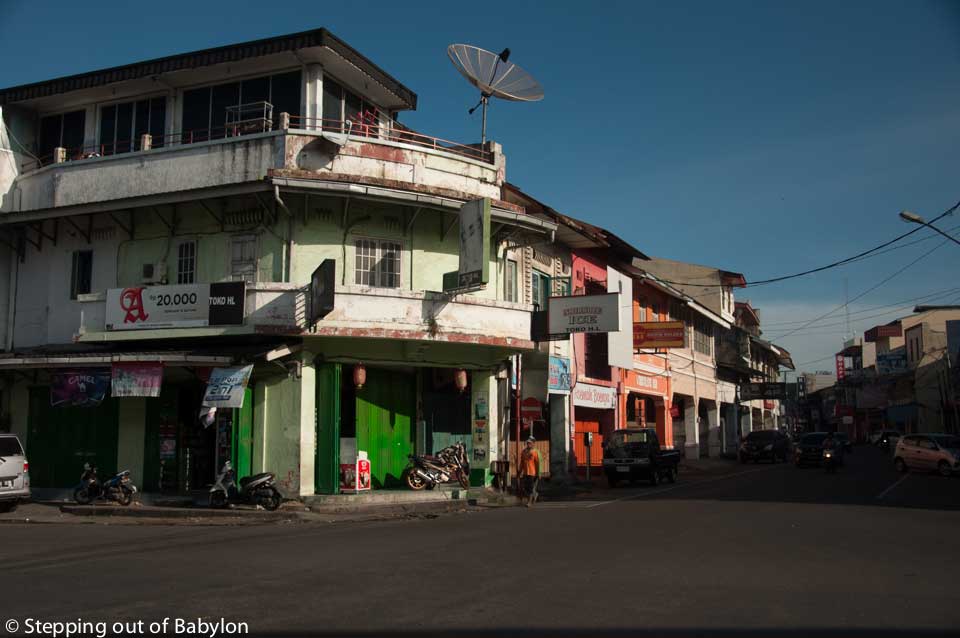
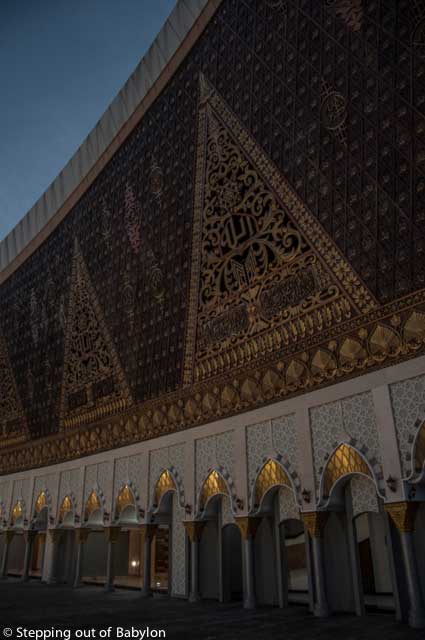
Masjid Sumatera Raya Barat, the grand mosque of West Sumatra!!! In fact is an impressive building that crossed my way just I arrive in Padang, even before the first sun rays! It’s a massive structure inspired on the pointy rooftop of the Minangkabau (an ethnic group from West Sumatra) houses.

Majid Raya Sumatera Barat
Majid Raya Sumatera Barat... a new mosque with a modern design that was for me the most interesting sightseeing of Padang
Majid Raya Sumatera Barat… a new mosque with a modern design that was for me the most interesting sightseeing of Padang
Majid Raya Sumatera Barat

As the Ramadan time stole a bit the life of the city, with many shops closed, including many restaurants, was necessary a bit of walk to explore the other side of Padang. There’s a big Chinese community, even a neighbourhood identified as Chinatown with the traditional gate. Here the life runs at the usual pace, away from fasting traditions, and with markets and restaurants working normally.

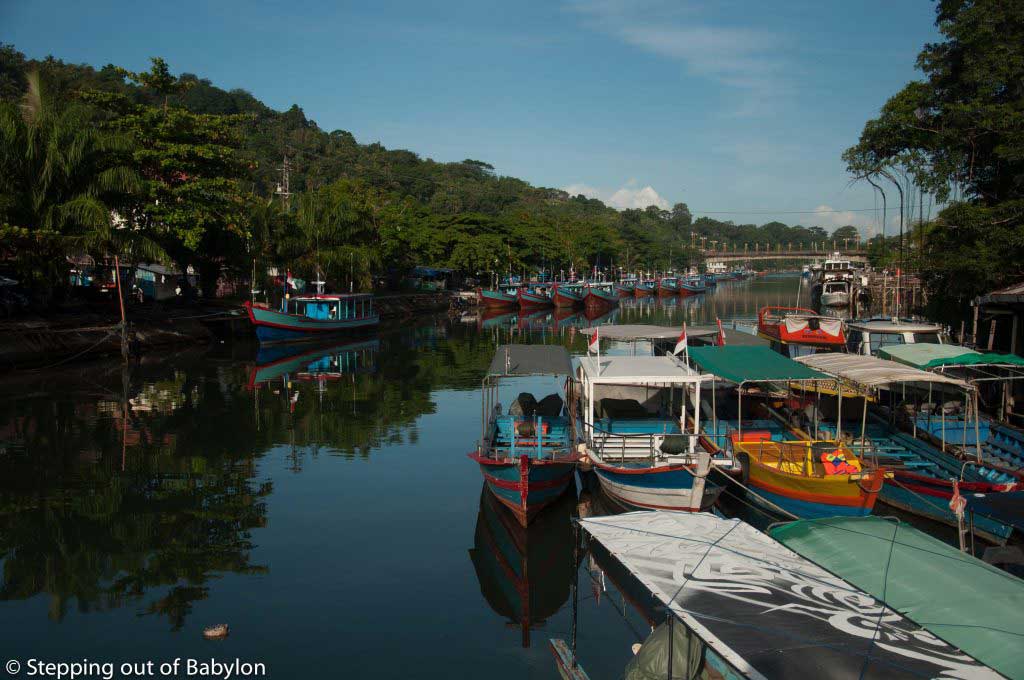
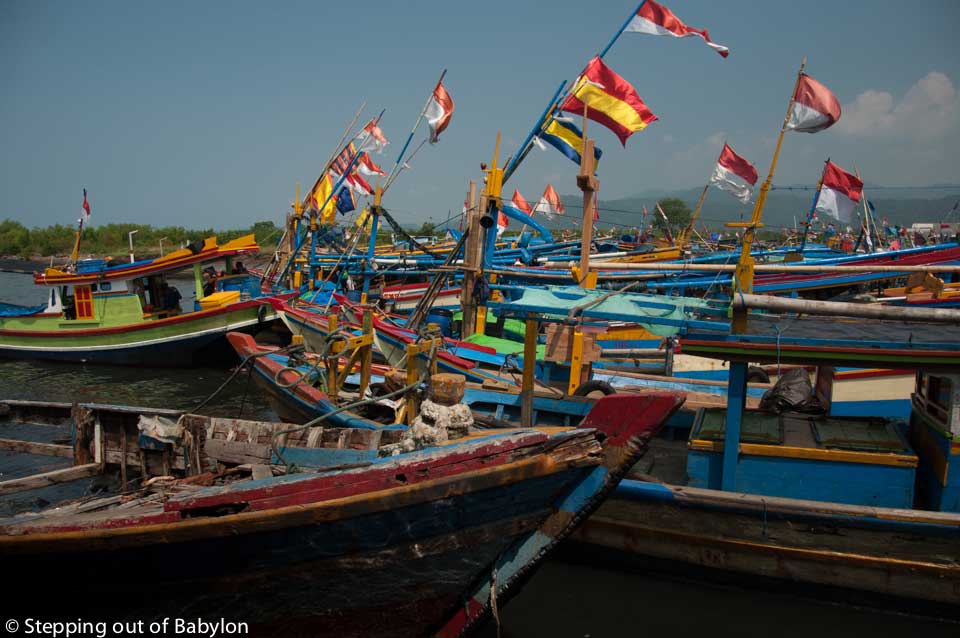
Nearby the Chinatown, along the Jalan Batang Arau can be found what remains of the Dutch presence here… not much more that a few warehouses and buildings. Some of them are abandoned and others were transformed into bars and restaurants that are closed during the day, giving an sad feeling to this riverside area, despite the colourful fishing boats that are aligned along the riverside, known as Dutch Harbour.

Padang's Chinatown, that during the Ramadan keep the usual pace, but where many restaurants keep a curtains covering the windows to respect the muslim fasting during this period
Padang’s Chinatown, that during the Ramadan keep the usual pace, but where many restaurants keep a curtains covering the windows to respect the muslim fasting during this period
Padang’s river front… old Dutch Harbour

But the Ramadan despite bringing fasting and closed restaurants also has the bright side: the Ramadan food markets!!!! Usually improvise street-market that just run during this season, that open during the afternoon selling food, some of which can only be found during the Ramadan, where people come to buy the food to break the fasting as also for the last meal before dawn, that impose the fasting again. So these markets are a delight for the senses and a temptation to everyone, although can be impolite eating this meals, snacks or sweets on the street, before the sound of the siren marking the end of the fasting.

At Padang, the Ramadan treats, many of them homemade, can be found in many streets between 4 and 5 p.m., but at Taman Iman Bonjol, a small park at the center of Padang where people play sports, hang out and where lots of kids play, where is located the Ramadan Food Market.

Ramadan Food Market at Taman Iman Bonjol


But with or without Ramadan, the markets are always the center of the activity in any Indonesia city, and Padang is not an exception! The Pasar Raya, the main market in the city, is a group of a few buildings that didn’t look inviting to visit. But outside along the Jalan Pasar Raya is where everything interesting happens… a street crowded with sellers, hawkers, people and traffic… clothes, fruits, fish and tasty food… busy, colourful and vibrant of activity.

Impossible to be unnoticed here!!! From everywhere the usual “hello” and “where are you from?”… Portugal?!?! Cristiano Ronaldo! 🙂

Pasar Raya
Pasar Raya
Pasar Raya
Pasar Raya
Pasar Raya
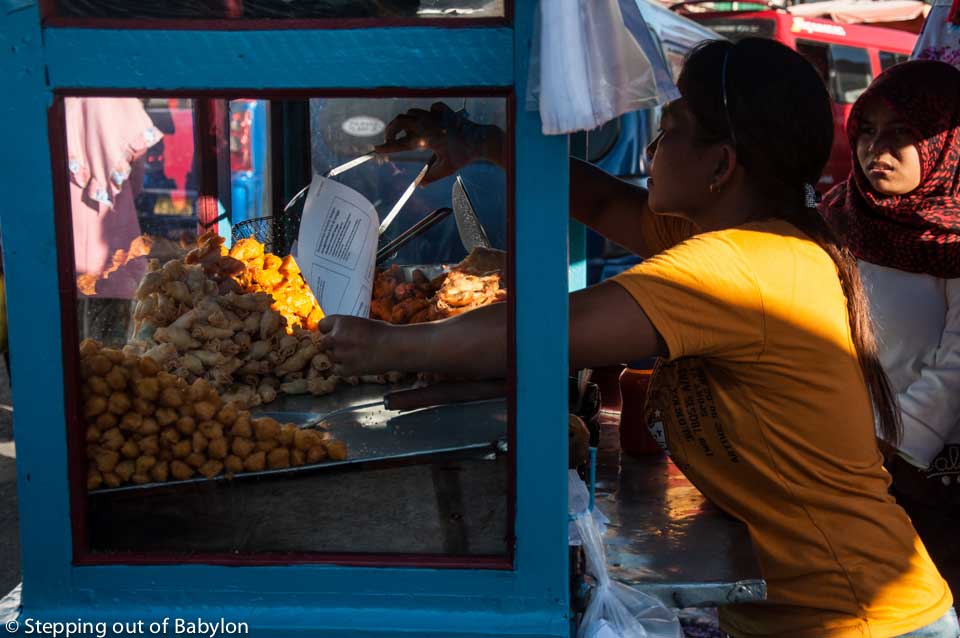
Padang street food
street food at Pasar Raya… delicious deep-fry snack made form corn and seasoned with kefir leaf.

Where to sleep in Padang:

Most of the people just stay in Padang on the way to Mentawai Island, but still, there are many accommodations in the city for different budgets. I choose one with a dorm as the prices at Padang are a bit height that the usual in Sumatra.

The Brigitte House, as different kinds of rooms, as also a dorm with 4 beds… is a nice place with good conditions, a balcony, a rooftop and is located in a quiet area. The staff is friendly but the owner can be a bit distant and indifferent to the guests, particularly the ones that are not buying one of the many tour pack available at the guesthouse. I don’t miss the place but the price was attractive considering other options in Padang. The bed at the dorm, with air-con, safe lockers and breakfast included is 95.000 Rp a day.

https://brigitteshousepadang.com/

Brigitte House
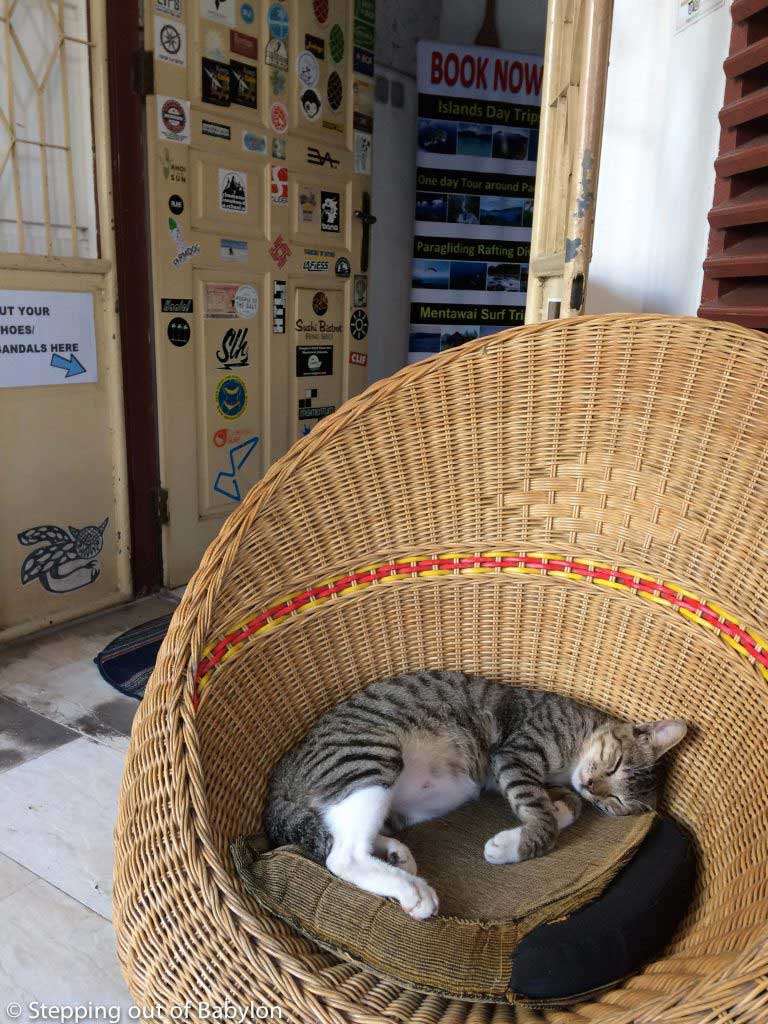
Brigitte House… the cats are the coolest thing here!!!

Where to eat in Padang:

Ramadan… most of the places are closed, that make the visit of the most famous Indonesian cuisine a bit odd experience. But on the other hand, the Ramadan creates a curious phenomenon: the food markets that show up on the streets, some organized some very informal, during the afternoon and last until five or six in the evening. It’s a place where people come to buy food, already cooked, looking for treats to break the day fasting and having the next morning meal already in mind. It’s a delight for the senses, with a huge variety of Indonesian cousin, where is also possible to find types of food specially prepared for this season.

At Padang, nearby the Taman Iman Bonjol, a park chosen by local to chill with lots of kids playing, there’s a market area with delicious food!

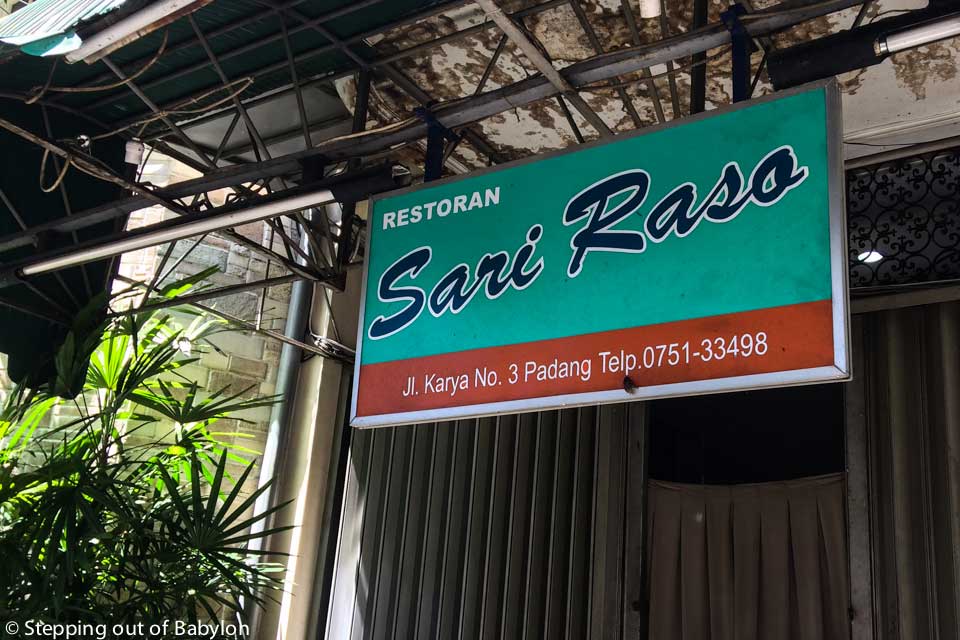
But during the day, there are many other options to try the Padang food, locally called Masakan Padang. Yet, most of them were closed during the Ramadan, so I just found two of the top choices restaurants open: Restoran Sari Raso (at Jalan Karya, 3; open from 10 a.m. to 7 p.m.) and Rumah Makan Pagi Sore (Jalan Pondok, 143; open from 7.30 a.m. to 9 p.m.).

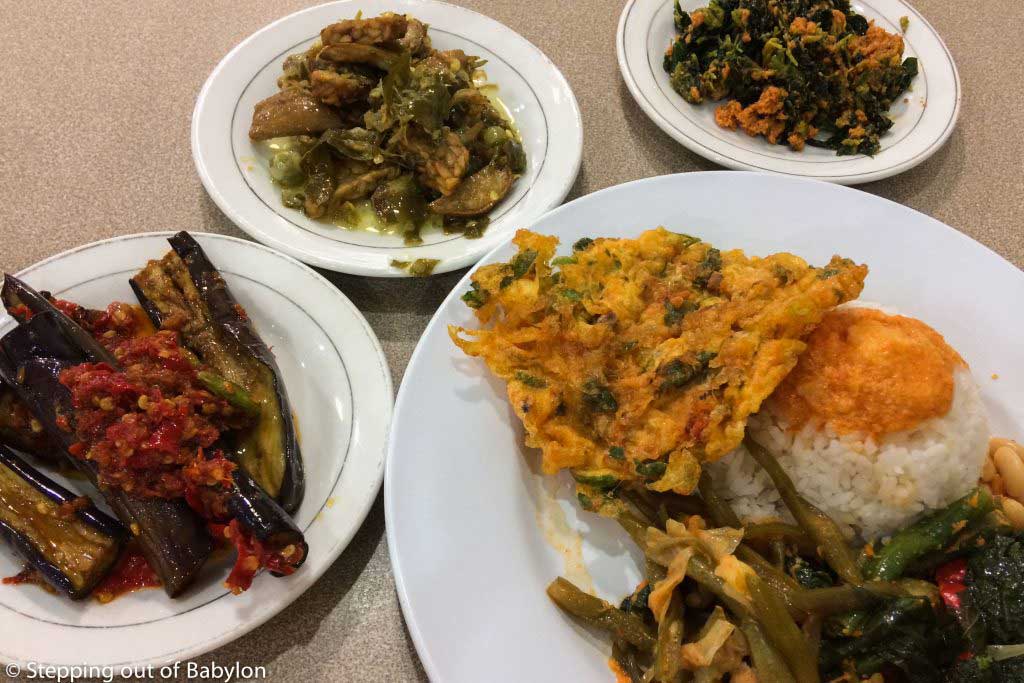
From this two eateries just have the opportunity to try the Sari Raso that is famous also for the wide range of vegetable dishes. The place during the Ramadan looks closed but behind the curtain that covered the door there’s delicious food served in an informal atmosphere. If you seat and ask for 4 or 5 dishes, hidang style, you may pay something around 50.000 Rp, just for vegetable and egg dishes. It’s a big portion of off just for one person, but you also have the pesan system, where the food you choose is served on a plate with rice, and this will cost around 15.000 Rp.

Sari Raso... delicious food, with a lot of vegetarian option... one of the few masakan padang restaurant that was open during the day at Padang
Sari Raso… delicious food, with a lot of vegetarian option… one of the few masakan padang restaurants that was open during the day at Padang
A delicious meal at Sari Raso Restaurant... a reference of Padang food
A delicious meal at Sari Raso Restaurant… a reference of Padang food

How to move around Padang:

There are many types of angkot (public transport) in Padang, and the type of vehicle as also the colour indicates the route/destination. It’s not easy to understand how this system works, but there’s a big concentration of this angkot nearby Pasar Raya… and there you must tell to the drivers about your destination, and wait until one point you the right vehicle. Is not easy and it takes time and patience, as almost anyone speaks English, and you going to feel how useful is to know a few words of Indonesian!!!

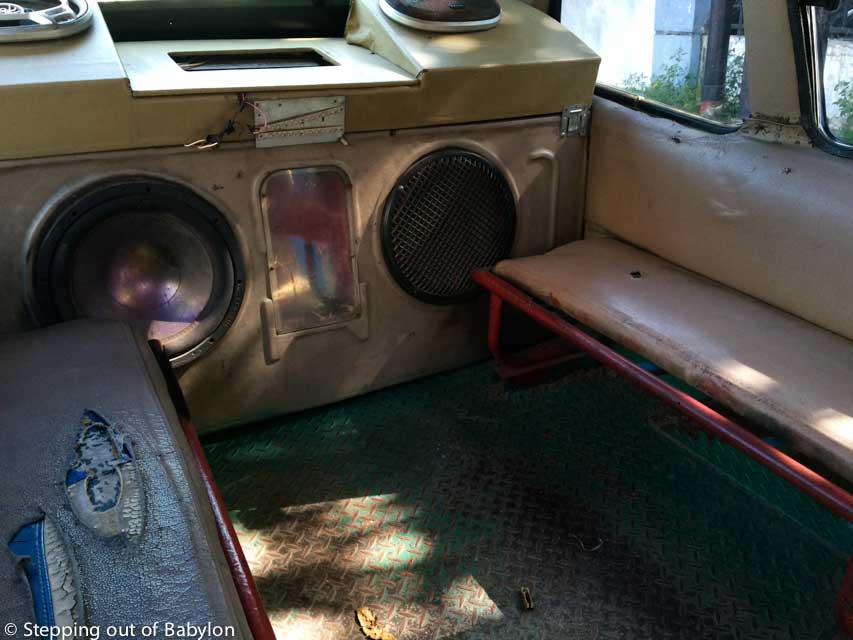
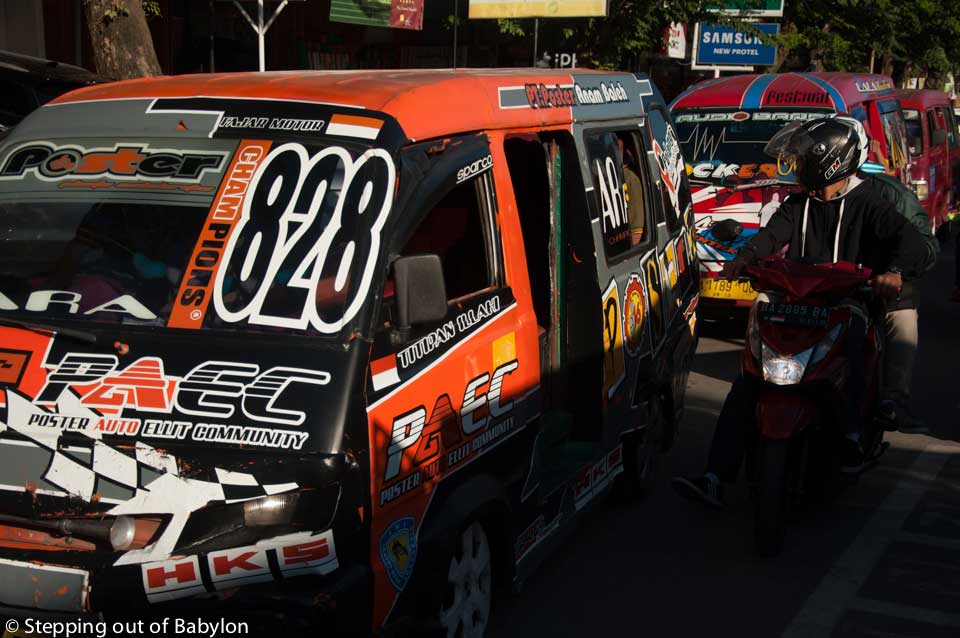
For some strange reason, most of the public transport vehicles at Padang are personalized with eccentric decoration and always have a blasting sound system that can transform a trip in hellish experience!!! Sometimes these angkots are very old, dirty and in bad conditions, but nothing looks to affect the sound system, which sometimes is the only thing that is not decrepit.

But to make things easy, there are also the TransPadang, modern and confortable buses that have a number according to the route, as also specific bus stops (bus halt) that are easy to identify. A TransPadang trip cost 3.000 Rp.

Sometimes these angkots are very old, dirty and in bad conditions, but nothing looks to affect the sound system, which sometimes is the only thing that is not decrepit.
the public transport in Padang have a "particular" look
the public buses in Padang have a “particular” look


See also: Masakan Psdang… the most popular Indonesian cuisine

Bengkulu… a stopover on the long Sumatra bus trips

For a tourist, there isn’t any reason to stop in this city, on the south cost of Sumatra, through is the most important transport hub on the way from Bandar Lampung to Padang, and due to the bus schedules is probably necessary to stop one night in Bengkulu… that what happen to me, and I just stay the obligatory time, one evening and one morning, to follow to the next destination: Padang.

There’s a fort left by the British colonization, a long beach (Pantai Panjang) to see but not to swim, a huge market (Pasar Baru Koto) that during the Ramadan is numb, a British fort very well preserved (Fort Marlborough), there’s an interesting mosque (Majid Jamik) design by the President Soekarno that spent here his 10 years of exile during the Dutch colonization, there are friendly and smiley people but there’s also a language barrier, as Bengkulu is not used to receive the visit of foreigners and not many people speak English.


BengkuluBengkulu

Majid Jamik design by the President Soekarno that can be considered the center of Bengkulu
Majid Jamik design by the President Soekarno, during his exile at Bengkulu, that can be considered the center of the city
Fort Marlborough left by the British presence at Sumatra
Fort Marlborough left by the British presence at Sumatra… the most significant monument at Bengkulu, very well maintained and can be visited for free
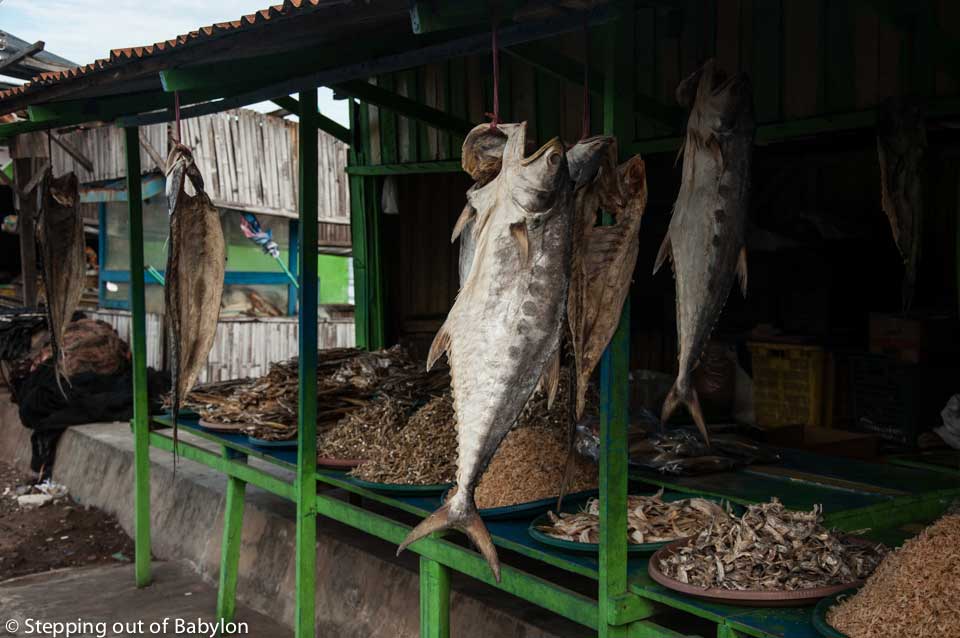
Fish MArket
Pasar Ikan Malabro, an Impoverished area nearby the sea…. a place that get alive later in the afternoon with street food

Where to sleep in Bengkulu:

The Vista Hotel is far from being an attractive place, but is a good choice due to the prices and especially by location, very close by the Travel Companies… in fact just next door of San Travels, from where you can take buses to Padang.

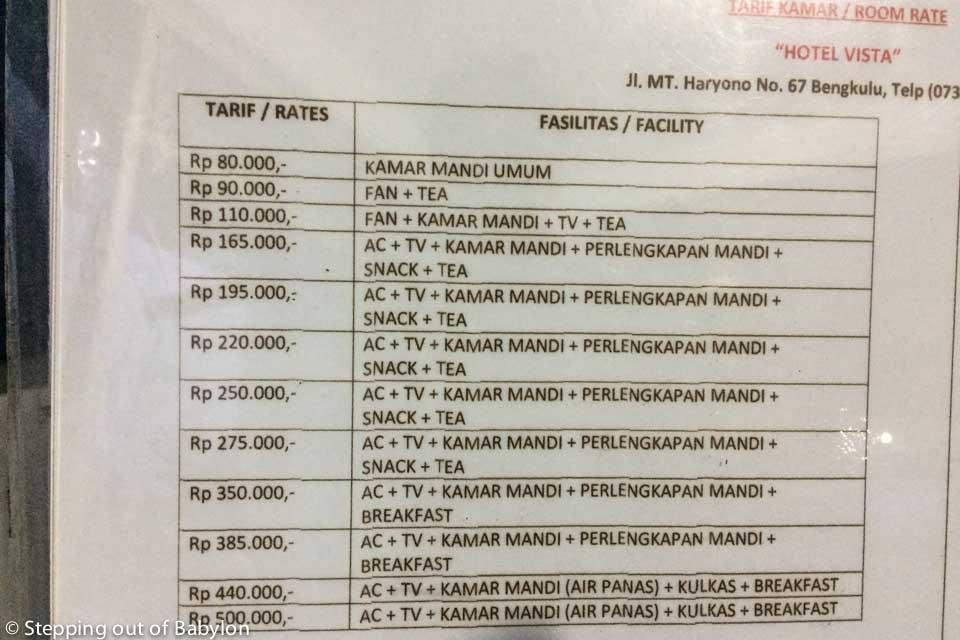
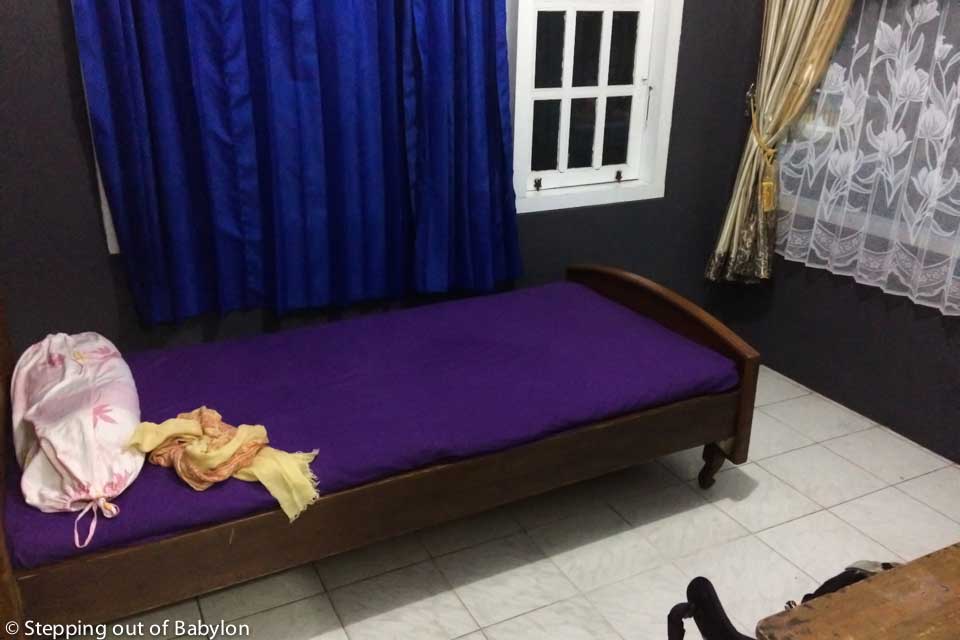
I stay in a single room, shared toilet, without air-con or fan, for 80.000 Rp… this is the cheapest option at Vista Hotel. The place is clean, a bit decadent but still reasonable to spend one night. Choose one room away from the main road, as the traffic noise is quite intense.

No wi-fi.

The staff doesn’t speak English.

Address: Jl. MT. Haryono No. 67, Bajak, Kota Bengkulu
Phone: (0736) 20820

[columns] [span6]

Vista hotel fees... there is no wi-fi and the staff doesn't speak english
Vista hotel fees… there is no wi-fi and the staff doesn’t speak english

[/span6][span6]

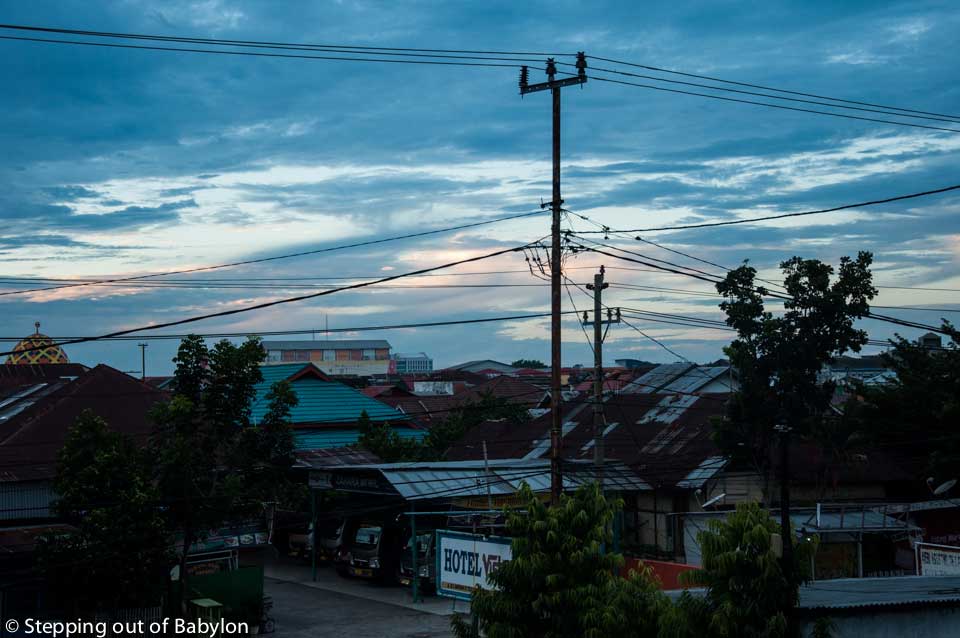
Vista Hotel... single room. A bit depressing but just next door from the San travels bus parking
Vista Hotel… single room. A bit depressing but just next door from the San travels bus parking

[/span6][/columns]

How to go from Bengkulu to Padang:
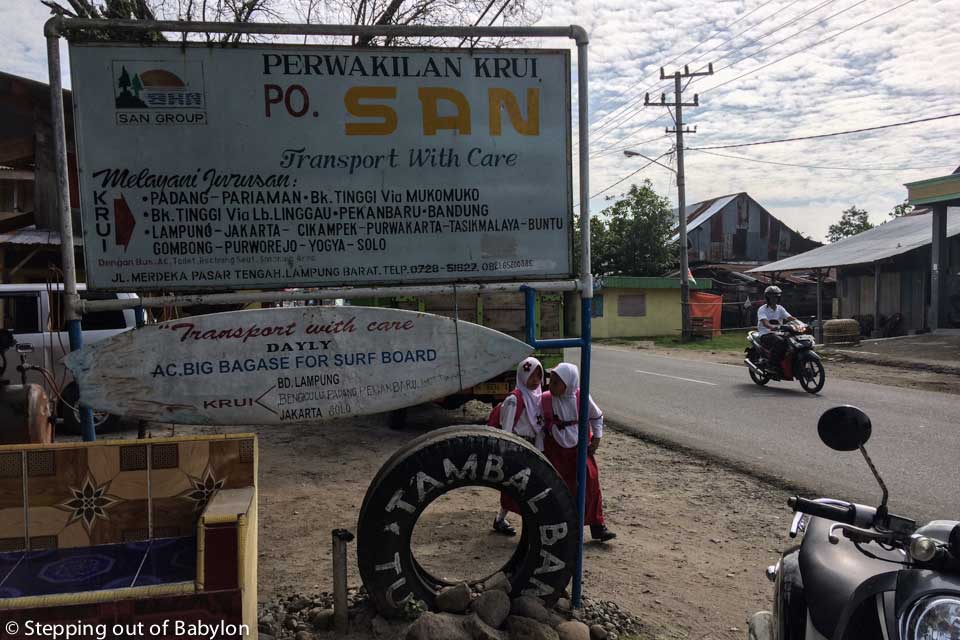
There are several bus companies linking Bengkulu to Padang, most of them with offices or agents at Jalan MT Haryono. The most reliable are the San Travels that offers an “executive” bus service.

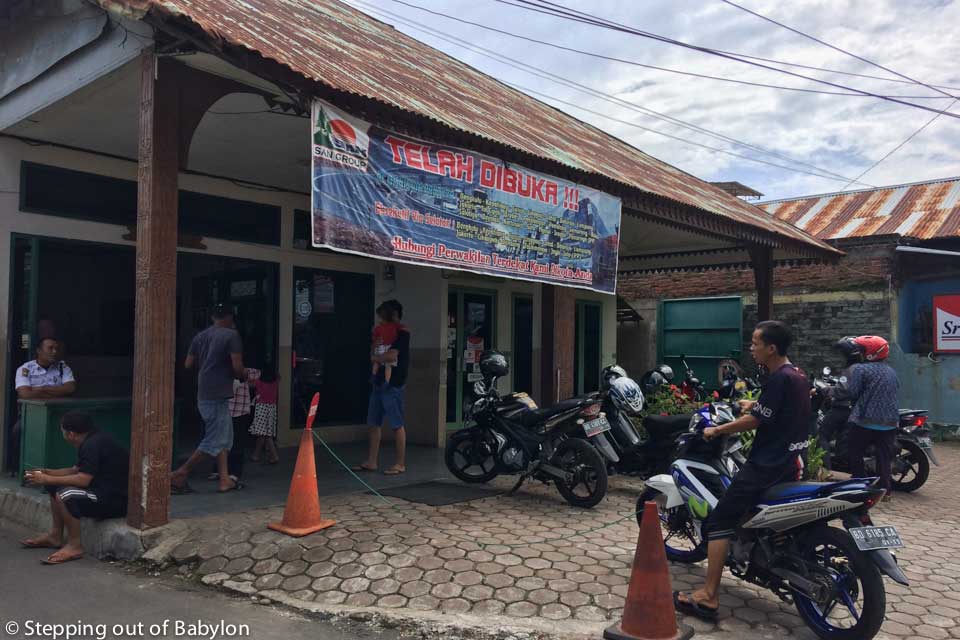
The San Travels ticket counter is at Jalan MT Haryono, just next to the Vista Hotel, and the buses to Padang departure from here. Is better to buy the ticket as soon as you arrive, as the bus gets full.

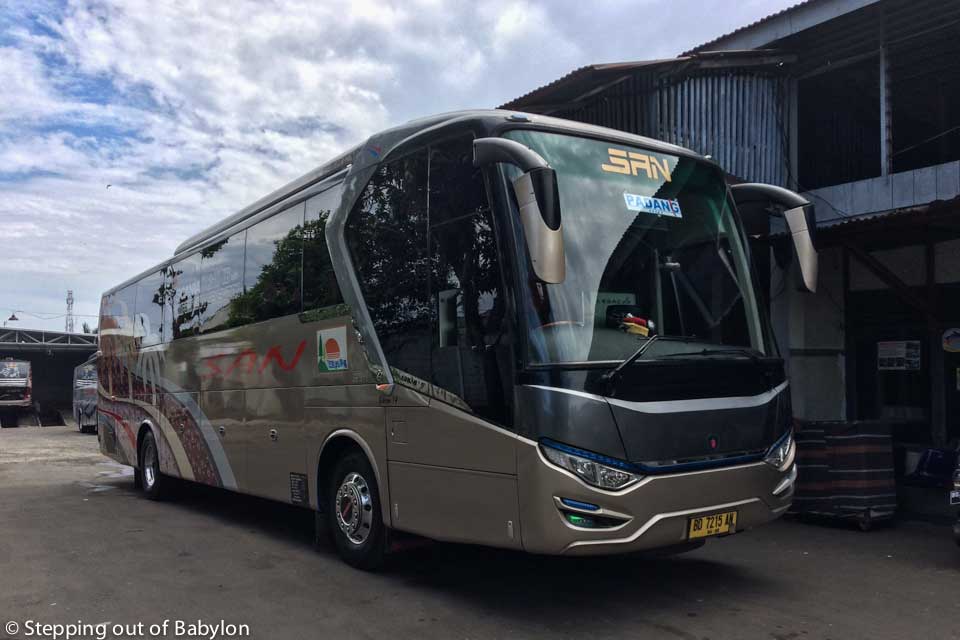
Is a good and comfortable bus, but the air-con is freezing cold; it doesn’t take the road along the coast, instead it goes through Lubuk Linggau and Sitiung. The road until the sunset is very nice along villages and countryside landscape, but it takes time to load the bus with vegetables and other stuff.

The ticket from Bengkulu to Padang cost 200.000 Rp.
The bus departure at 1 p.m. and arrives at Padang at 6 a.m. It doesn’t stop at any terminal but the last stop is at Jalan Sulaiman, just after he Masjid Raya Sumatera. From there is easy to spot the bus stand of the TransPadang (tickets cost 3.000 Rp).

[columns] [span6]

San Travel office
San Travel office

[/span6][span6]

Prices for the San Travel buses to different destination in Sumatra and also Java

[/span6][/columns]

[columns] [span6]

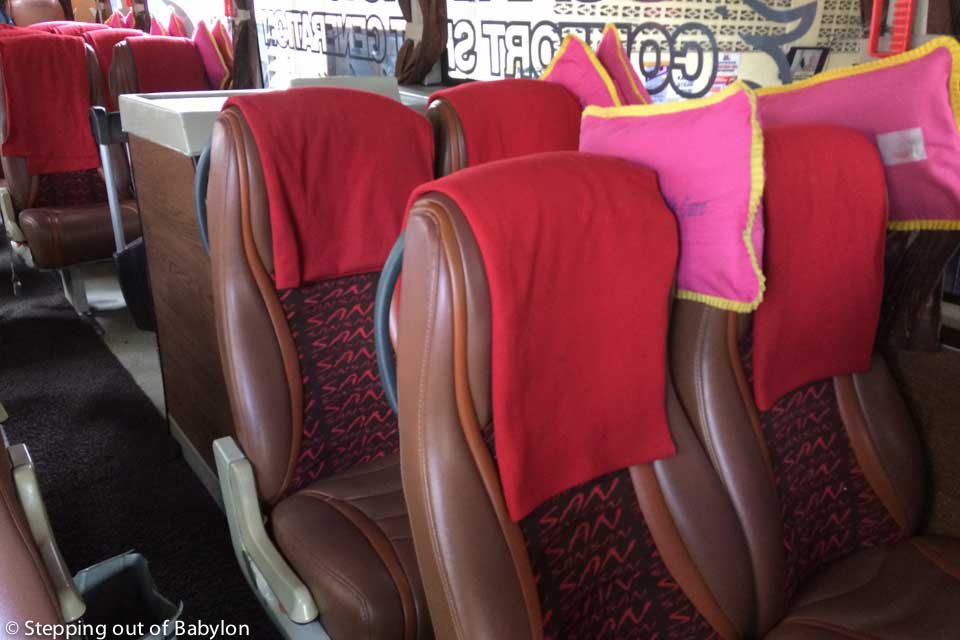
comfortable "executive" bus, where the blankets ar really necessary due to the low temperature of the air-conditioner
comfortable “executive” bus, where the blankets ar really necessary due to the low temperature of the air-conditioner

[/span6][span6]

San travel bus to Padang... this company has good quality buses
San travel bus to Padang… this company has good quality buses

[/span6][/columns]

Wi-fi at Bengkulu:

I couldn’t find a restaurant with wi-fi or an internet café… but could find a shop selling vaporisers – Vapouritz – with wi-fi, that is also a café/restaurant, making this place a cool place to chill. Is centrally located nearby the Majid Jamik… it was also a good opportunity to socialize with local young people: very friendly and willing to know more about the world! thanks guys for the nice chat!!!

How to go from Bengkulu to Krui:
San Travels has a bus service from Krui to Bengkulu… and so must be the same on the other way around. Probably the same bus that links Bengkulu to Jakarta.
I couldn’t find the schedule but this buses departure form the San travels Terminal (Jalan Kalimantan). But is better contact the office for precise and detailed information.

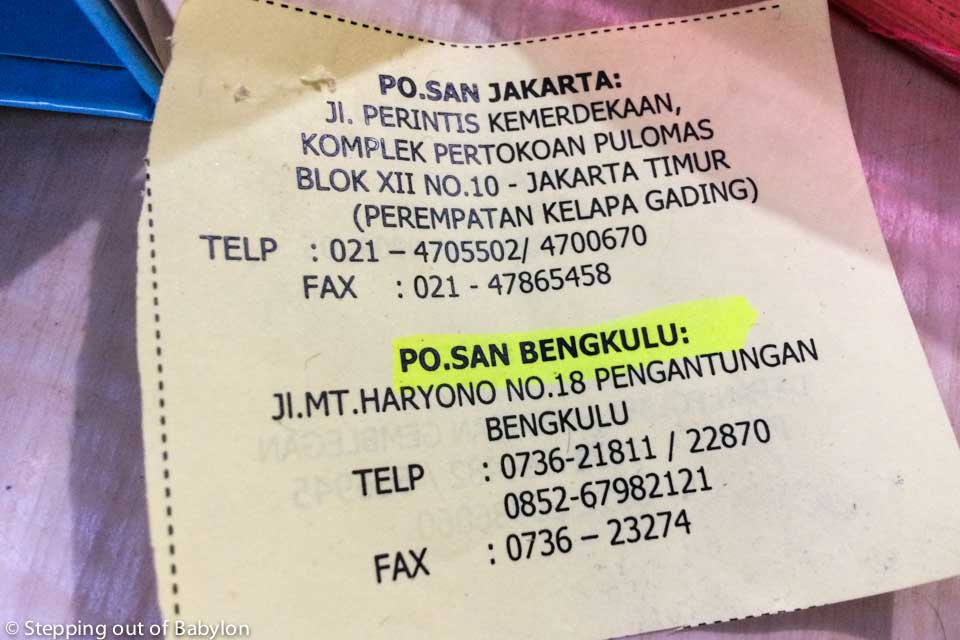
San travel contacts... to get information about prices and schedules from the buses that departure from Bengkulu
San travel contacts… to get information about prices and schedules from the buses that departure from Bengkulu

Krui… “hello mister”

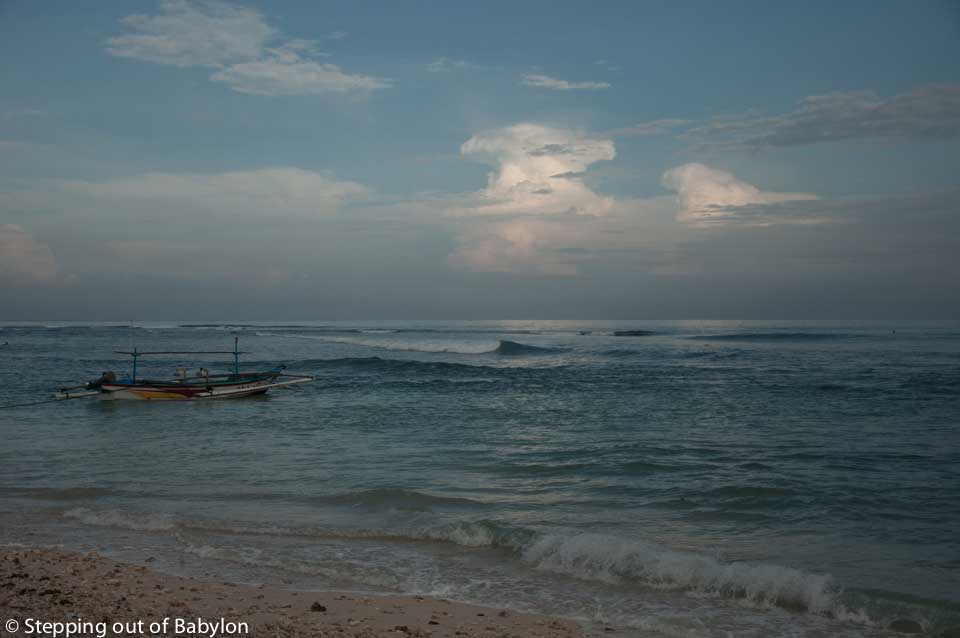
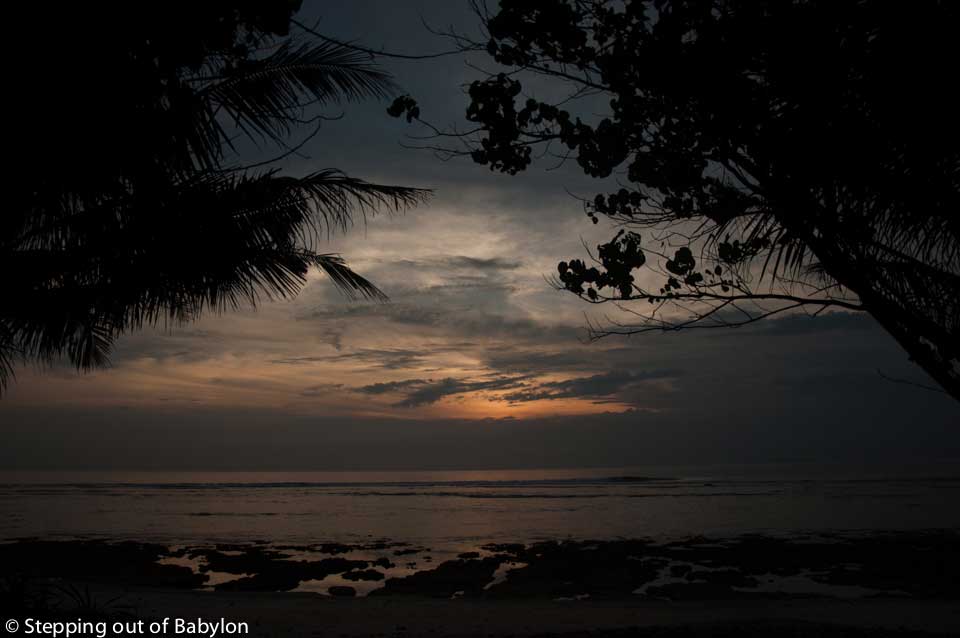
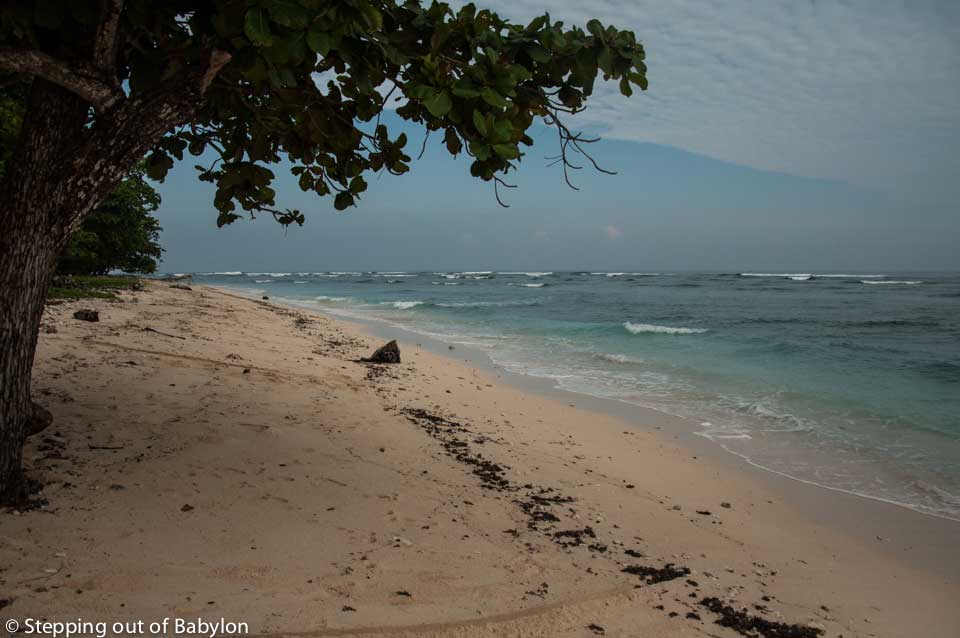
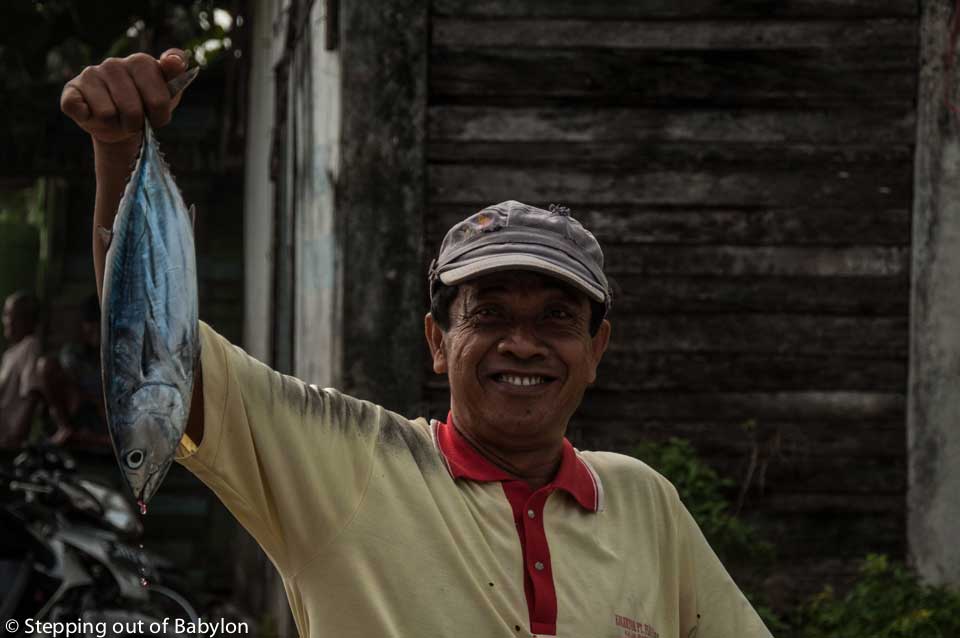
I think I’ve never found any place where people are so eager to interact with foreigners as in Krui… there are “hello mister” coming from everywhere, no matter if you are a man or a woman. Almost everybody is willing to communicate with foreigners, which are not so rare in these places because Krui is famous for the good surf breaks, which attracts people from several countries, but the level of the English spoken in this remote village of the South of Sumatra creates a barrier in the communication for those that don’t speak Indonesian.

If you are not in the surfing mode, or if your skills aren’t good enough for strong waves, Krui is still a pleasant place to stay: quiet village, nice people, warm weather and a sea with a perfect temperature… let’s say, something around 27 degrees all year round. But… there’s always a “but”… the currents are strong and the waves break hard on the shore.

So this makes swim a danger activity, but with the low tide the reefs create a barrier that makes the waves break offshore, and just small waves reach the beach. Perfect moments, sitting in the shade of a tropical tree, watching the clear blue water and feeling the warm wind coming from the ocean heating my wet clothes… as in this area, swimming suits are just allowed to men!

But Krui, located between the tropical jungle and the sea, is more to offer than just the waves… there are rice fields to walk through, waterfalls to discover, rivers to swim and a market to visit in the centre of the village, that during the Ramadan get’s alive and makes us forget the sleepy mood that warps Krui during the day.

Krui beach
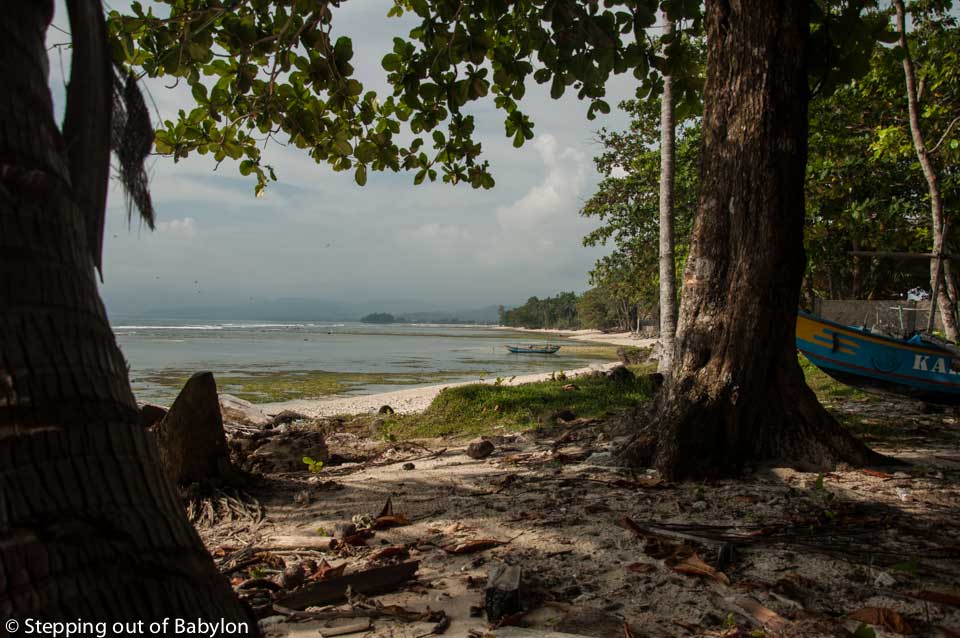
Krui beach… during the low tide the coral get exposed but the waves break far out from the shore and provide still and shallow waters to swim
Krui beach
Krui beach
Krui beach
Krui beach
Krui beach
Krui beach… almost desert sands but strong waves with a perfect water temperature
Krui beach_DSC_6616
Krui with the Gurung
Krui
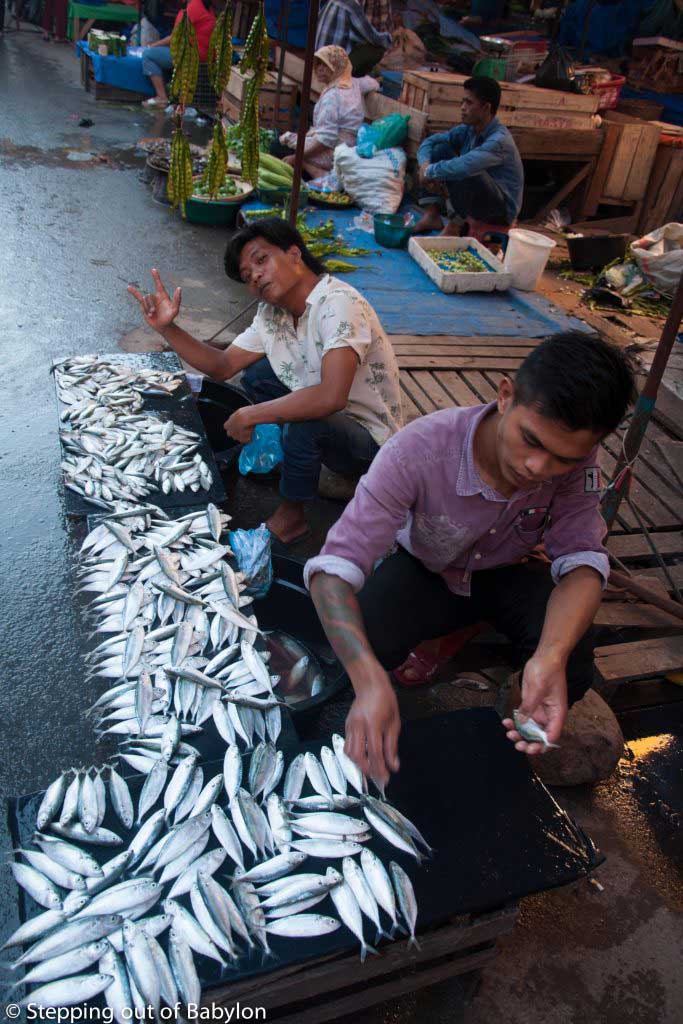
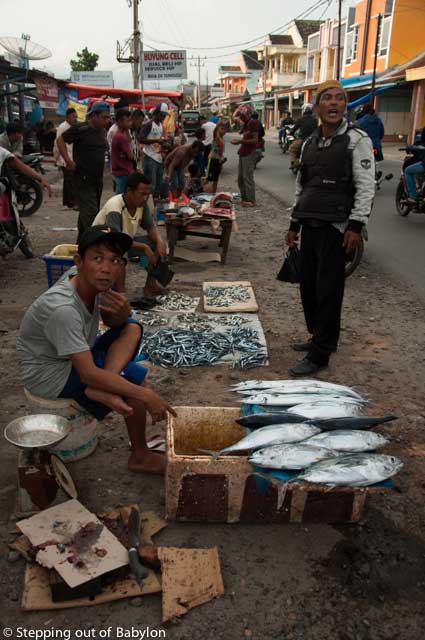
Fish market at the streets of Krui village
Krui
Krui has a small fishing harbor from where you can rent a boat to go to the Pulau Pisang (Banana Island)
Krui
Small and quiet streets at Krui
Krui village_IMG_3686
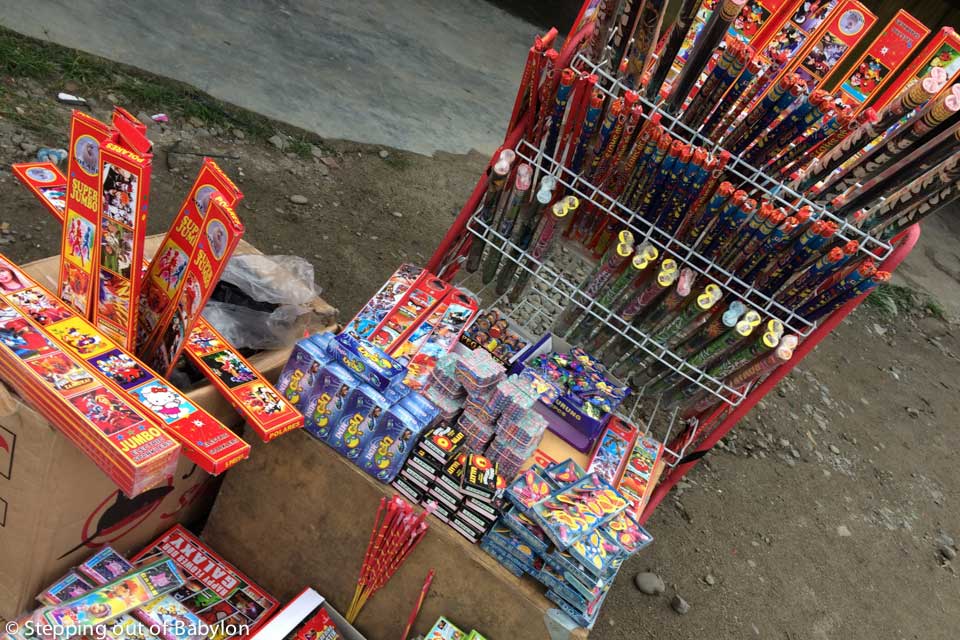
During the Ramadan the firecrackers are tradition and be prepared to wake up with the sound of small explosions… the kids get crazy with it!!


Where to sleep in Krui:

There are a few hotels along the main road, but the best places to stay are nearby the beach, usually identify as surf camp or losmen, and close by the surf breaks.

Fortunately, by chance, the Losmen Palm Beach Krui crossed my way and there I found a very nice room and a chill atmosphere, which make me stay longer that I planned. The owner, a German guy a long time living in Indonesia, is a friendly host and help me a lot with information about how to reach Krui and how to move on to the next destination.

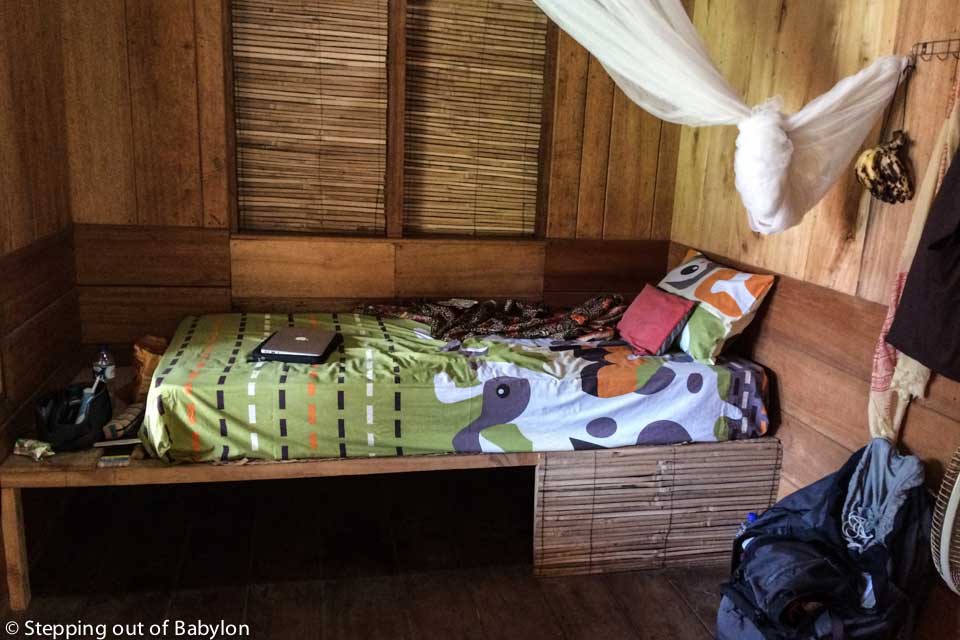
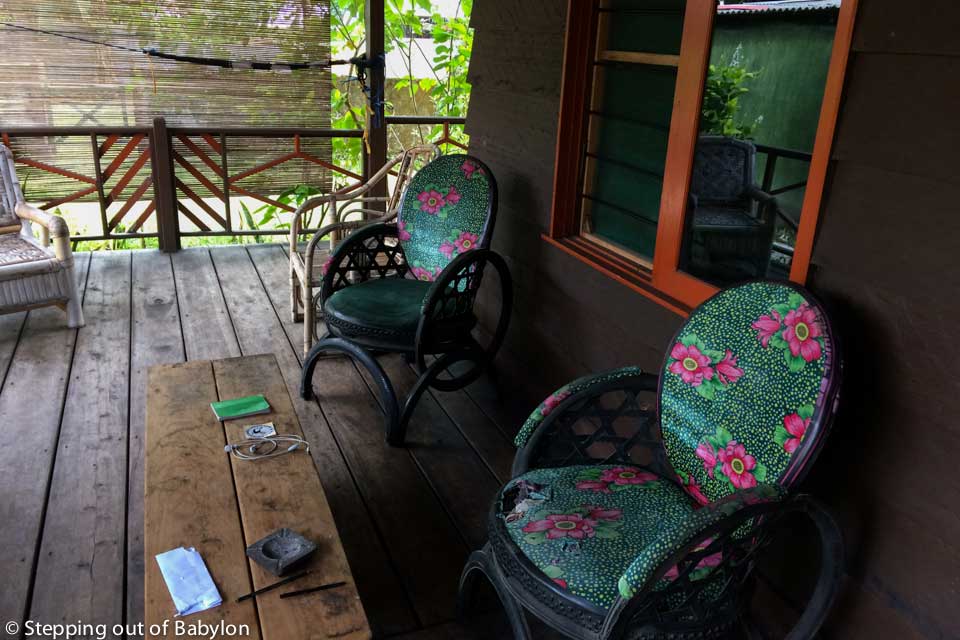
There are different kinds of rooms in this surf camp that is also prepared to receive big groups. I stay in a single room in a cozy wood house, with a fan and with outside toilet (but not shared)… the cheapest options for a solo traveler is 100.000 Rp a night. There are quite some social areas to chill and interact with others guests.

Meals and breakfast are not included but can be ordered on the day before, or even include in a pack along with the room price…. but there’s always a tasty morning coffee for free. Nearby, less that 5 minuts walking there are a few warungs serving the standard Indonesia food.

Losmen Palm Beach Krui is located a few meters from the beach, and about 25 minutes walking from the local market, where you can find the commercial area, restaurants and street-food.

The wi-fi at Losmen Palm Beach is very good, fast and reliable.

https://www.losmen-palmbeach-krui.com/

Losmen Palm Beach Krui

[columns] [span6]

Losmen Palm Beach Krui

[/span6][span6]

Losmen Palm Beach Krui

[/span6][/columns]

Where to eat in Krui:

Along the main road that crosses the village there are many warungs with the usual Indonesian food, but during the Ramadan, most of them are closed.

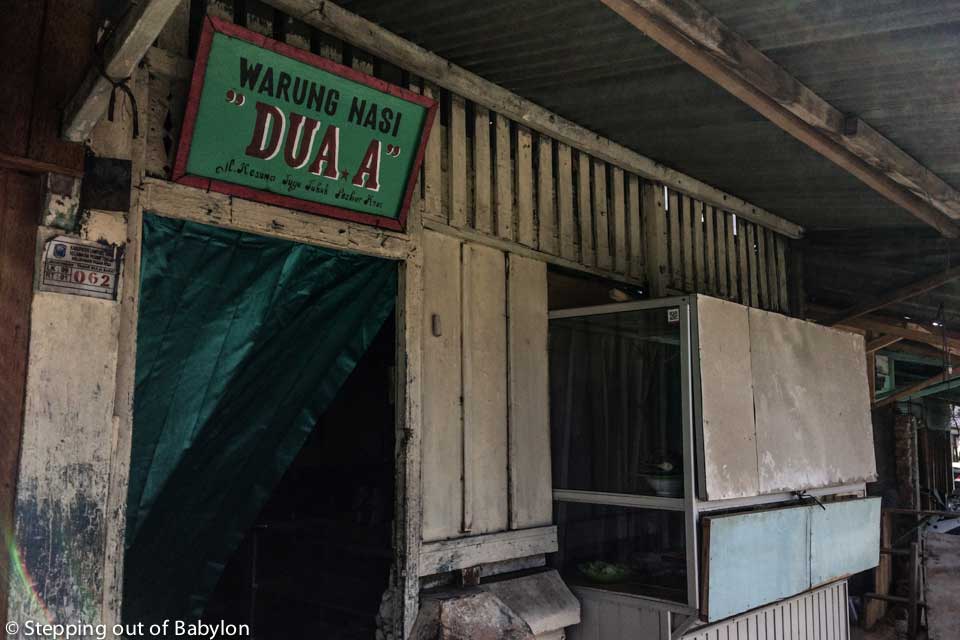
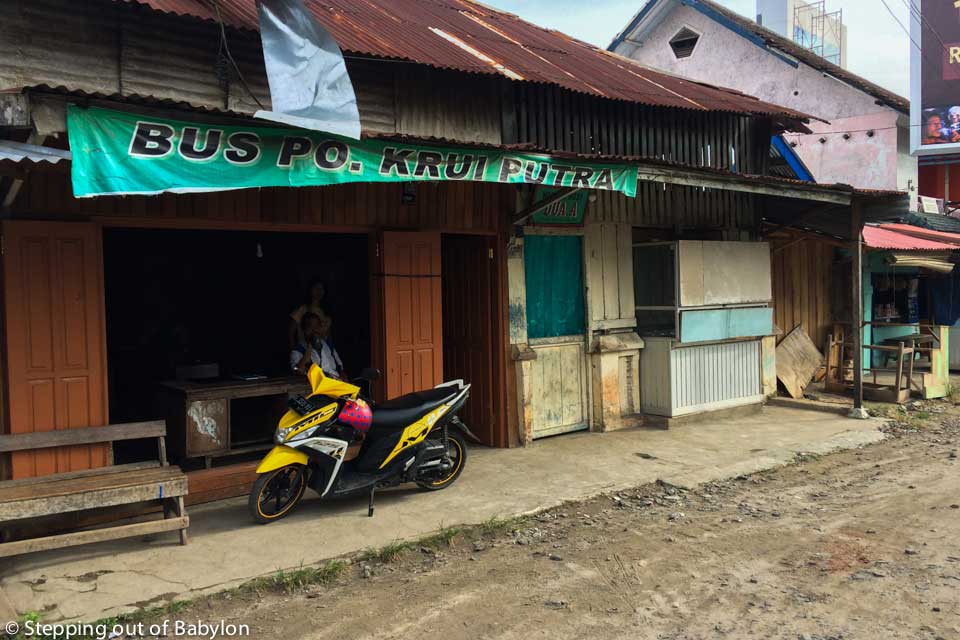
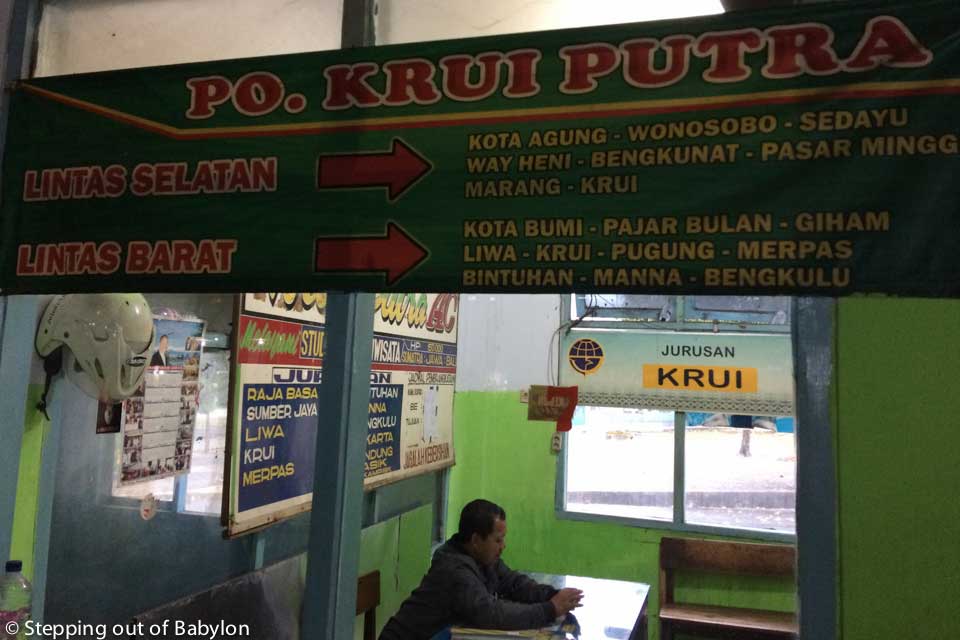
The Warung Nasi “Dua A” is open early morning (around 6 a.m.) serving tasty food for a cheap price; is located next to the P.O. Krui Putra, where the buses stop from Bandar Lampung and Bengkulu stop (close from a roundabout with a fish statue).


[columns] [span6]

Warung Nasi “Dua A” is open during the Ramadan, when most of the places close during the day

[/span6][span6]

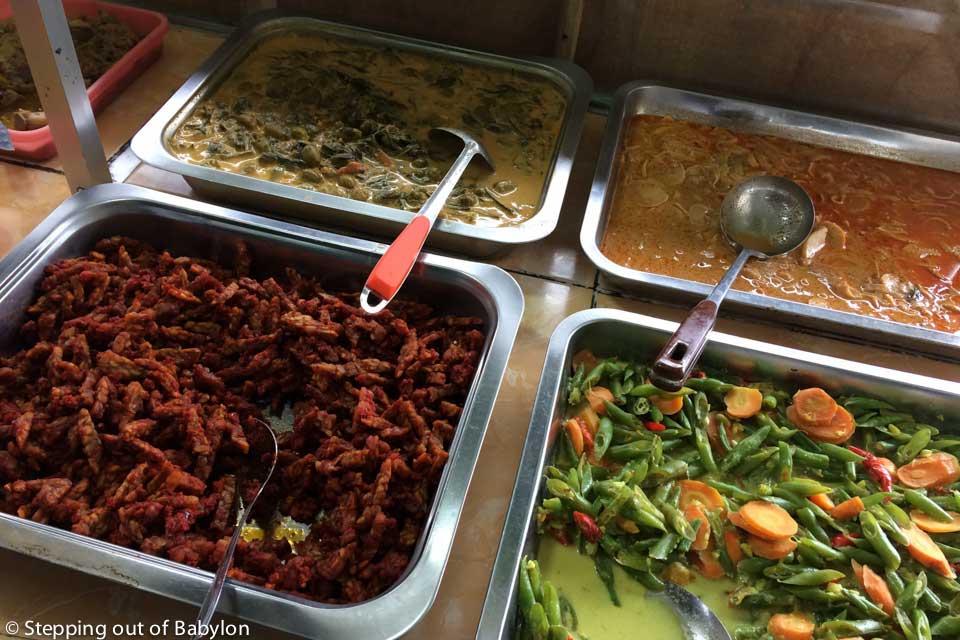
Warung Nasi “Dua A” ... simple but tasty food, with plenty of vegetable choices
Warung Nasi “Dua A” … simple but tasty food, with plenty of vegetable choices

[/span6][/columns]

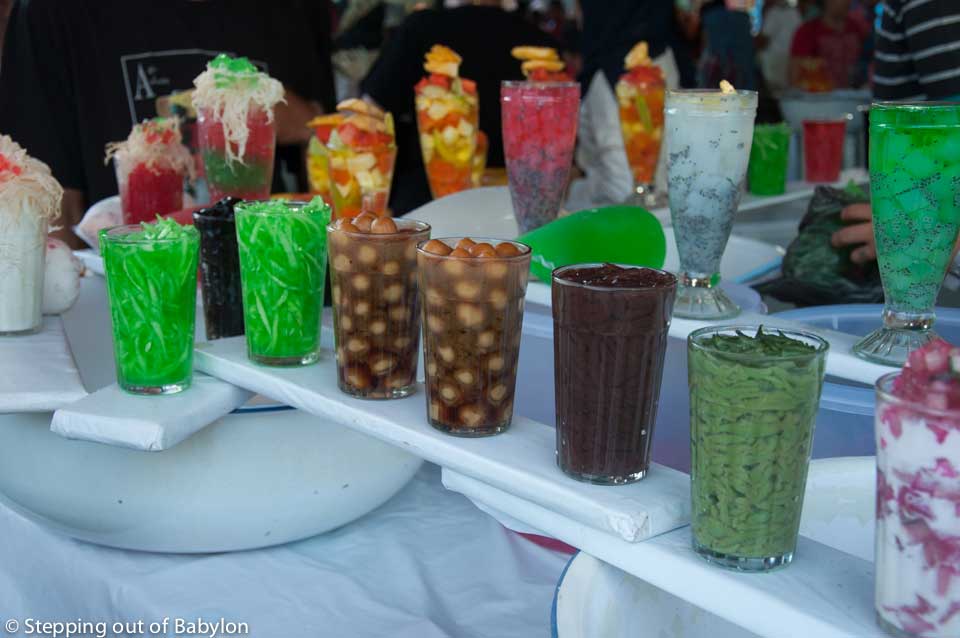
During the Ramadan, around 3 o’clock the crossroad nearby the pasar (market) get full of people selling food, lots of fresh fish but mostly sweet drinks, sweets and snacks, usually gorengan (deep-fry stuff)…. there are lots of choices, all home made treats.

If is difficult to find an open eatery in Krui during the Ramadan, it’s also a excellent opportunity to try the home made treats  made specially to break the Ramadan fasting…. but be quick, as around 5 p.m. this street market closes.

During the day there are a few fruit shops as also supermarkets, open until 10 p.m.

Krui
Afternoon street market along the road that leave Krui to north (Jalan Merdeka)
Krui village_IMG_3685
This is a good opportunity to try the food specially made to break the Ramadan fasting…. but be quick, as around 5 p.m. this street market closes.

How to move around in Krui:

The village of Krui is not that big and can be done on foot, but the warm temperatures make a walking during the day in hard task… you’ll be the only one walking in the village as everybody move by scooter!!!

But to explore the surroundings is better to rent a scooter.

  • you can drive along the coast and spot other beaches and surf breaks.
  • drive through the small fishing settlement and enjoy the “hello mister” from the villagers and pass by the Krui´s small fishing harbor.
  • walk along the rice fields until finding a waterfall… but you gonna need a guide for this!!!
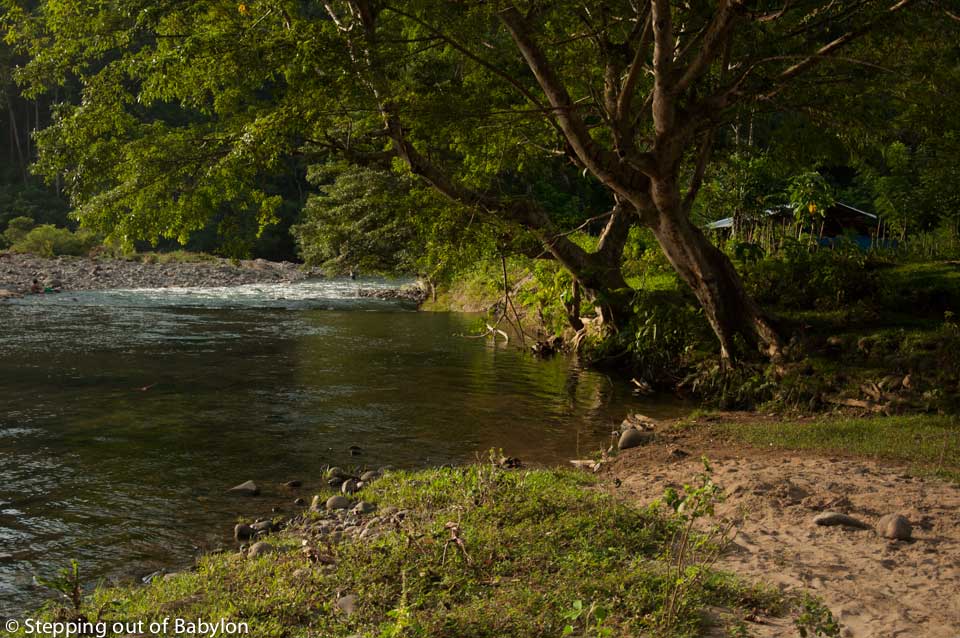
  • swim in the river along with the local kids… for that ,you need to drive along the Krui-Liwa road until you find a turn to the right side; from there drive all the way until the end of the road that crosses a beautiful countryside landscape and you’ll end up in a wide shallow river…. I’ll not be alone there but is an enjoyable experience swim in the fresh water at the end of a hot day!
  • drive through the jungle until Liwa and from there visit the lake (Danau Ranau)… but this is a long trip through a winding and steep road!!!

A a scooter for 70.000 Rp for one day… but long term rentals are much cheaper.

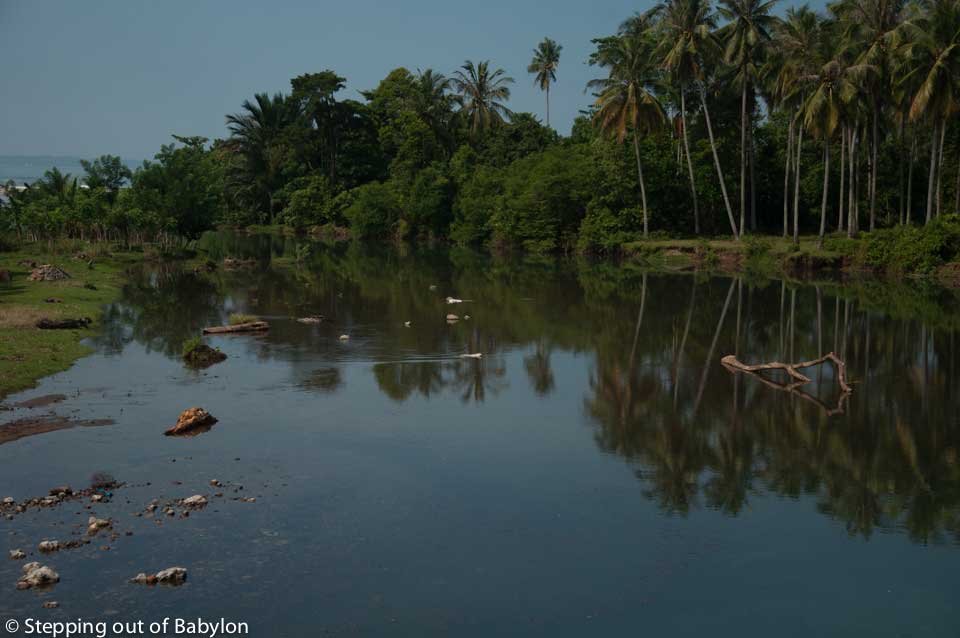
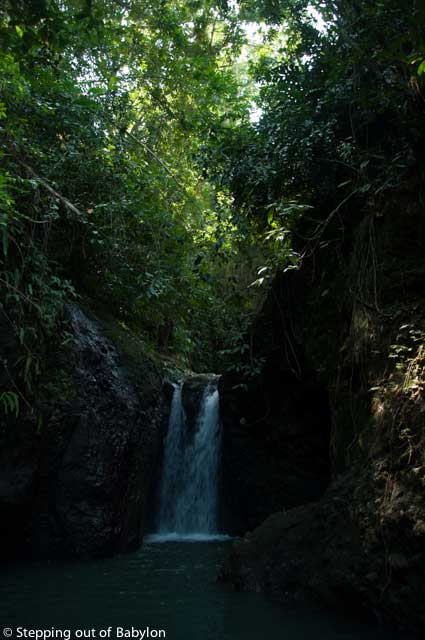
Crossing the road from Krui to Bintuhan there are many rivers surrounded by tropical forest
A hidden waterfall that can be reach by a short walk along the rice fields... but you gonna need a guide to reach there!
A hidden waterfall that can be reach by a short walk along the rice fields… but you gonna need a guide to reach there!
Exploring Krui surroundings... you gonna need to rent a scooter
Exploring Krui surroundings… you gonna need to rent a scooter to find nice and quiet places to chill

ATMs and Money exchange in Krui:

There are an ATM in Krui but be prepared because sometimes it can run out of money. The closest ATM is at Liwa.

Didn’t saw any money changer.

How to go from Krui to Bengkulu:

There are two bus services from Kuri to Bengkulu:

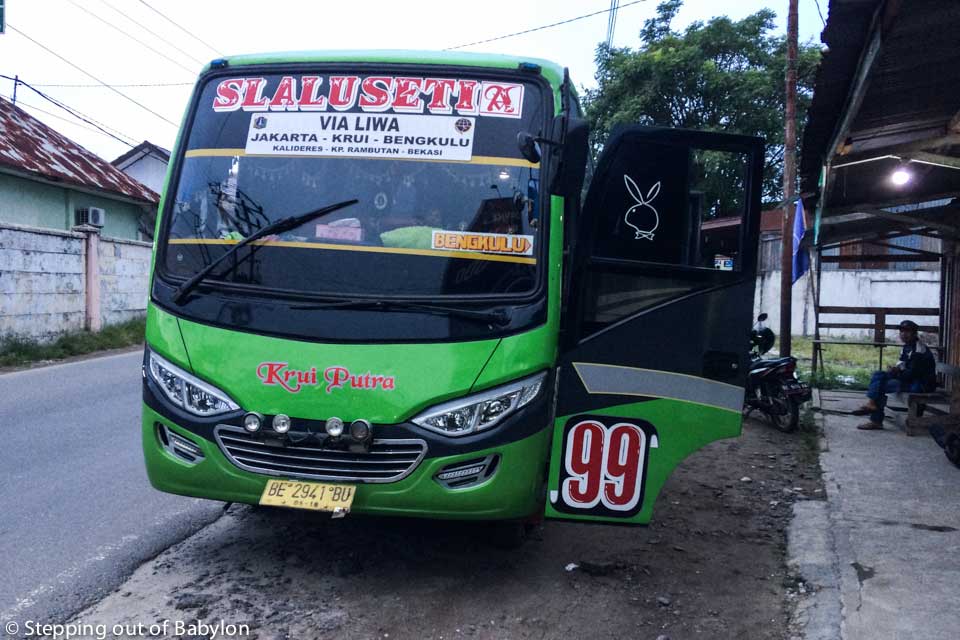
  • O. Krui Putra… it arrives at Krui around 6 a.m…. but can be later depending on the traffic and many others factors, as this bus comes from Jakarta. The bus stays about 30 minutes at Krui to allow the drivers to rest. The trip took 11 hours with 2 stops for rest and food (30 minutes each) and a few more stops to drop passengers and cargo.

The road until Manna is very beautiful, with the sea in one side ant the jungle on the other side (you can spot monkeys) and the pavement is mostly in good conditions, but after that is getting worst. As the bus get close from Bengkulu the traffic increase significantly. You can ask the drivers to drop you at your hotel or nearby the bus travel agents of Jalan MT Haryono.

You don’t need to book or buy the ticket in advance, just show up at the P.O. Krui Putra “office” (nearby the roundabout with the fish statue, just next to the “Dua A” warung) and wait for the bus. The ticket cost 130.000 Rp.

The Krui Putra bus is old and doesn’t have much confortable. I ask to seat on the front as there is more space… but here is air-con; be prepared for loud music all the way!!!!

  • San Travels… they have a bus that passes at Krui daily around 1 a.m. and 2 a.m. and the ticket to Bengkulu cost 175.000 Rp. The trip takes about 8 hours, according to the information of the guys who are selling tickets but I couldn’t get confirmation). The San travel has more modern and comfortable buses but this option has the inconvenient of making the most interesting part of the trip – Krui to Maans – during the night but MAYBE it arrives before 1 a.m., on time for you to get the bus to Padang on the same day… but nothing is guaranteed!!!

[columns] [span6]


the P.O. Krui Putra “office”, nearby the roundabout with the fish statue, just next to the “Dua A” warung)

[/span6][span6]

Bus from the P.O. Krui Putra that comes from Jakarta and passes by Krui on the way to Bengkulu. The Krui Putra bus is old and doesn’t have much confortable. I ask to seat on the front as there is more space... but here is air-con; be prepared for loud music all the way!!!!
Bus from the P.O. Krui Putra that comes from Jakarta and passes by Krui on the way to Bengkulu. The Krui Putra bus is old and doesn’t have much comfortable. I ask to seat on the front as there is more space… but here is air-con; be prepared for loud music all the way!!!!

add content here

[/span6][/columns]


[columns] [span6]

San travel "office" at Krui where you can find informations about the bus from Krui to Bengkulu
San travel “office” at Krui where you can find informations about the bus from Krui to Bengkulu

[/span6][span6]

San Travels schedule and prices from Bus from Krui to Bengkulu and other destinations

[/span6][/columns]

Another option to move out from Krui is to rent a travels service travel that can be private or shared with other passengers
To move out from Krui to Bandar Lampung, you have the Krui Putra bus as also the San Travels bus, but to avoid long trips you can hired a travels service, which can be a private or shared with other passengers

Bandar Lampung… on the first day of Ramadan

Arriving at Sumatra during the Ramadan was an odd experience after an overnight tiring bus-ferry-bus trip from Jakarta.

In the morning, the Teluk Betung, the older part of Bandar Lampung, that we can call the center, looked more like an abandon city, with the streets almost empty of traffic and people, closed shops and restaurants, empty markets… a feeling of numbness that wrap this place on the first day of the Ramadan, a totally opposite image of the usual pace of an Indonesian city.

But Bandar Lampung is far from be appealing for a tourist, but is not totally deprived of interesting things, like the Vihara Thay Hin Bio an old Chinese Buddhist Temple, where the quietness and solemnity of the place is surrounded by the red color that dominates all the interior of the temple, where huge candles burn permanently. This is the core of the Chinese neighbourhood, a community that settles down in Indonesia during the Dutch colonisation.

Visiting the Pasar Ikan Gudang Lelang, a fish market nearby the Impoverished port area gives another vibe, where the activity is still going on. Despite the slow pace, resulting from fasting that is observed during the Ramadan by the Muslim people, roughly from sunrise until sunset, the harbour are was the most vibrant place in Bandar Lampung during the day, where smiles peek from everywhere.

But as the sun reach the zenith all the city change, and lots of people move around, looking for the Ramadan treats to breaks the fast. The ground in front of Pasar Seni gets fill with the smell of the food, that a delight for the senses and a temptation for the stomach.

Bandar Lampung... a ghost town at day time during the Ramadan
Bandar Lampung… a ghost town at day time during the Ramadan
Bandar Lampung
Bandar Lampung


Vihara Thay Hin Bio Chinese Buddist Temple
Pasar Ikan Gudang Lelang on the old part of Bandar Lampung
Pasar Ikan Gudang Lelang, the harbour and the fish market on the old part of Bandar Lampung
Pasar Ikan Gudang Lelang
Pasar Ikan Gudang Lelang... the fish market of Bandar Lampung
Pasar Ikan Gudang Lelang… the fish market of Bandar Lampung
Pasar Ikan Gudang Lelang

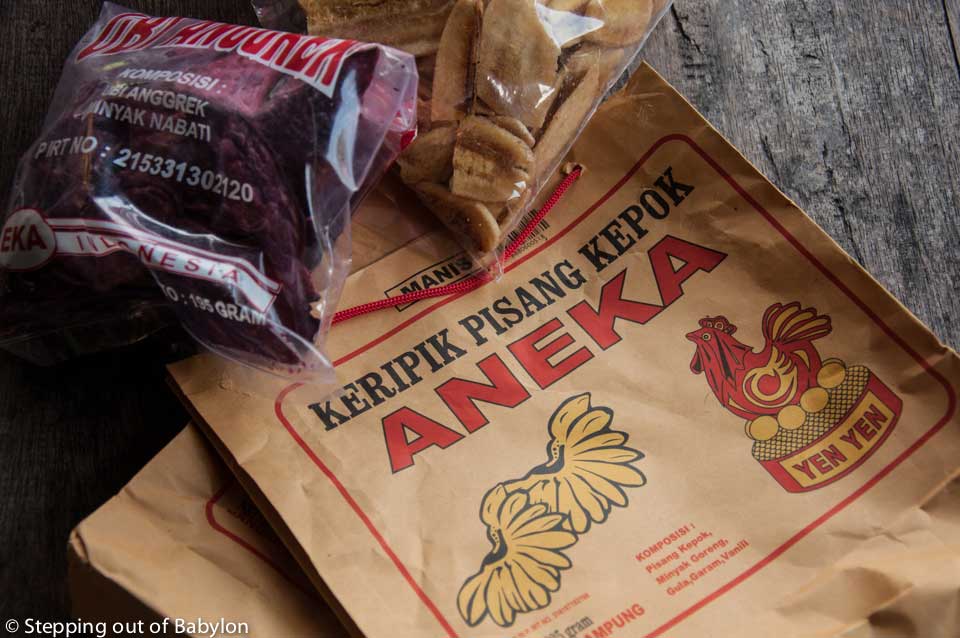
And just in front of the temple is the Aneka Sari Rasa, a keripik shop famous in town!! Kiripik is a typical Indonesian snack, a kind of chips made from banana, cassava, sweet potato or even jackfruit… and apparently Bandar Lampung is famous for the Kiripik. At the Aneka Sari Rasa, a shop dedicated almost totally to this chips you can find all the different versions, from sweet to salty, from chocolate to strawberry flavors… and there are dozens of workers there (in Europe for a shop like this you’ll don’t have more than two employees) willing to sell you something and super excited to have a foreigner there… It was impossible to resist to such an earnest and kind staff, and I end up with some packs of pisang kipirik, banana chips! Enak!!

[columns] [span6]

Aneka Sari Rasa... a huge shop in the center of Bandar Lampung selling mainly Kiripik
Aneka Sari Rasa… a huge shop in the center of Bandar Lampung selling mainly Kiripik

[/span6][span6]

Kiripik is a typical Indonesian snack; a kind of chips made from banana, cassava, sweet potato or even jackfruit... and apparently Bandar Lampung is famous for the Kiripik.
Kiripik is a typical Indonesian snack; a kind of chips made from banana, cassava, sweet potato or even jackfruit… and apparently Bandar Lampung is famous for the Kiripik.

[/span6][/columns]


Where to sleep at Bandar Lampung:

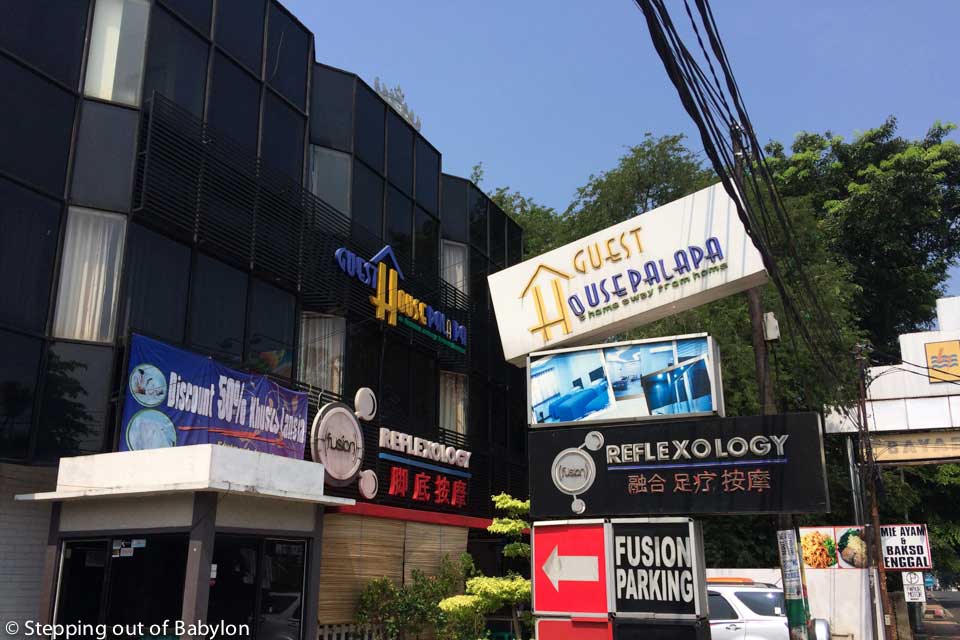
The Guest House Palapa is more a hotel than a guesthouse, but offer good conditions to spend one night, modern and very clean; it has with different types of room, some with shared toilet. The breakfast is included but I left too early to try it. Some rooms don’t have a window but all rooms have air-conditioner, but considering the location nearby the main road is better like that. There are single rooms (100.000 Rp), shared toilet and without window but with air-conditioner.

The staff is friendly but don’t speak much English but will try the best to help you, although it looks that they are not used to receive foreigners and maybe will be difficult to get information.

If you are coming from the East (Java or Bakauheni) you probably pass by Tugu Adipura (also called simply “tugu”), a crossroad with elephant statues playing football in the center of the roundabout. From here you just need to walk 200 meters to reach Guest House Palapa.

Address: Jl. P. Diponegoro No.154-156, Enggal, Bandar Lampung

Contact: (0721) 261617

[columns] [span6]

Guest House Palapa at Bandar Lampung

[/span6][span6]

Single room at the Guest House Palapa. Bandar Lampung

[/span6][/columns]

[Guest House Palapa: room prices

Guest House Palapa: room prices

[/span6][/columns]


Arriving at Bandar Lampung:

If you are coming from Java you’ll probably arrive at terminal Tanjung Karang.

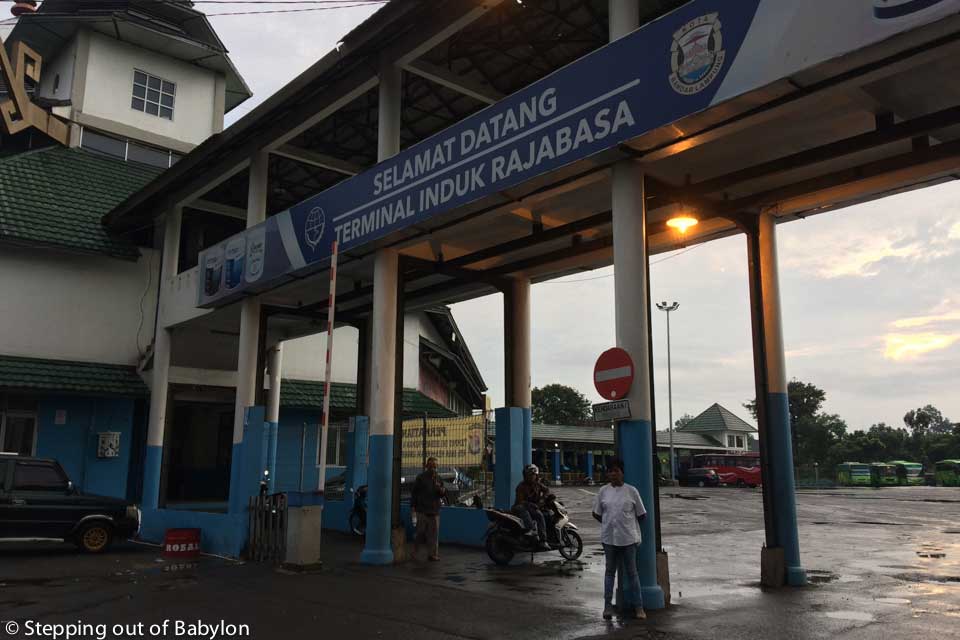
If you are coming from Padang, Bengkulu or Krui you’ll probably arrive at Terminal Rasabaja.

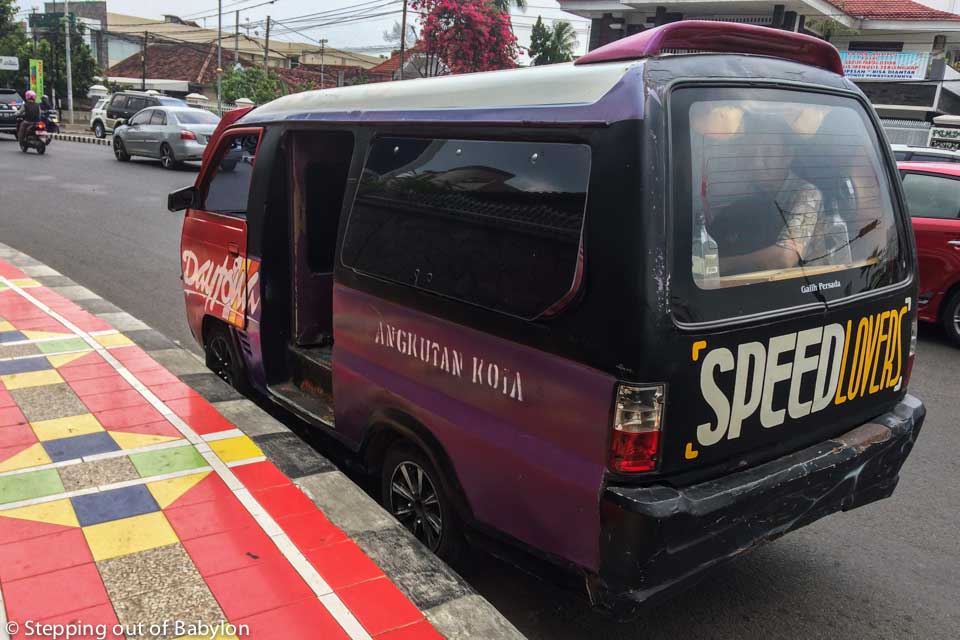
From any of these terminals, there are public buses locally called “angkot”, a minivan, usually very, old with a big sound system. The colour of the angkot is according to the route they do. A trip in one of this angkot cost you around 5.000 Rp.

Maybe you need to take more than one to reach your destination, but the drivers will help even if they don’t speak any English, dropping you into the right place and pointing you the next angkot. I found the drivers at Bandar Lampung very friendly and honest!!!

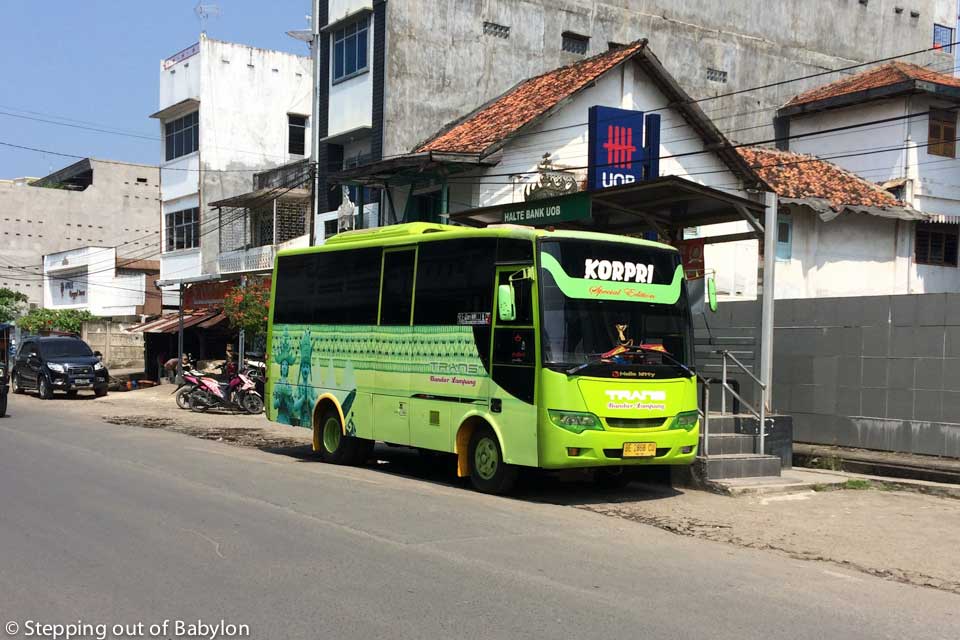
There are also buses, green colour, modern and with air-con. To go from Tugu Square to Terminal Rasabaja you can take one of these buses to the center of Bandar Lampung.

[columns] [span6]

How to more around Bandar Lampung: "angkot" for short distances
How to more around Bandar Lampung: “angkot” for short distances

[/span6][span6]

How to more around Bandar Lampung: buses to go far as the Terminal Rajabasa

[/span6][/columns]

How to go from Bandar Lampung to Krui:

From the Terminal Rasabaja, there are public buses to Krui. Is very difficult to get precise information about schedules.

At the terminal, you need to look for the PO. Krui Putra office where you can buy the bus ticket to Krui (phone number: 0812.7202.2251). It wasn’t clear but I think they sell tickets for different bus companies.

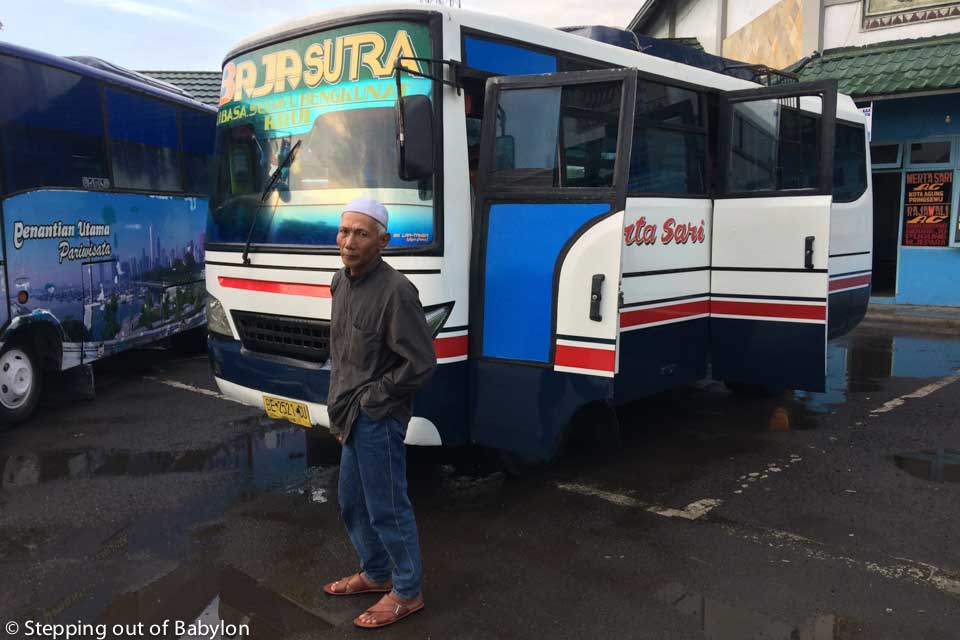
I took the Metra Sari. It departure at 7 a.m. and arrive at Krui around 2.30 p.m. The ticket cost 70.000 Rp. The Metra Sari has a very old bus, without air-con… thankfully it was a cloudy day, but still it ends up being a very tiring trip, particularly slow when the bus reaches a mountain area where the road gets very steep and winding.

I heard the later other companies have better buses (green colour) with air-con, but couldn’t get any information about this service to Krui.

There isn’t a bus terminal in Krui, so you can just ask the driver to stop anywhere you want, along with the main road.

[columns] [span6]

Terminal Rasabaja from where departure the buses to Krui

[/span6][span6]

PO. Krui Putra office where you can get the tickets for the bus to Krui

[/span6][/columns]

Bus to Krui... The Metra Sari has a very old bus, without air-con... thankfully it was a cloudy day, but still it end up being a very tiring trip, particularly slow when the bus reach a mountain area where the road gets very steep and winding.
Bus to Krui… The Metra Sari has a very old bus, without air-con… thankfully it was a cloudy day, but still it end up being a very tiring trip, particularly slow when the bus reach a mountain area where the road gets very steep and winding.

How to go from Java to Sumatra by public transport

How to go from Jakarta to Bandar Lampung by DAMRI bus:

Jakarta is big, very big… there are many bus terminal for long distance buses… and they are very far from each other. So is better that you plan your trip from Jakarta in order to avoid last minute stress, special if you travel around long weekends or national/religious holidays.

You can make the trip from Jakarta to Bandar Lampung, step by step by yourself, which means, taking a bus to Merak, from there a ferryboat to Bakauheni, and then another bus to Bandar Lampung or any other destination in Sumatra.

From Jakarta, you can take a bus to Merak at this bus terminal: Kampung Rambutan, Pulo Gadung and from Kalideres. The trip takes about 3 hours and the tickets cost less than 30.000 Rp (air-con). The ferries run 24 hours per day and cost about 15.000 Rp.

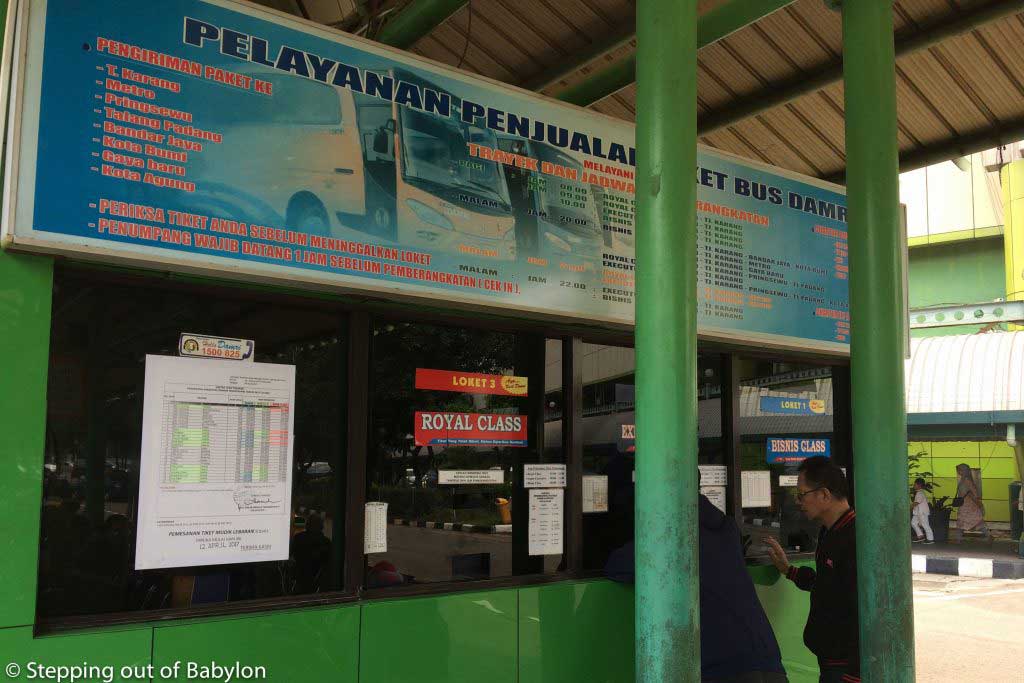
The DAMRI (Indonesian state-owned public transit bus company) operate buses directly from Jakarta to Bandar Lampung


The DAMRI (Indonesian state-owned public transit bus company) operate buses directly from Jakarta to Bandar Lampung. The buses departure from Gambir station just next to Gambir Terminal (train station). There are three classes of buses: economic, business and executive, according to the number of seats and the comfort but all with air-con.

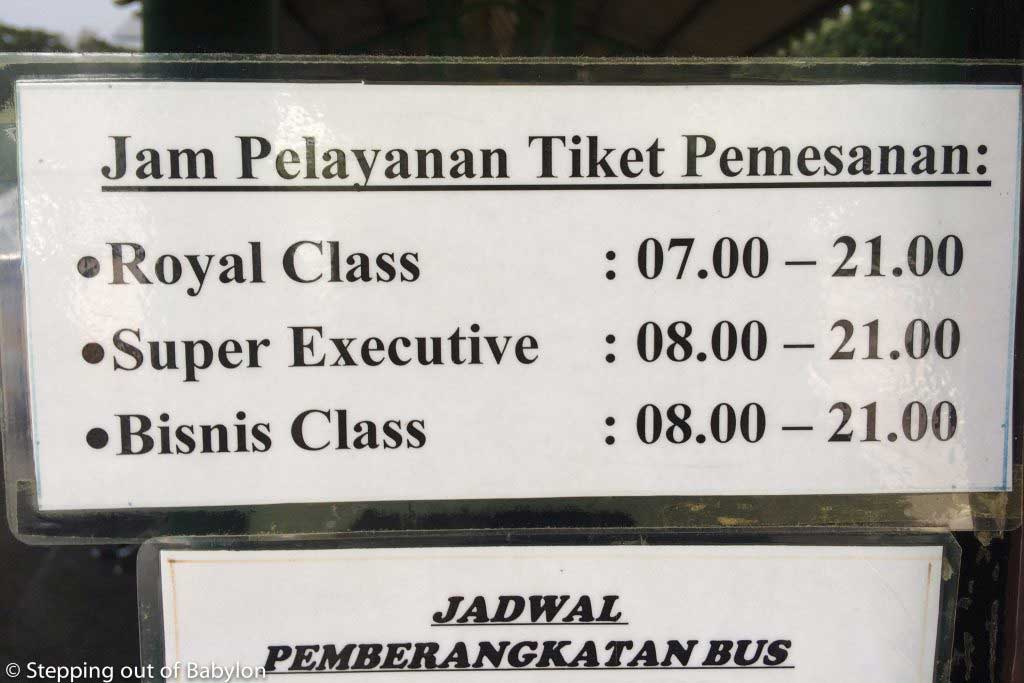
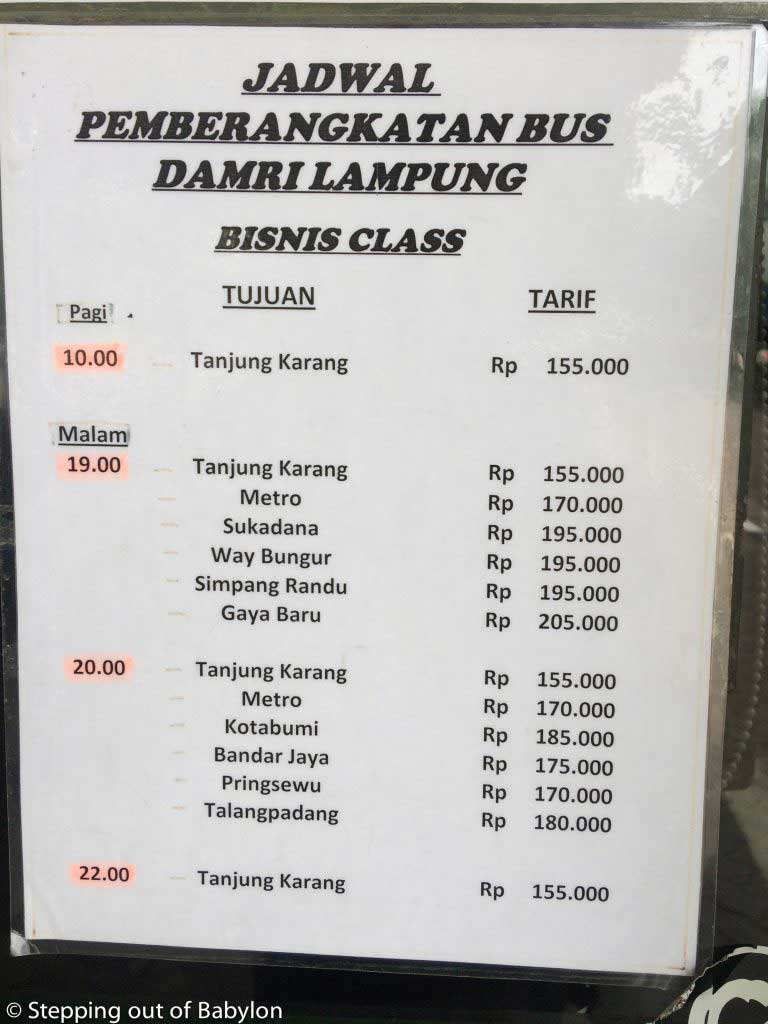
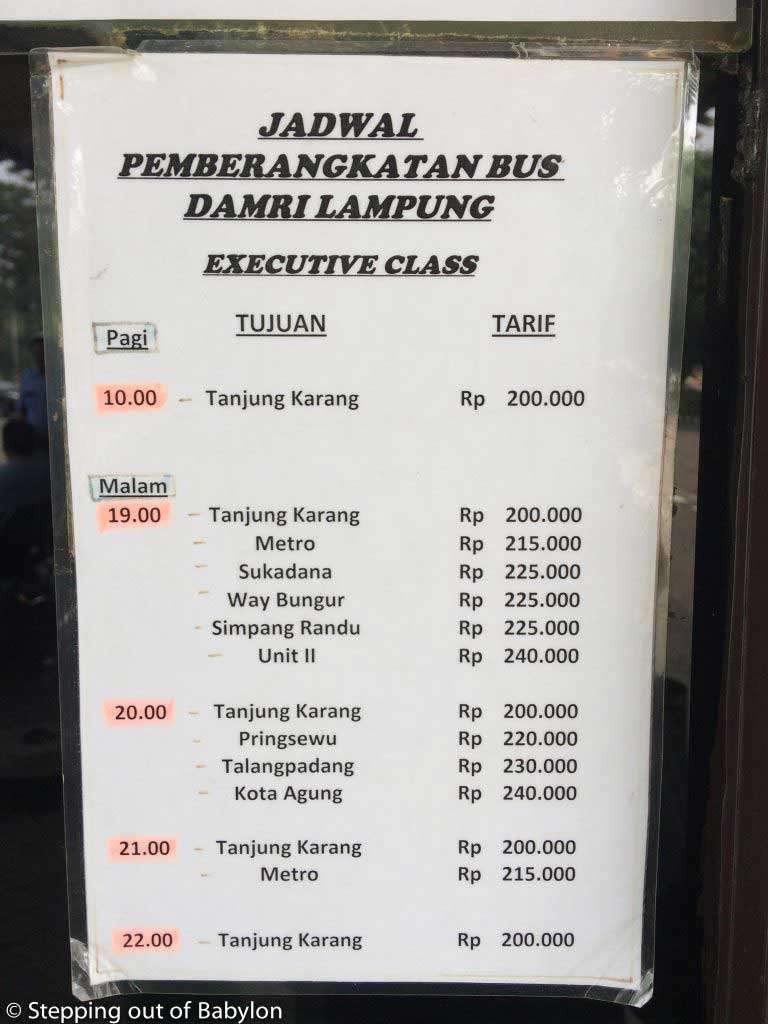
There are buses in the morning and in the evening (see images below) and stop in have different in Lampung. The prices include the ferry ticket.

All trip takes about 8 hours!!! The first part of the trip is smooth along a good road and takes around 3 hours. Then are 2 more hours on the ferry and then more 3 hours again on the same bus, along with a less confortable road until Bandar Lampung.

As the bus arrives at the city it starts to drop the passengers along the way to the terminal Tanjung Karang. The bus passes by the Tugu Adipura roundabout (crossroad of Jl Sudirman e Jl Diponegoro)… if you are going to stay at Guest House Palapa, you must get out here, and then just need a 300 meters walk!!! We alert as the bus helper will shout “Tugu, tugu”!

[columns] [span6]

Ticket counter of DAMRI buses at Gambir Terminal

[/span6][span6]

DAMRI ticket counter schedule at Gambri terminal
DAMRI ticket counter schedule at Gambir terminal

[/span6][/columns]


[columns] [span4]

DAMRI buses from Jakarta to Sumatra. Prices and schedule. Bussines class

[/span4][span4]

DAMRI buses from Jakarta to Sumatra. Prices and schedule. Executive class

[/span4][span4]

DAMRI buses from Jakarta to Sumatra. Prices and schedule. Royal class

[/span4][/columns]

The buses departure from Gambir station just next to Gambir Terminal (train station)


My personal experience with the DAMRI bus from Jakarta to Bandar Lampung:

  • I choose to make the trip during the night to save one night on the trip schedule and to save one night of accommodation. So to get a good sleep I choose the executive class.
  • There’s no point to get a more expensive ticket, like Royal or Executive, as you can’t really have a good sleep anyway…
  • From Jakarta to Merak the bus has very loud music.
  • As the bus gets inside the ferry you must get out… otherwise, you’ll die intoxicated with the gases of the vehicles and from the boat’s engine.
  • Inside the ferry, there are cabins where you can sleep, but I just found them at the end of the trip, so I stayed outside, sitting on the floor… in the middle of the crossing it gets chilly and windy… also not much sleep!
  • When the ferry arrives at Bakauheni you need to get back to the bus… from here there’s no more music until you reach Bandar Lampung, where the cheesy techno music is played loud to wake up the passengers before the bus reaches the terminal.
  • … so I think I could have saved 45.000 Rp choosing the business class… as it was almost impossible to sleep during the trip.
interior of the "executif" DAMRI bus from Jakarta to Bandar Lamoung
interior of the “executive” DAMRI bus from Jakarta to Bandar Lampung

[columns] [span6]

cabins to sleep during the ferry crossing... I just saw them on the end of the ferry trip but thibk that's hard to get a free space here as there were many people sleeping on the outside deck of the boat.
cabins to sleep during the ferry crossing… I just saw them on the end of the ferry trip but think that’s hard to get a free space here as there were many people sleeping on the outside deck of the boat.

[/span6][span6]

cabins to sleep during the ferry crossing... I just saw them on the end of the ferry trip but thibk that's hard to get a free space here as there were many people sleeping on the outside deck of the boat.
cabins to sleep during the ferry crossing… there are also a cafeteria with food and instante noodles, as well a big room with TV and air-com on the ferry boat

[/span6][/columns]

inside the ferry where the vehicles travel


  • « Go to Previous Page
  • Page 1
  • Page 2
  • Page 3
  • Page 4
  • Interim pages omitted …
  • Page 10
  • Go to Next Page »

Footer

search

Tags

Assam Bali Bogor Border Crossing Borneo Colombo Esfahan Fes Food Gilis Hiking Hikkaduwa hokkaido Imlil Istanbul Itinerary Jakarta Java Kashan Kathmandu Kumano Kodo Lombok Marrakesh Meghalaya Meknes Mekong Nagaland Natural Park Northeast States Ouarzazate Sarawak Shiraz Sichuan Province Sumatra Tabriz Taipei Tehran transportation ubud Varanasi Visa Yangon Yazd Yogyakarta Yunnan Province

I’m Catarina, a wanderer from Lisbon, Portugal… or a backpack traveller with a camera!

Every word and photo here comes from my own journey — the places I’ve stayed, the meals I’ve enjoyed, and the routes I’ve taken. I travel independently and share it all without sponsors or ads, so what you read is real and unfiltered.

If you’ve found my blog helpful or inspiring, consider supporting it with a small contribution. Every donation helps me keep this project alive and free for everyone who loves exploring the world.

Thank you for helping me keep the journey going!

BUY ME A COFFEE

Categories

Recent Posts:

  • How to go from Hualien to Dulan Beach
  • Taroko Gorge: between marble cliffs and emerald rivers
  • Hualien: a dull gateway to Taroko Gorge
  • Taiwan: Itinerary for an 16 day trip
  • Vietnam: Itinerary
  • 3 months in India: Kolkata, Tamil Nadu, Karnataka, Goa and Kerala
  • Backpacking Turkey in 24 Days: itinerary & costs
  • English
  • Português

© Copyright 2026 Stepping out of Babylon · All Rights Reserved · Designed by OnVa Online · Login