• Skip to main content
  • Skip to footer

Stepping Out Of Babylon

Travel & Photography

  • About me
    • Contact
  • Destinations
    • Africa and Middle East
      • Iran
      • Lebanon
      • Morocco
      • Turkey
    • East Asia
      • China
      • Japan
      • Taiwan (Formosa)
    • South Asia
      • Bangladesh
      • India
      • Nepal
      • Sri Lanka
    • Southeast Asia
      • Cambodia
      • Indonesia
      • Lao
      • Malaysia
      • Myanmar
      • Singapore
      • Thailand
      • Vietnam
  • Itineraries
  • Travel tips
    • Border crossing
    • Hiking and Natural parks
    • Food Journey
    • Visa
  • Photography

Stepping out of Babylon

Tokyo and the machines

After four days in the Japanese capital, I realized that I had not yet had what can be called a conversation with anyone. In fact it is easy to go unnoticed in this gigantic city. It seems that everyone moves with a very concrete and determined propose and that my presence is not even noticed. I found myself interacting more with machines than people … metro ticket vending machines, hostel washing machines, street vending machines, train itinerary information machines, ticket machines serve coffee…. and food ordering machines in restaurants!!! Yes, that’s what amazed me: you arrive, look at the panel with the various options, choose the dish, put the coins or notes, and voila, just wait and get the food from the counter.

At first glance, it seems like a very mechanized society where people’s lives obey strict rules … where there are instructions everywhere indicating what to do, what not to do, and how to do it. But all of this makes things easy, allowing a large concentration of people like Tokyo to work smoothly and without fuss.

Tokyo is indeed a gigantic city that may seem daunting at first impact but can become very attractive, offering a wide range of experiences and environments, from bustling crossroads like Shibuya, the sophisticated shops of Guiza, the hipster atmosphere of Omotesando, the traditional neighborhood of Yanaka that maybe is the closet vibe of what Tokyo was before, or the quiet neighborhoods like Shimokitazawa, where the traffic is almost absent and where time moves slowly making you forget that you are in a city with millions of inhabitants.

It is a city to be experienced with time to feel the rhythm of each neighborhood, at different times of the day.

Shimokitazawa
Yanaka Cemetery
Akihabara
Yanaka
Shinjuku
Omotesando
Shinjuku

My favorite places in Tokyo:

  • Shimokitazawa… the hippest area in the city with a large concentration of second-hand clothing stores along traffic-free streets where you can treat yourself to a good coffee in a cozy place.
  • Omotesando… with narrow hillside streets that flow into a commercial artery of sophisticated and alternative shops where you can walk without traffic.
  • Yanaka… where it seems that time goes by at a slower pace than in the rest of the city, and where you can find what’s left of an old Tokyo. During the day, there’s a small informal market along Yanaka Ginza. On the way enjoy the quietness of the Yanaka cemetery.
  • Yoyogi Park where the dense grove takes away the vibrant throb of the city and protects the beautiful Meiji Jingu Shrine, creating a special and magical atmosphere despite the sheer amount of visitors.
  • Akihabara… to immerse yourself in the world of anime, manga and video gaming, where the neons that line the building’s façades light up the streets like daytime, and are bombarded by the sound of computer games. The best time to experience this area
    at its peak is at night.
  • Shibuya… to experience crossing a diagonal intersection along with hundreds of people
    without colliding with anyone on the scramble crossing, the iconic image of this zone. Heavy at any time of the day.
  • Harajuku… where a greater concentration of cosplay and “gothic lolitas” can be found along the crowded Takeshita-dori pedestrian street.
  • Shinjuku… to dive into the dark side of the city with Golden Gai bars, and the Kabukicho district Tokyo’s discreet red-light district.
Harajuku
Ginza

Where to sleep in Tokyo:

Of the many possible options for accommodation in Tokyo, the Asakusa neighborhood for the great offer in terms of hostels (I was looking for a dorm bed, not a room), the lowest prices and good accessibility for public transport, especially the subway. The Asakusa district is served by the Ginza subway line (Tawaramachi stations and Asakusa) and by the Tsukuba Express train line (which connects to the westernmost part of the city as Shimokitazawa, for example).

There are also many options in terms of food, from breakfast to dinner, for the most varied prices.

In the days spent in Tokyo, I stayed at Khaosan Tokyo Samurai. It is also relatively close to the Ueno subway station where you can take the Shinkansen train.

How to go from Fes to the airport

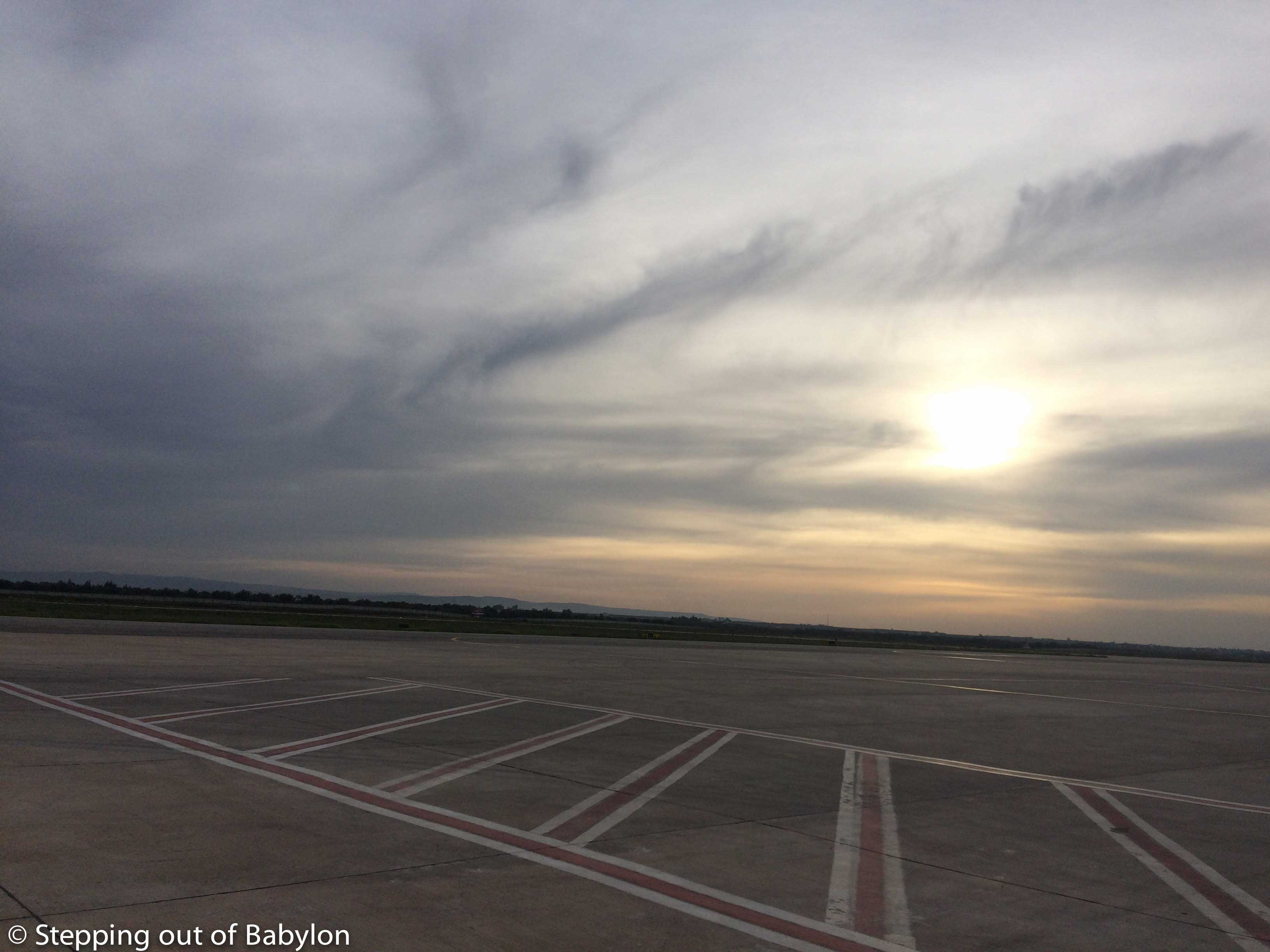
Fes Sais International Airport is modern, organized, very quiet and clean… and conveniently located about 17 kilometers South from the medina.

HOW TO GO FROM FES TO THE AIRPORT BY PUBLIC TRANSPORT

The taxi (grand taxi) is the most popular way to reach the airport and it costs between 120 to 150 Dirham, being the best option if you are caring heavy luggage or if you have the chance of sharing the taxi with other passengers.

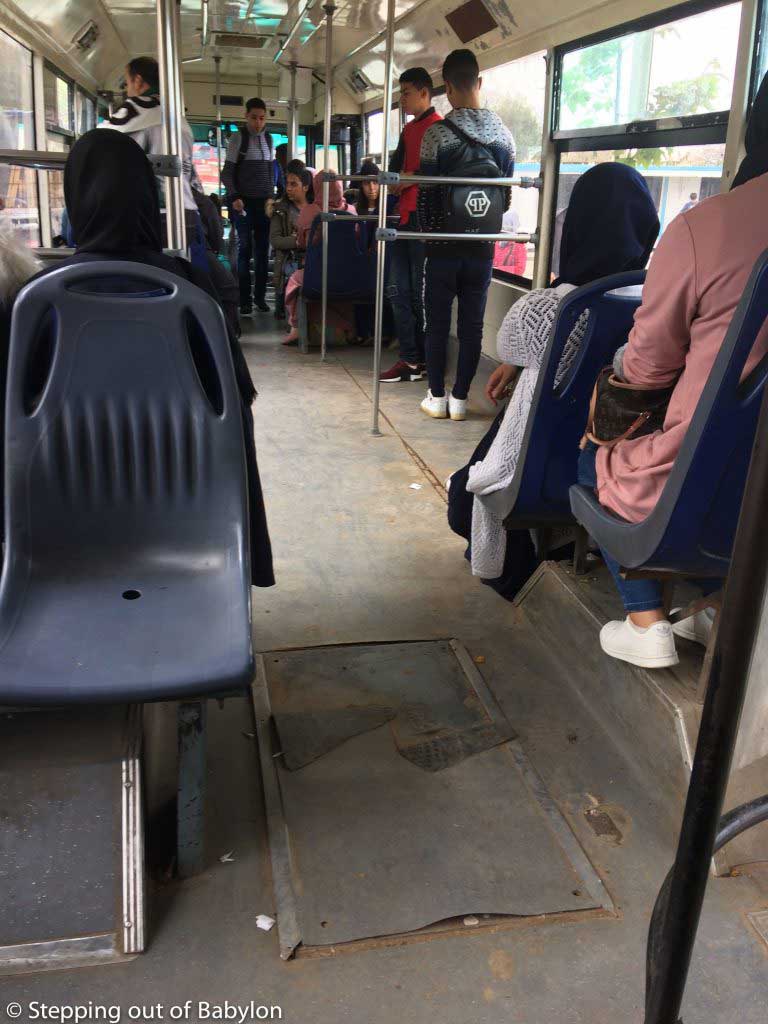
But there’s also a regular public bus from the city that passes by the airport… it’s not fast or comfortable but it’s very cheap!!!!… but you need to go with plenty of time as the schedules are not respected and the traffic can be a intense.

The reach the airport you must take the bus 16, that start Avenue des Almohades, very close to the train station. There isn’t a proper bus stand or any sign or indication about this service, but the place where the bus 16 stops is easy to find: if you come out from the train station, walk until you reach the big avenue with a roundabout, there walk to the right, about 2000 meters and you’ll find other people waiting for different buses to who you can confirm if you are at the right place. On your right side you’ll see a ground that works more or less as a bus terminal; the bus 16 stops at the main avenue just before the park entrance.

Bus to Fes airport

There’s a bus every 30 minutes but I talk with people that assume that sometimes can be one hour… I was lucky and didn’t wait more than 10 minutes.

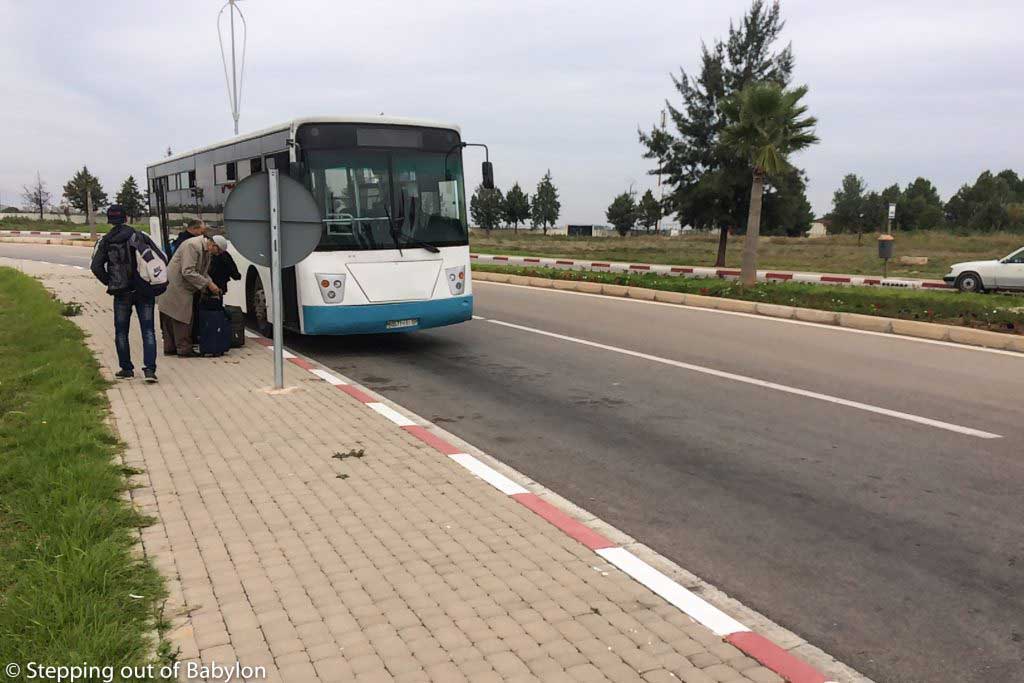
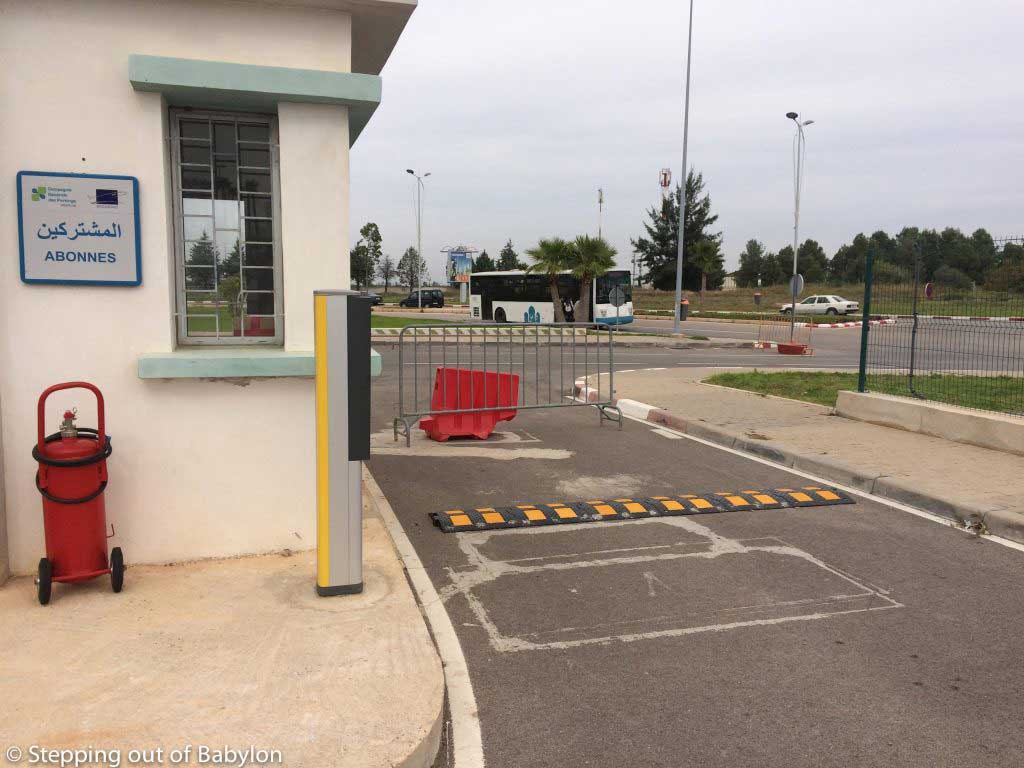
The bus will drop you about 350 meters from departure entrance, close by a roundabout without much reference points, but that is very close to the car park and from where you can see the airport building.

Bus stop at Fes airport… there is no sign or stand that indicated where bus stops
parking area close by the bus stop

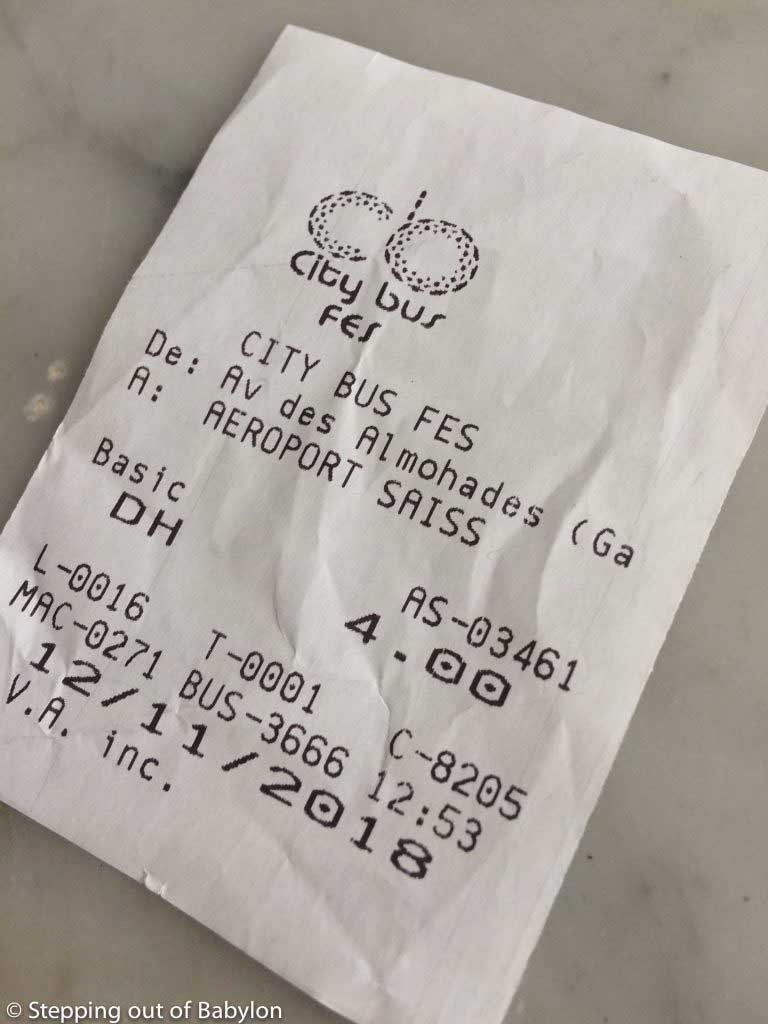
The bus ticket costs 4 Dirham and the trip takes around 45 minutes to 1 hour… but can be much longer depending of the traffic.

Bus to Fes airport: the ticket cost only 4 Dirham

If your accommodation is nearby the medina, the easiest is to take a shared taxi (petit taxi) from the Bab Boujloud (Blue gate) or from Batha; the trip takes about 10 minutes, depending on the traffic, but at peak hour it can take more than 20 minutes. At Fes, the petit taxis have taximeters and I end up paying just 5 Dirham from Batha to the Train station, despite the driver had picked up and dropped other passengers along the way.

Moroccan cuisine for vegetarians

A QUICK GUIDE TO A VEGETARIAN DIET IN MOROCCO

Morocco, by its Mediterranean traditions and by the Muslim culture has a meat orientated gastronomy where lamb and chicken are dominant; the exception is the coastal areas where the fish is popular particularly the sardine.

But still, there are several options for vegetarians in the Moroccan traditional cuisine, like the soups, sandwiches and a big choice of bread, which combined with olives, nuts and dry fruits result in a balanced diet for vegetarians.

Many restaurants in the more popular tourist areas already have a vegetarian tagine or couscous, and in the small villages or if you have the chance to eat in a guesthouse for sure that they are available to prepare a vegetarian version of these traditional dishes, as the food is usually prepared daily, and you just need to order with a few hours in advance.

“tagine” a stew slowly cooked the fire

About dairy products, don’t be concerned as they are not common in the traditional Moroccan dishes and in fact it’s very difficult to find cheese (except the processed triangle cheese) despite the many sheep and goats that you can spot a bit everywhere. Yogurts are an exception and you can find homemade yogurts in small groceries shops and well as in dairy shops… yes, in Morocco the commerce is still organized according to the type of product.

Eggs are easy to find as a snack but not as part of a main dish, except in the Moroccan style sandwiches, an underestimate item in the Moroccan gastronomy but that is very common between local population, and I think it’s a mandatory experience for those who appreciate street food!!

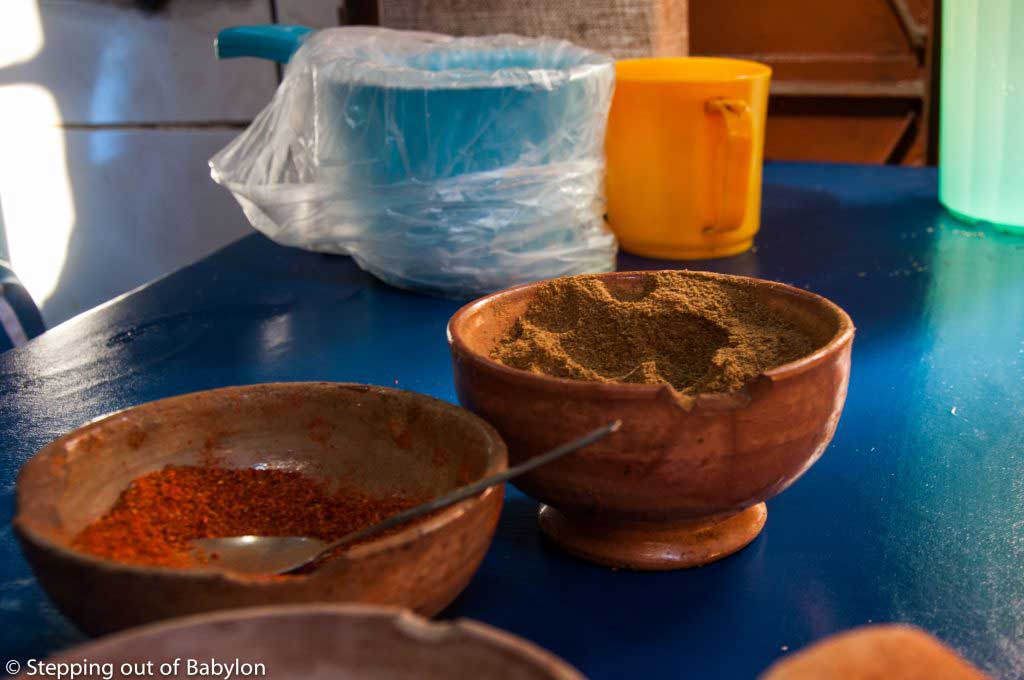
cumin and paprika… always present in the Morrocan cuisine

Moroccan soups… cheap and nourishing meals

“besara” a thick and consistent soup made from dry fava beans

As a vegetarian, the soups were many times the best option for a meal, as they are widely available, are very cheap and are served along all day… just have in mind that each kind of soup has a specific schedule.

In a local eatery a soup should cost between 6 and 8 Dirham, which many times includes half bread…. if not, just ask for it, as it doesn’t cost more than 1 Dirham.

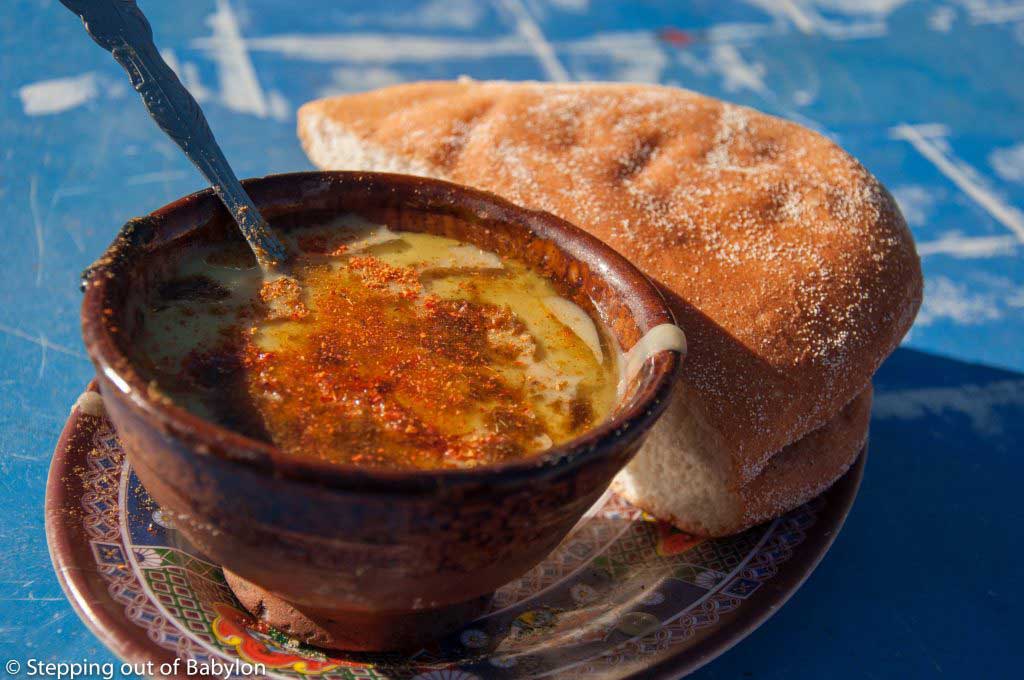
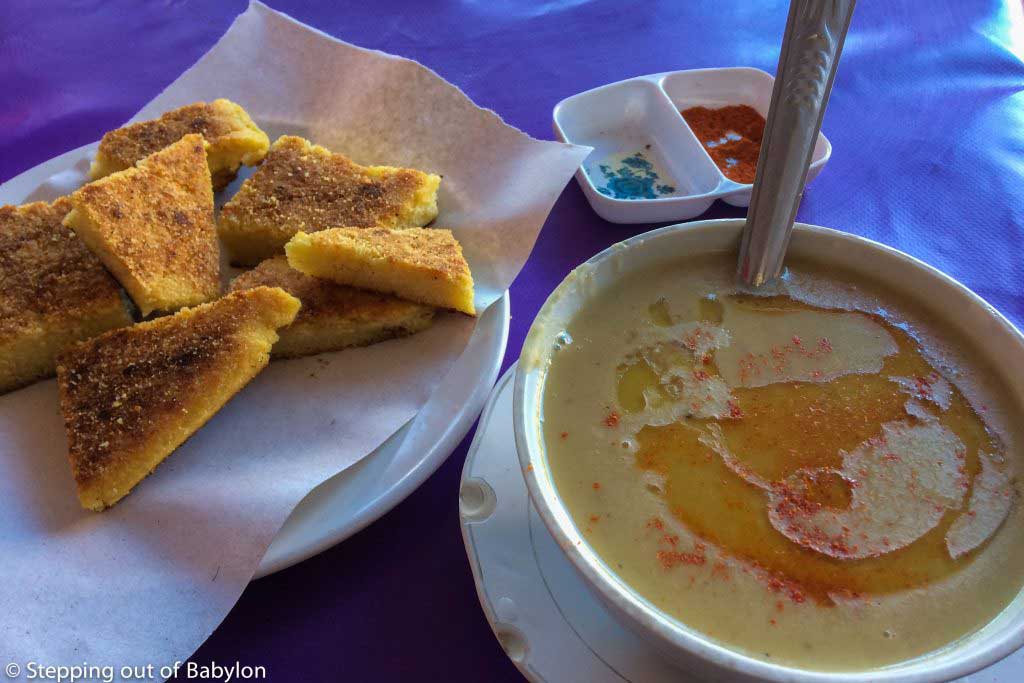
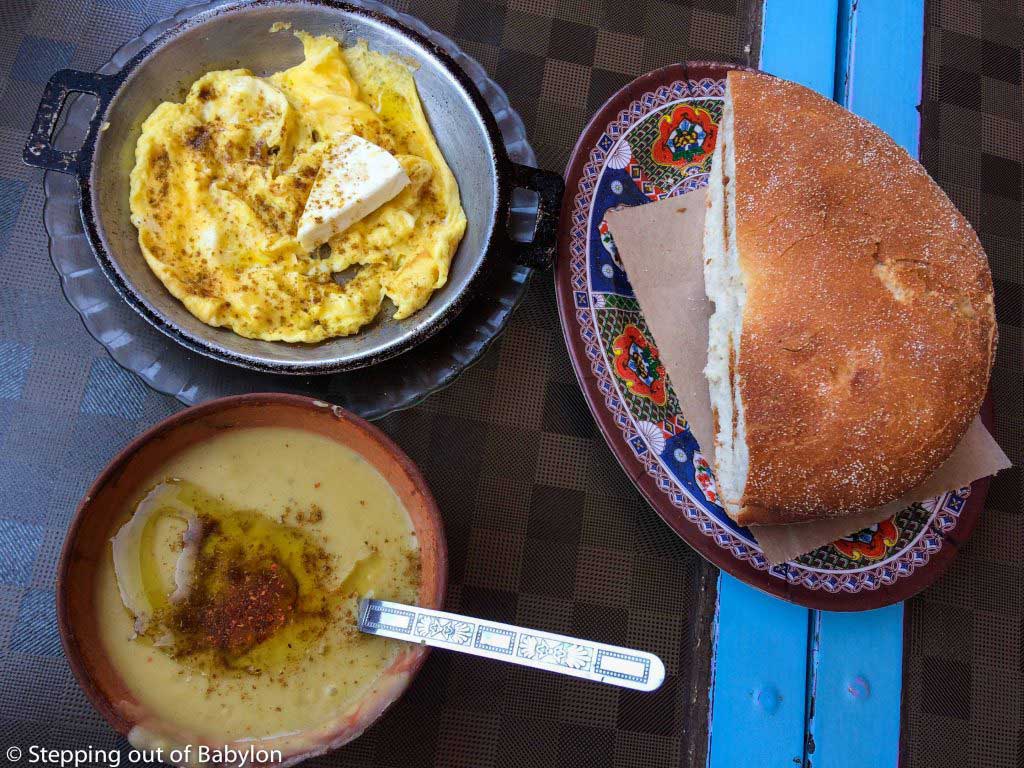
The besara is a thick and consistent soup made from dry fava beans, which are soaked, cooked and reduced to a pure. It’s served in a big bowl, with a generous topping of olive oil and lots of paprika and cumin, which contrast with the pale brown color of the soup. It’s a classic of the traditional Moroccan breakfast, but sometimes it’s also available in the evening.

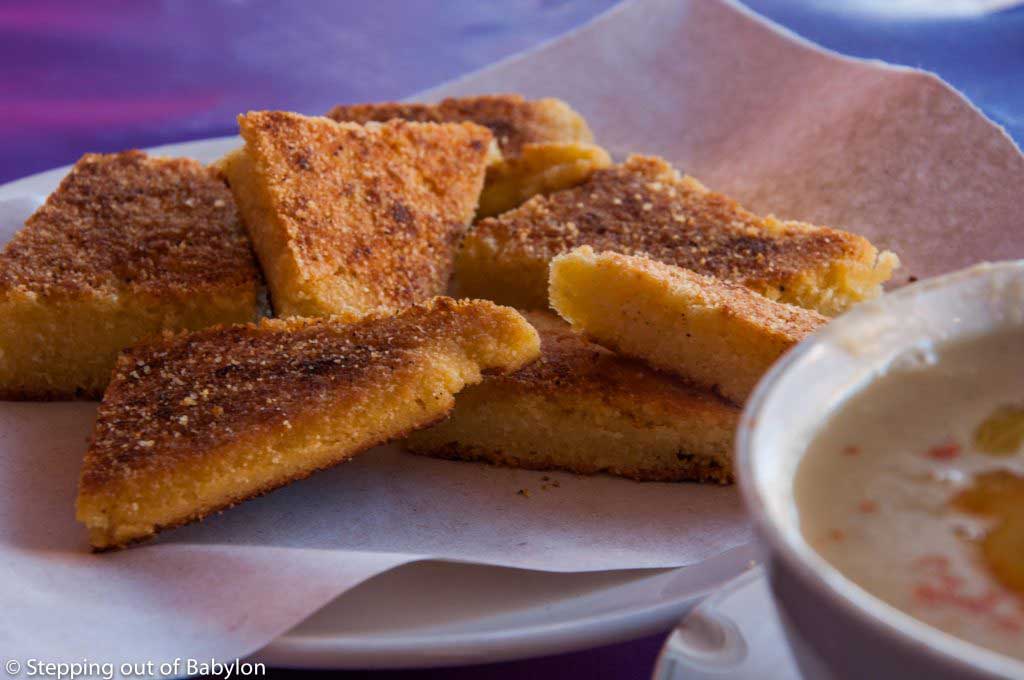
“besara” soup seasoned with paprika and served with “harcha” a bread made from semolina

Not so easy to find is the lubia, a white beans soup with a tomato sauce base. It’s not the most appealing option but ate with fresh bread and a few olives can be a feeling meal. I didn’t find any sign or indication of this soup in the eateries where I pass by… it seems that the local population knows where to get it, so the best is ask directly at the counter.

“lubia” beans soup

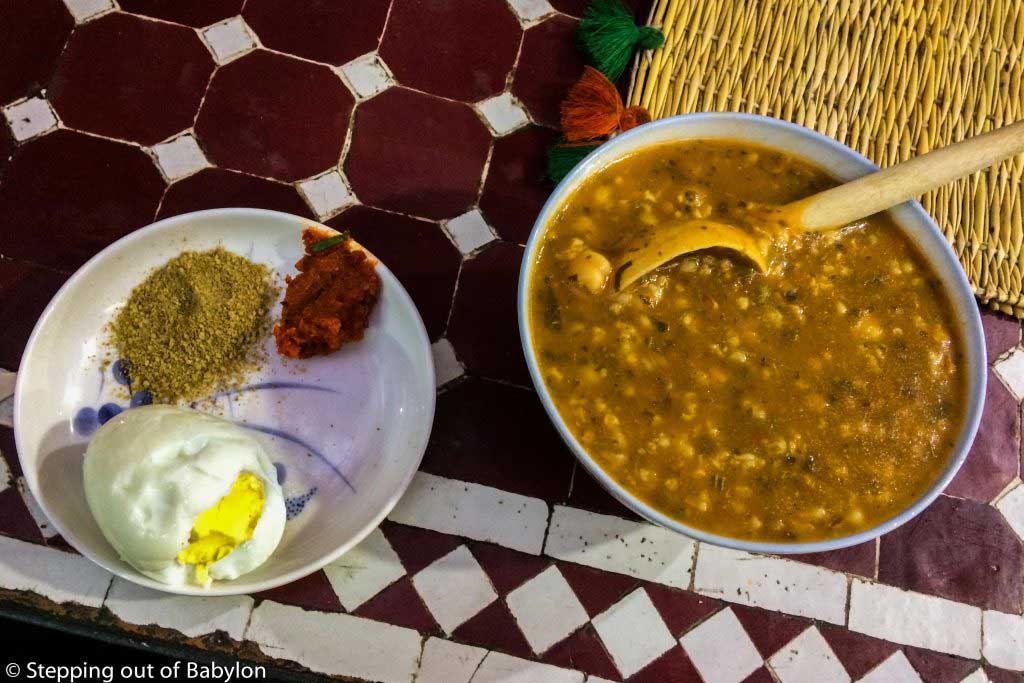
For the evening, the most popular option is the harira, the traditional Moroccan soup made with chickpeas, vegetables and a bit of pasta. This type of soup use traditionally meat stock (I saw using that processed cubes) but it’s also possible to find vegetarian options… if you can communicate a bit in French or Spanish.

As it’s very consistency and rich harira was many times my dinner, working perfectly as comfort food for the cold night of the desert areas.

“harira” soup made with beans, vegetables and pasta with boiled egg as a side dish… a delicious comfort food for winter nights

The eateries that serve harira, as well as besara, don’t have a menu or a sign indication it, but try to spot a pile of empty bowls nearby the counter or simply ask for it.

Morrocan bread… so many options to explore

The bread remains as a delicious memory of the Moroccan stay.

Since early morning that you can feel the smell of the freshly baked bread, being available all day, not only in the proper bread shops but also in groceries shops all over the city, in improvised stalls in the medina alleys, in street hawkers pushing hand cars along the markets or directly at the bakeries, where you have the chance to observe the handmade process of making the bread, and having the opportunity to taste the warm bread that has just come out of the oven.

From the rooftops from where you can have a medina view, it’s possible to spot a thick column of black smoke indicating the location of a bakery, often located next to a mosque as well as a public hammam, as these three spots are a kind of institution in the traditional Moroccan lifestyle.

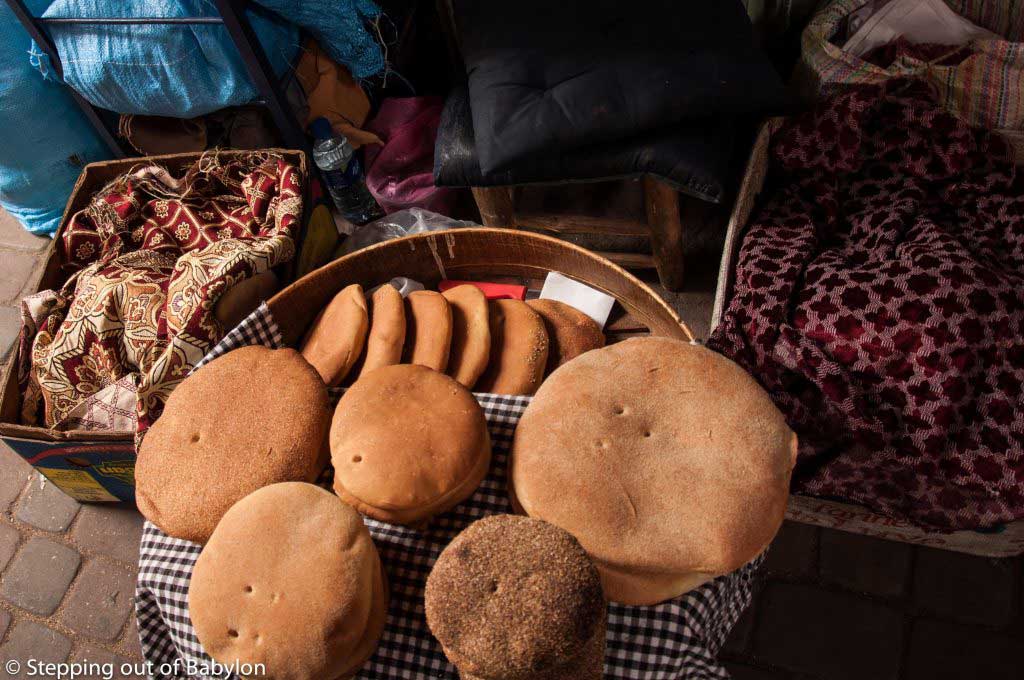
In Morocco, the bread is mandatory at any meals and despite the French colonization that brought the baguette, the traditional Arab flatbread is the most popular, the khobz a classic white bread made from wheat that is present at every meal and in every house. There are few variations of this type of bread with a darker color and more dense texture… just walk around and try the different kinds as the bread change from city to city, and from bakery to bakery!!!

khobz a classic white bread made from wheat that is present at every meal and in every house

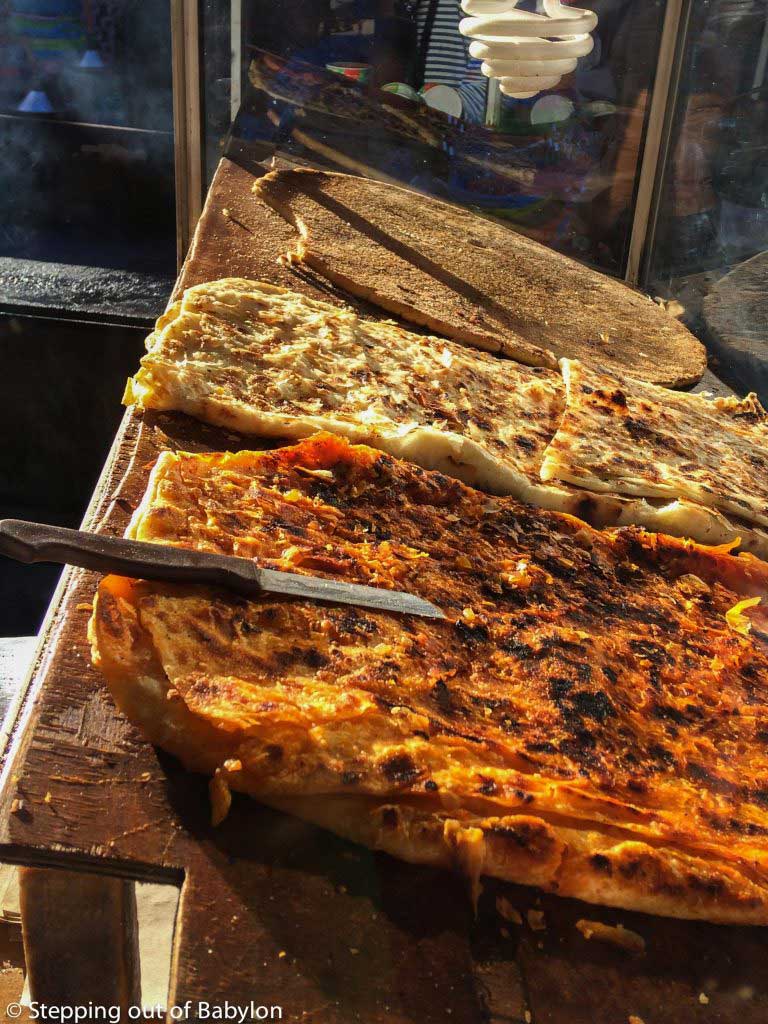
But there are many more kinds of bread as the msemen, a flatbread with a square shape, made from layers of dough, that is fried in a pan, gaining a crispy texture on the outside and a bit more chewy on the inside. It can be eaten plain, with olive oil, honey or cheese (always the over-processed-triangle-cheese, as proper cheese is rare in Morocco), many times as snack or as a meal with a soup besara or harira.

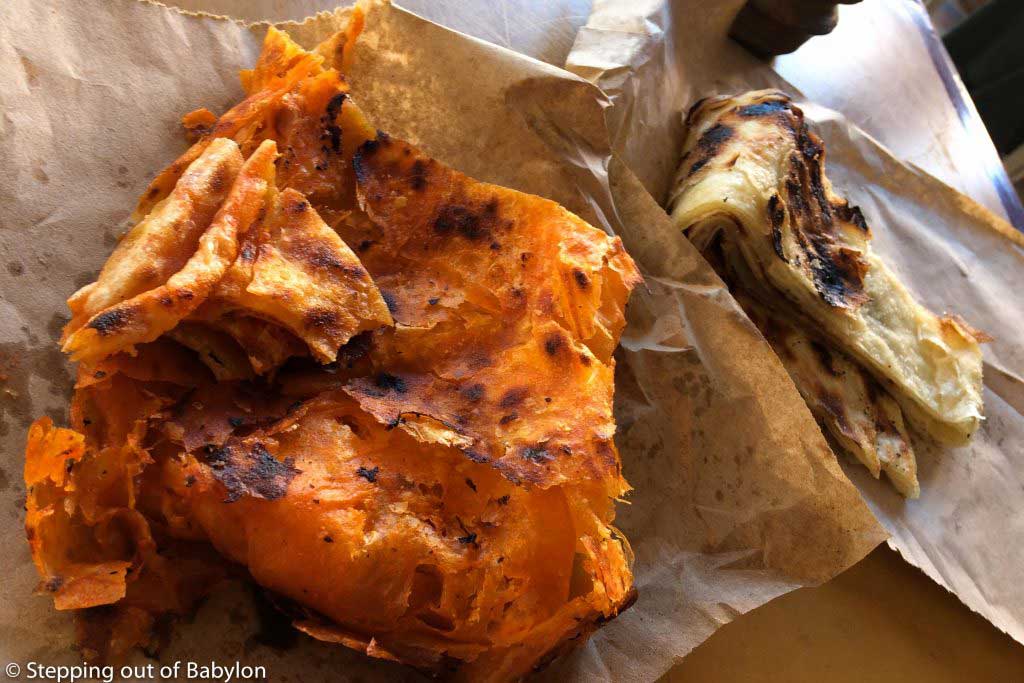
There also a “red” variation of msemen, seasoned with a paprika and onion past that make it more tasty and interesting. The msemen is cooked in big trays and sold in portions, by weight… you can just ask for 2 Dirham or any other amount.

“msemen” a flatbread with a square shape, made from layers of dough, that is fried in a pan, gaining a crispy texture on the outside and a bit more chewy on the inside
“msemen”… red if seasoned with paprika and plain

But I was totally surrendered to the harcha, made from semolina and cooked in a flat metal surface heated by gas, resulting in crispy texture, dense inside and with slightly sweet and salty flavor. Usually it’s not available at bakeries but can be found at the same shops or stall that sell msemen, and it’s easy to spot by its yellow color and by the perfect circular shape, that many times is cooked in a big size disk shape (more than 50 cm), that is sold in portions, by weight.

Many times I saw old men in teashops eating it during the day with a tea, but can also be eaten as a side of a besara or harira soup for breakfast or evening meal. But I found it so delicious that I was eating harcha just plain as a snack, with some olives and nuts.

“harcha” a flat bread made from semolina that is eaten with a soup or simply with a tea at the breakfast

It’s not unusual to see ladies or kids carrying trays cover in with a cloth in the streets of the medina, on the way to the community ovens where the homemade bread can still be baked, keeping the Moroccan traditional where each family made their own bread, attesting the importance of the bread in the family and social life in Morocco.

Sandwiches… also an option for a vegetarian diet

The traditional Moroccan sandwiches are also a good option for vegetarians, being widely available in medina streets and markets.

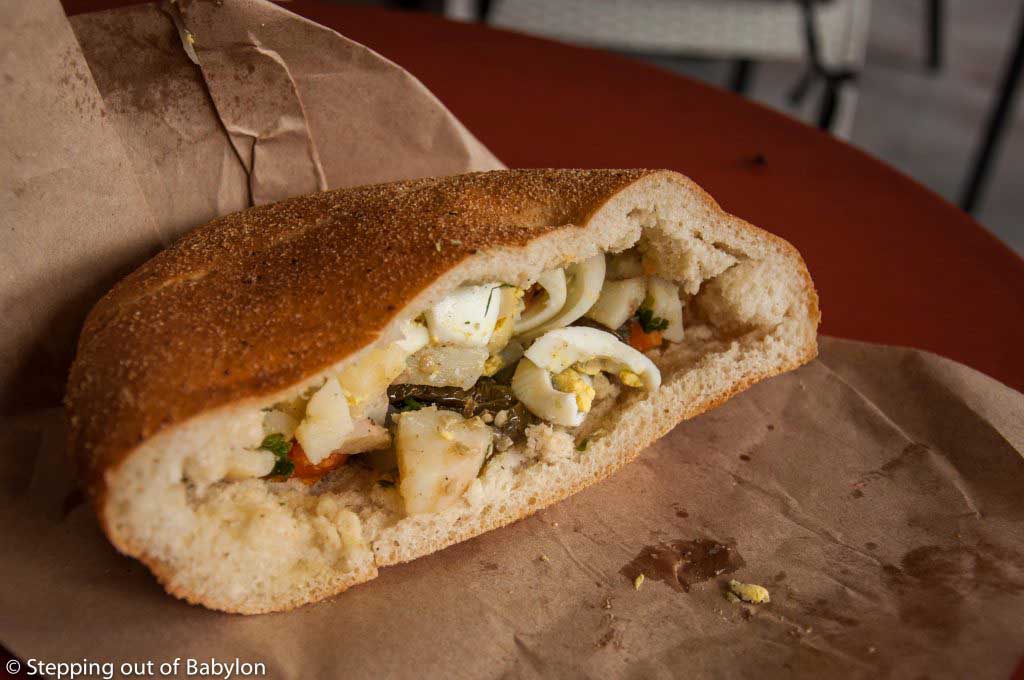
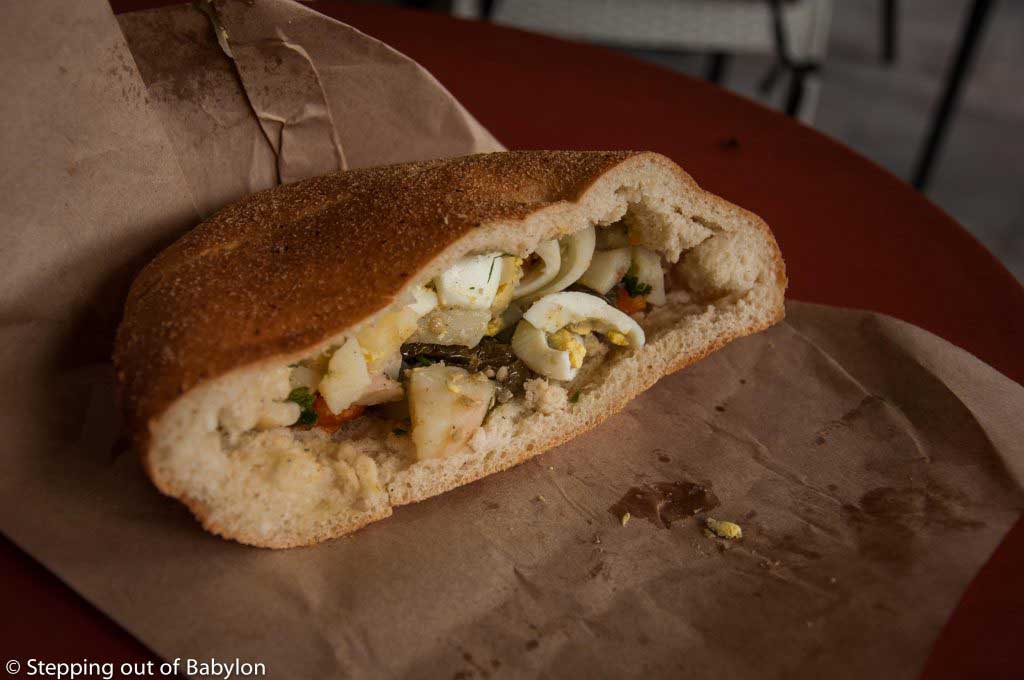
These sandwiches basically consist in half of a flatbread stuffed with egg, boiled potato, meat, grill vegetables (sometimes also deep fry), seasoned with olive oil and a lot of cumin. You can choose the ingredients from a window that usually face the street, where usually there’s a lot of grill vegetables, like pepper and aubergine, add a bit of fresh tomato salad, egg and potato… yes, it’s strange potato inside bread, but this combination that is chopped and mix inside the bread end up revealing a very tasty meal!

For a vegetarian sandwich, with boiled egg, I pay 15 Dirham.

Moroccan sandwich… a snack that suits vegetarian diet
Traditional Moroccan breakfast: soup, bread and eggs

Tea and coffee… a strong flavor whatever the choice

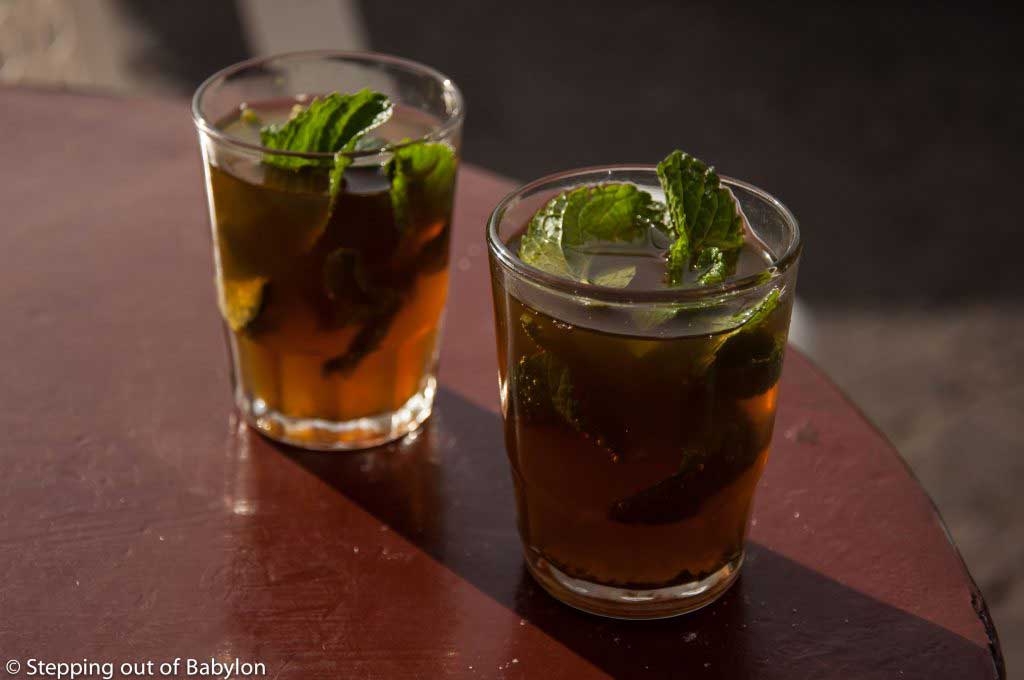
We can say that tea is the national Moroccan drink, a strong green tea, seasoned with mint and served with big chunks of sugar. It’s not just about drinking tea… is about how to prepare it, dipping the mint leaves into the freshly boiled tea, adding the sugar cubes, and after a pause, pour the steaming contents of the teapot into the small glass cups. The technique lies in the skill of pouring the tea into the cups by placing the teapot at a certain high, in a way to create bubbles on the tea surface, producing a characteristic sound that you can’t miss if you hang out in a Moroccan tea shop. From the cups, the tea returns to the teapot and this process is repeated several times until the mixture reaches a mysterious point that only those initiated in this technique know.

We can say that Moroccan’s have a sweet tooth, and if the tea comes already in cups it probably will be already with sugar… a lot of sugar. If you have the chance to communicate with the staff it’s better to order the teapot and then you add the mint and sugar to your taste. The tea is always made with green tea, very intense especially the last cup, where the leaves left on the bottom of the teapot release the typical astringent taste of the over boiled tea.

Moroccan tea: strong green tea with mint leafs

Despite the tea being the most popular drink, the coffee is also widespread and it’s not difficult to find an espresso… but be prepared as the coffee in Morocco is very strong, not just in terms of taste, being very bitter, not just in terms of caffeine, giving you a strong kick that last all day 😉

coffee… a very strong expresso

Tagines… where are the spices?!?!

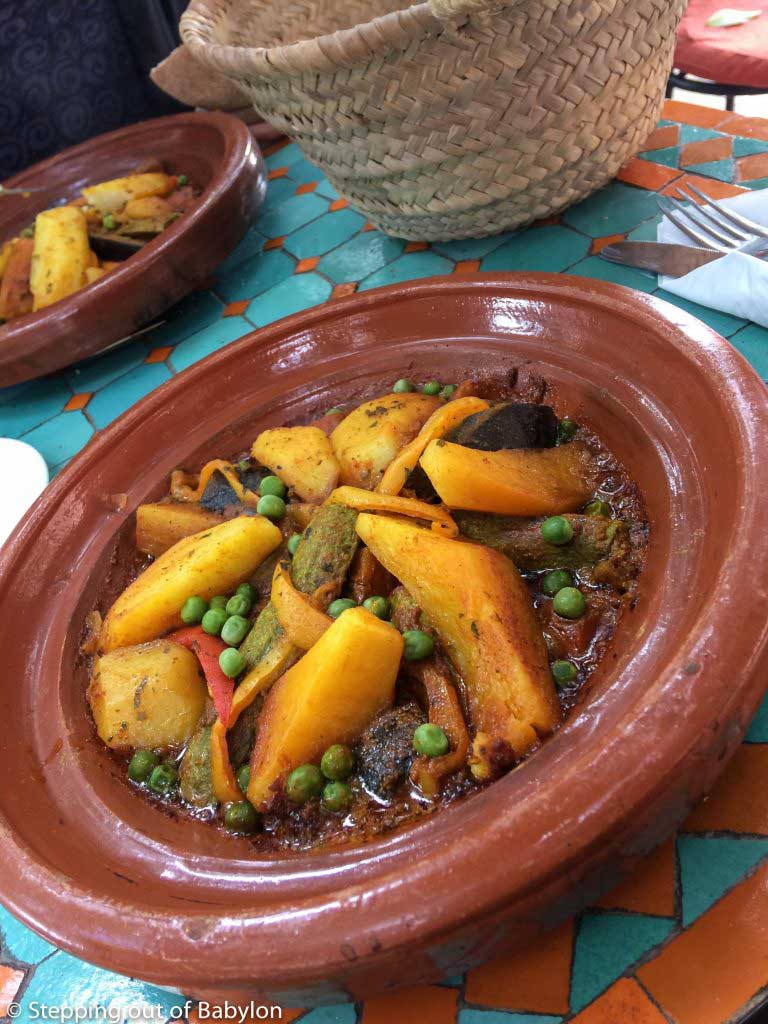
Tagine is the Moroccan national dish without doubt, not only in the tourist menus but also present in daily Moroccan meals, being a good option for vegetarians as it’s available everywhere. In small villages maybe it’s not so easy to find, but if the restaurant doesn’t have a vegetarian tagine ready just ask them to prepare one version of this dish without meat or fish. Yes, despite the dominance of meat in the Moroccan diet, nearby the cost it’s easy to find sardine tagine.

The couscous is very popular too, and you can also find vegetable couscous, but for the local population is just a Friday meal, eaten after the visit to the mosque.

couscous

But after seeing so many spices shops, with piles of cumin, paprika, nutmeg, cinnamon, pepper, ginger, curcuma, saffron… I felt a bit disappointed with the soft taste of the tagines and couscous, at least the vegetable ones, where the flavours of the ingredients are present but where something was missing to give a bit of life to this stew. After a the tagines that I try in restaurants as also a few homemade versions, I just got a bit bored and question myself if they make the tagine tasteless to suit the western taste or if it’s just like that!

vegetable tagine

Yogurt and smoothies… fresh and homemade

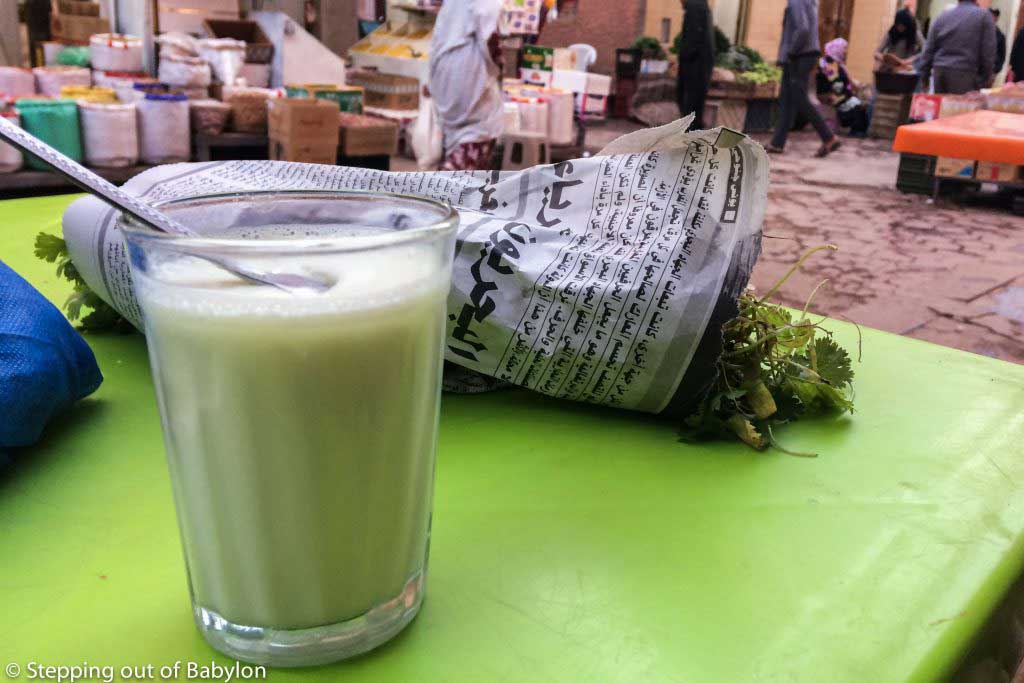
In Morocco, it’s easy to homemade yogurts in juice and smoothies shops and well as in dairy shops, for about and it costs about 2 Dirham. The taste and consistency change from shop to shop, but they all have a bit of sugar… sometimes a lot of sugar!!!

The juice shops are a popular choice between the local for an afternoon break and in Marrakesh main square there’s a lot of this stalls, but I confess that I found these guys a bit push and never try there. I had a tasty avocado smoothie in Tinghir in a small shop that was also selling homemade yogurt. These shops offer a big choice of fruits, and you can make the combinations that you want… but watch out that the smoothies are made with milk.

During the months of October and November, it’s the pomegranate season, and in medina streets and markets, it’s easy to find these street hawkers that make the juice at the moment. They are very sweet and tasty… I think the pomegranates that I try in Morocco where the best that I ever try!!!

yougurt

Sweets… sugary and delicious

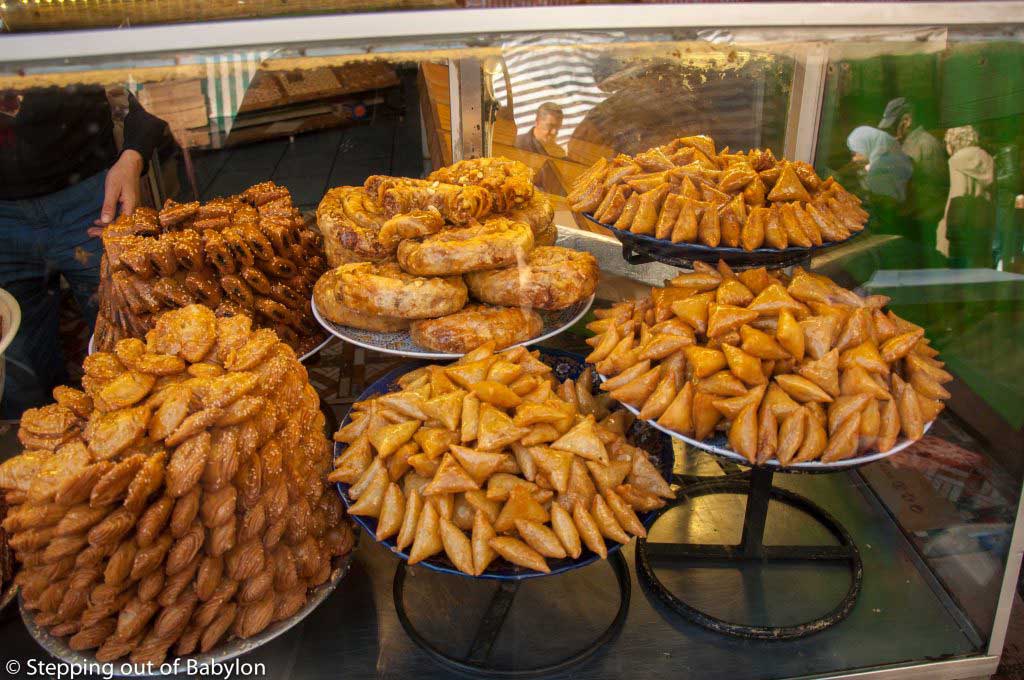
Sugar, honey, nuts and puff pastry… these are the magical words that make sweets a landmark in Moroccan gastronomy.

It’s also present the French influence with more sophisticated cakes with cream that in Morocco gain a colorful version. The mille-feuille are very popular and are sold in bakeries as also in groceries shops, a bit rough version of the French cake but worth the 2 Dirham if you are in a sugar mood!

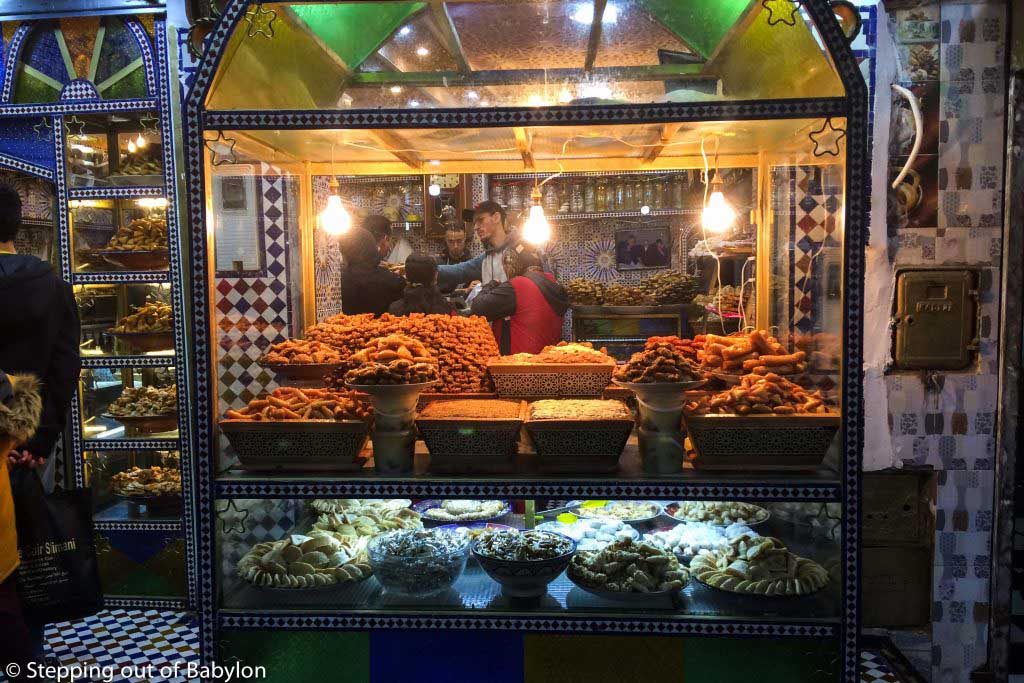
Meknes and Fes where the best places to explore the endless variations of the traditional Moroccan sweets, many of them made with puff pastry, stuffed with nuts and soaked in a sweet syrup: if they attract bees, probably they are made with honey… otherwise, if it’s just a sugar syrup the flies take over 😉

Moroccan sweets made with puff pastry, honey and dry fruits

Nuts and dry fruits… well come to the paradise

Always present in Moroccan diet are the nuts and the dry fruits, with the dates being the dominant product, being Morocco a big producer (and a huge consumer!!!) despite this, the top quality dates are sometimes imported from Tunisia or Middle East countries. And nuts and dry fruits are a good and healthy choice to carry around while traveling and suit a vegetarian diet.

The souks have specialized shops where you can find a big diversity for different prices according to the quality… you can always ask to try before you make the choice. The markets are also a good place to buy dry fruits, and in some cities there even a specific street or area dedicate to dry fruits and nuts, where the dates stand up, showing the importance of this products in the Moroccan daily diet.

dates

Street-food… tasty and oily

Morocco is a good place for street food, being a cheap choice with several vegetarian options.

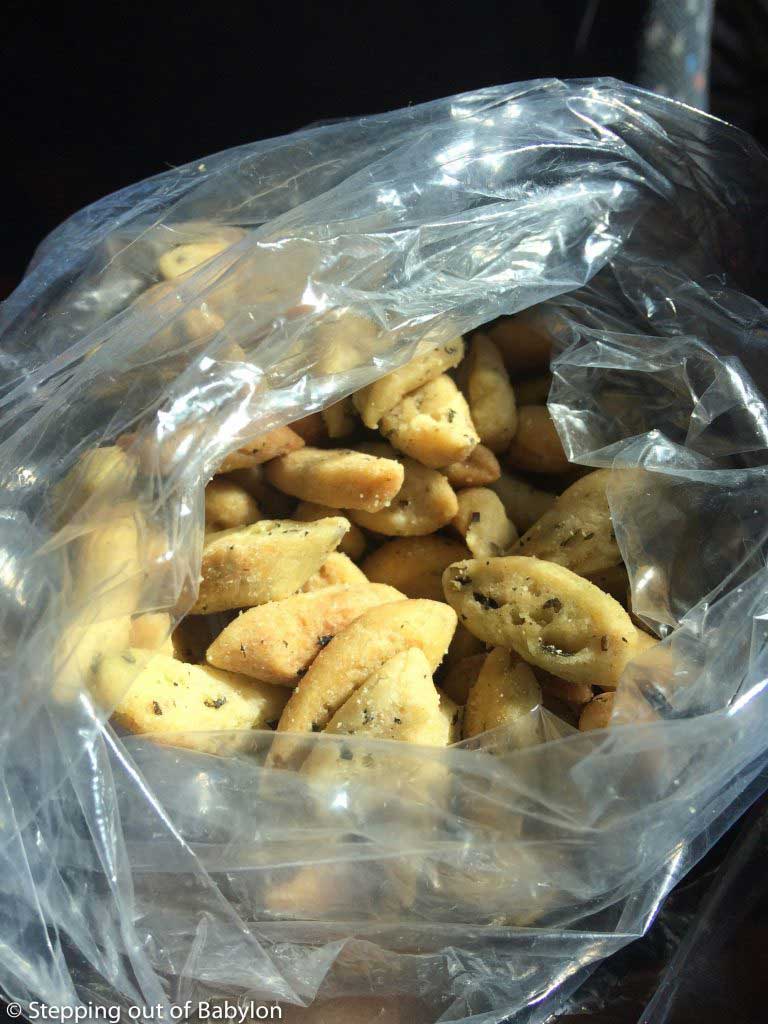
In the medina souks, there are shops specialized in snacks, some sweet others salty seasoned with herbs and spices, which are good entertainment for long bus trips. The products are displayed in large spreads on a bench at the entrance of the store, from where the seller skillfully takes with a long spoon.

street food

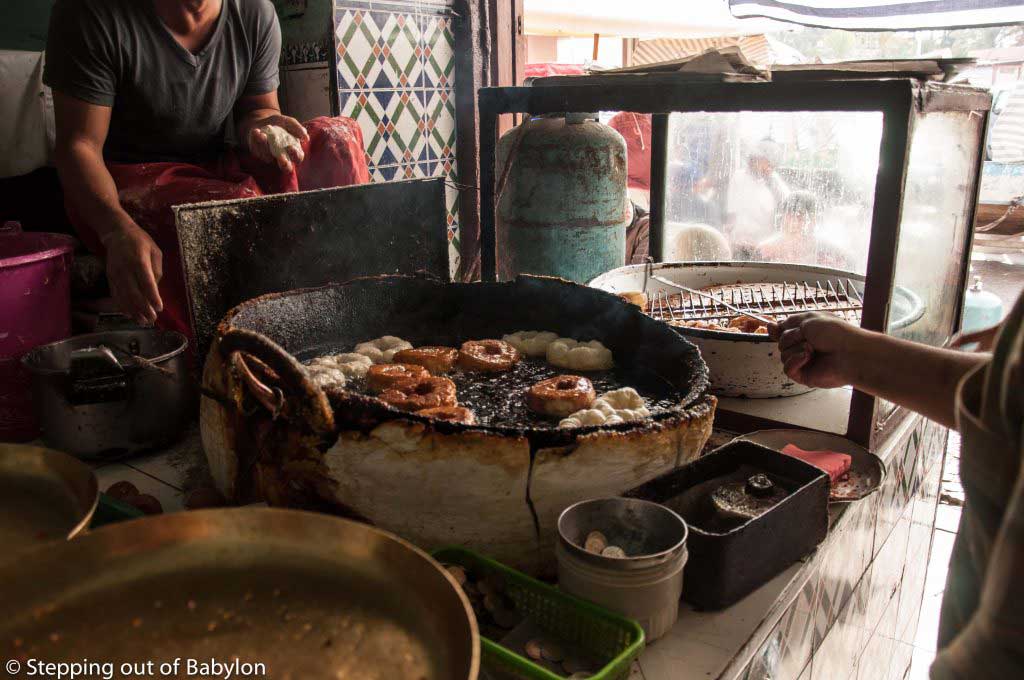
For those who like deep fry stuff, the Morrocan doughnuts are a mandatory experience, being freshly made in the morning in some local coffee shops… they are good with a besara soup or just with a tea, but be prepared for an oily experience!

doughnuts an oily breakfast

The Medfouna a.k.a. berber pizza is a flatbread filled with vegetables and spices, fry in a metal flat surface, popular in the south nearby the desert areas. I try it in Ouarzazate in a street market in the evening time and really enjoy the crunchiness of the dough with the intensity of the spices that season the vegetables filling… I couldn’t avoid a second round!

“medfouna” a.k.a. Berber pizza… a flat bread stuffed with chopped vegetables and seasoned with cumin… a bit oily but yummy. It was impossible to avoid a second dose

salty snakcs

Markets… a colorful experience

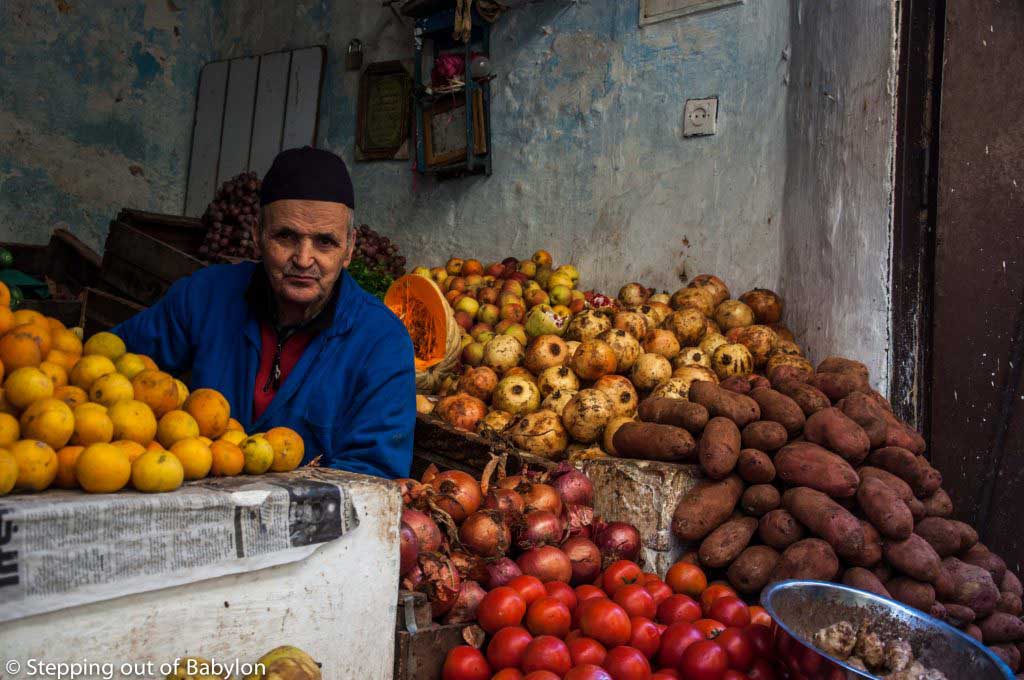
traditional Morrocan market

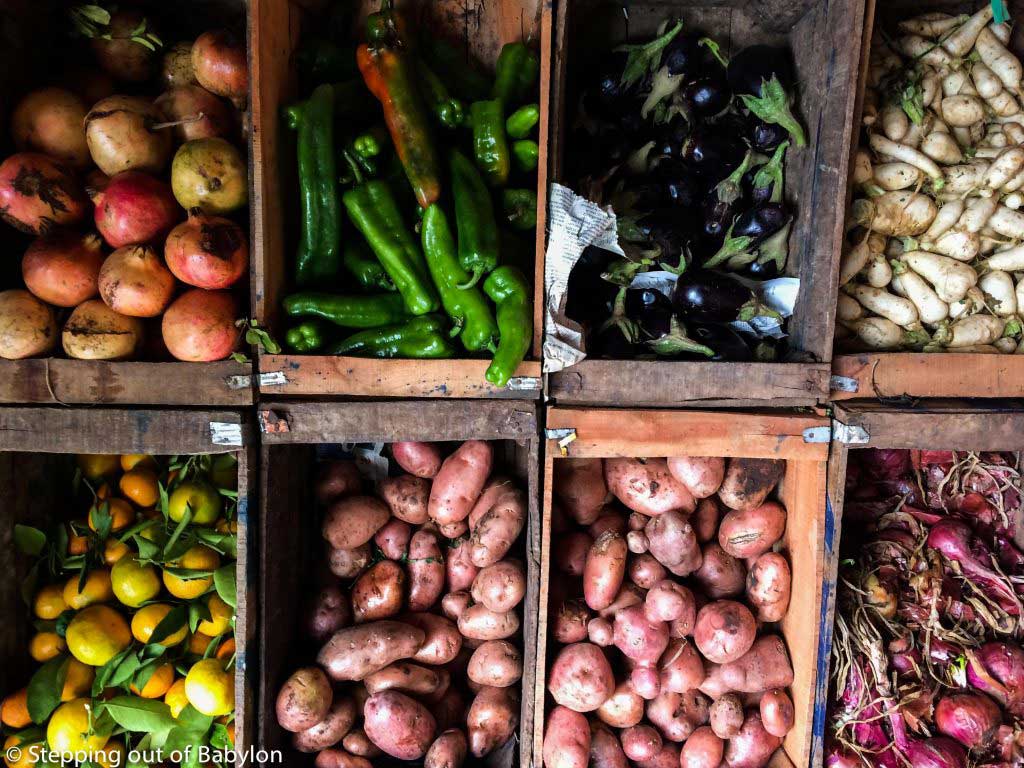
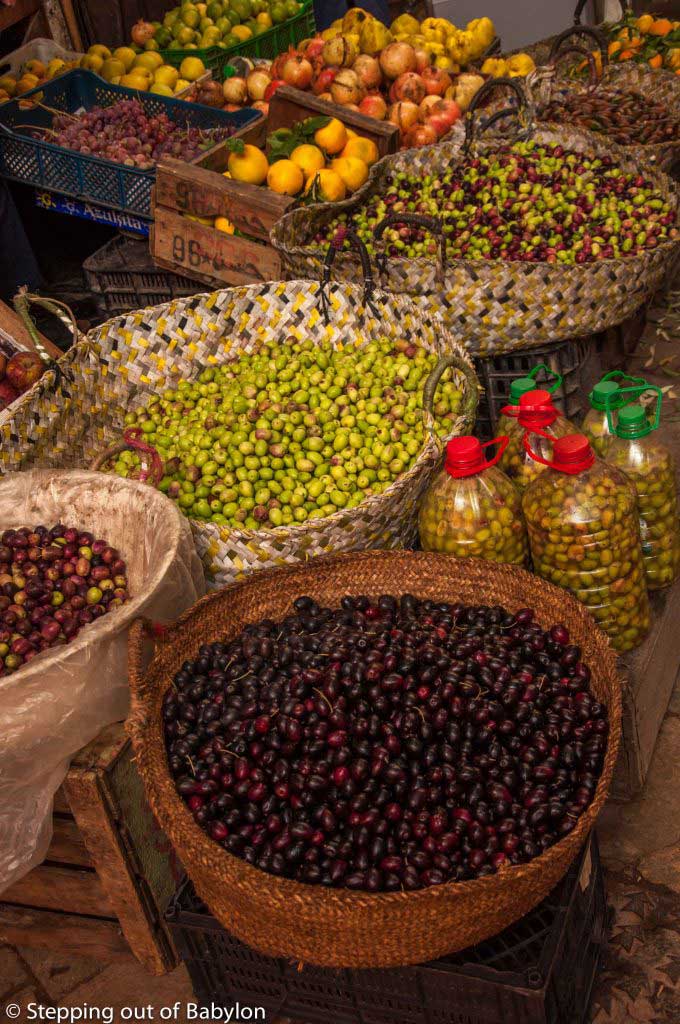
As a result of different altitudes and climates, Morocco offers a wide range of fruits. The autumn brings the apples, oranges and the pomegranates pop up as also the cactus figs coming from the more desert areas. But as traditional in Mediterranean climate the olives are a landmark in Moroccan cuisine and can be found in a wide range of types as also seasoned with paprika, chili, lemon or spices.

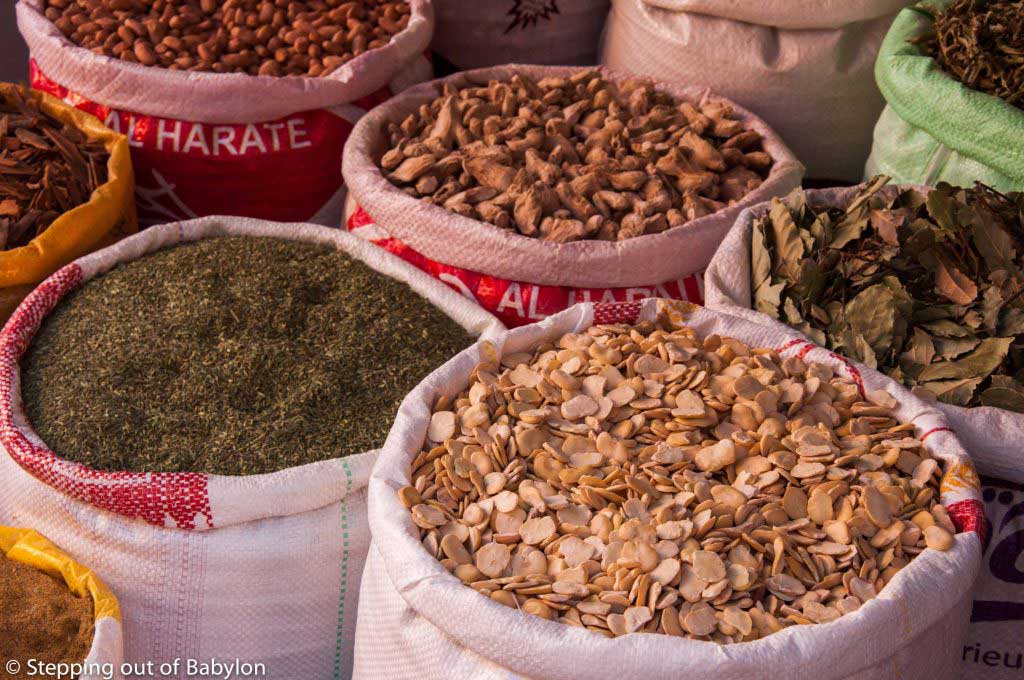
dry fava beans used for “besara” soup
olives

But the markets offer a wide range of choice in terms of fruits and vegetables and everything looks fresh and attractive, filling up the streets with colors and smells, changing according to the season and to the climate of each region.

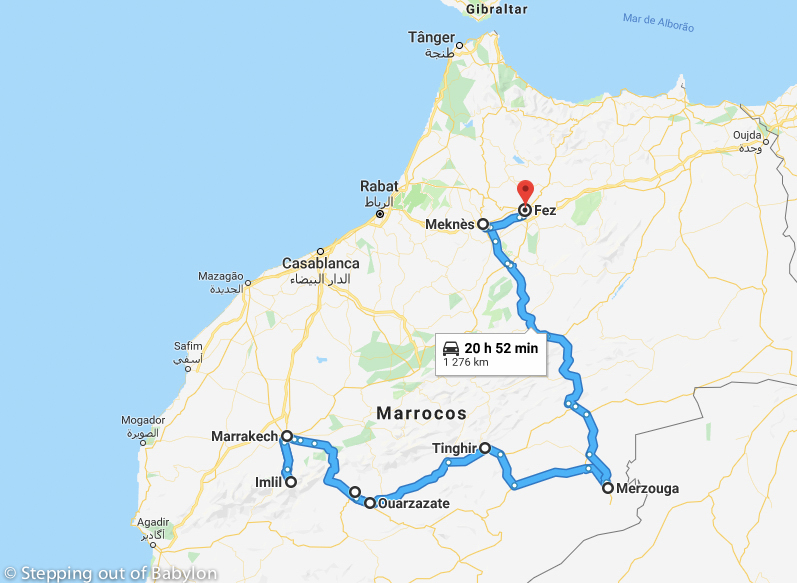
20 days in Morocco: itinerary & costs

Itinerary:

  • Marrakesh: 3 days
  • Imlil: 2 days
  • Marrakesh: 1 day
  • Ouarzazate and Ait BenHadou: 2 days
  • Tinghir: 4 days
  • Merzouga and Erg Chebbi: 2 days
  • Meknes and Mulay Idriss: 3 days
  • Fes: 2 days


Average costs based on solo travel, with a focus on keeping things budget-friendly:

16 €/day (September 2018)

his average daily budget includes:

  • eating only local food and a lot of street-food in markets
  • staying always in hostels
  • using public transportation (mainly buses and train)
  • entrance tickets for tourists attractions like natural parks, museums, palaces… and hamman 
  • no spending on alcohol, tobacco, or soft drinks
  • doing my own laundry
  • SIM card for local network

NOTE: This daily average does not include expenses for shopping, souvenirs, medical or health-related costs, or visa fees (as these vary depending on your country of origin). Also it doesn’t includes flights to and from of the country.

Some costs in detail:

Erg Chebbi (desert Tour): 250 Dirham, including camel ride from and to Merzouga, sleep in tent, dinner and breakfast

… considering eating just local (vegetarian) food, sharing room or sleeping in dorms, travel by public transport only, no alcohol and no soft drinks, making my own laundry… Shopping and souvenirs are also not included, as well health expenses.

SIM card and mobile data (Orange SIM Card=30Dirham + 20Dirham/week for data).

Includes also hamman experience that in Fes cost me 60 Dirham.

Note: this trip was made during Oct/Nov 2018, which can be considered the low season, when the prices of the accommodation are lower, which is particularly significant in Imlil and Merzouga.

Fes… get lost in the medina

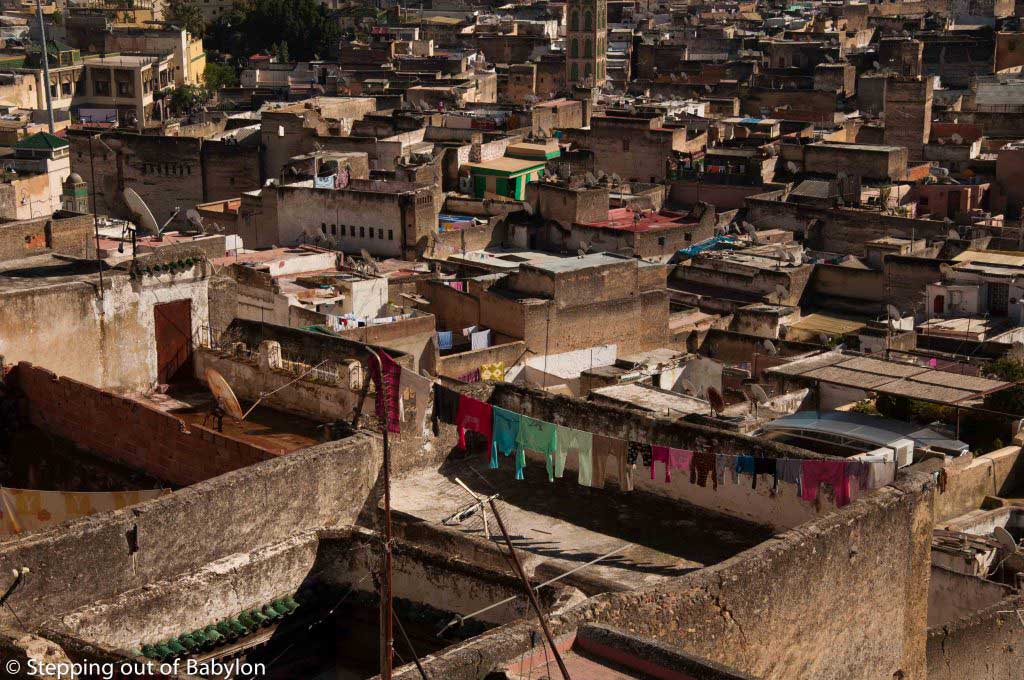
Fes medina
Fes medina


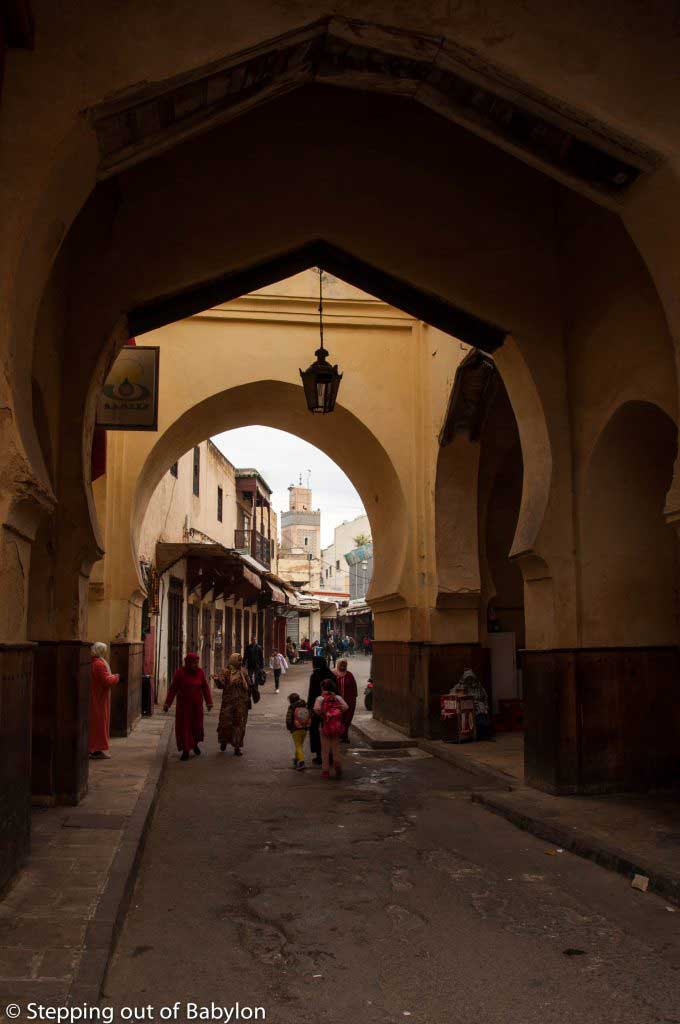
The medina, the old part of Fes city, is considered the biggest pedestrian area in the world… but it’s just by chance, being the result from the narrow and maze streets of this compact urban area, with an extremely high population density, with two-thirds of the Fes population living there. But things are changing, and small trucks have slowly replaced the use of donkeys to carry goods. Still, walking on foot is the only option to move around the medina, and getting lost in this labyrinth is part of Fes experience.

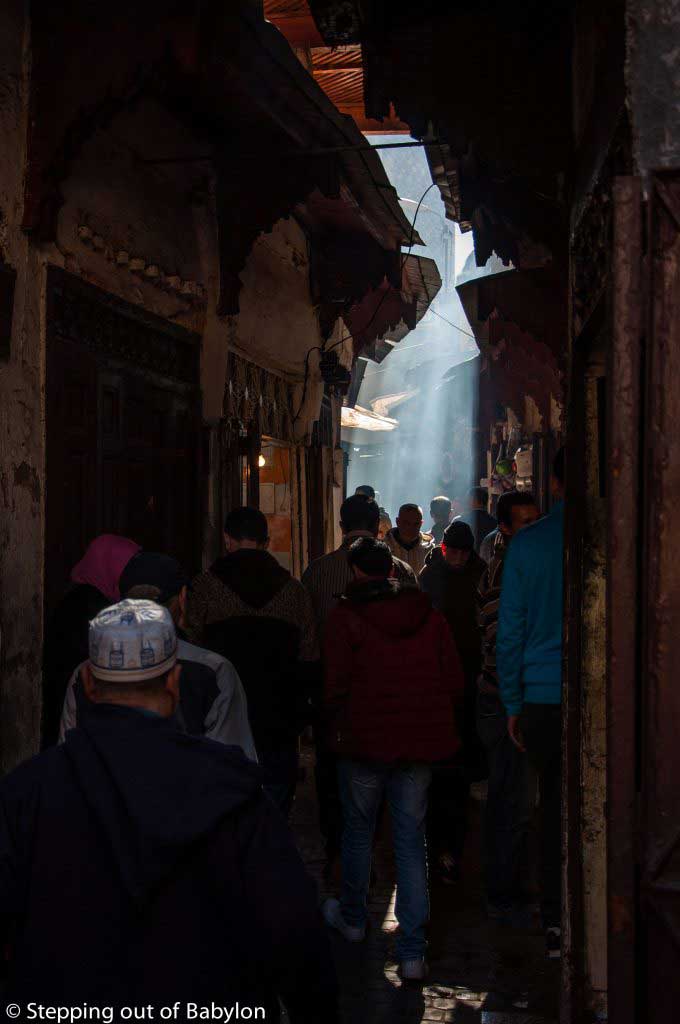
But in fact, moving random is the best way to visit and feel the local lifestyle of the medina, find hidden alleys, be surprised by the sunrays that bravely break the shadowy streets, walk through the colours of the fruits and vegetables of the street markers, find unexpected squares and yards, watch where a solitary tree resists urban pressure.

Basically… go with the flow and get lost in the medina!!!!

medina
medina

medina
medina

medina
improvised food markets are a bit everywhere in Fes medina

Fes medina is like a living being, changing all the time according to the local population schedules, a rhythm regulated by prayers calling, the smell of freshly baked bread, the freshness of the seasonal fruits, the sweet aroma of the dry fruits the acre of the olives, by the bubbling of hot tea being poured into the glass and savored with a quiet conversation.

It’s a busy and intense rhythm that fill up the streets but at the same time you feel that the time slows down as you watch the little shops that line the streets of the medina, each one dedicated to a specific craft or product, where it seems that nothing has changed in the last decades, where the arts and traditions pass from generation to generation without change or surprises.

Passing at the same place several times you are always surprised by something new that you didn’t spot before. And this is the beauty of the medina, where the ancient walls keep its own lifestyle and pace apart from the outside world.

But there’s also the other side of the city, with the high concentration of people putting in risk the delicate urban balance, where the lack of with some lack of infrastructure where buildings suffer from lack of maintenance threatens the safety of buildings in an area where the population has low economic resources.

medina
medina

medina
medina

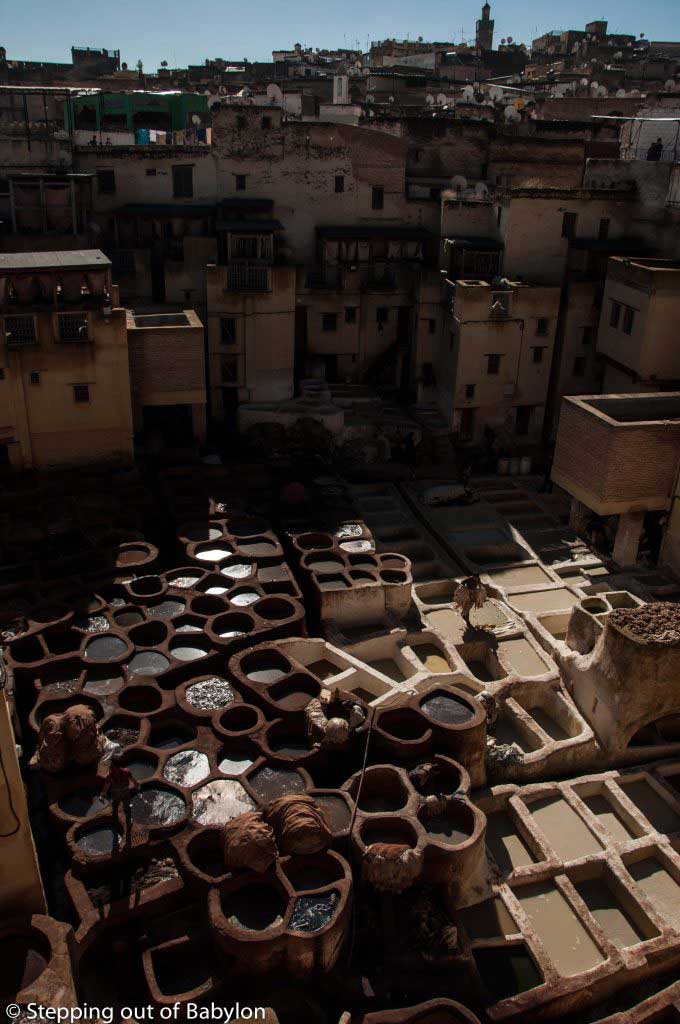
A visit to the tanneries is a classic of a Fes experience… in fact it’s an impressive experience not just because of the famous nasty smell of the manufacturing leather process (that is not so disgusting as people say) but also because of the beauty of the place itself, where the sunlight provides a geometric play of contrasts. Officially there’s not an entrance to the tanneries, and the only option to see the tanneries is to enter in one of the many leather goods stores that invariably have a balcony or a rooftop from where you can watch the hard work that involves the leather manufacture, totally based on human labor.

So, if you want to see the tanneries from one of these shops it’s more or less expected that you buy something… I was able to avoid this pressure by arguing that being vegetarian did not use products of animal origin… that was received with a certain regret but well accepted.

tanneries
tanneries

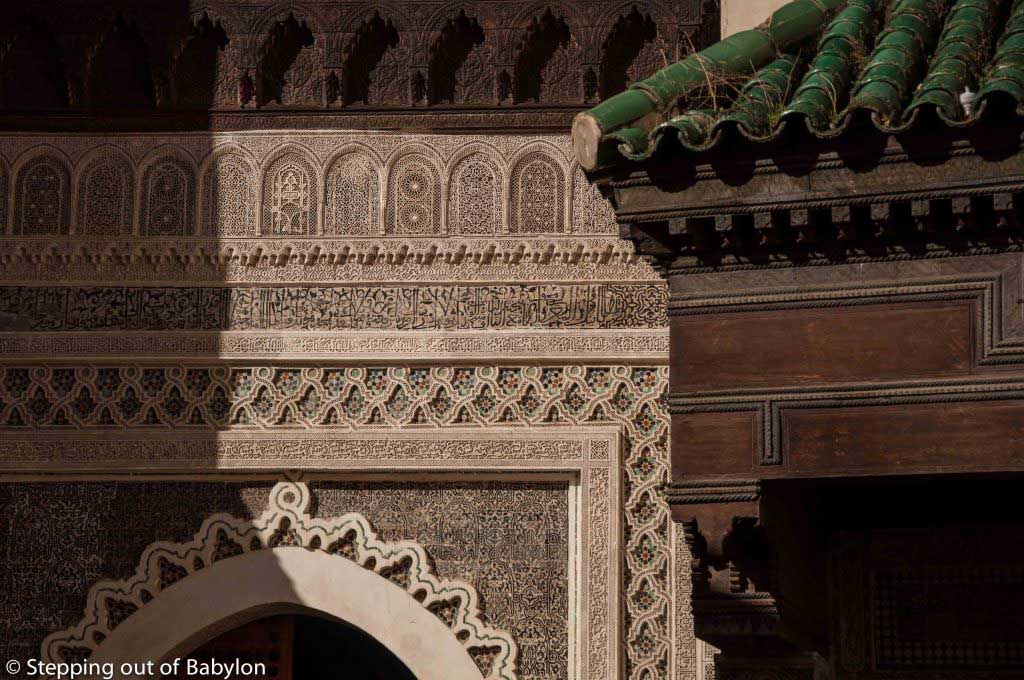
As in Morocco, all the mosques are closed to non-muslim, the madrassas (Islamic schools) are the best opportunities to contact with the traditional Moroccan architecture, with impressive intricate Moorish ornaments. The Medrassa El Bouanania, a few meters from the Blue Gate is a very good example but it’s also very busy as it’s mandatory to any tourist tour in Fes medina… although it worth the visit. Entrance fee 20 Dirhams.

But for me, the most impressive memory of Fes was the public hammam! A real local experience that left me with glowing skin, a melting sensation in the body and a sleepy mood.

Where to sleep in Fes:

Being almost so popular as Marrakesh in terms of tourism, Fes offers many accommodation options for all budgets, from luxury riads to basic dorms.

I choose the Riad Verus, located outside medina walls but 5 minutes walking from Bab Boujeloud. It’s a nice and attractive place with a cool decoration…. but it doesn’t make my vibe, as is more a social/party place. The breakfast is famous, with a compromise between Moroccan and western style that mixes toast, fruit and yogurt, beans soup, juice and cakes, which didn’t impress me but it’s a good way to start the day. I got a bed in the top dorm, on the rooftop that was a bit chilly during the evening and away from the comfortable expected for a 140 Dirham bed.

I would not recommend it unless you’re looking for fun and partying in a city and alcohol is not available everywhere.

But the roof top of this hostel provide a very good view to the medina, and watching the sunset from the was very chill.

Fes medina with the Merenid tombs

Where to eat in Fes:

Very close to Rue Talaa Sghira, not far from the Bab Boujeloud can find a big concentration of eateries with the traditional Moroccan food. There’s a big choice, from meat, bread, snacks, soups, sweets… Walking a 100 meters further you’ll see on your right another street (Rue de la Post) with several street stalls, that only start in the afternoon but are a good place for a quick meal.

Along the main streets, you’ll find several restaurants, most of them orientated to the tourist expectations and standards. To find the local eateries you must go to the small alleys… follow your senses, as the smell of the grilled meat, the steam of the tagines and the fragrance of the besara soup will guide you to the right place.


Moroccan sweets... in fact the north Moroccan cities offer a more interesting experience in terms of sweets
Moroccan sweets… in fact the north Moroccan cities offer a more interesting experience in terms of sweets


How to move around in Fes:

Fes is a big city, and to be honest, the two days that I spent there where not sufficient to explore more than the medina, the old walled city… but the medina itself has enough points of interest to keep you entertained for several days, as there is always something to discover in this vast labyrinth of streets.

About orientation in the medina, you’ll find a lot of tips on the internet, that of course, are useful but it will not resolve the problem of orientation in this maze. Some hostel and riads offer tours, but you’ll be conducting in a group along the main streets that are basically full of shops selling tourist orientated products, and missing the small alleys where the food markets and the more local lifestyle takes place. But if you are running out of time these tours are still a good option and Fes medina is so cool that even the most crowded areas are a delight for the senses.

I think it’s more interesting to explore the medina by yourself… maybe you skip one madrassa, a mosque, a Moorish detail or any other touristic sightseeing but you’ll be able to have a less standard experience.

Basically, there are two main “streets” that goes down from the Bab Boujeloud, one a bit on the left and the other more to the right; knowing that Bab Boujeloud is the West entrance and that the medina goes down as you walk East it’s a great help in terms of orientation. As you keep walking down, you’ll end you nearby a water canal.

Even when you feel lost… keep walking along the more busy streets, as a certain point you’ll end up coming out from the medina, and there your GPS will work well. But do not expect to find a place you’ve gone before or a store where you’d like to come back … maybe you might never find the same place again!!!!!

Avoid walking in the streets after 10 p.m. as at that time all the shops and restaurants are closed, the streets become deserted and the reference points that you had from the day will vanish, and it will more difficult to find the “mains” streets. With the dark and absence of people, I found that the medina gaining a somewhat sinister atmosphere with just a few young guys hanging around.

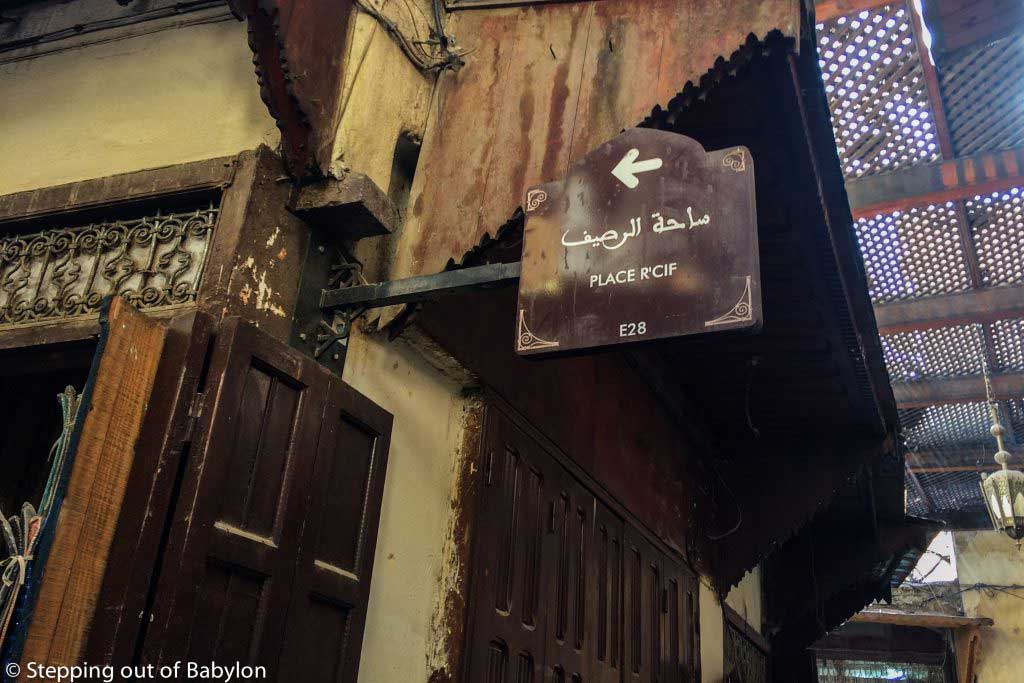
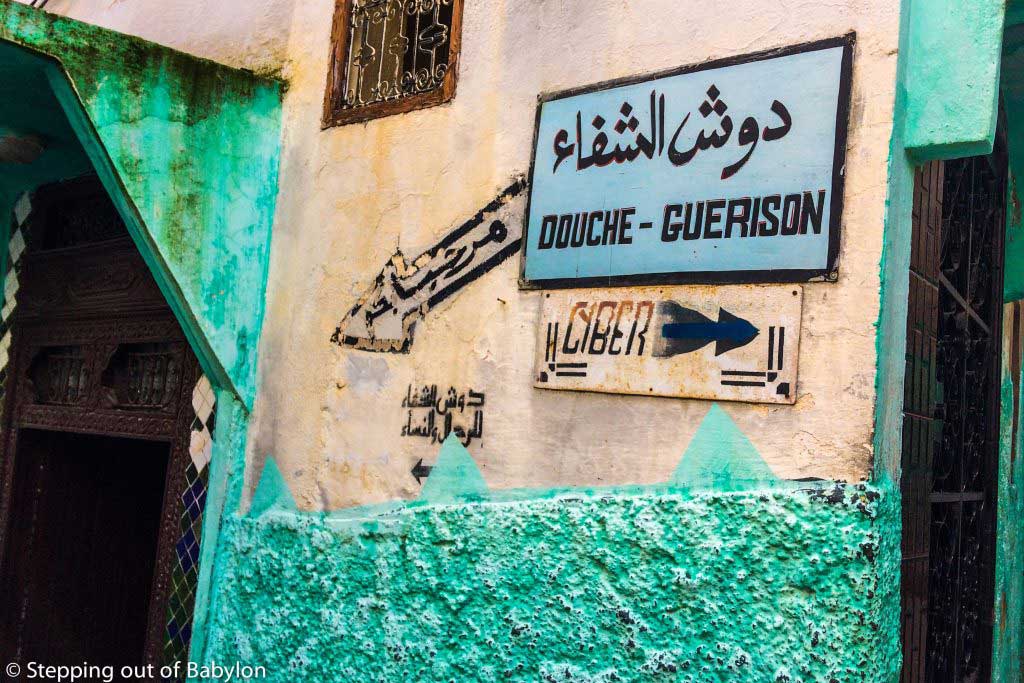
However, efforts have been made to make easier the orientation inside the medina and there are signs that you can flow, identified by colours, pointing the most important landmarks as Bab Boujloud and Place R’cif. You just need to look up while you walk… sometimes it looks like some of this sign are missing, so the best option is to ask to locals; don’t accept the help from people that are just hanging around the streets as sometimes they are touts that end up pushing you to shops or ask money for their guiding services… try to ask directly to the shop owners, they are trustful and will be pleased to help.

Google maps and maps.me are not reliable at all. Try the HERE WeGO app that is the only that can help you to orientate inside the medina.

orientation inside the medina

Around the medina:

A bit far away from the medina, about 1.5 km away from the famous Blue Gate (Bab Boujeloud) is the Mellah, the Jewish quarter. Segregated during ages from the Muslim part of the city, this area shows up with a different vibe, quieter, with wider streets flanked by a more Westernized architecture but without losing the touch of Arab culture that dominates the whole city. To reach the old Synagogues you must walk through small alleys where the old buildings attest to the antiquity of the place.

gate entrance to the Mellah, the Jewish quarter of Fes

Nearby, on the way back to the medina you can walk through Jnan Sbil (Parc du Boujloud), a green and fresh park where you can refill your batteries with nature. It closes on Mondays.

Didn’t have time to visit the Merenid tombs but I was advised to go for the nice medina views, particularly in the morning or before the sunset.

Jnan Sbil (Parc du Boujloud), a green and fresh park where you can refill your batteries with nature

How to go from Fes to the airport:

Mulay Idriss and the countryside lifestyle

Meknes, with a bit more than half million inhabitant is a very dense and compact urban center, surrounded by countryside, where gentle hills of dense trees stand out, behind which are plains planted with agriculture fields, interrupted here and there by scattered olive trees. The winter light filter by the scattered clouds increase the contrast of the landscape, enhance the green of the plants and the brown of the soil.

the rural lifestyle is widely present in Mulay Idriss

Along this rural landscape small villages pop up, but is one called Mulay Idriss that stands up and is a popular destination for tourist visiting Meknes, as is close location, about 30 kilometers north from the medina, make a easy day trip to Moroccan countryside lifestyle, on the way to Volubilis, the ruins of an ancient Roman city.

But Moulay Idriss Zerhoun, as it’s also called to the location close by the Mount Zerhoun, is much more popular for the Moroccan that for the foreigners as this village is where Mulay Idriss, that is considered the founder of Morocco by unifying the north part of the territory, arrive in the end of the first century bringing the Shia sect of the Muslim religion to these lands.

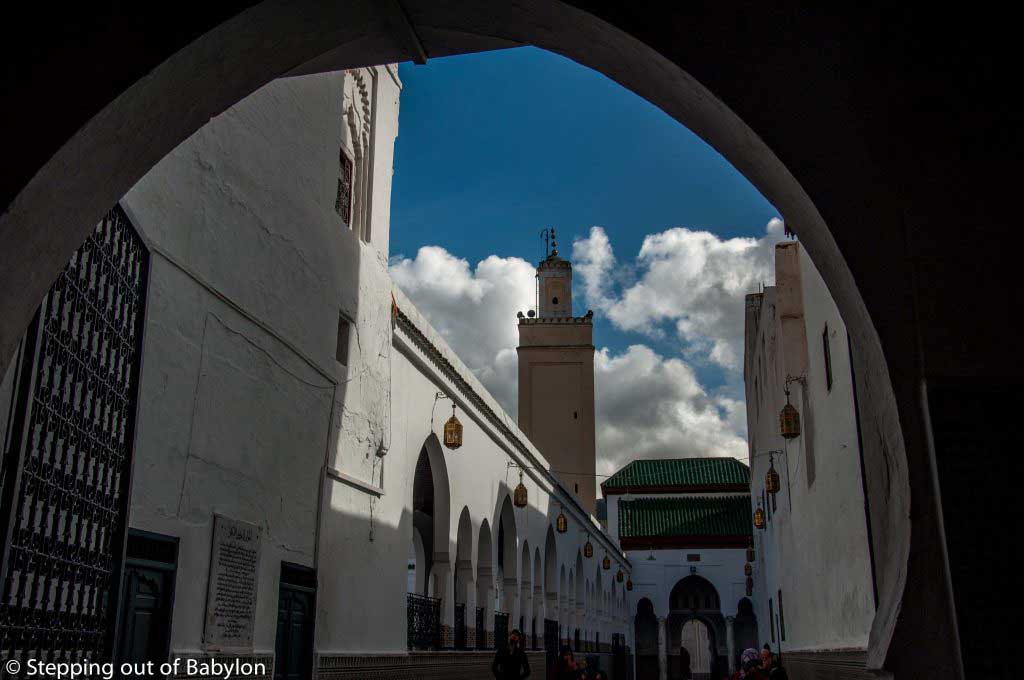
entrance of the Moulay Idriss mausoleum

Is tomb is located in this village, making Moulay Idriss Zerhoun an important peregrination place for Moroccan, being closed to foreigners until 2005. Nowadays, the building where the tomb is located is still closed to non-Muslims, as all the mosques in the country; only the madrasas (Islamic school) are open to foreigners.

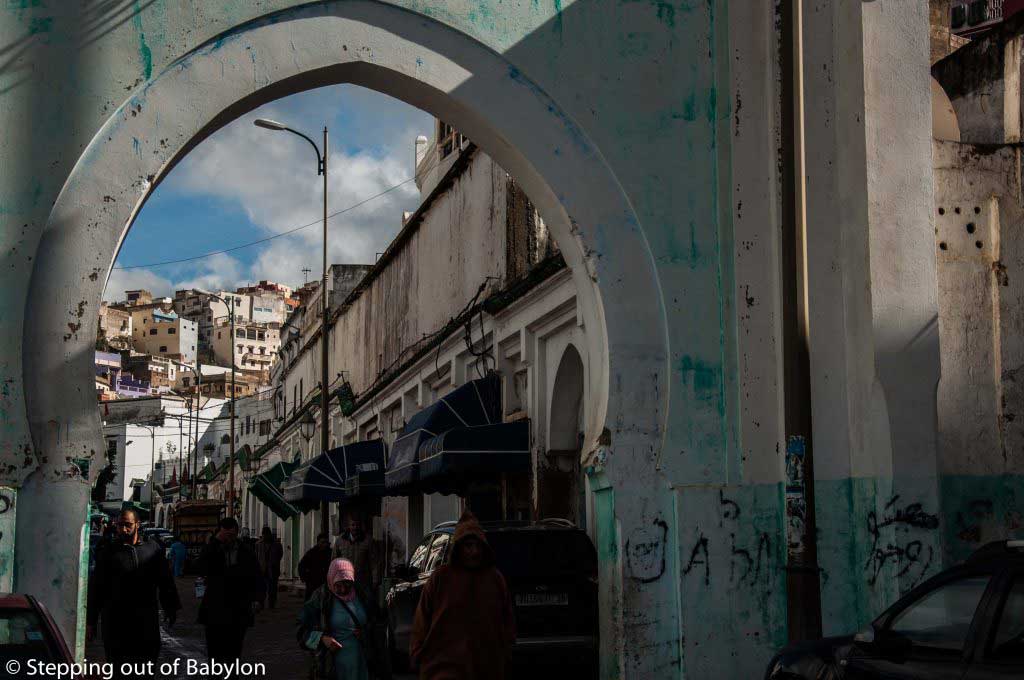
This village, with its compact white building sliding down the hill, is a good contrast with the busyness of Meknes medina. The pace is slow here and Mulay Idriss is a good opportunity to observe the rural lifestyle where the donkeys still play an important role carrying good uphill, and where the markets offer an appealing variety of fresh vegetables and fruits.

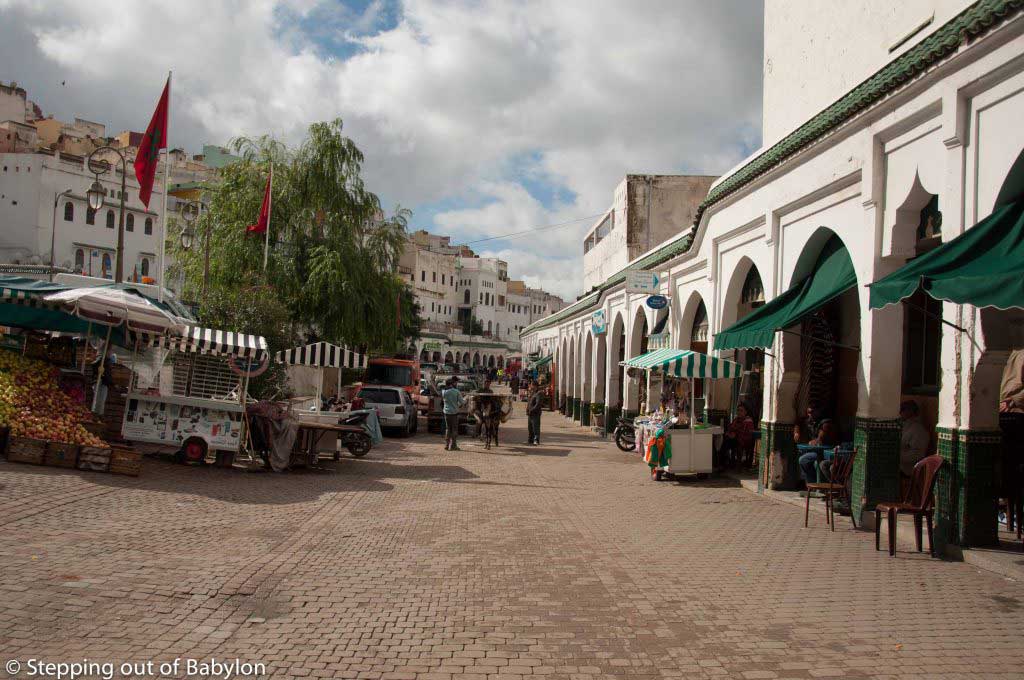
Moulay Idriss main saqure
Moulay Idriss main sqaure

Moulay Idriss
Moulay Idriss

Moulay Idriss market

Moulay Idriss
Moulay Idriss

Where to sleep in Mulay Idriss:

There’s no special reason to sleep in Mulay Idriss and walking around didn’t spot any sign of accommodation.

But as Moulay Idriss Zerhoun is so close to Meknes, can easy be reached by taxi or public bus, in a day trip with still lot’s of time to visit Volubilis… so there isn’t an important reason to stay overnight in this village.

Where to eat in Mulay Idriss:

On the street that goes from the bus stand (number 15) to the main square, as also in the square itself, there are several options for food, selling kebabs and tagines. As the food here is mostly meat orientated and the prices are a bit higher, it was a good opportunity to try the Moroccan style sandwiches, which are a bit everywhere. It’s basically half of a flatbread, stuffed with what you choose from the food that is available at the window… can be meat, but there’s a choice for vegetarians, as grill vegetables, egg, boiled potato, deep fry aubergine…

As you cross the main gate, on the way to the Mulay Idriss’s tomb, you’ll hardly found any shop o place to eat, so it’s better to surrender and choose one of the restaurants or eateries downstairs, around the main square, and ignore trying the insistent invitation of restaurant employees.

Morocco style sandwich

How to move around in Mulay Idriss:

Definitely on foot, but be prepared to climb the steep narrow street, some of them with steps, that which spread around the whole hill, but on the top, you will be rewarded with nice views.

Mulay Idriss
Mulay Idriss

How to go from Meknes to Moulay Idriss:

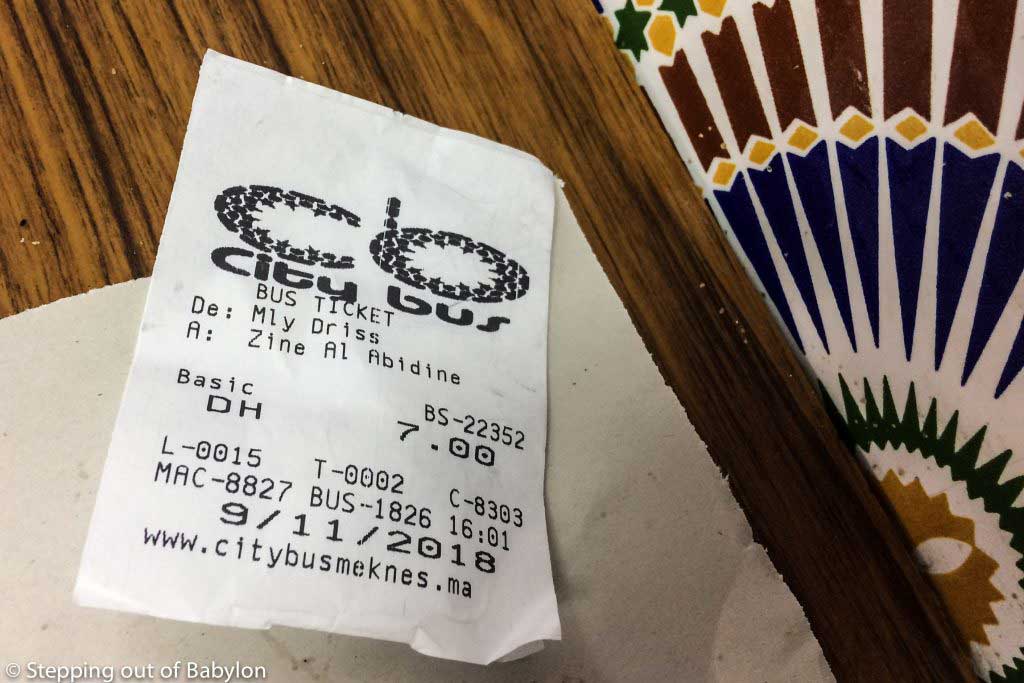
To visit Moulay Idriss and Volubilis you can catch the local bus, called City Bus, number 15. It stops in Avenue Mohammed VI, close by the roundabout. The place is easy to reach: if you are in from the Bab Mansour, just walk down, to the right side and you’ll see the roundabout from where the avenue starts; the bus stop in the beginning of the avenue and despite the lack of a sign you’ll see lots of people waiting there for buses.

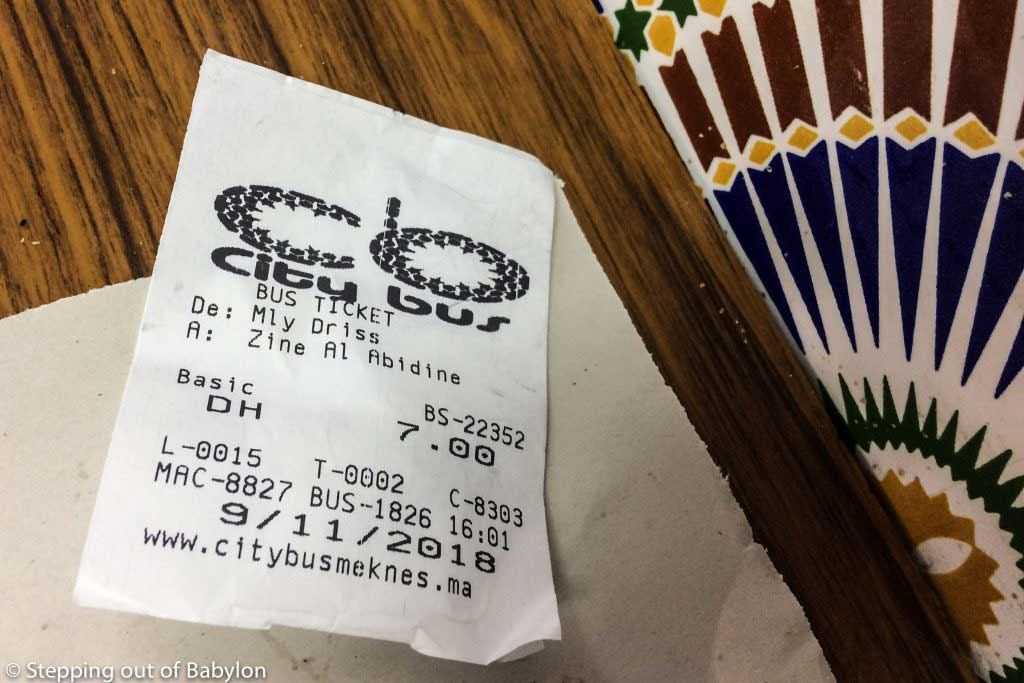
The ticket cost 7 Dirham and the trips take 30 minutes along a beautiful countryside landscape.

If you also want to visit Volubilis, there isn’t a direct way by public transport and you need to catch a shared taxi at Moulay Idriss.

[columns] [span6]

Bus 15 from Meknes to Mulay Idriss

[/span6][span6]

bus ticket price from Meknes to Mulay Idriss Zerhoun

[/span6][/columns]


A quick guide to hammam experience in Morocco

Public baths, or hammam as they are called locally, are a “must do” in a Moroccan trip as they are still part of the routine of the local population, not just because of the traditions as also because many houses, particularly in the old parts of the cities (medinas), don’t have bathing facilities. And besides this, the public bath keeps playing an important role in social life, particularly for the women, who find in the hammams a place to socialize and move away from the housewives routines to which they are still totally dedicated.

Traditionally, in all Moroccan cities, towns and villages, where there is a mosque there’s also a hammam and a bakery!!! But they are not easy to spot, as many times there’s no sign outside or if there’s one it’s in Arabic writing. So this pushes many times the foreigner visitors to a more touristic (and expensive experience) where the hammam gets close to a spa, with comfort and western standards but where local people don’t go.

But if you are looking for a relaxing chill experience, a public hammam is not the best choice, as the conditions are simple and basic, without a proper dressing room, a place to sit, to be scrubbed or to receive a massage. There’s only the floor, the walls, tanks with cold and hot water, and few rooms at different temperatures… there are buckets all over the place and people move in a certain bustle by filling the buckets and transporting them to the different rooms, since there are no showers, using jugs to pour water on the body, with a mother and daughters or friends to help each other in this process. Forget the sophistication and the quietness of the spa cliché… this is much more interesting!!!!

In Morocco the hammam has total gender segregation; in the ones that don’t have these facilities there’s a different schedule for men and women. This makes that in the women side there are a lot of kids (both sex), and a lot of girls and teenagers, making it busy and noisy place where it’s a challenge to relax… but at the same time it’s a gathering of women from different generations where, without modesty or shame, the body is exposed showing how the aging process manifest in our bodies.

If you want a scrub (it’s used the French word gommage) or a massage you must ask to a friend or in the case that you are alone you can hire the services of the hammam staff.

Despite the noise and the movement I confess that the visit to the public bath end up being a very enjoyable and relaxing and experience, I recommend to be made at the end of the day, as when I come out I felt melting and with only energy to eat a soup before walking back to the guesthouse.

One curiosity… the water for the hammam is heated with fire, in fact, was this way that I spot the first public bath, as passing by a narrow door I saw a pile of wood, and at the end of a dark corridor a man feeding a huge stove.

It’s a very nice and interesting experience and I only try these baths at the end of my trip to Morocco, otherwise, I would have visited the hammam more times. Forget the glamorous idea of a hammam and join the locals… you’ll receive a lot of sincere smiles.

Public hammam in Meknes:

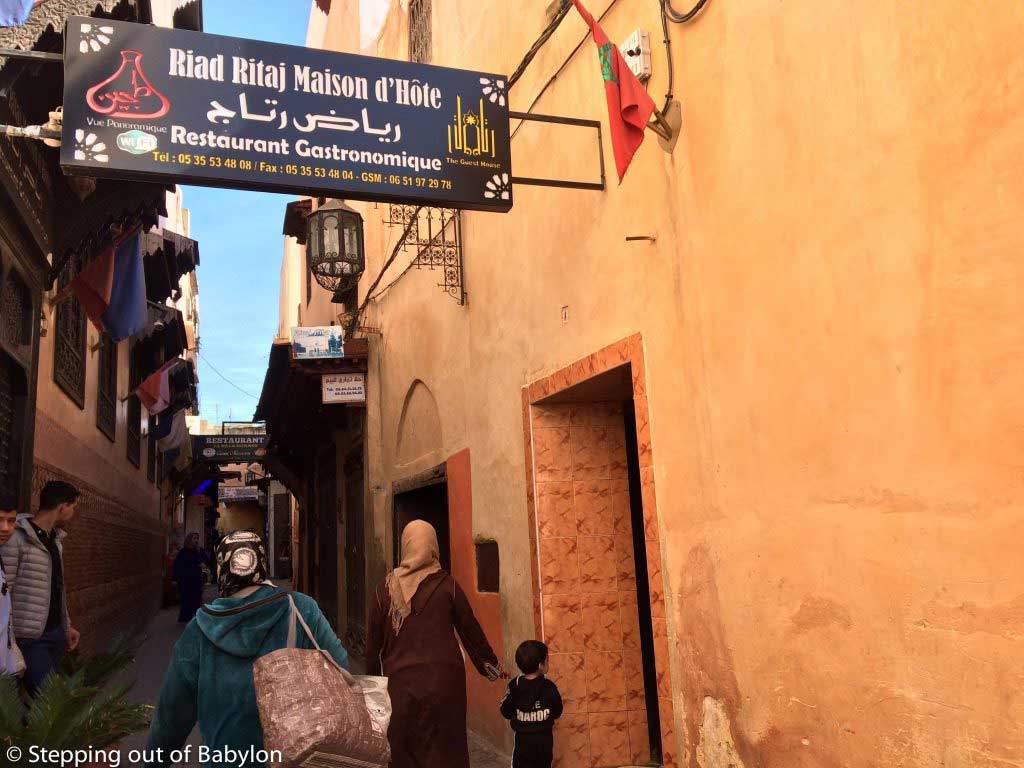
In Meknes, the public hammam is located inside the medina, a few meters from the Lahdim Square, if you walk to the right side (with Bab Mansour on your back), along a narrow street, you’ll find the sign “Riad Ritaj Maison d’Hotel” that’s is also a restaurant. Just in front, on the opposite side of the alley, you’ll find a small and anonymous door without any sign that is the entrance to the hammam.

As far as I remember, this hammam open at 12 for women, but the schedule changes along the day, with the late afternoon reserved men, until 8 p.m. The entrance costs 10 Dirham and if you need a massage or scrub you must pay extra. Bring your own towel, soap, etc… buckets are available inside. The staff of Riad Ritaj it’s available to give you more detail information! Just ask, as they are very friendly!

In such a big medina, for sure Meknes have another hammam, but many times the people from hotels will point you the more touristic ones… I was very lucky as the owner of the Restaurant Mille et Une Nuits (located closely) gave me useful tips about the traditional hammam as also about the way it works and what to bring.

Hammam in Meknes
Hammam in Meknes

Public hammam in Mulay Idriss:

In Mulay Idriss is more difficult to indicate the way to the hammam, as it is located in the old part of the village, somewhere in the maze of streets that spreads on the hillside, in a steep street with steps. It looks very small and it was almost impossible to understand the schedules, as the lady in charge spoke no English.

For sure that if you ask local people they all can point you the direction of the hammam!

Hammam in Mulay Idriss

Public hammam in Imlil:

There’s also a hammam in Imlil more focus in the tourist clients, just on the right side of the road, after the turn to the Toubkal trail. It’s in a red colour building a bit up the hill but visible from the road, not far from the small bridge. The local association manages this place and the profits support the local community.

Public hammam in Fes:

This was the only hammam that I visit in Morocco, so all I’m not sure if this is the Moroccan standard.

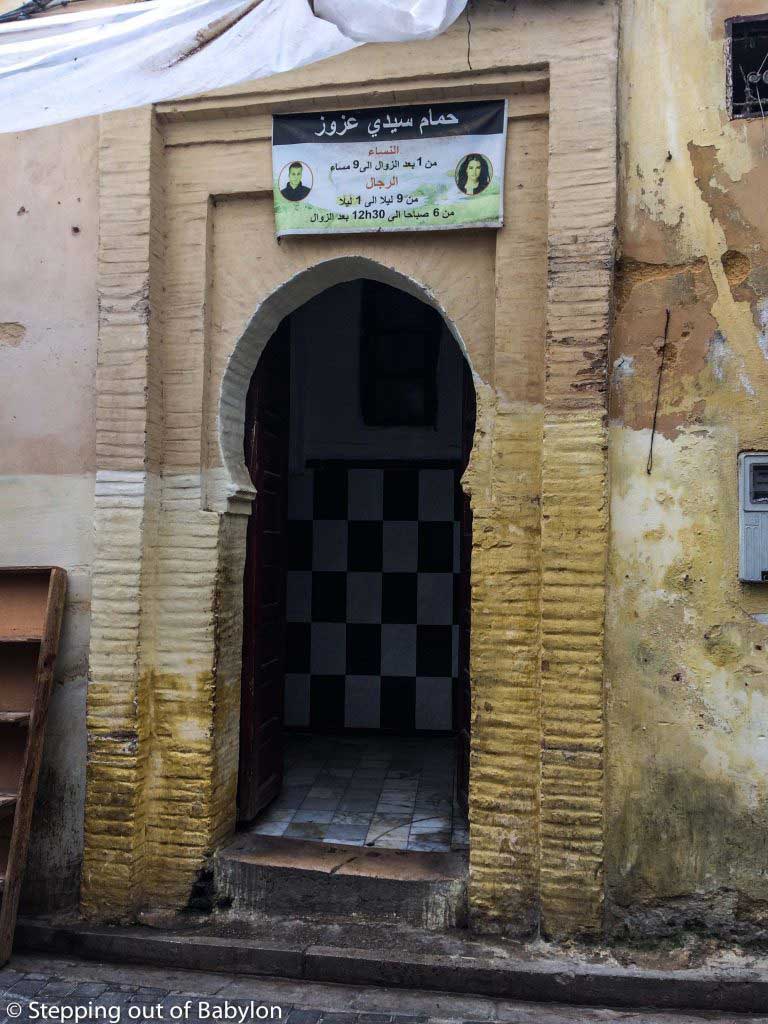
It’s located inside the medina, in one of the main streets, Rue Talaa Sghira, not far from the Bab Boujeloud, the most famous gate. It’s called Hammam Sidi Azouz (you can find in Google maps as also Maps.me app). Walk down the street you’ll spot a simple door, with an arc shape, tiles on the tiles on the background wall and a sign above (check the photos below).

At the entrance, you need to pay the hammam fee, 15 Dirham, to the doorman. Once you step inside you reach the dressing room, a large room, with high ceiling formed by vaults of Moorish style. Here there are bench and closets where you can put clothes and stuff. There are no security lockers but the place seemed to be safe and there’s a person apparently cleaning and taking care of the place, whom I tip with 5 Dirhams to keep an eye on my stuff.

Once you cross a small door, you’ll get inside the bath area of the hammam, a sequence of rooms with an arched ceiling and a black and white tile floor, that as you move further get warmer and warmer. On the last one, where you can feel the intensity of the hot steam, there are two big water tanks, one cold and the other one very hot, from where the ladies fill up their buckets. It’s a place without windows and the only light comes from the small openings on the top of the high ceiling, wrapping the place with a dim light, that with the steam create a fantastic ambiance.

There’s a lady in charge, to who took care of me, and by gestures and a few French words guide me in this experience, bringing me water buckets, point me where to stay, poured water over me to remove the soap and scrub my entire body… she’s also responsible for the massage but I skip that part as it was out of my budget.

The scrubbing part I confess was the most impressive… following the instruction of the lady, I just lay down on the floor (that is warm) while she scrubs my body vigorously with a proper glove. It was intense and for moments I thought that my skin couldn’t handle with such rough treatment, but after the first impact I start to enjoy the sensation and at the same time the feeling of total surrender to the care of someone else.

For the scrub I pay 50 Dirham, which is more than the locals pay for this service but I really enjoy it and I felt very grateful for her help managing the hammam procedures.

Hammam in Fes
Hammam in Fes

Schedule of Hammam in Fes

What you need for a hammam:

  • Towel
  • Soap and shampoo… or the traditional “beldi” or “savon beldi”, a kind of olive soap, that maybe doesn’t look appealing by its dark colour but will give an extra smoothness to the skin. You can buy in some herbalist shops in the medina markets.
  • For the scrubbing, you need your own glove (you can find easily at the souk and according to the quality it can cost from 5 to 15 Dirham).
  • Big bucket and a small jug that you can buy at the souk… I use the big buckets available at the hammam and borrow the jug from a lady there.
  • Some ladies bring a small plastic stool to avoid sitting directly on the floor, as there are no benches or whatsoever to seat, but a towel can also work.
  • .. no one uses them but I always appreciate and avoid you to slip.

In terms of etiquette, on the men side, it isn’t accepted full nudity. At the ladies side, most of the women wear only panties, and nothing to cover the breasts. So is better to bring extra underwear to change after the bath.

To be honest, I can’t add more detailed information than what is written in this blog… and with a male perspective!!!

http://theviewfrommorocco.blogspot.com/2006/12/future-home-for-view-from-fez.html

olive soap
that dark brown paste in the center of the photo is the “savon beldi”, a traditional olive soap

Meknes… the medina and the square

After traveling through deserted landscapes and small settlements, it is time to return to the great urban agglomerations, and Meknes was the chosen city, as an anticipation of the great city of Fes. Despite being one of the 4 Imperial cities (the others are Fez, Marrakesh and Rabat) and the sixth biggest city in terms of population in Morocco, is far from being a popular tourist destination, compared with Marrakesh and Fes.

Maybe the medina it’s not so attractive in terms of shopping if looking for traditional crafts but it’s more authentic and reflects more the local lifestyle, away from the Moroccan cliché of the wool carpets, silver jewelry, colorful tagines, spices shops, brass lamps and leather slippers, which in Marrakesh take over the main medina streets, pushing away the local commerce.

Meknes
Lahdim Square the heart of Meknes

Meknes
Meknes… wandering along medina streets

Without a doubt, the center of the local life in Meknes is the Lahdim Square a.k.a. Al Hadim Square, that faces Bab Mansour the main entrance gate of the sultan’s palace, built in the 18 century. This square works as a transition ground between the Medina and Imperial City of Meknes. During the day the square is occupied by an uncharacteristic market, which extends along the street that circles the medina on the left side. But at the end of the day that this square gains the magic atmosphere, when the sunset light illuminates the facade of the Bab Mansour, dyeing it of warm tones and illuminating the intricate geometric mosaic patterns and enhancing the Moorish architecture style.

Meknes
Bab Mansour the main entrance gate of the sultan’s palace

Meknes
Meknes… a bit everywhere in the city is possible to get fresh bread

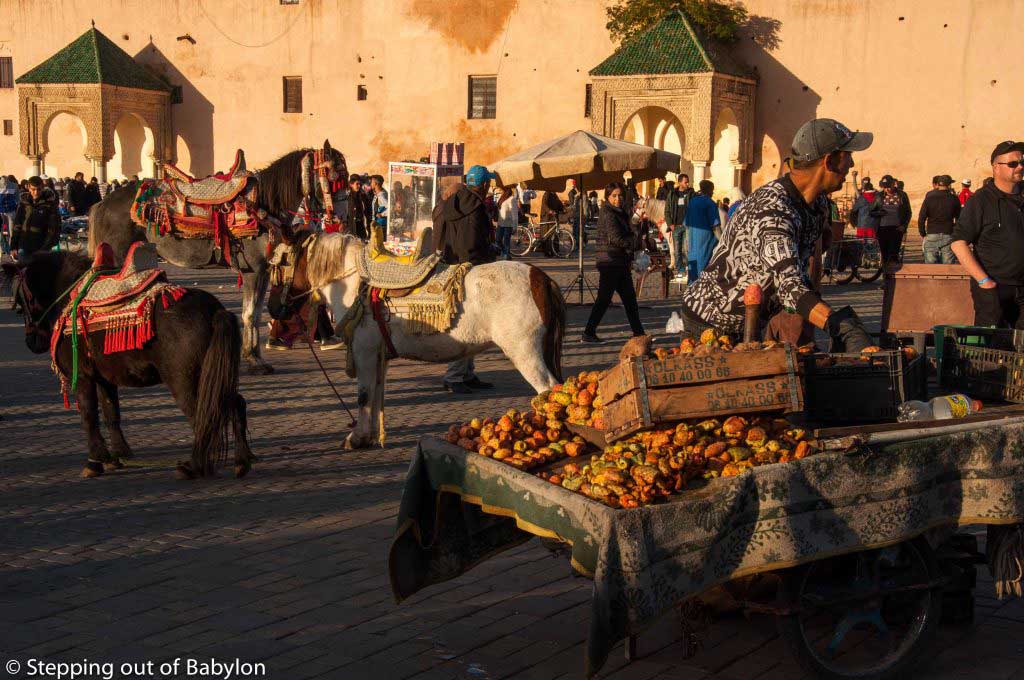
Is at this time that Lahdim Square gains a greater intensity, with people gathering at the square, checking the clothes stalls, selling most of the times charmless and uncharacteristic clothes “made in turkey”, having a snail snack, ride a pony, eat sweet cotton, buy bread and fruits, or a Bob Marley poster… it’s a lively and colorful moment of this square that is never empty. It’s a humble version of you can find in Jemaa el-Fna in Marrakesh but it’s cozy and cute.

Also busy, are the medina street where the domestic life extends beyond the boundaries of house doors, filling the streets of children and women’s groups with conversations from the daily routine of grocery shopping. The men gather in cafes and terraces watching the movement of the streets, in a calm contemplation that doesn’t expect surprises. While the main streets of the medina are already taken by less interesting commerce, the small streets keep a more traditional atmosphere and lifestyle, where each zone is dedicated to a specific type of trade or crafts. Small shops that look like they stop in time where apparently nothing change in the last decades, allowing a uniform layer of dust to remove color from the objects that look like they lost the fait of finding an owner.

Meknes
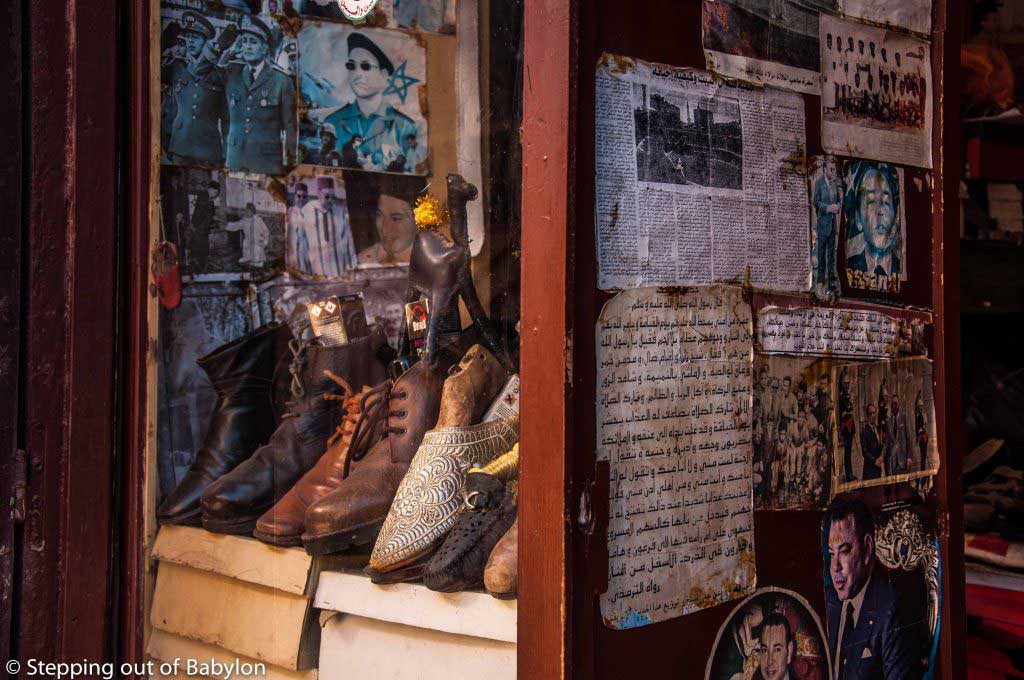
Meknes… shops lost in time where the picture of the king or of his father is common

Meknes
Meknes

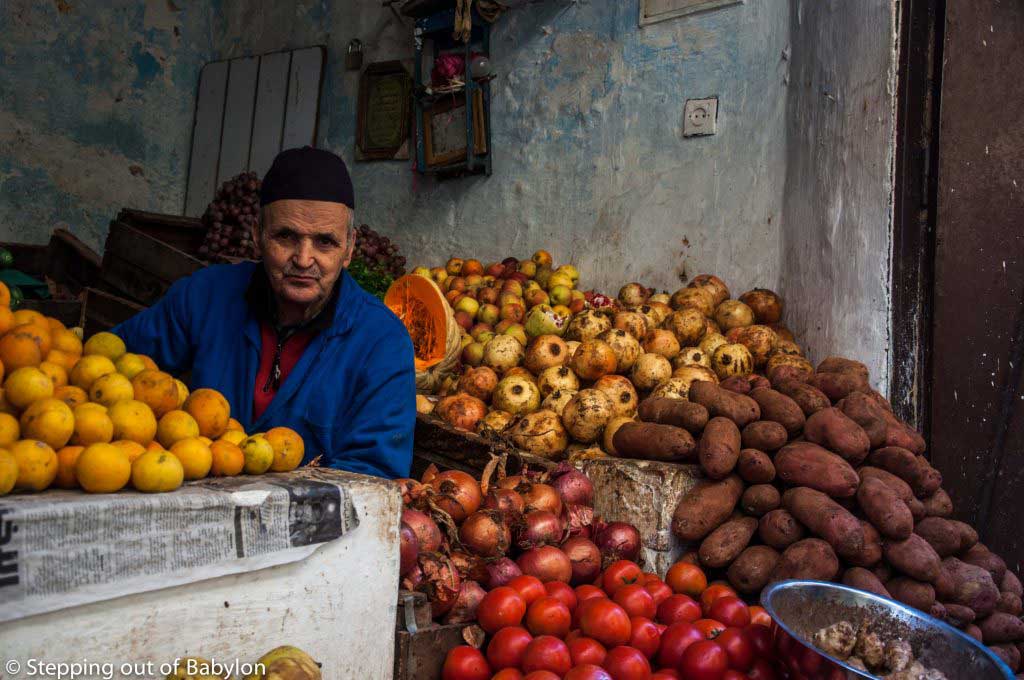
The food markers located outside the medina walls are busy and alive being a good opportunity to buy fresh products for a good price… don’t know if they were cheating me with the prices but I found very fair what they charged. Autumn is the season for grapes, pomegranates, cactus figs, oranges and apples. All this smells mix with the voices of the sellers who announce their products in hoarse and indecipherable melodies, creating a frantic atmosphere.

Meknes
Meknes

Meknes
Meknes


Meknes
Meknes

Walking along the medina, zoom out from the restless movement of people, you’ll have the change to spot the traditional Moorish architecture, mix with more modern buildings, where the warm colors of the walls, in grades from red to yellow, make a beautiful contrast with the clear blue winter sky.

Meknes
Meknes

Where to sleep in Meknes:

As Meknes is a bit away from the backpacker’s trail and many people only come here as a day tour, that includes also Moulay Idriss and Volubilis, there’s a lack of budget options and apparently, there’s not a hostel with dorms, a thing that is widely available in Marrakesh. So this makes the cost of the accommodation a bit higher than other cities in Morocco, however, this can be an opportunity to stay in a place with a bit more sophistication and comfort.

Arriving in the middle of the night (the bus from Merzouga arrive around 2.30 a.m.) without a booking was not the most enjoyable experience as all the accommodations close the door in the evening and not all are happy to open it to guests at this time.

But there was an exception… the receptionist of Riad Malak (16 Sidi Amar Bouaouada, Medina Meknes) despite being fully booked allow us to rest at his living room until morning, take the breakfast there (amazing breakfast and the best of all Moroccan trip) and made all the efforts to arrange an alternative accommodation that suits our budget. These gentle and helpful being made all Meknes stay much better. Strongly recommend this place to stay.

During the three days spent in Morocco, we stay at a place that was not yet (November 2018) to public located nearby Riad Malak, at Erb sidi ahmed, just next door to a Jewish Silver shop. The way to get a room here, by now, is to contact the Restaurant Mille et Une Nuits (contact: 035559002), close by, on the way to the main square. It’s a traditional building, totally renovated, and decorated with good taste. The rooftop has an excellent view of the entire city. As it was still closed to the public a double room costs 220 Dirham without breakfast.

Meknes view form the rooftop of the guesthouse... most of the accommodation have a rooftop that are a nice spot to chill
Meknes view form the rooftop of the guesthouse… most of the accommodation have a rooftop that are a nice spot to chill

NOTICE: avoid the Youth Hostel of Mekens that despite being far away from the medina, located in a modern upper class area without many options in terms of food, has also a very rude and unfriendly receptionist.

Where to eat in Meknes:

To be honest didn’t have a proper meal during the three days that I spent in Meknes, not because of the lack of options but mainly due to the huge amount of snacks available along the street maze of the medina. In fact, Meknes was a delight for the plate, with lots of small shops or street stalls selling sweets, a big choice of bread, olives, nuts and dry fruits… and as it was almost Winter, the oranges and pomegranates pop up as also the cactus figs coming from the more desert areas.

Sweets… in fact (plus Fes) where the best places to explore the endless variations of the traditional Moroccan sweets, many of them made with puff pastry, stuffed with nuts and soaked in a sweet syrup: if they attract bees, probably they are made with honey… otherwise, if it’s just a sugar syrup the flies take over 😉

traditional Moroccan sweets made with puff pastry and stuff with nuts

There’s a big concentration of restaurants in the main square, in front of the Bab Mansour, with the usual Moroccan gastronomy but what attracts me more are the informal eateries, frequented exclusively by the local population, each of them specialized in a certain type of food, without having a menu or so. Close by the West Gate of the medina, a less know gate away from tourist area on the way to Mausoleum of Sheikh El Kamel, there’s a few of these eateries, one of them open to the street serving besara, a Moroccan fava soup, that here is delicious, served in a big bowl, with a generous topping o olive oil and lots of paprika. A soup that with bread is a filling meal costs 7 Dirham. You can also reach this are walking from the Lahdim Square walk along the street where the date sellers are concentrated, followed by the blacksmiths’ area.

besara... traditional fava soup, with a generous topping of olive oil and paprika
besara… traditional fava soup, with a generous topping of olive oil and paprika

There are cafés all over Morocco, but it is in the large urban centers that one can find the most sophisticated versions where one can feel the strong influence of the French culture. And Meknes offer plenty of options in terms of cafes, with many concentrated along the avenue in front of Bab Mansour, that is a good place to chill and watch the movement of the people, absorbed in their daily routine. A coffee is not a cheap thing in Morocco and can easily cost 10 Dirham if you ask for espresso, but is part of the experience being in a place where almost all clients are men, as these places don’t attract many women in Morocco… tea is also available and in fact is much more popular.


How to move around in Meknes medina:

The Meknes medina is not difficult in orientation, and it’s not so big as the one in Fes. The main streets are almost focused in products for the local population, mostly clothes, houseware, electronic stuff, etc… but it still worth to walk around as here you get more in contact with the authentic lifestyle than what you can get in Marrakesh or Fes.


Public bath (hammam) in Meknes:

Public bath or hammam as they is called locally are a “must do” in a Moroccan trip as they are still part of the routine of the local population, as in many houses, particularly in the old parts of the cities, there’s are still houses without bathing facilities. And besides this, the public bath keeps playing an important role in social life, particularly for the women, who find in the hammams a place to live away from the role of housewives to which they are still totally dedicated.

Traditionally, in all Moroccan cities, towns and villages, where there is a mosque there’s also a hammam and a bakery!!! But they are not easy to spot, as many times there’s no sign outside or if there’s one it’s in Arabic writing. So this pushes many times the foreigner visitor to a more touristic (and expensive experience) where the hammam gets close to a spa, with comfort and western standards but where local people don’t go.

In Meknes, there’s easy to reach inside the medina, a few meters from the Lahdim Square, if you walk to the right side, until you find the sign “Riad Ritaj Maison d’Hotel” that’s is also a restaurant, you’ll find just in front a door without any sign that is the entrance to the hammam.

As far as I remember, this hammam open at 12, but it changes according to the day, with the afternoon reserved to women, opening after for men until 8 p.m. The entrance costs 10 Dirham and if you need a massage or scrub you must pay extra. Bring your towel, soap, etc… buckets are available inside. The staff of Riad Ritaj it’s available to give you more detail information! Just ask as they are very friendly!

entrance of public hammam on the right side

How to go from Meknes to Moulay Idriss:

To visit Moulay Idriss and Volubilis you can catch the local bus, called City Bus, number 15. It stops in Avenue Mohammed VI, close by the roundabout. The place is easy to reach: if you are in from the Bab Mansour, just walk down, to the right side and you’ll see the roundabout from where the avenue starts; the bus stop in the beginning of the avenue and despite the lack of a sign you’ll see lots of people waiting there for buses.

The ticket cost 7 Dirham and the trips take 30 minutes along a beautiful countryside landscape.

If you also want to visit Volubilis, there isn’t a direct way by public transport and you need to catch a shared taxi at Moulay Idriss.

[columns] [span6]

The Bus 15 to Mulay Idriss stops in Avenue Mohammed VI, close by the roundabout, on the opposite side of the small stall that works as information desk of City Bus (the ticket is sold inside the bus)

[/span6][span6]

City bus to Mulay Idriss

[/span6][/columns]

How to go from Meknes to Fes:

There are buses and trains all day, with a frequent schedule, as the distance is very short, and Meknes is on the way from Rabat to Fes, two of Moroccan biggest cities.

My choice was for the train. The train station is not far from the city center and can be reached by taxi or local bus. Watch out as there are two trains station in Meknes, and not all trains stop in both; the main station is called “Menes” where you can also find the CTM bus terminal, and a smaller one called “Gare Al Amir Abdul Kader” quieter.
You can buy the ticket just before the trip or online, where you can also check schedules details: https://www.oncf.ma/en/

The trains are modern, clean and on time.

The trip takes 50 minutes and the ticket cost 22 Dirham.

Meknes train station... Gare Al Amir Abdul Kader
Meknes train station… Gare Al Amir Abdul Kader

  • « Go to Previous Page
  • Page 1
  • Interim pages omitted …
  • Page 4
  • Page 5
  • Page 6
  • Page 7
  • Page 8
  • Interim pages omitted …
  • Page 31
  • Go to Next Page »

Footer

search

Tags

accommodation Assam Bagan Bali Border Crossing Borneo Colombo Dambulla Dao Cheng Esfahan Fes Food Gilis Hiking hokkaido Istanbul Itinerary Jakarta Java Kashan Kuala Lumpur Kumano Kodo Lombok Majuli Meghalaya Meknes Mekong Nagaland Natural Park Nongriat Northeast States Ouarzazate Sarawak Shiraz Sichuan Province Sishuan Sumatra Tabriz Tehran transportation Visa Yangon Yazd Yogyakarta Yunnan Province

I’m Catarina, a wanderer from Lisbon, Portugal… or a backpack traveller with a camera!

Every word and photo here comes from my own journey — the places I’ve stayed, the meals I’ve enjoyed, and the routes I’ve taken. I travel independently and share it all without sponsors or ads, so what you read is real and unfiltered.
If you’ve found my blog helpful or inspiring, consider supporting it with a small contribution. Every donation helps me keep this project alive and free for everyone who loves exploring the world.

Thank you for helping me keep the journey going!

BUY ME A COFFEE

Categories

Recent Posts:

  • How to go from Hualien to Dulan Beach
  • Taroko Gorge: between marble cliffs and emerald rivers
  • Hualien: a dull gateway to Taroko Gorge
  • Taiwan: Itinerary for an 16 day trip
  • Vietnam: Itinerary
  • 3 months in India: Kolkata, Tamil Nadu, Karnataka, Goa and Kerala
  • Backpacking Turkey in 24 Days: itinerary & costs
  • English
  • Português

© Copyright 2026 Stepping out of Babylon · All Rights Reserved · Designed by OnVa Online · Login