• Skip to main content
  • Skip to footer

Stepping Out Of Babylon

Travel & Photography

  • About me
    • Contact
  • Destinations
    • Africa and Middle East
      • Iran
      • Lebanon
      • Morocco
      • Turkey
    • East Asia
      • China
      • Japan
      • Taiwan (Formosa)
    • South Asia
      • Bangladesh
      • India
      • Nepal
      • Sri Lanka
    • Southeast Asia
      • Cambodia
      • Indonesia
      • Lao
      • Malaysia
      • Myanmar
      • Singapore
      • Thailand
      • Vietnam
  • Itineraries
  • Travel tips
    • Border crossing
    • Hiking and Natural parks
    • Food Journey
    • Visa
  • Photography

Stepping out of Babylon

Merzouga… where is the Sahara desert!?

Merzouga is a small village, a kind “end of the road” before you reach the Sahara desert… or in more romantic words, Merzouga is the gateway to the desert. It’s the most popular and the easiest way to reach the desert in Morocco, but in the other hand, this makes Merzouga an uncharacteristic and awkward place that apparently only exists because of the tourism, that come here to see the Erg Chebbi, the big sand dune.

Erg Chebbi is commonly referred as part of the Sahara desert but in fact is just a “mountain” of sand located in the dry rocky soil that surrounds the Sahara desert, which is located a bit more southeast, on the way to Algerian and Mauritanian borders. But this geographic detail does not draw interest to the place, with Erg Chebbi offering beautiful landscapes, particularly at sunset and sunrise, when the dunes get the warm magic color.
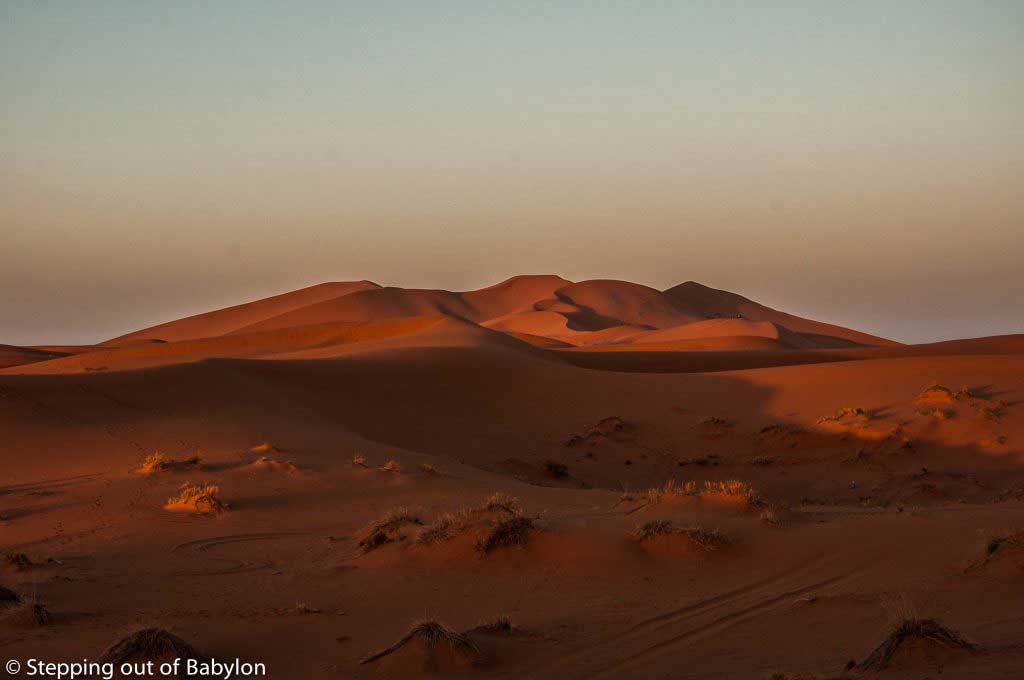
Erg Chebbi at the first sun ray... despite being spoiled by tourism the desert always has its magic
Erg Chebbi at the first sun ray… despite being spoiled by tourism the desert always has its magic
Erg Chebbi
Erg Chebbi

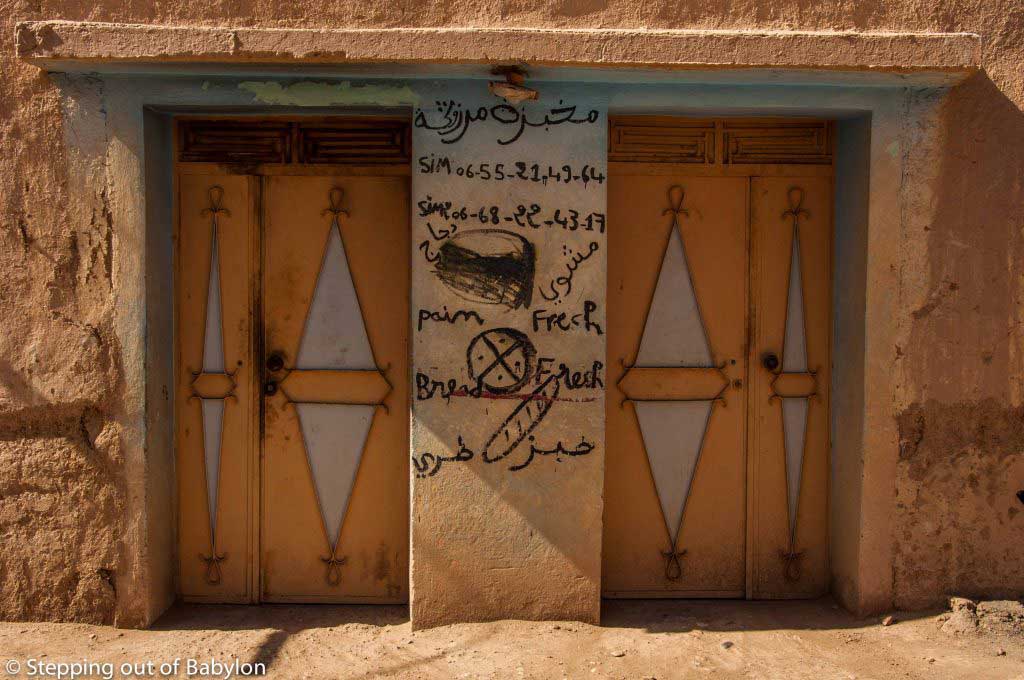
In resume, there’s no reason to stay in Merzouga. It’s a ghost town without a local lifestyle, with empty and dusty streets fill up with an atmosphere of abandon and desolation that gets worst under the strong sun rays, that even in November are sharp and cruel.
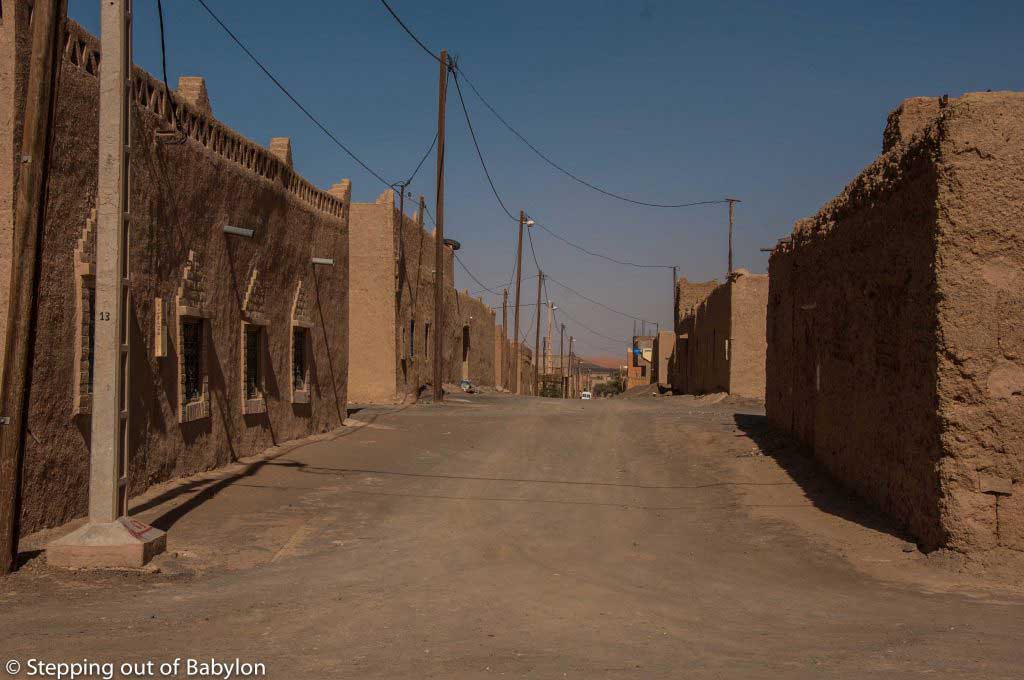
Merzouga
Merzouga

Merzouga... the almost empty local area of this "end of the road" village
Merzouga… the almost empty local area of this “end of the road” village

In the modern part of Merzouga, there’s the main street, a straight wide boulevard, along which is concentrated the commercial part, with cafes and restaurants, groceries, travel agencies, some accommodation and the usual souvenir shops, where there’s always an herbalist and a spice shop.

Separating this modern part of Merzouga from the local town there’s a small palm field, which constitutes the only green area that you can see in this arid place that doesn’t see much rain. Apparently, there’s a nearby lake where the flamingos use to stop but there are only a few chances to see them, so double check if it’s the right season, as several people that visit the place around October/November, didn’t spot any.

Erg Chebbi at sunrise

Erg Chebbi during the sunset trip from Merzouga to the desert camp

Imagine…. imagine a thick darkness of the night during a new moon… imagine the milky way that make you realize how small we are in the solar system… imagine the sky as a dome full of stars surrounding you in an absolute silence… imagine nature in its most intact state… imagine untouched dunes… imagine Erg Chebbi and forget all this!

Erg Chebbi is noisy, crowded, far from being an untouched natural place, already spoiled by the tourism business, where it’s easier to spot the trail of the 4WD tired than the footprints of a camel.

Although, early morning is still possible to enjoy a quiet atmosphere as the light of dusk gives way to the first rays of sun that illuminate the dunes, giving life to the fantastic colors of the desert, revealing almost unnoticed footprints that lizards, frogs and small rodents, left on the sand from their night activity. The sunset walk provides also nice views and a certain nostalgia, maybe because of the swinging walk on the top of the dromedary, that are such a peaceful and chill animals that perfectly match the desert landscape.

The use of animals to make this short desert trip is very controversial, as the animal shouldn’t be used for entertainment… but the use of cars creates an impact in the wildlife of this ecosystem, plus atmospheric, visual and sound pollution. A subject to think about….
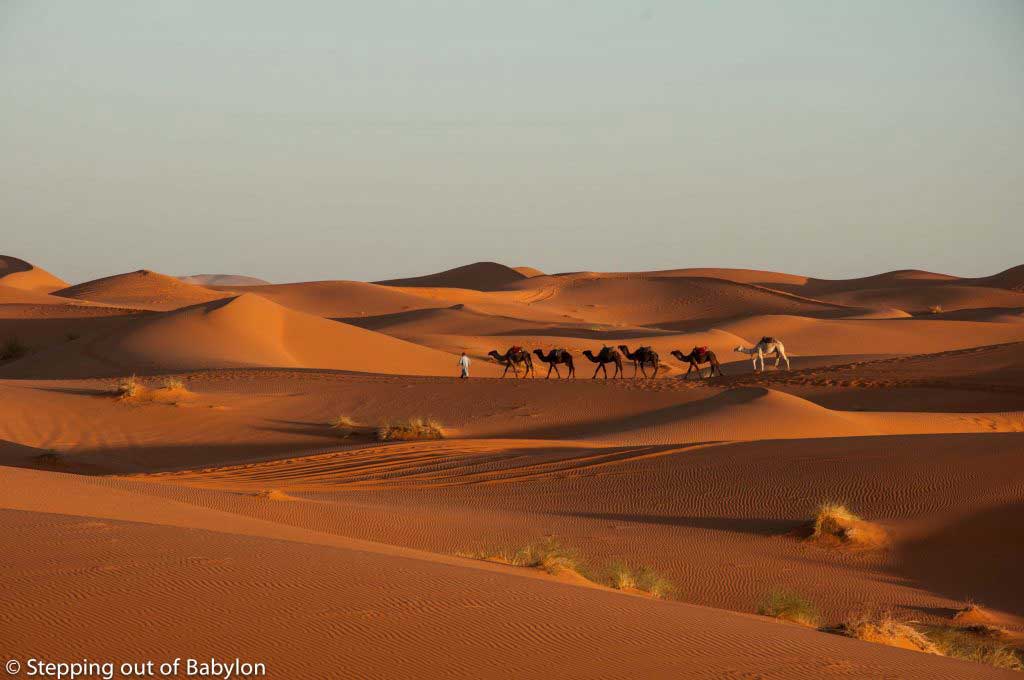
Erg Chebbi at sunrise with the dromedaries returning to Merzouga after the sunrise trip

How to visit the desert in Merzouga:

Erg Chebbi is far from being a quiet and untouched place. Basically, walking about one hour from Merzouga (on foot, by camel or quicker by jeep), you’ll reach the limit of the big dune where several of the “desert camps” are located, all associated to the hundred of tourist accommodations of Merzouga. Each of these desert camps occupies a bottom flat area between dunes, creating a sequence of permanent camps, that stay empty during the day, gaining life near the sunset with the arrival of tourists who spend the night here, and wake up next day to watch the sunrise and take the breakfast before return to Merzouga.

All this is part of a classic desert tour that with a few more Dirham it’s also possible to visit the “nomad tribes”, these also established permanently in neighboring areas. All these desert camps offer more or less the same services, including a dinner with local food, and a bit of entertainment with music around a bonfire in the evening. The only thing that changes is the comfort of the tents and quality of the service. The trip can be made in camel or by jeep.

Trip cost: 250 Dihram (after 1 hour bargain), that includes a dromedary ride, to and from the desert camp, dinner, sleep in a desert tent (there’s a toilet but no shower) and breakfast. The tents were basic but confortable for one night and much warmer that I could imagine.

Maybe because of these lack of interesting things to see or do in Merzouga, almost all people come here in organized desert tours, don’t even stay overnight in the village. But if are an independent traveller, moving by bus, try to reach Merzouga around the middle afternoon, to have time to arrange the trip to the desert (usually they start around 4 p.m.) and try to get a bus out of Merzouga around lunchtime, as the desert tours end up after the sunrise, dropping you again Merzouga around 9 p.m.

You can easily arrange the tour in Merzouga for the same day, and it’s not necessary to book in advance, as there are lots of choices offered by local agencies but mostly by the hundred of accommodations… much more the number of visitors that were there in November.

one of the "desert camps" or “bivouac” of Erg Chebbi
one of the “desert camps” or “bivouac” of Erg Chebbi

Where to sleep in Merzouga:

As there’s no reason to stay one night in Merzouga, and if possible, go straight to the desert and spend one night there, in the so-called “bivouac”, a kind of permanent camping area, which can be more or less charming or glamorous according to your budget. All this is very far away of the romantic idea of being in contact with desert away from the civilization… forget the milky way as the camping areas have generators, toilets and are easily reached by a road that surrounds Erg Chebbi from the South. So don’t feel surprised to hear motorbikes and cars moving around and the staff doesn’t cross the dunes to reach the desert camps.

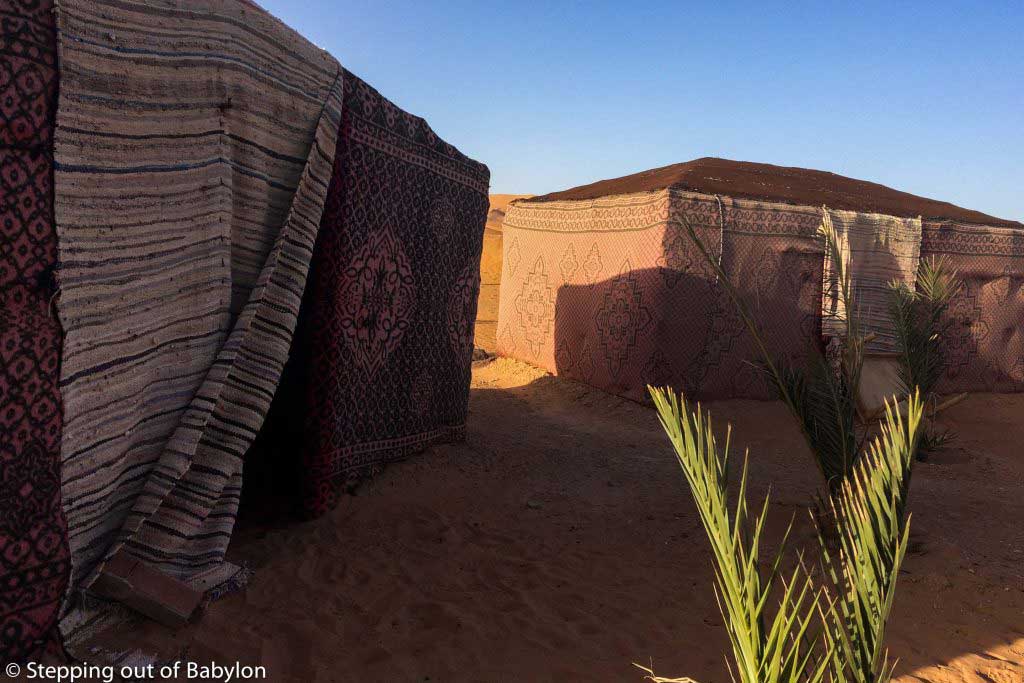
Chez Ousaadi desert camp... a budget but comfortable option
Chez Ousaadi desert camp… a budget but comfortable option
Chez Ousaadi desert camp

But if you need to stay in Merzouga due to the transportation logistics, wait for the offers of the local guys that will approach you as you come out from the bus. This is a good opportunity to bargain the prices.

We stay in Chez Ousaadi (Chez Ousaadi Appartements et excursions) with a double room by 100 Dirham. Charmless place, reasonable clean, lacking in atmosphere, but cheap.

If you arrive by bus (Supratours) they make one stop before Merzouga, called Takojt. I’m not totally sure about the name of the place, but it seems less touristic, more interesting and alive, with a bit of local life.

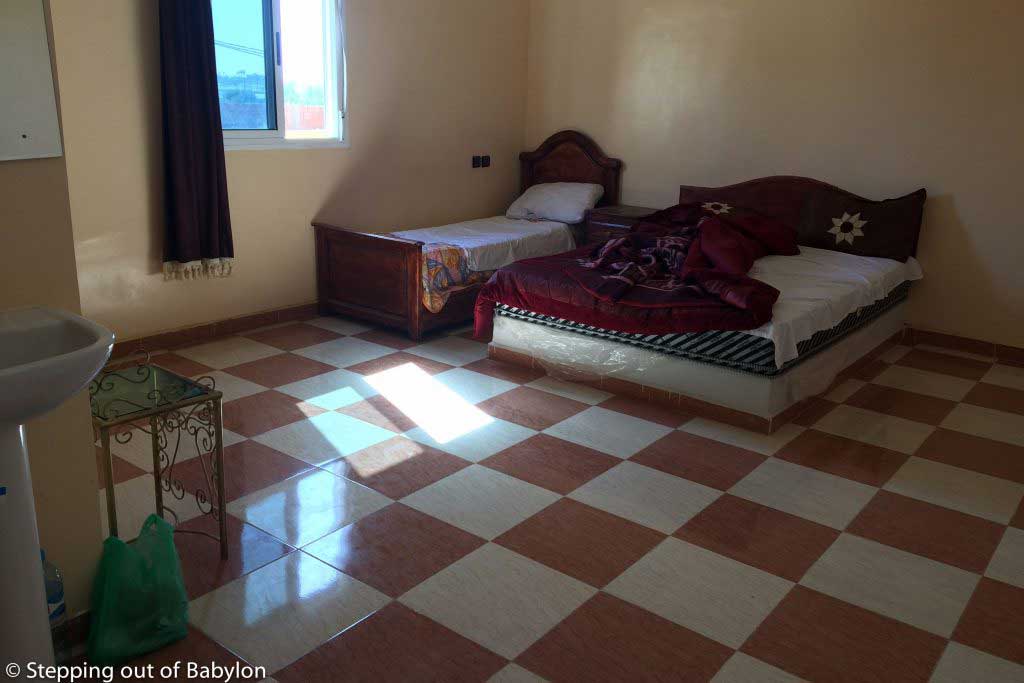
Merzouga Chez Ousaadi (Chez Ousaadi Appartements et Excursions) contacts
Chez Ousaadi (Chez Ousaadi Appartements et Excursions) with a double room by 100 Dirham. Charmless place, reasonable clean, lacking in atmosphere, but cheap.

Where to eat in Merzouga:

Along the main road of the modern part of Merzouga, there are a few restaurants, most of them tourist orientated but where you can find a tagine, just a bit more expensive than in others places, but still with a reasonable price.

There are also a few local eateries serving harira and lubia (white beans soup). You can also find two groceries, in the main road, that also sell bread.
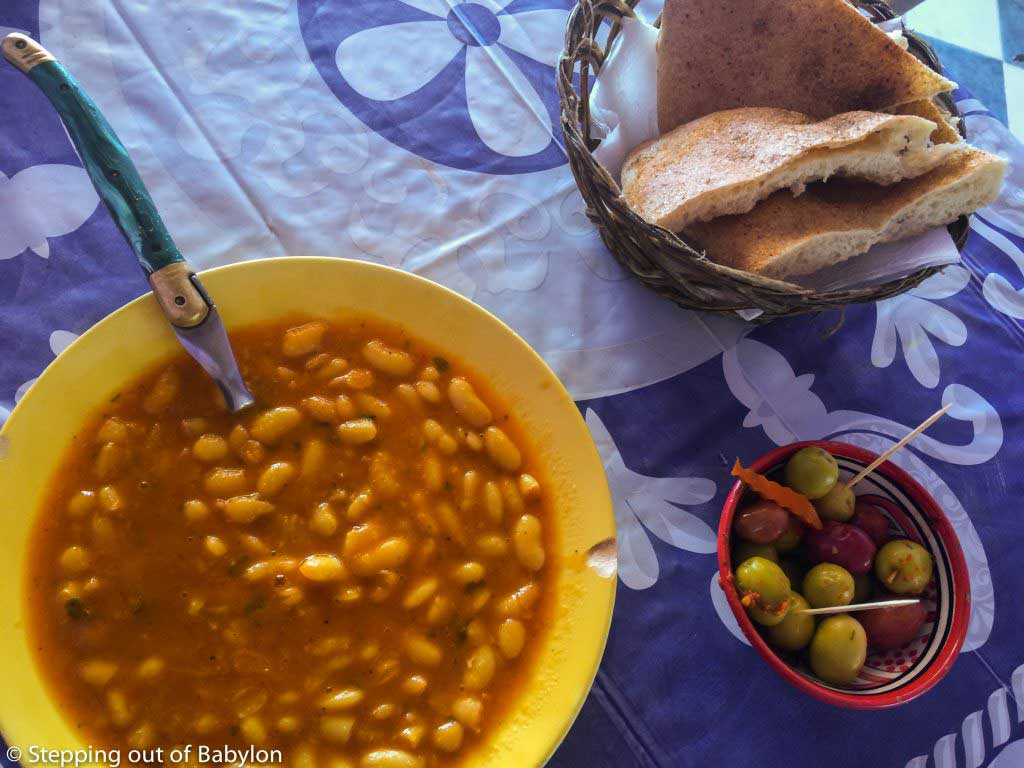
lubia, a white beans soup, served in one of the small eateries that you can find along the main road of Merzouga

How to move around Merzouga:

In Merzouga, you can walk on foot, even if you want to visit the more local area of the village, on the other side of the palm tree field.

To visit the flamingo’s lake you can rent a motorbike or a taxi/4WD. Ask the guys from your accommodation as they are prepared for all these tours and are flexible to adjust it to your will and schedule.

To visit Khemlia, a small village 6 kilometers south, where you can watch the Gnawa music performance, you can take a local bus that stops in a kind of square located between the mosque and the post office (in front of the chez Zakaria) in the less touristy area of Merzouga. There’s a local bus every hour to Khemlia, and the ticket costs 10 Dirham.

How to move away from Merzouga:

There isn’t a bus terminal in Merzouga, but all the buses drop (and pick) the passengers in the main road where the restaurants and shops are concentrated. The Supra tours office is located in this area. The opening schedule is hard to figure out but you can buy the ticket in the same day of the trip. Check schedules below.

CTM buses don’t come to Merzouga. It only goes until Rissani, from where you need to take another bus.

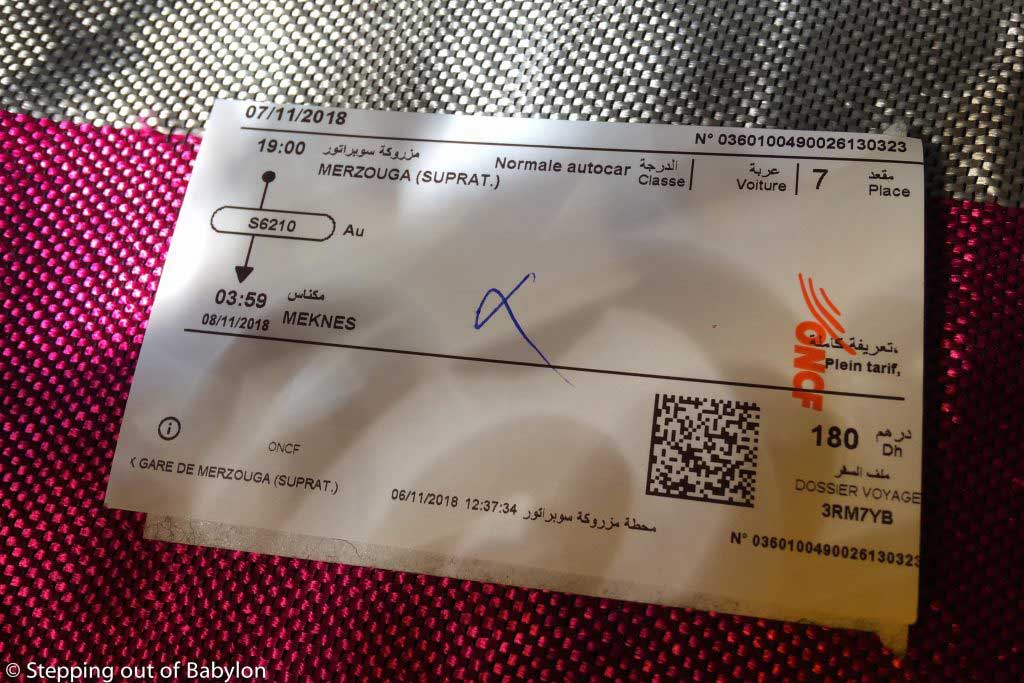
The bus from Merzouga to Meknes (that continues to Fes) departure at 7 p.m. from main street, and costs 180 Dirham. The trip takes about 8 hours, arriving in Meknes at the middle of the night. It’s an easy going trip without stops.
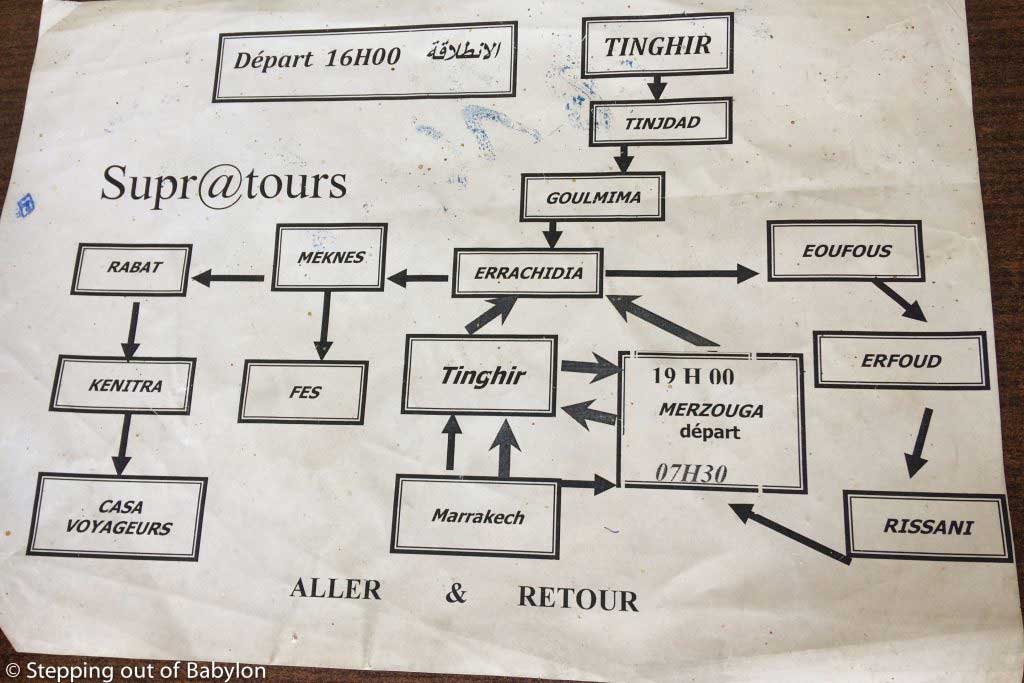
Merzouga: How to go to move away
Bus ticket from Merzouga to Meknes

Tinghir… between dates and olives

Tinghir, also called Tinerhir, is a small city strategically located midway between Errachidia, midpoint on the way from Ouarzazate to the great Merzouga dune, nearby a fertile oasis feed by a river that mysteriously springs from the rocks that make up the Todra Gorge.

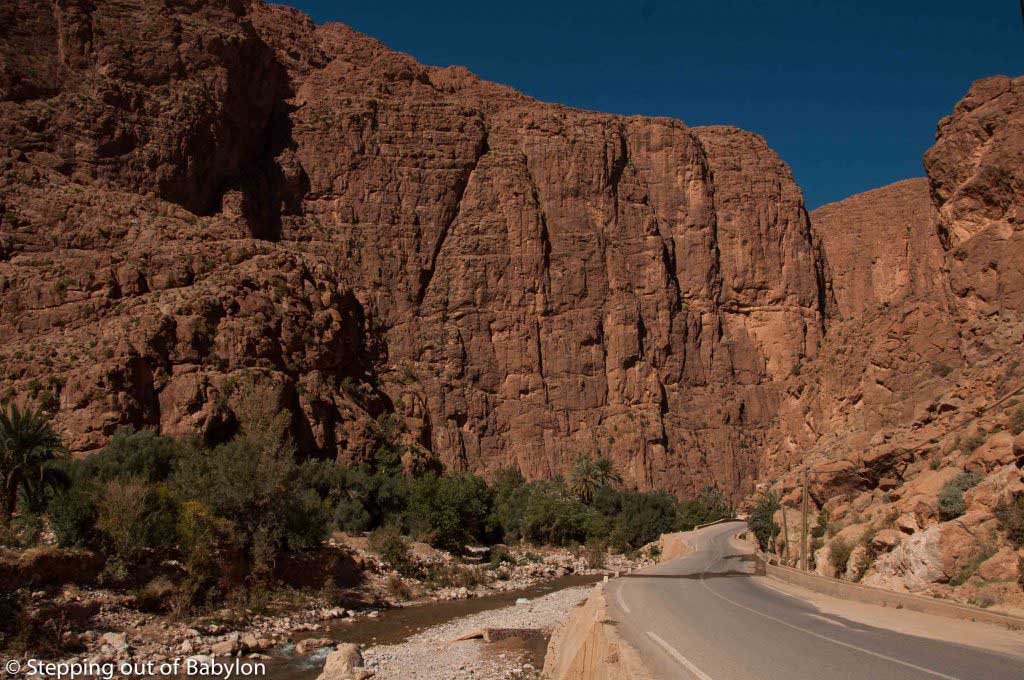
Probably the Todra Gorge is the main reason why people, usually independent travellers, stop at Tinghir, as this canyon show up as an impressive stone wall that is almost cut in vertical by an ancient river creating a corridor with about 10 meters wide, where the river shares the narrow gorge with the road.

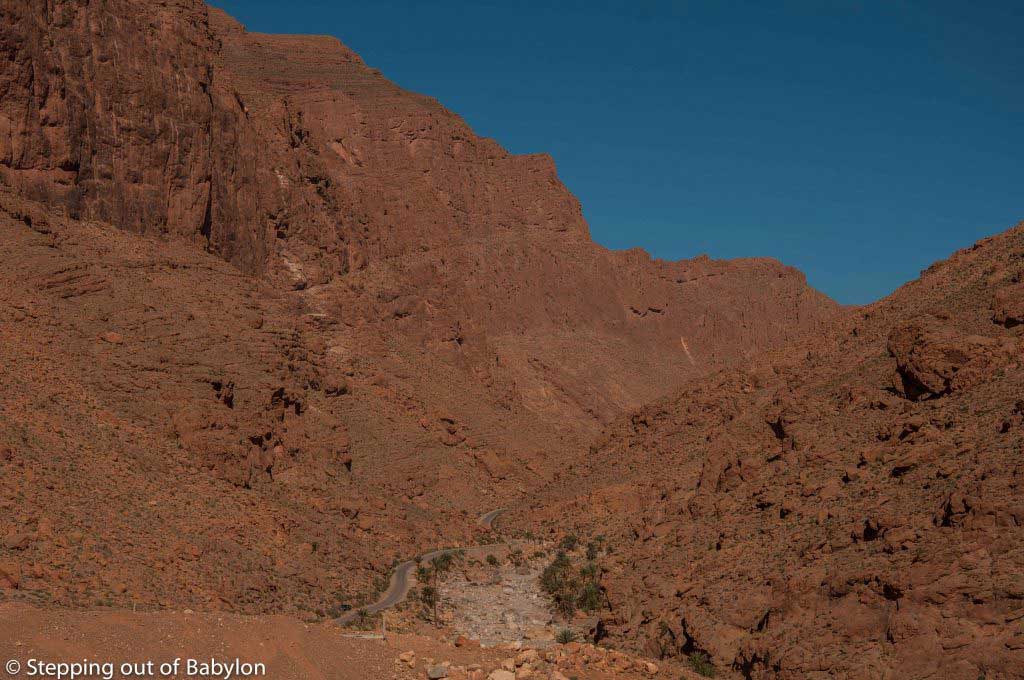
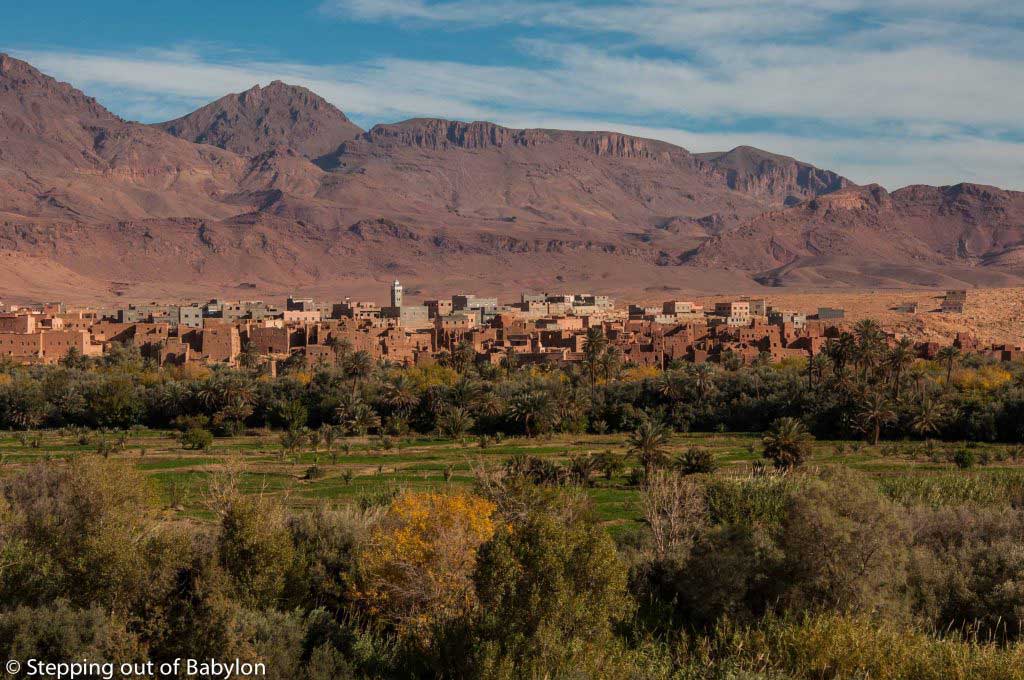
The mountains are impressive, not just buy the high but also by the aridity and dryness of the place, where the clay color of the rocky lonely slopes contrast with the intense blue of the desert sky. The immobility of the landscape and the quietness of the place transmit a feeling of loneliness, apparently empty of wildlife, where humans appear to be the only creatures that dare to cross this gorge that separates the canyon from the oasis, like a gateway to another reality, separating the dry arid part of the canyon from the green and fertile valley of Tinghir.

Tinghir
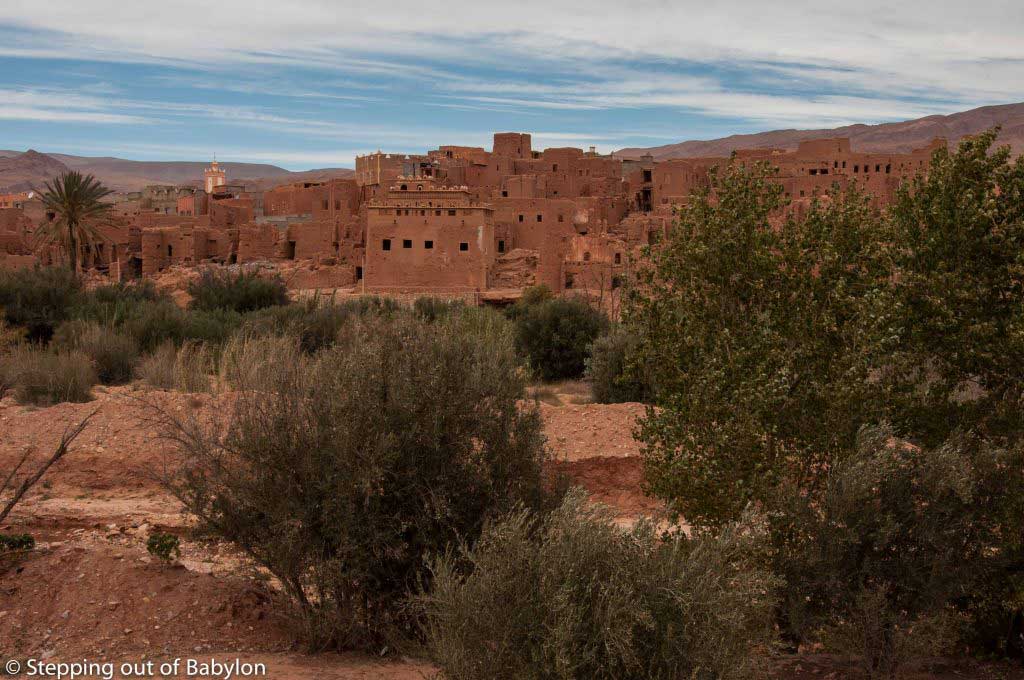
abandon houses spread along the oasis on the way to Togra Gorge

Todra Gorge
Arriving to Todra Gorge afet 14 kilometers along the fertile and green oasis

rocky and desert canyon behind the Todra Gorge
the rocky and desert canyon behind the Todra Gorge

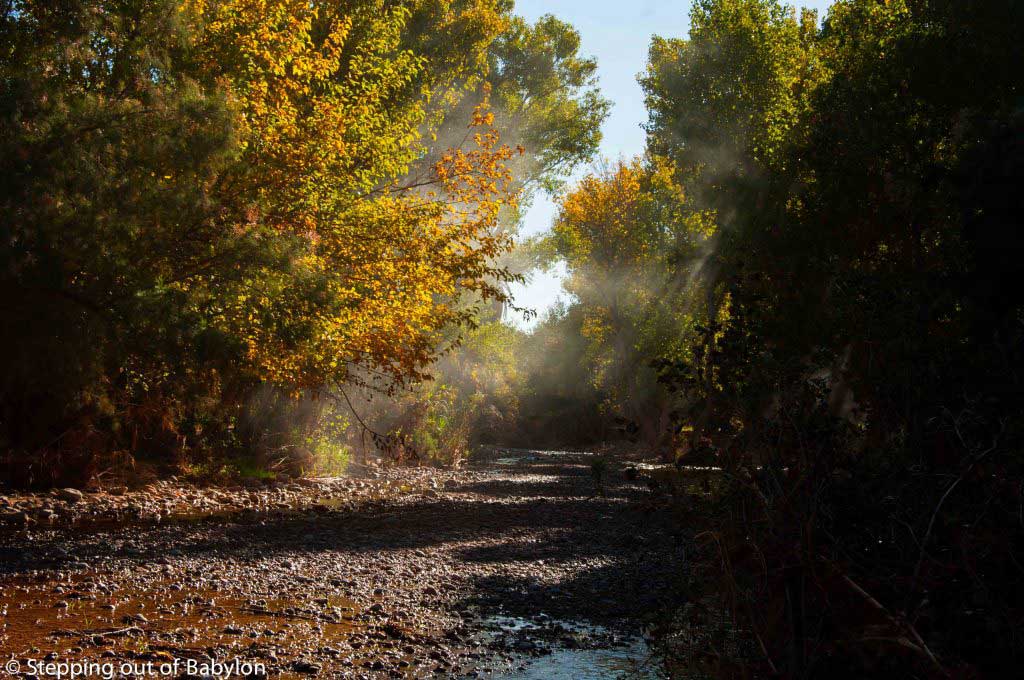
But far more interesting than the Todra Gorge or the high canyon, is the oasis that fills up the last part of the canyon until Tinghir, nested between, creating a small paradise of green that contrast with the austerity of the rocky and brownish walls. This entire valley is cross by small streams, probably flooded during the rainy season, creating a fertile ground for agriculture.

Walking from Tinghir to the Todra Gorge on foot, avoiding the road that runs along this valley on the Westside, is the best way to get in touch with the local lifestyle, observing the population working in the fields, carry goods in donkeys, washing clothes or simply snacking on a work break, while kids play around.

Along the 12 kilometers that separate Tinghir from the Todra Gorge, you can observe the changing of the landscape, passing by many abandon settlements, where the mud buildings are slowly being eroding by the wind and by the scares rain, creating a bit ghostly feeling as we walk along this desert places.

The walk star along a dense olive grove where the path is not clear but where along the way you gonna fiend smiley help and you just need to ask in your best French “pour la gorge?!” and everyone can point the way. October is the season to pick olives, and all over the place families gathering under the trees, picking the black fruits from the ground, while on top, men hit the tree branches with sticks. It looks like an endless work but no one seems to care, not showing any rush.

As we keep on walking the olives are slowly been replaced by palm trees, which still show the characteristic clusters of dates, ready to being exposed to the sun to dry.

Together with the bread, the dates and olives are present a little everywhere when traveling through Morocco, showing the importance of this products in the local diet.

Stepping out of Babylon_Morocco_Tinghir_DSC_9634
Todra River that spreads after the gorge creating a fresh and fertile oasis

Stepping out of Babylon_Morocco_Tinghir_DSC_9778
Tinghir

But Tinghir itself maybe doesn’t have any touristic attraction but it’s a really nice place to chill and make a break in a Morrocan trip, enjoying the chill local rhythm, and observing the local lifestyle while sitting at a terrace in the main square drinking tea and eating the harcha, a traditional Moroccan flat bread made from semolina. Everyday, at the main square fills up with a market where it sells from dates to electrical equipment, clothes and plastic utensils, and where you can find advice from an astrologer who also sells natural remedies. Curiously it is a predominantly male area, while women mostly frequent the bazar nearby the Jewish Quarter.

Tinghir... market at the main square
Tinghir… market at the main square
Tinghir
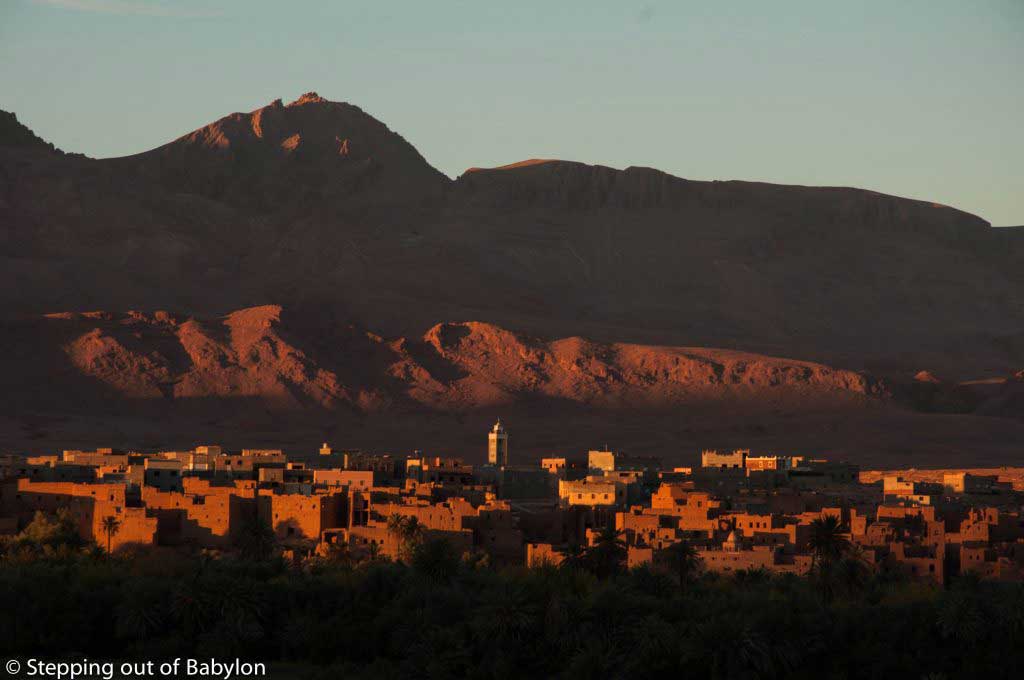
Tinghir at sunset view from the Hike and Chill Hostel

Tinghir
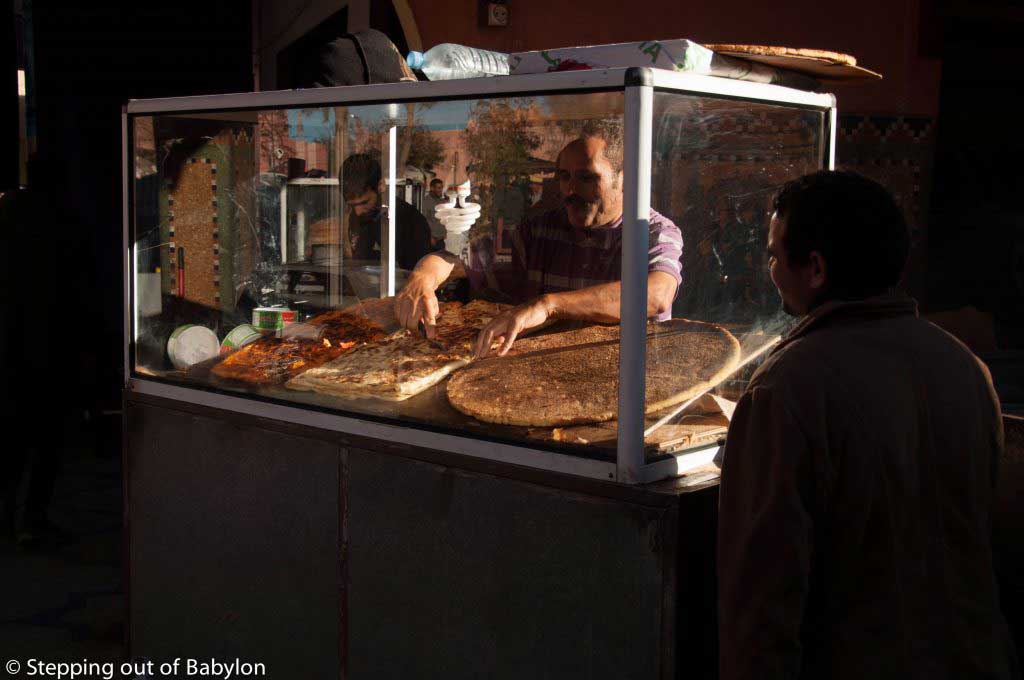
Tinghir… around the main square its easy to find small eateries selling traditional flatbread, as harch and msemen
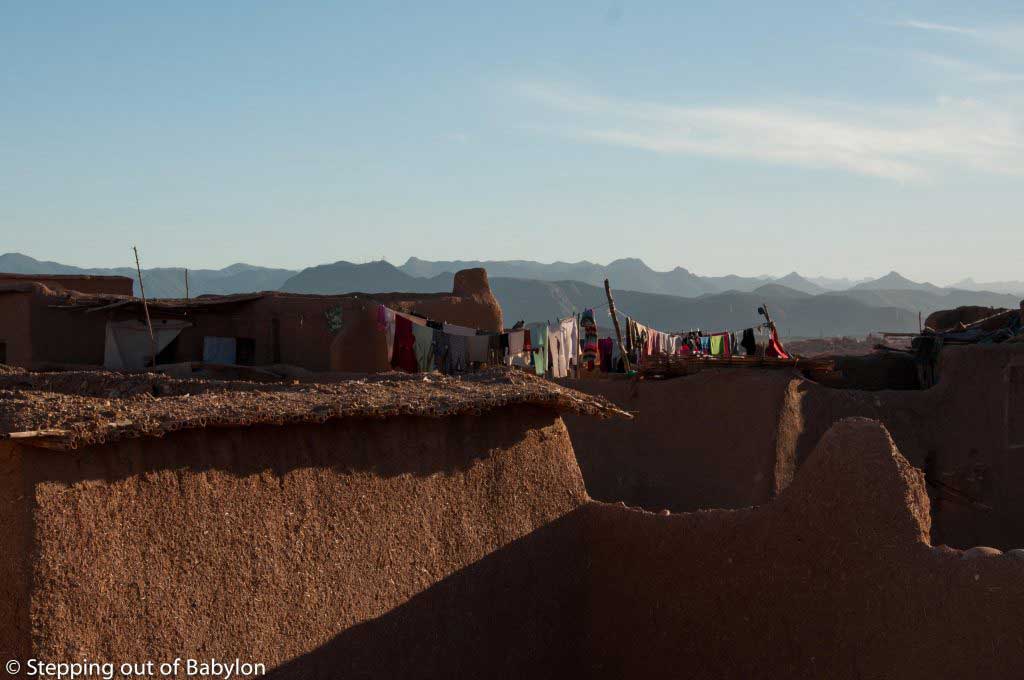
The traditional rooftop from where the view of the Atlas mountains is always present

Where to sleep in Tinghir:

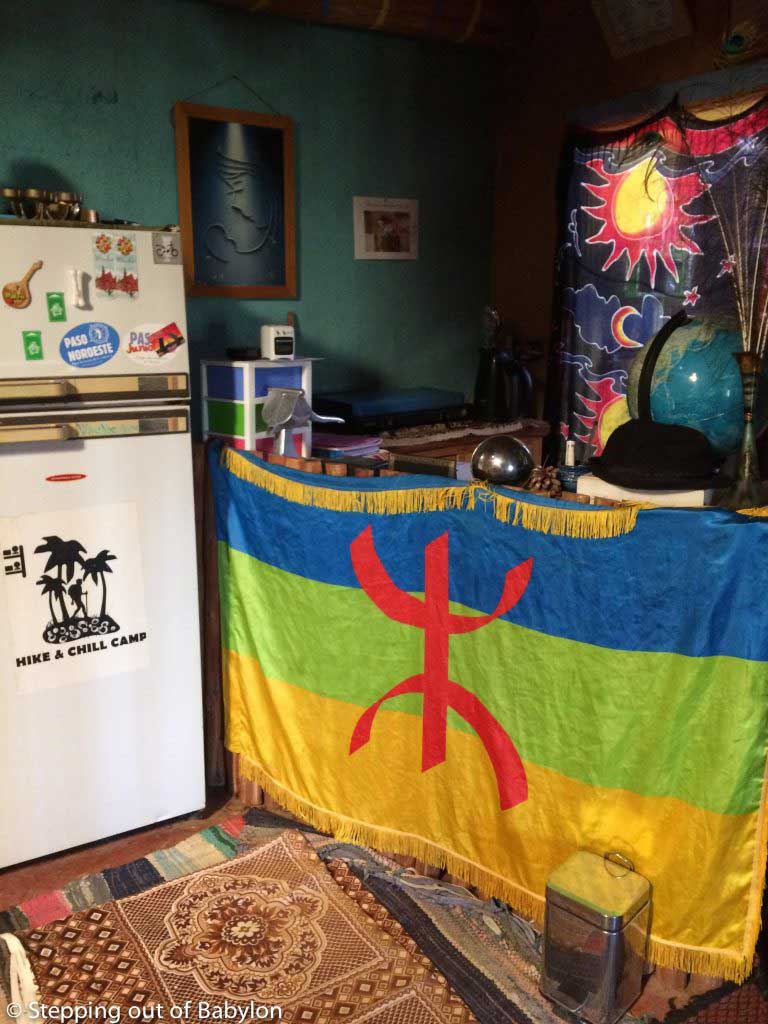
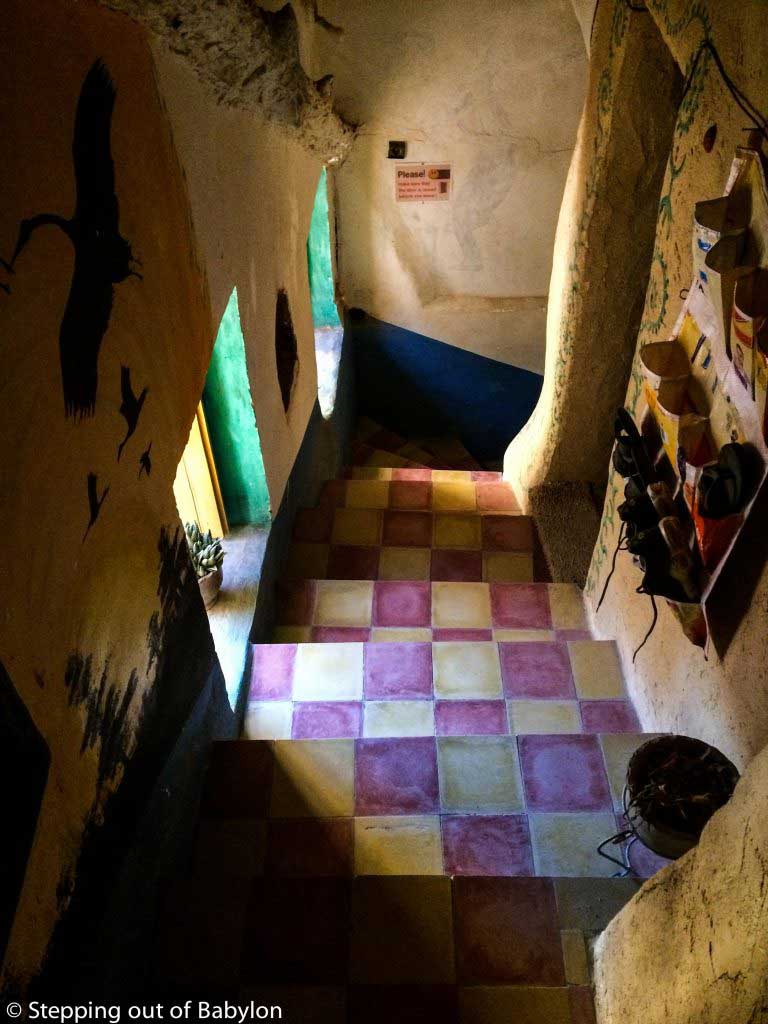
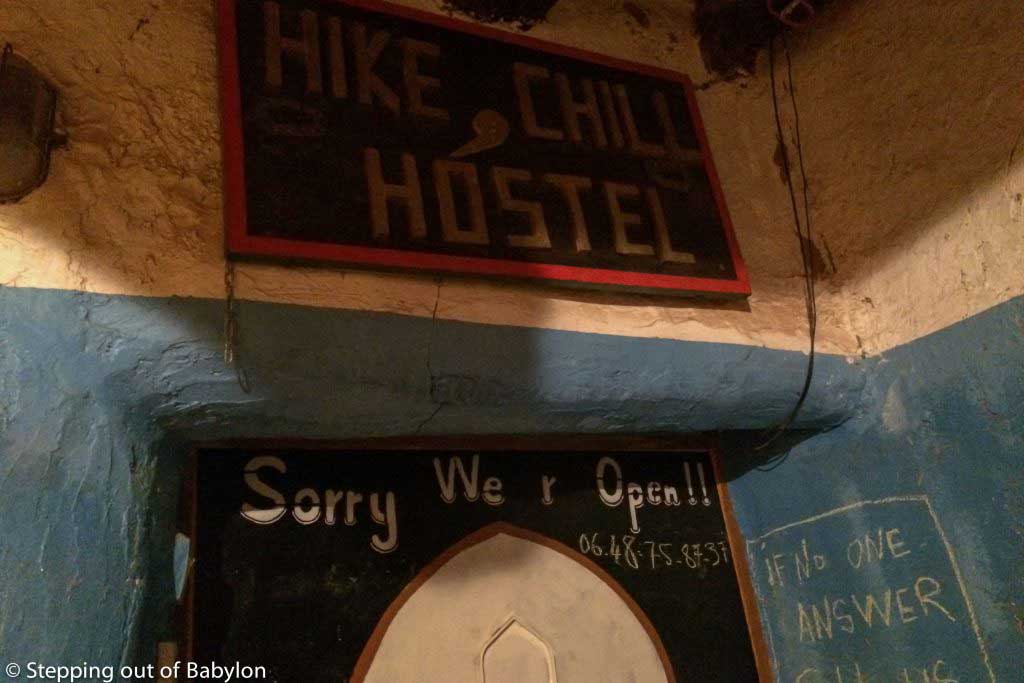
Hike and Chill Hostel… located on the Jewish Quarter, about 5 minutes walking from the main square of Tinghir… if you don’t get lost!!! There’s a double room and also dorms, all sharing bathroom. The decoration is very cool and made with care and good taste, and the building was properly renewed, but respecting the traditional style. On the top, you have the traditional rooftop from where you have a great view for the oasis, and from where you can spend hours watching the shifting light as the sun slides the rocky walls of the Atlas Mountains.

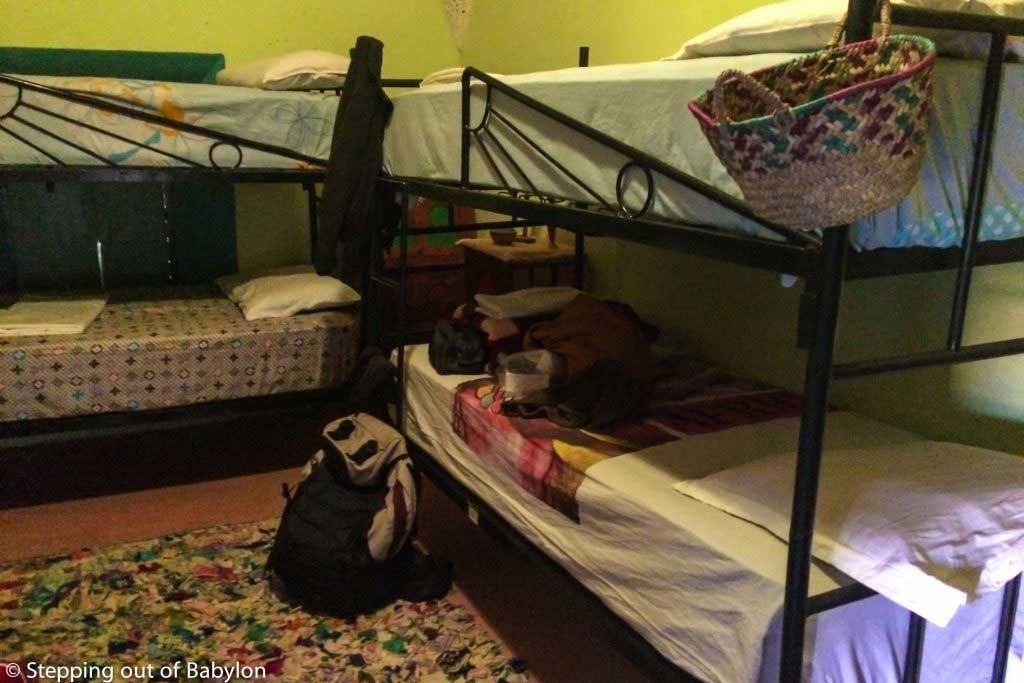
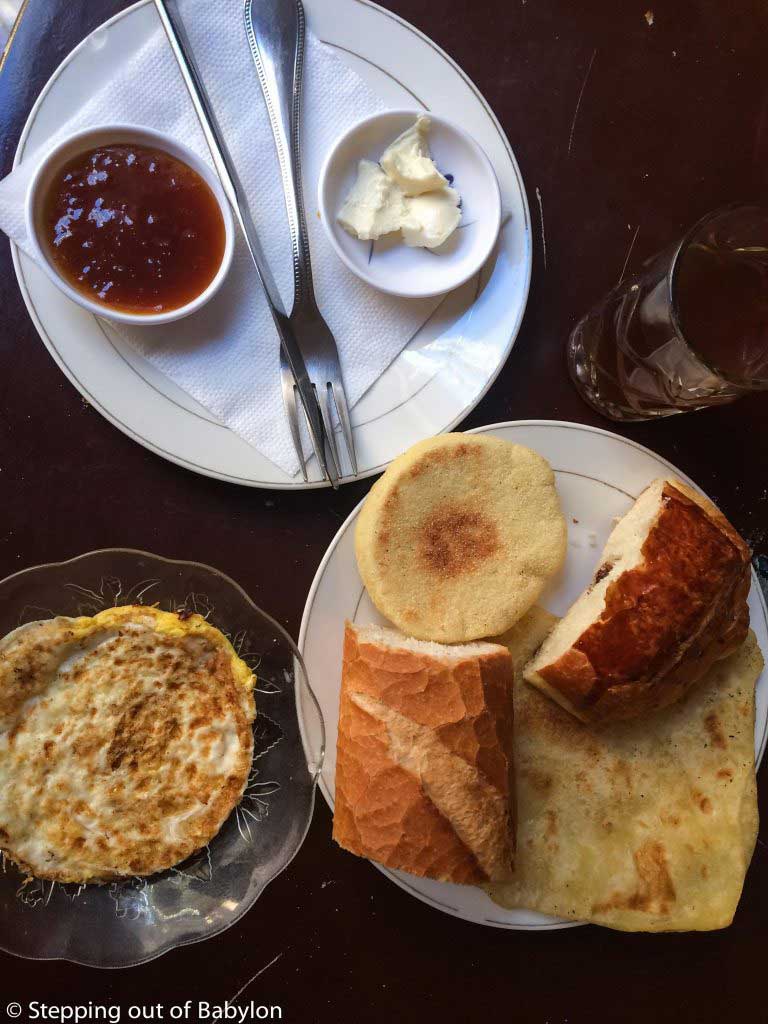
A dorm bed costs 50 Dirham (you have the option of bunk beds or mattress on the floor), without breakfast. The breakfast is kind of continental style with a Moroccan touch and includes yogurt, jam, butter, fruit, local bread and sweets. In case that you want to shower outside the “normal” morning time you need to ask a bit in advance, and the water is heated with fire and it takes time…. but it comes super hot!!!

Avoid the booking websites and go directly to these guys that are cool super friendly and for sure that you can get a better deal!

[columns] [span6]

Hike and Chill Hostel in Tinghir with the Berber flag

[/span6][span6]

Hike and Chill Hostel in Tinghir

[/span6][/columns]

[columns] [span6]

dorms at Hike and Chill Hostel in Tinghir

[/span6][span6]

Hike and Chill Hostel in Tinghir

[/span6][/columns]

Where to eat in Tinghir:

As Tinghir is very small it’s easy to check all the restaurants and eateries after a short walk. The local market, that part is in the street behind the mosque, and the other part is a concentration of small shops between the mosque and the main square. Here you find a bit of everything, from fruits and vegetables, to groceries and olives. There is also a good bakery but you can try the homemade bread that is sold in the street, usually by women; it’s not so easy to spot as they have the bread covered with cloths but these ladies are dress with a traditional outfit, that from far distance look like they are warped in a white sheet…. easy to spot!

In the main square as also in the streets around, you can easily find small eateries selling traditional flatbread, as harch and msemen, that are perfect with a tea or with the traditional besara or harira, to of the traditional soups, each one serve in specific times of the day… the food is cooked outside so just follow your intuition and trust your senses to find the best combination of these standards of Morrocan cuisine.

For a proper meal, like tagine, you can find several restaurants along Rue Hassan II, in front of a small park (Jardin Public).

harch, a traditional flatbread made with semolina
harch, a traditional flatbread made with semolina… delicious specially when it’s still warm


How to go to Todra Gorge:

  • The most popular and easy way to go to Todra Gorge, if you are not traveling by car, is getting a taxi. Deal the price including the return trip, as you’ll not take long to see the place and the driver can wait for you. The taxi stand is in a ground very close by the main square, on the East side. Don’t know about the price but must be negotiated with the drivers and it was not easy to find one that spoke English.

If you use the car or taxi, is nice to make a few stops along the way, to observe the oasis from the top of the cliff; it worth to see, of course, but you’ll miss the chance to feel the local lifestyle of the oasis and the interaction with the population.

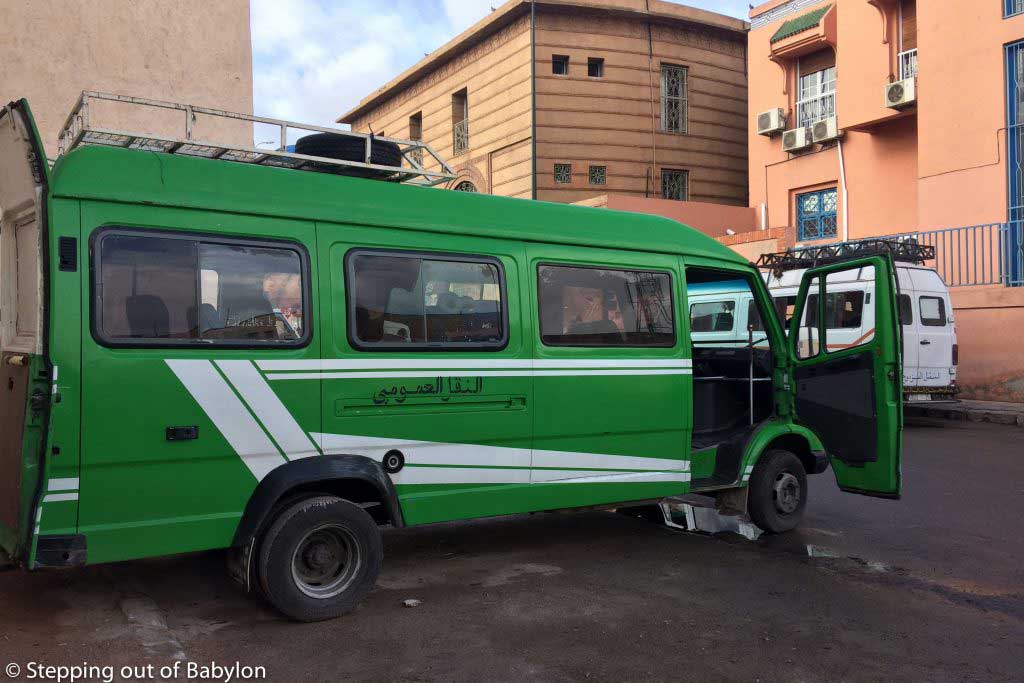
  • The second option is to use one of the old public buses that are waiting at the same ground where is the taxi stand, a couple of minutes from the main square. The ticket costs 7 Dirham, each way.
  • The last… but not the least, is to walk along the oasis, about 14 km walk, until reaching the Todra Gorge, and then come back by public bus. It’s a long walk, but almost all the way is flat. Sometimes it’s not easy to find the main path as many small paths cross the oasis, but you’ll find lots of people along the way to who you can ask. I recommend starting early morning, as parts of the path don’t have shade. Bring water and something to snack (like dry fruits, bread and nuts) as there is nothing to drink or eat along the way until you reach Todra Gorge, where you can find restaurants.
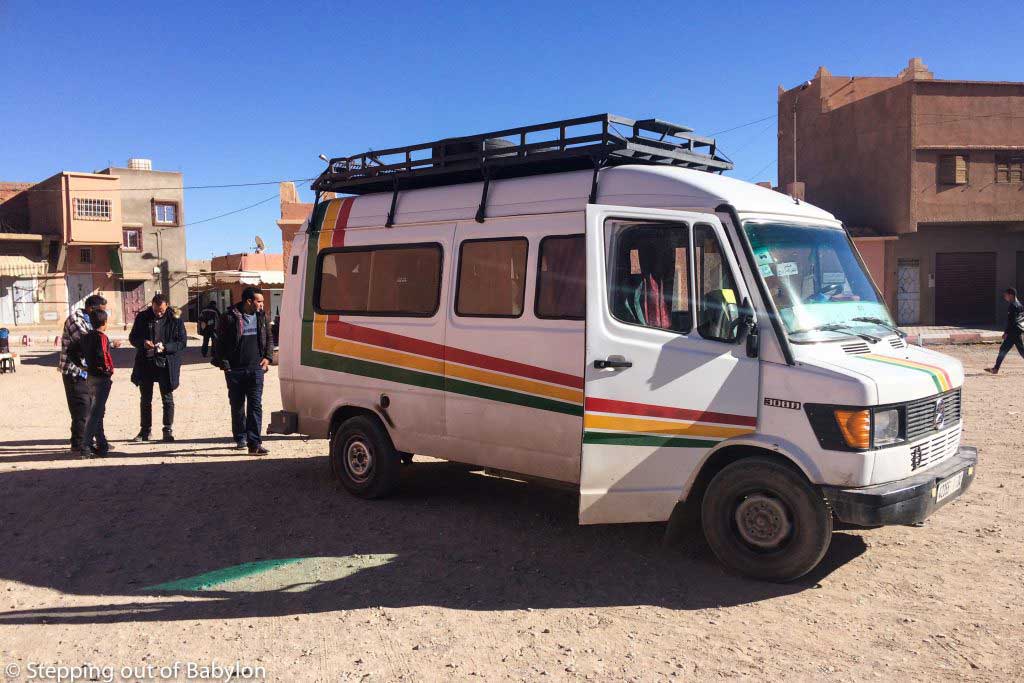
bus to Todra Gorge
bus to Todra Gorge

How to go to move away from Tinghir:

There isn’t a propoer bus terminal in Tinghir. The long distance buses stop in the main road (Boulevard Mohamed V) not far from the small public garden.

Couldn’t find the CTM ticket counter.

The Supratours buses stop in Tinghir and you must buy the ticket in advance (I brought it in the same day without any problem) in a small shop on the back of the mosque, facing the local street market.

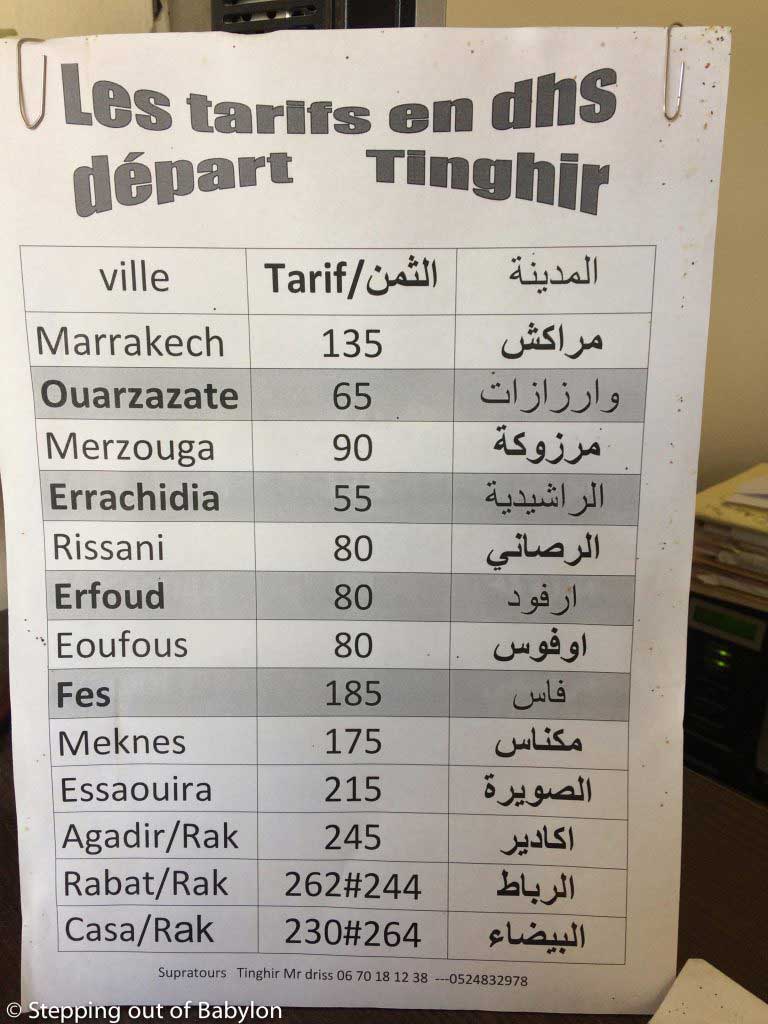
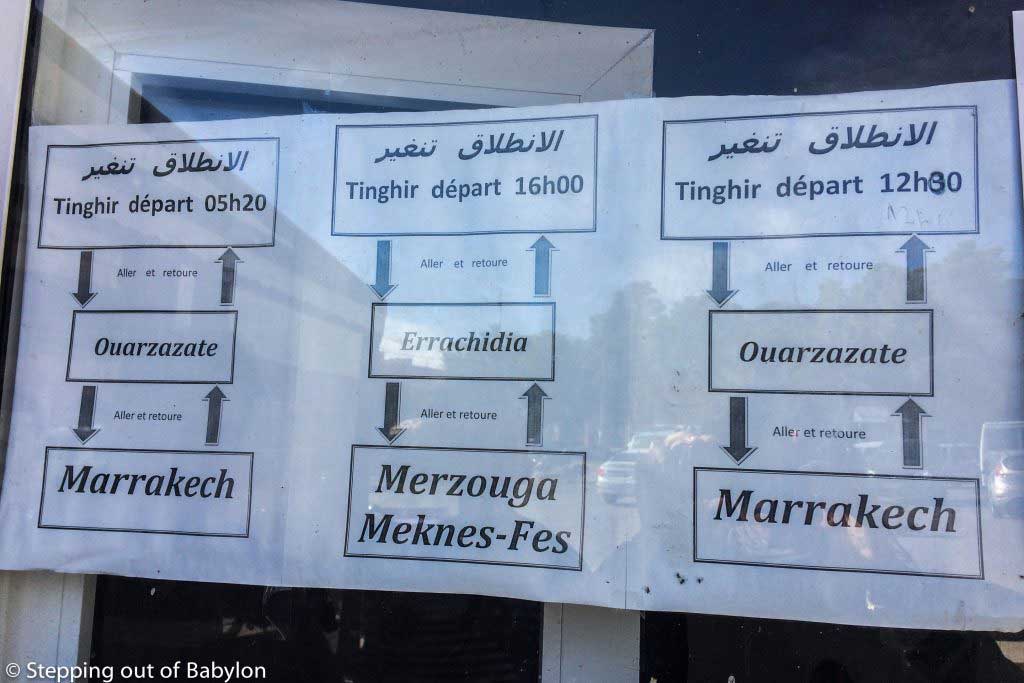
The bus from Tinghir to Merzouga departures at 4 p.m. and arrive around 9 p.m. It costs 90 Dirham, plus 5 DH for luggage.

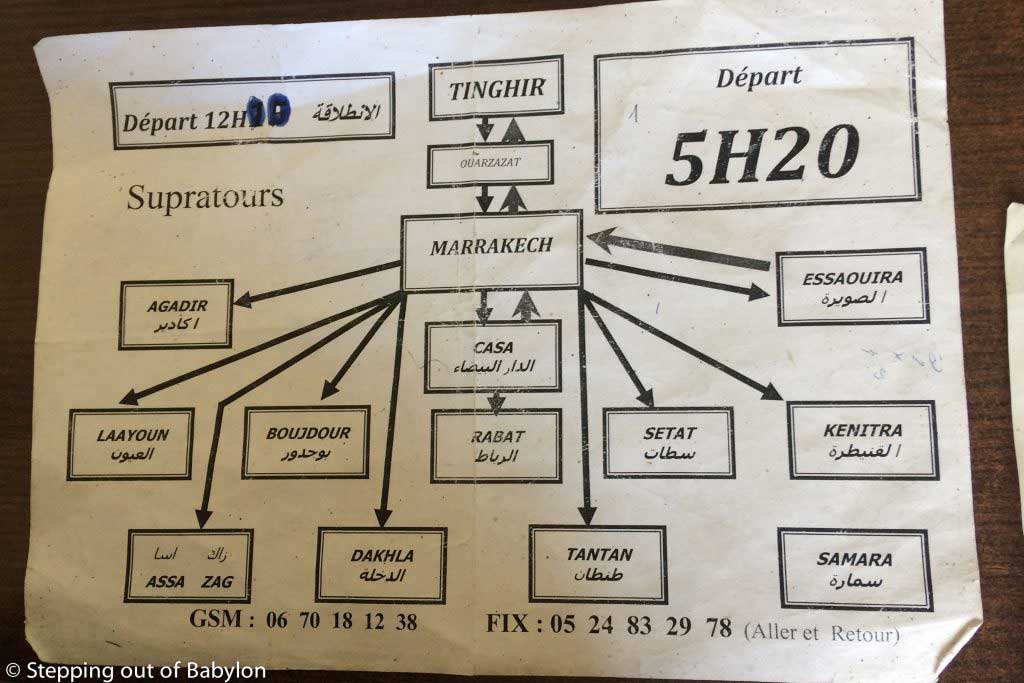
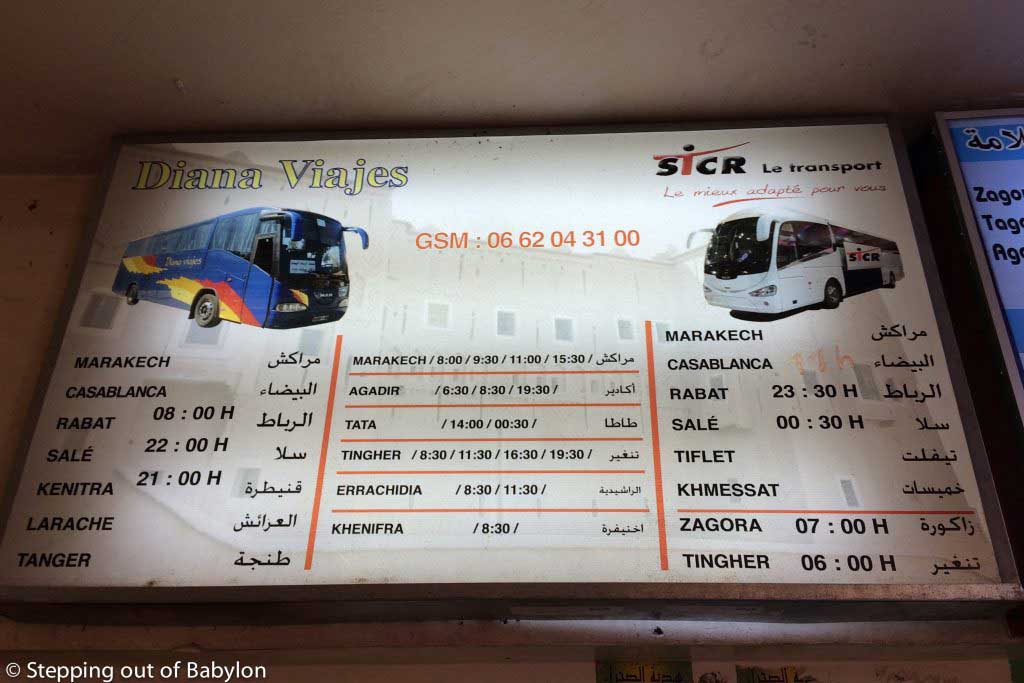
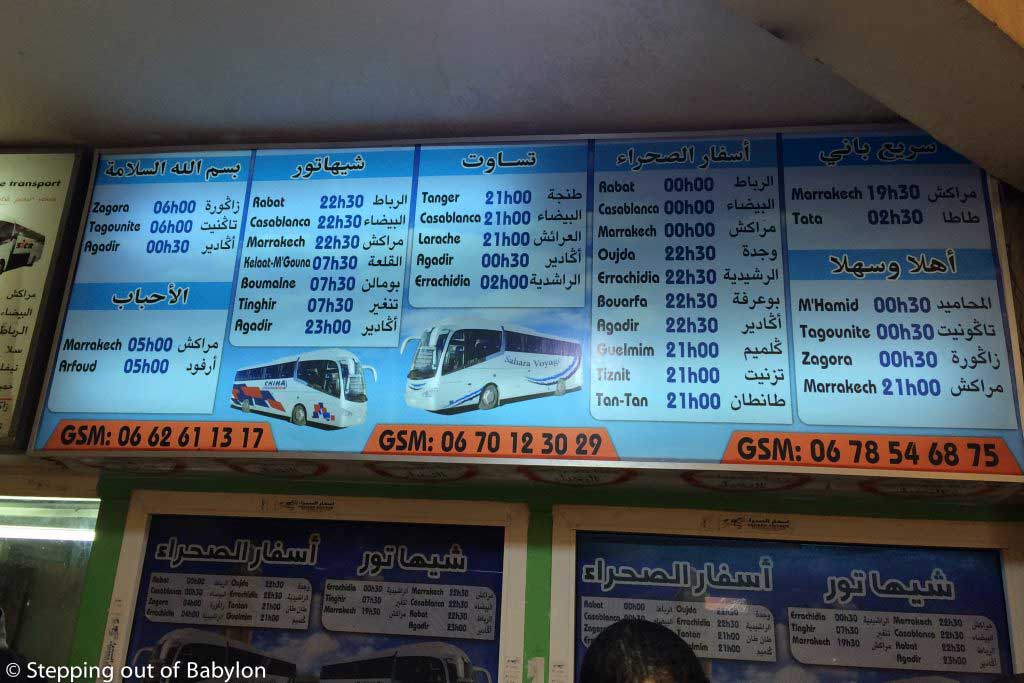
Check the images below with the schedule to the different destinations.

Supratours contact: 0524832978 (the office only opens about one hours before the buses arrive or departure).

[columns] [span6]

Tinghir: How to go to move away

[/span6][span6]

Tinghir: How to go to move away

[/span6][/columns]


[columns] [span6]

Tinghir: How to go to move away
Tinghir: How to go to move away. ticket prices

[/span6][span6]

Tinghir: How to go to move away
Tinghir: How to go to move away. bus schedule

[/span6][/columns]


Ait benHadou… traces of the caravan route

Aït Ben Haddou is abandoned. Aït Ben Haddou is full of people. Contradiction?! Yes!!!

This village, once a stopover in the ancient caravan route from Marrakesh to the Sahara, it’s now classified as UNESCO world heritage and attracts many visitors. But apparently no one lives in Aït Ben Haddou, but in the other side of the river that creates an oasis of green in this arid and almost empty landscape, interrupted here and there by palm tree plantations.

Build in the traditional clay construction that gives the warm red-brown color, characteristic from this eastern side of the high Atlas, Aït Ben Haddou surrounded by walls, with the houses sliding down along the slope merging with the colors of the dry soil.

Presently, this ancient village is busy during the day, receiving hundred of visitors most of them arriving in big groups, that don’t spend here more than half an hour, checking the views and giving a quick look to the souvenir shops. In fact 30 minutes is time enough to walk through the steep and narrow streets that lead to the top of the hill, where the ruins of a fortification are situated which is an excellent point of observation for the plain around. From here we can still glimpse, far away, the peaks of the High Atlas that we crossed when left Marrakesh, bringing a freezing cold wind, while facing east we know that the desert is waiting for us.
Aït Ben Haddou
Aït Ben Haddou
Aït Ben Haddou
on the way from Ouarzazate to Aït Ben Haddou
Aït Ben Haddou
Aït Ben Haddou
Aït Ben Haddou. traditional clay construction in an area where the rain is scarce

Where to sleep:

Check Ouarzazate post.

Where to eat:

Along the road that pass by Aït Ben Haddou there are a few restaurants, but in October, maybe because is low season, they were almost all closed, and the ones that were open were far from be appealing.

Inside the Aït Ben Haddou, everything was closed except some antiques/souvenirs shops.
But if you just want to chill a bit, look for a tent on the left side of Aït Ben Haddou entrance, just after you cross the river. It’s the Tawesna, a project with the aim of supporting women from this village, showing at the same time the Berber culture and hospitality. It’s basically a tent that works as a teashop, serving the traditional green tea with mint, and where you can taste the local dates or some salty snacks. Here you can get an unlimited refill of tea and smiles for 20 Dirham.
https://www.facebook.com/tawesna/

https://tablespaysannes.com/

[columns] [span6]

Stepping out of Babylon_Aït Ben Haddou_Tawesna project_IMG_7875
Tawesna, a teashop that supports a women local project

[/span6][span6]

Tawesna
Tawesna

[/span6][/columns]

How to move around:

On foot. Aït Ben Haddou is very small and there’s no traffic.

The taxi drops you in the main road and from there is a short walk to the village, crossing a pedestrian bridge.

How to go from Ouarzazate to Aït Ben Haddou:

There isn´t a direct public transport from Ouarzazate to Aït Ben Haddou (also written as Aït Benhaddou). You need first to get a bus to Tabourahte and from there a shared taxi to Aït Ben Haddou.

So the best option, if you are with more people, is to share a taxi. You can find taxis close by the main square or at the bus terminal. The taxi ride cost 100 Dirham one-way, and if you want you can ask the driver to wait for you (even if you don’t ask he will probably be there waiting and will spot you when you return).

Ouarzazate… sunset and street food

In resume, there’s not much to do or see in Ouarzazate itself, and most of the people who visit this place come on organized tours to the desert, as this city is located in the midway from Marrakesh to Merzouga, to visit the Taourirt Kasbah.

Unexpectedly, a concentration of cinema studios appears in this place, which maintains the structures and decoration that served as scenery to shooting some blockbusters. This structures stand out, as anachronistic creatures that do not belong to this space or culture, but that by inertia are allowed to yield to the erosion that whirls this semi-desert landscape.

But despite this, the choice of staying a couple of days at Ouarzazate was not bad at all, as it worked as a slow transition between the Marrakesh oasis plains to the sandy desert landscape of the Sahara. It also offers the chance to visit Aït Ben Haddou located around 30 kilometers away.

The Ouarzazate city shows up empty and silent during the day, looking more like a ghost town. But it’s close to the sunset, when the shades start to take the colours of the buildings that people come out, gathering at the main square (Place Al-Mouahidine) where a market takes place, selling a big mix of products from second-hand clothes to electronic products, but where we can also find nuts and dry fruits. October is the season for walnuts and dates, that can also easily be find all over the country.

Taourirt Kasbah (20 Dirham), an ancient fortress made with the traditional clay walls, is the most popular place at Ouarzazate, and it where all the tours pour the visitors. But is at the Jewish quarter, an old kashba located at a short distance from the kashbah, that you can feel the real vibe of the city, with the local population busy with daily routines, with men gathering at tea shops and women occupied with housework.

Walking along the narrow streets of this maze quarter, where is hard to find any trace of Jewish religion or culture, we can feel the smell of the bread, freshly baked. A delightful scent that is characteristic of any walk through a Moroccan town and or village, coming from the wooden ovens from unnoticed bakeries, that quite often are close from the mosque and not far from a public bath, this last one hard to spot if you don’t know the arabic language.

Ouarzazate. Taourirt Kasbah
Ouarzazate. Sunset at main square Place Al-Mouahidine
Maybe Ouarzazate was not the most impressive place, but the lack of humidity of this desert stops, offer the perfect conditions to watch a magnificent sunset.
Ouarzazate. Jewish quarter

Where to sleep in Ouarzazate:

There are not many budget options to sleep in Ouarzazate and don’t expect to find dorms or even a hostel. The Youth Hostel is the only exception but is located a bit far from the center, around 4km south, on the other side of the river, away from the bus terminal and the comercial area. But if you travel  by car, the Youth Hostels are usually a very cheap option, providing basic but clean accommodation.

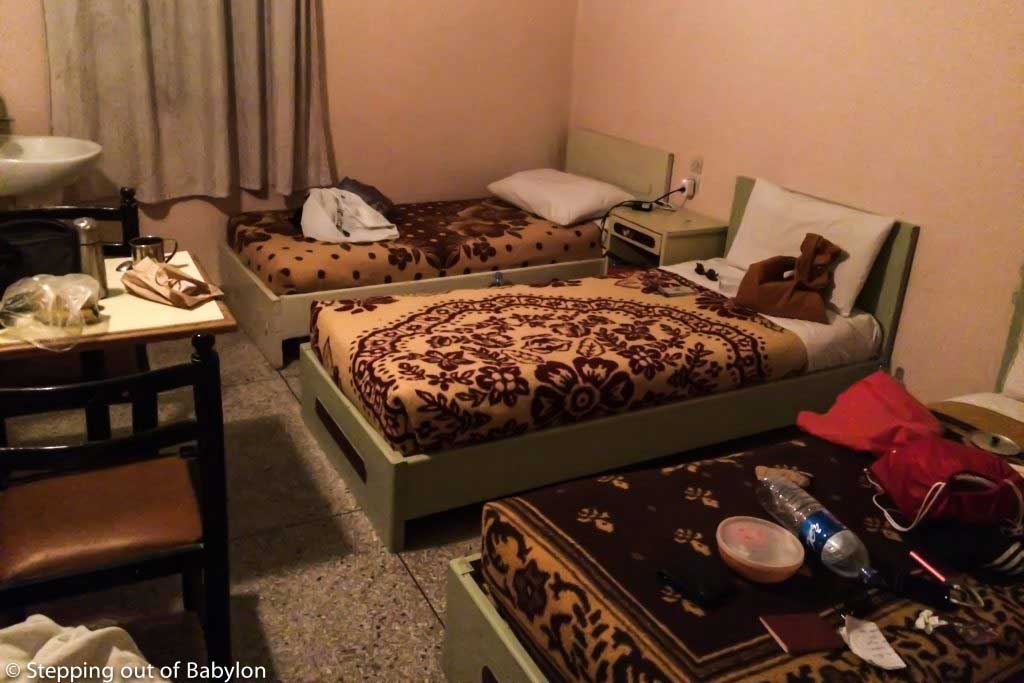
The Bab Sahara Hotel right in the main square, offers a good location with reasonable prices (check image below). It’s a decadent place that lacks in maintenance and comfort but it’s clean and the staff is very friendly and helpful. You can skip the breakfast as outside, 50 meters away you can find an eatery, open from 6 a.m. serving delicious local breakfast.

Ouarzazate. Bab Sahara Hotel . Room
Ouarzazate. Bab Sahara Hotel . Prices

Where to eat in Ouarzazate:

Despite the lack of charm or interesting things to see (the studios were not even an option for me to visit), Ouarzazate was a good surprise in terms of food with a lot of choices in terms of street food and local eateries, away from the tourist food clichés… and tourist prices.

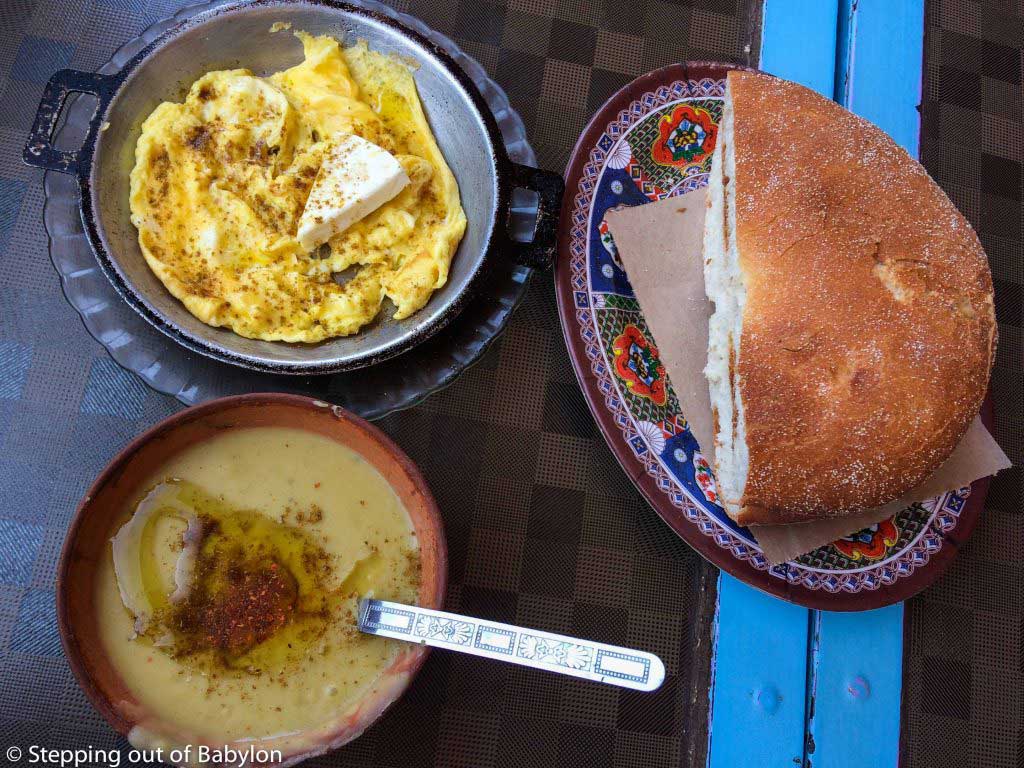
For the breakfast, the best choice in terms of local food, is at a corner café at the mains square, close to the Rue Al-Mouahidine, that serves a delicious besara soup (fava soup), seasoned with paprika and cumin. The flatbread is mandatory at Morocco tables and the omelet with a triangle-processed-cheese on top is also a standard… a less interesting trace of the French presence in Moroccan food, eh eh. This place, that looks more like a small grocery, opens at 6 a.m. and it’s easy to spot as there are always local people eating there.

delicious breakfast at Ouarzazate main square... forget the western breakfast standards and enjoy this strong local brekafast with soup, bread and eggs... the triangle cheese is a trace of the french presence in Morocco
delicious breakfast at Ouarzazate main square… forget the western breakfast standards and enjoy this strong local breakfast with soup, bread and eggs… the triangle cheese is a trace of the french presence in Morocco

Close by this cafe, a small stall pops up at evening time, run by a friendly woman that cooks amazing medfouna, a.k.a. berber pizza, a grilled flatbread filled with vegetables and spices… and good vibes. In fact, evening time is the best to find food at Ouarzazate and during the day the place looks numb.

On the other side of the main square, on the right side of the court building, along a road that runs behind the food market, several eateries serve in the evening harira, the traditional morocco soup usually made with vegetables and beans cooked in meat stock.

Street food at Ouarzazate...medfouna, a.k.a. berber pizza and more delicious stuff cooked with by this friendly lady
Street food at Ouarzazate… “medfouna”, a.k.a. berber pizza and more delicious stuff cooked with by this friendly lady
medfouna, a.k.a. berber pizza, a grilled flatbread filled with vegetables and spices

How to move around in Ouarzazate:

Ouarzazate is small enough to be done on foot and from the main square until Taourirt Kasbah or the Jewish Quarter is less than 2 kilometers.

How to go from Ouarzazate to Aït Ben Haddou:

There isn´t a direct public transport from Ouarzazate to Aït Ben Haddou (also written as Aït Benhaddou). You need first to get a bus to Tabourahte and from there a shared taxi to Aït Ben Haddou.

So the best option, if you are with more people, is to share a taxi. You can find taxis close by the main square or at the bus terminal. The taxi ride cost 100 Dirham one-way, and if you want you can ask the driver to wait for you (even if you don’t ask he will probably be there waiting and will spot you when you return).

How to leave from Ouarzazate:

There are two options to leave from Ouarzazate, no matter in what direction you want to go:

  1. CTM bus departure from its own terminal, 5 minutes walking from the main square (check the schedule below) with buses to the main cities.
  2. From Gare Routiere (bus terminal) located 2 km west from the main square, you have the SupraTour buses as also many other small companies that provide transportation form nearby destination (check image below), with a big choice in terms of schedule.
How to move out from Ouarzazate: Gare Routiere
How to move out from Ouarzazate: Gare Routiere schedule

From the oasis to the desert… through the High Atlas

The road from Marrakesh to Ouarzazate, iwas one of the most remarkable things in this Morocco trip. In less that 200 kilometers we leave the green plains of Marrakesh, filled up with orange, pomegranate and olive trees and reach Ouarzazate, where the landscape shows up dry and arid, preparing us for the arriving of the desert that waits for us as we move further East.

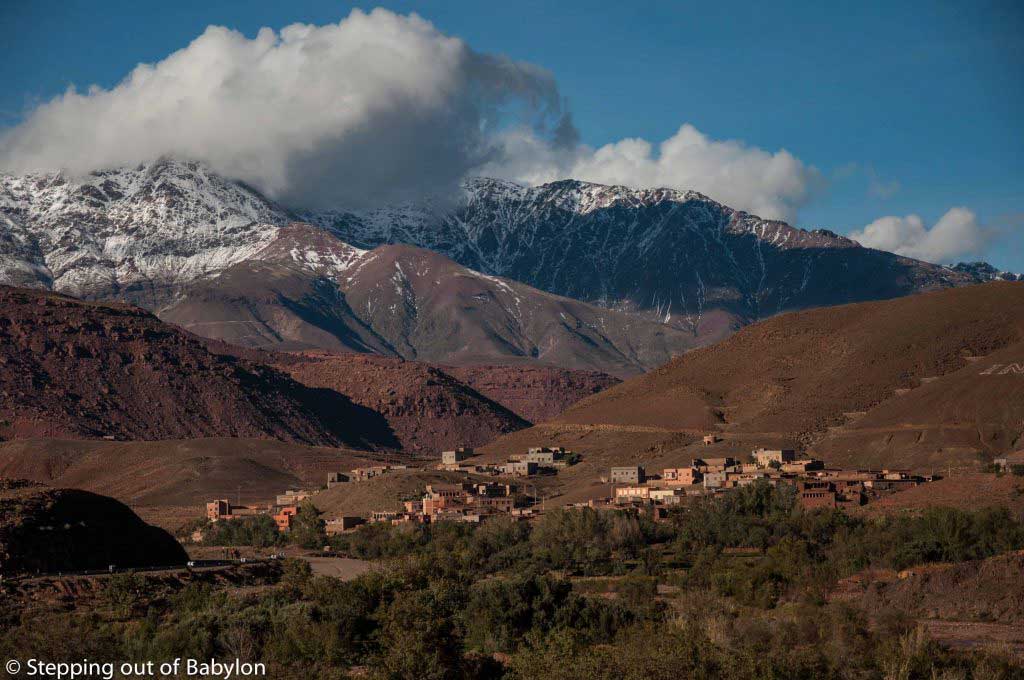
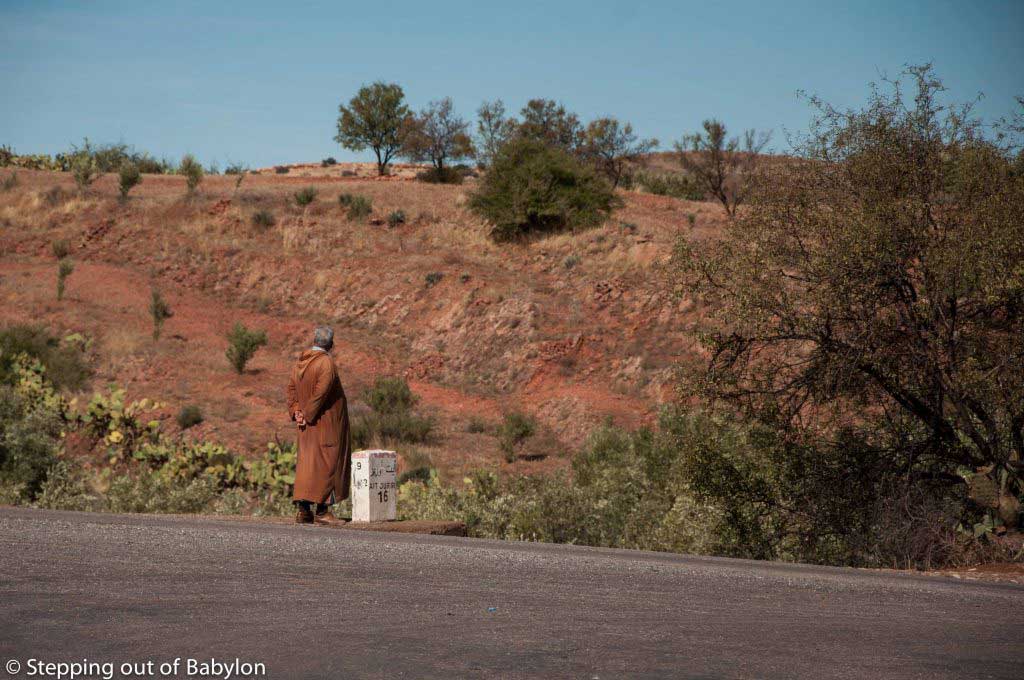
The road N9, cross the High Atlas Range reaching the 2260 meters high when it cross the Tizi-n-Tichka high pass, that in October are already covered with snow.

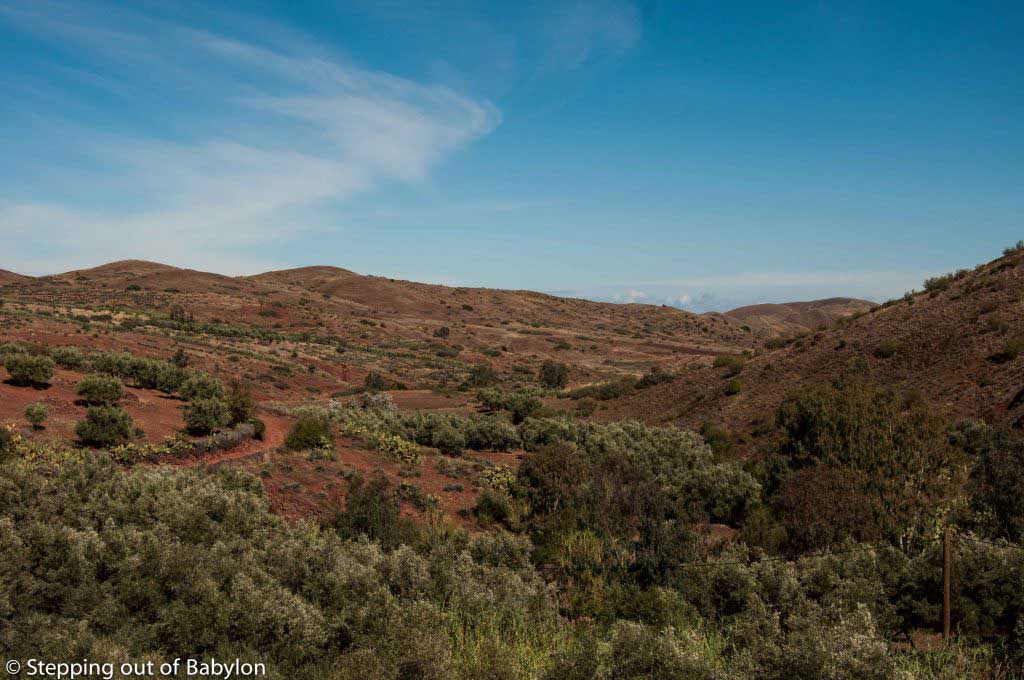
Through the bus windows we can watch the change of the colors of the mountains, with a wide pallets of greens and browns, where occasionally small groups of houses nest in the less steep slopes. Behind, farther and farther, are the peaks of the snow-capped mountains. It’s a long journey of almost 8 hours, where the changes of light enhance the tones of the landscape, making the last part of the trip, on the East slopes of the Atlas, looking like an hypnotic sequence of smooth hills where we can find all the shades of brown characteristic of this almost desert area.

Road Marrakesh to Ouarzazate_high Atlas_DSC_9247
Road N9… around one our driving away from Marrakwsh, no the way to Tizi-n-Tichka high pass

Hight Atlas... road N9 from Marrakesh to Ouarzazate
Hight Atlas… road N9 from Marrakesh to Ouarzazate

Hight Atlas... road N9 from Marrakesh to Ouarzazate
Hight Atlas… road N9 from Marrakesh to Ouarzazate

Road Marrakesh to Ouarzazate_high Atlas_DSC_9261

How to go from Marrakesh to Ouarzazate

Despite the good Morocco railway network, the train doesn’t reach the Eastern part of the country, where is the desert and te big dunes, so the best alternative are the long distance buses. Both SupraTours and CTM provide a good service, with modern and comfortable buses, and both practice more or less the same prices.

The CTM bus from Marrakesh to Ouarzazate costs 90 Dirham, plus 5 Dirham for the luggage. Is advisable to buy the ticket one day in advance, online or directly at the CTM bus terminal/office.

CTM bus departure from its own terminal not far from the train station, in the modern part of Marrakesh, around 5 kilometers away from the medina. Gate Supratours is also close by.

The trip takes around 3 hours. If you take the CTM bus it will drop you at the CTM gare that is very close by the main square of Ouarzazate. The Supratours has its terminal at Gare Routiere (mains bus terminal) about 2 km from the center.


N9 High Atlas Road
N9 High Atlas Road

Imlil and the Toubkal Peak

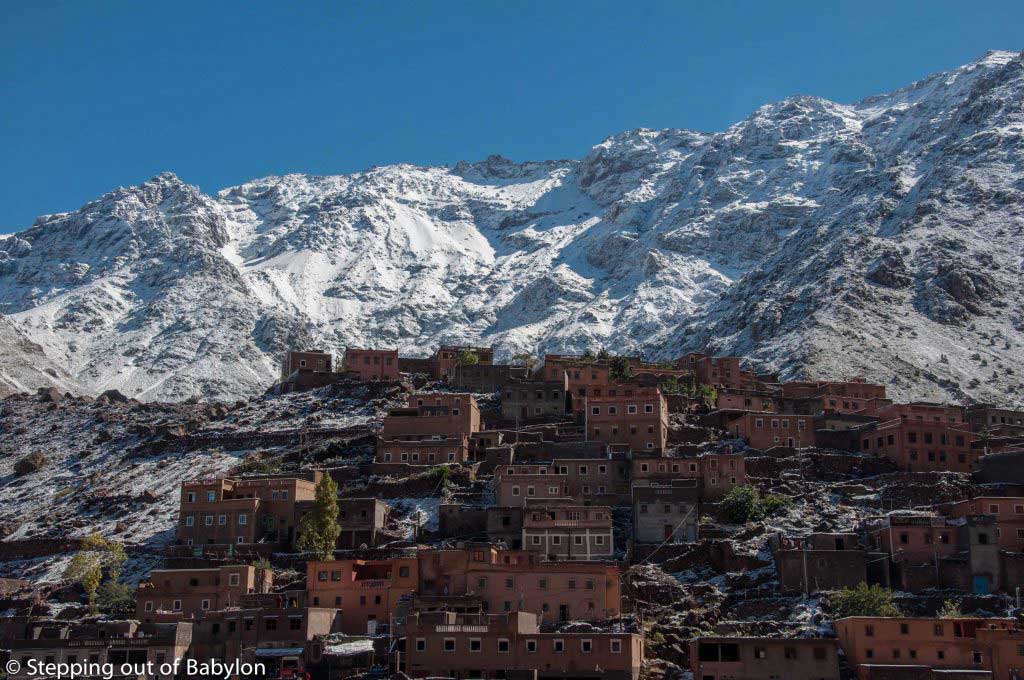
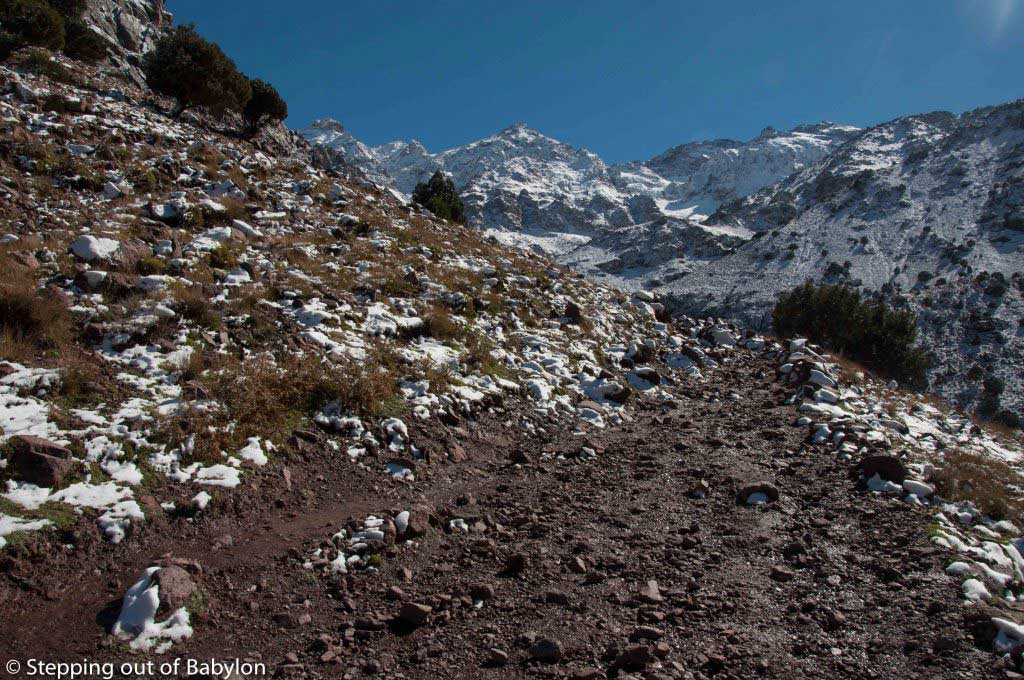
When we think about Morocco, cold and snow are not words that first pop up in our mind. But the central part of the country is dominated the Atlas Mountains that reach the 4167 meters, making the Toubkal the highest peak of North Africa.

Just one hour driving from Marrakesh, we reach the small village of Imlil, located 1800 meters high, passing through a rural landscape that slowly gets more green and cold as we move up along a winding road.

The trip itself worth the visit to Imlil, but is the location, on a protected valley in the Atlas Mountain a few kilometers from the summit, that attracts most of the visitors that come here to climbing Toubkal peak. Several infrastructures to support the tourism spread along Imlil as accommodations and restaurants as also some shops selling local products as honey, nuts and argan oil.

Imlil
Imlil

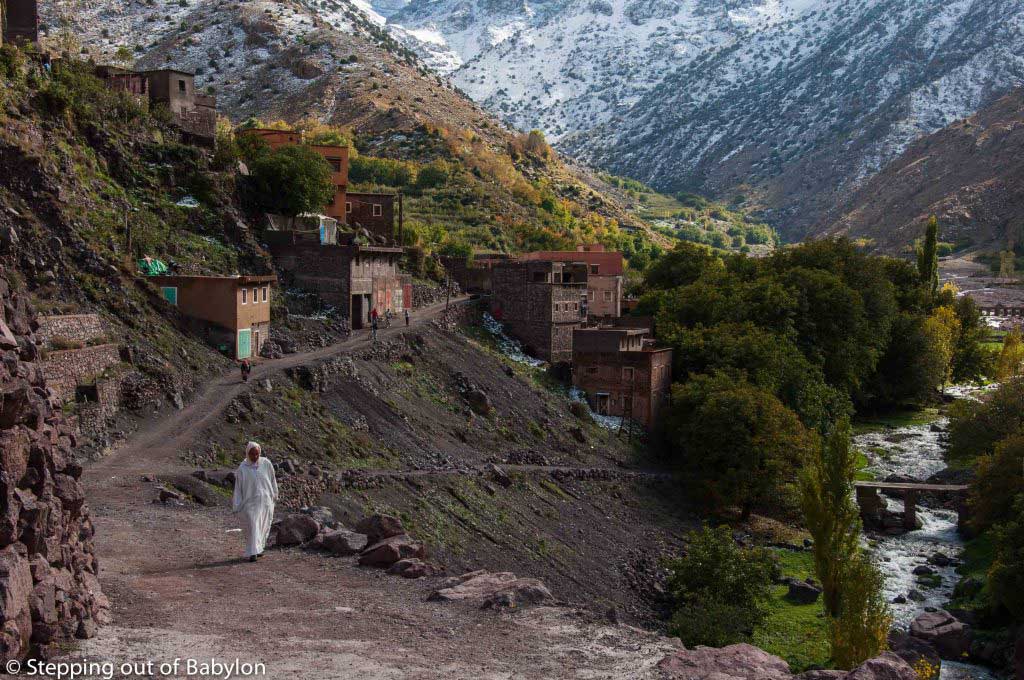
The village doesn’t have many attractions and there not much to do but it offers great views to the mountains and it’s a good base to explore the surroundings, like the nearby village Aroumd, on the way to the Toubkal trail, is easy to reach and where you can feel the local lifestyle.

Aroumd
Aroumd

Aroumd view from the Toubkal trail

Aroumd
Aroumd


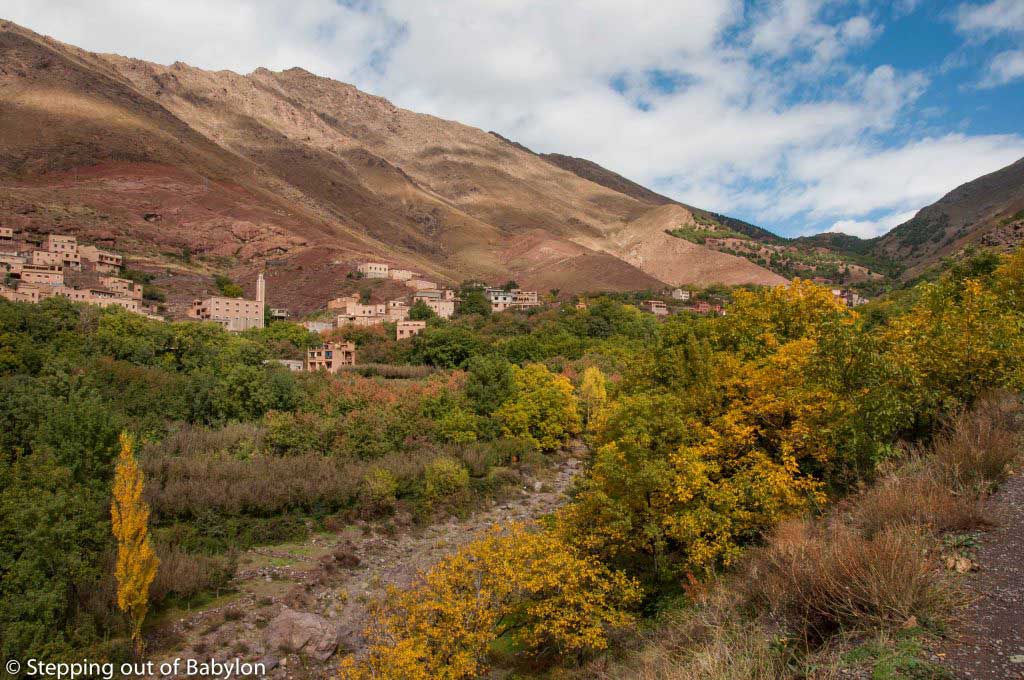
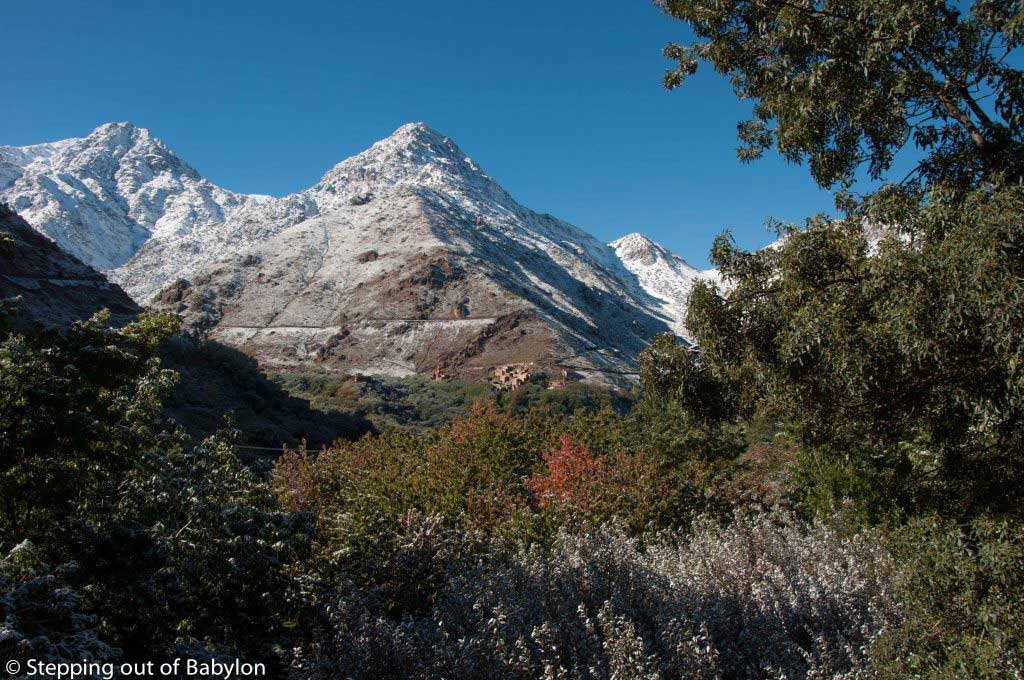
Autumn, it’s no the high season in Imlil as hiking to the summit can become difficult with the start of the first snow, which doesn’t attract so many tourists. But it’s a very beautiful moment to be there as the place is quiet and the landscape is painted with an amazing color gradient of the leaves of the trees. The slopes of the mountains show different tones of green, that go from the dark from the trees that fill up the valley to the bright green of grass that cover the higher slopes; all theses crowned by the white of fresh snow.


Imlil
Imlil

Imlil
Imlil

Snow is always something that makes us smile. Watching snowing in Morocco was so unexpected that made me feel even happier than a child playing with the snowflakes, enjoying the different textures of the snow, and observing the changes of the color and consistency as it melts. It was necessary to go to Africa to see snow!!!

Imlil valley just after the first snow


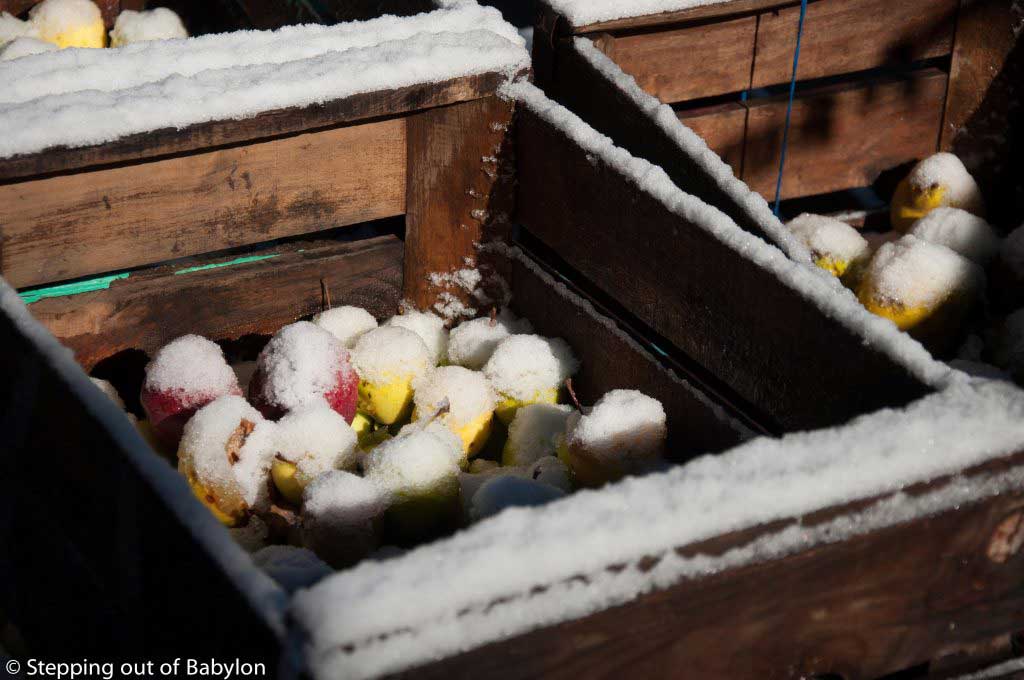
Among with honey, nuts and argan oil the apples are also a local product and in the beginning of the winter is the best season for them
Among with honey, nuts and argan oil the apples are also a local product and in the beginning of the winter is the season!!

Where to sleep in Imlil:

If its winter it’s a good idea to spend a bit more money to find a comfortable place to stay, as Imlil is very cold and humid, and even in the middle of October the temperature can easily reach zero degrees during the night.

The most popular type of accommodation are the guesthouses, identified as “dar”, that usually are located in the same building where the owner, many times a mountain guide, lives with his family.

Only if you go on the high season its advisable to book a room in advance; October is low season and most of the places are empty, so is better just to find an accommodation when you arrive. Near the place where the grand taxi stops (also the bus) you can find owners of hostels and guesthouses waiting for clients, and in the low season is easy to bargain for a special price… much better than the promotions that you can find in reservations websites!!!

In October you can get a double room (with a very good hot shower) for 100 Dirham, without breakfast. Staying in a guesthouse is a good opportunity to have a homemade food with the family (a vegetarian meal can cost around 25 Dirham) and probably taste food that is not available in restaurants.

Where to eat in Imlil:

The village is very small, its basically a row of buildings and houses along the main road; what can be called as the village center is basically the T junction where the trail to Toubkal start and where is concentrated most of the shops and restaurants of Imlil.

Just follow the trace of the steam that comes out from the tagines that spread along the main road and you’ll find a place to eat. There are also a few local cafes serving chickpeas soup (harira) or fava soup (bessara). They don’t have a menu or a sign but try to spot a pile of empty bowls nearby the counter or simply ask for bessara or harira. It should cost around 6 Dirham, and you can ask for bread or a boiled egg (around 2 Dirham).

one of the local stall in Imlil where you can have a tagine or drink a tea

Imlil
Imlil

How to move around:

If you are in the mood to walk, Imlil is a good base to make some hikes to the nearby villages. You can use the main road that almost doesn’t have traffic or some of the footpaths that cross the small group of houses that nestling on the hillside.

The main villages around Imlil are Aroumd and Tamatert.

Aroumd, it’s on the way to the Toubkal trail and can be reached by a footpath from the center of Imlil or along the main road that goes south, in the direction of the mountains. I recommend starting this hike by the main road, from where you can get very good views of Imlil valley and from Toubkal; on the way back, you can walk through Aroumd and walk down the hill along a footpath crossing a beautiful forest of walnuts trees.

Even if you are not prepared to hike the 4167 meters of the Toubkal Mountain, you can still make part of the path walking until you feel comfortable during a few hours, and come back having in mind to reach Imlil before the sunset. The 2200 meters high are easy to reach from Imlil on a relaxing day trip.

The path is very clear but very rocky so it’s advisable to wear hiking shoes.

Toubkal trail
Toubkal trail

along the road from Imlil to Aroumd

How to go from Marrakesh to Imlil:

There are two options:

  • By local bus (see photo below);
  • By shared taxi, that in Morocco are called by “grand taxi”; they are beige color cars, transporting up to six passengers; you can rent one just for yourself or share the ride with other passengers, but for that, you need to wait until the car gets full.

The grand taxi to Imlil departure from Rue Oqba Ben Nafaa, very close by the Winxo petrol station at Avenue Houman el Fetouaki. There’s always one guy in charge of the arrangement of the passenger according to taxis waiting, and you should try to spot him and deal directly with him the price of the ride, insisting that you want to wait until the car is full, that usually don’t take more than one hour. The trip takes 1 hour and costs 35 Dirham.

If you are traveling with a low budget, the local bus can be found a bit further in the same street; there’s no clear information about the departure schedule or the price, but the trip to Imlil should cost around 15 Dirham.

Bus that link Marrakesh to Imlil

How to go from Imlil to Marrakesh:

If you want to move further East, on the way to Ouarzazate or to the desert, you need to go back to Marrakesh to get a long distance bus. SupraTours and CTM, that are the most recommended transport companies, offering a very good service, linking all major cities.

To return to Marrakesh you can use the same grand taxi, but it’s better to start in the morning as later you may not have enough passengers to fill up the car, ending up paying more.

There is also a local bus that goes from Imlil to Asni (5 Dirham), where you more chances to find more passengers to fill up a taxi; from Asni you can take another bus to Marrakesh or a grand taxi for 25 Dirham.


Marrakesh… the first contact with the Moroccan culture

Arriving at a new country always demand certain adjustments… learning the greetings and the way to thank, adjust to the local “dress code”, learn the name of the dishes, identify ingredients and adjust to new flavours and smells… adjust to local schedules and routines… learn that medina means old town, usually surrounded by walls and accessible by gates, called bab, that works also as a landmark in this urban labyrinth… that the kasbah are castles or fortress dating from the fights between Arabs and Berbers… learn that riads are the traditional Moroccan houses which center is a courtyard, many of them saved from ruins by the tourism business… and learn that a souk is a market, no matter if it’s for selling food or objects… and also learn the cost of things and how the currency looks like, trying to look confident not to be cheated!!! Anyway, all these challenges are part of the attraction of travel, no?!?!

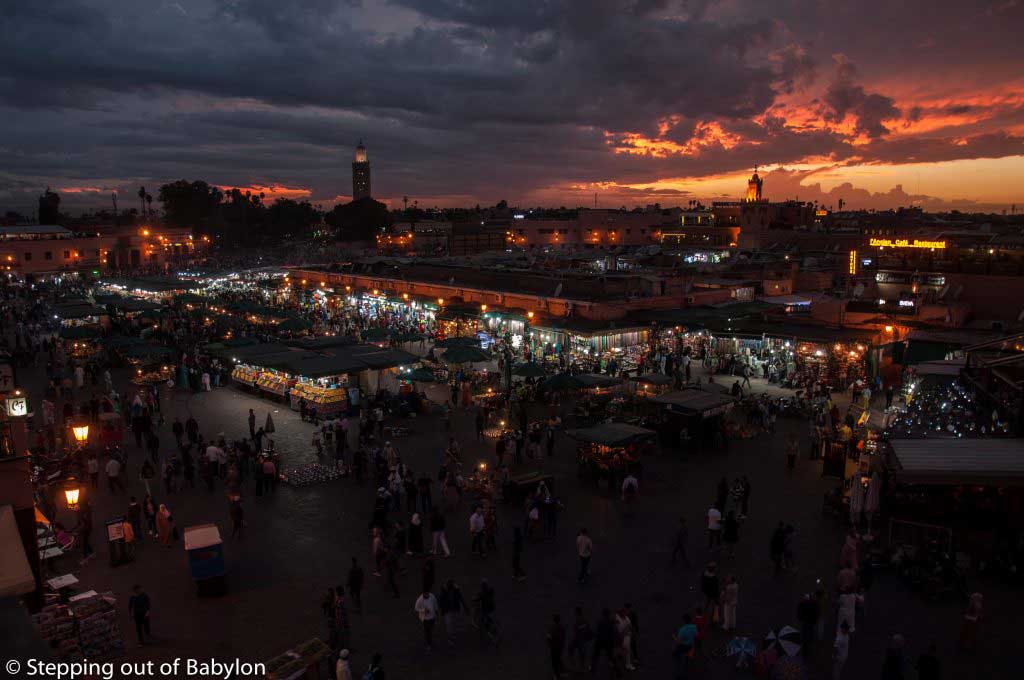
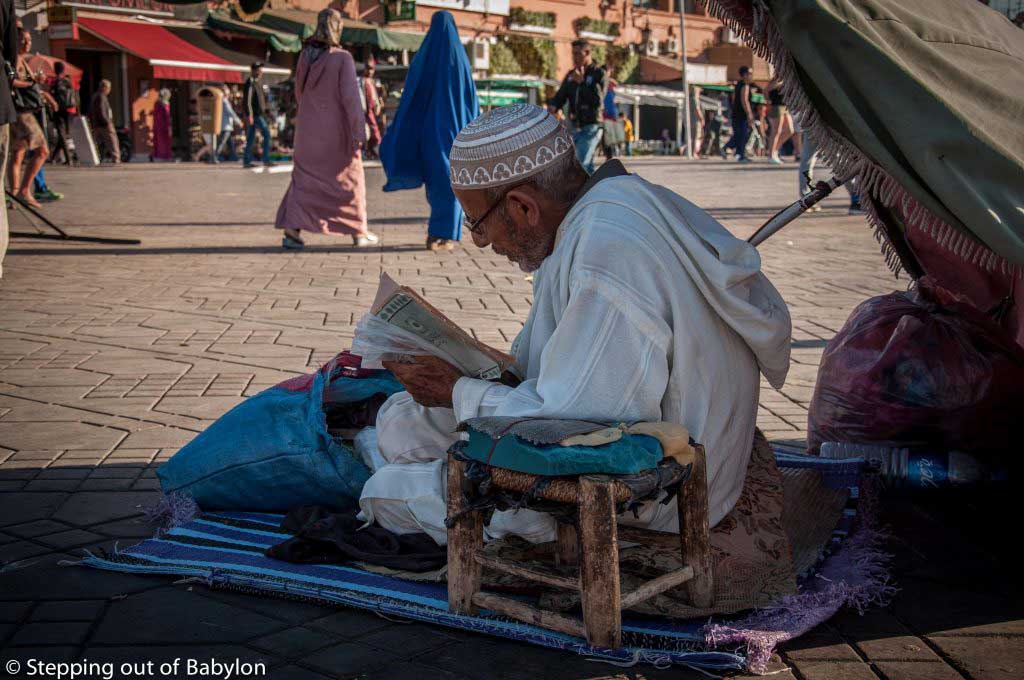
Jemaa el-Fnaa, the central square of Marrakesh medina

Despite cultural, historical and religious differences, Morocco was quite easy to adjust, revealing a laid-back and friendly people. Marrakesh was a good start for a short 20 days Morocco trip, where the packed medieval city, dating to the Berber Empire, with its narrow and maze alleys coexist with a modern and cosmopolitan area with long boulevards and tidy parks, where the French influence is still present.

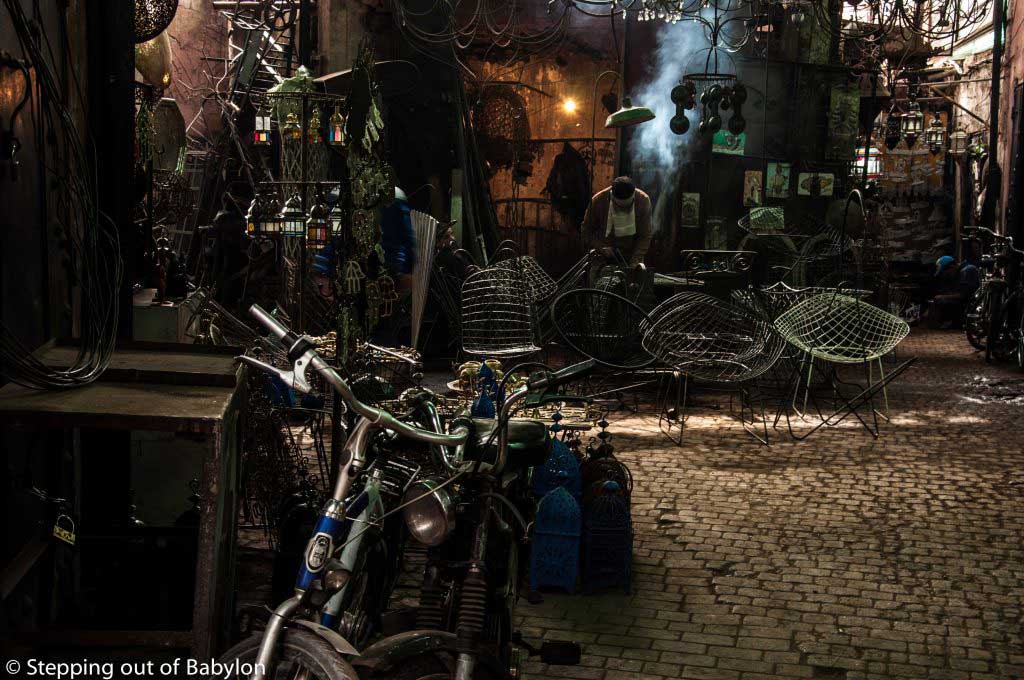
Marrakesh, one of the four cities of the imperial cities (the others are Fes, Meknes and Rabat) is famous for its crafts, with the main streets packed with shops selling jewellery, clothes, metal works, leather products, spices, teas and herbal medicines, nuts and dry fruits, and the famous carpets, where the Berber geometric designs pop up. Not so easy to find but probably more appealing if you are not in a shopping mood, are the workshops where artisans do their work using traditional techniques and local materials.

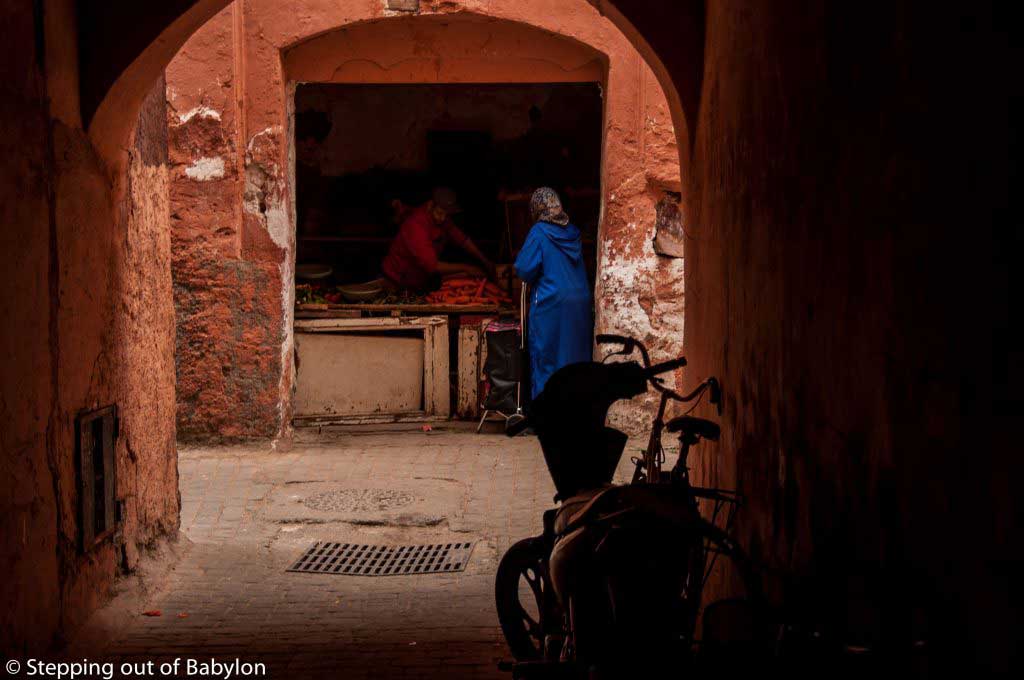
Moving away from the most crowded medina alleys we can appreciate the traditional architecture, with two or three storage buildings covered with the traditional mud plaster (tadelakt) that gives the typical dark red color to the city. The streets are narrow, many times without exit, which can make orientation difficult.

It’s the arriving of the winter and the sky is cover by a dense layer of clouds that filter the sunrays and bring the promise of rain. Located in the foothills of the Atlas, Marrakesh is framed by high mountains with the top covered by snow.

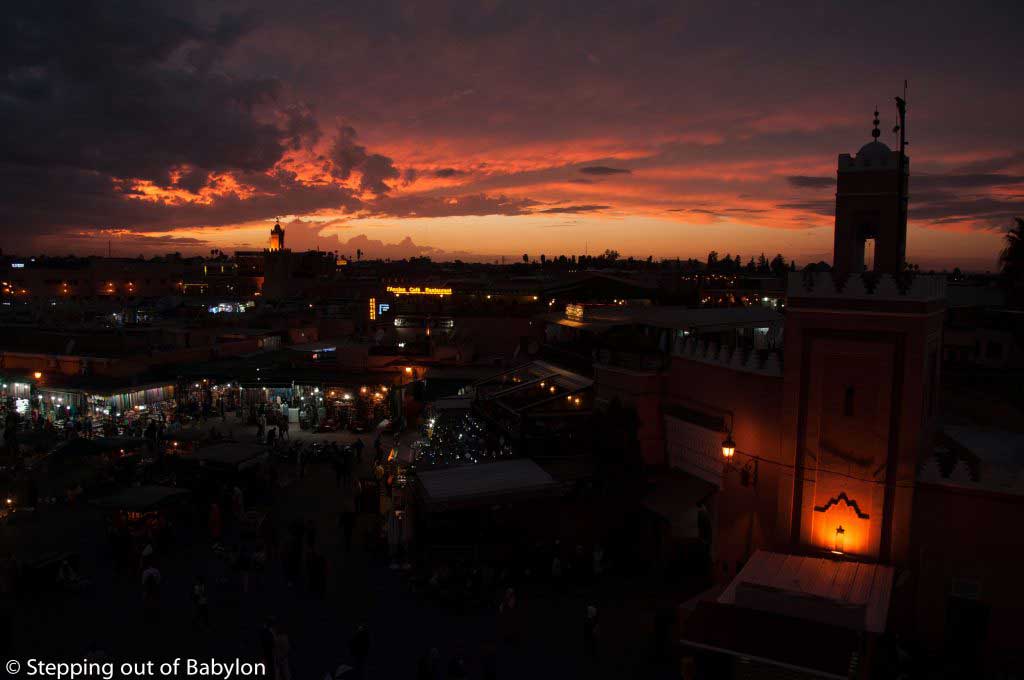
The Jemaa el-Fnaa, can be considered the heart of the social life of the medina (old city), where Moroccan visitors, and foreigners tourists mix with the local population that come here mainly in the end of the afternoon to socialize, eat a snail snack, listen traditional Berber music play life, shop some traditional natural medicines, get a henna design or simply for a lazy stroll away from the narrow and fully packed alleys of the medina.


Jemaa el-Fnaa
Jemaa el-Fnaa


Jemaa el-Fnaa
Jemaa el-Fnaa


Stepping out of Babylon_Marrakesh_DSC_8658
medina


Stepping out of Babylon_Marrakesh_DSC_8640
blacksmith workshop in the heart of the medina


Despite being considered as an Arab country, Morocco population is believed to be mainly Berber or Berber descendants, an ethnic group indigenous from what is now Mauritania, Algeria, Libya and Tunisia, that inhabited these areas even before the arrival of the Arabs. The strongest mark of the Berber culture is the language, the Tamazight, that is spoken by the majority of the population but that only in 2011 was considered as an official language in Morocco.


medina back streets
medina backstreets

Stepping out of Babylon_Marrakesh_DSC_8543
Herbalist


Where to sleep in Marrakesh:

As Marrakesh is one of the most popular tourist places in Morocco, it offers a wide range of accommodation choices, for all budgets, and it’s not difficult to find a dorm for 6 euros (around 60 Dirham).

The Kasbah Red Castle Hostel was a good choice, as its located in a walking distance from the medina in a quiet neighbourhood away from the more touristic areas, where the local lifestyle is still present. The place is very clean and quiet during the evening. The breakfast is a mix of traditional Moroccan bread and beans stew with the western standards of eggs and jam, which makes a good start to Moroccan gastronomy.

The staff is friendly and very willing to provide information if you want to travel by yourself, never pushing for the tours that they also offer.

[columns] [span6]

Kashah Red Castel Hostel. Contacts

[/span6][span6]

Kashah Red Castel Hostel. Breakfast

[/span6][/columns]

Where to eat in Marrakesh:

Marrakesh has a lot of choices of food, from the sophisticated restaurants serving the traditional dishes, mainly tagines and couscous, with a twist… until the budget options that are small eateries or sometimes street stalls that serve soups (harira), traditional bread (msemen, hacha, Meloui, and many more) that can be plain, with olive oil, honey or cheese (always the over-processed-triangle-cheese, as proper cheese is rare in Morocco).

The traditional Moroccan sandwiches are also a good option, suiting also vegetarian, that basically consist in a flat bread stuffed with egg, potato, meat or grill vegetables, seasoned with olive oil and a lot of cumin.

traditional meat stew

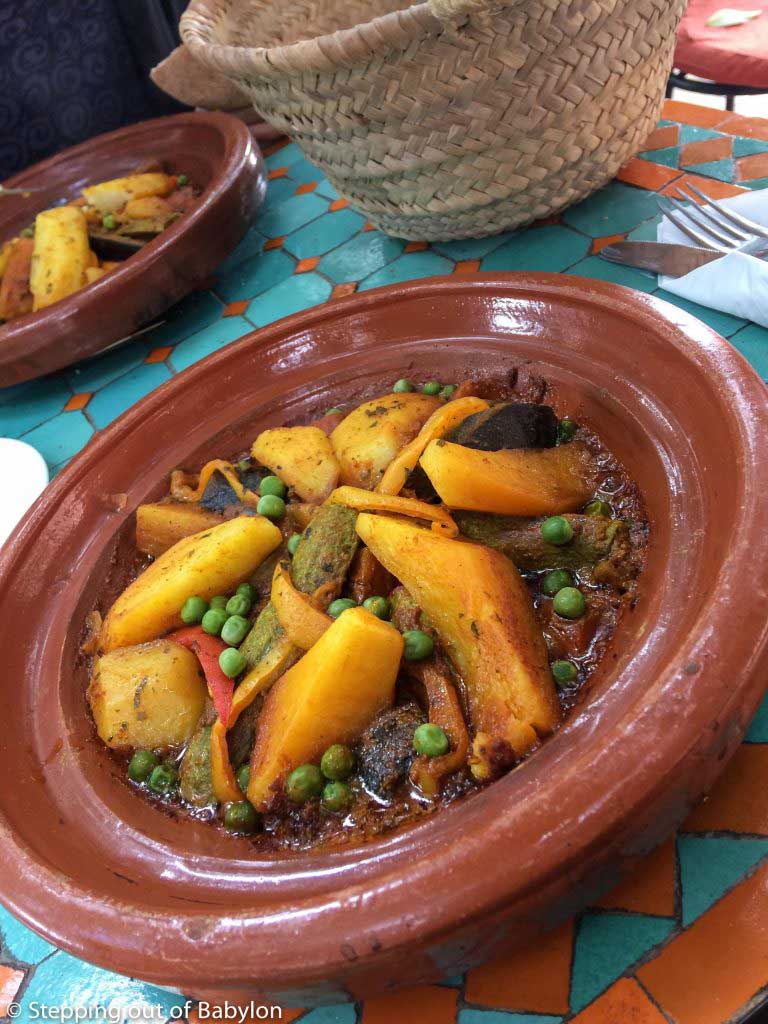
Amal is a non-profit association, empowering women through culinary skills that serve delicious food at lunchtime in a quiet terrace. The place is located in the modern part of the city; it’s a long but easy walk along wide avenues, and it really worth the effort. Here you can find Moroccan traditional food, with a French touch, cooked with love and served with a smile!

http://amalnonprofit.org/

[columns] [span6]

Tagine at Amal
Vegetable Tagine at Amal

[/span6][span6]

Stepping out of Babylon_Marrakesh_AMAL_IMG_7773

[/span6][/columns]

How to move around in Marrakesh:

The medina is easy to walk on foot, in fact, is the only option as the streets are narrow and full of people.

The medinas are not easy to navigate and its easy to get lost as the streets are very similar and without much reference points, but the best approach is just walking random and follow the intuition… maybe you’ll not find a certain mosque or palace, but you’ll probably find the traditional lifestyle, the street markets and the local shops.

Anyway… don’t expect to find again the same shop that you saw a “while ago” or on the day before. Marrakesh medina is not so big or confuse as Fes medina, but you need a couple of days to get familiar with place.

Notice that in Morocco the foreigners cannot enter the mosques but can visit the madrasa (Islamic schools).

Where to change money in Marrakesh:

The ATM machines are widely available in all towns and cities but if you prefer to bring money with you, euros and dollars are very well come in Morocco. You can find moneychangers at the most touristic places (easy to locate in Marrakesh and Fes medinas, not so easy in Meknes).

It’s also possible to change money at the banks, but for that, it’s necessary to show the passport.

In Marrakesh the best rate that I found (in fact it was the best rate of all Morocco trip) was at Hotel Ali Currency Exchange very close to the Jemaa el-Fnaa square; you can locate it by maps.me or google.maps (Chez Ali Bureau de Change).

How to go from the Marrakesh Menara Airport to the city center:

There’s an express bus that drops you in the center of Marrakesh, the Jemaa el-Fnaa. From there you can probably your accommodation on foot with the help of a map app.

The isn’t a bus stand or anything that identify the place where the express bus stop, but coming out from the arrivals you should walk straight, crossing the car; the bus stops not far from the car park entrance. If you reach the taxi park you already walk too far.

The bus is modern and comfortable. The trip takes around 20 minutes.

The ticket costs 30 Dirham.

Jemaa el-Fnaa
Jemaa el-Fnaa

Kashmir & Ladakh: itinerary and map

Itinerary:

  • New Delhi
  • Dharamsala: Mc Leod Ganj, Daramkot, Bhagsu and Triund (hiking)
  • Parvati Valley: Manikaran, Pulga, Khir Ganga
  • Manali and Old Manali
  • on the road… Manali-Leh Highway
  • Leh: Thikse Monastery and Shey Palace, Lamayuru Monastery and Pangong Lake
  • on the road… Leh-Srinagar Highway
  • Kashmir: Srinagar and Floating Market
  • Amritsar and the Golden Temple

https://goo.gl/maps/z6Ax7RwiFGS2

Screen Shot 2018-12-23 at 13.42.41

see also:

https://steppingoutofbabylon.com/wp/pt/2015/04/amritsar-a-cidade/

https://steppingoutofbabylon.com/wp/pt/2013/05/porque-comer-e-importante/

https://steppingoutofbabylon.com/wp/pt/2013/04/india-comboios/

  • « Go to Previous Page
  • Page 1
  • Interim pages omitted …
  • Page 5
  • Page 6
  • Page 7
  • Page 8
  • Page 9
  • Interim pages omitted …
  • Page 31
  • Go to Next Page »

Footer

search

Tags

Amed Arugam Bay Assam Bali Bogor Border Crossing Borneo Colombo Esfahan Fes Food Gilis Hiking Hikkaduwa hokkaido Istanbul Itinerary Jakarta Java Kashan Kohima Kumano Kodo Litang Lombok Meghalaya Meknes Mekong Nagaland Natural Park Northeast States Ouarzazate Sarawak Shangri-lá (Zhongdian) Shan State Shiraz Sichuan Province Sumatra Tabriz Tehran transportation Visa Yangon Yazd Yogyakarta Yunnan Province

I’m Catarina, a wanderer from Lisbon, Portugal… or a backpack traveller with a camera!

Every word and photo here comes from my own journey — the places I’ve stayed, the meals I’ve enjoyed, and the routes I’ve taken. I travel independently and share it all without sponsors or ads, so what you read is real and unfiltered.

If you’ve found my blog helpful or inspiring, consider supporting it with a small contribution. Every donation helps me keep this project alive and free for everyone who loves exploring the world.

Thank you for helping me keep the journey going!

BUY ME A COFFEE

Categories

Recent Posts:

  • How to go from Hualien to Dulan Beach
  • Taroko Gorge: between marble cliffs and emerald rivers
  • Hualien: a dull gateway to Taroko Gorge
  • Taiwan: Itinerary for an 16 day trip
  • Vietnam: Itinerary
  • 3 months in India: Kolkata, Tamil Nadu, Karnataka, Goa and Kerala
  • Backpacking Turkey in 24 Days: itinerary & costs
  • English
  • Português

© Copyright 2026 Stepping out of Babylon · All Rights Reserved · Designed by OnVa Online · Login